





































Rep. Mike Collins favored in Georgia runoff against Kemp-backed Derek Dooley
Collins led Dooley 41-30 in the May 19 Republican primary, with Rep. Buddy Carter (R-GA) coming in at 25%
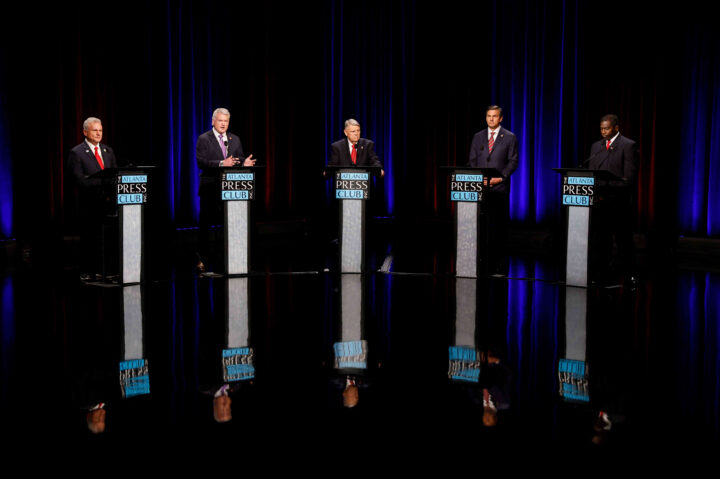
Miguel Martinez/Atlanta Journal-Constitution via AP
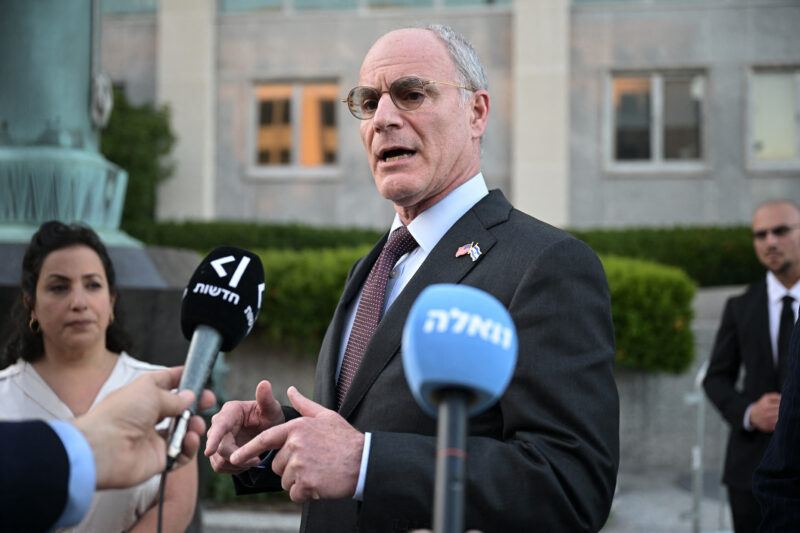
U.S. Rep. Mike Collins, R-Jackson, second left, speaks at the Atlanta Press Club Loudermilk-Young primary election debate for the U.S. Senate at Georgia Public Broadcasting, Sunday, April 26, 2026, in Midtown Atlanta.


 Add JewishInsider on Google
Rep. Mike Collins (R-GA), who has repeatedly faced controversy during his time in the House, appears favored to win the Republican Senate primary runoff in Georgia against Derek Dooley, a former college football coach backed by popular moderate GOP Gov. Brian Kemp.
Collins led Dooley 41-30 in the May 19 Republican primary, with Rep. Buddy Carter (R-GA) coming in at 25%. The runoff will take place on Tuesday, with the winner to face Sen. Jon Ossoff (D-GA) in November.
Polling shows Collins maintaining a sizable lead. Two late May post-primary polls, by JMC Enterprises and CivicLens Research, showed Collins ahead. Collins led by 16 percentage points in a JMC poll, 55-39, with 7% undecided, and by 10 points in a CivicLens poll, 50-40, with 10% undecided.
President Donald Trump endorsed Collins — generally seen as the more MAGA-aligned candidate — late on Saturday, while Kemp — who national Republicans initially sought to recruit for the race — has been aggressively campaigning around the Peach State in support of Dooley.
Trump described Collins as a “a true Friend, Fighter, and WARRIOR, who has been with us from the very beginning,” while dismissing Dooley as an unknown figure who lived outside of the state “for most of his life,” didn’t vote in 2020 or 2016 and said that Trump lost Georgia in the 2020 election, which Trump continues to deny.
Charles Bullock, a professor of political science at the University of Georgia, said that the state’s election history has shown that candidates who finish with such a commanding lead in the primary generally win the runoff, and that the little publicly available polling has largely reflected that Collins is maintaining his 10-point lead.
Dooley’s major asset, Bullock continued, remains the support he has received from Kemp. But Collins entered the race with name recognition in the Atlanta area, particularly from his work leading the Laken Riley Act, multiple previous runs for Congress and his father’s own service as a member of Congress.
Dooley, by contrast, entered the race as a largely unknown candidate. Collins’ advantages carried him despite the fact that he spent the least money of any of the GOP candidates in the race.
Bullock said that Dooely’s best chance of victory on Tuesday will be if there is strong turnout in the Atlanta area, rather than the more rural areas that have been Collins’ bases of support.
Collins and his campaign have repeatedly faced controversies relating to antisemitism and affiliations with extremist figures.
A recent report by Slate showed that Collins’ current congressional chief of staff, Kip Talley, was involved in a group chat that also included prominent white nationalists and Holocaust deniers, in which Talley pledged that he would “try and use the levers of the legislative branch” to defend and attempt to free from prison the far-right activist and Holocaust denier Charles Johnson.
Talley also said in the group chat that he contacted federal officials in an effort to “to get [Johnson] out” of prison.
In a statement to Slate, Talley denied acting at Collins’ direction or using official resources on behalf of Johnson, whom Talley described as “an acquaintance I have known for years.”
Collins himself faced criticism for endorsing an X post by an antisemitic, racist account attacking a reporter for being Jewish in 2024. Collins continued to deny that the original post for which he offered support was antisemitic and refused to apologize.
He also voted against the Antisemitism Awareness Act, though he has otherwise maintained a generally strong record on measures related to antisemitism and Israel policy in the House.
“Mike Collins has condemned the hate speech seen on college campuses and around the globe, and has been an ardent supporter of Israel in Congress. While [Georgia Sen.] Jon Ossoff capitulated to woke activists and voted to cut aid to Israel, Mike Collins has stood strong and protected its right to exist,” a Collins campaign spokesperson told JI last year, when asked about his online history and vote on the antisemitism bill.
Talley isn’t the only Collins aide who has caused controversy.
William Paul, a former Collins staffer and son of Sen. Rand Paul (R-KY), recently accosted Rep. Mike Lawler (R-NY) at a bar in Washington with an antisemitic rant, though Paul was no longer working in Collins’ office at the time of the incident.
In the final weeks of the runoff, a Collins campaign account on X made a crude post mocking a pro-Dooley GOP strategist over accusations of sexual assault made by the strategist’s wife against former news anchor Matt Lauer. Collins apologized and fired his former chief of staff, Brandon Phillips, who has long been dogged by scandal and is under House Ethics Committee investigation.
Dooley and his allies argued that the incident highlighted concerns about Collins’ electability against Ossoff.
Dooley has enjoyed support from conservative members of Georgia’s Jewish community since he entered the race. Emanuel Fialkow, a prominent member of the community, hosted a meet-and-greet with prominent Jewish leaders ahead of his campaign launch. He described Dooley as “very receptive” to their feedback and as a “staunch supporter of the Jewish people, and all religions, and of Israel” in an interview with Jewish Insider last week.
“Derek Dooley is our best chance to get rid of Ossoff, and I think that Derek Dooley will be true and unwavering in his support for Georgia, Israel and religious freedom, period, including Jewish people,” Fialkow said.
Fialkow did not comment on Collins beyond saying that Phillips’ activity was “awful and [Collins] should have fired him sooner.”
Though he predicted that Collins would win the primary, the University of Georgia’s Bullock said that Dooley would likely be the more electable candidate in November, which he said has been the factor driving Kemp’s support for the former football coach. “If he were to be chosen, Derek would probably be a stronger candidate in November,” Bullock said — though Ossoff would likely be the favorite against either man.
The swing voter population in the state, according to Bullock, consists of white, college-educated voters identifying as Republicans. If a Democrat can increase his share among those voters, he will likely win, and Ossoff is well-positioned to do so in November.
Campaign consultants, Bullock said, are “increasingly acknowledging” that it will be difficult to beat Ossoff, and are looking to direct money toward other Senate battlegrounds.
More Stories
EDUCATION DELIBERATION
Democratic governors face looming deadline to opt in for educational tax credit

MEDIA MOMENT
New York magazine editor seeks to reassure Jewish leaders but stands by contentious cover issue
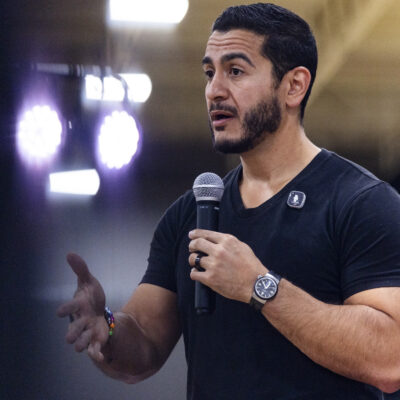
EARLY ADOPTER
El-Sayed accused Israel of genocide before Gaza ground war began
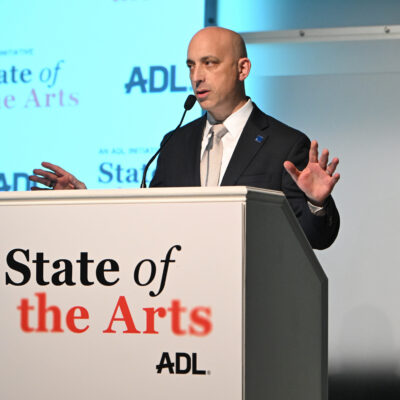
EXHIBIT A
No major U.S. art museum counts Jewish identity in its diversity commitments, ADL report finds
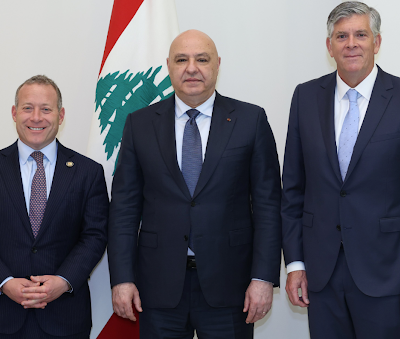
BUSY IN BEIRUT
Reps. Gottheimer, LaHood visit Lebanon, meet President Aoun

trump talk
Trump backs Netanyahu on Oct. 7 warnings, won’t say if he deserves another term
Please log in if you already have a subscription, or subscribe to access the latest updates.
 Continue with Google
 Continue with Apple