





























Chabad’s building at Harvard is located off campus, on private property in Cambridge, Mass.
JOSEPH PREZIOSO/AFP via Getty Images
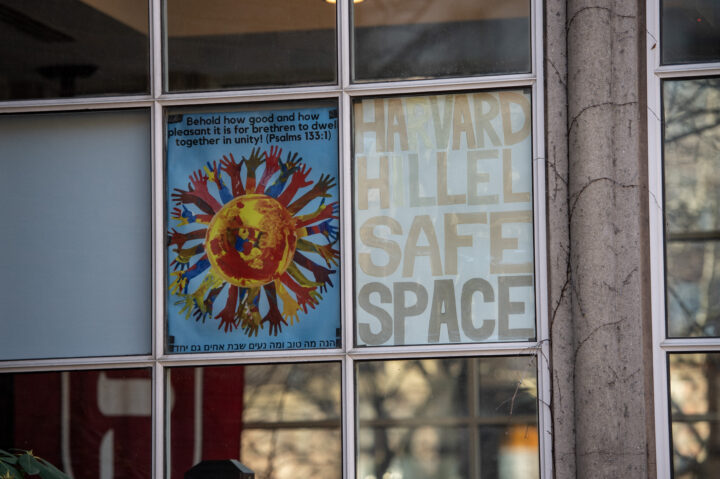
A sign calls the building a safe space at the Jewish student organization HILLEL society's building at Harvard University in Cambridge, Massachusetts on December 12, 2023.


 Add JewishInsider on Google
Harvard University’s recent decision to cover security costs for Harvard Hillel was celebrated by many Jewish students as a way to alleviate growing security costs amid a surge in campus antisemitism. But for others, it raised questions about why the agreement did not extend to other Jewish groups affiliated with the school, such as Harvard Chabad.
“Of course, there is a sense that there should be a responsibility” to cover Chabad’s security as well, Harvard Chabad Rabbi Hirschy Zarchi told Jewish Insider, although he said that he has never directly asked the administration to do so.
Alex Bernat, Harvard Chabad’s outgoing undergraduate student president who graduated in the spring, said it’s “crucial” that Chabad receive the same funding. “If you want to make claims about protecting the Jewish community, you have to protect the whole Jewish community,” he told JI.
“As an incoming student planning to be active in Chabad, I’m concerned that only funding security for Hillel overlooks the safety needs of the entire Jewish community,” Stella Hiltzik, who is slated to begin her freshman year at Harvard in the fall, told JI. “In today’s climate, all Jewish spaces deserve equal protection.”
While Hillel owns its building structure, that building sits on university property. It also contains a Harvard dining facility and other spaces that are accessible to all students, faculty and staff using Harvard’s ID swipe system. Chabad’s building is located on private property in a Cambridge, Mass. neighborhood. The latter has been guarded by armed security — funded by donors — every day since the Oct. 7, 2023 terrorist attacks and subsequent rise of antisemitism on college campuses.
A Harvard spokesperson declined to comment to JI regarding the reason Hillel received university-funded security, but Chabad didn’t.
Since Oct. 7, Harvard Chabad has been a centerpoint of campus security concerns. In a December 2023 speech made on campus during a Hanukkah menorah lighting, Zarchi described an atmosphere of fear for Jewish students and for his own family, who he said had been advised by Harvard’s police department to obtain private security after Harvard Chabad became the first university to screen IDF footage from the Hamas terror attacks in Israel. “Twenty-six years I gave my life to this community. I’ve never felt more alone,” Zarchi said at the time.
On July 31, following years of lobbying by Harvard Hillel officials and advocates, Harvard agreed to cover all security costs for the university’s Hillel through the rest of Harvard President Alan Garber’s tenure, which is set to conclude at the end of the 2026-27 academic year. The move comes as Harvard faces billions of dollars in federal funding cuts from the Trump administration over its alleged failure to address antisemitism on campus.
“By taking on responsibility for security at Hillel, Harvard University is making a powerful statement: Harvard is committed to the safety of Jewish students,” Rabbi Jason Rubenstein, executive director of Harvard Hillel, told JI when the announcement was made.
Zarchi called it “misleading” to claim that the university is protecting Jewish students broadly if Chabad is not included. Since last week’s announcement, Zarchi said he has received “floods” of calls and emails from students, parents and alumni who are “deeply concerned” about the university limiting security funding to Hillel. Chabad, according to Zarchi, is attended by nearly 500 students per week.
“It’s this public misrepresentation and abandonment of the safety of so many that we need to address,” said Zarchi.
“All Jewish students at Harvard, whether it’s Chabad or Hillel, should have safety and security.”
The agreement comes as the school is preparing to reach a settlement with the federal government over its handling of antisemitism

Zhu Ziyu/VCG via Getty Images
A glimpse into the Harvard University campus on May 24, 2025 in Cambridge, Massachusetts.
Harvard University, in a move long sought-after by advocates for Jewish college students, agreed on Thursday to cover all security costs for the university’s Hillel ahead of the upcoming academic year, Jewish Insider has learned.
“By taking on responsibility for security at Hillel, Harvard University is making a powerful statement: Harvard is committed to the safety of Jewish students,” Rabbi Jason Rubenstein, executive director of Harvard Hillel, told JI.
Security costs “represent a significant part of our annual budget,” Rubenstein said, declining to provide figures. The agreement is slated to run through the rest of Harvard President Alan Garber’s tenure, which is set to conclude at the end of the 2026-27 academic year.
“We should take this moment to appreciate the efficacy of Hillel’s advocacy and President Garber’s principled leadership. While more work remains to be done, tangible results like these are encouraging signs of the will and capacity for real and significant institutional change at Harvard,” Rubenstein continued, noting that advocacy efforts for Harvard to take on Hillel’s security have been in the works for several years, predating the Oct. 7, 2023, terrorist attacks.
Harvard has faced billions of dollars in federal funding cuts for research from the Trump administration over its alleged failure to address antisemitism on campus. The university’s decision to fund Hillel security comes as it has signaled a willingness to settle with the government to restore its funds, The New York Times reported this week — a deal which could see the school agree to the Trump administration’s demand for as much as $500 million to end its clash.
The Ivy League school has made several recent attempts to appeal to the Jewish community as it gears up for a settlement. On Monday, the university expanded its ties to Israel, announcing a new undergraduate study abroad program with Ben-Gurion University of the Negev and a postdoctoral fellowship for Israeli scientists at Harvard Medical School.
“Harvard University’s commitment to the safety and well-being of members of our Jewish community is paramount,” a Harvard spokesperson told JI. “Recent tragic events in communities across the country are evidence of the growth in antisemitism and further Harvard’s resolve in our efforts to combat antisemitism on our campus.”
The university did not respond to a follow-up inquiry from JI asking why Chabad is not receiving security funding as well. Harvard Hillel’s dining facility and other spaces are generally more easily accessible, with Harvard students, faculty and staff being able to enter by swiping their university ID.
The decision for universities to take on Hillel security costs has been in flux in recent years. Yale University, for example, announced in December 2023 — as a response to Oct. 7 and subsequent rise of antisemitism on campus — that it would expand a pilot program launched the year prior and fully fund the cost of day-to-day security service for the Slifka Center, the university’s Hillel, for at least three years.
Adam Lehman, president and CEO of Hillel International, called for “other universities to follow Harvard’s example in this decision.”
“Harvard’s decision to fund these essential security measures reflects the understanding that Jewish students, like all students, deserve to be safe and welcome on campus,” Lehman told JI.
Jewish organizations typically spend 14% of their budgets annually on security costs, according to a new letter to lawmakers
Noam Galai/Getty Images
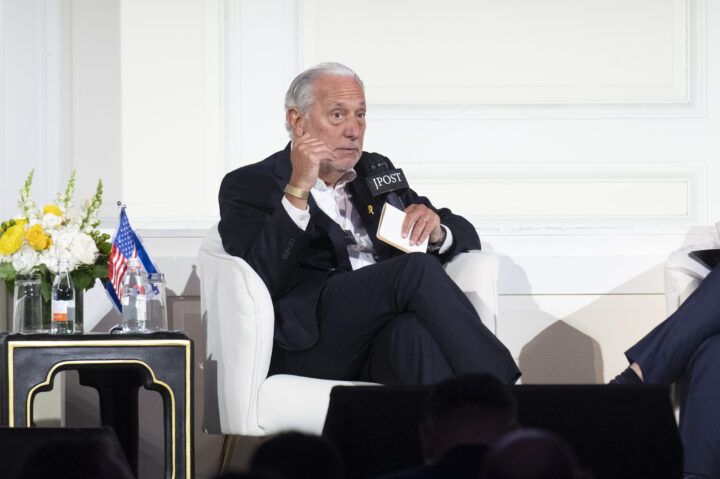
Eric Fingerhut speaks during The Jerusalem Post New York conference on June 03, 2024 in New York City.
In a letter to members of the House Homeland Security Committee’s Counterterrorism and Intelligence subcommittee, the Jewish Federations of North America highlighted the significant security costs facing the Jewish community, as advocates push for additional security assistance from the federal government at a time of heightened antisemitism.
The JFNA letter states that, nationally, the Jewish community spends more than $765 million each year on security expenses, and that 14% of the annual budget of “a typical Jewish organization” is dedicated to security costs.
The letter highlights that each security guard typically costs Jewish institutions $90,000 annually, while a community security director costs $160,000.
“We also know that these measures are critical for Jewish life to flourish, finding that 60% of Jews say that security precautions make them feel safer,” the letter reads. “They see the addition of police, security guards, and hardening of buildings as the most effective.”
“It is a fundamental right for all Americans to practice their faith freely and without threats and intimidation,” the letter continues. “We urge this Subcommittee to advance concrete, bipartisan solutions that address the growing threat environment and reflect the urgent needs of faith-based and vulnerable communities nationwide.”
JFNA has called on lawmakers to provide $1 billion annually for the chronically underfunded Nonprofit Security Grant Program, which helps nonprofits offset security costs. In 2024, 36% of security grant recipients were Jewish institutions, including synagogues and Jewish community centers.
“As you head to your districts for the upcoming recess, we wanted to call your attention to the immense financial burden the Jewish community faces simply to keep itself safe,” the letter reads. “With antisemitic incidents and attacks continuing to grow, it is critical that Congress act to defend faith communities.”
The letter reiterates the NSGP funding request, as well as other issues on which JFNA and other Jewish organizations have advocated, including dedicated federal funding for security guards, expanding efforts to counter domestic terrorism, increasing funding for state and local law enforcement, addressing antisemitism on social media and forcefully prosecuting hate crimes.
“These are not abstract priorities,” the letter states. “They reflect what we hear every day from communities on the ground that are being forced to divert vital resources to pay for armed guards, harden facilities, and live in fear.”
Please log in if you already have a subscription, or subscribe to access the latest updates.
 Continue with Google
 Continue with Apple