








































Plus, El-Sayed's physician creds called into question

Mario Tama/Getty Images
An attendee wears a jacket at an Iowa caucus watch party organized by Metro D.C. Democratic Socialists of America, on February 3, 2020 in Washington, DC.


 Add JewishInsider on Google
This P.M. edition is reserved for our premium subscribers like you — offering a forward-focused read on what we’re tracking now and what’s coming next. Please don’t hesitate to share your thoughts and feedback by replying to this email.
📡On Our Radar
Notable developments and interesting tidbits we’re tracking
UJA-Federation of New York has tapped longtime Jewish educator Michael Kay as its next CEO, the country’s largest Jewish federation shared exclusively with Nira Dayanim for Jewish Insider, marking a generational change that signals the growing importance of day schools on the Jewish communal agenda.
Kay, 46, currently serves as head of school at The Leffell School in Westchester County, N.Y., and will step into his new role on Oct. 5, succeeding Eric Goldstein, 66, a former Wall Street lawyer who will step down after 12 years in the role…
President Donald Trump continued to hedge today on resuming military action in Iran while keeping open diplomatic options: “We’re either going to make a deal or they’re going to be decimated,” he said of Iran while departing for his state visit to China. “So one way or the other, we win.”
Earlier in the day, Trump told the “Sid & Friends in the Morning” radio show that he’s anticipating Iran’s economic collapse due to the U.S. blockade of its ports. “It’s just a question of time, we don’t have to rush anything,” the president said…
Kuwait accused Iran of attempting to invade its Bubiyan Island today, claiming six members of the Islamic Revolutionary Guards Corps attacked soldiers on the strategic piece of Kuwaiti territory where the Gulf state, with assistance from China, is building a large port…
Sen. Lindsey Graham (R-SC) expressed frustration with Defense Secretary Pete Hegseth and Joint Chiefs Chairman Gen. Dan Caine at a Senate Appropriations Committee hearing as they declined to comment on a report that Pakistan harbored Iranian military aircraft from U.S. strikes.
Asked, if the report were to be accurate, if the U.S. should reconsider Pakistan’s role as mediator between the U.S. and Iran, Hegseth and Caine said they “didn’t want to get in the middle of ongoing negotiations.” Graham replied, “Well I do! I want to get in the middle of these negotiations. I don’t trust Pakistan as far as I can throw them … No wonder this damn thing is going nowhere”…
Jay Hurst, the Pentagon’s comptroller, testified that the cost of the war has risen to $29 billion — up from the $25 billion figure the Pentagon cited just two weeks ago…
Hezbollah leader Naim Qassem wrote in a letter to terror group operatives that a deal between the U.S. and Iran is “the strongest card” for “stopping [Israel’s] aggression” in Lebanon, while slamming the Lebanese government for engaging in direct talks with Jerusalem, the third round of which are slated to take place this week in Washington…
Asked at the Politico Security Summit in Washington if she still calls herself a Zionist, Sen. Elissa Slotkin (D-MI) said, “I believe in a Jewish State of Israel, yes. And that to me isn’t a radical thing to say and I always have. I can say that in the same breath that I criticize the military policy of Bibi Netanyahu.”
Slotkin said that “as someone who served three tours in Iraq” she has “concerns with the way the Israelis are organizing military policy right now. … What I can’t accept, though, is collective punishment that comes from saying, ‘well, I don’t like Bibi Netanyahu’s military policy so Jews in America’s synagogues should be attacked,’” she continued…
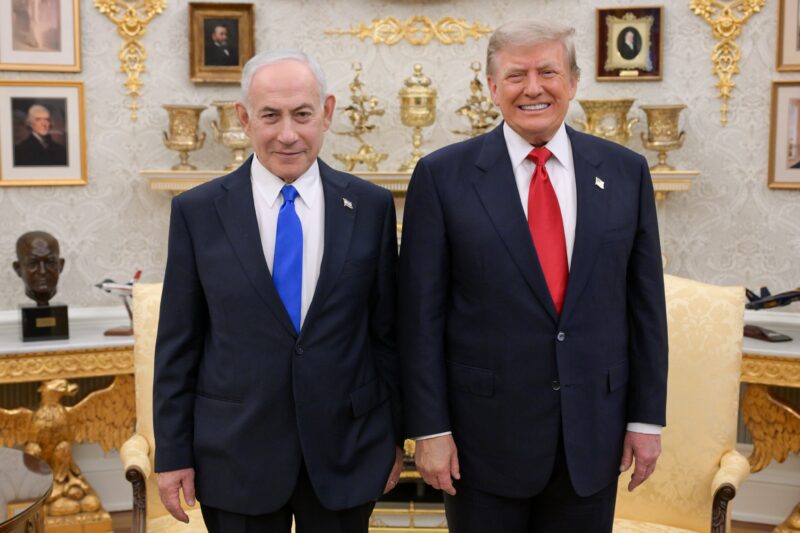
Senate Majority Leader John Thune (R-SD) told the Washington Examiner he’s open to Israeli Prime Minister Benjamin Netanyahu’s proposal to wind down U.S. aid to Israel over the next decade: The proposal “has been sort of a given, I think, in our foreign aid budget” for “a long time,” he said, “but if that’s how the Israeli leader feels about it — feels like they’re able to deal with their national security threats with their own resources — then I guess I would listen to what he has to say”…
Two weeks ahead of the Texas Senate Republican primary runoff, Thune said he “still [doesn’t] know where [Trump] is headed” in his intent to endorse either Sen. John Cornyn (R-TX) or Attorney General Ken Paxton, but “someone would clearly benefit from it.”
Cornyn, meanwhile, told reporters he doesn’t expect Trump to make an endorsement at all. “We can’t wait, and we’re not waiting. We’re getting prepared, and we are optimistic,” he said. (Still, in what may be a last-ditch effort to secure the president’s support, Cornyn introduced a bill yesterday to rename U.S. Route 287 as Interstate 47 in honor of Trump, the country’s 47th president)…
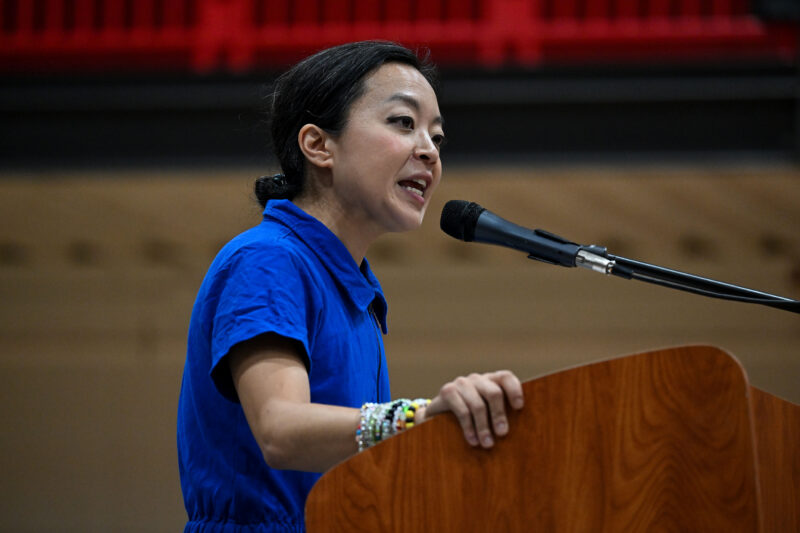
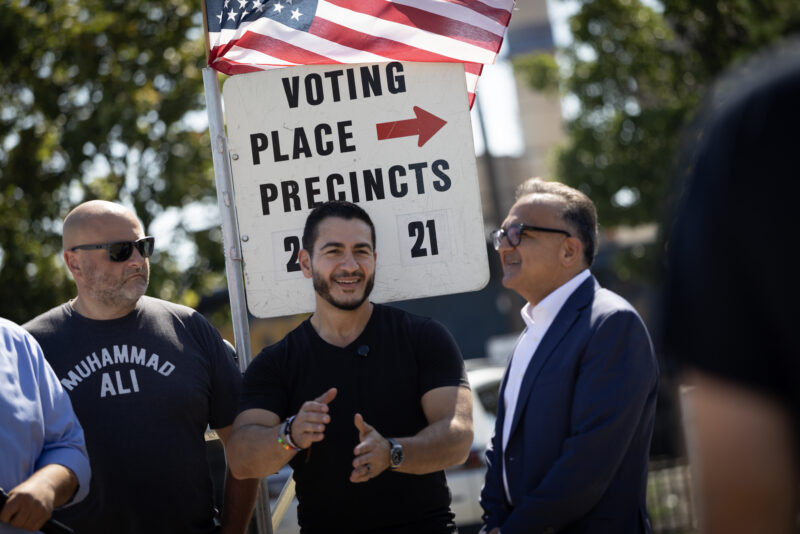
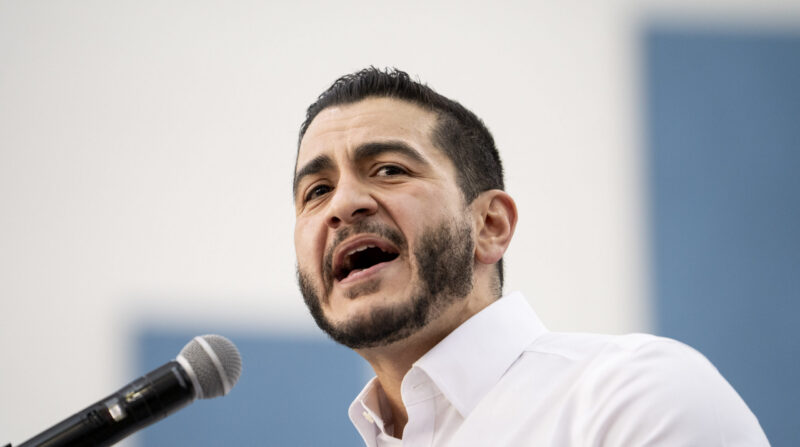
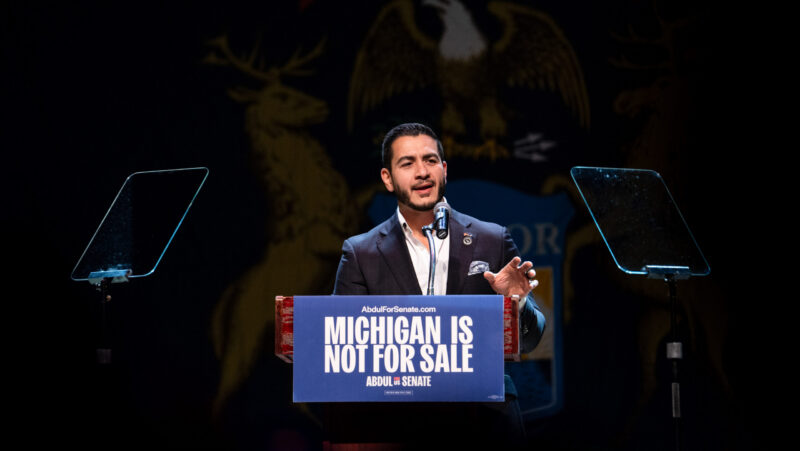
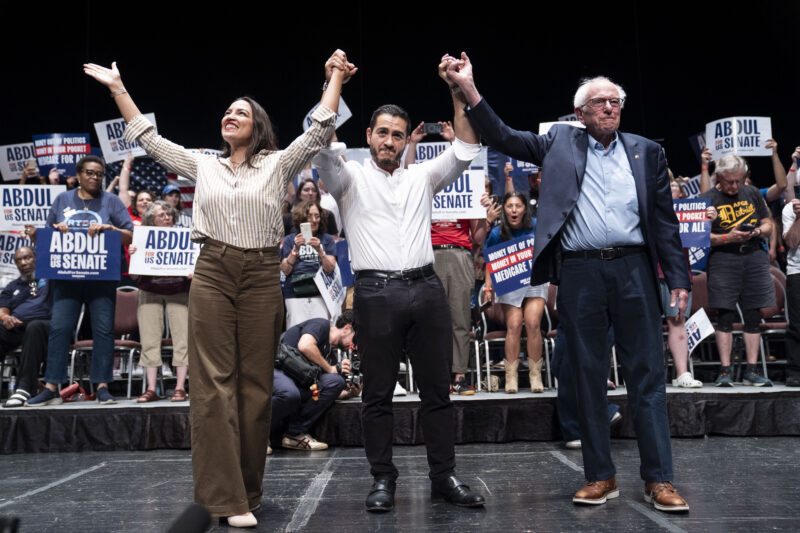
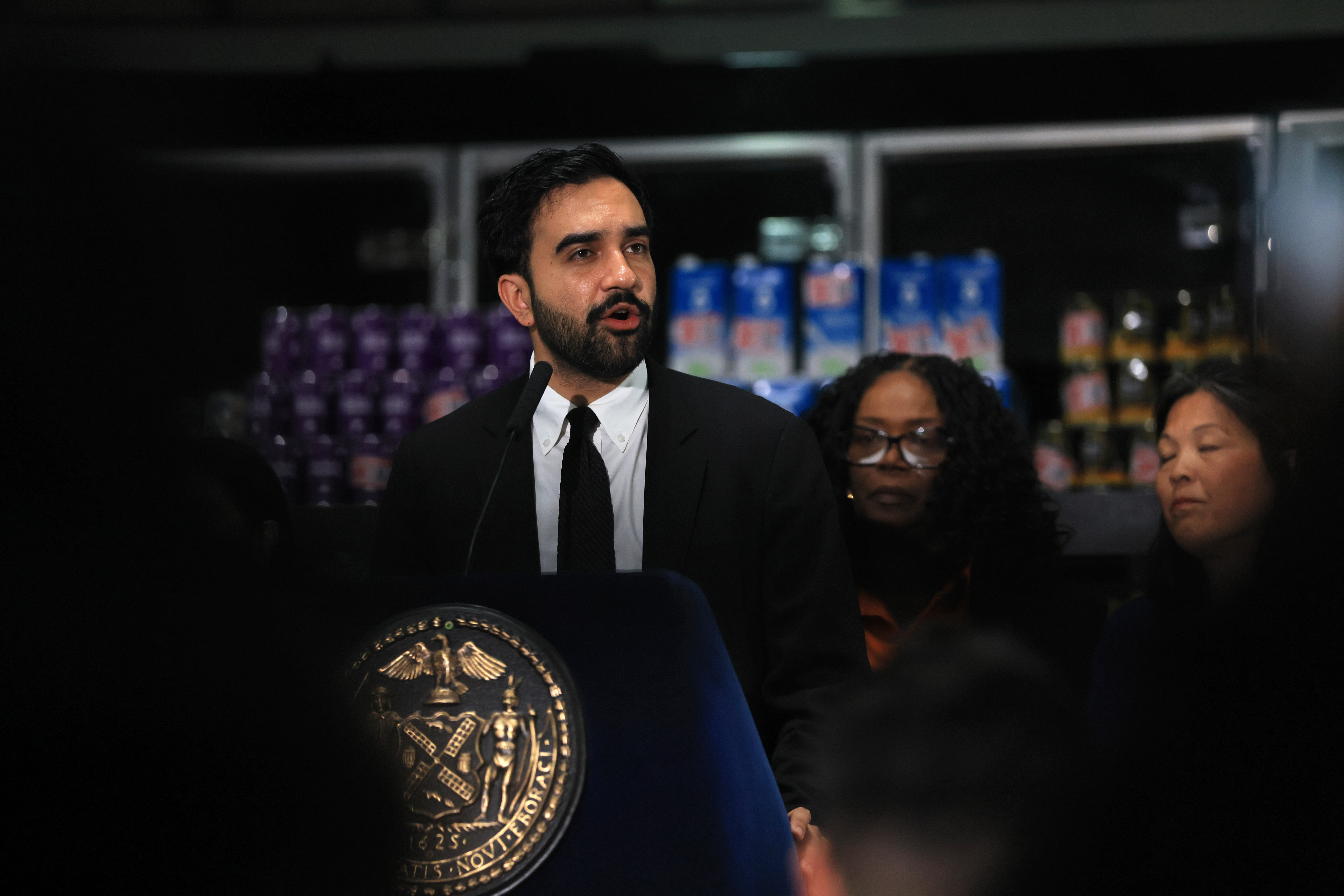
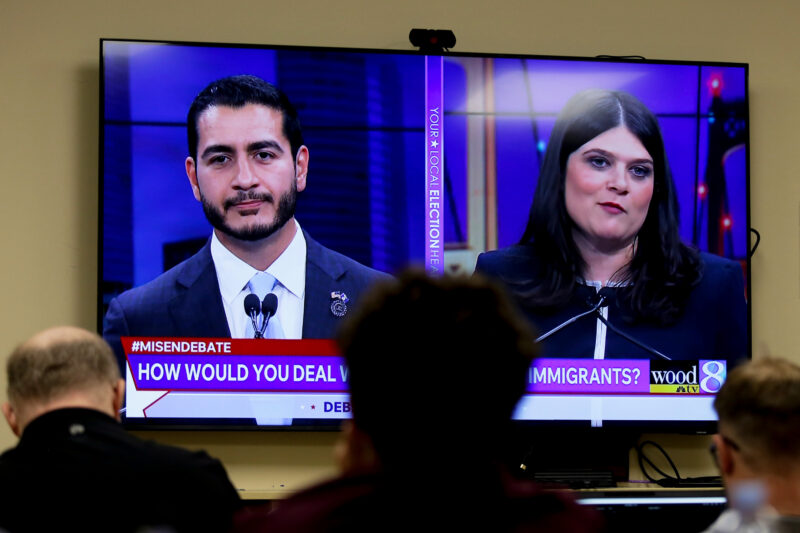
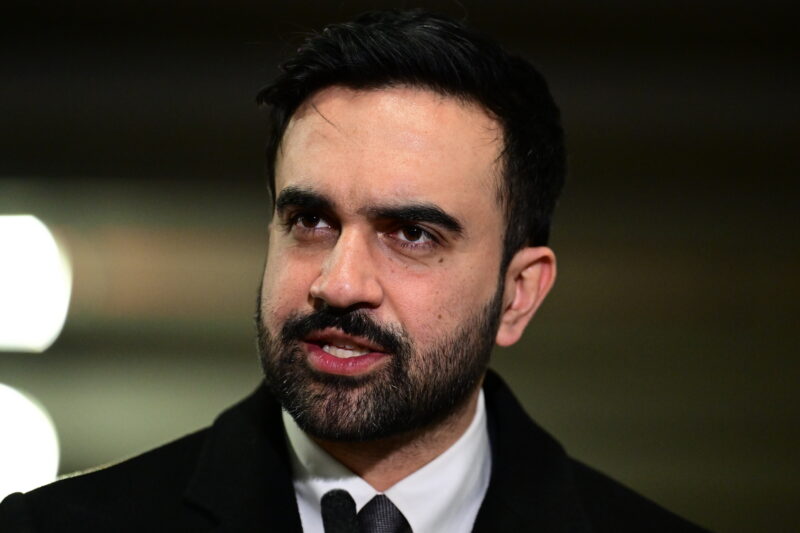
Politico cast doubt on Michigan Senate candidate Abdul El-Sayed’s claim and campaign talking point that he is a practicing physician, finding that “there’s overwhelming evidence that he’s had no experience as a licensed medical doctor.”
While El-Sayed did attend prestigious medical schools and served as executive director of the Detroit Health Department, he was never granted a medical license in either Michigan or New York, where he says he has practiced, and appears not to have treated patients since his schooling days, despite claiming repeatedly in campaign pitches that he is a physician…
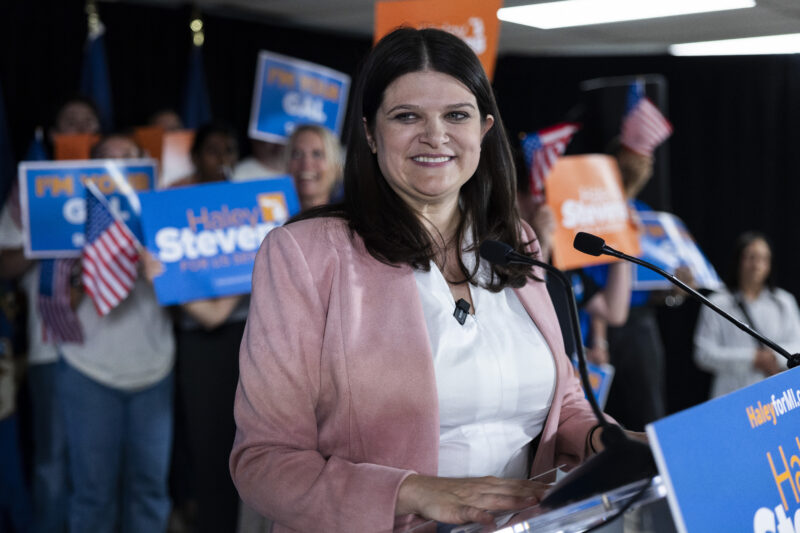
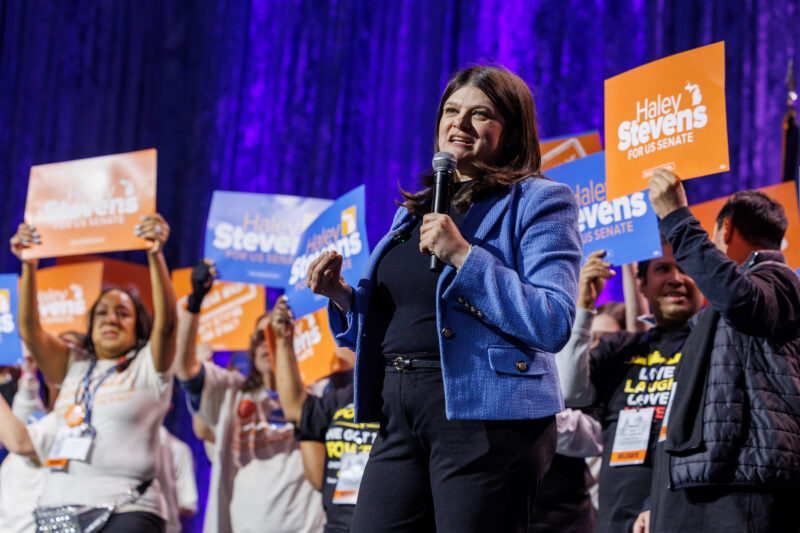
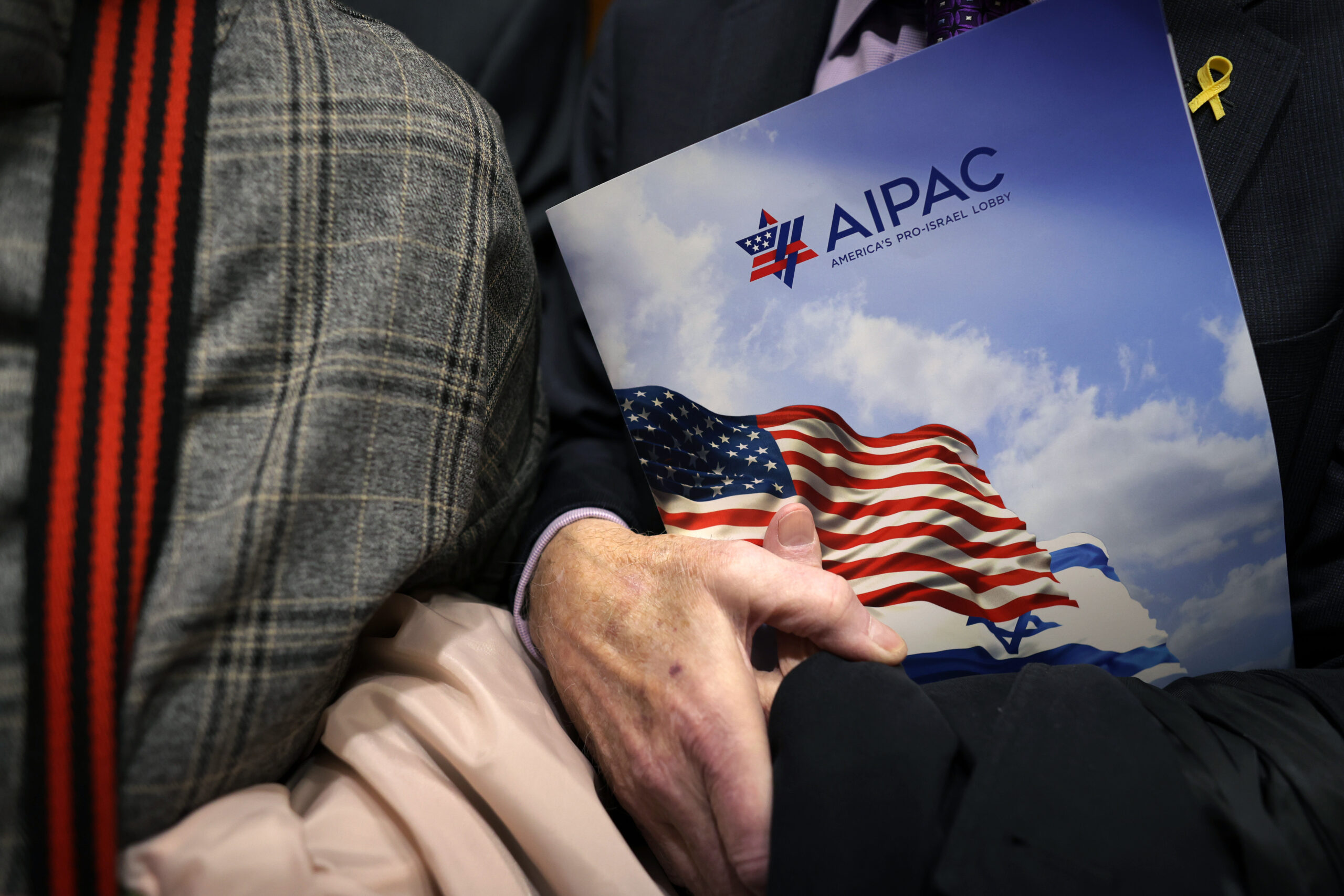
AIPAC denied accusations by El-Sayed and others that it is behind the Center for Democratic Priorities super PAC, a new group supporting Rep. Haley Stevens (D-MI) in the Michigan Senate Democratic primary, and also noted it “isn’t funding any group’s efforts” in Pennsylvania’s 3rd Congressional District, where critics have alleged the pro-Israel group is behind efforts to support candidate Ala Stanford…
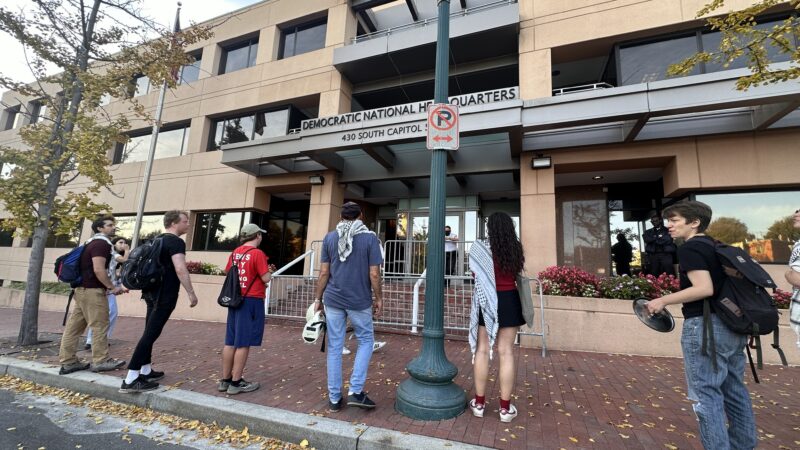
Speaking on a webinar with other Washington-area Jewish leaders today, Ron Halber, the CEO of the Jewish Community Relations Council of Greater Washington, excoriated the Democratic Socialists of America as an “evil” organization committed to driving Jews out of society, JI’s Marc Rod reports.
“I think they’re a fringe, radical, antisemitic organization,” Halber said, adding that the group wants to make Jews feel “isolated” and force them to “renounce Zionism” and their connection to Israel in order to participate in the political process…
New York City Mayor Zohran Mamdani released his city budget proposal this afternoon, which includes $26 million annually for the Office to Prevent Hate Crimes, a significant increase from its current budget of around $3 million…
Under Secretary of State for Economic Affairs Jacob Helberg hosted a lunch at the State Department with officials from Gulf Cooperation Council countries as well as Jordan to discuss technology supply chains and the India-Middle East-Europe Economic Corridor…
⏩ Tomorrow’s Agenda, Today
An early look at tomorrow’s storylines and schedule to keep you a step ahead
Keep an eye out in Jewish Insider for coverage of tonight’s forum of New York 12th Congressional District Democratic candidates moderated by JI Editor-in-Chief Josh Kraushaar.
The Israeli Embassy in Washington will host its belated Yom Ha’Atzmaut reception.
The Jewish Democratic Council of America’s conference in Washington continues, with speakers including Senate Minority Leader Chuck Schumer (D-NY), House Minority Leader Hakeem Jeffries (D-NY), Sen. Chris Coons (D-DE), Rep. Nancy Pelosi (D-CA), Minneapolis Mayor Jacob Frey, diplomat Dennis Ross, The Washington Institute’s Dana Stroul and former national security officials Jake Sullivan, Jeremy Bash and Jon Finer.
Stories You May Have Missed
DEMOCRATIC FAULT LINES
Race to replace Pelosi offers early test of whether progressive Jews welcomed on the left
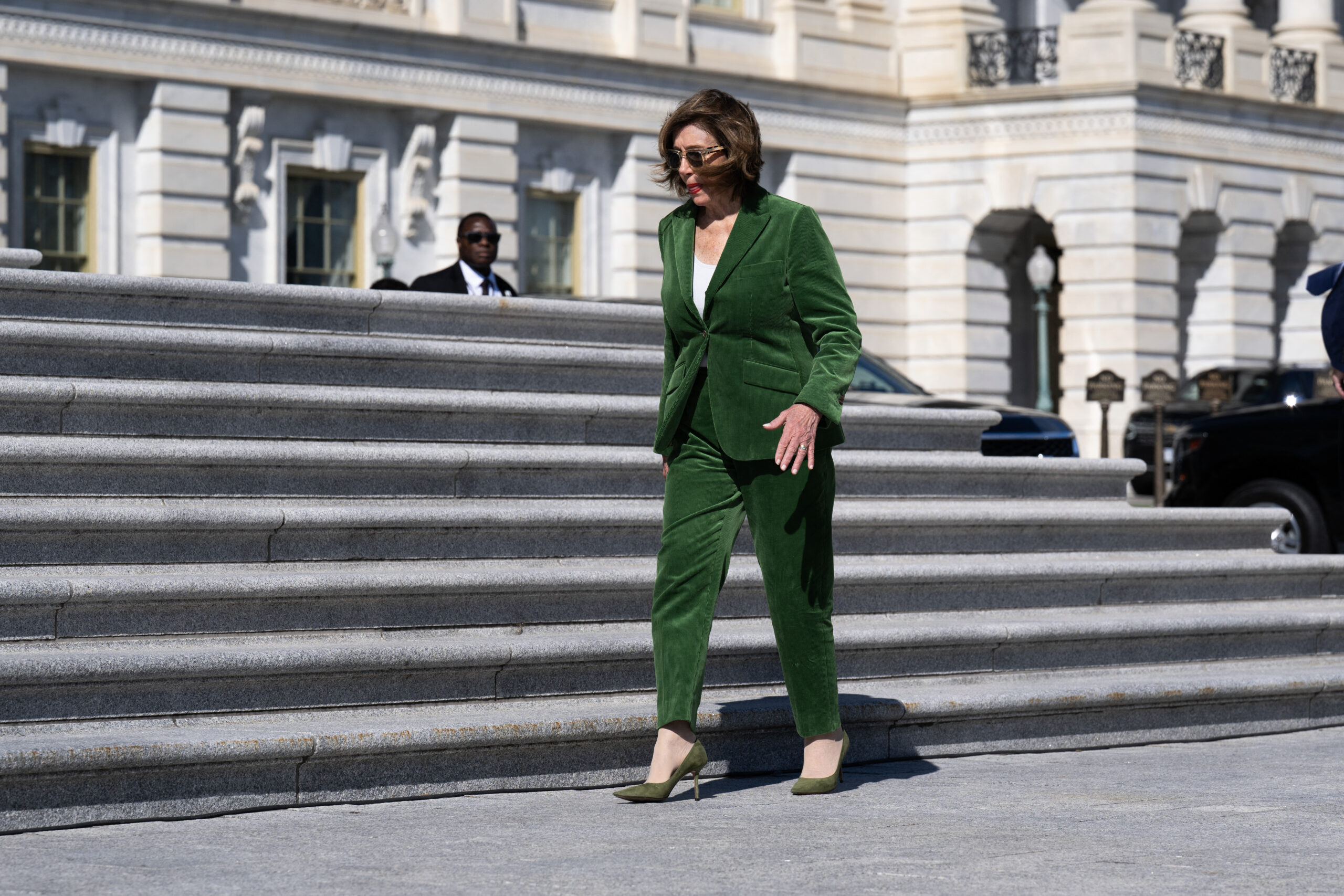
State Sen. Scott Wiener has called Israel’s actions in Gaza a genocide and is open to conditions on offensive aid to the Jewish state, but is still derided as a ‘Zionist’
ECONOMIC OUTLOOK
Israel’s business leaders see opportunity amid war, political shifts

‘I’m not an investment advisor, but you can see that if you were not in Israel in the past two years, you probably missed out, if Israel was not part of your portfolio,’ Seffy Zinger, chair of the Israel Securities Authority, told JI
Plus, Jew hatred pushes Pa. justice out of Dem Party
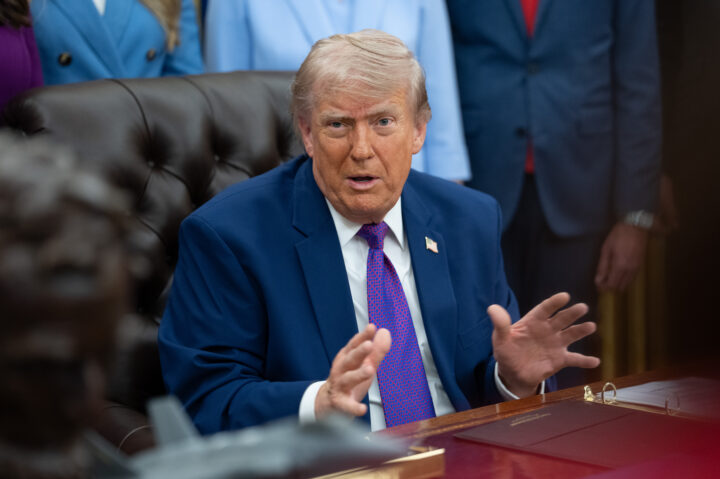
Aaron Schwartz/Sipa/Bloomberg via Getty Images
President Donald Trump speaks during a maternal healthcare event in the Oval Office of the White House in Washington, DC, US, on Monday, May 11, 2026.
This P.M. edition is reserved for our premium subscribers like you — offering a forward-focused read on what we’re tracking now and what’s coming next. Please don’t hesitate to share your thoughts and feedback by replying to this email.
📡On Our Radar
Notable developments and interesting tidbits we’re tracking
President Donald Trump sounded a pessimistic note today about the state of the ceasefire with Iran, telling reporters in the Oval Office it’s “unbelievably weak” and on “massive life support” while calling Iran’s proposal to end the war, which he rejected yesterday, a “piece of garbage.”
The president was set to meet this afternoon with his national security team to discuss next steps with Iran, including a potential return to military action and resumption of Project Freedom in the Strait of Hormuz, according to Axios.
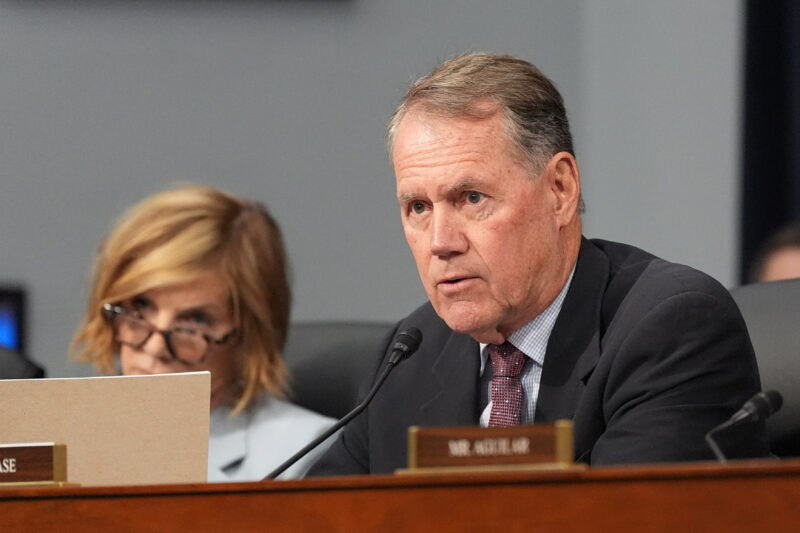
A number of hawkish Republican lawmakers are encouraging the president to resume military operations, including Senate Armed Services Committee Chairman Roger Wicker (R-MS), Sen. Lindsey Graham (R-SC) and Rep. Derrick Van Orden (R-WI)…
The UAE has secretly carried out military attacks on Iran during the course of the war, The Wall Street Journal reports, after being on the receiving end of the majority of Iran’s ballistic missile and drone attacks. Abu Dhabi’s targets have included an Iranian oil refinery, struck in early April as Trump was announcing the ceasefire…
Graham called for a potential “complete reevaluation” of Pakistan’s role as mediator between the U.S. and Iran following a CBS News report that Islamabad had permitted Iran to shelter some of its military aircraft from U.S. strikes in Iran. “Given some of the prior statements by Pakistani defense officials towards Israel, I would not be shocked if this were true,” Graham said…
Democratic Majority for Israel PAC is mounting a six-figure mail campaign to boost Bexar County sheriff’s deputy Johnny Garcia in his Democratic primary runoff against activist and conspiracy theorist Maureen Galindo. The campaign is slated to start tomorrow, exactly two weeks from primary day in Texas’ newly redrawn 35th Congressional District…
Axios spotlights the increasingly heated primary between Rep. Thomas Massie (R-KY) and Navy veteran Ed Gallrein, who is backed by Trump. The race, scheduled for May 19, has already seen $25.6 million in outside spending — including an ad from a pro-Massie group featuring antisemitic tropes targeting Jewish GOP donor Paul Singer — making it the most expensive U.S. House primary in history…
The New York Times highlights Nebraska’s contentious Senate race, where several candidates have been accused of acting as “plants” intending to siphon votes for the other party (and one candidate isn’t intending to run for Senate at all), as Democrats largely line up behind independent Dan Osborn, realizing their party brand has been tainted in the Midwest…
A new poll by New Jersey congressional candidate Adam Hamawy, who has made criticism of Israel a centerpiece of his campaign, found him leading the crowded Democratic primary field for the 12th District with 19% of likely voters, up from a March poll by his campaign that found him winning just 5%. His surge coincided with a spending blitz by the anti-Israel super PAC American Priorities, which poured $1 million into pro-Hamawy ads in the district…
New York state Assemblymember Alex Bores released his first ad of the Democratic primary for New York’s 12th Congressional District, highlighting his advocacy for AI regulation and involvement in workers’ rights as positioning him to take on Trump. Rep. Pat Ryan (D-NY), citing Bores’ AI focus, endorsed the former Palantir employee today…
Pennsylvania Supreme Court Justice David Wecht announced today that he is changing his party registration from Democrat to independent, citing increasing antisemitism in the Democratic Party. In his statement, Wecht said Democrats have changed since he served as vice chair of the state party 25 years ago: “Nazi tattoos, jihadist chants, intimidation and attacks at synagogues, and other hateful anti-Jewish invective and actions are minimized, ignored, and even coddled,” he said.
“Acquiescence to Jew-hatred is now disturbingly common among activists, leaders and even many elected officials in the Democratic Party. I can no longer abide this. So, I won’t,” he wrote…
Israeli Diaspora Minister Amichai Chickli prohibited anti-Israel influencer Tyler Oliveira from entering the country as he landed in Ben Gurion Airport today; Chikli told right-wing influencer Laura Loomer that Israel “has strong immigration policies, and if you come to Israel with the intent on inciting violence and hatred against Jewish people, you will not be allowed entry into our country.”
Oliveira has recently released videos purporting to expose welfare fraud among ultra-Orthodox communities in Kiryas Joel, N.Y., and Lakewood, N.J., widely denounced as antisemitic, which he discussed at length on Tucker Carlson’s podcast last week while again invoking antisemitic conspiracy theories…
Trump tapped Kari Lake, former far-right Arizona gubernatorial candidate and short-lived head of the U.S. Agency for Global Media, as ambassador to Jamaica, seen as a step down for the one-time close Trump ally. He also named far-right Pennsylvania state Sen. Doug Mastriano as ambassador to Slovakia…
Trump has invited several business leaders to join him on his trip later this week to China, including Elon Musk, outgoing Apple CEO Tim Cook, BlackRock’s Larry Fink, Meta’s Dina Powell McCormick, Goldman Sachs’ David Solomon, Citi’s Jane Fraser and Blackstone’s Stephen Schwarzman, among others…
⏩ Tomorrow’s Agenda, Today
An early look at tomorrow’s storylines and schedule to keep you a step ahead
Keep an eye out in Jewish Insider for a look at the race to succeed Rep. Nancy Pelosi (D-CA), where state Sen. Scott Wiener is testing whether progressive Jews can still win among the Democratic left.
Defense Secretary Pete Hegseth and Joint Chiefs Chairman Gen. Dan Caine will testify before the House Appropriations Defense Subcommittee as well as the Senate Appropriations Committee for Pentagon budget hearings. Later, FBI Director Kash Patel is also scheduled to appear before Senate Appropriations for a separate budget hearing.
Politico will host its Security Summit in Washington — speakers at the confab will include exiled Iranian Crown Prince Reza Pahlavi; former Homeland Security Secretary Alejandro Mayorkas; Sens. Deb Fischer (R-NE) and Elissa Slotkin (D-MI) and Reps. Adam Smith (D-WA), Jim Himes (D-CT) and Mike Turner (R-OH).
Elsewhere in Washington, the Anti-Defamation League will hold a reception to celebrate Jewish American Heritage Month.
In New York, the funeral for longtime ADL head and storied Jewish leader Abe Foxman, who died on Sunday at 86, will be held at Park Avenue Synagogue.
Democratic primary candidates for New York’s 12th Congressional District including Bores, George Conway and Micah Lasher will take part in a forum at West Side Institutional Synagogue moderated by JI Editor-in-Chief Josh Kraushaar.
Across the river, Democratic candidates seeking to unseat Rep. Tom Kean Jr. (R-NJ) in New Jersey’s 7th Congressional District — including Rebecca Bennett, Michael Roth, Tina Shah and Brian Varela — will participate in a debate moderated by the New Jersey Globe.
Israeli singer Noam Bettan will represent the Jewish state in Vienna for the first semifinal of the international singing competition Eurovision; Israel’s participation in the contest has been marked by protests and boycotts of several European countries, as well as accusations of Israel’s meddling in voting processes that have been dismissed by Eurovision organizers.
Stories You May Have Missed
HISTORY LESSONS
Minnesota Vikings owner Mark Wilf leads players, high school students on Holocaust Museum trip
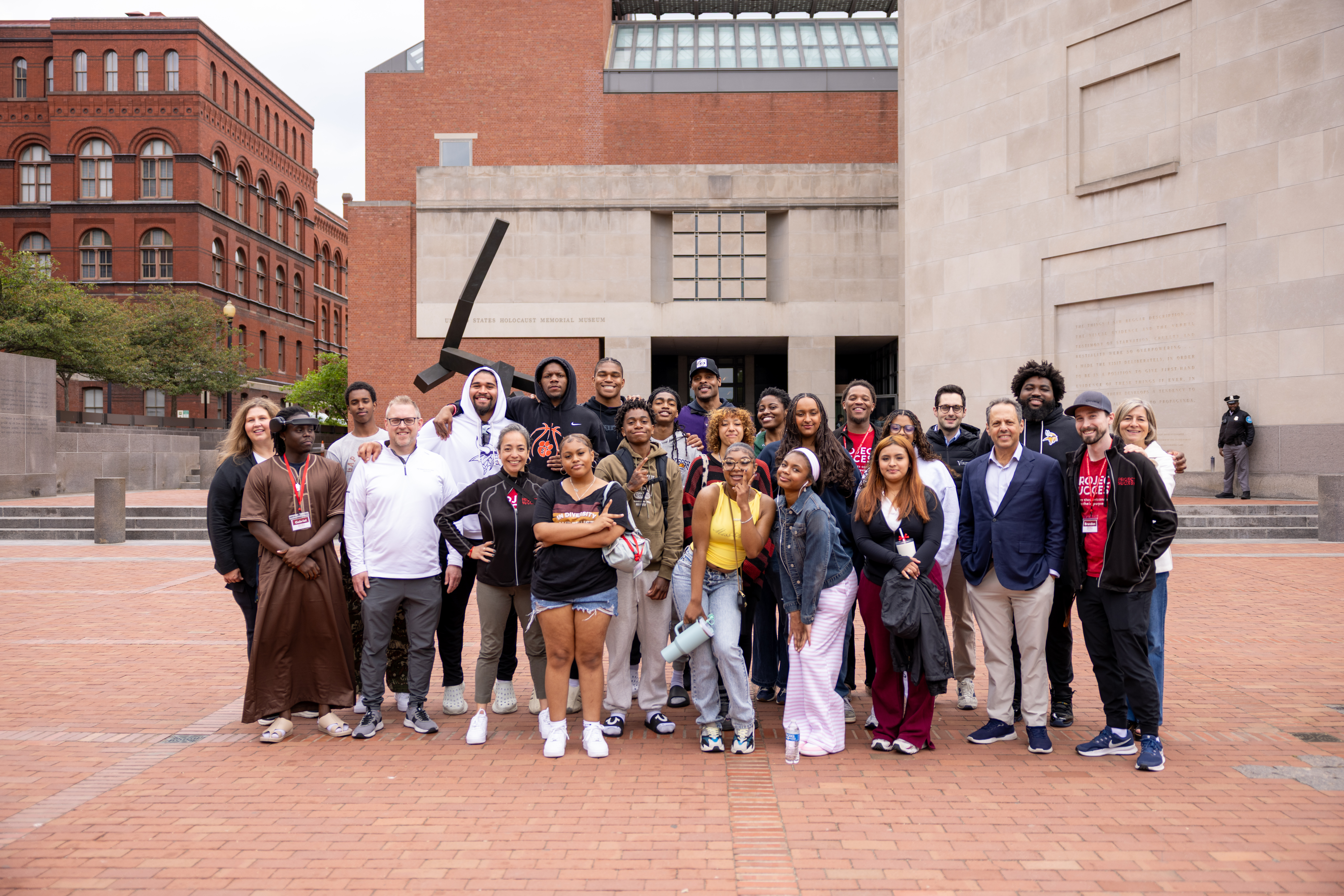
The players also toured the National Museum of African American History as part of the D.C. visit
RACE TO WATCH
In America’s largest Jewish district, Democratic candidates split over Israel, antisemitic protests

As Alex Bores and Jack Schlossberg woo the left, Micah Lasher emerges as favorite among Jewish voters
Plus, Colorado firebomber gets life in prison

Mark Makela/Getty Images
Sen. Susan Collins (R-ME) addresses the press on Nov. 6, 2022.
This P.M. edition is reserved for our premium subscribers like you — offering a forward-focused read on what we’re tracking now and what’s coming next. Please don’t hesitate to share your thoughts and feedback by replying to this email.
📡On Our Radar
Notable developments and interesting tidbits we’re tracking
Saudi Arabia and Kuwait have lifted restrictions on the U.S.’ use of their military bases and airspace after a series of tense calls between President Donald Trump and Saudi Crown Prince Mohammed bin Salman, according to The Wall Street Journal.
The administration is now seeking to restart Project Freedom and assist commercial ships in transiting the Strait of Hormuz, an effort Trump said he paused on Tuesday at the request of Pakistan “and other countries.” The renewed effort could begin as soon as this week…
Meanwhile, Iranian state media reported several explosions along the country’s coast in recent hours; an American official told Axios and Fox News that the U.S. attacked Iranian targets in the area, but claimed it did not constitute a return to war…
Rep. Tom Barrett (R-MI), who represents a Lansing-based swing district, introduced today the first authorization for use of military force (AUMF) that would limit the length and scope of U.S. military operations in Iran, Jewish Insider’s Marc Rod reports. A group of Senate Republicans is working on a similar effort, amid concerns that the war could be a political liability for the GOP in the midterm elections.
Barrett claimed that U.S. operations in Iran “are ongoing,” despite the administration’s notification to Congress that they had concluded as of May 1; the proposed authorization would expire on July 30 and would ban “sustained ground combat operations,” seizing or holding any territory and “nation-building” operations in Iran…
The Trump administration issued sanctions against actors involved in exploiting Iraq’s oil sector to fund Iranian terror activities, including Iraqi Deputy Minister of Oil Ali Maarij Al-Bahadly…
Sen. Susan Collins (R-ME) and her presumptive opponent, Democrat Graham Platner, released their first ads of the general election Senate race since Gov. Janet Mills dropped her Democratic primary bid.
Collins’ ad highlights her work in restoring a Maine infrastructure project without addressing Platner, while Platner’s ad slams Collins for “selling us out” to the “Epstein class” and for supporting the Iran war (Collins is one of the only Republicans who has supported a war powers resolution to end U.S. operations in Iran)…
Our Revolution, an advocacy group spun off of Sen. Bernie Sanders’ (I-VT) 2016 presidential campaign, today endorsed New York state Assemblymember Alex Bores in the competitive Democratic primary for the state’s 12th Congressional District, JI’s Will Bredderman reports.
Following Sanders, Our Revolution has aligned with student anti-Israel protesters and advocated against military aid to the Jewish state. Its endorsement of Bores emphasized the former Palantir employee’s signature issue — regulating artificial intelligence — and didn’t mention Israel policy…
A new Emerson College poll of likely Democratic primary voters in Massachusetts found Sen. Ed Markey (D-MA) leading his challenger, Rep. Seth Moulton (D-MA), 37-32%, ahead of the Sept. 1 primary. Nearly 30% of respondents, however, are still undecided if they want to support their incumbent senator or Moulton, 32 years Markey’s junior, who is positioning himself as a generational change.
Markey has been hostile to Israel and Jewish communal measures in Congress, particularly in the wake of the Israel-Hamas war in Gaza; Moulton had been known as more moderate, but shifted to the left on Israel issues after announcing his Senate run, including denouncing his previous affiliation with AIPAC…
State Department officials confirmed to several outlets that Israeli Ambassador to the U.S. Yechiel Leiter and Lebanese Ambassador to the U.S. Nada Hamadeh are expected to hold talks in Washington next Thursday and Friday to discuss the ongoing ceasefire, even as Israel and Hezbollah continued trading fire this week…
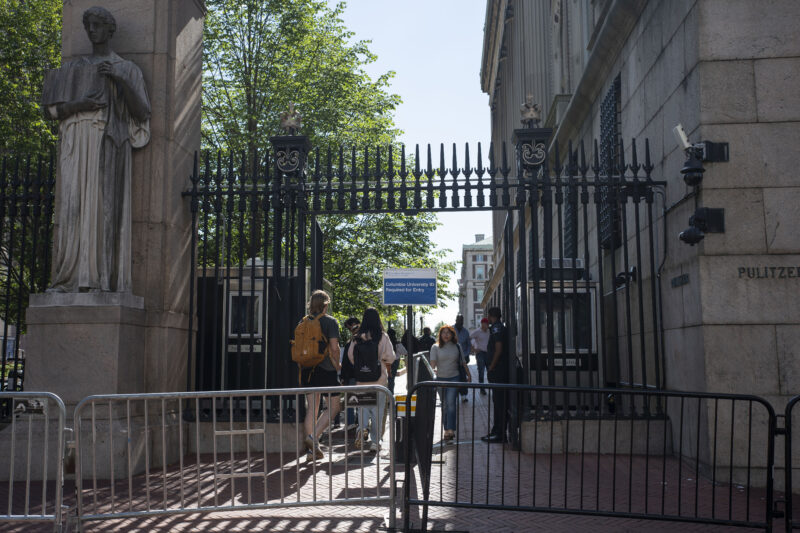
The federal Board of Immigration Appeals reopened deportation proceedings against Columbia University protest leader Mohsen Mahdawi, after a judge dropped the case in February. The Department of Homeland Security has characterized Mahdawi, who has not been charged with a crime, as a “ringleader” in anti-Israel protests at Columbia and claimed he admitted to being involved in and supporting terrorist violence…
Mohamed Soliman, the man accused of firebombing an Israeli hostage awareness march in Boulder, Colo., last June, was sentenced to life in prison today after pleading guilty to all 101 charges filed against him, including one count of murder for an 82-year-old victim who died of her wounds…
Religious leaders gathered at the White House this afternoon for an event marking the National Day of Prayer, including Rabbi Levi Shemtov, executive vice president of American Friends of Lubavitch (Chabad); Nathan Diament, executive director of the Orthodox Union Advocacy Center; and Rabbi A.D. Motzen, national director of government affairs at Agudath Israel. Environmental Protection Agency Secretary Lee Zeldin, who is Jewish, was among those who delivered remarks…
The Louis D. Brandeis Center for Human Rights Under Law sent a letter to Acting Attorney General Todd Blanche yesterday requesting that the Justice Department launch an investigation into whether Georgetown University must register under the Foreign Agents Registration Act, following a Washington Free Beacon report that the university agreed to consult the Qatari government on speakers and themes for its Islamophobia initiative, for which Qatar provided a grant…
The Israeli Health Ministry said there are currently no hantavirus patients in Israel, Hebrew media reported. One individual reportedly returned to Israel with a strain of hantavirus from Eastern Europe last year, but that strain, passed from rodents to humans, is a “different virus altogether” from the strain that spreads between humans that has been identified on a cruise ship en route to Spain, an infectious disease expert told The Times of Israel…
⏩ Tomorrow’s Agenda, Today
An early look at tomorrow’s storylines and schedule to keep you a step ahead
Keep an eye out in eJewishPhilanthropy for an interview with Rabbi Mike Uram, incoming chancellor of the Jewish Theological Seminary.
The Capital Jewish Museum in Washington is hosting an after-hours party this evening to celebrate Jewish American Heritage Month.
UJA-Federation of New York will host a Shabbat dinner tomorrow for young Wall Street professionals.
The Altneu Synagogue in New York City will host its second annual gala on Sunday, including a performance and awards show.
We’ll be back in your inbox with the Daily Overtime on Monday. Shabbat Shalom!
Stories You May Have Missed
DOHA DYNAMICS
Iran’s attacks on Qatar could prompt regional realignment, experts say

They said, however, it’s unlikely the rift with Tehran will engender any goodwill towards Israel
PROTEST POLITICS
New York Democrats condemn Park East demonstrators’ rhetoric as Mamdani doubles down

The mayor again condemned the Israeli real estate event while the governor, attorney general and council speaker ripped protesters’ extremist behavior
Plus, mohel madness continues in Belgium

Bill O'Leary/The Washington Post via Getty Images
A sign for Georgetown Law School, in front of the McDonough building in Washington, DC.
This P.M. edition is reserved for our premium subscribers like you — offering a forward-focused read on what we’re tracking now and what’s coming next. Please don’t hesitate to share your thoughts and feedback by replying to this email.
📡On Our Radar
Notable developments and interesting tidbits we’re tracking
President Donald Trump continues to send mixed signals about the direction of the Iran war, writing this morning on Truth Social that, “assuming Iran agrees to give what has been agreed to,” he will end the war as well as the blockade of Iranian ports. If Tehran does not agree (to what has apparently already been agreed to), “the bombing starts” at a “much higher level and intensity than it was before”…
Iran has struck over 200 U.S. military structures or pieces of equipment across the Middle East since the war began, according to a Washington Post analysis, including hangars, barracks, fuel depots, aircraft and radar, communications and air defense equipment…
White House official Seb Gorka announced while unveiling Trump’s U.S. counterterrorism strategy today that U.S. officials will meet with representatives from several foreign governments this week to ask for assistance in combating terrorism emanating from Iran and elsewhere, Jewish Insider’s Emily Jacobs reports.
The strategy highlights the Muslim Brotherhood as “the root of all modern Islamist terrorism” and says the U.S. will turn increased attention to Africa, as “straggler” ISIS terrorists from Syria and Iran migrate there in search of “ungoverned space” to take over…
Iranian Foreign Minister Abbas Araghchi said he held “a constructive meeting” in Beijing with Chinese Foreign Minister Wang Yi, where Wang affirmed “Iran’s right to uphold national sovereignty and national dignity”…
The Board of Peace, whose leaders met with Israeli Prime Minister Benjamin Netanyahu in Jerusalem yesterday, will not expect Israel to abide by the terms of the Gaza ceasefire if Hamas does not disarm, according to a document sent by Board of Peace head Nickolay Mladenov and advisor Aryeh Lightstone to the Palestinian technocratic committee governing Gaza, The Times of Israel reports.
“Failure by Hamas to accept the framework within a reasonable timeframe … shall render such commitments null and void,” the officials wrote, saying Israel will not be expected to refrain from military action or ensure humanitarian aid reaches the enclave…
Lebanese media reported the third round of Lebanon-Israel ambassador-level talks will take place in Washington next week.
Lebanese Prime Minister Nawaf Salam, meanwhile, called talk of a meeting directly between him and Netanyahu “premature,” despite Trump’s repeated claims that he was inviting the two leaders to the White House. “Lebanon is not seeking normalization with Israel, but rather peace,” Salam told reporters…
Belgium has indicted three mohels, Jewish religious authorities who conduct ritual circumcision, on criminal charges, Israeli Foreign Minister Gideon Sa’ar announced. The men were initially arrested in a raid last year for practicing medicine without a license, sparking outcry from the Jewish community.
Sa’ar called the move a “scarlet letter on Belgian society” and said the country has joined a “short and short and shameful list … of countries that use criminal law to prosecute Jews for practicing Judaism.” U.S. Ambassador to Belgium Bill White, who has also been outspoken on the issue, called it a “shameful stain on Belgium” that “is wrong and won’t be tolerated” by the U.S…
Israel will provide jet fuel to Germany, the Israeli energy ministry said, after Germany requested assistance in addressing its fuel shortage due to disruptions in the Strait of Hormuz…
Former Northwestern University President Morton Schapiro withdrew as Georgetown University Law Center’s commencement speaker after learning that several students had raised objections to his selection — due to pro-Israel opinion articles the Jewish academic had authored after the Oct. 7 Hamas attacks, JI’s Haley Cohen reports.
The school replaced Schapiro with David Cole, a professor who criticized congressional hearings on campus antisemitism as a form of “McCarthyism” aimed at chilling free speech and defended “antisemitic advocacy” as a First Amendment right…
Meanwhile, Rutgers University’s School of Engineering has canceled a commencement speech by alum and entrepreneur Rami Elghandour after students raised concerns about his social media activity, which is dedicated overwhelmingly to criticism of Israel.
Elghandour — who was an executive producer of the film “The Voice of Hind Rajab,” about a young Palestinian girl who died during the Israel-Hamas war — has consistently accused Israel of genocide, apartheid and police brutality and torture of Palestinians, and repeatedly praised the professor who made an unsanctioned jab at Israel at the University of Michigan’s recent commencement ceremony…
Rep. Mike Lawler’s (R-NY) political consulting firm was paid more than $72,000 by advocacy and political groups he controlled, Politico reports, in a scheme that watchdogs say is not illegal but raises conflict of interest concerns.
And a hacker stole over $3,000 of campaign funds from Sen. Cory Booker (D-NJ)…
Ted Turner, the founder of CNN who pioneered the 24-hour news cycle, died at 87…
⏩ Tomorrow’s Agenda, Today
An early look at tomorrow’s storylines and schedule to keep you a step ahead
Keep an eye out in Jewish Insider for a look at how New York Democrats are responding to yesterday’s threatening protest outside an Israeli real estate event at Park East Synagogue in Manhattan.
President Donald Trump will host Brazilian President Lula da Silva at the White House for talks on economic and security issues, despite Trump’s at-times acrimonious relationship with the left-wing South American leader.
Secretary of State Marco Rubio will meet with Pope Leo XIV at the Vatican following weeks of escalating attacks by Trump on the pontiff, including on Monday when Trump told Hugh Hewitt that the pope is “endangering a lot of Catholics” by being critical of the Iran war. Rubio is also set to meet on Friday with Italian officials including Prime Minister Giorgia Meloni, whom Trump has also clashed with since the beginning of the war.
The Washington Institute for Near East Policy will hold the keynote dinner of its annual Founders Conference — this year’s being focused on the Iran war — in Washington.
Stories You May Have Missed
MISSION TO WRAP
How Yossi Farro, the 22-year-old tefillin wrapper, chases influential Jews from coast to coast

The Chabad-raised New Yorker has been wrapping tefillin with tech founders, financiers and celebrities on the sidelines of the elite Milken Conference in L.A.
FRONT LINES
Jewish leaders warn of new front in anti-Israel campus activity: targeting Hillels

Efforts to delegitimize Hillels tell Jewish students ‘that their identity is suspect and that their safety and belonging is up to the vote of their fellow students,’ AJC’s Laura Shaw Frank said
Plus, Adam Hamawy defends terror ties

Selçuk Acar/Anadolu via Getty Images
Anti-Israel demonstrators gather at 'No Settlers on Stolen Land' protest against a Nefesh b'Nefesh event at the Park East Synagogue in Manhattan in November 2025.
This P.M. edition is reserved for our premium subscribers like you — offering a forward-focused read on what we’re tracking now and what’s coming next. Please don’t hesitate to share your thoughts and feedback by replying to this email.
📡On Our Radar
Notable developments and interesting tidbits we’re tracking
Defense Secretary Pete Hegseth insisted at a press conference this morning that the ceasefire with Iran is not over, despite repeated violations by both sides in recent days. “Ultimately, this is a separate and distinct project,” Hegseth said of the new U.S. mission to escort commercial shipping vessels through the Strait of Hormuz, “and we expected there would be some churn at the beginning.”
Joint Chiefs Chairman Gen. Dan Caine said similarly that even though Iran has fired on commercial vessels nine times, seized two container ships and attacked U.S. forces more than 10 times since the ceasefire began, that is all “below the threshold of restarting major combat operations”…
Can there be a ceasefire without a war? Secretary of State Marco Rubio claimed at his own press conference in the afternoon that Operation Epic Fury, as the Iran war was called, is finished, and the U.S. has moved onto Project Freedom in the strait, only hitting Iranian targets in response to attacks from Tehran.
President Donald Trump similarly downplayed the war effort, calling it a “skirmish” and telling reporters in the Oval Office that Iran still “wants to make a deal.” Meanwhile, Iran shot ballistic missiles, cruise missiles and drones at the UAE for the second day in a row, the Emirati Defense Ministry said…
A majority of Israelis believe that ending the war with Iran under the current conditions would undermine the country’s security, Jewish Insider’s Matthew Shea reports: 64% of Jewish Israelis said ending the war in its current state is “only slightly or not at all aligned” with Israel’s security interests, in a new poll by the Israel Democracy Institute. Nearly half of Arab Israelis (48.5%) said the same…
Incoming Israeli Air Force chief Maj. Gen. Omer Tischler, who assumed his role today, said at his handover ceremony that the IAF is “closely monitoring what is happening in Iran, and are prepared to take the entire Air Force eastward, if we are required to do so”…
Thirty House Democrats sent a letter to the Trump administration urging it to publicly acknowledge Israel’s nuclear weapons program, which neither Israeli nor U.S. officials have ever confirmed publicly.
The lawmakers, led by Rep. Joaquin Castro (D-TX), a vocal Israel critic, said the threat of nuclear warfare has escalated amid the Iran war: “The risks of miscalculation, escalation, and nuclear use in this environment are not theoretical,” they wrote. “Congress has a constitutional responsibility to be fully informed about the nuclear balance in the Middle East, the risk of escalation by any party to this conflict, and the administration’s planning and contingencies for such scenarios”…
Israeli Prime Minister Benjamin Netanyahu met with Board of Peace head Nickolay Mladenov in Jerusalem today, along with U.S. Ambassador to Israel Mike Huckabee, Board of Peace advisor Aryeh Lightstone, Netanyahu advisors Caroline Glick and Ophir Falk, venture capitalist Michael Eisenberg and tech entrepreneur Liran Tancman.
Mladenov said in a statement that the discussion was “positive and substantive” and the parties “reaffirmed our commitment to the full implementation” of the 20-point Gaza peace plan…
U.K. Prime Minister Keir Starmer, convening an emergency summit with Jewish, business, education and government leaders at 10 Downing St., called for a whole-of-society approach to combating antisemitism as the country’s Jewish community has been repeatedly targeted by violent attacks.
Starmer said officials are investigating whether Iran is behind the recent events, announced universities will be required to produce reports on antisemitism on campus and called for the government’s Arts Council to “claw back” funding from organizations that engage in antisemitism…
Tonight, the radical PAL-Awda group is planning a protest outside Park East Synagogue in Manhattan to disrupt a reported Israeli real estate event — Jewish New Yorkers will be watching to see how the protest is handled by city leaders as opposed to the group’s last demonstration outside the same synagogue in November, when protesters harassed attendees and chanted “death to the IDF” and “globalize the intifada.”
Similar to his stance on November’s protest, New York City Mayor Zohran Mamdani’s spokesperson told far-left Drop Site News the mayor is “deeply opposed” to the real estate event, which he said is promoting settlements that are “illegal under international law and deeply tied to the ongoing displacement of Palestinians.” Still, Mamdani’s administration said it has “also been clear that we are committed to ensuring safe entry and exit from any house of worship.”
Assemblymember Micah Lasher, who is running for New York’s 12th Congressional District, condemned the planned protest, saying its purpose is “to create fear in the hearts of Jewish New Yorkers,” while expressing optimism that the NYPD will “make sure that a protest does not turn into a gauntlet of hate through which Jews must pass”…
New Jersey congressional candidate Adam Hamawy, a trauma surgeon who has made criticism of Israel central to his campaign, defended his yearslong relationship with the “Blind Sheikh,” who was convicted of terrorism for his role in the 1993 World Trade Center bombing: Hamawy’s campaign told Politico that reporting on the candidate’s testimony in defense of Omar Abdel-Rahman at his trial are “guilt-by-association attacks on Muslim and Arab candidates”…
A new poll of the Texas GOP Senate runoff from the University of Houston’s Hobby School of Public Affairs found the race neck-and-neck just three weeks from Election Day: Attorney General Ken Paxton polled with a three-point lead over incumbent Sen. John Cornyn (R-TX), with 7% of likely runoff voters still undecided…
The Washingtonian released its list of Washington’s 500 most influential people of 2026, including: AIPAC’s Elliot Brandt, J Street’s Jeremy Ben-Ami, the Hudson Institute’s Michael Doran, the Center for International Policy’s Matt Duss, the Anti-Defamation League’s Aykan Erdemir, the Washington Post’s David Ignatius, Qatar lobbyist Jim Moran, the Quincy Institute’s Trita Parsi, the American Jewish Committee’s Julie Fishman Rayman, the Washington Institute’s Dennis Ross, New Jewish Narrative’s Hadar Susskind and SKDK’s Jill Zuckman…
⏩ Tomorrow’s Agenda, Today
An early look at tomorrow’s storylines and schedule to keep you a step ahead
Keep an eye out in Jewish Insider for a look at the latest front in the campus anti-Israel movement: student activists targeting Hillel, the world’s largest Jewish campus organization.
The Manhattan Institute will host its Alexander Hamilton Award Dinner, honoring former Sen. Ben Sasse (R-NE), who is suffering from terminal pancreatic cancer, and Jeff Yass, founding partner of Susquehanna International Group.
The Stephen Wise Free Synagogue will host a Democratic candidate forum for New York’s 12th Congressional District featuring Alex Bores, Micah Lasher, Jack Schlossberg and George Conway.
Stories You May Have Missed
RAHM UNBOUND
How Rahm Emanuel is recalibrating on Israel ahead of 2028
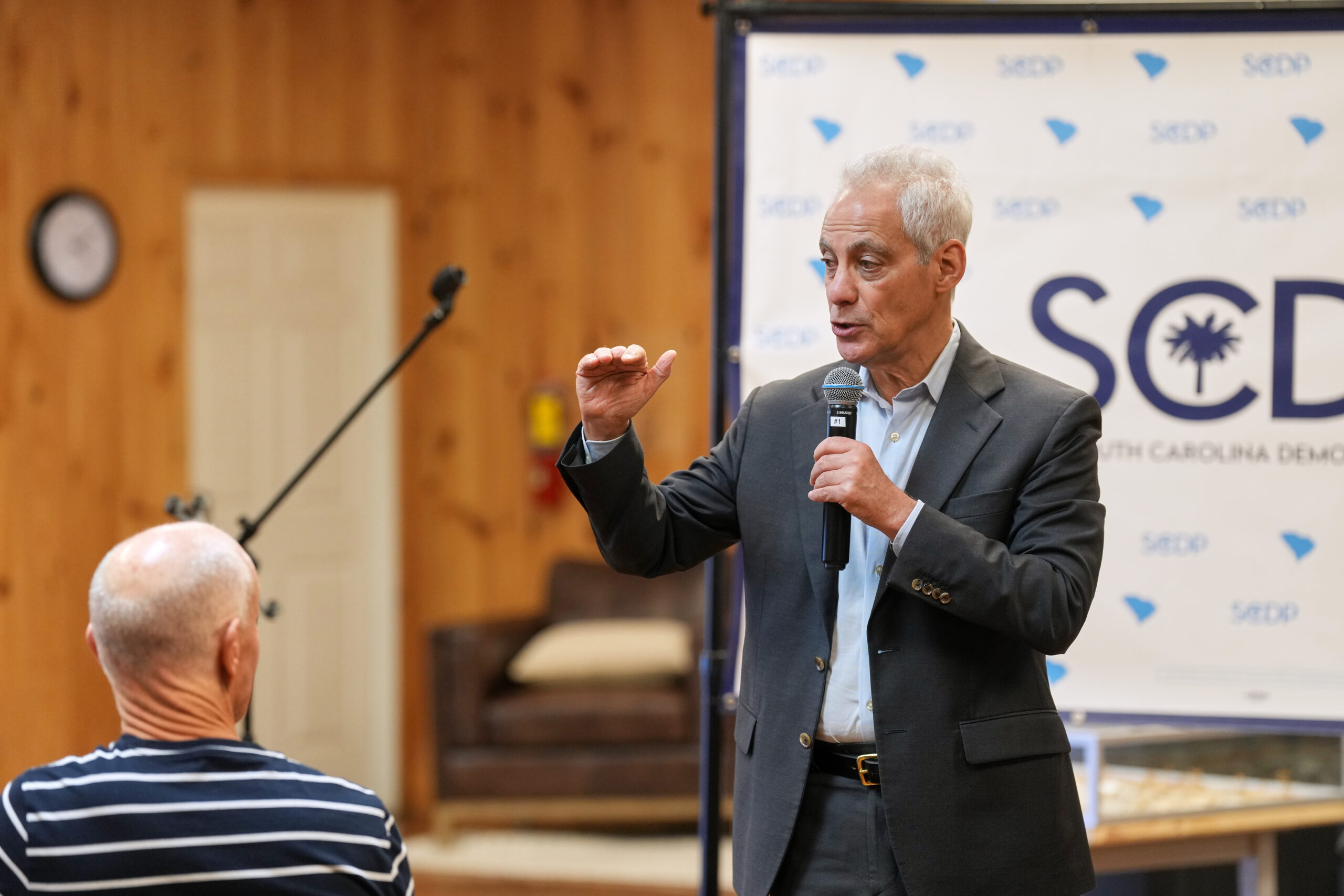
In an interview with Jewish Insider, Emanuel outlines his views amid changing winds in a Democratic Party increasingly antagonistic to the pro-Israel perspective that had long been central to his identity
FAMILIAR FACE
Direction of Dem policy group raises red flags after hiring of new leader with history of anti-Israel activism
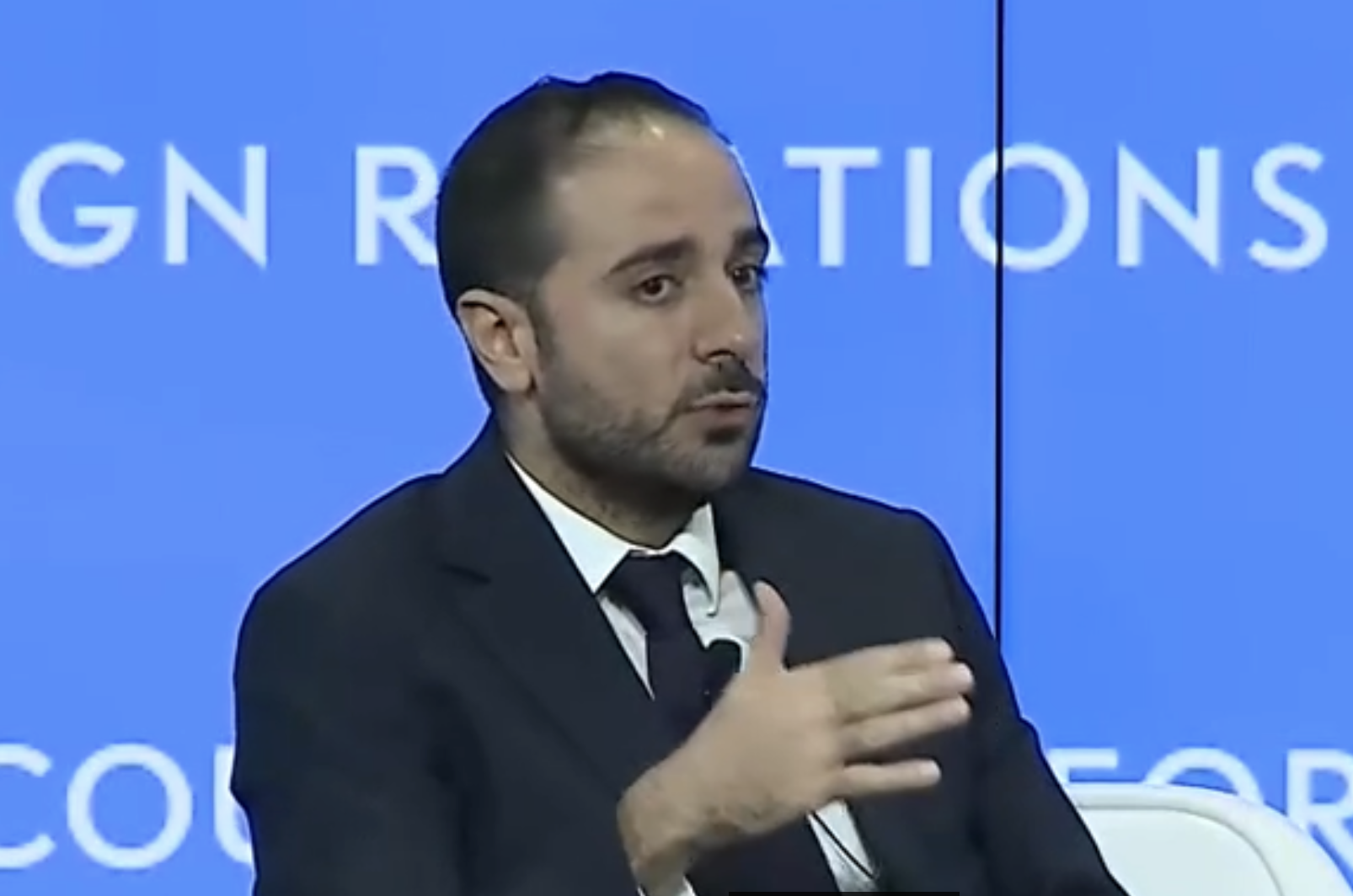
National Security Action named Maher Bitar, a former Biden official and Students for Justice in Palestine student activist, as its new leader
Plus, NYC Jews ring alarm bells after vandalism

Amirhossein KHORGOOEI / ISNA / AFP via Getty Images
Vessels are pictured anchored in the Strait of Hormuz off Bandar Abbas in southern Iran on May 5, 2026.
This P.M. edition is reserved for our premium subscribers like you — offering a forward-focused read on what we’re tracking now and what’s coming next. Please don’t hesitate to share your thoughts and feedback by replying to this email.
📡On Our Radar
Notable developments and interesting tidbits we’re tracking
The ceasefire between the U.S. and Iran appears to be on its last legs: Iran opened fire on U.S. warships and commercial vessels today, CENTCOM head Adm. Brad Cooper said, and shot several missiles and drones at the UAE for the first time since early April — some missiles were reportedly intercepted by the Iron Dome system Israel deployed to the country at the beginning of the war, while one drone sparked a fire at the Fujairah oil complex.
The UAE also condemned an Iranian drone attack on an oil tanker affiliated with the state-owned Abu Dhabi National Oil Company in the Strait of Hormuz, calling it an “act of piracy”…
Signaling a possible return to hostilities, President Donald Trump told Fox News Iran will be “blown off the face of the earth” if it fires on ships being escorted through the strait by the U.S. as part of “Project Freedom” (which he said on Truth Social this afternoon has already happened).
CENTCOM, meanwhile, announced it had assisted two U.S.-flagged merchant ships in successfully transiting the Strait of Hormuz as of this morning…
Trump’s allies largely continue to stand behind the war effort: Sen. Lindsey Graham (R-SC) called for “big, strong and short” strikes on Iran in defense of the UAE, while Pershing Square CEO Bill Ackman called the war “a very good one” that will resolve shortly with “a resolution that is going to be very, very favorable.”
Asked about the impact on investing in the region, Ackman told CNBC the Middle East “has been reset in a very positive way,” with an expansion of the Abraham Accords and a “peace dividend” likely to come…
A small group of Senate Republicans are working on an Authorization for the Use of Military Force to receive a vote in Congress if military operations in Iran do pick back up, Semafor reports, as many lawmakers agree that Trump has run out the 60-day clock for a war launched without congressional approval (some Republicans believe the clock has been paused during the ceasefire). The AUMF would “likely limit ground troops and provide for a finite period of conflict,” according to the outlet…
The Democratic Congressional Campaign Committee added eight more candidates to its “Red to Blue” program, a move that could offer additional resources to the campaigns, including several in competitive Democratic primaries, as the party seeks to shore up its strongest candidates and flip the House amid a poor national environment for Republicans.
The new recruits include union leader Bob Brooks in Pennsylvania’s 7th District as well as Bexar County sheriff’s deputy Johnny Garcia in Texas’ 35th — Garcia is facing Maureen Galindo, who has espoused a range of antisemitic conspiracy theories, in a runoff later this month…
Rep. Nancy Pelosi (D-CA) endorsed Rep. Al Green (D-TX) in his runoff later this month against Rep. Christian Menefee (D-TX), Green announced today. Jewish leaders have been optimistic about unseating Green in the member-on-member race — a consequence of Texas’ redistricting process — as Green has grown increasingly hostile to Israel in the wake of the Oct. 7 attacks.
The reported endorsement marks an improvement in the lawmakers’ relationship: Green and Pelosi had clashed during her time as House speaker over Green’s effort to impeach Trump…
Members of the Democratic National Committee are considering ways to limit Chair Ken Martin’s influence, The Bulwark reports, after his appearance on the “Pod Save America” podcast last week where he defended his decision not to release the “autopsy” report of the 2024 election and as members worry the organization is struggling to remain relevant and fiscally sound…
Politico details the Republican campaign to persuade Sen. John Fetterman (D-PA) to switch party affiliations and help keep Democrats from retaking the Senate in the midterm elections — despite Fetterman’s insistence that he will never renounce the Democratic Party…
Multiple Jewish homes, a synagogue and a Jewish center in Queens — which contains a preschool — were vandalized with swastikas and other antisemitic graffiti overnight, leaving Jewish residents questioning their safety amid a spate of antisemitic incidents, Jewish Insider’s Haley Cohen reports. The NYPD is searching for at least four individuals responsible for the vandalism, according to New York City Council Speaker Julie Menin.
“I have a Jewish community that is seriously questioning whether it is still welcome in this city,” said Democratic state Assemblymember Sam Berger. Mark Treyger, CEO of the Jewish Community Relations Council of New York, said, “This is not normal and we need city leaders to act now”…
New York magazine spotlights the race for New York’s 12th District and the personas of its four front-runners — social media guru Jack Schlossberg, establishment operative Micah Lasher, AI critic Alex Bores and reformed Republican George Conway — as each seeks to represent one of the wealthiest, oldest, most educated and most densely populated congressional districts in the country…
⏩ Tomorrow’s Agenda, Today
An early look at tomorrow’s storylines and schedule to keep you a step ahead
Keep an eye out in Jewish Insider for comments from U.S. Ambassador to the U.N. Mike Waltz on Iran and the Board of Peace, as JI’s Gabby Deutch spoke with him on the sidelines of the Milken Conference in Los Angeles.
Trump announced Defense Secretary Pete Hegseth and Joint Chiefs Chairman Gen. Dan Caine will hold a press briefing in the morning, amid cracks in the ceasefire with Iran.
The James W. Foley Legacy Foundation, which advocates for American hostages and journalists abroad, will honor Bar Ben Yaakov and Matan Sivek of the Hostages and Missing Families Forum as well as Qatari minister Mohammed Al-Khulaifi at its annual Freedom Award gala at the National Press Club in Washington, hosted by CBS’ Margaret Brennan.
The Manhattan Jewish Historical Initiative will induct honorees into its Jewish Hall of Fame in a ceremony at Bryant Park: Inductees include Ari Ackerman, philanthropist and co-owner of the Miami Marlins; New York City Council Speaker Julie Menin; singer-songwriter Melissa Manchester; and Ariel Zwang, CEO of the American Jewish Joint Distribution Committee.
CNN will hold a primary debate for California’s crowded gubernatorial race including Republicans Chad Bianco and Steve Hilton and Democrats Xavier Becerra, Matt Mahan, Katie Porter, Tom Steyer and Antonio Villaraigosa.
Vice President JD Vance is expected to appear at a campaign event for Rep. Zach Nunn (R-IA) in Iowa after several postponements — the event, which had been dubbed “Top Nunn” in reference to the “Top Gun” movies, had originally been scheduled for mid-March but drew criticism when several servicemembers from Nunn’s district were killed in the U.S. war with Iran.
Stories You May Have Missed
RESOLUTION REJECTED
New School rejects student government vote to cut ties, defund Hillel

Hillel called the vote ‘deeply painful and antisemitic’; the New School said it would ensure the student government ‘acts within its actual purview’ moving forward
CAMPAIGN CONTROVERSY
Far-left Pa. candidate pushed Bondi Beach conspiracy theory
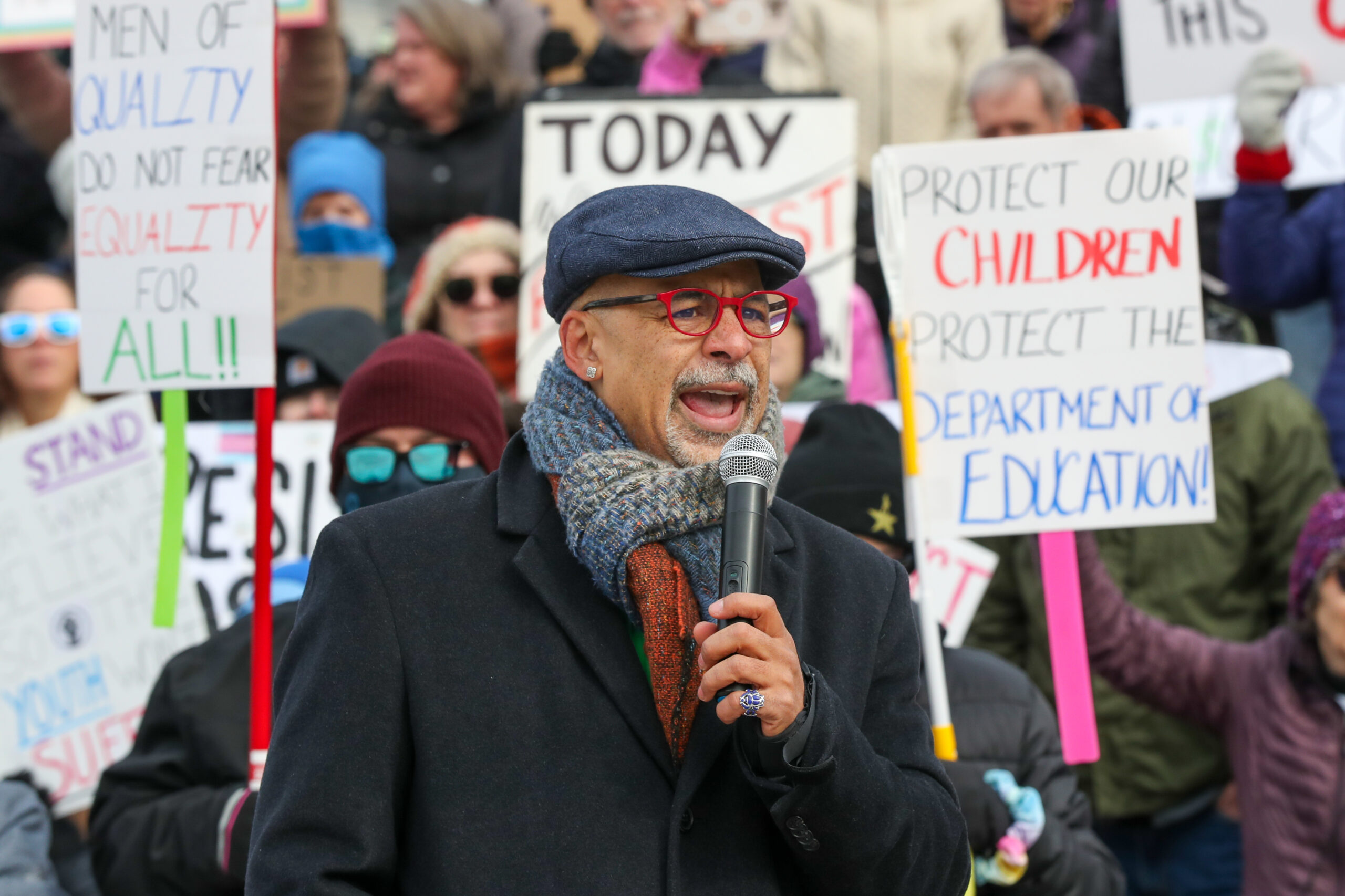
Chris Rabb, the DSA-endorsed House candidate in a Philadelphia congressional race, blamed the Sydney Hanukkah attack on ‘Zionists’
Plus, Keir Starmer vows protection for British Jews

Daryn Slover/Portland Press Herald via AP
Senate candidate Graham Platner acknowledges the large crowd that attended Platner's town hall, Sept. 25, 2025, at Bunker Brewing in Portland, Maine.
This P.M. edition is reserved for our premium subscribers like you — offering a forward-focused read on what we’re tracking now and what’s coming next. Please don’t hesitate to share your thoughts and feedback by replying to this email.
📡On Our Radar
Notable developments and interesting tidbits we’re tracking
Maine Gov. Janet Mills, citing financial constraints, dropped her campaign for U.S. Senate this morning, leaving oyster farmer Graham Platner as the Democratic nominee to face off against Sen. Susan Collins (R-ME) in the general election, Jewish Insider‘s Matthew Kassel reports.
Senate Minority Leader Chuck Schumer (D-NY) and Sen. Kirsten Gillibrand (D-NY), the Democratic Senatorial Campaign Committee chair, praised Mills and said they will “work with” Platner to defeat Collins — a tepid endorsement that underscores Democratic leadership’s uncomfortable relationship with the far-left nominee in a state that they have targeted as one of their best pick-up opportunities this cycle…
The Senate rejected Democrats’ sixth war powers effort to force the Trump administration to end the war in Iran. The latest resolution, sponsored by Sen. Adam Schiff (D-CA) and Schumer, failed by a 50-47 vote, with Collins flipping her vote to side with Democrats for the first time…
In testimony before the Senate Armed Services Committee, Defense Secretary Pete Hegseth claimed the 60-day timeline for the administration to seek congressional authorization to continue the war in Iran has been “paused” during the ongoing ceasefire. The White House said separately it is in “active conversations” with lawmakers about the deadline which, under a traditional calendar, is set to occur tomorrow…
President Donald Trump announced the U.S. is “studying and reviewing the possible reduction of troops in Germany,” days after Chancellor Friedrich Merz claimed the U.S. is being “humiliated” by Iranian leadership.
Merz “should spend more time … fixing his broken country … and less time on interfering with those getting rid of the Iran Nuclear threat,” Trump wrote on Truth Social. Germany currently hosts the largest U.S. air base in Europe as well as tens of thousands of U.S. troops…
The House passed a bill to fund most of the Department of Homeland Security, ending the monthslong shutdown a day before the department was set to run out of emergency funds to pay employees.
The bill funds agencies including the Coast Guard, Federal Emergency Management Agency and Transportation Security Administration and includes $300 million in funding for the Nonprofit Security Grant Program, an increase over the $274.5 million allocated for the program last year but still short of requests from the Jewish community of up to $1 billion. Republicans will now attempt to fund immigration enforcement through a separate budget reconciliation process…
Following the stabbing of two Jewish men in a London suburb yesterday, the latest in a series of attacks against London’s Jewish community, British Prime Minister Keir Starmer delivered an address pledging policy changes and a shift in government attitudes toward antisemitic antagonism, JI’s Haley Cohen reports.
Among other policies, Starmer called to prosecute the use of the phrase “globalize the intifada”; introduce legislation to shut down charities that promote antisemitic extremism; prevent “hate preachers” from entering the country and speaking on college campuses; and work to hasten sentencing of perpetrators of antisemitic attacks…
Evanston, Ill., Mayor Daniel Biss, the Democratic nominee for Illinois’ 9th Congressional District, urged the state’s Legislature to reverse a policy he had once supported as a member of the General Assembly — a ban on investing in companies that engage in the Boycott, Divestment and Sanctions movement against Israel. Biss vowed that if elected to Congress, as expected in the deep-blue district, he will oppose similar policies that seek to counteract the BDS movement.
“Whether or not you believe in boycotting Israel or Israeli products from the occupied West Bank, or in boycotts in general, we should all be able to agree that our government must not be wielded to stop people from using their economic agency to advocate for their values,” Biss wrote on Substack…
Former Boca Raton Mayor Scott Singer, a Republican, has shifted his congressional bid from Florida’s 23rd Congressional District to the newly drawn 25th District. The seat is currently by Rep. Debbie Wasserman Schultz (D-FL) but is much more Republican-friendly under the new lines, one of several eliminated districts represented by pro-Israel Democrats. Singer told JI when he was attempting to unseat Rep. Jared Moskowitz (D-FL) in the 23rd that his alignment with the GOP has been shaped by his Jewish faith…
⏩ Tomorrow’s Agenda, Today
An early look at tomorrow’s storylines and schedule to keep you a step ahead
Keep an eye out in Jewish Insider for a look at where British Jews stand as their government signals it will take more seriously the spate of violent attacks targeting their community.
The McCain Institute’s Sedona Forum kicks off in Arizona, with speakers including Sens. Mark Kelly (D-AZ), Ruben Gallego (D-AZ), Sheldon Whitehouse (D-RI) and Peter Welch (D-VT), Reps. Don Bacon (R-NE), Jason Crow (D-CO) and Mike Lawler (R-NY), Arizona Gov. Katie Hobbs, Munich Security Council CEO Benedikt Franke, outgoing World Food Program head Cindy McCain, AFRICOM Commander Gen. Dagvin Anderson, former NATO Ambassador Kurt Volker and Arizona Cardinals owner Michael Bidwill.
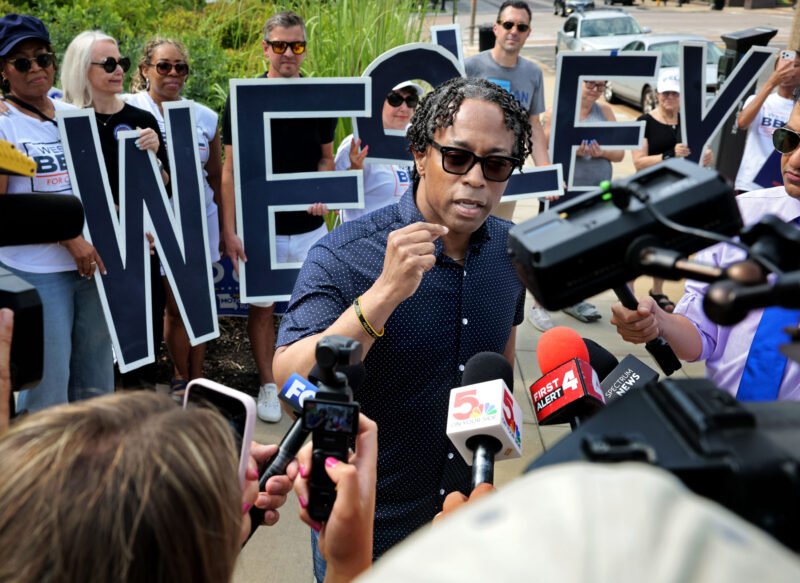
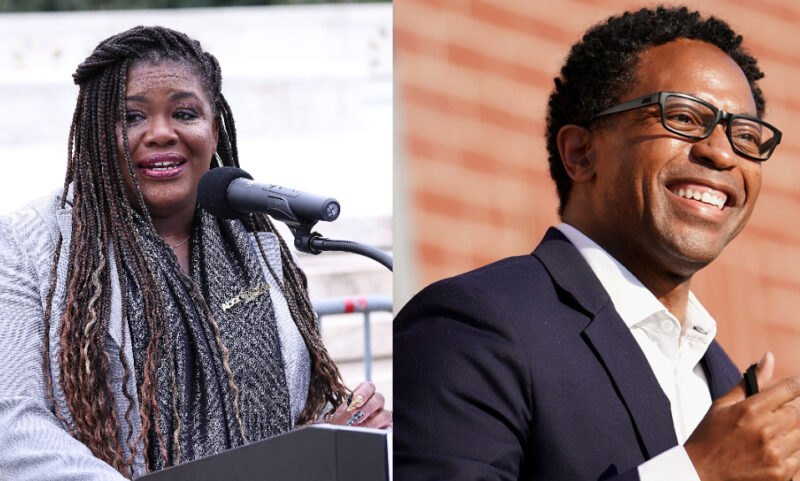
Former Rep. Cori Bush (D-MO) will join far-left influencer Hasan Piker’s Twitch stream in her effort to win back her seat from Rep. Wesley Bell (D-MO).
We’ll be back in your inbox with the Daily Overtime on Monday. Shabbat Shalom!
Stories You May Have Missed
SPECIAL ELECTION SIGNALS
Mamdani bruised but not beaten after City Council candidate loss
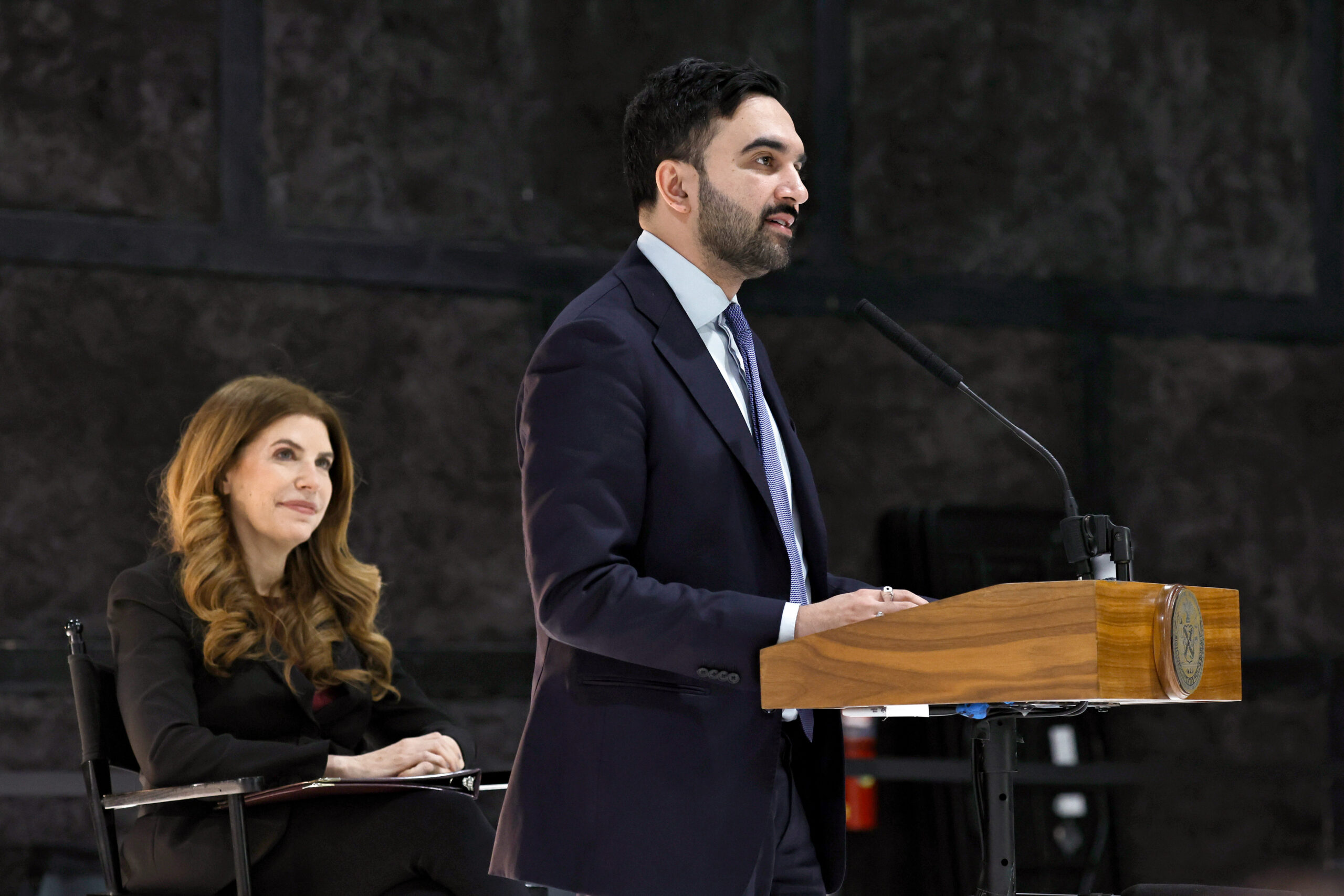
The result of the special election signals Council Speaker Julie Menin’s growing political clout, but doesn’t guarantee an override of Mamdani’s veto of her buffer zone legislation
WAR WEARY
GOP senators express uncertainty about authorizing extension of Iran war
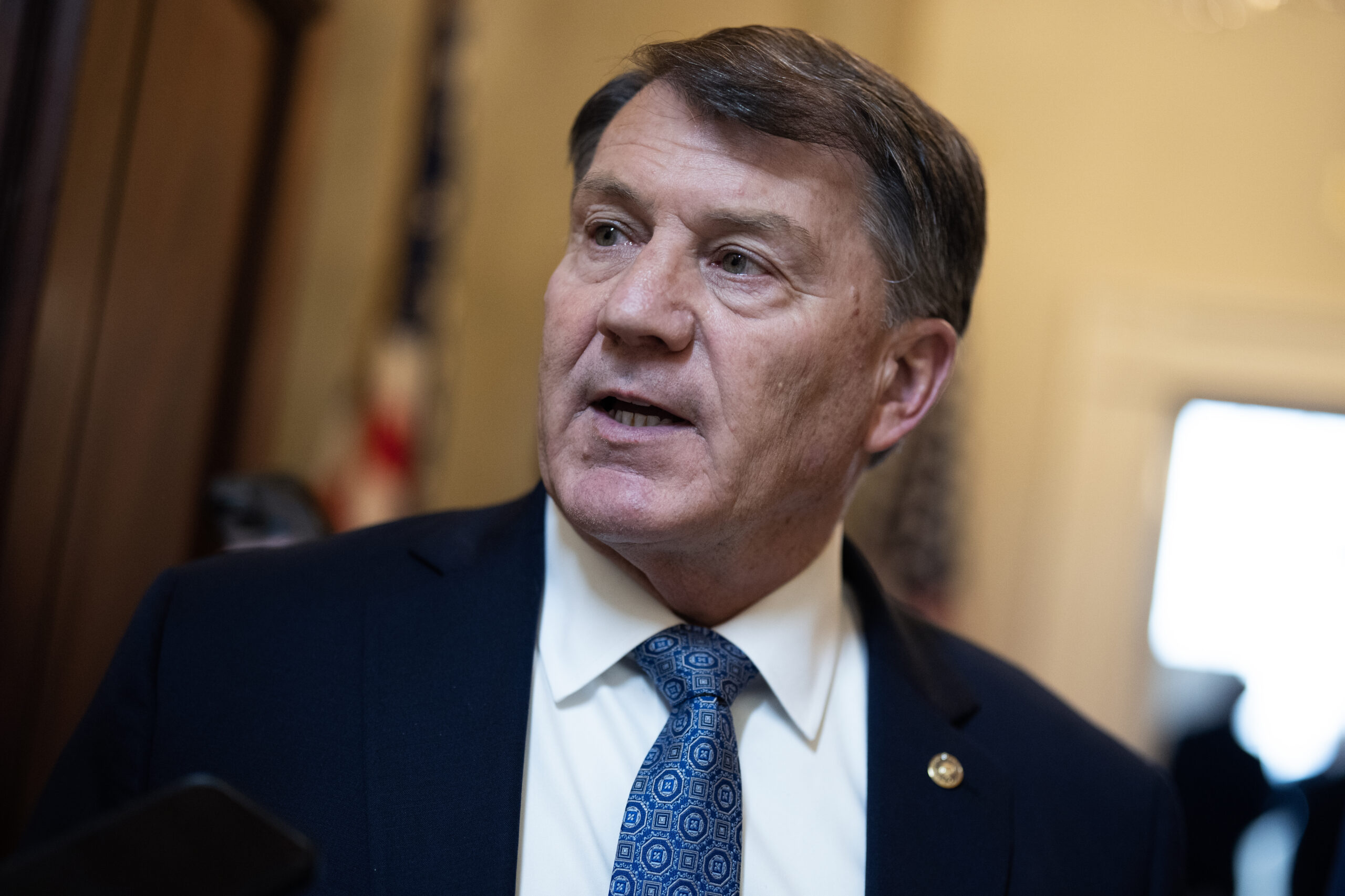
Under the War Powers Resolution, a president cannot sustain military operations for more than 60 days without congressional approval or requesting a 30-day extension
Plus, Trump rejects latest Iran proposal

Chip Somodevilla/Getty Images
Michigan Attorney General Dana Nessel speaks on stage during the third day of the Democratic National Convention at the United Center on August 21, 2024 in Chicago, Illinois. Delegates, politicians, and Democratic Party supporters are in Chicago for the convention, concluding with current Vice President Kamala Harris accepting her party's presidential nomination.
This P.M. edition is reserved for our premium subscribers like you — offering a forward-focused read on what we’re tracking now and what’s coming next. Please don’t hesitate to share your thoughts and feedback by replying to this email.
📡On Our Radar
Notable developments and interesting tidbits we’re tracking
Two Jewish men in a heavily Jewish suburb of London were stabbed this morning in what police have deemed a terrorist incident, Jewish Insider’s Haley Cohen reports. The victims — one in his 70s and one in his 30s — remain hospitalized in stable condition, according to the Metropolitan Police, after the attack shortly before noon in Golders Green.
The suspect, a 45-year-old man who also attempted to stab law enforcement, was arrested on suspicion of attempted murder. The man had “a history of serious violence and mental health issues,” Metropolitan Police Commissioner Mark Rowley said. It’s the latest in a string of violent attacks against Jewish individuals and sites around London in recent months…
President Donald Trump said he is rejecting Iran’s latest proposal to end the war, which included opening the Strait of Hormuz and postponing talks on its nuclear program, telling Axios that he will maintain the U.S.’ naval blockade until Tehran agrees to address its nuclear ambitions.
“The blockade is somewhat more effective than the bombing. They are choking like a stuffed pig,” the president said. Still, CENTCOM has planned a “short and powerful” wave of strikes on Iran to spur progress in negotiations, sources told the outlet…
In a heated and lengthy House Armed Services Committee hearing, Defense Secretary Pete Hegseth repeatedly defended the execution of the Iran war, including the blockade of the Strait of Hormuz and the cost to American taxpayers, and stood by the ouster of several top defense officials under questioning from both Democrats and Republicans. The Pentagon’s chief financial officer, Jules Hurst III, said the Iran war has cost the U.S. “about $25 billion” already, most of it being spent on munitions…
Even as Trump intends to keep the pressure on Iran, the USS Gerald R. Ford aircraft carrier will reportedly leave the Middle East and sail back to Virginia in the coming days after having been deployed for a record 10 months at sea. Two other aircraft carriers are still operating nearby in the Arabian Sea to enforce the blockade…
Israeli Prime Minister Benjamin Netanyahu’s office denied Hebrew media reports that he was planning a visit to the U.S. next week, saying “no such plans are currently in place.” Trump has said he intends to invite Netanyahu and Lebanese President Joseph Aoun to the White House in the near future…
Michigan Senate candidate Mallory McMorrow deleted thousands of old social media posts in which she disparaged the state of Michigan and expressed a range of progressive views, including comparing Trump and his supporters to Nazis, according to a CNN investigation. The state senator is now positioning herself as a more pragmatic candidate…
Two-thirds of Michigan Democratic Party delegates voted for Amir Makled, an attorney who has expressed support for Hezbollah, among other anti-Israel stances, as one of the Democratic nominees for University of Michigan regent at the state party convention earlier this month, according to internal voting records obtained by The Detroit News.
The widespread support for Makled included far-left Jewish attorney general nominee Eli Savit and United Auto Workers President Shawn Fain, but the majority of members of Congress and the state Legislature in attendance voted for unseated Jewish regent Jordan Acker over Makled…
Elected Jewish Democrats are speaking out on the antisemitic vitriol they face on a regular basis: It’s “excruciating and agonizing,” Michigan state Rep. Noah Arbit told The New York Times. “We have never seen anything like this in my lifetime in public office,” Rep. Brad Sherman (D-CA) said.
Michigan Attorney General Dana Nessel shared, “I rarely, if ever, get threats for being gay or for being a woman. They have been fast and furious and nearly always about me being Jewish,” including regularly being called an “AIPAC whore.” Rep. Greg Landsman (D-OH) added, “There are times when it feels like people don’t want you as part of the political system at all”…
Kennedy scion Jack Schlossberg has released his first paid ad in his run for New York’s 12th Congressional District, spotlighting one of his highest-profile endorsees — former House Speaker Nancy Pelosi (D-CA). Even as Schlossberg narrowly leads in several polls of the crowded Democratic primary, the ad is emblematic of the political newcomer’s challenge in the race as he seeks to prove he’s experienced enough to represent the district…
The State Department issued a report to Congress finding that the Palestinian Authority has continued to issue payments and benefits to terrorists and their families in its “pay-for-slay” program “through new mechanisms and under a different name,” despite PA President Mahmoud Abbas having pledged to end the program. PA officials also “continue to fail to publicly condemn acts of violence against U.S. and Israeli citizens in violation of the Taylor Force Act,” the report says…
The Supreme Court issued a ruling today in a Louisiana gerrymandering case weakening a key provision of the Voting Rights Act, limiting when states can draw majority-minority congressional districts. Amid a flurry of mid-decade redistricting already underway, the decision could prompt new map changes and legal challenges ahead of November’s midterm elections and the 2028 cycle…
⏩ Tomorrow’s Agenda, Today
An early look at tomorrow’s storylines and schedule to keep you a step ahead
Keep an eye out in Jewish Insider for a look at how Senate Republicans are approaching the impending 60-day deadline laid out in the War Powers Act for President Donald Trump to seek congressional approval for the war in Iran.
Defense Secretary Pete Hegseth and Joint Chiefs Chairman Gen. Dan Caine will face further questioning at a hearing of the Senate Armed Services Committee on the Pentagon’s 2027 budget, after a similar hearing in the House today.
The Department of Justice will host this year’s federal interagency Holocaust remembrance program, featuring remarks from Holocaust survivor Frank Cohn, U.S. Special Envoy for Holocaust Issues Ellen Germain, Assistant Attorney General Harmeet Dhillon and Under Secretary of State for Economic Affairs Jacob Helberg.
Stories You May Have Missed
NON-NEGOTIABLE VALUES
Politico owner Axel Springer doubles down on corporate principles

‘Nobody should work for Axel Springer despite the essentials or in disagreement with one of the essentials,’ the company’s CEO told Politico staff on Monday
CLAIM OF ANTISEMITISM
Mallory McMorrow reveals Michigan Democratic activist accosted her husband with antisemitic slur
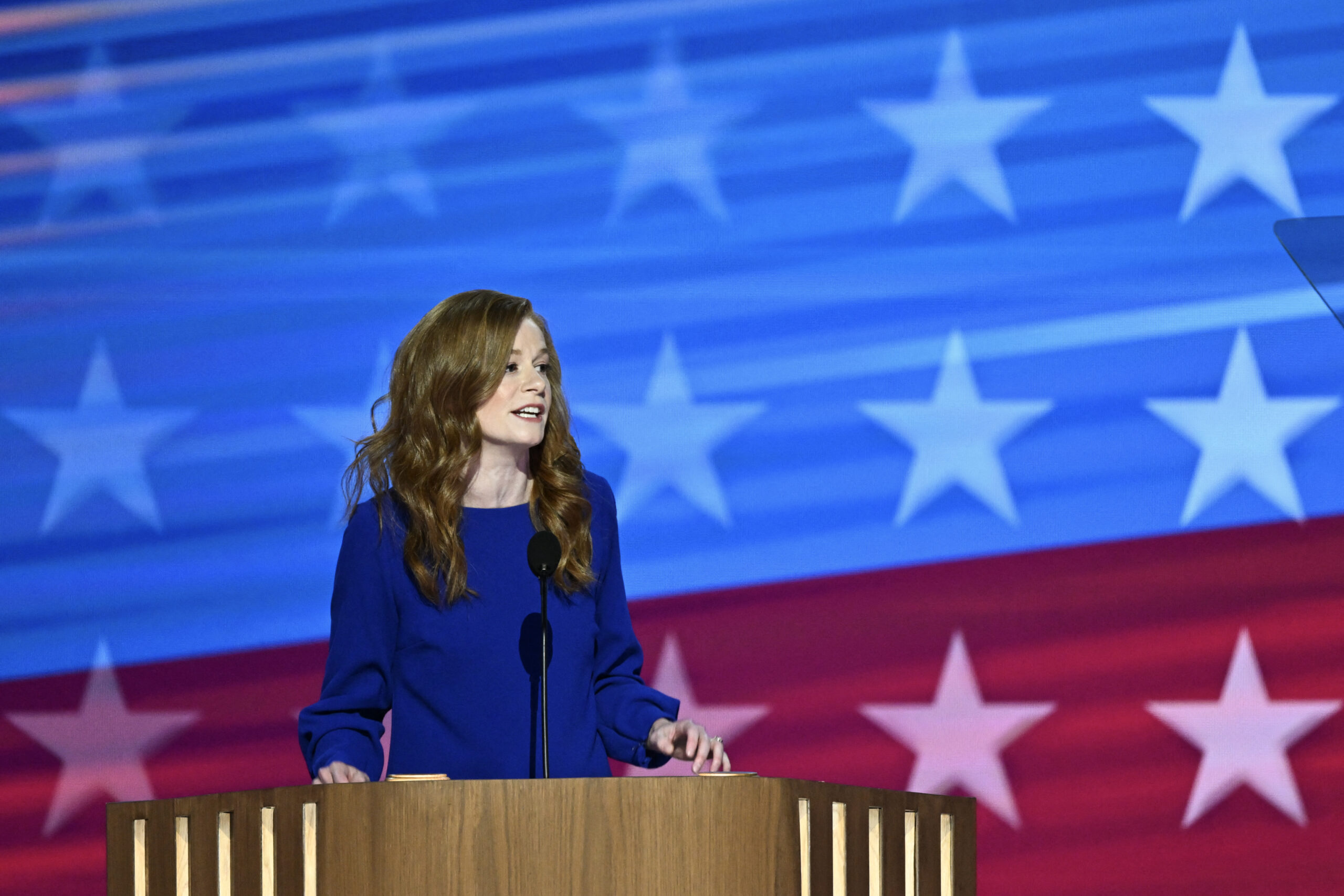
The Senate candidate shared that her husband, who is Jewish, was verbally attacked in front of their 5-year-old daughter
Plus, Georgia goes after foreign funding of K-12 schools

Ryan Lim / AFP via Getty Images
ADNOC Gas, a subsidiary of the Abu Dhabi National Oil Company, facility in Abu Dhabi on March 3, 2026.
This P.M. edition is reserved for our premium subscribers like you — offering a forward-focused read on what we’re tracking now and what’s coming next. Please don’t hesitate to share your thoughts and feedback by replying to this email.
📡On Our Radar
Notable developments and interesting tidbits we’re tracking
The UAE announced it will leave OPEC effective May 1, in a significant blow to the international body largely led by Saudi Arabia that coordinates production among petroleum exporting countries. Abu Dhabi — which joined OPEC nearly 60 years ago — said it will pursue a new independent strategy, including increasing its oil output, amid the Iran war’s disruption of global energy markets…
Iran, meanwhile, is trying to avoid shutting down its own oil production and wait out the U.S. blockade by finding new ways to store and ship its crude oil, including using improvised containers and transport routes to China over land. Analysts predict Tehran will fill its remaining storage capacity in less than three weeks.
President Donald Trump claimed this morning that Iran informed the U.S. “they are in a ‘State of Collapse’” and “want us to ‘Open the Hormuz Strait,’ as soon as possible, as they try to figure out their leadership situation”…
Just as King Charles III is enjoying a state visit to Washington, including delivering his first address to a joint session of Congress this afternoon, remarks made by U.K. Ambassador to the U.S. Sir Christian Turner have resurfaced: Turner alleged in a discussion with British students in Washington in February that the U.S.’ only “special relationship” is “probably Israel” and not the U.K., according to audio obtained by the Financial Times…
Sen. Bernie Sanders (I-VT) predicted more Democrats, and some Republicans, will join his efforts to block arm sales to Israel, which he intends to continue, after the majority of the Democratic caucus voted in favor of his most recent Joint Resolutions of Disapproval. “The problem for the Democrats is that AIPAC is enormously powerful … but [Democrats are] increasingly choosing to support what the people back home want,” he told Politico.
Sanders also agreed with characterizations that he might be considered the new Democratic leader over Senate Minority Leader Chuck Schumer (D-NY), given that more of the caucus voted with him than with Schumer, who opposed the measure…
Democratic Majority for Israel’s PAC had placed an ad buy in support of nonprofit leader Denise Powell in the Democratic primary for Nebraska’s swing 2nd Congressional District, but pulled it after the group New Democrat Majority increased its spending in support of Powell, Punchbowl News reports…
Politico surveys the state of Kentucky’s 4th Congressional District, where Navy veteran Ed Gallrein is locked in a dead heat with incumbent Rep. Thomas Massie (R-KY) ahead of the May 19 primary, despite Gallrein’s endorsement from Trump and millions of dollars in anti-Massie spending, including from pro-Israel groups, as Massie maintains a loyal following…
Education Secretary Linda McMahon claimed today that she’s trying to rebuild and expand the Department of Education’s Office for Civil Rights, even as the administration pushes for tens of millions in funding cuts this year, Jewish Insider‘s Marc Rod reports.
At a Senate Appropriations subcommittee hearing, McMahon claimed that the 2027 budget submitted by the Trump administration contains more funding to hire lawyers at OCR, refusing to acknowledge, to lawmakers’ bewilderment, that the administration’s budget calls for a 35% funding cut to the office…
Following a report spotlighting Qatari funding in Georgia public schools, the state’s General Assembly became the first in the country to pass legislation requiring the disclosure of foreign funding in statewide K-12 schools, JI’s Haley Cohen reports.
The Foreign Funding Transparency and Accountability Act requires public school districts, public universities and technical colleges to report funding of $10,000 or more from foreign countries or entities, naming specifically Qatar and Saudi Arabia — the two largest foreign funders of American universities…
California is now considering changing state law after the secretary of state’s office mailed an official voter guide to all registered voters last week that contained a statement by a fringe gubernatorial candidate that listed extreme antisemitic conspiracy theories, including that Israel assassinated Charlie Kirk, carried out the 9/11 attacks and plans to “enslave” the “goyim.”
The secretary of state’s office told The Times of Israel today that it is working with the state Legislature to make clear “content that is not permitted” in candidate statements “while preserving the ability of candidates to present their qualifications to voters”…
Citadel CEO Ken Griffin is escalating the hedge fund’s feud with New York City Mayor Zohran Mamdani to Gov. Kathy Hochul, announcing he’ll meet with her on Thursday to discuss the future of the city after Mamdani used Griffin’s Manhattan penthouse to promote a new tax on luxury second homes. Citadel has threatened not to move forward with its plans for a massive 62-story Midtown development after what Griffin denounced as the “personal attack” and New York’s need to “put their fiscal house in order”…
⏩ Tomorrow’s Agenda, Today
An early look at tomorrow’s storylines and schedule to keep you a step ahead
Keep an eye out in Jewish Insider for a look at the results of a New York City Council special election, which will be an early signal of Mayor Zohran Mamdani’s political capital.
Defense Secretary Pete Hegseth and Joint Chiefs Chairman Gen. Dan Caine will testify before the House Armed Services Committee; while the hearing is focused on the Pentagon’s 2027 budget request, lawmakers are expected to press the defense officials about the Iran war in their first appearance before the committee since the war began.
Sen. Tim Kaine (D-VA) took the unusual step of inviting the press to participate in a closed-door meeting of the Senate Health, Education, Labor and Pensions Committee with Education Secretary Linda McMahon about the Trump administration’s planned cuts to the department.
The House Foreign Affairs Committee will hold a hearing on “U.S. accountability at the United Nations” with witnesses including the American Enterprise Institute’s Brett Schaefer as well as Eugene Kontorovich, who recently departed the Heritage Foundation and has joined Mike Pence’s Advancing American Freedom organization.
The House Committee on Education and Workforce will hold a hearing on the First Amendment in higher education.
The Lawfare Project will host the Unite Against Extremism summit in New York City with remarks from the Justice Department’s Leo Terrell; Anila Ali, a Pakistani Muslim interfaith leader; Jonathan Schanzer, executive director of the Foundation for Defense of Democracies; and Ari Ackerman, co-owner of the Miami Marlins.
Stories You May Have Missed
NORTH STAR
Acting Labor Secretary Keith Sonderling guided by Holocaust survivor grandparents
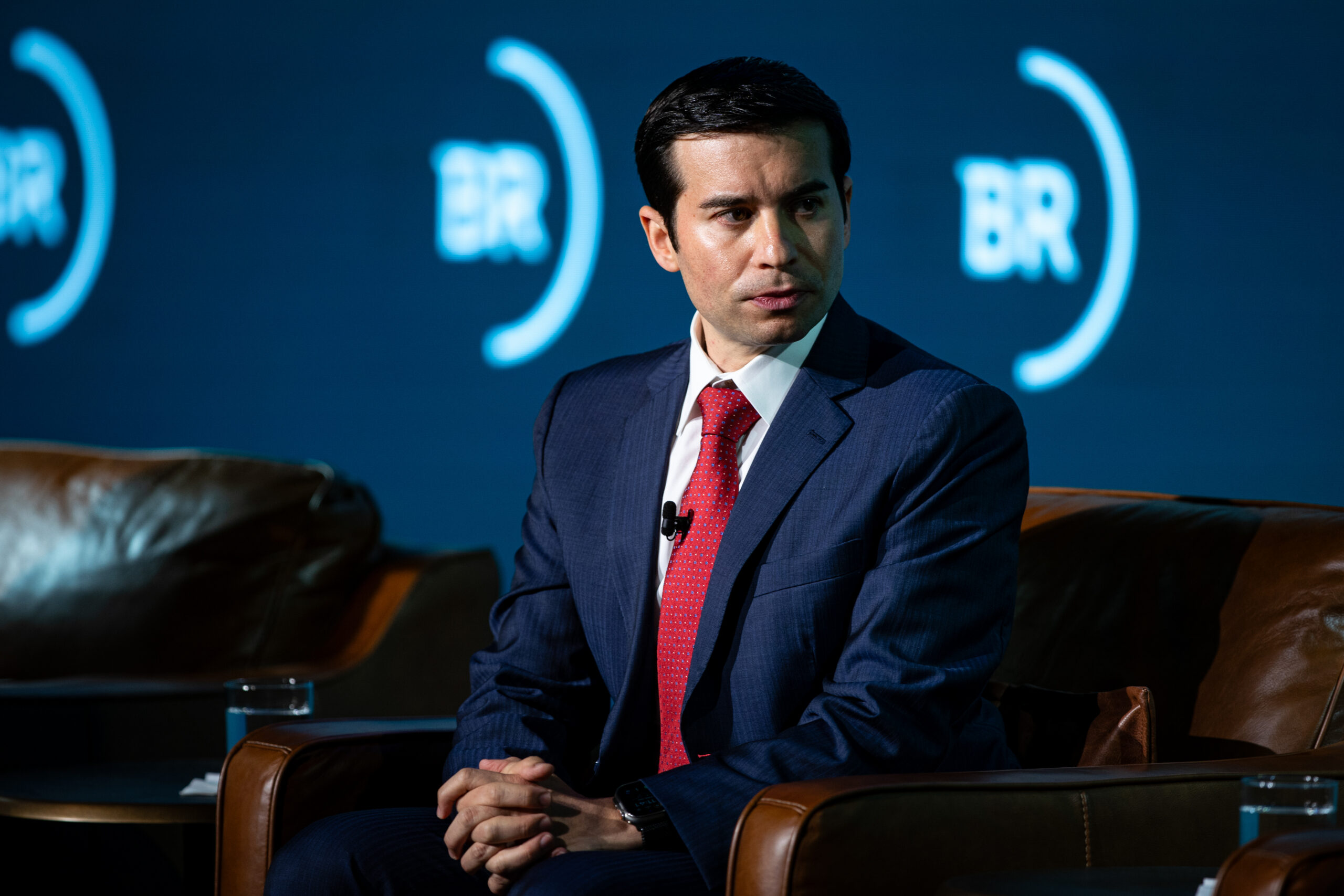
‘My interest in protecting all Americans’ rights in the workplace is undoubtedly shaped by my grandparents,’ said Sonderling, who assumed leadership of the agency last week after Lori Chavez-DeRemer’s resignation
BOOKSHELF
Adeena Sussman’s new cookbook spotlights simple cooking for complicated times

‘I had this concept that I put forth for myself, everything should have 12 or fewer ingredients, and I wanted to use very minimal pots and pans,’ Sussman told JI of her book, ‘Zariz: 100 Easy, Breezy, Tel Aviv-y Recipes’
McMahon said the Education Department is looking to hire more lawyers for civil rights cases, but the administration called for $49 million in cuts for the office

BRENDAN SMIALOWSKI/AFP via Getty Images
Secretary of Education Linda McMahon prepares to testify before a House Subcommittee on Labor, Health and Human Services, Education, and Related Agencies hearing on the budget for the Department of Education, on Capitol Hill in Washington, DC on May 21, 2025.
Education Secretary Linda McMahon claimed on Tuesday that she’s trying to rebuild and expand the Department of Education’s Office for Civil Rights (OCR), even as the administration pushes for tens of millions in funding cuts this year.
The Trump administration cut half of OCR’s staff and nationwide offices at the outset of President Donald Trump’s second term, eliciting strong condemnation from many Jewish community groups. OCR is the primary agency responsible for investigating and adjudicating complaints of antisemitism on college campuses.
The administration has continued to push for further budget cuts to OCR and is more broadly attempting to dismantle the Department of Education and transfer some of its functions to other federal agencies.
At a Senate Appropriations subcommittee hearing, McMahon largely brushed off responsibility for the initial force reduction, claiming that the process to carry out the firings had been initiated before she was confirmed for her post and carried out shortly after she was sworn in, blaming “very stringent budgetary requirements that we were given.”
“We were in the process of looking at how to make sure that our Office of Civil Rights was in fact going to be able to handle cases, trying to make sure that we could get as many of them as possible,” McMahon said.
McMahon further claimed that the 2027 budget submitted by the Trump administration contains more funding to hire lawyers at OCR. The budget, in fact, requests a $49 million cut, from $140 million in 2026 to $91 million in 2027.
“It is a budget of increasing dollars for civil rights,” McMahon said, refusing to acknowledge, under questioning by Sen. Chris Murphy (D-CT), that the budget submitted by the Trump administration called for a 35% cut to the OCR budget, to Murphy’s bewilderment.
“We are bringing back lawyers, we are hiring lawyers, with the person who has been so successful before in getting this done … we’re addressing [the case backlog] for rapid mediation, expanded resolution and multi-regional teams that we have now put back in place. Addressing the issues in the past were inadequate,” McMahon said.
McMahon was referring to Kim Richey, now the assistant secretary for civil rights, who has served in previous Republican administrations as well. McMahon praised her as highly “effective.” She also claimed to have re-hired all of the OCR attorneys who were fired, except those who took early retirement.
“It’s like black is white, it’s a 35% cut you’re proposing,” Murphy interjected.
Pressed by Murphy on the sweeping firings at the outset of the Trump administration, McMahon said, “That is hindsight.”
Pressed further, McMahon responded, “You know perfectly well what it is. We’ve brought people on board to handle these cases because I believe they should be handled. We should be dismissing these cases, we should be finding resolutions to them.”
In a detailed budget appendix submitted to Congress, the Trump administration also called for $274.5 million in funding for the Nonprofit Security Grant Program, flat funding with 2024 and 2025 but a cut from the proposed — but still not approved — $300 million expected for 2026.
Jewish groups and supporters of the program in Congress are pushing for between $750 million and $1 billion for the program.
The former civil rights official says he’s confident the education secretary will pursue strong and enforceable agreements with Harvard and other schools to combat antisemitism on campus

Ken Marcus, the founder of the Louis D. Brandeis Center for Human Rights Under Law, said on Wednesday that he had faith in Education Secretary Linda McMahon to ensure that any settlements the Trump administration were to make with Harvard University or other schools would ensure concrete reforms to address campus antisemitism.
Marcus, one of the nation’s leading antisemitism experts who served as assistant secretary of education for civil rights in President Donald Trump’s first administration, made the comments while speaking to Jewish Insider on the sidelines of the Federalist Society and the Defense of Freedom Institute’s annual Education Law & Policy Conference, where he and McMahon both made appearances.
“There have been a lot of concerns expressed about whether the federal government is going to be letting universities off too easily on soft deals. It is my perception that Sec. McMahon is resolved to make sure that any settlement agreements are strong and effective. I believe that she is willing to fight for that, and that should be a source of significant confidence,” Marcus told JI.
Marcus was responding to a question about the ongoing dispute between different factions within the Trump administration over the effectiveness of the ongoing negotiations and settlements with universities, most notably Harvard. Officials have split themselves into two camps, with one side pushing only for deals that secure substantial changes to school policies to address civil rights issues and the other seeking large payouts to appease President Donald Trump, who has said he wants Harvard to pay at least $500 million to restore its more than $2 billion in federal funds.
McMahon said during her Wednesday morning appearance that it was not the Trump administration’s objective to end up in prolonged legal battles with Harvard or other universities and revealed she was hopeful about reaching a settlement that delivers meaningful reforms to the elite campus. She also expressed confidence in the government’s case.
“Sec. McMahon was right to remind us that the same judge who ruled against the federal government in the Harvard case had also ruled in favor of Harvard in the affirmative action case,” Marcus told JI.
“The judge was overruled before and may well be overruled again. That case turns in part on some very technical issues involving sovereign immunity under the Tucker Act and whether the Court of Federal Claims is the exclusive court with jurisdiction over procurement issues, so we’ll see where it goes on appeal, but I certainly fully understand why the Trump administration would appeal this and feel some degree of confidence,” he continued, referring to the federal law that allows individuals to sue the U.S. government.
Marcus spoke to JI ahead of his appearance on a panel entitled, “Federal Efforts to Combat Antisemitism: Restoring Campus Civil Rights or Infringing on Academic Freedom?”
The discussion was moderated by Florida Supreme Court Chief Justice Carlos Muniz and featured Marcus; Sarah Perry, vice president and legal fellow with Defending Education; Ilya Somin, law professor at George Mason University’s Antonin Scalia Law School; and Tyler Coward, lead counsel for government affairs at the Foundation for Individual Rights and Expression (FIRE).
While the group respectfully disagreed over some proposed solutions, such as codifying the International Holocaust Remembrance Alliance’s working definition of antisemitism on the state or federal level, they also found several areas of common ground.
Perry, Marcus and Coward each said they support the federal government amending Title VI to add religion to the categories of protected groups. “Title VII of the Civil Rights Act of 1964 does something that Title VI does not, which is including religious protections,” Perry said.
All four agreed that enforcement of current policies on the books, rather than relying on legislators to amend the law, was necessary.
“If we enforce the policies that are on the book, we actually don’t have to address defining antisemitism, because we already have these neutral policies that are on the books. Then we can avoid some of those things [such as disputes over the IHRA definition],” Coward said. “Because I think the actual actions we’re trying to stop are the … conduct of running Jewish students off campus, that kind of stuff, as opposed to defining that more broadly.”
The group discussed efforts to fight campus antisemitism and new school choice legislation
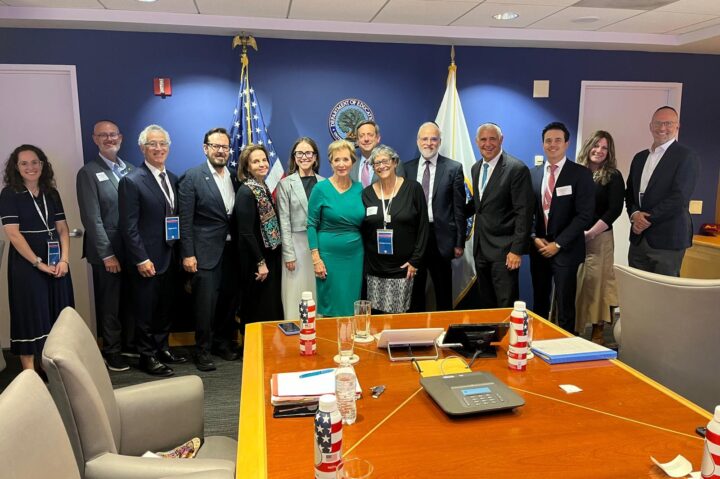
Courtesy Orthodox Union
Members of the Orthodox Union Advocacy Center met with Education Secretary Linda McMahon on Wednesday to discuss federal efforts to counter antisemitism and new legislation promoting school choice, Sept. 17th, 2025
Members of the Orthodox Union Advocacy Center met with Education Secretary Linda McMahon on Wednesday to discuss federal efforts to counter antisemitism and new legislation promoting school choice.
The meeting came amid a backdrop of concern from inside and outside the administration that negotiations with colleges and universities will prioritize hefty financial settlements rather than lasting reforms on antisemitism.
“We … spent time talking about combating antisemitism at universities, and — while expressing appreciation for the aggressive approach the department has taken — urging them to keep doing things that are going to make for lasting changes, and not things that could get rolled back when another administration comes into office,” Nathan Diament, executive director of public policy for the OU, said.
Diament said that OU is pushing for concrete policy changes at universities including “enforcement of policies protecting the rights of students, more careful scrutiny of faculty hiring and curriculum content.” He said that the issues on some campuses have “abated, but that could easily be reversed.”
Diament said that McMahon was “very much in agreement” with the OU group and conveyed that “that’s [the department’s] goal.”
The group also discussed the implementation of the Educational Choice for Children Act, which creates a national tax credit for donations to scholarship programs that can be used for a range of purposes including religious schooling.
Though the program is being primarily implemented through the Treasury Department, Diament said that the Department of Education has an important role to play and that the administration will need to make some key policy decisions on how it will carry out the program.
He said the OU wants to ensure that state governments, which need to approve scholarship programs on a state-by-state basis under the law, will not seek to limit or condition the eligibility of certain types of scholarship programs for funding.
Diament said that the OU leaders also met with lawmakers including Appropriations Committee Chair Susan Collins (R-ME) and Sens. Shelley Moore Capito (R-WV), Kirsten Gillibrand (D-NY) and Elissa Slotkin (D-MI) about Nonprofit Security Grant Program funding.
“The good news, so to speak, is that they all agree with the need to increase the funding of NSGP significantly above where it’s currently funded,” Diament said. “They recognize the need of the Jewish community. … On the other hand, it’s a very challenging appropriations environment, but these were very important discussions with key people to try to keep the ball rolling in the direction of funding this program.”
He added that a significant increase in the number of Catholic organizations applying for the grants is expected next year, in light of the Annunciation Church shooting in Minneapolis in August.
McMahon said Harvard has already started to make changes requested by the federal government ‘and that is the ultimate goal of our investigation’
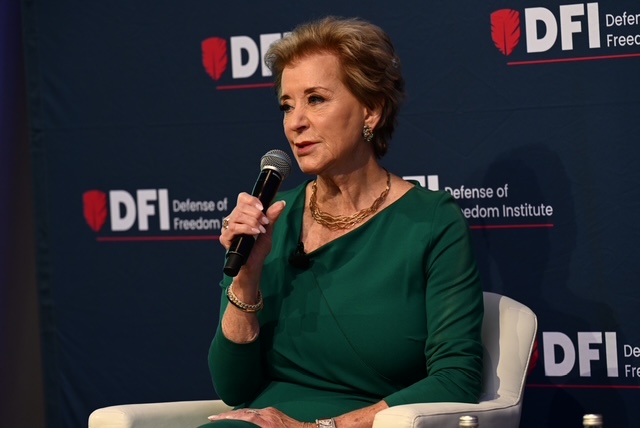
Zach Miller Photography
Education Secretary Linda McMahon speaks at the Federalist Society and the Defense of Freedom Institute’s annual Education Law & Policy Conference on Sept. 17, 2025.
Education Secretary Linda McMahon said on Wednesday that the Trump administration’s goal is not to engage in a prolonged legal battle with Harvard University and expressed hope that the federal government would be able to reach a settlement that delivers meaningful reforms to the elite campus.
McMahon made the comments while appearing at the Federalist Society and the Defense of Freedom Institute’s annual Education Law & Policy Conference on Wednesday morning, after being asked during a moderated conversation with Washington Examiner news editor Marisa Schultz where negotiations between Harvard and the administration stand.
“I’m certainly hopeful on the settlement. I have spoken to Alan Garber, their very good president, at the very beginning of this. I haven’t spoken to him since, but I do think that with the idea that Harvard has already started to take certain measures to change what they were doing, I certainly hope that there will be an agreement,” McMahon said. “It’s not our goal to have to go to court to make people abide by the law, to make universities abide by the law.”
Getting specific, the education secretary explained that, “Harvard has already started to put in place some of the things we wanted them to do. They reassessed their Middle East policies. They actually fired a couple of their professors. They are looking at having safe measures on campus, and so without even admitting any guilt in any way, they have started to change their policies, and that is the ultimate goal of our investigation, of making sure that things are proper on campus.”
Asked by Schultz about the ongoing negotiations with the University of California, Los Angeles and other schools, and how the settlements fit into the Trump administration’s “big picture mission for elite universities and colleges in America,” McMahon said that their “goal is really not to be punitive necessarily, but to have universities, I think, return to what we all believe that universities started out to be.”
“It’s not to be punitive. That’s really not the goal. The goal is to make them change their policies and practices, and if they are not in compliance with the law, then surely we’re going to insist they are, or they won’t receive federal funding,” she said.
The education secretary said she believed it was in the best interest of all parties to reach settlements rather than risk upending the more than $2 billion in research grants that Harvard receives from the federal government. “The federal funding for Harvard, not only for students who attend, for their tuition, but also the amazing amount of research funding — they get over $2 billion, almost $3 billion — is very significant to those scientists and professors who were there, who have grants and who are working on their own projects,” McMahon said.
“They can take that grant money and go somewhere else, if it’s a grant directly to them, so I think it’s in Harvard’s interest to continue to negotiate. I think it’s in all of our interests for Harvard and for all of the other universities that we are sending letters to, that we are investigating, and there are others. Hopefully there will be these settlements with all of them, because basically, we just want them to do right,” she explained.
McMahon made a similar remark about the importance of protecting research grants while discussing the administration’s settlement with Columbia University reached over the summer, which followed a protracted legal battle.
“We eventually reached an agreement with Columbia,” McMahon said. “They will pay a fine back to the United States government. Their funding will be released again, and it’s primarily research funding. I believe our universities do some of the most incredible research in the country. We want them to be able to do that, but they have to abide by the law. They have to abide by Title VI, they have to abide by Title IX. They have to be worthy to receive the funds that they are receiving from the United States government.”
The comments mark the first time McMahon has publicly shared her thoughts on what outcome she would like to see from the federal government’s negotiations with Harvard University amid an ongoing dispute between different factions within the Trump administration over the effectiveness of the ongoing negotiations and settlements with universities.
While some officials are focused on any deal that would secure strong reforms to address antisemitism and other civil rights issues, others are looking for securing large payouts to appease President Donald Trump.
“There’s growing dissatisfaction with the White House letting universities buy their way out of accountability with no meaningful change. It’s clear they’ve been totally out-negotiated,” one source familiar with the negotiations told JI earlier this month of the situation.
Trump said late last month that he expected Harvard to pay at least $500 million to restore its more than $2 billion in federal funding. “We want nothing less than $500 million from Harvard. Don’t negotiate, Linda. They’ve been very bad. Don’t negotiate,” Trump said while addressing McMahon at a Cabinet meeting. (McMahon acknowledged Trump’s remarks in the moment but did not respond further.)
Pressed on Wednesday about Trump’s comments and the fact that a federal judge in Boston blocked the administration’s freeze on Harvard’s research grants earlier this month, McMahon noted that they plan to appeal the ruling and said the government was in a strong position in its fight against the university.
“We’re still in the throes of negotiating with Harvard. They filed a lawsuit, they won the first round, and one of the things they were claiming was that the steps that we were asking of them would violate First Amendment rights, and that’s just not true. I think that we have a really good case against Harvard,” McMahon said.
The Education Secretary dodged a question from a GOP senator about how cuts to the Office for Civil Rights would impact the fight against antisemitism
BRENDAN SMIALOWSKI/AFP via Getty Images
Secretary of Education Linda McMahon prepares to testify before a House Subcommittee on Labor, Health and Human Services, Education, and Related Agencies hearing on the budget for the Department of Education, on Capitol Hill in Washington, DC on May 21, 2025.
Speaking at a Senate Appropriations Committee hearing on Tuesday, Secretary of Education Linda McMahon laid out the administration’s expectations for campus antisemitism policies, but sidestepped how the administration will execute on those directives while making substantial cuts to the Department of Education’s Office for Civil Rights.
“We’re saying we mean business, these programs and policies have to have teeth, they have to be enforced,” McMahon said.
She outlined a series of policies the Trump administration wants to see campuses enforce, including banning encampments, prohibiting the use of masks and better vetting of students and professors. Professors, she said, must not teach ideology.
She added that the Office for Civil Rights has opened “many cases” on campus antisemitism and is taking enforcement actions, including pulling funds from multiple schools.
But she failed to directly address concerns from Sen. Shelley Moore Capito (R-WV), the subcommittee chair, that cuts to OCR could hamper the administration’s ability to adequately address campus antisemitism.
At a congressional hearing, Education Secretary Linda McMahon assured lawmakers that, though the size of the office is being reduced, discrimination cases are still being investigated
BRENDAN SMIALOWSKI/AFP via Getty Images
Secretary of Education Linda McMahon prepares to testify before a House Subcommittee on Labor, Health and Human Services, Education, and Related Agencies hearing on the budget for the Department of Education, on Capitol Hill in Washington, DC on May 21, 2025.
House Democrats urged Education Secretary Linda McMahon not to make cuts to the Education Department’s Office of Civil Rights as employees work through the backlog of cases, which includes scores of civil rights complaints from Jewish students alleging discrimination at their universities since the Oct.7, 2023, attacks on Israel.
After Rep. Bonnie Watson Coleman (D-NJ) accused McMahon and the Trump administration of being broadly unconcerned with civil rights, citing the Office of Civil Rights and the Education Department “being decimated,” McMahon responded: “It isn’t being decimated. We have reduced the size of it; however, we are taking on a backlog of cases that were left over from the Biden administration.”
Asked why she’d reduce resources to the office given the backlog from the previous administration, McMahon replied, “Because we’re working more efficiently in the department.”
Rep. Lois Frankel (D-FL) similarly urged McMahon not to make cuts to OCR “if you are sincere about fighting antisemitism and also all kinds of unlawful discrimination.” Frankel also referenced several other programs she wanted McMahon to protect, a number of which McMahon expressed openness to considering.
After recounting an experience of a Jewish friend who took their children out of the Washington, D.C., public school system due to its unwillingness to address concerns about antisemitism, Rep. Stephanie Bice (R-OK) offered McMahon an opportunity to speak about the rise of antisemitism in primary and secondary education.
“Certainly the president has made it very clear that he does not condone any kind of discrimination — racial and especially, we’ve seen religious, we’ve seen it across our college campuses, some of the most elite in the country. We took very strong and very decisive action against those universities who clearly were not protecting Jewish students against antisemitism,” McMahon told the committee.
“When you see students barricaded in a library, and others pounding on the glass going, ‘Death to Jews. Death to Israel. Death to United States,’ that is unacceptable at our college campuses. And we reacted,” she continued.
McMahon went on to discuss her engagement with Columbia University, praising its acting president, Claire Shipman, for her response to student protesters involved in the takeover of the school’s main library earlier this month.
“We reacted to Columbia first. This incident happened at Columbia, and I met with the president of Columbia. I’ve had two conversations now with the current president of Columbia. We’ve talked about things that we need to do at those universities. We want to be able to be supportive, but those universities, albeit they’re private, do receive federal funding. We have leverage to withhold some of that federal funding or to cancel some of the grants, and we would do that unless it could be proven that these colleges and universities are going to respect all rights and set their policy in place and enforce them,” McMahon said.
“I was complimentary to the acting president now at Columbia, Claire Shipman, when I talked to her last week, and I said, ‘You reacted just as you said you would to the recent uprising on campus. You were looking at whether or not– you’ve suspended students, are you going to expel them?’ And that’s still what she’s looking at. So we’ve seen that that kind of action can deliver results,” she continued.
Please log in if you already have a subscription, or subscribe to access the latest updates.
 Continue with Google
 Continue with Apple