








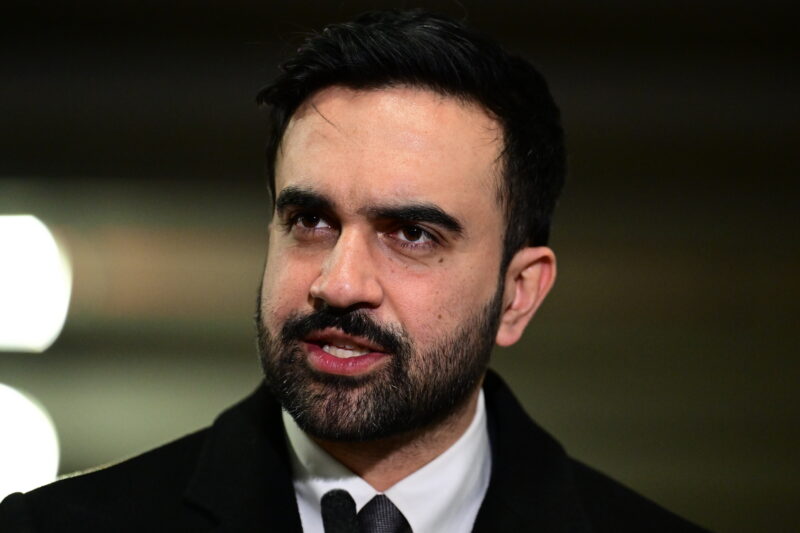





















Leo Terrell will chair the new advisory panel while embarking on a 15-city swing to engage Jewish communities and local officials on combating antisemitism

Win McNamee/Getty Images
Leo Terrell at an event in the East Room of the White House on February 20, 2025.


 Add JewishInsider on Google
The Justice Department announced on Tuesday that Leo Terrell, senior counsel to the assistant attorney general for civil rights and chair of the Department of Justice’s antisemitism task force, will oversee the creation of the DOJ’s Antisemitism Advisory Committee. As part of the role, Terrell will embark on a 15-city nationwide tour to connect with local faith leaders and law enforcement officials about combating antisemitism.
The department described the panel in a press release on Tuesday as “a new advisory body” that will recommend strategies to the attorney general and other department leadership “on coordinated, timely, and effective responses to antisemitism.”
The committee “will consist of citizen leaders dedicated to combatting antisemitism” and individuals nominated to serve will be “subject to approval by the president,” the release said. (The task force, by contrast, is solely composed of DOJ officials.)
“Members will come from a wide range of backgrounds but share a common goal of developing innovative solutions to address antisemitism across the country,” the department said of the “forthcoming launch” of the panel.
Terrell told Jewish Insider in an interview late Tuesday that he had submitted a list of nominees to President Donald Trump after receiving the green light from acting Attorney General Todd Blanche to launch both initiatives and was awaiting approval from the White House.
The tour, described by the department in a second press release as a “National Awareness & Action Tour to combat antisemitism,” will involve Terrell meeting with “individuals and local communities impacted by antisemitism” and “working to identify practical solutions to combat antisemitism at the local level.”
“This national tour is an important step in ensuring communities across the country know the federal government stands ready to work with them to confront antisemitic threats, protect public safety, and uphold civil rights,” Blanche said in a statement.
Terrell has not determined yet if the tour will include public appearances to engage with Jewish leaders. His schedule is in the process of being finalized, and the senior DOJ official told JI he is open to extending the number of cities beyond the initial 15 stops on the agenda.
As for who he will meet during his travels, Terrell acknowledged that he did not expect to receive much engagement from many leading Democratic officials in major cities, such as New York City Mayor Zohran Mamdani, Chicago Mayor Brandon Johnson or Los Angeles Mayor Karen Bass. Instead, he said he hopes to engage directly with Jewish community stakeholders in these places and urge Jewish Americans to get involved in local elections.
“We’re talking about going to Jewish communities, first of all, to light a fire under them, but also to ask how we resolve these issues when sometimes you’ve got an absentee district attorney, with an absentee mayor, with an absentee school board, with an absentee school superintendent?” Terrell said. “Most importantly, there’s going to be a great emphasis on taking back these school districts and local prosecutor jobs in elections. There’s going to be a focus on putting pressure on some of these politicians in local cities in towns.”
He told JI that his primary objective with both initiatives is to determine what solutions the Trump administration can implement to combat domestic antisemitism on a federal level, as well as ascertain what the federal government should encourage state and local officials to do to address the problem closer to home.
“My position is that antisemitism is a local issue. What I mean by that is, we see the results of failures to address it at the local level — in the cities, in the school districts and areas like that,” Terrell said. “Not all of the solutions are in Washington. The solutions are in Los Angeles, Detroit, Chicago, San Francisco, in big cities, small cities, mid-sized cities in the South.”
“How do we get prosecutors in local cities to address antisemitic content that is being ignored and protected under the umbrella of free speech? How do we stop the curriculum problems that are developing in K-12 schools by teachers’ unions that support antisemitic misconduct?” he added. “How do we stop the issues caused by what I call the ‘Jewish tax,’ where Jewish citizens have to pay exorbitant security fees in order to worship or to have events? These are things that are happening at the local level.”
Terrell said he is “wide open” to considering ideas from Jewish leaders across the country about solutions to the domestic antisemitism scourge, arguing that he believed “out-of-the-box thinking” was required at this moment.
Terrell said that he viewed the success of the federal programs he hopes to enact over the remainder of the second Trump administration as a necessity, arguing that those initiatives yielding tangible results would make it difficult for a future president to shut down.
“With this advisory committee, we’re going to work on the problem of antisemitism. We’re not going to be just talking, having hearings and things of that sort. This is not an advisory council that’s going to write a report that collects dust. I’m not in for that, I’m in for finding working solutions,” Terrell told JI. “Recognizing the problem is one thing. What to do is another.”
“I think that’s going to be the task of the commission, because I believe guardrails need to be put up before this president’s term in office is over,” he continued. “The president, in my opinion, has been the best friend that the Jewish American community has had in the White House. He’s committed. My biggest concern from here at DOJ is getting some guardrails up so the next president or the next White House will continue these programs.”
Good Tuesday afternoon,
This P.M. briefing is reserved for our premium subscribers like you — offering a forward-focused read on what we’re tracking now and what’s coming next.
I’m Danielle Cohen-Kanik, U.S. editor at Jewish Insider. I’ll be curating the Daily Overtime for you, along with assists from my colleagues. We hope you enjoy the inaugural edition and would love to hear your thoughts and feedback. Please don’t hesitate to drop us a line by replying to this email.
📡On Our Radar
Notable developments and interesting tidbits we’re tracking
Today, we remember Wesley LePatner, a Jewish philanthropist and Blackstone executive killed in Monday’s shooting at the firm’s Manhattan headquarters. LePatner, 43, served on the boards of the pluralistic Abraham Joshua Heschel School and the UJA-Federation of New York. The federation called LePatner “extraordinary in every way” in a statement, saying she “lived with courage and conviction, instilling in her two children a deep love for Judaism and the Jewish people.” Hindy Poupko, deputy chief planning officer at UJA, said in remarks at the Israel on Campus Coalition’s National Leadership Summit in Washington today that there was a second Jewish victim of the shooting, Julia Hyman. Hyman, a Cornell graduate, worked for Rudin Management in the Midtown skyscraper…
Concerns among Democrats about the humanitarian situation in Gaza and Israel’s role in it are intensifying. On Capitol Hill, the majority of Senate Democrats, led by a group including Senate Minority Leader Chuck Schumer (D-NY) and Sen. Jacky Rosen (D-NV), sent a letter to Secretary of State Marco Rubio and Middle East envoy Steve Witkoff calling the humanitarian crisis in Gaza “unsustainable” and saying that the Israeli- and American-backed Gaza Humanitarian Foundation has “failed” to properly deliver aid…
One Democrat standing up for Israel is Rep. Ritchie Torres (D-NY), who said at the ICC summit today, “We have to remind the world that, despite the amnesia, Hamas was the central cause of the war in Gaza. … Hamas is morally responsible, principally responsible for the war in Gaza.” Read more on Torres’ speech in JI’s Daily Kickoff tomorrow…
Sen. Bernie Sanders (I-VT), who did not sign the Senate Democrats’ letter, jumped into the fray by introducing another resolution to block an arms transfer to Israel — his third since November 2024. In a novel twist, this resolution would block the sale of $1 million worth of assault rifles to Israel’s police force overseen by far-right Minister of National Security Itamar Ben-Gvir, potentially opening the door for more Democrats to vote in favor, given Ben-Gvir’s less-than-favorable reputation within the party…
British Prime Minister Keir Starmer, applying pressure of his own, announced today that the U.K. will recognize a Palestinian state at the U.N. General Assembly in September — matching France’s timeline, announced last week — unless Israel takes “substantive steps to end the appalling situation” in Gaza, reaches a ceasefire with Hamas and commits to reviving the possibility of a two-state solution and not annexing the West Bank. President Donald Trump, who met with Starmer in Scotland yesterday, told reporters that the British PM didn’t discuss the move with him and that he has no view on it, but that the U.S. is “not in that camp”…
On the home front, UCLA settled a lawsuit with Jewish students who alleged that the university permitted antisemitic conduct during the campus’ anti-Israel encampments in spring 2024. According to the agreement announced today, the university cannot allow or facilitate the exclusion of Jewish students, faculty or staff from UCLA programs or campus areas. Notably, the agreement specifies that Jews cannot be excluded “based on religious beliefs concerning the Jewish state of Israel.” Also getting a windfall in the settlement: UCLA agreed to pay over $2.3 million combined to UCLA Hillel and Chabad, the Anti-Defamation League, the Academic Engagement Network and other Jewish organizations combating antisemitism on campus…
⏩ Tomorrow’s Agenda, Today
An early look at tomorrow’s storylines and schedule to keep you a step ahead
Keep an eye on Jewish Insider later this week where we’ll feature an interview with Jeanine Pirro, interim U.S. attorney for D.C., who spoke with JI about the ongoing prosecution of the assailant responsible for the deadly May shooting at the Capital Jewish Museum. We’ll also cover Rep. Mike Collins’ (R-GA) record on antisemitism as he jumps in the race to challenge Sen. Jon Ossoff (D-GA), and report on Harvard’s overtures to the Jewish community while it gears up for a settlement with the federal government.
We’re staying tuned for how President Donald Trump may react as some of the U.S.’ closest allies gear up to recognize a Palestinian state, a policy the U.S. has rejected as unhelpful to peace efforts for decades. Though he said today he has “no view” on the matter, as the U.N. General Assembly nears, will Trump take a tougher line on his European partners?
Stories You May Have Missed
WAIT-AND-SEE APPROACH
New York Jewish leaders reluctant to fight against Mamdani
One Jewish political leader: ‘No one thinks it’s going to be good for the Jewish community to be hostile and to be in constant war with the next mayor’
PODCAST POLITICS
Former Obama staffers turned podcasters reemerge to lead anti-Israel chorus

Ben Rhodes and Tommy Vietor shaped the story of the Iran nuclear deal. Now they’re trying to turn Democrats away from Israel
Plus: TikTok hires a hate speech manager

GAZA CITY, GAZA - JULY 27: An aircraft from the United Arab Emirates drops humanitarian aid balloons over the al-Sudaniyya area of Gaza City, Gaza on July 27, 2025 following Israeli army's announcement of a 'tactical suspension' of military operations in 3 parts of Gaza Strip. Suspension began at 0700GMT and applies to 3 key areas, including Al-Mawasi, Deir al-Balah, and Gaza City, according to Israeli army spokesman. Aid packages were collected by Palestinians struggling to access food. (Photo by Khames Alrefi/Anadolu via Getty Images)
Good Monday morning.
In today’s Daily Kickoff, we report on the mounting international pressure on Israel — including among some pro-Israel Democrats — to resolve the humanitarian crisis in Gaza, the subsequent measures taken by Israel and how they are expected to impact diplomatic ties with European allies. We report on DoJ senior counsel Leo Terrell’s comments yesterday at the Israel on Campus Coalition National Leadership Summit and report on the new TikTok hire with professional roots in the Jewish world who was brought on board to tackle hate speech on the platform. Also in today’s Daily Kickoff: Rep. Ritchie Torres, Ofer Calderon and Penny Pritzker.
What We’re Watching
- Today in New York, France and Saudi Arabia are co-hosting a conference focused on reviving two-state solution talks. The gathering, initially scheduled for June, now comes days after French President Emmanuel Macron said he planned to recognize a Palestinian state at this year’s U.N. General Assembly. Macron is skipping the conference, but his foreign minister, Jean-Noël Barrot, is expected to, per The Economist, “formally present” Paris’ U.N. plans. Barrot, for his part, attempted to meet with Jewish groups while in New York, but was shut down after Macron’s announcement last week. More below.
- The Israel on Campus Coalition’s National Leadership Summit continues today in Washington. Former Israeli Prime Minister Naftali Bennett and Leo Terrell, senior counsel at the Department of Justice, addressed the gathering of more than 600 students yesterday. More below.
- In North Carolina, former Gov. Roy Cooper, a Democrat, is expected to announce his bid for the Senate seat being vacated by Sen. Thom Tillis (R-NC). Cooper’s upcoming announcement comes as former Rep. Wiley Nickel (D-NC) plans to step aside from the race and endorse Cooper, consolidating Democratic support around the former governor. On the GOP side, Republican National Committee Chairman Michael Whatley is expected to announce his bid for the seat in the coming days, setting up what is likely to be one of the most expensive Senate races of the upcoming cycle.
What You Should Know
A QUICK WORD WITH ji’S melissa Weiss and Tamara zIEVE
In Israel’s effort to conduct a pressure campaign on Hamas to oust the terror group and release the remaining hostages held in Gaza, it has found itself instead on the receiving end of another global pressure campaign.
Facing mounting pressure amid a worsening humanitarian crisis in Gaza, Israel over the weekend announced a series of measures aimed at alleviating the widespread malnutrition and security issues in the enclave, including temporary ceasefires, aid airdrops, facilitating a massive increase in Gaza’s water supply and establishing designated humanitarian corridors — even as the IDF called claims of starvation in Gaza “a false campaign promoted by Hamas” and Israeli Prime Minister Benjamin Netanyahu denied that there was starvation in Gaza.
The crisis hit a fever pitch over the weekend as opposition to Israel’s efforts and limits on aid — first put into place in March as a pressure tactic to push Hamas to release the remaining hostages — surged to the highest levels of government around the world.
Dozens of countries called for an end to the war, a restoration of the flow of humanitarian aid into Gaza and the immediate release of the hostages. The shift in the political dynamic extended to Capitol Hill, where Democratic legislators, including many who have been strong supporters of Israel, expressed their concerns over Israel’s approach to the worsening humanitarian crisis in Gaza.
SPEAKING UP
As humanitarian situation in Gaza worsens, pro-Israel Democrats express concern
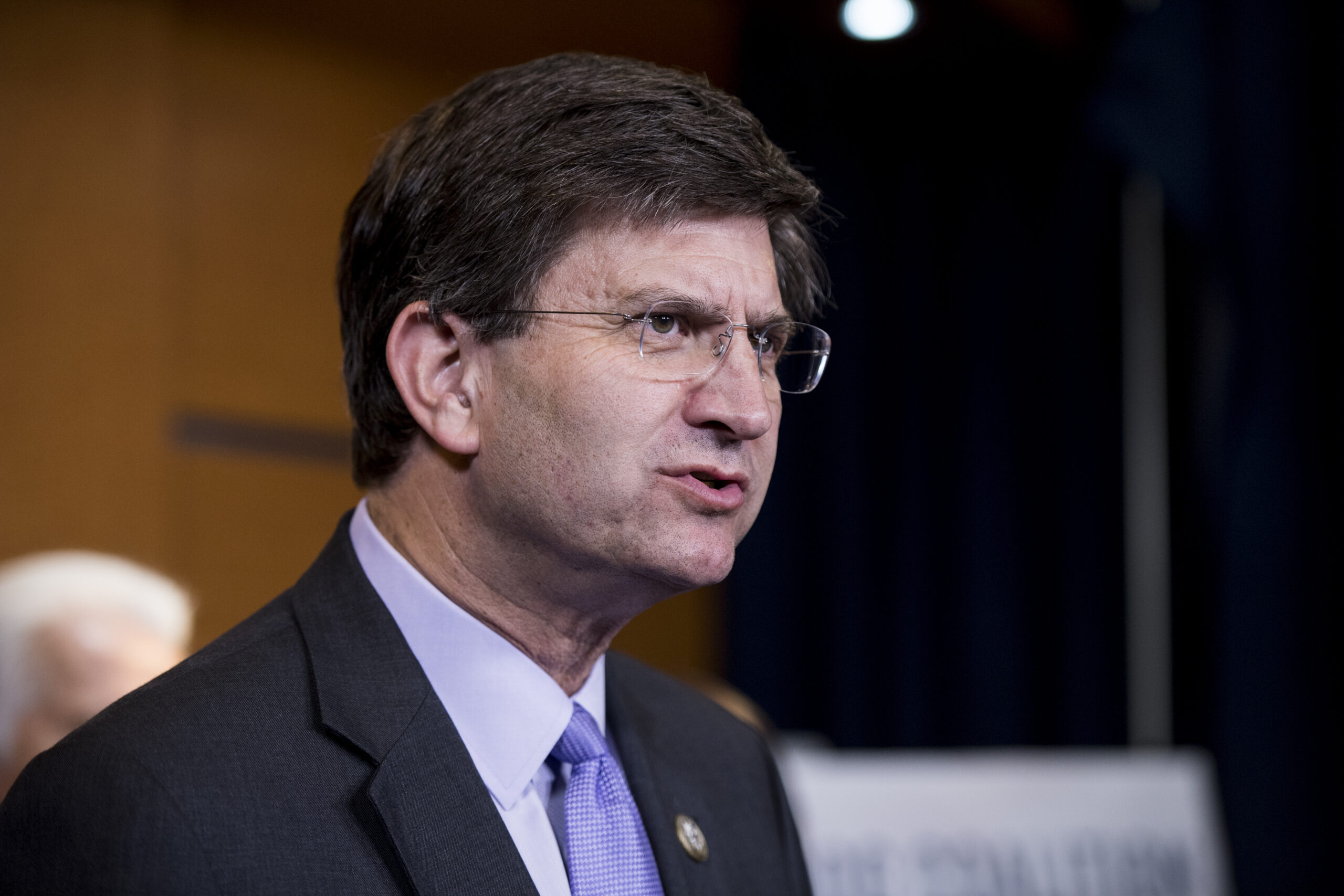
Amid reports of a mounting hunger crisis in Gaza, some of Israel’s staunchest defenders in the Democratic Party are now calling for Israel to do more to get humanitarian aid to Gazans — a signal that deteriorating conditions in the enclave are shifting public opinion even among those firmly in the pro-Israel camp. In a series of Friday statements, two major pro-Israel Democratic groups and a top Jewish Democrat in Congress raised concerns about what Rep. Brad Schneider (D-IL) described as “undeniably dire” circumstances in Gaza, Jewish Insider’s Gabby Deutch reports.
A matter of responsibility: “Israel must take immediate action to ensure sufficient food gets into the territory and to the people in desperate need. The world must not turn a blind eye to the fact that children are starving because of this war,” Schneider said in a statement. “It is Israel’s responsibility, and within its capacity, to address and resolve the situation.” Democratic Majority for Israel CEO Brian Romick said Friday that even though Hamas has no interest in mitigating human suffering in Gaza, Israel still has a responsibility to help starving children. “Even as Hamas works to prolong this war and prevent food from getting to people in need, Israel — along with the United States, Egypt, Qatar, and the rest of the international community — must continue to work to get food to innocent children in Gaza,” Romick said in a statement.
TORRES’ TAKE
Ritchie Torres: Netanyahu has done ‘irreparable damage’ to relationship with Democrats

Rep. Ritchie Torres (D-NY), a vocal Democratic supporter of Israel in Congress, said in an interview with journalist Chuck Todd on Sunday that Israeli Prime Minister Benjamin Netanyahu had done “irreparable damage” to Israel’s relationship with and support among Democrats, Jewish Insider’s Marc Rod reports.
Notable quotable: “If you’re a Democrat, and if you’re a Democrat of color and if you’re a Black Democrat, you take immense pride in Barack Obama. He represents one of the greatest achievements in politics. We take great pride in his presidency,” Torres said. “To see a foreign leader visibly disrespect him in the manner that Bibi Netanyahu did, I feel did irreparable damage to the relationship with the Democratic Party.” He also said that, despite his support for the Jewish state, he has “no real relationship” with the Israeli government.
Israel’s standing
‘Like Tylenol for a cancer patient:’ Israeli aid measures unlikely to allay European pressure

For European leaders who are ratcheting up pressure on Israel to end the humanitarian crisis in Gaza, the Jewish state’s moves to pause military activity to allow a freer flow of humanitarian aid and begin airdrops of aid are “steps in the right direction,” the German foreign minister said on Sunday. But the aid crisis is inextricably linked, observers say, to a much larger and even thornier issue — a deal to end the grinding 21-month war with Hamas and a release of the hostages. Until such a deal is struck, the pressure from Europe, and from some inside Israel, likely won’t ease. And it could worsen, with some experts warning that European sanctions on Israel aren’t out of the question, Jewish Insider’s Lahav Harkov reports.
Wider issue: Daniel Shek, a former Israeli ambassador to France and a member of the Hostage Families Forum’s diplomatic team, said that the aid airdrops are “a result of international pressure and not sudden altruism.” However, Shek said, they are “like Tylenol for a cancer patient. Surgery is needed, meaning the end of the war.” A spokesperson for German Chancellor Friedrich Merz said that he is “prepared to increase the pressure if progress [on a ceasefire and humanitarian aid] is not made.”
Red lines: A coalition of major American Jewish organizations refused an invitation on Friday to meet with Jean-Noel Barrot, France’s minister for Europe and foreign affairs, after French President Emmanuel Macron announced that the country will recognize a Palestinian state in September, eJewishPhilanthropy’s Nira Dayanim reports.
COLUMBIA COMMITMENTS
Jewish leaders express cautious optimism over Trump administration settlement with Columbia

Jewish leaders on and off Columbia University’s campus praised the settlement reached last week between the university and the Trump administration to restore some $400 million in federal funding that was slashed in March due to the Ivy League’s record dealing with antisemitism. While some Jewish leaders, students and alumni are taking a wait-and-see-approach, others expressed cautious optimism that the deal could lead to a safer environment for Jewish students following nearly two years of antisemitic protests and disruptions on campus in the aftermath of the Oct. 7, 2023, Hamas terror attacks in Israel, Jewish Insider’s Haley Cohen reports.
Positive perspective: “I am heartened to see the resolution agreement for several reasons,” Adam Lehman, president and CEO of Hillel International, told JI last week. “It recognizes both the clear, egregious violations of the civil rights of Jewish students and staff at Columbia and Barnard [an affiliate of Columbia] during the past two academic years, and the concrete steps Columbia has recently pursued to address these issues.”
Reservations: Still, some said that key reforms are missing from the deal, which falls short of several demands initially made by the Trump administration. Among the demands were putting the Middle Eastern, South Asian and African studies department and the Center for Palestine Studies under the purview of a senior vice provost, who would be appointed by the university to supervise course material and non-tenure faculty hiring, as well as the formation of a presidential search committee to replace acting President Claire Shipman.
security surcharge
Antisemitism task force head Leo Terrell decries ‘Jewish tax’ in rising communal security costs

Leo Terrell, senior counsel to the assistant attorney general for civil rights, said he is intent on eliminating what he called “the Jewish tax” in an address on Sunday to hundreds of Jewish college students gathered for the Israel on Campus Coalition’s three-day annual leadership summit held in Washington, Jewish Insider’s Haley Cohen reports.
What he said: “For those who don’t know what the Jewish tax is — for you to have this convention, for you to walk your child to a synagogue down the street — you have to pay for extra security,” said Terrell, who heads the Department of Justice’s antisemitism task force. “It makes no sense. It’s unfair. It’s wrong. I find it offensive that it’s being allowed throughout this country. I’m doing everything I can to eliminate it.” Terrell’s comments came as the Federal Emergency Management Agency announced last month that it had awarded $94.4 million in security grant funding to a total of 512 Jewish organizations nationwide.
DEDICATED ROLE
TikTok hires new hate speech manager amid concerns over rising antisemitic content on the platform

TikTok recently hired a new hate speech manager with long-standing ties to the Jewish community, the company confirmed to Jewish Insider’s Matthew Kassel, as the social media platform faces growing pressure to confront a sharp rise in antisemitic content. The streaming platform enlisted Erica Mindel, a former State Department contractor who worked for Ambassador Deborah Lipstadt, the Biden administration’s special envoy to monitor and combat antisemitism, to join TikTok’s global public policy and government affairs team.
Taking action: The hire comes as TikTok has drawn accusations that it has failed to address a spike in antisemitic and anti-Israel content in the wake of Hamas’ Oct. 7, 2023, terror attacks and amid the ensuing war in Gaza. In her newly created role, Mindel will “develop and drive the company’s positions on hate speech,” seek to “influence legislative and regulatory frameworks” and “analyze hate speech trends,” with a particular focus on “antisemitic content,” among other duties cited in an official job description shared by TikTok.
Worthy Reads
Just Cause, Unjust Tactics: The New York Times’ Ross Douthat argues that Israel’s war against Hamas in Gaza — which he describes as “a war for a just cause” — is now being fought unjustly. “One can have a righteous cause, one’s foe can be wicked and brutal and primarily responsible for the conflict’s toll, and still — under any coherent theory of just war — there is an obligation to refrain from certain tactics if they create too much collateral damage, to mitigate certain predictable forms of civilian suffering and to have a strategy that makes the war’s outcome worth the cost. These are tests that Israel is failing.” [NYTimes]
RJC Rising: The Dispatch’s David Drucker explores the growing influence of the Republican Jewish Coalition. “Since Election Day 2024, the Republican Jewish Coalition has been telling anyone who will listen that Trump’s performance among Jewish voters was a historic success — due in no small part to the money and manpower invested by the RJC. There’s data to back that assertion up…To understand the real and consequential movement toward Trump by Jewish voters in 2024, you have to look under the hood, at the exit polls of battleground states and local precincts with significant populations of Jewish voters. That’s where Trump made his mark with a cohort usually elusive for Republicans; it’s what helped propel him past Harris in swing states that were quite close despite the president’s sweep.” [TheDispatch]
Art of the Steal: In AirMail, Ezra Chowaiki reflects on his dealings with forged looted artworks whose sellers wrongly claim them to be works that belonged to high-ranking Nazi officials. “Art dealers know the back of a painting is more important than its front. The back is where you trace the painting’s history, and the clues for each artwork in Jimmy’s collection were incredible, including incidental marks and labels on each painting, not to mention all those Nazi stamps. … In my years of meeting collectors, I’ve realized that many prefer the forbidden fruit. In its own perverse way, it just tastes a little sweeter. But beware: your perverse fascination with forbidden provenance — the back of the canvas — may keep you from examining a painting’s more obvious faults on the front.” [AirMail]
Word on the Street
Darren Beattie, who was fired from his role as a speechwriter in the first Trump administration over his ties to white nationalists, was tapped to serve as acting president of the U.S. Institute of Peace in addition to his role as under secretary of state for public diplomacy and public affairs at the State Department…
Sen. Lindsey Graham (R-SC) told NBC’s “Meet The Press” that he believes Israel will be unable to negotiate an end to its war with Hamas and will have to do “what [the Allied forces] did in Tokyo and Berlin, take the place by force and start over again, presenting a better future for the Palestinians, hopefully having the Arabs take over the West Bank and Gaza”…
Secretary of State Marco Rubio is reportedly favoring “a more comprehensive approach to end the war and free all the remaining hostages” after meeting with hostage families at the State Department on Friday…
A Palestinian boy referenced in images that went viral last week as a symbol of the humanitarian crisis in Gaza was discovered to be suffering from a preexisting genetic muscle disorder…
A growing number of news organizations are calling on Israel to allow journalists access to the Gaza Strip…
The New York Times reports on speculation that funding for the refurbishment of the Qatari plane being gifted to the Trump administration is coming from funds allocated from a nuclear modernization program inside the Pentagon…
A White House official told The Wall Street Journal that it will use its recent settlement with Columbia University as a blueprint for its legal battles with other universities…
The New York Times spotlights former Commerce Secretary Penny Pritzker’s role as head of the Harvard Corporation, as both the Trump administration and the Corporation raise concerns about her continued leadership and involvement…
Minnesota Democratic activist Latonya Reeves, a member of the Democratic National Committee, is mulling a primary challenge to Rep. Ilhan Omar (D-MN)…
French authorities are investigating the circumstances behind the removal last week of several dozen French Jewish campers and camp staffers from a Vueling flight amid claims from the group that it was deplaned because the campers were Jewish; Vueling has denied the allegations and said the group was removed due to the unruly behavior of some of the campers prior to takeoff…
The New York Times looks at the impact of Iran’s deepening water crisis amid record-setting heat and energy shortages around the country…
Mathematician-turned-singer Tom Lehrer, whose satirical tunes from the 1950s and ‘60s gained new audiences when Cameron Mackintosh compiled Lehrer’s music into the 1980 revue “Tomfoolery,” died at 97…
Pic of the Day

Ofer Calderon (right), who was held hostage by Hamas in Gaza for 484 days, cycled yesterday alongside Israel-Premier Tech team owner and philanthropist Sylvan Adams in the final stage of the Tour de France on the Champs-Élysées in Paris. On the 100th day of the hostages’ captivity, Adams led a global cycling event in their honor and promised that when Calderson would be released, he would ride alongside him at the Tour de France.
Birthdays
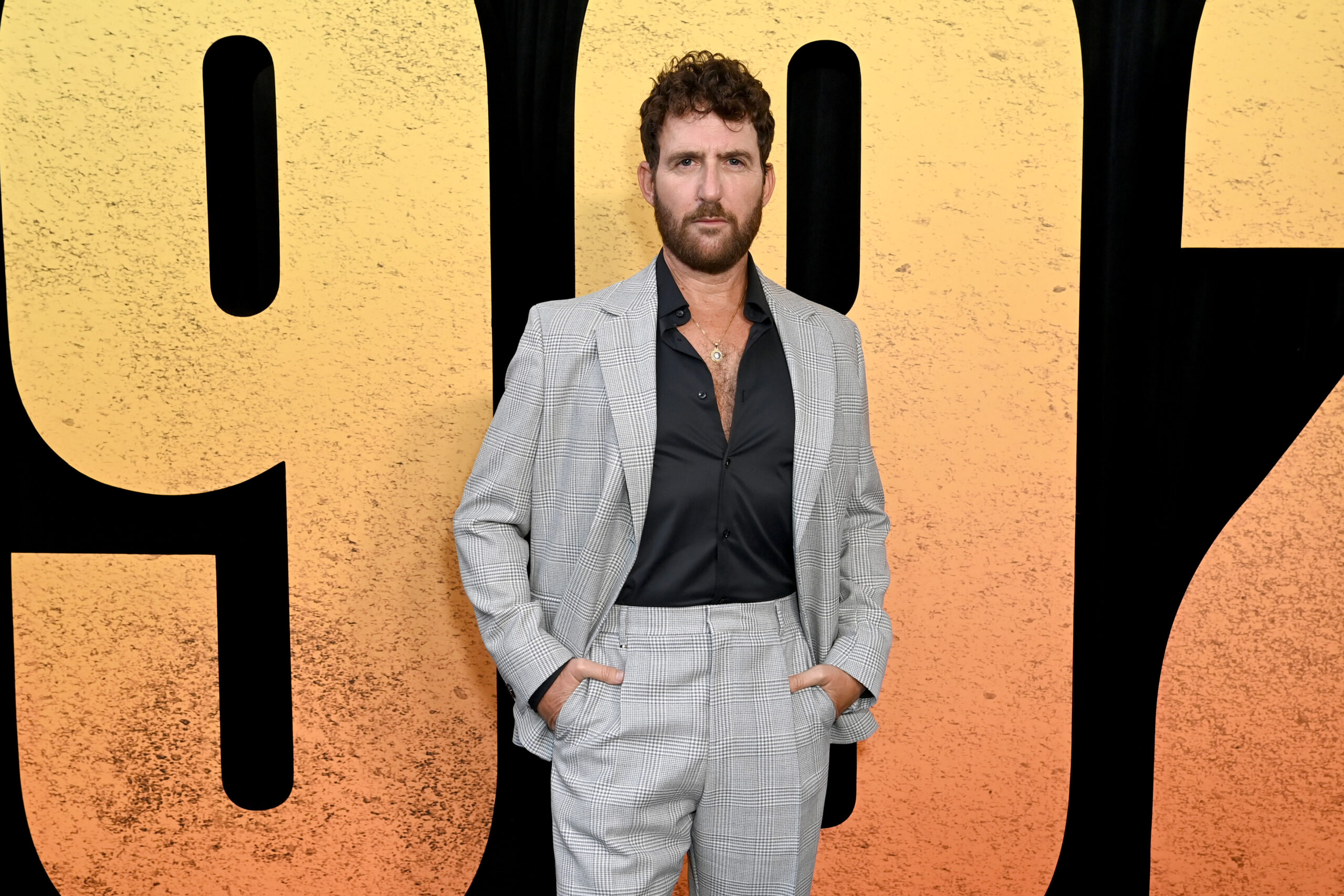
Jerusalem-born actor with more than 30 movie and television roles in the U.S., Ori Pfeffer turns 50…
Survivor of Auschwitz-Birkenau as a teen, he emigrated to Israel and became an artist, Yehuda Bacon turns 96… Chicago radio news personality, from 1973 to 2013 he was a television news anchor in Chicago, Walter David Jacobson turns 88… U.S. District Court judge in Manhattan until 2006, then U.S. attorney general for the last 14 months of the Bush 43 administration, now of counsel at the international law firm of Debevoise & Plimpton, Michael Mukasey turns 84… Swedish industrialist, chairman of the Nobel Foundation (manager of the Nobel Prize) from 2005 to 2013, Marcus Storch Ph.D. turns 83… In 1986 she became the first woman in the IDF to hold the rank of brigadier general, she then served as a member of Knesset, and now serves on multiple for-profit and nonprofit boards, Amira Dotan turns 78… Oldest active quarterback, he also manages football teams in Baltimore and Jerusalem, Joe Pollak turns 75… President of the Council on Foreign Relations for 20 years until he retired in 2023, Richard N. Haass turns 74… Tel Aviv-born real estate developer, restorer of historic buildings in downtown Los Angeles, Izek Shomof turns 66… Partner and managing director of Meadow Lane Advisors, Marty Friedman… French-Israeli hairdresser and entrepreneur, Michel Mercier turns 64… Sports executive, attorney and former president of basketball operations for the NBA’s Minnesota Timberwolves, David Kahn turns 64… American schoolteacher, wrongfully detained by Russia in 2022, he was released in the early weeks of the Trump 47 administration, Marc Hilliard Fogel turns 64… Talent booker, publicist and television and radio personality in Atlanta, Mara Davis turns 56… Tech entrepreneur who has invested in more than 100 startups, New York Times bestselling author, Joshua M. “Josh” Linkner turns 55… Co-founder of 23andMe, she recently regained control of the company, Anne Wojcicki turns 52… Actress and reality show personality, Elizabeth Berkley Lauren turns 51… Deputy CEO at UpStart, Jennifer Lew Goldstone… Associate justice of the Supreme Court of California, Leondra Kruger turns 49… Israeli journalist and former member of the Knesset, Ksenia Svetlova turns 48… Managing partner at Altitude Ventures, a health-care venture capital firm, he is a former White House liaison to the Jewish community, Jay Zeidman… Senior reporter at Bloomberg News, Laura Nahmias… CEO and CTO at Diagnostic Robotics in Jerusalem, Kira Radinsky Ph.D. turns 39… VP of player personnel at MLB’s Miami Marlins, Samuel Mondry-Cohen… Administrator at Lehigh Valley Homecare in Allentown, Pa., Menachem (Mark) Perl… Actor and producer who stars in the CBS series “Ghosts,” Asher Chazen Grodman turns 38… National narrative enterprise reporter at The Washington Post, Ruby Cramer… Larry Gordon…
At the ICC summit, the DOJ’s Terrell said extra security costs borne by Jewish communities are ‘offensive’

Haley Cohen
Leo Terrell, senior counsel to the assistant attorney general for civil rights, addresses the Israel on Campus Coalition three-day annual leadership summit held in Washington on Sunday, July 27th, 2025.
Leo Terrell, senior counsel to the assistant attorney general for civil rights, said he is intent on eliminating what he called “the Jewish tax” in an address on Sunday to hundreds of Jewish college students gathered for the Israel on Campus Coalition’s three-day annual leadership summit held in Washington.
“For those who don’t know what the Jewish tax is — for you to have this convention, for you to walk your child to a synagogue down the street — you have to pay for extra security,” said Terrell, who heads the Department of Justice’s antisemitism task force. “It makes no sense. It’s unfair. It’s wrong. I find it offensive that it’s being allowed throughout this country. I’m doing everything I can to eliminate it.”
Terrell’s comments came as the Federal Emergency Management Agency announced last month that it had awarded $94.4 million in security grant funding to a total of 512 Jewish organizations nationwide.
Terrell, who wore a baseball cap embroidered with the name “Hadar Goldin,” an IDF soldier abducted and killed by Hamas in 2014 whose body remains held by the terrorist group, shared that he has faced “fights and arguments” with some colleagues over how to strategically address antisemitism. He said that some colleagues have called to “cut a deal, to move on,” an apparent reference to the Trump administration’s recent settlement with Columbia University following a monthslong battle over the Ivy League university’s record dealing with antisemitism.
“I will not compromise,” Terrell said. “No, how can you ask a group [to] compromise freedom? There is no compromise on your equality, your freedom, you have the right to go to schools, to walk down the streets and not be worried and not be afraid.”
Terrell, a former civil rights attorney and a conservative media personality, told the crowd that eradicating antisemitism is a “full-time commitment,” one that he’s decided to take on in part due to Jewish involvement in the Civil Rights Movement.
“I’m not a Jewish American. I’m a Black American. I also understand the history of this great country. Before becoming a lawyer, I was a school teacher. I grew up in the ‘60s,” Terrell said. “I remember Jewish Americans walking hand in hand with Black Americans making sure they got their civil rights.”
Trump in Riyadh as checkbook diplomacy reshapes foreign policy

Win McNamee/Getty Images
President Donald Trump and Saudi Crown Prince Mohammed bin Salman interact with officials during a “coffee ceremony” at the Saudi Royal Court on May 13, 2025, in Riyadh, Saudi Arabia.
Good Tuesday morning.
In today’s Daily Kickoff, we look at how economic and business opportunities are overtaking traditional foreign policy on President Donald Trump’s trip to the Middle East, and report on Israeli Prime Minister Benjamin Netanyahu’s call for Israel to “wean” itself off of U.S. military aid. We also talk to Leo Terrell about the Department of Justice’s efforts to address campus antisemitism, and spotlight an Israeli boarding school that works to promote a shared society in a post-Oct. 7 landscape. Also in today’s Daily Kickoff: Edan Alexander, Oskar Schindler and Sen. Jacky Rosen.
What We’re Watching
- President Donald Trump is in Riyadh, Saudi Arabia, today for meetings with senior officials. He met earlier today with Saudi Crown Prince Mohammed bin Salman.
- Also in Riyadh, the Saudi-U.S. Investment Forum kicked off earlier today. Speakers at the daylong summit include Treasury Secretary Scott Bessent, Commerce Secretary Howard Lutnick, the White House’s David Sacks, White House advisor Elon Musk, Palantir’s Alex Karp, Blackstone’s Stephen Schwarzman, Amazon’s Andy Jassy, FIFA President Gianni Infantino, LionTree’s Aryeh Bourkoff, BlackRock’s Larry Fink, Alphabet’s Ruth Porat, BDT & MSD Partners’ Dina Powell McCormick and the Saudi ministers of energy, sports, investment, finance, economy, tourism and housing.
- An Israeli delegation is in Doha, Qatar, today for renewed ceasefire and hostage-release talks.
- In Washington, the Senate Foreign Relations Committee is holding a hearing on East Africa. This afternoon, the Senate Armed Services Committee will hold a hearing on the U.S.’ missile defense budget request.
- At 10:45 a.m. ET, Sen. Mitch McConnell (R-KY) will deliver remarks during the Center for Strategic and International Studies’ Global Security Forum in Washington.
- Sens. Brian Schatz (D-HI), Cory Booker (D-NJ), Chris Coons (D-DE) and Chris Murphy (D-CT) are planning to force a floor vote as soon as today on condemning the potential gift of a Qatari luxury jet to President Donald Trump.
- Dan Senor will deliver 92NY’s annual State of World Jewry address tonight in New York.
What You Should Know
A QUICK WORD WITH Gabby deutch
President Donald Trump arrived in the Middle East today for the first major international trip of his second term, where he’ll visit Saudi Arabia, Qatar and the United Arab Emirates. He traveled to the region just as his administration secured a major diplomatic breakthrough: the release of Edan Alexander, the final living American hostage, from Hamas captivity in Gaza.
But Trump will not be visiting Israel to herald Alexander’s release. There will be no victorious photo shoot with Israeli Prime Minister Benjamin Netanyahu, because all reports indicate that the U.S. secured Alexander’s release without even informing the Israelis about the negotiations. Trump will not be visiting Israel at all, dealing another blow to America’s closest ally in the region at a time when ties appear to be straining between Jerusalem and Washington.
Instead, the president will be meeting with the leader of a country that serves as a chief sponsor of Alexander’s captors — just days after Trump accepted the gift of a $400 million luxury jet from the Qatari royal family to use as Air Force One, which quickly sparked concern from ethics experts, congressional Democrats and critics of the Gulf state, which has close ties to Hamas leaders.
The gift of the Qatari plane may be a harbinger of an administration that prioritizes business deals over national security. No further diplomatic victories are expected. After Trump said last week that he would make a “very, very big announcement” before his trip to the Middle East, many observers thought that news would be related to the region. But a White House spokesperson told Jewish Insider that it was instead referring to a drug-pricing executive order he signed on Monday.
The trip is generating a quiet panic of sorts among members of the pro-Israel and Jewish communal establishment over how the administration’s primary focus on mega dealmaking is eclipsing traditional foreign policy objectives — rendering moot much of the congressional lobbying and advocacy work promoting a strong U.S.-Israel relationship, as well as Israel’s own approach to its relationship with Washington.
A message circulating among insiders this week captures the mood: “All the investment in communal organizations and institutions like Congress are meaningless in this moment and pale in comparison to having a sovereign wealth fund that can get Trump to change his tune on Houthis, Iran, Gaza etc.” (Saudi officials reportedly backed a U.S.-Houthi ceasefire last week, and have been encouraging of U.S. nuclear talks with Iran in an effort to bring more economic stability to the region.)
Indeed, White House officials have said that national security is not expected to be a major part of Trump’s conversations this week. Rather, trade and investment deals are the focus of the visits, along with announcements of defense spending agreements.
In the recent past, a trip like this might have been likely to feature talk of normalization between Saudi Arabia and Israel. Steve Witkoff, Trump’s Middle East envoy, said last week that he expects to be able to announce progress on additional countries joining the Abraham Accords in the next year. But at least publicly, progress on normalization between Israel and Saudi Arabia has stalled.
“It looks like it fell off a cliff,” David Makovsky, a distinguished fellow at The Washington Institute for Near East Policy, told JI.
A report from Reuters indicates the U.S. might give Saudi Arabia what has been one of its primary asks of Washington — support for a civil nuclear program in the Gulf monarchy — without tying it to the demand that Saudi Arabia establish diplomatic ties with Israel, as was previously expected in a deal. The U.S. also recently approved a major arms sale to Riyadh.
“What you’re seeing is that President Trump has an idea of what is in our interest, and that comes first,” Dennis Ross, a former State Department official who worked in both Democratic and Republican administrations, told The Washington Post. “He defines the nature of our interests abroad not through a geopolitical or security context, but an economic, financial and trade frame. I think President Trump might have the view that ‘We give [Israel] $4 billion a year in military assistance. I do plenty to support the Israelis.’”
Leading up to the trip, reports emerged suggesting that Trump is unhappy with Netanyahu’s decision to launch another major offensive in Gaza. This isn’t just a policy disagreement; it’s about Trump’s personal interest in developing the region, according to NBC News, which reported that he thinks further destruction in Gaza will make it harder to rebuild.
Ultimately, it appears that this trip could be a harbinger for the second Trump administration’s approach to the region. With Trump-branded projects being announced in Saudi Arabia and Qatar, a Houthi-U.S. ceasefire secured and a potential Iran nuclear agreement on the horizon, the “art of the deal” is looking like it will leave Israel largely out of the equation.
legal crackdown
Leo Terrell: DOJ plans to use litigation to ‘eliminate antisemitism’

Leo Terrell, senior counsel to the assistant attorney general for civil rights, says he’s undeterred by critics of the Trump administration’s approach to combating antisemitism, arguing that those dissatisfied with its deportation strategy are “trying to justify, in my opinion, the antisemitic behavior” of those individuals. Terrell, who has a career spanning three decades as a civil rights attorney and a conservative media personality, sat down on Monday for his first interview with Jewish Insider since joining the Justice Department earlier this year — at a time when some mainstream Jewish organizations, including the Anti-Defamation League and the American Jewish Committee, have expressed concern that the administration’s approach has violated the due process rights of the individuals being targeted. The Trump administration has argued that non-citizens do not have the same constitutional protections as U.S. citizens, though the Fourteenth Amendment grants due process rights to all people regardless of status.
Due process: “That question is being asked quite often, and I think those people who are raising that issue are trying to justify, in my opinion, the antisemitic behavior,” Terrell said. “If you’re an American citizen, I have due process on a lot of different criminal issues if I’m arrested. I have due process. That term due process needs to be evaluated depending on the status of the individuals who assert it. I will submit to you that individuals who are here on, let’s say, for example, a student visa, who are not American citizens, who are here as a privilege by this country, do not have the same due process rights, do not have the same access to the court system as I do as an American citizen,” he continued, adding, “Your rights depend on your status in this country. You won’t hear that because it’s the truth, it’s not a talking point.”
DOHA DEALINGS
Most Republicans fall in line behind Trump’s defense of accepting Qatari plane

Though President Donald Trump’s plans to accept a lavish jumbo jet from Qatar are raising outrage among Democrats, the move isn’t prompting any notable political shifts in the U.S. views toward the Qatari regime, with some Democrats downplaying the relevance of Qatar’s specific role in the bargain and many Senate Republicans avoiding criticizing Trump or the offered gift, Jewish Insider’s Marc Rod reports.
Mixed reactions: Sen. Rick Scott (R-FL), long an outspoken critic of Qatar, was one of the few Senate Republicans to strongly argue that accepting the plane would be risky, pointing to Qatar’s support for Hamas. But Sen. Ted Budd (R-NC), one of the most vocal critics of Qatar’s relationship with Hamas on the Hill, told JI he’s “sure [the administration has] good legal advice and will follow the law.” On the Democratic side of the aisle, Sen. Brian Schatz (D-HI) plans to force a vote on a resolution objecting to the transfer of the plane. But Schatz told JI that the U.S.-Qatari relationship is not the crux of the issue.
Trump’s defense: The president called the move by Qatar to offer the plane a “very nice gesture” made out of gratitude for U.S. security assistance, in remarks to reporters in the Oval Office during an executive order signing yesterday, Jewish Insider’s Danielle Cohen reports.
RELATIONSHIP RESET
Netanyahu calls to ‘wean’ Israel off U.S. aid amid growing tensions

Israel needs to begin the move towards ending its reliance on U.S. military aid, Israeli Prime Minister Benjamin Netanyahu said in a meeting of the Knesset Foreign Affairs and Defense Committee on Sunday, amid disputes with the Trump administration over a wide range of national security issues. “We receive close to $4 billion for arms. I think we will have to wean ourselves off of American security aid, just as we weaned ourselves off of American economic aid,” Netanyahu said. He added that, just as stopping economic aid helped spur economic growth in Israel, stopping military aid could help the defense sector. The remark was made in the context of talks with the U.S. about the next 10-year aid package for Israel and was unprompted, his spokesman told Jewish Insider’s Lahav Harkov.
Context: Netanyahu previously spoke of phasing out U.S. military aid after his disputes with former President Joe Biden and his administration about delivering arms to Israel last year. The Trump administration removed some of the restrictions, but there are new tensions between Jerusalem and Washington about a long list of diplomatic and security matters. Israel’s defense establishment reportedly prepared plans to attack Iranian nuclear facilities in the coming months, while the Trump administration is now engaged in extensive diplomacy with Iran in hopes of reaching a deal over its nuclear program. The Trump administration is open to working with Saudi Arabia on a civilian nuclear program, something that Israel has had misgivings about and was previously meant to be part of a normalization deal between Jerusalem and Riyadh.
HOPE IN A TIME OF TURMOIL
After Oct. 7, a hub of Jewish-Arab shared society faces its toughest test

“Be the change you want to see in the world.” The famous words, often attributed to Mahatma Gandhi, are scattered among various flags, including Israeli and Palestinian, at the entrance to the offices of the Younited school, nestled within the campus of Givat Haviva, Israel’s oldest and largest institution for Jewish-Arab shared society. Beneath the slogan, a yellow flag flutters in the wind — a quiet but searing reminder of the 58 hostages still held in Gaza. It’s a juxtaposition that captures the tension of the moment: the dream of a peaceful and equitable future, tested by the darkest day in recent Israeli history and the ensuing war in Gaza. On Oct. 7, 2023, as Israel reeled from the horrifying Hamas attacks, Givat Haviva found itself taking on roles that went far beyond its mandate — it became a refuge, a mirror for itself and wider society and a case study in whether hope can endure under siege. Interviews with eight students and five administrators at Givat Haviva’s Younited boarding school paint a portrait of an institution struggling to bridge a divide in Israeli society that often seems unbridgeable, Jewish Insider’s Tamara Zieve reports.
A place of refuge: The day after the onset of the attacks, dozens of people who had fled their homes near the Gaza border turned up at the gates of Givat Haviva. “People just showed up with no clothes — and nothing — and shaking kids,” Michal Sella, the CEO of Givat Haviva, told JI during an interview in her office last month. Givat Haviva opened its doors to the evacuees. Soon after, around 100 Jewish and Arab teenagers returned to their boarding school — followed by 300 Arab students from a seventh–12th grade school located on the campus. At a time of unprecedented communal tension, the school’s leadership faced enormous challenges. “It was seen as a very explosive environment. It was very hard to manage all this, and our goal was for all of them to get along, to be able to share this campus … We worked very hard to keep everything calm, and we were very, very cautious, even doing things that usually we will not do.” Sella recalled.
SCOOP
Judge orders American Muslims for Palestine to disclose financial documents

A Richmond, Va., judge has issued a new court order ruling that a pro-Palestinian advocacy group with alleged ties to Hamas must finally turn over closely guarded financial documents sought in an ongoing investigation brought by Virginia’s attorney general, Jewish Insider’s Matthew Kassel reports.
Legal setback: The decision, issued on Friday, is a major blow for American Muslims for Palestine, a Virginia-based nonprofit group that has drawn a growing number of legal challenges in the aftermath of Hamas’ Oct. 7, 2023, terror attacks and Israel’s ensuing war in Gaza.
SCOOP
House Dems express ‘grave concern’ about de-linking Saudi nuclear deal, normalization

A group of nine Jewish House Democrats wrote to President Donald Trump on Tuesday expressing “grave concerns” about reports that the Trump administration plans to seal a deal on nuclear energy cooperation with Saudi Arabia without Saudi-Israeli normalization, Jewish Insider’s Marc Rod reports.
Nonstarter: “This development would be a dramatic and unacceptable policy change that would drastically hamstring the Middle East peace process and undermine the successful Abraham Accords implemented during the first Trump Administration,” the Democrats’ letter reads. “We firmly believe that any discussion of nuclear talks or defensive treaties must explicitly be tied to the Kingdom’s recognition of Israel and normalization of relations between the two countries.”
Worthy Reads
Sana’a Showdown: The New York Times’ Helene Cooper, Greg Jaffe, Jonathan Swan, Eric Schmitt and Maggie Haberman do a deep dive into the Trump administration’s decision to reach a ceasefire with the Houthis in Yemen. “The sudden declaration of victory over the Houthis demonstrates how some members of the president’s national security team underestimated a group known for its resilience. Gen. Michael E. Kurilla, the head of Central Command, had pressed for a forceful campaign, which the defense secretary and the national security adviser initially supported, according to several officials with knowledge of the discussions. But the Houthis reinforced many of their bunkers and weapons depots throughout the intense bombing. … What’s more, Mr. Trump’s new chairman of the Joint Chiefs of Staff, Gen. Dan Caine, was concerned that an extended campaign against the Houthis would drain military resources away from the Asia-Pacific region. His predecessor, Gen. Charles Q. Brown Jr., shared that view before he was fired in February.” [NYTimes]
Turning on Their Former Boss: In The Wall Street Journal, Jamie Kirchick reacts to a recent smear campaign by former staffers for Sen. John Fetterman (D-PA) targeting the Pennsylvania Democrat. “Conflating Mr. Fetterman’s political evolution with his allegedly declining mental health (dressed up as concern for his well-being) is extremely cynical in light of the debate that ensued after he suffered a stroke during the 2022 Senate campaign. … At the time, progressives castigated anyone who questioned Mr. Fetterman’s fitness for office as an ‘ableist.’ Now, when he’s clearly improved, they claim he’s unfit to serve. Attributing Mr. Fetterman’s political maturation to mental illness is shameful considering the courage it has taken him to speak publicly about his depression. For elected officials especially, it can be difficult to broach such a personal subject. Mr. Fetterman should be commended for discussing it openly. He’s doing for mental health what former First Lady Betty Ford did for addiction, raising awareness about a problem suffered by millions in shame and silence. He is encouraging people to seek professional help. How quickly progressives, usually so careful not to stigmatize people for their mental health, do an about-face when the target of such accusations espouses political views opposing theirs.” [WSJ]
The Trump-Bibi Divide: The Atlantic’s Yair Rosenberg looks at the divergence of opinion between the Israeli public and the Israeli government on how Israel should pursue the release of the remaining 58 hostages. “The release was the result of a back-channel dialogue between the United States and the terrorist group ahead of Donald Trump’s arrival in the region this week. Announcing the news on social media, the president heralded the event not as a one-off, but as a step ‘to put an end to this very brutal war and return ALL living hostages and remains to their loved ones.’ Israel was not involved in the process and, according to Axios, found out about the negotiations only through its intelligence services. Some reports have cast this disconnect as indicative of a chasm between Trump and Israel. But this is a misreading. The divide is not between the president and Israel so much as between the president and Israel’s leader. Most Israelis support what Trump is doing — and oppose Prime Minister Benjamin Netanyahu’s approach to the war in Gaza.” [TheAtlantic]
Word on the Street
The Pentagon is downgrading its bomber fleet in the Indo-Pacific, replacing the B-2 bombers with B-52s, following the implementation of a ceasefire between the U.S. and the Iran-backed Houthis in Yemen…
The Trump administration levied sanctions on three Iranians and an Iranian company tied to Iran’s nuclear weapons program…
The State Department announced a roughly $1.4 billion arms sale to the United Arab Emirates on Monday, days before President Donald Trump is set to arrive in the Gulf nation…
The Wall Street Journal suggests that Trump “surprised and sidelined Israel” in the run-up to his Middle East trip, which does not include a stop in the Jewish state…
The negotiations to free American-Israeli hostage Edan Alexander reportedly originated with Hamas‘ outreach to former Arab Americans for Trump leader Bishara Bahbah…
A sweeping federal tax bill unveiled on Monday as part of Republicans’ budget reconciliation plan includes legislation that would expand the executive branch’s ability to revoke tax exemptions from nonprofits accused of supporting terrorism, a push that was once broadly bipartisan but ran into strong Democratic opposition at the end of the previous Congress, Jewish Insider’s Marc Rod reports…
A group of Senate Democrats led by Sen. Jacky Rosen (D-NV) wrote to President Donald Trump last week criticizing his decision to dismiss multiple members of the United States Holocaust Memorial Council appointed by President Joe Biden, Jewish Insider’s Marc Rod reports…
The Democratic National Committee is moving forward with an effort to void the election of DNC Vice Chairs David Hogg and Malcolm Kenyatta, the latter of whom is a Pennsylvania state representative, following allegations that the original February election was conducted in a flawed manner; Hogg accused the DNC of attacking him for his PAC’s strategy to back primary challengers to older elected Democrats…
Rob Sands, who as Iowa’s state auditor is the only Democrat to hold statewide office, announced his bid for governor following Gov. Kim Reynolds’ announcement that she will not seek a third term; Rep. Randy Feenstra (R-IA) also filed paperwork on Monday to enter the race…
The University of San Francisco has become the latest school to divest from Israel-related companies. The school’s endowment fund will sell off its direct investments in Palantir, L3Harris, GE Aerospace and RTX Corporation by June 1, the university confirmed, Jewish Insider’s Haley Cohen reports…
The former Czech textile factory where Oskar Schindler saved 1,200 Jews reopened as a museum honoring the efforts of Schindler, his wife Emilie and the family that owned the building…
An Iranian government spokesperson said that preparations for Russian President Vladimir Putin to visit Tehran at a still-undetermined date “are underway”…
The Kurdish PKK agreed to end its decades-long conflict against Turkey and dissolve itself, shortly after a call from its leader, Abdullah Ocalan, who is serving a life sentence in Turkey, to do so…
Writer and illustrator Jack Katz, who pioneered the graphic novel, died at 97…
Corporate executive and attorney Robert Shapiro, who popularized the use of aspartame through branding the sugar substitute as NutraSweet, died at 86…
Pic of the Day

Former Israeli American hostage Edan Alexander was reunited with his extended family on Monday night at Ichilov Medical Center in Tel Aviv, hours after being released from captivity in Gaza.
Birthdays
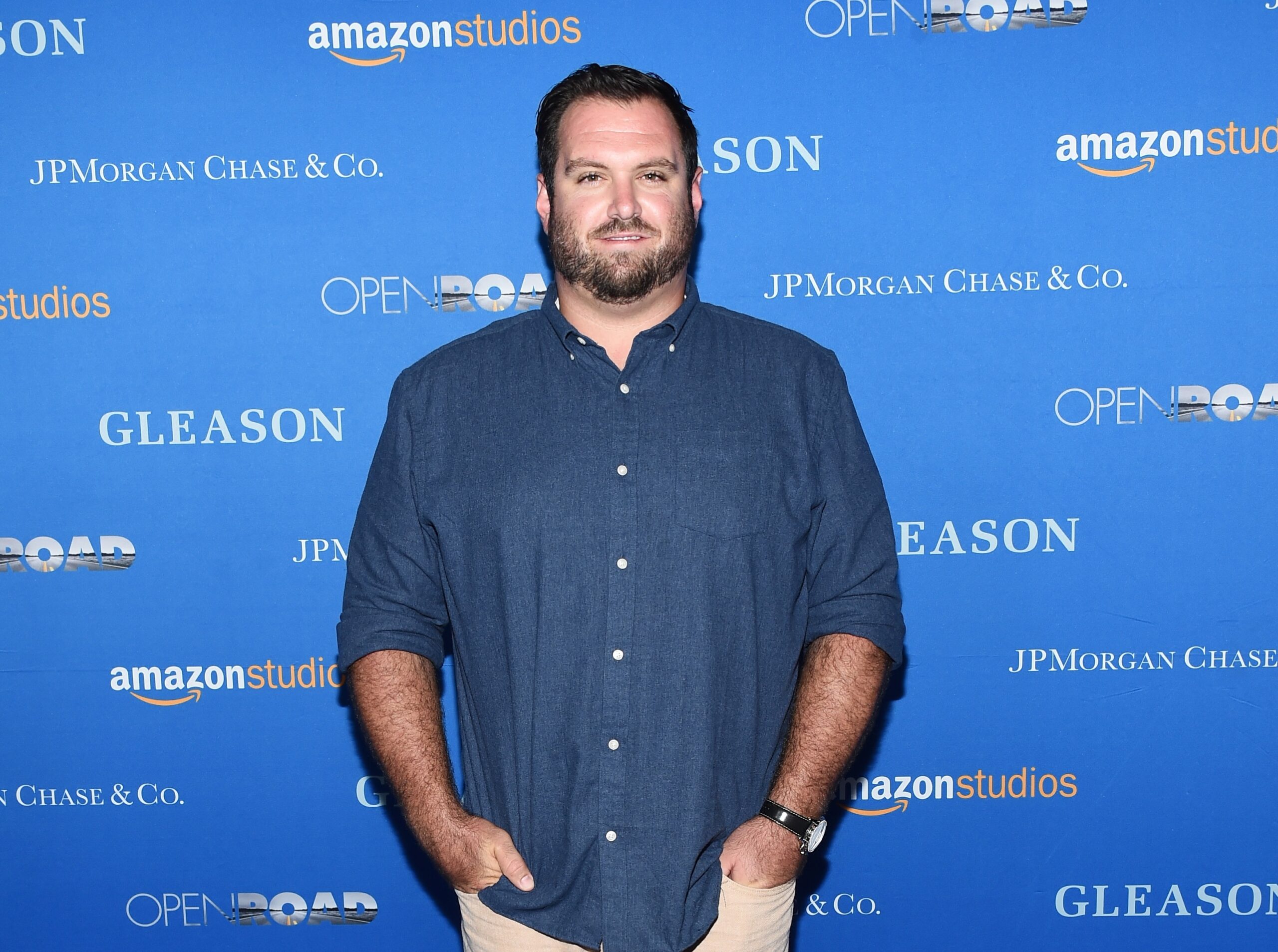
Retired NFL offensive lineman for seven NFL teams, now a regional manager at Rocksolid, Brian de la Puente turns 40…
South African-born attorney, now based in London, Sir Sydney Lipworth QC turns 94… Professor emerita of Yiddish literature at Harvard University, she is presently a distinguished senior fellow at The Tikvah Fund, Ruth Wisse turns 89… Emmy Award-winning film, television and stage actress, Zohra Lampert turns 88… Academy Award-winning actor and producer, Harvey Keitel turns 86… Ophthalmologist in South Florida, Dr. Joel Sandberg turns 82… Former dean of the College of Arts and Sciences at American Jewish University, Samuel Edelman turns 77… Professor of mathematics at Princeton since 1987, he was a winner of a 1991 MacArthur genius fellowship, Sergiu Klainerman turns 75… Former FDA commissioner during the 1990s, then chief scientific officer for COVID-19 response during the Biden administration, David A. Kessler turns 74… Retired editor and columnist for the New York Post, he was also managing editor of The Jerusalem Post, Eric Fettmann turns 72… Chief rabbi of the city of Shoham in central Israel, chairman of the Tzohar organization and rabbi for the Ezra youth movement, Rabbi David Stav turns 65… Founder and former CEO of LRN, a legal research, ethics and compliance management firm, Dov Seidman turns 61… Immediate past chair of JFNA’s National Women’s Philanthropy Board and past chair of the Hartford (Conn.) Federation, Carolyn Gitlin… Retired NFL defensive lineman, he has played for the Raiders and Panthers, Josh Heinrich Taves, aka Josh Heinrich, turns 53… Ice hockey player, she won a gold medal at the 1998 Winter Olympics and a silver medal at the 2002 Winter Olympics, Sara Ann DeCosta turns 48… U.S. senator (R-AR), Tom Cotton turns 48… Chief community and Jewish life officer at The Jewish Federations of North America, Sarah Eisenman… Former Israel director for J Street, then the chief of staff for Israel’s Ministry for Regional Cooperation, Yael Patir… Member of the U.K.’s House of Lords since February, she was previously a member of the House of Commons, Baroness Luciana Berger turns 44… Software entrepreneur, Google project manager, then Facebook engineering lead, and co-founder in 2008 of Asana, Justin Rosenstein turns 42… Israeli rapper, singer, songwriter and actor, known by his stage name Tuna, Itay Zvulun turns 41… Actress, writer, producer and director, best known as the creator, writer and star of the HBO series “Girls,” Lena Dunham turns 39… Hannah Sirdofsky… Co-founder in 2018 of Manna Tree Partners, Gabrielle “Ellie” Rubenstein… Chief of staff and senior program manager at Jigsaw, a unit within Google, Raquel Saxe Gelb… A clinical social work intern in Philadelphia, Bela Galit Krifcher… Graduating from Columbia Law School next Sunday, Dore Lev Feith turns 29… Director of external affairs at the Manhattan Institute, Jesse Martin Arm… Gold medalist for Israel in rhythmic gymnastics at the 2020 Olympics in Tokyo, Linoy Ashram turns 26…
In an interview with JI, the DOJ lawyer said the administration is ‘not being aggressive enough’ in its antisemitism policy, including the deportation of foreign students
Win McNamee/Getty Images
Leo Terrell at an event in the East Room of the White House on February 20, 2025.
Leo Terrell, senior counsel to the assistant attorney general for civil rights, says he’s undeterred by critics of the Trump administration’s approach to combating antisemitism, arguing that those dissatisfied with its deportation strategy are “trying to justify, in my opinion, the antisemitic behavior” of those individuals.
Terrell, who has a career spanning three decades as a civil rights attorney and a conservative media personality, sat down on Monday for his first interview with Jewish Insider since joining the Justice Department earlier this year — at a time when some mainstream Jewish organizations, including the Anti-Defamation League and the American Jewish Committee, have expressed concern that the administration’s approach has violated the due process rights of the individuals being targeted. The Trump administration has argued that non-citizens do not have the same constitutional protections as U.S. citizens, though the Fourteenth Amendment grants due process rights to all people regardless of status.
“That question is being asked quite often, and I think those people who are raising that issue are trying to justify, in my opinion, the antisemitic behavior,” Terrell said. “If you’re an American citizen, I have due process on a lot of different criminal issues if I’m arrested. I have due process. That term due process needs to be evaluated depending on the status of the individuals who assert it.”
“I will submit to you that individuals who are here on, let’s say, for example, a student visa, who are not American citizens, who are here as a privilege by this country, do not have the same due process rights, do not have the same access to the court system as I do as an American citizen,” he continued, adding, “Your rights depend on your status in this country. You won’t hear that because it’s the truth, it’s not a talking point.”
Terrell said he and Harmeet Dhillon, the assistant attorney general for civil rights at the DOJ, remain confident they are following the law. He also said he wants injunctive relief for Jewish students from U.S. citizens and foreign nationals involved in antisemitic hate crimes.
“How many times do we see individuals violating the rights of Jewish American students use the lying argument of freedom of speech, and it was adopted by a majority of the left-wing media, but these blue cities allow these individuals to be violent. They were arrested, and then they were released, and they were never prosecuted. They were never prosecuted. And that type of mentality existed not only on the local level, but on the federal level as well. That has stopped under the Trump administration,” Terrell explained.
“One of the first questions you mentioned is, and I’ve heard it the last couple of days, if you think the Trump administration is too hard or being too aggressive? They raise that question, and I’ve heard it in three different locations, but I say no, we’re not aggressive enough. If you’re comparing that there’s been some progress in relationship to the Biden administration, that’s not much of a standard, because they did nothing,” he added.
When asked about Columbia University, where new acting President Claire Shipman oversaw the suspension and arrests of some of the students involved in last week’s takeover of the school’s main library, Terrell said the university’s actions were insufficient because they did not deter future action from the protesters.
“Some people have said, well, you know, some of these students have been suspended by the college president. Not good enough. There’s no deterrent mechanism. You need deterrence where it doesn’t happen again. And under the Trump administration, I can tell you right now, I’m using the tools of Title VI [of the Civil Rights Act]. I’m using the tools of filing hate crimes as a deterrent mechanism,” Terrell said, later noting, “Trump is dead set on eliminating antisemitism, and besides the litigation that we are contemplating … we’ve got some tools … that we’re going to be disclosing later on, that are going to definitely have a major factor.”
Terrell added that he stood by the decision to target the individuals the Trump administration had sought to deport as part of its antisemitism policy, including the case of Rümeysa Öztürk, the Tufts University doctoral student and Turkish national who was released from detention last week amid criticism from several leading Jewish groups as federal authorities continue pushing for her deportation. Some Jewish leaders and organizations had argued against Öztürk’s detention due to the lack of evidence against her the federal government has made public; currently, her only known anti-Israel activity is a critical op-ed she co-authored in her school newspaper.
“The Civil Rights team is more concerned with getting rid of the problem than making everybody comfortable while they do so. I believe the previous administration expressed commitment, both in speech and in certain actions, to fighting antisemitism, but then allowed antisemitism to get diluted to the point where the effort was regrettably no longer as effective. A wise man once said, when you get too well-rounded, you stop pointing anywhere. An effort to combat and eradicate antisemitism must do that,” Rabbi Levi Shemtov, the executive vice president of American Friends of Lubavitch (Chabad), told JI.
Öztürk’s release on bail, Terrell explained, “has nothing to do with the merit as to whether or not she can be removed based on the evidence and the discretion of the secretary of state.”
“Yes, she got released on bail. So the standard for bail is: Are you a flight risk? Are you a danger? Will you return? That has nothing to do with the merit of her status here. … The decision on the merits as to whether or not she will remain in this country has not been decided,” Terrell said, criticizing the news media’s portrayal of the latest developments in Öztürk’s case as inaccurate.
Asked if any universities had responded to campus antisemitism in ways that he found satisfactory, Terrell pointed to Dartmouth College. “I was very pleased when the president of Dartmouth College came by and spoke to us, and they got a very favorable grade from the ADL as far as battling antisemitism. If I was going to mention one school that is on the right track to combat antisemitism, that has addressed the issue, and not tried to dodge it or look for press coverage because they suspended some students, Dartmouth College would be probably number one on my list,” he said.
Looking off campus, Terrell told JI he has reached out to the mayors of Boston, Los Angeles, Chicago and New York City to try to find ways to work together on campus antisemitism “because I felt those were major cities that had failed to protect Jewish American students, not only on campus, but Jewish Americans period, in the city.”
Terrell said that he hasn’t heard back from Los Angeles Mayor Karen Bass or Chicago Mayor Brandon Johnson, but his message to them is that he’s “not going to run away from that. I’m going to meet it head on.”
“I’m going to do everything I can to get him [Johnson] and those [Chicago City] Council members to change their ways. The federal government has a lot of tools, and we’re going to use all of them. The one thing I can tell you is that I’ve had conversations with the president about this as late as last week, and he said basically in so many words, whatever you need on this subject just call me directly, just talk to me directly. Because I have approached him on certain issues involving resolving some of these issues in schools and he wants complete, 100% compliance,” Terrell said.
While he has some detractors, Terrell also has a number of Jewish leaders in his corner who argue his approach to his current role was bound to ruffle some feathers.
Ambassador Yechiel Leiter, Israel’s envoy to the U.S., told JI in a statement, “Leo Terrell has hit the ground running … showing remarkable clarity and passion. From day one, he has demonstrated unwavering commitment to this crucial fight — through strong public statements, meaningful action, and a clear moral compass.”
“The Civil Rights team is more concerned with getting rid of the problem than making everybody comfortable while they do so. I believe the previous administration expressed commitment, both in speech and in certain actions, to fighting antisemitism, but then allowed antisemitism to get diluted to the point where the effort was regrettably no longer as effective. A wise man once said, when you get too well-rounded, you stop pointing anywhere. An effort to combat and eradicate antisemitism must do that,” Rabbi Levi Shemtov, the executive vice president of American Friends of Lubavitch (Chabad), told JI.
“We cannot compromise our efforts to deal with the situation just so that everybody’s very comfortable with what we’re doing. Unconventional and illegal are not the same thing, and people facing existential threats cannot be expected to make everybody comfortable while they fight for their survival,” Shemtov continued, later adding: “Any energetic effort might test some limits here or there.”
Ambassador Yechiel Leiter, Israel’s envoy to the U.S., told JI in a statement, “Leo Terrell has hit the ground running … showing remarkable clarity and passion. From day one, he has demonstrated unwavering commitment to this crucial fight — through strong public statements, meaningful action, and a clear moral compass.”
“We deeply value our partnership with him and appreciate his willingness to listen, engage, and stand up against hatred in all its forms. His leadership is both encouraging and inspiring at a time when it’s needed most,” Leiter added.
Terrell spent more than two decades amassing a large following on the talk radio circuit and on cable news, serving as a Fox News contributor on legal issues for much of the last decade. He made headlines in 2020 when debuting “Leo 2.0,” his revamped persona, while announcing his move from the Democratic Party to the GOP.
In his new job, he frequently starts his morning tweeting on X about the rise in antisemitism to his 2.5 million followers.
“The Jewish American community and I have had a love affair for the last 35 years. One of my first jobs as a lawyer, I worked in a Jewish law firm, and I was befriended not only by the Jewish lawyer who helped me get started, but by the community at large. So my relationship with the Jewish American community has been in place for the last 35 plus years,” Terrell said, noting his time leading the California Commission Against Hate Crimes, “where we looked at all hate crimes against Blacks, Browns, Jews, Catholics.”
While Terrell warned in media appearances about the rise of antisemitism in recent years, he was not directly involved in trying to address the issue nationally until 2024, when he began criticizing the Biden administration’s lack of response to incidents of antisemitism taking place amid anti-Israel campus protests.
Still, Terrell says he’s no stranger to fighting for civil rights protections for all, citing his three-decade “love affair” with the Jewish people and his legal career, which included efforts to address antisemitism in California.
“The Jewish American community and I have had a love affair for the last 35 years. One of my first jobs as a lawyer, I worked in a Jewish law firm, and I was befriended not only by the Jewish lawyer who helped me get started, but by the community at large. So my relationship with the Jewish American community has been in place for the last 35 plus years,” Terrell said, noting his time leading the California Commission Against Hate Crimes, “where we looked at all hate crimes against Blacks, Browns, Jews, Catholics.”
“I have committed to civil rights and my commitment to the Jewish American community has been so heartwarming based on my experience here in this position and on Fox, but it goes well beyond that. It goes well beyond that. For the last 25 to 30 years, ever since I have been a lawyer, I’ve had a fantastic, strong, great relationship with the Jewish American community and it is going to maintain.”
The lawsuit alleges the university knowing allowed anti-Israel protesters to harass Jewish students and prevent them from going to class

Getty Images
Department of Justice, Washington, D.C.
The Justice Department’s newly formed Federal Task Force to Combat Antisemitism filed a statement of interest in court on Monday night supporting Jewish students and a professor in their case alleging that the University of California Los Angeles permitted antisemitism on campus.
According to the suit, in the spring of 2024 UCLA violated Title VI of the 1964 Civil Rights Act by knowingly allowed members of an anti-Israel protest encampment to physically prevent students and faculty from accessing portions of the campus if they were wearing items that identified them as Jewish if they refused to denounce Israel. The filing comes as the task force is separately investigating the University of California system for Title VI violations.
The brief filed on Monday marks the first time the federal government has filed a statement of interest in court to argue that a university should be held accountable for the campus antisemitism that has skyrocketed across the country since the Oct. 7 terrorist attacks in Israel.
Leo Terrell, head of the antisemitism task force, said in a statement that “the President, Attorney General Pam Bondi, and the Task Force know that every student must be free to attend school without being discriminated against on the basis of their race, religion or national origin.”
The Trump administration’s new multi-agency task force to combat antisemitism announced earlier this month that it would visit 10 university campuses that have experienced an increase of antisemitic incidents.
The task force already announced it will cut $400 million from Columbia University’s federal funding due to antisemitic demonstrations unless the university agrees to a number of conditions by Thursday. At the time, Terrell said that was “only the beginning” of university funding cuts.
Please log in if you already have a subscription, or subscribe to access the latest updates.
 Continue with Google
 Continue with Apple