






























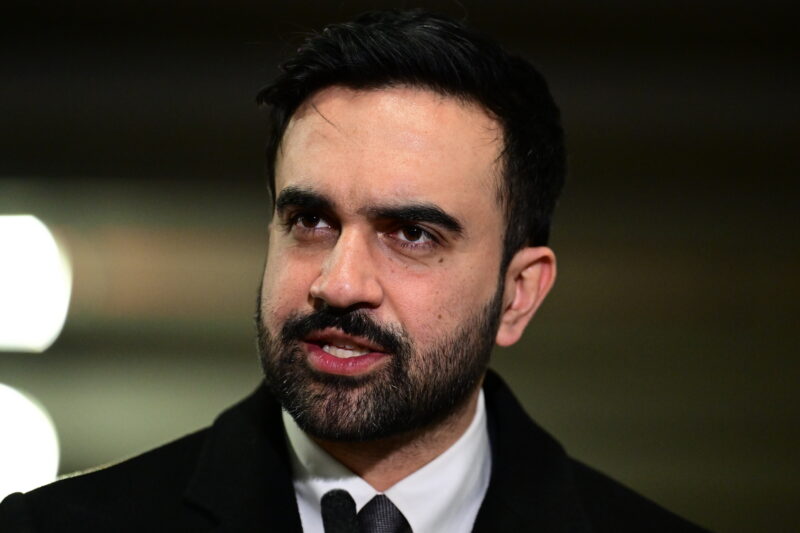
















Some of the biggest Jewish and pro-Israel groups are working in tandem to boost Bell’s reelection campaign against a scandal-plagued former lawmaker
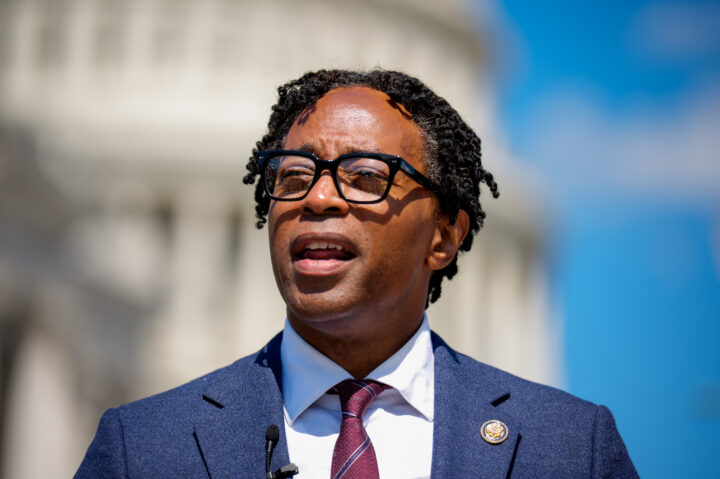
Andrew Harnik/Getty Images
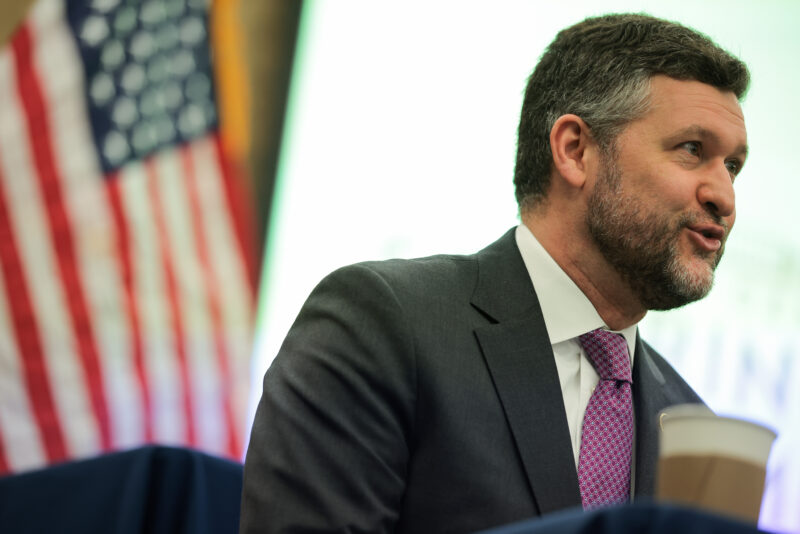
Rep. Wesley Bell (D-MO) speaks during a news conference outside the U.S. Capitol on September 9, 2025 in Washington.


 Add JewishInsider on Google
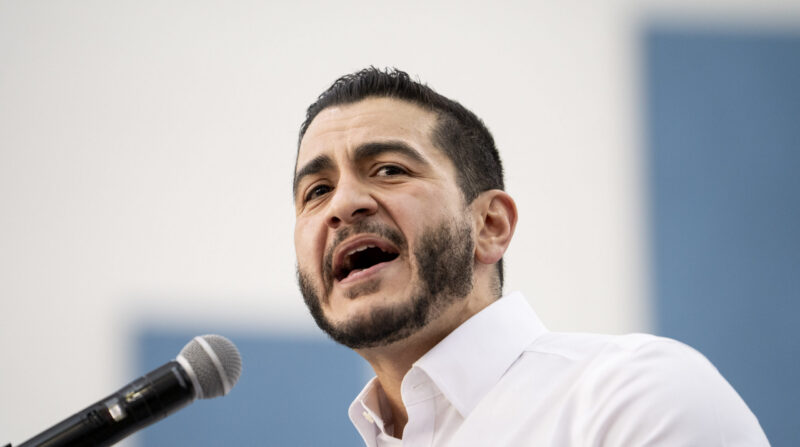
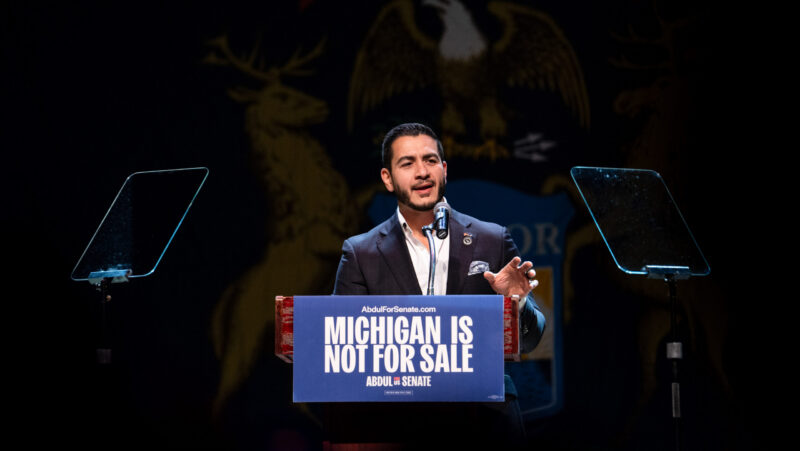
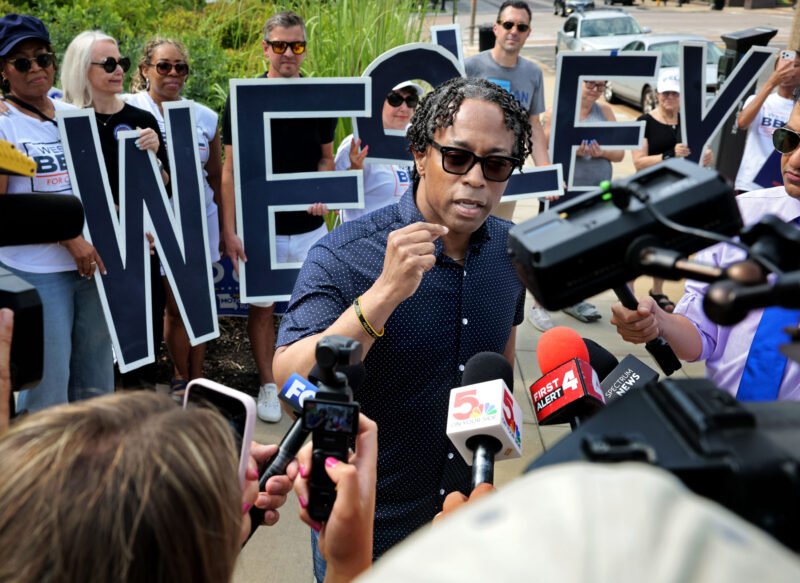
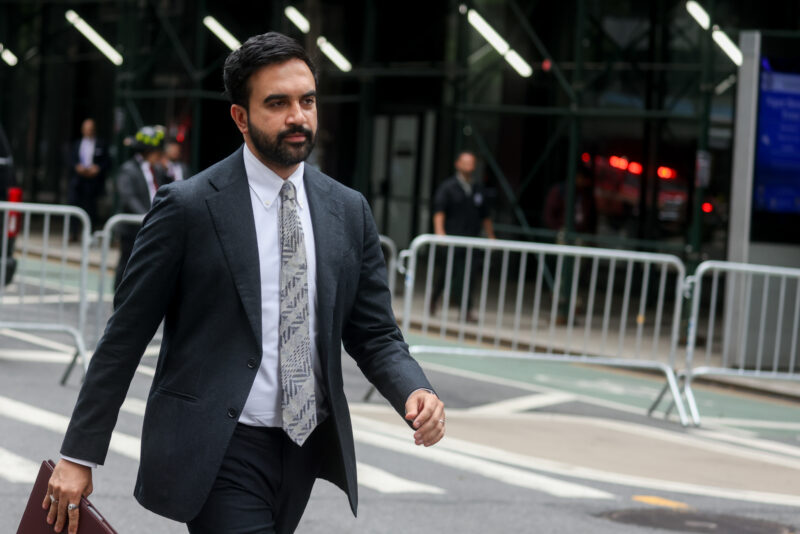
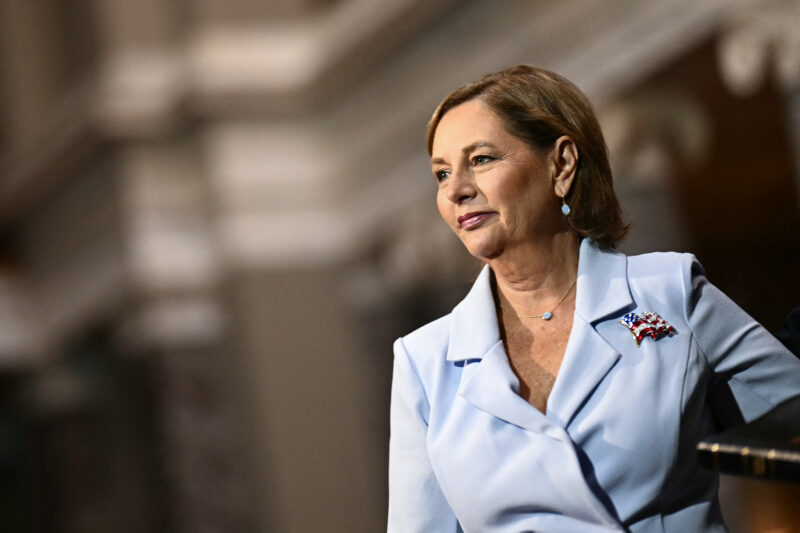
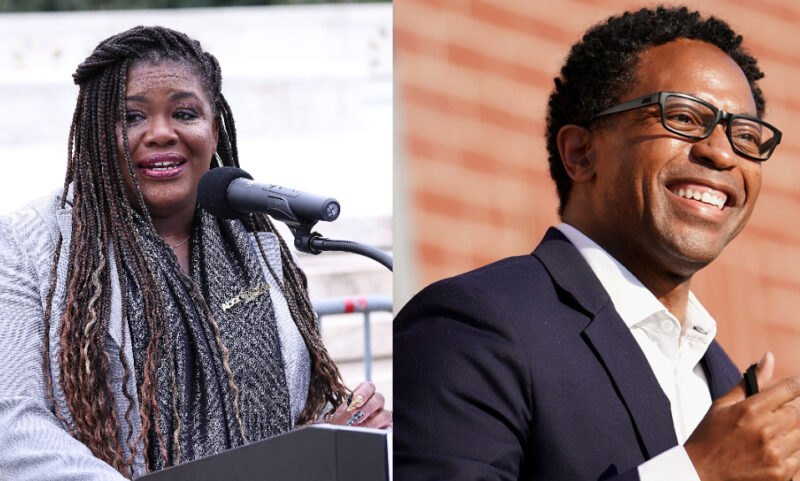
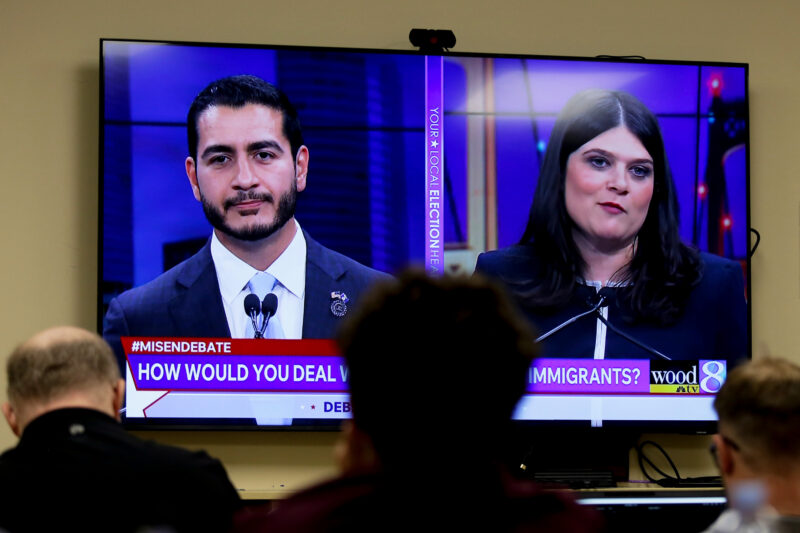
Members of Missouri’s Jewish community are working to turn out voters in Rep. Wesley Bell’s (D-MO) St. Louis-area congressional district as he faces down a rematch with former Rep. Cori Bush (D-MO) on Tuesday.
The Jewish Democratic Council of America has rallied its national membership, particularly in Bell’s district and the broader Midwest region, for an in-person canvassing effort as well as several phone-banking events.
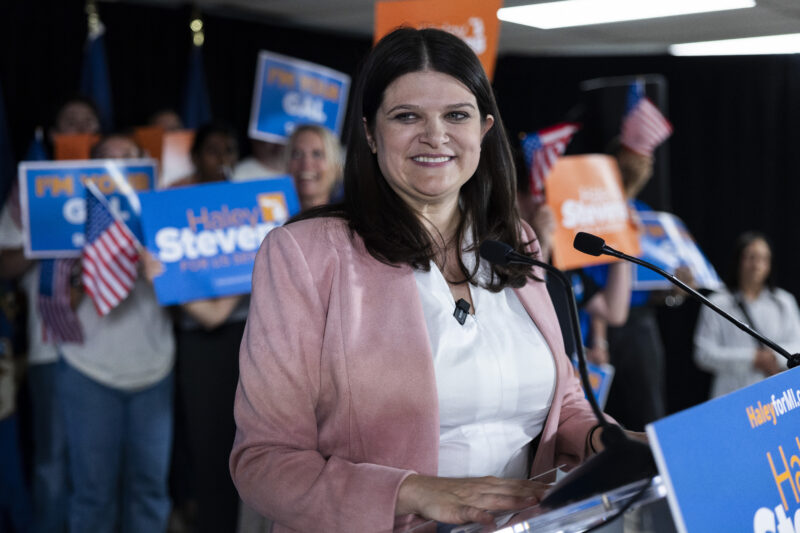
“We are mobilizing our network across the Midwest to help get out the vote for Wesley Bell,” Jacob Spiegel, JDCA’s communications director, told Jewish Insider. “We’re continuing to mobilize our awesome network of volunteers to get out the vote for the candidates that represent our values.” The race is one of two that JDCA is currently prioritizing in its voter outreach efforts, alongside Rep. Haley Stevens’ (D-MI) Senate campaign in Michigan.
Bush was among the most vocally anti-Israel members of Congress while she was in office, and faced accusations of antisemitism. Bell has been a staunch supporter of the Jewish community and remained supportive of Israel even amid backlash at home, including voting against an amendment to cut military aid to the Jewish state.
Agudath Israel of America’s Missouri office has brought together local Orthodox rabbis in a nonpartisan get-out-the-vote campaign that does not specifically back Bell — though members of the community who vote in the Democratic primary are very likely to support him.
Agudath Israel’s campaign has the support of all of the Orthodox rabbis in the district, who have filmed videos to encourage voter participation. One video, which features all of the local rabbis together, emphasizes the stakes of the election for the Jewish community both in the United States and in Israel.
Suri Botuck, the director of government affairs for Agudath Israel of Missouri, said that it took some time for the community to realize who was running in the election, but that the campaign has been in action for months, with a volunteer team with members of all of the Orthodox synagogues serving as ambassadors and experts for their congregations.
She said that as early as April, the community was working on voter registration efforts, and is now focused on early and absentee voting to ensure that voters cast their ballots, particularly if they have travel plans following Tisha B’Av, which took place last week.
The rabbis, she continued, are also making sure to get the word out at prayer services to emphasize the importance and responsibility of voting. “We are very grateful to them for their partnership. They also appreciate the importance of getting out the vote,” Botuck said.
A social media campaign has also organically developed, with community members sharing selfies on WhatsApp when they go to the polls. Organizers have been sharing those photos over email, and are aiming to distribute fliers featuring those selfies to synagogues before Shabbat.
“It’s a great way that the community has all been engaged and participating, by having a little bit of fun,” she said.
Though Agudath Israel, as a nonprofit organization, is not endorsing candidates and is fully focused on voter turnout, Botuck said that other organizations and individuals are active in voter education efforts, including in a local Jewish political WhatsApp chat.
Botuck said that organizers have heard from community members that almost 20% of them have already voted, and will be scouring the board of elections data set to be released on Friday to make sure to contact those who haven’t yet voted before primary day.
She noted that early vote turnout was much higher among the Orthodox Jewish community in the 2024 primary than in the district at large.
“We’re a community that takes voting seriously. People know they have to vote, people get out to vote. They might need reminders, but it’s part of our culture,” she said. “We are voting and people just might need to know the information and the details of where, what and when.”
AIPAC’s United Democracy Project super PAC has also continued to spend big to boost Bell and attack Bush, with ad spending now totaling $3.1 million, going after Bush as ineffective and disloyal to the Democratic Party.
A week out from the primary, Bush hasn’t seen comparable spending, either by her own campaign or by outside groups to back her up, leaving Bell’s message dominant on the ground. Braxton Payne, a local Democratic strategist, said that Bell seems to have the momentum at this point.
Jordan Blase, Bell’s campaign manager, noted to JI that the campaign has been on television with ads for weeks, in addition to the outside spending.
Blase said that the campaign has seen significant support from the Jewish community, similar to the previous cycle, where Jewish volunteers proved to be a significant force for the campaign.
Blase said that the campaign feels strong about its position going into the final days of the race, but is working strongly on field and get-out-the-vote operations.
She argued that the race is different from other districts where socialist candidates have dominated because — unlike those largely unknown candidates — Bush is well-known in the district and has a well-established record. “The district fired her for a reason,” Blase said.
She emphasized Bush’s record of missing votes, voting against Democratic priorities and condemning former Vice President Kamala Harris during the 2024 election, which Blase asserted is hurting Bush in the district.
Bush did not respond to a request for comment.
Jewish organizations across the political spectrum question whether the deal will curb Iran’s nuclear program or its support for regional proxies

Tom Williams/CQ-Roll Call, Inc via Getty Images
President Donald Trump conducts a news conference in the White House briefing room about the war in Iran on Monday, April 6, 2026.
As details begin to emerge about the Trump administration’s agreement with Iran to end the war and lift the U.S. blockade of the Strait of Hormuz, some mainstream Jewish organizations are treating the deal as a preliminary step — focusing on the 60-day negotiating period ahead, while others are expressing skepticism about the contours of the agreement.
AIPAC, in a statement that came late Monday afternoon after many other organizations had already spoken out, framed the current MOU as a preliminary step, focusing more on the upcoming negotiations, while emphasizing the need for more details about how the current deal affects Israel.
“The announced MOU kicks off a new 60-day window for talks. We look forward to learning the full details of the framework for these negotiations, including whether the deal preserves the sovereign right of our democratic ally Israel to respond to the security threats it confronts,” AIPAC said in a statement.
The group also emphasized that “Congress will play a critical role in working with the administration throughout these negotiations and in reviewing the ultimate agreement.”
It said any deal should require the removal of all enriched uranium from Iran, the dismantling of its enrichment capacity and should address Iran’s missile and drone programs and end its support for terrorist proxies.
The American Jewish Committee also did not take a definitive position on the current agreement, saying on X that the organization “await[s] developments about the reported 60-day ceasefire agreement” but emphasized the need to continue to focus on Iran’s long-running threats.
The AJC said that any ultimate deal with Iran at the conclusion of the upcoming 60-day negotiating period should ensure Iran cannot obtain a nuclear weapon, rebuild its ballistic missile program, continue to support terror proxies, threaten U.S. allies and partners or hold the Strait of Hormuz hostage.
“AJC also strongly supports the legitimate aspirations of the Iranian people for greater freedom, opportunity and dignity, and hopes that those aspirations are eventually realized,” the statement continued. “As the contours of this and future agreements become more clear, we will continue to engage with our partners in the U.S., the Middle East, and around the world to make this vision a reality.”
Other groups offered a more directly negative reaction to the emerging details of the MOU.
The Zionist Organization of America, which has been strongly supportive of Trump administration policies and President Donald Trump himself, praised the president for carrying out military operations against Iran but said that “the pending deal with Iran is concerning.”
“The deal appears to be an ‘agreement to negotiate’ — which enables the Iranian regime to obtain massive oil revenue and time to build up its military and terror arsenals, while leaving the genocidal Iranian regime and its nuclear and missile stockpiles in place, and positioning the Iranian regime to continue and strengthen its 47-year war to destroy the U.S., Israel, and the West,” ZOA National President Mort Klein said. “[T]he little that we know is deeply problematic.”
Klein said it “makes no sense” for the U.S. to let up on its blockade of Iran unless Iran fully gives up its nuclear program and missile stockpile. He also expressed concerns that the deal will allow Hezbollah to regroup and rearm, and that Trump demanded that Israel stand down against Hezbollah.
“Pressuring Israel to not respond to threats of annihilation and attacks on her people is not, as the president called it, a ‘Great Deal [that] will bring Peace and Security to the whole Region,’” Klein said.
“Disturbingly, the interim Iran deal does not appear to be even close to the U.S.-Israel war goals of eliminating the existential dangers of Iran’s nuclear program and ballistic missiles, ending the Iranian regime’s support for its terror proxies, and helping the Iranian people overturn the brutal, genocidal Iranian regime,” he continued.
Democratic groups are also skeptical.
Democratic Majority for Israel CEO Brian Romick criticized the administration’s “incoherent and erratic strategy” and said that “there are concerning details about what is and isn’t in this deal.” Romick called on the administration to lean on “experienced negotiators and technical experts” in the next phases of talks, “rather than relying on friends, family, and donors.”
He said that any deal must permanently end Iran’s nuclear program, constrain its ballistic missiles, address Iran’s support for terrorism and ensure that the Islamic Revolutionary Guard Corps and Iran’s terrorist proxies do not receive additional support as a result of sanctions relief or the unfreezing of assets, and that it must be thoroughly vetted by Congress.
“Despite this tentative deal, the reality is Israel still faces constant threats from Iranian-backed terrorist groups like Hamas and Hezbollah. President Trump must not limit or interfere with our ally’s ability to defend itself from very real threats along its border,” Romick continued.
The Jewish Democratic Council of America’s CEO Halie Soifer took an even more strident tone.
“Donald Trump’s deal with Iran isn’t a deal at all. At best, it’s a statement of intention — a ‘concept of a plan’ — lacking details. At worst, it’s an admission of defeat by the United States,” Soifer said, describing it as a weaker deal than the 2015 Joint Comprehensive Plan of Action.
She argued that the “reckless war” gave Iran a “chokehold” on the U.S. and global economy that it will continue to exercise in the future, gave Iran a stronger hand in nuclear negotiations, solidified the current regime, harmed the Iranian people and gained the U.S. nothing.
“Today, Iran is unquestionably further from regime change — and this Iranian regime is stronger — than before the war,” Soifer said. “Trump repeatedly berated the Obama administration for offering sanctions relief and unfreezing Iranian assets as part of the JCPOA. The amount of financial benefit Iran received from the JCPOA will be dwarfed by the amount of money going to Iran following Trump’s defeat.”
Soifer also criticized Trump for sidelining and ignoring Israel throughout the talks.
J Street has thus far been an outlier in expressing support for the deal.
The group’s president, Jeremy Ben-Ami, said J Street “welcomes” the announcement, while also criticizing the war effort as a whole.
“The lesson is the same one many experts and former security officials have warned about for years: There is no sustainable military solution to the challenge posed by Iran’s nuclear diplomacy,” Ben-Ami said. “Durable constraints on Iran’s nuclear activities can only be achieved through pragmatic and sustained diplomacy.”
Ben-Ami argued that the deal would be largely similar to the JCPOA, adding, “We urge lawmakers to support this agreement to end the fighting and push to ensure future diplomatic efforts address the security threats presented by Iran.”
The Republican Jewish Coalition has not issued a full statement of its own on the deal, but has indicated support thus far, sharing on its X account two Truth Social posts from Trump about the Strait of Hormuz being reopened and the lifting of the U.S. blockade. RJC did not immediately respond to a request for comment.
The move is intended to block Abdul El-Sayed’s path to victory, though a divided mainstream vote could help the anti-Israel candidate

MANDEL NGAN/AFP via Getty Images & Andrew Roth/Sipa USA
Mallory McMorrow and Haley Stevens
The Jewish Democratic Council of America announced a dual endorsement on Wednesday of Rep. Haley Stevens (D-MI) and state Sen. Mallory McMorrow in Michigan’s three-way Senate Democratic primary, saying “there are two candidates who stand with our community on issues of importance to Jewish voters, and there is one who does not.”
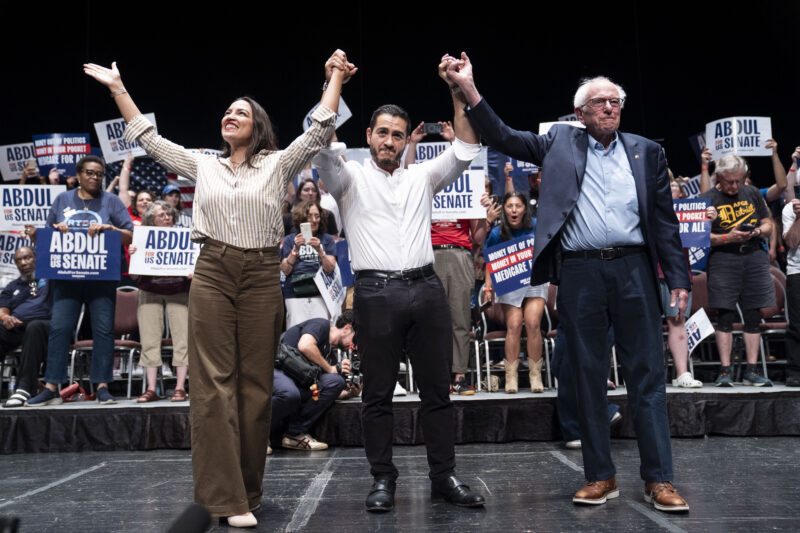
“It is because of this stark contrast of the views and values of Haley Stevens and Mallory McMorrow, compared to those of Abdul El-Sayed,” a vocal critic of Israel who has captured the enthusiasm of the far left, “that we are taking the distinct opportunity to endorse two candidates,” Halie Soifer, JDCA’s CEO, said in a statement.
The decision to issue a dual endorsement is rare for JDCA, which has long supported Stevens, a moderate pro-Israel Democrat who is favored by establishment leaders as well as AIPAC. In recent days, Stevens has won a series of major endorsements from Sen. Chris Coons (D-DE), former Sen. Debbie Stabenow (D-MI) and former Michigan Gov. Jennifer Granholm, with under three months until the August 4 primary seen as key to reclaiming the party’s majority in the upper chamber.
McMorrow, who has backed efforts to restrict arms sales to Israel and called its military conduct in Gaza a genocide while also reaching out to Jewish voters in the state, stands to to the left of JDCA on Middle East policy, which backs continued U.S. aid to Israel “with no cuts or conditions,” its website states.
In an interview with Jewish Insider, Soifer said the group had weighed those differences and engaged in “extensive conversations with McMorrow” as it made its endorsement.
“Given the fact that her views on this issue stood in such contrast with those of Abdul El-Sayed,” who has drawn criticism for campaigning with Hasan Piker, a Twitch streamer who regularly espouses antisemitic rhetoric, “we felt that it was important to send a clear message that either Stevens or McMorrow would” be preferable, Soifer explained on Wednesday.
McMorrow and Stevens have criticized El-Sayed for appearing with Piker, whose rhetoric he has refused to denounce. El-Sayed, who has been rising in recent polls — including one earlier this month in which he held a 10-point lead over his two primary opponents — has also side-stepped questions about Israel’s right to exist and said the Israeli government is just as evil as Hamas, among other inflammatory comments that have raised alarms among Jewish voters in the state.
While Soifer acknowledged concerns that Stevens and McMorrow could end up splitting the vote and inadvertently propelling El-Sayed to the nomination, she told JI the dual endorsement was meant to reflect JDCA’s broader assessment of the stakes of the race.
El-Sayed “stands alone among the most anti-Israel candidates who are running this cycle,” Soifer said, calling him an “unacceptable choice” in a state home to a sizable Jewish community.
“We wanted to send a clear message that he is a threat both to Democrats and the chances of holding onto that Senate seat,” she added. “It is our interest to ensure he is defeated.”
Polling has indicated that the general election — where Democrats are now expected to face former Rep. Mike Rogers (R-MI) — will be competitive.
JDCA has endorsed more than 120 candidates this election cycle. The group has so far notably refrained from offering its imprimatur to Graham Platner, the presumptive Senate Democratic nominee in Maine who has faced scrutiny over a Nazi tattoo he recently covered up and other personal controversies linked to his past online statements.
According to Soifer, JDCA plans to spend “at least six figures” in the Michigan Senate race, but she said she was not yet ready to share additional details about its strategy.
JDCA’s top activists made clear this week that a major concern is making sure pro-Israel Jews continue to be welcome in the party
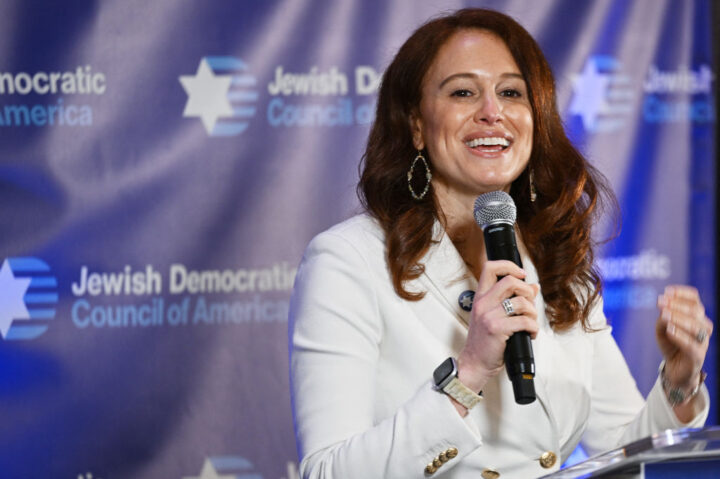
MANDEL NGAN/AFP via Getty Images
Jewish Democratic Council of America CEO Halie Soifer in Washington on May 24, 2023.
When a group of Jewish Democratic activists and donors convened in Washington this week for the annual leadership summit of the Jewish Democratic Council of America, the message seemed to be one of defiance: defiance against President Donald Trump, to be sure, but also a defiant attitude pushing back against some of the recent shifts within the party.
JDCA’s primary objective is to elect Democrats. But as more Democrats have taken positions critical of or outright hostile to Israel, JDCA’s top activists made clear this week that another major concern is making sure pro-Israel Jews continue to be welcome in the party.
“We are fighting to ensure that the views and values of Jewish Americans continue to find their political home in the Democratic Party in Michigan and beyond, and we have work to do,” Halie Soifer, the group’s CEO, said on Tuesday night. She noted that the JDCA hopes to help defeat Michigan Senate candidate Abdul El-Sayed, a far-left candidate who appears to be rising in the polls.
“It’s clear there’s one candidate whose views are antithetical to ours, and we want to ensure he’s defeated,” said Soifer, though she did not name El-Sayed directly. JDCA has not endorsed either of his opponents, state Sen. Mallory McMorrow or Rep. Haley Stevens (D-MI).
“We at JDCA only support Democrats, but we do not support them all,” Soifer told the summit. “We understand it’s not just about electing Democrats. It’s about electing Democrats who align with us, and this includes efforts to ensure that candidates who have espoused anti-Israel and/or antisemitic views are defeated before November.”
Over the two-day gathering, a parade of high-profile speakers from Democratic leadership — Senate Minority Leader Chuck Schumer (D-NY) and House Minority Leader Hakeem Jeffries (D-NY), along with Reps. Nancy Pelosi (D-CA) and Steny Hoyer (D-MD), respectively the former House speaker and majority leader — addressed the convening. Their appearances seemed designed to affirm that Democrats remain pro-Israel and committed to fighting antisemitism.
“We have to decisively confront antisemitism from wherever it comes from,” said Jeffries. “I will always hold firm in my support for the State of Israel as a Jewish and democratic state and eternal homeland for the Jewish people.”
Schumer did not specifically discuss Israel but raised concerns about the increasing use of the word “Zionist” as a slur.
“I’ve long said we must fight antisemitism wherever and whenever it appears, even if it’s in our own party. I’ll continue to do so,” said Schumer. “Today, antisemitism takes all different forms: Holocaust denialism, conspiratorial delusions of Jewish or Zionist control of the world, replacing the word ‘Jewish’ with the word ‘Zionist’ to demonize Jewish communities.”
The outgoing Democratic leaders were not as sanguine, instead offering a note of caution about how the dynamic towards Israel has shifted within the Democratic Party.
“Always, but right now, we really have to work together to make sure that support for Israel is, without question, bipartisan,” Pelosi said. “It doesn’t mean we don’t have our differences of opinion … but it should not weaken the fact that we have bipartisan support. That has always been the tradition, and we must make sure we get through this place where we are, where there may be some doubt in people’s minds as to whether that is a value.”
Pelosi is retiring at the end of this year, as is Hoyer, who was even more blunt: “How many of you have been anxious yourselves about rhetoric heard from some Democratic officials and candidates? We ought to be,” he said.
Speaking to reporters on Wednesday, Sen. Chris Coons (D-DE) said he hoped to prove that Sen. Bernie Sanders (I-VT) does not speak for the party on matters related to Israel, though he noted with worry that Sanders’ attitude — one that is deeply critical of Israel — appears to be on the rise.
“It’s clearer and clearer to me that there is real alarm about a fundamental break between Democrats as a party and Israel as a nation, and I’m going to do everything I can to resist and oppose that break, while criticizing [Benjamin] Netanyahu and his values and decisions,” said Coons. “I’m trying to be an effective and engaged voice with a perspective that you just heard and not have Bernie Sanders be the only senator whose perspective and attitude is heard across the country.”
Forty Senate Democrats voted last month for a Sanders-authored resolution attempting to block some arms sales to Israel, a record high. Coons said he knows those senators still support Israel’s right to exist, but cautioned that being too critical of Netanyahu can give cover to people who are actually anti-Israel.
“I strongly support Israel’s right to exist, its right to be a Jewish homeland and a democracy, and its value to the American people as a partner and ally,” said Coons. “I think we are at risk of some of my colleagues, in trying to send a message to Netanyahu or in opposition to his policies and stances, to be misunderstood as abandoning that commitment.”
Coons said that on the campaign trail, and on recent trips around the country, he hears “profound concern about where’s the Democratic Party going on Israel.” Some Jewish politicians who addressed the JDCA summit expressed a deeper sense of unease and discomfort about their Jewish identity, against the backdrop of rising antisemitism.
Sen. Elissa Slotkin (D-MI), who spoke at a cocktail reception Tuesday evening, talked about how challenging it is to be a Jewish elected official in the current environment.
“It has become deeply, deeply complicated to be a Jew in America,” said Slotkin. “There’s not a single day that goes by for myself representing the state of Michigan that I am not feeling torn.”
Minneapolis Mayor Jacob Frey delivered a jolt of energy to the room with an impassioned speech about his community’s support for immigrants in the face of ICE enforcement activity, which resulted in the killing of two American citizens by ICE agents in his city in January. When a JDCA member asked him for advice on how to respond to others in the Democratic Party who have made anti-Zionism a political litmus test, he expressed concern.
“It has been deeply concerning for me personally, as a proud Jew,” Frey said. “I am a great supporter of the endurance of our American Republic, a big believer that America should continue to exist, and an adamant opponent of Donald Trump. The same thing can apply to Israel.”
Ultimately, though, the gathering was a political pep rally — a chance for Democratic activists and donors to hear from politicians at all levels of government and gin up excitement ahead of this year’s midterm elections. Everyone who addressed the gathering all but guaranteed that Democrats would take back control of the House and Senate.
The conversations seemed meant to ressure Jewish Democrats about both the party’s fortunes for November and its treatment of pro-Israel Jews. One JDCA activist described the group’s work as “grasstops,” which was demonstrated by the appearances from top party leaders.
But the anti-Israel sentiment that has steadily grown within the party over the past three years is not coming from party leaders; it is driven by far-left activists. Whether JDCA has a plan to counter that grassroots energy remains to be seen — and the answer will only come at the ballot box later this year.
Citing the estimated $29 billion cost of the Iran war, the House minority leader asked, ‘How is it possible that we can't spend at least 500 million’ on NSGP?
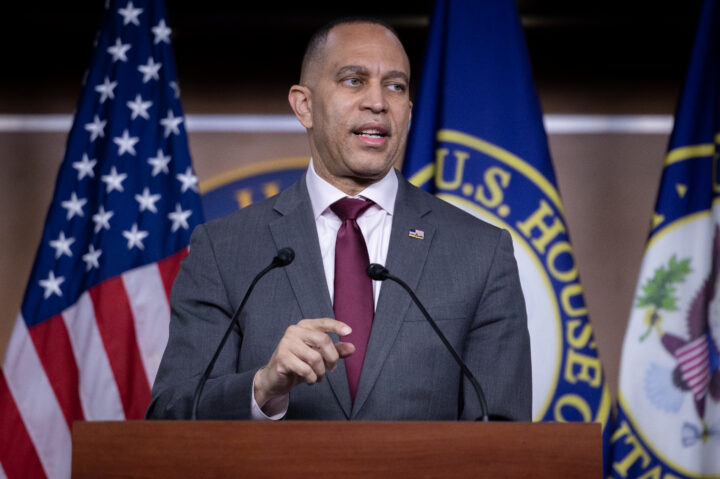
Nathan Posner/Anadolu via Getty Images
House Minority Leader Hakeem Jeffries (D-NY) speaks during his weekly press conference at the U.S. Capitol in Washington, DC on March 19, 2026.
House Minority Leader Hakeem Jeffries (D-NY) called for a dramatic increase in funding of the federal Nonprofit Security Grant Program, telling a group of Jewish activists on Wednesday that it should receive $1 billion — up from the $300 million that Congress allocated in last month’s homeland security funding bill.
“The not-for-profit security grant funding program is woefully underfunded. It’s woefully underfunded. $300 million is not acceptable,” Jeffries said at the Jewish Democratic Council of America’s leadership summit in Washington.
He pointed out that the Pentagon now estimates the cost of the war with Iran so far is $29 billion, and Democrats believe it is possibly much more.
“We think it’s probably double that. But even if you just take the $29 billion number, how is it possible that we can’t spend at least 500 million? I think the number should be even higher,” said Jeffries. “Why wouldn’t we spend a billion dollars to make sure that the communities that we care about across this country are safe?”
The $300 million approved by Congress last month is a small increase from the $274.5 million allocated to the program in 2024 and 2025.
Jewish organizations have for years been lobbying for Congress to significantly increase the federal budget for the program, which provides security grants to vulnerable nonprofits, including synagogues and Jewish day schools, arguing that its current level does not come close to meeting the security needs of Jewish institutions. In 2024, more than half of all applications for NSGP funding were declined.
Jewish communities and institutions are “now spending an outsized amount of budget funding to provide security in America,” Jeffries said. “That should not happen.”
A group of 41 senators last month called for $750 million in funding for the program next year. Last month, a coalition of interfaith groups called for Congress to increase NSGP funding to $1 billion. A bipartisan group of 150 members of the House asked the House Appropriations Committee in March to increase funding to $1 billion, although no members of House leadership in the Democratic or Republican Party signed onto it.
‘We won’t support a Democrat who doesn’t represent the views and values of the vast majority of American Jews,’ Halie Soifer said
MANDEL NGAN/AFP via Getty Images
Jewish Democratic Council of America CEO Halie Soifer in Washington on May 24, 2023.
The Jewish Democratic Council of America is not ready to endorse Graham Platner, the controversial presumptive Democratic nominee in Maine’s Senate race, said Halie Soifer, the group’s CEO.
“We won’t support a Democrat who doesn’t represent the views and values of the vast majority of American Jews,” Soifer said in a statement. “JDCA has endorsed more than 120 candidates across the country who are fighting for the issues Jewish Americans care about and standing against antisemitism. It’s those many Democrats who have our backs, and we’ll have theirs as they work to defeat Republicans aligned with this White House whose views are antithetical to our values.”
Soifer additionally told The Forward on Thursday that Platner’s record of incendiary past comments and personal controversies are “reasons for concern” about his candidacy, saying that the far-left insurgent would first need to clarify his views to receive possible consideration from the group.
Reached by Jewish Insider on Thursday, Soifer confirmed JDCA’s position on the race but declined to comment further.
JDCA, a leading Jewish Democratic group, typically endorses most Democrats in major federal races, especially closely contested ones like the Senate seat in Maine.
The group had backed Maine Gov. Janet Mills in the June primary to unseat Sen. Susan Collins (R-ME). But Mills, the establishment favorite, said Thursday that she was suspending her campaign due to a lack of financial resources, clearing the way for Platner to secure the nomination in a race viewed by Democratic leaders as key to regaining control of the upper chamber.
Previously, JDCA had expressed criticism of Platner after it was revealed that he had a Nazi tattoo on his chest for nearly two decades. He has since removed the tattoo and claimed he was unaware of its links to Nazism until recently, even as a former acquaintance told JI that he had long known the icon represented a skull-and-crossbones known as a Totenkopf, adopted by an infamous SS unit.
“Hateful rhetoric and Nazi symbols must have no place in the Democratic Party, the Republican Party, or anywhere in our politics,” JDCA said last year after JI’s report. “Under any and all circumstances, it must be unacceptable to glorify Nazis or Nazism. Period.”
Platner’s hostile approach to Israel and demonization of AIPAC have also faced scrutiny among mainstream Jewish leaders at the state and national levels.
He has repeatedly accused Israel of committing genocide in Gaza and called for blocking U.S. aid to the Jewish state. In a past Reddit post recently uncovered by JI, the Marine veteran voiced admiration for Hamas’ tactics in a violent raid into Israel in 2014.
JDCA’s reservations over Platner’s campaign reflect ongoing discomfort among both Democratic and nonpartisan Jewish organizations that are now reckoning with the implications of his popularity in spite of the tattoo and other issues he has weathered.
The Anti-Defamation League as well as Maine’s Jewish federation have also raised concerns about Platner’s tattoo and past comments.
Platner, for his part, has pledged to engage further with the Jewish community, recently hosting a Seder in Maine that included the state chair of J Street, the progressive Israel advocacy group.
A spokesperson for J Street did not immediately respond to a request for comment on Thursday night about whether it would endorse Platner’s campaign.
Plus, Israel-Ukraine relations face grain of contention

Joe Raedle/Getty Images
Rep. Debbie Wasserman Schultz (D-FL)
This P.M. edition is reserved for our premium subscribers like you — offering a forward-focused read on what we’re tracking now and what’s coming next. Please don’t hesitate to share your thoughts and feedback by replying to this email.
📡On Our Radar
Notable developments and interesting tidbits we’re tracking
The gunman who attacked the White House Correspondents’ Dinner on Saturday night, Cole Tomas Allen, was arraigned in Washington this afternoon. He is being charged with transportation of a firearm between states, discharging a firearm during a crime of violence and attempting to assassinate the president of the United States, which carries a potential life sentence.
Assistant U.S. Attorney Jocelyn Ballantine said Allen, 31, had “a 12-gauge, pump-action shotgun, a .38-caliber semiautomatic pistol and … three knives and other dangerous paraphernalia” during the attack. He will remain in detention with another hearing scheduled for Thursday…
White House Press Secretary Karoline Leavitt confirmed that President Donald Trump met with his national security team this morning where they discussed Iran’s latest proposal to end the war, which reportedly includes reopening the Strait of Hormuz but postponing talks on the country’s nuclear program…
German Chancellor Friedrich Merz said the U.S. is “being humiliated” by Iranian leaders after negotiations between the two countries this weekend were called off.
“The Iranians are obviously very skilled at negotiating, or rather, very skillful at not negotiating, letting the Americans travel to Islamabad and then leave again without any result,” Merz told a group of students. The result is “an entire nation is being humiliated by the Iranian leadership, especially by these so-called Revolutionary Guards,” he added…
Russian President Vladimir Putin praised how “courageously and heroically the people of Iran are fighting for their independence” in a meeting with Iranian Foreign Minister Abbas Araghchi today in St. Petersburg. Araghchi thanked Russia for standing by its side and said the countries will continue their “strategic partnership”…
Hezbollah leader Naim Qassem said today that the terror group will not disarm, despite the Lebanese government’s intent to remove the group from power in the south of the country under the terms of the ongoing ceasefire with Israel. Hezbollah and Israel have continued to exchange fire throughout the ceasefire, including a wave of Israeli airstrikes today in response to Hezbollah’s deadly drone attack that killed an IDF soldier and wounded six yesterday…
New Department of Homeland Security training materials allow green card applicants to be denied for antisemitic and anti-Israel social media posts and activism, as well as anti-American activism, The New York Times reports. The documents, distributed to immigration officers last month, cite “as an example of questionable speech a social media post that declares, ‘Stop Israeli Terror in Palestine’ and shows the Israeli flag crossed out”…
Ukrainian Foreign Affairs Minister Andrii Sybiha summoned Israel’s ambassador to the country to protest the arrival of a ship allegedly carrying grain taken from Russian-occupied Ukraine at Israel’s Haifa Port, Sybiha said on X. Sybiha also denounced Israel’s “lack of appropriate response to Ukraine’s legitimate request” regarding a similar vessel that docked in Haifa last week.
Israeli Foreign Minister Gideon Sa’ar slammed Sybiha for his announcement: “Diplomatic relations, especially between friendly nations, are not conducted on Twitter or in the media,” Sa’ar wrote. He said that “evidence substantiating [Ukraine’s] allegations have yet to be provided” and that “the matter will be examined”…
Several pro-Israel House Democrats in Florida could lose their seats after Gov. Ron DeSantis unveiled a new congressional map that eliminates their districts — state lawmakers are expected to approve the map for use in this year’s midterm elections at a special session of the state Legislature tomorrow.
The new map could give the GOP up to four additional House seats by redrawing Democratic-leaning districts, including those of Reps. Jared Moskowitz (D-FL), Debbie Wasserman Schultz (D-FL) and Darren Soto (D-FL)…
Claims by New Jersey congressional candidate Adam Hamawy that the Gazan hospital where he volunteered as a trauma surgeon in 2024 during Israel’s war with Hamas was a “completely benign civilian hospital with no tunnels underneath it” are false, The Washington Free Beacon reports.
While Hamawy claimed in an interview shortly after he returned that “there were definitely no tunnels underground and no command base there,” Hamas leader Yahya Sinwar was killed a year later “in a tunnel directly under the hospital emergency department, where he was leading a high-level meeting with senior Hamas terrorists,” the Free Beacon writes…
All five of Pennsylvania’s living former governors, both Democrats and Republicans, released a statement today calling on state officials to prioritize the safety and security of Gov. Josh Shapiro, Jewish Insider’s Gabby Deutch reports.
The letter came days after state Treasurer Stacy Garrity — Shapiro’s leading Republican opponent in this year’s gubernatorial race — said the state will not pay for security upgrades made to Shapiro’s privately owned family residence, done after the state-owned governor’s mansion was targeted in an antisemitic arson attack last spring…
The New York Times chronicles Google co-founder Sergey Brin’s turn away from the Democratic Party and increasing political involvement, including against the proposed “billionaire tax” in his home state of California.
“I fled socialism with my family in 1979 and know the devastating, oppressive society it created in the Soviet Union. I don’t want California to end up in the same place,” Brin told the Times. Brin, who is Jewish, has also been disturbed by the Democratic Party’s leftward shift on Israel policy…
Toronto-based Jewish advocate Adam Hummel argues in the “Boundless Insights” Substack that “anti-Zionism” is an obsolete position, given the 78-year-old existence of the State of Israel.
“Israelis don’t owe anyone an argument for their existence. … The debate is over, not because one side won, but because the thing itself came into being. They are a people. They speak a language. They live on a piece of land and have mortgages. That is what peoples do. The Greeks do it. The Poles do it. The Québécois do it. The arguments about whether they should are, at this point, a leisure activity for people who live elsewhere”…
⏩ Tomorrow’s Agenda, Today
An early look at tomorrow’s storylines and schedule to keep you a step ahead
Keep an eye out in Jewish Insider for a profile of Keith Sonderling, the acting secretary of labor, who is Jewish and the grandson of Holocaust survivors, following the resignation of Secretary Lori Chavez-DeRemer.
The Zionist Rabbinic Coalition will present its first “Pillar of Zion” award to Rep. Steny Hoyer (D-MD) at the organization’s fifth annual National Conference in Washington. Other speakers at the three-day conference will include Israeli Ambassador to the U.S. Yechiel Leiter; State Department antisemitism envoy Yehuda Kaploun; Assistant Attorney General for Civil Rights Harmeet Dhillon; and Jonathan Schanzer, executive director of the Foundation for Defense of Democracies.
Stories You May Have Missed
REPORTER’S NOTEBOOK
Hiding under a table at the White House Correspondents’ Dinner

‘Two thoughts ran through my head. The main one: I’m getting married in six days. I can’t die now. The second: I can’t believe this is happening to me again’
FOLLOW THE MONEY
Abdul El-Sayed brings in campaign cash from head of Hamas-cheering group
The Michigan Senate contender accepted $7k from the chair of Al-Awda/PRRC — and hired her son
Plus, half of young Americans view Israel as a burden
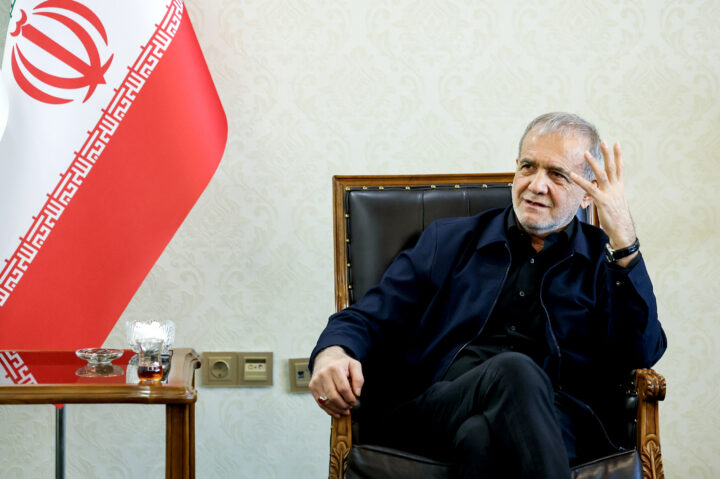
Iranian Presidency/Handout/Anadolu via Getty Images
Iranian President Masoud Pezeshkian delivers a speech on April 19, 2026.
This P.M. edition is reserved for our premium subscribers like you — offering a forward-focused read on what we’re tracking now and what’s coming next. Please don’t hesitate to share your thoughts and feedback by replying to this email.
📡On Our Radar
Notable developments and interesting tidbits we’re tracking
Talks between Israel and Lebanon, which are currently underway, were moved from the State Department to the White House. Vice President JD Vance and Secretary of State Marco Rubio were spotted arriving there together this afternoon, and a White House official told Jewish Insider that President Donald Trump would greet the participants at the opening of the discussion…
U.S. Ambassador to Israel Mike Huckabee, who returned to Washington in order to participate in the talks, also stopped by Capitol Hill where he met with Sen. Ted Cruz (R-TX)…
While the bombing campaign in Iran is on pause, the battle at sea continues: U.S. forces boarded another vessel carrying Iranian oil in the Indian Ocean this morning and Trump said he had ordered the U.S. Navy to “shoot and kill any boat” placing mines in the Strait of Hormuz — just as a third U.S. aircraft carrier arrived in the region…
Trump also said Iran is “having a very hard time figuring out who their leader is,” indicating the regime may still be struggling to present the U.S. with a unified proposal. “The infighting is between the ‘Hardliners,’ who have been losing BADLY on the battlefield, and the ‘Moderates,’ who are not very moderate at all (but gaining respect!),” he claimed.
In response, Iranian parliament Speaker Mohammad Bagher Ghalibaf and President Masoud Pezeshkian, both considered relative moderates, issued nearly identical statements on X pledging “complete obedience to the Supreme Leader”…
Iranian officials tell The New York Times their new supreme leader, Mojtaba Khamenei, is alive but injured, and so far ruling differently than his late father; the younger Khamenei is relying on Islamic Revolutionary Guards Corps commanders to provide him advice to make decisions “as though he is the director of the board.”
Khamenei’s injuries are extensive and he is largely inaccessible in person: “One leg was operated on three times, and he is awaiting a prosthetic. He had surgery on one hand and is slowly regaining function. His face and lips have been burned severely, making it difficult for him to speak, the officials said, adding that, eventually, he will need plastic surgery”…
U.S. officials are expressing concern over the military’s ability to defend Taiwan from China in the near future should the need arise, given that the U.S. has burned through more than 1,000 Tomahawk missiles and more than 1,500 air-defense missiles in the course of the war with Iran so far, supplies that could take up to six years to replace…
Israeli Foreign Minister Gideon Sa’ar named Israel’s first Christian ambassador, George Deek, as the country’s special envoy to the Christian world, JI’s Lahav Harkov reports, after several recent controversies in Israel relating to Christians. Deek is part of the Arab Orthodox Christian community in Jaffa…
Sen. Elissa Slotkin (D-MI) joined other Michigan Democrats in denouncing Amir Makled, a Democratic nominee for regent of the University of Michigan, over Makled’s past comments expressing antisemitic sentiments and support for terrorism.
“I’m going to have a problem with any candidate — Democrat, Republican or independent — who shares antisemitic and hateful posts on social media. Especially when they refuse to disavow those comments or show remorse,” Slotkin said in a statement to JI’s Marc Rod, in response to a question about Makled…
Defense Secretary Pete Hegseth did not give advance notice to senior Republican senators before announcing yesterday that he was firing Navy Secretary John Phelan, causing surprise and confusion on Capitol Hill. “I found out about it the way everybody else did,” Senate Majority Leader John Thune (R-SD) told JI’s Emily Jacobs and Marc Rod of the Pentagon’s announcement on social media of Phelan’s dismissal.
Trump praised Phelan in a post on Truth Social this afternoon and said he’d “certainly like to have him back within the Trump Administration sometime in the future” — Phelan had reportedly bumped heads with Hegseth but had a close relationship with the president…
Nearly half of young American adults view Israel as a burden to the United States, according to a new Harvard Youth Poll of 18- to 29-year-olds. The survey found that 46% of young Americans consider Israel to be mostly a burden to the U.S., compared to just 16% who say Israel is mostly a benefit, JI’s Gabby Deutch reports.
In addition, Ukraine, which has also received U.S. support in its lengthy war with Russia, was also determined to be more of a burden by young Americans — 31% of respondents said Ukraine is mostly a burden, while 21% said it is mostly a benefit…
The Wall Street Journal‘s Matthew Hennessey issued a defense of Elliot Kaufman, a member of the Journal‘s editorial board, after Trump slammed him on Truth Social as an “idiot” and a “moron.”
“What triggered the president’s ire was an op-ed under Mr. Kaufman’s byline headlined ‘The Iranians Take Trump for a Sucker.’ That’s a provocative title, yes, but the piece delivers on the provocation. Mr. Kaufman wasn’t calling Mr. Trump a sucker; he was merely pointing out that the Iranians are acting like they think he is one. The piece offers plenty of recent evidence to support that claim,” Hennessey wrote…
American journalist Shelly Kittleson details in The Atlantic her experience being kidnapped and held hostage by the Iran-backed Kataib Hezbollah terror group in Iraq for nine days earlier this month…
Former Disney CEO Bob Iger, who stepped down last month, is returning to Joshua Kushner’s venture firm, Thrive Capital, in an advisory role…
⏩ Tomorrow’s Agenda, Today
An early look at tomorrow’s storylines and schedule to keep you a step ahead
Keep an eye out in Jewish Insider for an interview with Rep. Tom Suozzi (D-NY) as he introduces a buffer zone bill in Congress, which follows legislation under consideration in New York and elsewhere, aiming to protect attendees at houses of worship.
Washington is abuzz ahead of the White House Correspondents’ Dinner, being held at the Washington Hilton on Saturday night. The event will be headlined by American Israeli mentalist Oz Pearlman and attended by Trump for his first time as president, alongside celebrities (including Trump fan Nicki Minaj), politicians and media figures. Politicos and reporters will schmooze at events beginning this evening through Sunday morning.
We’ll be back in your inbox with the Daily Overtime on Monday. Shabbat Shalom!
Stories You May Have Missed
SHAPIRO SPOTLIGHT
Josh Shapiro supports U.S. aid to Israel, but calls to use it as leverage
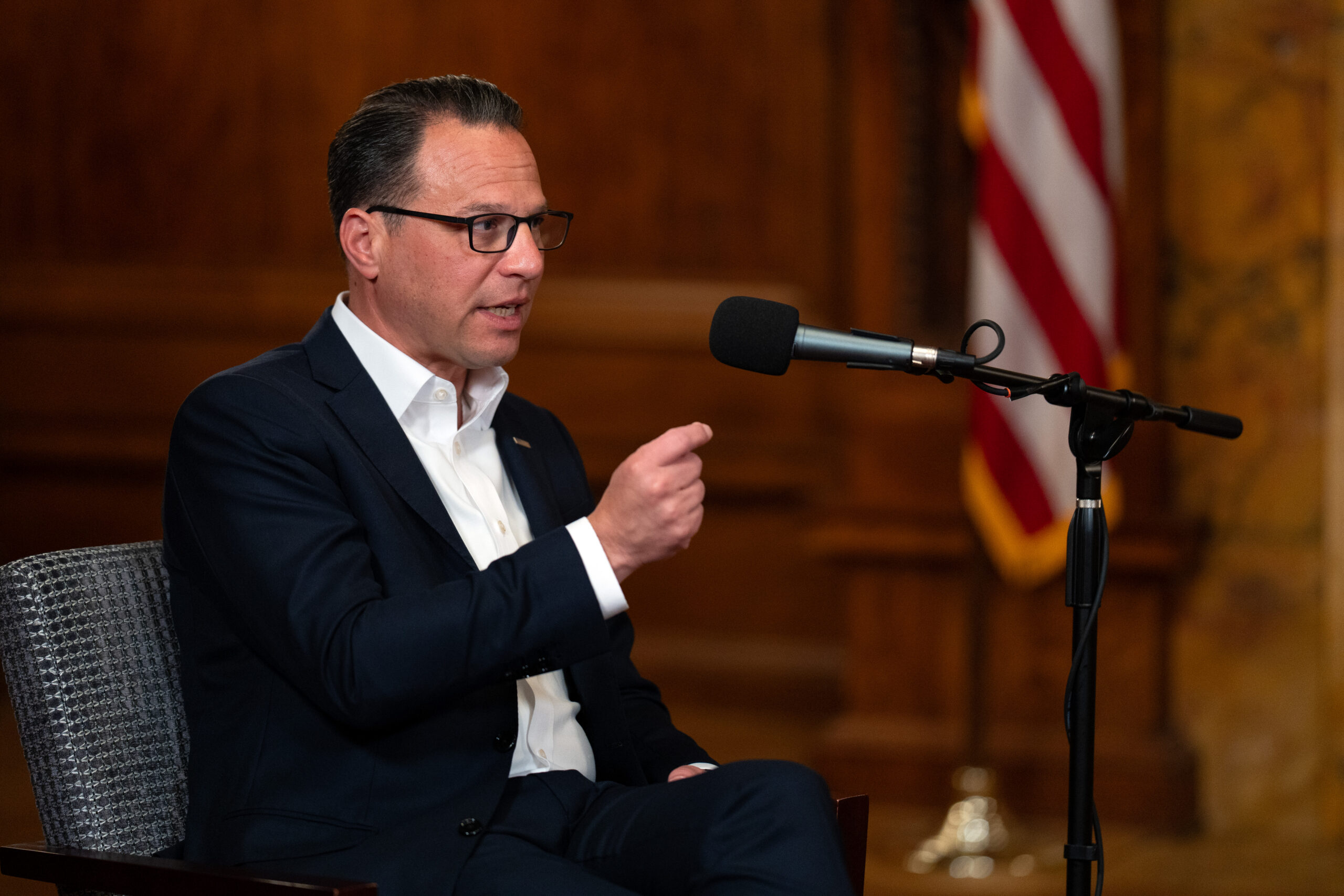
In an interview with JI, Shapiro said he ‘[hasn’t] really thought about’ whether he would appear on Hasan Piker’s stream but that he hasn’t been invited
DEFINITION DEBATE
Mamdani won’t set definition of antisemitism after repealing IHRA, his antisemitism czar says
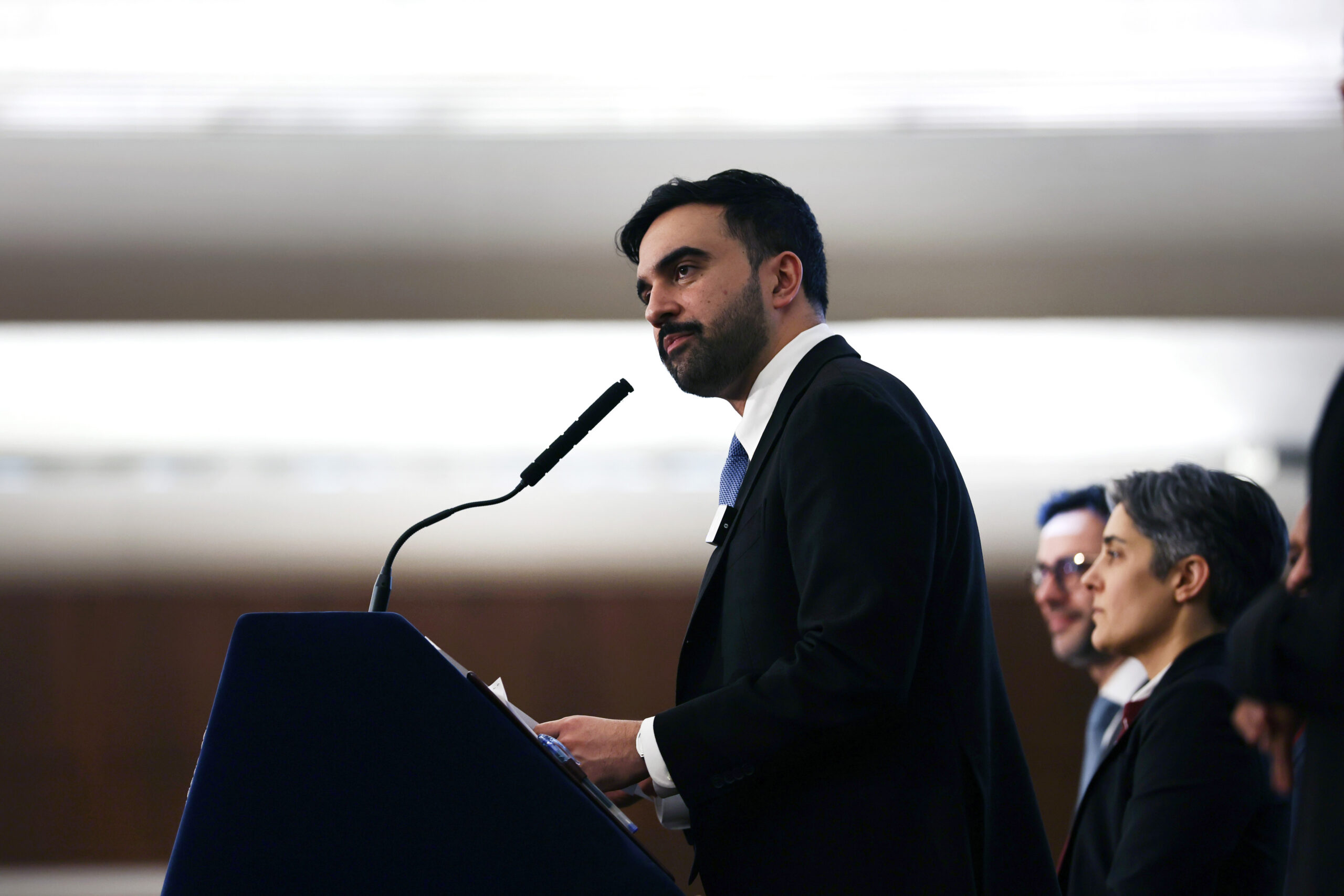
In testimony before the City Council’s antisemitism task force, an NYPD official said Mamdani played no role in a controversial change in reporting data from hate crimes
Plus, Dems concerned over fraying Israel-Europe ties

Gage Skidmore
Elizabeth Warren
This P.M. edition is reserved for our premium subscribers — offering a forward-focused read on what we’re tracking now and what’s coming next. Please don’t hesitate to share your thoughts and feedback by replying to this email.
📡On Our Radar
Notable developments and interesting tidbits we’re tracking
White House Press Secretary Karoline Leavitt maintained this afternoon that President Donald Trump is “generously offering a bit of flexibility” to Iranian leaders and has not given them a “firm deadline” to provide a proposal to the U.S., contrary to reports that said Trump only intended to wait a few days before ending the ceasefire that he extended yesterday.
Leavitt also said the president did not view Iran’s seizure of two ships near the Strait of Hormuz today as a violation of the ceasefire: “These were not U.S. ships. These were not Israeli ships,” she said — a change in tone for Trump, who has taken a hardline against Tehran’s escalatory actions in the key waterway.
Meanwhile, mediating countries are reportedly working to get Tehran and Washington back to the negotiating table, with a meeting possibly on Friday. Iranian President Masoud Pezeshkian said Iran “has welcomed dialogue and agreement and continues to do so,” but that “breach of commitments, blockade and threats are the main obstacles” to continuing talks…
Even as negotiations to end the war are still in flux, Trump thanked Iran for granting his request not to execute eight women who were reportedly due to be killed by the regime tonight, instead releasing four of them and holding the other four in jail for one month…
The Financial Times profiles Pakistani army chief Asim Munir as he emerges as an unexpected key mediator between the U.S. and Iran, utilizing his ties to Tehran’s security establishment — including the Islamic Revolutionary Guard Corps — and personal rapport with Trump to help secure a comprehensive deal…
Former Secretary of State Mike Pompeo is keeping the door open to a possible 2028 presidential run, saying “only the good Lord knows” what comes next as he continues to reestablish himself in the private sector and policy world after serving in the first Trump administration.
In a wide-ranging interview with Jewish Insider’s Emily Jacobs, Pompeo also praised Columbia University, where he now teaches at the School of International and Public Affairs, for “beg[inning] to get back the correct leadership … in a way where more voices can be heard”…
U.S. Ambassador to Turkey Tom Barrack stood by his comments that drew criticism over the weekend in which he repeatedly criticized Israel and praised Turkey, saying he was merely “stating the obvious.”
“When I described the Israel-Hezbollah ceasefire as a ‘time out’ and said that ‘everybody has been equally untrustworthy,’ I was simply stating the obvious reality on the ground. This is realism, not criticism of any side,” Barrack told Fox News Digital. He also reaffirmed his comments that the goal in Lebanon is “not killing Hezbollah,” and that Turkey should be readmitted to the F-35 fighter jet program…
A group of Jewish District of Columbia residents gathered at the city’s municipal building today for a scheduled meeting with Janeese Lewis George, a D.C. councilmember and one of the leading candidates in this year’s mayoral race, but she never showed, two people who were in the meeting told JI’s Gabby Deutch.
A staff member for Lewis George told attendees at the start of the meeting that she was having a busy morning, and they should begin the conversation without her. At the end of the meeting, when Lewis George still had not arrived, the staff member apologized that she could not attend…
New York City Council Speaker Julie Menin warned this morning that if Mayor Zohran Mamdani vetoes the council’s legislation intended to regulate protests at religious and educational sites, the city will face “more divisiveness,” calling the decision a critical test for the mayor, JI’s Haley Cohen reports.
Menin, New York City Comptroller Mark Levine and Manhattan Borough President Brad Hoylman-Sigal, speaking at 92NY on the future of Jewry in New York, beseeched the Jewish community not to flee despite tensions with the mayor. “This is not a time to lose hope. Hopefully the three of us here can embody the future of the commitment to fighting antisemitism, the commitment to supporting the Jewish community,” Menin said…
Rep. Tom Suozzi (D-NY) is set to introduce a federal buffer zone bill, similar to that of the New York City Council, alongside Anti-Defamation League CEO Jonathan Greenblatt on Friday, as Suozzi seeks reelection to his swing-district seat on Long Island…
Democratic lawmakers and strategists are expressing concern over the rising popularity of far-left Michigan Senate candidate Abdul El-Sayed, fearing that if he clinches the Democratic nomination, he would lose in a general election to former Rep. Mike Rogers (R-MI), the GOP front-runner, Semafor reports. Democrats must retain the Michigan Senate seat to have any hope of taking back the chamber in the midterm elections.
Rep. Hillary Scholten (D-MI), who is backing Rep. Haley Stevens (D-MI) in the race, told the outlet that “all three candidates are qualified, but dinged El-Sayed for campaigning with [Hasan] Piker and said ‘we are continuing to see consistent polling that suggests that Haley is the only one that can win in a general election’”…
Maine Senate candidate Graham Platner said he would not support keeping Senate Minority Leader Chuck Schumer (D-NY) as the party’s leader in the chamber, naming as potential replacements Sens. Chris Van Hollen (D-MD), Mark Kelly (D-AZ), Chris Murphy (D-CT) or Brian Schatz (D-HI). He also said he would oppose a ban on semiautomatic assault weapons, a priority policy for much of the Democratic caucus…
Sen. Elizabeth Warren (D-MA) dismissed criticism of Platner after campaigning with him in Maine last weekend: Asked on CNBC about her comment that Platner is “my kind of man” given his past incendiary rhetoric and actions including his Nazi chest tattoo, Warren said, “He has apologized, he’s out meeting with the people of Maine every single day so they can evaluate not who Graham Platner was but who Graham Platner is today.”
Warren sidestepped a question specifically about Platner’s 2014 praise of Hamas tactics during an attack on Israeli soldiers, as reported by JI: “You guys want to be the party of inclusivity, right?” host Sara Eisen asked regarding the report. “I want to be the party that stands up for hardworking people,” Warren answered…
Schumer dodged a question yesterday asking if he is on the wrong side of his party after most Democratic senators voted in favor of blocking arms sales to Israel — a measure he opposed. “Our caucus is united and focused on ending the war in Iran,” he said, and touted Democrats’ war powers resolutions before walking away…
Rep. David Scott (D-GA) died today at 80. Scott, who voted on the House floor last night, had been running for reelection for his 13th term…
⏩ Tomorrow’s Agenda, Today
An early look at tomorrow’s storylines and schedule to keep you a step ahead
Keep an eye out in Jewish Insider for the results of this afternoon’s war powers resolution vote in the Senate, which is expected to be blocked by Republicans as the previous four were.
Israeli Ambassador to the U.S. Yechiel Leiter and Lebanese Ambassador to the U.S. Nada Hamadeh will meet at the State Department tomorrow for the second round of direct talks between the two countries. Lebanon is reportedly seeking a one-month extension to the ongoing ceasefire, which is set to expire on Sunday; Hezbollah, which has said it is not bound by the agreement, has continued to fire rockets and a drone at Israeli troops in southern Lebanon.
Paramount Skydance CEO David Ellison will host an exclusive dinner honoring President Donald Trump and CBS News’ White House correspondents at the recently renamed Donald J. Trump Institute of Peace. Ellison is currently seeking regulatory approval of Paramount’s deal to acquire Warner Bros. Discovery.
The Jewish Democratic Council of America will host a candidate forum for New York’s 17th Congressional District featuring leading candidates Beth Davidson, a Rockland County legislator, and Cait Conley, a national security veteran.
Stories You May Have Missed
DEM DIVIDES
Jewish Dems vow to keep fighting in Michigan, even as they question if they belong
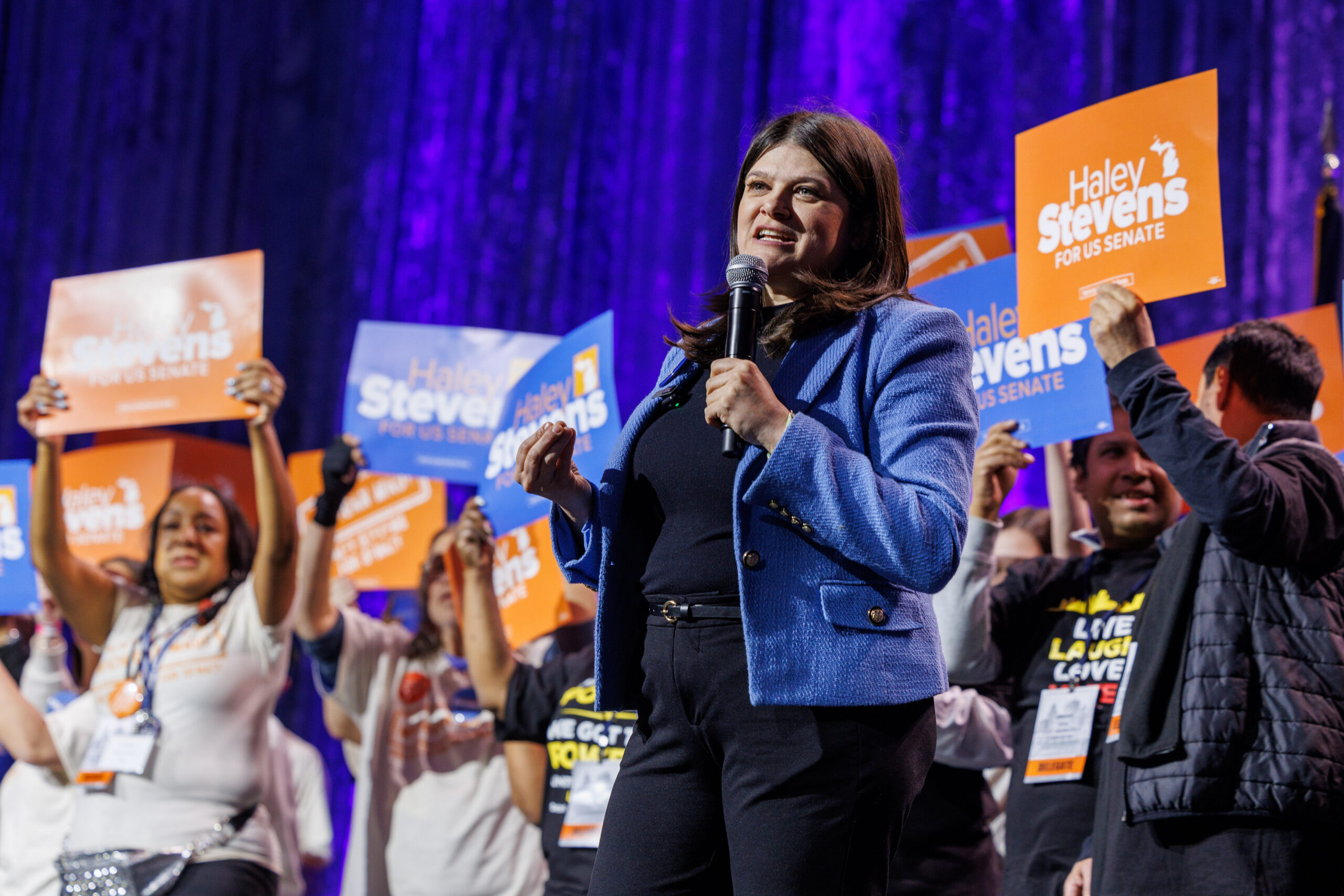
Jewish Democrats described a ‘shell-shocked’ atmosphere at their statewide convention that saw marked hostility to pro-Israel voices
CAMPAIGN CLASH
Ex-Democratic Socialists of America official working as top consultant to Osborn, Platner

Daniel Moraff also recruited Rep. Summer Lee, a leading anti-Israel Democrat, to pursue her political career
The vote was the latest defeat by anti-Israel activists within the Democratic National Committee
Alex Wong/Getty Images
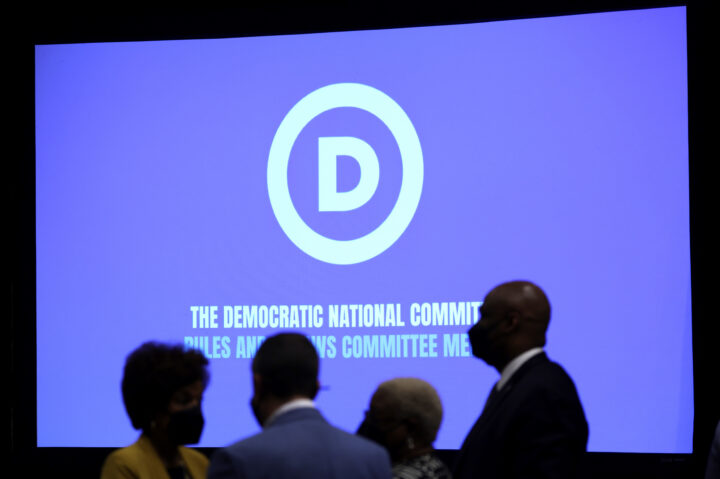
Committee members wait for the beginning of a meeting of the Democratic National Committee’s Rules and Bylaw Committee in Washington, DC
Democratic Party activists on Thursday voted to reject a measure that criticized the involvement of AIPAC in Democratic primaries and the American political system.
The resolution was debated during a meeting of the Democratic National Committee’s Rules Committee at the DNC’s New Orleans meeting. Committee members were considering new policy resolutions, including one introduced by a Florida activist that took aim at AIPAC and the group’s “undue influence over democratic debate and policymaking.” It was voted down in a voice vote.
“The DNC made clear today that all Democrats, including millions who are AIPAC members, have the right to participate fully in the democratic process,” AIPAC spokesperson Deryn Sousa told Jewish Insider.
Jewish Democratic advocates who were in the meeting room praised the decision.
“We’re pleased that the resolution that wrongly singled out AIPAC was defeated, and that the other anti-Israel resolutions failed to move forward. These measures would be a gift to Republicans, would further fracture our party and do nothing to bring Israelis and Palestinians closer to peace,” Democratic Majority for Israel CEO Brian Romick, who attended the meeting, told JI after the vote.
Halie Soifer, the CEO of the Jewish Democratic Council of America, said the group agrees with the goal of getting dark money out of politics but that AIPAC should not be targeted explicitly.
“We agree with the rejection of dark money in politics — a topic covered in another more expansive resolution adopted by the committee — but also believe that singling out any individual organization is both unproductive and unnecessarily divisive,” Soifer, who also attended the meeting, told JI.
Earlier in the meeting, the committee voted to support a measure “condemning the influence of dark money in the 2026 Democratic primary elections” that called out the artificial intelligence and cryptocurrency industries.
The vote by the DNC’s resolutions committee comes as the Democratic Party faces growing internal strife about its long-standing support for the U.S.-Israel relationship, as some party activists seek to push the group to the left. A new Pew Research Center poll released this week revealed that 80% of Democrats and Democratic-leaning independents have an unfavorable view of Israel — an increase from 69% who said the same last year.
Two other resolutions that touched on Israel-related issues were referred to a working group on the Middle East that DNC Chair Ken Martin created last summer to help smooth over some of the party’s fissures on the Israeli-Palestinian conflict.
One of these referred to Israel’s actions in Gaza as a genocide and called for conditioning U.S. military aid to Israel, and the other called for de-escalation in Iran and Gaza. A third resolution on the Middle East, condemning the U.S. missile strike that hit a girls’ school in Iran and killed at least 165 people, passed.
The resolution also criticizes Paul Ingrassia, a Trump administration official who said in a group chat that he has a ‘Nazi streak’
Nathan Posner/Anadolu via Getty Images
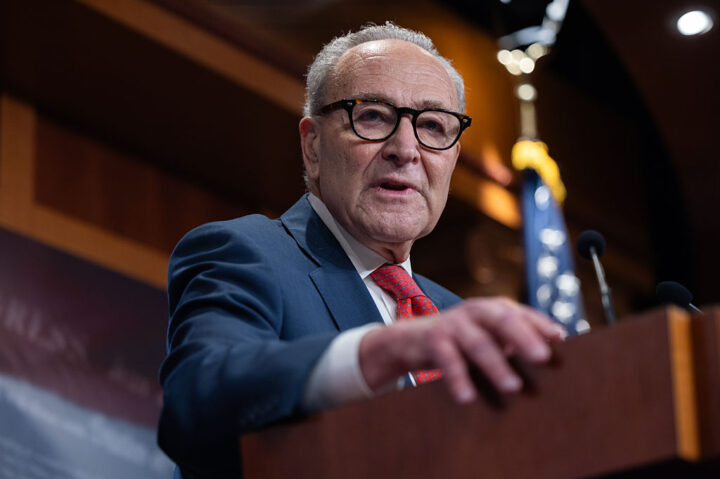
Senate Minority Leader Chuck Schumer (D-NY) speaks at a press conference following recent elections as the government shutdown continues in Washington, DC on November 5, 2025.
Senate Minority Leader Chuck Schumer (D-NY) and nearly all Senate Democrats are set to introduce a resolution on Monday condemning neo-Nazi influencer Nick Fuentes, Tucker Carlson for hosting Fuentes on his show.
The legislation also highlights that Heritage Foundation President Kevin Roberts defended Carlson and Fuentes and notes that the Trump administration nominated an official who expressed affinity for the Nazis, referring to Paul Ingrassia.
The resolution comes weeks after Carlson’s friendly sit-down with Fuentes prompted a reckoning in the conservative movement over antisemitism on the far right and its normalization in certain circles. Schumer reportedly sought Republican backing for the resolution, but no Republicans have signed on at this point.
The resolution outlines Fuentes’ long history of overt antisemitic activity, as well as the series of antisemitic comments that Fuentes repeated on Carlson’s podcast. It highlights Carlson’s failure to “push back on or reject the claims made by Fuentes” and that Carlson “at times even validat[ed] his framing.” It also notes that Carlson was a keynote speaker at the 2024 Republican National Convention.
The legislation states that the Senate “strongly rejects the views of and platforming of Nick Fuentes” and “condemns the effort by Tucker Carlson to platform and mainstream Nick Fuentes.”
The resolution also specifically highlights that Roberts posted a video defending Carlson and attacking those criticizing him — accusing Roberts of employing “antisemitic dog whistles” — as well as for refusing to take down the video even as he as apologized for portions of it.
It calls on “all elected officials, thought leaders and community leaders to reject and condemn white supremacy and antisemitism whenever and wherever they occur.”
And it highlights that President Donald Trump nominated Paul Ingrassia — who said in an unearthed group chat that he has a “Nazi streak in me from time to time” — for an administration post and has since named him to a different role in the administration after his nomination was withdrawn. The resolution does not specifically name Ingrassia.
The resolution is being sponsored by every Senate Democrat.
The legislation has been supported by a series of Democratic-affiliated and progressive-minded Jewish groups, including Democratic Majority for Israel, the Jewish Council for Public Affairs, the Jewish Democratic Council of America, Jewish Women International, the Union for Reform Judaism, Hadassah and the National Council of Jewish Women.
“The platforming of individuals who promote hateful, antisemitic, and white supremacist rhetoric is dangerous and entirely at odds with American values,” JWI CEO Meredith Jacobs said in a statement. She said that Congress “must forcefully condemn any attempt to mainstream antisemitism” and other hatred and “the fact that such condemnation is not universal underscores the very real and present danger that these ideologies are gaining ground in our society.”
JCPA CEO Amy Spitalnick said that antisemitic and white supremacist extremism “threatens every single one of our communities and the core of our democracy – yet we’ve seen political leaders continue to embrace and platform this deadly hate and those who peddle it, like Nick Fuentes” and urged all senators to support the resolution.
DMFI urged the Senate to “send a powerful message that there is no place for these hateful ideologies in our society by passing this measure.”
Halie Soifer, the CEO of JDCA, condemned Republicans for not signing onto the resolution.
“This issue should not be partisan, yet not one Republican has joined this resolution, and the President of the United States has refused to condemn Fuentes, Tucker Carlson’s platforming of Fuentes, and the hate they’ve espoused,” Soifer said in a statement. “We’re deeply concerned about Republicans placing politics above efforts like this one to combat white nationalism, antisemitism, and hate, and strongly encourage them to join this effort.”
UPDATE: This article was updated to reflect that the legislation’s findings highlight Heritage Foundation president Kevin Roberts’s defense of Carlson and Fuentes but the resolution does not specifically condemn him.
More than a dozen Democratic operatives told JI that the party’s support for Israel has declined, but hope that the end of the war will create space for skeptics to reengage with the Jewish state

Eric Lee/Bloomberg via Getty Images
Representative Katherine Clark, a Democrat from Massachusetts, center left, and Representative Hakeem Jeffries, a Democrat from New York, center right, arrive for a news conference with House Democrats outside the US Capitol in Washington, DC, US, on Wednesday, Oct. 15, 2025.
One thing Betsy Sheerr knows for sure is that most Democratic lawmakers still believe in Israel’s right to exist. She also knows that needing to reestablish this basic fact may not be a good sign for her party, and, more broadly, for American support for Israel.
“I can’t believe the bar is so low that that’s where we have to start,” said Sheerr, a longtime Democratic activist and a board member of the Jewish Democratic Council of America.
That’s the position in which many pro-Israel Democratic advocates find themselves as they begin to take stock of the domestic political damage wrought by Israel’s two-year war with Hamas that followed the Oct. 7, 2023, terror attacks.
Unlike naysayers on the right who suggest Democrats have abandoned Israel — a claim made frequently by President Donald Trump — the Jewish activists and communal leaders who advocate for a strong U.S.-Israel relationship and for U.S. aid to Israel still insist that support for the Jewish state remains bipartisan, and that congressional Democrats remain broadly pro-Israel. That proposition faced its toughest test during a two-year war, when Democrats became increasingly sympathetic to the Palestinians as Israel’s effort to eradicate Hamas left the Gaza Strip in ruins and claimed thousands of lives.
As a fragile ceasefire holds, Jewish Democrats see an opportunity to reengage party activists and elected officials who have grown frustrated with Israel’s actions in Gaza.
Jewish Insider spoke to more than a dozen fundraisers, activists and professionals in the pro-Israel space, most with a long history of involvement in Democratic politics. Their pitch to Democrats at this precarious moment involves two parts: First, push to make Trump’s peace plan a reality. Second, ensure that Democrats understand that the value of America’s relationship with Israel is independent from the leader of either country — and that Israeli Prime Minister Benjamin Netanyahu, who remains unpopular with the American left, won’t be in power forever.
“I think ending the war turns the temperature down pretty dramatically,” said Brian Romick, CEO of Democratic Majority for Israel. “Right now, what we’re saying is, no matter where you were in the previous two years, we all need the deal to work, and so being for the deal [and] wanting the deal to work is a pro-Israel position right now, and then you build from there.”
At the start of the war, 34% of Democrats sympathized more with Israel, and 31% sympathized more with Palestinians, according to New York Times polling. New data released last month shows that 54% of Democrats now sympathize more with the Palestinians, compared to only 13% with Israel. That stark shift in public opinion corresponded to more Democratic lawmakers voting to condition American military support for Israel than ever before.
This summer, 55 Democrats in the House co-sponsored legislation that would significantly restrict arms sales to Israel. Twenty-seven Democratic senators voted in July to support a bill put forward by Sen. Bernie Sanders (I-VT) that aimed to reject Israeli arms sales. The bill failed, but it marked a watershed moment for the party, with more than half of all Democrats voting in support of the measure. Not long ago, voting to condition aid to Israel would have been seen as a red line by pro-Israel groups. But with a growing number of Democrats who have already done so, such threats could ring hollow.
“I do think that there is room to build forward,” said Jeremy Burton, CEO of the Jewish Community Relations Council of Greater Boston, which works closely with Democratic lawmakers in deep-blue Massachusetts. “We have to be secure enough in our own belief in the future and our hope for the future to say ‘OK, if your point was that you’re committed to the long-term project of Israel’s security and safety, and you were looking for short term ways to pressure the government of Israel, then let’s move forward with the long-term project, even if we disagreed with you in the short term.’”
The pro-Israel lobby AIPAC maintains that it is committed to bipartisanship on Capitol Hill, even as the group has faced sharp criticism from progressive activists — including some who have pressured political candidates to swear off donations from the group. A spokesperson for the organization downplayed the shifting political headwinds, noting that American military aid to Israel continued throughout the war.
“It is important to separate the noise from anti-Israel extremists of the right and left and actual impact,” AIPAC spokesperson Marshall Wittmann told JI. “For example, time and time again Congress has resoundingly rejected the efforts of those extremists to cut defense assistance to Israel.”
AIPAC has a long-standing policy of not criticizing the Israeli government no matter who is in power, and that isn’t shifting. But other pro-Israel advocates believe that approach may not work with Democrats who are fed up with Netanyahu’s governance.
“We know that can one be critical of certain Israeli government policies and still be pro-Israel, and we also know that’s increasingly the case for many Democrats, just as it is for a majority of Jewish Americans,” said Halie Soifer, CEO of the Jewish Democratic Council of America.
“The vast majority of Democrats are far more sympathetic to the people of Israel than its current leadership,” echoed Tyler Gregory, who leads the Bay Area JCRC and works closely with progressive leaders in San Francisco. “We need to bring it to a human level.”
Andrew Lachman, president of California Jewish Democrats, was more overt in his hope that Israel elects a new leader in its next election, set to take place next October, unless it’s called sooner.
“If there’s a new change in leadership in Israel, that has the opportunity to be able to reset some of those relationships,” Lachman told JI.
It’s a sentiment echoed by Sheerr, who regularly interacts with Democratic lawmakers on Capitol Hill. “I think a lot of people, both lawmakers and others, are looking forward to the next Israeli elections, frankly, and life after Bibi,” she said. That is, of course, assuming that Netanyahu isn’t reelected — a risky bet given that Netanyahu has held the role through multiple elections since 2009, except for one 18-month stretch.
Rep. Seth Moulton (D-MA), who is challenging Sen. Ed Markey (D-MA) in Massachusetts’ Senate primary next year, said this month that he would return donations from AIPAC, an organization that has previously endorsed him. He told JI last week that he took issue with the group’s “steadfast support for the Netanyahu government.”
“My views on Israel as an essential partner of the United States and our most important ally in the Middle East have not changed,” Moulton said.
Markey, for his part, has been one of Israel’s leading critics in the Senate, making next year’s Democratic primary one between a candidate who condemns the leading U.S.-Israel advocacy group and a candidate with a record of voting against military aid to Israel.
Ron Halber, who leads the Jewish Community Relations Council of Greater Washington and maintains close ties with Democratic lawmakers in Maryland and Virginia, said that Israeli leaders also have a responsibility to repair ties between Democrats and the Jewish state.
“For Israel to align itself, or for the current government or for advisors to think that working with the Republican Party is the way to the future, is about the dumbest strategic mistake I can imagine,” said Halber. “The bipartisan nature of the U.S.-Israel relationship is the fundamental blanket of Israel’s support in the world.”
The leftward shift of Democratic lawmakers has come despite advocacy campaigns by major Jewish groups who urged senators to vote against Sanders’ resolutions restricting aid to Israel. But some within the mainstream Jewish community recognize that the longtime approach of offering unequivocal support to Israel’s government is not sustainable.
“My opinion is that this government is harmful,” said Sam Lauter, a public affairs consultant in San Francisco and Democratic fundraiser who helped create DMFI in 2019. “I used to be one of those people who would be sort of silent about that, because ‘I’m a diaspora Jew, and I don’t get a say.’”
Halber said he believed that many Democrats supporting Sanders’ bill “did so symbolically,” because they knew it was going to fail. “They were trying to send a message to Israel that this is a bridge too far, when they believed humanitarian aid [to Gaza] was being cut off,” he added.
The “million-dollar question,” according to Ilan Goldenberg, J Street’s vice president of policy, is whether lawmakers’ support for conditioning military assistance to Israel will continue after the war, when they have to vote to approve the annual $3.8 billion security package to Israel.
“I think it’s going to be, ‘We need accountability, and we need certain behavior that we would like to see,’ and if you’re not getting that out of the Israelis, then a willingness to use more leverage and pressure and accountability,” said Goldenberg, who served as Jewish outreach director on Vice President Kamala Harris’ presidential campaign last year. “I think that is where the center of the Democratic Party is likely to settle, which is a very different place from where we were before the start of the war.”
J Street has supported Sanders’ resolutions restricting arms sales to Israel.
If any of the support for the bills that sought to reject certain weapons sales carries over into the regular appropriations process, it would mark a significant shift.
“It seems indisputable that the Overton window has shifted dramatically over the last two years in terms of what ‘the left’ broadly deems acceptable about Israel, Zionism and even the Jewish American community,” said Amanda Berman, CEO of the progressive group Zioness. “This kind of rhetoric doesn’t just disappear when the news cycle moves on. That said, the vast majority of liberals and progressives are not uniquely obsessed with Jews or Israel, and have any number of urgent issues of concern.”
Even as pro-Israel activists seek to rebuild frayed ties with erstwhile allies, they recognize that not everyone should be welcomed back into the tent, even if the tent is bigger than it was before.
“We don’t need to be forgiving or ignoring those who chose to just demonize and be dismissive of our anxieties, our fears, our hopes over the last two years,” said Burton.
The dust has hardly settled in Gaza, and it is too soon to know what the lasting impact of the war will be. But given that this was Israel’s longest war, and that it played out under scrutiny of the traditional media and social media, “it’s going to be a lot harder to put the genie back in the bottle than previous times,” as one person involved in Jewish philanthropy and Democratic politics quipped.
Speaking on a Jewish Democratic Council of America webinar, Sherrill said she’s willing to call out antisemitism among her political allies

Steve Hockstein/NJ Advance Media via AP, Pool
New Jersey Rep. Mikie Sherrill speaks during the New Jersey Democratic gubernatorial primary debate at NJ PBS Studios, Monday, May 12, 2025, in Newark, N.J.
Speaking on a Jewish Democratic Council of America webinar on Thursday, Rep. Mikie Sherrill (D-NJ) outlined a plan of action on antisemitism she said she would implement statewide if she wins next month’s gubernatorial race in the Garden State.
Sherrill is running against Republican Jack Ciattarelli in a race that polls show is tightening ahead of Election Day on Nov. 4.
“We have seen a really terrible rise in antisemitism,” Sherrill said, emphasizing the need for everyone in the state to “double down that religious hatred is always unacceptable, that we are going to make sure that here in New Jersey, we can chart a path forward that protects all of our constitutional rights, including religious freedom and free speech. And we can do both, and we can be a really strong state that models that for the rest of the nation.”
Sherrill said she’s heard disturbing stories from constituents of antisemitic hate in schools and online, in addition to attacks on synagogues in the state, highlighting that she plans to implement a state plan of action on antisemitism, based on the Biden administration’s 2023 national antisemitism strategy.
She emphasized her willingness to call out antisemitism among her political allies, pointing to the example of an employee of the New Jersey Educational Association — which endorsed Sherrill — who had made “horrible antisemitic [comments] online.” Sherrill said she had condemned the individual and demanded she be fired.
“I’m going to call out anybody in this space that is promoting hate in any way against all of our citizens, but especially our children,” Sherrill said.
Addressing recent revelations of antisemitic messages in a Young Republican leadership group chat, Sherrill said, “I don’t think that should have been a surprise to anyone because we’ve seen it starting at the top with President [Donald] Trump and the antisemitism that he promotes, and I will continue to fight against that.”
Sherrill said her statewide plan will include mandating comprehensive reporting of hate crimes, directing the attorney general to “aggressively combat and prosecute antisemitism,” a “stronger interfaith advisory council” and holding state universities accountable.
The New Jersey congresswoman also expressed her joy and relief at the release of the remaining living hostages from Gaza this week. She said she is hopeful that the ceasefire deal leads to “real peace” and that the effort remains nonpartisan.
“I think we have to hope that this agreement holds, that Hamas is demilitarized, that humanitarian aid is surged into Gaza because the famine there is preventable and we’ve got to address that and then achieve a lasting peace in the region,” Sherrill said.
She added that she felt the region was on a path toward peace with the Abraham Accords before Hamas’s Oct. 7, 2023 attack on Israel, and can continue to pursue that path with rebuilding and a new government in Gaza, with Israel taking a leading role in strengthening the region economically and militarily.
One Jewish leader in New Jersey said that the community appears split in the gubernatorial race — committed Democrats are sticking with Sherrill but Ciattarelli has gained some steam among undecided Jewish voters.
The leader, speaking on condition of anonymity, said multiple people have told them they’re voting for Ciattarelli because of recent comments by Sherrill about state legislation codifying the International Holocaust Remembrance Alliance’s working definition of antisemitism. Sherrill previously said she supports the bill and would sign it, but has recently offered some caveats to that stance, according to the source.
Another local source familiar with the Jewish community said they expect the Orthodox Jewish population to support Ciattarelli by a wide margin.
To mark the second anniversary of the Oct. 7 attacks in Israel, the Jewish Insider team asked leading thinkers and practitioners to reflect on how that day has changed the world. Here, we look at how Oct. 7 changed American Politics

Worawat/Adobe Stock
The United States Capitol with reflection at night Washington DC USA
Democratic insiders told JI that DNC chair Ken Martin withdrew his Israel resolution largely to avoid a disruptive floor debate over Israel on Wednesday

Audrey Richardson/Bloomberg via Getty Images
Ken Martin, chairman of the Democratic National Committee , speaks during a news conference in Aurora, Ill., on Tuesday, Aug. 5, 2025.
Pro-Israel Democrats expressed cautious optimism about the unexpected decision by Democratic National Committee Chairman Ken Martin to withdraw his resolution pressing for humanitarian aid to Gaza and for the release of hostages held by Hamas, which was unanimously approved by party members on Tuesday at the DNC’s annual summer meeting held in Minneapolis.
Martin, in a sudden reversal, announced he would pull the resolution after DNC members rejected a dueling measure, opposed by pro-Israel groups, that had endorsed an arms embargo and a suspension of U.S. military aid to Israel. Instead, he said he would create a task force “comprised of stakeholders on all sides” of the Israel debate to pursue what he called a “shared dialogue” on an increasingly divisive issue.
“This was a surprise ending to this meeting,” Halie Soifer, the CEO of the Jewish Democratic Council of America, which helped draft the pro-Israel measure and privately advocated for its passage, told Jewish Insider on Tuesday.
Despite Martin’s 11th-hour reversal, Soifer said she was satisfied with the outcome, noting the DNC also passed a resolution condemning antisemitism that, coupled with its rejection of the arms embargo proposal, “reflects where the party stands” on major issues concerning Israel and the Jewish community.
“It’s my sense,” she added of Martin, “that he introduced and ensured passage of this resolution to defeat the other resolution,” which she said “was completely out of step with the views of the party.”
Soifer said she hopes to join the proposed task force “to discuss the path forward” on approaching Israel, acknowledging internal tensions that have roiled the party in recent years. Martin “clearly recognized that there are a range of strongly held views on this matter, and he wants to make sure that those voices are heard,” she told JI.
Martin has not yet shared additional details on the task force, and the DNC did not return a request for comment from JI. Latonya Reeves, a DNC member in Minneapolis, told JI on Tuesday that she had not been further informed of the task force — which she called “the best way to move forward” on the issue.
Sara Forman, who leads the New York Solidarity Network, a local pro-Israel group that aligns with Democrats, said she was broadly “encouraged” that the DNC had chosen “not to recommend” what she dismissed as a “one-sided resolution against Israel,” arguing that the party “represents far more than its progressive base.”
“I’m always one for conversation, and think that talking about things is an important step, so I’m going to offer grace to Martin in this regard,” she said of his announcement. Still, she added of the failed resolution, “I think it’s a bigger concern overall that the Democratic Party seems to be uniquely singling out Israel for rebuke or scrutiny in a way that no other U.S. ally is rebuked or scrutinized.”
A spokesperson for Democratic Majority for Israel, which released a statement praising the DNC’s votes before Martin revealed he would pull the resolution, said it was “pleased that the anti-Israel measure was decisively defeated by the committee,” but declined to comment more broadly on what transpired at the end of the meeting.
Brian Romick, DMFI’s president and CEO, said in an interview with JI that he viewed the outcome on Tuesday as “a win” for the pro-Israel community, in light of the potential for a more hostile debate. “The bad resolution was rejected and Ken’s compromise resolution also passed the committee,” Romick said. “That all happened publicly” and “reaffirmed where the party stands on Israel,” he said. “Anything else beyond that is just inside baseball.”
Some Democratic insiders familiar with internal party dynamics indicated that Martin had chosen to change course because he anticipated a disruptive floor debate over his resolution, which was poised to face broader scrutiny during the DNC’s general session on Wednesday.
“He’s worried about what would happen at the meeting,” one party source informed of the matter said on Tuesday. “On one hand, viewed from there, it makes sense and seems like a rational move,” the source reasoned, while also noting that it has “some real downsides.”
On the other hand, “when you punt something to a task force you actually continue the debate, because now it’s going to be a big fight” over who is included in the committee, the source said. “Then it becomes hard to move past.”
Manny Houle, a Democratic pro-Israel strategist in Minneapolis, said Martin’s maneuver was tactically smart — as DNC leadership seeks to avoid “internal proxy fights and focus messaging on pushing back against” the Trump administration in advance of the upcoming elections. “It is often a tactic to give your most ardent detractors busy work so you can focus on the work that matters,” he explained.
The party’s pro-Israel wing knows it has “the power to push back,” Houle told JI. “It’s not worth giving more air to the extremist factions.” The debate over Israel “is not going away anytime soon,” he added. “But we’ve shown where we stand and hopefully there are more pressing things that we need to give oxygen to.”
Whatever Martin’s intentions, Susan Turnbull, a former DNC vice chair, said she was excited by the prospect of a task force, suggesting that it would be well-timed to take place between the conventions.
“What I think is the case is that this, of all issues, needs to have consensus and that what he wanted in his first meeting is not to have winners and losers,” she told JI. “He wanted to come to a good result for collaboration.”
“I’m giving him a lot of credit because we have a hard enough time within the Jewish community dealing with this issue,” she said, adding that it will be “important that every perspective be considered” as the DNC hones its approach to the Middle East.
It remains to be seen if Martin, who on Tuesday acknowledged a “divide” in the party over Israel, will find partnership on the opposing end of the issue. Allison Minnerly, the 26-year-old DNC member who had introduced the failed measure on Gaza, which faced criticism for not mentioning Hamas, voiced disappointment with his decision and said he was “prolonging” the conversation rather than taking a position to align the party with a base she views as amenable to her views on Israel.
Still, as the DNC moves to reach a tenuous detente on Israel, some pro-Israel Democrats said that any future resolution on the issue should reflect values that have long been espoused by the party, even as they have faced ongoing pushback from the activist left.
“The vast majority of American Jews, and Americans more broadly, understand the complexity of the conflict — wanting to see Israel’s security protected and the remaining hostages released, the humanitarian crisis in Gaza truly addressed, and all parties work toward a future in which both Israelis and Palestinians are safe and free,” Amy Spitalnick, CEO of the nonpartisan Jewish Council for Public Affairs, told JI. “Any resolution on Gaza should reflect those widely-held values.”
Amanda Berman, CEO of the Zioness Action Fund, a progressive pro-Israel advocacy group, said on Tuesday that “there is legitimate critique and concern about this devastating war dragging on — and Democrats should stand staunchly with the Israeli public as it models dissent, protest and a pro-democracy movement the American left should emulate.”
“To the extent that any fringe element of the Democratic Party is willing to abandon Israel and the American Jewish community,” Berman said, “they will be abandoning true progressive values, liberation for persecuted minority communities, our historic alliances and America’s national security.”
Please log in if you already have a subscription, or subscribe to access the latest updates.
 Continue with Google
 Continue with Apple