


































150 House lawmakers push for $1 billion in security grant funding in 2027
For the first time, the lawmakers’ request aligns with the $1 billion that some Jewish groups have been advocating for amid a surge in antisemitism
Emily Elconin/Getty Images
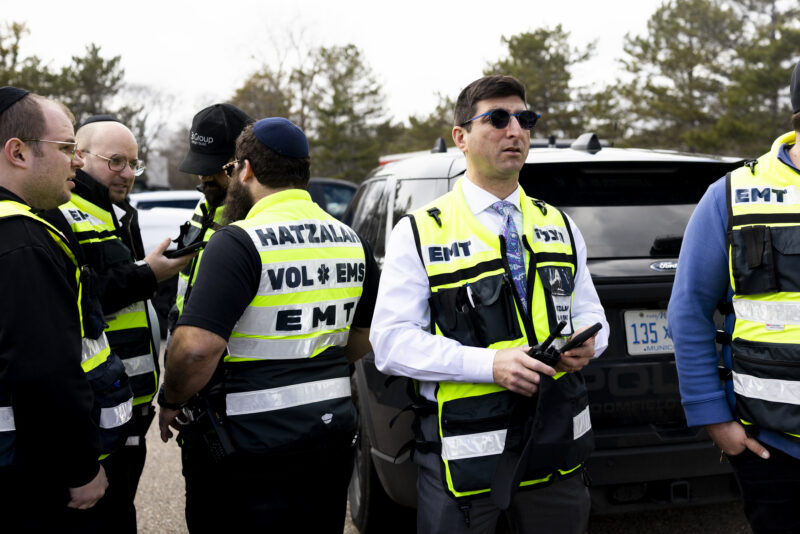
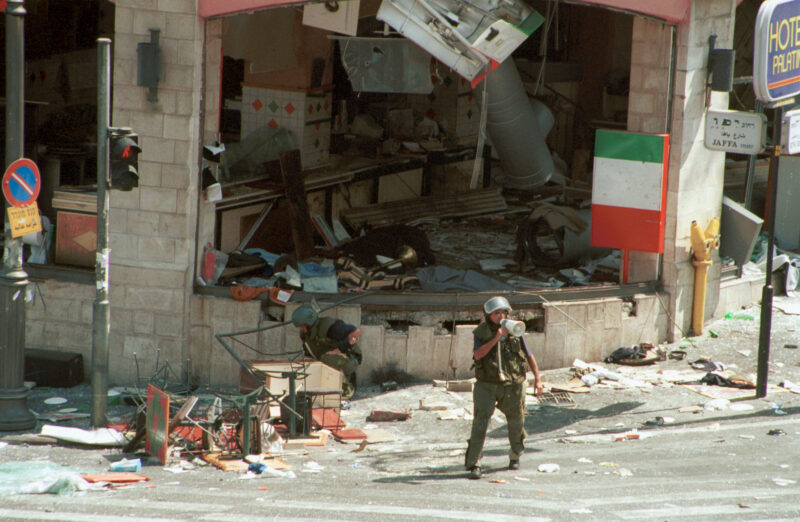
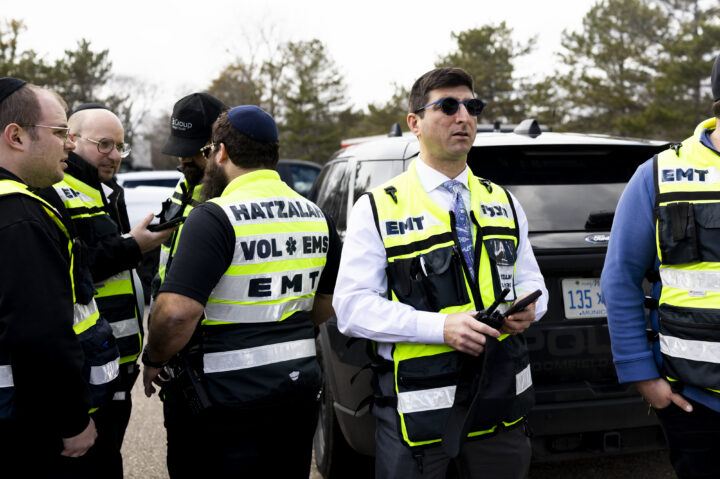
Members of Hatzalah of Michigan, a Jewish volunteer emergency medical service survey the area near Temple Israel following reports of an active shooter on March 12, 2026 in West Bloomfield, Michigan.


 Add JewishInsider on Google
In a letter to the leaders of the House Appropriations Committee, a bipartisan group of 150 House members asked the committee to provide $1 billion in funding for the Department of Homeland Security’s Nonprofit Security Grant Program in 2027, a massive expansion of the program and an unprecedented increase in their request level.
The request letter, which has been sent annually for the last several years at the start of the House’ appropriations process, comes this year in the immediate aftermath of an attack at Temple Israel in West Bloomfield, Mich., and its early childhood center.
For the first time, the lawmakers’ request aligns with the $1 billion that some Jewish groups have been advocating for for the program, amid a surge in antisemitism in recent years.
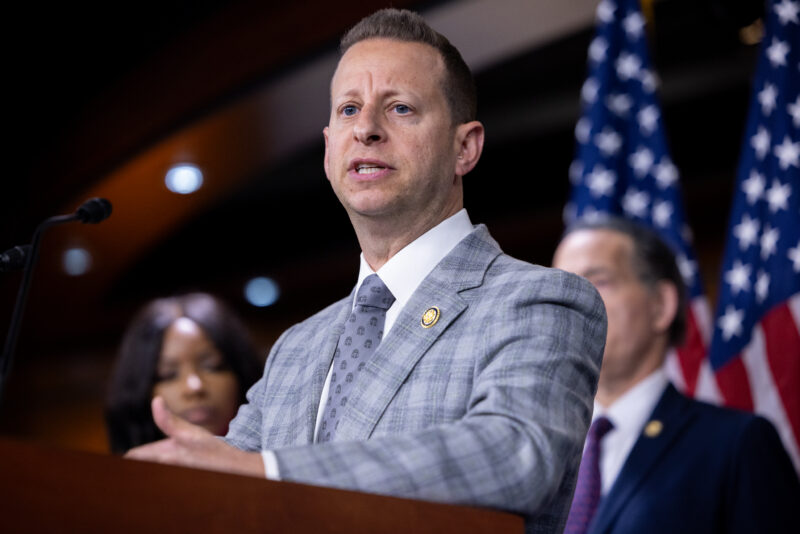
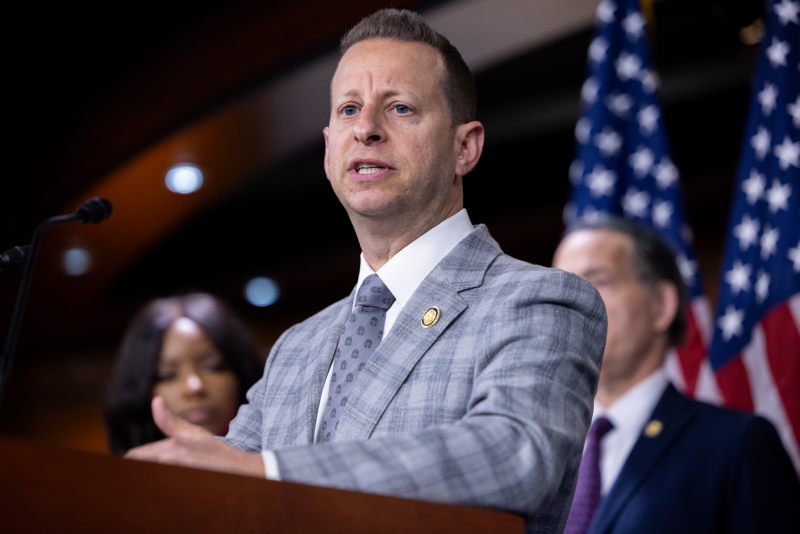
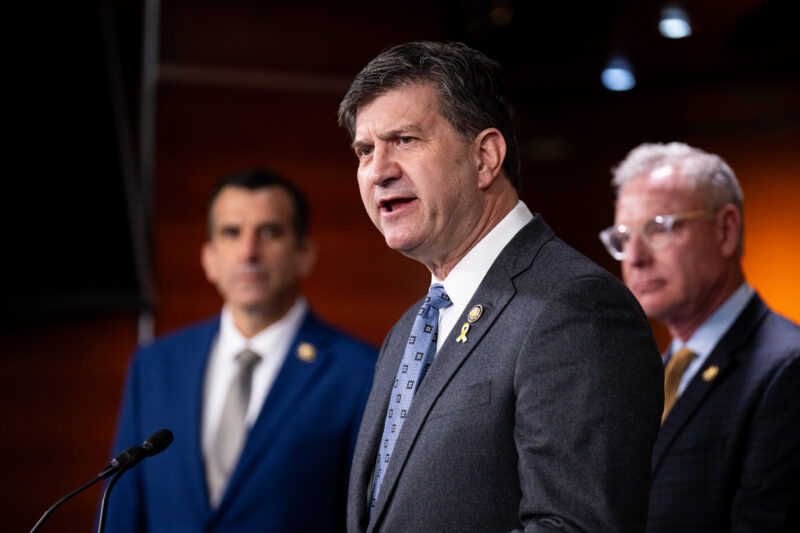
“The fact of the matter is, around this country, we’ve all experienced a rise in antisemitism, xenophobia, Islamophobia, hatred of all types,” Rep. Gabe Amo (D-RI), who again co-led the request with Rep. Michael McCaul (R-TX), told Jewish Insider on Thursday. “This is a response that’s proportional to the demand, and right now, we need to act swiftly.”
Last year, a group of 130 lawmakers asked for $500 million, but ultimately were not able to secure a substantial increase in funding; the current DHS funding bill for 2026 contains $300 million for the program, a marginal increase from 2025 levels but below the high-water mark in 2023 of $305 million. The bill has not yet passed, waylaid by ongoing disputes over immigration policy and funding. Immigration issues have made the DHS bill difficult to finalize in recent years, and have strained resources for other DHS programs.
“The threat of violence is unfortunately increasing at places of worship across our country at alarming rates,” the House letter reads. “There has been an increase in hoax bomb and active shooter threats against houses of worship to interrupt services and intimidate the worshippers. There has also been an increase in antisemitic incidents across the country following the October 7th attack in Israel. … Unfortunately, it is easy to see that the need for the NSGP is quickly outpacing the funding.”
The significantly increased request also has more signatories this year than in other recent years, underscoring the degree to which bipartisan support for the program has grown.
“There is strong, robust and meaningful support for this program, because people have seen the realities, and it’s a priority to ensure that all of our communities can worship, celebrate and exist with the safety that they deserve,” Amo told JI on Thursday.
The letter outlines a series of attacks on Jewish institutions, including the Capital Jewish Museum shooting in Washington, the firebombing of a hostage awareness march in Boulder, Colo., an attempted attack on a Florida Jewish nonprofit, the arson attack at Beth Israel Congregation in Jackson, Miss. and the car ramming attack at Chabad-Lubavitch World Headquarters in Brooklyn, as well as attacks on Christian, Mormon and Muslim institutions.
The lawmakers highlighted that need has significantly outpaced the available funding, noting that in 2024 — the most recent year for which data is publicly available — applicants requested $978 million in federal funding, and less than half of applications were funded, even with a pool of $454.5 million available.
The program received $274.5 million in funding in 2025, but that funding has still not been distributed, according to the letter, due to delays at FEMA, and lawmakers have not been provided with customary data about supplemental funding rounds awarded last year.
The $1 billion request, Amo said, is “actually where the demand is.” Though funding allocations haven’t kept pace with demand or with the requests that lawmakers have made, “you can’t get what you don’t ask for. We requested $500 million last year … this year we’re going higher because the need as measured by applications [is there]. We want to get as many as possible.”
He acknowledged that the final allocation may be lower than the $1 billion requested, “but if you look across the board, you want to ask relative to the need, and the need is there.”
Amo said it’s not likely, at this point, that advocates will seek to revise the funding allocation in the stalled 2026 DHS funding bill, despite recent incidents.
He also said that a series of inquiries by lawmakers to the administration about a range of administrative issues and slowdowns for the program in 2025 have gone largely unanswered and unaddressed by administration officials, but vowed to continue to engage with DHS officials to ensure the program remains a priority.
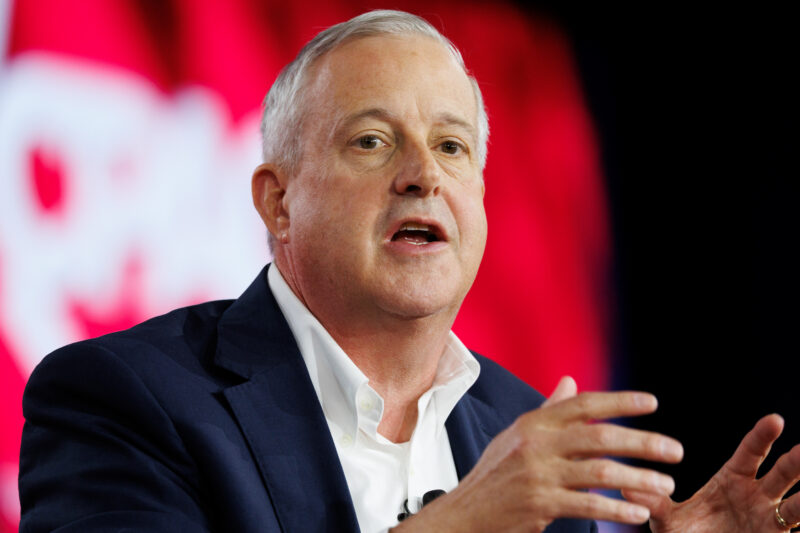
Sen. Markwayne Mullin (R-OK), the Trump administration’s nominee to head the DHS, said at his confirmation hearing on Wednesday that he’d work with lawmakers on both sides of the aisle to try to reduce the bureaucracy around the program and ensure that funding is moving where it is needed quickly.
Lauren Wolman, the Anti-Defamation League’s senior director of government relations and strategy, told JI, “ADL is grateful to Reps. Amo and McCaul for their leadership in spearheading a bipartisan congressional effort calling for a historic $1 billion in funding for the Nonprofit Security Grant Program. At a time of rising antisemitism and continued threats to houses of worship, this program provides critical resources that help communities protect themselves. The need is clear, demand continues to far outpace available funding, and we urge Congress to act to ensure NSGP is funded at a level that reflects the reality on the ground.”
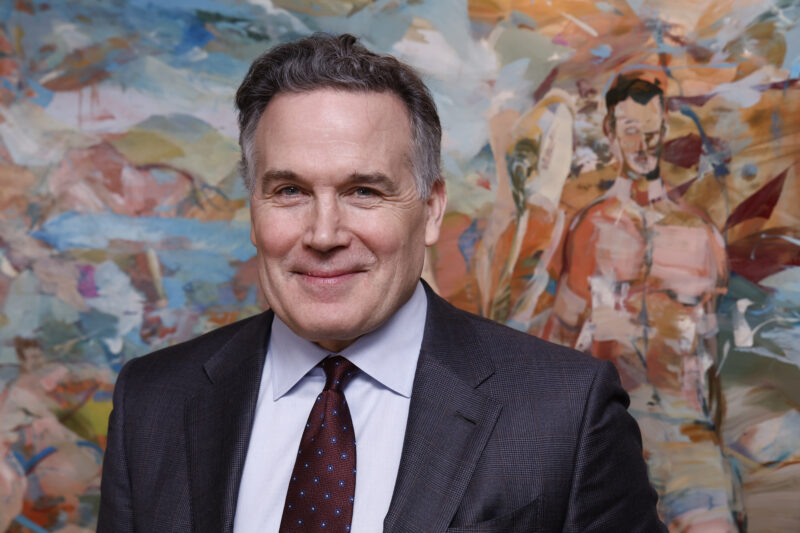
Eric Fingerhut, the CEO of the Jewish Federations of North America, highlighted that the Jewish community spends more than $765 million a year on security efforts and that security costs are the largest expenditure for every Jewish institution.
“We are in the middle of the most serious, violent antisemitic threat environment against the Jewish community in the history of the United States,” Fingerhut said in a statement. “It is the government’s responsibility to protect its citizens in their places of worship, in their places of communal gathering, and the government of the United States must step up to this responsibility now, before we have another tragedy of a kind that we almost had in Detroit last week.”
Nathan Diament, the executive director of the Orthodox Union Advocacy Center, said OU is also “supportive of [Amo’s] leadership and his letter.”
More Stories

Hard cover, soft launch
Assouline puts Tel Aviv on the coffee table at last

BOOKSHELF
New book ‘In the War Room’ offers candid look at Netanyahu’s wartime decisionmaking
TEPID RESPONSE
Rubio holds back criticism of U.K. sanctions against Israeli settlements
BACKUP PLAN
Buffer zone bill aims to protect worshipers when prosecutors fail to act, lead GOP sponsor says

BEYOND WORDS
A rabbi answered the call at Ground Zero. Two decades later, it cost him his voice
scoop
Tenney calls on Treasury to weigh anti-boycott penalties for U.K., countries sanctioning Israeli settlements
Please log in if you already have a subscription, or subscribe to access the latest updates.
 Continue with Google
 Continue with Apple