


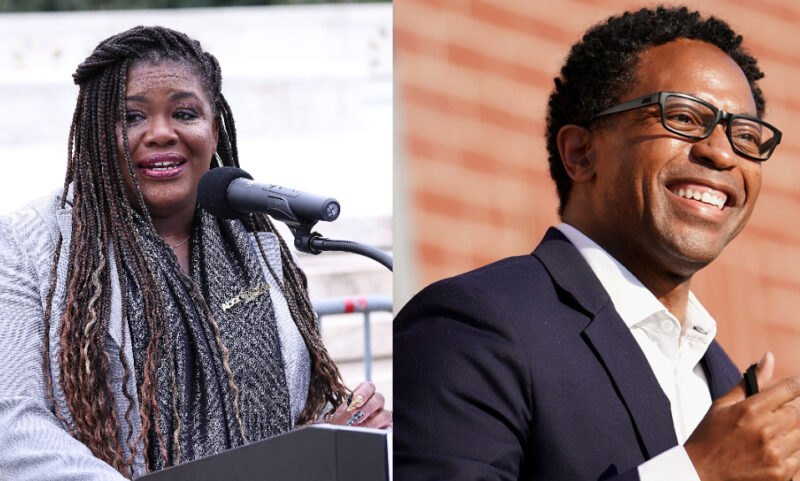
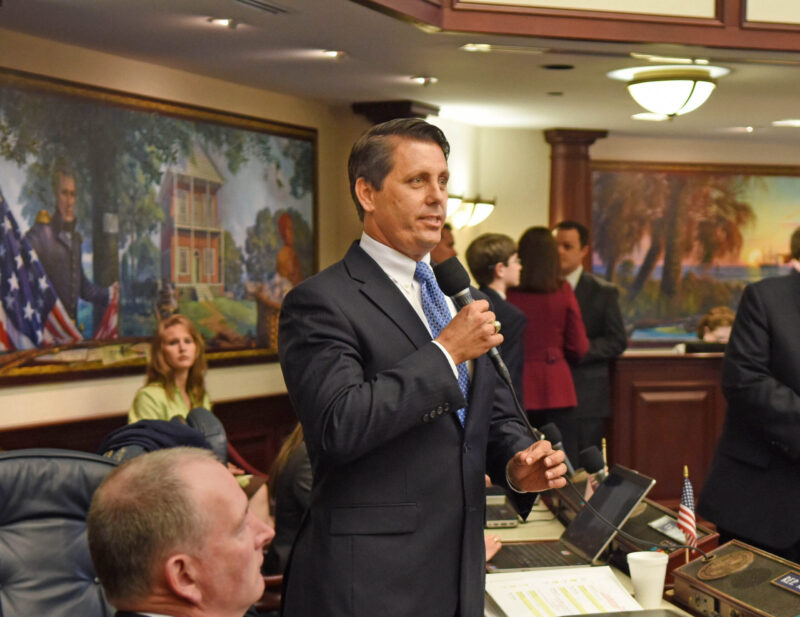
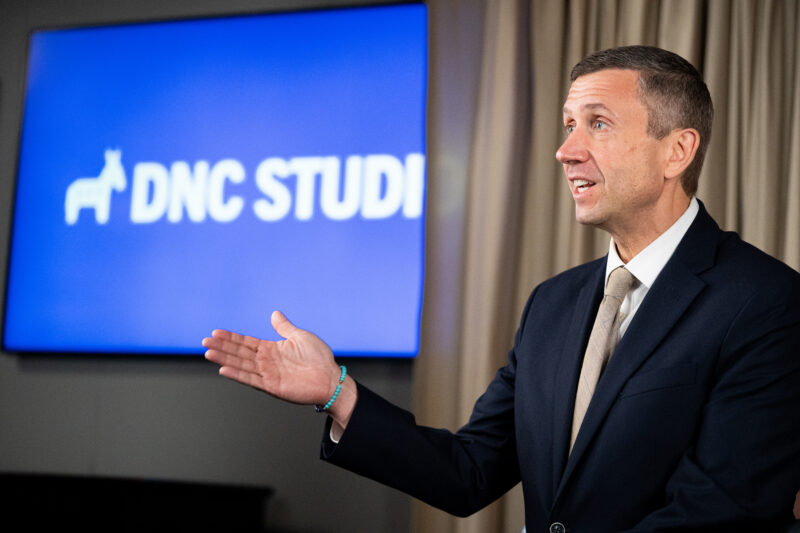
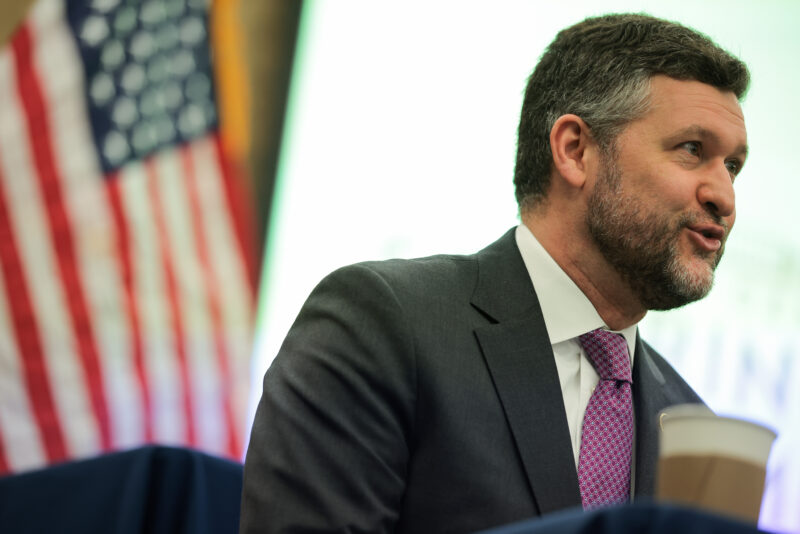

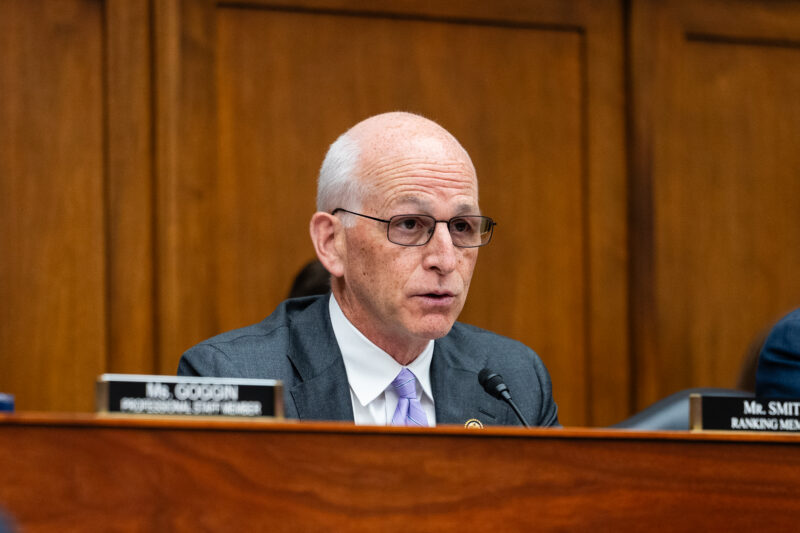


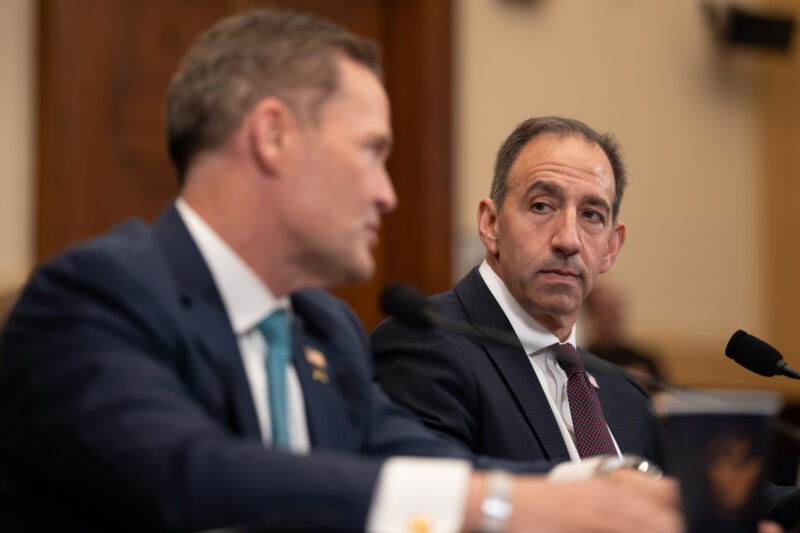
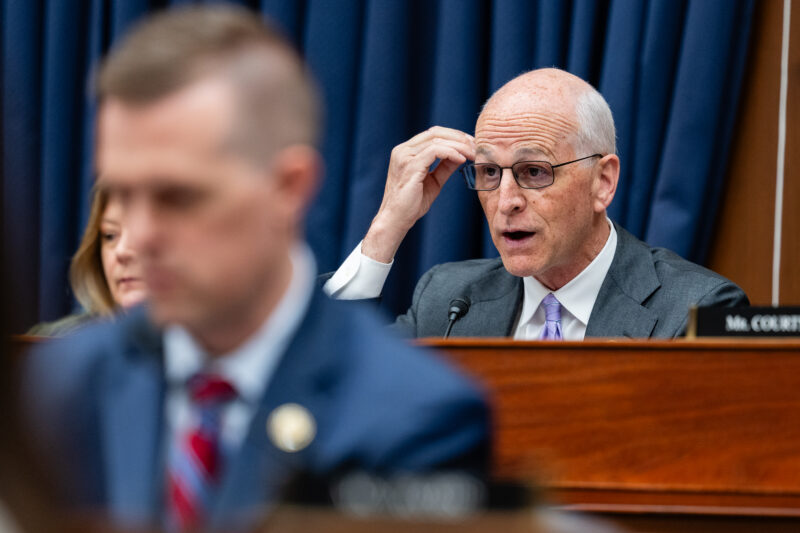


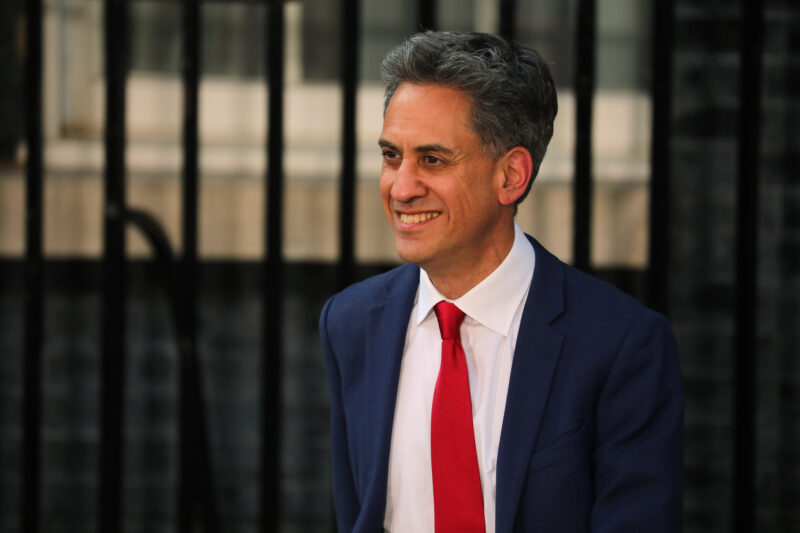
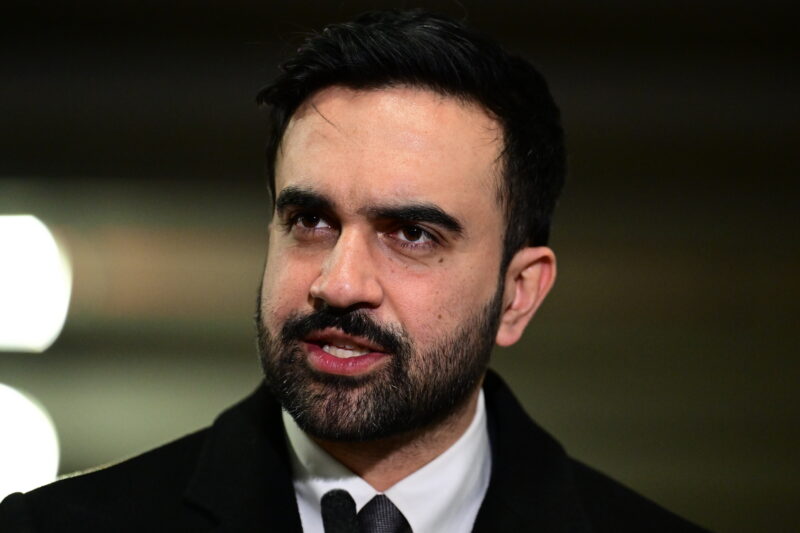

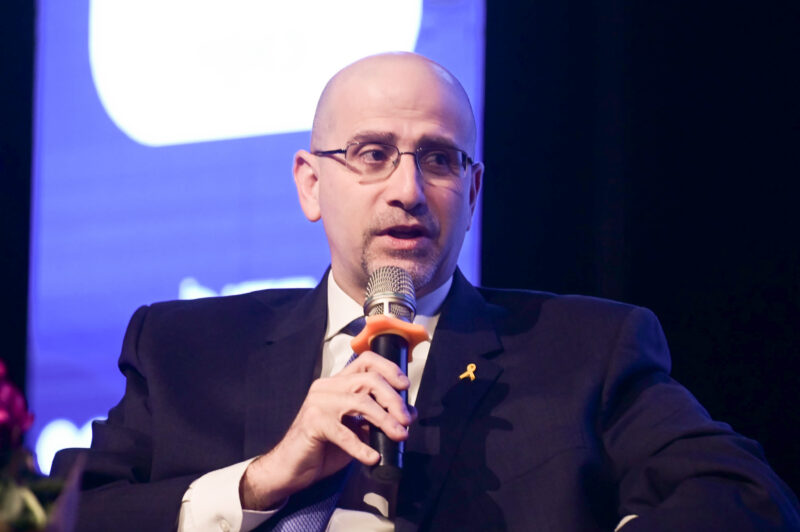




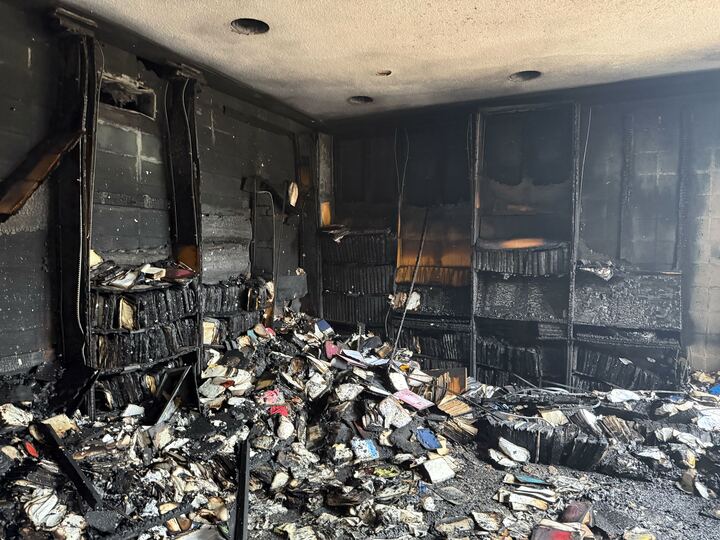

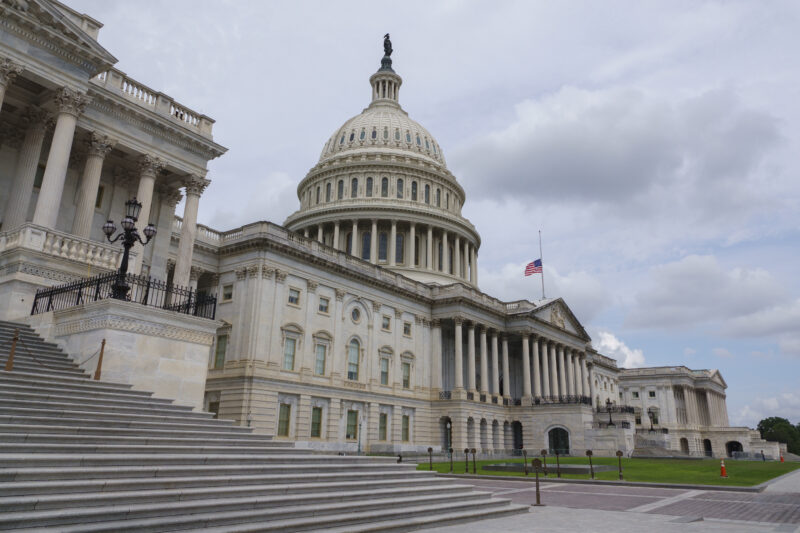
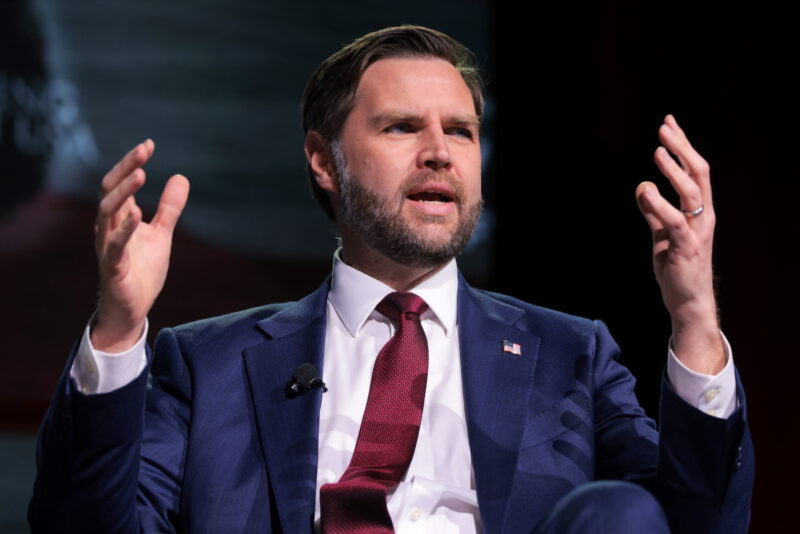


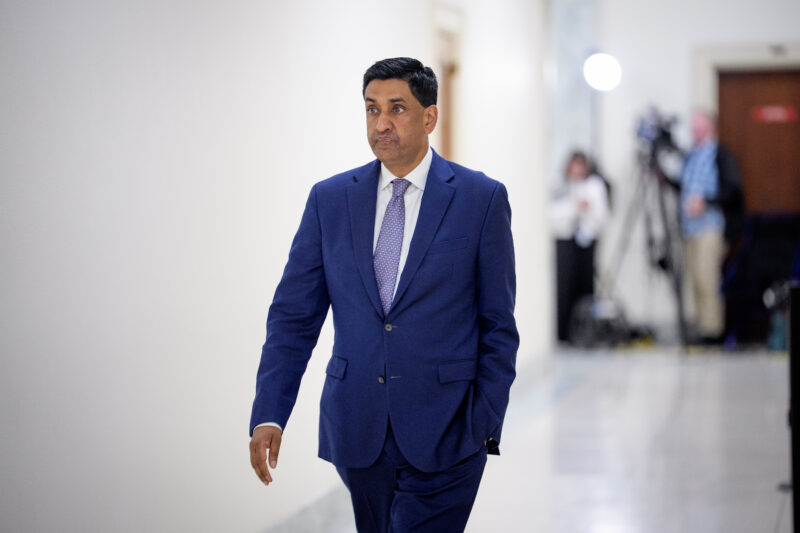


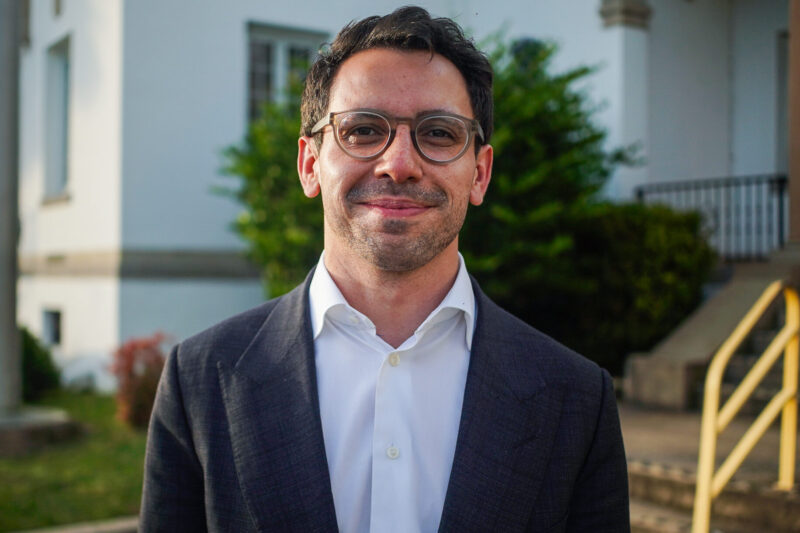
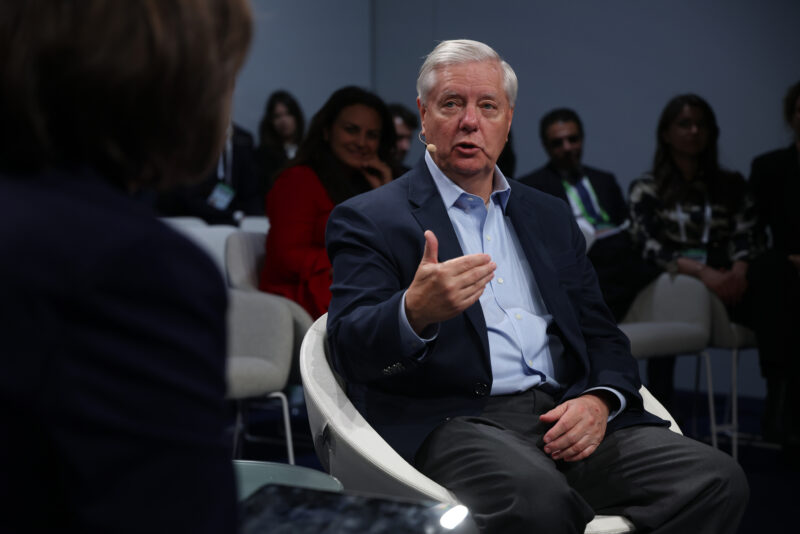
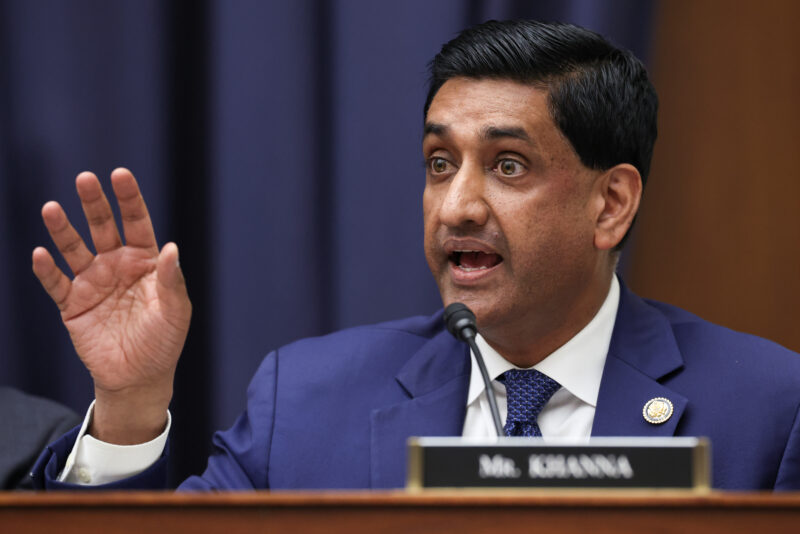
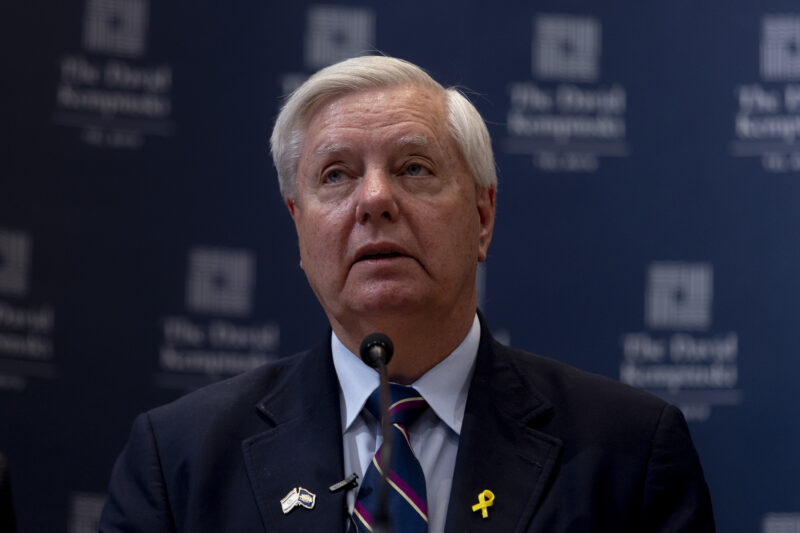
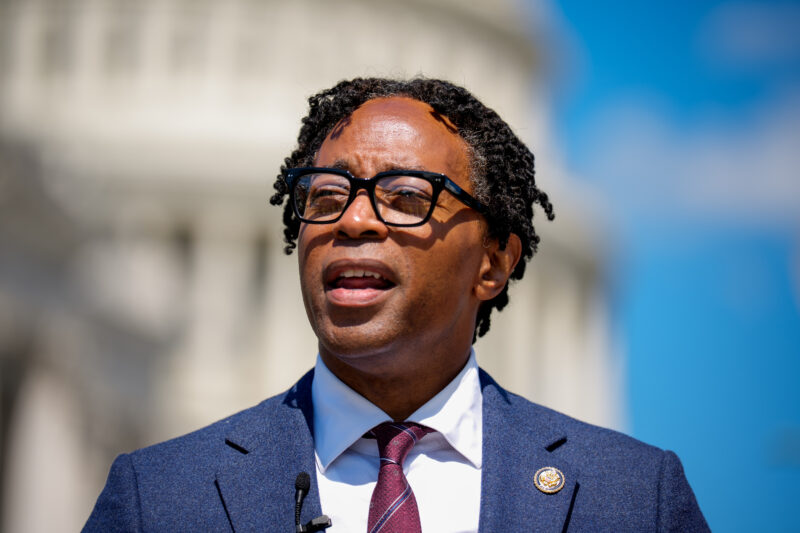
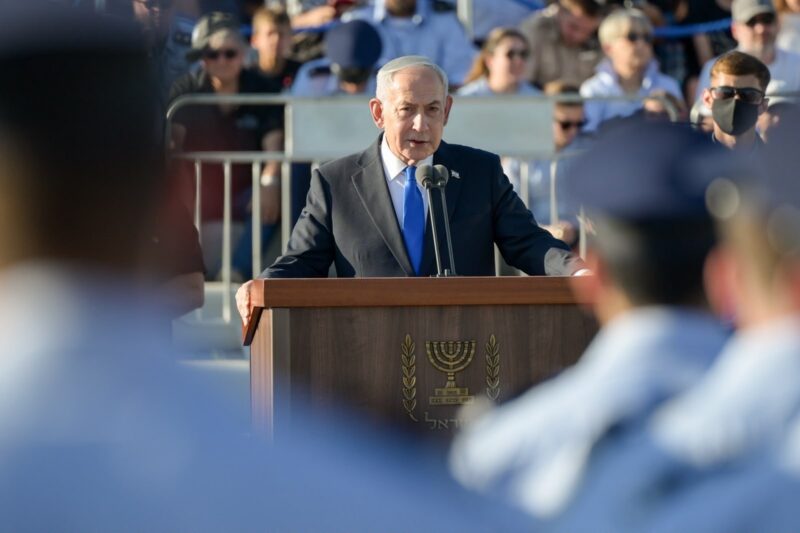
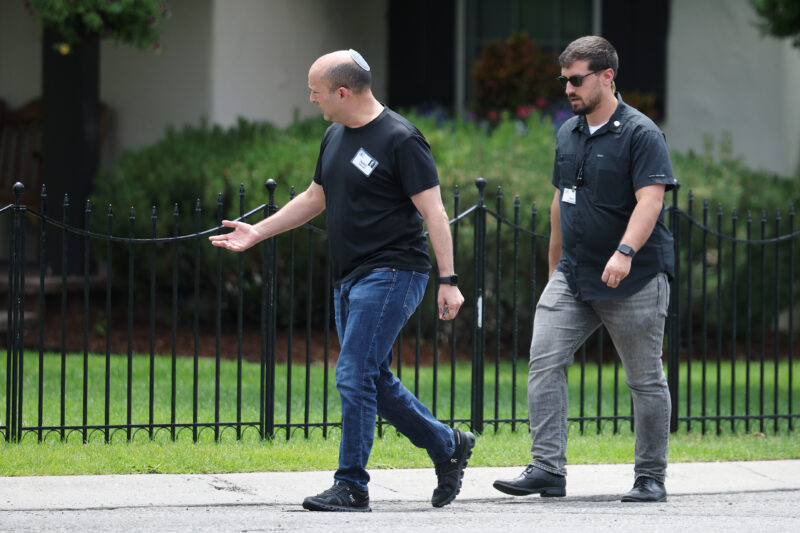
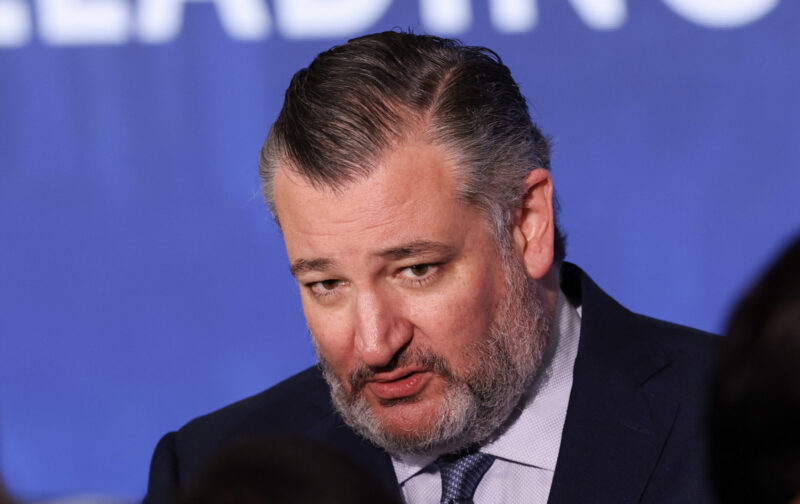
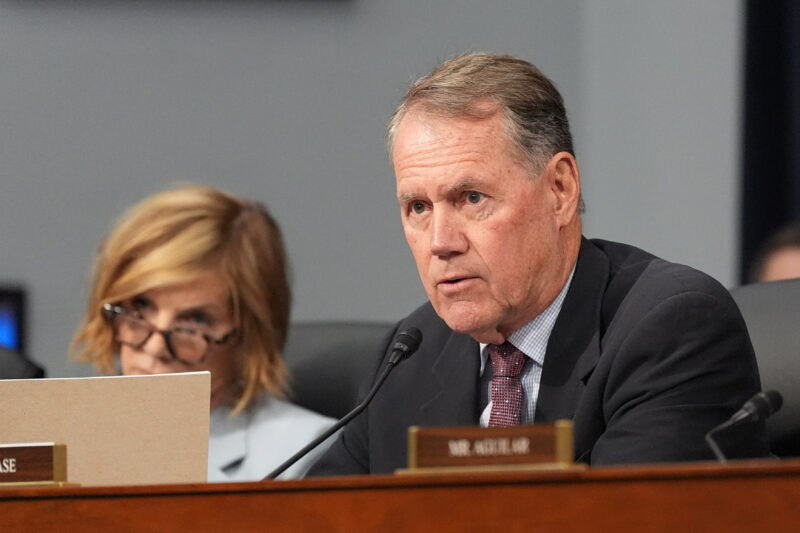
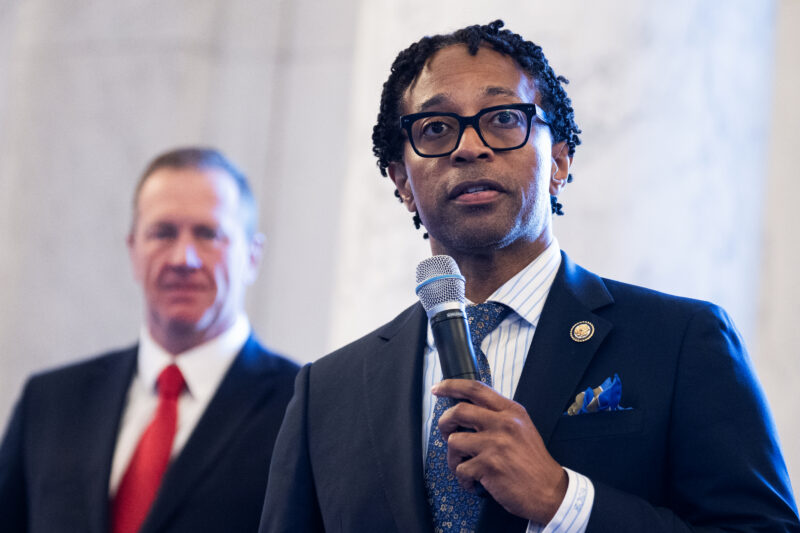

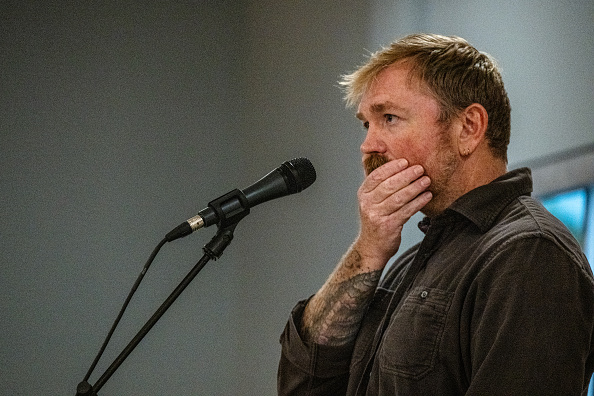
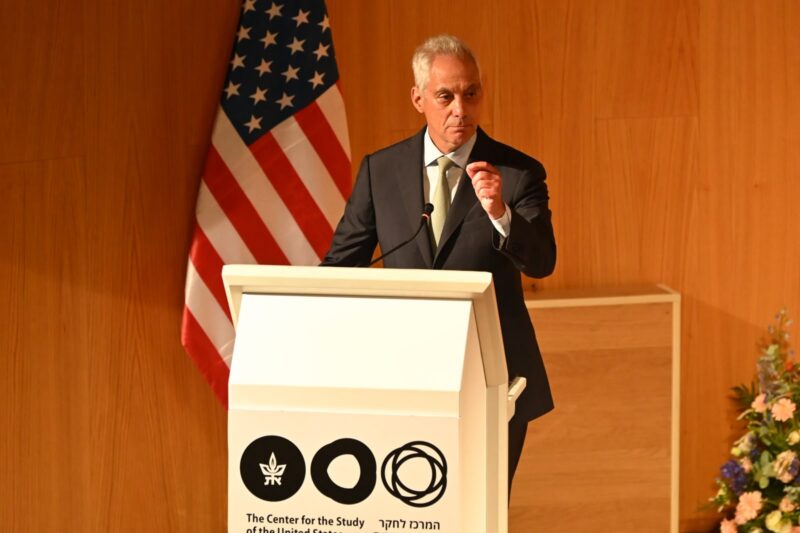

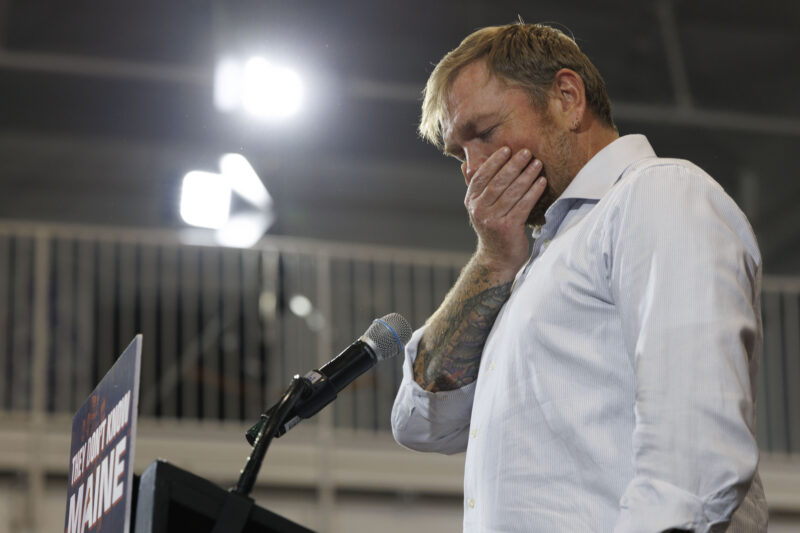
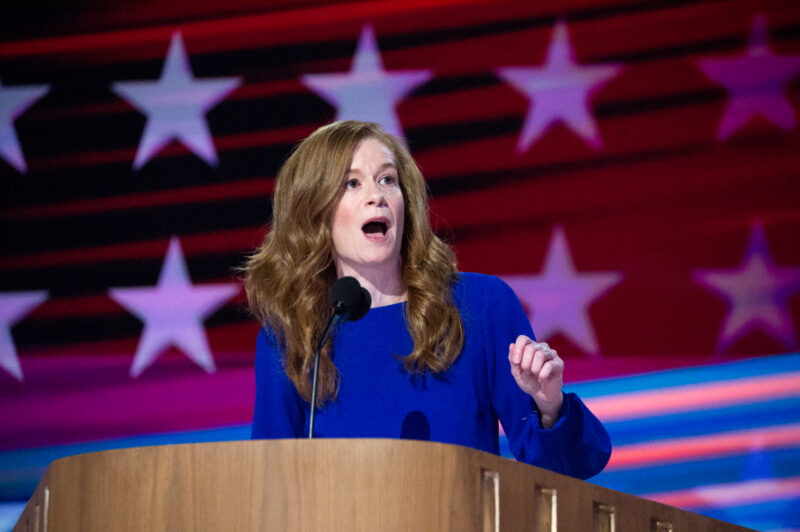
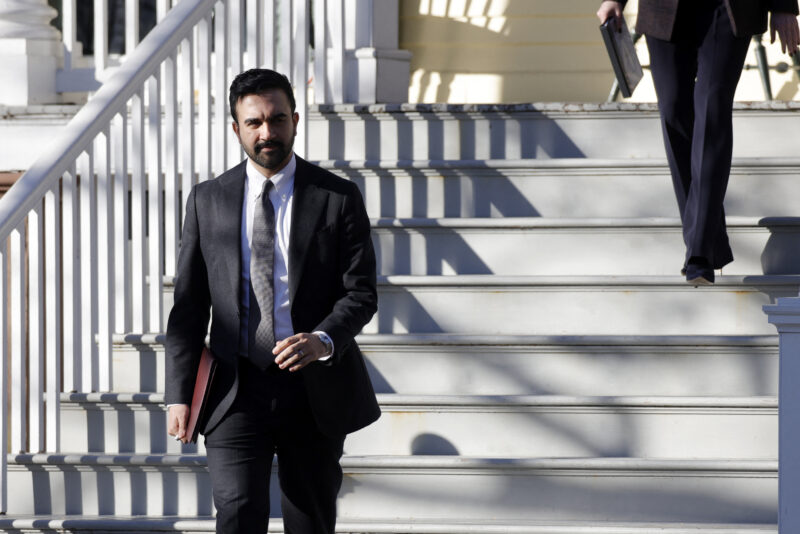
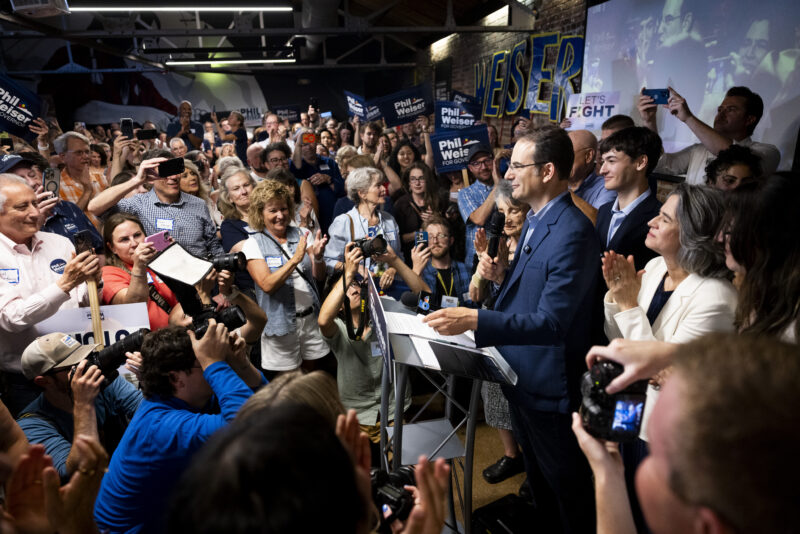





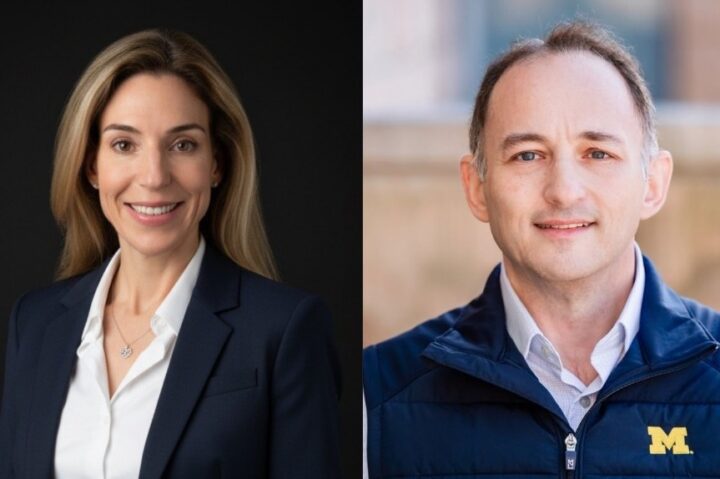
Republican nominees Lena Epstein and Michael Schostak, who both identify as Jewish, told JI they’re campaigning on fighting antisemitism at the school
Campaign website
Lena Epstein and Michael Schostak


 Add JewishInsider on Google
Michigan’s statewide election for two seats on the University of Michigan Board of Regents — the body that governs the state’s flagship university — has become a surprisingly contentious race in a swing state full of high-profile match-ups.
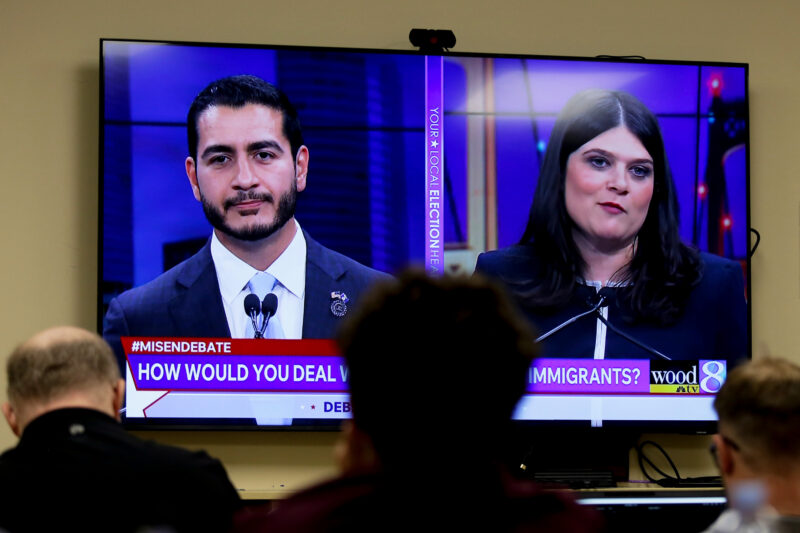
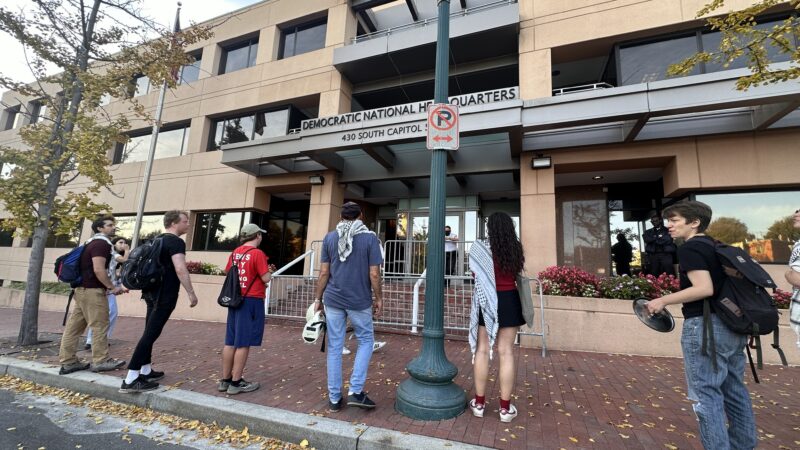
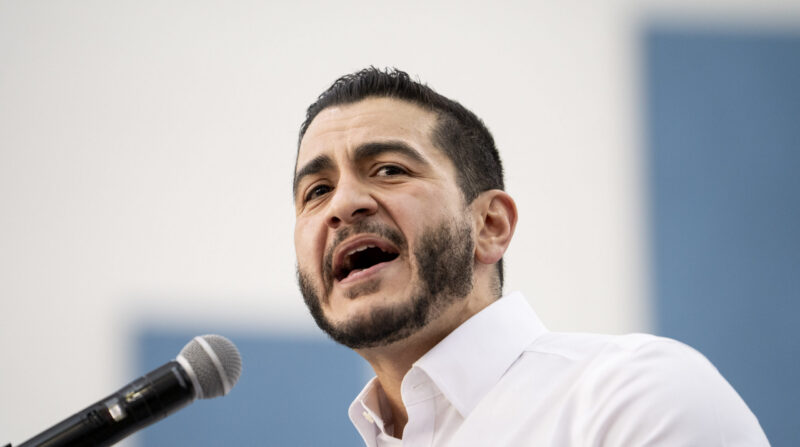
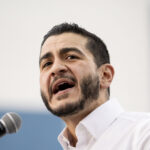
After Amir Makled, a trial attorney with a history of antisemitic and pro-Hezbollah social media posts, unseated incumbent Regent Jordan Acker at the Democratic Party nominating convention last month, the two Republican candidates running for the board see an opening to pitch themselves to Democrats and Independents.
Acker, who is Jewish, had spoken out against efforts to divest Michigan’s endowment from Israeli companies, and faced antisemitic harassment from pro-Palestinian campus activists, while Makled has promoted efforts to boycott Israel. (Acker and Brown campaigned together during the primary, but Acker did not respond to a request for comment about who he’s backing in the general election.)
Lena Epstein, an oil executive who chaired President Donald Trump’s campaign in Michigan in 2016 before running for regent, told Jewish Insider in a recent interview that reaching disaffected Democrats who are upset about Makled’s place on the ticket is a priority for her.
“There are the individuals that believe that I’ll be a fabulous regent and really great at the job and able to effect positive change over these next eight years, and for the long term,” said Epstein, who also ran for the board in 2022 and narrowly lost. “Then there’s the other folks that simply don’t want the other gentleman who is nominated to win, and we accept support from Democrats, independents and Republicans.”
Epstein has an MBA from Michigan, as does the other Republican on the ticket, Michael Schostak, the treasurer of Bloomfield Township, a Detroit suburb. Schostak told JI in an interview that since Makled’s nomination, Michigan alumni around the country who are now closely following the race have been calling him.
“They care about their alma mater and they want to make sure that it stays in good hands, and they’re very concerned about what they’ve seen from Amir Makled,” Schostak said. “I’m not running to be the Jewish candidate. I am Jewish, but that’s not why I’m running. I got into this race eight months ago because I cared about affordability of tuition and college costs.”
The two regents who are elected this November to serve on the eight-person board will join an ongoing search for a new university president following a tumultuous few years for Michigan, one of the top public universities in the country — and the school with the fifth-largest Jewish student population, according to Hillel International.
Both Schostak and Epstein identify as Jewish, though Epstein has at times described herself as a messianic Jew, meaning she believes in the divinity of Jesus. For that reason, the mainstream Jewish community considers messianic Jews to be Christian. She recently told the Forward that she is “100% Jewish,” and that her family belongs to a Reform synagogue in Bloomfield Hills.
Both Republicans say fighting antisemitism is a priority for them if elected to the board of regents.
“Antisemitism should never be minimized, normalized or explained away. Jewish students deserve the same protection and dignity as every other student on campus,” Epstein said. “One of the most troubling failures that we’ve seen at the University of Michigan is the hesitation to call antisemitism what it is.”
Schostak recalled conversations with Jewish students who were afraid to wear Star of David necklaces on campus or scared to walk to class during the anti-Israel encampments two years ago.
“I felt terrible, just sick to my stomach for the Jewish students on campus who had to live through that, and the pro-Israel students. There are a lot of pro-Israel students who are not Jewish,” said Schostak. “We’ve got to acknowledge them, who felt like they couldn’t express themselves because they were going to be harassed or followed or shouted at, or whatever, and the fact that all this was going on, the encampments, and people felt like it wasn’t safe.”
Both candidates said the university did a poor job of handling the firestorm of campus events in the 2023-2024 school year after Hamas’ Oct. 7 attacks and called for more clarity about rules surrounding campus protests.
“When it comes to protests on campus at U of M, peaceful protest has been a very long-standing tradition at this fine university,” said Epstein. “Students have every right to speak out. Students do not have the right to make other students feel unsafe walking to class. A university simply can’t function if rules are enforced selectively, depending on politics.”
Schostak and Epstein said they will emphasize support for free speech across all viewpoints at a school where they think intellectual diversity is lacking. But the response to anti-Israel protests, even hateful ones, cannot be shutting all protests down, according to Shostak.
“Free speech to me is very important, and they have the right to protest and make noise, as long as they don’t disrupt the university’s business,” said Schostak. “What I would tell the Jewish and pro-Israel students is, ‘Look, you need to be just as vocal in your beliefs and standing up for Israel and standing up for the Jewish people as they are standing up for the Palestinian people.’”
After a Michigan professor delivered an anti-Israel speech at commencement this month, Epstein and Schostak released a joint statement questioning the choice of the professor, Derek Peterson, as a speaker and criticizing his rhetoric. “There is a time and a place for emotionally charged debate. A commencement ceremony is not it,” they wrote.
Makled and Paul Brown, the other Democratic nominee who was first elected to the board of regents in 2018, have both criticized President Donald Trump’s approach to higher education, and pledged to push back on funding cuts where possible. Schostak expressed concern about the cuts as well, while noting that the regents should encourage the university to work to not get additional funding cut off.
“I am concerned,” Schostak said. “The university is going to have to tap dance around that to make sure that they abide by all the rules to make sure that our research funding isn’t cut off or any of our other funding isn’t cut off.”
Epstein has declined to say much on the issue. When asked about Trump’s adversarial approach to universities, she pointed out that Michigan is a public institution.
“We do accept public funds, and we do work in concert with the government based on those financial dynamics,” she said. “With that said, I believe that the University of Michigan should be an autonomous organization.”
Both candidates understand that to the extent to which Michigan voters are even paying attention to the race, most will not make a decision based on issues related to Israel or campus protests. So their focus remains on issues like college affordability and job opportunities.
“[Voters] care about sending their kids to college, being able to afford to pay for it, having their kids stay here when they graduate, so that we can provide an environment where they can thrive,” said Schostak. “That’s what they care about, and those are the issues that I’m going to be speaking to.”
Plus, Senate Rs hold the line on Iran enrichment
Oliver Contreras / AFP via Getty Images
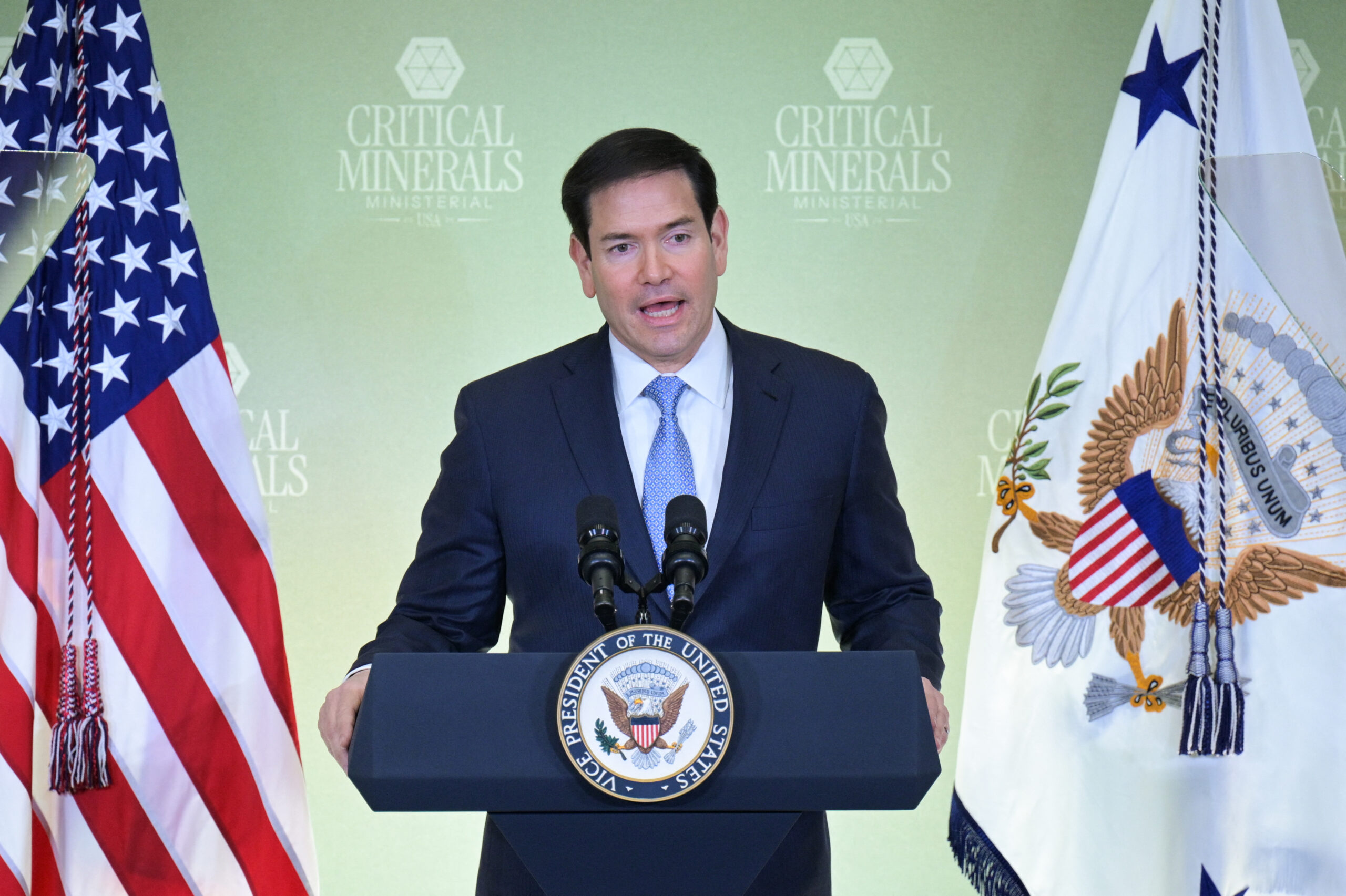
Secretary of State Marco Rubio speaks during the inaugural Critical Minerals Ministerial meeting at the Sate Department in Washington, DC, on February 4, 2026.
👋 Good Tuesday morning!
In today’s Daily Kickoff, we preview today’s high-level talks in Washington between Israel and Lebanon, and talk to Senate Republicans about reports of a U.S. request for Iran to pause its enrichment of uranium for 20 years. We report on a call from Rep. Angie Craig, who is mounting a Senate bid, for Minnesota Democrats to investigate antisemitic activity ahead of the state party’s convention, and look at what the election in Hungary of Péter Magyar could portend for Budapest-Jerusalem relations. Also in today’s Daily Kickoff: Gov. Wes Moore, Noah Wyle and Elkana and Rebecca Bohbot.
Today’s Daily Kickoff was curated by JI Executive Editor Melissa Weiss and Israel Editor Tamara Zieve, with assists from Danielle Cohen-Kanik and Marc Rod. Have a tip? Email us here.
What We’re Watching
- Secretary of State Marco Rubio will oversee talks in Washington this morning with Israeli Ambassador to the U.S. Yechiel Leiter and Lebanese Ambassador to the U.S. Nada Hamadeh. U.S. Ambassador to Lebanon Michel Issa and State Department Counselor Michael Needham will also join the talks, slated to start at 11 a.m. Read more here.
- Ahead of the talks, a senior Hezbollah official said the Iran-backed group would not abide by any agreement reached between Beirut and Jerusalem. Fighting between Israel and Hezbollah has continued since the implementation of the Iran ceasefire, but has largely occurred in southern Lebanon and northern Israel following pressure from the White House for Israel to scale back its attacks in Beirut.
- A second round of in-person negotiations between the U.S. and Iran could take place as soon as this week — days before the April 21 expiration of the current ceasefire — following President Donald Trump’s comments yesterday that “we’ve been called by the other side,” who would “like to make a deal very badly, very badly.”
- The U.S. Holocaust Memorial Museum is hosting its annual Yom HaShoah commemoration on Capitol Hill this morning, with more than 30 Holocaust survivors slated to attend. House Speaker Mike Johnson (R-LA), House Minority Leader Hakeem Jeffries (D-NY), Sen. Kirsten Gillibrand (D-NY), Reps. Joe Wilson (R-SC) and Lois Frankel (D-FL) and Commerce Secretary Howard Lutnick will participate in the ceremony, during which Ben Ferencz, who served as the U.S.’ chief prosecutor in Nuremberg, will be posthumously honored.
- The Atlantic Council is hosting Jacob Helberg, the State Department’s under secretary of state for economic growth, energy and the environment, this evening for a discussion on U.S. economic leadership in the Middle East.
- Semafor’s World Economy Summit continues today in Washington. Speakers include Helberg, Sens. Tim Sheehy (R-MT) and Gary Peters (D-MI), former Commerce Secretary Penny Pritzker, Michael Dell, Reid Hoffman, Meta’s Dina Powell McCormick, Forum AI’s Campbell Brown and Citadel’s Ken Griffin.
What You Should Know
A QUICK WORD WITH JI’S JOSH KRAUSHAAR
Tomorrow (April 15) isn’t just Tax Day, but it’s also the deadline for candidates vying in the pivotal midterms to report their latest fundraising figures — an important marker on the political calendar in determining which candidates are raising enough money to run credible campaigns and which will be left financially behind.
Historically, having a critical mass of prominent, well-heeled supporters was a prerequisite for a congressional candidate being able to get their message out to the public.
Not long ago, candidates with extreme or exotic views — such as those affiliated with the Democratic Socialists of America on the left or those embracing conspiracy theories on the far right — would have a hard time being taken seriously by rank-and-file donors, who typically want a back a winner and would shy away from those with far-out-of-the-mainstream views.
Similarly, the pro-Israel community historically benefited from the presence of strong organizations like AIPAC that helped pool supporters’ money to favored candidates, giving them outsized impact within both parties. More recently, AIPAC’s super PAC has led the way in engaging directly in political campaigns, directly spending money on behalf of favored candidates and attacking some of the most radical candidates on the ballot.
But in our brave new decentralized world of politics and media, where a critical mass of small-dollar donations from passionate individuals can easily be amassed online (especially through an incendiary video clip or well-timed fundraising appeal), the comparative advantage of having a defined group of reliable donors can be neutralized by an online feeding frenzy that galvanizes enough individuals to give to a radical cause or candidate.
At the same time, the social media-driven public conversation — without any guardrails and few standards — has totally transformed what is viewed as normal. One recent example: 27-year-old Kat Abughazaleh, a far-left social media influencer without any roots in the Chicago-area district she was running in, raised well over $3 million for her (unsuccessful) primary campaign, fueled by high-volume, low-dollar, largely out-of-state contributions.
If former House Speaker Tip O’Neill once said all politics is local, the opposite is true today. All politics is now nationalized, with the most outlandish hot takes and incendiary commentary most likely to go viral.
TEHRAN TALKS
Senate Republicans maintain Iran should have no enrichment capacity, amid reports of 20-year pause proposal
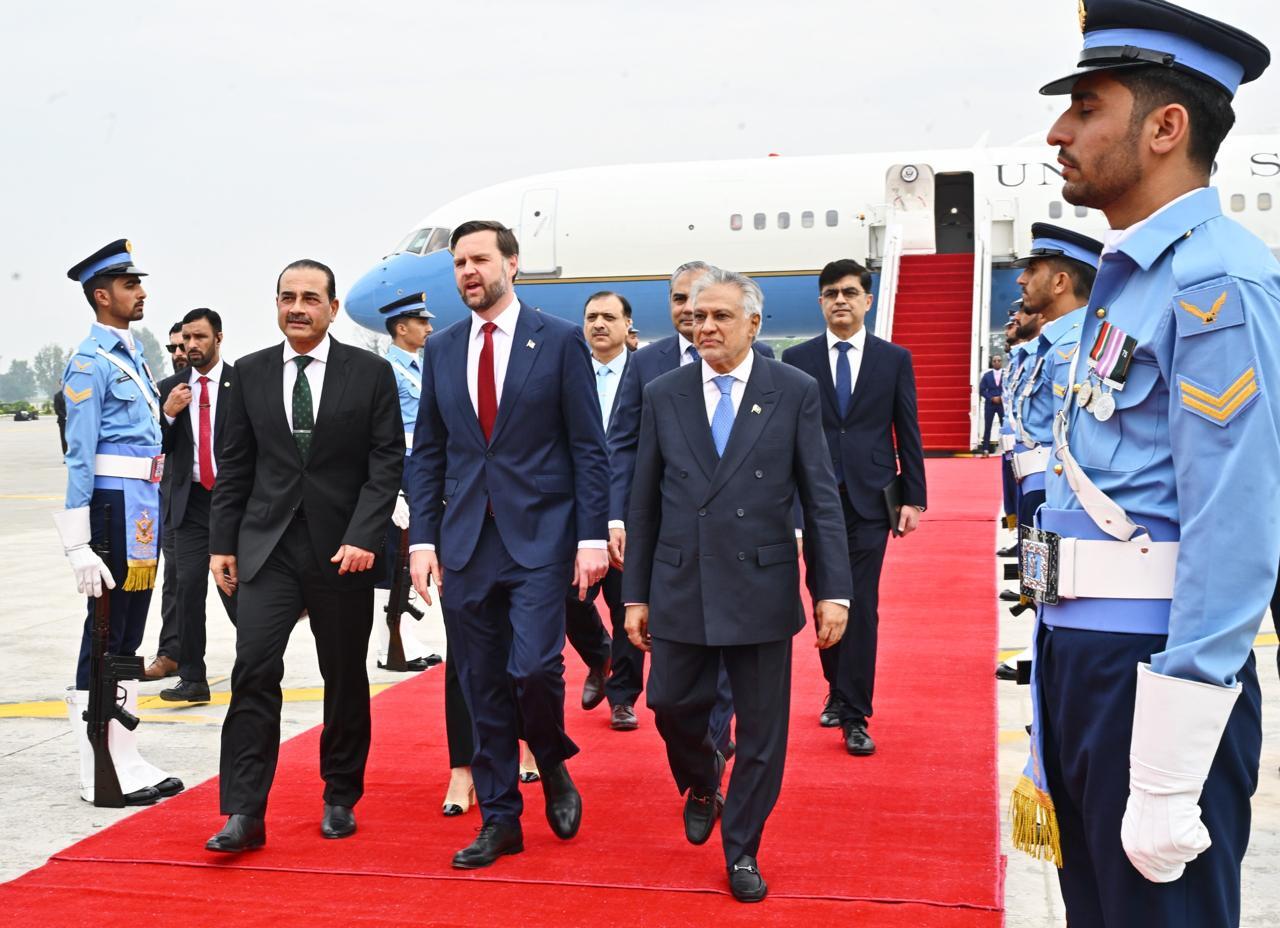
Senate Republicans maintained the position on Monday that Iran should never be allowed to possess nuclear enrichment capacity, following reports that the administration had proposed a 20-year pause in enrichment — rather than a permanent end to Iran’s enrichment capacity — as part of peace talks in Islamabad over the weekend, Jewish Insider’s Marc Rod reports.
What they’re saying: Sen. Pete Ricketts (R-NE) told JI that he hadn’t seen the reports about the administration’s negotiating position and declined to comment on it specifically, but said more broadly that he does not believe that Iran has any legitimate need for enrichment. “There’s no civilian reason for Iran to have an enrichment program,” Ricketts said. “They’re getting their uranium right now for their civilian program from Russia, and the fact that they have admitted they’ve enriched uranium to near bomb-grade potential demonstrates that this is for nuclear weapon production, not civilian use.”
Read the full story here with additional comments from Sens. Lindsey Graham (R-SC), John Cornyn (R-TX), Ted Budd (R-NC), Rick Scott (R-FL), Roger Wicker (R-MS), Tommy Tuberville (R-AL), John Kennedy (R-LA), James Lankford (R-OK) and John Curtis (R-UT).
MARKING THE DAY
Wes Moore pledges solidarity with Jewish community, emphasizes ‘responsibility’ of Holocaust remembrance
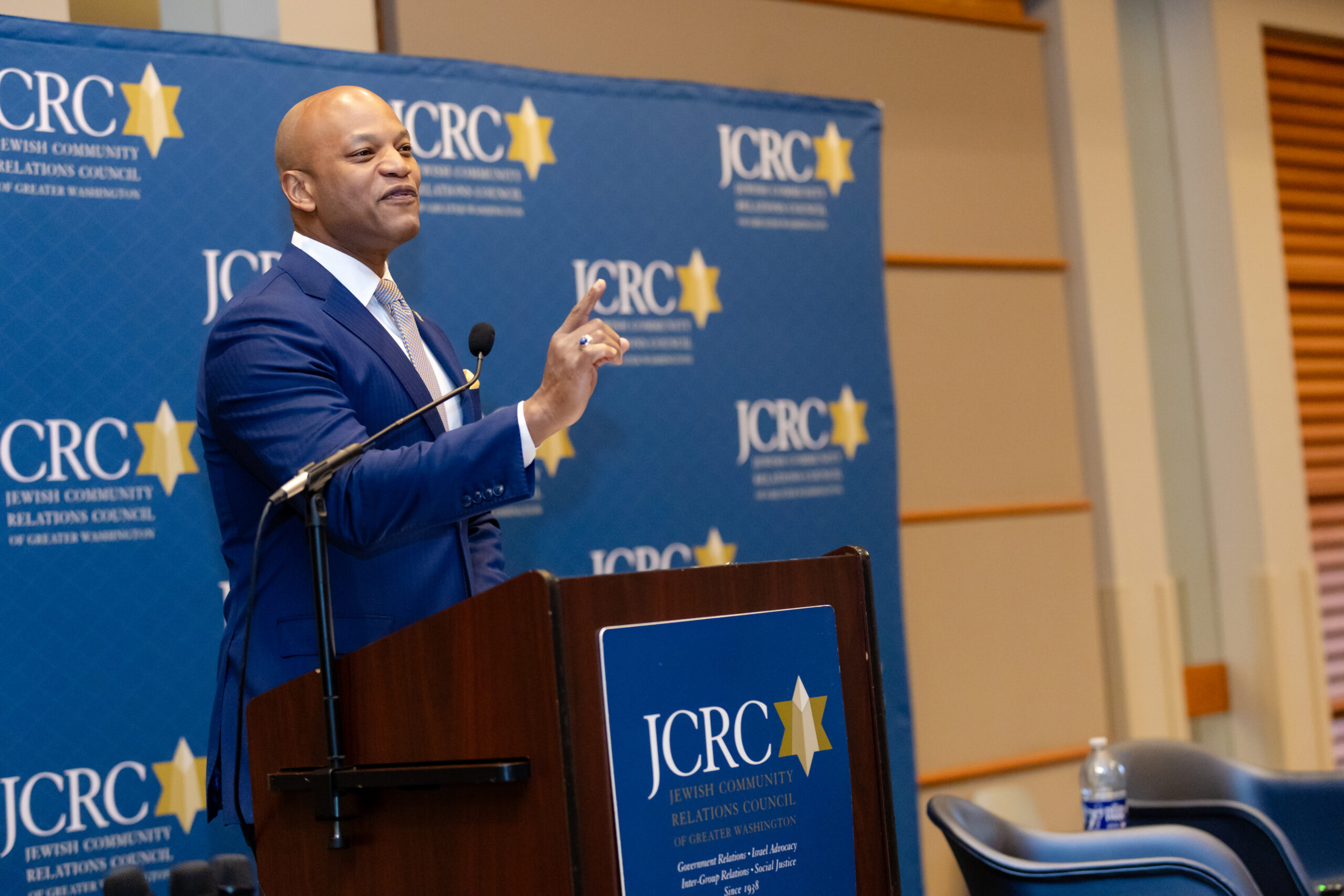
Maryland Gov. Wes Moore pledged that his administration “will always support Maryland’s Jewish community” in recorded remarks for an event Monday evening marking Yom HaShoah, Israel’s Holocaust memorial day, at Beth Tfiloh Congregation in Pikesville, Md., a heavily Jewish suburb of Baltimore, Jewish Insider’s Marc Rod reports.
What he said: The Maryland governor, a potential Democratic presidential contender, said that it is his and his state’s “governing philosophy” to “unapologetically confront and condemn antisemitism and persecution wherever it arises,” to provide no refuge to hate, denial and conspiracy theories, to ensure that everyone feels safe to worship and to “realize the full promise of tikkun olam.” He called Holocaust remembrance a “responsibility” for those living today.
MINNESOTA MATTERS
Angie Craig calls on Minnesota Dems to investigate antisemitic activity ahead of state party convention
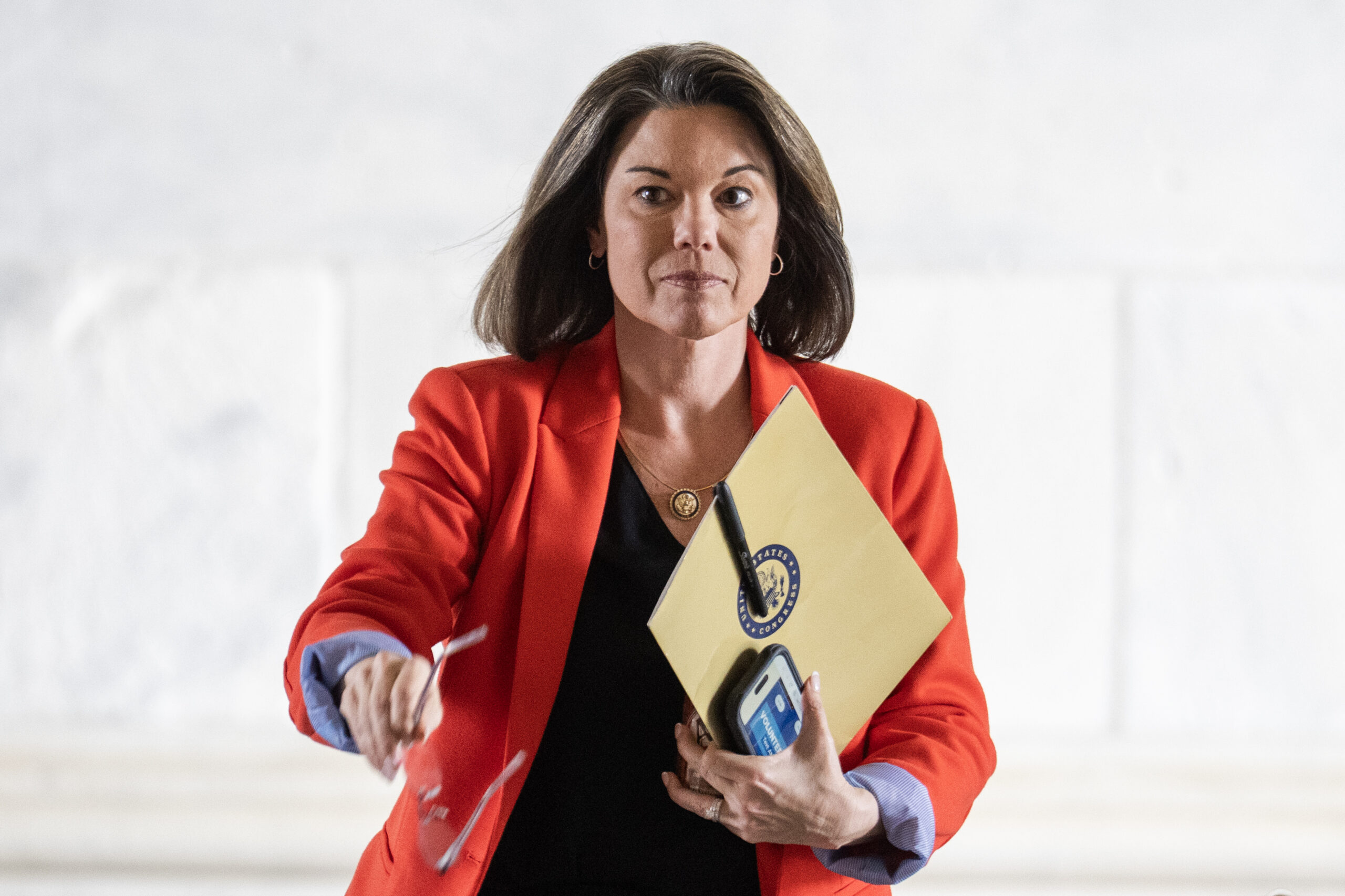
The Senate campaign of Rep. Angie Craig (D-MN) is calling on Minnesota’s Democratic Party to launch a formal investigation into a series of alleged instances of antisemitic activity among delegates in the lead-up to its state convention being held at the end of next month, Jewish Insider’s Matthew Kassel reports.
Allegations: In a letter sent last week to Richard Carlbom, chair of Minnesota’s Democratic-Farmer-Labor Party, Craig’s campaign wrote that one of its staffers had received a threatening anonymous phone call last month from a person “believed to be a delegate” who used an ethnic slur for Jews and said that the congresswoman “takes dirty Jewish money.” The letter, shared exclusively with JI, also cited a local DFL organizing convention in late March at which an unnamed delegate allegedly said that “we should nuke” Israel, among other examples of extremist violent rhetoric.
PIKER’S POV
Hasan Piker doubles down on Hamas support
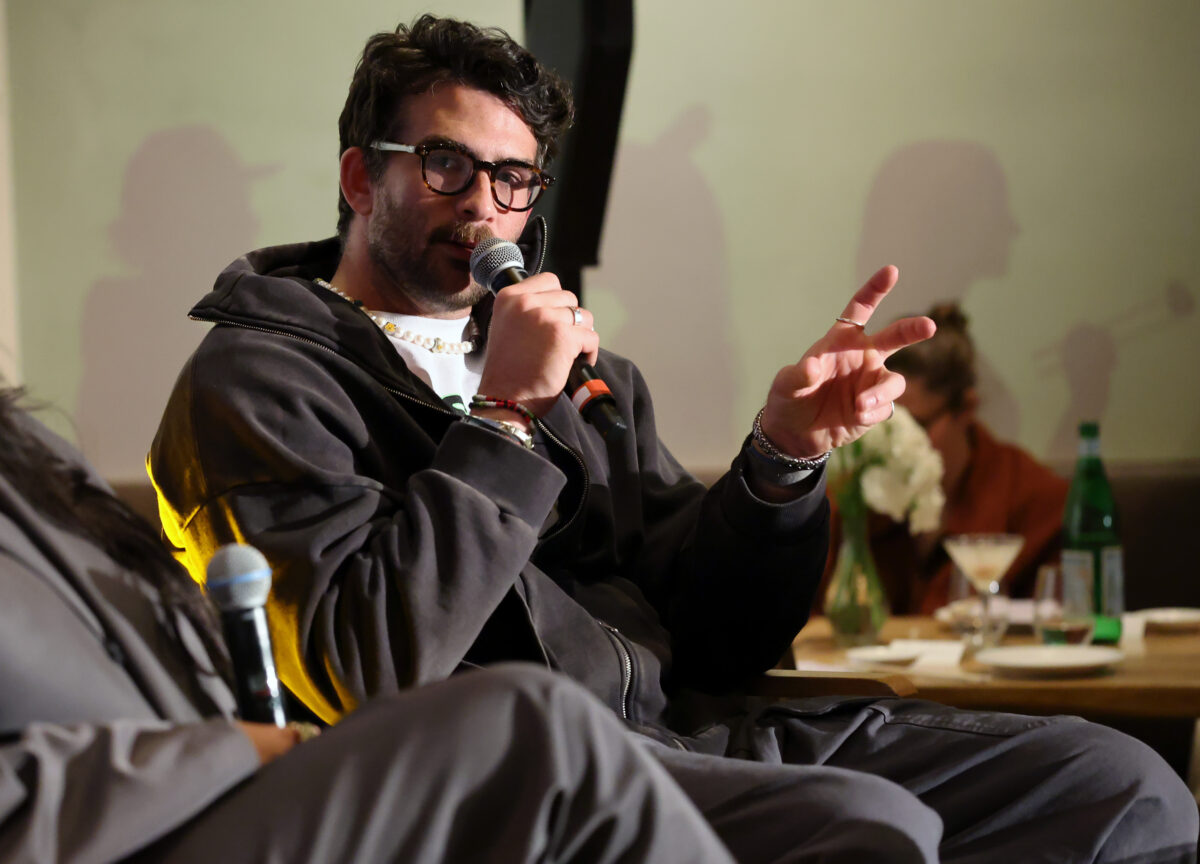
Given the chance to walk back some of his most incendiary commentary on an episode of the “Pod Save America” podcast released Sunday, antisemitic streamer Hasan Piker instead doubled down on his support of Hamas and other inflammatory rhetoric, Jewish Insider’s Danielle Cohen-Kanik reports.
What he said: “This [quote] is from January,” host Jon Favreau, a former speechwriter to President Barack Obama, told Piker in a segment looking back on some of Piker’s comments that have been picked up by national media. “‘Hamas is a thousand times better than a fascist settler colonial apartheid state,’” Favreau quoted. “I stand by that,” Piker responded quickly, later adding, “I’m a lesser-evil voter and therefore I would vote for Hamas over Israel every single time.”
Called to account: Sen. Rick Scott (R-FL) called for the federal government to “immediately” pull funding from Yale University over Yale Political Union’s decision to host Piker, who previously suggested that the senator should be killed. Piker is scheduled to speak on campus Tuesday for a debate titled “Resolved: End the American Empire,” JI’s Haley Cohen reports.
HUNGARY FOR MORE
Analysts expect continued pro-Israel slant from new Hungarian government under Magyar

The end of Hungarian Prime Minister Viktor Orbán’s 16-year tenure following his electoral defeat on Sunday to center-right rival Péter Magyar has sparked immediate questions regarding the future of one of Jerusalem’s most reliable, yet complicated, alliances in Europe. While Orbán’s departure removes a reliable ally of Israeli Prime Minister Benjamin Netanyahu within the European Union, experts suggest Jerusalem’s standing in Europe and bilateral relationship with Budapest will not be significantly set back, Jewish Insider’s Matthew Shea reports.
Solid standing: Jonathan Ruhe, a fellow at the Jewish Institute for National Security of America, suggested that significant change in posturing is unlikely. “Israel’s standing in Europe won’t be dimmed by Orbán’s departure,” Ruhe said. “Israel has reliable partners like Germany, Czechia, Greece and Cyprus. Germany in particular has been a firewall against a lot of European anti-Israeli actions, and Magyar has suggested he’ll follow Germany’s lead here.”
POLL POLITICS
New survey of Jewish voters finds partisan divide over pro-Israel political engagement
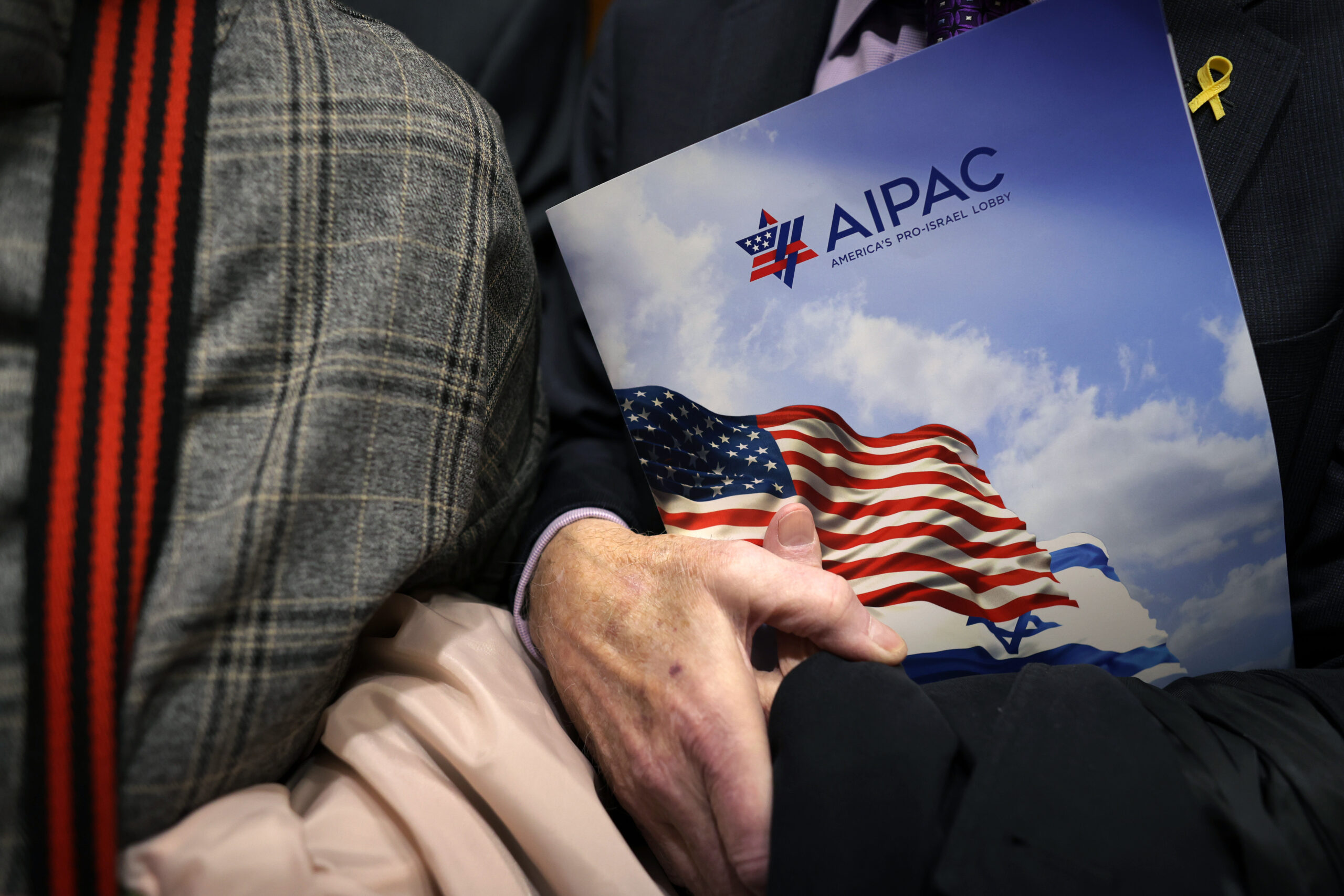
A recently conducted survey assessing how Jewish voters view leading Israel advocacy groups finds that public opinion is divided over the effectiveness of outside engagement in American elections, Jewish Insider’s Josh Kraushaar reports. The Mellman Group poll, commissioned by the Jewish Electorate Institute (JEI) and released last week, surveyed 800 registered Jewish voters between March 13-23.
Survey says: It found a narrow 39% plurality agreed that it “was more important than ever” for pro-Israel groups to play a leading role in speaking out against candidates who oppose a close U.S.-Israel alliance, while 37% of respondents feared that such advocacy risks making things worse. The split largely was along partisan lines: While two-thirds of Jewish Republicans and 59% of Jewish independents backed strong pro-Israel political advocacy, just 28% of Democrats shared the same view. A near-majority (46%) of Democrats feared that pro-Israel electioneering could turn voters against Israel.
Worthy Reads
West Bank Extremes: In The Free Press, Haviv Rettig Gur warns that settler violence in the West Bank has the potential to radicalize Palestinian elements in the enclave and drive further strife. “Underneath all of this is a structural failure: the absence of a coherent rule of law in the West Bank. In a system without clear law and order, naked power wins. Always. For Palestinians, legal uncertainty is constant — over land, over protection. For extremist settlers, that vacuum is an opportunity. Meanwhile, most Israelis are looking elsewhere, at rockets, at war, at existential threats. The settler violence issue feels secondary. Or unsolvable. And that’s a mistake. Because there will be a price to pay for this lawlessness.” [FreePress]
Dire Straits: In Foreign Policy, Bobby Ghosh looks at the challenges facing Tehran as the Islamic Republic focuses on its control of the Strait of Hormuz after six weeks of war that has degraded much of the country’s military capabilities. “The element of strategic surprise [on Hormuz] is now spent, and the world will find ways to mitigate the costs Iran can impose. Mojtaba Khamenei may match Trump for braggadocio, but the country he has inherited from his father has been devastated, and the prospects for recovery are grim. All the problems that existed before Feb. 28 exist still, compounded by everything the war has wrought. A survivor he may be. Stronger, he isn’t.” [ForeignPolicy]
IHRA Ire: In the Milwaukee Journal Sentinel, Combat Antisemitism Movement’s Alyza Lewin praises the decision by Wisconsin Gov. Tony Evers to sign into law legislation adopting the International Holocaust Remembrance Alliance’s working definition of antisemitism. “Why are detractors aggressively seeking to torpedo IHRA legislation? The answer: Because the IHRA definition exposes bad-faith actors who deliberately seek to conceal their hatred of Jews under the guise of political criticism of Israel. It unmasks those who claim to support Jews but work overtime to turn society against anyone who recognizes essential components of Jewishness, namely Jewish peoplehood and a shared ancestry originating in the Land of Israel.” [MilwaukeeJournalSentinel]
Word on the Street
President Donald Trump signed a bill extending the Holocaust Expropriated Art Recovery Act, which will make it easier for the descendants of Holocaust survivors and victims whose art was looted by the Nazis to recover the works; the legislation passed the House of Representatives last month and the Senate in December…
A group of six additional Senate Democrats plan to file new war powers resolutions this week to halt the war in Iran, a move that would allow Democrats to continue forcing votes on the war for the foreseeable future, Jewish Insider’s Marc Rod reports…
The Atlantic looks at the commercial impact of the U.S.’ blockade of the Strait of Hormuz as Washington attempts to force Iranian concessions vis-a-vis economic pressure…
The Wall Street Journal spotlights Sen. Bernie Sanders’ (I-VT) efforts to shift the Democratic Party to the left as he backs far-left candidates across the country during the midterms…
Reps. Eric Swalwell (D-CA) and Tony Gonzales (R-TX) announced their resignations from Congress amid efforts to expel both men, in addition to Reps. Sheila Cherfilus-McCormick (D-FL) and Cory Mills (R-FL), from the House…
Pennsylvania Gov. Josh Shapiro hosted King Willem-Alexander and Queen Máxima of the Netherlands at an event at Philadelphia’s Independence Hall on Monday…
The Washington Post reports on a recent dinner in which Heritage Foundation chief Kevin Roberts praised Chronicles editor Paul Gottfried, whose monthly magazine has platformed far-right fringe and white supremacist writers…
The New York Times looks at efforts by National Ground Game, a nascent Democratic group, and antisemitic conspiracy theorist Nick Fuentes to make gains on college campuses following last year’s killing of Charlie Kirk, whose Turning Point USA had developed a large campus following under Kirk’s leadership…
More than 1,000 Hollywood figures signed onto a letter from Jane Fonda’s Committee for the First Amendment, Norm Eisen’s Democracy Defenders Fund and the Future Film Coalition opposing Paramount’s efforts to acquire Warner Bros. Discovery, citing the loss of jobs and higher costs they believe would result from the deal…
“The Pitt” actor Noah Wyle, whose father was Jewish, talked to the U.K.’s Jewish Chronicle about his time on the show and his first experience playing a Jewish character…
Dublin’s National Concert Hall canceled an upcoming fundraiser for Magen David Adom Ireland for a second time after the event, scheduled for May, was canceled and reinstated…
A report from Tel Aviv University released ahead of Yom HaShoah, Israel’s Holocaust Remembrance Day, found that 2025 saw the highest level of deadly antisemitic violence in more than 30 years…
Former Israeli hostage Elkana Bohbot and his wife, Rebecca, announced on the six-month anniversary of Bohbot’s release from Gaza that they are expecting their second child…
Former U.S. Ambassador to the Bahamas Arthur Schechter, who previously served as president of the Jewish Federation of Houston and a member of the United States Holocaust Memorial Council, died at 84…
Pic of the Day
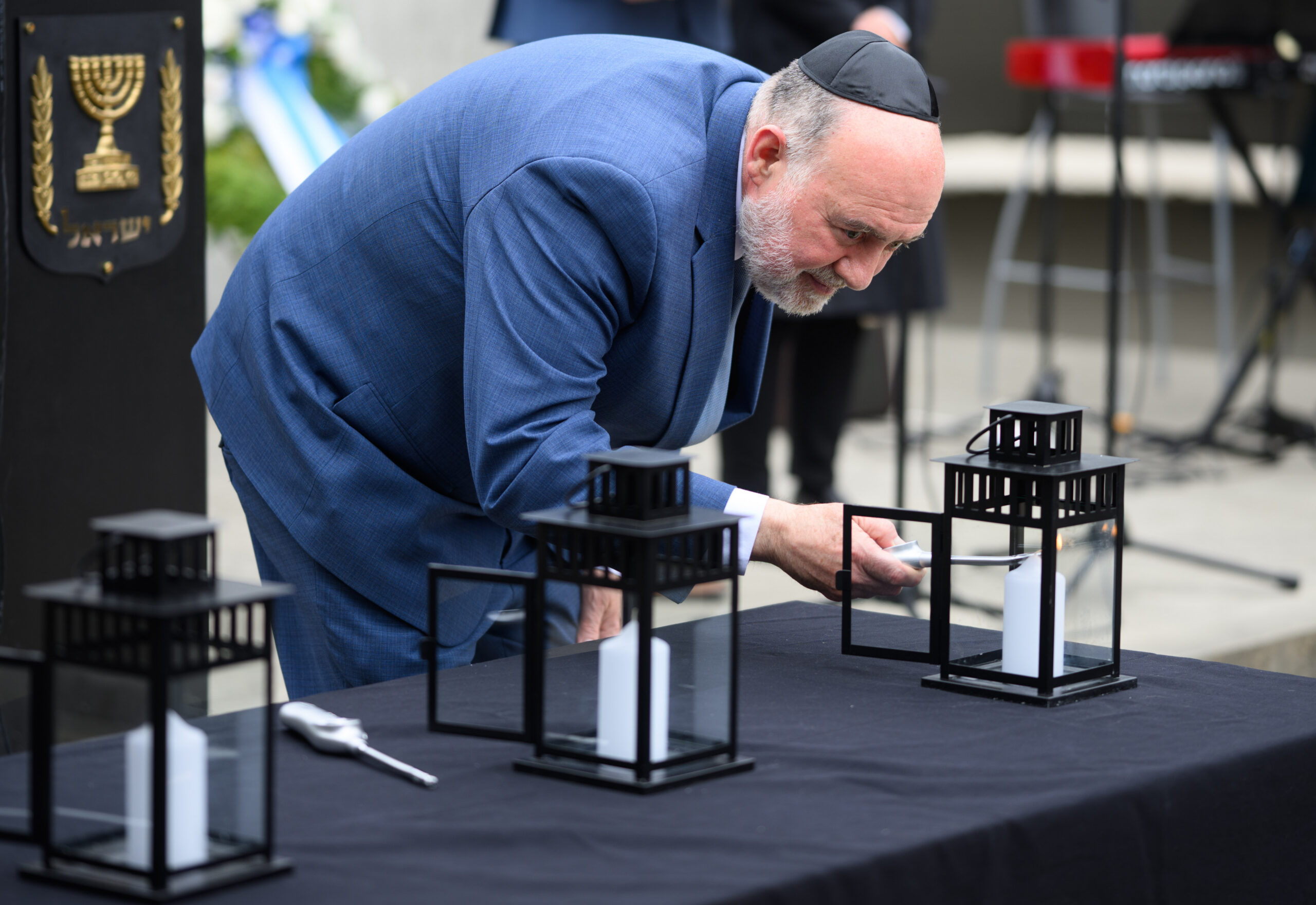
Israeli Ambassador to Germany Ron Prosor lit a candle this morning at a commemorative event for Yom HaShoah, Israel’s Holocaust Remembrance Day, at the Sachsenhausen Memorial in Oranienburg, Germany.
Birthdays
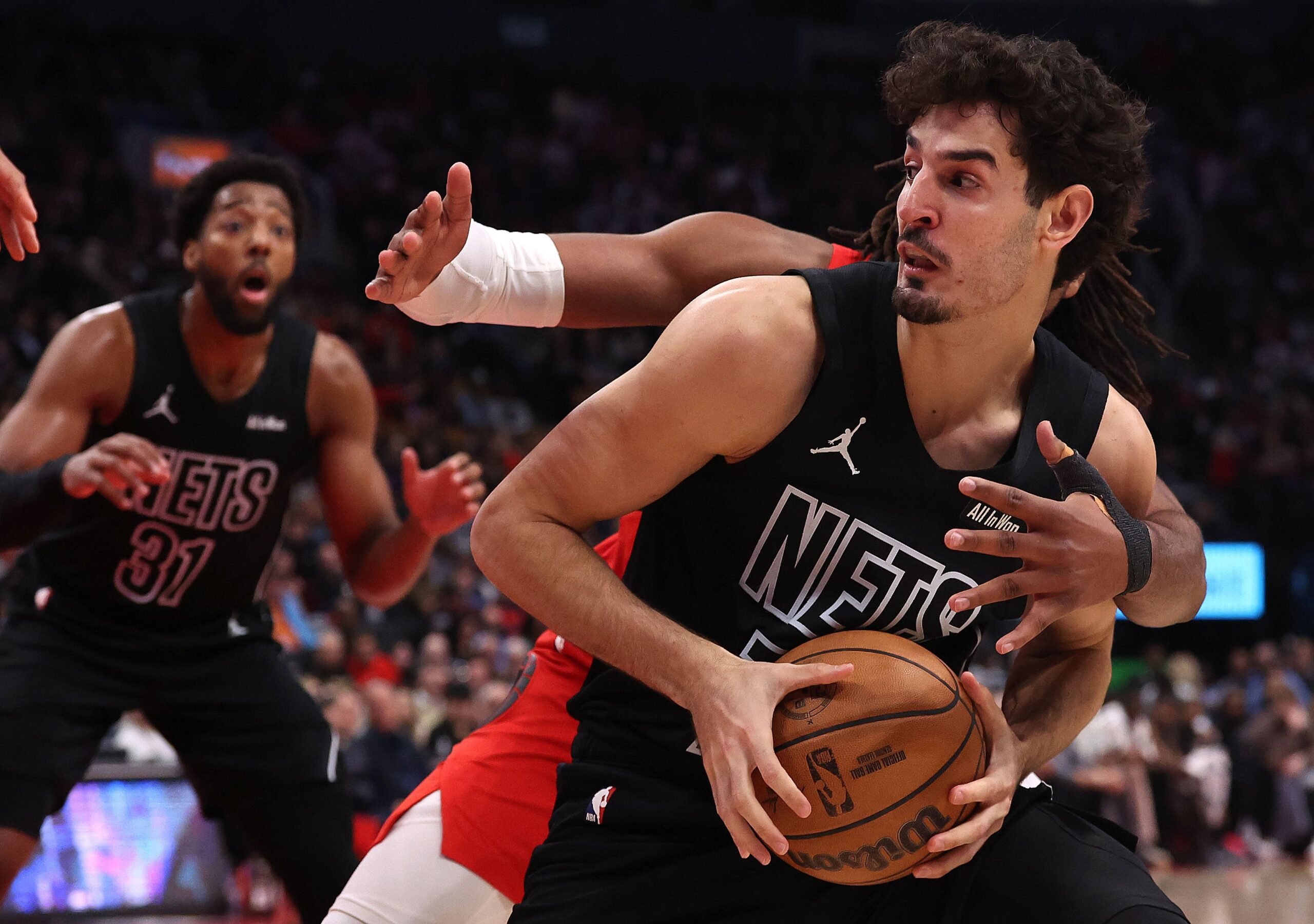
Basketball player selected 26th overall by the Brooklyn Nets in the first round of the 2025 NBA draft, Ben Saraf turns 20…
Anne Monk… Former chair of the U.S. Securities and Exchange Commission, Elisse B. Walter turns 76… Israeli news editor and analyst who retired in 2020 from the Israeli daily Haaretz, Chemi Shalev turns 73… Media executive who sold her family’s controlling interest in Paramount Global to Skydance Media in August 2025, Shari Redstone turns 72… Co-founder, co-chairman and co-CEO at Canyon Partners, LLC, Mitchell Julis turns 71… Film, television and theater producer, his credits include the widely acclaimed 2016 film “La La Land,” Marc Platt turns 69… Birmingham, Ala.-based post-denominational rabbi, known on social media as “Deep South Rabbi,” Barry Altmark… Founder of Bobbi Brown Cosmetics and author of 10 books about makeup and beauty, Bobbi Brown turns 69… Border czar for the first few months of the Biden administration, she is the former U.S. ambassador to Mexico, Roberta S. Jacobson turns 66… Bench coach for the New York Yankees, he was also bench coach for Team Israel at the World Baseball Classic in 2023, Brad Ausmus turns 57… Los Angeles-based freelance editor and writer, Robin Heinz Bratslavsky… SVP of Washington and investigative news at CNN, Adam Levine… Emmy Award-winning actress best known for the title role on the WB series “Buffy the Vampire Slayer,” Sarah Michelle Gellar Prinze turns 49… Journalist, professor and author of five books, Sasha Issenberg turns 46… Co-founder and CEO of Statt, a venture-backed AI/ML enterprise software platform, Steve Glickman… Teacher, formerly principal, at Bnei Akiva Schools of Toronto, Hillel David Rapp… French entrepreneur, he is the president of CRIF, the Representative Council of French Jewish Institutions since 2022, Yonathan Arfi turns 46… Founder and CEO of Charity Bids, Israel “Yummy” Schachter… Award-winning science fiction and fantasy writer, Rachel Swirsky turns 44… President of Sightful, he is the co-author of The New York Times bestseller The Black Banners, Daniel Freedman… Classical cellist, she was awarded a MacArthur Foundation genius grant in 2022, Alisa Weilerstein turns 44… Former baseball first baseman who played in the MLB, Japanese and Mexican leagues, Joshua S. Whitesell turns 44… Documentary filmmaker, Nicholas Ma… Washington-based senior technology policy reporter at Axios, Ashley Gold… Isaac Hasson… Graphic designer and daughter of Carolina Panthers owner, David Tepper, Casey Tepper… Yitzchak Tendler… Jon Fine… Moriah Elbaz…
To mark the second anniversary of the Oct. 7 attacks in Israel, the Jewish Insider team asked leading thinkers and practitioners to reflect on how that day has changed the world. Here, we look at how Oct. 7 changed higher education

JOSEPH PREZIOSO/AFP via Getty Images
Tents and signs fill Harvard Yard in the anti-Israel encampment at Harvard University in Cambridge, Massachusetts, on May 5, 2024.
As conflicting accounts emerge about the strike’s outcome, Trump voices frustration while Netanyahu says the operation could bring the war in Gaza closer to an end
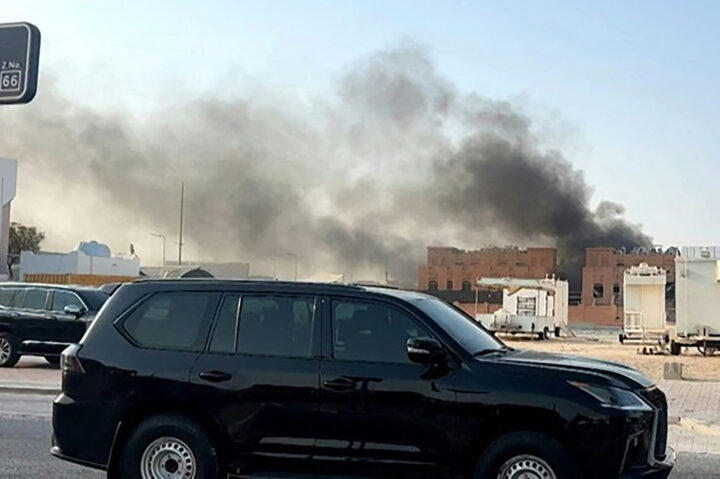
JACQUELINE PENNEY/AFPTV/AFP via Getty Images
This frame grab taken from an AFPTV footage shows smoke billowing after explosions in Qatar's capital Doha on September 9, 2025.
Nearly a day after an Israeli airstrike targeted a meeting of high-level Hamas officials in Doha, Qatar, there are more questions than answers, both in Jerusalem and Washington. Israel has not confirmed which officials were killed in the strike, while Hamas has said that five officials from the group, including the son of Hamas’ chief negotiator, Khalil al-Hayya, were killed in addition to a member of the Qatari security forces.
Israeli reports earlier today indicate that the strike did not kill the most senior echelon of the terror group, which for years has been based in Qatar, a U.S. ally.
Amid ongoing uncertainty over the success of the strike, the operation was met with rare condemnation from the White House, first from Press Secretary Karoline Leavitt and then from President Donald Trump himself, who said he “was very unhappy about it, very unhappy about every aspect” — perhaps, in part, because the operation is not believed to have taken out the most senior Hamas officials.
But it was Trump himself who said over the weekend on his Truth Social site that he had “warned Hamas about the consequences of not accepting” the ceasefire and hostage-release deal that had been put forward by the U.S.
At the same time that Trump officials, including the president, were criticizing the operation, U.S. Ambassador to Israel Mike Huckabee was embracing Israeli Prime Minister Benjamin Netanyahu at the U.S. Embassy’s belated Independence Day celebration in Jerusalem, where the prime minister addressed a smaller group of VIPs attending the party.
“Israel acted wholly independently and we take full responsibility for this action,” Netanyahu said of the Doha strikes. “This action can open to an end of the war in Gaza.”
Israeli officials and defense sources said on Wednesday that they are waiting for better intelligence before commenting on who was killed, but they viewed the operation as a success.
Israeli Defense Minister Israel Katz warned that there could be additional strikes of this kind: “The long hand of Israel will act against its enemies anywhere in the world. There is no place where they can hide. Whoever was a partner in the Oct. 7 massacre will be fully brought to justice.”
Everyone from Israeli Opposition Leader Yair Lapid to Finance Minister Bezalel Smotrich put out statements praising the IDF and Shin Bet and saying the terrorists got what they deserved.
At the same time, the Hostages and Missing Families Forum said the affiliated families felt “deep concern and heavy anxiety” that their loved ones would pay the price. “We know from survivors who have returned that the revenge directed at the hostages is brutal. The chance of bringing them back now faces greater uncertainty than ever before.”
However, Shimon Or, uncle of hostage Avinatan Or, said on Kan radio that “this action brings us closer to bringing Avinatan and the rest of the hostages. …We will not bring back the hostages anymore with military operations and ‘the gates of hell,’ but with control over Gaza.”
Meanwhile, Israeli officials have pushed back on criticism that the strikes would affect ceasefire talks, briefing press in Hebrew and English that the operation will help talks, because there are other channels for negotiations.
The president announced ‘very high-level’ negotiations with Iran to dismantle its nuclear weapons program during his Oval Office meeting with Netanyahu

Kevin Dietsch/Getty Images
President Donald Trump (R) speaks alongside Israeli Prime Minister Benjamin Netanyahu with a model of Air Force One on the table, during a meeting in the Oval Office of the White House on April 7, 2025 in Washington, DC.
High-level direct negotiations between the U.S. and Iran will begin on Saturday, President Donald Trump announced in an Oval Office meeting with Israeli Prime Minister Benjamin Netanyahu on Monday.
Netanyahu, who has historically expressed skepticism about the possibility of reaching an effective nuclear deal with Iran, raised the topic, saying that “Iran cannot have a nuclear weapon. If it can be done diplomatically as it was in Libya, that would be a good thing. But if it can’t, we have to ensure it has no nuclear weapons.”
In response, the president said: “We are having direct talks with Iran. It’ll go on Saturday.”
Iran, however, has yet to publicly agree to enter direct talks with the U.S.
”I think everybody agrees that doing a deal would be preferable to doing the obvious,” Trump added, a reference to a possible attack on Iran’s nuclear facilities. “And the obvious is not something I want to be involved with or frankly, that Israel wants to be involved with if they can avoid it.”
Trump said Iran’s nuclear program is “getting to be very dangerous territory.”
Asked the level of the delegation to the nuclear talks, Trump said “high level, very high level … almost the highest level.” He would not say where the talks will take place.
The president’s Middle East envoy, Steve Witkoff, said he had no comment when asked by Jewish Insider on Monday if he would be involved in the negotiations on Saturday.
Iranian state media reported on Tuesday that Iranian Foreign Minister Abbas Araghchi and Witkoff will lead the talks, characterized by Araghchi as “indirect,” in Oman. Omani Foreign Minister Badr al-Busaidi will reportedly serve as the mediator.
The president acknowledged that it’s “a possibility” that Iran is trying to buy time and does not plan to seriously negotiate.
“I think if the talks aren’t successful with Iran, I think Iran is going to be in great danger, and I hate to say it. Great danger,” he said. “Because they can’t have a nuclear weapon. You know, it’s not a complicated formula. Iran cannot have a nuclear weapon, that’s all there is.”
However, Trump stopped short of threatening to bomb Iran, as he did last week.
The president said that if he makes a deal with Iran, “it’ll be different and maybe a lot stronger” than the 2015 Joint Comprehensive Plan of Action.
Deputy Special Envoy Morgan Ortagus said in an interview with Al Arabiya that “what we’re not going to do is get into the Biden trap where you do indirect talks that last for years and the Iranians just string us along. Not happening in this administration.”
“If we’re going to have talks, they need to be quick, they need to be serious about dismantling their nuclear weapons program,” she said. “President Trump wants a peaceful future for both countries, but we’re not going to be extorted like the Biden administration was.”
Ortagus noted that the U.N. Security Council Resolution underpinning the JCPOA, which would allow parties to the deal to snap back all pre-deal sanctions on Iran, expires in October, and that there have long been grounds to bring back those sanctions, because Iran has been violating the terms of the agreement since 2021.
This story was updated at 4 a.m. ET
Volunteer therapists, diplomats, fundraisers and media experts have dedicated the last eight weeks to the Hostages and Missing Persons Families Forum – but their politics have repelled some whose relatives were kidnapped
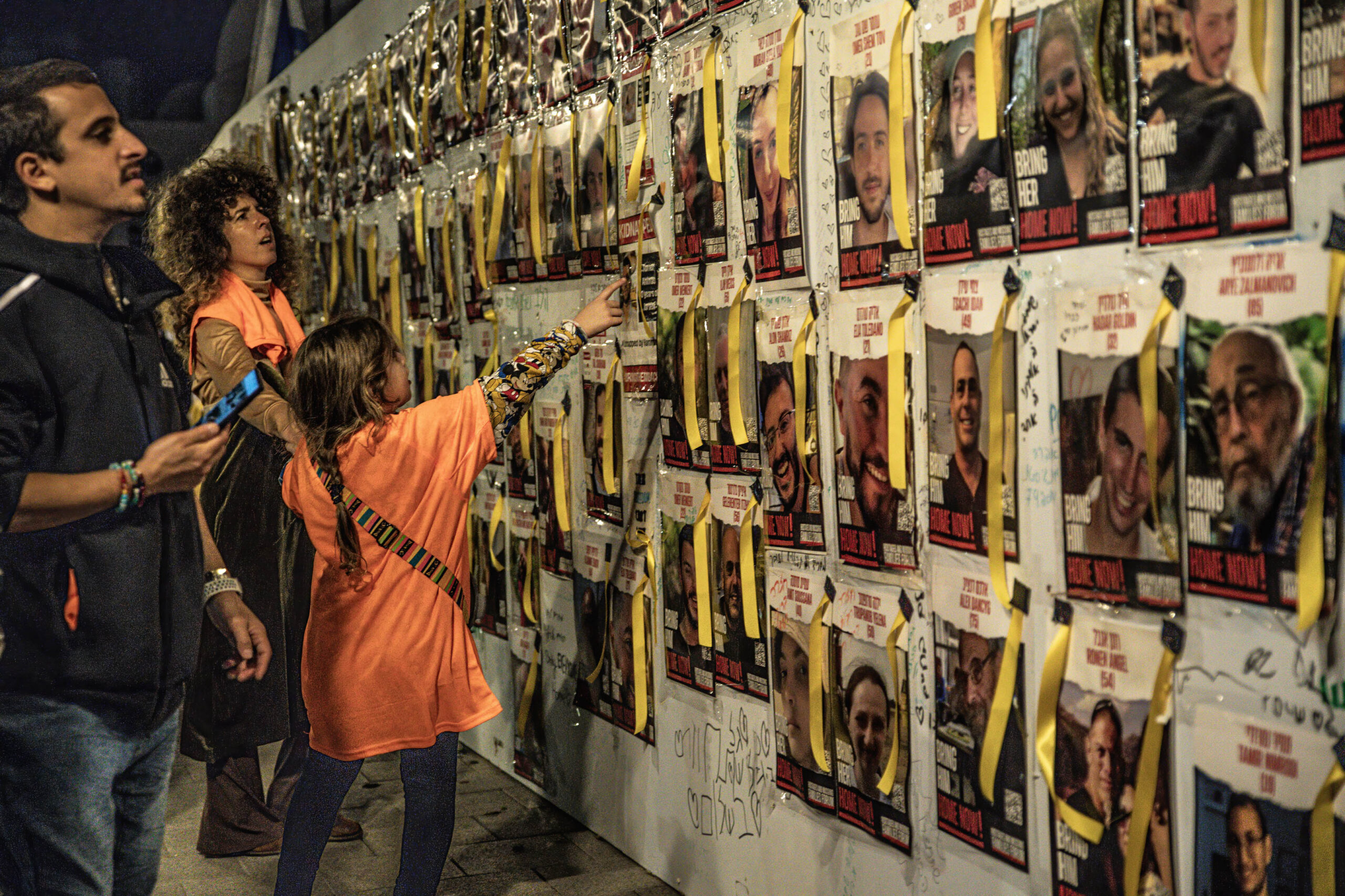
Matan Golan/SOPA Images/LightRocket via Getty Images
An Israeli child points at a poster of one of the Israeli hostages during a demonstration in Tel Aviv.
TEL AVIV — The old Kibbutz Movement headquarters was bustling with activity this week. Like many other buildings in the center of the city that housed once-prominent organizations, this one was repurposed years ago into a high-tech office, with open-space work areas, lounges with beanbags and fancy coffee machines. And at first glance, the building looked like any other office in Tel Aviv’s tech sector – but cybersecurity firm Check Point and all of its tenants moved out weeks ago.
Since then, all six stories of the building, as well as the basement, were repurposed as the headquarters of the Hostages and Missing Families Forum, the largest and most prominent civil society organization supporting and advocating for the families of those abducted by Hamas on Oct. 7. The forum is providing free therapy and assistance to the families who need it and sending them around the world to make their relatives’ cases, filling a vacuum left by a mix of government inaction and slow action.
Yet, the politics of their public campaigns and the tactics and tone of the forum’s advocacy for the hostages’ release have pushed away a small group of hostages’ relatives, who established their own, more hawkish group and publicly criticized the forum.
A massive, impressive operation, the forum has tried to help the families in every possible way, as evidenced by the signs outside the elevators on each floor of the building. Finance, therapeutic and medical staff are on a floor that has individual offices and isn’t just open-plan. International relations and media are on another. There’s a large legal department. A graphics team puts together videos for social media, fliers and banners.
Former Labor MK Emilie Moatti was making herself coffee at the start of another day at the head of the Forum’s diplomatic team.
“October 7 was a Saturday. This forum was founded on Tuesday, and I was working for them by Thursday. [Former Deputy Attorney General] Raz Nizri was already heading the legal department – I asked who’s dealing with international affairs,” Moatti told Jewish Insider, while looking for a fresh croissant to snack on.
Once a prominent political strategist who led, among other campaigns, Reuven Rivlin’s successful bid for the presidency, Moatti was chairwoman of the Knesset Foreign Affairs and Defense Subcommittee on Foreign Policy in 2021-2022.

She joined a team that was co-founded and led by one of the best-known political strategists in Israel, Ronen Tzur, who’s known for his no-holds-barred style, and in recent years has been a leading figure guiding protest groups against Israeli Prime Minister Benjamin Netanyahu, and before that advised now-war cabinet Minister Benny Gantz.
In a conference room with panoramic windows on one side and wallpapered with the iconic “Kidnapped by Hamas” posters on the other, Moatti described her team’s efforts.
“It took me five or 10 minutes to get started. When I was chairwoman of the subcommittee, I already had a committee of former diplomats advising me, who I would talk to about the war in Ukraine, and things like that,” she recounted.
Then, overhearing someone on the phone outside, she interrupted herself: “Speak to him gently, he lost a son!” Moatti admonished another volunteer.
Moatti’s husband, Daniel Shek, Israel’s former ambassador to France and consul general in San Francisco who once ran for Knesset with Tzipi Livni’s party, Hatnua, helped form Moatti’s “wow” team, as she put it, of retired ambassadors, with members who include Colette Avital and J Street Israel Director Nadav Tamir.
“Our goal is to keep the hostages on the international agenda,” Moatti said. “We met representatives of every country [with an embassy or office] in Israel, except for Egypt and Turkey. We met over 200 lawmakers around the world. We met 40 heads of state – some on Zoom, like Brazilian President Lula da Silva.”
Shek, who was also in the forum headquarters that morning, pointed out that “some people are suspicious of government officials. This is coming from civil society, representing the people, so it brings a faster reaction, even more so if there’s a personal connection,” which many of the volunteering diplomats have with foreign government officials.
Moatti said she was “amazed” to see the ex-ambassadors “call a leader and say ‘this is an emergency, help us,’ and it works.”
Another part of Moatti’s team works on the delegations of hostages’ relatives traveling abroad. Each team is accompanied by a therapist or social worker, as well as by a media adviser.
According to Orna Dotan, a medical management professional who heads the “Hosen” or Resilience Department, named for the Hebrew term for post-traumatic psychological care: “We prepare the families before joining delegations abroad, we are present during the trips and we talk to them at the end.”
“In all the uncertainty, we are a kind of an anchor,” Dotan said.
“Our Resilience Department was established eight weeks ago, with therapists, psychologists, social workers,” Dotan said, sitting in a lounge area where two therapists were waiting to be interviewed so they could volunteer at the forum. Outside the window was a billboard calling to bring the hostages home. “At first, we proactively made daily contact with the families to find out their emotional and mental needs. We now accompany their changing needs week after week.”
There are 92 volunteer therapists with the forum, who built trust visiting hostages’ families over the past eight weeks, as they were “flooded with anxiety from waiting so long, and exhaustion,” Dotan said.
“In all the uncertainty, we are a kind of an anchor,” she said.
Asked whether her department also supports the returned hostages, Dotan said “our focus is on the families who are waiting for their loved ones to return.”
Yet mid-interview, Dotan answered a phone call, and told JI it was from the family of a freed hostage: “They’re saying the government isn’t giving them what was promised. We’ll make sure it happens.”
“The hostages that return are getting care, so we said we would give them a week or two and after that we will map out all of the services they’re getting from the state to see if something is missing,” she added.
The department also provides hostages’ relatives with six different types of alternative medicine, and as JI visited, a Shiatsu appointment opened up that was being offered to the forum’s employees in lieu of the relative who was supposed to get the massage.
“The volunteers who work here are also exhausted,” Dotan said. “The stories of the hostages have become part of their lives, and they also need individual and group support.”
Bar Kozlovsky, who heads the forum’s international media operation, said she has required her staff to speak to the volunteer therapists regularly, because of the “emotional roller-coaster” they have been on since Oct. 7.
Liat Bell Sommer, a producer and editor of Israeli TV news programs, heads the forum’s media operation and said she’s seen her partner and two children “maybe for 10 hours out of the last two months.”
There are 40 volunteers in the international media department alone, 10 of whom have taken leave from their jobs to be at the forum full-time.
“We need a vacation so badly, but we can’t leave,” Kozlovsky said.
“We work with the facts,” Bell Sommer said. “It’s important. God forbid if we were caught in a lie…The situation is so delicate, sensitive and explosive. We check everything so many times before saying it to the world.”
Bell Sommer became involved in the effort in the week of Oct. 7, through Tzur, whom she knew because of her decades of work in journalism. “I sent him a message that I want to be part of this; that I would even make coffee for the families.”
“Our main customer is the families. We want to give them a platform to relay their messages,” she said.
Asked how they deal with the conspiracy theorists and atrocity deniers, Kozlovsky said they won’t answer them directly and they will not send out videos of the hostages filmed by Hamas.
“We work with the facts,” Bell Sommer said. “It’s important. God forbid if we were caught in a lie…The situation is so delicate, sensitive and explosive. We check everything so many times before saying it to the world.”
The forum works in cooperation with the families when releasing their details, and has produced videos featuring relatives and released hostages.
“We have a strategy,” Bell Sommer said. “Nothing is spontaneous.”
Bell Sommer got up to say hello to the sister and brother-in-law of hostages Eli and Yossi Sharabi who were walking by before continuing to describe the media training the forum provides: “These families didn’t know how to give an interview before this happened. Now there are families who know very well…We make sure they’re not alone and that everyone arrives prepared” for each interview, she explained.
During the week of the hostage releases, the forum was prepared. The moment they crossed the border into Israel, photos and short bios of each hostage were sent to local and international media. Team members were posted at every hospital to help the relatives, though the forum was not granted access to the hostages in their first hours in Israel, Kozlovsky said.
“We checked if the families wanted to talk or not; sometimes they said they have an important message to relay,” she recounted.
The forum’s many workers are all volunteers, but it still needs a lot of money to run, and that is where Yossi Moatti — Emilie Moatti’s brother and an expert on preparing companies for their IPOs — comes in. Moatti is the forum’s CEO and chief fundraiser.
He started his work by finding a registered nonprofit for the forum to work under – the Merit Spread Foundation – and then began asking Jewish communities around the world, friends and acquaintances for funding.
“There are tens of thousands of people around the world volunteering, and 79 chapters abroad,” Moatti said.
The forum also funded the biggest ad campaign emanating from Israel in history, according to Moatti, a billion-shekel effort to put the hostages on billboards around the world, in the U.S., Canada, Australia, across Europe and beyond, as well as advertising on social media, posters, stickers, presentations, demonstrations, events and more.
Other funding is “dedicated to giving the families all the aid they need, from psychological care, to iPads and iPhones, to people who don’t have money to buy food, to flights from Eilat [where some evacuees from the Negev are staying] to here to meet with us and other families, to filing lawsuits at The Hague.”
Asked how long the volunteer-based effort can continue, Moatti said, “on the one hand, we are working for the long term, but we’re also living like tomorrow is the last day before they come back.”
Kozovsky, normally a marketing professional, said she is in it for the long haul.
“Once you do something with such a feeling of commitment and deep meaning, it’s hard to go to regular work,” she said.
Moatti said she once thought that being a teacher would be the most meaningful work she ever did, but “this is the most important thing any of us has done in our lives. Nothing will ever match it. We are privileged to be here.”
Danny Miran, father of hostage Omri Miran, a 46-year-old father of two from Nahal Oz, visits the forum almost daily, along with a visit to “Hostages Square,” around the corner in Tel Aviv, where there are art installations and banners calling to bring them all home.
On Oct. 7 at 6:40 a.m., Miran, who lives in the Upper Galilee, saw the news that there were rockets in the south and he called his son, who told him not to worry. Then, Miran saw the news that there are terrorists in the kibbutzim, and he called Omri again.
“He told me the whole kibbutz is full of terrorists and he doesn’t have a gun, so he is taking two knives and going into the safe room with the family,” Miran recalled. “We were writing to each other. I asked him what’s happening and he said they’re sitting quietly. At 10:40 I asked if he’s still there, and he said yes. After that, I called – no answer. I wrote that I’m worried, answer me – there was no answer. In that moment, I was sure they were all killed.”
At 6:30 p.m., Miran received a call from his daughter-in-law Lishay’s mother that she was trapped in her home in Sderot, but that the army rescued Lishay and her 6-month-old and 2-year-old daughters, and Omri had been kidnapped.
“It was the happiest moment of my life to find out that they were alive,” Miran said.

He drove to Kramim, the kibbutz in southern Israel where Lishay and the girls were staying, and he learned that not long after he got his last message from Omri, a child named Tomer knocked on their door and said “Omri, open up or they’ll kill me.” Omri opened the door, and the terrorists took the whole family to a neighbor’s house, where they had killed the oldest daughter, who lay dead on the floor. The family sat quietly on the kitchen floor for several hours, and were allowed to feed the children. Then, in the afternoon, the terrorists told the men to come with them, or the women and children would be killed. Omri was taken to Gaza barefoot, in his underwear and a T-shirt, with his daughter screaming “Abba! Abba!” — the Hebrew word for father — after him. The terrorists told the women and children to stay in the house quietly and no one would kill them. IDF soldiers rescued them in the early evening.
Miran took part in a vigil to free the hostages on the first Saturday night after the war began, and heard about the forum. Now, he comes to its headquarters and to Hostages Square daily and takes the time to help others in his situation. He recounted visiting the divorced husband of a woman who was kidnapped along with their grandchildren; without any official recognition since he was no longer married to the hostage, no one knew about him until Miran encouraged him to come to the forum.
“The only place where anyone is working for the families is here, nowhere else,” Miran said.
Miran said he told the government’s coordinator for hostages and the missing, Gal Hirsch, “not to talk to us anymore unless they have information. To gather 600, 800 people who want to hear something and then have nothing is not helpful. Get to work.”
Sitting in a conference room with Emilie Moatti and Shek, he said they connected him with the Hungarian Embassy; while Miran’s family hails from Iraq, his deceased wife was Hungarian and Omri holds a passport from the EU state.
Last week, one of the released hostages told him that Omri is still alive.
“Now that we know that he is alive and healthy, we asked the Hungarian Foreign Minister [Péter Szijjártó] to write a letter to Hamas to demand his return. Hungary is a friend of Israel,” Miran said.
The Resilience Department provides what relatives of hostages need the most, Miran said, “someone to listen to us. They really hear us. When they can help, they do as much as they can. And when they can’t, they tell us. We don’t have that anywhere else.
“Look how many floors there are, how many people there are at work. If the government was like this, the country would look different,” Miran said. “The smiles I get here, the empathy, the love, is unmatched.”
Shek said he admires Miran for “his courage and his way of looking at things. It’s hard for him like everyone else, but he has the ability to help others, take an interest in others, and to remember that sometimes we need to have a sense of humor. He is someone I will never forget.”
“There’s something very destabilizing about the randomness” of the hostage-taking and massacre, Moatti said. “If it were my girls in Gaza, I know Danny would be one of the first people I would meet here.”
Miran was forceful in his criticism of the government who he said is not communicating with the hostages’ families enough. Shek, on the other hand, tried to focus on other things.
“It’s not just about criticism of the government,” he said. “The power of this place is how fast it can react; when there’s a problem you can get answers within hours. When you have institutions, you have to print out a form, start a committee – it can take two weeks.”
This week, however, politics moved to center stage.
Much of the chatter around the offices of the forum when JI spent the day there at the beginning of the week was about the families’ push for a meeting with the war cabinet. That meeting ended up taking place on Tuesday.
Netanyahu told the families that there is no deal that Hamas would accept in exchange for all of the hostages, other than Israel guaranteeing its survival “while it promises to do what it did on Oct. 7 again and again. We won’t agree to that and you wouldn’t either.”
“The fact is that the powerful ground operation led to freeing the hostages that were returned, and the operation is the key to bringing back the rest,” he said, according to Israel Hayom.
Quotes and recordings of hostages’ relatives shouting at the cabinet members, leaked to the media: “How do you sleep at night? Do you know the mitzvah of redeeming hostages?” one father said. “Don’t turn us into bereaved parents,” a mother said.
“You said you would get all of the women and children out,” a relative of a young woman hostage said. “We were quiet, we were respectful…Where are the young women? Why aren’t they out? They’re being tortured and raped and drugged.”
“I was right-wing my whole life; don’t disappoint me,” one said.
Yet, at least some of the hostages’ relatives did not like the others’ behavior in the meeting, and a fight among them over the right way to bring back their loved ones has been brewing for weeks.
Tal Gilboa, a pro-Netanyahu activist known for appearing on the Israeli reality TV series “Big Brother,” whose nephew Guy is a hostage in Gaza, accused the families shouting at the prime minister of arriving with scripts and having been trained by the forum’s Tzur.
“They didn’t let the prime minister talk. It was totally political,” she said. “My sister and her husband are apolitical and just want Guy home…A mother stands there and says ‘I trust you,’ and she’s shouted at by the other families. It’s just unbelievable. Is one person’s pain worth more?”
When Eliyahu Libman, mayor of Kiryat Arba, near Hebron, and father of hostage Elyakim Libman, thanked the government for the work it has done, other hostages shouted him down and called him a “plant” from the government.
Zvika Mor, another Kiryat Arba resident whose son Eitan is a hostage in Gaza, has received similar treatment in hostages’ meetings. Mor believes that “the cabinet has to make cold calculations and not follow emotions,” he told Kan, Israel’s public broadcaster.

He said he felt the Hostages and Missing Persons Families Forum silenced his view, so he established a platform of his own, the Tikvah Forum, whose page on X (formerly Twitter) said it “gathers families of hostages, acting to help bring about the release of every last hostage along with national responsibility and trust in the resilience of the State of Israel and the IDF.” The forum held a mass prayer rally at the Western Wall and put up billboards with photos of the hostages and the message that “the IDF is on the way to you!” and “Be strong, we are coming!”
The Tikvah Forum even spoke out against the deal in which 110 Israeli hostages were released, saying on the one hand that it proves “that the offensive pressure works and is pushing Hamas into a corner,” but that Israel must continue military pressure on Hamas so that every hostage is released.
While the Tikvah Forum’s spokesman would not provide numbers, its photos and videos seem to indicate that only a small fraction of the hostages’ families have joined Mor, perhaps because he and Libman are settlers, while less than 10% of the residents of kibbutzim near the Gaza border, from which many of the hostages hail, voted for the right. Tthat leading figures in the forum are affiliated with the Labor party, Gantz and the mass protests against Netanyahu has not gone unnoticed by the prime minister’s supporters.
Speaking on the morning after the war cabinet meeting with hostages’ families, Mor told Kan that the meeting should not have happened at all, and the people who shouted at the ministers are “in a difficult mental state” and “lost control because of their sorrow.”
The message coming out of the forum, Mor argued, is “to free the hostages at all costs.
“Would we accept precision missiles targeting our power stations? What does at all costs mean?” he asked.
“Why are we being displayed like we’re in the zoo? How are we different from families who sent their children to war? If my son wasn’t kidnapped, he’d be fighting in the war. I would tell him to fight with all of his might for the people of Israel. I have two other sons fighting,” Mor said. “That’s how you act in a war. The individuals have to be able to sacrifice for the collective, or there will be no collective.”
Please log in if you already have a subscription, or subscribe to access the latest updates.
 Continue with Google
 Continue with Apple