














































Deal or detonation: Clock ticks down for Washington and Tehran to reach an agreement
The president paired threats with optimism, leaning into the current debate with a mix of tough talk and hopes of an 11th-hour diplomatic breakthrough.
SAUL LOEB/AFP via Getty Images
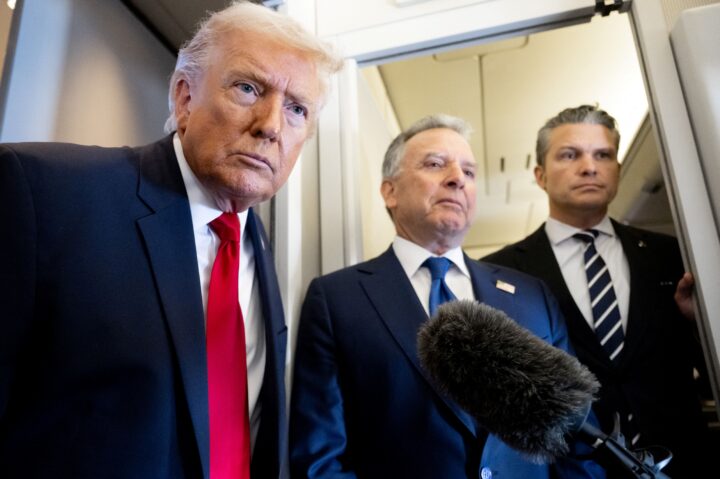
President Donald Trump speaks with the media as Defense Secretary Pete Hegseth (R) and special envoy Steve Witkoff (C) look on aboard Air Force One during a flight from Dover, Delaware, to Miami, Florida, on March 7, 2026.


 Add JewishInsider on Google
As the U.S. and Israeli war with Iran extends into its sixth week, the next 36 hours may be some of the most pivotal, offering clarity as to whether an end is in sight — or whether an escalation is imminent.
On the table now, according to Axios, is a proposed two-phased ceasefire deal, lasting 45 days, that would immediately reopen the Strait of Hormuz and give negotiators two to three weeks to reach a broader agreement to end the war. As a signal that the U.S. is open to the agreement, President Donald Trump extended by 24 hours the deadline for Iran to reopen the Strait, setting a new deadline of Tuesday night ET.
The core issues remain: Tehran’s closure of the key waterway, and the fate of the country’s enriched uranium. But a deal between Washington and Tehran would include broader issues, including potential sanctions relief in exchange for Tehran’s promise that it will not pursue nuclear weapons. Iran has signaled that it will not reopen the Strait for a temporary ceasefire and is seeking a more permanent resolution.
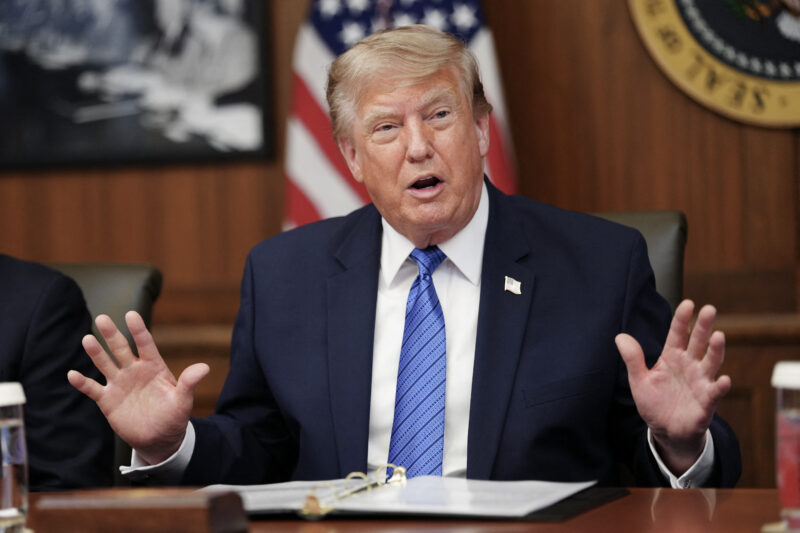
The president paired threats with optimism, leaning into the current debate with a mix of tough talk — warning yesterday that strikes targeting Iran’s power plants and bridges would take place on Tuesday in the absence of a deal — and hopes of an 11th-hour diplomatic breakthrough.
Trump doubled down on both sentiments yesterday in a flurry of interviews with reporters. “If they don’t make a deal, and fast, I am considering blowing everything up and taking over the oil,” Trump told Fox News’ Trey Yingst on Sunday morning. Yet the president said there was a “good chance” that a deal would be reached today — even as he posted “Tuesday, 8:00 P.M. Eastern Time!” on his Truth Social site, a reminder of the new deadline he had set for the Islamic Republic to reopen the Strait of Hormuz.
In comments to The Wall Street Journal, the president said that if the Iranians “don’t come through, if they want to keep it closed, they’re going to lose every power plant and every other plant they have in the whole country.”
Trump made the comments on the heels of the daring weekend rescue of an American weapons system operator who had been shot down inside Iran — the details of which the president is expected to share at an afternoon press conference today alongside senior military officials.
A diplomatic agreement would see a winding down of the war that would likely allow Iran to retain some of its ballistic missile capabilities — a compromise that is unlikely to sit well in Israel, which continues to face fire from Iranian forces.
On the other hand, Trump’s threatened destruction of key Iranian infrastructure could further deteriorate conditions in the Islamic Republic, where a regime-imposed internet blackout has ensured minimal on-the-ground reporting on weeks of war. And as always, the president has one eye on the markets, which will open today after the holiday weekend.
The U.S. and Israel have already made serious strategic strides by killing dozens of members of Iran’s senior leadership and severely crippling Tehran’s nuclear program. The question now is whether that will be enough for Trump to declare victory in accordance with the rough timeline he’s given for U.S. operations in Iran — or whether the U.S. will double down on its military operations.
More Stories

Daily Overtime
Israel hits back at U.K. sanctions

COMMUNITY VOICE
Coalition of Michigan Jewish leaders sets out ‘nonnegotiable’ demands for El-Sayed, Democrats
NUCLEAR NEWS
Mast ‘likely’ to support administration’s nuclear deal with Saudi Arabia

YE SAYER
Blakeman-backed House candidate defended Ye’s antisemitic rants

Democracy Deficit
New report warns civics education crisis is fueling antisemitism, eroding support for Israel

PIKER PUSHBACK
University of Texas College Dems invitation to Hasan Piker sparks campus outrage, GOP fire
Please log in if you already have a subscription, or subscribe to access the latest updates.
 Continue with Google
 Continue with Apple