










































Netanyahu defensive as weekend polls show his coalition losing support
With polls showing most Israelis opposing Iran ceasefire, Likud drops in three weekend polls, while two others show the current coalition maintaining power
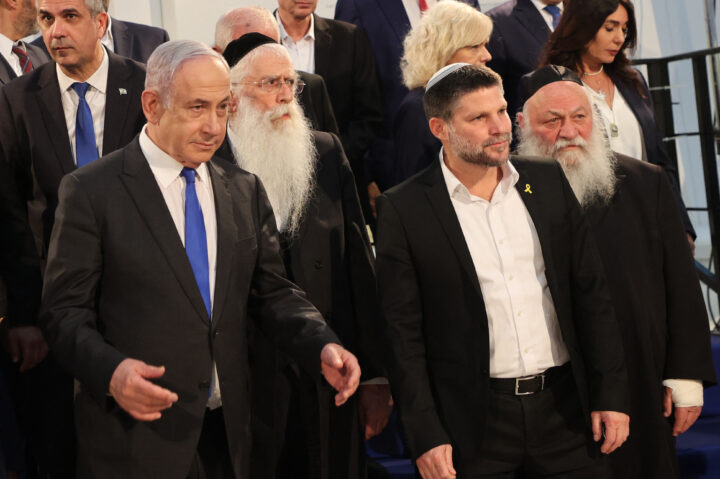
GIL COHEN-MAGEN/POOL/AFP via Getty Images
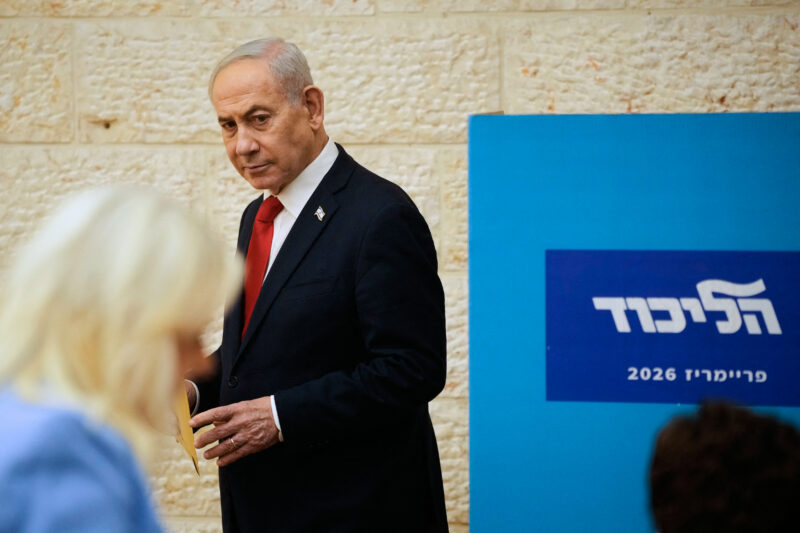
Israeli Prime Minister Benjamin Netanyahu (L) and Finance Minister Bezalel Smotrich (2nd R) arrive for a cabinet meeting at the Bible Lands Museum in Jerusalem on June 5, 2024.


 Add JewishInsider on Google
Amid the ceasefire with Iran, new Israeli polls were split on the outcome for Israeli Prime Minister Benjamin Netanyahu’s Likud party and coalition. Three television polls showed Netanyahu losing significant support as a result of the unpopularity of the ceasefire, while polls from two right-leaning networks projected he would still have a majority in the Knesset to form a coalition.
The election is currently slated for the end of October. Israeli Channels 12, 13 and Kan 11 projected Netanyahu’s coalition would not receive enough votes to stay in power, but they also found that center-left parties — excluding Arab parties, which most Zionist parties have said would not be invited to join their coalition — would not get the 61-seat majority to form a winning coalition.
Channels 14 and i24NEWS news projected that the coalition would be able to remain in power, but with a smaller majority than it received in 2022, as it has consistently received in polling since then.
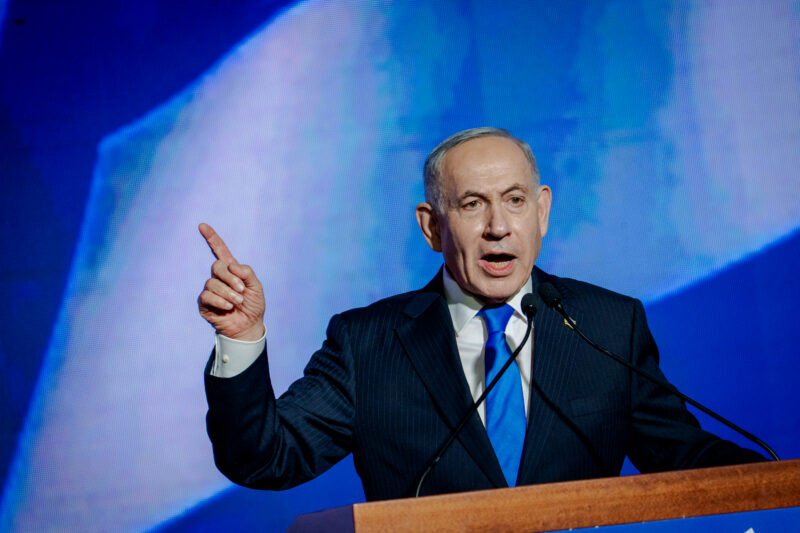
Netanyahu appeared defensive in a televised statement on Saturday night, during which he argued that the results of the nearly six-week war against Iran had been positive, and the ceasefire may not be final: “There are people who say ‘we have no achievements.’ There are giant achievements.”
“The campaign is not yet over, but even now it can be clearly stated: We have achieved historic accomplishments,” Netanyahu continued. “Iran tried to squeeze us in a stranglehold; Hamas in Gaza, Hezbollah in Lebanon, the Assad regime in Syria, the militias in Iraq, the Houthis in Yemen, Iran itself. They wanted to choke us, and we are choking them. … Those who threatened to destroy us are now fighting for their own survival.”
Netanyahu went on to list the war’s achievements: “We succeeded in crushing the nuclear program, crushing the missile program,” and brought Iran’s regime “to its lowest, weakest level since the establishment of the regime 47 years ago.” He also listed dozens of senior officials and military commanders who had been killed by Israel and weapons sites that had been destroyed.
Still, the prime minister acknowledged that the enriched uranium in Iran must be removed “either … by agreement, or it will come out in other ways.”
Netanyahu also spoke at length about negotiations with Lebanon as the IDF continued operations against Hezbollah. He said the talks would be about the disarmament of the Iran-backed terrorist group and “a real peace agreement” with Beirut.
In polls released the night before, Israeli channels 12 and 13 and public broadcaster Kan found that a narrow majority of Israelis (from 51% to 56%) said they oppose the two-week ceasefire with Iran. In addition, in a poll published Sunday by the Institute for National Security Studies at Tel Aviv University, 61% of Israelis opposed the ceasefire, and less than a third (31%) said they believed that the Iranian regime was significantly harmed in the war.
Elie Pieprz, an international political consultant who has worked on Likud campaigns, argued that Netanyahu doesn’t need the war to come to a conclusively positive end for Israel for him to use it to his political advantage.
“The prime minister has always thrived when something tantalizing is very close, and [he can say] ‘if you just give me another term, I can bring this home,” Pieprz said. “I think regime change [in Iran] is exactly one of those things.”
Conversely, Nilly Richman, a strategist who has worked with President Isaac Herzog and launched Yair Lapid’s Yesh Atid party, told Jewish Insider that “there is no doubt that Netanyahu is stressed, and he is broadcasting it.”
According to Richman, the stress comes from the fact that “the polls aren’t bringing [Netanyahu] to the point he hoped to be in after this war” and that he will have to testify again in the corruption trials against him this week, now that Israel is no longer in a state of emergency.
According to Kan’s poll, the current coalition parties were projected to receive 51 seats, while Zionist opposition parties got 59. Likud received 25 seats, down from 28 in the previous week’s polls, while former Prime Minister Naftali Bennett’s yet-unnamed party was steady at 19.
On Channel 12, Israel’s most-watched news broadcast, Likud was projected to drop to 25 from 27 last week, and Bennett to rise from 20 to 22 seats. The coalition would get 50 seats, and the Zionist opposition 60, according to the poll.
In Channel 13’s poll, the coalition got 54 seats and the Zionist opposition received 55. Likud received 22 seats, up from 25 last week, and Bennett went from 18 to 21.
Newer, more right-leaning channels 14 and i24 News, however, showed Netanyahu would be able to form a majority coalition with his current partners. They did not ask about support for the ceasefire.
In i24’s poll, Likud received 32 seats and former IDF Chief of Staff Gadi Eisenkot’s Yashar Party led the opposition with 14 seats. The coalition would win 64 seats and the Zionist opposition received 45.
Pro-Netanyahu Channel 14, whose pollster, former Netanyahu aide Shlomo Filber, most accurately predicted the results of the last election, found that the right-wing bloc received 66 seats while the Zionist opposition received 42. The poll also gave Likud 36 seats and Bennett’s party 10, with Yashar leading the Zionist opposition with 11 seats.
Filber’s poll was also the only one asking about the Joint List — a bloc of all four Arab parties, which they have said they plan to form — rather than polling them as the two separate blocs they have in the current Knesset – and found that the singular bloc received 12 seats, more than any Zionist opposition party.
Former Defense Minister Benny Gantz’s party did not pass the electoral threshold in any of the polls, while Finance Minister Bezalel Smotrich’s party passed it in the polls from Channels 13 and 14 and i24.
Pieprz said that “polls taken six months out [to the election] are not super-relevant, [though] there is value to tracking polls.”
Richman argued that “polls taken a moment after something happened are meaningless. It takes a moment for everything to sink in.” She also noted that “people want to see what will happen in two weeks,” when the current ceasefire with Iran is due to expire.
However, she pointed to a poll Channel 12 took of residents of Israel’s north as especially significant. Residents of the north are worth about 35 Knesset seats, and continue to be attacked by Hezbollah multiple times a day. The poll found that 70% of them — including a third of those who voted for the coalition in the last election — give the government a bad grade in dealing with their issues. While in 2022, the number of coalition and Zionist opposition voters in the north were about even, the Zionist opposition is now leading in the north by eight points.
Richman estimated that “three to four seats could move between the blocs.”
Much of that movement is from Likud to former Defense Minister Avigdor Liberman’s Israel Beytenu party, which is “on the right, but against Bibi,” Reichman said. She said that Liberman has kept his distance from the center-left and right-wing blocs, saying that he can be part of a coalition without Haredim or Arabs or the left-wing Democrats Party, a claim that appeals to moderate right-wing voters.
Pieprz said that, in line with Liberman’s more independent messaging, he may be signaling that he would be willing to join a coalition with Netanyahu but without Haredi parties, and that Netanyahu may be willing to do that rather than enter another cycle of multiple consecutive elections. “I don’t think Bibi will feel indebted to the Haredim,” he said.
Richman said moderate right-wing voters who don’t want to vote for Netanyahu are not moving toward Bennett, who is hawkish and holds right-wing positions on settlements, the economy and more. “Bennett will have to betray the left so that the right will forgive him” for forming a coalition with left-wing parties and an Arab party in 2021, she argued.
Pieprz said that Bennett is “moving in a downward trend” in the polls, and that “people in the opposition express frustration that he’s not going after voters on the right, and instead trying to concretize a base on the left, creating a problematic dynamic. I don’t think he can maintain it for six months.”
Pieprz noted that there has been a lot of infighting within the Zionist opposition, especially between Eisenkot and Bennett for dominance in the bloc.While calling the infighting “a bad look, they will never win that way,” he said they “have enough time to reconfigure and get on the same page and act in a way that shows the Israeli public that there is a legitimate alternative to Netanyahu.”
He posited that Netanyahu “is in relatively good shape, primarily because there is not a robust and developed opposition. … People supporting the prime minister are pretty solid. It would take a lot to dislodge [their votes]. In the opposition, there is fluidity.”
Pieprz, however, said that Netanyahu “squeezed out a lot of the political benefit of the war itself” — such as passing a budget that will allow his coalition to survive months longer than it may have — “and now he has to frame [the war] properly over the next six months. … He can make that case ‘allow me and the team that got us to this point to push it over the top.’”
Richman noted that the successful attacks on Iran’s nuclear program during last year’s 12-day war did not impact Netanyahu’s political standing much, but projected that after this war, the prime minister is likely to decline further in the polls.
“Bibi built [a monster] that ate him,” she said. “If Iran is so scary … Well, [Israel] attacked Iran and not much happened to us, Israel wasn’t destroyed, so we don’t need [Netanyahu] anymore. It’s like [former UK Prime Minister] Winston Churchill” — who lost an election right after World War II and Netanyahu is known to admire — “Be careful what you wish for, Bibi.”
More Stories
REGIME RECKONING
El-Sayed avoids acknowledging Iranian protester deaths, condemns Iran war instead

partnership pitch
Somaliland president discusses expanded military cooperation with U.S. officials
Schmear campaign
Politico picks Yom Kippur to attack Huckabee’s observant Jewish aide

supper club
AI, tech execs to attend White House state dinner for Xi Jinping
on the hill
Shaheen holding up $2.8 billion arms sale to Israel
ALTERNATE REALITY
Pezeshkian denies Iran seeks nuclear weapons at UNGA
Please log in if you already have a subscription, or subscribe to access the latest updates.
 Continue with Google
 Continue with Apple