






















































Social media is the main source of current antisemitic wave, AJC concludes
AJC’s Director of Antisemitism Policy Holly Huffnagle: ‘The No. 1 reason that we have the antisemitism levels that we do today in the United States and around the world is because of the digital space’
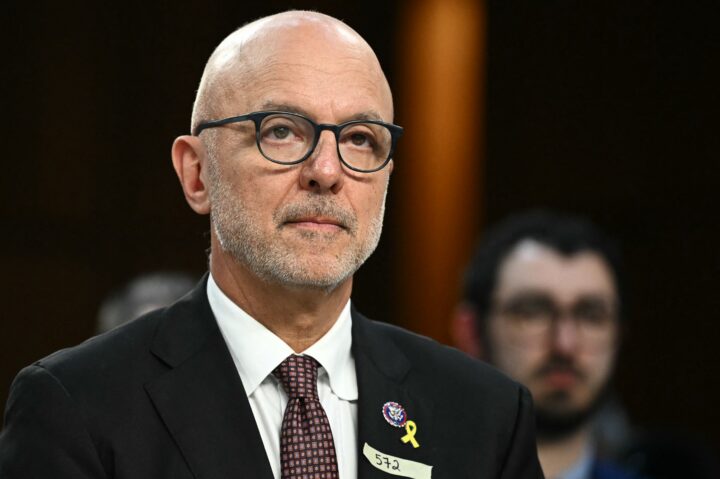
MANDEL NGAN/AFP via Getty Images
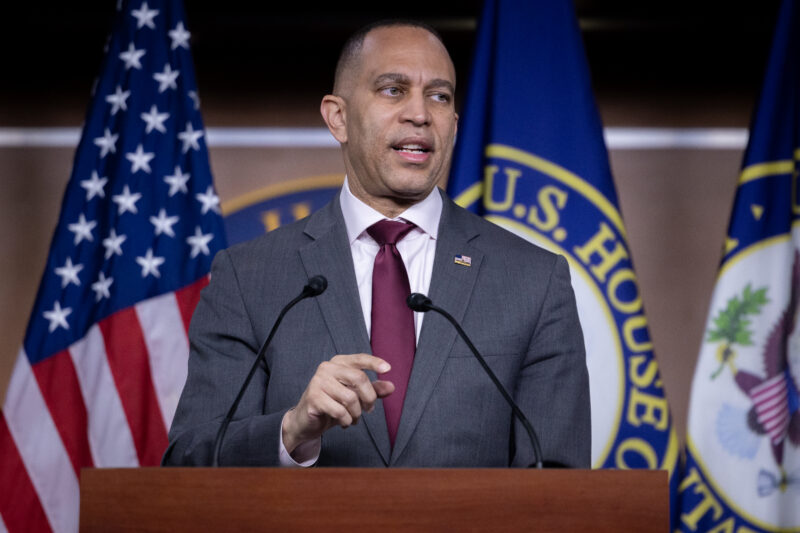
AJC CEO Ted Deutch on Capitol Hill in Washington, DC, on April 30, 2025.


 Add JewishInsider on Google
A new report by the American Jewish Committee, released on Friday, found that 73% of American Jews saw or heard antisemitism online in the last year and 21% said that the antisemitism they witnessed made them feel physically threatened.
Top officials at the group say that this pervasive antisemitism online is the fundamental root of the current wave of antisemitic sentiment society-wide, including violent extremist attacks on Jewish communities in the U.S. and globally, and that protecting the Jewish community requires making real progress in tackling that problem.
According to the group’s CEO, Ted Deutch, the report is the first comprehensive survey-based tracking of American Jews’ experiences with and opinions on social media, “and the results are alarming.”
Deutch told Jewish Insider in an interview on Thursday that the report further finds that those pushing antisemitic content have found an “alarming number of ways” to avoid rules on various platforms to safeguard against hate.
Deutch, a longtime former House lawmaker, expressed frustration at the continued lack of action from Congress on antisemitism generally, amid a series of violent attacks across the country and the globe, drawing some parallels between that dynamic and his own struggles in the House to pass legislation in response to school shootings, as such events repeated themselves.
“If we stop it from spreading online, we’ve taken a dramatic step to preventing someone from showing up in D.C., killing two people, and saying, ‘I did it for Gaza,’ or someone in Colorado showing up, throwing Molotov cocktails with people at a march for the hostages, and killing someone there, and saying, ‘I did it for Palestine,’” Deutch said. “This needs urgent attention. It’s not getting it and it’s not acceptable.”
Speaking out against antisemitism is important, he said, “but you know what? We know where this starts, we know how it spreads. We have to do something to stop it there, so that we can stop the violence.”
He said that he’s concerned that Congress is becoming desensitized to the string of attacks on the Jewish community and isn’t responding with the action it warrants.
“The ability for Congress and policymakers around the country to simply move on, from one attack to another, the normalization of the antisemitic rhetoric that’s being used, the willingness to simply chalk this up to one extreme or another … You wind up accepting it. We cannot accept it,” Deutch said. “That sense of urgency does not exist. I don’t understand it.”
“I get it that this is a really hard time for Congress to legislate,” Deutch continued. “I understand that there are very strong feelings about everything that happens in politics, but I cannot understand how on an issue like this, when the data is clear and the impact of what’s happening is clear, that we can allow week to week, more attacks on synagogues, more attacks on schools.”
He said that ultimately, true security for the Jewish community won’t come through increasingly stringent physical security measures, but through a broader shift, “and that starts with what’s happening online” because the attacks across the country and the world “aren’t isolated incidents.”
He said that he wants Congress, President Donald Trump and the American people to understand that, and to collectively work to tone down antisemitic rhetoric online and decrease its spread.
The report, compiled in collaboration with Cyberwell, an Israeli nonprofit aimed at fighting antisemitism online, offers a variety of recommendations for technology companies and platforms to respond to antisemitism on their services.
“The No. 1 reason that we have the antisemitism levels that we do today in the United States and around the world is because of the digital space,” Holly Huffnagle, AJC’s director of antisemitism policy, said. “We can’t just keep sitting by and observing and collecting data. We actually need to do something about this, and this is how we think is the best way to go forward in closing some of those gaps around enforcement on the platforms.”
The report found that, across social media platforms, only around one-third of American Jews report antisemitic content they see, in many cases feeling that doing so will be futile. Deutch said he found that data point the most concerning.
“If the Jewish community is essentially throwing up its hands … then that says an awful lot about them, and our larger population as a whole,” Deutch said. He argued it sends the conclusion to the population at large that “the battle is lost. We can’t afford that. This isn’t a battle that is lost. This is an ongoing effort that we all have to be a part of.”
Huffnagle said that the report, based in part on data from AJC’s annual poll of the Jewish community’s experience of antisemitism, is proof of what many in the Jewish community have long seen and felt — that antisemitism is rampant online — and shows that “they’re not alone.”
The report offers a set of nine recommendations for tech companies: tightening enforcement mechanisms against those who support terrorism and antisemitic attacks; clarifying and strengthening policies on antisemitism; addressing coded antisemitism through emojis and euphemisms; consistently applying visibility restrictions on antisemitic content, ensuring that such measures are applied early and improving tools to prevent targeted harassment; ensuring that hateful content is not monetized or amplified and that users can’t evade restrictions; detecting and preventing AI-created and -driven antisemitic content; implementing better tools to prevent coordinated activity to boost antisemitic content; creating better reporting systems for antisemitism; and providing greater transparency and data access.
Legislatively, AJC is supporting the Platform Accountability and Transparency Act, which would require social media companies to share more data with the public. Deutch said that lawmakers are “flying blind” when it comes to antisemitism on social media platforms, lacking the data internal to the platforms that they and civil society need to address the problem.
“The transparency … can help drive accountability and real policy change and real changes to community standards, so that we don’t have to see these kinds of data points repeat year after year,” Deutch said.
“We have to approach this with greater urgency,” he continued. “Congress can’t simply allow itself to fall into the same old argument about how to approach this, and should we be talking about liability or not, whether this is free speech or it’s not free speech. That’s not what this is about. This is about real threats to the Jewish community and the ability that social media companies have — and the urgent need that we all have — for them to act, to keep the Jewish community and, in turn, to keep society safe.”
Huffnagle said she hopes the report can help identify other “creative” solutions and approaches to addressing antisemitism, particularly outside of government and apart from longstanding debates in Congress like reforming liability protections for social media platforms under Section 230 of the Communications Decency Act — an idea that Jewish groups have discussed for years but hasn’t seen movement on legislatively.
“I think we need to be creative,” she said. “Just because something’s being stalled doesn’t mean there can’t be movement elsewhere.”
Huffnagle said AJC is working with various platforms to tailor the group’s approach to the specific issues on those platforms — having developed a greater understanding of the distinct problem sets on each platform — rather than taking a one-size-fits-all approach that they and others in the Jewish community previously had.
In spite of policy shifts at social media companies in recent years toward a more permissive posture, including less strict content moderation and less company-sponsored fact-checking, Huffnagle said that AJC maintains relationships with social media companies and that they have been receptive to and implemented some of the feedback that AJC has offered.
She added that engaging with the tech sector — not just law enforcement and government — is necessary to addressing the society-wide problem of antisemitism. Huffnagle emphasized that she wants to see real change come out of this report — not just a compilation of data and unfulfilled recommendations.
She acknowledged that the survey likely includes a blindspot when it comes to TikTok because AJC only surveyed adults, and the platform is highly popular among younger teens.
The survey found that a majority of American Jews (65%) are concerned that artificial intelligence chatbots will spread antisemitism, and 69% were concerned that information produced by AI will fuel antisemitic incidents.
AI, Huffnagle said, poses both “novel problems” as well as “helpful solutions.” It can both create and amplify antisemitic content, but can also help moderate content, particularly as platforms are scaling back on human moderators. But, she said, using AI for moderation can’t currently keep up with the pace of antisemitic content.
“It can be used for good. I see it. It’s just not nearly as efficient and sufficient to meet how it’s being used for bad,” Huffnagle said.
Deutch said another concern is that, without proper policies and transparency from social media companies, platforms may devolve into a “war … between the AI that’s targeting us and the AI that’s trying to protect us.”
Deutch and Huffnagle’s conversation with JI came on the same day that a jury ruled that Meta and YouTube were negligent in their design of their platforms, awarding a plaintiff $3 million, a landmark case finding that social media platforms are responsible for their platforms’ impacts on their users.
“The one conclusion that I think everyone should draw from these headlines is that the courts have now ruled that there is responsibility to the customer,” Deutch said. “The tech companies acknowledge that. They wouldn’t have their community standards if they weren’t worried about what’s happening to their users. … It’s time for these community standards to be enforced.”
More Stories

RELATIONSHIP STATUS
How Israel’s parties say they would rebuild support in America
Daily Overtime
Mamdani resists DSA over Tisch tensions

PEACH STATE PUNCHES
Rep. Mike Collins ducks question about white nationalist influencer son-in-law at Senate debate
VEEP'S VIEW
Harris says Biden should have done more to stop Israel’s ‘horrific conduct’ in Gaza

Daily Overtime
Dublin hotel dumps antisemitism conference

analysis
Is Israel’s anti-Netanyahu bloc fracturing?
Please log in if you already have a subscription, or subscribe to access the latest updates.
 Continue with Google
 Continue with Apple