



























Iran’s Sudan strategy raises fears of new jihadist hub
Analysts say Tehran is exploiting the country’s civil war to deepen ties with Islamist factions, threatening regional security and maritime trade routes
AFP via Getty Images
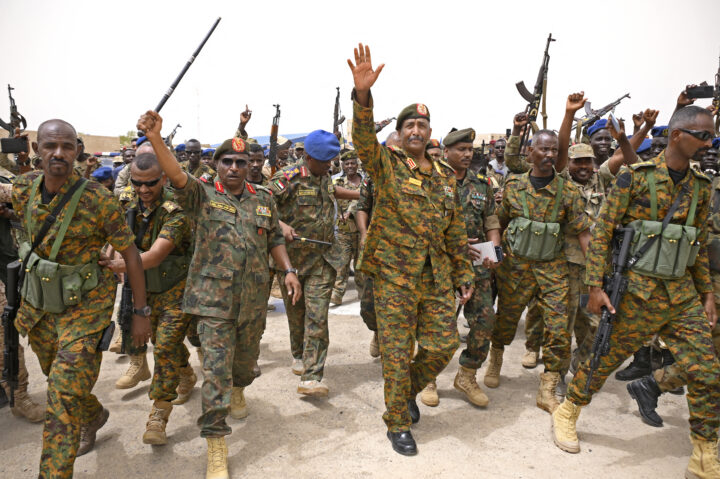
Sudanese army chief Abdel Fattah al-Burhan visits the Flamingo Marine Base in Port Sudan on August 28, 2023.


 Add JewishInsider on Google
As Sudan’s devastating civil war drags through its third year, experts warn the conflict could become an arena for Iranian strategic expansion and Islamist extremism in Africa, as Tehran and the Sudanese branch of the Muslim Brotherhood revive a long-standing alliance and threaten to turn the embattled nation into a staging ground for transnational jihadist operations.
Under the cover of Sudan’s official military, the Sudanese Armed Forces (SAF), armed Islamist brigades — most notably the U.S.-sanctioned Al-Bara ibn Malik Battalion (the armed wing of the Sudanese Muslim Brotherhood) — have mobilized to fight alongside state forces led by Gen. Abdel Fattah al-Burhan. Supported by funding, weaponry and training pipelines linked to Iran’s Islamic Revolutionary Guard Corps (IRGC), these factions have effectively embedded themselves within the state apparatus, raising alarm among counterterrorism officials and regional foreign policy experts.
“Iran’s involvement in Sudan serves multiple goals, even amid all the larger wartime changes regionwide and inside Iran,” said Jonathan Ruhe, a fellow at the Jewish Institute for National Security of America (JINSA). “Because Sudan is so far from its own borders, Iran ultimately benefits from fomenting instability for countries that are much closer to the [Sudanese] conflict. Sudan is one more arena for tensions among Iran’s Arab rivals, challenging their ability to form a united front against Tehran.”
“Even if Iran-backed forces don’t ‘win’ [in the Sudanese civil war], Iran wins by threatening to encircle U.S.-aligned Arab countries with its proxy forces, worsening Sudan’s power vacuum, and triggering refugee outflows that stoke tensions with, and inside, neighboring countries,” Ruhe said.
The war in Sudan has created one of the world’s worst humanitarian crises, with an estimated 150,000 deaths and nearly 12 million people displaced. Both the SAF and the RSF stand accused of widespread war crimes, including mass atrocities against civilians, systematic sexual violence and forced blockades.
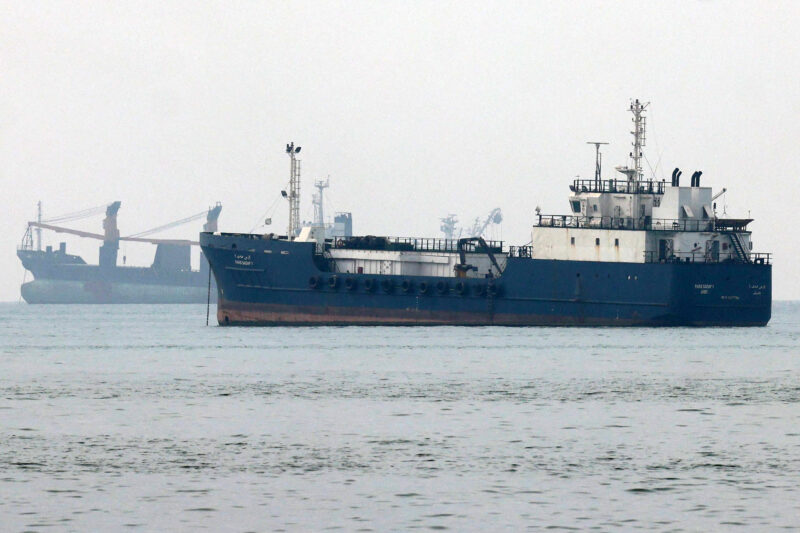
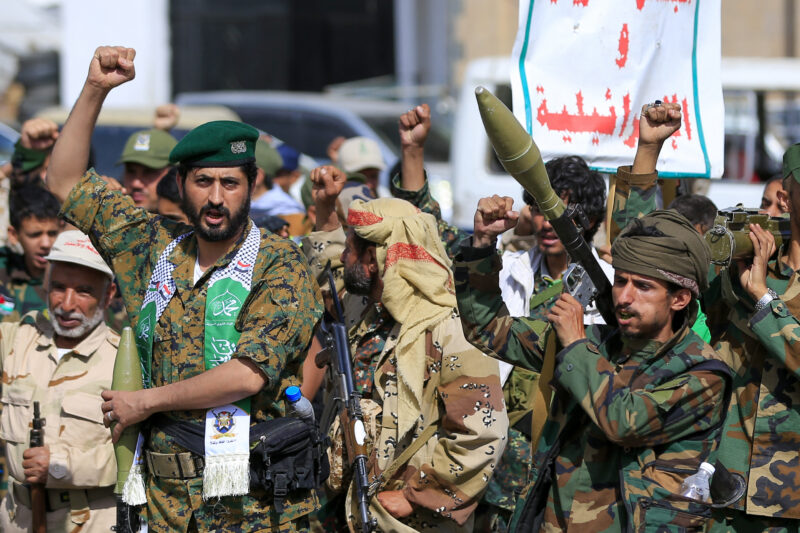
The convergence of Iranian strategic ambitions with local Islamist networks threatens not only to prolong Sudan’s humanitarian crisis, but also to turn the African country into a hub for extremist recruitment and operational planning. Experts warn it may also disrupt global maritime routes in the Bab el-Mandeb Strait, where Iran-backed Houthi forces in Yemen are already threatening international shipping.
“Even before [the Iran war], but especially now with the reopening of the Houthi front in Yemen and recent attacks near the Suez Canal, the Sudan conflict is one more way Iran can threaten regional shipping and pressure the United States by ratcheting up Red Sea instability,” Ruhe said.
The alliance between Tehran and the Sudanese Muslim Brotherhood is not a sudden emergence, but rather the reactivation of infrastructure established decades ago during the regime of ousted Sudanese dictator Omar al-Bashir. When Bashir was overthrown in 2019, the country’s Islamist movement lost political power, but the outbreak of civil war in April 2023 provided an opportunity for reconstitution.
Arieg Elhag, Arabic content editor at The Washington Institute for Near East Policy, emphasized that unlike groups built from the ground up, the Sudanese Muslim Brotherhood offered ready-made operational architecture for Iran to utilize.
“Unlike Hezbollah, which Iran built from scratch, Sudan already had a governing Muslim Brotherhood with existing networks — the Popular Defense Forces and tribal ‘Emirs of Jihad’ — that Iran could simply reactivate, saving time and cost,” Elhag explained, adding that operating through official army channels provides Tehran with a unique layer of state-level legitimacy. “MB officers operating within the regular army give Iran ‘state’ cover rather than ‘faction’ cover, making targeted sanctions difficult without hitting the military itself.”
According to Elhag, Iranian entrenchment at the junction of the Red Sea and the Horn of Africa creates a danger for future escalation. “Any future Iran-Israel or Iran-Gulf escalation would no longer stay confined to the Levant — Sudan could become a logistics hub, a maritime threat point on a major trade route, or a base exporting ideological mobilization across Africa.”
While the growth of Islamist influence inside the SAF is clear, some analysts view the military leadership’s embrace of Tehran as a marriage of convenience driven by battlefield desperation rather than shared ideological conviction. Facing an existential struggle against the rival Rapid Support Forces (RSF) — a paramilitary group backed by the United Arab Emirates — Burhan has sought military assistance from various external actors, including Egypt, Saudi Arabia, Russia and Iran.
“I don’t think it’s accurate to say that Iran is turning Sudan, or specifically the SAF, into one of its full-on proxies, like Hezbollah or the Houthis or Hamas,” said Joshua Meservey, a senior fellow at the Hudson Institute. “This is opportunism. Burhan is trying to win this war, which is an existential struggle with the RSF, and so he is willing to ally with just about anybody.”
Meservey noted that while Burhan himself is not an Islamist, the exigencies of the war have made him reliant on Islamist fighters to maintain parity on the battlefield.
“If you presented Burhan with a choice and said, ‘Look, you can win the war, but you have to get rid of the Islamists,’ he would take that deal 100 times out of 100,” Meservey said. “But the problem is right now he likely can’t win the war without the Islamists. To Burhan, the bottom line issue is winning this war and surviving it.”
However, he warned that the longer the war drags on without a decisive victory, the more these radical factions could become enmeshed in Sudan’s defense architecture.
“The fear is: the longer this goes, the more embedded they will become,” Meservey warned. “They will burrow in deeper and deeper and deeper, and then maybe eventually the Islamists do succeed in totally seizing the SAF, or at least gaining a preponderance of power where they can run things.” He pointed to Sudan’s historic role hosting transnational terrorist organizations in the 1990s, including al-Qaida, as a cautionary precedent for what a prolonged security vacuum could invite.
“It’s not just Iranian influence. It’s also other terrorist groups that are drawn to this type of instability, especially in a country that has a strong Islamist population, or a strong percentage of the population is Islamist itself,” he added. “Then you can see the potential for terrorist networks embedding themselves or finding safe harbor.”
Still, Meservey cautioned that such a scenario is not “inevitable.”
“The Islamists very much want to be back in power. They want to be running that government. That’s their long-term goal, and I’m sure the Iranians would be very happy for that to happen,” Meservey said. “However, I don’t believe that they hold the current balance of power within the SAF. They are powerful, but they can’t just take over the SAF. That’s not what the situation is.”
More Stories
DOHA DEALINGS
Moskowitz challenger visited Qatar in 2024, photographed with Qatari official

Arrivederci, Reggio
Jewish preschool educators forced to condemn Israel to attend Reggio Emilia conference
CAMPUS CHRONICLES
The freshmen on Oct. 7, 2023, who became Jewish leaders in the terror attacks’ aftermath
chesapeake challenge
Maryland GOP gubernatorial nominee Dan Cox says he disagrees with son’s antisemitic posts

Life after captivity
The Siegels lost their home and community on Oct. 7. Now they’re finding their way forward
BACK FROM THE GULF
Sen. Murphy accuses admin of ‘active cover-up’ of Iran war, vows to leverage funding to end war
Please log in if you already have a subscription, or subscribe to access the latest updates.
 Continue with Google
 Continue with Apple