




























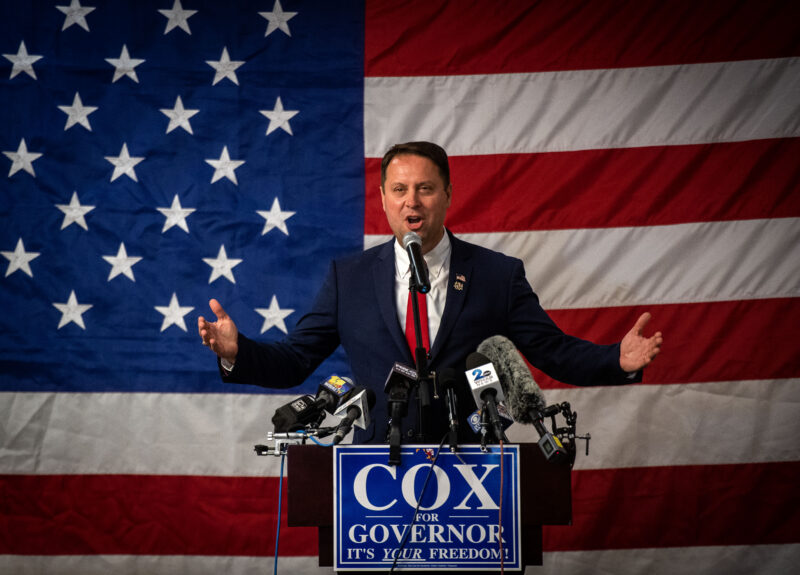











Sens. Michael Bennet and John Hickenlooper introduced a companion bill to one in the House that would allow institutions to use grant funding to pay security staff, off-duty police officers and administrative staff
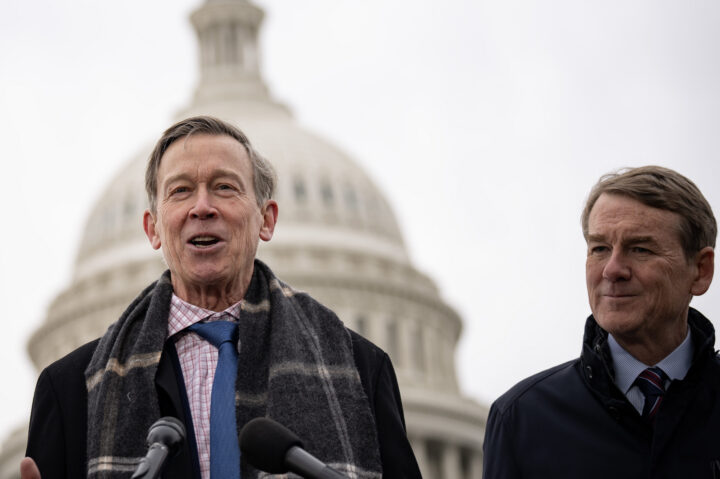
Drew Angerer/Getty Images
Sen. John Hickenlooper (D-CO) and Sen. Michael Bennet (D-CO) hold a news conference at the U.S. Capitol January 18, 2024 in Washington, DC.


 Add JewishInsider on Google
Sens. Michael Bennet (D-CO) and John Hickenlooper (D-CO) are set to introduce the Safer Spaces for All Act, which would modify and expand the federal Nonprofit Security Grant Program to allow institutions to use grant funding for additional purposes.
The legislation is a companion to a bill in the House by Reps. Joe Neguse (D-CO) and Don Bacon (R-NE). It would allow institutions to use grant funding to pay full-time security staff, pay off-duty police officers to provide security and spend 5% of grant funding to pay administrative staff to apply for and manage grant funding.
“In light of the recent surge in anti-Semitic, Islamophobic, and other violent hate-based incidents in the United States, the importance of programs that provide religious communities with increased security cannot be overstated,” Bennet said in a statement. “We have a responsibility to confront prejudice everywhere, and the Safer Spaces for All Act is an essential step forward for Colorado.”
The bill is being supported by local Jewish and Islamic groups. It follows a firebombing attack last year on an Israeli hostage awareness march in Boulder, Colo., which killed a Holocaust survivor, Karen Diamond.
“Antisemitism, Islamaphobia, and other forms of hate have no place in our country,” Hickenlooper said in a statement. “Unfortunately, we see hate rear its ugly head all too often. This bill will ensure that Americans feel secure when they enter their places of worship.”
JEWISHColorado and the local Jewish Community Relations Council said in a statement that the bill “would provide institutions the flexibility to use NSGP funding where it can have the greatest impact — making the program more accessible, responsive, and effective.”
Rafaat Ludin, the executive director of the Downtown Denver Islamic Center, said that having off-duty police on site for prayers has been crucial to creating a safe environment.
“Having an off-duty Denver Police Officer present during our daily and Friday prayers transformed our security landscape. While physical fortifications are essential, they cannot replace the immediate deterrence and peace of mind that a trained officer provides,” Ludin said. “For our community to truly feel secure while fulfilling our daily worship, grant programs like the NSGP must allow funding for active security personnel.”
Senators say the department of defense undersecretary for policy was evasive, unresponsive and even disrespectful at a classified briefing regarding the implementation of the National Defense Strategy
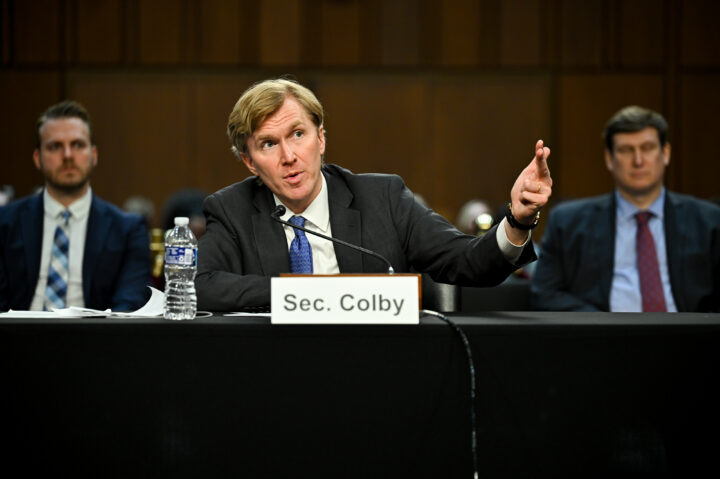
Graeme Sloan/Bloomberg via Getty Images
Elbridge Colby, under secretary of defense for policy, during a Senate Armed Services Committee hearing in Washington, DC, US, on Tuesday, March 3, 2026.
Elbridge Colby, the Pentagon’s under secretary for policy, is once again facing criticism from senators who said he was evasive, unresponsive and even disrespectful at a classified briefing on Thursday regarding the implementation of the National Defense Strategy.
Senators said that, among other issues, Colby had failed to provide clear answers regarding the war in Iran.
“The most telling thing I can tell you is that he didn’t have an opening statement, and he’s there to give us an update,” Sen. Kevin Cramer (R-ND) told reporters. “That seemed weird. You’re the policy undersecretary and you come before the Armed Services Committee and you don’t have an opening statement? That seemed contemptuous.”
In comments to The Hill, Cramer described the exchange with Colby as “very disrespectful to say the least” and as a “dodge and punt.”
Sen. Joni Ernst (R-IA) said Colby “was not giving any clear responses” and that she was “very disappointed” by the briefing.
“Right now, I don’t think any of us are happy with the amount of information being shared by the administration,” Sen. Mike Rounds (R-SD) said after Thursday’s briefing with Colby.
Sen. Roger Wicker (R-MS) attempted to avoid commenting on the subject to reporters on Thursday. “It was a confidential, classified meeting and I’m declining to comment,” Wicker told reporters, when asked if he was satisfied with the briefing.
Sen. Richard Blumenthal (D-CT) told Jewish Insider Colby had been “disastrously unresponsive and evasive, which prompted a lot of concern on both sides.”
“My impression [was] that he was lacking in candor and a lot less than forthcoming,” Blumental continued.
Sen. Tim Kaine (D-MD) told JI that Colby had been evasive on questions about his specific involvement in various discussions and decision-making, and that Colby had responded that he would have to follow up with senators in writing after the briefing.
“Those are easy to answer yes or no. So a lot of frustration,” Kaine said.
Sen. Jacky Rosen (D-NV) said that Colby “did not really address our concerns or issues” and “he was not forthcoming in how the National Defense Strategy should have been changed or updated since the illegal war in Iran.”
Sen. Mark Kelly (D-AZ), said, “Like a lot of these, with this administration, you walk out with more questions than you had when you went in. For me, that was the case today.”
Kelly said he pressed Colby on the planning for the war in Iran. “You always get answers — now is it the answer you would expect? Not always.”
A group of 16 Democrats and two Republicans noted that such information has never before been classified for foreign nuclear deals
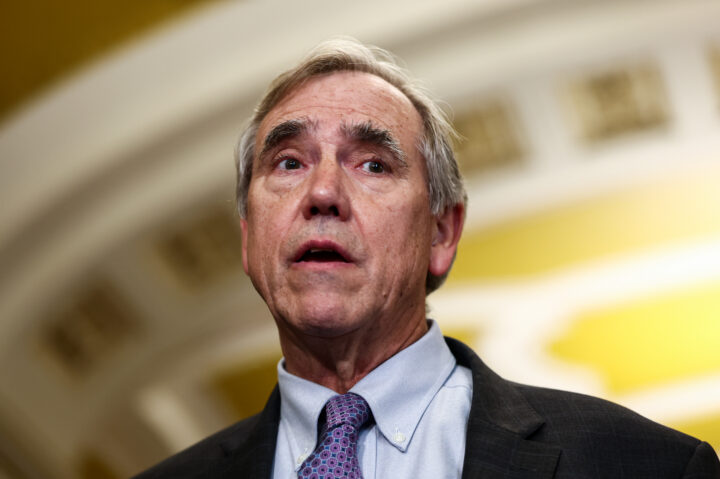
Finn Gomez/Getty Images
Sen. Jeff Merkley (D-OR) speaks during a press conference on Capitol Hill on July 22, 2026 in Washington, DC.
A bipartisan group of senators wrote to Trump administration officials on Wednesday urging them to declassify two side letters related to the U.S.-Saudi nuclear deal — written agreements related to the deal that are not part of the text of the deal itself. Congress is currently reviewing the agreement, as mandated by law.
The group notably includes two Republicans: Sens. Rand Paul (R-KY), who has frequently found himself at odds with President Donald Trump, and Sen. John Kennedy (R-LA), generally a Trump supporter who nonetheless has expressed reservations about the nuclear deal, which could allow for nuclear enrichment on Saudi soil.
The letter was led by Sens. Jeff Merkley (D-OR) and Ed Markey (D-MA). It was co-signed by Sens. Chuck Schumer (D-NY), Jeanne Shaheen (D-NH), Jack Reed (D-RI), Patty Murray (D-WA), Sheldon Whitehouse (D-RI), Bernie Sanders (I-VT), Chris Van Hollen (D-MD), Elizabeth Warren (D-MA), Tim Kaine (D-VA), Adam Schiff (D-CA), Kirsten Gillibrand (D-NY), Michael Bennet (D-CO), Ron Wyden (D-OR) and Peter Welch (D-VT).
The letter, addressed to Secretary of State Marco Rubio and Energy Secretary Chris Wright, notes that the side letters have never before been classified for any previous foreign nuclear deal: “We are aware of no precedent for classifying and withholding the side letters, particularly when the stated purpose is peaceful nuclear cooperation.”
The lawmakers said that Congress and the public must have “access to the full text” of the deal in order to gain a “clear understanding of the commitments being made on the nation’s behalf and those being made by Saudi Arabia to the United States. The side letters affect the obligations and operations of the underlying agreement and cannot be viewed in isolation from it.”
With Netanyahu and Zelensky in attendance, tributes underscored how difficult it will be to replace Graham's influence on Iran, Ukraine and Israel policy

Daniel Heuer/Bloomberg via Getty Images
The casket of late Sen. Lindsey Graham is carried out during a funeral service at the Washington National Cathedral in Washington, DC, on July 28, 2026.
A who’s who of international leaders, Cabinet members, senators and ambassadors gathered on Tuesday at the National Cathedral and on Capitol Hill for a somber and emotional tribute to the late Sen. Lindsey Graham (R-SC), a giant both in Washington and on the world stage.
Graham distinguished himself over his career as one of the most important foreign policy voices in the Republican Party and a global statesman, evident in the fact that Israeli Prime Minister Benjamin Netanyahu and Ukrainian President Volodymyr Zelensky sat just seats away from one another at the afternoon memorial service, representing two of the countries that Graham championed during his time in office.
In one sign of how appreciated Graham’s pro-Israel leadership was to so many in the Jewish community, a number of attendees were seen wearing kippot at the National Cathedral service. Among the notable guests at the service were: philanthropist Miriam Adelson; Israel’s former Minister of Strategic Affairs Ron Dermer; Israeli opposition leader and Netanyahu rival Yair Lapid; Axios reporter Barak Ravid; and the parents of slain American Israeli hostage Omer Neutra.
Fox News host Sean Hannity gave special attention to Graham’s dedication to Israel in his eulogy, offering effusive praise to Netanyahu and the importance of the U.S.-Israel relationship.
“Lindsey would have been blown away that you took this long journey with your beautiful bride to be here today. He loved you. He loved the state of Israel, he loved the people of Israel,” Hannity told Netanyahu and his wife, Sara, from the lectern. “Under your leadership, Israel has been one of America’s most consistent and loyal allies. He was never shy to say it, to the day he passed. Just as President Trump has been Israel’s strongest friend in the history of the White House … Lindsey was that friend to Israel in the United States Senate.”
Sean Hannity speaks about Netanyahu and Israel at Sen. Lindsey Graham's funeral.
— Jewish Insider (@jewishinsider) July 28, 2026
"He loved you. He loved the state of Israel. He loved the people of Israel." pic.twitter.com/pOdBZdHRNp
Acknowledging Graham’s role as one of the GOP’s most prominent voices on foreign policy, President Donald Trump said in his own eulogy that Graham “was extremely hawkish” and “never saw a war that he didn’t like” but said Graham pursued those policies “for the good of our country.”
Graham had been one of the most influential voices in Trump’s ear in support of confronting Iran’s malign activity in the Middle East — and urging the president to more actively confront Russian aggression against Ukraine.
This week could mark a major turning point for the senator’s legacy: the Senate voted overwhelmingly yesterday evening to open debate on the Russia (and, at the last minute, Iran) sanctions bill that Graham spent his final months negotiating. And Trump’s meeting Tuesday with Netanyahu, where the two were expected to discuss next steps in Iran, could shape the future of the war.
Graham was one of a rare breed of Republicans who managed to remain a fervent advocate for U.S. involvement abroad while also keeping in Trump’s good graces and maintaining his influence with the president.
But there’s no clear successor to replace Graham’s hawkish voice in Trump’s inner circle, an absence that could tangibly impact the direction of U.S. foreign policy in the coming weeks and months, including the direction of the Iran war.
Isakowitz’s memoir traces his father’s path from Auschwitz to America and his own journey from grief to growth

Mark Isakowitz's new book Wisdom in the house of Mourning
On Capitol Hill, it’s usually the senators who publish books, not their staffers.
The office of Sen. Dave McCormick (R-PA) has both: Last year, McCormick authored a book on leadership with his wife, Meta President Dina Powell McCormick. Now, McCormick’s chief of staff, Mark Isakowitz, is gearing up to release a book of his own.
Isakowitz’s book, a memoir, is titled Wisdom in the House of Mourning: Kaddish, My Father, and Me. It tells the story of Isakowitz grappling with the loss of his father, who immigrated to America after surviving Auschwitz, and Isakowitz’s daily practice of reciting the mourner’s prayer at a synagogue in Washington.
The book is described as a “father’s path from Auschwitz to America,” and “a son’s journey from grief to growth.” It will be published in January.
If a far-left, anti-Israel wave sweeps over the Democratic Party in tonight’s statewide primaries, it will be a wake-up call for those downplaying the rise of the socialist left
RJ Sangosti/MediaNews Group/The Denver Post via Getty Images
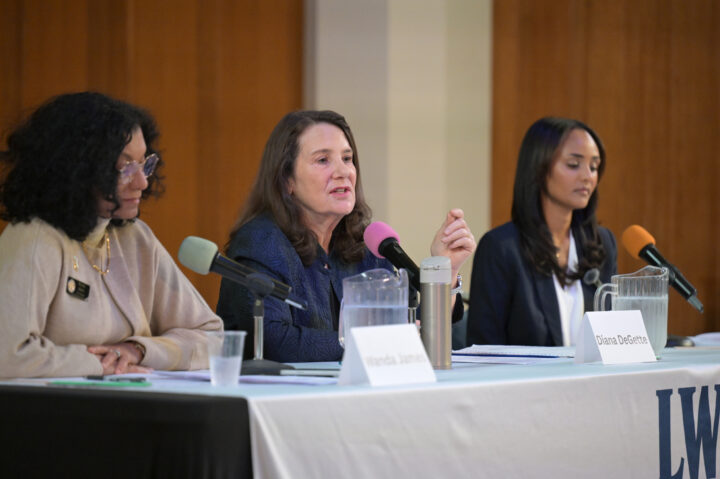
From left, Wanda James, Diana DeGette and Melat Kiros participate in a League of Women Voters Congressional District 1 candidate forum on May 28, 2026, in Denver, Colorado.
Colorado is a state famous for its moderation, with its governor (Jared Polis) and two senators (Michael Bennet and John Hickenlooper) among the most pragmatic figures in Democratic politics. So if a far-left, anti-Israel wave sweeps over the Democratic Party in tonight’s statewide primaries, it will be a true wake-up call for those downplaying the rise of the socialist left.
The biggest race we’re tracking — and the one where a Democratic incumbent looks most vulnerable — is the primary between longtime Rep. Diana DeGette, 68, an influential progressive who has left an imprint on major legislation in Congress, and Democratic Socialists of America-affiliated 29-year-old doctoral student Melat Kiros, whose deep-seated antagonism against Israel is a top focus of her campaign.
Kiros is the latest example of how radical candidates running for office on their hostility toward Israel are also indulgent of the rising antisemitism around them. Her political awakening came after she was fired from the law firm Sidley Austin for writing a public letter denouncing the hundreds of law firms that signed a petition calling on law schools to do a better job addressing antisemitism on their campuses.
Kiros was angered that the law firms considered those calling for the elimination of Israel as antisemitic. In the last week, she also refused to call the firebombing of a hostage awareness march in Boulder, Colo., antisemitic. Sense a pattern?
As JI’s Marc Rod reported, Kiros’ extreme views have done little to dent her support in a progressive Denver-area district that DeGette has easily held for the last three decades. DeGette barely won the 30% of the vote from party activists necessary to qualify for the primary ballot — in what could be a foreshadowing of the primary results tonight.
The overall landscape in Colorado is looking similarly treacherous for other Democratic moderates, even if they end up prevailing. Sen. John Hickenlooper, once considered a shoo-in to win renomination, is facing a credible challenge from DSA-backed state Sen. Julie Gonzales. If Hickenlooper loses, it would be a political earthquake across the country, but even a close race against a fringe candidate would be a major warning sign for the health of the Democratic Party.
And well outside of Denver, another primary in a swing district is being closely watched for ideological signals of where the party is headed. Early in the cycle, Democratic Majority for Israel’s political arm rallied behind former state Rep. Shannon Bird, a moderate who has been a reliable supporter of Israel and outspoken critic of antisemitism in the state Legislature, in her race against Rep. Gabe Evans (R-CO).
State Rep. Manny Rutinel, a progressive who has attacked Bird as insufficiently liberal on immigration, has been vague on where he stands on Israel policy, but his record as a college student has raised concerns from the broader Jewish community.
As an undergraduate at the University of Florida in 2014, Rutinel attended a demonstration that was co-organized by Students for Justice in Palestine, the extreme anti-Israel group that has expressed alignment with Hamas, according to a local news story covering the event at the time. A Rutinel spokesperson told JI that Rutinel did not have any affiliation with SJP and said the demonstration was focused on police brutality in the U.S.
Neither candidate has focused much on Israel policy — a sign that opposing Israel isn’t a winning message in swing districts like Colorado’s 8th District, which also features a sizable Hispanic population.
The state’s Democratic gubernatorial primary between Bennet and Attorney General Phil Weiser will also be closely watched as a signal of voters’ discontent with Washington. Bennet was viewed by many as an early favorite, but Weiser holds a powerful statewide role that allowed him to position himself in opposition to the Trump administration by filing dozens of lawsuits against federal government policy.
Weiser, who is Jewish and told JI he blocks off Shabbat to spend with his family, is running as the progressive in the race but has kept his focus on campaigning as an anti-Trump candidate and as a Washington outsider.
The DSA chapter in Denver is opposing his gubernatorial campaign because, they write, he “remained a strong supporter of Israel despite the ongoing genocide.” (They also are opposing Bennet because of his votes for military aid to Israel.)
Senators on both sides of the aisle say they’re eager to see the text of the agreement, but the administration has not yet made plans to brief Congress
Tom Williams/CQ-Roll Call, Inc via Getty Images
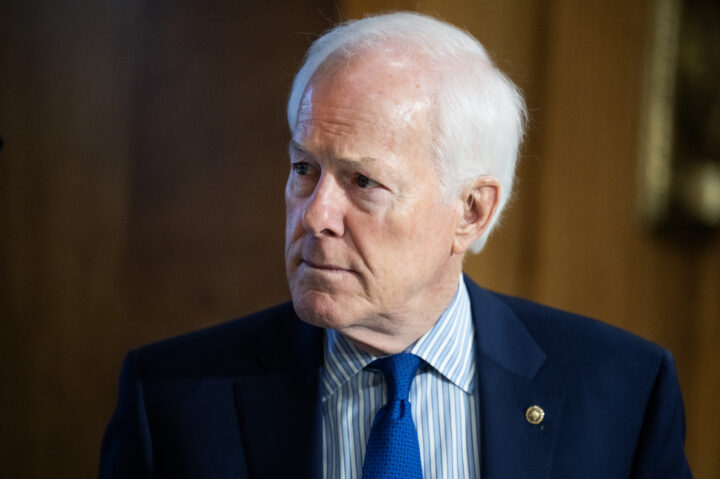
Sen. John Cornyn (R-TX) attends the Senate Foreign Relations Committee hearing titled "Arms Control and Transforming International Security Functions at the State Department," in Dirksen building on Tuesday, March 24, 2026.
Republican senators said on Tuesday that they’re skeptical that Iran will hold to any commitments it has made or may make in negotiations with the U.S., and urged the administration to release the terms of the memorandum of understanding announced on Sunday.
The administration has not yet communicated any specific plans to brief Congress on the deal.
“Rather than an end to the activities in Iran, I think it’s more of an intermission,” Sen. John Cornyn (R-TX) told reporters. “We still haven’t seen what the documents look like, and regardless of what they look like, I don’t think you can trust the Iranian regime.”
Cornyn added, “I need to see the writing — I need to see the print. But I don’t believe that the regime will abide by it.”
Sen. Thom Tillis (R-NC) emphasized that the U.S. has been in similar positions with Iran before, and that they have not resulted in a viable long-term agreement. He told Jewish Insider that he thinks it’s “generous to call it a deal, it sounds like it’s a deal in progress … and if we’re making progress, that’s good.”
But he said that it’s hard for him to assess an agreement “that we only get described in broad strokes.”
He said he would also be uncomfortable with any arrangement that provided Iran with a financial windfall. Multiple outlets reported Tuesday afternoon that the MOU includes financial incentives for Iran, including lifting various sanctions.
“I’m worried only because at least some of our decisions seem to be affected by the short-term economic impact [of the war], and that’s not a good decision,” Tillis said. “Talking about some of the money that Iran’s going to start receiving. … If all of the sudden we’re pulling back some of the things that were in place even before the operation, I’ve got a real concern because they’re a totalitarian regime.”
He told JI that the U.S.’s current posture and negotiations with Iran make it appear that “we’re willing to accept a totalitarian regime, and so the question is, how does this agreement match up against the original objectives of this initiative” as laid out by the administration at the beginning of the war.
Tillis added that Trump should explain to the country the national security interests and necessities of the U.S. operations against Iran, and that some short-term economic harm might be a consequence of that.
“That should be the case to the American people, and then you stay strong, versus have a sub-optimal or bad deal that actually enriches the very people that you were focused on trying to take out,” Tillis said. “Now that we’re here, you can’t all of a sudden say that because people are really frustrated with gas prices, that the nuclear threat in Iran is a manageable risk, because that is 180 degrees away from the predicate for going in there to begin with.”
Tillis said that the final deal should be made public, or at least shown to members in a classified setting — though he said he was skeptical there was much substance in the page-and-a-half document described by Vice President JD Vance, given its length.
He also reiterated comments from Monday that any final agreement should be subject to ratification by Congress, as the only way to ensure that such a deal would last.
“Trump could have a real foreign policy legacy but he’s been poorly influenced because he’s just so insecure. I’ve never seen anything like it. His conviction is his own popularity, his own attention, his own credit. It hurts my heart a little,” another Republican senator told JI. “I just was hoping that the second term he wouldn’t do what he’s done, and that is to make it all about himself like his first term.”
“I don’t know what’s in [the MOU],” the senator added. “Don’t trust any senator who says they know what’s in the deal. They don’t know. I mean, none of us know, not really.”
Sen. John Kennedy (R-LA) told JI the agreement “looks to me like it’s a deal to make a deal.”
“The only facts I know today are that the blockades on both sides have been lifted. We’re supposed to negotiate more over [60] days,” Kennedy continued. “The Iranian government Iran lies like fish swim. I have no idea, and neither does anyone else, whether they will make concessions. The other thing I know is that Iran is immeasurably weaker today than it was a year ago.”
He added that he does not expect that the “religious zealots” in Iran have “had an epiphany” and will give up their nuclear program.
Kennedy said he’s “sure” the text of the deal will be released this week. In the interim, “If you don’t know [what’s in it], you should shut up, and none of us … know what’s in it. I think we ought to wait and see what’s in it first,” Kennedy continued.
Asked about reports that Iran would be receiving up-front sanctions relief as part of the MOU, Sen. Rick Scott (R-FL) said, “I’d be surprised, I haven’t seen that. I think we’re all in the position we’d like to see the MOU. Unless there’s something in there that they’ve already changed their ways, I don’t know how you’d be entitled to sanctions relief.”
“I think we’d all like to see it,” Scott reiterated, when asked whether he was concerned the administration hasn’t released the text yet. “Then we’d be able to answer questions on specifics.”
Though some Senate Republicans are eager to see the agreement, there do not yet appear to be any specific plans to brief them on it. Senate Majority Leader John Thune (R-SD) told JI on Tuesday that he was not yet aware of any plans for the administration to brief Congress on the contents of the MOU between the U.S. and Iran, as lawmakers continue to call for transparency on the agreement.
“Not that I’m aware of yet. [I’m] going to find that out,” Thune told JI, when asked whether the administration had notified him of plans to brief lawmakers.
On the other hand, Sen. Pete Ricketts (R-NE), said, “The administration probably has a reason for doing what they’re doing. I don’t know what it is, have not been briefed. We’ll all find out on Friday, and then I expect a briefing after that.”
Sen. Eric Schmitt (R-MO) likewise said his understanding is that the text of the agreement will be released after the formal signing ceremony on Friday.
Democrats have also been critical of the administration for failing to release the text of the MOU, and described it as a bad deal — though many say they support an end to the conflict anyway.
“He has not released text, but we know one thing about this president: if he had a great deal, he’d be jumping up and down, and doing a press event with the text. The fact that he announced the deal, got on a plane, left the country, and is now letting JD Vance explain it tells you everything you need to know,” Sen. Chris Coons (D-DE) told JI.
He said he doesn’t expect the administration to come to “consult, brief or include us” in any capacity, including under the Iran Nuclear Agreement Review Act.
“They should have come to us, consulted us, briefed us and explained to the American people what their objectives were at the outset, but I don’t expect their conduct to be any different at the conclusion, if there is one. This is such an internally flawed arrangement that it seems to be inevitable that it will fall apart in a matter of weeks,” Coons continued.
“Trump must hold a classified meeting on his so-called ‘understanding’ with Iran. He must brief all of Congress,” Senate Minority Leader Chuck Schumer (D-NY) said. “He must inform the American people and make the ‘understanding’ public. … Americans need to know how and when this war will truly end.”
Sen. Tim Kaine (D-VA) said that if the deal touches on Iran’s nuclear program, the administration legally has to submit the agreement to Congress, but if the current deal does not include specific commitments on the nuclear program, it may not need to be submitted.
“We’ll know on Friday, and at that point, when it’s all out on the table, I probably have more to say,” Kaine said, declining to comment on potential concessions in the deal until it has been publicized.
‘Syria’s a pretty complicated mess, currently,’ Sen. James Lankford said. ‘They’ve still got to deal with ISIS’ presence there and the Syrian refugees in Lebanon need to return back to Syria.’

Marwan Naamani/picture alliance via Getty Images
Pro-Iranian Hezbollah supporters wave the party flags during a ceremony in a southern Beirut suburb on May 5, 2026.
Senators and Middle East policy experts expressed skepticism regarding President Donald Trump’s suggestion on Tuesday that Syria, rather than Israel, should handle the task of combating Hezbollah in Lebanon, following the president’s strident criticism of Israel’s attacks on the Iranian-backed terrorist group.
Trump said on the sidelines of the G7 summit in Évian-les-Bains. France, that Israel’s operations in Lebanon had moved too slowly and had been “vicious.” “I suggested to Israel to let Syria take care of Hezbollah, because to be honest with you, I think they do a better job of doing it,” Trump said.
“Syria’s a pretty complicated mess, currently,” Sen. James Lankford (R-OK) said. “They’ve still got to deal with ISIS’ presence there and the Syrian refugees in Lebanon need to return back to Syria. I think that’s the Syria connection there.”
Lankford said that he expected the Lebanese Armed Forces to say they would address the situation in Lebanon rather than bringing Syrian forces into the country. He added that Syria’s role should be limited to repatriating Syrians to Lebanon and eliminating ISIS in Syria as stabilization measures.
Sen. Richard Blumenthal (D-CT) dismissed the idea outright. “I have never heard that Syria is a viable opponent of Hezbollah,” Blumenthal said. “I heard him, literally, live talk about it, and it seems almost absurd to think of Syria as a viable opponent to Hezbollah.”
He also emphasized that “Hezbollah is attacking Israel, not Syria” and “Israel has to defend itself against Hezbollah. It can’t depend on Syria. In fact — it can’t depend on anyone exclusively. It has to defend itself against Hezbollah, and that’s just a fact of life.”
He said that the “solution” to achieve peace “is to stop Iran from supporting Hezbollah.”
“What?” a bewildered Sen. Chris Coons (D-DE) responded when asked by JI for his reaction to Trump’s suggestion.
“Yeah, sure,” Coons added. He then put his hands over his face and sighed before saying in an exasperated tone: “Oh my god.”
Sen. John Cornyn (R-TX) also appeared to dismiss the idea, indicating that he was confused by Trump’s comments, telling JI: “I didn’t understand that.”
Sen. Pete Ricketts (R-NE) was largely noncommittal on the viability of Trump’s proposal, saying, “If Syria would go after Hezbollah, that would be a great thing.”
Middle East policy experts also expressed concern over Trump’s notion that Syria could play a “better” role in confronting Hezbollah than Israel, asserting that Damascus does not have the ability to take on such a task.
“The president’s remarks unfortunately show his complete lack of familiarity with Lebanon and Syria,” Elliott Abrams, former Iran envoy under the first Trump administration, told JI. “Syrian troops entered Lebanon in 1976 and did not withdraw until 2005. While they dominated Lebanon they killed something like 60,000 Lebanese. To suggest the return of Syrian forces to Lebanon is absurd and would instantly be rejected by all Lebanese.”
David Daoud, a senior fellow at the Foundation for Defense of Democracies, similarly criticized the statement, saying it is important to “distinguish the rhetoric from what’s realistic.”
“Syria today does not have the capability nor the will to occupy Lebanon, which is what would be necessary to dismantle Hezbollah,” Daoud said. “Their country has just emerged from a 14-year devastating civil war, they’re economically broke, they’re just starting to reintegrate into the international community.”
He said that such actions would go beyond the responsibilities that the Syrian people expect from Al-Sharaa’s new transitional government.
“The mandate that the Syrian people have given him is ‘Rebuild our country, give us a normal life, we don’t want wars, we don’t want expansionism,’” Daoud explained. “So there’s that element. If they go too far, they end up like [former Syrian President Bashar] al-Assad.”
Yoni Tobin, a senior policy analyst at the Jewish Institute for National Security of America, said the idea that Syria would be better-equipped to take on Hezbollah than Israel “is a fanciful one.”
“Israel has spent decades successfully fighting against, studying, and penetrating Hezbollah, and has eliminated thousands of its field operatives and missile sites,” Tobin said. “When’s the last time, for example, that Syria detonated several thousand Hezbollah walkie-talkies at once?”
Tobin warned that the prospect of Syrian forces entering Lebanon would be “dangerous” and could threaten U.S. and Israeli security interests. He noted that al-Sharaa’s close ties with Turkey are particularly alarming.
“Even if Syrian forces were to somehow succeed at disarming Hezbollah, that would only replace an Iranian sphere of influence on Israel’s northern border with – yet another – Turkish one,” Tobin said. “That prospect alone should alarm Washington.”
Former U.S. Ambassador to Israel Daniel Shapiro suggested that allowing Syrian forces to confront Hezbollah could “unify the Lebanese against that irresponsible proposal.”
“It recalls previous episodes of Syrian occupation, and could unleash violence across the country,” Shapiro said. “What the Syrian government can do is work to shut down smuggling networks across the porous Syrian-Lebanese border, which could deprive Hezbollah of the ability to resupply its weapons.”
Analysts also dismissed Trump’s criticism of Israeli operations in Lebanon.
“Trump’s criticism of Israel for fighting back against Hezbollah is equally wrong,” Abrams said. “Israel’s strike killed Ali Musa Daqduq, who was a Hezbollah terrorist who led the kidnapping and murder of five American soldiers in 2007. The president should be thanking Israel for that — and he should not be making light of drone strikes as ‘a minor little thing.’”
Daoud said that while individual Israeli military actions in Lebanon may have “crossed the line” and are open to criticism, he “totally disagrees” with Trump’s claim and pressure on Israel.
“I think President Trump is framing it in that way because this is undermining his desire for a deal,” Daoud said, arguing that criticism and pressure should instead be directed toward Lebanon.
Daoud said that Hezbollah retains “massive and overwhelming” support from the Lebanese public, adding that Beirut remains “unwilling and unable to deal with Hezbollah properly.”
“I reject this narrative that the Trump administration is trying to promote, which is that Lebanon is not the problem, Hezbollah is the problem, Hezbollah is the enemy of Lebanon,” he added. “This is fiction. I reject the nonsense that Hezbollah is an Iranian occupation of Lebanon. Hezbollah is part of the government…they are in parliament, they are Lebanese.”
Sen. Lindsey Graham said that he ‘wouldn’t be surprised’ if the report was true and it may require a ‘complete reevaluation’ of the country’s mediator role

Jacquelyn Martin - Pool/Getty Images
Vice President JD Vance arrives for talks with Iranian officials on April 11, 2026 in Islamabad, Pakistan.
Senators on both sides of the aisle on Monday expressed concerns about a report by CBS News that Pakistan had sheltered multiple Iranian military aircraft at an air force base in the country since shortly after the U.S.-Iran ceasefire in April, raising questions about the country’s neutrality as a meditator.
Sen. Lindsey Graham (R-SC) said the U.S. may need to reassess whether Pakistan, which helped broker the recent U.S.-Iran ceasefire deal, can continue to serve as a mediator between the warring parties.
“If this reporting is accurate, it would require a complete reevaluation of the role Pakistan is playing as mediator between Iran, the United States and other parties,” Graham said on X. “Given some of the prior statements by Pakistani defense officials towards Israel, I would not be shocked if this were true.”
Sen. Roger Wicker (R-MS), the chairman of the Senate Armed Services Committee, told Jewish Insider that the report is “not good news,” adding, “I don’t think there will be any more negotiations taking place in Pakistan.”
Sen. Mark Kelly (D-AZ) said he’d seen the CBS report and suggested it raised questions about Pakistan’s neutrality.
“Does that make you neutral? Not as neutral as we would like,” Kelly said. “I do think there needs to be somebody, some country in the middle, that has a stake in this.”
Sen. Ted Budd (R-NC) said that the report raises concerns for him about Pakistan’s neutrality as an arbiter in the talks as well.
The report comes as Pakistan is making moves to assert itself as a regional leader, signing a defense pact with Saudi Arabia and working toward one with Qatar, as well as building ties with Egypt and Turkey.
Islamabad also worked to support Iran’s economy during the war, despite U.S. sanctions and financial pressure.
Pakistan’s role as a mediator raised some questions on Capitol Hill, but other lawmakers have viewed Islamabad as a potentially productive partner — at a time when few other mediators were available.
Sen. Lindsey Graham: ‘I look forward to the architects of this proposal, the Vice President and others, coming forward to Congress and explaining how a negotiated deal meets our national security objectives’

Office of Sen. Lindsey Graham (R-SC)
Sen. Lindsey Graham (R-SC) and Sen. Tom Cotton (R-AR) hold a joint press conference on Iranian nuclear negotiations at the U.S. Capitol on May 8, 2025.
Despite skepticism over the terms and reports of ongoing Iranian strikes, several prominent hawkish Republicans are voicing support for President Donald Trump’s fragile two-week ceasefire agreement with Iran.
Sen. Lindsey Graham (R-SC), among the most prominent backers of the war in the Senate, said in a post on X that a “diplomatic solution to end the reign of terror in Iran is the preferred outcome” but said he has concerns about the supposed 10-point plan presented by Iran, which would require the lifting of all U.S. sanctions on Iran, among other steps.
U.S. officials, including Vice President J.D. Vance, said the U.S. did not agree to that version of the deal, but that at least three versions of the Iranian proposal have circulated. White House press secretary Karoline Leavitt said Wednesday that the original 10-point plan proposed by Iran was “fundamentally unserious” and was “literally thrown into the garbage by President Trump and his team.”
“I look forward to the architects of this proposal, the Vice President and others, coming forward to Congress and explaining how a negotiated deal meets our national security objectives in Iran,” Graham said.
He added that all of Iran’s enriched uranium must be turned over to the United States and that Iran cannot have any enrichment capacity.
“To those who say, Iran needs to save face by having a small enrichment program, I’m not remotely interested in providing face-saving cover to a regime that murders its own people, beats a 16-year-old girl to death for not wearing a headscarf appropriately, and is dripping in American blood,” Graham said.
Sen. Ted Cruz (R-TX) said on his podcast that he believes Trump was prepared to follow through on his threats against Iran, but agreed to hold off in response to Pakistan’s mediation efforts and Iran’s agreement to reopen the Strait of Hormuz as he had demanded.
“Many of the military objectives have been accomplished. The military has been degraded almost out of existence,” Cruz said, though he acknowledged that it doesn’t take much for Iran to disrupt trade in the Strait of Hormuz. “There’s virtually no military left. It’s like four guys with a slingshot sitting on the back of a camel.”
But Cruz said he would be skeptical that the ceasefire would hold if Iran’s attacks on its neighbors continued.
He said his definition of success in Iran would be taking away Iran’s ability to kill Americans and innocent people in the region and its ability to become a nuclear power. He said that full regime change is the responsibility of the Iranian people, not the United States.
Responding to a post by Trump about the agreement and the damage to Iran’s nuclear program, Senate Intelligence Committee Chairman Tom Cotton (R-AR) said, “President Trump has always been crystal clear: there must be no uranium enrichment for Iran. And he’s absolutely right. That was a central flaw in Obama’s disastrous deal. Because the only reason Iran would demand to enrich uranium is to build a nuclear weapon.”
He didn’t address the substance of the ceasefire deal itself.
Sen. Kevin Cramer (R-ND) praised Trump’s execution of the war and the ceasefire, saying that the war had shown that the U.S. is the strongest nation and has the strongest military on the planet.
“He has made it clear – Iran will not get a nuclear weapon. And so, it’s really through his efforts that the U.S. not only secured a temporary ceasefire but more importantly, they obtained a commitment from Iran to reopen the Strait of Hormuz,” Cramer said in a statement. “That has been his short-term goal in recent days, and it’s an important goal that affects a lot of people, not just the United States but our Middle East friends and certainly Europe.”
He called on other allies to step up — and predicted they would following the ceasefire agreement. But he also urged continued caution.
“Now we have to keep our eyes wide open obviously, it’s not like the Iranian regime is good for keeping its word, but in my mind, this is a pretty good breakthrough,” Cramer continued. “I’m grateful for President Trump’s unwavering dedication to defending our country and holding our adversaries accountable, and frankly, holding some allies accountable as well. I certainly hope they learned from this lesson.”
Other senior Republicans haven’t commented on the ceasefire agreement yet.
Off Capitol Hill, some prominent right-wing voices who have had the president’s ear are taking a different view of the deal.
Conservative commentator Mark Levin emphasized that Iran violated the ceasefire deal shortly after it was signed. He accused Iran of trying to use the negotiations to “blackmail us and Israel” to allow Hezbollah to continue its attacks on Israel and divide the U.S. and its allies.
“The 2-week ceasefire is being violated right now by the Iranian-Nazi regime. Missiles are being fired into Israel and perhaps other countries in the region. Are they able to defend themselves?” he said on X. We have the right man as president, and I bet he’s furious about this.”
“But this will be the question throughout — that is, do we expect the Iranian regime to honor a deal, how will we monitor it, and how will we enforce it. These will all be very difficult issues to resolve,” he continued.
Responding to the 10-point Iranian proposal, Levin said simply, “Uh oh.”
Far-right influencer Laura Loomer said on X the deal is “a negative for our country” and “we didn’t really get anything out of it.”
Under the Iran Nuclear Agreement Review Act, passed in response to the Obama administration’s negotiations with Iran in 2015, any agreement pertaining to Iran’s nuclear capabilities must be submitted to Congress for its review, and Congress has the ability to vote to block any such agreement.
In spite of the ceasefire, Democrats are continuing to agitate for Trump’s removal from office and plan to pursue war powers resolutions to force an end to the war.
In a Dear Colleague letter on Wednesday, House Minority Leader Hakeem Jeffries (D-NY) said that Democrats plan to attempt to pass a war powers resolution during a pro-forma session on Thursday by unanimous consent — an effort that is likely to fail.
Jeffries also said that Rep. Jamie Raskin (D-MD), the ranking member of the House Judiciary Committee, and committee Democrats plan to hold a briefing on Friday on “Trump administration accountability and the 25th Amendment” — indicating that the doomed push to remove Trump from office has backing from the top echelons of the Democratic Party.
Senate Minority Leader Chuck Schumer (D-NY) said that Democrats are planning to force a vote on a war powers resolution next week, the fourth since the war began on Feb. 28, when the Senate returns from its own recess.
Four Democrats and two Republicans broke with their parties to oppose and support the resolution, respectively
Anna Moneymaker/Getty Images
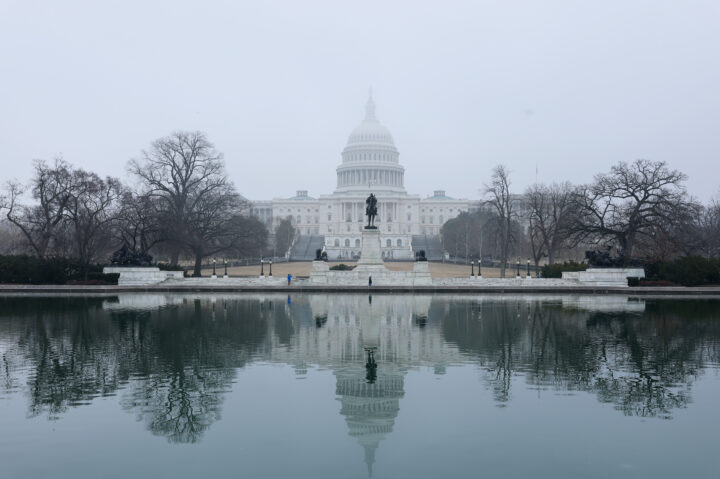
U.S. Capitol on March 05, 2026 in Washington, DC.
A day after Republican senators blocked a vote to end the U.S.-Israeli operations in Iran, the House voted 219-212 to defeat a similar war powers resolution, with four Democrats breaking with their party to oppose an immediate end to the war, and two Republicans voting with other Democrats to oppose military action.
Reps. Greg Landsman (D-OH), Jared Golden (D-ME), Henry Cuellar (D-TX) and Juan Vargas (D-CA) were ultimately the only Democrats to vote against the resolution, which was led by Reps. Ro Khanna (D-CA) and Thomas Massie (R-KY). Reps. Josh Gottheimer (D-NJ) and Jared Moskowitz (D-FL), who said they would oppose the resolution before the war began, ultimately voted in favor.
On the Republican side, Massie and Rep. Warren Davidson (R-OH), both of whom have isolationist leanings, were the only members of the GOP to support the resolution.
Moskowitz had argued before the war that voting preemptively on the resolution would remove U.S. leverage in negotiations, but argued that the situation has since changed and that the U.S. is now in a full-scale war.
“I didn’t flip at all,” Moskowitz told Jewish Insider. “Circumstances have changed since my first statement two weeks ago.”
In a statement, he condemned Iran and its regime, saying he is “happy that [Ayatollah Ali Khamenei] is no longer able to reign terror on his country,” but added, “Regardless of how one feels about this war, or this President, Congress’s constitutional role in any declaration of war is a completely separate issue,” expressing concern at the erosion of congressional war powers over the past year.
“We must reestablish our Article I authority which grants Congress all legislative powers,” Moskowitz said, adding that he did not believe the resolution would prevent continued efforts to protect U.S. bases and personnel nor intelligence sharing with allies.
Gottheimer emphasized in a statement that the U.S. “simply can’t afford to get this wrong — we must win and crush” the Iranian regime’s military capabilities, emphasizing that he is not, in principle, opposed to military action against Iran and that the regime “deserves the punishment they’re receiving.
“With the defeat of the War Powers Resolution in the Senate, the vote in the House today shifted from an unacceptable call that could put our troops in harm’s way to a clear call for this Administration to articulate the goals for the mission, the end game, and their plan to avoid a protracted conflict,” Gottheimer continued — suggesting that he voted for the resolution because it was, in essence, symbolic given that it did not pass the Senate.
“Unlike some of my colleagues who are opposed to combatting the Iranian regime, the world’s leading state sponsor of terror, I’m supporting this resolution to send a clear message to the Administration: the American people deserve a coherent explanation of what precipitated this war, what success looks like, and how we will know when the mission has been achieved,” he continued, criticizing “shifting justifications and objectives” from the administration. “I’m not opposed to taking action against Iran. I believe that steps to address the persistent threats are merited and necessary to protect our broader national security interests.”
He pledged to make sure the military has sufficient resources, signaling that he may support supplemental funding for the mission if and when requested.
The beginning of combat operations, the loss of some American soldiers and the administration’s inconsistent messaging and strategy — as well as an aggressive push from Democratic leadership — likely helped Democrats close ranks on the war powers resolution.
After the vote, Rep. Greg Meeks (D-NY), the ranking member of the House Foreign Affairs Committee, said that he would call up another war powers resolution 60 days from the start of the war, the limit under which an administration can conduct military operations without congressional authorization under the War Powers Act.
“Members who voted against today’s WPR on the assumption that Trump’s war will be swift or limited will not have that excuse once we’ve entered the third month of open-ended hostilities,” Meeks said.
Like Moskowitz and Gottheimer, a handful of other Democrats who have offered a degree of support for the U.S. operations in Iran ultimately voted for the resolution. Some have pointed to concerns about constitutional process and the administration’s failure to seek congressional approval for the war, rather than opposition to the war in general.
“I will vote for the war powers resolution because I cannot support unchecked authority for the administration to engage, indefinitely, in an already deadly war with unknown size and scope, especially considering Secretary [of Defense Pete] Hegseth’s suggestion that he is willing to” use ground troops in the operation, Rep. Tom Suozzi (D-NY), a moderate House Democrat, said.
At the same time, Suozzi said that “Iran is weaker and the regime’s leadership has been decimated — those are good things. If these operations make the region more secure and America safer, those would also be good things.” He added that the war powers resolution would not prevent Congress from authorizing the use of force in Iran “if necessary and properly presented to Congress.”
Davidson, one of the two Republicans who voted for the resolution. said on the House floor on Wednesday that operations against Iran were just, and potentially necessary, but unconstitutional.
“For some this debate will be about whether we should even be fighting in Iran. For me, the debate is more fundamental: is the president of the United States, regardless of the person holding the office, empowered to do whatever he wants?” Davidson said. “That’s not what our Constitution says. … I rise in support of this war powers resolution today because the moral hazard posed by a government no longer constrained by our Constitution is a grave threat.”
Davidson argued that his Republican colleagues were ignoring the clear definition of what constitutes a war, and repudiating Trump’s campaign promises.
The House resolution, unlike the Senate version, included no specific protections to allow for continued U.S. intelligence sharing with Israel and other allies, and defensive operations to protect allies like Israel and U.S. forces.
Earlier this week, Gottheimer, Landsman, Suozzi, Cuellar, Golden and Reps. Jimmy Panetta (D-CA), Jim Costa (D-CA), Vicente Gonzalez (D-TX) and Adam Gray (D-CA) had introduced an alternative resolution that would give the administration 30 days from the start of the war to wind down operations in Iran, rather than demanding an immediate halt, while banning any ground operations.
Gottheimer said in his statement he plans to call up his resolution during the week of March 23, but he hopes that, “Between now and then, I hope either the conflict has reached its objectives or the Administration has made a strong case to Congress and the American people for why this mission must continue.”
But most ultimately voted for the Massie-Khanna resolution.
Suozzi said that the Gottheimer resolution “would prevent a reckless and potentially unsafe removal of our forces and allow us to continue to protect American troops and our allies in the region during this perilous time,” a seeming indictment of the war powers resolution he nevertheless supported.
Top lawmakers supporting the war powers resolution have largely failed to articulate what the implications of immediately ending operations would be, with some claiming, in spite of the resolution’s language, that U.S. forces would be allowed to finish their mission and wind down.
Some former Democratic officials argued that Gottheimer’s alternative effort would be a more prudent path, with U.S. forces and embassies under fire from Iran, and that any realistic and safe withdrawal would take time. One also argued that the resolution, if brought to a vote, might pick up enough Republican support to pass.
Daniel Silverberg, a former advisor to Rep. Steny Hoyer (D-MD), emphasized that a similar effort to cut off the U.S.’ Libya operations led by “one of the most ardent anti-war activists in the House,” then-Rep. Dennis Kucinich (D-OH), included a 15-day wind-down provision.
“The Massie-Khanna resolution lacks it. The notion that Democrats would not, at a minimum, support that amendment to allow for a responsible withdrawal of forces is problematic from a national security perspective and from a messaging perspective,” Silverberg said.
Jeremy Bash, a former chief of staff at the Department of Defense and Central Intelligence Agency under the Obama administration, told JI that the Khanna-Massie resolution “requires [a] very strange outcome” that would be “dangerous for our troops” and that it was not “credible” because it lacked any buffer period.
Republicans and some Democrats insisted Trump made the decision, while other Democrats said that the timing of the onset of hostilities was impacted by Israel’s plans
Anna Moneymaker/Getty Images
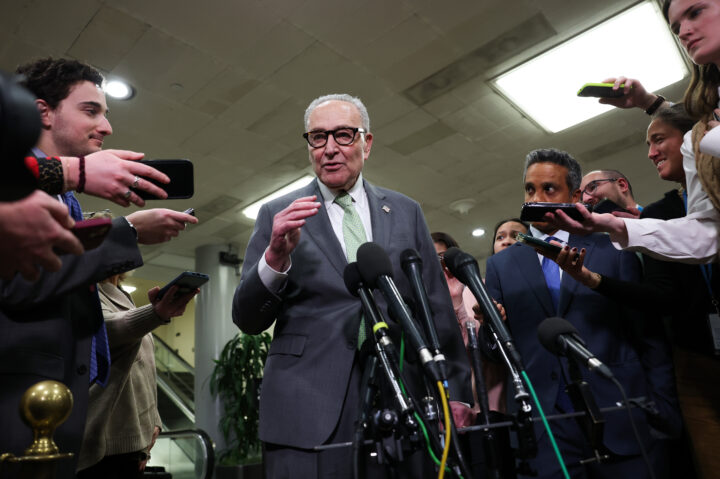
Senate Minority Leader Charles Schumer (D-NY) speaks to the media after briefings on Iran at the U.S. Capitol on March 3, 2026 in Washington, DC.
Following a classified briefing on Tuesday, Senate Republicans strongly rejected claims that Israel had effectively forced the U.S.’ hand into war with Iran or dictated the timeline of the conflict, claims that were fueled by comments on Monday by Secretary of State Marco Rubio and top lawmakers who were briefed on the Trump administration’s plans.
Sen. Rick Scott (R-FL) told Jewish Insider he had been in touch with the administration since the war began, and that no one in the administration had told him that Israel had triggered the U.S. to act.
“Anybody that thinks they’re going to get President Trump to do anything — talk to anybody that’s done business with him for his entire business career,” Sen. Markwayne Mullin (R-OK) told JI, calling the idea that Israel had forced Trump’s hand “a joke.”
Sen. John Hoeven (R-ND) added, ”We work very closely with our ally Israel for maximum effect to take out Iran’s capabilities when they are the weakest so we minimize the risk to our military and civilians in the region.”
Democrats also distanced themselves from the narrative that emerged on Monday.
Asked whether Israel had prompted the start of hostilities, Senate Minority Leader Chuck Schumer (D-NY), who was also briefed on Monday, told JI, “No one wants an endless war, but we certainly don’t want a nuclear Iran, that’s for sure.”
Sen. Andy Kim (D-NJ) said that the responsibility for the operation “always falls squarely on President Trump. Regardless of what other countries are doing, he is the one that owns this.”
“Look, I certainly have my concerns about how this all unfolded, but I think it’s very important for the American people to know that this was still Donald Trump’s decision,” Kim continued.
Other Democrats framed the narrative as one of several shifting explanations the administration has offered.
Sen. Cory Booker (D-NJ) said that the administration “jump[s] around until they think they found an explanation that could satisfy the most people. They have changed their justification for this time and time again, and we got nothing that even approached a justifiable reason for the president to commit an act of war.”
Rep. Greg Meeks (D-NY), the ranking member of the House Foreign Affairs Committee, also said that placing responsibility with Israel was one of just several shifting rationales. “Each day, sometimes twice a day, the rationale for doing this changes. That tells me it is not serious.”
Other Democrats, however, said that the timing of the onset of hostilities was impacted by Israel’s plans.
“The way we got into this war, I think, put the principal decision in another country’s hands, rather than ours, and did not lead to preparations in advance of the war starting that protected as many Americans as possible,” Sen. Chris Coons (D-DE) said.
Democrats supporting the war powers resolution set to come up for a vote in the Senate on Wednesday — which mandates the withdrawal of U.S. forces from combat with Iran — argued on Tuesday that the resolution would nevertheless allow some sort of wind-down of U.S. operations, as U.S. bases and embassies come under fire by Iran, though they did not offer specifics.
“I think they’d be allowed to conduct the completion of the operation,” Sen. Brian Schatz (D-HI) said.
Sen. Adam Schiff (D-CA), a cosponsor of the war powers resolution, said, “It would require an end to the use of force. I’m sure it would permit the safe drawdown of our forces in the region, but it would insist on the president coming to Congress to seek an authorization, to make the case — if indeed he believes there’s a case to be made.”
Though the resolution “terminate[s] the use of United States Armed Forces from hostilities against the Islamic Republic of Iran or any part of its government or military,” Meeks said that the resolution “does not say that the president has to move everybody out.”
“It says, though, that he has to come and talk to us and tell us what the end game, what the beginning game is. We just cannot get involved in the hostilities, as of right now,” Meeks told JI. “Israel will do what it’s doing, I would imagine. But the American people need to know where their members of Congress stand.” He’s supporting a similar resolution in the House.
Sen. Tim Kaine (D-VA), the lead sponsor of the war powers resolution, said that if it fails as expected, he can and may continue re-filing the resolution as the war continues, and as casualties and disruptions mount. He said that Democrats are also contemplating other measures, such as using the appropriations process or amendments to other legislation, to force lawmakers to vote on the war.
Several Democrats also said Congress should vote on an authorization for use of military force, in addition to the war powers resolution. Sen. Chris Murphy (D-CT) said that Senate Democrats should refuse to provide votes on any legislation until such a vote occurs.
Meeks said he expects that the conflict will still be ongoing in 60 days, the end of the period in which the administration is legally allowed to conduct unilateral operations without congressional authorization.
Lawmakers offered differing views on whether American ground operations inside Iran are likely.
Scott said that the U.S. shouldn’t take a ground invasion off the table but he was hopeful that the mission could be accomplished through airstrikes.
“You never take that off the table. That would be stupid. That’s what Obama did, and that’s what Biden did. We’d never do that,” Scott said. He said he did not think congressional authorization would be needed to send in troops on the ground, which others see as a significant escalation.
Sen. Josh Hawley (R-MO) said that Trump “hasn’t ruled it out, but I’d urge him to rule it out” and said that a congressional authorization would, in his view, be necessary to put boots on the ground.
Sen. Richard Blumenthal (D-CT) said his takeaway from the briefing is that U.S. ground forces “may be necessary to accomplish objectives that the administration seems to have.”
Trump reportedly spoke this weekend to Kurdish leaders about potentially launching an offensive against the Iranian regime, but Kim said that the subject did not come up in the briefing.
“You wouldn’t be having those conversations if you weren’t thinking about maybe getting different actors on the ground,” Kim told JI. “It very much feels like they are fomenting, potentially, different groups on the ground to start to get engaged in what will essentially be what happened in Syria before, what happened in Libya before. And so if they are trying to start a civil war, this is a very good way to go about it.”
Senators, particularly Democrats, also said after the briefing that Cabinet officials told them to expect stronger strikes going forward, and that the past few days have been the beginning of a much longer operation.
“This is the most significant military action this country has taken since the Iraq war. … They told us in there that this is an open-ended operation that hasn’t even really started in earnest yet,” Murphy said.
Sen. Lindsey Graham (R-SC) said that he believes the U.S. coalition against Iran is expanding, making the “demise of the regime far more likely” every day, adding, “Stay tuned … the liberation of Iran is at hand. The gateway to peace is about to open.” He predicted that normalization between Israel and additional Arab countries would be forthcoming.
Coons warned that the U.S. should be “careful” about how it addresses Iranian dissidents, emphasizing there was no plan he was aware of to send assistance, troops or arms to allow them to defend themselves from the Iranian security apparatus, which he said remains fully capable of repressing civilians. He said he’s “heard nothing that suggests” that enough of the regime has been eliminated to allow for a mass uprising.
Kim said that he is “very concerned” about the U.S.’ stockpiles of air defense interceptors, and “did not get a satisfactory answer,” though some Republicans said they believed U.S. munitions supplies are sufficient.
Kim said he believes that the interceptor stockpiles for both the U.S. and its Arab allies will be a “determining factor for the length of this war, as well as whether other countries are getting involved.”
The United States-Israel FUTURES Act, will be introduced in the Senate by Sens. Ted Budd (R-NC) and Kirsten Gillibrand (D-NY) and in the House by Rep. Ronny Jackson (R-TX)

JALAA MAREY/AFP via Getty Images
A picture taken on August 5, 2021, shows an Iron Dome defense system battery, designed to intercept and destroy incoming short-range rockets and artillery shells, in the Hula Valley in northern Israel near the border with Lebanon.
A pair of senators and a House lawmaker will introduce bipartisan, bicameral legislation on Thursday aimed at boosting U.S.-Israeli cooperation on bilateral defense programs.
The United States-Israel Framework for Upgraded Technologies, Unified Research, and Enhanced Security Act of 2026, abbreviated to the United States-Israel FUTURES Act, will be introduced in the Senate by Sens. Ted Budd (R-NC) and Kirsten Gillibrand (D-NY) and in the House by Rep. Ronny Jackson (R-TX). The bill establishes a cooperative initiative focused on accelerating and expanding bilateral defense technology research, development, testing and evaluation projects, as well as supporting industrial cooperation.
The U.S. and Israel have worked together for years on bilateral defense and technology programs, most notably U.S.-Israel cooperative missile-defense programs — including Iron Dome, which offers protection against drones and short-range surface-to-surface rockets; David’s Sling, which can intercept short-to-medium- and medium-to-long-range surface-to-surface missiles fired from 62 to 124 miles away; and the Arrow-2 and Arrow-3 systems, which can intercept longer-range ballistic missiles. Another is the anti-tunneling and counter-unmanned aerial systems programs.
“The U.S. has a long history of working with our ally Israel on defense programs to counter unmanned aerial systems from our adversaries, strengthen missile defense, and detect and neutralize underground tunnels threatening the security of our two respective countries,” Budd told Jewish Insider in a statement on the bill.
“The U.S.-Israel FUTURES Act offers an opportunity to strengthen existing bilateral programs by advancing joint investments such as emerging technologies, defense industrial base cooperation, artificial intelligence, and biotechnology initiatives,” his statement continued. “I am proud to be working with Sen. Gillibrand to advance regional security in the Middle East and strengthen U.S. and Israeli defense.”
Gillibrand told JI, “This bipartisan initiative will enable long-term collaboration on shared security goals between the United States and our vital democratic ally Israel. We must strengthen our military and technological capabilities to counter continued and future threats in the region.”
Jackson told JI that the bill “secures America’s competitive edge in defense technology and reinforces our alliance with Israel, our greatest partner in the Middle East, to deter evolving global threats.”
“Under President Trump’s leadership, we are ensuring the technological supremacy of our military and delivering the unmatched capabilities our warfighters need to dominate the battlefield and protect the American people,” Jackson said.
Lawmakers press the Swiss banking giant to release documents on its predecessor’s support for Nazi Germany, while the bank seeks a court order to shield itself from further financial claims
ROBERTO SCHMIDT/AFP via Getty Images
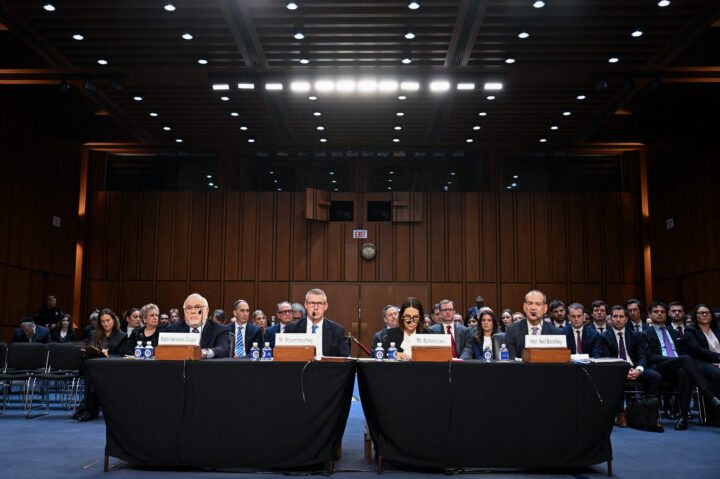
(L/R) Rabbi Abraham Cooper, Robert Karofsky, Global Wealth Management President at UBS Americas, Barbara Levi, General Counsel at UBS Group AG, and Neil Barofsky, partner at Jenner and Block LLP, testify during a Senate Judiciary Committee hearing titled "The Truth Revealed: Hidden Facts Regarding Nazis and Swiss Banks," on Capitol Hill in Washington, DC, on February 3, 2026.
Republican and Democratic senators urged senior UBS executives in a hearing on Tuesday to reconsider the Swiss banking giant’s continued refusal to hand over more than 150 documents to an investigator probing Credit Suisse’s support for Nazi Germany during and after World War II.
At the heart of the dispute is UBS’s decision to withhold key documents from the investigation into Credit Suisse’s wartime actions, citing potential legal risks stemming from a 1998 settlement. Lawmakers are pressing the bank to release the files, arguing that withholding them is an attempt to avoid accountability for its historical role in aiding Nazi operations. The documents in question are believed to contain critical information that could further illuminate Credit Suisse’s involvement with Nazi officials, and senators are pushing UBS to cooperate fully in order to ensure transparency and justice for Holocaust survivors and their families.
Senators pressed Robert Karofsky, president of UBS Americas, and Barbara Levi, UBS Group’s general counsel, to reverse course on the bank’s opposition to sharing with attorney Neil Barofsky and Congress the remaining files on the yearslong investigation into the ways that Credit Suisse, which UBS acquired in 2023, aided Adolf Hitler’s war efforts.
Karofsky and Levi testified at the Senate Judiciary Committee hearing that UBS could not provide the documents until the New York judge that approved a $1.25 billion settlement in 1998 between multiple Swiss banks, including Credit Suisse, and Holocaust survivors issued an order affirming that the deal would cover any future claims.
Among those testifying was Rabbi Abraham Cooper, the director of global social action at the Simon Wiesenthal Center, who accused UBS of “actively blocking important aspects of Mr. Barofsky’s work” and alleged that the bank was seeking to silence the Jewish organization.
In his opening statement, Sen. Chuck Grassley (R-IA), the committee’s chairman, accused UBS of taking “legal action against a Jewish human rights organization” to “block” the Simon Wiesenthal Center “from fully speaking on all Holocaust issues,” after SWC accused Credit Suisse in 2020 of not fully disclosing its Nazi ties. Grassley also said the bank has been attempting “to limit” the ability of Neil Barofsky, the independent ombudsman the bank hired to oversee the probe, to testify before the committee.
“These efforts, if successful, would have frustrated this committee’s public hearing. UBS’ conduct is absurd and a historic shame that’ll outlive today’s hearing. Before UBS’ recent obstructive efforts, the investigation yielded new information,” Grassley said.
The UBS executives told the committee that threats of litigation from SWC and other Jewish organizations for additional compensation beyond the $1.25 billion settlement had prompted them to request an updated order from the judge, which senators rejected as an attempt to skirt accountability.
“That’s what this is all about, you don’t want to pay any more money,” Sen. John Kennedy (R-LA) told Karofsky.
“Yes,” Karofsky replied.
“If you owe more money, then by God, pay it,” the Louisiana senator said in response.
The bank’s request that the judge bar SWC and other Jewish groups from commenting publicly on any new revelations from the 150 documents or the bank’s financial obligations was also poorly received by senators.
“UBS, the successor to Credit Suisse, has gone to court not to disclose what was concealed, but to seek an order that would silence discussion of these crimes by Jewish organizations demanding accountability,” Sen. Ted Cruz (R-TX) said. “That is not closure. It is the continuation of the wrongdoing this time through the courts.”
After Levi told Cruz that UBS has “no intention to sue” SWC, the Texas senator responded, “Yet as you sit here today, UBS has a motion pending before a federal court in New York seeking to enjoin the Simon Wiesenthal Center and over a dozen other Jewish organizations in America from ever researching, speaking or publishing any content related to ‘The Holocaust, World War II and its prelude and aftermath, victims or targets of Nazi persecution and transactions with or actions of the Nazi regime.’”
Cruz then mused that it was “bizarre that UBS has expressed its commitment to pursuing the truth but is actively seeking court orders to silence it.”
“Jewish families sought refuge in Swiss banks, believing in the promise of neutrality. That refuge proved illusory. That promise proved hollow. Accounts vanished, records dissolved. Then came the cattle cars bound for camps with no return. Economic annihilation was the prerequisite. Mass extermination was the goal,” Cruz continued.
Levi repeatedly defended the request UBS had made to the judge in New York, asking senators in response to a question from Sen. Adam Schiff (D-CA): “Where is the incentive for financial institutions to investigate or cooperate when they’re certain to face litigation and possible legal liability?”
Levi said that should the judge issue the requested order, the bank would hand over the final files to Barofsky. UBS fired Barofsky in 2022 but rehired him to continue his work in 2023 after Grassley, who was then the top Republican on the Senate Budget Committee, and Sen. Sheldon Whitehouse (D-RI), who chaired the Budget Committee during that time, launched an investigation into his dismissal.
Barofsky, who also appeared before the committee on Tuesday, testified that UBS had been cooperative with his investigation from the time of his rehiring until November of last year, as both sides reached a stalemate on the 150 documents. The files, Barofsky said, appear to go to “the heart of our investigation,” which has seen UBS turn over more than 16 million documents.
Several revelations were made during the hearing, a pronouncement from Grassley that his probe had uncovered 890 previously undisclosed Credit Suisse accounts with potential Nazi links and that Argentine President Javier Milei had provided investigators with archival records of the “ratlines” used by prominent Nazis who escaped justice by fleeing to Argentina. Barofsky shared as part of a 73-page update on his investigation that Credit Suisse helped to finance the “ratlines” and was a landlord for an office in Bern, Germany, that oversaw the process by which Nazi officials bribed their way onto flights out of the country.
“A lengthy saga it has been, but it is also a saga that has demonstrated what good bipartisan congressional oversight can achieve,” Whitehouse said in his opening statement. “Chairman Grassley has long been a dogged champion of congressional oversight, and for that, I admire him. That is one of the reasons we partnered on this investigation. Elected officials working across the aisle to expose wrongdoing, malfeasance and misconduct is essential to advancing transparency, promoting accountability, guaranteeing public trust in private institutions, and I would add in public institutions as well, and pursuing justice.”
In a statement following the hearing, SWC CEO Jim Berk said, “Transparency is not about rewriting history; it is about completing it. We are proud of our role in initiating this independent investigative process with our own initial findings and then zealously pursuing complete accountability. Ensuring access to the full historical record is a core part of the Simon Wiesenthal Center’s mission and essential for survivors and their families, for public trust, and for preserving the integrity of Holocaust memory.”
The organization said that it “applauds” the committee “for its continued oversight and commitment to ensuring that the historical record of the Holocaust and its aftermath are examined thoroughly and responsibly, including by demanding answers from those who would prefer the truth to remain hidden.”
“Today’s hearing is an important moment in ensuring that remaining questions about Holocaust-era assets continue to be examined, and that the investigation into Credit Suisse initiated by the Simon Wiesenthal Center is allowed to proceed without interference.”
‘Today, many of the NGOs and technology providers that maintain these tools are facing closure due to funding cuts,’ the letter warns
Nathan Posner/Anadolu via Getty Images
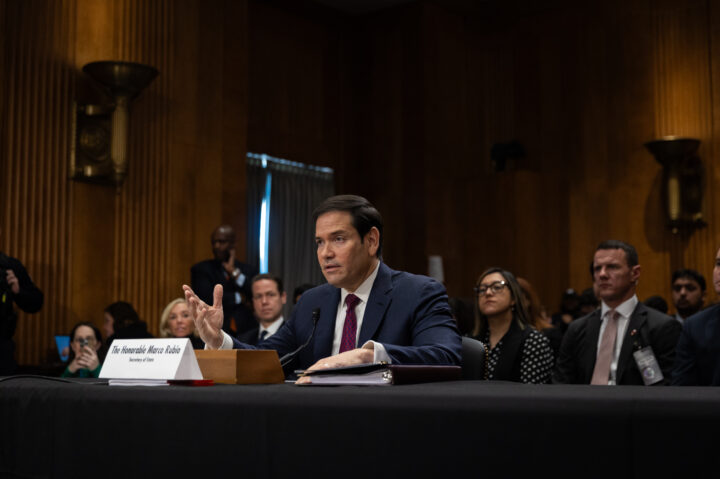
Secretary of State Marco Rubio testifies during a Senate Foreign Relations Committee hearing on Venezuela, in Washington, DC, United States on January 28, 2026.
A bipartisan group of senators wrote to Secretary of State Marco Rubio on Wednesday urging him to “surge resources to quickly enable critical internet freedom support” to protesters in Iran, pointing to funding cuts that have stretched resources for such programs.
“Today, many of the NGOs and technology providers that maintain these tools are facing closure due to funding cuts and more importantly, fewer Iranian citizens can share their videos and messages with the world and each other,” the letter warns. “Without the continuous operation of internet freedom programming carried out by the State Department and Open Technology Fund, millions of Iranians will lose their last secure window and voice to the outside world.”
The lawmakers, Sens. James Lankford (R-OK), Jacky Rosen (D-NV), Lindsey Graham (R-SC) and Cory Booker (D-NJ), warned that if U.S. programs fully lapse, regime-controlled programs and state media will step into the gap, “giving the regime near-total control over the digital space and putting users at far greater risk.”
“As we watch brave Iranians take to the streets, it is clear that supporting the Iranian people’s access to information is not a partisan issue but a matter of national security, as well as meeting legislative requirements for a strategy for promoting internet freedom in Iran,” the lawmakers said, pointing to existing legislation mandating the State Department to expand internet access in Iran. “The United States must pair its maximum pressure on the regime with maximum support for the Iranian people.”
The letter comes at a time when Congress has offered few of its own strategies to respond to the wave of protests around Iran — which, according to Rubio, have now largely been put down by the regime.
Such efforts to promote free internet access to the Iranian people, amid efforts by the regime to impose an internet blackout, have emerged as a key area of bipartisan agreement.
Much of the U.S.’ global communications programming, including funding for promoting internet access, was slashed last year amid cutbacks to various foreign aid programs. Some prominent Republicans have criticized the administration, saying that government-sponsored news programming and communications assistance have failed to meet the moment in Iran.
The letter emphasizes the “long-standing and bipartisan commitment” to supporting internet freedom programs, which are “more important than ever as the people of Iran protest against the regime in record numbers.” The legislators noted that prior administrations have, for two decades, supported various anti-censorship and internet freedom tools in Iran, and that Congress passed legislation in 2024 supporting such programs.
“Without U.S. leadership, an entire generation of Iranians would have remained in the dark — and the most powerful source of pressure against the Islamic Republic, the Iranian people themselves, would have been neutralized,” the letter reads.
It notes that the existing U.S. programs allowing a small number of Iranians to remain online had “proved decisive” during the Israel-Iran war last summer to demonstrate the division between the Iranian people and the regime, and said that expanded internet access now “would put a spotlight on the increasingly securitized atmosphere that is cracking down on dissent.”
A bipartisan group of lawmakers that attended the Sunday dinner called the discussion ‘open,’ ‘moving’ and ‘constructive’
Francis Chung/POLITICO via AP Images
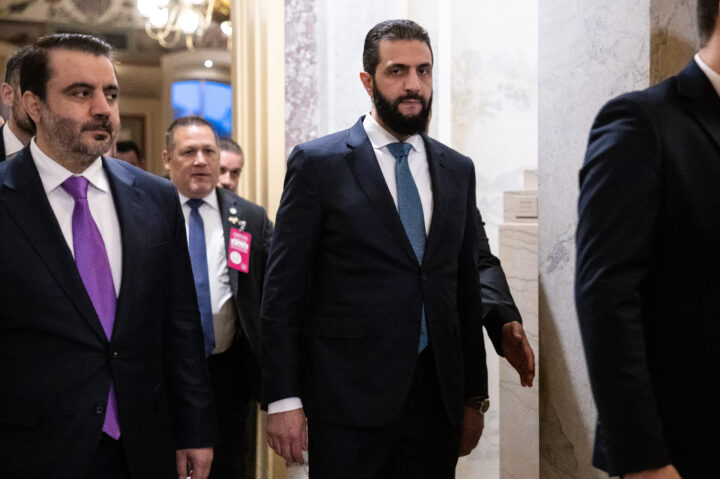
Syrian President Ahmed al-Sharaa departs a meeting in the Senate Foreign Relations Committee hearing room at the U.S. Capitol, Nov. 10, 2025.
Senators offered a positive readout from a dinner meeting with Syrian President Ahmad al-Sharaa on Sunday evening prior to al-Sharaa’s Monday summit at the White House with President Donald Trump.
Sen. Markwayne Mullin (R-OK) told Jewish Insider that al-Sharaa was “very charismatic” and “had a very open conversation” about his “checkered past” with senators. “I found it to be straightforward. I thought his answers were what we needed to hear, but I think he honestly believed it too,” Mullin said of the dinner.
“I was with him in Damascus in August. I led the first delegation there with [Rep.] Jason Smith (R-MO), [Rep.] Jimmy Panetta (D-CA) and [Sen.] Joni Ernst (R-IA). This was kind of more of the same, just building on that,” Mullin told JI. “When we talked in August, there were some issues that he brought up with sanctions towards the Assad regime that we need to work on. I’ve already been working on that, so we wanted to give him an update on it.”
The Oklahoma Republican said progress was being made on lifting the sanctions, something he attributed to the fact that the U.S. wants the al-Sharaa regime to “be successful.”
“He may not fit the mold of what you’d want as a leader in Syria. Actually, if you look at it, he’s probably what needs to be in Syria right now, because they’ve been at war for so long,” Mullin said. “As I told him, it’s trust — but verify. And so far, he’s making all the right moves. He’s trying to actually formalize relationships with Israel, that’s huge for that region. So, as he continues to move down this path, we want to continue to help him be successful.”
Sen. Elissa Slotkin (D-MI) told JI that, as a longtime Middle East and counterterrorism official, “it was quite a change to be sitting across the table from someone a decade ago I may have looked at in a very different light. But he was very impressive.”
She said that Michigan has a large Syrian-American community that supports efforts to lift sanctions and reopen Syria to the world, “so it was actually in some parts, even quite moving.” Slotkin said she also supports lifting sanctions to “do what I can to give them a shot,” and added that she wants to visit Syria.
“There were a number of people at the dinner, Democrats and Republicans, who have former service in the global war on terror,” Slotkin continued. “There was something really almost emotional about sitting across the table from someone who years ago would have been an adversary who now seems like he’s trying to really make Syria work. It was quite moving.”
Sen. Chris Coons (D-DE) echoed his colleagues’ comments about wanting to see al-Sharaa be successful in ushering Syria into a peaceful era.
“We need Syria to succeed. We want Syria to succeed. Peace between Syria and Israel is absolutely essential. Respect and support for the Syrian Democratic Forces is essential,” Coons told JI, referring to the Kurdish-led group that has been a key U.S. ally inside Syria.
The Delaware senator said that the Sunday evening discussion “was broadly a constructive conversation. For some of the members who were present, it was their first time meeting him. For most of us, it was our second or third conversation with him.”
“Having a pathway towards repealing the state sponsor of terrorism designation and repealing or downgrading the Caesar sanctions were key asks of his, and I believe the NDAA has a Risch-Shaheen provision that repeals the Caesar sanctions,” Coons added.
Sen. Richard Blumenthal (D-CT) called the meeting “encouraging and positive.”
“I think that the relationship with Israel is still challenging,” Blumenthal told JI. “I asked him very specifically about it, but on the whole, I think it’s a new chapter for the region that could be extremely promising.”
Ernst, who also attended the dinner, described it in a statement as “frank and constructive,” praising Trump for engaging with al-Sharaa.
“Today’s visit is an important step toward building trust, fostering dialogue, and uniting Syria’s diverse ethnic and religious communities,” Ernst said. “Under President Trump’s leadership, there is a real opportunity to advance peace in the Middle East and make the vision of a more stable and prosperous world a reality.”
Other lawmakers who attended the dinner were Reps. Brian Mast (R-FL), Marlin Stutzman (R-TN), Joe Wilson (R-SC) and Abe Hamadeh (R-AZ). Mast, according to Politico, was not planning to attend the meeting but happened to be at the same hotel where the meeting was occurring and was asked to join.
He offered a more tepid readout than many of the other attendees.
Both Republican and Democratic senators grilled Amer Ghalib over his extremist comments; GOP Sen. Ted Cruz said he’ll vote against him
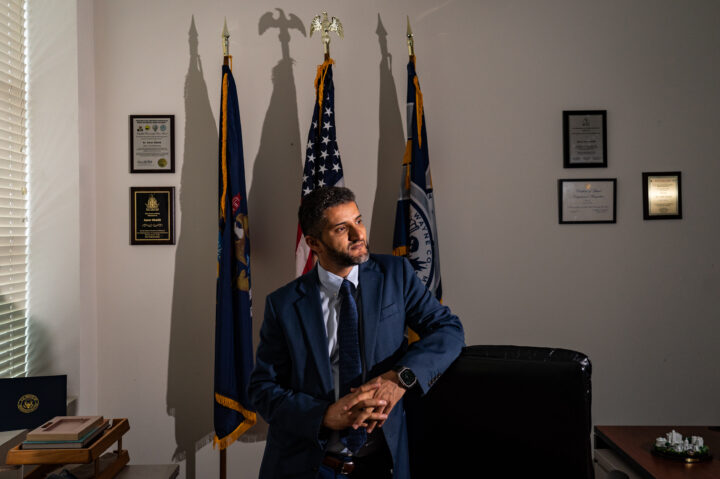
Salwan Georges/The Washington Post via Getty Images
Hamtramck Mayor Amer Ghalib is photographed in his office at the City Hall in Hamtramck, Michigan, Sunday, September 10, 2023.
Amer Ghalib, the mayor of Hamtramck, Mich., and President Donald Trump’s embattled nominee to be U.S. ambassador to Kuwait, struggled to win over skeptical senators of both parties during his confirmation hearing on Thursday as he faced a grilling over his long record of promoting antisemitic ideas and embracing anti-Israel positions as an elected official.
Ghalib was grilled by Democrats and Republicans on the Senate Foreign Relations Committee, which began when the committee’s ranking Democrat, Sen. Jeanne Shaheen (D-NH), called out his litany of antisemitic comments and denial of sexual violence during Hamas’ Oct. 7 attack.
It culminated with Sen. Ted Cruz (R-TX), after questioning Ghalib about his past opposition to the Abraham Accords and support of boycotts against Israel, announcing at the end of the hearing that he would not be able to support his nomination.
Senators on both sides of the aisle pressed Ghalib over a litany of extremist views and statements he’s made in recent years. In addition to his denial of the scope of the Oct. 7 Hamas attacks, senators also pointed to past comments he made suggesting that the terrorism itself was justified. They also questioned him over his consistent unwillingness to acknowledge Israel’s right to exist, and even when pressed at the hearing, resisted recognizing Israel’s place as the Jewish homeland.
He also faced bipartisan scrutiny over his recent characterization of Saddam Hussein, the former Iraqi dictator who invaded Kuwait, as a “martyr” — a social media post senators found stunning given that he’s being tapped as ambassador to the country Hussein invaded.
His record of antisemitic commentary was also probed, with senators asking about his liking a comment on Facebook referring to all Jews as “monkeys” and the record of one of his political appointees in Hamtramck who said the Holocaust was “God’s advanced punishment of the chosen people” over Israel’s war in Gaza.
Ghalib also tried to evade responsibility for Hamtramck becoming the first city in the nation to adopt a Boycott, Divestment and Sanctions policy against Israel. He claimed he played no formal role in that designation.
Throughout the hearing, Ghalib declined to walk back his comments, repeatedly arguing that what he believes in his “personal capacity” should be distinguished from how he planned to act in his “official capacity” as a U.S. ambassador. “I’m a Semite. The Arabs are Semites. Do we read history? How can we be antisemites? And I think, like I said, judge my actions and not my intentions,” Ghalib said.
Cruz, in the hearing, became the first Republican senator to say he can’t support Ghalib’s nomination. Several other GOP senators on the committee are considering coming out against Ghalib, according to sources familiar with lawmakers’ thinking.
“I believe your beliefs are sincere. I believe that when you became the mayor of the first city in America to pass a BDS resolution, it’s because you believe in BDS,” Cruz said. “What I do not understand is how you could possibly serve as United States ambassador for President Trump in the Middle East when you have passionate views, including having been a vocal opponent of the Abraham Accords, the singular and most consequential accomplishment President Trump has negotiated.”
“Your long-standing views are directly contrary to the views and positions of President Trump and to the position of the United States. I, for one, am not going to be able to support your confirmation,” he continued.
Sen. John Curtis (R-UT) who serves on the committee but was not in attendance at the hearing, released a statement after Ghalib’s testimony saying that the Utah senator is “deeply concerned about Mr. Ghalib’s nomination.”
“It is crucial that we expand peace in the Middle East and that begins with the acceptance of Israel’s right to exist. Ghalib has demonstrated he is sympathetic to beliefs that run completely contrary to that goal,” the statement read.
“I think that you have dug your hole deeper today,” Sen. Chris Murphy (D-CT) told Ghalib. “It doesn’t matter to me whether you support the president’s [Middle East peace] plan. Again, this idea that your personal views don’t matter is ridiculous.”
Senators told Ghalib that he was welcome to hold incendiary points of view or embrace those with such beliefs, but that would likely disqualify him for a role representing the United States as ambassador.
Sen. Jacky Rosen (D-NV), a co-chair of the Senate Bipartisan Task Force for Combating Antisemitism, excoriated Ghalib during her opening statement, describing his conduct as unacceptable for a public figure. “As an elected official, you had a responsibility to work with your constituents to eliminate hatred from communities, all hatred from communities, but instead, you chose to inflame divisions and traffic in antisemitism,” Rosen said.
“You liked a Facebook comment comparing Jews to monkeys. You characterize leaders you don’t like as ‘becoming Jewish.’ As mayor, you failed to comment after one of your political appointees suggested the Holocaust was ‘advance punishment’ for the war in Gaza, and you denied the Hamas used sexual violence as a weapon of war on Oct. 7,” she continued. “You can disagree with the Israeli government, but peddling antisemitism in such a public manner, as an elected official, as a community leader, is beyond the pale.”
Ghalib was asked four times — three by Sen. Dave McCormick (R-PA) and once by Murphy — if he would say that he supports Israel’s right to exist as a homeland for the Jewish people. “I think everybody, we can coexist in the region, and everybody has the right to exist now,” Ghalib told McCormick after the Pennsylvania senator’s third time asking the question.
Only after Murphy criticized his refusal to answer McCormick’s question did Ghalib respond directly.
“I believe it can be a home for the Jewish and the Arabs and the Muslims and the Christians as well. And that’s why it’s a diverse land for the three major religions,” Ghalib told Murphy, without mentioning Israel by name. “I think they can coexist, all the nations in the Middle East, based on the peace plan of President Trump that I support strongly.”
Murphy pressed Ghalib on his claims that he had condemned the October 2023 comments by Nasr Hussain, a political appointee of his on the Hamtramck Plan Commission, about the Holocaust being “God’s advanced punishment,” noting that Ghalib had not responded to requests from senators for proof that he had distanced himself from Hussain.
Sen. Tim Kaine (D-VA) also pointed out that Ghalib had expressed support for the Houthis’ November 2023 hijacking of the British-owned Galaxy Leader cargo ship in the Red Sea, prompting Ghalib to deny he had ever made such a statement.
Kaine then asked if he was denying that he had authored the social media post with the statement. Ghalib responded by suggesting that he now opposes the attack, and then appeared to accuse the Virginia senator of making “assumptions” and taking his words “out of context.”
“I don’t think it’s a celebration. This is an assumption that [you’re] making. I disagree with attacking the ships and disrupting,” Ghalib said. “I think there was a post, but it seems like it’s taken out of context. Maybe I commented, I don’t know.”
Later on, Cruz grilled Ghalib about a social media post he wrote in 2020 praising the Muslim Brotherhood as “an inspiration” and asked whether his stated support for the group would be a conflict if the Trump administration were to designate the Brotherhood as a terrorist organization. Ghalib said he would implement the president’s policies, though only after downplaying the group’s extremism.
“I believe that it’s an ideology. It’s not just a group of people. I disagree with a lot of things that they do. Some of them are extremists. Some of them are part of some governments in the Middle East,” Ghalib said of the Muslim Brotherhood.
Shaheen, the top Democrat on the committee, called Ghalib’s expressed beliefs “abhorrent” and said she was “very concerned about some of the statements that you have made, and frankly, what appear to be antisemitic views.” The New Hampshire senator said she took grave offense to Ghalib’s comments claiming that reports of sexual violence by Hamas on Oct. 7 were “lies and deception” and expected him to offer “an unequivocal condemnation of the horrific crimes committed on Oct. 7.”
Ghalib said he had “totally condemned what happened on Oct. 7” after learning of the atrocities, and claimed that he “was not aware” of what “kinds of abuses” Hamas had orchestrated when he made those comments. He also alleged that local media had misrepresented his past social media posts and public comments to make it look like he was antisemitic or supportive of terrorists and dictators.
“I’m in politics. I understand the press doesn’t always accurately represent what we say,” Shaheen replied. “That doesn’t explain the comments you made to my staff, nor the direct quotes from your hometown news outlet about sexual violence on Oct. 7. The fact that you represented to my staff that there was no documented evidence of that just shows to me a lack of recognition of what was going on.”
The only apology Ghalib offered regarding his past remarks related to his comments about Saddam Hussein, telling senators that he was sorry if his description of the late dictator had caused offense, especially with “those who suffered from Saddam or lost loved ones.” He explained that he was complimenting Hussein for “keeping the Iranian regime in check” after McCormick noted that he served in the 82nd Airborne Division that helped liberate Kuwait from Hussein’s forces.
The White House did not respond to Jewish Insider’s request for comment on the status of Ghalib’s nomination.
‘You can’t confer Article 5 protections by executive order, and I don’t think there’d be any appetite at all [in Congress] to do that through a treaty,’ Sen. Lindsey Graham (R-SC) said

Win McNamee/Getty Images
U.S. President Donald J. Trump and Emir of Qatar Tamim bin Hamad al Thani attend a signing ceremony at the Amiri Diwan, the official workplace of the emir, on May 14, 2025, in Doha, Qatar.
Several senators said on Friday that the administration’s unilateral offer of defense guarantees to Qatar — similar to those the U.S. has made to protect its NATO allies — deserves scrutiny from Congress.
The administration on Monday quietly issued an executive order stating that the U.S. would offer defensive guarantees to Qatar, “shall regard any armed attack on the territory, sovereignty, or critical infrastructure of the State of Qatar as a threat to the peace and security of the United States” and “shall take all lawful and appropriate measures — including diplomatic, economic, and, if necessary, military — to defend the interests of the United States and of the State of Qatar and to restore peace and stability.”
Sen. Todd Young (R-IN), a top Republican voice in favor of reclaiming congressional war powers, said that the deal “certainly strikes me as unconventional and the sort of thing that the Foreign Relations Committee might want to hold a hearing on.”
“In the end, it’s the chairman’s prerogative, but it does strike me as worthy of attention and explication in a public setting,” Young said.
Sen. Tim Kaine (D-VA), another leading advocate on war powers issues and in opposition to the administration’s acceptance of a Qatari luxury jet for use as Air Force One, said that the move will carry the perception of corruption.
“I’m very troubled by it,” Kaine said. “It just looks like it was a trade for the jet. Maybe it’s not that, but that’s the way it looks. And why would you pollute something that maybe has a good rationale — but now it’s polluted with the way everybody looks at it.”
Sen. Rick Scott (R-FL), a leading Republican critic of U.S. support for Qatar, said that he planned to speak to the president about the order. “I haven’t talked to him [the president] about it. I don’t understand why. He hasn’t explained it to me, but I’ll ask him about it,” Scott told Jewish Insider.
Sen. Richard Blumenthal (D-CT) said that the deal “will have to be reviewed carefully, depending on whether it serves our security interests and Israel’s.”
Multiple Republican senators emphasized that the deal does not carry the force of congressional ratification as a treaty.
“I don’t think you can do that by executive order,” Sen. Lindsey Graham (R-SC) said.
Asked about Congress granting Qatar those protections, Graham replied: “I don’t like its chances [of getting through Congress]. I appreciate trying to stand up for Qatar because they’re helpful, but they also have another side of the story. You can’t confer Article 5 protections by executive order, and I don’t think there’d be any appetite at all to do that through a treaty.”
Sen. Pete Ricketts (R-NE) framed the deal as part of Trump’s pressure campaign on Hamas to agree to his framework for peace in Gaza.
“The president is always thinking about negotiations, and certainly the president can have his policy,” Ricketts said. “However, it is not something that is a treaty, so it’s really, I think, meant as a negotiating thing to help get Qatar to get Hamas to surrender.”
Sen. James Lankford (R-OK) said he hadn’t reviewed the details of the agreement yet, but noted that any long-term foreign agreement would require congressional ratification to remain in effect.
“If we’re going to a national security agreement long term, that’s going to be lasting,” Congress should be consulted, Lankford said. “Things only last if they have the imprimatur of Congress actually put on it — whether it’s a trade agreement or a defense agreement. It’s got to be statute.”
Sen. Mike Rounds (R-SD) told JI he had “not heard anything about” the deal before noting, “It’s always up to the president to decide what he would like to suggest that he would like to do. Article 5 is part of a treaty right now, and if it is a treaty-type of an agreement, it would have to come before the Senate.”
Sen. Markwayne Mullin (R-OK) defended the president’s support for Qatar, telling JI, “Qatar is an important piece of the pie, a piece of the puzzle in the Middle East. We have to recognize that. We don’t always agree with everything they do, but we don’t agree with everything Israel does and we don’t agree with everything Jordan does, but they’re still close friends of ours. We know they want to be close to us and we want to, we can still use them as a strategic ally.”
Sen. Lindsey Graham sounded skeptical that Hamas would accept the deal: ‘Distrust and verify with these guys’

Amir Levy/Getty Images
Senator Lindsey Graham (R-SC) speaks at a press conference on US-Israel relations on February 17, 2025 at the Kempinski Hotel in Tel Aviv, Israel.
Senators reacted with cautious optimism — and a degree of skepticism — to President Donald Trump’s announcement on Monday of a sweeping deal that would end the war in Gaza, see the release of the remaining hostages and facilitate reconstruction of the Gaza Strip.
Sen. Lindsey Graham (R-SC) warned that the execution of the deal would require close monitoring of Hamas’ compliance and that long-term peace in the region will likely require eliminating Iran’s other proxies, in addition to Hamas.
“I hope Hamas agrees — we’ll get the hostages home. Distrust and verify with these guys,” Graham said. “A lot of loopholes if you don’t watch it, but I hope we can land this deal.”
“When you talk about normalizing the Mideast, I’m all for that. But after Oct. 7, we have to learn one thing: As long as radical Islamic terrorist groups exist, you can’t have a normal Mideast,” Graham continued. “I hope we can land this deal and bring the hostages home and start a new chapter in Gaza and the West Bank, but I will never support normalization until Hezbollah is dealt with. You cannot say the Mideast is a normal place as long as Hezbollah is a threat the way it is today.”
He said that he’s concerned that Hezbollah would replicate Hamas’ Oct. 7 attack if Israel and Saudi Arabia again begin to move toward normalization again before the Lebanese terror group is eliminated.
“If we do the Hamas deal, we should insist that the region deal with Hezbollah and take them both down, then eventually the Houthis,” he continued. “My takeaway of Oct. 7 is if you don’t have these radical groups in a box, you can never really achieve peace.”
Sen. John Cornyn (R-TX) said that there are “some details to be filled in, but I think by and large this seems like a very encouraging development.”
Sen. Rick Scott (R-FL) was hesitant to offer an assessment of the deal before Hamas had agreed to the terms.
“It’s the deal that hasn’t happened yet. It’d be nice. I mean, I guess it would be great if we get the hostages back and we get a ceasefire and we get to rebuild Gaza. That all sounds really good. I’m glad that Trump cares about this. It seems optimistic,” he told JI.
Sen. Kevin Cramer (R-ND) expressed some hesitation about engaging with the Qataris and taking a deal, but suggested Trump was ready to bring the conflict to a close.
“It’s bold. It’s gutsy on the president’s part. I just will believe it when I see it. I’m just so skeptical of one side in this, getting Qatar in there and involved,” Cramer told JI. “Clearly we’re playing along a little. I don’t know. I just don’t know. I think the timing for Trump is sort of like, ‘Okay, now’s the time [for a ceasefire]. We’ve done the dance long enough.’”
Sen. Ted Budd (R-NC) said he’s reviewing the plan, adding that the elimination of Hamas is a necessity.
“You can’t have Hamas promising the destruction of Israel,” he continued. “As long as there’s no threat, I see an opportunity here, but you can’t make a deal with somebody that wants to exterminate you.”
Senate Foreign Relations Committee chair Jim Risch (R-ID) praised the plan on X. “President Trump again shows his commitment to peace with his plan to bring all the hostages home, end the war in Gaza and transition to a future that allows the Palestinian people to prosper without Hamas’ terror schemes,” Risch said. “Anyone who wants a better future for the Palestinian people should join this pursuit of peace.”
Sen. John Kennedy (R-LA) told Jewish Insider he’s “glad they look like they’re moving toward peace.”
“I don’t think Israel is worried any longer about being popular. I think Israel was worried about its survival, and I respect that. And they’re going to do whatever it takes,” Kennedy continued. “Now, will Hamas accept it? I don’t know. I really don’t know. I hope they do. But if they don’t, I think Israel needs to continue to do what it’s been doing and wipe Hamas off the face of the earth.”
Democrats expressed hope that the deal would bring the war to a close.
Sen. Chris Coons (D-DE) told JI, “I’m encouraged the president’s engaging directly and saying this war must end. Humanitarian relief needs to go in, hostages need to come out, there needs to be a plan going forward for Gaza,” but said he hadn’t seen the details of Trump’s announcement.
Sen. Richard Blumenthal (D-CT) said that he was not familiar with the specifics of the plan. “If there’s a ceasefire and return of the hostages and humanitarian relief, bravo,” Blumenthal said.
Sen. Peter Welch (D-VT), one of the most vocal critics of Israel’s Gaza operations in the Senate, told JI he hadn’t reviewed the plan but “my main concern [is to] start getting food and medicine in. That has to happen immediately.”
Sen. Jeanne Shaheen (D-NH), the ranking member of the Foreign Relations Committee, said in a statement. “I call on Hamas to accept, and Israel to faithfully implement, the proposal laid out by the United States.”
Prior to the meeting, leading Senate Democrats had urged Trump to press Israeli Prime Minister Benjamin Netanyahu to accept a hostage deal that ends the war, as well as to pressure Netanyahu to rule out annexation of the West Bank.
The bipartisan duo urged university leaders to ‘commit to ensuring Jewish institutions on your campus are equipped to protect the students they serve’
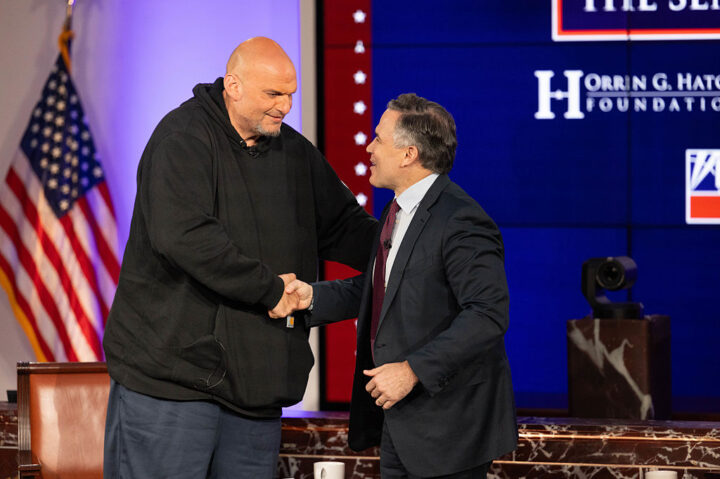
Scott Eisen/Getty Images
U.S. Senators John Fetterman (D-PA) and David McCormick (R-PA) shake hands after the sixth installment of The Senate Project moderated by FOX NEWS anchor Shannon Bream at the Edward M. Kennedy Institute for the United States Senate on June 2, 2025 in Boston, Massachusetts.
With the 2025-26 school year kicking off, Sens. Dave McCormick (R-PA) and John Fetterman (D-PA) wrote to the presidents of five Pennsylvania universities urging them to work with their Jewish communities to ensure Jewish students’ safety and ability to participate in campus life.
McCormick and Fetterman wrote the letters to the presidents of Lehigh University, Pennsylvania State University, the University of Pennsylvania, the University of Pittsburgh and Temple University, and suggested in part that the schools should cover additional security expenses incurred by campus Jewish organizations.
“We write to you to urge you, as a leader of a Pennsylvania university with a large Jewish student population, to commit to ensuring Jewish institutions on your campus are equipped to protect the students they serve, including by allocating the resources to do so,” the lawmakers wrote. “It is incumbent on all of us — especially our nation’s universities — to ensure vibrant Jewish life is not compromised or driven into the shadows.”
They urged the college presidents to “work with your campus’s Jewish institutions and ensure all students, regardless of their race, ethnicity, or shared ancestry, are safe and able to fully participate in campus life.”
The senators noted that antisemitic harassment and violence has plagued Jewish communities and institutions on campuses in the state, that “many Jewish institutions have been forced to cover the costs of additional security” and that students have been forced to hide their Judaism.
McCormick and Fetterman told the schools that “no students should feel like they must risk their safety” to practice their religion and that institutions such as Hillel and Chabad should not be forced to divert funding from programs toward security expenses.
They praised some Pennsylvania schools for taking steps to enforce their campus policies, break up encampments and suspend student groups involved in antisemitic activity.

Tom Williams/CQ-Roll Call, Inc via Getty Images
Senate Armed Services Committee Chairman Roger Wicker (R-MS) arrives for a confirmation hearing in Dirksen building on Tuesday, May 13, 2025.
Good Friday morning.
In today’s Daily Kickoff, we talk to senators about how the Trump administration should address the Houthis deadly attacks on ships in the Red Sea this week despite the terror group’s supposed ceasefire with the U.S., and report on DNC Chair Ken Martin’s dismissal of Zohran Mamdani’s defense of the “globalize the intifada” slogan. We have an exclusive on a bipartisan letter from lawmakers demanding answers from Elon Musk regarding his AI chatbot’s antisemitic screeds, and talk to the family members of fallen IDF soldiers whose bodies are still being held in Gaza. Additionally, we feature a rundown of the who’s who at this week’s annual Sun Valley conference. Also in today’s Daily Kickoff: Larry David, Robert Kraft and Jochanan Senf.
For less-distracted reading over the weekend, browse this week’s edition of the Weekly Print, a curated print-friendly PDF featuring a selection of recent Jewish Insider and eJewishPhilanthropy stories, including: Jewish students forge ahead in attending Ivy League universities, despite fears of antisemitism; Israel shifts approach to Syria’s new government as apprehension wanes; and As teachers unions target ADL and oppose antisemitism bill, Jewish educators sound the alarm. Print the latest edition here.
What We’re Watching
- Fox will air an hour-long interview tomorrow night with Israeli Prime Minister Benjamin Netanyahu, recorded with Mark Levin during the Israeli leader’s trip to the U.S. this week.
- On Sunday, former Reps. Steve Israel (D-NY) and Peter King (R-NY) will sit with author Daniel Silva at Long Island’s Sid Jacobson JCC to discuss Silva’s latest novel, An Inside Job.
What You Should Know
A QUICK WORD WITH JI’S JOSH KRAUSHAAR
Since Zohran Mamdani won the Democratic nomination for New York City mayor, there’s been a fascinating disconnect between the polls showing Mamdani still vulnerable in the general election and the sclerosis among political leaders unable to make the tough decisions on whether to rally behind an alternative in a bid to stop the socialist candidate from becoming the next mayor.
There hasn’t been much good polling since the primary, but the most recent general election surveys all paint a picture of Mamdani leading the race with a plurality, but far below what a typical Democratic nominee should be receiving after a stunning, come-from-behind defeat of former New York Gov. Andrew Cuomo.
One poll, conducted by the Democratic firm Slingshot Strategies between July 2-6, found Mamdani winning 35% of registered voters, Cuomo at 25%, Republican nominee Curtis Sliwa tallying 14%, Mayor Eric Adams at 11% and attorney Jim Walden at 1%. Thirteen percent said they were undecided.
A late-June poll by the GOP firm American Pulse found Mamdani at 35%, Cuomo at 29%, Sliwa winning 16% and Adams with 14%. Asked whether they were leaning towards voting for Mamdani or anyone but Mamdani, it was close to an even split, with 48% leaning towards Mamdani and 46% preferring anyone else.
Of note, both polls found the combined Cuomo and Adams vote — which roughly encompasses the lion’s share of the moderate Democratic electorate — narrowly outpacing Mamdani’s share of support. In other words, the Mamdani alternative wouldn’t necessarily need a large portion of the Republican vote to prevail.
SEA CHANGE
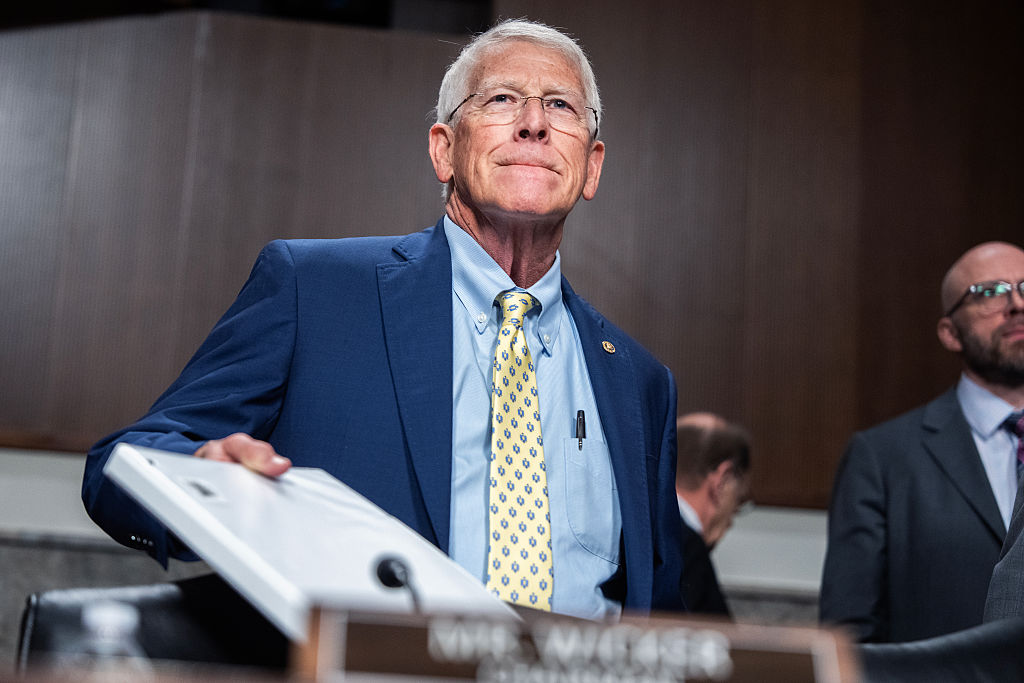
A top Senate lawmaker indicated on Thursday that he’s open to resumed U.S. involvement in the campaign against the Houthis, amid a ramp-up of the group’s attacks on commercial shipping in the Red Sea and Israel that comes two months after the U.S. and the Houthis reached a ceasefire that ended the American bombing campaign against the group, Jewish Insider’s Marc Rod reports.
Notable quotable: “The Houthis need to be totally eliminated,” Sen. Roger Wicker (R-MS), the chair of the Senate Armed Services Committee, told JI. “They have no purpose other than to kill free people.” Asked if the U.S. should become involved directly against the Houthis again, Wicker said, “I wouldn’t rule that out.”
Read the full story here, plus additional comments from Sens. Mark Kelly (D-AZ), James Lankford (R-OK), Mike Rounds (R-SD) and Ted Budd (R-NC).
Exclusive

A group comprised largely of Democratic House lawmakers wrote to Elon Musk on Thursday condemning the antisemitic and violent screeds published by X’s AI chatbot Grok earlier this week, calling the posts “deeply alarming” and demanding answers about recent updates made to the bot that may have enabled the disturbing posts, Jewish Insider’s Marc Rod reports.
Ongoing issue: “We write to express our grave concern about the internal actions that led to this dark turn. X plays a significant role as a platform for public discourse, and as one of the largest AI companies, xAI’s work products carry serious implications for the public interest,” the letter reads. “Unfortunately, this isn’t a new phenomenon at X. Grok’s recent outputs are just the latest chapter in X’s long and troubling record of enabling antisemitism and incitement to spread unchecked, with real-world consequences.”
slogan saga
Democratic National Committee Chairman Ken Martin declined on Wednesday to criticize New York City Democratic mayoral nominee Zohran Mamdani’s refusal to condemn the “globalize the intifada” slogan, Jewish Insider’s Emily Jacobs reports. The DNC chair, who was elected earlier this year, praised the party for being a “big tent” comprising different ideologies, including “leftists” such as Mamdani.
Tent talk: Asked during a “PBS NewsHour” interview about concerns from Jewish Democrats regarding Mamdani’s refusal to condemn the phrase, Martin replied, “There’s no candidate in this party that I agree 100 percent of the time with, to be honest with you. There’s things that I don’t agree with Mamdani that he said.” Martin said that he had learned through his 14 years as chairman of the Minnesota Democratic Party and his tenure at the DNC “that you win through addition. You win by bringing people into your coalition. We have conservative Democrats. We have centrist Democrats. We have labor progressives like me, and we have this new brand of Democrat, which is the leftist.”
garden state race
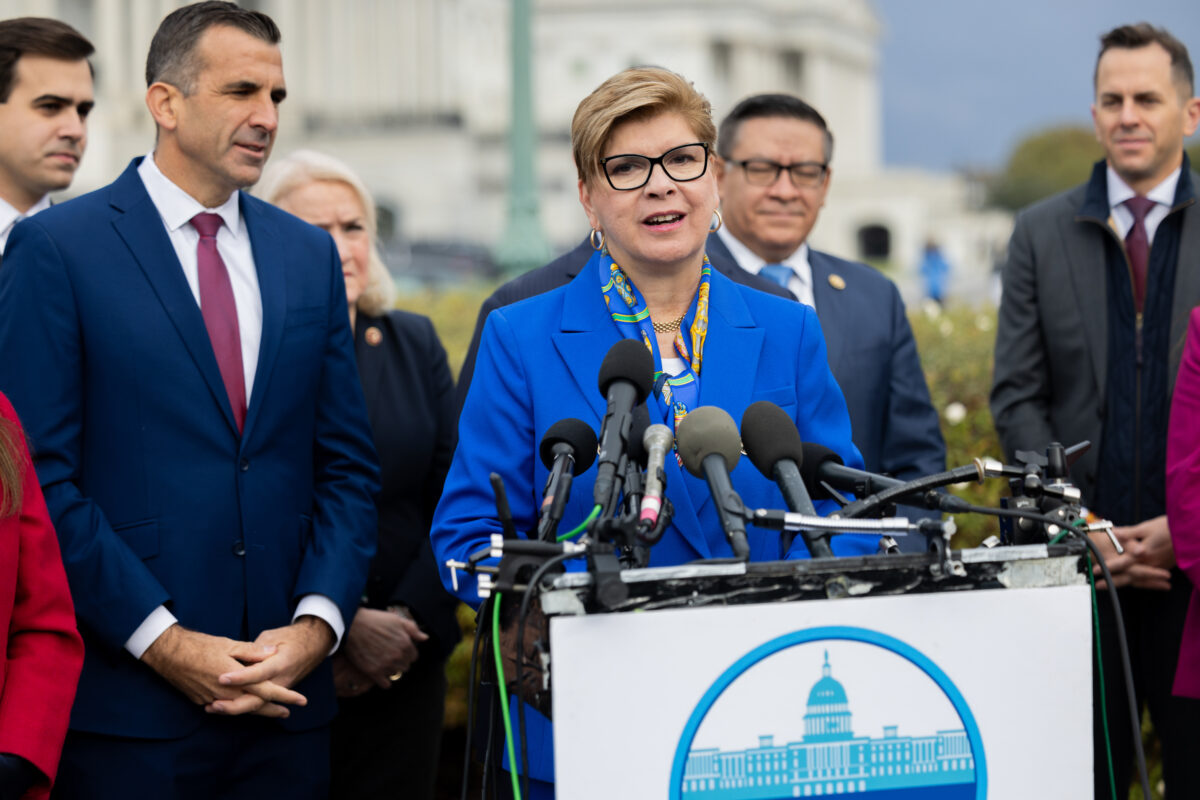
As she works to defend her seat from a growing list of Republican challengers, Rep. Nellie Pou’s (D-NJ) liberal political positioning and voting record place her in a unique position for a Democrat in whose district President Donald Trump scored a surprise win last November, at the same time Pou was elected for the first time, Jewish Insider’s Marc Rod reports.
Key example: One vote last month highlights that dynamic: she was the only Democrat representing a Trump-won district to vote last month against a Republican-led resolution condemning the antisemitic attack in Boulder, Colo., urging stronger enforcement of immigration laws and supporting Immigration and Customs Enforcement. Pou, and nearly all other Democrats, voted in favor of a second resolution condemning a series of recent antisemitic attacks without the immigration language.
hostage hopes talks

As negotiations continue for a temporary ceasefire in Gaza, in which half of the remaining 50 hostages are expected to return to Israel over 60 days, families of those still being held are waiting to learn if their loved ones will be among those coming home soon. About 20 of the hostages are thought to be alive, but the families of the 30 others are also hoping to have a measure of closure, with their loved ones’ remains returned to be buried in Israel, Jewish Insider’s Lahav Harkov reports.
‘Nerve-wracking’ wait: Rabbi Doron Perez described this period, in which there is constant discussion of a possible deal with hostages’ bodies returned to Israel, “is very nerve-wracking. … It aggravates the wound.” His son Daniel was a 22-year-old officer in the IDF armored corps on Oct. 7, 2023, when Hamas attacked Israel. For five months, the family thought Daniel had been kidnapped, before learning that he had been killed on the day of the terrorist attacks and his body taken to Gaza. When there is no talk of negotiations, Perez said, “You start thinking again, ‘Where is Daniel? Where is his body? Where is he being held?’ Some were found in cemeteries, some in tunnels, some in cupboards. You try to put it out of your mind, the vivid thoughts of where he may be, but [news about negotiations] brings it up again.”
inside story

The Friends of the Israel Defense Forces has been thrown into turmoil following the leak of an internal investigative report to the Israeli news outlet Ynet last week that detailed serious allegations against the organization’s top leadership, particularly its board chair, Morey Levovitz, of mismanagement, wasteful spending and creating a toxic work environment, eJewishPhilanthropy’s Judah Ari Gross reports.
Fresh concerns: Since the 18-page report was leaked last week, eJP has spoken with several current and former FIDF employees and lay leaders across the United States and Israel to assess its veracity, finding that in addition to the allegations that were included in the report, current and former employees have also raised credible concerns within the organization about dishonest fundraising tactics and the improper handling of sexual harassment claims. “When you have 60-80 employees saying the same thing, at some point, it can’t not be true,” one former employee told eJP.
Read the full story here and sign up for eJewishPhilanthropy’s ‘Your Daily Phil’ newsletter here.
Worthy Reads
On the Nobel Watch: In his “Clarity” Substack, former Israeli Ambassador to the U.S. Michael Oren reflects on Israeli Prime Minister Benjamin Netanyahu’s visit to Washington this week. “As Netanyahu knows well, the president deserves a Nobel Prize for making peace between Israel and Saudi Arabia, but the Saudis won’t negotiate as long as the IDF is fighting in Gaza. So Trump wants a ceasefire that’s acceptable not only to the U.S. and Israel but also to Hamas. … But beyond a Gaza ceasefire, the key to the regional transformation remains America’s continued commitment to deter Iranian aggression. Though badly battered by Israel and the United States, Iran will certainly try to recover from Operation Rising Lion and Operation Midnight Hammer — first by sending armed bands across our northern border and soon by trying to rebuild Fordow.” [Clarity]Anxious in Iran: In The Atlantic, Roya Hakakian considers the impact of last month’s war between Israel and Iran on the Islamic Republic’s small Jewish community. “The signs in Iran are ominous — and the pleas from Iranian Jewish elders may now go unheard. The community’s old talisman may no longer hold its charm. An overlooked victim of the 12-day military operation against Iran is Iranian civil society, especially its minorities, particularly Jewish Iranians, who were already at risk. Since the war, their conditions have infinitely worsened — a fact that should lead the Trump administration to reconsider its refugee ban. The United States took on a moral responsibility for Iran’s persecuted citizens when it became a combatant against their oppressive regime.” [TheAtlantic]
Word on the Street
State officials are pressuring the White House and the Federal Emergency Management Agency to post the agency’s long-overdue guidelines for applicants for security grants, warning that the continued failure to do so is imperiling security and counterterror efforts across the country…
Rep. Mike Lawler (R-NY) introduced bipartisan legislation on Thursday that would expedite arms sales to U.S. partners that normalize relations with Israel and work with the U.S. in its efforts to counter Iran and its terrorist proxies, Jewish Insider’s Emily Jacobs and Marc Rod report…
The Hill talks to Jewish House Democrats, including Reps. Debbie Wasserman Schultz (D-FL), Brad Schneider (D-IL) and Jared Moskowitz (D-FL), concerned over New York City Democratic mayoral nominee Zohran Mamdani’s defense of the phrase “globalize the intifada” and refusal to recognize Israel’s right to exist as a Jewish state…
eJewishPhilanthropy’s Jay Deitcher looks at how pulpit rabbis are responding to the IRS’ recent decision that will allow clergymembers to endorse political candidates while retaining their congregations’ tax-exempt status…
Former Columbia University graduate student Mahmoud Khalil, who was held in an immigration detention center for months as the government sought to deport him over his anti-Israel campus organizing, filed a $20 million lawsuit against the Trump administration…
Unilever tapped executive Jochanan Senf to be the next CEO of subsidiary Ben & Jerry’s, amid a yearslong dispute with the ice cream company’s board over its social justice initiatives; Senf had previously served as the managing director of Ben & Jerry’s in Europe…
The New York Times reports on Bill Ackman’s foray this week into professional tennis, where he played a doubles match alongside former professional tennis player Jack Sock, losing in straight sets…
Larry David is set to write and star in a new sketch comedy series about U.S. history for HBO, working with former President Barack Obama and former First Lady Michelle Obama’s Higher Ground company, following the end of his long-running “Curb Your Enthusiasm” series on the network…
The Forward spotlights White Oak, Pa., a mill town that once boasted a large Jewish community, as it struggles to draw in new Jewish families…
A new report from a U.K. parliamentary committee found that the threats posed by Iran to the country — including targeted assassinations and attacks on dissidents — are similar to those posed by Russia…
An Israeli security guard was killed in a terror attack at a West Bank shopping complex; the assailants, who were killed at the scene, were reportedly police officers in the Palestinian Authority’s force who had recently completed their training…
Israel will allow more humanitarian aid into Gaza utilizing additional access routes and distribution points, following meetings between Israeli and EU officials…
A senior Israeli official said that at least some of the enriched uranium stored at the Fordow nuclear facility in Iran survived the U.S.’ bunker-buster strikes on the facility last month, and could feasibly be accessed by Iranian nuclear engineers…
Israeli Defense Minister Israel Katz warned that Israel could conduct future strikes on Iranian targets if it feels threatened, saying that “Israel’s long arm will reach you in Tehran, Tabriz, Isfahan, and anywhere you try to threaten or harm Israel”…
The U.S. re-upped its travel warning urging American citizens against traveling to Iran, as Tehran confirmed the arrest last month of an 18-year-old French-German cyclist who had been traveling through the country…
Alan Hassenfeld, a former executive of Hasbro Games and major Jewish philanthropist who was a mainstay of the Rhode Island Jewish community, died at 76…
Pic of the Day

New England Patriots owner Robert Kraft and his wife, Dana Blumberg, are among the attendees at the Allen & Company Sun Valley Conference in Sun Valley, Idaho, this week.
The annual invite-only retreat kicked off earlier this week, once again drawing a who’s who of media moguls, tech titans, political heavyweights and dealmakers. A-listers and boardroom titans traded suits for the fleece vests commonly associated with Sun Valley and jeans and polo shirts as they huddled for panels, private chats and leisurely walks in the Idaho sun.
This year’s attendees include Mark Zuckerberg, Tim Cook, Jeff Bezos, Sam Altman, Sheryl Sandberg, Mike Bloomberg, Ivanka Trump, Jared Kushner, Joshua Kushner, Yousef Al Otaiba, Mathias Döpfner, Diane von Furstenberg, Barry Diller, Brian Roberts, Adam Silver, Gary Bettman, Mitch Rales, Bob Iger, Alex Karp and more.
Birthdays
Founder and CEO of Wisconsin-based Good Karma Brands, Craig Karmazin turns 50…
FRIDAY: Entrepreneur, investment banker, civil servant and political advisor, Stephen Berger turns 86… Developmental psychologist at Harvard, he was selected in the 1981 inaugural class of MacArthur genius fellows, Howard Gardner turns 82… Member of the U.K.’s House of Lords, he was PM Tony Blair’s special envoy to the Middle East for nine years, Baron Michael Abraham Levy turns 81… U.S. senator (D-MA), Ed Markey turns 79… EVP of the Milken Family Foundation and past chair of the board of trustees of JFNA, Richard V. Sandler turns 77… Journalist covering classical music, he is the author of Genius & Anxiety: How Jews Changed the World, 1847-1947, Norman Lebrecht turns 77… Founder of Schnur Associates, she spent 12 years as executive director of the Greater New York Coalition for Soviet Jewry, Zeesy Schnur… West Orange, N.J., resident, Jeffrey Maas… Actress, she portrayed Frau Farbissina in the Austin Powers film series, Mindy Lee Sterling turns 72… Singer-songwriter, known by his stage name “RebbeSoul,” Bruce Burger turns 68… Founder and retired CEO of Sidewalk Labs (an Alphabet company), he was previously CEO of Bloomberg L.P., Daniel L. Doctoroff turns 67… Group EVP of public relations for Discovery Channel and Science Channel from 2007 until 2023, Laurie Goldberg… Executive chairman of Aston Martin and the owner of the Aston Martin Formula 1 Team, Lawrence Stroll turns 66… Radiation oncologist at the Dana-Farber Cancer Institute and Brigham and Women’s Hospital, Harvey Jay Mamon, MD, Ph.D…. Managing member at Samuel Capital Management, Barry Mannis… Former member of the Knesset for the Likud party, Yaron Mazuz turns 63… Former commander of the IDF’s Southern Command, now in the IDF Reserves, Maj. Gen. Shlomo “Sami” Turgeman turns 61… Judge of the U.S. Court of Appeals for the 11th Circuit since 2014, Judge Robin Stacie Rosenbaum turns 59… Retired tax attorney, she now bakes challahs on Manhattan’s UWS to benefit the UJA, Adina Tamar Spiro Wagman… Executive editor of The City, Alyssa A. Katz… Founder of Koz and Effect LLC, Lindsey Caren Kozberg… Consultant focused upon social impact strategies, Joshua D. Wachs… Actor, podcaster and lead singer of the band Sun Spin, Michael Owen Rosenbaum turns 53… Ukrainian-born computer scientist and internet entrepreneur, Max Levchin turns 50… Principal at Civitas Public Affairs Group, Celine Mizrahi… Chabad rabbi at Washington University in St. Louis, Rabbi Hershey Novack… Comedian, podcaster and political commentator, Katherine Rose “Katie” Halper turns 44… Screenwriter and executive producer, Theodore Beren Bressman… Retired ice hockey forward, he played for 19 seasons in the U.S., Canada and Europe, now a businessman in Destin, Fla., Jacob Micflikier turns 41… Executive director of the New Democrat Coalition, Anne Sokolov… and her twin sister, a co-founder at Social Goods, Kate Sokolov… Offensive guard in the NFL for eight seasons until 2015, his Hebrew name is Gedalia Yitzhak, Geoff Schwartz turns 39… Senior deputy associate counsel in the White House Counsel’s office during the Biden administration, Matthew J. Rosenbaum… Bryan Stone…
SATURDAY: Former U.S. Ambassador to the U.N. Human Rights Council, Rita E. Hauser turns 91… Former congressman (R-OK) for 16 years, Marvin Henry “Mickey” Edwards turns 88… Former executive director of the Crown Heights Jewish Community Council, Dan Botnick… Canadian journalist, social activist and author of three bestselling books, Michele Landsberg turns 86… Former member of the Florida House of Representatives for eight years, Franklin Sands turns 85… Best-selling author, screenwriter, and playwright, sister of the late Nora Ephron, Delia Ephron turns 81… Professor of religion at the University of Vermont, he was an advisor to Bernie Sanders on his 2016 presidential campaign, as an undergraduate at Yale his roommate was Joe Lieberman, Richard Sugarman turns 81… Co-founder of Imagine Entertainment, his films and TV series have been nominated for 47 Academy Awards and 217 Emmys, Brian Grazer turns 74… Obstetrical nurse and board-certified lactation consultant in NYC, Rhona Yolkut… Founding executive director (now retired) of Newton, Mass.-based Gateways: Access to Jewish Education, focused on children with special educational needs, Arlene Remz… Businessman born in Ukraine, living in London, co-owner of the Midland Group with holdings in steel, shipping, real estate, agriculture and sports, Eduard Shifrin turns 65… Former member of the Knesset for the Blue and White party, he grew up in Raleigh, N.C., as Albert Rosenthal, Alon Tal turns 65… Chief television critic for The New York Times, James “Jim” Poniewozik turns 57… Chairwoman of the Federal Communications Commission until this past January, Jessica Rosenworcel turns 54… Israeli journalist and former member of Knesset for the Yisrael Beiteinu party, Anastassia Michaeli turns 50… Founder of Innovation Policy Solutions, a D.C.-based health care consulting and advocacy firm, Jennifer Leib… U.S. senator (I-AZ) until January 2025, Kyrsten Sinema turns 49… Israeli news anchor, television presenter and journalist, Yonit Levi turns 48… Winner of an Olympic gold medal (Athens, 2004) and a silver medal (Sydney, 2000) as a freestyle swimmer, now in the product development software business, Scott Daniel Goldblatt turns 46… Senior reporter at CNN, Edward-Isaac Dovere… Partner in the Des Moines-based public relations firm AdelmanDean Group, Liz Rodgers Adelman… Israeli media personality, sociologist and fashion and jewelry designer, Ortal Ben Dayan turns 44… U.S. senator (D-NJ), Andrew Kim turns 43… President of executive communications firm A.H. Levy & Co based in NYC, Alex Halpern Levy… Intensive care nurse now living in Jerusalem, Rena Meira Rotter… Benjamin Birnbaum… Actress, she is well known for playing a Jewish character on television (the title character in “The Marvelous Mrs. Maisel”), though she herself is not of Jewish descent, Rachel Brosnahan turns 35… National director of Teach Coalition, Sydney Altfield… Board member of the Peres Center for Peace and Innovation and the Israel Policy Forum, Steven Koppel…
SUNDAY: Scottsdale, Ariz., resident, retired teacher, Howie K. Kipnes… Actor whose films have grossed more than $10 billion, his maternal grandmother was Anna Lifschutz, a Jewish immigrant from Minsk, he is best known as the title character in the “Indiana Jones” film series, Harrison Ford turns 83… Fellow at the University of Arizona College of Medicine, Michael W. Cohen, MD… Ridgefield, Conn., resident, Louis Panzer… Lecturer on the federal budget process following 37 years at various federal agencies, Johnny Cahn… Co-host of “Pardon the Interruption” on ESPN since 2001, Anthony Irwin “Tony” Kornheiser turns 77… Actress, best known for her role as Frenchy in “Grease,” Edith “Didi” Conn turns 74… Author of crime and suspense novels, he is also a conservative commentator, Andrew Klavan turns 71… Guide and educator at Yad Vashem, the World Holocaust Remembrance Center, Rabbi Dr. Eric Marshall Lankin… Senior manager of regulatory and legislative affairs at PJM Interconnection, Stuart Widom… Country music artist, Victoria Lynn Shaw turns 63… Television executive and producer, she was the president of HBO’s entertainment division until 2008 and was responsible for commissioning “The Sopranos,” “The Wire” and other hit shows, Carolyn Strauss turns 62… Film director and screenwriter, Shari Springer Berman turns 62… Television writer, David X. Cohen turns 59… Author and journalist, Katie Roiphe turns 57… Chief legal officer and chief policy officer at HackerOne, Ilona Cohen… Owner of the D.C. area franchises of SafeSplash Swim Schools, Jennifer Rebecca Goodman Lilintahl… Founder of Omanut Collective, Sarah Persitz… Director of major gifts at American Friends of Magen David Adom, Yishai Mizrahi… Creator, writer and producer of the TV show “Casual” which ran from 2015 to 2018, Alexander “Zander” Sutton Lehmann turns 38… Aspen, Colo.-based neuro-linguistic programming coach, she is also the CEO and founder of entertainment agency Art of Air, Ariana Gradow… Managing director at BDT & MSD Partners, Nicholas Avery Newburger… Managing partner at Surround Ventures, Jared Kash… Television and film actor, Wyatt Jess Oleff (family name was Olefsky) turns 22… Technology investor and executive, Eric A. Kohlmann… Reporter at Punchbowl News, Max Cohen…
The briefing, led by Trump’s top national security officials, did not change Democratic minds about the success of the operation

Satellite image (c) 2025 Maxar Technologies.
FORDOW UNDERGROUND COMPLEX, IRAN -- JUNE 22, 2025: 02 Maxar Satellite Imagery collected this morning shows extensive damage at the Fordow underground complex. Several large craters are visible across the ridge, and a wide area is covered in grey-blue ash, consistent with airstrike aftermath.
Senators remained divided about the success of the American military strikes on Iran’s nuclear program following a classified briefing on the subject from Cabinet officials on Thursday. Several Republicans hailed the strike as a success, while some Democrats said it had barely set Iran’s nuclear program back and many others on both sides said that it’s too soon to accurately judge the attack’s success.
The briefing led by Secretary of State Marco Rubio, Secretary of Defense Pete Hegseth and CIA Director John Ratcliffe also does not appear to have dissuaded Democrats from pursuing plans to call up a war powers resolution to block further military action against Iran.
Sen. Tom Cotton (R-AR), the chair of the Senate Intelligence Committee, told reporters that “we’ve caused catastrophic damage to Iran’s nuclear program.” He said Iran might try to rebuild the program at some point, but that the U.S. and Israel had struck critical targets in all parts of the nuclear weapons manufacturing process.
“You have seen several experts in the last couple of days, who I think it’s fair to say are not Donald Trump partisans, use words like ‘effectively destroyed,’ ‘catastrophic damage,’ ‘set back for years,’” Cotton said. “I think it’s safe to say that we have struck a major blow, alongside our friends in Israel, against Iran’s nuclear program that is going to … protect the world from the risk of an Iranian nuclear program for years.”
Cotton declined to comment on whether Iran’s stockpile of highly enriched uranium was destroyed or had been relocated, adding “it was not part of the mission to destroy all their enriched uranium, or seize it, or anything else.”
Sen. Lindsey Graham (R-SC) said that the program had been set back “years, not months,” adding, “I think it’s absurd that any member of the Senate would say … that this wasn’t necessary.”
“Nobody is going to work in these three sites any time soon. They’re not going to get into them any time soon. Their operational capability was obliterated,” Graham said. He also said he doesn’t know where Iran’s stockpile of highly enriched uranium is, but likewise argued that it was “not part of the target set.”
The South Carolina senator additionally said, “I don’t want people to think that the problem is over, because it’s not. They’re going to keep trying this until they change their stated goal” of eliminating Israel.
Sen. Kevin Cramer (R-ND) said he was “very confident it’s been set way back, a year at the minimum.”
Sen. Eric Schmitt (R-MO) said that the strikes had “accomplished the purpose of destroying the nuclear ambitions,” adding that assessments would be ongoing “but [are] very positive.”
Sen. Steve Daines (R-MT) declined to say whether he was confident that Iran’s nuclear program had been destroyed or disabled, but told Jewish Insider that the briefing had “set the record straight” from a leaked low-confidence Defense Intelligence Agency report indicating the strikes had limited effect and only set Iran’s nuclear program back by a few months. He said that report was not accurate based on the information he received.
Sen. John Fetterman (D-PA) told JI the briefing had “affirmed” his support for the strikes.
“You can’t possibly know with certainty” if the program was destroyed, Fetterman said. “We have to get beyond the partisanship. … We will know more and more as there’s more time. But at this point, it was the right thing. … What’s out so far confirms that significant damage was done.”
Sen. Josh Hawley (R-MO) said he did not learn anything new in the briefing that would impact his support for Trump’s decision to strike Iran’s nuclear facilities.
“I didn’t hear anything in there that I haven’t read in the press. I think the operation was obviously a great success, and the president’s achievement in getting a ceasefire in place, I think, is really significant. And now it’s a question of making that stick and pursuing our objectives going forward,” Hawley told JI while leaving the briefing.
Others were more pessimistic about the strike.
“Right now, it seems to me that leaked DIA report is right, that we only set this program back a handful of months, and that is not obliteration,” Sen. Chris Murphy (D-CT), one of the most vocal critics of the strike, said.
Senate Minority Leader Chuck Schumer (D-NY), reading off of a card of prewritten, typed remarks, said that he “did not receive an adequate answer” to the question of whether Iran’s nuclear stockpile had been destroyed.
“What was clear is that there was no coherent strategy, no end game, no plan, no specific, no detailed plan on how Iran does not attain a nuclear weapon,” Schumer said. “Anyone in that meeting, anyone — if they’re being honest with themselves, their constituents, their colleagues — would know that we need to enforce the War Powers Act and force them to articulate an answer to some specific questions and a coherent strategy.”
Many senators said that the full impact of the strikes will take longer to understand, as more intelligence is gathered.
Sen. Mike Rounds (R-SD) said that the briefing confirmed that the mission had gone off as administration officials had planned: “The guys hit the targets as planned. The munitions worked exactly as planned, and the results were as expected.”
Rounds added that it is impossible to say exactly how long the nuclear program was delayed “until we actually get the real analysis of proof of what happened.”
Sen. Jeanne Shaheen (D-NH), the ranking member of the Senate Foreign Relations Committee, said that “the reporting will continue to come out around” whether the program was set back by months or years, but added, “as Gen. [Dan] Caine and [former national security official] Brett McGurk, if you heard his analysis, followed up and confirmed that the first two phases of the operation seemed very successful.”
Asked if Trump had been honest in describing the program as eliminated, Shaheen said, “you’d have to ask the president.”
Shaheen said that the briefing was a “good follow-up” to a news conference by Caine, the chairman of the Joint Chiefs of Staff, earlier in the day, where Caine discussed the strike on Fordow and the bunker busting bomb used.
Sen. Mark Warner (D-VA), the vice chair of the Intelligence Committee, said it’s “going to take some time to get a final assessment of how much damage [was done],” adding that he’s concerned that President Donald Trump “jump[ed] to a conclusion too early” that the program was “obliterated.”
“I hope that is the final assessment. But if not, does that end up providing a false sense of comfort to the American people?” Warner said. He added that some of Iran’s enriched uranium “was never going to be taken out by a bunker-buster bomb, so some of that obviously remains in Iran.”
Warner said there are still questions about how quickly Iran could rush to a nuclear device using the material it still retains, particularly if it did not plan to mount the bomb on a missile.
Sen. John Cornyn (R-TX) also said that the briefers had told the senators it was “too early to know” whether the program was destroyed.
Asked by JI if he learned anything during the briefing that changed his assessment of Trump’s strike being the wrong decision, Sen. Chris Coons (D-DE) replied: “I came away feeling like I learned some valuable information, yes.”
“The whole time I’ve been a senator, I’ve been gravely concerned about Iran’s nuclear enrichment program and the threat it poses to Israel, Tehran, to the region. Your question is: do I feel safer [after the briefing]? We do not have a complete assessment yet of the impact of the strikes of last week, and when we do, I think that’ll answer a lot of currently unanswered questions,” Coons told reporters.
Sen. Raphael Warnock (D-GA) said that “the situation is evolving and what we know about it — the nature of the thing is what we’ll know about it is evolving,” adding that he plans to vote for the war powers resolution.
Multiple senators said that the administration appears to be focused on resuming diplomacy as its next step.
“The administration’s trying [to] engage, on a diplomatic level, and that would be the next step, is trying to have some kind of discussion with the Iranians about giving up their ability to enrich uranium,” Sen. Mark Kelly (D-AZ) said.
Graham expressed deep skepticism about the possibility of negotiations with Iran, though he said that now is probably the most ripe time for negotiations given Iran’s weakness.
“I talked to Rubio, I talked to the administration,” Graham said. “Try diplomacy, but if you don’t get a commitment up front that Iran, from this day forward, abandons its stated desire to wipe out Israel, if they’re not willing to recognize the Jewish state, you’re wasting your time.”
Warner, on the other hand, argued that diplomacy is the only path to ensure Iran cannot enrich uranium for military purposes, as inspectors will need to be sent into the country to verify that.
Sen. Maria Cantwell (D-WA) said that “there’s a lot to [discuss]” about the war powers resolution and the potential timing for a vote on it — originally expected Thursday or Friday. “There’s just a lot to think about in that, and I’d have to hear from our colleagues about why, or when, to call that [up].”
Senators largely described the briefing as cordial and said the briefers had answered the questions posed to them.
Asked whether he was concerned that Hegseth and Rubio had provided political talking points or failed to address the substance of the issue, Kelly said that the two “did a good job. They answered our questions.”
But Murphy said he was “deeply worried about the politicization of intelligence.”
The letter was sent the day following the murder of two Israeli Embassy employees, which prompted calls for more resources to protect Jewish institutions

Kevin Carter/Getty Images
U.S. Capitol Building on January 18, 2025 in Washington, DC.
A bipartisan group of 33 senators — mostly Democrats — sent a letter last week urging Senate Appropriations Committee leaders to provide $500 million for the Nonprofit Security Grant Program in 2026, matching the record-high request from a group of House members earlier this month.
The letter was sent the day following the murder of two Israeli Embassy employees outside the Capital Jewish Museum in Washington, an attack that led a coalition of Jewish groups to call for increasing funding for the program, which provides synagogues and nonprofits with grants to improve their security, to $1 billion. The funding request in the Senate letter likely would have been finalized prior to the attack.
It’s not clear, at this point, whether lawmakers might seek to revise their requests to come closer to the $1 billion level, or how feasible either request level might be. The Trump administration had proposed cuts to non-emergency grant programs at the Federal Emergency Management Agency and has not yet offered a specific proposal for the NSGP. The $500 million request is nearly double the NSGP’s current funding level of $274.5 million.
“The threat of violence is unfortunately increasing at places of worship across our country at alarming rates,” the Senate letter reads. “There has been an increase in hoax bomb and active shooter threats against houses of worship to interrupt services and intimidate the worshipers. There has also been an increase in antisemitic and anti-Muslim incidents across the country following the October 7 attack in Israel.”
The letter outlines a series of attacks on houses of worship across the country, including synagogues, which the signatories said “highlight the ever-increasing need for the NSGP.”
The letter also notes the significant shortfall in funding for the program last year, with just 43% of grant applications being approved, even with additional funding available through the national security supplemental bill. Applicants requested a total of nearly $1 billion in funding.
“Unfortunately, it is easy to see that the need for the NSGP is quickly outpacing the funding,” the letter reads, noting that the deficit “left most of the applicants without the funding they needed to provide security to their at-risk institution.”
“Today’s threat environment provides a compelling public interest in preventing attacks that would disrupt the vital health, human, social, cultural, religious, and other humanitarian services provided by at-risk faith-based and nonprofit institutions,” the letter continues. “Such threats terrorize the lives and well-being of millions of Americans who operate, utilize, live, and work in their communities.”
The letter was led by Sens. Kirsten Gillibrand (D-NY), James Lankford (R-OK), Gary Peters (D-MI) and Jacky Rosen (D-NV), joined by Sens. Kevin Cramer (R-ND), Tim Kaine (D-VA), Amy Klobuchar (D-MN), Tammy Baldwin (D-WI), Mark Warner (D-VA), Sheldon Whitehouse (D-RI), Mark Kelly (D-AZ), Adam Schiff (D-CA), John Hickenlooper (D-CO), Angus King (I-ME), Raphael Warnock (D-GA), Alex Padilla (D-CA), Andy Kim (D-NJ), Richard Blumenthal (D-CT), Jack Reed (D-RI), Tammy Duckworth (D-IL), Elissa Slotkin (D-MI), Chris Van Hollen (D-MD), Maria Cantwell (D-WA), Ron Wyden (D-OR), Cory Booker (D-NJ), Angela Alsobrooks (D-MD), Lisa Blunt Rochester (D-DE), Tina Smith (D-MN), Maggie Hassan (D-NH), Jon Ossoff (D-GA), Ben Ray Lujan (D-NM), Dick Durbin (D-IL) and Ed Markey (D-MA).
Though Lankford and Cramer are the only two Republicans who signed the letter, the bipartisan request marks a change in Senate advocacy on this issue — in the past, bipartisan Senate groups have not specified amounts in their lobbying for the program. Senate Democrats last year called for $400 million for the program.

AP Photo/Alex Brandon
Sen. John Kennedy, R-La., speaks with reporters at the White House, Friday, March 14, 2025, in Washington.
Good Tuesday morning.
In today’s Daily Kickoff, we talk to senators about how Israel and the U.S. should respond to the recent ballistic missile strike on Ben Gurion Airport, and interview Illinois state Sen. Laura Fine about her newly announced bid for the House seat being vacated by Rep. Jan Schakowsky. We also report on Middle East envoy Steve Witkoff’s prediction that other Arab countries will soon join the Abraham Accords, and talk to an Atlanta-area surgeon who is suing anti-Israel groups for defamation over their attacks over his volunteer IDF service. Also in today’s Daily Kickoff: Marc Rowan, Gal Gadot and Michigan AG Dana Nessel.
What We’re Watching
- Canadian Prime Minister Mark Carney is in Washington today, where he’ll meet with President Donald Trump at the White House.
- The House Appropriations Committee is holding simultaneous oversight hearings this morning with Treasury Secretary Scott Bessent and Homeland Security Secretary Kristi Noem.
- This afternoon, the House Foreign Affairs Middle East subcommittee is holding a public hearing on “Maximum Impact: Assessing the Effectiveness of the State Department’s Bureau of Counterterrorism and Charting the Path Forward.”
- The Israel Allies Foundation, in conjunction with Eagles’ Wings, the Zionist Rabbinic Coalition, American Christian Leaders for Israel and the Combat Antisemitism Movement, is hosting its Israel Advocacy Day and Independence Day Reception today in Washington. The groups will host a reception tonight with the co-chairs and members of the Congressional Israel Allies Caucus.
- The Orthodox Union is convening its annual Washington mission today and tomorrow. Tonight, they’ll host a kickoff dinner reception honoring Sen. James Lankford (R-OK).
- At the Milken Institute’s Global Conference in Los Angeles, IKAR’s Rabbi Sharon Brous will speak on a panel titled “What Faith Means to Me,” while Pershing Square’s Bill Ackman and Yeshiva University’s Rabbi Ari Berman will speak at back-to-back sessions on higher education. Also slated to address the gathering today: pollster Frank Luntz, Education Secretary Linda McMahon, Relativity Space CEO Eric Schmidt.
- The Future Summit continues today in Israel.
- We’re also keeping an eye on Berlin, where earlier today conservative leader Friedrich Merz failed to secure the number of parliamentary votes necessary to become the country’s next chancellor. Merz had allied his Christian Democratic Union party and associated Christian Social Union party with the more liberal Social Democrats. The Bundestag could hold a second round of voting as soon as today, but must elect a new chancellor in the next two weeks.
What You Should Know
A QUICK WORD WITH JI’S JOSH KRAUSHAAR
Even as deep ideological divisions within the Democratic Party persist, pro-Israel Democrats are growing bullish about their recruiting class of congressional candidates in key Senate and House races — as groups anticipate contested primaries against their favored frontrunners, Jewish Insider Editor-in-Chief Josh Kraushaar writes.
In three key Senate battleground races, the emergence of mainstream Democratic members of Congress with lengthy records supporting Israel — Reps. Haley Stevens (D-MI), Angie Craig (D-MN) and Chris Pappas (D-NH) — is a sign that for all the energy of the progressive left, traditional Democrats are still more reflective of their party’s overall electorate.
While the lawmakers start their campaigns with advantages, several face the prospect of competitive primary challenges coming from their left.
In Michigan, Stevens has emerged as one of the most outspoken backers of a strong U.S.-Israel relationship, boasts close connections to Jewish community leaders and already has ousted an Israel critic (former Rep. Andy Levin) in her young political career. She starts out the Senate race with a healthy $1.6 million cash on hand, according to first quarter FEC filings.
Stevens, however, is facing candidates courting the progressive base: State Sen. Mallory McMorrow became nationally known for her abortion rights activism, and launched her campaign by calling for a younger Senate leader to replace Minority Leader Chuck Schumer (D-NY). McMorrow, whose husband is Jewish, has also met with Jewish leaders to assure them of her pro-Israel bona fides.
The Michigan candidate courting anti-Israel elements of the electorate is former Michigan health official Abdul El-Sayed, who has run unsuccessfully for statewide office before. Former Michigan House Speaker Joe Tate, a former NFL player, is also seriously considering a run.
Many Jewish Democrats view Stevens as an ally in the same light as pro-Israel stalwarts like Sen. John Fetterman (D-PA) or Rep. Ritchie Torres (D-NY) — as someone principled and unafraid to speak out against antisemitism and anti-Israel extremism. Her candidacy will serve as an early bellwether for how much room there is for such moderate voices in today’s Democratic Party.
In Minnesota, Craig is another Israel ally looking as the early favorite in the Democratic primary against the state’s progressive lieutenant governor, Peggy Flanagan. Craig has been willing to speak out against anti-Israel Democratic colleagues amid Middle East policy disagreements; Flanagan is more closely aligned with J Street.
And in New Hampshire, Pappas is looking like the clear favorite for the Democratic nomination to succeed retiring Sen. Jeanne Shaheen (D-NH). A swing-district moderate, Pappas has generally held a more pro-Israel record than his Democratic colleagues in the state.
Outside the battlegrounds, Illinois’ wide-open Senate primary to succeed retiring Sen. Dick Durbin (D-IL) could potentially feature divisions over Middle East policy. Reps. Raja Krishnamoorthi (D-IL) and Robin Kelly (D-IL), both potential candidates, are listed on the AIPAC political portal for favored candidates, while Rep. Lauren Underwood (D-IL), another possible contender, is not.
There are also developing House race skirmishes over Israel. As JI’s Matthew Kassel scooped today, state Sen. Laura Fine announced her candidacy to succeed retiring Rep. Jan Schakowsky (D-IL) in a district with a significant Jewish constituency. Fine, who is running on a pro-Israel platform, is expected to face a challenge from Evanston Mayor Daniel Biss, who drew controversy in 2017 for initially tapping (and later dropping) an anti-Israel, DSA-affiliated running mate for his gubernatorial campaign.
Levin, the former Michigan congressman who has been critical of Israel, is also exploring a political comeback in two of the open House seats in the Detroit suburbs. If he runs in Stevens’ House seat, he could face state Sen. Jeremy Moss, who is one of the strongest allies of the Jewish community in the Michigan state legislature.
HANDLING THE HOUTHIS

Senate Republicans predicted a continued escalation of U.S. and Israeli attacks on the Houthis following the group’s ballistic missile attack on Tel Aviv’s Ben Gurion Airport over the weekend, which American and Israeli air defenses failed to intercept. The U.S. has been carrying out, and has pledged to continue, a heavy bombardment of the Iranian-backed Yemeni group for weeks. Though the pace of the Houthis’ onslaught has slowed, its continued attacks on Israel and repeated shoot-downs of U.S. drones have demonstrated that the group maintains significant capabilities. Israel launched its first direct attacks on Yemen in months on Monday, following the weekend strike, Jewish Insider’s Emily Jacobs and Marc Rod report.
GOP reactions: “It’s pretty scary. I mean, it’s scary that they were able to get through both the American defense and the Israeli defense. It’s a dangerous place, and the only way this is gonna stop is when we start holding Iran accountable. This is not the Houthis, it’s Iran, so until they get held accountable, it’s not going to stop,” Sen. Rick Scott (R-FL) told JI. Other Republican senators shared Scott’s view that the Houthis are unlikely to cease their attacks and that Israel must respond militarily. Sen. John Kennedy (R-LA) said, “I think the president needs to turn them into fish food.”
Kaine suggests listening to Houthi demands: Sen. Tim Kaine (D-VA) described the Houthi strikes as “very troubling,” but said that the previous ceasefire agreements in Gaza had been the sole mechanism by which the U.S. had made any progress with stopping the Houthis. “The only thing that’s worked with the Houthis in the last couple years has been the ceasefire in Gaza, that’s it. When the ceasefire happened in November of ‘23, the short one, they ratcheted down and they ratcheted down during the last ceasefire that we just had that completed.”
Read the full story here with additional comments from Sens. Markwayne Mullin (R-OK), Mike Rounds (R-SD), Richard Blumenthal (D-CT) and Chris Murphy (D-CT).
PRAIRIE STATE PRIMARY

The next big intra-Democratic primary battle over Middle East policy is shaping up on the North Shore of Chicago in one of the most heavily Jewish House districts in the country, where longtime Jewish Rep. Jan Schakowsky (D-IL) said on Monday that she would not seek reelection. Her widely anticipated retirement announcement had set off a behind-the-scenes scramble among several potential candidates eyeing the coveted open seat in Illinois’ deep blue 9th Congressional District, which includes part of Chicago and northern suburbs such as Evanston and Skokie, Jewish Insider’s Matthew Kassel reports.
Fine time to launch: The first major Democratic candidate to enter the race, Laura Fine, a Jewish state senator, launched her campaign on Tuesday morning and is emerging as a pro-Israel favorite in the developing primary, as she prepares to face several opponents who have been openly hostile to the longstanding U.S. alliance with Israel or drawn backlash from Jewish leaders over their approach to key issues involving Middle East policy. In an interview with JI on Monday, Fine touted her pro-Israel platform and described herself as a staunch defender of the Jewish state who has long been outspoken against rising antisemitism fueled by Hamas’ Oct. 7, 2023, terror attacks and the ensuing war in Gaza.
normalization news

Speaking at an event on Monday celebrating Israeli Independence Day, Middle East envoy Steve Witkoff suggested that he expects additional countries will join the Abraham Accords in the coming year, Jewish Insider’s Marc Rod reports.
What he said: “We think [we] will have some, or a lot of announcements, very, very shortly, which we hope will yield great progress by next year,” Witkoff said of the prospects for additional normalization between Israel and Arab states, at an event organized by the Israeli embassy in Washington.
Elsewhere in Washington: House Speaker Mike Johnson (R-LA) spoke at an event with the Zionist Rabbinic Coalition and pro-Israel Christian groups on Monday. Johnson pledged that the House will “continue to shed light on [college presidents’] failures and as long as I’m speaker of the House, the people’s House will continue to be a bulwark against antisemitism.” He also spoke about his visit to Columbia University’s encampment and his first trip to Israel. Sen. Cory Booker (D-NJ) and White House Faith Office Director Jenny Korn also addressed the group.
DEFAMED IN DEKALB

An Atlanta Jewish surgeon who served in the Israeli Defense Forces in the aftermath of the Oct. 7, 2023, Hamas terrorist attacks is suing several anti-Israel groups after a medical student made defamatory accusations that the surgeon’s service aided and abetted a genocide in Gaza, rendering him unfit to provide medical care. The statements were circulated by major organizations, including the Council on American-Islamic Relations and National Students for Justice in Palestine. After Oct. 7, Dr. Josh Winer took leave as a physician and professor at Emory University School of Medicine to serve as a doctor in an IDF reconnaissance unit in Gaza, providing medical care to wounded soldiers. Upon returning to Emory, Winer “encountered hostility as a supporter of Israel,” he told Jewish Insider’s Haley Cohen.
The accusations: Umaymah Mohammad, an Emory medical student, accused Winer of war crimes and genocide, according to the lawsuit. Her statements were initially made during a segment of “Democracy Now!,” a daily news program broadcast on the internet, television and radio. She repeated the statements in an op-ed, a podcast hosted by the International Union of Scientists and at a press conference. CAIR Georgia, CAIR National, Doctors Against Genocide Soceity, NSJP and Emory Students for Justice in Palestine — which are all named as defendants in the suit alongside Mohammad — published, reiterated and expanded upon Mohammad’s claims. Emory SJP, for instance, created social media posts that claimed Winer was a threat to students and patients of color.
KEMP-AIGN TRAIL

Georgia Gov. Brian Kemp, one of the most popular officials in the state, announced on Monday he will not challenge Sen. Jon Ossoff (D-GA) when he is up for reelection in 2026, dealing a blow to Senate Republicans, who were hoping his candidacy would have given Republicans an edge in a critical battleground, Jewish Insider’s Emily Jacobs reports. Kemp said in a statement on Monday that he had “decided that being on the ballot next year is not the right decision for me and my family.”
What he said: Several Jewish Democratic leaders, disenchanted with anti-Israel elements of the Democratic Party, expressed an openness to backing Kemp over Ossoff, if the governor ran for the Senate. Ossoff’s vote last year to block military aid to Israel alienated many Jewish voters in the state, and the backlash led him to reject additional similar measures targeting the Jewish state when they came up for a vote last month. But Kemp’s decision not to run could help push skeptical Jewish Democrats and independents back toward Ossoff’s column, especially if the Democratic senator works more closely with the Jewish community in the state, which is strongly supportive of Israel.
VOTE VETOED

Following online outrage from the right, the House canceled a planned vote on the IGO Anti-Boycott Act, legislation expanding current U.S. anti-boycott laws to include international organizations, despite broad bipartisan support for the legislation last year, Jewish Insider’s Marc Rod reports.
Growing pattern: The fallout is just one recent example of how actors on the political fringes have mobilized to stymie pro-Israel legislation and bills to combat antisemitism that otherwise enjoy bipartisan support — often by misrepresenting their aims and impacts — and have ammassed sufficient influence to upend that bipartisan consensus and scuttle the legislative process. Bipartisan support for identical legislation last year was so strong that it passed the House by a voice vote in February 2024, after being reported out of the House Foreign Affairs Committee by a 42-3 vote in late 2023. But this year, it’s meeting a very different reception following vocal criticism from far-right House members and conservative influencers that caught fire on X.
Worthy Reads
Hard Look at Harvard: The Atlantic’s Eliot Cohen weighs in on Harvard’s recently released report documenting antisemitism on the Cambridge campus. “The widespread harassment of Jews reported at Harvard reflects the attitudes of hundreds if not thousands of students, faculty, and staff—that last group is an often underappreciated element in indulging or even encouraging this behavior. It reflects the development of identity-driven politics, for which responsibility lies outside the university as well as within it. It has been fed by witch-hunting for ‘white privilege’ (no matter that there are plenty of Jews of color, as a walk down the streets of Tel Aviv will show you). It flourishes in the bogus specializations that have hived off from more traditional and all-embracing disciplines such as history, literature, and anthropology. It has been nurtured in research centers whose very existence is premised not on the quest for truth but on the pursuit of a political or ideological agenda.” [TheAtlantic]
Life in the Big Apple: In The New Yorker, actress Lena Dunham reflects on her childhood and life in New York before she made a transatlantic move to the U.K. “In the city, by contrast, my mother could pack ten or eleven separate excursions into a single day — or, conversely, spend hours wandering the floors of the discount department store Century 21, striking up endless conversations in the communal dressing room. … My mom and her sisters — Jewish girls at the opposite end of the spectrum from the Margarets, Hazels, and Tesses of the world — lived to move. I distinctly remember my mother repeating that ‘what I love about Manhattan is that if you really want to you can always get from one end to the other in twenty minutes.’ (This is not, strictly speaking, true, and I blame the remark for my lifelong inability to properly judge commute times.) My aunt Susan once said of my mother, ‘Laurie is a ‘from’ girl — the lox is from one place, the bagels from another, the flowers from someplace else.’ Knowing how to get the best out of the city — from discount Manolos to vintage buttons to a ten-dollar blow-dry — gives my mother the satisfaction of a chess grand master stumping her opponent with a series of unexpected moves. But being a ‘from’ girl is about more than the provenance of goods; it’s about living at such high speeds that your inner life can never quite catch up to you.” [NewYorker]
Word on the Street
President Donald Trump is pushing Republican lawmakers to support the confirmation of Ed Martin, the administration’s nominee to be U.S. attorney for Washington, D.C., who had previously praised a Nazi sympathizer…
Defense Secretary Pete Hegseth issued a memo calling for a “minimum” 20% reduction in the number of four-star generals and admirals on active military duty…
Rep. Laura Gillen (D-NY) received the distinguished statesmanship award from the Council of Jewish Organizations Flatbush at the group’s annual legislative breakfast over the weekend. Previous recipients include Reps. Mike Lawler (R-NY), Ritchie Torres (D-NY) and Yvette Clarke (D-NY)…
The House of Representatives passed the Solidify Iran Sanctions Act, extending indefinitely existing energy sanctions on Iran first passed in 1996, by a voice vote…
Sheikh Bandar bin Mohammed bin Saoud al-Thani, the chairman of the Qatar Investment Authority and governor of the Qatar Central Bank, met on the sidelines of the Milken Global Conference in Los Angeles with senior business executives including Steve Mnuchin, Peter Chernin and Howard Marks…
Speaking at Milken, Apollo Global Management CEO Marc Rowan backed the Trump administration’s tariff policy while cautioning that the economy could slow down if “damage” to the U.S. brand isn’t addressed…
OpenAI CEO Sam Altman said the company was dropping its plan to pivot to a for-profit structure…
Michigan Attorney General Dana Nessel withdrew all charges against seven University of Michigan students arrested last year for their role in anti-Israel protests on the campus; Nessel said the decision was made in part due to the “impropriety” of a letter sent by the Jewish Federation of Greater Ann Arbor defending her against allegations of bias…
The Trump administration proposed that Columbia University enter into a consent decree by which the government would have oversight over the school’s efforts to ensure viewpoint diversity and not factor race into admissions decisions; the consent decree was suggested as an alternative to a court battle between the government and the Ivy League school…
Barstool Sports founder Dave Portnoy rescinded his offer to fund a trip to Auschwitz for at least one of two men involved in an incident in a Barstool bar in which an antisemitic sign was carried around the premises; Portnoy said one of the individuals, a student at Temple University, “did a 180” and absolved himself of responsibility for the incident…
New York’s City Park’s Foundation dropped singer Kehlani as a performer at an upcoming Pride concert in Central Park, following pushback, including from Rep. Ritchie Torres (D-NY), over Kehlani’s use of antisemitic and anti-Israel imagery and phrases in her performances and music videos…
Gal Gadot and Matthias Schoenaerts will star in the upcoming post-WWII thriller “Ruin,” about a Holocaust survivor and German soldier who partner to exact revenge on a Nazi unit…
If Hamas does not accept a ceasefire and hostage-release deal by the end of next week, Israel will launch “Operation Gideon’s Chariots,” escalating the war in Gaza until Jerusalem attains its war aims, a senior Israeli defense source said on Monday, Jewish Insider’s Lahav Harkov reports…
The Daily Mail interviews Israeli singer Yuval Raphael, who survived the Oct. 7, 2023, attack at the Nova music festival by hiding under bodies in a bomb shelter, about her journey to the Eurovision Song Contest…
The IDF said that two Hamas commanders, including one who participated in the Oct. 7 attacks and held hostages, surrendered to Israeli troops in Rafah…
Palestinian poet Mosab Abu Toha received the Pulitzer Prize in commentary for his essays, published in The New Yorker, about life in Gaza during the Israel-Hamas war…
Pope Francis, who died last week, had directed for the “popemobile” that transported him during a 2014 trip to the West Bank to be donated to a Catholic charity that operates in the Palestinian territories for use as a mobile children’s aid clinic in Gaza…
Pic of the Day

Rep. Dan Goldman (D-NY) and documentarian Wendy Sachs speak at the Capitol Hill screening of “October 8,” which looks at the rise of antisemitism on campus following the Oct. 7, 2023, Hamas terror attacks in Israel. Sen. Kirsten Gillibrand (D-NY) and Reps. Laura Gillen (D-NY) and Virginia Foxx (R-NC) were also in attendance.
Birthdays

Conductor, pianist, clarinetist, and composer, he is currently music director of The Louisville Orchestra, Edward “Teddy” Paul Maxwell Abrams turns 38…
U.S. senator (R-AL) from 1987 until 2023, Richard Shelby turns 91… Senior fellow at the Hoover Institution at Stanford, previously a Columbia law professor, a U.S. District Court judge and the State Department legal advisor, Abraham David Sofaer turns 87… Novelist, playwright and human rights activist, professor emeritus of Latin American studies at Duke University, Vladimiro Ariel Dorfman turns 83… Professor of law and philosophy at the University of Chicago, she has been awarded 69 honorary degrees from around the world, Martha Nussbaum turns 78… Israeli theoretical physicist and astrophysicist, he is best known for his work on gamma-ray bursts and on numerical relativity, Tsvi Piran turns 76… Partner at Wilmer Cutler Pickering Hale and Dorr, she was the deputy attorney general of the U.S. in the Clinton administration, Jamie S. Gorelick turns 75… Former prime minister of the United Kingdom, he then served as the special envoy of the Quartet on the Middle East, Tony Blair turns 72… President emeritus of the Jerusalem College of Technology / Lev Academic Center, Noah Dana-Picard turns 71… Director of the Jewish studies program at Northeastern University, Lori Hope Lefkovitz turns 69… Co-founder of Boston-based HighVista Strategies following 23 years at Goldman Sachs, he is the former board chair of Beth Israel Deaconess Medical Center, Daniel Jick turns 68… Member of the Knesset for Likud between 2003 and 2006, Daniel Benlulu turns 67… President and CEO of The Jewish Federations of North America, he was previously CEO of Hillel and a U.S. congressman, Eric David Fingerhut turns 66… Retired attorney and former member of the board of trustees of the Jewish Federation of Greater MetroWest NJ, Sheri Goldberg… Los Angeles-based attorney and real estate entrepreneur, Daniel Todd Gryczman… Israel’s minister of national security since 2025 and leader of the Otzma Yehudit party, Itamar Ben-Gvir turns 49… Member of the Knesset for the Yesh Atid party, Shelly Tal Meron turns 46… Los Angeles-based television personality, actress, writer and video blogger, Shira Lazar turns 42… Partner at Amiti, an early-stage deep tech fund, Brachie Sprung… Founder at ALC Hospitality, Alyse Cohen… Senior principal at Alterra climate investment fund, Benjamin Levine… Partner at Courtside Ventures and advisor to the board of directors of the Atlanta Hawks, Oliver Ressler… Head of business development at Seam, she is a conservative commentator across many social media platforms, Arynne Wexler… Actor and singer, Noah Egidi Galvin turns 31…
Please log in if you already have a subscription, or subscribe to access the latest updates.
 Continue with Google
 Continue with Apple