






























































Israel’s U.S. critics prepare to keep the pressure on, regardless of election outcome
Israel’s critics and opponents on the left are already laying the groundwork to frame any Israeli government that forms as just as problematic as the Netanyahu-led coalition
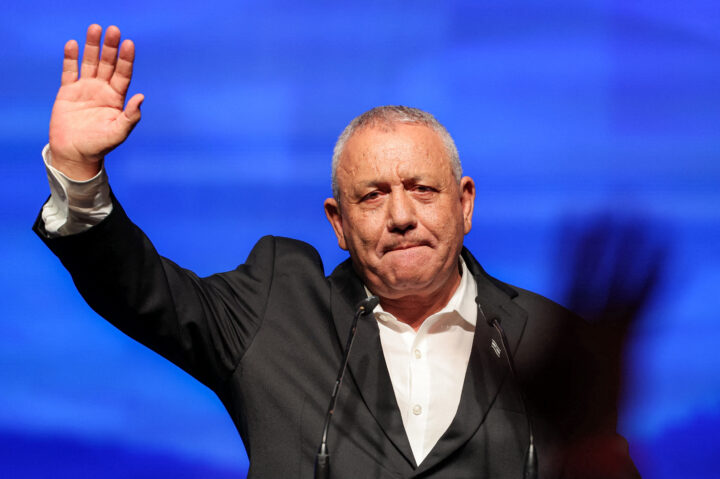
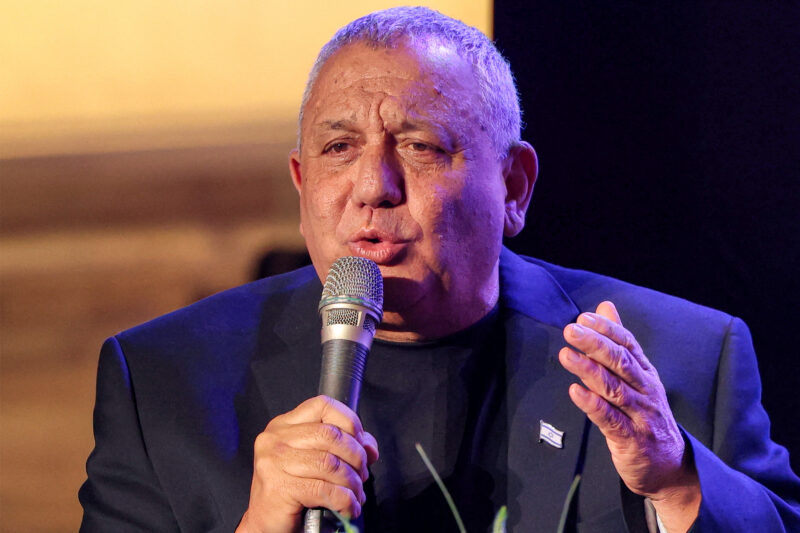
(Jack GUEZ / AFP via Getty Images)
Gadi Eisenkot, Israel's former military chief of staff and leader of the Yashar party, addresses supporters at the party's final campaign rally before the legislative election, in Tel Aviv on October 25, 2026.


 Add JewishInsider on Google
Regardless of how Israel’s election tomorrow turns out, Israel’s U.S. critics on the American left are already laying the groundwork to frame any Israeli government that forms as problematic — even if Prime Minister Benjamin Netanyahu is defeated.
For months, as Israeli opposition figures have gained in the polls, anti-Israel activists here have framed all potential Israeli leaders as equally unacceptable as Netanyahu, a response to the many Democrats who have asserted that their anger with Israel is directed toward the Netanyahu government, rather than the state as a whole.
Jon Finer, the deputy national security advisor in the Biden administration and a frequent Israel critic, wrote in an op-ed on Friday that the U.S. should “not expect major changes” under a new government. “Rather than offering a new Israeli government the benefit of the doubt, Democrats should learn from the past and make it choose between the abundant and irreplaceable benefits of the U.S. relationship and the indefensible policies that are driving a wedge between our societies,” Finer wrote.
A messaging guidance memo from the far-left Institute for Middle East Understanding — shared with congressional offices and obtained by Jewish Insider — also makes clear the group views any Israeli government as problematic. It asserts that Israel’s “policy of apartheid and genocide against Palestinians won’t change,” that centrist opposition candidate Gadi Eisenkot “is also a war criminal,” that the election is “Israel’s most racist election to date” and that the election is not truly democratic.
Pro-Israel advocates in the U.S, particularly those on the center left, have hoped that a new prime minister would provide an opportunity to reset and improve relations between the U.S. and Israel, as Netanyahu has proven himself to be uniquely polarizing in American politics.
But Israel’s critics are showing they intend to keep the pressure on, regardless of who Israel’s leaders are.
Finer said that Democrats should instead “apply real pressure” by cutting off aid, halting or conditioning arms sales, ceasing to veto anti-Israel resolutions at the U.N. Security Council, vowing not to uphold any memorandum of understanding agreed to by the Trump administration, removing Israel from the Visa Waiver Program, placing sanctions on individuals involved with settlements and potentially barring imports of goods from Israeli settlements.
He also urged Democrats to “resist delivering rote paeans to our countries’ ‘shared values,’ which are increasingly in doubt, or to Israeli ‘democracy.’” Finer said that nothing short of ending the blockade of Gaza, entering negotiations for a two-state solution, canceling all new settlements and prosecuting settlers and soldiers responsible for West Bank violence would “justify easing American pressure.”
The IMEU memo suggests potential X posts for lawmakers to issue around the election, calling for “accountability,” including an end to weapons transfers and sanctions on Israel.
One sample post describes the election as a choice between “genocidal Benjamin Netanuyahu and Dahiya Doctrine Eisenkot” that “leads to a singular road towards the continued apartheid and killing of Palestinians.” Another asserts that the “entire Israeli election has been based on racism and hatred towards Palestinians.”
“Palestinians do not experience Israeli ‘democracy.’ They experience apartheid, settler violence, and genocide. The Israeli election will not change the reality for Palestinians,” a third reads. “We cannot rely on an Israeli election that has pitted two genocidal, pro-apartheid coalitions against one another,” reads a fourth.
In public statements, Democratic critics of Israel have frequently pointed to Netanyahu and far-right members of his government as the target of their ire. Some have even framed a Netanyahu loss as an existential necessity for the U.S.-Israel relationship.
For some lawmakers, a Netanyahu defeat would likely cause them to recalibrate their approach. For others, Netanyahu and his far-right associates have seemingly provided a convenient foil, and that criticism is likely to transfer to his successors.
In an August interview, anti-Israel Zeteo founder Mehdi Hasan pressed Sen. Bernie Sanders (I-VT) over his frequent references to and criticism of the Netanyahu government, emphasizing, “Even if Netanyahu is replaced in October’s elections, and we all hope he loses, the Israeli opposition leaders aren’t much better. They all support the war in Iran. They all support the genocide in Gaza. They all support settlements.”
Sanders responded, “It is a reality that right now among the population in Israel, you have a significant movement that has moved to the right, and I would hope that there will be brave leaders in Israel who will take that on,” adding that he agreed with Hasan that “none of the current [leaders] seem to meet that criterion.”
Some on the far left have even targeted Opposition Leader Yair Lapid — the centrist former prime minister who in a Washington appearance this year said the Israeli government should act against “Jewish terrorism” in the West Bank, remove extremist ministers and officials and express empathy and remorse for accidental civilian deaths — as unacceptable.
“It’s a country of genocidal psychopaths. Netanyahu’s main opponent Yair Lapid is also in favor of the ‘Greater Israel’ 4th Reich,” influencer Kyle Kulinski said earlier this year.
J Street, the progressive Israel advocacy group, has sought to temper optimism about a more moderate Israeli government, offering a similar case to Finer and sharing his op-ed last week. Ilan Goldenberg, J Street’s chief policy officer, recently argued that the U.S. should, at least to some extent, keep the pressure on any new Israeli government that may form.
Goldenberg, a former Biden administration official, argued in August, “A new Israeli government would be a welcome change. But Netanyahu’s departure cannot become an excuse to return to the old US-Israel relationship in which American support came with few meaningful checks on Israeli behavior.”
He said that the U.S. cannot “[refuse] to acknowledge any differences between Netanyahu’s far-right government and a more moderate alternative” but also that “forgoing a moment where American attitudes towards the conflict have fundamentally changed, dropping the pressure and asking little of his successor would be a mistake.” He said that the U.S. would “almost certainly” need to continue to pursue sanctions against the settler movement and continue to push for restrictions on arms sales.
More Stories

AID ARGUMENTS
Michael Oren, Jonathan Schanzer split over when Israel should move past U.S. aid
MAIL FAIL
El-Sayed letter to Jewish community on antisemitism fails to reassure skeptics

CANCEL CALLS
Democratic push grows for Ilhan Omar, Fateh to cancel Hasan Piker event

STARS, STRIPES AND SEATS
Meet the Americans hoping to secure a seat in the next Knesset
CHAIN REACTION
Bank of Israel rejects Netanyahu’s suggestion to circumvent sanctions with cryptocurrency
SOCAL SHOWDOWN
Anti-Israel encampment member emerges as far-left threat to Rep. Jimmy Gomez
Please log in if you already have a subscription, or subscribe to access the latest updates.
 Continue with Google

 Continue with Apple