


























Senators demand UBS release documents on Credit Suisse’s Nazi ties
Lawmakers press the Swiss banking giant to release documents on its predecessor’s support for Nazi Germany, while the bank seeks a court order to shield itself from further financial claims
ROBERTO SCHMIDT/AFP via Getty Images
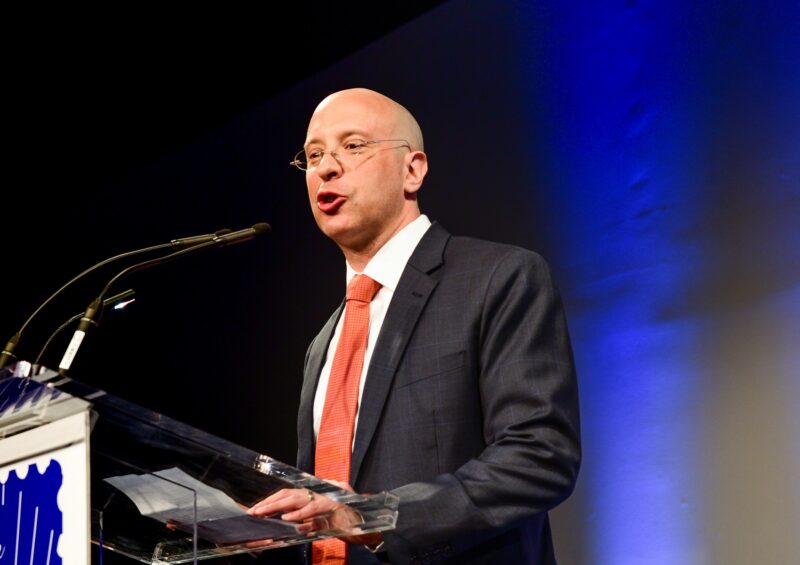
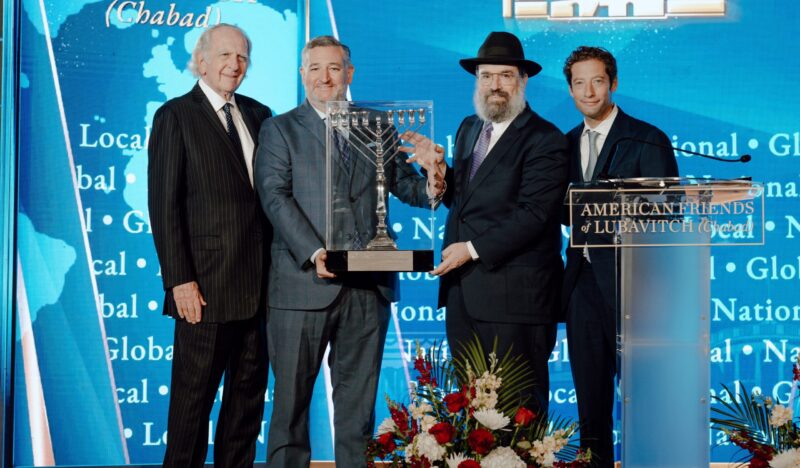
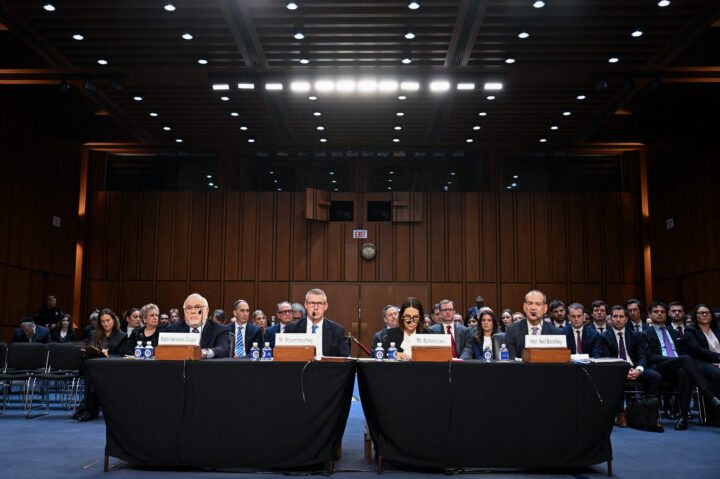
(L/R) Rabbi Abraham Cooper, Robert Karofsky, Global Wealth Management President at UBS Americas, Barbara Levi, General Counsel at UBS Group AG, and Neil Barofsky, partner at Jenner and Block LLP, testify during a Senate Judiciary Committee hearing titled "The Truth Revealed: Hidden Facts Regarding Nazis and Swiss Banks," on Capitol Hill in Washington, DC, on February 3, 2026.


 Add JewishInsider on Google
Republican and Democratic senators urged senior UBS executives in a hearing on Tuesday to reconsider the Swiss banking giant’s continued refusal to hand over more than 150 documents to an investigator probing Credit Suisse’s support for Nazi Germany during and after World War II.
At the heart of the dispute is UBS’s decision to withhold key documents from the investigation into Credit Suisse’s wartime actions, citing potential legal risks stemming from a 1998 settlement. Lawmakers are pressing the bank to release the files, arguing that withholding them is an attempt to avoid accountability for its historical role in aiding Nazi operations. The documents in question are believed to contain critical information that could further illuminate Credit Suisse’s involvement with Nazi officials, and senators are pushing UBS to cooperate fully in order to ensure transparency and justice for Holocaust survivors and their families.
Senators pressed Robert Karofsky, president of UBS Americas, and Barbara Levi, UBS Group’s general counsel, to reverse course on the bank’s opposition to sharing with attorney Neil Barofsky and Congress the remaining files on the yearslong investigation into the ways that Credit Suisse, which UBS acquired in 2023, aided Adolf Hitler’s war efforts.
Karofsky and Levi testified at the Senate Judiciary Committee hearing that UBS could not provide the documents until the New York judge that approved a $1.25 billion settlement in 1998 between multiple Swiss banks, including Credit Suisse, and Holocaust survivors issued an order affirming that the deal would cover any future claims.
Among those testifying was Rabbi Abraham Cooper, the director of global social action at the Simon Wiesenthal Center, who accused UBS of “actively blocking important aspects of Mr. Barofsky’s work” and alleged that the bank was seeking to silence the Jewish organization.
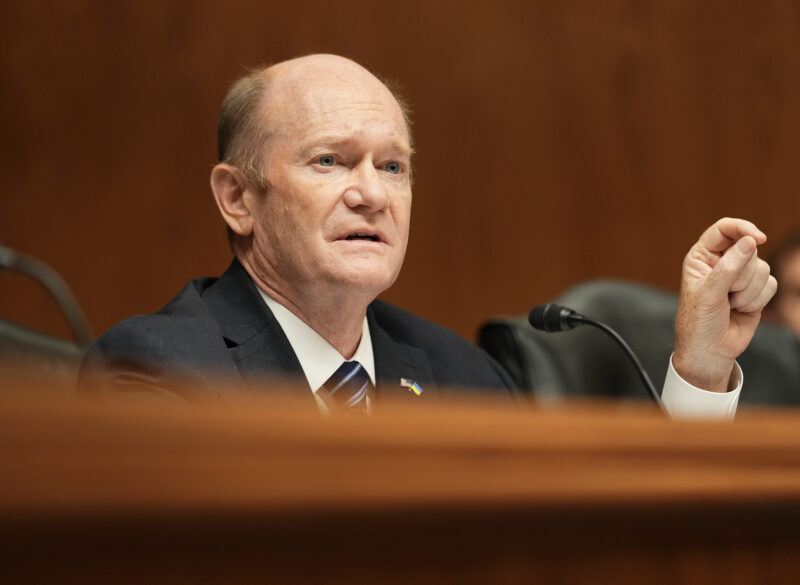
In his opening statement, Sen. Chuck Grassley (R-IA), the committee’s chairman, accused UBS of taking “legal action against a Jewish human rights organization” to “block” the Simon Wiesenthal Center “from fully speaking on all Holocaust issues,” after SWC accused Credit Suisse in 2020 of not fully disclosing its Nazi ties. Grassley also said the bank has been attempting “to limit” the ability of Neil Barofsky, the independent ombudsman the bank hired to oversee the probe, to testify before the committee.
“These efforts, if successful, would have frustrated this committee’s public hearing. UBS’ conduct is absurd and a historic shame that’ll outlive today’s hearing. Before UBS’ recent obstructive efforts, the investigation yielded new information,” Grassley said.
The UBS executives told the committee that threats of litigation from SWC and other Jewish organizations for additional compensation beyond the $1.25 billion settlement had prompted them to request an updated order from the judge, which senators rejected as an attempt to skirt accountability.
“That’s what this is all about, you don’t want to pay any more money,” Sen. John Kennedy (R-LA) told Karofsky.
“Yes,” Karofsky replied.
“If you owe more money, then by God, pay it,” the Louisiana senator said in response.
The bank’s request that the judge bar SWC and other Jewish groups from commenting publicly on any new revelations from the 150 documents or the bank’s financial obligations was also poorly received by senators.
“UBS, the successor to Credit Suisse, has gone to court not to disclose what was concealed, but to seek an order that would silence discussion of these crimes by Jewish organizations demanding accountability,” Sen. Ted Cruz (R-TX) said. “That is not closure. It is the continuation of the wrongdoing this time through the courts.”
After Levi told Cruz that UBS has “no intention to sue” SWC, the Texas senator responded, “Yet as you sit here today, UBS has a motion pending before a federal court in New York seeking to enjoin the Simon Wiesenthal Center and over a dozen other Jewish organizations in America from ever researching, speaking or publishing any content related to ‘The Holocaust, World War II and its prelude and aftermath, victims or targets of Nazi persecution and transactions with or actions of the Nazi regime.’”
Cruz then mused that it was “bizarre that UBS has expressed its commitment to pursuing the truth but is actively seeking court orders to silence it.”
“Jewish families sought refuge in Swiss banks, believing in the promise of neutrality. That refuge proved illusory. That promise proved hollow. Accounts vanished, records dissolved. Then came the cattle cars bound for camps with no return. Economic annihilation was the prerequisite. Mass extermination was the goal,” Cruz continued.
Levi repeatedly defended the request UBS had made to the judge in New York, asking senators in response to a question from Sen. Adam Schiff (D-CA): “Where is the incentive for financial institutions to investigate or cooperate when they’re certain to face litigation and possible legal liability?”
Levi said that should the judge issue the requested order, the bank would hand over the final files to Barofsky. UBS fired Barofsky in 2022 but rehired him to continue his work in 2023 after Grassley, who was then the top Republican on the Senate Budget Committee, and Sen. Sheldon Whitehouse (D-RI), who chaired the Budget Committee during that time, launched an investigation into his dismissal.
Barofsky, who also appeared before the committee on Tuesday, testified that UBS had been cooperative with his investigation from the time of his rehiring until November of last year, as both sides reached a stalemate on the 150 documents. The files, Barofsky said, appear to go to “the heart of our investigation,” which has seen UBS turn over more than 16 million documents.
Several revelations were made during the hearing, a pronouncement from Grassley that his probe had uncovered 890 previously undisclosed Credit Suisse accounts with potential Nazi links and that Argentine President Javier Milei had provided investigators with archival records of the “ratlines” used by prominent Nazis who escaped justice by fleeing to Argentina. Barofsky shared as part of a 73-page update on his investigation that Credit Suisse helped to finance the “ratlines” and was a landlord for an office in Bern, Germany, that oversaw the process by which Nazi officials bribed their way onto flights out of the country.
“A lengthy saga it has been, but it is also a saga that has demonstrated what good bipartisan congressional oversight can achieve,” Whitehouse said in his opening statement. “Chairman Grassley has long been a dogged champion of congressional oversight, and for that, I admire him. That is one of the reasons we partnered on this investigation. Elected officials working across the aisle to expose wrongdoing, malfeasance and misconduct is essential to advancing transparency, promoting accountability, guaranteeing public trust in private institutions, and I would add in public institutions as well, and pursuing justice.”
In a statement following the hearing, SWC CEO Jim Berk said, “Transparency is not about rewriting history; it is about completing it. We are proud of our role in initiating this independent investigative process with our own initial findings and then zealously pursuing complete accountability. Ensuring access to the full historical record is a core part of the Simon Wiesenthal Center’s mission and essential for survivors and their families, for public trust, and for preserving the integrity of Holocaust memory.”
The organization said that it “applauds” the committee “for its continued oversight and commitment to ensuring that the historical record of the Holocaust and its aftermath are examined thoroughly and responsibly, including by demanding answers from those who would prefer the truth to remain hidden.”
“Today’s hearing is an important moment in ensuring that remaining questions about Holocaust-era assets continue to be examined, and that the investigation into Credit Suisse initiated by the Simon Wiesenthal Center is allowed to proceed without interference.”
More Stories

EXCLUSIVE
Bipartisan House resolution honors pilot, passengers who stopped FlyDubai hijacking

TOEING THE LINE
Menin, Levine call for ‘focus’ on Oct. 7 victims — but don’t condemn Mamdani
NEXT CHAPTER
After years of hostage advocacy, Kibbutz Be’eri survivor turns toward the future
FUNDRAISER FALLOUT
Attendee at El-Sayed fundraiser bragged about beating up pro-Israel demonstrator

Doha’s Darling
Murphy, Qatar’s ‘reliable ally’ in the Senate, huddles with emir and chief Qatari negotiator in Doha
POLICY PIVOT
On Oct. 7 anniversary, senior Democrats call for changes in U.S.-Israel policy
Please log in if you already have a subscription, or subscribe to access the latest updates.
 Continue with Google
 Continue with Apple