






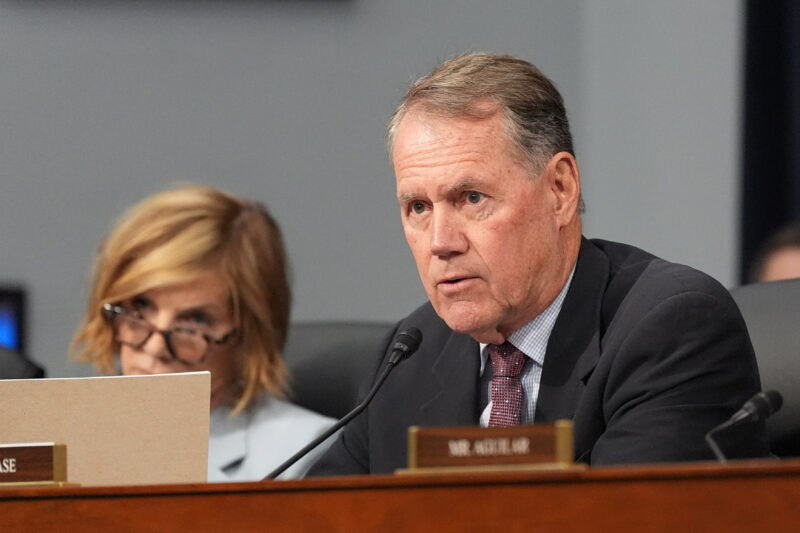
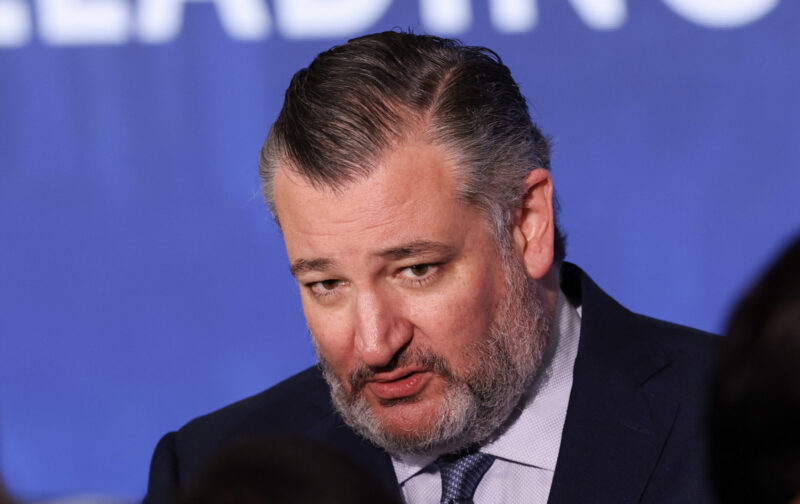
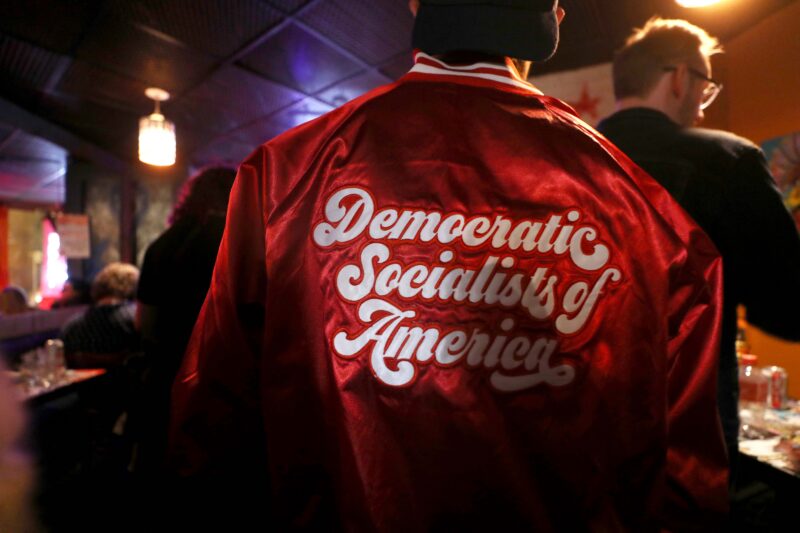

















The Texas senator added that Brotherhood-connected groups have aligned with far-left organizations, like the Democratic Socialists of America
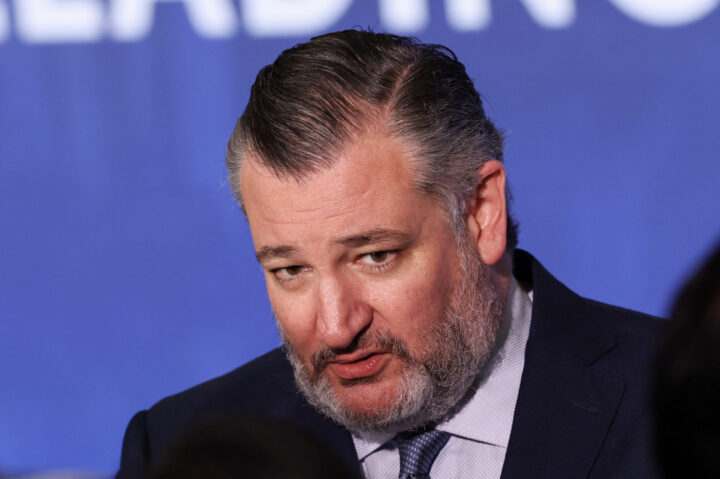
Patrick T. Fallon/AFP via Getty Images
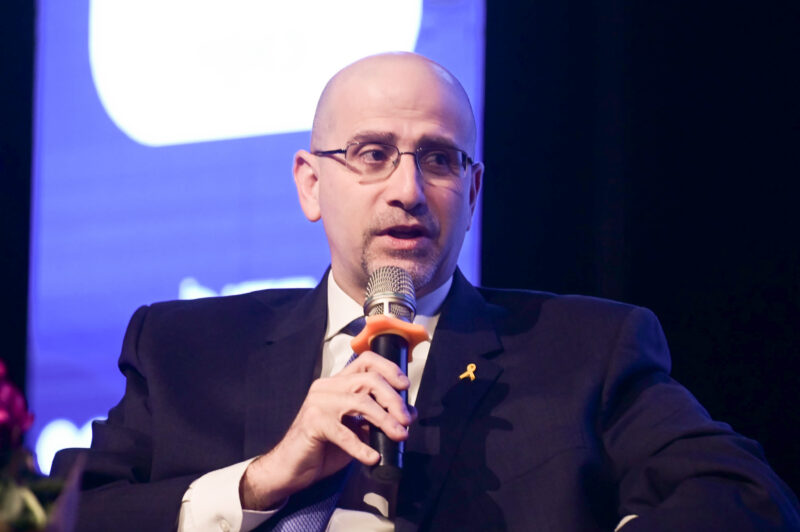
Sen. Ted Cruz (R-TX) speaks during the 29th annual Milken Institute Global Conference at the Beverly Hilton in Beverly Hills, California on May 4, 2026.


 Add JewishInsider on Google
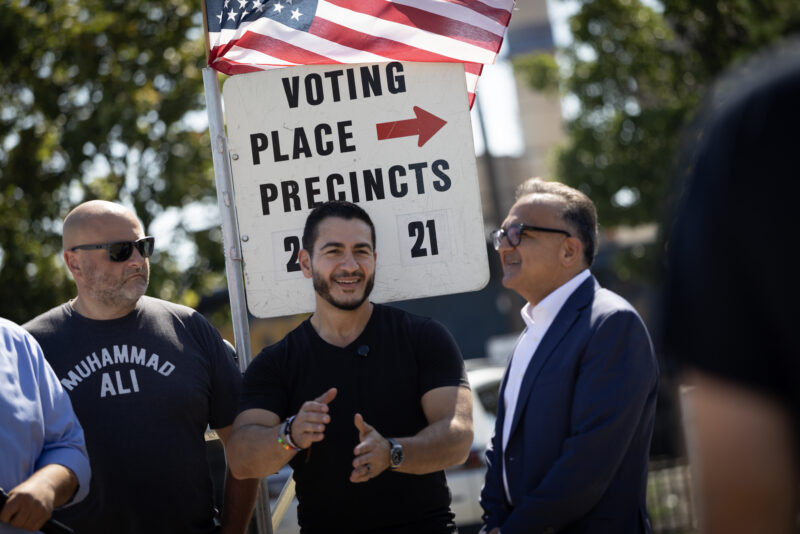
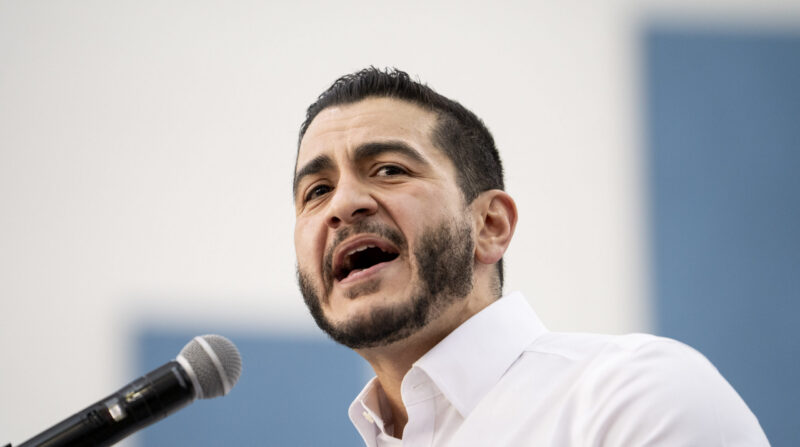
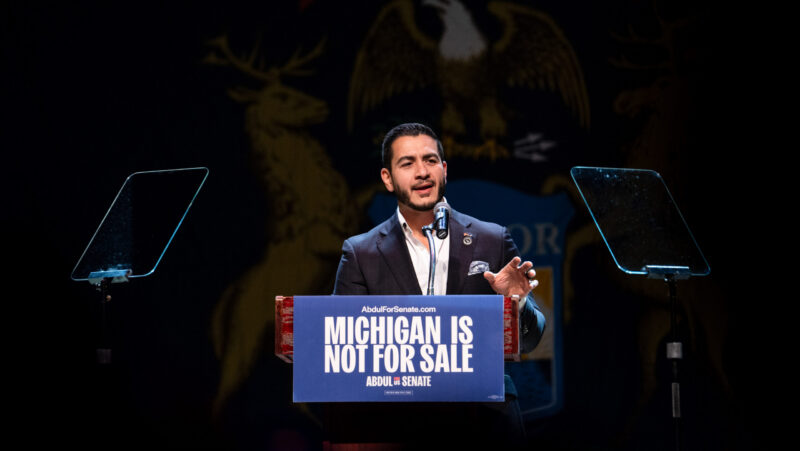
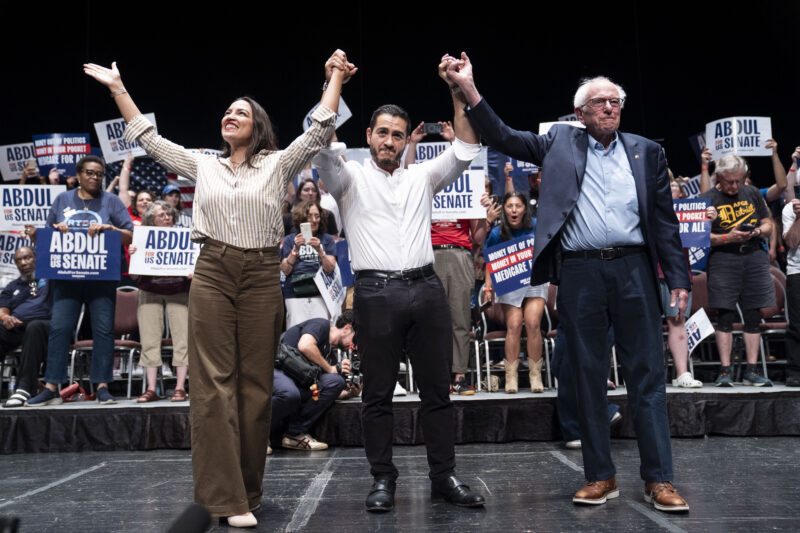
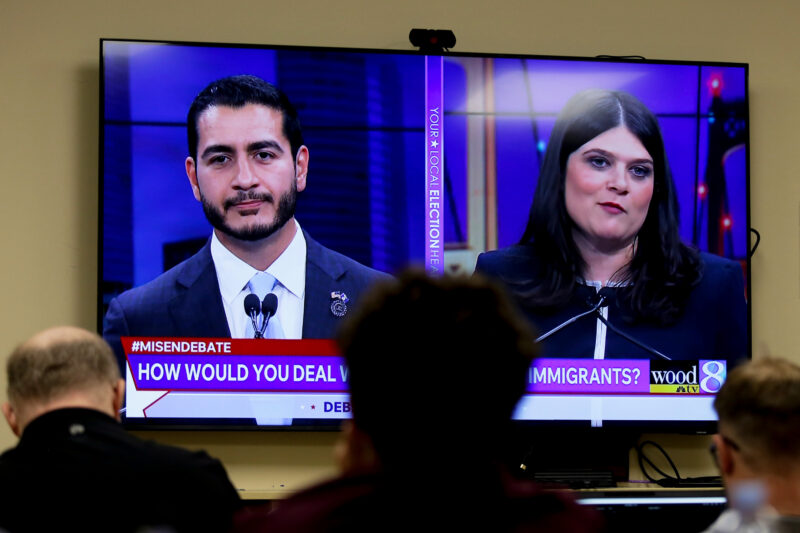
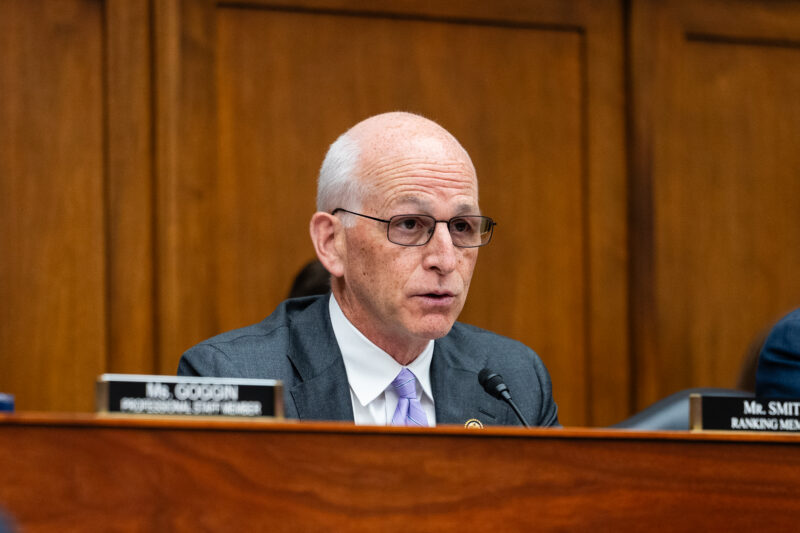
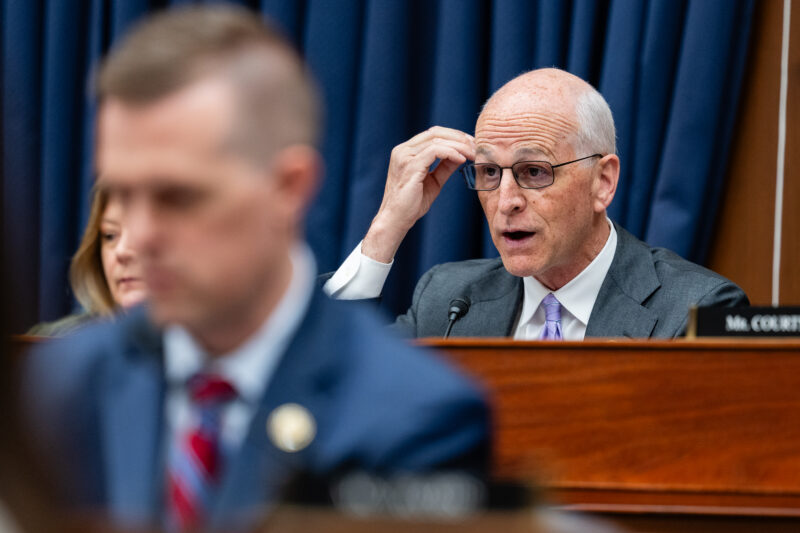
Sen. Ted Cruz (R-TX), speaking at a Senate Judiciary subcommittee hearing on Wednesday that he organized to examine Muslim Brotherhood networks and affiliates in the United States, suggested that Michigan Senate candidate Abdul El-Sayed was tied to such networks and that his Democratic primary win represented a victory for them.
“[Democrats’] campaign is now openly embracing terrorist organizations waging war on America. Behind El-Sayed’s political rise sits a much older and more entrenched institutional network,” Cruz asserted.
Kyle Shideler, a senior analyst for homeland security and counterterrorism at the Center for Security Policy, testified under questioning from Cruz that El-Sayed’s win concerned him given the nominee’s father-in-law’s ties to Muslim Brotherhood-linked groups and El-Sayed’s own relationship with groups connected to the Council on American-Islamic Relations.
“It shows the success of the Muslim Brotherhood network over multiple decades. It achieved what they said they were going to achieve, which was to normalize support for Hamas and normalize support for terrorism,” Shideler said.
He also said that Muslim Brotherhood-connected groups have partnered with organizations including the Democratic Socialists of America, united around a “shared revolutionary objective of advocating for the overthrow of the U.S. Constitution.”
El-Sayed, who did not respond to a request for comment, has accused opponents of using Islamophobia to attack him because they lack responses to his policy proposals.
The hearing — which was not attended by any lawmakers other than Cruz — focused primarily on CAIR and other groups that Cruz and witnesses said were linked to a Muslim Brotherhood network in the United States, as part of a long-running plan to infiltrate and usurp Western civilization from within and offer support for Hamas and other terrorist organizations, including by working with and co-opting other groups.
Cruz and the witnesses emphasized that CAIR leaders were part of a 1993 meeting of Muslim Brotherhood-linked anti-Israel activists, captured on an FBI wiretap, in which the activists plotted to undermine the Oslo accords and support Hamas through a range of spinoff and front organizations, including the Holy Land Foundation and Islamic Association for Palestine, which have been shuttered for funneling support to Hamas.
“The Holy Land Foundation prosecution revealed that these organizations do not operate in isolation; they function as part of a broader Muslim Brotherhood ecosystem,” Cruz said. “The events we witnessed on college campuses after Oct. 7 [2023] did not emerge from nowhere. They were not spontaneous. They were not organic. They were the product of an organized network that has spent decades building influence inside the United States.”
Shideler described CAIR as so central to the Muslim Brotherhood’s plans that it received explicit approval and support from Muslim Brotherhood leaders in Egypt.
Lara Burns, a retired FBI special agent and senior research fellow at the George Washington University Program on Extremism, said that the wiretapped meeting indicated that CAIR was created “to defend and protect the other elements of the Hamas support network and to pressure others to adopt its narratives or remain quiet.”
Burns was a lead investigator in the Holy Land Foundation case and later supervised national security and counterterrorism investigations and prosecutions.
She emphasized that CAIR has never disavowed the Holy Land Foundation and that it warrants further investigation, also noting that the group had sought to thwart the seizure of documents during the Holy Land Foundation investigation that proved the existence of Hamas and Muslim Brotherhood support networks domestically.
Burns emphasized that terrorist infrastructure has existed in the United States for decades, under the guise of charity, advocacy and activism. The network, she said, seeks to funnel support to and rally public support for Hamas; infiltrate universities, media and politics; and reshape American curricula. She said groups in the Muslim Brotherhood network continue to carry on the same agenda and some individuals and groups are still likely providing material support for terrorism.
Arielle Klepach, senior counsel at the National Jewish Advocacy Center, described CAIR and its affiliates as “a foreign terror-supporting movement on American soil, targeting our Constitution and our founding principles.”
“I would ask you to remember three things: these organizations are dangerous, they are in our schools and they hide by abusing the very legal system they are working to dismantle,” she continued.
Klepach said that the federal government should work to enforce existing laws to counter this network, arguing for imposing sanctions and prosecuting Muslim Brotherhood-connected groups for material support for terrorism and racketeering and reviewing their tax-exempt status. She said Congress should work to close loopholes that have allowed such groups to avoid legal accountability by shuttering and rebooting under new names with similar leadership.
She also warned that CAIR and other similar groups are receiving and distributing tens of millions of dollars in taxpayer funding.
Shideler said that the Holy Land Foundation case provided a trove of intelligence and evidence on the U.S. Muslim Brotherhood support network and its efforts to infiltrate and influence all areas of American life, but that the federal government had subsequently failed to pursue further action, and CAIR and other linked groups have obstructed and dodged efforts to seek justice.
Democrats announced in advance that they planned to boycott the hearing, describing it as Islamophobic and targeted at Muslims writ large, but ultimately none of Cruz’s Republican colleagues appeared to ask questions of witnesses either.
Democrats dismissed the hearing a ‘political creepshow’ designed to attack Muslims broadly
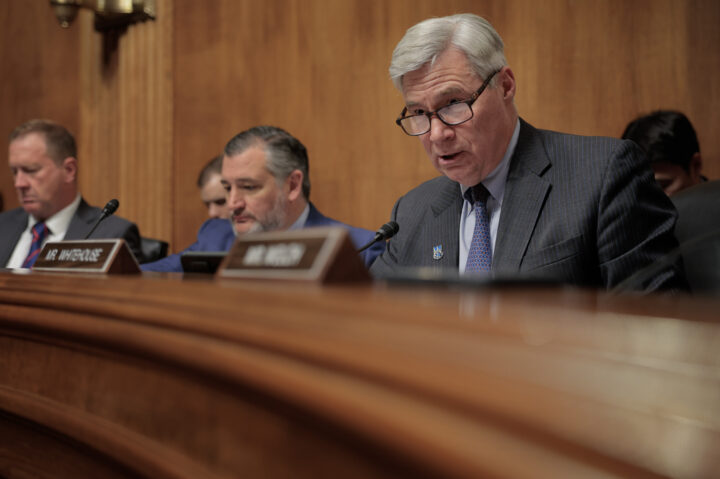
Chip Somodevilla/Getty Images
Senate Judiciary Committee member Sen. Sheldon Whitehouse (D-RI) delivers opening remarks during a subcommittee hearing on Capitol Hill on June 3, 2025 in Washington, DC.
Democrats on the Senate Judiciary Committee’s Federal Courts subcommittee said on Tuesday that they plan to boycott a subcommittee hearing on Wednesday set to examine Muslim Brotherhood networks in the United States.
The Democrats — Sens. Sheldon Whitehouse (D-RI), Richard Blumenthal (D-CT), Mazie Hirono (D-HI), Alex Padilla (D-CA) and Peter Welch (D-VT) — dismissed the hearing as an effort to attack Muslims broadly.
“Scapegoating Muslims may be a Texas Republican strategist’s idea of ‘solid gold’ to whip up their voters, but Democrats have no intention of indulging this political creepshow, particularly after the recent violence targeting places of faith,” the lawmakers said in a statement. “Our focus is the costs families face thanks to rampant, non-stop Trump corruption.”
The hearing, organized by subcommittee chairman Sen. Ted Cruz (R-TX), is titled, “Hidden in Plain Sight: Confronting the Muslim Brotherhood Network in America,” and follows efforts by state-level and national Republicans focused on the group, including an executive order targeting Muslim Brotherhood branches as terrorist groups.
“Of course they are,” a Cruz spokesperson told Jewish Insider, when asked about the Democratic boycott.
Scheduled witnesses include Lara Burns, a former FBI special agent and senior research fellow at The George Washington University’s Program on Extremism; Arielle Klepach, senior counsel at the National Jewish Advocacy Center; and Kyle Shideler, a senior analyst for homeland security and counterterrorism at the Center for Security Policy.
Plus, Pelosi's Al Green light
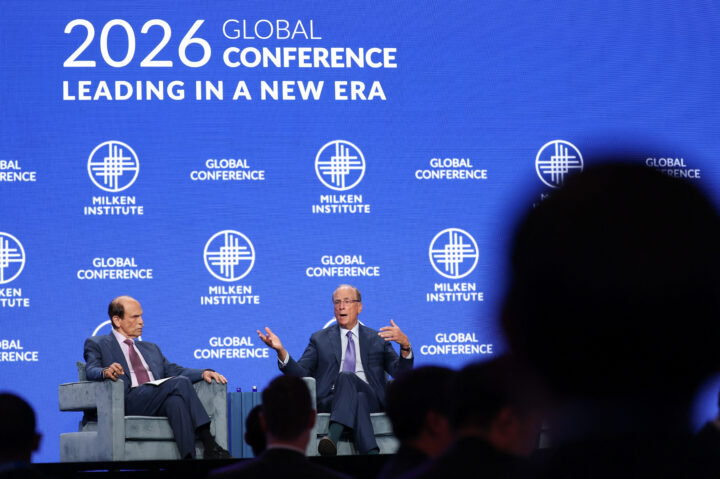
Patrick T. Fallon / AFP via Getty Images
Laurence D. Fink (R), co-founder, chairman and CEO of BlackRock, speaks next to Milken Institute chairman Michael Milken during the 29th annual Milken Institute Global Conference at the Beverly Hilton in Beverly Hills, California on May 5, 2026.
Good Thursday morning.
In today’s Daily Kickoff, we cover the White House’s new counterterrorism strategy targeting the Muslim Brotherhood, Iran and Islamic State elements in Africa, and report on Rep. Nancy Pelosi’s backing of an anti-Israel congressional candidate in Houston who is at odds with the city’s Jewish community. We cover Georgetown University Law School’s decision to replace a Jewish commencement speaker with a critic of Congress’ antisemitism hearings, and talk to CNBC’s Sara Eisen on the sidelines of the Milken Institute Global Conference. Also in today’s Daily Kickoff: Adeena Sussman, Ken Griffin and Eyal Waldman.
Today’s Daily Kickoff was curated by JI Executive Editor Melissa Weiss and Israel Editor Tamara Zieve, with an assist from Danielle Cohen-Kanik. Have a tip? Email us here.
What We’re Watching
- President Donald Trump is hosting Brazilian President Luiz Inácio Lula da Silva this morning at the White House. The sit-down comes amid continued uncertainty over the state of U.S. negotiations with Iran. Fox News reported that Trump said the parties had a week to reach an agreement — establishing a deadline set to expire at the president heads to Beijing for his summit with Chinese President Xi Jinping.
- Secretary of State Marco Rubio arrived in Rome this morning, and met withPope Leo XIV at the Vatican amid tensions between the Holy See and the White House over the war in Iran. Earlier this week, Trump told Hugh Hewitt that the pontiff’s criticism of the war was “endangering a lot of Catholics.”
- The Washington Institute for Near East Policy is holding its annual policy dinner tonight.
- Magnum Ice Cream Company is holding a stakeholder meeting today, where it will face pressure from NorthStar Asset Management, which is working with Ben & Jerry’s co-founder Ben Cohen, over steps taken in recent months by Magnum, which owns Ben & Jerry’s, to tamp down on the ice cream company’s social activism.
- Voters in the U.K. are casting ballots in local elections around the country, with Prime Minister Keir Starmer and his ruling Labour party expected to face significant losses.
What You Should Know
A QUICK WORD WITH JI’S GABBY DEUTCH
The country’s consummate insiders gathered at the Milken Institute Global Conference in Beverly Hills this week. But far away from the five-star hotels where attendees closed business deals and mingled over salmon bento boxes, there is concern over an anti-elite sentiment that is dominating American politics.
The executives, philanthropists and politicians who attended the gathering took note of this increasingly populist moment while discussing how to remedy some of the legitimate concerns of Americans.
There were sessions focused on protecting the workforce in the face of disruption from AI, and on retirement planning for gig economy workers who cannot contribute to a typical 401(k). Behind the scenes, Trump Accounts — tax-advantaged savings accounts for American children, with $1,000 kicked in from Uncle Sam — were a big topic of conversation.
As some of America’s most important decision-makers discussed the turbulent downstream impacts of the AI boom, and the sense that many people are feeling left behind, a related topic that animated the many Jewish executives and investors who attended the conference.
They worry that the intermingling of populism and antisemitism, already heightened following the Oct. 7 Hamas attacks on Israel two and a half years ago, represents a dangerous combination.
“Antisemitism is a manifestation of extremism and populism,” TD Bank Vice Chair Jeffrey Solomon told Jewish Insider. “Extremism on the left and extremism on the right, neither one of those is good for us as Jews, but it’s not good for a lot of people.”
SPEAKER SELECTION
Georgetown Law replaces Jewish commencement speaker with critic of antisemitism hearings

After a Jewish university leader withdrew as Georgetown University Law Center’s commencement speaker following backlash from anti-Israel student activists, the school replaced him with a professor who criticized congressional hearings on campus antisemitism as a form of “McCarthyism” aimed at chilling free speech, Jewish Insider’s Haley Cohen reports.
Chain of events: In an email to law school students on Wednesday, Joshua Teitelbaum, the interim dean of Georgetown Law, wrote that “in the past week, a number of law students raised concerns” about the speaker selection of Morton Schapiro, an economist and the former president of Northwestern University for over 10 years. Teitelbaum said those concerns were “due primarily to opinion essays [Schapiro] published on Israel and Palestine in the aftermath of Oct. 7, 2023.” Schapiro withdrew after learning of the students’ concerns, Teitelbaum said, and announced that Georgetown Law professor David Cole would replace him.
PROTEST POLITICS
New York Democrats condemn Park East demonstrators’ rhetoric as Mamdani doubles
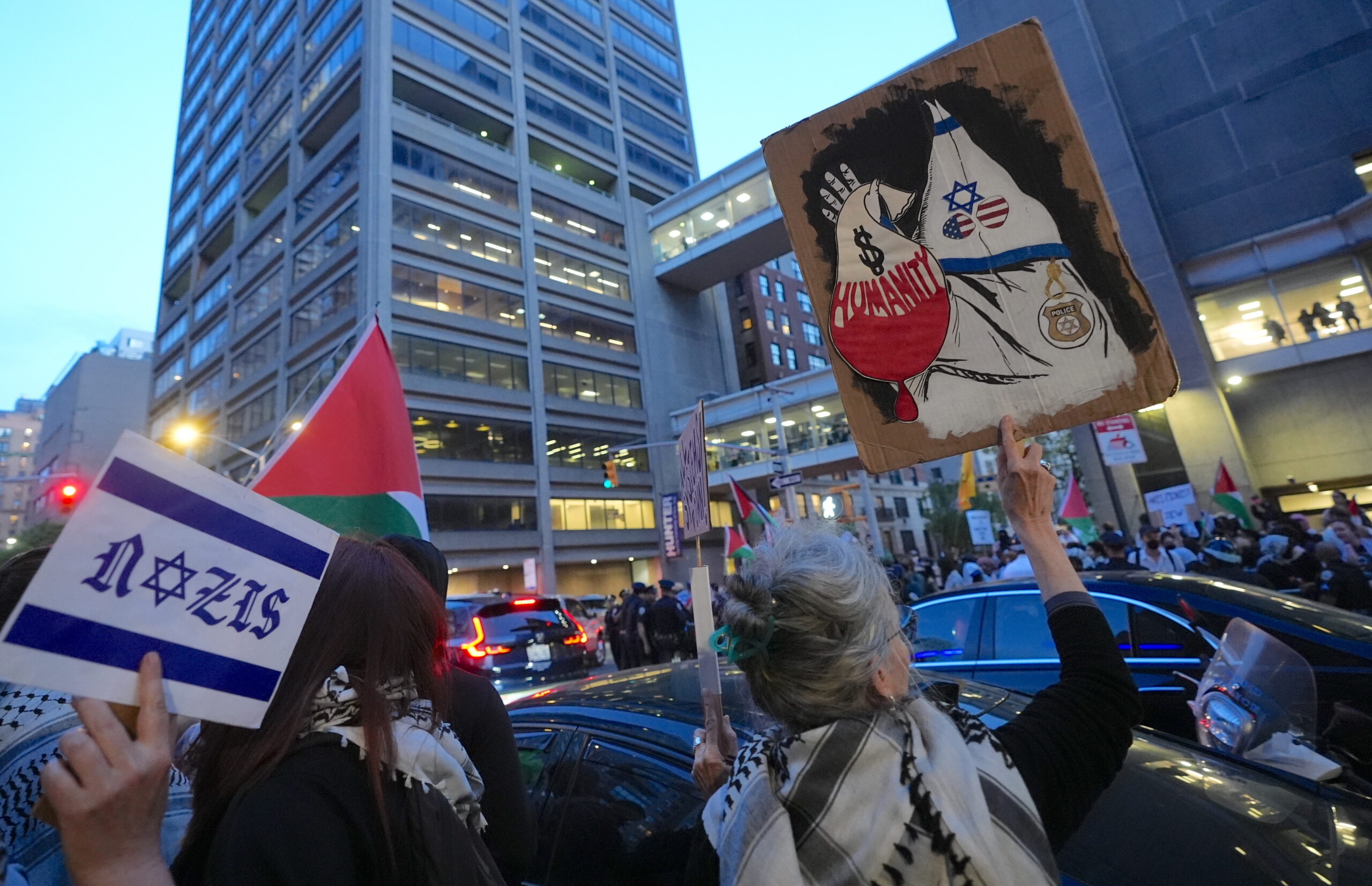
New York City Mayor Zohran Mamdani reiterated on Wednesday his criticism of the “Great Israel Real Estate Event” held at Park East Synagogue the night prior, even as fellow Democrats condemned the extremist speech and actions of protesters who sought to break the police cordon outside, Jewish Insider’s Will Bredderman reports. The event included, among other offerings, advertisements for settlements in the West Bank.
Reiterating his position: Pressed on Tuesday about plans for protests at the Manhattan shul, Mamdani released a statement strictly criticizing the event with no mention of the previous disturbance the same pro-Hamas activist group caused outside Park East last November. Jen Goodman, spokesperson for Gov. Kathy Hochul meanwhile, said, “No one should be intimidated when entering their house of worship.”
Read the full story here with additional comments from Attorney General Letitia James and Council Speaker Julie Menin.
Washington weighs in: Harmeet Dhillon, the Justice Department’s assistant attorney general for civil rights, said the department was investigating an incident in which a Jewish couple appeared to be harassed by protesters near the Wednesday event at the Park East Synagogue.
DOHA DYNAMICS
Iran’s attacks on Qatar could prompt regional realignment, experts say
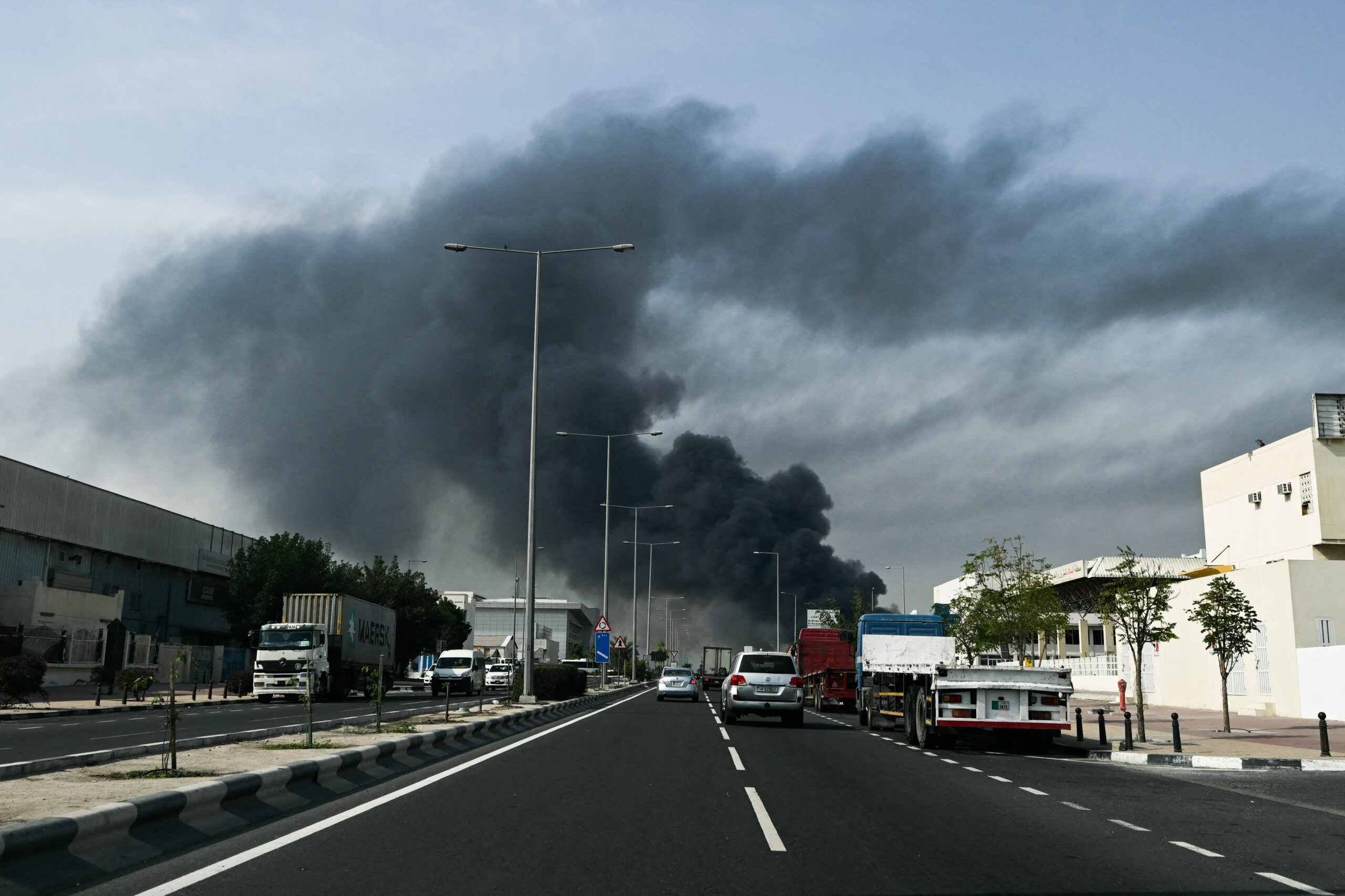
Iranian attacks on Qatar could prompt Doha to reassess its regional alignment and relationship with Tehran, experts said, though they expressed skepticism that the strikes would change Qatar’s antagonistic posture toward Israel, its funding of anti-Israel media or its harboring of Muslim Brotherhood-aligned groups, Jewish Insider’s Matthew Shea reports.
Turning point: “Iran’s strikes have created real fissures,” said Natalie Ecanow, a senior research analyst at the Foundation for Defense of Democracies. “For example, Qatar expelled Iran’s military and security attachés and cracked down on IRGC cells within its borders. Notably, Qatar’s prime minister called Iran’s strikes ‘a big sense of betrayal,’ which is language typically reserved for friends or partners, not foes. That tells you something about Qatar’s mindset before the war.”
TERROR TARGETS
White House unveils counterterrorism strategy targeting Muslim Brotherhood, Iran, Africa
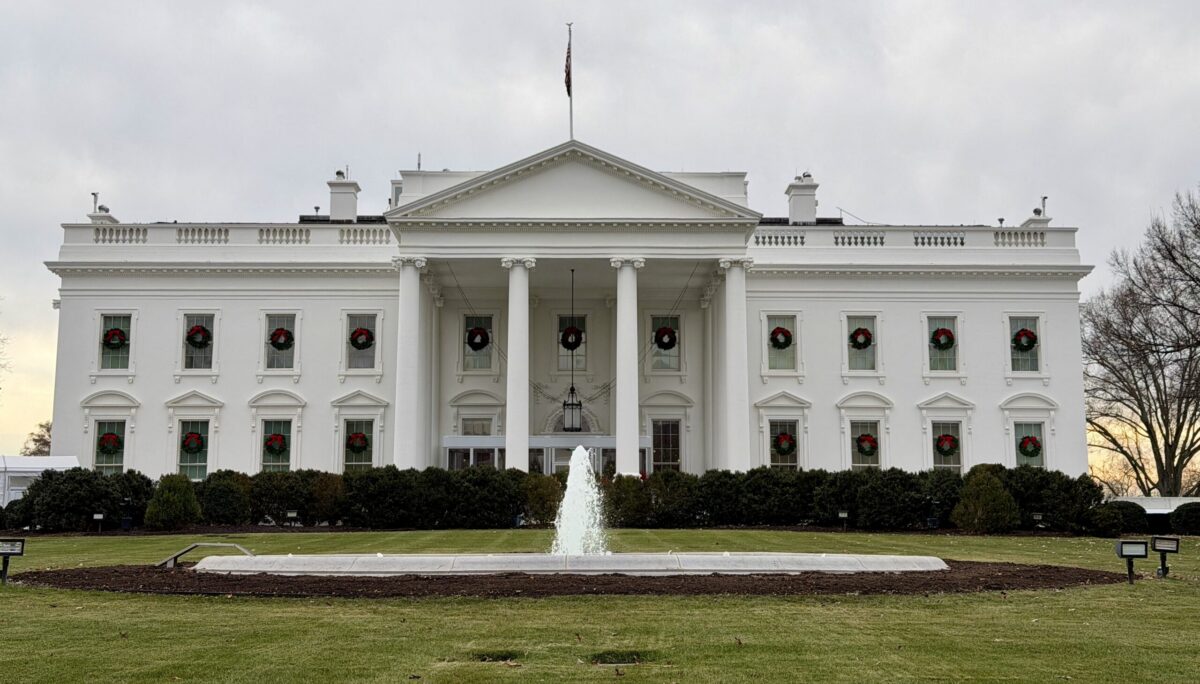
Seb Gorka, the National Security Council’s senior director for counterterrorism, announced while unveiling President Donald Trump’s U.S. counterterrorism strategy on Wednesday that U.S. officials will meet with representatives from several foreign governments this week to ask for assistance in combating terrorism emanating from Iran and elsewhere, Jewish Insider’s Emily Jacobs reports.
What it entails: Gorka, who also serves as a deputy assistant to the president and oversaw the drafting of the strategy, told reporters that as part of the strategy, the U.S. intends to seek more support on the counterterrorism front from allies who want to be “measured as a serious nation” by the Trump administration. The strategy covers how the administration will respond to threats from Islamic terrorist organizations at home and abroad, drug cartels in the Western Hemisphere and domestic political groups accused of inciting violence.
PELOSI’S PICK
Pelosi backs anti-Israel Democrat who alienated Houston’s Jewish community
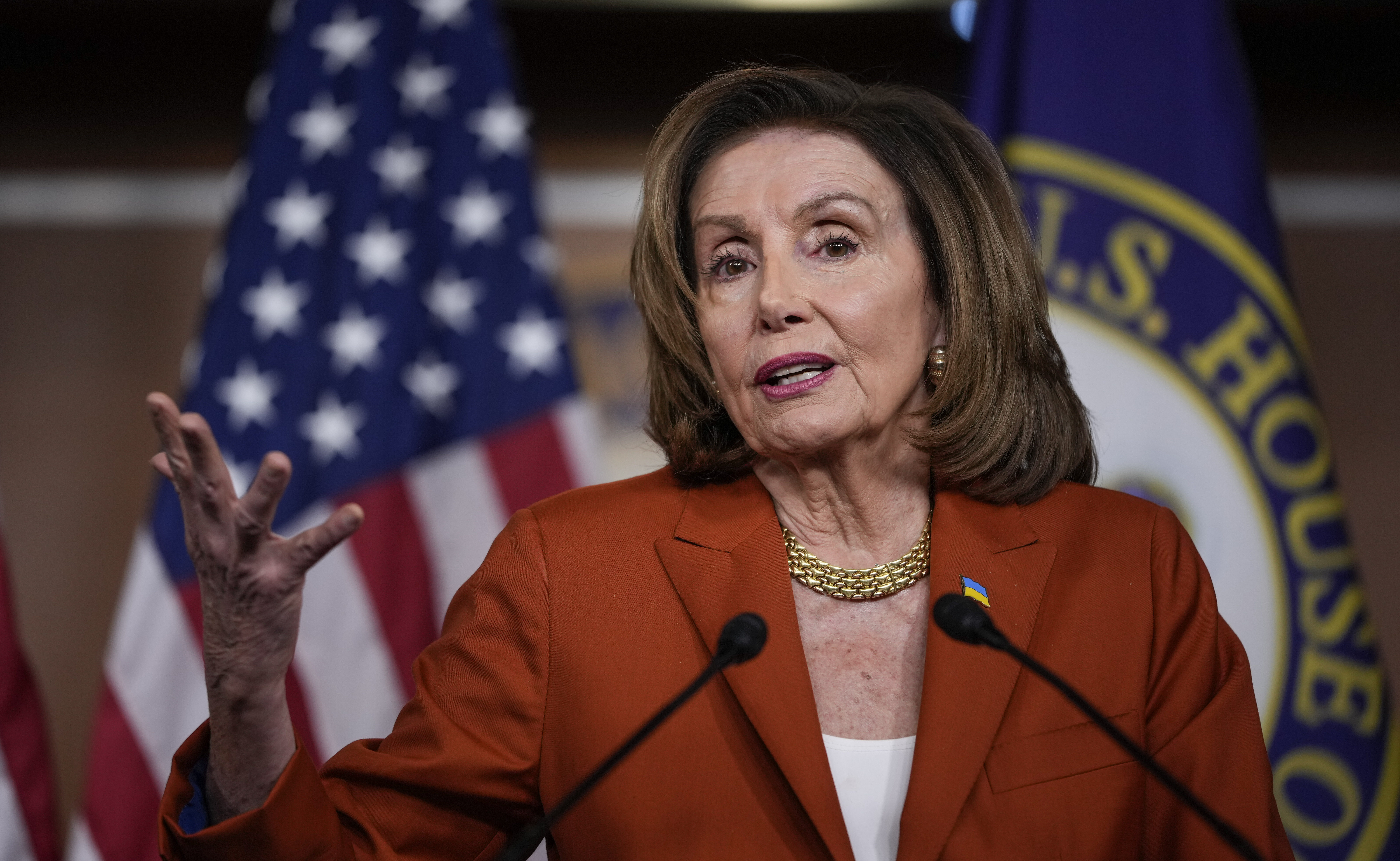
Rep. Al Green (D-TX), a vocal critic of Israel competing in a closely contested runoff against a fellow House Democrat later this month, announced in social media posts on Monday that he had received a coveted endorsement from Rep. Nancy Pelosi (D-CA), the powerful former House speaker, Jewish Insider’s Matthew Kassel reports.
Community reactions: Jewish community leaders in the Houston area were surprised to see Pelosi’s endorsement, especially as it appeared to break with her precedent of declining to engage in member-on-member races. It also fueled ongoing frustrations with Green’s alleged lack of outreach to Houston’s sizable Jewish community — a potentially critical constituency in what is expected to be a close election.
MAKING NEWS
CNBC anchor Sara Eisen confronts antisemitism — on air and online
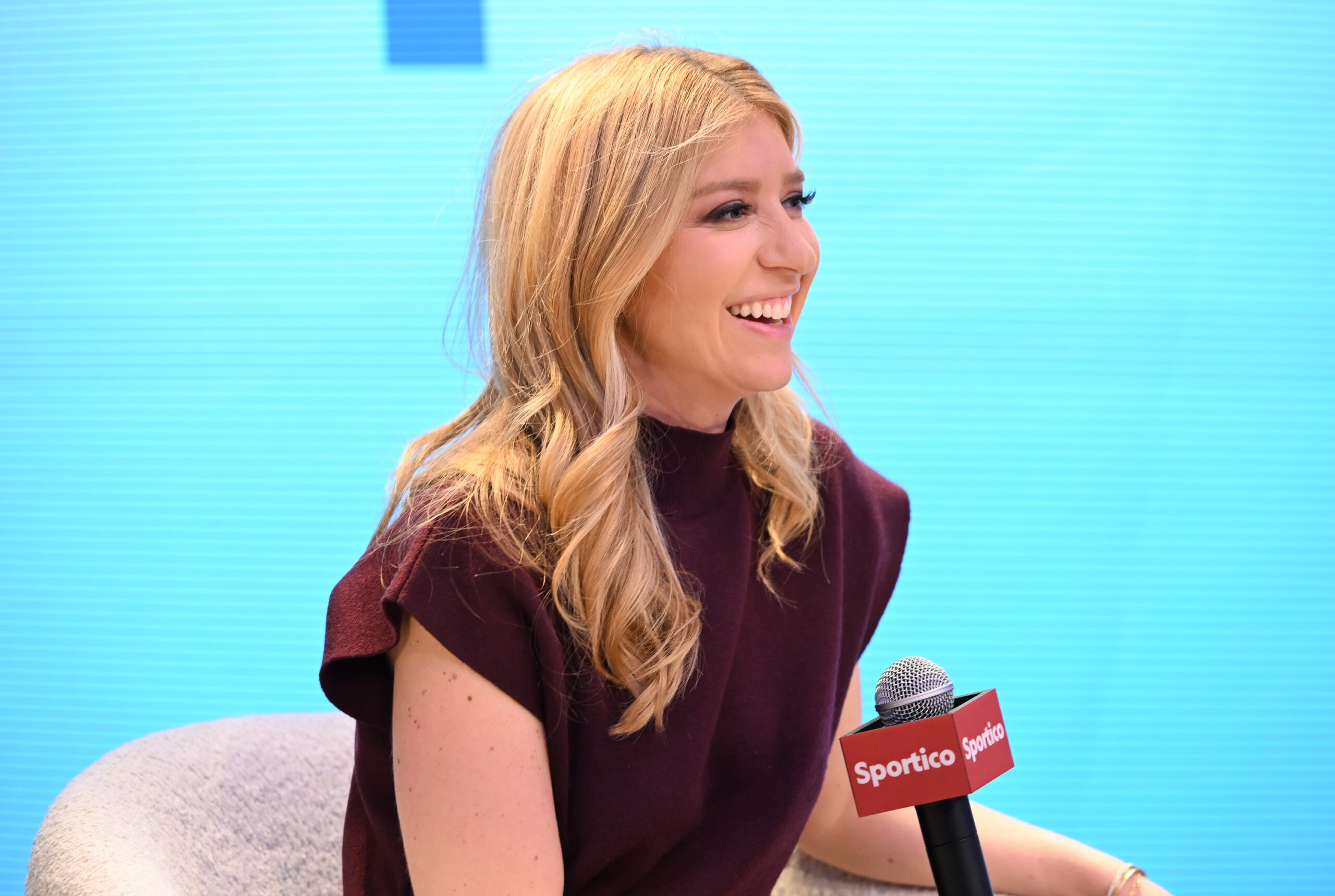
CNBC anchor Sara Eisen is a fixture at the annual Milken Institute Global Conference in Los Angeles, where she moderates marquee events, such as a one-on-one interview on Tuesday with Ken Griffin, CEO of the hedge fund Citadel. But the real reason that Eisen comes to Beverly Hills for the exclusive annual gathering is for the conversations happening far from the main stages. And much of the conversation Eisen is hearing this week, she told Jewish Insider’s Gabby Deutch, has to do with the dramatic rise in antisemitism in recent years.
Sideline conversation: “To a large extent, I reflect a lot of what the sources that I speak to [say]. That’s investors, and it’s business leaders, and it’s private equity leaders,” Eisen told JI. “A lot of these people, Jewish and non-Jewish, talk to me about it. They know about my background. They know my perspective. They see what’s happening in the political world. They see what’s happening in geopolitics,” she continued. “This is the sideline conversation.”
Worthy Reads
Tehran Talks: In Foreign Policy, Menahem Merhavy observes a shift in the rhetoric of senior Iranian officials that he attributes to a “deeper contraction in the regime’s horizon of action” as it struggles in the wake of the war with the U.S. and Israel. “The United States now appears in Iranian discourse less as a fading empire than as a force capable of demanding surrender, while Israel is treated not as a collapsing anomaly but as a resilient and operationally effective adversary. The shift is striking: The same regime that once denied the durability of its enemies now implicitly affirms it. The greater the acknowledged strength of these adversaries, the more meaningful survival can be presented as victory.” [ForeignPolicy]
Lurie’s Lure: In The Washington Post, Max Raskin, a self-identified “Republican who has been investing in San Francisco real estate for the past two years,” praises Mayor Daniel Lurie’s efforts to turn the city around following years of high crime and economic malaise. “Like Nixon in China, Lurie’s disarming charm and Democrat bona fides gave him the political cover necessary to establish these initiatives and make these changes. This is why the country’s most liberal city can experiment with a conservative idea — that if you get crime right, everything else will follow. Foot traffic picks up, which leads to more retail activity, which leads to more investment, resulting in a boom loop.” [WashPost]
Intifada in the Digital Age: In The Free Press, Warren Kinsella looks at Hamas’ use of digital technology to garner support for its cause and antipathy for Israel. “[Counterterrorism expert Khaled] Hassan said that no one should be under any illusion: For Hamas, the main weapon of the war — online and otherwise — is now a smartphone, which provides vital insights into the way Westerners live and how to capture their support. If someone is in the business of fomenting anger, he said, the internet is the best recruitment and radicalization tool in the history of the world.” [FreePress]
Word on the Street
The U.S. Air Force is planning for the Qatari luxury jet being gifted to the Trump administration to be delivered on July 4, to coincide with the U.S.’ Semiquincentennial…
Bloomberg looks at U.S. efforts to pressure the governments of Lebanon and Iraq to crack down on Iran-backed groups in the countries that are threatening the stability of the current ceasefire…
The effort comes amid ongoing clashes between Israel and Hezbollah in southern Lebanon; on Wednesday, Israel struck a Hezbollah stronghold in Beirut for the first time since the ceasefire went into effect, saying on Thursday that Radwan Force commander Ahmed Ghaleb Balout was killed in the strike…
The U.S. halted its short-lived “Project Freedom” effort to help stranded ships leave the Strait of Hormuz after Saudi Arabia denied the U.S. the use of its bases and airspace, NBC reported…
A Washington Post assessment found that Iran had damaged more than 220 installations at U.S. military sites across the Middle East during the recent war…
The Financial Times reports that Iran has increased its rate of executions in recent weeks, using a new legal framework to target Iranians who participated in anti-government protests earlier this year as well as those accused of colluding with the Islamic Republic’s enemies…
The Wall Street Journal spotlights the efforts of Mohamed Arrachedi, the Middle East regional coordinator for the International Transport Workers’ Federation, who with his team serves as a lifeline to the approximately 20,000 sailors in the region and has responded to some 2,000 requests seeking assistance…
The New York Times looks at clashes between German officials and members of the country’s intelligence community over public warnings about the domestic threat posed by Iran, with regional intelligence officials raising concerns that the threat is more severe than Berlin is acknowledging…
Sen. Rick Scott (R-FL) and Reps. Elise Stefanik (R-NY) and Josh Gottheimer (D-NJ) introduced bipartisan, bicameral legislation that would cut federal R&D funding to universities that operate campuses in Iran, China, Qatar, Turkey, Russia, Cuba, Venezuela or North Korea…
Rutgers withdrew an invitation for Arcellx CEO Rami Elghandour to deliver a speech at the school’s upcoming commencement ceremony for its engineering school after some students indicated they would not attend the event over Elghandour’s past anti-Israel commentary on social media…
Pennsylvania Gov. Josh Shapiro’s reelection campaign said the governor raised $3.6 million in the last five weeks, bringing Shapiro’s war chest to $37 million…
Citadel CEO Ken Griffin praised Rahm Emanuel’s tenure as former mayor of Chicago while attacking Illinois Gov. JB Pritzker for his handling of crime and education issues during a panel at the annual Milken Institute Global Conference this week, Jewish Insider’s Emily Jacobs reports…
A senior official at the Jewish Community Relations Council of Greater Washington said that the JCRC is receiving “significantly higher” reports of antisemitism from Montgomery County Public Schools, located just outside of Washington, than others in the region, Jewish Insider’s Haley Cohen reports…
Oaktree’s Howard Marks listed his home in Malibu, Calif., for $38.5 million, five years after purchasing the beachfront property for $31 million…
Adeena Sussman’s newest cookbook, Zariz, was named to The New York Times’ best-seller list in the Advice, How-To & Miscellaneous category; read our interview with Sussman about Zariz here…
An Israeli court ordered Prime Minister Benjamin Netanyahu to provide medical records detailing his diagnosis and treatment for prostate cancer as part of a libel case against Israeli journalists and an anti-Netanyahu activist who said in 2024 that the prime minister was seriously ill…
Mellanox co-founder Eyal Waldman, whose daughter Danielle was killed at the Nova music festival on Oct. 7, 2023, was heckled by a demonstrator at the Venice Biennale who discovered Waldman was Israeli…
Hamutal Meridor’s defense-tech startup Kela is raising $200 million at a $1 billion valuation in a funding round led by Stripe and D1 Capital Partners that also includes Bill Ackman and Eric Schmidt…
Israel will send jet fuel to Germany following a request from Berlin, amid shortages resulting from the closure of the Strait of Hormuz…
Belgian Prime Minister Bart De Wever criticized U.S. Ambassador to Belgium Bill White for weighing in on an Antwerp prosecutor’s decision to levy charges against three mohels after Belgium barred nonmedical practitioners from conducting circumcisions, in a move that was heavily criticized by the country’s Jewish community…
Pic of the Day
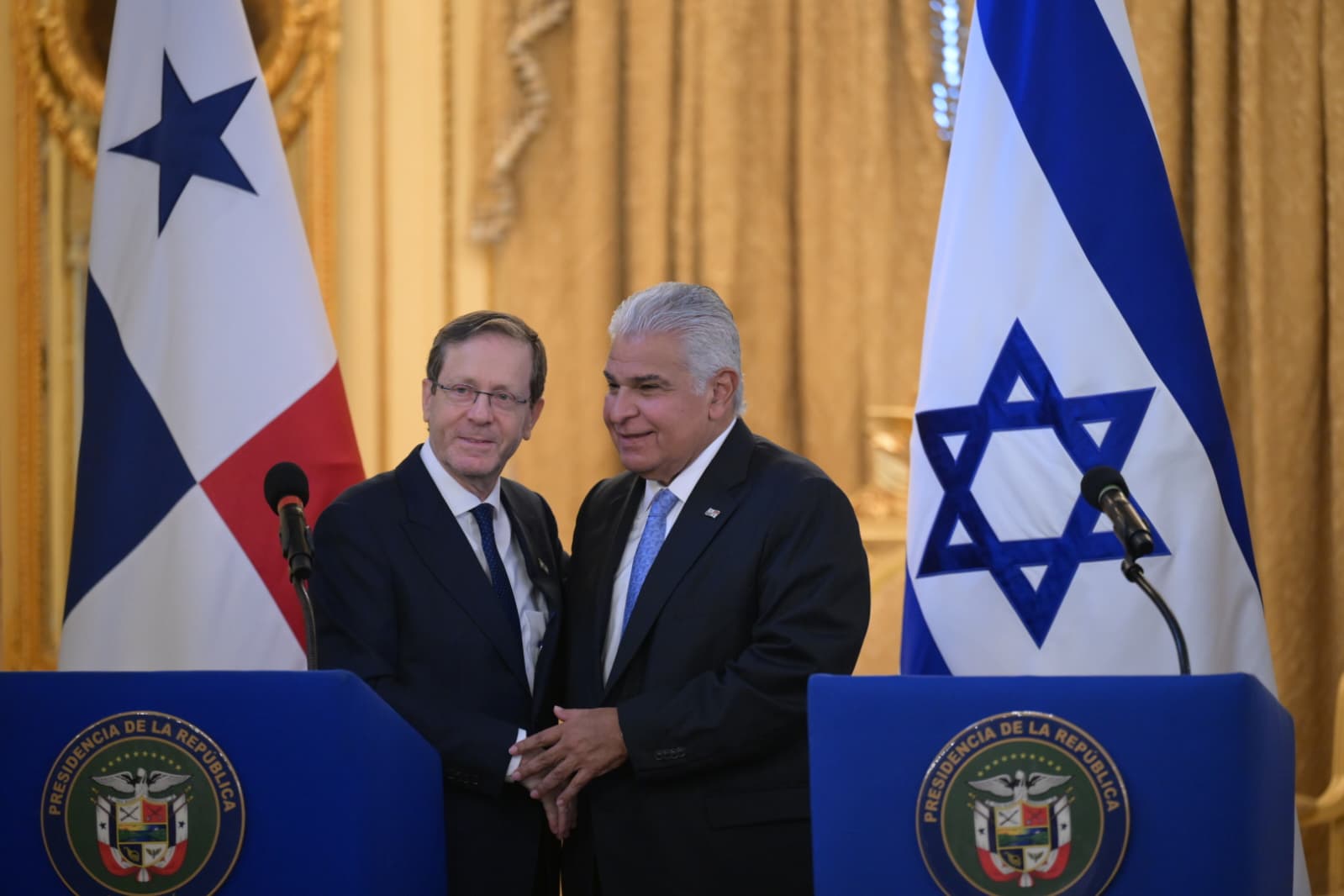
Israeli President Isaac Herzog (left) met on Wednesday with Panamanian President José Raúl Mulino in Panama City, becoming the first sitting Israeli president to visit the Central American country. From Panama, Herzog will travel on to Costa Rica for the inauguration of President-elect Laura Fernández Delgado.
Birthdays
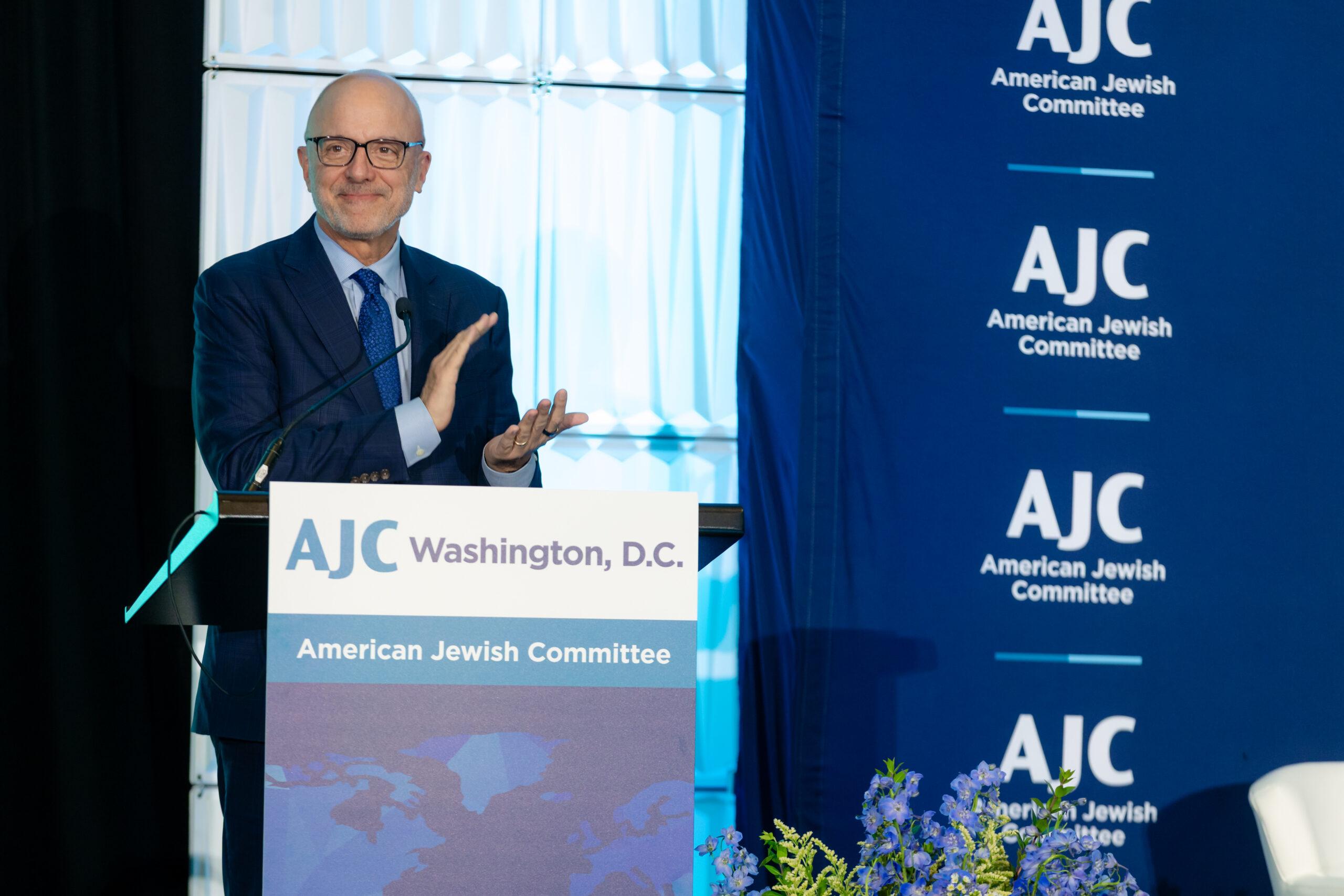
CEO of the American Jewish Committee, he was previously a member of Congress for 12 years, Ted Deutch turns 60…
Member of the New York state Assembly from 1993 to 2022, Sandra R. “Sandy” Galef turns 86… Senior member of the Mobile, Ala., law firm of Silver Voit Garrett & Watkins, Irving Silver turns 86… Napa, Calif.-based media executive and podcast host, Jeffrey Schechtman… Theatrical producer at Press the Button Productions in Monterey, Calif., Jane J. Press… Former member of the Knesset for the Shas party, Rabbi Meshulam Nahari turns 75… Former deputy secretary of state and deputy national security advisor, currently the dean of Johns Hopkins SAIS, James Braidy “Jim” Steinberg turns 73… Director of many commercially successful films including “Fast Times at Ridgemont High,” “National Lampoon’s European Vacation,” “Look Who’s Talking” and “Clueless,” Amy Heckerling turns 72… President of Harvard University, Alan Michael Garber turns 71… Mayor of El Paso, Texas, from 2013 to 2017 and again from 2021 to 2025, Oscar Leeser turns 68… Professional poker player and hedge fund manager, Daniel Shak turns 67… CEO of Rationalwave Capital Partners, a venture capital firm investing in technology companies, Mark Rosenblatt… Emmy Award-winning film, television and music video director, Adam Bernstein turns 66… Mexican actor best known for his work in telenovelas and the stage, Ari Telch turns 64… Co-founder of JewBelong, Archie Gottesman… Chairman and CEO of Hertz from 2022 to 2024, following 28 years at Goldman Sachs, Stephen Scherr turns 62… Former member of the Virginia House of Delegates, Mark H. Levine turns 60… Principal at Cornerstone Government Affairs, Keith Stern… Chief judge of the United States Court of Federal Claims, Matthew Hillel Solomson turns 52… Senior advisor at Lubavitch World Headquarters in Brooklyn, Rabbi Avraham Berkowitz turns 50… Head of congressional affairs at the Embassy of Israel in Washington, Eyal Naor turns 50… Former member of the Knesset who served as interior minister and justice minister, she now chairs Kardan Real Estate Group, Ayelet Shaked turns 50… AIPAC activist, Yana J. Lukeman… VP of sales at Harvey, Robert Warren Saliterman… Head of school at Manhattan Day School, Pesha C. Kletenik… Social entrepreneur, winemaker and CEO of Napa Valley’s OneHope, Jake Kloberdanz turns 43… Director of government affairs for the Port of Los Angeles, Arthur L. Mandel turns 41… CEO of Harris Media, he has worked on several presidential campaigns, Vincent Robert Harris turns 38… Adventurer, dogsled racer, advice columnist and writer, she raced in and completed the 2019 dog sled Iditarod, Blair Braverman turns 38… Las Vegas-based fashion blogger, model, DJ and writer, known as Bebe Zeva, Rebeccah Zeva Hershkovitz turns 33… Film and television actress, Dylan Nicole Gelula turns 32… Actor and singer, Andrew Barth Feldman turns 24… Director of advocacy and public affairs for the Jewish Council for Public Affairs, Ben Suarato… Mayor of Providence, R.I., Brett Smiley…
Following on a November executive order, the Jordanian and Egyptian branches were deemed Specially Designated Global Terrorists and the Lebanese branch a Foreign Terrorist Organization
Salah Malkawi/Getty Images
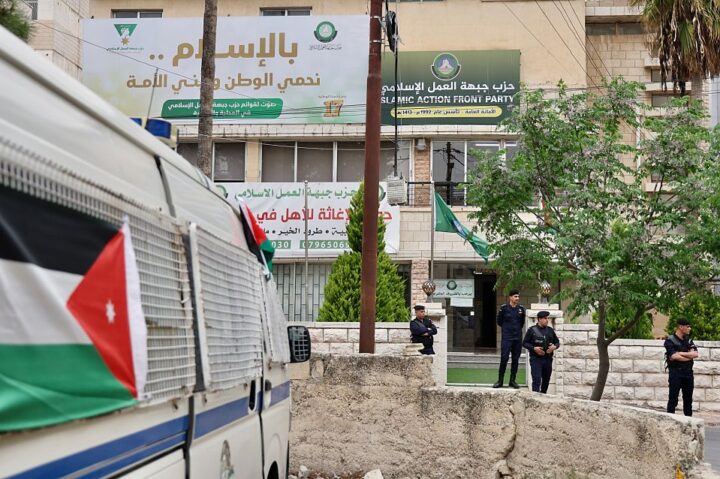
Jordanian police close the entrance of a Muslim Brotherhood headquarter after the announcement of banning the society in the country on April 23, 2025 in Amman, Jordan.
The Trump administration labeled three Muslim Brotherhood branches as terrorist organizations, including chapters in Lebanon, Egypt and Jordan.
The move follows an executive order President Donald Trump signed in November, which tasked Secretary of State Marco Rubio and Treasury Secretary Scott Bessent with identifying whether branches of the Muslim Brotherhood in Jordan, Lebanon and Egypt should be designated as Foreign Terrorist Organizations and which should be deemed Specially Designated Global Terrorists.
Those determinations were released on Tuesday: Jordanian and Egyptian branches were placed under the category of Specially Designated Global Terrorist (SDGT), with the State Department citing their provision of “material support to Hamas.”
Meanwhile, the organization’s branch in Lebanon received the more stringent label of Foreign Terrorist Organization (FTO), a stronger categorization that makes it a criminal offense to provide material support to the group. The organization’s leader in Lebanon, Muhammad Fawzi Taqqosh, was named an SDGT.
“These designations reflect the opening actions of an ongoing, sustained effort to thwart Muslim Brotherhood chapters’ violence and destabilization wherever it occurs,” Rubio said in a statement. “The United States will use all available tools to deprive these Muslim Brotherhood chapters of the resources to engage in or support terrorism.”
Edmund Fitton-Brown, a senior fellow at the Foundation for Defense of Democracies, told Jewish Insider that while the organization poses a threat in all three countries, Lebanon’s determination was “more far reaching.”
“In the case of Lebanon, you can see why it’s been singled out, because the Lebanese chapter was directly involved in violence in the recent conflict between Hezbollah and Israel,” said Fitton-Brown. “In the case of the Jordanian and Egyptian chapters, they’re not necessarily a lesser threat, but the State Department evidently didn’t find enough information to justify a finding that they are a Foreign Terrorist Organization.”
Fitton-Brown added that this is just the “beginning” of the process, noting that the administration has moved “pretty quickly” and there is potentially “more to follow.”
“I understand that there is still interest in the [administration] in other chapters,” said Fitton-Brown. “This could be the first of a number of initiatives. We might see an initiative that looks at other specific chapters. One that’s been mentioned is Yemen, another that’s been mentioned is Libya.”
Dr. Charles Small, executive director of the Institute for the Study of Global Antisemitism & Policy, praised Trump and Rubio’s efforts, stating that the administration has taken an “enormous step to confront the threat the the Muslim Brotherhood poses around the world.”
“The Muslim Brotherhood works from within open and free societies to subvert the values that America and other Western democracies cherish, while advocating for the subjugation of women, the oppression of LGBTQ+ people, and the murder of Jews,” said Small. “We are hopeful that these vital efforts will continue, and ISGAP will keep supporting executive and legislative actions in Washington that aim to dismantle the Brotherhood’s networks and stop its continuing plan to undermine our way of life.”
Sebastian Gorka said the administration intends to target other branches with the goal of destroying the entire Muslim Brotherhood
JIM WATSON/AFP via Getty Images
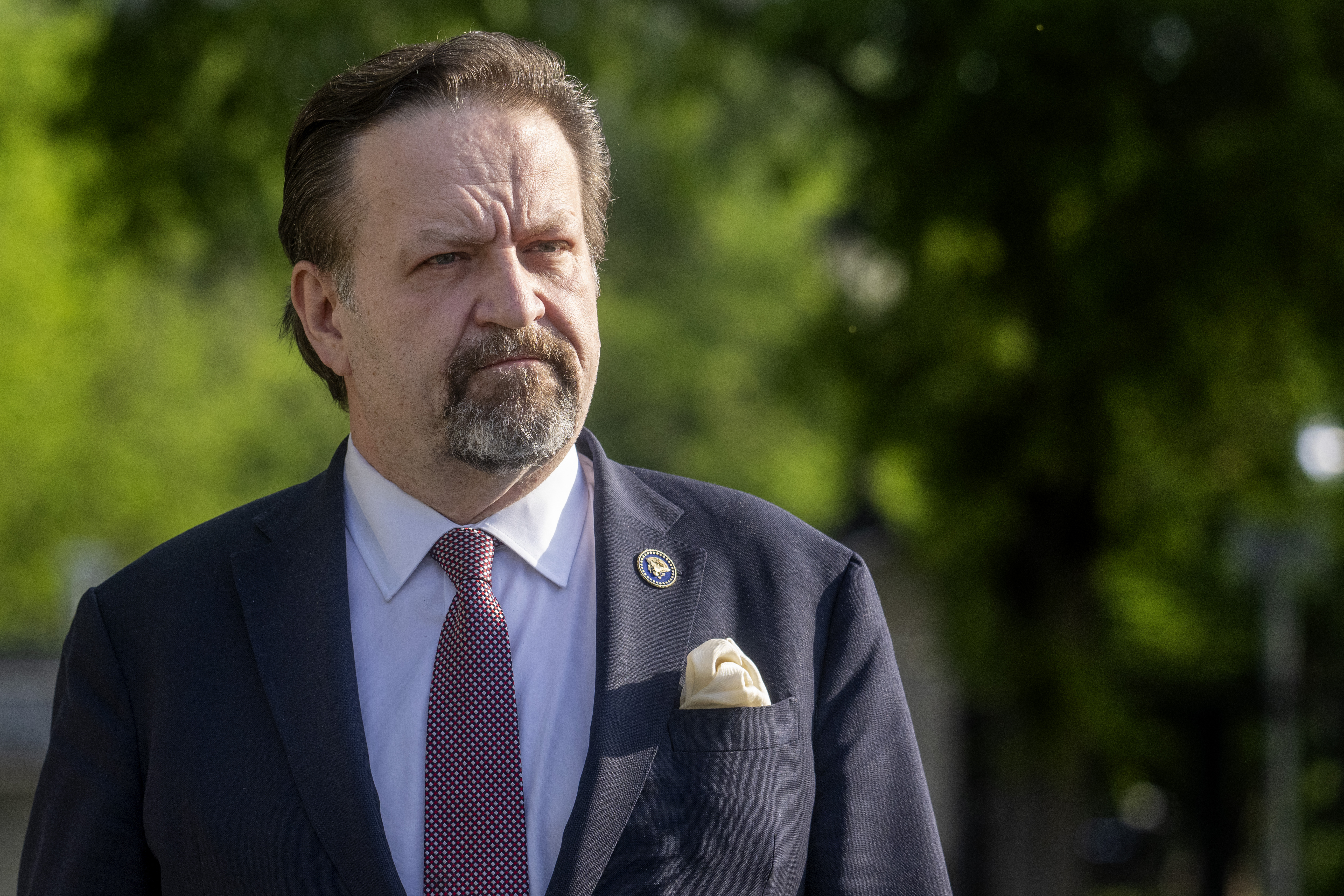
U.S. Senior Director for Counterterrorism Sebastian Gorka walks outside the White House in Washington, DC, on May 7, 2025.
Sebastian Gorka, the National Security Council’s senior director for counterterrorism, defended the Trump administration’s executive order mandating the assessment of certain branches of the Muslim Brotherhood for designation as foreign terrorist organizations, which some critics have argued does not go far enough.
Gorka, speaking at a Hudson Institute conference on antisemitism on Friday, said that the administration is following the procedures and limitations laid out in federal law relating to terrorism designations, and said that the administration fully intends to target further branches of the Muslim Brotherhood with the ultimate goal of destroying the entire organization.
Analysts have criticized the administration for only naming the Egyptian, Lebanese and Jordanian branches of the Muslim Brotherhood for potential designation, not mentioning Turkey and Qatar’s backing of the group and not designating the entire Muslim Brotherhood from the start or explicitly laying out an intention to do so.
“It’s a statement of designation to occur, not a de facto designation, because we follow the law in the Trump administration. We believe in the Constitution and the statutes agreed upon by Congress and signed by the president. We don’t just do stuff because we want to,” Gorka said.
“FTO designation has to be done according to the law. According to the law a foreign terrorist organization must have killed Americans or must have gravely affected the national security of the United States, and that must be proven with predominantly unclassified information that stands up in a court of law and which is less than three years old,” he explained.
The NSC official said that the administration’s executive order had been “woefully misinterpreted and misrepresented by the clickbait prostitutes of social media, some of whom paint themselves as MAGA, who just need the clicks,” making specific reference to “Laura” — likely far-right influencer Laura Loomer, and “Mr. Carlson” — Tucker Carlson.
Gorka said that the three branches named in the executive order are “slam dunk cases,” and that the administration plans to go after additional branches.
“For the record, this is not the end, it is just the beginning, and we are assiduously working on the next tranche of designations right now,” Gorka said.
The executive order, on its own, does not designate branches. It names branches within the three countries to be assessed for potential designation.
“Please read the statute, you cretinous individuals. We’re not designating states, it’s organizations,” Gorka continued. “So if you think, ‘Oh my gosh, you left this country out,’ that’s because you cannot call a country a foreign terrorist organization by American law. Do your homework unless, of course, you’re in it for the ads and the clicks.”
He emphasized that the administration is “committed to one thing: destroying the Brotherhood, its offshoots and global jihadism writ large — and suppressing it to a point at which it is no longer a strategic threat.”
Some allies of the administration like Sen. Ted Cruz (R-TX) have said the administration intends to take a “bottom-up” approach to ultimately designate the entire organization.
Gorka said that the Muslim Brotherhood’s antisemitism is a key part of the reason the administration is going after the group.
“Rejection of the Jew is rejection of the West is the rejection of Christianity as well,” Gorka said.
“The Muslim Brotherhood is the progenitor of all modern global jihadism and the propagator, the transmission belt of the most heinous antisemitic Jew hatred today across the region and sadly in America as well,” Gorka continued.
Addressing antisemitism more broadly, Gorka said that some hide their hatred “behind geopolitics.”
“‘I just don’t like the government of [Israeli Prime Minister] Bibi Netanyahu’ — no, you’re a Jew hater, because there’s only one Jewish state,” Gorka continued. “It embeds itself in international organizations, in the curricula of our colleges and universities, in the voices of some who hide behind social media and even openly espouse this ancient poison. Quote, ‘From the river to the sea.’”
Citing the May murder of Israeli Embassy employees Yaron Lischnisky and Sarah Milgrim just minutes away from the conference’s location in the name of anti-Israel ideology, Gorka characterized antisemitism as a serious security threat to the homeland.
Jewish Insider’s senior national correspondent Gabby Deutch contributed reporting.
‘They took out the “designation” part of the Muslim Brotherhood Terrorist Designation Act,’ Cruz said

Drew Angerer/Getty Images
Sen. Ted Cruz (R-TX)
Sen. Ted Cruz (R-TX), the lead Senate sponsor of legislation to designate the Muslim Brotherhood as a terrorist organization, criticized members of the House Foreign Affairs Committee for voting to modify the House version of the bill, removing key provisions requiring the designation of Muslim Brotherhood branches and the organization as a whole as a terrorist group.
“Last week, frustratingly, the House version of my bill was advanced but terminally weakened by the House Foreign Affairs Committee,” Cruz said during a Senate Foreign Relations Committee hearing on Thursday. “They took out the ‘designation’ part of the Muslim Brotherhood Terrorist Designation Act. The Senate should do better, and we should move the full bill on our side.”
Cruz suggested that some House lawmakers “did not believe that Congress should have a role in crafting sanctions, which are to be implemented by the executive.” He said he considers that argument “specious” and that most Senate colleagues agree.
A spokesperson for the House Foreign Affairs Committee insisted they remain aligned with both Cruz and the Trump administration, when asked about his comments.
“We are in full support of the administration designating the Muslim Brotherhood as a terrorist organization. That process is well underway. We are in lockstep with Sen. Cruz’s goal and look forward to reviewing his bill once it passes the Senate,” the spokesperson said.
Cruz’s remark came as he questioned Gregory LoGerfo, the acting coordinator for counterterrorism at the State Department, who has been nominated to fill that position in a permanent capacity. LoGerfo is a career State Department official who has filled the acting role since January.
LoGerfo affirmed his commitment to tackling the Muslim Brotherhood, explaining that the U.S. has had concerns about the group “over decades,” particularly following the Oct. 7 Hamas attacks in Israel, and said that it poses a threat to the United States.
Though the Trump administration’s executive order does not require designating the entire Muslim Brotherhood or require officials to assess every branch of the organization for terrorist activity — as Cruz’s bill does — Cruz described his bill and the executive order as pursuing the same goal.
“The president’s executive order is part of a broader ‘bottom-up’ strategy to designate Muslim Brotherhood chapters and then evaluate designating the global Muslim Brotherhood,” Cruz asserted at the hearing, echoing comments he made in a statement to JI earlier this week.
LoGerfo affirmed that the specific branches that the executive order instructs the administration to evaluate are a “first step” toward taking broader action against the Muslim Brotherhood.
During his opening statement, LoGerfo also warned that, “in addition to the global jihadi network, antisemitism and anti-government animus have become significant motivating factors in today’s terrorist threat environment.”
And, he added, “although Iran has been greatly weakened, Tehran and its terror proxies, including the Houthis, Hezbollah and Hamas, continue to destabilize the Middle East and show interest in expanding their reach to regions.”
The order leaves out scrutiny of Qatar and Turkey — a strategy that experts say reflects both legal realities and geopolitical constraints
Yuri Gripas/Abaca/Bloomberg via Getty Images
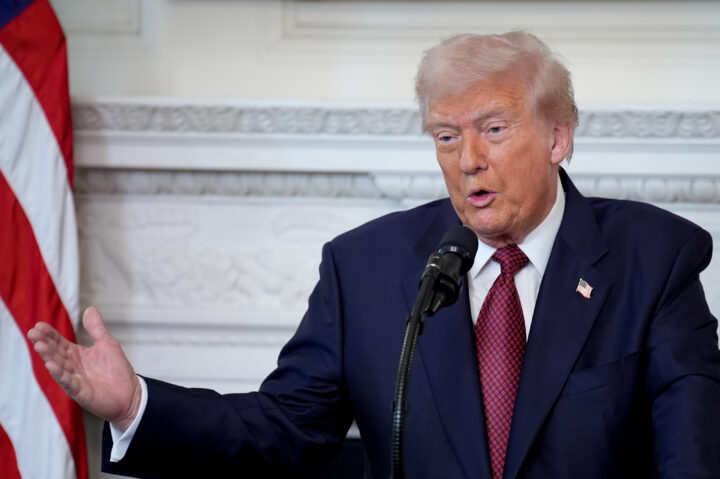
US President Donald Trump during a breakfast with Senate Republicans in the State Dining Room of the White House in Washington, DC, US, on Wednesday, Nov. 5, 2025.
President Donald Trump’s recent executive order directing a review of Muslim Brotherhood chapters for potential terrorism designations is limited in scope, and leaves out scrutiny of Qatar and Turkey — a strategy that experts say reflects both legal realities and geopolitical constraints.
The order, which was signed on Nov. 24, directs Secretary of State Marco Rubio and Treasury Secretary Scott Bessent to identify which branches of the Muslim Brotherhood — with a focus on chapters in Jordan, Lebanon and Egypt — should be designated as Foreign Terrorist Organizations and which should be deemed Specially Designated Global Terrorists.
Rather than apply a terrorist designation to the entire Muslim Brotherhood as a whole, Trump’s executive order first looks at individual branches. This strategy is echoed in a Senate bill, sponsored by Sen. Ted Cruz (R-TX), which requires an assessment of every branch of the Muslim Brotherhood in an effort to designate the organization for its involvement.
The House version of the legislation was modified in committee last week and now more closely resembles the Trump executive order.
Michael Jacobson, a senior fellow at The Washington Institute for Near East Policy, said the approach “makes sense,” adding that a “one-size-fits-all” designation would be unproductive. He also noted that it will allow the administration to more effectively pursue chapters of the organization.
“The bottom-up approach will allow the administration to proceed in a more strategic and calculated fashion,” said Jacobson. “Targeting individual chapters and entities could also open up additional avenues for investigation and action. Once individual branches are designated, the Treasury could then use its authorities to sanction those supporting these branches. I believe that this approach is also more likely to gain support from other governments.”
This same sentiment was echoed by Cruz, who called the “bottom-up” approach the “correct and sustainable strategy.”
“That strategy is built into both the president’s executive order, which was a bold and critical breakthrough in advancing American national security, and my bipartisan legislation,” Cruz told Jewish Insider. “It’s the consensus strategy, and it’s the right one.”
David Adesnik, vice president of research at the Foundation for Defense of Democracies, told JI that while a single designation done in “one fell swoop” might be appealing, it faces legal and factual challenges.
“The administration was rightly concerned that a judge could overturn a designation of the entire organization if he or she assessed that it didn’t meet the legal thresholds. This would have serious consequences in several respects,” said Michael Jacobson, a senior fellow at The Washington Institute for Near East Policy. “If a judge ruled against a Muslim Brotherhood ban, it would be interpreted by some as a signal that the MB is not a terrorist organization, end of story — also a message the administration was likely eager to avoid.”
“This is not a single unified organization,” said Adesnik. “There’s no headquarters, no address, no person who is the head. It’s very hard to make a terror designation if you’re not exactly sure who you’re designating.”
Jacobson said the administration also looked to avoid a blanket designation out of concern that any legal challenges that followed could hurt efforts to reign in the Muslim Brotherhood.
“The administration was rightly concerned that a judge could overturn a designation of the entire organization if he or she assessed that it didn’t meet the legal thresholds. This would have serious consequences in several respects,” said Jacobson. “If a judge ruled against a Muslim Brotherhood ban, it would be interpreted by some as a signal that the MB is not a terrorist organization, end of story — also a message the administration was likely eager to avoid.”
Some critics of the executive order, including far-right influencer Laura Loomer, who is a confidant of the president, have expressed frustration over the administration’s decision not to name Qatar and Turkey in the order.
“The Muslim Brotherhood designation signed by President Trump today doesn’t have any teeth,” Loomer posted on X on Nov. 24. “This designation is probably the weakest designation of the Muslim Brotherhood we could have ever received, as it doesn’t even apply to Qatar and Turkey.”
Both Qatar and Turkey have strengthened ties with the United States during Trump’s second term, however the two countries are also significant supporters of the Muslim Brotherhood and have been known to provide sanctuary for their members.
“Claiming to get tough on the Muslim Brotherhood without a serious strategy to clamp down on the support provided by the movement’s most important state sponsors in Qatar and Turkey is not a serious policy,” said John Hannah, a senior fellow at the Jewish Institute for National Security of America. “Out of consideration for America’s longstanding partnerships with both countries and President Trump’s particular affinity for their leaders, one hopes that there is a plan to bring real pressure to bear on both Doha and Ankara in private to cease and desist their wide-ranging support for MB affiliates across the Middle East and globally.”
But while Qatar and Turkey’s ties to the Muslim Brotherhood are problematic, experts said they were not included because they do not currently have chapters of the organization in their countries, which the executive order focuses on.
“If we’re targeting chapters of the Brotherhood, there are no Brotherhood chapters in those countries,” said Adesnik. “So the real question is, how do you deal with what are effectively state sponsors of the Brotherhood? And does that state sponsorship cross the line into terrorism or sponsorship of terrorism?”
The Senate bill also does not address how Turkey and Qatar would be targeted as state sponsors of the organization.
However, experts and legislators remain wary of the threat posed by the two nations and have expressed that plans to root out the Muslim Brotherhood should account for Turkey and Qatar.
“Claiming to get tough on the Muslim Brotherhood without a serious strategy to clamp down on the support provided by the movement’s most important state sponsors in Qatar and Turkey is not a serious policy,” said John Hannah, a senior fellow at the Jewish Institute for National Security of America. “Out of consideration for America’s longstanding partnerships with both countries and President Trump’s particular affinity for their leaders, one hopes that there is a plan to bring real pressure to bear on both Doha and Ankara in private to cease and desist their wide-ranging support for MB affiliates across the Middle East and globally.”
With the current executive order, the White House is seeking to first designate branches in countries that experts said are involved in violence from within the country. This will also likely include entities that finance other Foreign Terrorist Organizations, according to Jacobson.
In Jordan, Lebanon and Egypt, threats connected to the Muslim Brotherhood have become national issues of concern.
“The Islamic Group [Muslim Brotherhood chapter in Lebanon] clearly built up the ability to carry out attacks against Israel and cooperated very openly with Hezbollah,” said David Adesnik, vice president of research at the Foundation for Defense of Democracies. “Authorities there really aren’t doing anything about it, partly because they lack power and have other issues to address. So it’s a pretty fair point.”
In April 2025, Jordanian authorities arrested 16 individuals and thwarted a plot that was to involve rocket and drone attacks inside the country. The suspects were linked to the Muslim Brotherhood, which is the government’s largest opposition group. Following the arrests, the Jordanian government banned the group entirely.
Adesnik said that while Jordan has initiated a “thorough crackdown” to address the problem, it is notable that there was “clearly a branch that had migrated toward planning for terrorism.”
In Lebanon, he called the Muslim Brotherhood a “persistent issue.”
“The Islamic Group [Muslim Brotherhood chapter in Lebanon] pretty openly built up a capability to carry out attacks against Israel and cooperated very clearly and openly with Hezbollah,” said Adesnik. “Authorities there really aren’t doing anything about it, in part because they don’t have a lot of power and they have a lot of other problems to deal with. So it’s a pretty reasonable case.”
Adesnik called the administration’s targeting of Egypt the “thorniest case from a definitional perspective.” He noted that while Egyptian President Abdel Fattah el-Sissi’s regime in Cairo has spent more than a decade cracking down on the Brotherhood “aggressively,” concerns still remain over the presence of branches such as Harakat Sawa’d Misr, also known as Hasm, which was already designated by the U.S. as a Specially Designated Global Terrorist Entity in 2018.
“The question is just what’s left of the Brotherhood there?” said Adesnik. “Is it doing enough to merit a designation?”
Speaking at a B’nai B’rith event on Capitol Hill, Rep. Jim Jordan said he’s working to maintain U.S.-Israel ties in the face of antisemitism and anti-Israel sentiment
B’nai B’rith International/X
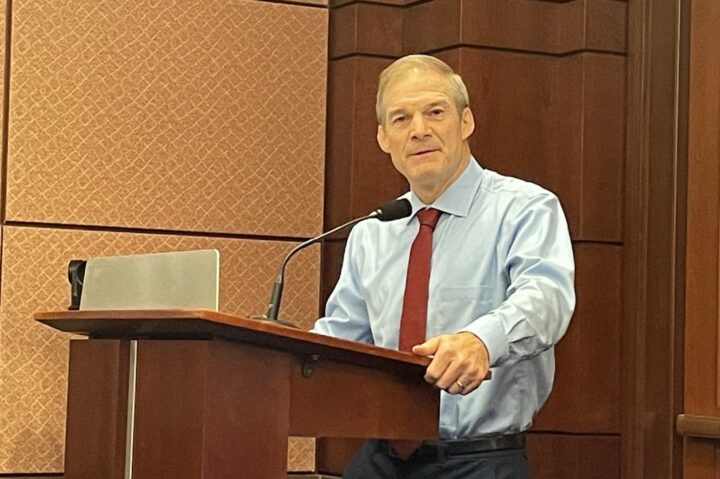
Rep. Jim Jordan (R-OH), chairman of the House Judiciary Committee, speaks at an event organized by B’nai B’rith International and the American Jewish International Relations Institute commemorating the 50th anniversary of the United Nations resolution declaring that Zionism is racism, Dec. 9, 2025
Speaking at an event on Capitol Hill on Tuesday, Rep. Jim Jordan (R-OH), chairman of the House Judiciary Committee, offered his full support for the Antisemitism Awareness Act as well as legislation to designate the Muslim Brotherhood as a Foreign Terrorist Organization, both of which fall within his committee’s jurisdiction. He also said he’s working to maintain U.S.-Israel ties in the face of antisemitism and anti-Israel sentiment.
Asked where the long-stalled Antisemitism Awareness Act stands, Jordan largely deferred to the Senate. The Ohio congressman was speaking at an event organized by B’nai B’rith International and the American Jewish International Relations Institute commemorating the 50th anniversary of the United Nations resolution declaring that Zionism is racism.
The Senate Health Education Labor and Pensions Committee attempted to move the bill forward earlier this year but Democrats, along with some Republicans, voted to add several amendments that most Senate Republicans considered to be poison pills. Though the House passed the bill last year, the legislation — which has grown more controversial on both sides of the aisle in the intervening months — has seen no movement in the House this year.
Jordan also offered his full support for legislation, recently approved by the House Foreign Affairs Committee, that could designate some branches of the Muslim Brotherhood as terrorist organizations. “It makes all the sense in the world,” Jordan said.
Jordan’s Judiciary Committee holds joint jurisdiction, with Foreign Affairs, over the bill, but he said the committee might waive its jurisdiction to allow the bill to proceed more quickly to the House floor with the Foreign Affairs Committee’s signoff.
Jordan, one of the most prominent conservative leaders in the House and a founder of the House Freedom Caucus, said, “at this critical moment where the anti-Israel antisemitism you’re seeing on the left — now unfortunately we’re seeing a little bit on the conservative side — it’s more important than ever we keep this special, special bond between United States and the State of Israel, we keep it as strong as it’s ever been.”
He said he’s “willing to help,” noting that he’d had a meeting the day prior with AIPAC advocates to talk about keeping the U.S.-Israel relationship strong and “some of the things we’re trying to do politically on the Republican side that we think can help.”
Jeff Bartos, the U.S. ambassador to the United Nations for management and reform, said that the U.N. Human Rights Council has “made a mockery of its purpose by enacting a standing agenda item targeting Israel and becoming a platform for baseless inquisitions and blood libels while granting the world’s worst human rights violators a free pass.”
Bartos also specifically criticized U.N. special rapporteur Francesca Albanese, whose efforts he said “not only threaten Israel, but also the United States.”
“The United States does not acknowledge, will not abide by and will never acquiesce to this,” he said.
Rep. Kevin Kiley (R-CA), who was a prominent voice on the House Education and Workforce Committee during hearings on campus antisemitism, said that “we’re starting to see some progress in terms of how these issues are dealt with in higher education … but we certainly have a long way to go.”
He added that the way anti-Israel and antisemitic rhetoric have been inserted into K-12 curricula is “absolutely horrifying.” Kiley, who leads the subcommittee overseeing K-12 education, said that investigations are continuing, with the Berkeley, Calif., school district as a particular focus.
He added that it’s “concerning when you see some fracturing” of support for the U.S.-Israel relationship “on the Democrats’ side and even a little bit on the Republican side, which is why I think it’s more important than ever that those of us who understand the vital importance of protecting America’s support for Israel continue to be active in every way that we can.”
Kiley is likely to face significant headwinds in his midterm reelection race, with California’s redistricting process expected to redraw his seat to favor Democrats.
Israeli President Isaac Herzog, whose father, Chaim Herzog, was the Israeli ambassador to the U.N. at the time of the resolution, said in video remarks that “repealing a lie does not erase its echo. The dangerous falsehood suggesting that Zionism is racism reverberates to this very day, especially in the wake of the brutal October 7th massacre on Israel,” particularly in the antisemitism directed at Jews worldwide over the past two years.
Other lawmakers who spoke at the event included Reps. Chuck Fleischmann (R-TN), Joe Wilson (R-SC) and Randy Fine (R-FL), as well as Rep. Mike Lawler (R-NY) who offered prerecorded remarks. Former Rep. Ileana Ros-Lehtinen (R-FL) also addressed the event.
“This is part of a long effort to deny the legitimacy and the permanence of the Jewish state. The supporters of this lie hope to reverse history, to pretend that the Jewish people’s return to sovereignty in their homeland is temporary or is artificial,” Ros-Lehtinen, who previously chaired the House Foreign Affairs Committee, said. “The lie that Zionism is racism caused real harm. It fueled hatred, it justified violence. It entrenched the false narrative that brought misery not only to Israelis who endured demonization and terror, but also to Palestinians who were encouraged to cling to rejectionism rather than pursue compromises, rather than pursue dignity, rather than pursue peace.”
She said that this worldview ultimately shaped the Palestinian mindset that produced the Oct. 7 attack and its ensuing global support.
Gov. Ron DeSantis’ executive order comes less than a month after Texas did the same

Joe Raedle/Getty Images
Florida Gov. Ron DeSantis on September 17, 2024 in West Palm Beach, Florida.
Florida Gov. Ron DeSantis, following a recent move by Texas Gov. Greg Abbott, signed an executive order on Monday designating the Muslim Brotherhood and Council on American-Islamic Relations as foreign terrorist organizations.
The order instructs the Florida Department of Law Enforcement and the Florida Highway Patrol to “undertake all lawful measures to prevent unlawful activities in Florida” by the Brotherhood or CAIR. It states that all executive and cabinet agencies may not provide “any contract, employment, funds, or other benefit or privilege” to either organization or individuals who have “provided material support or resources” to one or both groups.
The order also directs the state’s Domestic Security Oversight Council to “conduct a comprehensive review of existing statutory authorities, regulations, and policies for addressing threats” from the Brotherhood and CAIR, and to “submit recommendations for any additional action needed” from the governor or the state legislature by Jan. 6, 2026.
“The Muslim Brotherhood’s Islamist ideology is irreconcilable with foundational American principles of life, liberty, and the pursuit of happiness reflected in the Declaration of Independence and the United States Constitution, especially including the right to religious freedom and the equal protection of the laws,” the order states.
DeSantis said in a post on X on Monday, “Florida agencies are hereby directed to undertake all lawful measures to prevent unlawful activities by these organizations, including denying privileges or resources to anyone providing material support.”
CAIR and CAIR-Florida jointly responded to the order by vowing legal action against the DeSantis administration.
“We look forward to defeating Governor DeSantis’ latest Israel First stunt in a court of law, where facts matter and conspiracy theories have no weight,” the organizations said in a joint statement. “In the meantime, we encourage all Floridians and all Americans to speak up against this latest attempt to shred the Constitution for the benefit of a foreign government.”
The order comes less than a month after Abbott issued a similar declaration targeting both groups as foreign terrorist organizations, and weeks after President Donald Trump signed an executive order designating the Brotherhood as a foreign terrorist organization.
On Capitol Hill, Republicans in the House and Senate are working on advancing standalone legislation reinstating the Brotherhood’s FTO designation, though House lawmakers recently stripped a key provision from their bill mandating the designation of eligible Muslim Brotherhood branches and the entire Muslim Brotherhood as terrorist organizations.
‘The version approved by the House Foreign Affairs Committee lacks the teeth of the original House bill as well as the current legislation in the Senate,’ an official at a pro-Israel group said

Getty Images
U.S. Capitol Building
The House Foreign Affairs Committee removed key provisions of a bill designed to designate the Muslim Brotherhood as a terrorist organization when it approved the legislation last week, prompting concerns from some conservatives.
The bill was amended by a voice vote to strip out provisions mandating the designation of eligible Muslim Brotherhood branches and the entire Muslim Brotherhood as terrorist organizations, including backing from the committee’s chairman, Rep. Brian Mast (R-FL).
The original legislation, introduced in both the House and Senate, included language requiring that the secretary of state assess each branch of the Muslim Brotherhood and report to Congress on whether those branches meet the criteria for designation as a terrorist group under either of two authorities.
It then mandated that the administration designate those branches that meet the criteria as terrorist groups and impose sanctions pursuant to those designations, and required that those sanctions remain in place for at least four years. It would also impose sanctions on the entire Muslim Brotherhood.
The amended legislation mandates only the assessment of Muslim Brotherhood chapters “that pose a threat to United States national security interests,” rather than all branches of the group — potentially allowing some branches of the group to duck scrutiny — and requires a report to Congress on whether those branches “ha[ve] been designated” as terrorist groups. Most significantly, it removes the specific mandate that the branches in question and the full Muslim Brotherhood be designated as terrorist groups and sanctioned pursuant to the findings of that report.
In effect, the changes remove key provisions that made the legislation broader than an executive order issued by the Trump administration last month, which authorized the designation of certain Muslim Brotherhood branches as terrorist organizations, but did not mandate an assessment of all branches for terrorist activity or require that the entire organization be designated and sanctioned.
“The bill reported out of committee codifies the Trump administration’s bold efforts to counter the Muslim Brotherhood,” a House Foreign Affairs Committee spokesperson told Jewish Insider, when asked about the changes.
“This is one part of a broader process to work directly with the administration as they advance towards imposing a full designation. There should be no question about House Foreign Affairs Committee Republicans’ commitment to hold terrorist groups accountable, and we are in lockstep with the administration in doing so.”
A spokesperson for Rep. Mario Diaz-Balart (R-FL), the lead Republican sponsor of the bill, said he is “thrilled the bill made its way out of committee and is grateful to Chairman Mast for providing that opportunity,” adding that discrepancies between final House and Senate legislation would need to be worked through in a conference committee. “We look forward to engaging throughout the process,” the spokesperson added.
An official at a pro-Israel organization, reflecting concerns about the amended legislation among some conservatives, said that the legislation should be stronger.
“While the legislation is still a step in the right direction, the version approved by the House Foreign Affairs Committee lacks the teeth of the original House bill as well as the current legislation in the Senate put forward by Senator [Ted] Cruz,” the official told JI.
“President Trump has been crystal clear about the threat posed by the Muslim Brotherhood. When President Trump says that we will not tolerate those who fuel and fund radical terrorism, it should be backed up with the strongest possible legislation that will cement his legacy on this issue.”
The legislation is more expansive than the Trump administration’s executive order, which authorizes designating individual branches of the Muslim Brotherhood
Salah Malkawi/Getty Images
Jordanian police close the entrance of a Muslim Brotherhood headquarter after the announcement of banning the society in the country on April 23, 2025 in Amman, Jordan.
The House Foreign Affairs Committee voted on a bipartisan basis on Wednesday to advance a bill designating the entire Muslim Brotherhood globally as a terrorist organization, weeks after the Trump administration took action to target certain branches of the group.
Every Republican on the committee, joined by Democratic Reps. Brad Sherman (D-CA), Sheila Cherfilus-McCormick (D-FL), Greg Stanton (D-AZ), Jared Moskowitz (D-FL), Jim Costa (D-CA), George Latimer (D-NY) and Brad Schneider (D-IL), voted in favor of the bill, which was led by Reps. Mario Diaz-Balart (R-FL) and Moskowitz.
The legislation is more expansive than the Trump administration’s executive order, which authorizes designating individual branches of the Muslim Brotherhood. The bill would mandate the administration conduct assessments of all Muslim Brotherhood branches to determine if they meet the standard for designation as terrorist groups, and ultimately designate the entire Muslim Brotherhood network based on those findings.
“This is more than just a political organization. It promotes extreme and destabilizing views which continue to inspire acts of terrorism across the globe, most notably Hamas in its horrific Oct. 7, 2023, attack on Israel,” Rep. Brian Mast (R-FL), the committee chairman, said. “For too long, the threat the Muslim Brotherhood poses to U.S. national security has been downplayed here in the United States and it’s well past time for a course correction.”
Rep. Greg Meeks (D-NY), the committee’s ranking member, argued against attempting to sanction the entire Muslim Brotherhood, arguing that it is a diffuse ideology, without any true central leadership or coordination.
He said that, while certain Muslim Brotherhood branches, such as Hamas, meet the criteria to be designated as terrorist groups, the authorities already exist to take action against them. And he warned the legislation “would complicate the U.S. engagement with political leaders and parties who have historic and non-violent ties to Brotherhood-affiliated movements, like in Morocco. It would alienate important regional partners in the Middle East, such as Qatar and Turkey.”
Meeks also cautioned that the legislation could also be used to target Muslims generally, including American Muslims as well as Arab and Muslim groups in the U.S. He said the bill could be used to implement a “back-door Muslim ban” and “subject millions of people … to arbitrary and subjective determinations based on indirect or tangential affiliations. The language is so imprecise, this bill invites discriminatory and political targeting under the pretext of national security.”
Democrats who support the legislation, including Schneider and Moskowitz, pushed back, though they both said they do not think the legislation is perfect. Moskowitz rejected the idea that the legislation could facilitate a Muslim ban, and said the U.S. should follow the model of regional allies like Saudi Arabia, the United Arab Emirates, Jordan and Egypt, which have experience with the Muslim Brotherhood and have themselves banned it.
Schneider said that the pattern of Muslim Brotherhood extremism and violence, most notably by Hamas, “demands Congress take the threat seriously and confront the networks that enable violent extremism.” He emphasized that the legislation includes clear guidelines and grounding in intelligence, as well as strong congressional oversight provisions to prevent overbroad application of the law.
“Moving this legislation … ensures Congress, not an inconsistent executive or one with personal conflicts, remains the arbiter of how terrorism designations are used in America’s name,” Schneider added.
Rep. Keith Self (R-TX) emphasized that the legislation would “codify key elements” of the Trump executive order and “provide a permanent statutory framework to address the ongoing threat posed by the Muslim Brotherhood and its violent offshoots.” He emphasized that Brotherhood documents have laid out a plan to infiltrate and subvert U.S. institutions and society.
Rep. Randy Fine (R-FL) warned that the American Muslim Brotherhood affiliates are stoking instability and violence at home. “It is more important than it has ever been for us to stand up and say we’re going to follow the lead of 11 other countries … and saying we are not interested in having this organization in the United States. It is a terrorist movement.”
Diaz-Balart, in a statement, praised the committee for advancing the legislation, and said it “further amplifies other efforts, like those of President Trump, to take decisive action against this insidious threat.”
Moskowitz also celebrated the move, saying, “For decades, the Brotherhood has been tied to extremism and instability across the Middle East and around the world. Other nations have already taken steps to investigate the Brotherhood and its affiliates, and the United States must have the authority to do the same.”
Boris Zilberman, the senior director of public policy and strategy for the Christians United For Israel Action Fund, emphasized in a statement that executive orders can be repealed as easily as they can be signed, and noted that the bill targets Brotherhood branches not specifically called out in the executive order.
“While a close reading of the president’s executive order does not exclude the possibility of sanctioning Muslim Brotherhood affiliates in Qatar or Turkey, this legislation is specific in calling out Doha and Ankara along with many other nations that the Muslim Brotherhood uses to advance its malign activities,” Zilberman said.
Companion legislation in the Senate has yet to move forward.
The committee also voted unanimously in favor of legislation sanctioning the Iran-backed Houthis for violations of human rights and hostage-taking, instructing the State Department to take action to engage with European governments about antisemitism in their countries and creating new procedures to harmonize various U.S. sanctions registries — assessing whether entities sanctioned under certain authorities should also be sanctioned under others.
Another bill, which would sanction specific Iranian leaders who have issued fatwas against President Donald Trump and Israeli Prime Minister Benjamin Netanyahu, passed on a bipartisan basis with 47 votes in favor and two Democrats, Reps. Joaquin Castro (D-TX) and Pramila Jayapal (D-WA), abstaining.
Castro introduced an amendment, which failed on party lines, that would have broadened the legislation to apply to measures taken against any U.S. leader or senior official, or the leaders of major U.S. allies.
Democrats argued that those measures would make the legislation more lasting and applicable in the long term, while Republicans said they wanted to keep the legislation focused on discrete, specific threats against Trump and Netanyahu.
Doha's ties to the Muslim Brotherhood have drawn scrutiny in the aftermath of the Oct. 7, 2023, attacks
Qatar's Ministry of Foreign Affairs
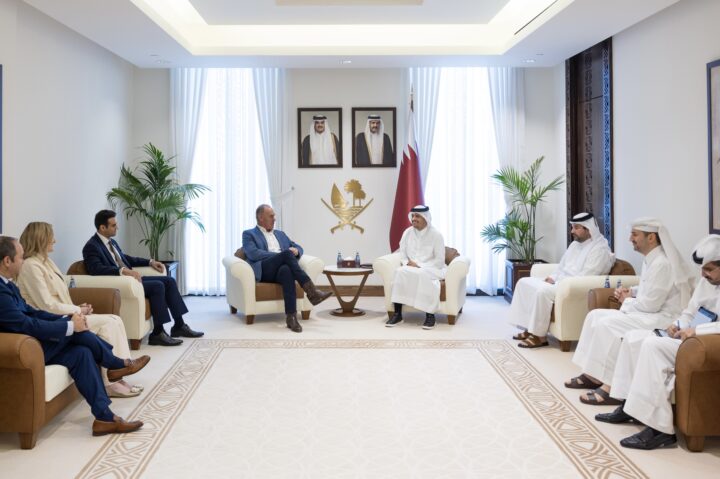
Qatar’s prime minister, Sheikh Mohammed bin Abdulrahman Al-Thani, meets with Reps. Laurel Lee (R-FL), Marlin Stutzman (R-IN), Abe Hamadeh (R-AZ), Ryan Zinke (R-MT) and Lance Gooden (R-TX) in Doha, Nov. 27, 20205
Qatar, whose ties to the Muslim Brotherhood have drawn scrutiny in the aftermath of the Oct. 7, 2023, attacks, is doubling down on a charm offensive focused on a handful of GOP lawmakers and conservative social media influencers, all while hosting two of the most established brands in American news.
A group of House Republicans visited Qatar during the House’s Thanksgiving recess last week, including Reps. Laurel Lee (R-FL), Marlin Stutzman (R-IN), Abe Hamadeh (R-AZ), Ryan Zinke (R-MT) and Lance Gooden (R-TX). The trip occurred just before the House Foreign Affairs Committee is scheduled to vote on legislation that classifies the entire Muslim Brotherhood organization globally as a terrorist group.
A group of conservative social media influencers also visited Qatar over Thanksgiving, posting glowing dispatches lauding the country and its role in hosting a U.S. military base.
Rob Smith, one of the invited guests, posted credulously about Qatar on his Instagram feed after the trip, “I wasn’t aware of a great deal of things about Qatar, only misperceptions and half-truths I’d read about online. When the opportunity was presented to me, with full authority and autonomy to ask the tough questions of the officials I’d be meeting with, I decided to risk any potential criticism and to travel and experience it for myself.”
Meanwhile, numerous prominent celebrities — including comedian Kevin Hart, celebrity chef Gordon Ramsay and tennis star Novak Djokovic — gathered in Doha over the weekend for the 2025 Formula One Qatar Grand Prix.
And this week, the country is hosting the Doha Forum, a conference co-sponsored by CNN. Those attending the conference include several Trump administration officials and ambassadors, politicians and philanthropists, alongside Israel-bashing officials such as former Iranian Foreign Minister Mohammad Javad Zarif, sanctioned U.N. special rapporteur Francesca Albanese and former Iran envoy Rob Malley.
Others on the guest list include: Donald Trump Jr., U.S. Ambassador to Turkey Tom Barrack, U.S. Ambassador to NATO Matthew Whitaker, Trump advisor Alex Bruesewitz, the Heritage Foundation’s Victoria Coates, former Secretary of State Hillary Clinton, Bill Gates, the Quincy Institute’s Trita Parsi, CNN anchor Christiane Amanpour and other officials, leaders and analysts from around the world.
Also this week, The Wall Street Journal is hosting a technology conference in Doha, featuring business leaders and celebrities, hosted by various Journal reporters. As JI’s Matthew Kassel reports, the summit is raising ethical questions surrounding the paper’s deepening business ties with Qatar — even as the Journal’s conservative editorial page has slammed the Gulf monarchy as a financial and diplomatic sponsor of Hamas.
Each of these events comes at a time when Qatar’s complicated public reputation in the United States is becoming a flashpoint, particularly inside the conservative movement.
The Trump administration announced in late November plans to designate branches of the Muslim Brotherhood as a terrorist organization and the House Foreign Affairs Committee is taking up legislation on Wednesday that aims to proscribe the entire group.
Though the White House’s executive order on the issue sidestepped any mention of Qatar, the country has been a major Muslim Brotherhood patron, and analysts have characterized the Qatari branch of the Muslim Brotherhood as one of the organization’s key terrorist arms.
The simmering battle in the conservative movement was on display in a heated social media exchange between Trump ally and far-right influencer Laura Loomer, a vocal critic of Qatar, and Zinke’s chief of staff, Heather Swift.
Loomer, in a series of posts blasting the Republicans who visited Qatar, took particular aim at Zinke, mocking his attire and claiming he was visiting to “beg [the Qataris] for money.” She also said that “Qatar is trying to control every member of Congress. This is very alarming.”
Swift shot back, “[Zinke] has given more of his life and blood to eradicating Islamic jihadis than this woman ever will. … Strongest possible record against Iran and for Israel. Perhaps being a member of the House Foreign [Affairs] committee may require speaking with foreign leaders from time to time so they know where the USA stands.”
Loomer also pressed Pentagon spokesperson Kingsley Wilson about the U.S.-Qatar relationship and Qatar’s ties to the Muslim Brotherhood on Tuesday. Wilson responded by saying that the “U.S. military has a long-standing partnership with Qatar, and we look forward to continuing that partnership.”
The new ISGAP report cites authenticated Muslim Brotherhood documents describing the group’s strategy of entrenching itself in the institutions of Western democracies
Salah Malkawi/Getty Images
Jordanian police close the entrance of a Muslim Brotherhood headquarter after the announcement of banning the society in the country on April 23, 2025 in Amman, Jordan.
The Muslim Brotherhood’s influence has become increasingly pervasive in the United States, according to a new report by the Institute for the Study of Global Antisemitism and Policy, titled “The Muslim Brotherhood’s Strategic Entryism into the United States: A Systemic Analysis.”
President Donald Trump’s recent instruction to Secretary of State Marco Rubio to take steps toward banning Muslim Brotherhood-affiliated organizations came soon after ISGAP briefed policymakers from both parties and national security professionals, including Trump administration officials, in Washington and beyond about the study.
“For decades now, we’ve known that Islamism has been a problem within our liberal secular democracies,” ISGAP Vice President Haras Rafiq told the Misgav Mideast Horizons podcast. (Jewish Insider’s Lahav Harkov co-hosts the podcast.)
The new ISGAP report cites authenticated Muslim Brotherhood documents describing the group’s strategy – called tamkeen, which loosely translates to “empowerment” – of entrenching itself in the institutions of Western democracies.
“It was a 100-year plan, and they’re 43 years into it,” Rafiq said. “We looked at the who, why, what, where … and then analyzed how well we’re doing against it.”
The Muslim Brotherhood’s basic goals, he said, are “to set up a utopian Islamist state and enforce their vision of Sharia-based law on the whole state, and secondly, to spread that around the world. … [Their] tactic, the opium of the masses, is to wipe Israel off the map.”
In liberal democracies, one of the major elements of the plan is “figuring out a way to persuade Muslims, if you’re living in the West, that the Islam that your parents practice … is actually wrong and it fits into … innovation, false association with a deity, [and] haram, which means not allowed,” Rafiq said. “So first of all, change the Islam that’s practiced from within.”
The way the Muslim Brotherhood relates to non-Muslim societies, Rafiq said, is to “try to persuade others by using a faith-based identity politics which aligns with what they believe — that they are the proper Muslims. And over time, there are four key areas where they focus: One is political infiltration and legislation, the second is controlling the narrative, the media, the third is how they can increase the capacity [of those steps], and looking at Muslims and changing from within.”
Rafiq said that Muslim Brotherhood-sympathetic organizations latched onto the Sept. 11, 2001, attacks to increase their influence.
“It was a time when there was a lot of confusion,” he recounted. “What organizations like CAIR [the Council on American-Islamic Relations] and others were able to do was to latch onto people who wanted to understand who were these Muslims, why did people want to fly planes into the Twin Towers … and they actually were very quick to latch onto the media, the politicians, the people within civil society who were hungry to know more, and become one of the main voices.”
Texas Gov. Greg Abbott, a Republican, recently declared both the Muslim Brotherhood and CAIR to be foreign terrorist organizations banned from the state. Rafiq pointed out, however, that the state has not seized any assets or taken any concrete action against the organization.
The difference between CAIR, which presents itself as an advocacy group for a minority population, and other organizations that aim to do the same, Rafiq said, is that “ultimately, at the end of the day, the people who set up the organization actually are part of the Muslim Brotherhood Islamist worldview, and ultimately are trying to … use entrenchment to change the liberal democracy from within.”
Rafiq also cited ties between CAIR and unindicted co-conspirators in the Holy Land Foundation trial, the largest terrorism finance trial in the U.S., which shut down an organization that was funding Hamas.
“I guess other non-Islamist organizations that represent Muslims and other organizations don’t want those objectives and are not involved in these kinds of criminal activities,” he said.
CAIR has “been able to persuade and fool people that they’re actually representing Islam and Muslims and they’re the correct voices,” he said. Still, Rafiq cited polling that out of 1.9 billion Muslims worldwide, 1.4 billion reject Islamism, which includes the Muslim Brotherhood.
“The good news is still that the majority of Muslims around the world reject Islamism,” Rafiq said, while noting that he did not have specific data about the U.S.
However, Rafiq said that the Muslim Brotherhood has successfully inculcated young Muslims in the West with antisemitism.
“Antisemitism is a key tool that they use in the guise of being anti-Israel or anti-Zionist, etc., to recruit people to their worldview,” he said.
Rafiq called Qatar “the last man standing” in the Sunni Arab world, in that its regime supports the Muslim Brotherhood.
“Muslim Brotherhood Islamist ideology is deeply entrenched within all parts of [Qatar’s] civil society, all the way to the top,” he said. “As a result of this entrenchment … they’ve used tamkeen successfully across the board, from educating children all the way up to civil society organizations and the leadership. One can say the Muslim Brotherhood has a funding arm, which is directly the Emir and the institution, the country, the economy and the corporation that is Qatar.”
ISGAP has estimated that Qatar’s soft power assets worldwide are worth $1 trillion. The Gulf state is the largest state donor to universities in the U.S., and much of those donations are undocumented.
Qatar spreads the Muslim Brotherhood’s messages via Al Jazeera in Arabic and English.
“The English one will be a lot more palatable, but still pushing the Islamist narrative. The Arabic is downright nasty – and they get away with it, because what they’ve done is set up Al Jazeera as a corporation,” Rafiq said. “But they are 100% owned by the Qatari royal family. Therefore, in my view, when they operate in the U.S., they should [register] under the Foreign Agents Registration Act.”
Rafiq said the West can do more to make support for the Muslim Brotherhood more costly for Qatar and discourage its leadership from continuing. One example he gave is an ISGAP report exposing Qatari funding for Texas A&M, including a contract that said all of the research projects are property of the Qatar Foundation – including those with dual-use purposes that could be used to develop weapons. After initially denying the links, the president of the university pulled it out of Education City in Doha.
“That really hurt [Qatar],” Rafiq said. “The reason I know it hurt them was that we are constantly besmirched and lies are told about us and we are targeted by the Qatari government.”
Another win, Rafiq argued, was the Israeli strike on Doha in September.
“That was the key moment in which they realized that even though they have a defense agreement with the U.S., they can’t really hide. But the downside was that rather than actually use that and push on the advantage, what the U.S. government has done is create the situation with the ceasefire in Gaza … and pushed out countries like Saudi Arabia and the U.A.E. … and decided to bring in Qatar and Turkey, and that’s a problem.”
“We need more support from [the Trump administration] in terms of Qatar, and not to be taken in by geopolitics,” he added.
Rafiq compared fighting the Muslim Brotherhood without taking on Qatar to taking aspirin when you have cancer.
“Islamism is a virus or a cancer … which is spreading rapidly, and unless we deal with it, the root cause, and we persuade Qatar to stop funding it … it won’t really make a difference,” Rafiq said.
One of the challenges in combating Islamism, Rafiq said, is that “we don’t make it easy to recognize Islamism in the same way that we recognize fascism and communism … [because] they’ve been able to push this narrative so effectively of Islamophobia.”
“Islam is a set of ideas, a set of values. In a liberal democracy, no set of ideas should be beyond critique, satire or even parody, even if they are ideas that I believe – and I’m a Muslim,” he said. “The people who are intolerant have persuaded us that these concepts are intolerant; therefore, we fall in line.”
The legislation, set for a vote on Wednesday, intends to designate the entire Muslim Brotherhood globally as a terrorist organization, as opposed to other efforts which focus on its branches

Kevin Carter/Getty Images
U.S. Capitol Building on January 18, 2025 in Washington, DC.
Just over a week after the Trump administration announced moves to designate branches of the Muslim Brotherhood as terrorist organizations, the House Foreign Affairs Committee is set to discuss and vote on legislation that aims to classify the entire organization globally as a terrorist group on Wednesday.
The bipartisan House legislation, led by Reps. Mario Diaz-Balart (R-FL) and Jared Moskowitz (D-FL), would instruct the Department of State to assess whether each branch of the Muslim Brotherhood operating globally meets the requirements for designation as a terrorist group. It would then use those determinations to designate the Muslim Brotherhood as a terrorist group in its entirety.
The legislation may go further than the current executive action on the issue, which does not specifically mandate assessments of each Muslim Brotherhood branch and does not directly aim to proscribe the entire Muslim Brotherhood.
Some analysts have raised concerns that the executive branch action does not directly target the Muslim Brotherhood branches in Qatar and Turkey, as it names only the branches in Lebanon, Jordan and Egypt.
But others have argued that designating the entire Muslim Brotherhood as a terrorist group is legally and logistically problematic, given that the group does not have any central organization or leadership and that some Muslim Brotherhood branches are not directly tied to terrorism.
Rep. Brian Mast (R-FL), the committee chairman, told Jewish Insider prior to the administration’s announcement that the committee was looking to take up legislation on the issue.
Companion legislation in the Senate led by Sen. Ted Cruz (R-TX) has not yet been scheduled for a markup.
In addition to the Muslim Brotherhood bill, the Foreign Affairs Committee will vote on legislation — led by Reps. Darrell Issa (R-CA), Brad Sherman (D-CA), Mike Lawler (R-NY), Brad Schneider (D-IL), Bill Keating (D-MA) and Moskowitz — to impose sanctions on the Houthis and their members under the Global Magnitsky Act and the Robert Levinson Hostage Taking and Accountability Act in response to the group’s obstruction of humanitarian aid, human rights violations and involvement in taking U.S. nationals hostage.
The sanctions would phase out after five years, and the legislation would also require reports to Congress on Houthi indoctrination efforts, obstruction of humanitarian aid and human rights violations.
The Committee is also set to discuss the Protecting Europe from Antisemitic Crime and Extremism (PEACE) Act, led by Reps. Randy Fine (R-FL) and Max Miller (R-OH), which instructs the State Department to diplomatically engage with European governments to address antisemitism in their countries and to consult with Congress on the issue.
It will additionally consider a bill by Fine and Moskowitz that aims to harmonize various U.S. sanctions lists, instructing the administration to assess whether individuals included on some designation lists should be sanctioned under other authorities as well, and to report to Congress on those determinations.
The EO gives the secretary of state and the secretary of the Treasury 30 days to identify which branches should be designated Foreign Terrorist Organizations

Tasos Katopodis/Getty Images
President Donald Trump
President Donald Trump signed an executive order on Monday pledging to designate certain chapters of the Muslim Brotherhood as terrorist organizations, identifying the organization’s branches in Lebanon, Jordan and Egypt as particularly problematic.
“Its chapters in Lebanon, Jordan and Egypt engage in or facilitate and support violence and destabilization campaigns that harm their own regions, United States citizens and United States interests,” according to the executive order.
As evidence, the White House cited the participation of the Lebanese Muslim Brotherhood in the Oct. 7 terror attacks for Israel; the Jordanian chapter’s record of providing material support to Hamas; and the calls by a leader of the Muslim Brotherhood in Egypt to for violent attacks against U.S. partners.
The new policy gives the secretary of state and the secretary of the Treasury 30 days to identify which branches should be designated “Foreign Terrorist Organizations” and which should be deemed “Specially Designated Global Terrorists,” another formal designation by the U.S. government that comes with less severe consequences than the FTO designation.
According to the executive order, it is now official U.S. policy “to cooperate with its regional partners to eliminate the capabilities and operations of Muslim Brotherhood chapters designated as foreign terrorist organizations” and to “deprive those chapters of resources, and thereby end any threat such chapters pose to United States nationals or the national security of the United States.”
The executive order comes a week after Texas Gov. Greg Abbott, a Republican, issued an order designating the Muslim Brotherhood a terror group, though the move is largely symbolic at the state level.
Some Republicans have been pushing the White House to target the Muslim Brotherhood for months, though the effort stalled until a few weeks ago.
The Muslim Brotherhood, a transnational Islamist group, gained prominence in 2012, when Mohamed Morsi — who was affiliated with the movement — became Egypt’s president, following a revolution that ousted Egypt’s longtime leader Hosni Mubarak. Morsi was then removed from office in a coup d’etat in 2013.
A White House spokesperson did not immediately respond to a request for comment.
Plus, Michigan Dems divided on Israel
Yuri Gripas/Abaca/Bloomberg via Getty Images
US President Donald Trump during a breakfast with Senate Republicans in the State Dining Room of the White House in Washington, DC, US, on Wednesday, Nov. 5, 2025.
Good Monday morning.
In today’s Daily Kickoff, we talk to former colleagues and associates of pollster Mark Mellman, who died last week, and report on President Donald Trump’s comments that his administration is moving forward on designating the Muslim Brotherhood as a Foreign Terrorist Organization. We spotlight the opposition by Jewish groups to two Texas Republicans preparing to enter congressional races following the state’s mid-decade redistricting, and look at the state of play in the Michigan Senate race as Democrats Mallory McMorrow and Abdul El-Sayed aim to win over anti-Israel voters. Also in today’s Daily Kickoff: Rep. Brad Sherman, Zach Dell and Rabbi Saul Kassin.
Today’s Daily Kickoff was curated by Jewish Insider Executive Editor Melissa Weiss and Israel Editor Tamara Zieve with an assist from Marc Rod. Have a tip? Email us here.
What We’re Watching
- We’re keeping an eye on Lebanon following an Israeli strike on Sunday that targeted Hezbollah’s chief of staff, Haytham Ali Tabatabai, amid indications that the Iran-backed terror group, which suffered significant setbacks amid a wave of Israeli attacks last year, was rearming. Israeli intelligence sources said that the strike could prompt Hezbollah to retaliate against Jewish and Israeli targets abroad. More below.
- We’re also monitoring the situation in the Gaza Strip, following Israeli strikes on Hamas targets that were prompted by Hamas gunfire directed at IDF troops.
- In New York, Rep. Mike Lawler (R-NY) is slated to make an announcement alongside Rep. Elise Stefanik (R-NY) today in Rockland County.
- Former hostages Keith and Aviva Siegel are scheduled to speak tonight about their time in captivity and the fight for Keith’s release at Potomac’s Congregation Beth Sholom.
What You Should Know
A QUICK WORD WITH JI’S GABBY DEUTCH
In the wake of Mark Mellman’s death last week, the longtime Democratic pollster is being remembered for his leadership of Democratic Majority for Israel, an advocacy group he helped launch in 2019 to counter a growing hostility toward Israel on the left, a value proposition that proved prescient.
But his role leading the group, in what turned out to be the capstone to his decades-long career, was serendipitous — and almost didn’t happen.
The group’s founding board members “reached out to Mark for advice on who we should hire,” one of the board members, speaking anonymously to discuss the details of the group’s founding, told Jewish Insider. “And Mark said, ‘I’ll do it.’ We went, ‘OK.’ We weren’t expecting that.”
San Francisco Democratic fundraiser Sam Lauter, a former AIPAC activist who has been involved with DMFI from the beginning, said Mellman’s role atop DMFI gave the group “instant credibility.” Weeks later, Mellman was weighing in on a series of tweets from then-freshman Rep. Ilhan Omar (D-MN) that trafficked in antisemitic tropes.
As political activists reflect on Mellman’s life, several Jewish Democrats told JI that his clear-eyed support for Israel — and his ability to articulate its strategic importance to Democrats — will leave a lasting impact on the party.
LAYING DOWN THE LAW
Trump: ‘Final documents are being drawn’ to designate Muslim Brotherhood as terrorist

President Donald Trump announced on Sunday that he plans to designate the Muslim Brotherhood as a Foreign Terrorist Organization following months of bipartisan calls for his administration to target the group. Trump announced the move in an interview with journalist John Solomon of the conservative outlet Just the News on Sunday morning, saying that an executive order is being prepared for his signature, Jewish Insider’s Emily Jacobs reports. “It will be done in the strongest and most powerful terms,” Trump said. “Final documents are being drawn.” The White House did not respond to JI’s request for comment on the announcement or details of the order being drafted for the president.
Ongoing effort: Trump considered designating the Brotherhood as a Foreign Terrorist Organization (FTO) during his first administration, though that effort never materialized. Sebastian Gorka, who serves as Trump’s deputy assistant for national security affairs and senior director for counterterrorism at the National Security Council, has been publicly and privately urging the president to do so since returning to office, as have a chorus of GOP lawmakers, along with a handful of Democrats in Congress.
HEZBOLLAH HIT
Israel kills Hezbollah chief of staff in Beirut airstrike

Amid indications that Hezbollah is rearming itself, Israel assassinated a top official of the Lebanese terrorist group in an airstrike on Sunday in Beirut. The strike, which killed Haytham Ali Tabatabai, the group’s chief of staff, was the first such attack in the Lebanese capital in five months and part of a recent escalation in Israeli strikes to blunt Hezbollah’s rebuilding, Jewish Insider’s Tamara Zieve reports.
Background: Tabatabai served as Hezbollah’s chief of staff for the last year, when a ceasefire agreement was reached between Israel and Lebanon, according to the Israel Defense Forces. Before that, the army said, Tabatabai oversaw Hezbollah’s combat operations against Israel and had held a series of senior positions since he joined the group in the 1980s, including commander of the Radwan Force unit and head of Hezbollah’s operations in Syria. “Tabatabai is a mass murderer,” Israeli Prime Minister Benjamin Netanyahu said in a statement on Sunday evening. “His hands are soaked in the blood of many Israelis and Americans, and it is not for nothing that the U.S. put a bounty of five million dollars on his head,” Netanyahu said, in reference to a 2016 decision designating Tabatabai as a Specially Designated Global Terrorist.
MICHIGAN MOVES
Haley Stevens maintains support for Israel as her primary rivals battle over anti-Israel lane
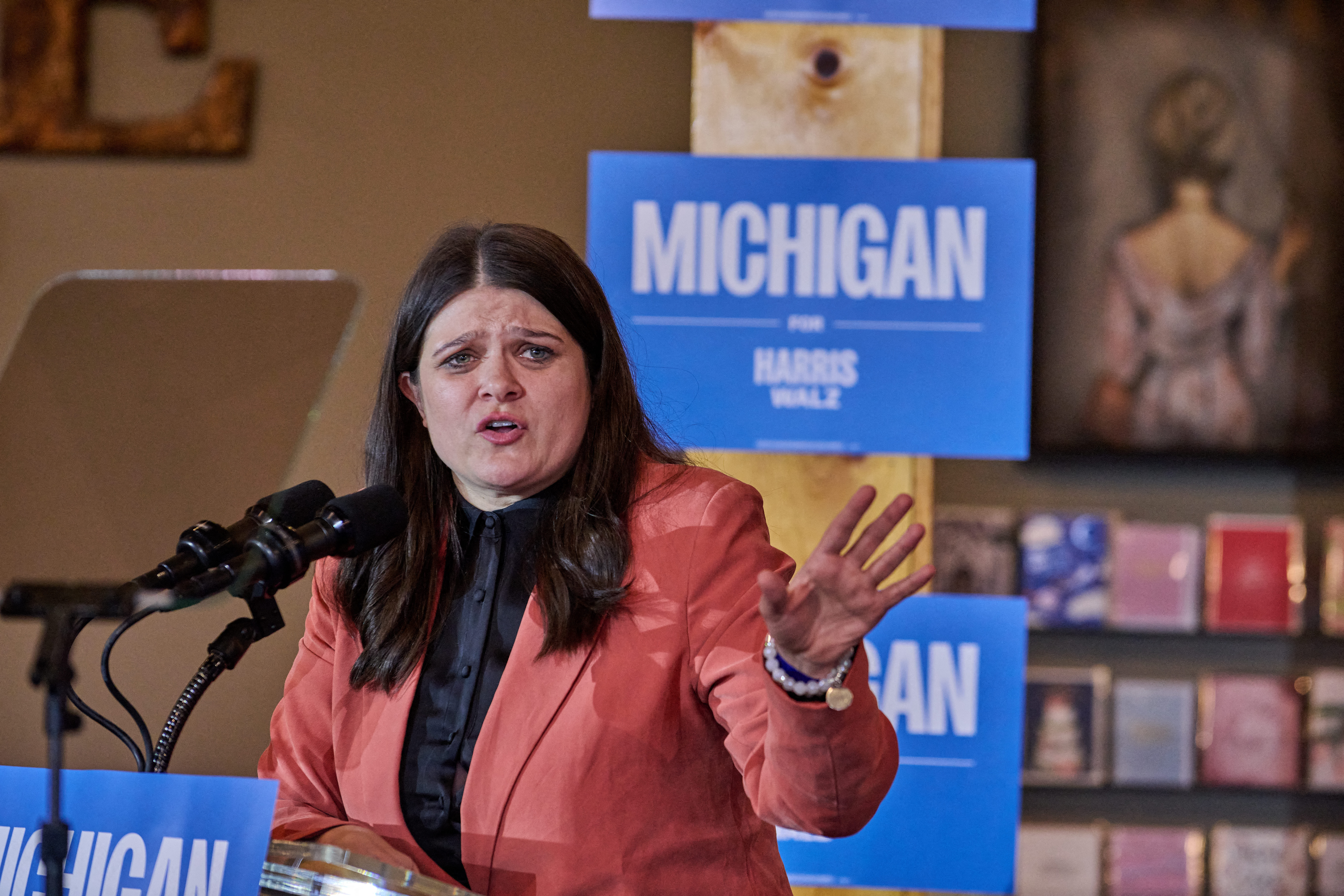
As two Democratic Michigan Senate candidates compete for the votes of anti-Israel voters with accusations of genocide against the Jewish state, Abdul El-Sayed is going after state Sen. Mallory McMorrow as insufficiently and inauthentically critical of Israel. El-Sayed entered the race as a vocal critic of Israel, while McMorrow, in recent months, has joined him in describing the war in Gaza as a genocide, as well as saying she would support efforts to cut off offensive weapons to Israel, Jewish Insider’s Marc Rod reports. Rep. Haley Stevens (D-MI), meanwhile, is solidifying her support for Israel, receiving an endorsement this week from Democratic Majority for Israel and calling herself a “proud pro-Israel Democrat [who] believe[s] America is stronger when we stand with our democratic allies, confront antisemitism and extremism, and keep our promises to our friends abroad and our working families here at home.”
El-Sayed’s speech: El-Sayed, in a recent event at Michigan State University, went after McMorrow for not labeling Israel’s actions in Gaza as genocide sooner, describing it as a matter of clear and incontrovertible fact. Video of the comments was published by the Michigan Advance. He compared McMorrow’s position to someone taking months to decide that the sky is blue and saying “let me give you five caveats about why it might not be blue.” El-Sayed also suggested that McMorrow’s positions changed because she was seeking support from AIPAC, and only took a more anti-Israel stance after the group declined to support her.
TEXAS TALK
Two Republicans condemned by Jewish groups looking to make comebacks in Texas
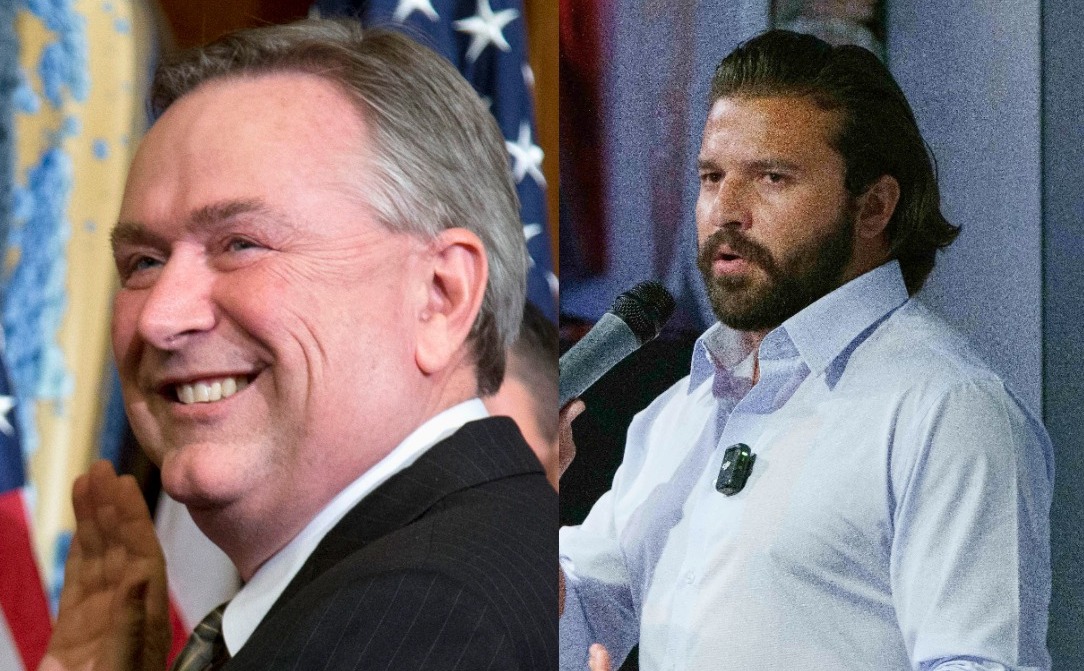
In Texas, two Republicans who have faced condemnations from the Jewish community could be making comebacks in this year’s Republican congressional primaries. Social media influencer and gun activist Brandon Herrera is making a second attempt to take down Republican Rep. Tony Gonzales (R-TX), after losing to the congressman by less than 400 votes in 2024 in the 23rd Congressional District, which runs along the U.S.-Mexico border. In addition, former Rep. Steve Stockman (R-TX) is rumored to be planning a second attempt at a political comeback; he served one term from 1995-1997, narrowly beating a Democratic incumbent, before losing reelection. He ran and was elected again in 2013 in a newly created district. In 2015, he ran unsuccessfully for the U.S. Senate in a primary against Sen. John Cornyn (R-TX), Jewish Insider’s Marc Rod reports.
Controversies: Herrera attracted controversy and criticism for videos he posted on YouTube featuring imagery, music and jokes about the Nazi regime and the Holocaust, and was active for years in a Sons of Confederate Veterans group in North Carolina. He also pledged to support ending U.S. foreign aid, including to Israel. The AIPAC-affiliated United Democracy Project super PAC and the Republican Jewish Coalition launched substantial ad campaigns against Herrera in 2024, highlighting his Nazi-related videos. Gonzales is currently under scrutiny after a former staffer died by suicide after setting herself on fire. The staffer and Gonzales had allegedly engaged in an extramarital affair, something both Gonzales and the woman’s family deny. Gonzales has a sizable lead in fundraising with $1.5 million raised and $2.5 million on hand, to Herrera’s $307,000.
Resignation proclamation: Rep. Marjorie Taylor Greene (R-GA), who entered office in 2021 on a record of antisemitic conspiracy theories and emerged since Oct. 7, 2023, as one of the most vocal opponents of Israel in the House Republican conference, announced on Friday that she will resign her seat, effective Jan. 5, 2026.
HATE WATCH
Two anti-Israel activists behind ‘modern-day blood libel’ display at D.C.’s Union Station

An antisemitic art display at Washington Union Station on Thursday depicting U.S. and Israeli leaders drinking the blood of Gazans is drawing widespread condemnation for echoing the historic blood libel against Jews. The demonstration, displayed both inside and outside of D.C’s main train station, was organized by Hazami Barada and Atefeh Rokhvand, two anti-Israel activists who have been involved in several protests around Washington since the Oct. 7, 2023, terrorist attacks in Israel, including leading a protest encampment outside of the Israeli Embassy and outside of then-Secretary of State Tony Blinken’s home for months in 2024, Jewish Insider’s Haley Cohen reports.
Behind the display: Barada protested a community vigil for the first anniversary of the Oct. 7 attack, which took place at The Anthem, a music venue in the nation’s capital. Rokhvand is an elementary school teacher who spoke at the Muslim Student Association conference in 2024. Another local activist, Hasan Isham, took credit on Instagram for 3D printing the masks used in the protest, which featured people dressed in suits wearing masks to resemble Israeli Prime Minister Benjamin Netanyahu, President Donald Trump, Secretary of State Marco Rubio, former President Joe Biden and Blinken. The five officials were sitting at a long “Friendsgiving dinner” table decorated with the Israeli flag while eating doll limbs drenched in fake blood. A menu placard read: “Starter: Gaza children’s limbs.” “Main: Stolen Organs.” “Dessert: Illegally harvested skin.” “Drink: Gaza’s spilled blood.”
Worthy Reads
X Marks the Spot: In her Substack “Agents of Influence,” Renee DiResta looks at how X’s new “location” feature has revealed the real, and often foreign, origins of accounts claiming to be supporters of the MAGA movement. “I used to work with [X’s disinformation] team as an outside academic analyzing the data sets they would make public; it was a constant cat-and-mouse game, because there is very little penalty for a manipulator beyond losing an account and having to start over. So when X’s ‘About this account’ panel suddenly reveals that one of those big ‘patriot’ culture war accounts is registered in India or Nigeria, that’s not a shocking twist. That is exactly what you’d predict when you understand how this market works. … I saw Pirate Wires had already posted digging into the Israel/Palestine accounts that fight online, highlighting similar inauthenticity — this problem happens outside of the U.S., too.” [AgentsofInfluence]
Dell the Younger:The Information’s Steve LeVine profiles Zach Dell, the son of businessman and philanthropist Michael Dell who launched his startup Base Power two years ago. “Dell concedes that he has basically been tutored since boyhood on exactly this sort of capture-an-industry play. ‘I got to see front row how this is done,’ he said. ‘And I feel very blessed to have had that perspective.’ Watching his father do that in computers, Dell obsessed over building his own ‘great company,’ and not just any great company. ‘I’d been looking for paradigm shifts,’ he said of his early 20s. ‘I was looking for a wave to surf.’ … In 2021, Dell went to work for Thrive Capital, the venture firm founded by Josh Kushner. He was part of an eight-member team that invested in SpaceX and Anduril Industries, both formative experiences. Dell looked up to the billionaire founders of those two companies — Elon Musk and Palmer Luckey — as role models. They went after big traditional Industries — Musk with space, Luckey with weapons — and won.” [TheInformation]
Word on the Street
In a surprisingly chummy press conference, President Donald Trump and New York City Mayor-elect Zohran Mamdani spoke about their “productive” Oval Office meeting on Friday, yet mostly dodged questions on Israel and antisemitism, Jewish Insider’s Matthew Shea reports…
The 21 members of the House Jewish Caucus — every Jewish Democrat in the chamber — wrote to Homeland Security Secretary Kristi Noem to express “extreme alarm and concern” about recent reporting that the Coast Guard would no longer classify the swastika as a hate symbol, and demanded answers about the policy, Jewish Insider’s Marc Rod reports…
Sens. James Lankford (R-OK) and Jacky Rosen (D-NV), the co-chairs of the Senate antisemitism task force, wrote to Adm. Kevin Lunday, the acting commandant of the Coast Guard, raising additional questions about policy changes regarding displays of swastikas, Jewish Insider’s Marc Rod reports…
The Justice Department’s Harmeet Dhillon said that the department is investigating the protest outside a Nefesh B’Nefesh event at the Park East Synagogue last week in which demonstrators chanted “Globalize the intifada” and “Death to the IDF”…
Meanwhile in the U.K., anti-Israel activists projected the text “Stolen lands sold here” on the outer wall of a North London synagogue…
Virginia Gov.-elect Abigail Spanberger accused the Trump administration and outgoing Virginia Gov. Glenn Youngkin of political interference in their efforts to be involved in the hiring of senior administrators and implementation of policies at state’s public colleges and universities; Spanberger had previously requested that the University of Virginia pause its presidential search until she takes office in early 2026…
The Financial Times looks at the relationship between President Donald Trump and Indonesian businessman Hary Tanoesoedibjo as the White House works to encourage Jakarta to join the Abraham Accords and contribute troops to an international peacekeeping force in Gaza…
Rep. Randy Fine (R-FL) introduced a bill to require schools to treat antisemitic discrimination in the same manner that they treat racial discrimination…
Rep. Brad Sherman (D-CA), who is among the most vocal Democratic supporters of Israel in the House, will serve as the top Democrat on the House Foreign Affairs Committee’s Middle East and North Africa subcommittee, replacing Rep. Sheila Cherfilus-McCormick (D-FL) following her indictment last week, Jewish Insider’s Marc Rod reports…
Reps. Debbie Wasserman Schultz (D-FL) and Craig Goldman (R-TX) introduced a resolution to recognize Nov. 30 as “Yom Haplitim,” Jewish Refugee Day…
A GOP operative in Georgia serving as a special advisor to the head of the state party was discovered to have shared — and deleted — xenophobic and antisemitic social media posts, including one mocking Claudia Sheinbaum, the Jewish president of Mexico…
A pocket watch that had been worn by Macy’s co-owner Isidor Straus the night he died in the sinking of the Titanic, and rescued two weeks later when his body was found, fetched $2.3 million at auction; a letter penned by Straus’ wife, Ida, on the ship’s stationery was sold for $131,000…
The U.K.’s Daily Mail and General Trust, which owns the Daily Mail, is in advanced talks with Jeff Zucker’s RedBird IMI to acquire theDaily Telegraph in a deal worth $655 million…
An annual report issued by the Federation of the Jewish Communities in the Czech Republic found that antisemitic activity in the Central European country had increased by 8.5% from 2023 to 2024…
A judge in Australia ruled that a homeless man who set fire to a Melbourne synagogue earlier this year was experiencing a mental health episodestemming from his failure to take medication to regulate schizophrenia, and not acting out of antisemitic malice…
The IDF is taking action — including censures and dismissals — against roughly a dozen senior officials related to security and military failures during and in the run-up to the Oct. 7, 2023, Hamas terror attacks…
Israel’s Cabinet approved a plan to bring the remaining 7,000 members of the Bnei Menashe community in India to Israel by 2030 as the group faces security threats and ethnic violence…
The Bank of Israel is expected to lower interest limits for the first time since January 2024, amid hopes that the ceasefire brokered last month will stabilize markets…
Israel’s Cabinet approved diplomats to be sent to posts in the U.S. next summer, doing so in a unanimous vote in its weekly meeting on Sunday. Adi Farjon is set to be Israel’s consul-general to Houston and the Southwest, while Ron Gerstenfeld was appointed consul-general in San Francisco and the Pacific Northwest. The Cabinet also authorized new ambassadors to Ukraine, Argentina, Mexico, Costa Rica and Uruguay, as well as consuls-general in Shanghai and Hong Kong. Sami Abu Janeb, previously deputy ambassador to Jordan, was appointed consul-general to Dubai, Jewish Insider’s Lahav Harkov reports…
Rabbi Saul Kassin, a leader in the Syrian American Jewish community, wrote a letter to the Helsinki Commission, which is evaluating the repeal of Caesar Act sanctions on Syria, distancing the community from Rabbi Yosef Hamra; Kassin said that Hamra “is not a representative of the American Syrian Jewish community” and “has never held any authority, mandate, or permission to speak or act on our behalf in any religious, political, or communal matter” as Hamra advocates for a repeal of the sanctions…
Saudi Arabia is quietly expanding the ability to purchase alcohol in the country, allowing non-Muslims with a special residency status permit to shop at a store that had previously only sold its products to diplomats…
Iran, with assistance from Turkey, is battling wildfires at the ancient Hyrcanian Forests, a UNESCO World Heritage site, resulting from the drought that swept through portions of the country and record high temperatures…
Maj. Gen. (ret.) Eli Zeira, who led the IDF’s intelligence unit during the Yom Kippur War and whose legacy was shaped by his dismissal of warnings of the impending Syrian and Egyptian attack on Israel in 1973, died at 97…
Pic of the Day
Former hostages Segev Kalfon, Matan Angrest (pictured, with his father), Nimrod Cohen and Bar Kuperstein visited the Ohel, the Lubavitcher Rebbe’s gravesite in Queens, N.Y., over the weekend after meeting with President Donald Trump on Thursday in Washington.
Birthdays
Former co-CEO of global shopping center company Westfield Corporation, he is also chairman of the World Board of Trustees of Keren-Hayesod United Israel Appeal, Steven Lowy turns 63…
Former member of Congress from Kansas, secretary of Agriculture and CEO of the Motion Picture Association of America, Dan Glickman turns 81… Retired English teacher, Adele Einhorn Sandberg turns 81… Chairman of Lyons Global Insurance Services, he is a senior advisor to the Ashcroft Group, Simcha G. Lyons turns 79… Professor emeritus of chemistry at Bar Ilan University, he is also an ordained rabbi, Aryeh Abraham Frimer turns 79… Coordinator for the International Association of Jewish Free Loans, Tina Sheinbein turns 75… President of Gesher Galicia, Dr. Steven S. Turner turns 74… Actress, best known for her role as Gaby in the film “Gaby: A True Story,” Rachel Chagall turns 73… Senior consultant at Marks Paneth (now CBIZ), he is an honorary VP of the Orthodox Union and a trustee of Congregation Shearith Israel in New York, Avery E. Neumark… Partner in the Los Angeles-based law firm of Gordon & Rees, Ronald K. Alberts… Past president of the University of Michigan, Mark Steven Schlissel turns 68… Former coordinator of clinical oncology trials at Englewood Health, Audrey E. Ades… Born to a Jewish family in Havana, former secretary of the Department of Homeland Security, Alejandro N. Mayorkas turns 66… Media executive, lobbyist, and political consultant, Jeff Ballabon turns 63… Author and founder of Nashuva, a Los Angeles-area Jewish outreach community, Rabbi Naomi Levy turns 63… Member of the Knesset for the Democrats (the merger of Labor and Meretz), she is a granddaughter of Rudolf Kastner, Merav Michaeli turns 59… EVP and COO of the Orthodox Union, Rabbi Dr. Joshua M. Joseph… Israeli actor and screenwriter, he is best known for portraying Doron Kabilio in the political thriller television series “Fauda,” Lior Raz turns 54… Professional poker player, his tournament winnings exceed $9.5 million, Robert Mizrachi turns 47… President of global affairs and co-head of the Goldman Sachs Global Institute, he is an adjunct senior fellow at the Council on Foreign Relations, Jared Cohen turns 44… Olami Texas rabbi at the Austin campus of the University of Texas, Rabbi Moshe Trepp turns 44… Assistant director of the electric unit at the Georgia Public Service Commission, Benjamin Deitchman… Director at Green Strategies, Rachel Kriegsman… Senior director of strategic marketing at Phreesia, Madeline Bloch… Actress best known for her lead role in the Netflix series “Bonding,” Zoe Levin turns 32… Chief of staff for Douglas Murray, Kennedy Lee… Michael Davis… Co-chair of the Bergen AIPAC Network and board member of the New Jersey Jewish Business Alliance, Philip Goldschmiedt…
Legislation that would ban the group has received bipartisan support in both the House and Senate
Alex Wong/Getty Images
U.S. President Donald Trump delivers remarks at the White House on September 29, 2025 in Washington, DC.
President Donald Trump announced on Sunday that he plans to designate the Muslim Brotherhood as a Foreign Terrorist Organization following months of bipartisan calls for his administration to target the group.
Trump announced the move in an interview with journalist John Solomon of the conservative outlet Just the News on Sunday morning, saying that an executive order is being prepared for his signature.
“It will be done in the strongest and most powerful terms,” Trump said. “Final documents are being drawn.”
The White House did not respond to Jewish Insider’s request for comment on the announcement or details of the order being drafted for the president.
Trump considered designating the Brotherhood as a Foreign Terrorist Organization (FTO) during his first administration, though that effort never materialized. Sebastian Gorka, who serves as Trump’s deputy assistant for national security affairs and senior director for counterterrorism at the National Security Council, has been publicly and privately urging the president to do so since returning to office, as have a chorus of GOP lawmakers, along with a handful of Democrats in Congress.
Gorka posted on X on Sunday that the “time has come” to designate the group, which he called “the progenitor of all modern Jihadist terror groups, from al Qaeda to HAMAS.”
A Senate bill that would designate the Muslim Brotherhood as a terrorist group, led by Sen. Ted Cruz (R-TX), has 11 co-sponsors, including Sen. Tom Cotton (R-AR), Sen. Rick Scott (R-FL), Sen. Dave McCormick (R-PA) and Sen. John Fetterman (D-PA). The House version of the bill has 19 co-sponsors, including four House Democrats.
Trump’s announcement comes less than a week after Texas Gov. Greg Abbott, a Republican, issued a declaration designating the Muslim Brotherhood and Council on American-Islamic Relations as foreign terrorist groups and transnational criminal organizations, a move prohibiting both groups from buying land in Texas and allowing the AG’s office to sue to shut them down.
Secretary of State Marco Rubio said in August that the FTO designation was “in the works” for the Brotherhood.
“Obviously, there are different branches of the Muslim Brotherhood, so you’d have to designate each one of them,” Rubio told right-wing talk show host Sid Rosenberg on his radio program at the time, adding that the State Department needed to go through a lengthy “process which I didn’t fully appreciate until I came into this job.”
News of Trump’s comments was met with praise in the U.S. and in Israel, even as the details are still fuzzy over what he will be signing.
Israeli Prime Minister Benjamin Netanyahu said on Sunday that he wanted to “commend President Trump on his decision to outlaw and designate the Muslim Brotherhood organization as a terrorist organization.”
“This is an organization that endangers stability throughout the Middle East and also beyond the Middle East. Therefore, the State of Israel has already outlawed part of the organization, and we are working to complete this action soon,” Netanyahu said.
The Institute for the Study of Global Antisemitism and Policy (ISGAP) released a statement commending “the fact that the threat posed by the Muslim Brotherhood’s ideology is now being taken seriously at the highest levels of the U.S. government.”
“We welcome President Trump’s statements and the growing recognition that the Muslim Brotherhood, its ideology and network pose a serious challenge to the United States and democratic societies,” Charles Asher Small, ISGAP’s executive director, said to Jewish Insider..
“A formal U.S. designation would represent an important first step to confront the Muslim Brotherhood in the United States,” Small added. “This will require sustained, evidence-based policy, serious scrutiny of its affiliated structures and funding streams, and long-term investment in democratic resilience.”
Dan Schlessinger, the lead attorney for the Boim family in their lawsuit against American Muslims for Palestine regarding the murder of American teenager David Boim in 1996, told JI in a statement: “This is welcome news for many including the Boim family. The next question is what does this mean for U.S.-based, Hamas adjacent groups like American Muslims for Palestine and Students for Justice in Palestine. Our hope is they will be included in this designation as well.”
Schlessinger and his team have accused AMP in court of acting as an “alter ego” of a now-defunct group that shut down after it was found to have provided support to Hamas.
National Republicans have been pushing for similar policies at the federal level
Jason Fochtman/Houston Chronicle via Getty Images
Gov. Greg Abbott announces his reelection campaign for Texas governor in Houston, Sunday, Nov. 9, 2025.
Texas Gov. Greg Abbott issued a declaration on Tuesday designating the Muslim Brotherhood and Council on American-Islamic Relations as foreign terrorist groups and transnational criminal organizations — a move that some lawmakers are pushing on the federal level.
The proclamation would ban both groups from buying or acquiring land in the state and allow the state’s attorney general to sue to shut down the two groups, and potentially impose fines on those involved.
Abbott’s proclamation notes the Muslim Brotherhood’s support to groups, including Hamas, that conduct terrorism in various countries, some of which have already been designated as terrorist groups, and that a series of countries have already imposed restrictions on their local Muslim Brotherhood branches.
The proclamation describes CAIR as a “successor organization” to the Muslim Brotherhood and an effective front group for Hamas in the United States and accuses the group of seeking to spread Sharia law in the country by infiltrating public office and other areas of public life.
It also notes that CAIR was an unindicted co-conspirator in the Holy Land Foundation Hamas financing case, and that a series of senior CAIR members have been involved in promoting or financing terrorism.
Responding in a statement on X, CAIR accused Abbott of doing the bidding of Israel and AIPAC donors and described the proclamation as defamatory.
“Unlike Mr. Abbott — who unleashed violence against Texas students protesting the Gaza genocide to satisfy his AIPAC donors — our civil rights organization is an independent voice that answers to the American people, relies on support from the American people, and opposes all forms of unjust violence, including hate crimes, ethnic cleansing, genocide and terrorism,” the group wrote.
Rep. Chip Roy (R-TX), a candidate for Texas attorney general, praised the announcement, saying he would enforce it if elected, and that CAIR should also be proscribed at the federal level.
“We must fully enforce and duplicate terror designation efforts at the federal level including strict immigration policy, stripping CAIR’s [501]c3 [tax-exempt] status, vet and remove Sharia,” Roy said.
Efforts to designate the Muslim Brotherhood and CAIR have seen little public progress at the federal level, both in Congress and in the executive branch.
Texas has become a particular locus of anti-Sharia law activity over concerns about a project to develop a new Muslim-focused community, known as EPIC City. The Department of Justice investigated the project for religious discrimination, but the DOJ ended its probe finding no wrongdoing. Texas has passed several laws designed to impede the project.
One of its branches is banned for Hamas ties. The other sits in the Knesset
AHMAD GHARABLI/AFP via Getty Images
Sheikh Raed Salah, leader of the radical northern branch of the Islamic Movement in Israel, speaks on August 23, 2023, outside a police station during the funeral of the director-general of the Arab city of Tira in Israel, who was gunned down on August 21 evening.
While Congress is working on a bill to designate the Muslim Brotherhood a terrorist organization in the U.S., and the Islamist group is banned from Egypt, Syria, Saudi Arabia, the United Arab Emirates and beyond, the group’s status in Israel is much more complicated.
The matter drew renewed attention this week after Mansour Abbas, the leader of the Ra’am party in the Knesset, an ideological offshoot of the Muslim Brotherhood, declined to call for the eradication of Hamas on Israeli radio.
In an interview with Israeli public broadcaster KAN, Abbas mostly lamented the high rate of crime and gun violence in Israeli-Arab society, but when he mentioned Gaza, the interviewer, Asaf Liberman, asked whether he sees Hamas as part of the enclave’s future.
“Palestinian society needs to pick its leadership and go on a new path towards peace and reconciliation,” Abbas responded.
Liberman twice repeated his question and sharpened it: “Does Hamas need to be destroyed?”
Abbas added that an international force must enter Gaza and after an interim period a security force of the Palestinian Authority would be trained, but after being pressed to make his position on Hamas clear, he said the interview was beginning to feel like an “interrogation,” and pointed out that he had gone on air to talk about domestic issues facing Arab Israelis. “If you want to talk about crime, fine, if not, bye,” he said, before hanging up.
Abbas has previously condemned Hamas’ Oct. 7 attacks, calling them unjustifiable and inhumane, and called for the release of the hostages. The other reporter who conducted the interview, Suleiman Maswadeh, later noted that Abbas and his family had recently received death threats, and hinted that was the reason the Knesset member avoided repeating his previously articulated position — which Maswadeh said does not include a future for Hamas in the governance of Gaza.
In 2021, the Ra’am party became the first Arab party in 50 years to join an Israeli governing coalition, which was celebrated by many in Israel and abroad as a milestone for coexistence, while the Israeli right criticized the 2021-2022 government for what it characterized as working with the Muslim Brotherhood.
Monday’s interview sparked headlines and analysis in right-leaning Israeli media and comments by politicians on the right about the viability of center and left-wing parties once again forming a coalition with Ra’am to oust Prime Minister Benjamin Netanyahu, when Ra’am’s leader would not say that he is for eradicating Hamas.
“The Muslim Brotherhood is a very generic term,” said Michael Milshtein, head of the Palestinian Studies Forum at the Moshe Dayan Center at Tel Aviv University. “It’s not membership in an organization; it’s a denomination. Mansour Abbas is the Muslim Brotherhood. Raed Salah, his rival, is also the Muslim Brotherhood. Hamas is the Muslim Brotherhood. [Turkish President Recep Tayyip] Erdogan is the Muslim Brotherhood.”
The historic and recent connections between Hamas and Ra’am, both of which were founded by adherents of the Muslim Brotherhood, shed light on the nuances of the international Sunni Islamist movement and its status in Israel.
Michael Milshtein, head of the Palestinian Studies Forum at the Moshe Dayan Center at Tel Aviv University, emphasized, in an interview with Jewish Insider on Wednesday, that the Muslim Brotherhood is an ideology aiming to make Muslim societies more religious, and is not one centralized organization spanning the Muslim world.
“The Muslim Brotherhood is a very generic term,” Milshtein said. “It’s not membership in an organization; it’s a denomination. Mansour Abbas is the Muslim Brotherhood. Raed Salah, his rival, is also the Muslim Brotherhood. Hamas is the Muslim Brotherhood. [Turkish President Recep Tayyip] Erdogan is the Muslim Brotherhood.”
Muslim Brotherhood founder Hasan al-Banna’s brother, Abd al-Rahman al-Banna, founded the group’s branch in Mandatory Palestine in 1935; its leaders included Mufti of Jerusalem Hajj Amin al-Husseini, who incited the deadly Hebron riots against Jews in 1929 and collaborated with Hitler, and Izz al-Din al-Qassam, leader of the 1935 Arab Revolt against the British and namesake of Hamas’ short-range Qassam rockets.
Gaza-based Sheikh Ahmad Yasin formed the Muslim Brotherhood-inspired Hamas in the 1980s. Sheikh Abdullah Nimar Darwish founded the Islamic Movement in Israel in 1971, which also espoused Muslim Brotherhood ideology.
In 1979, Darwish founded an underground group in Israel called The Family of Jihad with a goal of establishing an Islamic state. However, after his arrest and conviction for involvement in killing an accused collaborator and membership of a terrorist organization, he renounced violence and decided to promote Islamism within the confines of Israeli law.
Fissures began in the Islamic Movement in Israel after the Oslo Accords, with the northern branch, led by Sheikh Raed Salah, opposing it, while the southern branch supported it. The two parts of the movement officially split when the southern branch ran for the Knesset in 1996 as Ra’am, and Salah advocated boycotting national elections.
The leaders of the northern branch were arrested in 2003 for aiding Hamas and in 2015, the branch was banned, after the police and Shin Bet demonstrated that it had close ties to Hamas and the Muslim Brotherhood, and received funds from groups affiliated with Hamas.
Darwish, however, continued to be the spiritual leader of the Islamic Movement’s southern branch and said he was committed to obeying the laws of Israel. He engaged in interfaith dialogue events, often with former Labor lawmaker Rabbi Michael Melchior, and spoke out against Holocaust denial.
While Islamic Movement Southern Branch leaders have met with Hamas leaders and taken part in mediation efforts between the Palestinian Authority and Hamas, in 2022, then-leader of Hamas Yahya Sinwar declared Mansour Abbas a traitor for joining the governing coalition and saying Israel is a Jewish state. Abbas has said that his decision to join the governing coalition in 2021 came from the values he “absorbed from the legacy of Sheikh Abdullah Nimr Darwish.”
As such, the more radical of the two major offshoots of the Muslim Brotherhood is outlawed in Israel.
Yet, more recently, the Islamic Movement Southern Branch has come under scrutiny for its own possible ties to Hamas.
In the decades since its establishment, the Islamic Movement has faced repeated crackdowns on its charities. The Islamic Relief Committee, founded in 1987 with the stated goal to help the needy in the West Bank and Gaza, was shut down by Israeli authorities in 1995 for aiding Hamas members’ families, the first in a series of such actions.
“Israel’s anti-terrorism law and the whole discipline has been to focus on specific organizations and declaring them as terrorist organizations because of their goals, because of the means that they use, rather than focusing on an idea, which the Muslim Brotherhood really is,” Lt.-Col. (res.) Maurice Hirsch, the former director of the IDF Prosecution for Judea and Samaria, told JI.
In July, the Israeli Justice Ministry unit dealing with nonprofit organizations found grounds to shut down “Aid 48,” a charity affiliated with Ra’am, on suspicion of providing funding to terrorist organizations. “Aid 48” is the Islamic Movement Southern Branch’s main charity. According to an investigation by the ministry, in 2020-2021, the organization transferred NIS 2 million to a charity in Hebron that Israel had declared in 2012 to be part of a terrorist organization; in 2023, “Aid 48” worked with three such Palestinian charities; in 2020, the organization gave NIS 933,000 to a Turkish organization run by Hamas members, which funneled money to the terrorist organization.
Lt.-Col. (res.) Maurice Hirsch, the former director of the IDF Prosecution for Judea and Samaria, currently the director of the Initiative for Palestinian Authority Accountability and Reform in the Jerusalem Center for Public Affairs, explained to JI that Israeli law makes it easier to crack down on smaller subgroups than an umbrella term like the Muslim Brotherhood.
“Israel’s anti-terrorism law and the whole discipline has been to focus on specific organizations and declaring them as terrorist organizations because of their goals, because of the means that they use, rather than focusing on an idea, which the Muslim Brotherhood really is,” he said on the sidelines of a JCFA conference last week.
In order to declare the Muslim Brotherhood a terrorist organization, “you have to break it down into intelligence,” Hirsch said, adding that the authorities would have to determine who they are seeking to arrest and what money and possibly weapons need to be seized.
Hirsch recounted taking part in the Israeli Security Cabinet meeting in 2015 when the government decided to outlaw the Islamic Movement Northern Branch.
“Some of the questions that were asked were, what is the next step? Who do we operate against now? It was a bit clearer than the entire Muslim Brotherhood, but even then there was a question,” he said.
“I would be very careful because, at its core, the Muslim Brotherhood is a movement that aims to change society. They have a lot of social organizations. It’s very different from Islamic Jihad or ISIS, who are not interested in social activism,” said Milshtein, adding that the Muslim Brotherhood ideology is up for interpretation by its adherents.
When it comes to the southern branch, Hirsch, who has worked with the “Choosing Life” organization of relatives of victims of terror whose lawsuit led to the shuttering of “Aid 48,” argued that “there is a clear connection between Ra’am and funding Hamas … That connection was there all along. It’s partly ideological and partly the idea of the Muslim Brotherhood in its different constellations, including in Israel.”
Milshtein acknowledged that there have been cases of leaders of “Aid 48” meeting with Hamas leaders and funding going to Hamas ahead of its invasion of Israel on Oct. 7, 2023, but said that Abbas “took care of” those responsible when he learned of the incidents.
“I would be very careful because, at its core, the Muslim Brotherhood is a movement that aims to change society. They have a lot of social organizations. It’s very different from Islamic Jihad or ISIS, who are not interested in social activism,” he said, adding that the Muslim Brotherhood ideology is up for interpretation by its adherents.
“If you ask Mansour Abbas, there is no problem with being part of the Muslim Brotherhood and part of the government in a state that defines itself as Jewish,” he said. “If you ask Hamas, they want jihad against Israel.”
The legislation would require the imposition of sanctions on the Muslim Brotherhood, making it illegal to provide support to the group
Salah Malkawi/Getty Images
Jordanian police close the entrance of a Muslim Brotherhood headquarter after the announcement of banning the society in the country on April 23, 2025 in Amman, Jordan.
The firebombing of a hostage-release march in Boulder, Colo., this summer triggered a wave of calls from lawmakers — particularly Republicans — for action to designate the Muslim Brotherhood as a terrorist organization, Jewish Insider’s Emily Jacobs and Marc Rod report.
Legislation to that effect was introduced in both the Senate and House in July, taking a new approach to designating the group as compared to previous legislative efforts that had stalled over the course of the last decade.
The legislation would require the imposition of sanctions on the Muslim Brotherhood, making it illegal to provide support to the group, making its members and affiliates inadmissible to the United States and blocking transactions involving assets held by Muslim Brotherhood members in U.S. financial institutions.
There were also calls from lawmakers on both sides of the aisle for the Trump administration to investigate the group and take action to designate it through executive authorities. The secretary of state has the authority to designate a group as a Foreign Terrorist Organization (FTO), and the White House could issue an executive order on the subject.
But so far, none of those efforts have come to fruition. The Senate bill currently sits at 11 co-sponsors, having recently picked up Sen. John Fetterman (D-PA) as its first Democratic supporter, while the House bill has 19 co-sponsors from both parties — below the levels of support previous iterations of the bill had amassed.
Fetterman’s co-sponsorship could help the bill receive consideration by the Senate Foreign Relations Committee, as the panel often only considers legislation with bipartisan support. A source familiar with the matter tells JI that Sen. Ted Cruz (R-TX), the bill’s co-sponsor in the Senate and a member of the committee, is pushing for the panel to mark up the bill at their next business meeting.
Neither bill has been called up yet for a vote in committee — a process further slowed by the ongoing government shutdown — and it is currently not included in either the Senate or House versions of the 2026 National Defense Authorization Act, a potential vehicle for legislation of this sort.
The White House declined to comment. A spokesperson for Cruz told JI: “Sen. Cruz is pushing for the bill to be advanced through the Senate Foreign Relations Committee, and then to be passed by the full Senate. Sen. Fetterman is showing commitment and leadership to American national security interests by providing this measure with bipartisan backing here in the Senate, and it’s time to move it forward.”
Sen. James Lankford (R-OK), who is not currently a co-sponsor of the Senate bill but is supportive of efforts to counter the Muslim Brotherhood, told JI on Wednesday that the issue is not top of mind for many colleagues and it will take time to build interest and support for moves like designating the group.
Richard Goldberg, a senior advisor at the Foundation for Defense of Democracies and a former Trump administration official, told JI that, within the executive branch, FTO designations are a time-consuming process — requiring extensive legal consultations as well as significant behind-the-scenes work to understand potential implications, unintended consequences and diplomatic fallout, as well as assembling a list of visa exemptions needed for diplomats.
Based on public comments from Secretary of State Marco Rubio and the National Security Council’s Sebastian Gorka indicating support for a terrorism designation, Goldberg said that he believes that there is momentum in the administration, further fueled by the election of Zohran Mamdani as mayor of New York City, anti-Israel protests around the country and evidence of growing Islamist influence on the far right as well. He said that the fact that no designation has been announced should not necessarily be read as a sign that it is not actively being worked on in private.
Goldberg also said that any action on the designation from Congress would likely be timed to coordinate with potentially pending action by the Trump administration, given the high-profile nature of the issue and the administration’s expressed interest.
One potential obstacle to the efforts: Qatar and Turkey, with which the administration has been strengthening ties. Both have extensive links to the Muslim Brotherhood and could be resistant to such a designation. Goldberg, however, said he has not heard any discussion of those countries actively trying to stop a designation, and urged the Trump administration to push forward, describing the Muslim Brotherhood as both a threat to homeland security and President Donald Trump’s desire for Middle East peace.
As they denounce the UAE’s alleged backing of Sudan’s Rapid Support Forces, far-left lawmakers have passed over the Muslim Brotherhood affiliations and foreign backing of the rival Sudanese Armed Forces
Tariq Mohamed/Xinhua via Getty Images
Abdel Fattah Al-Burhan in the vehicle, chairman of Sudan's Transitional Sovereign Council and commander of the Sudanese Armed Forces SAF, departs from the Presidential Palace in Khartoum, Sudan, on March 26, 2025.
In recent days, a chorus of left-wing lawmakers in Congress have ramped up their ire towards the United Arab Emirates, accusing the Gulf country of helping fuel the yearslong civil war in Sudan by reportedly backing the Rapid Support Forces (RSF), the non-Islamist Arab force fighting the Muslim Brotherhood-aligned Sudanese Armed Forces (SAF).
The UAE has long denied allegations of involvement in the war. The Wall Street Journal reported this week that, according to sources, recent assessments by the Defense Intelligence Agency and the State Department’s intelligence bureau purport to show the UAE sending Chinese drones to the RSF.
On the other side, Iran, Russia, Egypt and Turkey have provided support to the SAF, according to conflict monitors and reporting by Bloomberg and The Washington Post.
The war in Sudan has wrought havoc upon the eastern African nation, with both warring factions committing crimes against humanity. The conflict has killed as many as 150,000 people and has displaced around 12 million.
Over the more than two-year long conflict, both militias have been accused of widespread sexual assault, mass killings of civilians, torture and deliberate attacks on civilian infrastructure. On Monday, the RSF captured the city of El Fasher after an 18-month blockade which saw the group effectively devastate the city, with reports of mass killings, sexual violence and the destruction of hospitals and displacement camps.
The U.S. government, under former President Joe Biden, determined the RSF was committing genocide and found both the RSF and SAF guilty of committing war crimes.
Meanwhile, the Muslim Brotherhood’s growing influence with the Sudanese Armed Forces has alarmed experts, who warn that the SAF’s deepening ties to Islamist networks threaten regional stability and could pose a risk far beyond the eastern African nation.
“The Muslim Brotherhood has had a strong presence in Sudan since the 1940s and that presence has evolved over the years,” Norman Roule, a former senior U.S. intelligence official, told Jewish Insider. “It’s important to note that this presence is also why Iran is such a strong supporter of the Burhan [head of SAF] government.”
Liam Karr, an analyst at the American Enterprise Institute, who has condemned actions on both sides of the conflict, says the ties date back to former Islamist dictator Omar al-Bashir, who ruled Sudan for several decades before the SAF overthrew him in 2019.
“The SAF is working with several Islamist brigades that consist of former Bashir-era army, police and intelligence personnel,” Karr told JI. “This includes the al Baraa Ibn Malik Brigade, which is widely associated with the Sudanese Muslim Brotherhood and Bashir and has an estimated 20,000 fighters.”
In recent months, the SAF has received explosive attack drones from Iran’s Revolutionary Guard Corps to aid in the conflict, while Egypt, one of their key backers, arrested a key Islamist militia leader aligned with the group — signaling that even staunch regional supporters of the group are “growing wary of its Islamist factions,” according to Foundation for Defense of Democracies Research Fellow Hussain Adbul-Hussain.
Roule said Iran has a vested interest in providing the SAF with weaponry in order to reestablish a presence in the region and revitalize their “broken proxies,” following Israel’s degrading of its military capabilities and of its proxy Hezbollah, as well as the fall of the Assad regime in Syria.
“This is of extreme importance to the U.S. and its partners in the region, because if the Quds Force [IRGC] is able to establish a presence it lost in Syria, it would be able to reestablish training camps it operated a decade ago for Hamas smugglers, routes for weapons that it could send back into Gaza and revitalize Lebanese Hezbollah, as well as provide a transshipment location of weapons to the Houthis,” said Roule. “The Muslim Brotherhood presence in Khartoum is of serious concern for the United States and deserves much greater attention. It is a significant threat to the United States, Israel and the region.”
Anti-Israel lawmakers, including some of the Jewish state’s most vocal critics in the House, have sounded the alarm on the RSF, but have notably glossed over the SAF and its increasingly Islamist alignment.
“Sudan is facing the world’s worst humanitarian crisis and a genocide,” said Rep. Ilhan Omar (D-MN) in a post on social media on Tuesday. “The UAE and other arms dealers to the RSF and RSF-aligned militias must be held accountable.”
Rep. Rashida Tlaib (D-MI) echoed the same sentiment, saying she is “horrified” by the RSF’s “mass killings of civilians.”
“We must do everything in our power to stop this genocide, including cutting off all weapons sales to the United Arab Emirates who are arming and funding this ethnic cleansing,” said Tlaib on social media on Wednesday.
Rep. Joaquin Castro (D-TX) followed suit and similarly directed his criticism at the Emirates.
“I am incredibly concerned about the deepening humanitarian crisis in Sudan, and the atrocities committed by the Rapid Support Forces,” Castro wrote on social media on Wednesday. “The United States must put pressure on the RSF and those who back it — including the United Arab Emirates — to end these atrocities.”
A number of far-left activists online have also singled out the RSF and its reported Emirati ties for condemnation.
Kenneth Roth, a virulent critic of Israel and former head of Human Rights Watch, posted on Tuesday, “British arms sold to the United Arab Emirates are being found in Sudan, where the UAE is arming the paramilitary Rapid Support Forces as they commit genocide.”
“Both the Biden and Trump administrations refused to hold the UAE accountable as it armed Sudan’s RSF, despite massacre after massacre, atrocity after atrocity,” wrote New York Times columnist Nicholas Kristof, adding, “Members of Congress are showing more responsibility and initiative.”
House Democrats, led by Reps. Gregory Meeks and Sara Jacobs, released a statement in April marking the two year anniversary of the conflict. “External actors like the UAE must immediately stop fueling the conflict by arming the warring parties,” the statement said notably only listing the UAE and omitting any mention of Turkey, Iran, Russia, and other countries who have sent arms to factions in Sudan.
A bi-partisan group of senators, including Ranking Member Jeanne Shaheen (D-N.H.) of the Senate Foreign Relations committee, released a statement on Thursday breaking in tone from the other lawmakers – condemning both sides and making mention of all nations reportedly backing the war.
“Both the RSF and the Sudanese Armed Forces (SAF) have committed atrocities against civilians and pursued a zero-sum war at any cost,” the lawmakers said in a statement. “Foreign backers of the RSF and SAF-including the United Arab Emirates (UAE), Russia, Iran, China and governments in the immediate region-have fueled and profited from the conflict and legitimized the monsters destroying Sudan,” the senators continued.
Secular forces in Sudan have called for the country’s Islamist movement to be classified as a terrorist group, according to Hussain. Sudan’s Civil Democratic Alliance of Revolutionary Forces (Sumud) has stated that the “Islamist movement sees no pathway for ending the fighting other than the complete submission of the Sudanese people to its terrorist regime, an arrangement that has never achieved peace.”
Karr says the Trump administration and the SAF’s own partners have put “heavy pressure” on the group to “distance itself politically from the Islamist groups.” Karr also believes pressure should be applied to the RSF.
In his second term, President Donald Trump voiced support for designating the Muslim Brotherhood as a terrorist organization. Various members of congress have introduced legislation that would require the secretary of state to use this designation, though Congress has yet to move forward with the legislation.
The Arkansas senator said there is ‘substantial evidence’ that ‘confirms CAIR has deep ties to terrorist organizations’

Anna Moneymaker/Getty Images
Sen. Tom Cotton (R-AK) speaks with reporters after attending a closed-door, classified briefing for Senators at U.S. Capitol Building on February 14, 2023 in Washington, DC.
Sen. Tom Cotton (R-AR) is urging the Trump administration to investigate the Council on American-Islamic Relations’ (CAIR) alleged “ties to terrorist organizations like Hamas and the Muslim Brotherhood” and consider revoking the group’s 501(c)(3) nonprofit status.
Cotton, who chairs the Senate Intelligence Committee, announced on Tuesday that he had sent a letter to IRS Commissioner Billy Long requesting he look into “recent news and longstanding evidence” demonstrating CAIR’s reported terrorist connections.
“CAIR purports to be a civil rights organization dedicated to protecting the rights of American Muslims. But substantial evidence confirms CAIR has deep ties to terrorist organizations,” Cotton wrote.
The Arkansas senator pointed to CAIR being “listed as a member of the Muslim Brotherhood’s Palestine Committee” in the “largest terrorism-financing case in U.S. history,” as well as the group’s executive director Nihad Awad saying he was “happy to see” the Oct. 7 terror attack in a November 2023 speech.
Awad characterized Hamas’ Oct. 7 terror attacks in Israel as Gazans “break[ing] the siege, the walls of the concentration camp.”
“Government exhibits from the trial revealed that CAIR’s founders participated in a meeting of Hamas supporters in Philadelphia, where they discussed strategies to advance the Islamist agenda in America while concealing their true affiliations,” Cotton said, referring to CAIR’s participation in the 1993 Philadelphia Meeting, a gathering of top Hamas officials trying to find a path forward after the Oslo Accords. “These connections are not mere historical footnotes.”
“The Internal Revenue Code requires that 501(c)(3) organizations operate exclusively for charitable, educational, or religious purposes, and are prohibited from providing material support to terrorism. The IRS has broad authority to examine whether an entity’s operations align with its exempt purpose. Tax-exempt status is a privilege, not a right, and it should not subsidize organizations with links to terrorism,” he continued.
Cotton went on to request that the IRS “immediately investigate CAIR’s compliance with section 501(c)(3), including a review of its financial records, affiliations, and activities.”
Reached for comment on the letter and Cotton’s allegations, a CAIR spokesperson told Jewish Insider, “Tom Cotton’s baseless demand that the IRS target a nonprofit organization based on debunked conspiracy theories is a political stunt straight from the McCarthy era and an un-American tactic carried out to shield the Israeli apartheid government from criticism.”
The bill takes a new tack at a previously attempted move by first designating Muslim Brotherhood branches individually
Salah Malkawi/Getty Images
Jordanian police close the entrance of a Muslim Brotherhood headquarter after the announcement of banning the society in the country on April 23, 2025 in Amman, Jordan.
A bipartisan House bill set to be introduced on Tuesday aims to designate the Muslim Brotherhood as a terrorist organization, a step forward for an effort that saw renewed interest following the terrorist attack in Boulder, Colo., targeting Jews advocating for the release of hostages in Gaza by a man who appeared to have expressed support for the group years earlier.
Similar efforts have been pursued at multiple points in the past, but the latest legislation has been updated significantly and focuses on the various branches of the Muslim Brotherhood responsible for terrorism.
The bill, led by Reps. Mario Díaz-Balart (R-FL) and Jared Moskowitz (D-FL), notes that Hamas is a Muslim Brotherhood affiliate that has long been designated as a Foreign Terrorist Organization by the U.S. and that receives material support from the Muslim Brotherhood. It also highlights the destabilization efforts by other Muslim Brotherhood branches in various Arab partner countries of the U.S.
The bill is co-sponsored by Reps. Randy Fine (R-FL), Chuck Fleischmann (R-TN), John Rutherford (R-FL), Andy Barr (R-KY) and Mike Bost (R-IL).
“Today, I once again introduced legislation to designate the Muslim Brotherhood as a foreign terrorist organization,” Díaz-Balart said in a statement. “The global Muslim Brotherhood has numerous regional branches, including terrorist organizations such as Hamas, and spreads violence and instability throughout the Middle East. For this reason, it is crucial to U.S. national security interests that we prohibit U.S. dollars from enabling the Muslim Brotherhood’s dangerous activities, and that we ensure Muslim Brotherhood members are blocked from entering the United States.”
“This important legislation gives the Trump Administration the additional authority it needs to protect Americans, and our closest allies, from this insidious threat,” he continued.
Moskowitz said in a statement, “The Muslim Brotherhood has a documented history of promoting terrorism against the United States, our allies, and our society.”
“Countries such as Bahrain, Egypt, Austria, Jordan, Saudi Arabia, UAE, and France have already taken important steps to investigate and crack down on the Muslim Brotherhood and its affiliates. The U.S. government has to have the authority to crack down on the serious threats posed by this group as well,” Moskowitz continued. “That’s why I’m joining Rep. Diaz-Balart and Sen. Cruz to introduce the Muslim Brotherhood Terrorist Designation Act. This bill builds on my call for an investigation into designating the Muslim Brotherhood a Foreign Terrorist Organization, and it ensures we are taking crucial steps to protect our national security.”
Sen. Ted Cruz (R-TX) introduced companion legislation in the Senate on Monday.
The legislation instructs the secretary of state to identify all branches of the Muslim Brotherhood operating globally and provide a determination of whether each of those branches meets the requirements for designation as a foreign terrorist organization.
The legislation would use those determinations to designate the global Muslim Brotherhood organization as a terrorist group, in light of its support for those branches.
The bill also pursues three methods of designating the group as a foreign terrorist organization: by revising the Anti-Terrorism Act, which was initially targeted at the Palestine Liberation Organization, to include the Muslim Brotherhood, by seeking State Department designation as a Foreign Terrorist Organization and seeking Treasury Department designation as a Specially Designated Global Terrorist group.
The three designations grant the federal government various sanctions authorities and bar Americans from supporting the groups. The bill would also make Muslim Brotherhood members ineligible for entry into the United States and could impose financial sanctions on them.
Previous efforts to designate the group focused on the entire Muslim Brotherhood, rather than starting by targeting specific branches, and only pursued FTO designation.
A fact sheet by the legislation’s sponsors states that the previous “top-down … strategy failed because not all MB branches are currently violent and would therefore meet the criteria for designation.” It described this new approach as “bottom-up,” and similar to the approach the Trump administration took to designate the Islamic Revolutionary Guard Corps as a terrorist group — citing its support for the Quds Force, which was designated as a terrorist group.
Fine has separately introduced legislation to designate the Council on American Islamic Relations as a terrorist group.

Screenshot/X
A man is arrested after throwing a Molotov cocktail at pro-Israel demonstrators in Boulder, CO on June 1, 2025.
Good Wednesday morning.
In today’s Daily Kickoff, we report on the aftermath of the terrorist attack last weekend at a hostage march in Boulder, Colo., and cover a resurgent push for the U.S. to designate the Muslim Brotherhood as a terrorist organization following reports that the Boulder attacker had expressed support for the group. We also talk to students and faculty at Harvard to check in on the school’s recent approach to antisemitism and its clashes with the Trump administration, and report on President Donald Trump‘s recommendation not to increase the funding level of the Nonprofit Security Grant Program. Also in today’s Daily Kickoff: Rep. Randy Fine, Santa Ono and Jake Sullivan.
What We’re Watching
- The White House is holding a briefing for Jewish community leaders this afternoon.
- The House Education and the Workforce Committee is holding a hearing today with Education Secretary Linda McMahon on the department’s policies and priorities.
- Sen. Jim Risch (R-ID) is speaking at the Hudson Institute this afternoon about the future of American foreign policy in the Middle East.
- The Congressional Israel Allies Foundation is hosting a belated Jerusalem Day celebration today on Capitol Hill. MK Gila Gamliel, Israel’s minister of innovation, science and technology, will address the gathering.
- In New York City, WNBC, Politico and Telemundo are hosting a mayoral primary debate at 7 p.m. tonight for nine of the candidates vying for the Democratic nomination later this month.
- Israeli Foreign Minister Gideon Sa’ar is traveling to Germany today, where he’ll meet with his German counterpart, Johann Wadephul, and other senior officials, as well as Jewish communal leaders, in Berlin.
What You Should Know
A QUICK WORD WITH JI’s mELISSA WEISS
The holiday of Shavuot is one of prayer and celebration, marked by all-night learning, indulging in cheesecake and communal events.
But across the U.S., this Shavuot was marked with a fear and unease that has become abnormally normal in recent months, following the Passover arson at the home of Gov. Josh Shapiro and the murders of two Israeli Embassy employees outside the Capital Jewish Museum last month, and deepened further by the horrific attack in Boulder, Colo., on Sunday in which an Egyptian national threw homemade Molotov cocktails at marchers calling for the release of the remaining 58 hostages being held in Gaza. Twelve people, including a Holocaust survivor, were injured.
The reverberations from the attack are already being felt in Washington, where legislators are reviving a bill to designate the Muslim Brotherhood as a terrorist organization. More below.
Two days before the attack, we reported on the Trump administration’s full FY 2026 budget request for Congress — which did not recommend an increase in funding to the Nonprofit Security Grant Program, instead holding it at its current level of $274.5 million. Fewer than half of the requests — which are submitted by organizations at elevated risk of being targeted in a terrorist attack — were fulfilled in 2024.
The attack in Boulder is likely to garner additional calls from the Jewish community for increased funding for the program. In the wake of last month’s deadly attack at the Capital Jewish Museum, a coalition of leading Jewish groups called for the federal government to increase NSGP spending to $1 billion. “The rising level of anti-Jewish incitement, which inevitably leads to violent acts … requires governmental action commensurate with the level of danger,” the organizations said.
In the wake of Sunday’s attack, many legislators condemned the attacks, most denouncing the antisemitic nature of the firebombing. But three Squad members — Reps. Rashida Tlaib (D-MI), Ilhan Omar (D-MN) and Summer Lee (D-PA) — condemned the attacks without mentioning Israel or antisemitism. President Donald Trump, in his response, did not mention Israel or antisemitism either, choosing instead to rail against former President Joe “Biden’s ridiculous Open Border Policy, which has hurt our Country so badly.”
The identities of the victims of the attack and the perpetrators’ declared motivations are political inconveniences to legislators and activists on both sides of the political spectrum — and their decision to erase both perhaps reverberates the loudest.
Other lawmakers focused their comments on the shooter’s immigration status. Mohamed Sabry Soliman had come to the U.S. in 2022 and received a work visa, which expired earlier this year. That the attack was perpetrated by an individual who had been approved for a visa by the Biden administration and remained illegally under the Trump administration is expected to produce more calls for stricter immigration policies. Last night, Homeland Security Secretary Kristi Noem said that Soliman’s wife and five children had been apprehended by immigration officials and faced potential deportation.
But while politicians debate the best approaches — from designating terror groups to calling for immigration crackdowns — Jewish communities remain on edge, feeling unsafe and unheard.
Perhaps nothing underscores Jewish communal concerns at this moment better than an op-ed published in The New York Times on Tuesday by National Council for Jewish Women CEO Sheila Katz.
“When antisemitism emerges within progressive spaces, cloaked in the language of justice, too often it is met with silence and discomfort, creating echo chambers where dangerous ideas are amplified rather than confronted,” Katz wrote. In response to sounding the alarm about antisemitism in left-wing circles, she said, “we have been gaslit, ignored and told that our fear is overblown, our outrage unjustified. Among many groups that have fought to secure and reclaim civil rights, voting rights and reproductive rights, we have seen antisemitism dismissed as not bad enough to matter, our grief met with cynicism, our safety treated as optional.”
Some Americans waking up to their morning news on Tuesday saw “Jews Are Afraid Right Now” as the Times headline accompanying Katz’s piece. But for the first several hours it was posted, the op-ed had a different headline: “American Jews Are Paying for the War in Gaza” — an approach to both the Israel-Hamas war and antisemitism in America that plays into the dual-loyalty tropes that American Jews have fought long before the Oct. 7 attacks.
The Times quietly changed the op-ed’s headline to the milquetoast “Jews Are Afraid Right Now” — which, while correct, missed Katz’s core point: “At rallies and on campuses, in coalition rooms and online spaces, slogans sometimes directly drawn from Hamas’s terrorist manifesto have been chanted and painted on placards, and shouted from stages and in the streets. ‘Globalize the intifada.’ ‘By any means necessary.’ ‘From the river to the sea.’ ‘Zionists out.’ These are not simply words; they can be interpreted as calls for violence.”
The Boulder attacker told investigators he wanted “to kill all Zionist people” — not dissimilar from comments made by the Capital Jewish Museum shooter, who declared, “I did it for Palestine, I did it for Gaza,” after gunning down Yaron Lischinsky and Sarah Milgrim. The arsonist who set the Pennsylvania governor’s mansion on fire said he committed the crime because of what Shapiro, one of the most prominent Jewish politicians in the country, “wants to do to the Palestinian people.”
From academia to activism to journalism, there is a reticence in left-wing circles to acknowledge that inciting language around the Israel-Hamas war can have a dangerous impact.
A year and a half ago, Ivy League administrators were pressed on whether “From the river to the sea” was a genocidal chant. The response, given by the since-ousted presidents of Harvard and the University of Pennsylvania, was that “it depends on the context.”
In this case, the context is the firebombing of elderly Jews calling for the release of hostages in Gaza. Last month, the context was the gunning down of a young couple outside a Jewish organization’s event focused on humanitarian aid in Gaza. In April, the context was the arson of the residence of a Jewish governor on the first night of Passover.
The recent attacks in Harrisburg, Washington and now Boulder are not surprising. They are what happens when ideology-driven activism trumps ethical journalism, when antisemitism becomes a political football and when the boundaries between free speech and calls for violence blur — creating a dangerous and deadly reality for American Jews.
temperature check
Jews at Harvard are still worried about antisemitism — and about Trump’s response to it

As Israeli students departed from Harvard University last month to begin summer break, the usual sense of relief and excitement at having completed another academic year was replaced by fear and uncertainty for many. Amid the Trump administration’s battle with Harvard — which recently escalated to stripping the university of its ability to enroll foreign students entirely — among international students exchanging goodbyes, “See you in the fall” was replaced with “I hope to see you in the fall.” Jewish students and faculty who conduct biomedical research at Harvard also face grim prospects, after Trump revoked billions of dollars in federal funds to the university. At the same time, many Jewish students on campus expressed relief that the antisemitism and anti-Israel activism that was all too common in the aftermath of the Oct. 7, 2023, Hamas attacks had declined significantly in the previous school year, Jewish Insider’s Haley Cohen and Gabby Deutch report.
Trump effect: Changes on campus were implemented at the beginning of the 2024-2025 school year, when Joe Biden was still president, said Harvard Law professor Jesse Fried, noting that Harvard’s progress in addressing antisemitism and students’ anti-Israel bias was not only a result of pressure from President Donald Trump. But once Trump came into office and began threatening Harvard — and then implementing policies that directly targeted the Ivy League university — change happened more quickly, Fried observed. “Harvard is moving very quickly and aggressively to eliminate certain sources of anti-Israel bias on campus,” Fried said. “If the Trump administration were not breathing down their neck, I believe progress would have been much slower.”
Elsewhere: A federal judge dismissed a discrimination lawsuit filed against the University of Pennsylvania by two Jewish students, saying that the plaintiffs failed to demonstrate that the university had taken action that “could be interpreted as antisemitic with the intention of causing harm to the plaintiffs.”
OH NO
Santa Ono rejected as University of Florida president

In an unprecedented move, the Florida Board of Governors rejected the confirmation of Santa Ono, the former president of the University of Michigan, as the University of Florida’s next president, Jewish Insider’s Haley Cohen reports.
Board grilling: During a three-hour meeting on Tuesday, Ono was questioned by the board, which oversees the state’s 12 public universities, about an anti-Israel encampment last year that remained on the Michigan campus for a month, as well as his stance on antisemitism. Alan Levine, vice chair of the board, grilled Ono about what he described as an inadequate response to antisemitism at Michigan during Ono’s tenure to the Oct. 7, 2023, Hamas attacks in Israel, The Gainesville Sun reported. “What happened on Oct. 7 deeply affected the members of my community and me personally, and so at UF I would be consistently focused on making sure antisemitism does not rear its head again,” Ono responded.
APOLOGY TOUR
Washington Post corrects story claiming aid site shooting

The Washington Post issued an apology on Tuesday for an article that claimed, citing the Hamas-controlled Gaza Health Ministry, that Israeli troops had killed more than 30 people on Sunday at an aid site in Gaza, a story picked up by a variety of U.S. news outlets in spite of denials by Israeli forces and U.S.-backed aid contractors, Jewish Insider’s Marc Rod reports.
Walk-back: “The Post didn’t give proper weight to Israel’s denial and gave improper certitude about what was known about any Israeli role in the shootings,” the paper said in an editor’s note added Tuesday, days after it corrected the story. “The early versions fell short of Post standards of fairness and should not have been published in that form.” The newspaper has repeatedly faced accusations of bias and faulty reporting in its coverage of the war and the families of hostages. It has repeatedly been forced to issue corrections to high-profile stories accusing Israel of misconduct.
Bonus: The Washington Post is creating a new program to publish a range of essays and writings from journalists and writers who do not work for the Post; the move comes amid a revamping of the paper’s editorial section that saw the departure of David Shipley, the section’s editor, and other top editorial writers.
terror tag
Lawmakers push to designate Muslim Brotherhood as a terrorist group after Boulder attack

Following Sunday’s attack in Boulder, Colo., on a group marching to raise awareness about the hostages being held in Gaza, a bipartisan push is growing on Capitol Hill to designate the Muslim Brotherhood as a terrorist organization, Jewish Insider’s Marc Rod reports.
New push: Mohamed Sabry Soliman, an Egyptian citizen who lived in Kuwait for 17 years prior to arriving in the United States, appears to have expressed support for the group. Sen. Ted Cruz (R-TX) said he plans to reintroduce legislation he had led on multiple previous occasions on the subject. Rep. Jared Moskowitz (D-FL) wrote to Trump urging him to designate the group as a Foreign Terrorist Organization. Lawmakers on both sides of the aisle indicated they’ll support the effort.
fine’s fix
Rep. Randy Fine: To stop antisemitic attacks, declare CAIR a terrorist group

Rep. Randy Fine (R-FL), the newest Jewish Republican member of Congress, argued on Monday, following an antisemitic attack on a group marching in support of the hostages in Gaza in Boulder, Colo., that the federal government should take aggressive action against groups such as the Council on American-Islamic Relations, deport all undocumented immigrants and take a strong hand toward college campuses, Jewish Insider’s Marc Rod reports.
What he said: “I’m angry that we’ve allowed this to get there, I’m angry that we’ve allowed Muslim terror to operate unfettered in this country,” Fine said in an interview with JI on Monday. “Make no mistake, the Palestinian cause is fundamentally a broken, evil philosophy … It’s time to realize there is evil in this world and we have to fight it.” He said that institutions tied to that ideology, including CAIR, the Muslim Brotherhood and Students for Justice in Palestine, should not be allowed to operate in the United States, and should be designated as terrorist organizations, “because that’s what they are.”
SPENDING FREEZE
Trump doesn’t request an increase in funding for nonprofit security grants

President Donald Trump’s full budget request to Congress on Friday recommended Congress hold the Nonprofit Security Grant Program at its current level of $274.5 million, in spite of chronic funding shortages and pressure from both lawmakers and the Jewish community for substantially increased funding at a time of rising antisemitism, Jewish Insider’s Marc Rod reports.
About the request: The budget also requests no funding for two hate crimes prevention grant programs, the Khalid Jabara and Heather Heyer NO HATE Act Program and the Matthew Shepard and James Byrd, Jr. Hate Crimes Prevention Grants Program, and proposes funding cuts for the Federal Bureau of Investigation and the Department of Education’s Office for Civil Rights.
Bonus: Speaking at a Senate Appropriations Committee hearing on Tuesday, Secretary of Education Linda McMahon laid out the administration’s expectations for campus antisemitism policies, including encampment and mask bans and stricter student and faculty vetting, but sidestepped how the administration will execute on those directives while making substantial cuts to OCR.
Worthy Reads
Lighting the Fuse: In The Atlantic, Bruce Hoffman considers the impact that anti-Israel rhetoric plays in stoking antisemitic sentiment. “Words matter. The protester at Columbia University in 2024 holding a sign labeling Jewish demonstrators who were waving Israeli flags as ‘Al-Qasam’s next targets’ was dismissed as being hyperbolic. So were the ‘By Any Means Necessary’ banners carried at demonstrations and the red inverted triangles, similar to those Hamas uses to mark Israeli targets, spray-painted on university buildings, a national monument, and even the apartment building of a museum director. When demonstrators wave the flags of terrorist organizations, wear headbands celebrating those same groups, and publicly commemorate the martyrdom of terrorist leaders such as Hamas’s Yahya Sinwar and Hezbollah’s Hassan Nasrallah, they’re not throwing the bomb, but their message can light the fuse.” [TheAtlantic]
The Battle Over Food Aid: In The Free Press, Eli Lake looks at how the misreporting about aid distribution in Gaza is being pushed by Hamas and its affiliates in the enclave. “In other words, Hamas wants to sabotage Israel’s plans to cut out the terrorist group from one of its remaining sources of control and leverage in Gaza: distribution of food and aid. That is an important piece of context missing from nearly all of the first-day stories on the alleged massacres. It also may explain why on Tuesday morning, the world awoke to more reports of Palestinians being shot as they awaited food deliveries. At a bare minimum it’s reasonable to conclude that Hamas is instigating confrontations with the IDF in order to provoke the shootings of hungry aid recipients. This, however, does not eliminate the possibility that Israeli soldiers have in some cases fired in the direction of Palestinians awaiting aid. Israel is attempting to deliver food in the middle of a war zone. Even the most professional armies make mistakes. If the accounts of these shootings are accurate, then the Israelis have fired warning shots as crowds approached a site before the aid distribution was ready. That’s a tragedy, but not a massacre.” [FreePress]
Credit Risk:The Wall Street Journal’s David Cloud reports on efforts by Iranian-backed militias to exploit a currency-exchange scheme that allowed the groups to bring in billions of dollars. “Regulators in Iraq and U.A.E. limited daily withdrawals and cracked down on the card smuggling. In one case, more than two dozen Iraqis carrying a total of around 1,200 cash cards loaded with more than $5 million were arrested at Iraqi airports and border crossings. An Iraqi traveler was arrested at the airport in the city of Najaf with 300 bank cards hidden in cigarette packs in his luggage. In another, multiple Iranians and Iraqis were caught by border guards while attempting to smuggle Mastercards to Iran. The militias adjusted, and began persuading merchants in the other countries with access to Visa and Mastercard networks to run fake purchase transactions in return for a kickback. In an example described by bankers familiar with the scheme, a luxury-goods store in the U.A.E. charges a Visa or Mastercard cash or debit card $5,000, even though no merchandise changes hands. In return for a 5% payment, the shop gives the cardholder the $5,000 in cash or the equivalent in U.A.E.’s currency, the dirham, which is pegged to the dollar. The card company debits the card at the official Iraqi dollar rate. The funds then move back to Iraq for the market exchange.” [WSJ]
Word on the Street
Iranian Supreme Leader Ayatollah Ali Khamenei on Wednesday rejected a nuclear deal with the “rude, insolent” U.S. that would require the Islamic Republic to stop enriching uranium, one of President Donald Trump’s core requirements for any nuclear agreement, Jewish Insider’s Lahav Harkov reports; the Trump administration had reportedly been negotiating an interim deal that would allow Iran to enrich uranium to 3% until a final agreement is reached in which the Islamic Republic can no longer enrich its own uranium…
Trump withdrew the nomination of Jason Isaacman to be the head of NASA, with a White House spokesperson saying that it is “essential that the next leader of NASA is in complete alignment with President Trump’s America First agenda”…
Rev. Johnnie Moore was named the new head of the Gaza Humanitarian Foundation following Jake Woods’ departure last month; Moore’s appointment came a day after the Boston Consulting Group, which had been advising the effort, withdrew its team from the project…
The GHF paused operations on Wednesday with plans to resume on Thursday, following a string of security incidents in the vicinity of distribution sites in which Israeli forces fired at Palestinians who had mistakenly strayed from pre-approved routes to the sites; the GHF reportedly asked the IDF to improve instructions and directions for Palestinians to safely access the aid sites…
Rep. Frank Pallone (D-NJ) introduced a resolution honoring the 129th anniversary of the Jewish War Veterans organization…
Reps. Dan Goldman (D-NY), Jerry Nadler (D-NY), Yvette Clarke (D-NY) and Tom Suozzi (D-NY) introduced a resolution honoring the 100th anniversary of the YIVO Institute for Jewish Research…
A group of four House Democrats introduced legislation on Wednesday that aims to exempt Israel and Ukraine from the global tariffs that Trump imposed by executive order, Jewish Insider’s Marc Rod reports…
The State Department is launching a pilot program to vet student visa applicants’ social media profiles in an effort to crack down on the matriculation into American universities of foreign students with antisemitic beliefs; the pilot program is focused on individuals “seeking to travel to Harvard University for any purpose”…
In Foreign Policy, Aaron David Miller assesses the state of relations between the Trump administration and Israeli Prime Minister Benjamin Netanyahu…
The House Education and Workforce Committee threatened on Monday to subpoena Bowdoin College, accusing the school of failing to comply with the committee’s requests for information regarding antisemitism on campus, Jewish Insider’s Marc Rod reports…
In a recent appearance on the “Unholy Podcast,” former National Security Advisor Jake Sullivan praised Trump for his strategy of engagement with Iran on their nuclear weapons program and predicted that the Trump administration would reach a deal that “is going to look and feel pretty similar to the” 2015 nuclear deal reached by former President Barack Obama, Jewish Insider’s Emily Jacobs reports…
In a newly surfaced clip of New York Assemblymember Zohran Mamdani from 2021, the legislator, who is currently mounting a bid for New York City mayor, acknowledged that he identifies as an anti-Zionist, saying, “In the anti-Zionist movement that I believe in and belong to, there is no room for antisemitism”…
CBS News interviews the family of Sarah Milgrim, one of two Israeli Embassy employees killed in a terror attack outside the Capital Jewish Museum last month…
The French National Assembly unanimously voted to promote Alfred Dreyfus to the rank of brigadier general more than a century after the Jewish army officer was stripped of his rank in an incident widely attributed to antisemitism…
Several Jewish institutions in Paris, as well as the city’s Holocaust memorial, were vandalized over the weekend…
U.S. Ambassador to Turkey Tom Barrack, who is also serving as the Trump administration’s Syria envoy, said that the U.S. would eliminate seven of its eight bases in Syria as part of a broader drawdown of troops from the country…
Israel conducted a series of airstrikes on weapons targets in southern Syria following the launch of projectiles from the area into Israel on Tuesday evening…
Betsy Berns Korn assumed the role of chair of the Conference of Presidents of Major American Jewish Organizations over the weekend, succeeding Harriet P. Schleifer…
Macroeconomist Stanley Fischer, who served as governor of the Bank of Israel and vice chairman of the U.S. Federal Reserve, died at 81…
South African author Lynn Freed, whose writings focused on her childhood in a Jewish community in apartheid South Africa, died at 79…
Pic of the Day

Israeli President Isaac Herzog met on Tuesday with released hostage Omer Wenkert and his parents, Niva and Shai, at the president’s residence in Jerusalem.
Birthdays

Israeli supermodel, Bar Refaeli turns 40…
Co-founder of Boston Properties and owner of U.S. News & World Report, Mort Zuckerman turns 88… Professor emeritus of organic chemistry at the Weizmann Institute of Science and winner of the 2012 Israel Prize, David Milstein turns 78… Retired chief justice of the Michigan Supreme Court, Stephen J. Markman turns 76… Judge on the Court of Common Pleas in Philadelphia since 2018, he was the longest tenured member of the Pennsylvania House of Representatives (42 years from 1974 to 2016), Mark B. Cohen turns 76… Lineman for the Miami Dolphins for 11 seasons, which included three Super Bowl appearances and four Pro Bowls, then a judge on the 11th Judicial Circuit of Florida (Miami-Dade County), Ed Newman turns 74… British journalist, author of 11 books and columnist for The Times of London, The Jerusalem Post and The Jewish Chronicle, Melanie Phillips turns 74… First-ever Jewish governor of Hawaii and then chief operating officer of Illinois, she serves on the board of directors of the Republican Jewish Coalition, Linda Lingle turns 72… President and CEO of the Metropolitan Museum of Art in NYC until 2023, now a professor at Johns Hopkins, Daniel H. Weiss turns 68… Co-founder of Ripco Real Estate, Todd Cooper… Chair in Human Cancer Genetics at the Dana-Farber Cancer Institute, Dr. Matthew Langer Meyerson turns 62… Law professor at both the University of Toronto and University of California, Berkeley, Ayelet Shachar turns 59… U.S. Sen. Mike Lee (R-UT) turns 54… French-Israeli entrepreneur, angel investor in over 360 startups, Jeremie Berrebi turns 47… D.C.-based photographer and founder of Revamped Media, Daniel Swartz… Reporter for The Washington Post, Colby Itkowitz… Senior planning analyst at Con Edison in NYC, Adam E. Soclof… Director at Dentons Global Advisors, Jason Hillel Attermann… Managing editor at eJewishPhilanthropy, Judah Ari Gross… Gena Wolfson… Political coordinating producer for NBC, Emily Gold… Former member of the New York State Assembly, now VP of government relations at UJA-Federation of New York, Daniel Rosenthal turns 34… Ken Moss…
Sen. Ted Cruz is planning to reintroduce an updated version of legislation that he first sponsored nearly a decade ago

Tom Williams/CQ-Roll Call, Inc via Getty Images
Sen. Ted Cruz (R-TX) is seen outside a Senate Judiciary Committee markup on Thursday, November 14, 2024.
Following Sunday’s antisemitic attack in Boulder, Colo., on a group marching to raise awareness about the hostages held in Gaza, a bipartisan push is growing on Capitol Hill to designate the Muslim Brotherhood as a terrorist organization.
Mohamed Sabry Soliman, the assailant, an Egyptian citizen who lived in Kuwait for 17 years prior to arriving in the United States, appears to have expressed support for the group and Mohamed Morsi, the Muslim Brotherhood leader who previously served as Egypt’s president.
Law enforcement officials have not announced any further links between Soliman and the Muslim Brotherhood. Hamas is a Muslim Brotherhood affiliate, and the group is closely tied to Qatar.
Sen. Ted Cruz (R-TX) said on Tuesday that he plans to reintroduce a “modernized version” of the Muslim Brotherhood Terrorist Designation Act he previously led, adding, “the Muslim Brotherhood used the Biden administration to consolidate and deepen their influence, but the Trump administration and Republican Congress can no longer afford to avoid the threat they pose to Americans and American national security.”
The Washington Free Beacon first reported on Cruz’s efforts.
Rep. Jared Moskowitz (D-FL) separately wrote to President Donald Trump on Tuesday urging him to “conduct a comprehensive investigation” into designating the group as a foreign terrorist organization, noting that multiple U.S. allies and partners including Egypt, Saudi Arabia, the United Arab Emirates, Bahrain and Austria have already done so, and France is considering doing the same.
“It must be noted that such ideological influence not only fosters division but also encourages radicalization against the United States, our allies and the foundational principals that define our societies,” Moskowitz wrote. “Taking steps to investigate and designate the Muslim Brotherhood as an FTO would enhance the ability of U.S. law enforcement and intelligence agencies to disrupt financial networks and recruitment activities connected to its affiliates.”
The Muslim Brotherhood Designation Act backed by Cruz was first introduced in 2014 by former Rep. Michele Bachmann (R-MN). Cruz and Rep. Mario Diaz-Balart (R-FL) subsequently picked up the torch, reintroducing the bill in the subsequent four congressional sessions.
At its high-water mark, in 2016, the legislation picked up additional 71 co-sponsors, most of them Republicans, in the House, and seven in the Senate, and was reported out of the House Judiciary Committee by a 17-10 vote. When it was last introduced, the legislation picked up just 14 co-sponsors in the House and two in the Senate.
The bill as of 2021 would have directed the administration, within 60 days of passage, to assess whether the Muslim Brotherhood meets the criteria for designation as a foreign terrorist organization and to provide a “detailed justification” if it determines it does not.
Near the end of his first term, Trump was expected to designate the Muslim Brotherhood as a terrorist group but that move never materialized.
Rep. Randy Fine (R-FL), who on Monday told Jewish Insider that the Council on American-Islamic Relations should also be designated as a terrorist group, told JI on Tuesday that he had reached out to Cruz to offer to lead the Muslim Brotherhood legislation in the House.
“That’s really the nexus of all this,” Fine said, accusing the Muslim Brotherhood of funding CAIR, Students for Justice in Palestine and other anti-Israel groups. “None of what we’ve seen in America is organic … Look, if Saudi Arabia and the UAE don’t want them and Egypt doesn’t want them, maybe you ought to take a hint.”
He described CAIR as the “mouthpiece” of the Muslim Brotherhood in the United States and said that designating the Muslim Brotherhood would inevitably wrap in CAIR and SJP. CAIR’s leader met with members of the Muslim Brotherhood as recently as 2022, and has been linked to other Brotherhood-affiliated groups. CAIR has praised the Muslim Brotherhood as a moderating force with which the U.S. should engage.
SJP and its parent group, American Muslims for Palestine, have also been accused of having grown out of Muslim Brotherhood networks in the U.S.
Rep. Debbie Wasserman Schultz (D-FL) told JI she hasn’t been contacted about the effort to designate the group yet, “but I can think of no reason why I wouldn’t support that.” She added, “I am surprised — how has that not already happened?”
Please log in if you already have a subscription, or subscribe to access the latest updates.
 Continue with Google
 Continue with Apple