





































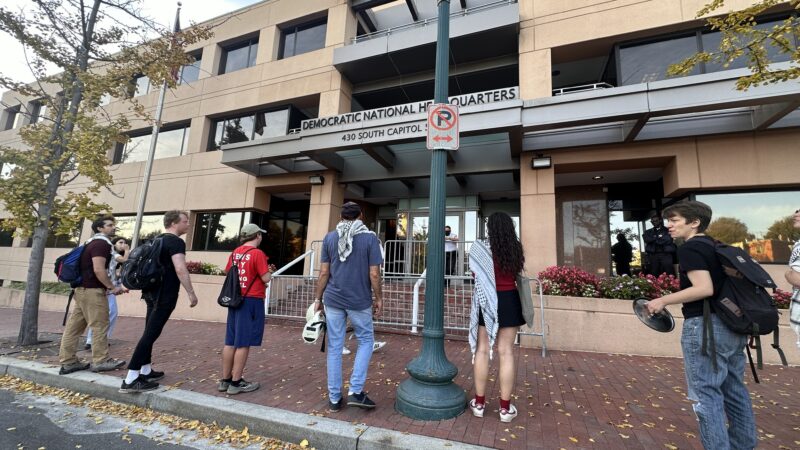














The Senate minority leader’s comments come as recent polling and Abdul El-Sayed’s progressive policies and have raised concerns for Democrats that he could lose the pivotal swing state
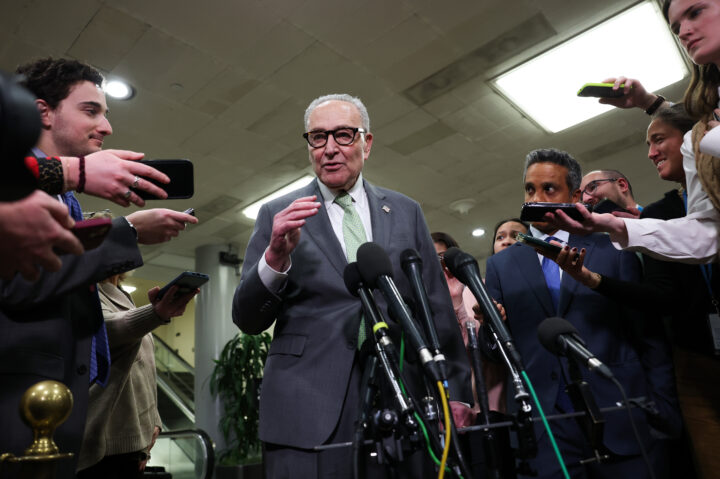
Anna Moneymaker/Getty Images
Senate Minority Leader Charles Schumer (D-NY) speaks to the media after briefings on Iran at the U.S. Capitol on March 3, 2026 in Washington, DC.


 Add JewishInsider on Google
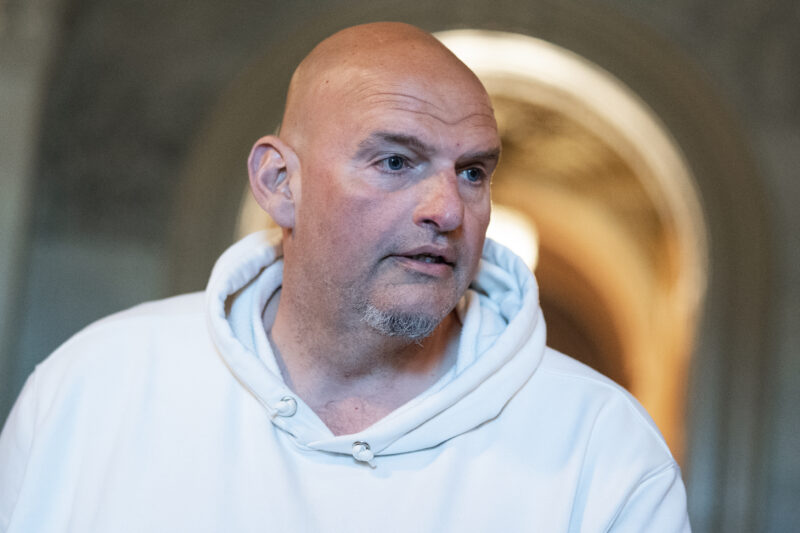
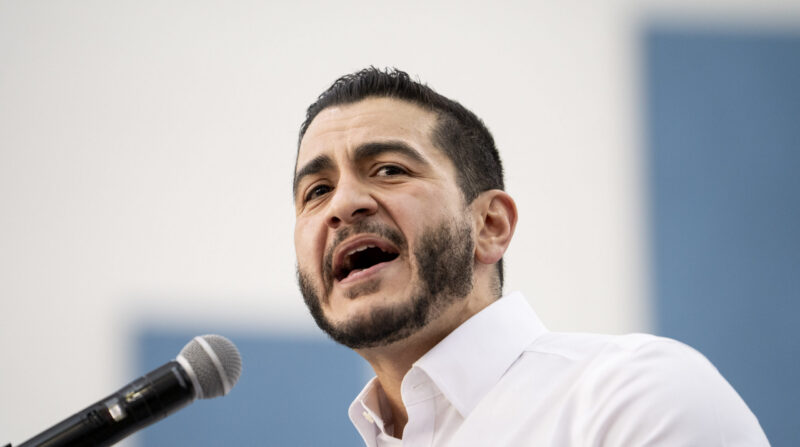
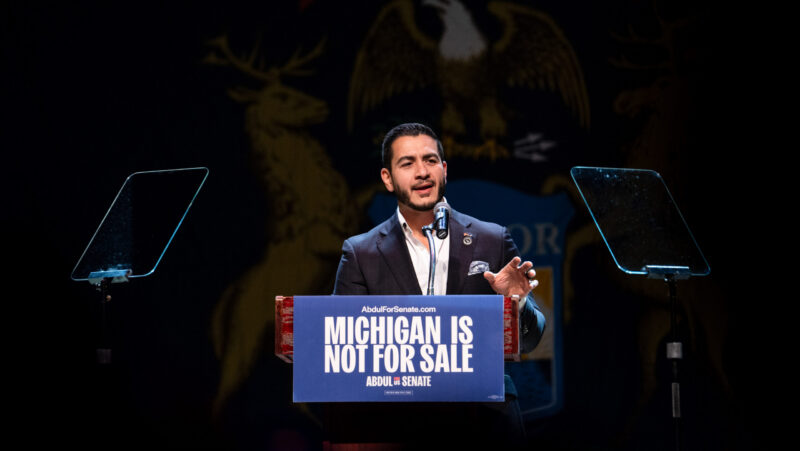
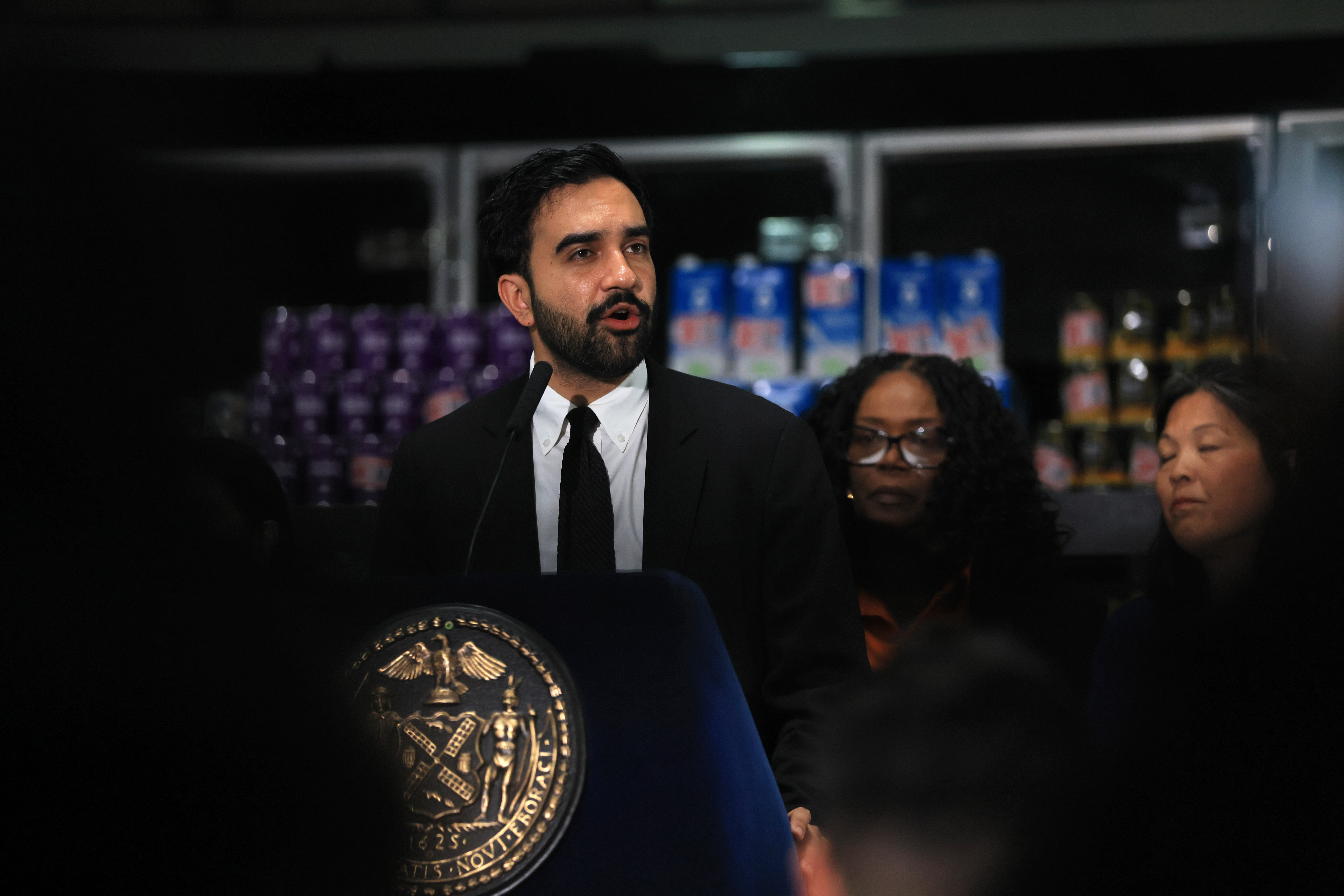
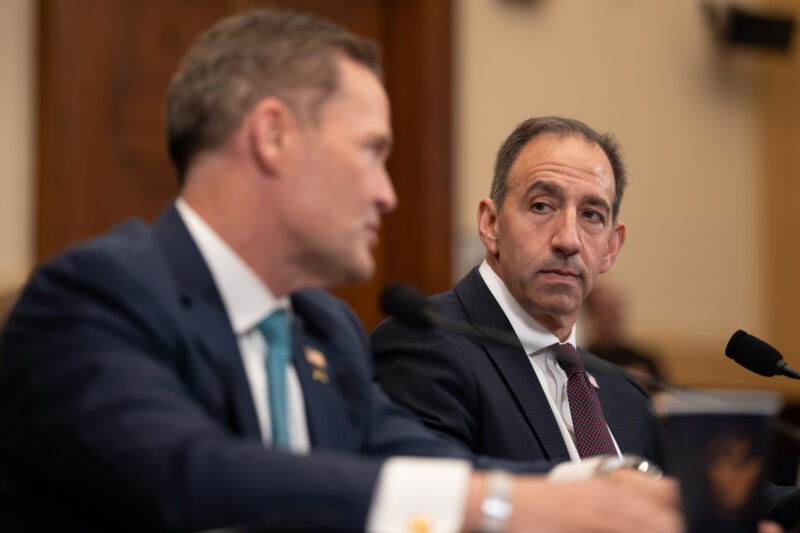
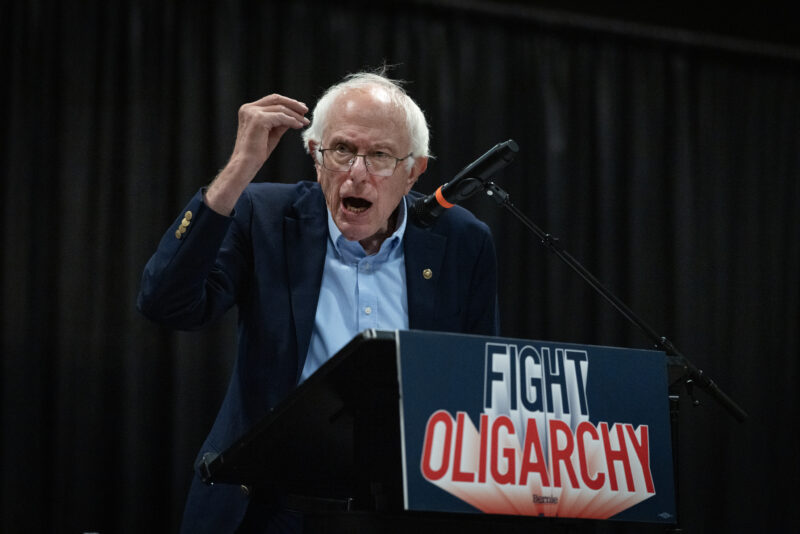
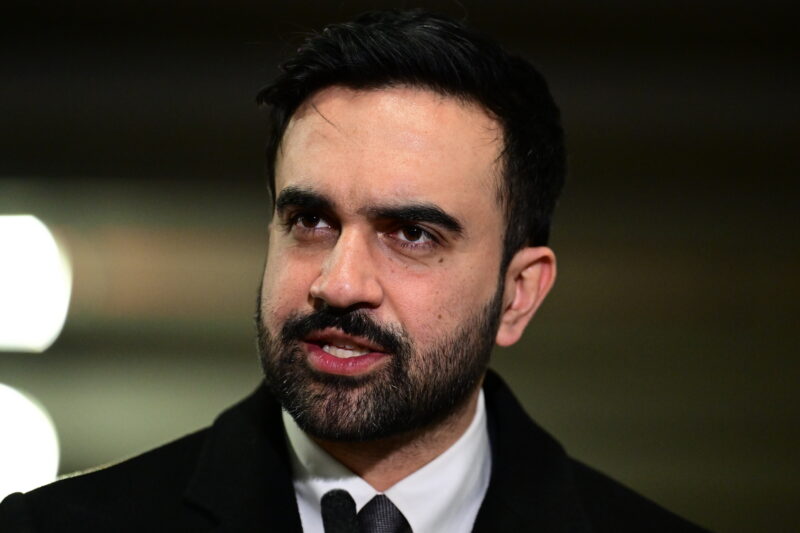
Senate Minority Leader Chuck Schumer (D-NY) suggested in an interview with The Washington Post published on Tuesday that he believes Democrats can still win the Senate even if far-left Michigan Senate nominee Abdul El-Sayed, whom Schumer has endorsed, does not win in November.
El-Sayed’s progressive positioning and recent polling showing him narrowly trailing the Republican nominee, former Rep. Mike Rogers (R-MI), have raised concerns among Democrats that El-Sayed could lose what many in the party consider to be a must-win state. Some Democratic donors, particularly in the Jewish community, are also now backing Rogers after El-Sayed won the primary.
“A path to winning back the Senate clearly goes through Michigan, but we have a whole bunch of different paths,” Schumer told the Post.
Schumer acknowledged that his views on Israel differed from El-Sayed’s, but didn’t directly say whether he believed the Michigan nominee had said or done anything antisemitic.
“I think he makes an effort to fight antisemitism even though his views on Israel are much different than mine,” Schumer told the outlet.
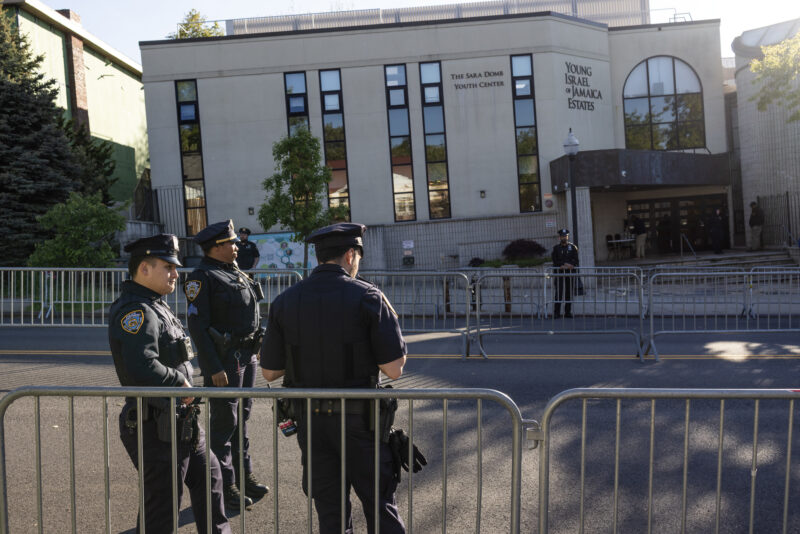
El-Sayed has come under fire for his comments that appeared to justify an attempted attack on a synagogue and Jewish preschool in the Detroit suburbs earlier this year, his repeated refusal to acknowledge Israel’s right to exist and his alliance with Hasan Piker, the far-left antisemitic and anti-Israel streamer.
The Senate minority leader was pressed by MS NOW’s Joe Scarborough on his view of the U.S. and Israel’s war achievements

Samuel Corum/Getty Images
Senate Minority Leader Chuck Schumer (D-NY) makes a statement alongside House Minority Leader Hakeem Jeffries (D-NY) outside of the West Wing at the White House on January 17, 2024 in Washington, DC.
Senate Minority Leader Chuck Schumer (D-NY) did not directly address whether the degradation of Iran’s military infrastructure should be viewed as a positive outcome, instead emphasizing the war’s potential economic and geopolitical consequences.
Over the course of the past week, U.S. officials have indicated that Iran’s military capabilities have been severely weakened. President Donald Trump has described Iran’s military as “decimated,” and Director of National Intelligence Tulsi Gabbard testified at a congressional hearing this past week that the Iranian regime was “largely degraded.”
When asked by MS NOW’s Joe Scarborough on Monday’s edition of “Morning Joe” whether that degradation was a “good thing,” Schumer called the question “premature.”
“You can’t [answer that question] because it’s a premature question,” Schumer said. “What is going to happen in the next several months? Is it worth it? Will the world economy collapse?”
“I can ask that question,” Scarborough replied. “I’m simply asking on the military side: Is it good — regardless of whether we agree with going in or not — is it good that Iran’s military infrastructure has been seriously degraded?”
Schumer again asserted that it could not be answered without understanding the full implications of the current conflict.
“In all due respect, if you ask the American people, if you have the choice of degrading the military structure in Iran, but having gasoline be $6 a gallon and our economy falling into a deep recession where millions lose their job, what do you think?”
Schumer ultimately signaled agreement with that underlying point, while maintaining his broader concerns.
“The fact that the leader [Ayatollah Ali] Khamenei is gone, no one regrets that. The fact that Iran has less ability to create military trouble [is a good thing], no one disputes that. But you have to look at the consequences.”
Schumer argued that Congress would have had a clearer understanding of the potential economic and geopolitical consequences had lawmakers passed one of several war powers resolutions — an effort that has been voted down by House and Senate Republicans with several Democrats joining them on several instances within the past month.
“If Republicans had voted with us on the War Powers Act, all these questions would have been asked ahead of time instead of Donald Trump’s willy-nilly — one day yes, one day no,” Schumer said.
Rabbi Yehoram Ulman, the director of Bondi Beach’s Chabad, and Ahmed al Ahmed, the civilian who disarmed one of the gunmen, are visiting the U.S. this week
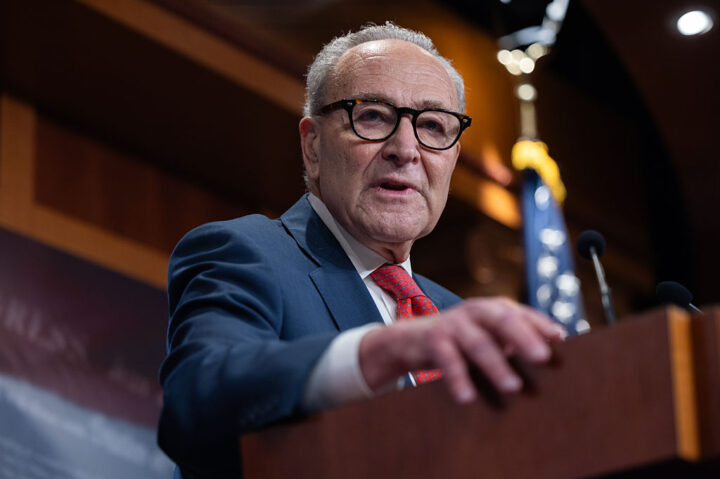
Nathan Posner/Anadolu via Getty Images
Senate Minority Leader Chuck Schumer (D-NY) speaks at a press conference following recent elections as the government shutdown continues in Washington, DC on November 5, 2025.
Senate Minority Leader Chuck Schumer (D-NY) will meet at the U.S. Capitol on Thursday morning with two survivors of the deadly terrorist attack during a Hanukkah celebration at Bondi Beach in Sydney, Australia, Jewish Insider has learned.
The two survivors are Rabbi Yehoram Ulman, director of Chabad-Lubavitch of Bondi, and Ahmed al Ahmed, the civilian who tackled and disarmed one of the gunmen during the attack. Ulman hosted the Hanukkah event where 15 people were killed, including his son-in-law, Rabbi Eli Schlanger.
Australian Ambassador to the U.S. Kevin Rudd, the country’s former two-term prime minister, will also be in attendance.
A source familiar with the matter told JI that the Senate minority leader will “listen to their stories and discuss the work that he and the Australian government are doing respectively to combat antisemitism.”
Ulman and al Ahmed are currently in the U.S. together for a joint trip. Ulman brought al Ahmed to Queens, N.Y., on Tuesday to pray together and pay respects at the gravesite of the Lubavitcher rebbe. Ulman said the trip was an opportunity for the American Jewish community to express their gratitude to al Ahmed, a Syrian-born Muslim, for his heroic actions last month.
“Ahmed did what he did that day because he believed that God placed him at the scene for a reason, and that’s what gave him the strength to save lives,” Ulman said from the gravesite. “This is something people from all walks of life can and must learn from.”
Al Ahmed suffered two gunshot wounds while taking down one of the two gunmen during the Hanukkah massacre, which also left more than 40 people injured, later undergoing a successful surgery.
Senate minority leader calls on his GOP colleagues to co-sponsor the resolution

Drew Angerer/Getty Images
Senate Minority Leader Chuck Schumer (D-NY) speaks during a news conference at the U.S. Capitol on October 31, 2023 in Washington, DC.
Senate Minority Leader Chuck Schumer (D-NY) announced on Thursday that he will introduce a resolution condemning neo-Nazi influencer Nick Fuentes and his white supremacist views after President Donald Trump declined to condemn Fuentes or Tucker Carlson’s platforming of him.
Schumer announced the move while criticizing Trump’s comments from over the weekend, in which the president noted that Carlson has “said good things about me over the years” and defended his decision to host Fuentes on his show.
After calling Trump’s remarks “disgusting, Schumer warned that antisemitism in the U.S. has “reached a dangerous tipping point. Jewish Americans are facing threats, harassment and violence at levels we have not seen in generations.”
“For Donald Trump to continue to excuse and protect the spread of Nick Fuentes’ ideology, confirms what many of us have long said: white supremacy and antisemitism are taking deep roots, unfortunately, within the Republican Party,” Schumer said from the Senate floor on Thursday.
“Just as we saw from the leaked texts from Young Republicans, just as we saw from text messages of administration officials, the Nick Fuentes saga on the right reveals that antisemitism and white supremacy have been growing with disturbing currency within the right wing,” he continued. “I know this is not true of everyone on the Republican side, especially not for many Republicans in this chamber.”
Schumer said that his resolution will be focused on “rejecting Nick Fuentes and his white supremacist views, condemning Carlson’s platforming of hate, and condemning antisemitism and white supremacy wherever and whenever it occurs.” He added that he plans to lobby senators on both sides of the aisle to consider supporting the resolution.
“I hope my Republican colleagues will join me in this effort and co-sponsor this resolution. Calling out antisemitism should not be a partisan issue,” Schumer said. “When we refuse to condemn antisemitism, we stay silent and fail to reject antisemitic rhetoric, when we normalize hateful figures spewing disgusting antisemitism, that is when antisemitism spreads throughout society like a poisonous wildfire.”
“Americans don’t want to see that happen, so my resolution will give every single senator a chance to make an important stand against hatred,” he continued. “The country must see us unite and fight this awful form of bigotry.”
The self-dubbed ‘guardian of the people of Israel’ is now the guardian of a caucus that has drifted increasingly leftward, especially when it comes to its support for Israel

Aaron Schwartz/NurPhoto via Getty Images
Senate Democratic Leader Chuck Schumer speaks to the media during a weekly press conference in the Capitol Building in Washington DC, on Tuesday, March 12, 2024.
Senate Minority Leader Chuck Schumer (D-NY) finds himself in an awkward bind: The self-dubbed “Shomer Yisrael” — “guardian of the people of Israel” — is now the “Shomer of the Democratic Party” — guardian of a caucus that has drifted increasingly leftward, especially when it comes to its support for Israel and aggressive action to deter Iran’s nuclear ambitions.
When he had the opportunity earlier this month to take a clean shot at President Donald Trump for not being tough enough against Iran — over reports the administration was working on a deal allowing Iran to maintain enrichment — he played to his history of hawkishness on Iran, taunting Trump for “folding” and “let[ting] Iran get away with everything,” facing backlash from some on the left in the process.
But when Trump made the decision to bomb Iran’s nuclear sites last weekend, Schumer sided against a handful of pro-Israel stalwarts in his party and leading Jewish communal organizations, who praised the move as advancing peace in the region. Instead, he joined the majority of congressional Democrats, who blasted the administration for not seeking congressional authorization.
“No president should be allowed to unilaterally march this nation into something as consequential as war with erratic threats and no strategy,” Schumer said Saturday. “Confronting Iran’s ruthless campaign of terror, nuclear ambitions, and regional aggression demands strength, resolve, and strategic clarity. The danger of wider, longer, and more devastating war has now dramatically increased.”
Schumer’s turnaround is raising eyebrows among Jewish and pro-Israel leaders, and his focus on congressional procedure is frustrating some in the pro-Israel community who wanted to see him support Trump’s efforts to eliminate Iran’s nuclear program.
“If your argument is leading with a technicality over war powers, you know you’re losing the broader debate,” a former Biden administration official told JI. “This wasn’t an open-ended military campaign — these were limited U.S. airstrikes. Every president in modern times has done it this way for limited airstrikes, and this isn’t any different.”
“I would like it to be that whoever does the right thing, no matter who they are or how much you otherwise dislike them, that at least certain truths can be recognized by everyone,” Democratic Georgia state Rep. Esther Panitch said. “One of those being that Iran’s nuclear program needed to stop. … We all need to take a step back and acknowledge that Trump did a good thing, even if we can’t stand him otherwise.”
Former Israeli Ambassador to the United Nations Gilad Erdan wrote on X, “When President Trump strikes Iran’s nuclear sites to stop a regime openly calling for Israel’s destruction (and responsible for the [murder] of many many Americans), Schumer’s only reaction is… complaining about congressional procedure? Seriously, Chuck? Don’t you have anything positive to say about removing an existential threat from Israel and the free world?”
Democratic Georgia state Rep. Esther Panitch, who has been outspoken in criticizing members of her own party over lukewarm support for, or criticism of, Israel, said that Schumer’s position would appear to be one of “blind partisanship,” if he hadn’t expressed the same criticisms of Democratic presidents’ own unilateral military actions.
“I would like it to be that whoever does the right thing, no matter who they are or how much you otherwise dislike them, that at least certain truths can be recognized by everyone,” Panitch said. “One of those being that Iran’s nuclear program needed to stop. … We all need to take a step back and acknowledge that Trump did a good thing, even if we can’t stand him otherwise.”
Panitch was the only Democrat in the Georgia House to join a letter with Republicans backing the Iran strikes.
Schumer’s spokesperson, Angelo Roefaro, told JI, “Senator Schumer has long said Iran cannot obtain a nuclear weapon and he voted against his own party when he didn’t think President Obama’s Iran deal went far enough.”
“He’s also long said that the executive branch cannot ignore the role of Congress when it comes to taking military action(s), yet that is exactly what is happening right now, and that is unacceptable when the stakes are so high and when key questions, including how the administration will prevent Iran in the long-term from obtaining a nuclear weapon, remain unanswered,” Roefaro continued.
“He has got tremendous pressures facing him,” Hank Sheinkopf, a New York-based Democratic consultant told JI. “There are people in New York who would want him to be much more vociferous in support of the attack on Iran … but his party isn’t in that place.”
Publicly, Schumer has also been critical of the administration for failing to brief him and other lawmakers to show the necessity of the strikes, or that they accomplished the administration’s intended goal. He’s suggested that’s a sign that the strikes were not successful, as one leaked intelligence report has indicated.
“This last-minute postponement is outrageous, evasive, and derelict. Senators deserve full transparency, and the administration has a legal obligation to inform Congress precisely about what is happening. What is the administration so afraid of?” Schumer said in a new statement Tuesday. “Such obstruction undermines the very principles of accountability and oversight that safeguard our democracy.”
One analyst argued that Schumer’s position as Democratic leader places him in a politically difficult bind.
“He has got tremendous pressures facing him,” Hank Sheinkopf, a New York-based Democratic consultant told JI. “There are people in New York who would want him to be much more vociferous in support of the attack on Iran … but his party isn’t in that place.”
He argued that Schumer, as the leader of a minority party, needs to focus on attracting younger voters back to the party, and in protecting the coalition he does have — both groups that largely oppose the strikes.
Sheinkopf also said Schumer’s stance is “absolutely a product of internal caucus politics. … The minority party’s job is to be on the other side of the president and the leadership, and that’s what they’re doing. So it should not be surprising, and Sen. Schumer’s positioning should not be surprising at all.”
Schumer’s comments over the weekend echo the stance he took in 2020 on potential military action against Iran, when he backed similar legislation following the strike that killed Quds Force head Gen. Qassem Soleimani. He also backed a bill that would withhold funding for war with Iran.
“Congress, unequivocally, must hold the president accountable and assert our authority over matters of war and peace,” Schumer said at the time, remarks to which Schumer’s office referred JI. He also criticized the administration for failing to provide “a clear picture … about our strategy in the region.”
Schumer has said he regretted his vote to authorize the Iraq War and has pushed, including during the Biden administration, for repeal of the 2001 and 2002 Authorizations for Use of Military Force undergirding the war on terrorism, arguing that Congress needed to reassert war powers and prevent another inadvertent war in the Middle East.
But he didn’t publicly offer the same direct and pointed opposition to strikes undertaken by previous Democratic administrations without congressional authorization in places such as Libya and Yemen.
Schumer’s office also referred JI to his past opposition to Iran’s nuclear program and opposition to the Joint Comprehensive Plan of Action, as well as his support for the Iran Nuclear Agreement Review Act, which requires the administration to submit for congressional review any nuclear agreement with Iran.
The top House Democrat warned that the attacks could ‘risk American entanglement in a potentially disastrous war in the Middle East’

(Photo by Drew Angerer/Getty Images)
House Minority Leader Hakeem Jeffries (D-NY) speaks during the March for Israel on the National Mall November 14, 2023 in Washington, DC.
House Minority Leader Hakeem Jeffries (D-NY) and Senate Minority Leader Chuck Schumer (D-NY) criticized President Donald Trump for carrying out strikes on Iranian nuclear facilities without congressional authorization, a voice of opposition that was echoed by many leading Democrats on Capitol Hill.
Jeffries said in a statement less than two hours after Trump announced the strikes that Trump “misled the country about his intentions, failed to seek congressional authorization for the use of military force and risks American entanglement in a potentially disastrous war in the Middle East.”
He said that the Trump administration must explain to the country why it carried out the strikes and brief Congress.
“Donald Trump shoulders complete and total responsibility for any adverse consequences that flow from his unilateral military action,” Jeffries continued.
Schumer, in a similarly critical statement, said that “no president should be allowed to unilaterally march this nation into something as consequential as war with erratic threats and no strategy” and said he would be urging all lawmakers to support war powers legislation to block further military action against Iran, and called for an immediate vote.
He said Trump must explain his actions to the American people.
“Confronting Iran’s ruthless campaign of terror, nuclear ambitions, and regional aggression demands strength, resolve, and strategic clarity,” Schumer said. “The danger of wider, longer, and more devastating war has now dramatically increased.”
Senior congressional Democrats were largely left out of the loop about the strikes before they occurred, while Republican leaders have said they were briefed.
Administration officials traditionally brief “Gang of Eight” officials — the top Republican and Democrat in each chamber and the chairs and ranking members of the Intelligence Committees — before carrying out major sensitive operations.
Sources familiar with the situation told Jewish Insider that Jeffries received a notification after the operation was likely already underway, but had not been fully briefed, and Sen. Mark Warner (D-VA), the ranking member of the Senate Intelligence Committee, was not briefed prior to the strikes.
Sources familiar with the situation told JI that House Speaker Mike Johnson (R-LA), Senate Majority Leader John Thune (R-SD) and Senate Intelligence Committee Chair Tom Cotton (R-AR) were briefed before the strikes.
Johnson pushed back on claims that the administration had illegally sidestepped Congress, saying, “Leaders in Congress were aware of the urgency of this situation and the Commander-in-Chief evaluated that the imminent danger outweighed the time it would take for Congress to act.”
“The President fully respects the Article I power of Congress, and tonight’s necessary, limited, and targeted strike follows the history and tradition of similar military actions under presidents of both parties,” Johnson continued.
Rep. Mike Lawler (R-NY) called Jeffries’ statement “an embarrassment,” saying Trump had prevented Iran from obtaining a nuclear weapon.
Many Democrats in both chambers have gone further than Jeffries in their responses, explicitly describing the strikes as unconstitutional.
“The power to declare war resides solely with Congress. Donald Trump’s unilateral decision to attack Iran is unauthorized and unconstitutional,” Rep. Katherine Clark (D-MA), the House minority whip, said. “In doing so, the President has exposed our military and diplomatic personnel in the region to the risk of further escalation. The American people, our men and women in uniform, and their families deserve answers.”
Some Democrats have also raised the prospect of impeaching Trump over the action.
“The President’s disastrous decision to bomb Iran without authorization is a grave violation of the Constitution and Congressional War Powers,” Rep. Alexandria Ocasio-Cortez (D-NY) said. “He has impulsively risked launching a war that may ensnare us for generations. It is absolutely and clearly grounds for impeachment.”
Several pro-Israel Democrats, like Sen. John Fetterman (D-PA) and Rep. Ritchie Torres (D-NY) have fully backed the strike.
“We don’t yet know what this means for the regime’s nuclear work or ambitions, but it absolutely means that the regime has been further weakened — which is good for those who want peace,” Rep. Greg Landsman (D-OH) said.
“It’s time for the Iranian regime to agree to the removal of all enriched uranium, comprehensive, around-the-clock inspections, and the full dismantling of their terror armies from Hamas to Hezbollah and the Houthis. That will end this conflict, and put the entire region on the path to a real and sustainable peace.”
“Iran is a terrorist nation, and we must do everything we can to stop it from acquiring a nuclear weapon,” Rep. Tom Suozzi (D-NY) said. “Debates will now ensue about presidential authority and the President working with Congress. The President should work with Congress, especially those of us who recognize how important it is to finally stop Iran.
Rep. Jake Auchincloss (D-MA) said that Iran should immediately end its nuclear program and stop funding terrorism, but also called for Congress to repeal the 2001 and 2002 authorizations for use of military force “so that the American public can get an open & thorough debate on war-making.”
Jewish Insider Congressional correspondent Emily Jacobs contributed to this report
‘I have long said that Israel has a right to defend itself and that Iran cannot have a nuclear weapon.’ Schumer added

Senate Majority Leader Chuck Schumer speaks during 'March For Israel' at the National Mall on November 14, 2023 in Washington, DC. (Photo credit: Noam Galai/Getty Images)
Senate Minority Leader Chuck Schumer (D-NY) stood strongly behind Israel in his first public comments on its strikes on Iran and its nuclear program on Friday afternoon — a response that was notably more forceful in its support for Israel than those of many prominent members of the Senate Democratic Caucus.
“The United States’ commitment to Israel’s security and defense must be ironclad as they prepare for Iran’s response,” Schumer said in a statement first shared with Jewish Insider. “The Iranian regime’s stated policy has long been to destroy Israel and Jewish communities around the world. I have long said that Israel has a right to defend itself and that Iran cannot have a nuclear weapon. Ensuring they never obtain one must remain a top national security priority.”
Schumer, who has recently been critical of President Donald Trump’s negotiations with Iran, said “the preferred path to preventing a nuclear-armed Iran and for supporting security and stability in the region has always been a strong, unrelenting diplomatic effort backed by meaningful leverage, and every effort must be made to move toward the path of a diplomatic solution.”
Schumer noted that Iran was just censured by the International Atomic Energy Agency “for systematically deceiving the world about its nuclear program,” that it is “the world’s leading state sponsor of terrorism” and it “has sought to expand its influence in the Middle East, exporting terror and violence across the region.”
He said he is “praying for the safety of American citizens and servicemembers in the region and for enduring stability and security in the region.”
Senate Minority Leader: ‘We're witnessing — unfortunately, in real time — the resurgence of collective blame against the Jewish people’
Aaron Schwartz/NurPhoto via Getty Images
Senate Democratic Leader Chuck Schumer speaks to the media during a weekly press conference in the Capitol Building in Washington DC, on Tuesday, March 12, 2024.
Senate Minority Leader Chuck Schumer (D-NY) will announce on Monday that he is launching “an all-out push to shore up” $500 million in the fiscal year 2026 budget for the Nonprofit Security Grant Program in response to a spate of recent antisemitic terrorist attacks, he revealed to Jewish Insider in an interview on Thursday.
He said that key Senate Republicans have appeared amenable to that request and called the administration’s proposal for flat funding for the program a nonstarter.
“The attack in Colorado, the shooting in Washington, the arson in Pennsylvania [of Gov. Josh Shapiro’s home] have one thing in common: they have cited anti-Israel sentiment as a justification for their violence. In other words, they’ve used the actions of the Israeli government they don’t like to justify violence against Jewish Americans here at home,” Schumer said.
“We’re witnessing — unfortunately, in real time — the resurgence of collective blame against the Jewish people,” he continued. “Collective blame is traditionally one of the most nasty, dangerous forms of antisemitism, and so if we don’t confront it clearly, unequivocally together, we risk opening the door to even darker days.”
Schumer emphasized that criticism and peaceful protest of the Israeli government is not antisemitic, “but there’s a profound and dangerous difference between criticizing a government and condemning an entire people,” he continued.
He told JI that he had spoken to key Republicans about the funding level, and they seemed amenable. He argued that enhanced security provided through the grants could “stop a lot of these attacks.”
“We’ve had discussions with the members of the Appropriations Committee,” Schumer said. “They seemed open to it. The NSGP has always had bipartisan support, and our leading Republican has been Sen. [James] Lankford of Oklahoma.”
Lankford was the lead Republican on a recent bipartisan Senate letter requesting $500 million in funding. Thirty-two other senators, including one other Republican, also signed that request.
A Schumer spokesperson told JI that the Democratic leader believes $500 million should be attainable under the current administration. Schumer had initially pushed for an additional $1 billion for the program in the immediate aftermath of the Oct. 7, 2023, Hamas attacks on Israel.
The administration’s flat funding request for $274.5 million, which Schumer called “unacceptable” in the interview, would amount to an effective funding cut, given that funding was supplemented in 2024 by $180 million provided through the national security supplemental bill, the senator argued. An additional $220 million in supplemental funds remain in limbo — institutions applied last year, but have not yet been notified if their applications were accepted, — on top of the $274.5 million that will be available through regular appropriations this year.
The top Senate Democrat said threats against synagogues and Jewish day schools have surged further following the attacks in Washington and Boulder, Colo. He said he had been in contact with the FBI about the potential for “copycat” attacks.
“This is not new. In Boulder and in so many other places there have been threats against synagogues, against Jews, etc., and if it is not confronted strongly and directly, it then leads to even death, to people being killed,” Schumer said.
He said the FBI was “very open” to his warning and had clearly received the message.
In 2024, when the program had a total of $454.5 million available, just 43% of funding requests were fulfilled. Supporters of the program in the House and Senate have urged Appropriations Committee leaders and the administration to allocate $500 million for the program, while Jewish groups asked for $1 billion in the wake of the D.C. murders.
In addition to the $500 million for FY 2026, Schumer will push for the 2026 funding bill to include funds for the Federal Emergency Management Agency, which manages NSGP, to provide technical assistance to smaller institutions to apply for grants, a process some lack the expertise or staff to navigate.
“They don’t have the consultants or the wherewithal on their own,” Schumer said.
Schumer told JI he also wants the administration to promptly open applications for the 2025 cycle, which usually open in May. “We passed this last year and the deadline was May 14, but now the money has to start flowing,” he said.
And he called on Americans broadly to “confront and disavow antisemitism … across the nation.”
All of the Senate minority leader’s events this week, to promote his new book ‘Antisemitism in America,’ were postponed because of security concerns
Drew Angerer/Getty Images
Senate Minority Leader Chuck Schumer (D-NY) speaks during a news conference at the U.S. Capitol on October 31, 2023 in Washington, DC.
A tour around Senate Minority Leader Chuck Schumer’s (D-NY) upcoming book, Antisemitism in America, has been postponed as the New York Democrat faces blowback over his recent vote to avert a government shutdown.
An event for Schumer moderated by Rep. Ritchie Torres (D-NY), slated for Tuesday night at New York’s Temple Emanu-El Streicker Center, was removed from the center’s events calendar over the weekend. A staffer for the Manhattan venue confirmed the event’s postponement to Jewish Insider on Monday morning.
A spokesperson for Schumer told Punchbowl News later Monday morning that the tour was postponed, citing security concerns.
The first event, originally scheduled for Monday night at the Enoch Pratt Free Library in Baltimore, was set to face protests organized by the far-left group Jewish Voice for Peace. An event at Washington’s Sixth and I synagogue on Wednesday was canceled Monday morning.
The postponement of the gatherings comes days after Schumer argued against forcing a government shutdown as a negotiating tool, saying it would further empower President Donald Trump and White House advisor Elon Musk.
Nine other Democrats joined Schumer in voting for a procedural cloture motion to break a filibuster of a GOP government funding bill and prevent a government shutdown. House Democrats vehemently opposed the move.
After the Senate vote, Torres criticized the Democrats who voted in favor of cloture, saying they “are making a strategic miscalculation that we as a party will live to regret.”
The event was removed from the Streicker Center’s website over the weekend. An archived version of the page saved on March 15 indicates that the event was posted through at least midday Saturday.
The event was also set to face protests from Jewish activists frustrated by Schumer’s failure to pass the Antisemitism Awareness Act in the last Congress.
Jewish Insider’s senior congressional correspondent Marc Rod contributed to this report.
Please log in if you already have a subscription, or subscribe to access the latest updates.
 Continue with Google
 Continue with Apple