












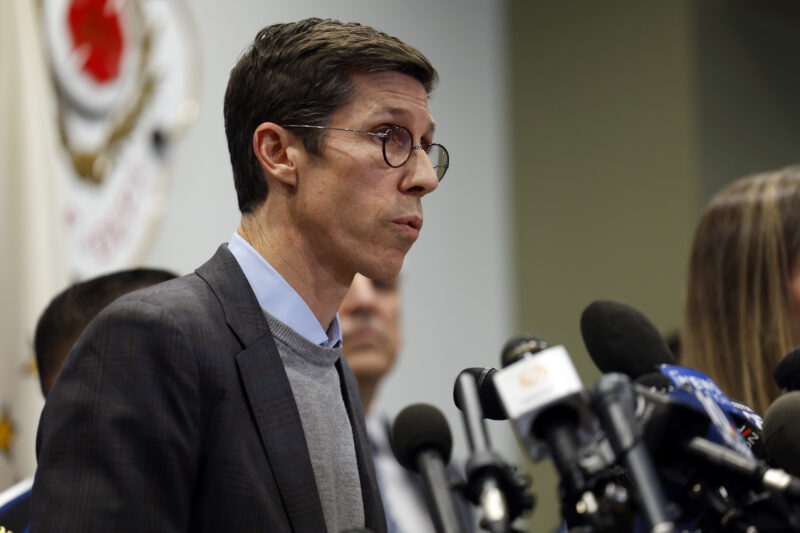
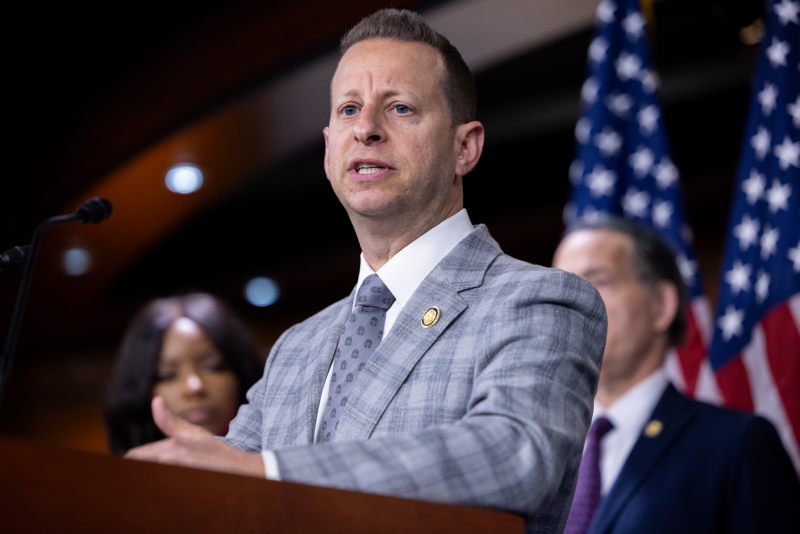
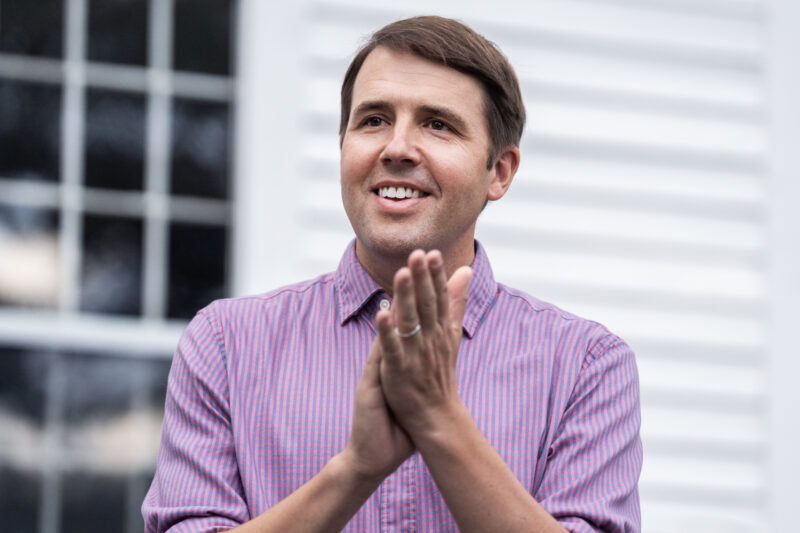
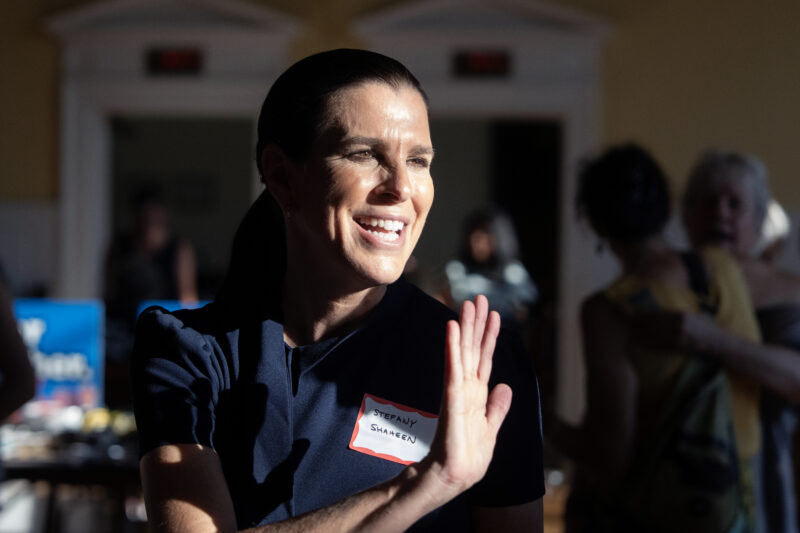















Plus, the MS NOW anchor who got her start in Israel
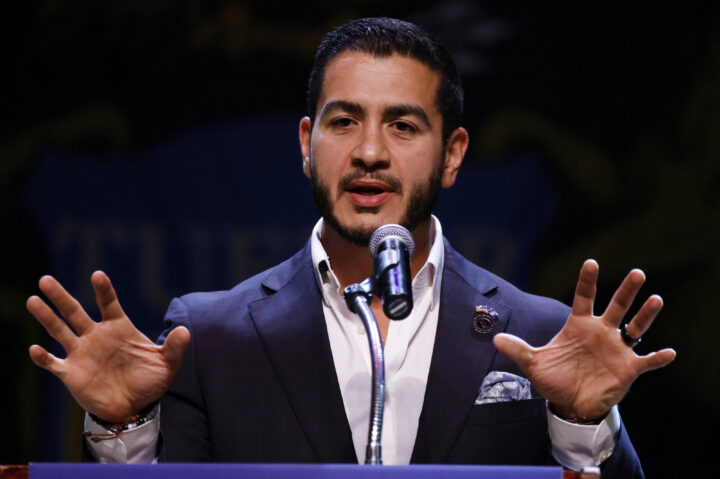
(JEFF KOWALSKY / AFP via Getty Images)
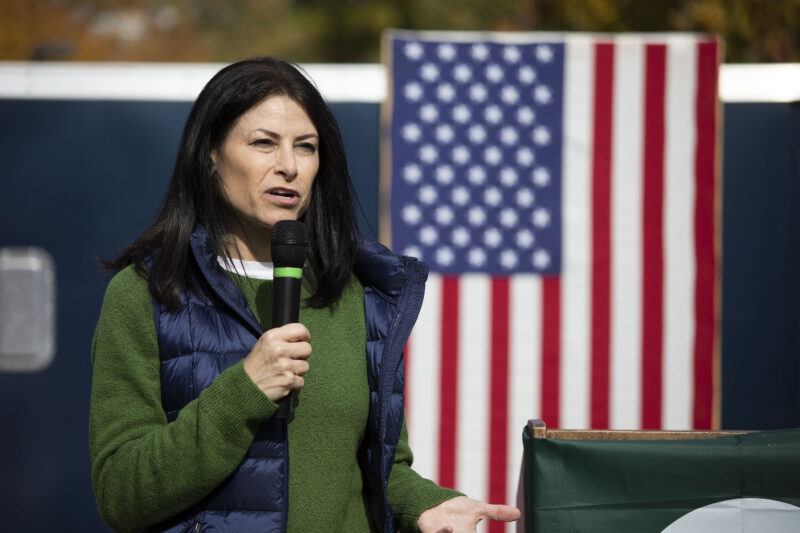
Abdul El-Sayed addresses supporters at his election night event at The Majestic Theatre in Detroit, Michigan, on August 4, 2026


 Add JewishInsider on Google
Good Thursday morning.
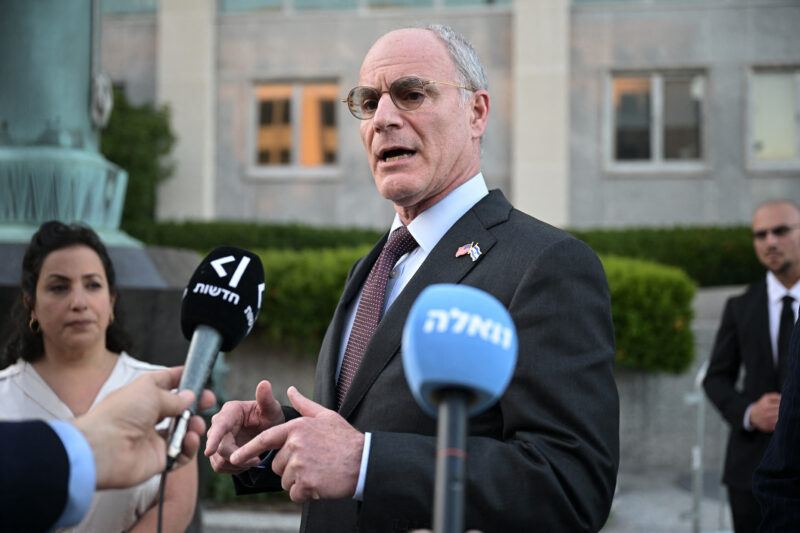
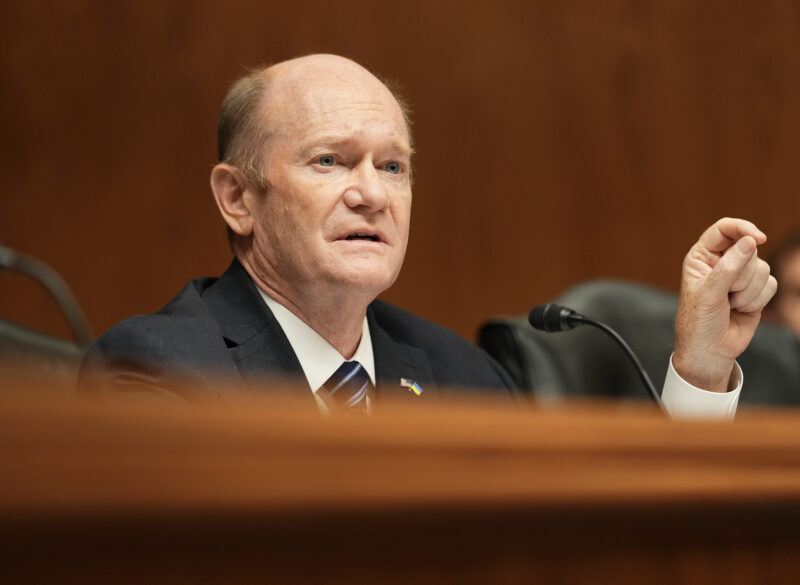
In today’s Daily Kickoff, we have the scoop on a recent meeting between Michigan Democratic Senate nominee Abdul El-Sayed and rabbis from Michigan’s Temple Israel, which earlier this year was attacked by a pro-Hezbollah terrorist, and cover yesterday’s Capitol Hill rally supporting the passage of the Right to Worship Act. We report on New York City Mayor Zohran Mamdani’s remarks that he will not participate in protests against Israeli Prime Minister Benjamin Netanyahu during next week’s U.N. General Assembly, and profile MS NOW anchor Erielle Reshef, who got her start on Israeli television. Also in today’s Daily Kickoff: Michael Dell, Lacey Schwartz Delgado and Jonathan Powell.
Today’s Daily Kickoff was curated by JI Executive Editor Melissa Weiss and Israel Editor Tamara Zieve, with an assist from Danielle Cohen-Kanik.
Today’s Agenda
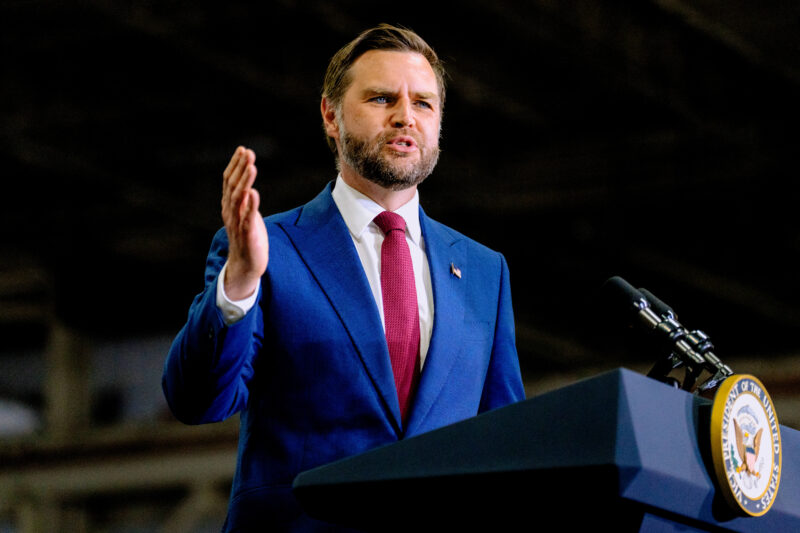
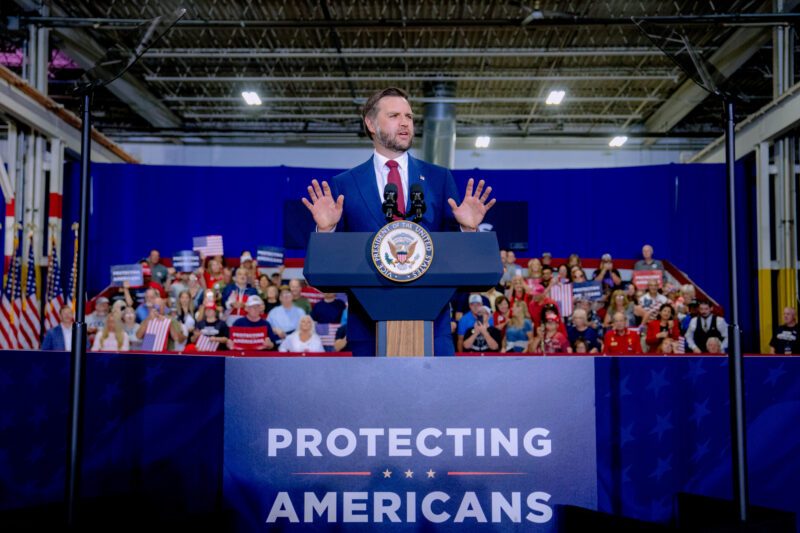
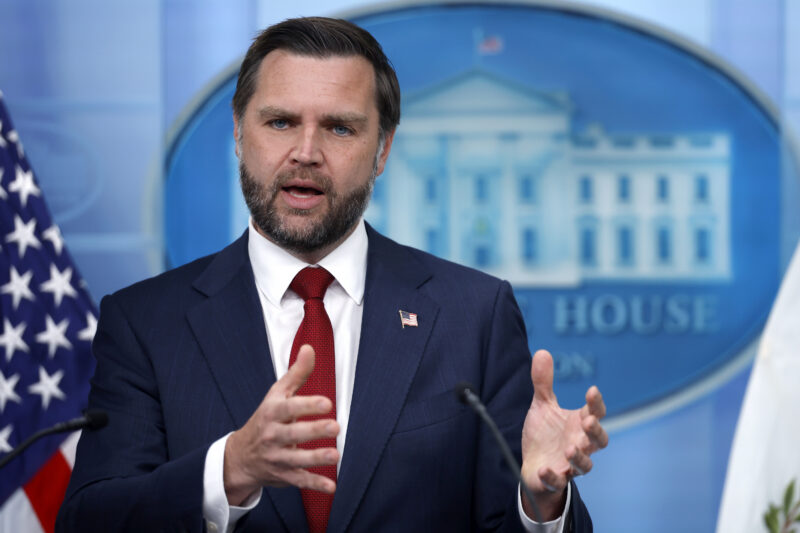
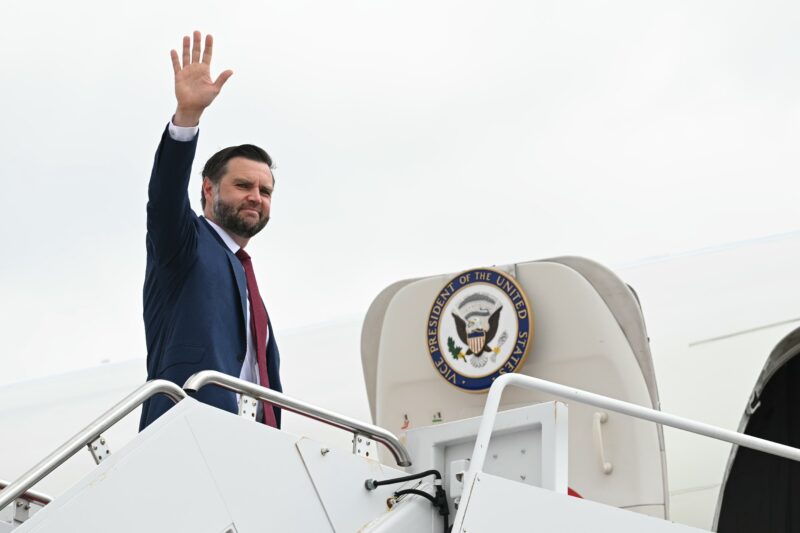
Vice President JD Vance is sitting down for an interview with Sid Rosenberg today, during which the conservative radio host said he intends to press Vance on his relationship with Tucker Carlson and his stance on the U.S.-Israel relationship.
The Hudson Institute is holding a fireside chat this morning focused on Iran-China relations and the U.S.’ Operation Economic Outcast effort to financially isolate Tehran that had initially featured Rep. Zach Nunn (R-IA). Nunn, who is locked in a tight reelection bid and earlier this week voted in favor of a war powers resolution to force an end to the Iran war, no longer appears on Hudson’s promotional page for the event, which now features Rep. Michael Baumgartner (R-WA).
Axios is releasing portions of its recent interview with far-left commentator Hasan Piker over the course of the day, ahead of the release of the full interview tomorrow. In the first released clip, Piker told the outlet’s Alex Thompson that he believed that the U.S. had committed more acts of terror than al-Qaida, saying, “Pound for pound as far as the number of deaths, yes,” adding, “We have caused tremendous terror all around the world.”
New York City Mayor Zohran Mamdani is holding a briefing today alongside NYPD Commissioner Jessica Tisch about security around the U.N. General Assembly, which begins next week. More below.
The Atlantic Festival kicks off today in New York. The three-day convening begins this morning with a sit-down with former Transportation Secretary Pete Buttigieg (who was in New York’s Hudson Valley yesterday campaigning with NY-17 Democratic candidate Cait Conley). This afternoon, former U.S. Ambassador to Japan Rahm Emanuel, who is mulling a 2028 bid, will take the stage for a fireside chat about the future of the Democratic Party.
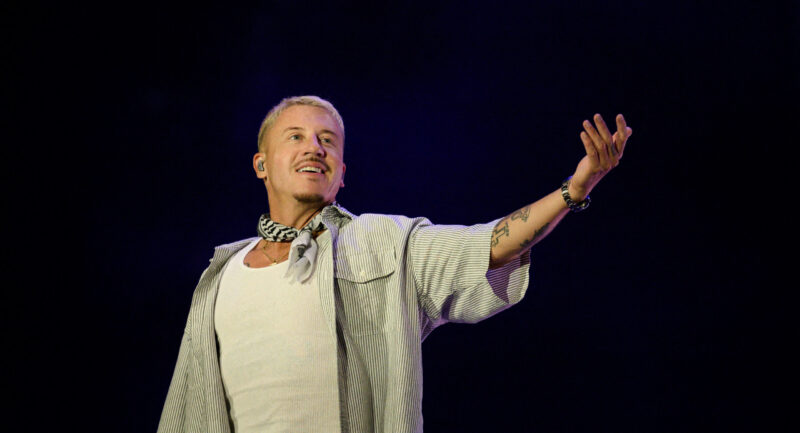
We’re continuing to follow the fallout from Macklemore’s performance earlier this month at two Ed Sheeran concerts over the rapper’s anti-Israel remarks at previous concerts and past antisemitic incidents. Robert Kraft, who along with several other stadium owners banned the rapper from performing at their venues over his past antisemitic rhetoric and imagery — prompting several other opening acts to drop out of the shows in solidarity — pledged $2 million for aid to the Middle East on Wednesday, matching a donation of the same amount by Sheeran. Read more about the donation here.
One Thing To Know
SCOOP
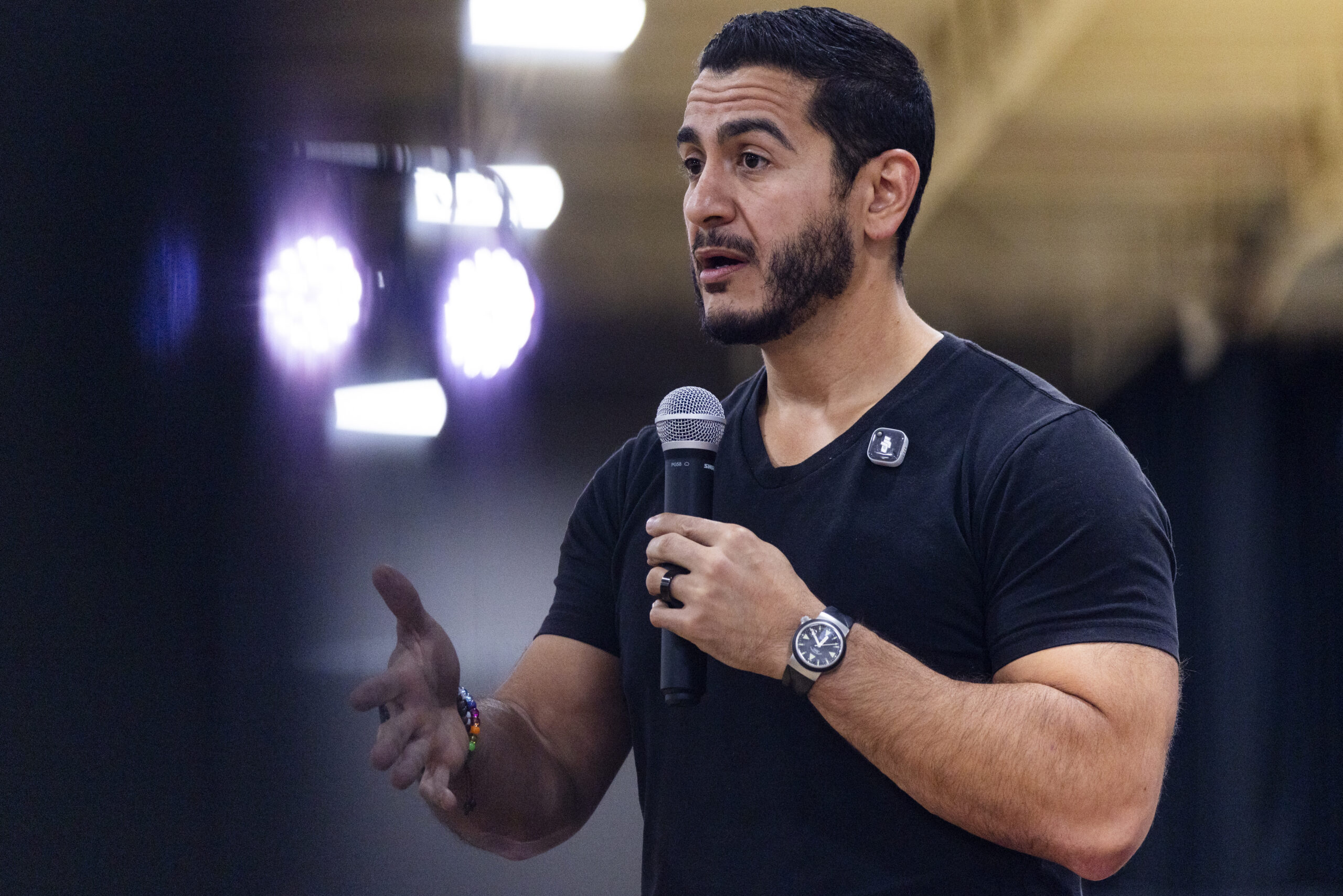
In the most significant sign of his efforts to make inroads with skeptical Jewish voters in Michigan’s Senate race, Abdul El-Sayed, the Democratic nominee, recently met with rabbis at Temple Israel for a closely guarded conversation, according to two people familiar with the meeting.
Two rabbis who were said to have participated in the conversation, details of which were unclear, declined to comment when reached on Wednesday. El-Sayed’s campaign did not respond to a request for comment.
The covert nature of the meeting, which neither party has publicized, underscores the sensitivities felt among some Jewish leaders who have remained wary of publicly associating with El-Sayed because of their continued discomfort with his positions on Israel and remarks about antisemitism.
The Big Reads
show of support
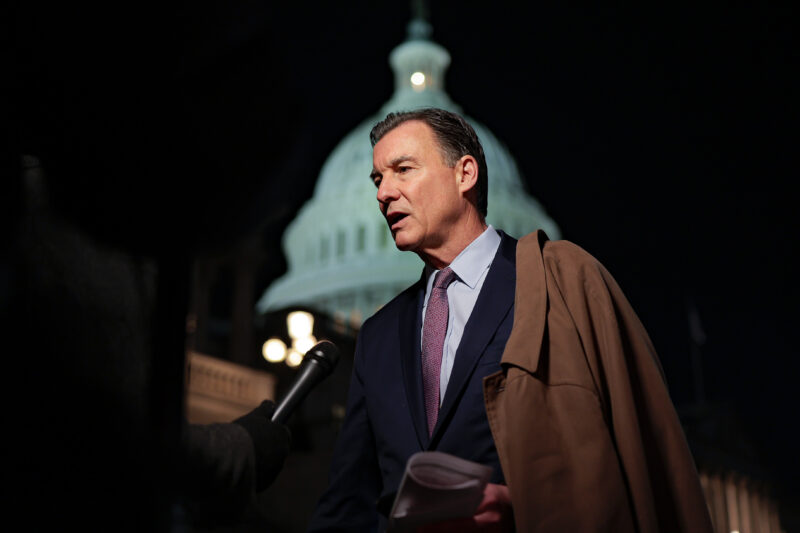
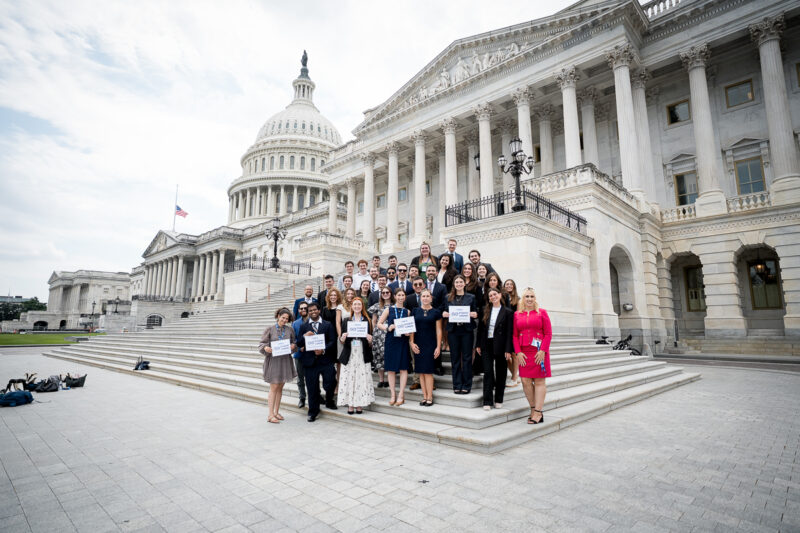
Reps. Brad Knott (R-NC) and Tom Suozzi (D-NY) rallied outside the Capitol on Wednesday alongside more than two dozen representatives of religious community organizations in support of the Right to Worship Act, their federal bill establishing buffer zones outside of religious institutions to protect them from disruptions. House Speaker Mike Johnson (R-LA), who has been involved in supporting the bill behind the scenes, also expressed his support for it in a statement to Jewish Insider’s Marc Rod. “Religious liberty is regarded as our ‘First Freedom.’ Our Founders listed it first in the Bill of Rights because they understood how essential it was to the foundation of our Republic. But that right rings hollow if worshippers must brave harassment or worry for their safety as they exercise their religion,” Johnson said.
First in JI: Over a year after the deadly firebombing attack targeting an Israeli hostage awareness march in Boulder, Colo., Rep. Joe Neguse (D-CO), who represents the city, and Rep. Don Bacon (R-NE) introduced legislation to modify Nonprofit Security Grant Program conditions to allow grantees to use funding for staffing costs.
PROTEST POLITICS
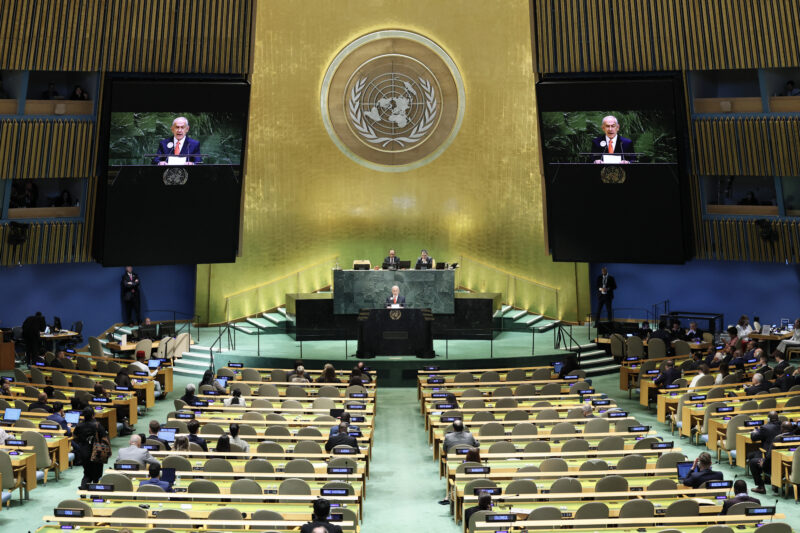
New York City Mayor Zohran Mamdani told reporters on Wednesday that he does not intend to participate in any demonstrations against Israeli Prime Minister Benjamin Netanyahu’s appearance at the U.N. General Assembly next week — and maintained he did not endorse public agitation against the Jewish state’s premier, an apparent ratcheting-down of his remarks from earlier this summer, Jewish Insider’s Will Bredderman reports. Following an unrelated press conference, Mamdani confirmed information leaked to Politico that he would not take part in anticipated protests against Netanyahu’s scheduled arrival in New York on Sept. 23 or speech at the international summit the next day. He also stressed that he did not call for his anti-Israel allies on the left to take to the streets either. “I do not have any plans to attend any protest at the U.N. General Assembly,” Mamdani said. “To New Yorkers, I have never encouraged them to protest.”
anchor point
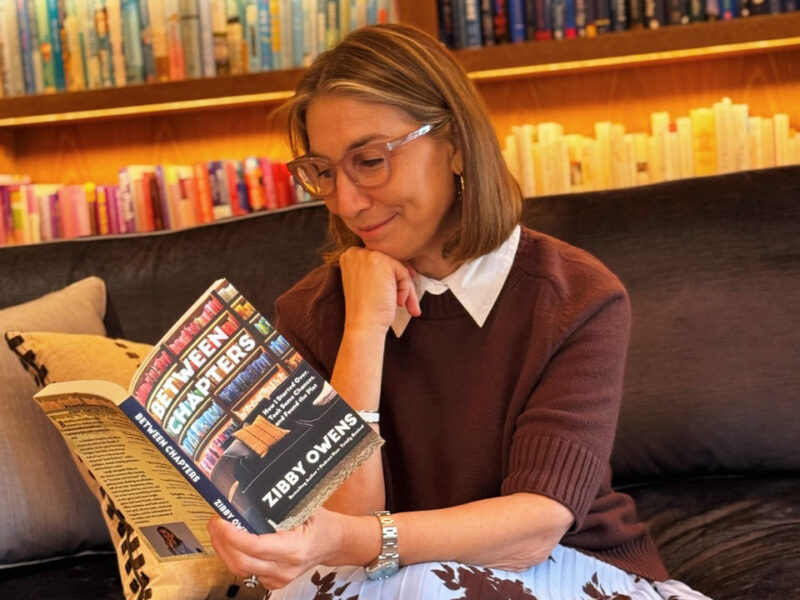
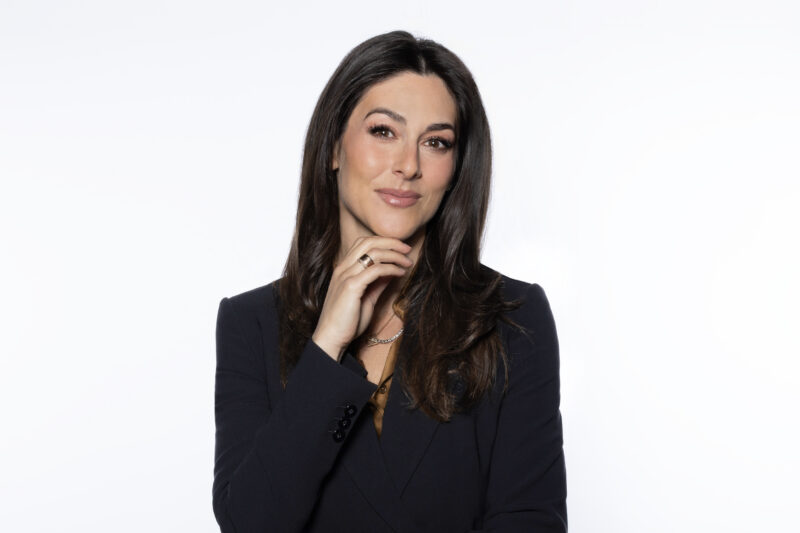
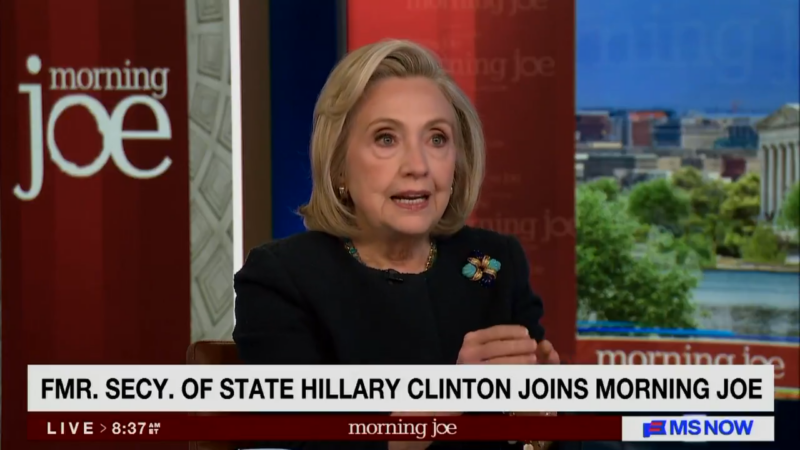
MS NOW anchor Erielle Reshef never planned to become a television journalist. After completing a master’s degree in diplomacy and conflict studies in Israel in 2010, she happened to be watching an English-language news program whose anchors were about to go on maternity leave. Her husband wrote down the email address on the screen and pushed her to apply. That opportunity launched a career that has taken Reshef from her hometown of Oklahoma City to local television, international news and eventually ABC News, where she spent eight and a half years, including as a national correspondent. In June 2025, Reshef left the relative comfort of a network news reporting job to join MSNBC, which was rebranded later in the year as MS NOW, where she is now a fill-in anchor for daytime cable news shows for the first time. In an interview with Jewish Insider’s Haley Cohen, Reshef said her Jewish values — particularly curiosity, rigorous debate and a commitment to understanding people on the margins — are the “scaffolding” of her journalism.
The Rundown
ON THE HILL
not so fast
behind the veil
On Our Radar
● The Live Briefing. Word on the street, clips, podcasts and quick updates — the items we’re tracking all day in our Live Briefing on the app (on Apple and Android) and website.
President Donald Trump is planning to meet with Gulf leaders next week on the sidelines of the U.N. General Assembly in New York to discuss a postwar strategy for Iran; the president held a similar meeting on the sidelines of last year’s UNGA to discuss Gaza, a week before publicly releasing his postwar plan for the enclave…
The State Department extended its visa ban on Palestinian Authority President Mahmoud Abbas and other senior Palestinian officials, preventing members of the delegation from attending UNGA next week for the second year in a row; State Department officials attributed the ban to Palestinian leaders’ efforts to “internationalize the Israeli-Palestinian conflict”…
New photos obtained by CBS News indicate widespread damage at U.S. facilities around the Gulf resulting from Iranian attacks, including destroyed planes, buildings and vehicles in Kuwait and Saudi Arabia.
CNN reports that more than a dozen Russian spy satellites had operated over a U.S. base in Saudi Arabia two days before the facility was struck in an Iranian drone and missile attack in which 15 U.S. troops were injured…
The House passed, in a 262-159 vote, a major Russia and Iran sanctions package named for the late Sen. Lindsey Graham (R-SC), which targets Russia’s energy sector as well as Iran’s weapons and energy industries…
Sens. Tim Kaine (D-VA) and Adam Schiff (D-CA) filed a war powers resolution to block military action against Oman, in response to Trump‘s threats to bomb the U.S. ally if it does not cooperate with U.S. efforts to counter Iran in the Strait of Hormuz…
Former Vice President Kamala Harris is slated to campaign with Michigan Democratic Senate nominee Abdul El-Sayed next week in the Wolverine State.
Meanwhile, the Detroit News endorsed El-Sayed’s opponent, former Rep. Mike Rogers (R-MI), citing in part El-Sayed’s history of deleting past social media content and noting that a “candidate who feels the need to hide his past from voters is not someone who can be trusted to be the same person after Election Day as he was on the campaign trail”…
A New York man who pleaded guilty to assaulting a Jewish man days after the Oct. 7, 2023, Hamas terror attacks was sentenced to 90 days in jail; during sentencing, Yehia Amin was photographed smiling and flashing the peace sign with his hands, telling the judge through an interpreter that he wanted to look good in photographs from the courtroom…
Michael Dell listed his Boston penthouse in the city’s Millennium Tower for less than he purchased it a decade ago for $10.9 million…
The Hollywood Reporter reviews documentarian Lacey Schwartz Delgado’s “Re/Pair,” which premiered at the Toronto International Film Festival and pairs Black and Jewish figures, including David Schwimmer, Van Jones, Black Lives Matter co-founder Patrisse Cullors and Rabbi Sharon Brous, for conversations about Black-Jewish relations…
The Spectator reports that both U.K. National Security Advisor Jonathan Powell and London’s ambassador in Israel, Simon Walters, advised Foreign Secretary Ed Miliband against banning imports from Israeli settlements, warning that such a move would bolster support for Israeli Prime Minister Benjamin Netanyahu and his government ahead of next month’s elections…
Air Canada removed an in-flight service director following a report that the employee had shared antisemitic content on social media; the Canadian carrier will also resume direct flights between Toronto and Israel at the end of November, earlier than its planned January resumption of flights…
A Kurdish-Jewish man with Canadian and Israeli citizenship who had traveled to the region to fight ISIS more than a decade ago was freed from an Iraqi Kurdish prison after he was convicted of killing a taxi driver in 2015; Aish announced that Ben Chasin will arrive at the organization’s yeshiva this week, where he will study…
Israeli Foreign Minister Gideon Sa’ar met with Moroccan Foreign Minister Nasser Bourita in New York in a meeting convened by U.S. Ambassador to the U.N. Mike Waltz, during which Jerusalem and Rabat agreed to a series of measures to boost bilateral ties, including appointing full ambassadors to each other’s countries, turning their diplomatic missions into embassies, increasing direct flights and holding high-level visits in the near future.
The night prior, Waltz hosted Sa’ar, Bourita, United Arab Emirates Ambassador to the U.S. Yousef Al Otaiba and diplomats from Bahrain and Kazakhstan for a diplomatic reception marking the sixth anniversary of the Abraham Accords.
While in New York, Sa’ar also met with senior leaders of the Conference of Presidents of Major American Jewish Organizations for a wide-ranging discussion on Israel’s security, regional developments and U.S.-Israel relations…
Dalia Ziada is joining the Institute for the Study of Global Antisemitism and Policy as the director of the organization’s Washington office…
Artist and graphic designer Peter Max died on Monday at 88…
Worthy Reads
Find more Worthy Reads in our Live Briefing via our app (on Apple and Android) and website.
Meta-morphosis: Bloomberg’s Riley Griffin and Alexandra Levine look at the role that Dina Powell McCormick plays at Meta, where she now serves as president, vice chairman and co-leader of Meta Compute after eight months on the company’s board. “While [Mark] Zuckerberg, 42, is the cerebral engineering leader obsessed with improving Meta’s products for the AI race, Powell McCormick, 53, has her pulse on the world outside of Silicon Valley, and can be Meta’s bridge to opportunities and fixer of challenges. ‘She is a close, trusted advisor of the whole senior leadership team, but especially of Mark,’ said CJ Mahoney, Meta’s chief legal officer. ‘She’s generally the last person who’s consulted on really important decisions.’” [Bloomberg]
Riyadh Ruminations: In War on the Rocks, Richard Nephew posits that the burgeoning nuclear agreement between the U.S. and Saudi Arabia is better than had initially been expected. “If it performs as promised, its provisions of exclusivity will provide benefits to the U.S. nuclear industry and lock Russia and China out of a potentially lucrative market that could have attendant political and security implications long term, especially in a Middle East where nuclear proliferation remains a serious threat. The U.S.-Saudi agreement is also innovative and imaginative, a credit to creative negotiations to unlock an issue that has been difficult for multiple administrations.” [WarontheRocks]
AI and the Archives: In The Washington Post, Daniella Greenbaum Davis explains how she used Anthropic’s Claude to recover and translate a 1946 Yiddish-language article that had been authored by her grandmother and detailed the day she was liberated from Bergen-Belsen. “Much of the debate concerning AI today is about scale and mortal threat, about destroying jobs and flooding social media with slop. It’s easy to forget that large language models, like all tools, are a thing human ingenuity has built to finish what human hands cannot. … I had spent years blindly feeling my way through archives; in a matter of days, AI had stitched together pieces of information that I couldn’t see, let alone put together.” [WashPost]
Picture of the Day
Birthdays
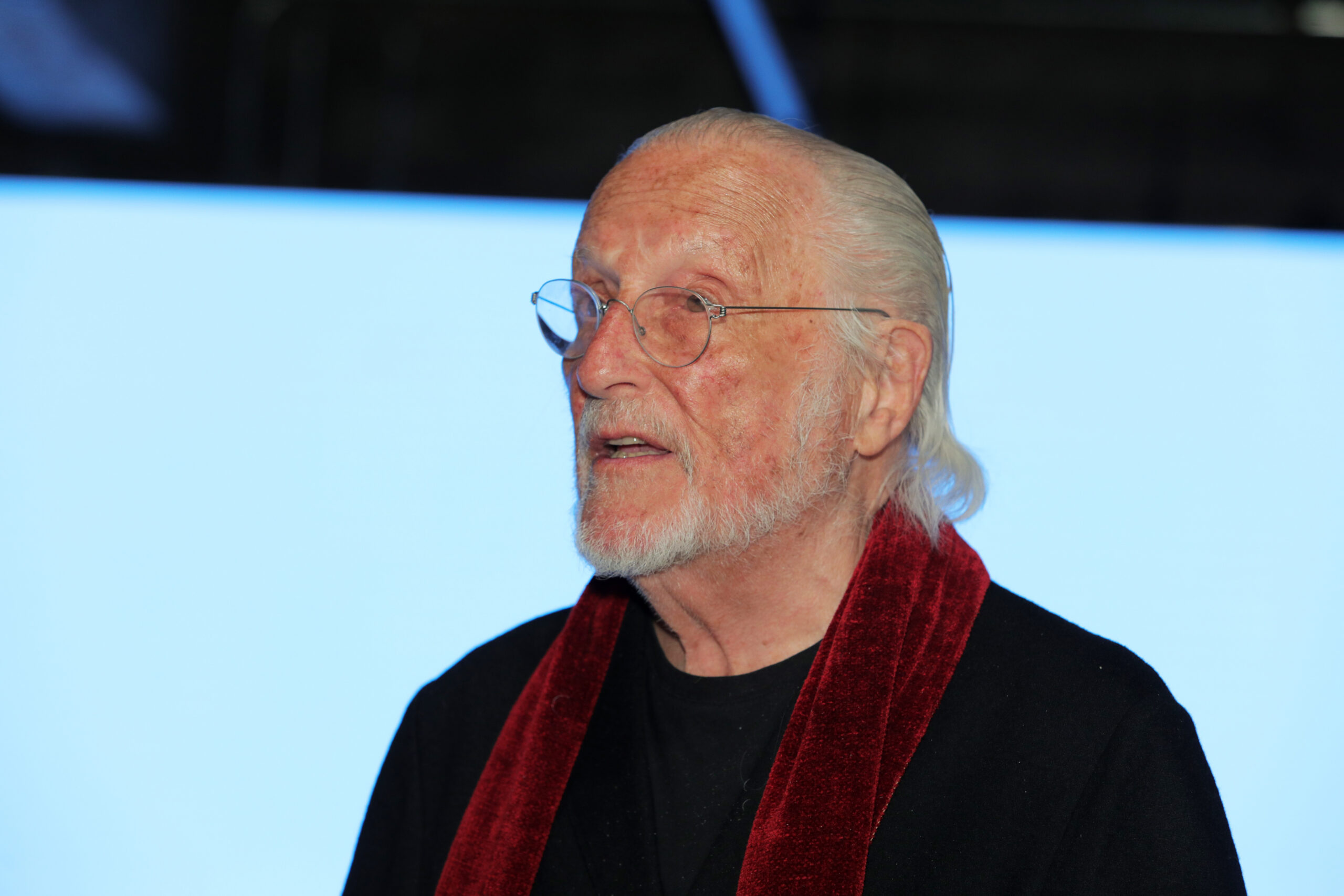
Stan M. Herman, fashion designer known worldwide for his leading-edge corporate uniforms, turns 98
Chuck Grassley, U.S. senator (R-IA) since 1981 and president pro tempore of the Senate, turns 93
Peter J. Solomon, investment banker who once served as a NYC deputy mayor, turns 88
Gail Carson Levine, Newbery Honor-winning author of many young adult books, some with Jewish themes, turns 79
Joshua Muravchik, author of 11 books and hundreds of articles on foreign policy and the Middle East, turns 79
T. Alan Hurwitz, former president of the National Technical Institute for the Deaf and then president of Gallaudet University, turns 79
Frank Hagelberg, Rochester, N.Y., attorney, he has held positions at the UJA-Federation of New York and the Rochester Jewish Federation
Jeremy Don Fogel, retired judge on the U.S. District Court for the Northern District of California, turns 77
Harold Solomon, former professional tennis player who achieved a world ranking of No. 5 in 1980, turns 74
Rita Rudner, comedian, writer and actor, she was a frequent guest of Johnny Carson on the “Tonight Show,” turns 73
Daniel Fingeroth, author, comic book writer and editor, best known as group editor of the Spider-Man books at Marvel Comics, turns 73
Mody Kidon, Israeli businessman with real estate holdings in Israel and NYC, turns 72
Ellen Kahan Zager, author and graphic designer
Rina Frenkel, former member of the Knesset for the Yesh Atid party, turns 70
Rabbi Jonathan Wittenberg, rabbi emeritus of the New North London Synagogue and senior rabbi of Masorti Judaism UK, turns 69
Elliott S. Feigenbaum, former consultant at Quick Hits News
Richard Wolffe, journalist, best-selling author including two books on the Obama presidency and Emmy Award-winning executive producer, turns 58
Mandy Krauthamer Cohen, director of the Centers for Disease Control and Prevention (CDC) for the last 18 months of the Biden administration, turns 48
Adam Abrams, former regional communications director and spokesperson for former President Barack Obama, now a partner at Seven Letter
Nick Melvoin, member of the Los Angeles Unified School District’s Board of Education, turns 41
David Litt, former Obama White House speechwriter who has since written a best-selling comedic memoir, turns 40
Adina Shatz, principal product manager for CathWorks
Rachel Roubein, national healthcare reporter The Washington Post covering the FDA
Natalie Edelstein Jarvis, editorial producer at Google
Max August, founder of the Israel Summit at Harvard, now a member of the partnerships team at OpenAI
The previously unreported Jewish outreach comes as Democrats worry about El-Sayed’s struggles to expand support beyond his base
Emily Elconin/Getty Images
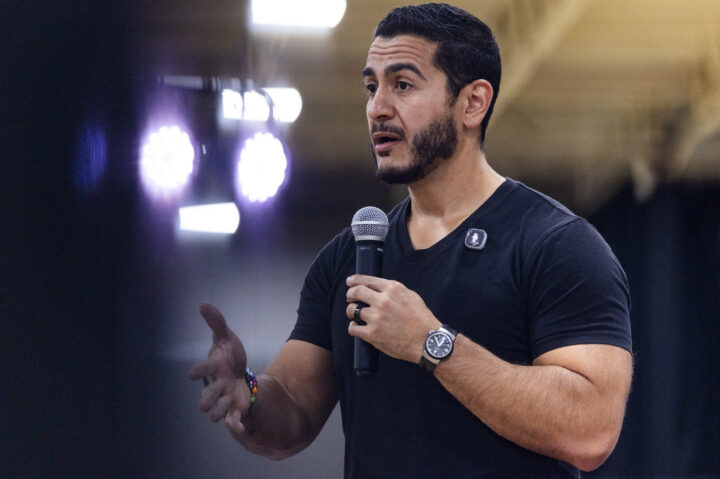
Democratic candidate for U.S. Senate Abdul El-Sayed answers questions from attendees during a town hall event, part of a series of events across Michigan focused on hearing from voters, on September 3, 2026 at the Oakland Expo Center in Waterford, Michigan.
In the most significant sign of his efforts to make inroads with skeptical Jewish voters in Michigan’s Senate race, Abdul El-Sayed, the Democratic nominee, recently met with rabbis at Temple Israel for a closely guarded conversation, according to two people familiar with the meeting.
Two rabbis who were said to have participated in the conversation, details of which were unclear, declined to comment when reached on Wednesday. El-Sayed’s campaign did not respond to a request for comment.
The meeting came after El-Sayed apologized last month to Jewish Democrats for his equivocal response to the March terrorist attack against Temple Israel, a prominent Reform synagogue outside Detroit, which he had downplayed with the explanation that “hurt people hurt people.”
The covert nature of the meeting, which neither party has publicized, underscores the sensitivities felt among some Jewish leaders who have remained wary of publicly associating with El-Sayed because of their continued discomfort with his positions on Israel and remarks about antisemitism.
One rabbi at Temple Israel joined a rally last month at which Vice President JD Vance laid into El-Sayed while touting his Republican rival, former Rep. Mike Rogers (R-MI) — who has successfully courted some Jewish Democratic voters. Vance mentioned the rabbi in his speech, but not by name. A Jewish leader confirmed that a Temple Israel rabbi participated in the event.
Despite the unusual show of resistance, El-Sayed has, following his apology as well as a vow to hire a Jewish campaign liaison, made some inroads as he seeks to ease tensions with Jewish voters in the final stretch of a closely contested election.
He has since won endorsements from several progressive Jewish leaders including former Sen. Al Franken (D-MN). Former longtime Rep. Sander Levin (D-MI), in a statement on Tuesday, backed El-Sayed in spite of what he called “significant disagreement” over the nominee’s hostile approach to Israel — concerns about which some Jewish voters in Michigan have dismissed in recent opinion articles. While Levin held a pro-Israel record during his time in the House, his son Andy was highly critical of Israel while in Congress and ended up losing to Rep. Haley Stevens (D-MI) in a hotly contested 2022 primary.
Meanwhile, Sen. Elissa Slotkin (D-MI), who is one of the most prominent Jewish leaders in Michigan, is now urging fellow caucus members to rally behind El-Sayed after remaining neutral in a heated primary where Stevens, a vocal supporter of Israel, was narrowly defeated.
Still, it remains to be seen if such inroads will result in meaningful support for El-Sayed on Election Day, as he faces opposition from some Jewish voters who say he has fallen short of addressing major differences in a race that continues to stir up raw feelings.
Some Jewish holdouts in the state, for instance, have expressed their dissatisfaction with his apology over his comments on the synagogue attack. El-Sayed said he had “made a mistake” and asked “for forgiveness,” even as he also clarified that there was “opportunity for context later on,” a caveat some Jewish leaders interpreted as a sign he only regretted the timing of his sentiments rather than the message.
Halie Soifer, CEO of the Jewish Democratic Council of America, suggested in a statement on Wednesday that her group would not be endorsing El-Sayed, who has refused to acknowledge Israel’s right to exist as a Jewish state while failing to explicitly disavow Hasan Piker, an antisemitic steamer featuring in GOP attack ads and with whom El-Sayed campaigned ahead of the August primary..
“We have not endorsed El-Sayed” and “do not endorse all Democrats,” Soifer told Jewish Insider, even as she rejected crossing party lines to support Rogers — which she called “a vote to enable Donald Trump’s agenda.”
The Michigan Democratic Jewish Caucus, for its part, has yet to confirm whether it will back El-Sayed after he appeared at its summer fundraising event to offer his apology. Jessica Alexander, the caucus chair, told JI on Wednesday that members would be releasing a statement soon explaining their approach to the race that could help decide control of the Senate next year.
For now, “people are looking to learn more” about El-Sayed’s views and “are still struggling” with how they will vote, Alexander said, noting those “making decisions in the affirmative are just being quiet about it.”
“It’s this really strange space of liminality,” she said of the calculus facing Jewish Democrats. “Everyone wants different assurances — and I’m not sure if you get those in political races, ever.”
While El-Sayed has yet to name a Jewish liaison, Alexander said she was asked to participate in the interview process and had spoken with about five candidates, whom she declined to name. She told JI that she had not yet been informed of a final decision.
David Hecker, a Jewish union leader in Michigan, also took part in the interviews, he confirmed to JI Wednesday. “The key is having conversations with Jews who haven’t decided how they’re going to vote,” he explained of the liaison role. “With many there are going to be disagreements,” he added, while counting himself among them.
“His domestic policies I’m pretty much on board with,” Hecker said of El-Sayed. But, he added, “I’m a Zionist” and “I disagree with his perspective on what needs to happen in the Middle East.”
Still, “I appreciate how much he’s thought about it,” Hecker clarified.
Earlier this month, a coalition of rabbis and other Jewish leaders across the state launched a petition campaign to pressure El-Sayed to affirm a series of “nonnegotiable” commitments on a range of Jewish issues, arguing that failing to do so would jeopardize Jewish support for Democrats. The petition did not mention El-Sayed by name but was clearly aimed at him.
Among the demands were support for “Jewish sovereignty in Israel”; Jewish safety, including for Zionist Jews; and “full participation in American political life” for Jews.
But two Jewish leaders who signed the petition told JI Wednesday they had not had the chance to speak with El-Sayed and did not feel he had demonstrated his commitment to their requests.
Rabbi Aaron Starr of Congregation Shaarey Zedek in Southfield, Mich., who serves as the president of the Michigan Board of Rabbis, said he appreciated how in the past couple of weeks El-Sayed “has moderated his previously offensive and inflammatory rhetoric.”
“His callous words and violent tone, though, remain hard to forget — and probably foolish to forget,” he added. Now, “El-Sayed has become adept at talking around our concerns,” he continued. “Nevertheless, he is silent with regard to our right to define our own identities as American Zionists” and “Israel’s right to exist as a Jewish state,” among other key issues.
Joan Lowenstein, the Jewish caucus endorsement chair who also signed the petition, said she was unconvinced El-Sayed had meaningfully evolved in his stances on Israel since the primary. “He still will not say ‘Israel,’” she observed. “He says ‘Holy Land.’”
Even though El Sayed has condemned antisemitism and affirmed his commitment to Jewish safety, some critics have raised concerns that his rhetoric and alliances with extreme figures such as Piker have helped contribute to rising antisemitism on the far left, which has made a growing number of Jewish Democrats feel alienated in a party they have long called home.
A co-founder of “Jews for Abdul,” a loose coalition of Jewish activists, voiced reservations last month over El-Sayed’s approach to Israel, saying in a private call he could “do a better job” toning down his rhetoric on accusations of genocide in Gaza and his opposition to U.S. funding for the Jewish state, including defensive aid.
El-Sayed has said privately that he “is not going to change his position on Israel at all,” according to a source informed of such remarks. “He is who he is,” the source told JI.
Despite the hesitation among some Jewish voters with weeks remaining until the November election, one Jewish leader in Michigan who does not support El-Sayed predicted that the Democratic nominee “is on track to be elected narrowly but solidly,” citing unfavorable polling for Republicans nationally.
“I think the Jewish vote being split is not enough to cost him the election,” the Jewish leader said about El-Sayed on the condition of anonymity. (Michigan is home to some 130,000 Jews.) “Trump’s continued chaos is really causing a lot of people to swallow hard and just hold their nose and vote the entire Democratic ticket.”
The group called for Democratic candidates to affirm principles including Jewish safety, the Jewish right to sovereignty in Israel and the right of all Jews to participate in the political process
JEFF KOWALSKY / AFP via Getty Images
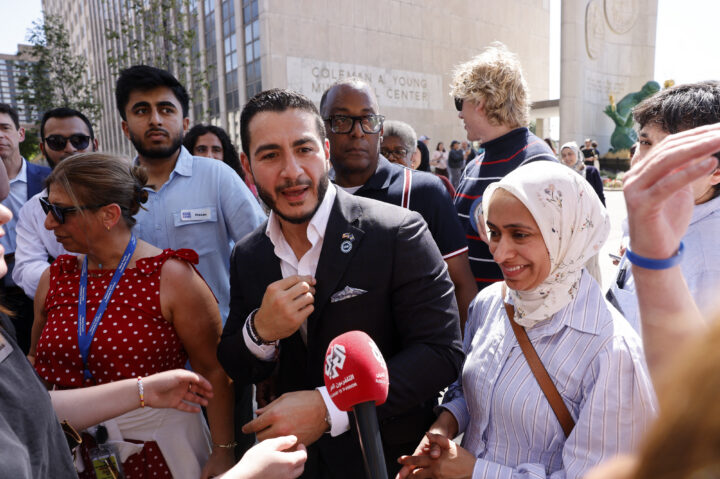
Michigan Democratic Senate candidate Abdul El-Sayed departs with his wife, Sarah Jukaku (R) after a press conference on August 5, 2026.
A group of more than a dozen Michigan rabbis, cantors and Jewish lay leaders from across the state launched a new petition campaign on Tuesday to pressure Abdul El-Sayed, the Democratic Senate nominee, to affirm a series of “nonnegotiable” commitments to the Jewish community, arguing that failing to do so would jeopardize Jewish support for Democrats.
The Nonnegotiable Michigan campaign, created in cooperation with the liberal Jewish group Zioness Action Fund, calls out El-Sayed for a “sustained pattern” of comments by himself and surrogates that organizers say crosses the line into antisemitism, including downplaying, justifying or potentially inciting violence against Jews.
The petition itself does not explicitly mention El-Sayed but leading signatories and organizers made clear in interviews and a press release that his rhetoric and actions were a principal driving force behind the effort and that he is a primary target — while they also would like to see other Democrats and the party embrace the effort as well.
The faith leaders leading the effort did so in their personal capacity.
“So much damage is already done — what remains to be seen is whether it deepens or reverses,” a press release from the coalition states. “The choice is [El-Sayed’s]. He can continue normalizing rhetoric that stigmatizes and excludes Jews, and continue sharing platforms with those who glorify or excuse violence against them — until Jewish participation in the Democratic coalition becomes impossible. Or he can engage with us and consistently draw a clear, public line against all forms of antisemitism –– as defined and experienced by Jews.”
The campaign demanded that El-Sayed and other Democratic leaders affirm five commitments: to Jewish safety, including that of Zionist Jews; to the right of Jews to define their own identities; to the Jewish right to sovereignty in Israel; to the right of all Jews, including Zionists, to full participation in the American political process; and to “an affirmative vision for a better future for the Middle East.”
El-Sayed did not immediately respond to a request for comment.
The petition and its organizers highlight that Jews have long been strongly supportive of the Democratic Party and backed Democratic political priorities, but now “now feel forced to fight for the party they long claimed as their political home.”
“Every constituency must occasionally remind its party that support is earned, not owed. This is a good faith effort to make our needs unmistakably clear, and to invite any candidate seeking public office — now or in the future — to engage, listen, learn, and grow,” the petition states. “We no longer have the luxury of pretending our coalition can hold while our identities are under attack and our own safety is treated as negotiable.”
It calls the five commitments “our terms for engaging” in a conversation with El-Sayed or other leaders and “the floor” of such requirements, “not a policy debate.”
Rabbi Josh Whinston of Temple Beth Emeth in Ann Arbor, one of the petition organizers, said during a virtual press conference that he’s spoken directly to El-Sayed and that the nominee is “trying to figure out a way” to move forward and that Whinston wants to be helpful and “continue to move the needle in ways that will be meaningful for the Jewish community and would have real effect on any potential policy that he’s part of when he’s elected to the Senate.”
But he said that El-Sayed’s recent walkback of previous comments on the Temple Israel attack, which many in the Jewish community saw as justifying or downplaying the attack, “did not go far enough.”
He explained in a subsequent interview with Jewish Insider that the tenor of the conversation among pro-Israel Jewish Americans in the Democratic Party has become “very negative and fearful for a lot of folks,” that many in the community feel political “homelessness” and that rhetoric used during the primary caused concern in the community.
“You can’t use language that’s being used and act as though it doesn’t affect the Jewish community and put us potentially in harm’s way,” he said.
Whinston said he specifically wants to see El-Sayed change his position on Iron Dome funding and say he would support allowing Israel to continue to purchase the missile-defense system from the United States — outside of any conversation about U.S. financial aid.
“He’s a medical doctor, I just don’t understand how he could say no to that, to people’s safety,” he said.
Asked what he would need to see to believe that El-Sayed believes in and would stick to any altered stance consistent with the “nonnegotiables,” Whinston said that he would want to see specific policy commitments and public press releases by the campaign on key issues.
“I’m not so concerned about the past at this point,” he said. “I want the future to be better. I want his campaign to be better. I want his campaign to be more inclusive. I want his campaign to be more visionary.”
Whinston emphasized on the press call that the problem is “bigger” than El-Sayed’s relationship with antisemitic streamer Hasan Piker, though he said he wants to see El-Sayed disavow Piker.
He told JI he wants to see deeper and stronger communication and “understanding” between El-Sayed and the Jewish community, explaining that he doesn’t believe El-Sayed understands “the fear in the Jewish community right now.”
Some Jewish Democrats, including some community leaders, have come out in support of El-Sayed’s Republican opponent, former Rep. Mike Rogers (R-MI), or said that they are open to voting for him. Whinston, at least, seems to represent a different category of Jewish voters.
Asked by JI what he would do in November if the “nonnegotiables” aren’t fulfilled, he hesitated for a long moment.
“I’m speaking here as an individual. I do not support the rhetoric that comes from Mike Rogers, the vast majority of it. … I think it is also dangerous for the Jewish community,” he said. “I’m holding out hope that Dr. El-Sayed can broaden his coalition in a visionary and meaningful way. … I think he can do it. I think he’s big enough. I think he’s smart enough. I think he’s tactful enough. I think he can do it. And if he does, I would enthusiastically vote for him.”
Whinston indicated that El-Sayed’s comment immediately after the primary describing Israeli Prime Minister Benjamin Netanyahu as “bloodthirsty” was particularly disturbing.
“The accusation of being bloodthirsty against Jews is a long-standing antisemitic trope. It was shocking to me to hear him say that,” Whinston said.
Whinston said that he has “very strong feelings” about the war in Gaza and condemned the “Jewish terror” in the West Bank but said that “using inflammatory language, antisemitic rhetoric to make your point about what’s happening is not helpful. … All it does is activate radical people to do harm to Jews.”
During the press call, Rabbi Aaron Starr of Congregation Shaarey Zedek in Southfield, Mich., said that Jewish leaders are looking for El-Sayed to sit down, offer a “sincere apology” and to change his rhetoric going forward.
He added that El-Sayed sounds “like he’s talking out of both sides of his mouth.”
Starr called El-Sayed’s past rhetoric “frightening” and said it echoes that which has brought violence against the Jewish community for a millenium. He said he doesn’t feel that El-Sayed has actually moderated his past comments on Israel, but rather “decided not to address the issue and reframed” past remarks.
The group was joined by Jared Kushner, VP Vance and Rep. Mike Lawler
Abraham McNatt
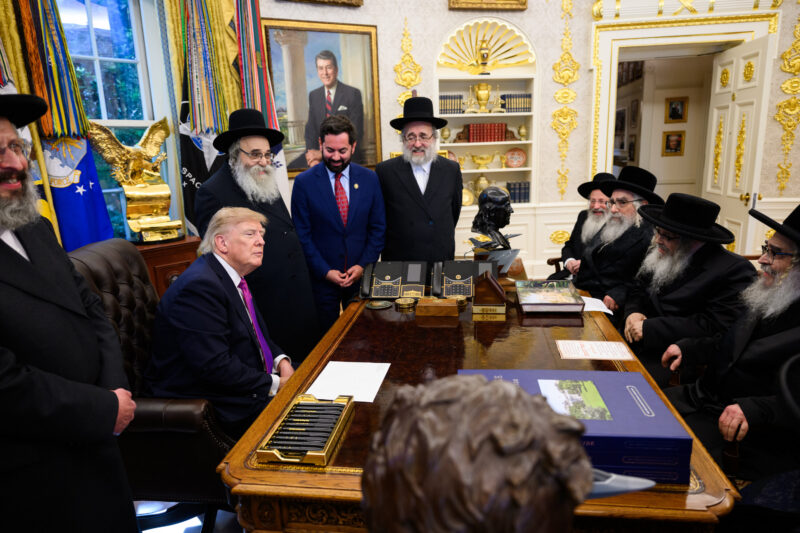
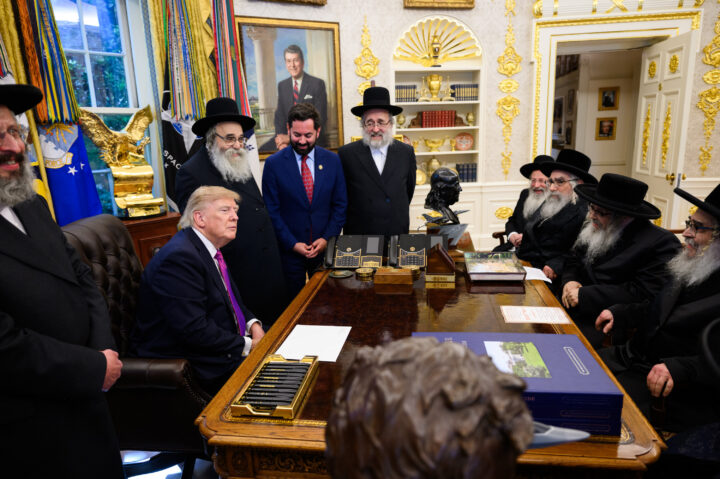
President Donald Trump meets with Hasidic rabbis in the Oval Office on Sept. 3, 2026.
President Donald Trump met with several Hasidic rabbis at the White House on Thursday ahead of Rosh Hashanah, a gathering his office called the first of its kind in nearly 50 years.
The rabbis, many of whom were pictured in photos that circulated on social media ahead of the meeting flying to Washington on private jets, hailed from a range of leading Hasidic communities in New York — including the two rival Satmar sects in Brooklyn and Kiryas Joel; the Bobov sect in Brooklyn; the Vizhnitz sect in Monsey; and the Skver sect in New Square.
The 85-year-old Skver rebbe, David Twersky, whose endorsements in congressional races have long been highly coveted, sent one of his sons to the meeting in his place. Rabbi Malkiel Kotler, dean of Beth Medrash Govoha in Lakewood, N.J., the largest yeshiva in the United States, also joined.
The meeting, according to sources, was attended by Jared Kushner, the president’s son-in-law and key outside advisor, who is Jewish; Vice President JD Vance; and Rep. Mike Lawler (R-NY), who is among the most vulnerable House Republicans running this cycle. The congressman — whose district includes the Hasidic village of New Square — has depended on the politically powerful Skver endorsement in past races.
Vance paid a visit to the Roosevelt Room during the gathering, according to two sources familiar with the matter granted anonymity because they had not been authorized to discuss the private reception. He joked to the attendees that the “Hasidim are the only ones who have larger families than him,” the sources told Jewish Insider afterward.
A spokesperson for Vance, who welcomed his fourth child in July, did not dispute that account but told JI it might have been “a joke one of the rabbis made to” the vice president.
Beforehand, sources familiar with the meeting framed it as a chance for Trump to convey Rosh Hashanah greetings ahead of the Jewish new year marking the beginning of the High Holy Days next week — in a demonstration of mutual respect for a community whose rank and file have shown strong support for his campaigns.
But some more substantive issues were also raised, according to the sources, including topics like “large families” as well as housing concerns, prison reform and “expanding earned income tax credits” for those with more than three children.
One source who attended the meeting also said that Trump, for his part, talked “about pardoning Jewish prisoners” including Sholom Rubashkin — the kosher meatpacking executive convicted of financial fraud in 2009. His 27-year prison sentence was commuted by Trump in 2017.
The president also spoke privately with Rabbi Aaron Teitelbaum, the Satmar leader in Kiryas Joel, another person informed of their exclusive discussion told JI.
A White House official told JI the president and top administration officials “met with the leading Hasidic Rabbis in the United States,” saying it was the first of such gatherings “at the White House since 1979.”
The Hasidic leaders “thanked the president for all he had done in combatting antisemitism, advocating for school choice with the middle-class tax credit and for fighting for peoples of faith,” the White House official added.
In recognition of Rosh Hashanah, the delegation of rabbis “said blessings to the president, and thanked the entire administration for all they had done for all Americans,” according to the official.
The meeting had faced some resistance from a few far-right Trump allies over its inclusion of the Satmar community, an anti-Zionist Hasidic sect that believes only the messiah is supposed to bring about a Jewish state.
But the Trump administration indicated that it was unmoved by such protestations, proceeding with the scheduled meeting on Thursday.
Broadly speaking, the rabbis who joined the meeting “focused on issues important to the community,” one source said of the visit. “It mostly went as planned.”
President Trump intends to convey Rosh Hashanah greetings ahead of the new year
Kevin Dietsch/Getty Images
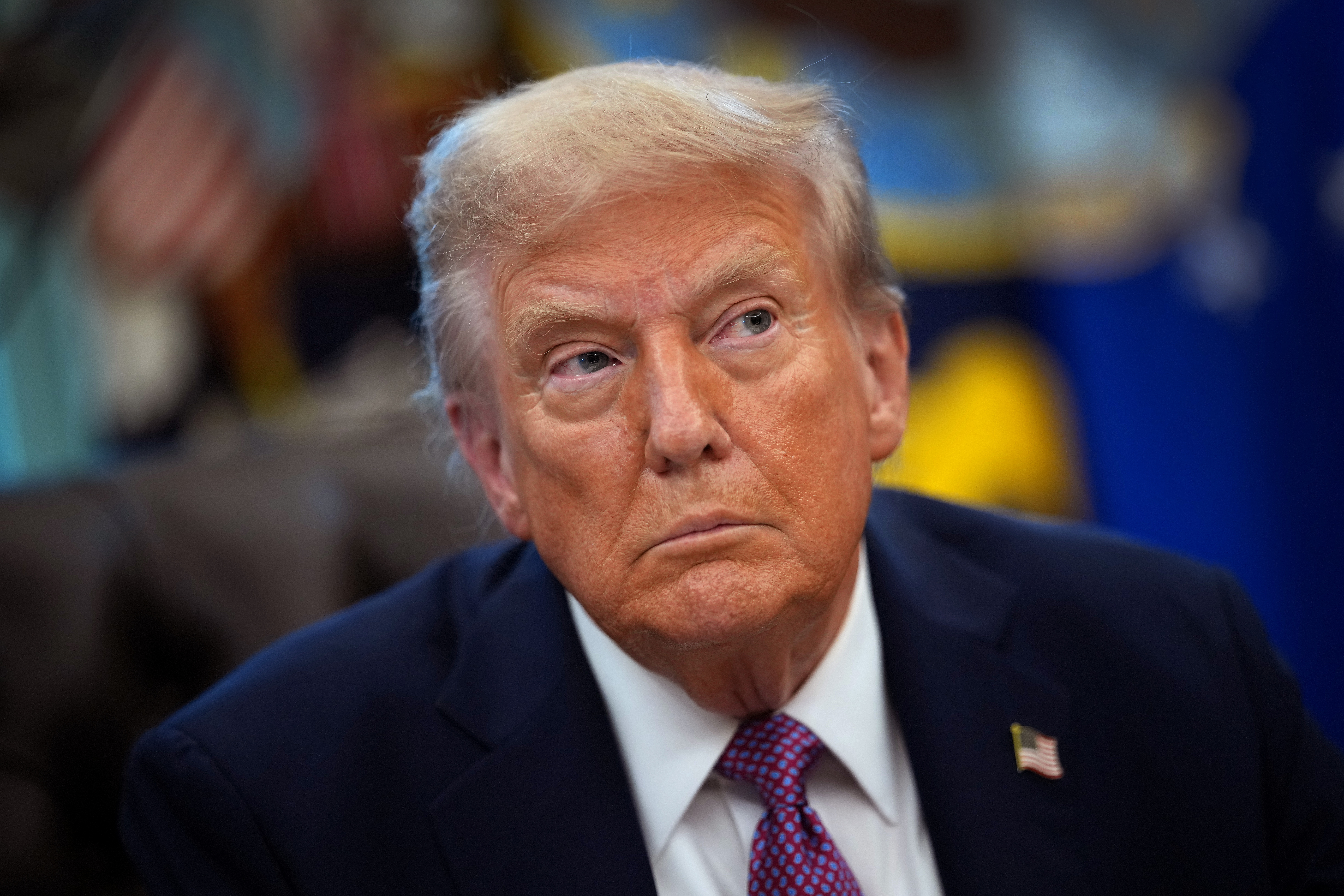
President Donald Trump in the Oval Office of the White House on Sept. 5, 2025 in Washington, DC.
President Donald Trump is expected to meet with several Hasidic Jewish rabbis at the White House on Thursday ahead of Rosh Hashanah, according to people familiar with the matter.
The planned Oval Office meeting was initiated by Martin Marks, the White House Jewish liaison, one source told Jewish Insider, speaking on condition of anonymity to discuss private outreach. Marks did not respond to a text message seeking comment Monday.
A White House official confirmed the meeting to JI. “Before the Rosh Hashanah holidays, President Trump looks forward to greeting rabbis representing some of the largest Hasidic communities in the United States,” the official said. “President Trump has consistently won nearly 100% of the votes in these Hassidic enclaves, and the last time they were gathered at the White House was in 1979.”
The White House has not publicly announced the gathering, which has drawn some resistance from a few Trump allies over reports the meeting will include members of the Satmar community, an anti-Zionist Hasidic sect that believes only the messiah is supposed to bring about a Jewish state.
According to two sources, several leaders from Hasidic communities in New York confirmed their attendance at the meeting, including the two rival Satmar sects in Brooklyn as well as Kiryas Joel; the Bobov sect in Brooklyn; the Vizhnitz sect in Monsey; and the Skver sect in New Square.
The 85-year-old Skver Rebbe, David Twersky, whose endorsements in House elections are highly coveted, will send his son to the meeting in his place, according to a Satmar source.
“As of now it is happening,” one Bobov leader told JI on Monday, but added a caveat that with the Trump administration “things move very quickly” and could change.
Shlomo Schorr, the director of legislative affairs at Agudath Israel of America’s New Jersey office, said he also heard that Rabbi Malkiel Kotler, a dean of Beth Medrash Govoha in Lakewood, N.J., the largest yeshiva in the United States, had been invited to the meeting and planned to attend.
Schorr’s understanding, he told JI, was that the meeting would be “a quick photo op” and provide Trump a chance to wish the Jewish leaders a happy Rosh Hashanah in advance of the Jewish new year next week that marks the start of the High Holy Days.
The Satmar source said that the meeting had “no purpose” aside from a broad recognition of mutual respect. “The president knows this community was strongly supportive of him,” he explained to JI.
Rabbi Aaron Teitelbaum, who leads the Satmar community in Kiryas Joel, reportedly told followers on Saturday night he planned to ask for Trump’s help opposing the politically divisive Israeli military draft for yeshiva students.
Laura Loomer, the far-right activist who is a close ally of Trump, cited such comments on social media over the weekend while raising her objections to the meeting.
“These are anti-Israel pro-Mamdani rabbis who are being hosted with open arms in the Oval Office,” she said of the Satmar leaders, arguing that the meeting “is going to severely piss off the Jewish Republicans in the MAGA base who voted for President Trump.”
While neither of the Satmar rebbes endorsed Zohran Mamdani for New York City mayor, a prominent representative of one sect backed his general election campaign. Leaders of the Satmar community, which frequently endorses Democrats, have also met privately with Mamdani, and Zalman Teitelbaum, the Satmar rebbe in Williamsburg, recently defended the mayor amid accusations of promoting antisemitism.
Sid Rosenberg, a conservative radio host in New York, agreed with Loomer, calling the meeting a “huge mistake” and criticizing the Kiryas Joel Satmar leader as “a terrible guy” who “has no right being anywhere near” the president.
The Satmar source clarified that he would not raise the draft in the meeting. “He doesn’t plan to bring it up,” he told JI, noting that the rabbi “always shoots from the hip.”
The second annual Sephardic Rabbinic Conference, backed by the Orthodox Union and UJA-Federation, will bring together around 150 participants from a dozen countries to address leadership gaps and Diaspora institution-building
Getty Images
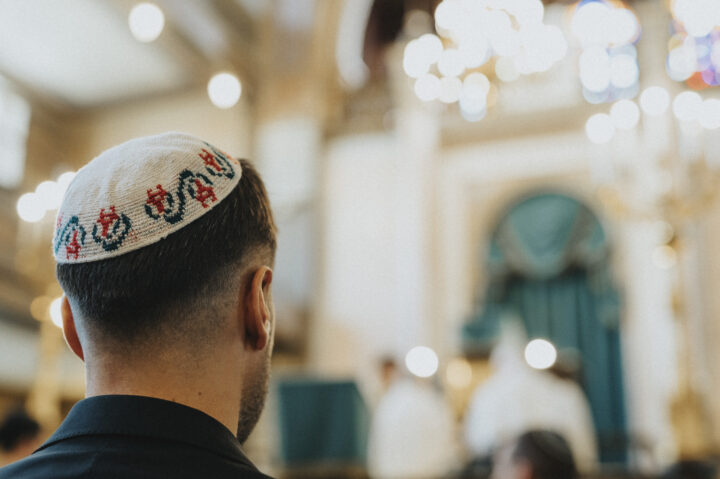
Some 150 rabbis, communal leaders and young professionals from a dozen countries will convene in Manhattan on Monday and Tuesday for the second annual Sephardic Rabbinic Conference, a gathering aimed at strengthening a Jewish community that organizers say has long operated in a Jewish institutional landscape shaped by Ashkenazi-dominated institutions.
The conference, titled “The Art of Leadership,” will bring together rabbis and rebbetzins from Mexico City to Moscow, Cape Town to Queens, to lead sessions on halachic authority, mental health, pastoral care, connecting to Israel and what organizers describe as the urgent work of building long-lasting Sephardic institutions in the diaspora.
“There’s clearly been a lack of [Sephardic] representation in a lot of mainstream Jewish institutions — in federations, in schools —- a lack of our needs being seen and heard,” said Ethan Marcus, managing director of Sephardic Brotherhood of America and co-organizer of the conference with Avi Garson, co-founder of The Habura, an online and physical Jewish study center. “Whether it’s a Moroccan, Turkish or Spanish Portuguese community, they may differ from what you would say mainstream Ashkenazi communities need,” Marcus told Jewish Insider.
This year’s conference, Marcus asserted, is itself evidence that the status quo is beginning to change: It’s being held at UJA-Federation of New York’s headquarters and backed by a roster of major Jewish institutions, including the Orthodox Union — which hosted last year’s inaugural gathering — the Rabbinical Council of America, World Zionist Organization and KKL-JNF.
“These organizations are stepping up and saying, ‘We want to hear from you and what your unique ideas and needs are, and what you also have to offer the wider Jewish world,’’” said Marcus. “We believe there’s a lot the wider Jewish world can take away from the Sephardic path we’re pushing. This idea of a middle-of-the-road [approach] steeped in Jewish traditions but fully engaged with the challenges and benefits of the modern world. To us that’s very much the Sephardic approach, and it’s something that all Jewish people can benefit from.”
Speakers include Daniel Rosenthal, vice president of government relations at UJA; Ofir Akunis, consul general of Israel in New York; Yaakov Hagoel, chairman of the WZO; and Caroline Bryk, senior director of Jewish day school strategies at Tikvah — alongside dozens of rabbis from across the globe.
Despite making up just an estimated 10% of the American Jewish population, Sephardic and Mizrahi Jews in the U.S. report higher rates of Jewish communal participation, a stronger connection to Israel and are more likely to say that being Jewish is somewhat or very much a part of their daily life compared to Ashkenazi Jews, according to a 2025 report by JIMENA (Jews Indigenous to the Middle East and North Africa).
On Manhattan’s Upper East Side, just blocks from where the conference is being held, the Sephardic community has been steadily establishing itself — anchored by institutions like the Moise Safra Center, the 14-story community center that opened on East 82nd Street in 2018 and marked a demographic shift for the neighborhood.
And yet, Garson had questions — which he laid out in a piece for La Djente, the national magazine of the Sephardic Jewish Brotherhood of America — that ultimately led to the creation of last year’s conference: Where is Sephardic leadership coming from? Where is it being trained? And who is going to lead and represent the community in the years ahead?
“One thing led to the other and we realized we should put everyone together in the same room,” Garson told JI, reflecting on the inaugural gathering, which focused on the theme of education. “We managed to get 40 rabbis and community leaders from six countries. We realized there’s a real deep ongoing desire to connect — for everyone to get together and discuss these issues and collaborate.”
This year’s event, with a focus on leadership, comes as a “turning point in the Sephardic world — where all of these synagogues and people are recognizing we need to work together,” said Marcus. “We can be uniquely our own identities; the Sephardic world is not a monolith. Moroccan Jewish communities, Syrian Jewish communities all have their unique customs and traditions, but there’s a lot more that unites us than divides us. But we don’t have to get rid of our self-identities. Jewish unity doesn’t mean Jewish uniformity.”
That openness extends to the conference’s slate of speakers — not just Sephardic rabbis, but Ashkenazi voices and some from outside the Jewish community entirely. The point, Garson said, is “to bring in good ideas and best practices to help our community, which in turn can help the Jewish community more broadly.”
He traced the notion back to Maimonides, the medieval Sephardic sage known for his intellectual openness, who famously championed: “Hear the truth, whoever speaks it.”
The mayor touted his forthcoming plan following his meeting with rabbis who voiced concerns about his anti-Israel rhetoric, which he did not mention or vow to adjust
Michael M. Santiago/Getty Images
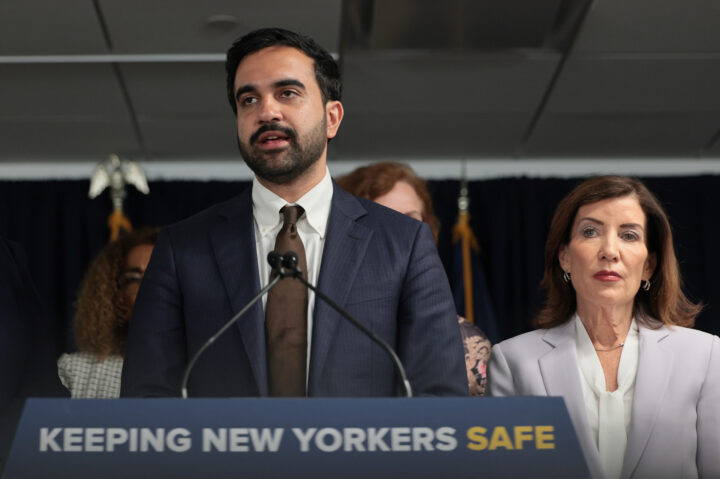
New York City Mayor Zohran Mamdani speaks during a press conference on Aug. 12, 2026 in New York City.
New York City Mayor Zohran Mamdani followed up his meeting with a group of rabbis earlier this week by touting a plan to battle antisemitism in the five boroughs — without committing to making changes in his rhetoric toward Israel that the group of Jewish religious leaders demanded.
“I had a candid and productive conversation with rabbis representing a wide swath of New York’s Jewish communities and affiliations, and I appreciated hearing from them,” Mamdani said after an unrelated event in Manhattan on Thursday.
During the mayor’s roundtable with Reform, Reconstructionist, Conservative and Modern Orthodox rabbis from predominantly liberal-leaning parts of the city, the rabbis made a near-unanimous call for Mamdani to back off his excoriations of Israel, warning that his focus on the Jewish state was alienating and even endangering Jewish New Yorkers.
But Mamdani did not explicitly state on Thursday that he would act on their recommendations, instead touting his increased spending on groups that run anti-hate crime initiatives and a plan his Office to Combat Antisemitism will release next month to tamp down on the anti-Jewish bias incidents that have risen on his watch.
“Our administration has been making steps, taking steps over the last many months of enacting that,” he said. “Expanding our city’s Office to Combat Antisemitism to its largest-ever size while developing a first-in-the-nation municipal response to combating antisemitism.”
“My door will always be open to every Jewish New Yorker. That is a door that is open not only to a conversation but to a commitment of what it actually looks like to deliver on an ideal of a city where not only is everyone safe but everyone belongs, everyone is made to feel as if this is their home,” he continued.
Mayor Eric Adams, Mamdani’s predecessor, released a “blueprint” for tackling antisemitism on his last day in office, largely detailing steps his office had already taken. This included an executive order Adams signed adopting the International Holocaust Remembrance Alliance’s working definition of antisemitism as official city policy. Mamdani repealed that order the day he assumed office.
Mamdani’s antisemitism czar invited a cross-section of rabbis and Jewish leaders broadly sympathetic to the mayor for the candid conversation
Spencer Platt/Getty Images
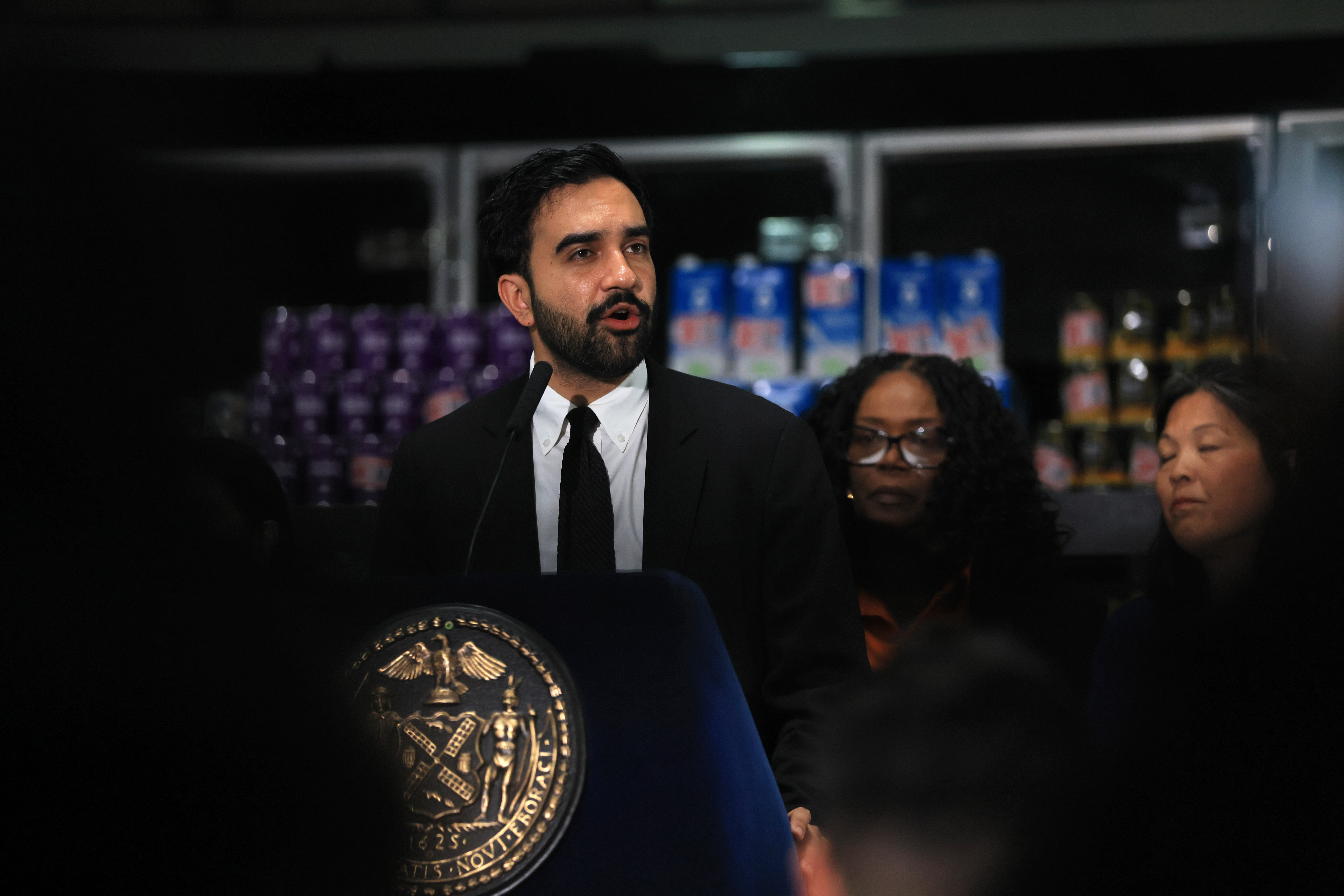
New York City Mayor Zohran Mamdani speaks at a food distribution center on July 27, 2026 in the Brooklyn borough of New York City.
A roundtable with New York City rabbis held at City Hall on Monday gave participants a chance to voice growing concerns about New York City Mayor Zohran Mamdani’s Israel rhetoric they felt had before gone unheard — with several attendees telling Jewish Insider the strong collective message, and Mamdani’s reaction, gave them hope he would change tack.
Multiple attendees of the meeting told JI that they had been in contact with Mamdani’s Office to Combat Antisemitism for months about his “single fixation” on Israel and his characterization of the Jewish state’s most politically active supporters as “monsters,” only to see the mayor dismiss such criticism. They said they viewed the gathering as an opportunity to bring their fears directly to him and to demonstrate communal unity amid a period of spiking antisemitic hate crimes.
“People talked about their own concerns, their families’ concerns, their congregations’ concerns. I think he heard them,” said one participant, who requested anonymity to speak freely about their ongoing contact with Mamdani’s antisemitism czar, Phylisa Wisdom, and her deputy, Josh Binderman. “When they framed the meeting, they said it was going to be an ‘open, honest dialogue.’”
A City Hall official said in a statement to JI that Mamdani’s team had “brought together a group of rabbis that reflects the diversity of New York’s Jewish community — including leaders from several major denominations and four of the city’s five boroughs who have leadership roles in some of the city’s largest congregations and denominations — so the mayor could hear directly from rabbis with a broad range of experiences and viewpoints.”
Several participants JI spoke with similarly remarked on the multi-denominational nature of the meeting, though one attendee noted the absence of more religiously conservative Orthodox leaders. The mayor met last week with leaders of Brooklyn’s anti-Zionist Satmar community.
Even as some critics of Mamdani said they were pleased he had taken the meeting on Monday, they expressed skepticism that the mayor would be open to acting on the message the group of rabbis shared.
The New York Board of Rabbis, the organization that has historically represented the city’s Jewish religious leadership, was not involved in planning the meeting, and an executive of the group suggested that Mamdani’s team had deliberately handpicked rabbis and Jewish leaders sympathetic to his political agenda.
Howard Wolfson, a longtime advisor to former New York City Mayor Michael Bloomberg, said that he was “glad” Mamdani had heard the feedback from Jewish leaders, but argued that “action, not just talk,” would help “create the conditions for a new relationship.”
“A good start would be to stop referring to American orgs that represent many Jews as monsters,” Wolfson said in a text message to JI, referring to controversial June remarks in which the mayor had singled out the pro-Israel group AIPAC while speaking at a campaign rally. Mamdani defended his rhetoric after it sparked an outcry from Jewish organizations that said he had invoked an antisemitic trope.
Meanwhile, Israeli Prime Minister Benjamin Netanyahu’s anticipated visit to New York City next month for the U.N. General Assembly “will be a big test,” Wolfson added of the mayor, who encouraged protests of the prime minister even as he acknowledged he cannot order his arrest. “How much does he want to focus on it? How much does he want to grandstand?”
Rabbi Ammiel Hirsch of the Stephen Wise Free Synagogue, a Reform congregation on Manhattan’s Upper West Side, who serves as the president of the New York Board of Rabbis, said he was not asked to attend the meeting on Monday but was encouraged by what he had heard about it. “If in fact it was a very frank conversation,” he told JI, “then that’s a good thing.”
“It’s not that the mayor is not aware of this. He’s heard it many times,” Hirsch added. “Hopefully it’ll make a difference,” he said, particularly ahead of the High Holy Days of Rosh Hashanah and Yom Kippur, when security concerns are top of mind for synagogues across the city. “It hasn’t made a difference so far.”
“He knows our fear, he is aware of our fear” and “he is pursuing it nonetheless,” Hirsch said.
One of the attendees, who asked for anonymity to talk openly, told JI that he came away suspecting that the Office to Combat Antisemitism had selected himself and his peers as a group that could communicate anxieties over the mayor’s heightened focus on Israel and its local repercussions in a manner Mamdani might be receptive and responsive to.
“The consistent message was, we have to address the mayor’s rhetoric around Israel, because that’s an obstacle to addressing anything else effectively,” said the attendee, who noted that the mayor’s team had told him they would be discussing an upcoming report on antisemitism in the city and initiatives to confront it at the meeting. “I shared similar sentiments to my colleagues about the desire to work together on so many issues of shared concern, and the feeling of alienation as a result of the mayor’s rhetoric, and the belief that it could be different.”
Both attendees who spoke to JI on the condition on anonymity praised Mamdani’s handling of the meeting, characterizing him as an active listener who asked thoughtful questions and took notes throughout the discussion, and who acknowledged synagogues’ charitable work assisting immigrants and feeding the needy. They admitted, however, that the gathering ended without any specific concessions or commitments.
“I’m suspending judgment and waiting to see,” one said.
Rabbi Rick Jacobs, president of the Union for Reform Judaism, came away from the gathering with similar impressions.
“Look, they picked a minyan of rabbis to come sit with the mayor, and I’m sure there are rabbis who just really would’ve just, you know, laid into him,” said Jacobs, known for both his pro-Israel record and outspoken criticism of the Israeli government. “Everybody was thoughtful, everybody was respectful, but everybody made sure that he knew that this is really deeply harmful to our community.”
Jacobs said he had brought his concerns to Mamdani personally in the past, but said he hoped that hearing the same message from so many rabbis would bring about change.
Wisdom said in a statement that the hourlong discussion had “focused on strategies to strengthen Jewish safety and belonging, maintain candid lines of communication and collaborate on issues where we have shared values and goals.”
“It was an open, positive and constructive conversation,” she added. “Mayor Mamdani has and will continue to engage with Jewish life in New York City in order to meet the needs of our communities and reaffirm his commitment to the thriving of Jewish communities across the five boroughs.”
The administration has been increasing its engagement with Jewish leaders ahead of the unveiling of the citywide strategy to combat antisemitism, expected next month.
One Jewish leader who was not invited to the Monday gathering, speaking on the condition of anonymity to address a sensitive issue, said he also met privately a few weeks ago with Wisdom and Binderman and raised concerns about Mamdani. “They listened,” he told JI. “They didn’t argue.”
After Mamdani shot a lengthy video last month in which he walked back his campaign vow to arrest Netanyahu while calling the prime minster a “war criminal” and “the architect of a horrific genocide,” the Jewish leader said he followed up with Wisdom and Binderman in a phone call to voice reservations. There was “not a lot of pushback,” he recalled of their conversation.
Rabbi Joseph Potasnik, executive vice president of the New York Board of Rabbis, lamented that the mayor had not reached out to his group and urged the mayor to engage more with the city’s longstanding Jewish communal organizations.
“When you’re the mayor of New York City, you have to be accustomed, or have to learn to deal with people who like you, don’t like you, agree with you, don’t agree with you. That comes with the territory,” he said. “I was glad to hear the people in the room pushed back on the rhetoric. That was heartening to hear.”
The condolence visit at Lusail Palace drew Qatar’s prime minister and the chief rabbi of Iran
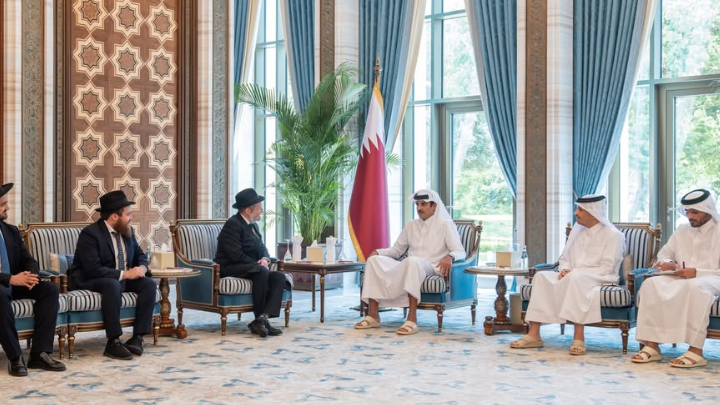
Emir of Qatar
Qatari Emir Tamim bin Hamad Al Thani and Prime Minister Mohammed bin Abdulrahman Al Thani met with Rabbi Mendy Chitrik on July 27, 2026.
Qatari Emir Sheikh Tamim bin Hamad Al Thani hosted a group of rabbis on Monday at Lusail Palace in Doha. Rabbi Mendy Chitrik, chairman of the Alliance of Rabbis in Islamic States, led the delegation along with his son, Rabbi Eliyahu Chitrik, who organizes Jewish communal programming in Qatar. They were joined by Rabbi Yehuda Gerami, the chief rabbi of Iran.
The emir’s office publicized the meeting, posting on the palace’s social media account that the delegation offered condolences on the passing of the emir’s father and predecessor, Sheikh Hamad bin Khalifa Al Thani.
Qatari Prime Minister Sheikh Mohammed bin Abdulrahman Al Thani also attended the meeting.
The emir’s decision to publicize the visit on his official channels is a rare public acknowledgment of Jewish communal ties by a Gulf state that has no formal relations with Israel and funds the news outlet Al Jazeera that amplifies narratives hostile to the Jewish state.
After the hour-long meeting, the elder Chitrik told Jewish Insider that “the emir received us very warmly.”
“We conveyed to him the sympathy and condolences of the Jewish community in Qatar and we spoke about Jewish life in Qatar and different ways we can strengthen Jewish life in the Muslim world,” said Chitrik, chief rabbi of the Ashkenazi Jewish community of Turkey.
Jason Greenblatt, former White House Middle East envoy in the first Trump administration, told JI that the public announcement of the meeting signals warming ties between members of the Jewish community and Qatar.
“Over the past decade, in all my dealings across the region, including with the State of Qatar, I have been treated with genuine warmth and courtesy as both a proud Jew and a strong supporter of Israel,” said Greenblatt.
“Many people there, including some at the leadership level, may disagree with my position on Israel, yet I have consistently been received graciously. As an observant Jew, I have also found Qatar and other countries to be as accommodating as possible of my religious requirements. We may have serious differences over the Israeli-Palestinian conflict, but those differences have always coexisted with mutual respect for our views, beliefs and religions.”
ARIS represents rabbis who serve about 110,000 Jewish people across 18 countries with a Muslim majority. The delegation of rabbis also met with Nickolay Mladenov and Aryeh Lightstone, respectively the high representative for the Board of Peace and the body’s senior advisor, in Brussels earlier this month.
The letter warns that New Jersey ‘cannot lag behind in equipping our state to confront rising antisemitism’
Michael Nagle/Bloomberg via Getty Images
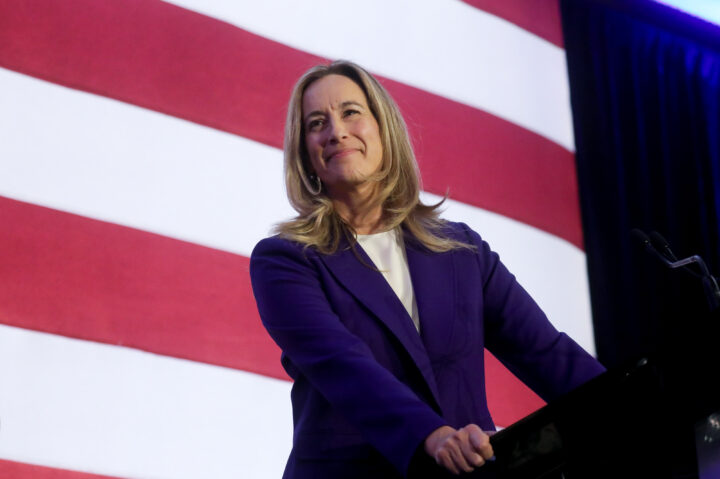
New Jersey Gov. Mikie Sherrill during an election night event in East Brunswick, New Jersey, on Nov. 4, 2025.
More than 2,000 New Jersey rabbis and lay leaders signed a petition to New Jersey Gov. Mikie Sherrill and state lawmakers urging them to take prompt action to implement the International Holocaust Remembrance Alliance’s working definition of antisemitism in the state.
Legislation on the issue picked up broad support in the New Jersey Statehouse last year, but was ultimately halted by then-Gov. Phil Murphy and other state Democratic leaders over concerns that the bill — while enjoying support from a majority of assemblymembers — would require some Republican support to pass, and that voting for the measure could fuel progressive primary challenges to some Democratic members.
“We were deeply dismayed that legislation to adopt the IHRA definition was recently shelved for political reasons, despite broad support in the legislature and clear evidence of rising antisemitism,” the letter, which was organized by the Jewish Majority, reads. “At a moment when Jewish communities seek protection and clarity, this delay sends a troubling message about whether Jewish safety is prioritized.”
The letter argues that the IHRA definition is a “practical necessity” and that, given its substantial Jewish population, the state “cannot lag behind in equipping our state to confront rising antisemitism.”
The bill has been reintroduced in the current legislative session, but one Jewish leader said it does not appear that it has much momentum or institutional backing at the moment, or that the state of play has substantially changed since Murphy’s term ended and the new governor came into office.
Sherrill, a Democrat, had previously expressed support for the IHRA legislation.
Rabbi David-Seth Kirshner of Temple Emanu-El in Closter, N.J., who was one of the driving forces behind the petition, said he was “really furious” when Murphy “played a game with this legislation,” calling it “strange and uncharacteristic” from a leader who was once a “fierce advocate of the Jewish community.”
Kirshner said that, given New Jersey’s large Jewish population, it should have been among the first states to adopt IHRA, rather than lagging behind more than 35 other states. He said that he and other leaders in the state want to support the effort to pass and implement IHRA in any way they can.
He said he would also like to see Sherrill act on the issue through an executive order — even one that is time-limited to allow the Legislature to pass the IHRA bill. He said he would have liked her to implement such an order on her first day in office.
“This is not complicated, and the idea that the governor’s office or that any of our legislators want to complicate this process is a passive-aggressive form of continued antisemitism,” he said.
Rabbi Matthew Gerwitz of Temple B’nai Jeshrun in Short Hills, N.J., another organizer of the petition, said that New Jersey Jews need to “find all ways and operate at all levels” to address rising antisemitism in the state, and not let it become normalized, lest they “end up contributing to our own downfall and demise.”
“[The governor has] expressed her support of us. And this is part and parcel of supporting Jews right now, is making sure that every legal, ethical, communal device is put into place, so that we can feel protected during a time where [antisemitism] has become … normalized,” Gerwitz said.
He said that the Jewish community felt like it had the “rug pulled out from under our feet during a perilous time for Jews” by Murphy.
Gerwitz said that he has no issue with an executive order, as long as it has teeth, but said that he wants to ultimately see legislation passed, so that the state government speaks in one voice on the issue.
“I would like to see the stamp of approval from the Assembly, from the state Senate and from the governor to say every single branch of this government is going to be behind you … the way they should be behind any group that is feeling persecuted,” he said.
Rabbi Samuel Klibanoff of Etz Chaim in Livingston, N.J., inside Sherrill’s former House district, who also helped lead the petition, said it was a “great show of unity amongst the rabbis, because [it’s] not that often that you see a Conservative, Reform and Orthodox rabbi do something together.”
“I hope that [Sherrill] will [act on] her conviction and not party lines or party pressure or whatever it might be,” Klibanoff said. “I just hope she’ll do the right thing, and not play politics with this.”
He said it’s important to bring renewed attention to the issue, and that the longer the bill takes, the longer the Jewish community is left in peril.
Jonathan Schulman, the executive director of Jewish Majority, described the petition as a follow-on and expansion to a previous letter from around 100 rabbis in the state urging passage of the IHRA legislation, explaining that rabbis had heard interest from their congregants about joining the effort as well.
He said he’s hearing widespread support among local leaders for a stopgap executive order, which he said would also create political cover for Democratic lawmakers to “finally be able to vote their conscience and support legislation like this.”
Janeese Lewis George said she regrets committing not to attend events focused on ‘promoting Zionism,’ but hasn’t said so publicly
Craig Hudson for The Washington Post via Getty Images
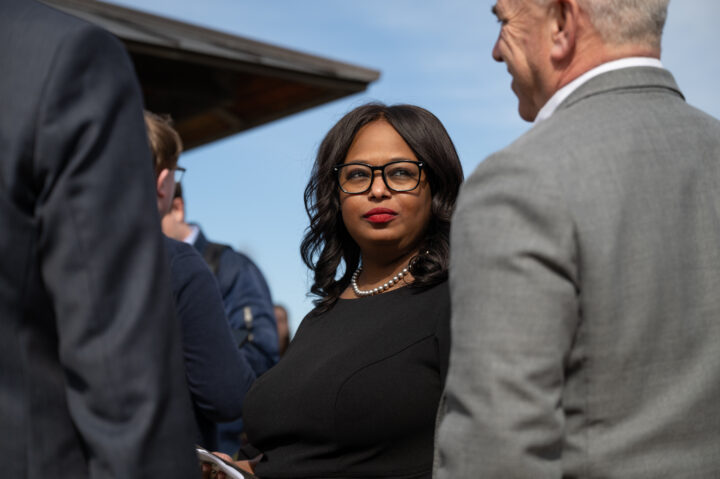
D.C. councilmember and mayoral candidate Janeese Lewis George is seen on Capitol Hill for a press conference in Washington, DC on March 10, 2025.
Janeese Lewis George, a Democratic Socialists of America-endorsed candidate for mayor of Washington, D.C., met with prominent local rabbis and Jewish community leaders last week amid fallout over a DSA questionnaire she filled out outlining her views on Israel and antisemitism.
The March 19 meeting, at the Orthodox Ohev Sholom Congregation in Shepherd Park, was arranged after her responses to a DSA endorsement questionnaire were made public last month, according to two sources familiar with the meeting.
In the questionnaire, Lewis George pledged not to attend events focused on “promoting Zionism and apartheid.” She also said that she had attended a D.C. Jewish Community Relations Council event in December only to talk about opposing Immigration and Customs Enforcement’s deportation measures in the region, and that she did not agree with JCRC’s stances on Israel, Zionism and antisemitism.
At the meeting at Ohev Sholom, Lewis George apologized for her statements in the questionnaire, one of the event’s attendees told Jewish Insider, and cried when someone in the meeting described feeling hurt by her answers in the questionnaire.
She blamed the anti-Israel responses on one of her staff members, and said she would have submitted a different response if she had seen it before it was submitted.
However, she has not expressed that same sentiment publicly. A spokesperson for Lewis George did not respond to multiple requests for comment on Monday.
Lewis George did not make any promises to apologize publicly or to further address her comments in the DSA questionnaire, according to the meeting attendee.
The meeting included rabbis and senior leaders from Milton Gottesman Jewish Day School, the Edlavitch D.C. JCC, Temple Sinai, Ohev Sholom, Adas Israel Congregation, Tifereth Israel Congregation, the JCRC and Tzedek DC, a legal services organization.
Lewis George will appear at a rally hosted by the Metro DC DSA chapter on Wednesday alongside Rep. Rashida Tlaib (D-MI), one of the most vocal detractors of Israel in Congress.
Ron Halber, the CEO of the Jewish Community Relations Council of Greater Washington, wrote in an op-ed published Monday that Metro DC DSA threatens “the sense of attachment and belonging that we [Jews] have long enjoyed in D.C.”
“Their questionnaire for political candidates encourages the systematic erasure of Jewish and pro-Israel Americans from public life. It is an outrageous and revolting display of religious discrimination,” Halber wrote in Washington Jewish Week. He did not specifically mention Lewis George.
Correction: A previous version of this article identified Temple Micah as one of the participants in the meeting. They did not have a representative in the room.
‘Prioritizing politics over antisemitism signals that Jewish safety is negotiable,’ the rabbis wrote, after JI reporting found Murphy and other Democratic leaders were worried about electoral backlash

AP Photo/Eduardo Munoz Alvarez
New Jersey Gov. Phil Murphy speaks during a press conference to announce that George Helmy will take the U.S. Senate seat that will soon be vacated by Senator Bob Menendez, in Newark, New Jersey, Friday, Aug. 16, 2024.
Nearly 100 New Jersey rabbis wrote to now-former Gov. Phil Murphy and members of the New Jersey Assembly this week expressing concerns about reporting from Jewish Insider that Murphy and other Democratic leaders had blocked passage of legislation to adopt the International Holocaust Remembrance Alliance’s working definition of antisemitism.
A source had told JI that Democratic leaders in the state were concerned that lawmakers who supported the legislation would be vulnerable to progressive primary challengers.
“This is a deeply troubling failure of leadership that places political calculations above the safety of the Jewish population,” the 95 rabbis wrote, highlighting a string of violent antisemitic incidents in the state and a report indicating that New Jersey was the state with the highest number of antisemitic incidents per capita in 2024.
“Prioritizing politics over antisemitism signals that Jewish safety is negotiable and subjects our community to further cases of harassment and violence,” the letter reads. “Therefore, we call on our political leaders in New Jersey to immediately revisit and pass legislation that adopts the IHRA definition of antisemitism, and applies that definition to training, education, and hate-crime response systems.”
The letter was first reported by NJ.com and organized by The Jewish Majority.
“Already in 2026 demonstrators have gathered outside Jewish institutions to support Hamas’ murder of Jews, and a synagogue has been burned,” the letter continued. “Now is not the time to play politics with our safety.”
The rabbis also said that the recent mass shooting at a Hanukkah event in Sydney, Australia, shows the “lethal consequences of ignoring such hate” and the necessity to provide “clarity around what constitutes Jew-hatred.”
“We spent a lot of time working on this issue in the legislation, and then when Gov. Murphy killed it very late in his term, [it] was really deflating and hurtful and frustrating,” one signatory, Rabbi David-Seth Kirshner of Temple Emanu-El in Closter, N.J., told JI.
He emphasized that the “worst event to happen in our modern era since the Holocaust [the Oct. 7 attacks] … was met in the diaspora, outside of Israel, with increased hatred towards Jews, and vilification and threatening of Jews” and that “what made it even worse is that when we started to wag a finger in the face of those who were threatening and hurting and intimidating the Jewish people, they were claiming it’s not antisemitic.”
New Jersey lawmakers are likely to pursue efforts to pass the IHRA bill again this year.
Kirshner said that the path forward is clear: “We did all the work, all the legislation. It was all put in front of us. Just put the bill out, and let’s pass it. New Jersey has the largest population of Jewish people outside of New York City. It’s the second largest out of our 50 states. We need to act like it.”
He emphasized that nothing about the bill would silence criticism of the Israeli government, as some critics have claimed.
“It will give us guardrails, and it will give us a sense of protection that we are desperately seeking for the last 24-plus months since the worst day since the Holocaust,” Kirshner said.
He said that an executive order implementing the IHRA definition, “especially if it has all the nuts and bolts of the IHRA legislation” would be a “good stopgap measure” and would “engender some good will” for the new governor, Democrat Mikie Sherill, but said that it cannot be a replacement for the state legislature passing the bill.
A source told JI that such an executive order had been drafted and presented to Murphy’s office before the end of his term, amid outcry over the failure of the IHRA legislation, but it was not signed.
The list of signatories includes leaders of some of the largest synagogues in New York City, representing all the leading Jewish denominations
ANGELA WEISS/AFP via Getty Images
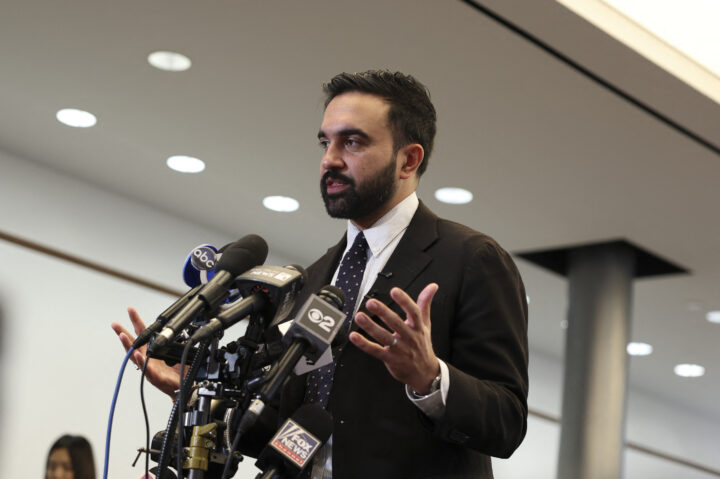
New York City Mayor Zohran Mamdani answers questions on October 17, 2025 in New York City.
Over 800 rabbis from around the country signed on to an open letter on Wednesday voicing concern that, if elected New York City mayor, Zohran Mamdani would threaten “the safety and dignity of Jews in every city,” citing the Democratic nominee and front-runner’s antagonistic views towards Israel.
“As rabbis from across the United States committed to the security and prosperity of the Jewish people, we are writing in our personal capacities to declare that we cannot remain silent in the face of rising anti-Zionism and its political normalization throughout our nation,” wrote the rabbis, representing the Reform, Conservative and Orthodox movements.
In the letter, “A Rabbinic Call to Action: Defending the Jewish Future,” spearheaded by The Jewish Majority, signatories called out Mamdani’s refusal to condemn the slogan “globalize the intifada,” noted his denial of Israel’s legitimacy as a Jewish state and condemned his repeated accusations that Israel committed genocide in its war against Hamas in Gaza.
“We will not accept a culture that treats Jewish self-determination as a negotiable ideal or Jewish inclusion as something to be ‘granted,’” the letter continued. “The safety and dignity of Jews in every city depend on rejecting that false choice.”
The signatories include the leaders of some of the largest synagogues in New York City, including Rabbi Joshua Davidson, senior rabbi at Temple Emanu-El; Rabbi David Gelfand, senior rabbi at Temple Israel of the City of New York; Rabbi Chaim Steinmetz, senior rabbi at Kehilath Jeshurun; Rabbi David Ingber, founder of Romemu and senior director of Jewish Life and the Bronfman Center at 92NY; and Rabbi Ammiel Hirsch, president of the New York Board of Rabbis and senior rabbi of Stephen Wise Free Synagogue.
The letter, published three days before early voting for the Nov. 4 election begins, comes as some Jewish leaders have expressed frustration over a lack of organized opposition to Mamdani, who leads against his opponents, former New York Gov. Andrew Cuomo, running as an independent, and Republican nominee Curtis Sliwa.
It points to two recent public pleas from prominent New York City rabbis decrying Mamdani.
“I do not speak for all Jews, but I do represent the views of the large majority of the New York Jewish community, which is increasingly concerned with your statements about Israel and the Jewish people,” Hirsch said in an online video last week, in which he was addressing Mamdani directly. “Your opposition to Israel is not centered on policies, you reject the very existence of Israel as a Jewish state… I urge you to reconsider your long-held rejection of Israel’s right to exist. Be a uniter and a peacemaker.”
Rabbi Elliot Cosgrove of the Park Avenue Synagogue said in an address to his congregation last Saturday, “Mamdani’s distinction between accepting Jews and denying a Jewish state is not merely a rhetorical sleight of hand or political naïveté — though it is, to be clear, both of those — his doing so is to traffic in the most dangerous of tropes.”
The letter goes on to urge “interfaith and communal partners to stand with the Jewish community in rejecting this dangerous rhetoric and to affirm the rights of Jews to live securely and with dignity.”
It continues, “Now is the time for everyone to unite across political and moral divides, and to reject the language that seeks to delegitimize our Jewish identity and our community.”
Growing up immersed in conversations about the weekly Torah portion over Shabbat lunch and spending his summers at Camp Ramah in the Poconos shaped the Pennsylvania budget secretary’s approach to public service

Pennsylvania’s Budget Secretary Uri Monson
Only in a family where nearly everyone is a rabbi does becoming a Cabinet secretary in one of the largest states in the nation make you a black sheep.
That’s the joke that Uri Monson, Pennsylvania’s budget secretary, likes to make when describing his career as a public servant in the context of his family — a brother, father, grandfather and great-grandfather who were rabbis; a stepmother who was a lifelong Jewish nonprofit professional; and a mother who was a renowned Jewish academic and university administrator.
But coming out of that kind of lineage (his great-grandfather was the first person to certify Coca-Cola as kosher!), choosing a career in public service was Monson’s act of “pseudo-rebellion,” he said in an interview with Jewish Insider earlier this month. He didn’t stray that far from his Jewish values, though — during his first internship, at city hall in Philadelphia, he helped draft the mayor’s speech for Israeli Independence Day.
“I grew up a mile from Independence Hall. I’ve always been an American government junkie, and fascinated by and love[d] government and its ability to really help,” said Monson, 56. “I felt, even at 18, that I could make it better, that it had to be able to be done better, and that started me on that path to public service.”
Even if Monson didn’t follow his family members into the Jewish professional world, growing up immersed in deep conversations about the weekly Torah portion over Shabbat lunch and spending his summers at Camp Ramah in the Poconos shaped his approach to public service just as much as his wonky fascination with fiscal policy and his master’s degree in public administration.
“What we’ve seen all along is that that Jewish perspective has shaped his commitment to what government can do and the way that society should work,” said Rabbi Chaim Galfand, the head rabbi at Perelman Jewish Day School in Philadelphia and a close friend of Monson’s.
Monson attended the joint program at List College at the Jewish Theological Seminary, where he earned a bachelor’s degree from Columbia University and another, in midrash, from JTS. The intellectual curiosity and creativity that comes from his expertise in interpreting the Torah — Monson calls himself a “midrash parsha junkie” — colors the way he approaches everything from budgetary policy to his weekly Settlers of Catan board games with Galfand each Shabbat.
The biblical stories about Joseph are his favorite; Joseph’s “rise in the political world,” from slave to advisor to the Egyptian pharaoh, is particularly resonant for Monson. But he doesn’t think there is only one way to engage with these stories, and that’s a lesson that guides his approach to public policy, too.
“When you make that jump to learning that the Talmud is not a book of law, but that it’s a book of how to think about law, it’s a major change. It’s a major jump in thought,” Monson said. “To realize that you had people disagreeing over really complex issues of Jewish law — that’s how they lived their lives, and what they actually record [in the Talmud] is the discussion and the back-and-forth and the debate. They were able to do it while living civilly together.”
Monson started his career in Washington as a policy advisor at the Department of Education during the Clinton administration. He has friends from that era who have lost their jobs as the Trump administration slashes the federal workforce. Monson does not reflexively believe all public employees have a right to keep their jobs; his former boss, President Bill Clinton, also stressed efficiency and shrunk the federal workforce by hundreds of thousands of people. But he does think those workers should be respected.
“There are few of us who have a mantra, and I share this with the governor, that [we] cannot stand the phrase, ‘That’s the way we’ve always done it.’ There are always opportunities for change,” he said, referring to Gov. Josh Shapiro. “The biggest difference for me between what I was a part of and what the current administration is doing is that that change was all about employee empowerment.” Shapiro has made a play for laid-off federal workers, encouraging them to apply to fill vacancies in Pennsylvania.
Monson’s time in Washington got him started on his path to Harrisburg — both because it was his first full-time gig in the government, and also because it was in this era that he reconnected with Shapiro, who was working on Capitol Hill at the time.
“Like most expatriate Eagles fans, we would find each other to watch games, that kind of thing,” said Monson. But their relationship goes back decades: Shapiro and Monson’s younger brother, Ami, were in the same grade at Akiba Hebrew Academy, a pluralistic Jewish day school in the Philadelphia suburbs. (CNN anchor Jake Tapper was another classmate.) Shapiro’s parents and Monson’s were active in the Soviet Jewry movement of the 1970s and 1980s.
“Uri and I both lean on our family and our faith as motivation to serve the good people of Pennsylvania,” Shapiro told JI in a statement last week. “We are both driven by the same Jewish principle of tikkun olam, and from the passage from the Talmud that teaches us that no one is required to complete the task, but neither are we free to refrain from it.”
Shapiro’s first video ad in his 2022 gubernatorial campaign showed him, his wife and their children celebrating Shabbat. Monson, who observes Shabbat and does not work or travel from sundown Friday until Saturday night, receives weekly “Shabbat shalom” emails from Shapiro.
“When he offered me the job, I said, ‘I’m not going to be in Harrisburg on Fridays in the winter’” — when Shabbat begins in the late afternoon — “and he said he understood,” Monson recalled. Over the years, his colleagues have gotten used to Monson’s Shabbat observance, sending emails on Saturdays with the subject line “read me first” to try to capture his attention after Shabbat ends.
“Once in a while they’re like, ‘Maybe I want to be Jewish too,’ because they need a break,” Monson said, laughing.
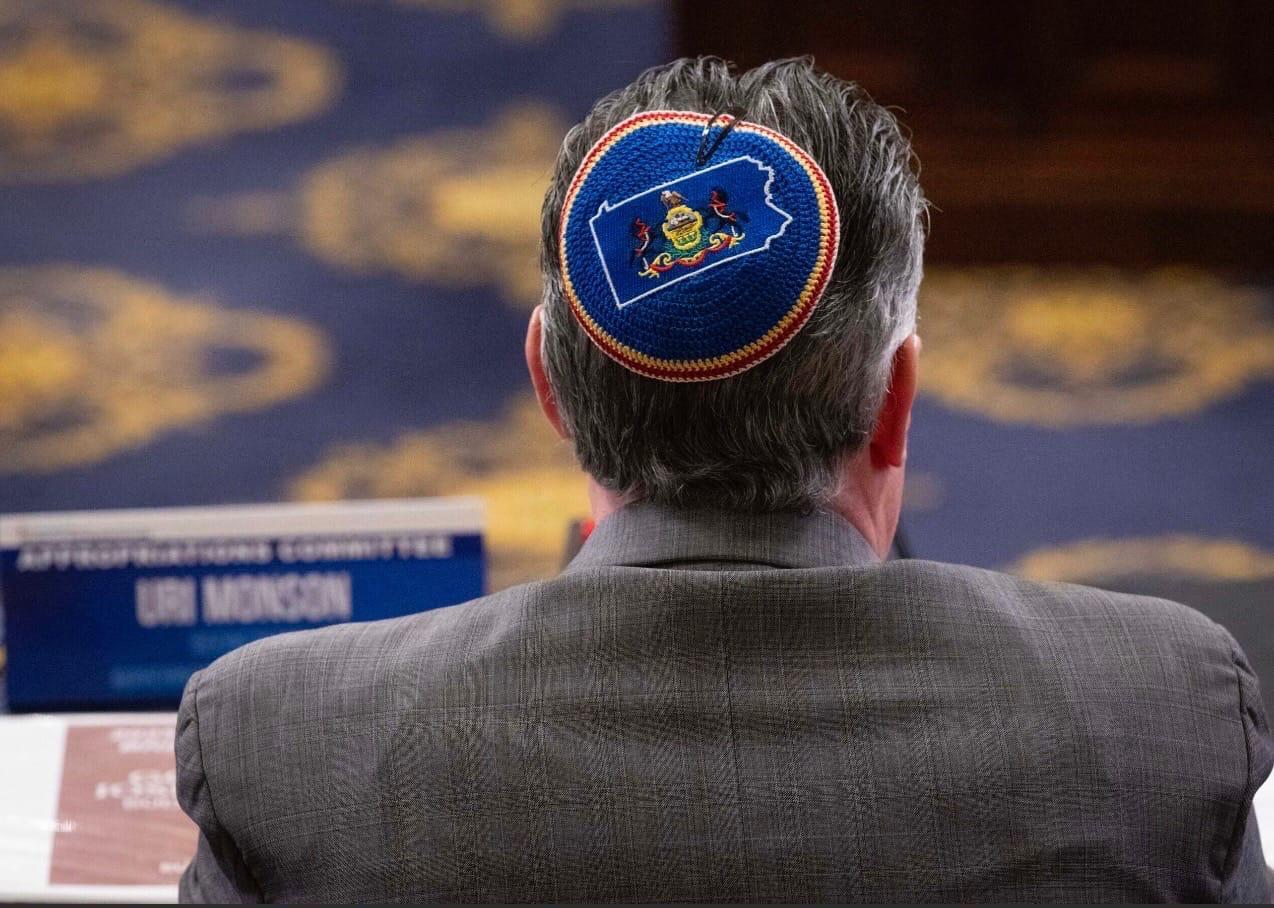
Monson returned to Philadelphia in the late 1990s for the first in a series of increasingly powerful jobs dealing with municipal and school district budgets. In 2012, when Shapiro was chair of the Montgomery County Board of Commissioners, he tapped Monson to serve as chief financial officer of the commonwealth’s third most populous county. Monson then spent seven years as chief financial officer of the School District of Philadelphia, which has a budget of $4.6 billion, helping shepherd the district through the tumult of the COVID-19 pandemic. He joined Shapiro in Harrisburg in early 2023.
“Uri had a very calming presence of being able to lead with certainty in very uncertain times,” said Larisa Shambaugh, the former chief talent officer in the Philadelphia school district, where she worked closely with Monson. She saw him take a forward-looking approach to budgeting, thinking not just about cost but about how to advance the interests of the school district.
“What was truly a joy about working with Uri is that he wasn’t a CFO that was focused only on finances and only on the bottom line,” Shambaugh explained. “When we would be thinking about proposing a new initiative or a new policy or a new staffing structure, the first question wasn’t, How much would this cost and can we afford it? It was, Why is this best for students?”
Shambaugh also benefitted from another skill Monson brought with him to his next job: his baking skills. He baked lemon squares for a meeting with new school board members. When he found out Shambaugh loved challah, he baked her one. In his new job, he’s baked cranberry walnut muffins twice — once to relax before a budget hearing and once to get rid of flour before Passover — and brought hamantaschen to the capital during Purim. (“We’ve all been on the receiving end of his largesse,” said Galfand.)
Monson has spent the spring testifying at Statehouse hearings about Shapiro’s $51.5 billion budget proposal. This is the forum where he allows his Torah discussion skills to shine: keeping his cool under sometimes hostile questions from Republicans, and disarming them by actually being willing to engage. (When he sat down at this year’s budget hearings, he wore a custom kippah showing the commonwealth of Pennsylvania, made by an artist his wife found on Etsy.)
“I will never claim to have a monopoly on good ideas, and I think that’s something I certainly learned from around the table and from growing up among the rabbis,” said Monson. “I want to learn from everybody, because you can learn from everybody, and be open to the discussion.”
Please log in if you already have a subscription, or subscribe to access the latest updates.
 Continue with Google
 Continue with Apple