




















































The mayor said he’ll keep working with Morris Katz despite calls from DSA members to boycott the consultant
ANGELA WEISS/AFP via Getty Images
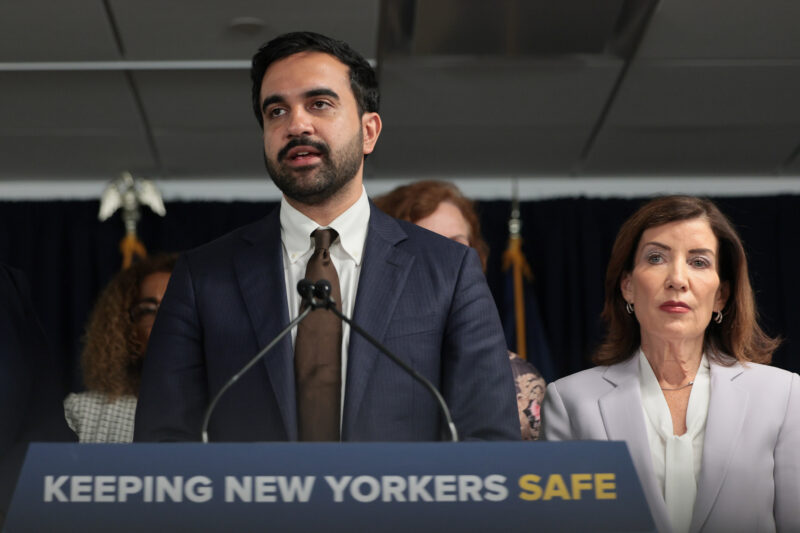
New York City Mayor Zohran Mamdani answers questions on October 17, 2025 in New York City.


 Add JewishInsider on Google
New York City Mayor Zohran Mamdani vowed on Monday to maintain ties with a controversial political operative behind the imploded campaign of Maine Senate candidate Graham Platner, whom a former romantic partner accused of rape, leading him to drop out of the race.
Morris Katz and his consulting firm Fight Agency gained a reputation as political wonder-workers after assisting in Mamdani’s 2025 campaign and then in the socialist sweep of New York’s congressional primaries last month. But following the high-profile collapse of Platner’s candidacy, members of the Democratic Socialists of America began circulating a petition calling for a boycott of Katz’s services.
But Mamdani, one of DSA’s most prominent national figures, declared he would not participate in the proposed blacklist.
“I will continue to work with Morris Katz,” Mamdani told reporters at an unrelated event. “He remains a top advisor of mine.”
Mamdani’s remarks come in spite of reports that Katz had sought to intimidate a former Platner staffer who had revealed that the Democratic contender had sent sexually explicit messages to several women. Katz also stood by the candidate through revelations that he had a tattoo of a Nazi symbol and that former romantic partners had accused him of abusive behavior. Democrats and independent observers consider unseating Sen. Susan Collins (R-ME) crucial to the party’s hopes of capturing control of the Senate this fall.
Katz, born to a prominent Manhattan Jewish family, has said that AIPAC “radicalized” him and has advised candidates to take a hostile stance toward Israel.
The Maine Democrat, who won his primary in June, had been dogged by controversy for months before a rape allegation finally cost him his political allies
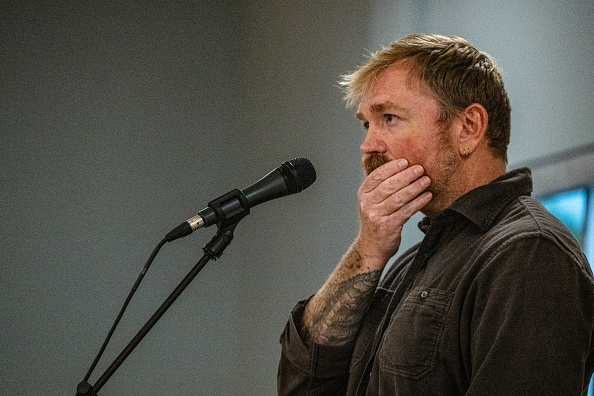
Photo by Laura Brett/Getty Images
Democratic U.S. Senate candidate Graham Platner speaks to voters at a town hall on June 7, 2026 in Portland, Maine.
Maine Senate candidate Graham Platner, the scandal-plagued progressive insurgent, announced on Wednesday evening that he plans to drop out of the race amid intense pressure, two days after a former romantic partner accused him of rape.
Even as he announced his withdrawal, Platner remained defiant, claiming that the allegations against him were a conspiracy aimed at forcing him out of the race.
The sexual assault allegation by Jenny Racicot, who shared the details of the incident with Politico, followed months of controversies — including allegations of domestic abuse — that Platner withstood with the backing of top Democrats, including Sens. Elizabeth Warren (D-MA) and Bernie Sanders (I-VT) and, after the primary, Senate Minority Leader Chuck Schumer (D-NY). He lost the support of his political allies after the report was published on Monday.
Even before that, Platner had been dogged by controversy for months. Last October, Platner acknowledged that he had a tattoo of a Nazi symbol known as a Totenkopf for nearly two decades.
He denied knowing what the symbol meant, but a past acquaintance told Jewish Insider that Platner was aware of its Nazi association. Another former romantic partner, Lyndsey Fifield, who accused Platner of domestic violence, shared text messages with the New York Times showing she had informed friends of the Nazi symbol months before it became public knowledge and said he and his Marine colleagues had chosen the symbol deliberately.
In Reddit posts, Platner regularly used slurs, criticized sexual assault victims and praised Hamas’ tactics during the terror group’s 2014 war against Israel.
In his announcement, Platner continued to deny the sexual assault allegation, claiming that “large forces,” the “corporate media” and the “political establishment” are conspiring against him — specifically timed in order to force him off the ballot before the drop-out deadline next week.
“We live in a political system that is not built for normal people,” Platner asserted. “It is a system that is built structurally to make sure that movements like ours cannot flourish, that if they begin to succeed, they can be crushed. … We did it the way that we were told we are supposed to make change, and we won, and now they are not going to let us have it, not if it’s me.”
He said he’s leaving the race because “those in power … are using these allegations as an excuse” to block his ability to fundraise, access voter data and otherwise campaign.
Platner insisted he was not attempting to influence the process to replace him on the ballot — a claim disputed by the Maine Democratic Party and numerous news reports. He said that the process “needs to be open, transparent and democratic” and not shaped by “party apparatchiks” or party leadership in Washington.
He also said he “intend[s] to file my paperwork to withdraw,” indicating he had not yet actually done so.
In his statement, Platner also referenced his repeated claim that Israel committed genocide in Gaza, a charge that had become central to his campaign.
“All we were asking for was healthcare, was to end the genocide, to use our taxpayer dollars at home to uplift our communities, instead of waging war overseas,” Platner said.
Shortly before Platner’s announcement, the Maine Democratic Party’s state committee members met and voted to hold a nominating convention to choose a new nominee should Platner withdraw from the ballot. Party leaders said they’d disclose further details about the process “soon.”
Media reports indicate that county committees would be charged with selecting 500 to 600 total delegates for the convention.
In a text message to supporters on Wednesday, Platner’s campaign manager claimed that the Maine Democratic Party has been coordinating behind closed doors with the Democratic Senatorial Campaign Committee to cut Platner’s camp and supporters out of the nominating process.
Platner entered the Senate race to challenge Sen. Susan Collins (R-ME), a five-term incumbent, last August. From the beginning of the race, he touted his bona fides as a veteran who served in Iraq and Afghanistan and positioned himself as an anti-war candidate. He has blamed his past conduct on PTSD and his resulting alcohol dependence.
From the beginning, Platner positioned himself as a working-class outsider taking on the establishment — including both Collins and the Democratic establishment, which was backing Janet Mills, Maine’s governor, in the Democratic primary. His viral first campaign video was produced by Morris Katz, a political consultant who had also made political ads for New York City Mayor Zohran Mamdani.
Criticism of Israel was central to Platner’s campaign. He regularly attacked AIPAC and described Collins as “bought and paid for by [Israeli Prime Minister] Benjamin Netanyahu.” Liberal Jewish groups, including the Jewish Democratic Council of America and J Street, had opted not to endorse Platner, even after Mills dropped out of the race in April. Platner handily won the Democratic primary in June. Mills did not endorse him.
Democrats saw the race as a possible pickup opportunity in a midterm election year when many voters in the purple state are disillusioned by President Donald Trump.
Numerous Maine Democrats have already announced plans or filed paperwork to take Platner’s place on the ballot, including former Maine Centers for Disease Control Director Nirav Shah, former state Senate President Troy Jackson, former House candidate Jordan Wood, former Senate candidate David Costello, Secretary of State Shenna Bellows, former House candidate Paige Loud, state Rep. Valli Geiger and brewery owner Dan Kleban.
Geiger claimed on Wednesday that she was Platner’s preferred replacement, but a campaign spokesperson denied that, though the spokesperson said he had encouraged her to run if he dropped out.
Plus, U.S., Israeli officials skeptical over Hamas' pledged dissolution

(CJ Gunther/Getty Images)
Democratic U.S. Senate candidate Graham Platner and his wife Amy Gertner wave to supporters as they arrive to Platner's Primary Election event on June 9, 2026 in Blue Hill, Maine.
Good Tuesday morning.
In today’s Daily Kickoff, we look at the fallout from a new report that Maine Senate candidate Graham Platner sexually assaulted a former partner, and spotlight the South Florida congressional race in which Rep. Debbie Wasserman Schultz is mounting a bid in a district historically represented by Black legislators. We report on an Israeli Democracy Institute survey that found confidence in President Donald Trump’s prioritization of Israel’s security needs at an all-time low, and look at a new psychology training program backed by the Academic Engagement Network that aims to combat antisemitism in mental health care. Also in today’s Daily Kickoff: Ambassador Yechiel Leiter, Alejandro Mayorkas and President Emmanuel Macron.
We have also launched a new on-demand Live Briefing that you can access throughout the day via our new app (on Apple and Android) and on our website.
Today’s Daily Kickoff was curated by JI Executive Editor Melissa Weiss and Israel Editor Tamara Zieve, with an assist from Danielle Cohen-Kanik and Marc Rod. Have a tip? Email us here.
What We’re Watching
- President Donald Trump is slated to meet with Turkish President Recep Tayyip Erdoğan this afternoon, shortly after he lands in Turkey for the two-day NATO Ankara summit. The summit kicks off later today with representatives from all 32 NATO countries expected to attend.
- In addition to heads of state, a bipartisan congressional delegation comprised of Sens. Dick Durbin (D-IL), Jeanne Shaheen (D-NH), Thom Tillis (R-NC), Chris Coons (D-DE) and Mike Rounds (R-SD) and Rep. Mike Turner (R-OH) will also be attending the summit after stopping in Budapest, Hungary, where the lawmakers met on Monday with newly elected Prime Minister Péter Magyar.
- Iran is expected to be a primary topic of conversations on the sidelines of the convening. Before leaving for Ankara, Trump said that the U.S. would either reach an agreement with Tehran, or would “finish the job.” His comments came hours before Iran’s Islamic Revolutionary Guard Corps struck two ships — believed to be a Qatari tanker and a Saudi vessel carrying crude oil — transiting through the Strait of Hormuz near the coast of Oman.
- In Iran, officials from dozens of countries — including Qatar, Saudi Arabia, India, China and Turkey — are taking part in the ongoing ceremonies around the funeral of former Supreme Leader Ayatollah Ali Khamenei. Absent from the funeral events are representatives from the United Arab Emirates and Kuwait, both of which were heavily targeted by Iran during the recent war.
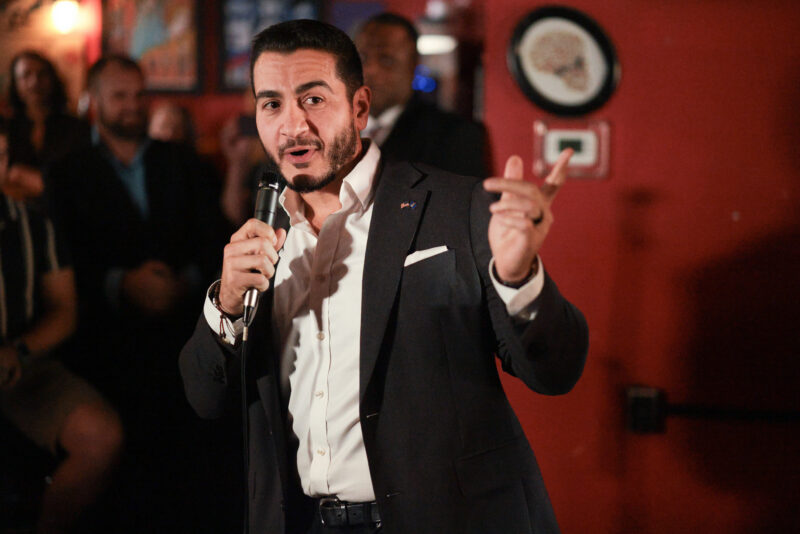
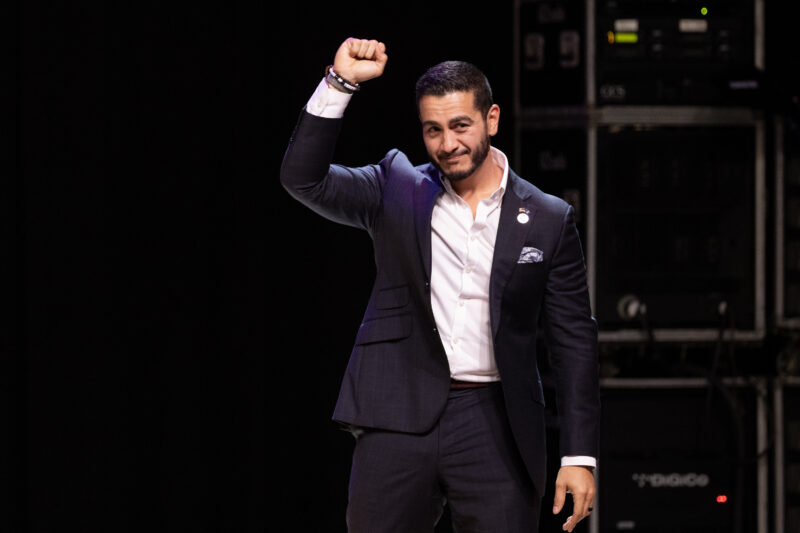
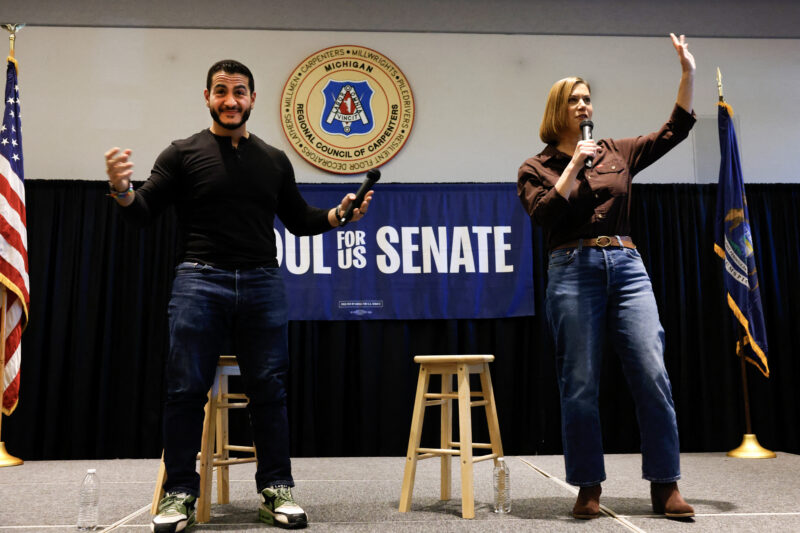
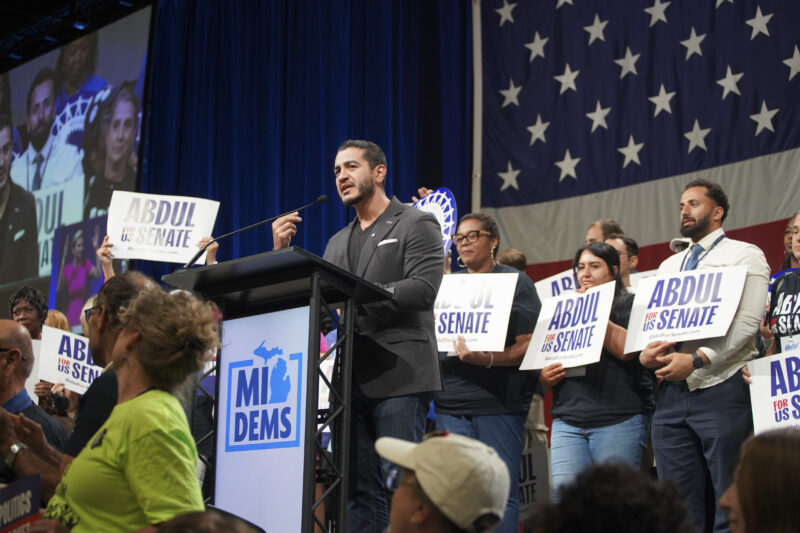
- Stateside, Rep. Haley Stevens (D-MI) and Abdul El-Sayed will face off this evening in a head-to-head debate as the two vie for the Democratic nomination in the state’s open Senate race. The debate will be the first matchup between the two since state Sen. Mallory McMorrow dropped her bid over the weekend.
- Former U.S. Ambassador to Japan Rahm Emanuel is in Israel this week ahead of a planned speech tomorrow at Tel Aviv University. Emanuel met on Monday with human rights lawyer Cochav Elkayam-Levy, who spearheaded the effort to document Hamas’ sexual violence during the Oct. 7, 2023, attacks.
- Elsewhere in Israel, the three-day Contemporary Antisemitism conference kicks off today at the University of Haifa. Deborah Lipstadt, who served as the Biden administration’s antisemitism envoy, is slated to deliver the keynote address today.
What You Should Know
A QUICK WORD WITH JI’S MELISSA WEISS
When an ex-girlfriend of Graham Platner told Politico in a story published on Monday that the Maine Democratic Senate candidate had raped her in 2021 after entering her home while heavily intoxicated, she said she did so because the response to a recent New York Times report on Platner’s past dubious behavior had focused on discrediting Lyndsey Fifield, one of the women who featured prominently in the story over her ties to the GOP.
Jenny Racicot, a Democrat, hadn’t wanted to go public with the rape accusation (which she had shared off-record with the Times), in part because she and Platner were largely politically aligned. “One of the reasons I didn’t come forward sooner was, the huge moral conflict that I had between supporting his politics, but not supporting him as a person,” Racicot told Politico. “My part of the story [in the NYT] was just a read-over,” Racicot said. “And the story was Lyndsey, and the accusations of her being politically motivated.”
The unfolding situation in Maine reflects a broader trend in American politics in which immoral or questionable behavior by one’s peers is ignored or obfuscated to serve a perceived “greater good” of electing a political ally despite their failing moral standards.
In recent years, both major parties have increasingly tolerated conduct that would have once been considered disqualifying — even as the #MeToo movement briefly changed the nature of the discourse (see former Minnesota Sen. Al Franken as an example). Similar arguments have surfaced across political controversies over the last decade (including against President Donald Trump), with supporters of embattled candidates and officials insisting that policy positions outweigh personal conduct and dismissing allegations as politically motivated.
In a short span of time, the 2017 rallying cry of “Believe all women” gave way to “Believe women whose politics align with ours” — a mindset that extended to the widespread denial of Hamas’ sexual violence during the Oct. 7, 2023, terror attacks and against the Israeli hostages kept in captivity in Gaza.
But yesterday’s Politico report, which prompted calls from Platner’s most prominent backers — including Rep. Ro Khanna (D-CA) and Sens. Elizabeth Warren (D-MA) and Ruben Gallego (D-AZ) — for him to end his bid, may mark the point at which previous defenses of the Maine Democrat become politically untenable.
SORE SPOT
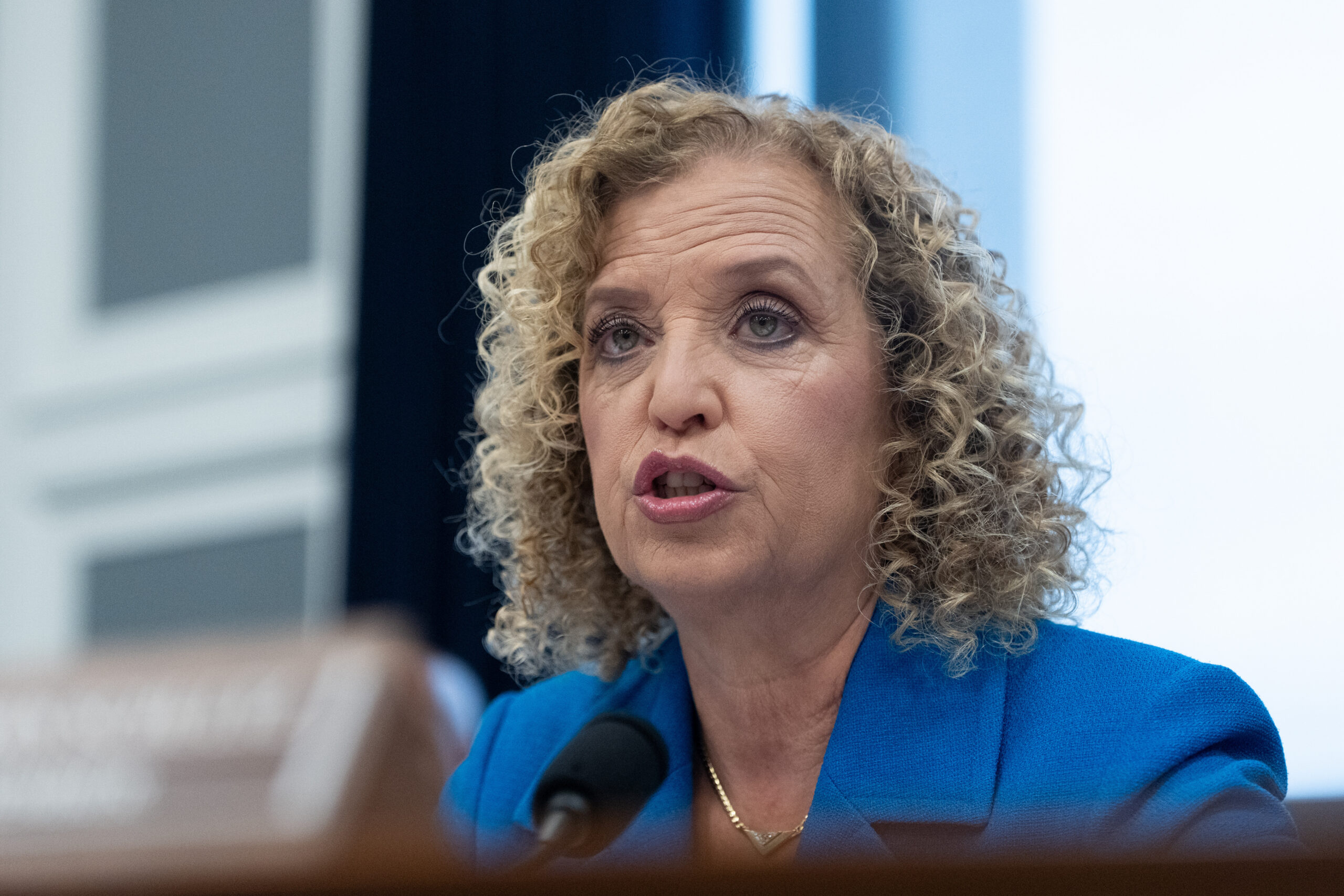
Rep. Debbie Wasserman Schultz’s (D-FL) reelection race has turned into a local and national flashpoint following the Republican-led redistricting process in Florida, and risks driving a wedge in traditional Black-Jewish alliances in the state and the party. Wasserman Schultz is running in South Florida’s newly redrawn 20th Congressional District, a decision pitting the longtime Democratic leader and former Democratic National Committee chair against leaders who have criticized her for running in a seat historically represented by a Black lawmaker, Jewish Insider’s Marc Rod reports.
Redistricting ramifications: “The situation we’re in is the result of a deliberate decision by the Republican leadership in our state to target all three Jewish members of Congress from South Florida, to target the two African American members of Congress from South Florida and deliberately set something up that was going to result in, let’s say, tension between those two historically allied communities,” said Joe Geller, a former Florida House Democrat, who lives outside the district and is supporting Wasserman Schultz.
LOSING FAITH

The number of Israelis who believe President Donald Trump views Israel’s security as a central consideration has continued to plummet to record lows after Washington signed a memorandum of understanding with Iran, according to a new survey from the Israel Democracy Institute. The June 2026 Israeli Voice Index, conducted between June 28 and July 1, found that 28% of respondents — including 26% of Jewish Israelis and 36% of Arab Israelis — believe Israel’s security is a key consideration for Trump, Jewish Insider’s Matthew Shea reports.
Survey says: Among Jewish Israelis, the figure dropped 15 percentage points from a month ago, when 41% of respondents said they felt Israeli security was a key consideration for Trump as his administration engaged in negotiations with Tehran. At the time, those findings marked the lowest levels of Israeli trust in Trump since the research center began tracking the metric when he was elected to a second term in November 2024.
DISARMAMENT DOUBTS

American and Israeli officials expressed skepticism on Monday that Hamas would follow through with its pledge to dissolve its governing body that has ruled Gaza for over two decades after Hamas announced the dissolution of the “Emergency Committee,” the terrorist organization’s governing body, and the resignation of Mohammed al-Farra as the committee’s chief, Jewish Insider’s Emily Jacobs and Matthew Shea report.
State of play: The terrorist group said that it was prepared to transfer authority to the National Committee for the Administration of Gaza (NCAG), the technocratic committee established under President Donald Trump’s Gaza peace plan and overseen by the Trump administration’s Board of Peace. The Board of Peace said that it was withholding judgment on the announcement, instead vowing to assess Hamas’ “actions, not promises, to meet the critical needs of the people of Gaza.” Israeli Foreign Minister Gideon Sa’ar dismissed the move outright, saying that Hamas had agreed to give up governing control of the Gaza Strip in a largely symbolic overture while sidestepping disarmament calls.
DEAL DISPUTE
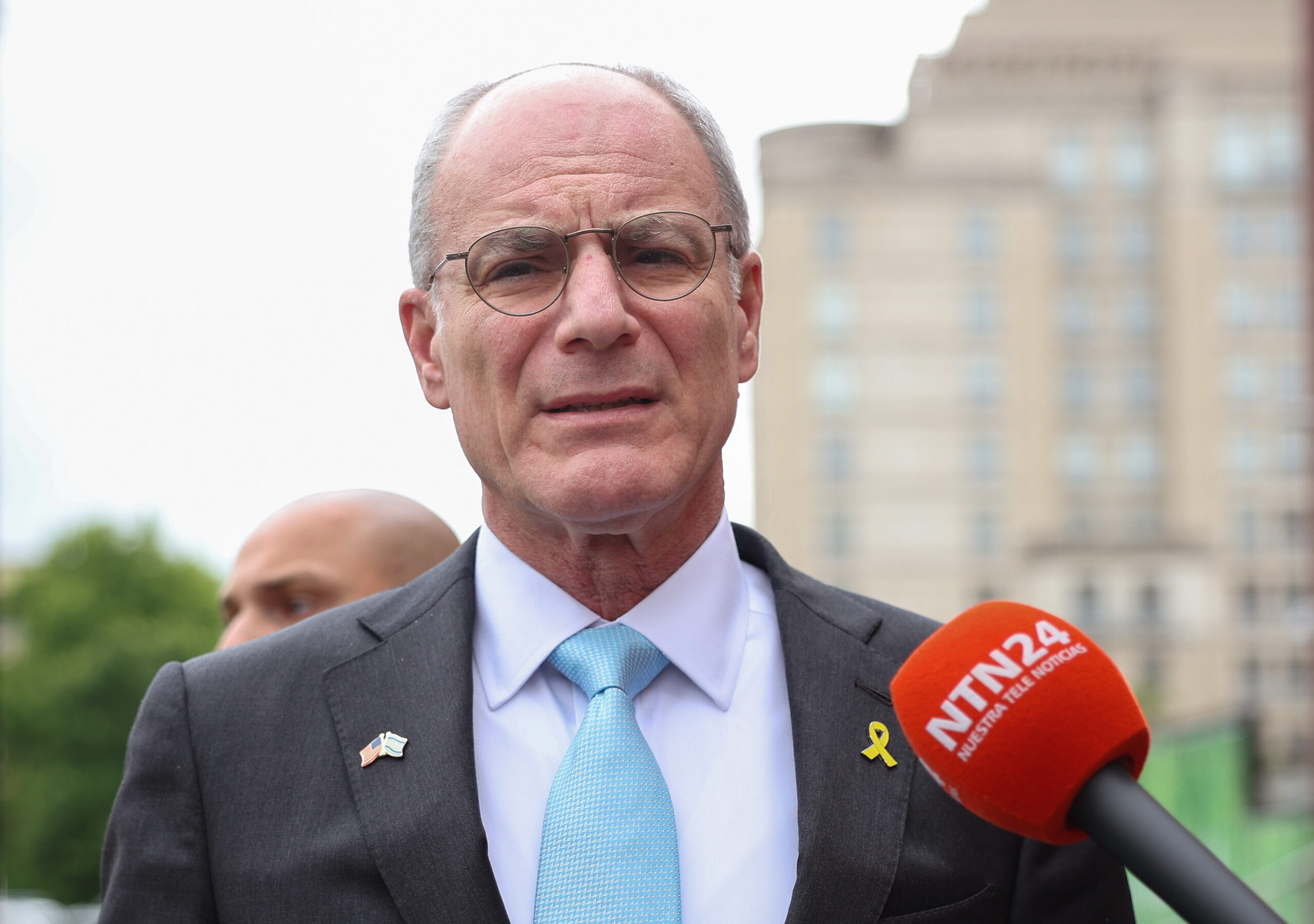
Jerusalem and Beirut see their trilateral agreement signed with the U.S. last month as “superseding” the memorandum of understanding signed between the U.S. and Iran, Israeli Ambassador to the U.S. Yechiel Leiter said on Monday. “Whether the United States does, you’ll have to ask the administration spokesman,” he added, speaking at an event hosted by the Council on Foreign Relations in Washington, Jewish Insider’s Haley Cohen reports.
Conflicting clause: Leiter specifically referenced the first clause of the MOU, to which Israel and Lebanon were not parties, which called for an end in hostilities around the region, including Israel’s war against Hezbollah in southern Lebanon. Leiter acknowledged that Iran — as well as mediating countries Pakistan and Qatar — views the MOU differently and believes it overrides the Israel-Lebanon framework deal.
WINGS CLIPPED

Israeli Prime Minister Benjamin Netanyahu voiced opposition to the Trump administration’s sale of jet engines and potential sale of F-35 fighter jets to Turkey on Monday, saying on “Fox & Friends” that such moves “will upset the power balance in the Middle East, which is ultimately guaranteed by Israeli air superiority” and “America’s posture” in the region, Jewish Insider’s Christina Sher reports.
Turkey talk: Netanyahu’s remarks came hours before President Donald Trump’s departure for a NATO summit in Turkey, on the sidelines of which Trump is expected to hold a bilateral meeting with Turkish President Recep Tayyip Erdoğan. “I don’t think they should be given F-35s or the engines for their fighter jets,” Netanyahu said, describing Turkey as “infected by the Muslim Brotherhood, an extreme movement that hates America.” He also pointed to recent comments by Erdoğan and Turkish ministers that Netanyahu characterized as “calling for the annihilation of Israel.”
EXCLUSIVE

Two leading psychologists are launching an initiative to help future clinicians better care for Jewish patients, Jewish Insider’s Haley Cohen has learned, amid a surge of antisemitism in the mental health field that has left Jewish therapists and clients facing isolation and discrimination.
Pilot program: Created by Miri Bar-Halpern, a lecturer in psychology at Harvard Medical School, and Dean McKay, a professor of psychology at Fordham University, the pilot program, announced on Tuesday, will roll out in doctoral psychology programs at universities across New York, Connecticut and Massachusetts through faculty workshops and curriculum development. The Academic Engagement Network, a network of faculty and staff countering antisemitism on campus, is supporting the effort.
Worthy Reads
Speaking From the Grave: The Wall Street Journal’s Saleh al-Batati and Benoit Faucon report on the messages being signaled by Iran’s leaders during funeral proceedings for the late Iranian Supreme Leader Ayatollah Ali Khamenei. “A delegation from the Palestinian militia Hamas received a verse praising believers ‘who have remained true to the covenant they made with God.’ … The Iranians picked a quote [for Saudi Arabia’s delegation] referring to the Battle of Badr, in which the Prophet Muhammad’s followers defeated a much larger force through what was interpreted as a divine intervention. ‘There has already been a sign for you in the two armies that met,’ the verse said. ‘One was fighting in the cause of Allah and the other of disbelievers.’” [WSJ]
Guide For the Perplexed: In The New York Times, Nicholas Lemann posits how American Jewry can emerge from what he describes as a “collective identity crisis” amid increasing antisemitism and anti-Zionism. “My own advice for the perplexed among liberal American Jews would be, first, participate actively in the religious life of the community. That will connect you deeply to your people, back through time and everywhere in the world in the present. Second, and inextricably linked, study the Torah and the other essential texts. … Our patriarchs and matriarchs were all deeply flawed people, and the consistent failings of our people were collective as well as individual. Understanding that makes for a much better vantage point from which to contemplate the situation of Israel today than being subjected to litmus tests about Zionism from people who don’t understand how deeply embedded it is in most Jewish hearts.” [NYTimes]
Word on the Street
Explosions — reportedly caused by explosive devices — were heard in Damascus on Tuesday as French President Emmanuel Macron met with Syrian President Ahmad al-Sharaa at the presidential palace; the French president’s office said Macron was safe and his trip was continuing, while Syrian media reported that 18 people, including four police officers, were wounded in the incident…
An Iranian soccer federation official boasted that “the whole world is dancing to celebrate politics’ humiliating defeat by football” in response to the U.S.‘ World Cup loss on Monday to Belgium, after Homeland Security Secretary Markwayne Mullin said he did a “happy dance” after Iran was eliminated earlier in the tournament…
In a Substack post, Democratic Majority for Israel President Brian Romick breaks down what he calls Vice President JD Vance’s “troubling rhetoric” about Israel…
A member of Washington state’s Human Rights Commission resigned following the release of video taken at a meeting last year in which he suggested during debate over an antisemitism resolution that Jewish people were “always crying” and raised concerns that the resolution’s passage would be “an open door for them to now continue to demand”…
Jewish students at Columbia University who reached a multimillion-dollar settlement with the school over its handling of antisemitism filed a lawsuit against attorney Marc Kasowitz, alleging that the lawyer, who had represented dozens of students, netted more than half of the settlement’s payout, totaling some $6.4 million, in legal fees after telling plaintiffs that a third party would be covering the fees…
The Israeli-inspired café Tatte is opening its first location in New York’s Flatiron District; read our interview with Tatte founder Tzurit Or here…
Two British men who filmed themselves shouting antisemitic slurs at a Jewish man in the London neighborhood of Clapton Common and posted the video to social media were given suspended sentences after pleading to religiously aggravated intentional harassment…
Police in the western Australian city of Albany are investigating an incident in which swastikas and antisemitic messages were spraypainted on an Anzac memorial…
In response to the Israeli government’s rejection of a High Court ruling against the creation of an alternative television broadcast regulator, the court warned that “principle of the rule of law is undermined, and social order disintegrates” without compliance with the court’s rulings…
Former Homeland Security Secretary Alejandro Mayorkas is joining Harvard’s Institute of Politics as a resident fellow beginning in the fall semester…
Pic of the Day

Germany Foreign Minister Johann Wadephul (left), visiting Israel this week, signed an agreement with Israeli Foreign Minister Gideon Sa’ar upping Berlin’s annual contribution to Yad Vashem from €1 million to €5 million through 2030.
Birthdays

Academy Award-winning screenwriter, director, and producer, Akiva Goldsman turns 64…
Retired president of The Seeing Eye, the world’s premier guide dog school for the blind, Kenneth Rosenthal turns 88… Early collaborator on object-oriented computer programming in the 1970s, Adele Goldberg turns 81… Michigan-based real estate developer, he served as U.S. ambassador to Slovakia during the Bush 43 administration, Ronald N. Weiser turns 81… Cardiologist and former president of CRIF, the umbrella organization of French Jews, Richard Prasquier turns 81… Board member of the Israel Policy Forum, he spent 27 years as a bankruptcy attorney at Cooley LLP, Lawrence C. Gottlieb turns 79… Israeli business mogul with vast holdings in energy (Delek Group) and real estate (El-Ad Group), Yitzhak Tshuva turns 78… Former president of Hebrew University and a past member of the Knesset, Menachem Ben-Sasson turns 75… Co-founder and CEO of the biotechnology company Regeneron Pharmaceuticals, Leonard Steven Schleifer turns 74… Pioneer of Israeli punk rock, nicknamed “HaMeshuga,” Rami Fortis turns 72… USAID official for 28 years until 2008, he now consults internationally on Rule of Law issues, Richard Gold… President of The Lapin Group, Avrum Lapin… Co-rosh yeshiva of Yeshivat Har Etzion, Rabbi Mosheh Lichtenstein turns 65… Former president of the United Synagogue in the U.K., Michael Howard Goldstein turns 63… President of HIAS since 2013, he first joined the immigration group in 1989 as a caseworker in Rome, Mark Hetfield turns 59… Comic book creator and a cappella singer, he published the Passover Haggadah Graphic Novel, Jordan B. Gorfinkel turns 59… Chief judge of the U.S. Court of Appeals for the 1st Circuit, David Jeremiah Barron turns 59… Television and film actor, Robin Weigert turns 57… Azerbaijani-born businessman, he is a VP of the Russian Jewish Congress and the president of the International Charity Foundation of Mountain Jews, German Zakharyayev turns 55… Chief communications officer for Democratic Majority for Israel, Rachel Rosen… Consultant and project manager for nonprofits, Amy Handman… Head coach of the Florida Gators men’s basketball team that won the NCAA national championship in 2025, Todd Raymond Golden turns 41… WNBA player, she played on Israeli teams for six seasons, Alysha Angelica Clark turns 39… Ethiopian-born Israeli actor, she is active in the protest movement for social justice, Netsanet Mekonnen turns 38… Prime Video analytics expert on “Thursday Night Football,” Sam Schwartzstein turns 37… Olympic sports sailor, she competed for Israel in both the 2012 and 2016 Summer Olympics, Gil Cohen turns 34… Originally a figure skater and later a pairs skater, now an active competitive pairs skater competing for France, Megan Wessenberg turns 28… U.S. editor at Jewish Insider, Danielle Cohen-Kanik… Shalom Klein…
Senate leaders threatened to withhold funding from the race if Platner remains the nominee, while several of his progressive backers rescinded their endorsements
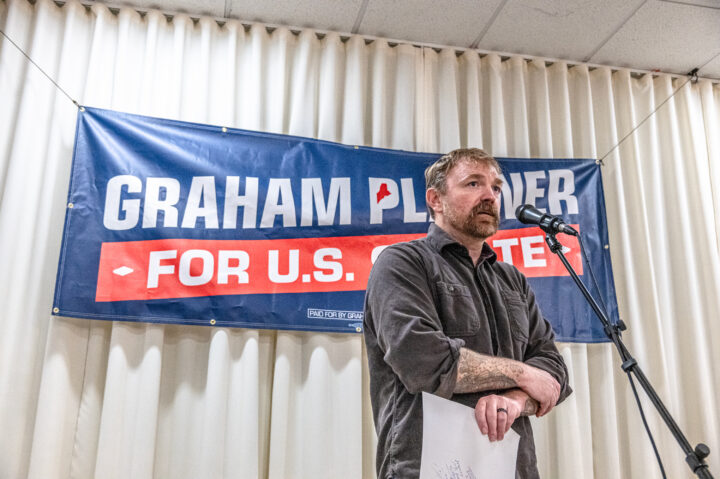
Laura Brett/Getty Images
Democratic U.S. Senate candidate Graham Platner speaks to voters at a town hall at the Elks Lodge 188 on June 7, 2026 in Portland, Maine.
Democratic leaders coalesced around calls for Maine Senate candidate Graham Platner to withdraw from the race on Monday following a Politico report in which an ex-girlfriend of Platner’s accused the Democrat of sexual assault, an account the outlet backed up with her correspondence and other interviews.
Platner denied the allegation outright but said in a video statement that he’s “mindful of the political reality it will inflict” and would be “taking the time to reflect on the best path forward.” If Platner voluntarily drops out by July 13, the Maine Democratic Party would have until July 27 to pick a replacement to appear on the ballot.
Senate Minority Leader Chuck Schumer (D-NY) and Sen. Kirsten Gillibrand (D-NY), the chair of the Democratic Senatorial Campaign Committee, said in a joint statement that Platner should withdraw, and that the DSCC would not invest financially in the Maine Senate race if Platner remained the nominee.
“The allegations reported today are incredibly disturbing — violence, abuse and sexual assault are absolutely unacceptable,” Schumer and Gillibrand said. “Graham Platner needs to immediately withdraw as the Democratic nominee for Senate and allow Maine Democrats the opportunity to choose a new candidate who can defeat Susan Collins.”
Schumer and Gillibrand had offered tepid support for Platner in the wake of previous scandals he has weathered on the campaign trail.
Senate Majority PAC, the Senate Democratic super PAC, said in a statement that Platner should withdraw and that the PAC would be “redirecting resources away from the Maine Senate race.” The group said the race would be winnable “if Platner is not on the ballot.”
The Maine Democratic Party’s leadership also called on Platner to end his candidacy.
“Over the past several weeks, multiple women have made serious, credible allegations against Graham Platner. Today’s statements take those allegations even further,” party leaders said in a statement. “Maine Democratic Party leadership is calling on Graham Platner to withdraw as the Democratic nominee for U.S. Senate.”
The party leaders said it’s “essential that we refocus this campaign” on defeating Sen. Susan Collins (R-ME) and the Trump administration.
Maine Statehouse Speaker Ryan Fecteau, a Democrat, also called on Platner to drop out, saying it’s clear that he cannot win the seat.
Several prominent progressives who had previously defended and supported Platner, even through his previous scandals and controversies — including his now-covered Nazi tattoo and domestic abuse allegations — also said that the latest sexual assault allegations were a breaking point.
Sen. Elizbeth Warren (D-MA) said that there can be “no tolerance for sexual assault” and that “the best path forward is for Graham Platner to step aside.”
“I’ve been very clear that sexual assault or violence against women is a red line. These allegations are very serious and credible. Graham Platner should drop out from the race. I am withdrawing my endorsement,” Rep. Ro Khanna (D-CA) said on Monday evening.
Sen. Ruben Gallego (D-AZ) called the allegations “troubling and deeply serious” and likewise rescinded his endorsement.
Sen. Ed Markey (D-MA) said, “The allegations reported against Graham Platner are deeply disturbing and must be taken seriously. I cannot support his candidacy.”
Sen. Martin Heinrich (D-NM) similarly rescinded his endorsement and called for Platner to step aside.
Some of Platner’s prominent media boosters also said that they wanted to see him pull out of the race or otherwise criticized him.
“Platner needs to drop out ASAP — these are awful, credible allegations,” said Jon Favreau, co-host of “Pod Save America.” “It’s now abundantly clear that he just hasn’t been honest about his past and can’t be trusted as a candidate for office.”
Sens. Bernie Sanders (I-VT), one of Platner’s most prominent progressive backers, has not yet addressed the latest allegations.
The End Citizens United PAC also pulled its support for Platner, as did the Sanders-linked Our Revolution, though the group warned “the Democratic establishment: this is not your opening.” TrackAIPAC also pulled its endorsement of Platner.
Rep. Haley Stevens (D-MI), who is running for U.S. Senate in Michigan, also condemned Platner, who campaigned alongside her primary rival, Abdul El-Sayed.
“The allegations against Graham Platner are extremely troubling and completely unacceptable,” Stevens said. “There should be no room for this conduct in the U.S. Senate or any public office. Graham Platner must step aside.”
Numerous other Democratic Senate candidates followed her. El-Sayed, in a statement, did not unequivocally call for Platner to withdraw.
Speculation has already turned to who might replace Platner on the ballot, with many pointing to logger and former state Senate President Troy Jackson, a former gubernatorial candidate who finished third in the 2026 primary, as an alternative choice with a similar background and politics to Platner.
Jackson also campaigned alongside and supported Platner, something that could hinder his electoral prospects.
Jackson was endorsed by the Maine Democratic Socialists of America in his gubernatorial bid.
Former acting Centers for Disease Control Director Nirav Shah, who finished second in the primary, has also been floated as a potential replacement and has reportedly expressed interest.
Maine Gov. Janet Mills, the favored candidate of the Democratic establishment who suspended her campaign for the seat before the primary, could also see a second wind.
A recent poll also tested “Grey’s Anatomy” star and Maine resident Patrick Dempsey’s popularity in the state, as well as Secretary of State Shenna Bellows, who also ran in the gubernatorial primary; state Sen. Joe Baldacci; former House candidate Jordan Wood; Rep. Chellie Pingree (D-ME); former state Rep. Sara Gideon, who lost to Collins in 2020; former Rep. John Baldacci (D-ME); Attorney General Aaron Frey; and former Rep. Mike Michaud (D-ME).
State Sen. Baldacci said that the party “can’t handpick a replacement candidate without some process involving all Democrats” in the state.
Retiring Rep. Jared Golden (D-ME), who had been eyed by Democrats as a potential recruit for the seat, said last month that he was not interested in replacing Platner on the ballot.
Plus, Ron Klain goes to bat for Platner

Getty Images
A large plume of smoke rises over Tehran after explosions were reported in the city during the night on March 28, 2026 in Tehran, Iran.
This P.M. edition is reserved for our premium subscribers like you — offering a forward-focused read on what we’re tracking now and what’s coming next.
Today’s Daily Overtime was curated by JI U.S. Editor Danielle Cohen-Kanik.
📡On Our Radar
Notable developments and interesting tidbits we’re tracking
After the U.S. conducted strikes yesterday in Iran, President Donald Trump said from the Oval Office this morning that the U.S. would “hit them hard again today” and told Fox News that he may target Iranian power plants and bridges because Tehran is “tapping the United States along” in negotiations.
As Trump convened his national security team in Washington this afternoon to discuss military options, Defense Secretary Pete Hegseth told reporters CENTCOM will be “busy tonight” with “bombs dropping on key facilities in Iran”…
Trump also revealed today that he directed the U.S. military last month to “execute a secret mission” to assist oil tankers and other commercial vessels in transiting the Strait of Hormuz, an effort that “has resulted in more than 100 MILLION Barrels of Oil” and over 200 commercial ships moving through the waterway. His Truth Social post was a clarification of earlier comments that seemed to suggest the U.S. was stealing this oil directly out of Iran; U.S. operations to facilitate passage in the strait have been previously reported…
Trump provided Fox News with new details of the downing of the U.S. Army helicopter earlier this week, describing how an Iranian drone became lodged between the two pilots in the cockpit who guided the helicopter into the sea, where they were rescued “for the first time in U.S. military history” by an unmanned sea drone…
Qatari mediators visited Tehran today in the hopes of pushing Iranian officials to engage more effectively in negotiations with the U.S., Axios reports, after Trump had grown increasingly frustrated with their intransigence over the last two weeks, even as he continued to signal the two sides were approaching a deal…
U.S. Ambassador to the U.N. Mike Waltz met with UAE Foreign Minister Abdullah bin Zayed Al Nahyan in Abu Dhabi, the highest-level U.S. official to publicly visit the Gulf since the Iran war began…
Israeli Prime Minister Benjamin Netanyahu blasted Turkish President Recep Tayyip Erdoğan as an “antisemitic dictator” today after Erdoğan condemned Israel’s “network of murder” in Syria and Lebanon and threatened a “very clear and strong response” if Turkish interests in the region were jeopardized. Netanyahu said Erdoğan, whom he accused of supporting Hamas, lacks the moral authority to criticize Israel.
Trump, when asked in the Oval Office about the potential for war between Israel and Turkey, described Erdoğan as a “hell of a leader” and said, “I don’t think that will happen as long as I’m president”…
More than 20 countries, including the U.S., issued a joint statement condemning “lethal plotting and malign actions” by Iran’s security forces working with international and local criminal groups in Europe, North America and Australia, including their efforts to target “Iranian dissidents, journalists and Jewish and Israeli communities and interests”…
The Department of Justice indicted eight individuals associated with the University of Michigan for allegedly threatening university leaders, law enforcement, businesses and the Jewish Federation of Metropolitan Detroit over the conspirators’ perception of their “purported financial support of Israel.”
The individuals “discussed methods by which to harm the targets and their families, including poison, bombs, and psychological torture,” engaged in extensive vandalism and threw jars filled with noxious chemicals into homes, according to the department…
An immigration judge ordered earlier this month that Columbia University anti-Israel protest leader Mohsen Mahdawi be deported to Jordan, after a lengthy legal battle in which the Trump administration claimed Mahdawi has been involved in and supported terrorist violence. Mahdawi, who has not been charged with a crime, is still seeking review of his removal proceedings in federal court…
The Senate Education and Natural Resources Committee advanced the Holocaust Education and Antisemitism Lessons (HEAL) Act by a voice vote…
The National Republican Senatorial Committee, in a memo to donors, acknowledged that the “political fundamentals in Maine remain challenging” for Sen. Susan Collins (R-ME) to retain her seat against scandal-plagued challenger Graham Platnerand called it a “fatal mistake to assume Platner is too damaged to win”…
Trump offered Collins his backing today after having long been at odds with the senator: Asked if she has his full endorsement, Trump said, “She does, because she’s a sane woman. She’s not my best friend at all … but she’s a sane person and she’s a respected person.” He called Platner a “thug,” a “phony” and a “bad person”…
Ron Klain, the former chief of staff to President Joe Biden, defended Platner’s tattoo of a Nazi symbol in a comment responding to the Republican Jewish Coalition on Instagram, Jewish Insider’s Marc Rod reports: Klain claimed the Totenkopf “was a skull and crossbones to remember [Platner’s] fallen comrades from his service in Afghanistan,” an explanation Platner’s campaign has not previously offered…
Former New York City Comptroller Brad Lander, running against Rep. Dan Goldman (D-NY) in the 10th Congressional District, denied to JI’s Will Bredderman that he’s backing Darializa Avila Chevalier in her race against Rep. Adriano Espaillat (D-NY) — even as the two appeared together in an ad paid for jointly by both of their campaigns…
Kennedy scion Jack Schlossberg, running in the Democratic primary for New York’s 12th District, came out yesterday in support of the Block the Bombs Act, JI’s Matthew Kassel reports, despite having previously expressed skepticism about the bill seeking to broadly restrict weapons sales to Israel…
Meanwhile, Public First Action, the PAC linked to AI giant Anthropic, is spending $1.2 million on a Knicks-themed ad in support of Schlossberg’s opponent, Alex Bores, who has become a leading advocate for AI regulation on the campaign trail. The ad is set to air tonight during Game 4 of the NBA Finals, Politico reports…
⏩ Tomorrow’s Agenda, Today
An early look at tomorrow’s storylines and schedule to keep you a step ahead
Keep an eye out in Jewish Insider for a look at the state of play in Israel’s elections, taking place this fall.
The House Appropriations Defense Subcommittee will hold a closed-door markup of the 2027 defense spending bill.
Reps. Don Beyer (D-VA) and Ritchie Torres (D-NY) will speak at a Progressive Policy Institute event on “Working Toward a New Era of Patriotism and Democratic Renewal” at the National Press Club in Washington.
Stories You May Have Missed
SIDESTEPPING QUESTIONS
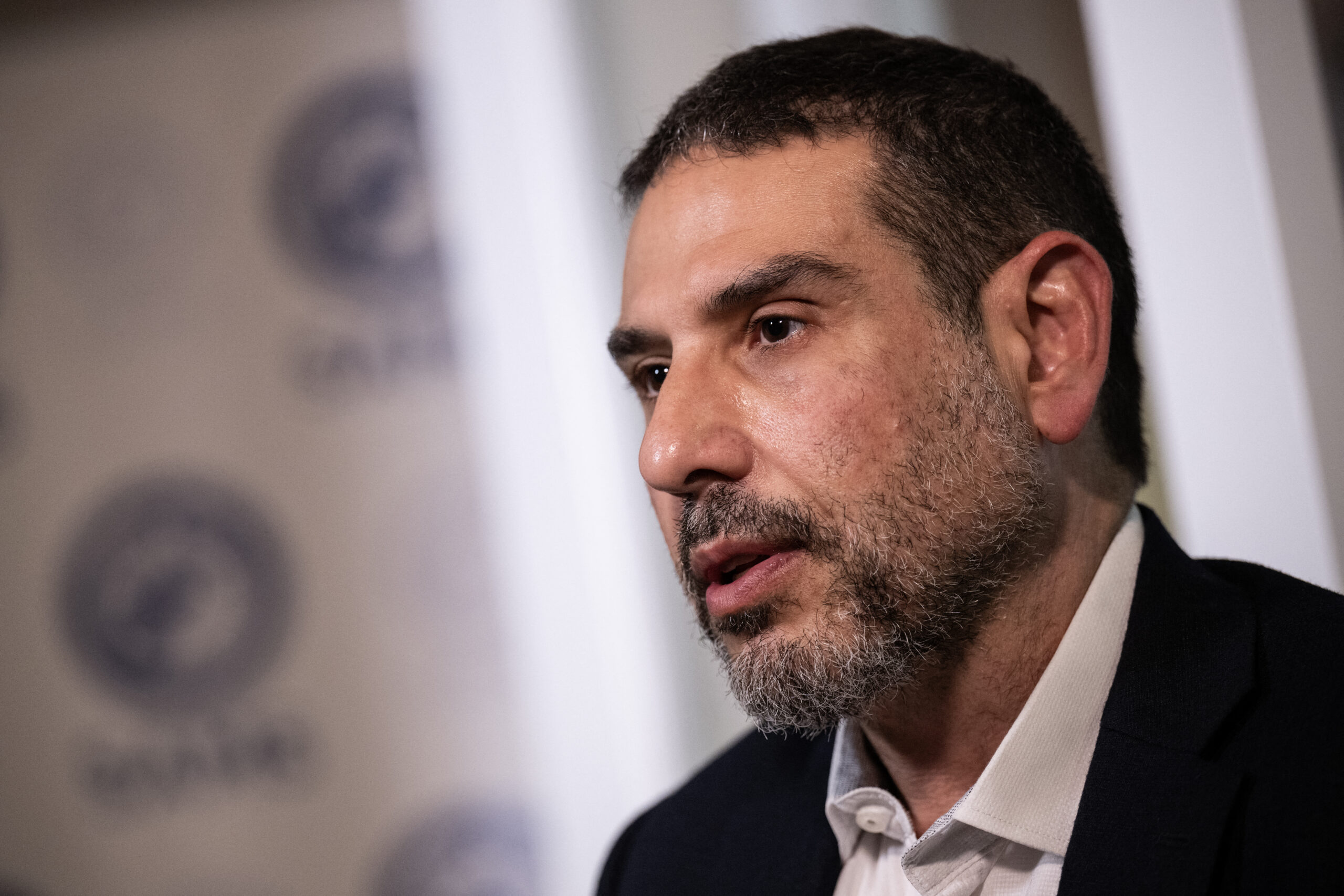
House Foreign Affairs Committee ranking member Greg Meeks said of the Democratic N.J. congressional nominee, ‘I don’t like to talk about somebody I don’t know’
LASHING OUT

The Democratic congressional hopeful aired his frustration when asked about his stance regarding U.S. aid to the Jewish state at a candidate forum
Plus, Israeli confidence in Trump hits new low

U.S. Navy via Getty Images
A U.S. Sailor signals the launch of an MH-60R Sea Hawk helicopter, attached to Helicopter Maritime Strike Squadron 70, on the flight deck of the world's largest aircraft carrier, USS Gerald R. Ford (CVN 78), while supporting Operation Epic Fury on February 28, 2026.
This P.M. edition is reserved for our premium subscribers like you — offering a forward-focused read on what we’re tracking now and what’s coming next.
Today’s Daily Overtime was curated by JI U.S. Editor Danielle Cohen-Kanik.
📡On Our Radar
Notable developments and interesting tidbits we’re tracking
President Donald Trump announced today that Iran was responsible for downing a U.S. Apache helicopter over the Strait of Hormuz last night, and vowed to respond out “of necessity.” Trump had reportedly told aides his “red line” for resuming military action would be if Iran killed any more Americans, though he confirmed in his post on Truth Social that both American pilots involved were “safe and uninjured.”
Later, however, in a call with The Wall Street Journal, Trump appeared to downplay the incident, saying it “wasn’t a big deal” and that “the pilot is fine”…
Top GOP lawmakers echoed Trump’s initial assessment that the U.S. must respond: Sen. Ted Cruz (R-TX) told Jewish Insider’s Matthew Shea that Iran should face “significant consequences.” Rep. Mike Rogers (R-AL), chairman of the House Armed Services Committee, similarly said the U.S. must “vigorously respond,” and Sen. Ted Budd (R-NC) pushed for “decisive action”…
Iranian Foreign Minister Abbas Araghchi signaled that Tehran is distancing itself from the episodeand not claiming it as a direct attack on the U.S. He said in a statement, “Foreign forces in proximity to our territory are at constant risk on account of their own human errors, plain accidents, or potentially being caught in crossfire. To reduce risk, best solution is for them to leave”…
Trump, speaking to ABC News, openly mused about whether Israeli Prime Minister Benjamin Netanyahu “even wants to continue” and run in Israel’s upcoming elections, slated to take place this fall. “He’s a wartime prime minister. We will very shortly win the war one way or the other, and you know he’s a wartime prime minister,” Trump said…
A gunman from Lebanon entered Israeli territory and fired on IDF troops, who killed him before he crossed the border fence, the IDF said. The infiltration set off a widespread search for potential accomplices, though none were found…
Before the latest round of missile fire between Israel and Iran, U.S. and Iranian negotiators had focused their discussions on four major elements of a nuclear deal, officials told The New York Times, even as the Trump administration has said nuclear issues will be discussed in a subsequent round of negotiations.
The key points reportedly include how long Iran will suspend uranium enrichment, diluting the country’s stockpile of already enriched uranium, dismantling three of its major nuclear facilities and “snap” inspections of all relevant sites inside the country…
A new survey from the Israel Democracy Institute found the share of Israelis who believe the country’s security is a primary consideration for Trump has plummeted to 44%, down from 60% who said the same in March at the beginning of the Iran war, JI’s Matthew Shea reports.
It’s the lowest level of Israeli trust in Trump since the institute began tracking the metric when he was elected to a second term in November 2024, coming as Washington and Jerusalem seemingly diverge on their strategies and ultimate goals of the war with Iran…
Twenty-one countries issued a joint statement urging Israel not to implement a new law requiring international NGOs wanting to operate in the West Bank and Gaza to register with and be vetted by the Israeli government, calling the law “part of a broader pattern of restrictive measures” that “constrain the urgently needed humanitarian response.”
Israel’s Foreign Ministry dismissed the concerns and claims of the countries as “completely unfounded and detached from reality” as it said there are “immense amounts of humanitarian aid entering the Gaza Strip”…
Randy Villegas, a left-wing Democrat running to unseat Rep. David Valadao (R-CA) in California, claimed victory today in the jungle primary over Jasmeet Bains, a moderate Democrat who had been favored by pro-Israel leaders as well as the party’s national leadership, JI’s Matthew Kassel reports. Democratic Majority for Israel’s super PAC had spent heavily to help Bains with a $500,000 TV ad buy opposing Villegas…
United Democracy Project, the AIPAC-affiliated super PAC, is spending $2 million on an initial ad buy this week to boost Rep. Haley Stevens (D-MI) in the Democratic primary for Michigan’s open Senate seat, a UDP spokesperson confirmed to JI’s Matthew Kassel. The ad touts Stevens’ record fighting for the auto industry, opposing Medicare cuts and working to cap insulin prices in Congress…
⏩ Tomorrow’s Agenda, Today
An early look at tomorrow’s storylines and schedule to keep you a step ahead
Keep an eye out for timely analysis of today’s primary election results in Maine, Nevada and South Carolina from Jewish Insider Editor-in-Chief Josh Kraushaar — premium JI subscribers like you will receive it first.
The Senate Energy & Natural Resources Committee will hold a markup of the HEAL Act, a bipartisan bill examining Holocaust education efforts across the country.
The Culture for Peace Institute will hold a conference in Washington with speakers including State Department antisemitism envoy Rabbi Yehuda Kaploun; Sens. John Fetterman (D-PA) and Dan Sullivan (R-AK); and Reps. Nick LaLota (R-NY), Randy Fine (R-FL), Andy Barr (R-KY), Mike Lawler (R-NY), Max Miller (R-OH), Tom Suozzi (D-NY), Elise Stefanik (R-NY) and Derrick Van Orden (R-WI).
Elsewhere in Washington, Iran International will hold a town hall focused on the conflicts in Lebanon and Iran, featuring the Middle East Institute’s David Hale and Alex Vatanka as well as Dan Diker, president of the Jerusalem Center for Security and Foreign Affairs.
In the evening, lawmakers will take the field for the annual Congressional Baseball Game at Nationals Park.
In New York, the Conference of Presidents of Major American Jewish Organizations will hold its annual antisemitism convening, bringing together communal professionals, experts and others to discuss efforts to combat antisemitism.
New York state Assemblymember Claire Valdez, Brooklyn Borough President Antonio Reynoso and City Councilmember Julie Won — the top Democratic candidates for New York’s 7th Congressional District to replace retiring Rep. Nydia Velázquez (D-NY) — will face off for a debate on local news channel PIX11.
The Auschwitz Jewish Center Foundation will honor New York City Council Speaker Julie Menin, former Israeli hostage Elkana Bohbot and Gazan human rights lawyer Moumen Al-Natour at its gala in Manhattan.
Stories You May Have Missed
MOUNTING SCRUTINY
Will Avila Chevalier’s ‘beyond the pale’ views sink the DSA challenger’s campaign against Espaillat?
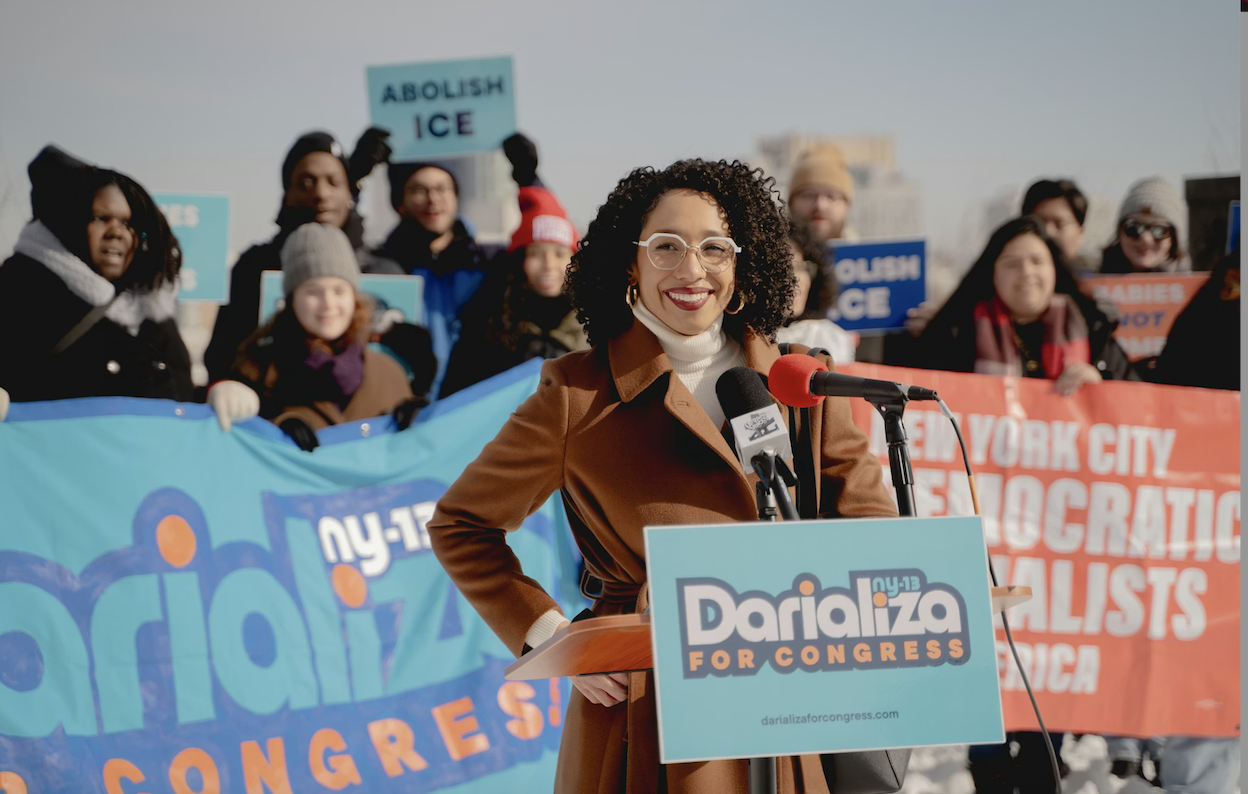
Avila Chevalier has a long record of extreme views, including calling for the abolition of police, voicing pro-Russia sentiment and rejecting Israel’s existence
SPECTATOR SPECTACLE

Trump, Mamdani, Witkoff, Kraft, Lutnick and more watched the game
Plus, AIPAC wades into Mich. Senate race

SAUL LOEB/AFP via Getty Images
President Donald Trump shakes hands with Israeli Prime Minister Benjamin Netanyahu during a meeting in the Oval Office of the White House in Washington, DC, on April 7, 2025.
This P.M. edition is reserved for our premium subscribers like you — offering a forward-focused read on what we’re tracking now and what’s coming next.
Today’s Daily Overtime was curated by JI U.S. Editor Danielle Cohen-Kanik.
📡On Our Radar
Notable developments and interesting tidbits we’re tracking
President Donald Trump cautioned Israeli Prime Minister Benjamin Netanyahu that if Israel went forward with a plan to escalate its strikes on Iran today, “you will be on your own very soon,” the president recalled in an interview with Axios, after which the Israeli leader reportedly called off the attack. Trump also claimed the U.S. and Iran are nearing a “phenomenal deal. We are getting everything we wanted”…
Netanyahu subsequently said in a video statement that, while Israel is “holding its fire” against Iran, Jerusalem has “a full right to self-defense” and is “exercising it to the extent necessary” — a message he said he relayed “with appreciation and respect in my good conversations with my friend President Trump.” But Netanyahu warned that if Iran resumes its attacks on Israel, the IDF would respond with “overwhelming force”…
Mohammad Bagher Ghalibaf, the speaker of the Iranian parliament, said in an address today that Iran’s simultaneous military strikes and diplomacy are part of an intentional strategy and that, though Tehran is seeking to end the war, it does not want to normalize relations with Washington…
U.S. forces disabled another empty oil tanker attempting to sail to Iranian ports today after it failed to disobey orders to stop by firing a precision munition into the ship’s engineering and steering spaces, CENTCOM announced. It’s the seventh such vessel U.S. forces have disabled since the blockade began…
Thirty-eight Senate Democrats, led by Sens. Adam Schiff (D-CA), Tim Kaine (D-VA) and Minority Leader Chuck Schumer (D-NY), demanded in a letter to Trump that the administration provide Congress with the legal opinion backing its determination that U.S. hostilities against Iran have ended, given the ongoing strikes and U.S. presence in the region…
At next week’s G7 summit in France, which Trump will be attending, European leaders will attempt to secure the president’s support for a U.K. and France-led effort to de-mine the Strait of Hormuz, Bloomberg reports…
The J7, a coalition of Jewish communal organizations representing the seven largest Jewish Diaspora populations, urged Canadian Prime Minister Mark Carney to prioritize action over further study after he announced Ottawa’s new Ministerial Advisory Council on Rights, Equality and Inclusion would examine rising antisemitism in the country.
Arguing that the problem has already been well documented, the groups called for a “whole-of-government” response focused on enforcement and countering extremist ideologies and terror movements…
United Democracy Project, the AIPAC-aligned super PAC, began buying ad time in Michigan today, in what appears to be the pro-Israel group’s first foray into the state’s heated Democratic Senate primary…
The Wall Street Journal interviews activists Daniel Moraff and Leanne Fan, who, along with consultant Morris Katz, recruited Graham Platner to run for Senate in Maine. The two said that their own vetting process of Platner did not turn up the Nazi tattoo he had on his chest, nor the full extent of his controversial Reddit posts, but they believed none of what they had seen at the time “will or should stop him from becoming a U.S. senator”…
The two factions of Williamsburg, Brooklyn’s Satmar community united behind Brooklyn Borough President Antonio Reynoso in the race to succeed retiring Rep. Nydia Velazquez (D-NY). Reynoso, a native of the district, clashed with some of the Hasidic sect’s leaders as a city councilmember but rebuilt relationships in subsequent years. New York City Mayor Zohran Mamdani, who has found allies in the Satmar sect while in office, is backing Reynoso’s opponent, Assemblymember Claire Valdez…
Ahead of tonight’s Knicks NBA Finals game against the San Antonio Spurs at Madison Square Garden, The Forward examines the chant sweeping New York City — “My mayor Muslim, my bagel Jewish, my Christian Dior, Knicks in four!” — and what it says about the city’s identity…
⏩ Tomorrow’s Agenda, Today
An early look at tomorrow’s storylines and schedule to keep you a step ahead
Keep an eye out in Jewish Insider for a look at the view from Washington on Trump’s attempt to pressure Netanyahu not to retaliate to Iran’s recent ballistic missile attacks.
Maine, Nevada, North Dakota and South Carolina will hold their primary elections tomorrow.
The House Foreign Affairs Committee will hold a markup of various bills, including one to direct the State Department to impose sanctions on the leaders and family members of the Rapid Support Forces (RSF) and the Sudanese Armed Forces (SAF) responsible for genocide, war crimes and crimes against humanity in the Sudanese civil war.
The House Appropriations Committee will mark up the FY 2027 spending bills for Labor, Health and Human Services and Homeland Security.
The Atlantic Council will kick off its two-day Global Energy Forum with remarks from Energy Secretary Chris Wright; Ben Black, CEO of the U.S. International Development Finance Corporation; Alaska Gov. Mike Dunleavy; and representatives from Kuwait, Egypt, Syria and more.
Agudath Israel of America will celebrate the opening of its new office on Capitol Hill with a tribute to its longtime vice president for government affairs, Rabbi Abba Cohen, who is set to step down after 37 years at the organization.
Stories You May Have Missed
PROMISES AND PERILS

Rabbi Mordechai Lightstone: ‘When we ascribe human attributes — emotions, consciousness and soul — to AI, we risk transforming a sophisticated instrument into an idol’
GOLDEN MEMORIES

A new exhibition at the Upper East Side synagogue uses paintings of everyday Jewish life to explore nostalgia and identity as Jewish artists increasingly feel unwelcome in cultural spaces
House Minority Leader Hakeem Jeffries and Sen. Mark Warner declined to defend the embattled Maine Senate candidate, but Rep. Ro Khanna said he’ll continue to support him
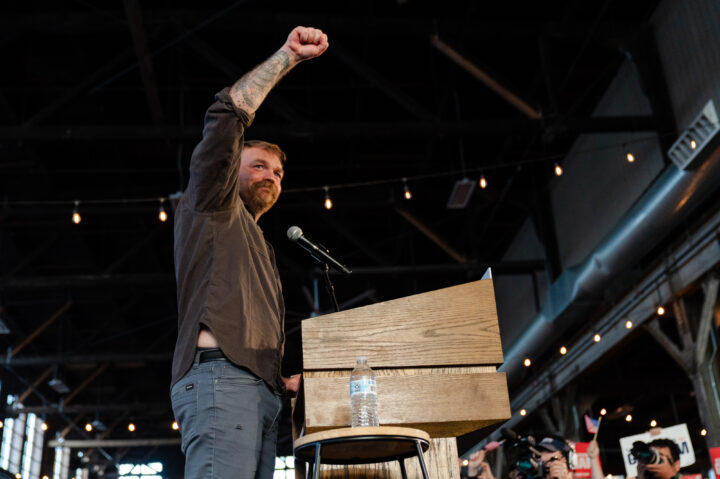
Sophie Park/Bloomberg via Getty Images
Graham Platner, Democratic Senate candidate for Maine, arrives to speak during a Fighting Oligarchy event in Portland, Maine, on May 25, 2026.
Top Democrats faced questions over Maine Senate candidate Graham Platner’s scandals on Sunday, days after The New York Times shared details of abusive behavior alleged by past romantic partners.
Rep. Ro Khanna (D-CA), who has endorsed Platner, said he continues to support him even as he criticized Platner’s past behavior and said his campaign should not attack his accusers, while Sen. Mark Warner (D-VA) and House Minority Leader Hakeem Jeffries (D-NY) declined to offer any support for Platner and said that Platner and Maine voters will need to address the scandal.
Khanna, who campaigned with Platner in Maine after last week’s Times scoop, said on CBS’ “Face the Nation” that Platner’s past actions were “misogynistic, they were shameful, they were wrong, but they didn’t come as a surprise to a lot of the folks in Maine,” arguing that the state’s voters knew the presumptive Democratic nominee went through a dark period after his time serving in Iraq and Afghanistan.
“He took accountability, he himself has said that it was shameful,” Khanna said, explaining that he continues to support Platner because of his policy platform. “The Maine voters that I met said they don’t like it. They knew that he had these chapters. They are willing to extend him grace and redemption, and they’re focused now on what he’s running for.”
He said that if there was “evidence of violence” or “evidence of sexual assault” he would not be supporting Platner.
One of Platner’s ex-girlfriends interviewed by theTimes detailed instances when Platner was physically aggressive, including forcing her into a room and preventing her from leaving. She said he had also grabbed her hard enough to leave marks.
“Even according to The New York Times piece, they said there was no harm, no injury. There was toxicity, and there was verbal intimidation, which I condemn,” Khanna told host Margaret Brennan. “But Graham has made it clear that there was no evidence of violence. That to me is a red line.”
He also defended Platner’s ex-partners, and said that Democrats should not be attacking them, praising them for coming forward, even as Platner’s campaign has disparaged one of the accusers as a Republican operative.
“They should not attack her. They should not attack The New York Times reporters who wrote the story,” Khanna said.
In an interview with ABC News’ “This Week,”, Warner declined to offer any support for Platner, and suggested he wants to stay far away from the issue.
“If the allegations are true, they are disturbing. End of the day, though, Maine voters are going to decide this,” Warner continued, adding that he’s focused on his own reelection campaign in Virginia.
Asked about whether Platner has handled the issue properly, Warner said that President Donald Trump’s 2016 campaign appeared to rewrite the rules of what was acceptable in the political realm. He suggested that similar activity would likely have been considered more damaging in decades past.
“At the end of the day, American voters will make those decisions,” Warner said. “I don’t know Mr. Platner, I’ve never met him. I would just say this: the allegations [that] are made, I think you ought to have at least some attempt to prove … or disprove them, if that’s the case.”
He said that he wishes “all candidates in both parties maybe held themselves to a different standard,” before again reiterating that it’s up to Maine voters to judge whether Platner’s past is disqualifying.
Jeffries also declined to offer support for Platner in an interview on Fox News’ “Sunday Briefing” show.
“Violence against women in any way, shape or form is unacceptable. It’s a red line, and nobody should cross that,” Jeffries said. “Any abuser who comes forward has to be treated with dignity and respect.”
He said, however, he isn’t involved in the Maine Senate race and that he hasn’t spoken about the race with Khanna.
Asked whether Platner’s candidacy, and Platner’s attacks on AIPAC and the pro-Israel community, are evidence that the Democratic Party has an antisemitism problem, Jeffries said that Platner is “going to have to speak for himself,” but that antisemitism shouldn’t be a partisan issue.
“We should all be committed to crushing antisemitism and all other forms of hatred into the ground,” Jeffries said.
Pressed subsequently about Adam Hamawy, the Democratic New Jersey Congressional nominee with a history of connections to convicted terrorists and terrorist organizations, Jeffries — who congratulated Hamawy on his victory last week — repeatedly sidestepped the issue.
“I haven’t spoken to him, he’s going to have to speak for himself and address these allegations,” Jeffries responded, when asked about Hamawy’s testimony in defense of Omar Abdel-Rahman, the terrorist mastermind known as the Blind Sheikh, before pivoting to attacking the administration over the war in Iran and high gas prices.
Pressed again, he criticized Republicans for their own hateful comments and the administration for the rising cost of living.
The strongest evidence that the controversies are taking their toll on Platner came from his own campaign, which released an internal poll Wednesday showing the Democrat leading Sen. Susan Collins (R-ME) by only four points
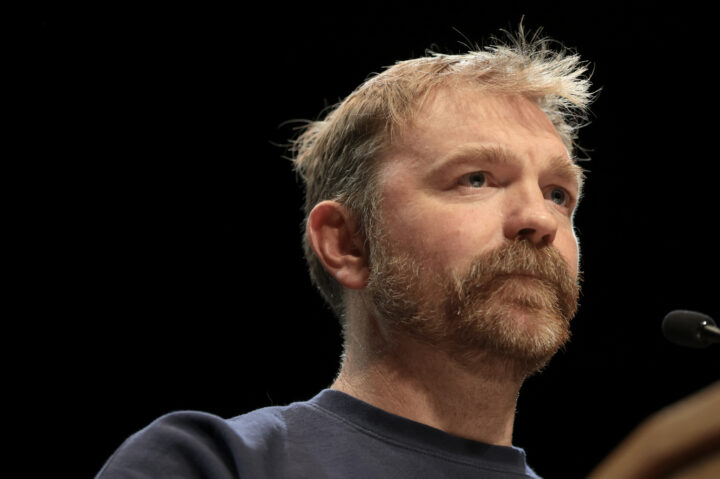
Joe Raedle/Getty Images
Democratic U.S. Senate candidate Graham Platner speaks at a “Fighting Oligarchy” tour stop held by Sen. Bernie Sanders (I-VT) at the Collins Center for the Arts on the University of Maine campus on May 24, 2026 in Orono, Maine.
The New York Times’ detailed exposé about Maine Senate candidate Graham Platner’s history of toxic, alcohol-laden and occasionally physically threatening relationships with three former girlfriends landed Thursday afternoon — with Platner’s campaign hoping to limit the fallout amid signs his campaign is losing support.
In an interview with MS NOW’s Chris Hayes Thursday evening, Platner denied the most serious allegations of physical abuse leveled by Lyndsey Fifield, who dated him from 2013-2015. Fifield recounted one incident where Platner “twisted her arm behind her back, shoved her into a bedroom and held the door closed from the other side so she couldn’t get out.”
She also said he knew about the Nazi origin of his Totenkopf tattoo — first reported by Jewish Insider in October — saying he taught her the word for it when they were dating.
“There are some allegations in this piece that I want to be unequivocal about — they’re not true. Anything alleging physicality, anything alleging I knew what my tattoo was, these are the statements of someone politically motivated,” Platner told Hayes.
The one-two punch of allegations this week of sexually explicit text messages to women while he was married now combined with reports of abuse in past relationships are merely the latest hits against the scandal-plagued candidate who, under normal political circumstances, would be a political nonstarter.
But given that so many other damaging reports barely dented his political standing — whether it was his Totenkopf tattoo, admiration of Hamas terrorist tactics, social media posts cheering the killing of American military heroes, along with dozens of misogynistic and bigoted comments online — it’s anyone’s guess whether the latest news will crater his campaign.
These latest allegations appear to be having more of an impact on Platner’s political standing in part because they contradict the narrative his campaign has presented that he’s become a changed man in the years since he wrote many of his extremist social media posts. In addition, reports of abuse and misconduct have lately been career-enders for many prominent politicians, most recently for former Reps. Eric Swalwell (D-CA) and Tony Gonzales (R-TX).
The strongest evidence that the controversies are taking their toll on Platner came from his own campaign, which released an internal poll Wednesday showing the Democrat leading Sen. Susan Collins (R-ME) by only four points — one of the smallest leads he’s had in the general election since he entered the race. The poll was conducted before the latest NYT story hit.
A newly-released poll conducted between June 1-4 by Trump pollster Tony Fabrizio (first reported by Politico this morning), shows Collins now tied with Platner at 46% apiece, with Platner’s unfavorables skyrocketing. The poll was in the field after the sexting story broke but before the latest allegations of physical abuse.
It won’t take long to get some more empirical evidence about how much Platner’s standing has slipped with Democratic voters.
Next Tuesday’s Maine primary, which looked like an afterthought since Gov. Janet Mills left the race, is suddenly looking a lot more consequential. Mills is still on the ballot despite suspending her campaign, and would be a logical vote for any Democrat uncomfortable with anointing Platner as their Senate standard-bearer.
If Platner underperforms in the primary — winning at least 65% of the Democratic vote is something of a necessity for him — it would suggest that he’s entering the general election wounded, with his candidacy potentially costing the Democrats’ a must-win Senate seat.
The whole episode is a reminder that the laws of political gravity still apply, and that 2026 could shape up as a year for Democrats akin to the GOP’s Tea Party year of 2010 — when deeply flawed candidates in swing states and districts cost the party winnable races despite running in an overall favorable environment.
Platner and Abdul el-Sayed’s Senate candidacy in Michigan are the most high-profile far-left candidates to fit the bill, but other lower-profile House candidates like Colorado state Rep. Manny Rutinel and California educator Randy Villegas could also potentially cost Democrats valuable swing seats — in a year in which every contest could determine which party holds the majority.
Plus, John's bolting to a guilty plea
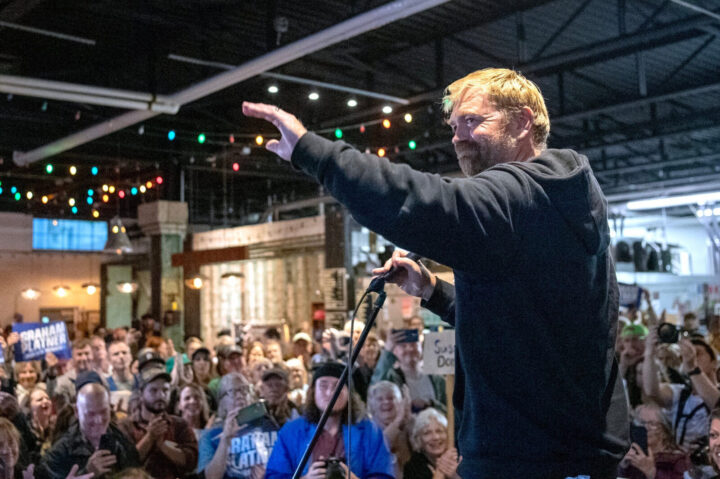
Daryn Slover/Portland Press Herald via AP
Senate candidate Graham Platner acknowledges the large crowd that attended Platner's town hall, Sept. 25, 2025, at Bunker Brewing in Portland, Maine.
This P.M. edition is reserved for our premium subscribers like you — offering a forward-focused read on what we’re tracking now and what’s coming next.
Today’s Daily Overtime was curated by JI U.S. Editor Danielle Cohen-Kanik.
📡On Our Radar
Notable developments and interesting tidbits we’re tracking
Three women who were romantically involved with Maine Senate candidate Graham Platner told The New York Times in a detailed exposé that the presumptive Democratic nominee had been “toxic,” physically threatening, misogynistic and unfaithful during their yearslong relationships.
One former partner, Lyndsey Fifield, confirmed Jewish Insider’s reporting from October that Platner had known what the Nazi symbol tattooed on his chest represented and had taught her the word for it, calling it “my Totenkopf”…
John Bolton, President Donald Trump’s national security advisor during his first term, intends to plead guilty to illegally retaining sensitive national security information, CNN reports, a charge that could carry up to five years in prison…
Trump told aides he would only consider resuming military action against Iran — besides the skirmishes in the Strait of Hormuz, which the administration has insisted do not qualify as warfare — if Iran were to kill American troops, U.S. officials told The Wall Street Journal…
Trump lambasted the House’s “meaningless vote” yesterday passing an Iran war powers resolution “right in the middle of my final negotiations to end the War with the Islamic Republic of Iran. Who would do such an unpatriotic thing,” he mused…
Lebanese President Joseph Aoun told reporters today that the ceasefire announced yesterday with Israel would take effect only after Hezbollah approved of the proposal, given that it’s contingent on the terror group’s disarmament and withdrawal from southern Lebanon; Hezbollah leader Naim Qassem then rejected the agreement, calling the negotiations “absurd, humiliating and insulting,” and claiming Hezbollah’s withdrawal at this time would mean “surrender, defeat and achieving the enemy’s goals”…
Israel and Hezbollah then continued to exchange fire in southern Lebanon, where a UNIFIL peacekeeper was killed today after a mortar shell struck a U.N. position in the area. The IDF said the launch trajectory of the mortar “clearly indicates” it was launched by Hezbollah…
The House rejected a war powers resolution by Rep. Rashida Tlaib (D-MI) that aimed to block U.S. support for the Israeli operations in Lebanon, after House Democratic leaders publicly came out against the effort. But the Democratic leaders said they would support a future effort by Tlaib along similar lines that will include carveouts for other U.S. operations inside Lebanon, indicating that Tlaib’s next effort is likely to pick up greater Democratic support…
Iran and Russia signed a $25 billion memorandum of understanding on nuclear cooperation, Iranian state media reported…
The Times takes a look at how Qatar and the U.S. came to dominate the global liquefied natural gas market and how disruptions to Qatari exports amid the Iran war are exposing the risks of that concentration while potentially increasing America’s energy and geopolitical leverage…
In its markup of the 2027 National Defense Authorization Act, the House Armed Services Committee blocked by a voice vote an effort to strip out a relatively routine provision on cooperation with Israel, which has become the subject of criticism and misinformation online. Both the chairman and ranking member of the committee said that critics were misrepresenting the provision and what it entails…
Republicans on the House Appropriations Committee proposed providing $315 million for the Nonprofit Security Grant Program in 2027, a slight increase from 2026 funding levels but far below the $1 billion that supporters of the program in the House and Jewish and other faith communities have advocated for, JI’s Marc Rod reports. Jewish groups called the proposal appreciated, but vastly inadequate, given the current threat level…
Sen. Chris Van Hollen (D-MD) called out recent AIPAC and crypto-linked spending in the crowded Democratic primary to replace retiring Rep. Steny Hoyer (D-MD), where AIPAC’s super PAC has invested heavily in support of Hoyer-endorsed Adrian Boafo, JI’s Matthew Kassel reports. Van Hollen accused the “outside groups” of “trying to buy this congressional seat,” and said the groups “do not have the voters’ interests at heart”…
A week after winning his primary runoff against anti-Israel Rep. Al Green (D-TX), Rep. Christian Menefee (D-TX) co-sponsored the Block the Bombs Act. Menefee was seen as the more pro-Israel choice in the race, who Jewish community leaders hoped would provide a fresh start after their relationship with Green collapsed…
Israeli Prime Minister Benjamin Netanyahu appointed Brig. Gen. Guy Markizeno as his military secretary, after his previous military secretary, Maj. Gen. Roman Gofman, became director of the Mossad earlier this week. Markizeno, who currently serves as military secretary to Defense Minister Israel Katz, has “extensive experience in coordinating between the political echelon and the military echelon,” Netanyahu said in a statement…
Israeli Foreign Minister Gideon Sa’ar announced Israel will open its first embassy in the Slovenian capital of Ljubljana, calling the rise of center-right Prime Minister Janez Janša, whose government was approved by the country’s parliament today, a “new chapter” in Israel-Slovenia relations after “years of the hostility of the previous government”…
The Times interviews Iranian soccer federation head Mehdi Taj, who said the Iranian national team’s U.S. visas have still not been approved less than two weeks before the team is set to play its first World Cup match in the country, while the team trains in Mexico rather than its planned home base in Arizona. Taj was formerly a commander in Iran’s Islamic Revolutionary Guard Corps…
⏩ Tomorrow’s Agenda, Today
An early look at tomorrow’s storylines and schedule to keep you a step ahead
Keep an eye out in Jewish Insider for a look at the new art exhibit at Manhattan’s Altneu synagogue grappling with the end of American Jewry’s “golden age.”
We’ll be watching to see how the latest revelations about Platner‘s past play out on the campaign trail ahead of Tuesday’s primary election, where Democratic Gov. Janet Mills is still on the ballot. Rep. Ro Khanna (D-CA) is expected to join Platner at his Get Out the Vote rally in Bar Harbor, Maine, tomorrow evening.
We’ll be back with the Daily Overtime on Monday. Shabbat Shalom!
Stories You May Have Missed
SITTING IT OUT

Hamawy, despite his past ties to a convicted terrorist, faced minimal scrutiny from outside groups — including many of his primary rivals
CAPITOL CONCERNS
‘Anybody that’s tied to that should never be elected to Congress, and if he is, I think should never serve on a national security committee,’ Rep. Michael McCaul told JI
Most aren’t calling for him to leave the race, or throwing their support behind Gov. Janet Mills, who still remains on the primary ballot even after suspending her campaign
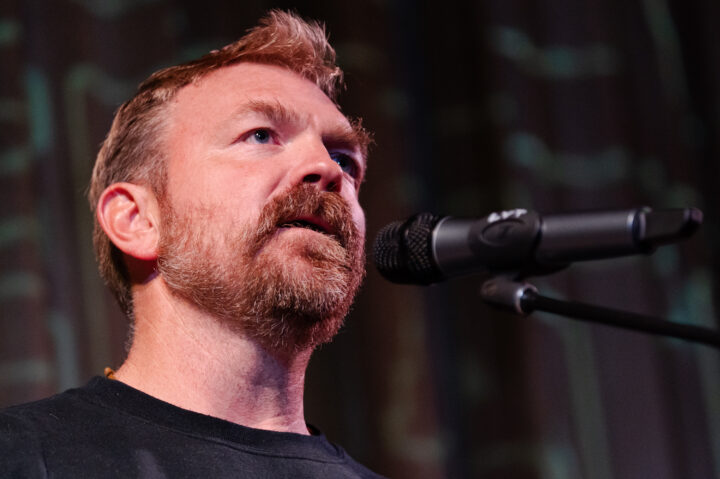
Sophie Park/Getty Images
Senate candidate from Maine Graham Platner speaks at a town hall at the Leavitt Theater on October 22, 2025 in Ogunquit, Maine.
Senate Democrats sounded wary of Maine Senate candidate Graham Platner after the latest revelations that he had engaged in sexual conversations with numerous women while married, but most aren’t calling for him to leave the race, or throwing their support behind Gov. Janet Mills, who still remains on the primary ballot even after suspending her campaign.
Senate Minority Leader Chuck Schumer (D-NY), who recruited Mills to run for the seat to challenge Sen. Susan Collins (R-ME) but got behind Platner after Mills dropped out, met with Platner in Washington on Tuesday and repeatedly offered a terse response when asked about Platner at a press conference, offering neither effusive support for nor criticism of the presumptive Democratic nominee.
“I met with Graham Platner today. We’re going to beat Susan Collins and take back the Senate,” Schumer said.
Asked whether he was standing behind Platner or whether Mills should restart her campaign, Schumer again said, “We’re going to beat Susan Collins and take back the Senate.” He repeated the same answer two additional times in response to subsequent questions.
Asked whether he’s still endorsing Platner, Schumer offered nearly the same line once again, while noting that he had “endorsed” Platner.
Other Senate Democrats are keeping Platner at arm’s length.
“He has to answer those questions, directly and forthrightly. They’re fair questions and that’s going to be on him to answer that and it’s going to be up to the voters of Maine to decide,” Sen. Peter Welch (D-VT) said on Monday.
Welch said that Platner’s electability is “going to depend on how he handles it.”
Welch joined several other Senate Democrats who met with Platner at the Democratic Senatorial Campaign Committee offices on Tuesday afternoon. The meeting ran for more than an hour and a half, but Platner avoided reporters while entering and exiting the building, dashing from a side exit to an awaiting car on his way out, pursued by a throng of press.
“I oppose inappropriate sexual behavior no matter who does it, but it’s up to the voters of Maine to decide,” Sen. Jeanne Shaneen (D-NH) said.
Asked if she thinks Platner can still win, Sen. Elissa Slotkin (D-MI) told JI, “I’ll work with whoever wins.”
Sens. Andy Kim (D-NJ) and Richard Blumenthal (D-CT) both said they’d been focused on other matters — the ongoing demonstrations outside an Immigration and Customs Enforcement facility in New Jersey and a trip to Ukraine, respectively — and hadn’t been keeping up with the latest on Platner.
Sen. Angus King (I-ME) declined to comment, saying he never gets involved in campaigns involving any sitting colleagues, regardless of party.
Sen. John Fetterman (D-PA), who said months ago he planned to stay out of the race but has been directly attacked by Platner several times, offered the harshest criticism of the candidate, and suggested he would be eager for a direct confrontation with him.
“I’d be happy to [meet him.] I’d love to. He’s a tough guy. When I was growing up, if someone had a Nazi tattoo, you could pretty much assume he’s a Nazi sympathizer,” Fetterman said, and referred to several of the scandals plaguing Platner’s campaign. “If you describe an American soldier, a Purple Heart recipient, as a dumb motherf***** that doesn’t deserve to live — who describes the U.S. Army as absolutely trash? Who joins a disgusting platform like Kik and puts a [topless] picture — what are you looking for? He’s expressed frustration [with] how I dress, and this a****** is on Kik and sexting to a dozen women and dressing like this.”
He told JI that his Democratic colleagues could be endangering the party’s chances of taking the seat by sticking by Platner, but said it’s ultimately their decision and that of Maine voters.
“The last time a lot of [Democrats] defended someone who was sexting and saying inappropriate things to women, that was Swalwell,” Fetterman said, referring to former Rep. Eric Swalwell (D-CA) who resigned amid a flurry of sexual harassment and assault allegations. “If they want to carry water for that, they’re entitled to that. I don’t live in Maine, I’m not a voter. Whoever Maine decides for that.”
Platner’s strongest supporters are standing firmly behind him.
Sen. Ruben Gallego (D-AZ) told JI that he is still confident that Platner can win the seat.
Sen. Bernie Sanders (I-VT), asked about the latest scandals, offered a similar response multiple times during the day on Tuesday, deflecting by discussing Republican megadonors’ spending plans in the state.
“There are some concerns that some of the wealthiest people in this country [backing] Republican super PACs are planning to spend $100 million in the state of Maine,” Sanders said. “Why do you think that Republicans super PACs controlled by billionaires want to spend a troubling amount of money to defeat Graham Platner?”
A group of people — at least one of them a spokesperson for the National Republican Senatorial Committee — gathered outside of the DSCC headquarters during Platner’s meeting chanting through a bullhorn and holding signs referencing Platner’s various scandals and, without evidence, accusing him of pedophilia.
A handful of them, including the NRSC staffer, were shirtless wearing towels wrapped around their waists, mimicking Platner’s profile photo on the messaging app Kik, where he communicated with other women.
Following the meeting with Democratic senators, Platner canceled a planned appearance with the campaign group VoteVets and left Washington, D.C. early because reporters had visited his in-laws’ home and his family’s restaurant, according to NOTUS.
Warren lauded Platner’s economic populist message rather than address his extremist rhetoric

Brian Stukes/Getty Images for Vanderbilt Policy Accelerator
Sen. Elizabeth Warren (D-MA) speaks during the Vanderbilt Policy Accelerator (VPA) Luncheon at Eaton DC on April 22, 2026 in Washington, DC.
Sen. Elizabeth Warren (D-MA) dismissed criticism of Maine Senate candidate Graham Platner’s scandals on Wednesday, after calling him “my kind of man” at his rally in Maine on Saturday.
“You care about character,” CNBC host Sara Eisen said to Warren. “This is a guy that had a chest tattoo with a Nazi symbol — OK, he apologized for it. It’s a guy that reportedly wrote that people concerned about rape should take some responsibility for themselves and not get so effed up that they wind up having sex with someone they don’t mean to. He praised military tactics used by Hamas, reportedly, in comments online when they were murdering Israeli soldiers. So I’m just curious why you think he’s ‘your kind of man’?”
Warren responded, “So, as you rightly point out, he has apologized. He’s out meeting with the people of Maine every single day so they can evaluate not who Graham Platner was but who Graham Platner is today.” She went on to say her comment was in reference to her experience reading an interview of Platner’s where he condemned the lack of consequences for bankers during the 2008 financial crisis.
Eisen said, “OK, well, ‘I dig it,’ next to a video of a bunch of terrorists killing five soldiers?” referring to a Jewish Insider report unearthing Platner’s 2014 Reddit comments. “I don’t know, I mean, you guys want to be the party of inclusivity, right?”
“I want to be the party that stands up for hardworking people,” Warren answered. “I want to be the party that is transformative of an economy that right now is hip deep in corruption … and that’s what Graham Platner wants to do and I’m there to stand with him and to help in that fight.”
Daniel Moraff also recruited Rep. Summer Lee, a leading anti-Israel Democrat, to pursue her political career
Bill Clark/CQ-Roll Call, Inc via Getty Images
Independent Senate candidate Dan Osborn speaks during his campaign stop at the in O'Neill, Neb., on Monday, October 14, 2024.
A former Democratic Socialists of America organizer has been a top advisor to independent Nebraska Senate candidate Dan Osborn and Democratic Maine Senate candidate Graham Platner.
Daniel Moraff was a longtime DSA member, including acting as a local and national DSA organizer and leader in the mid-to-late 2010s, though he said his membership lapsed in 2019 because his local chapter became too focused on internal matters. He argued in a now-deleted 2017 article that the best way for socialists to gain political power and achieve elective office would be by running in Democratic primaries.
He subsequently recruited now-Rep. Summer Lee (D-PA), among the farthest-left and most anti-Israel members of the House, to run for the Pennsylvania Statehouse, and served as her campaign manager.
Moraff reportedly helped recruit Osborn into the Nebraska Senate race in 2024 and has continued to serve as a consultant for Osborn. Campaign disclosures show that Osborn’s wife, Megan Osborn, has received compensation from Moraff’s firm for work on her husband’s current Senate campaign.
Osborn has cultivated an image as a heterodox populist, seeking to appeal to moderate and Republican voters, by adopting center-right views on border security and government spending while maintaining progressive views on abortion rights and unions.
Osborn was also recently endorsed by the anti-Israel group A New Policy.
“Daniel Moraff has advised candidates across the country who seek to give the working class a voice in our politics. The fact those candidates have diverse backgrounds and beliefs is not a story,” an Osborn spokesperson said in a statement to Jewish Insider.
Amid a reshuffle of Platner’s campaign — he shed staff as revelations emerged about his tattoo of a Nazi symbol and extreme prior social media posts — Moraff reportedly served as Platner’s de-facto campaign manager.
Platner’s campaign did not respond to a request for comment, nor did Moraff personally.
In addition to his DSA ties, as a Brown University student in 2012, Moraff was an undergraduate representative on an advisory committee on investment practices, responsible for “dialogue” with Brown Students for Justice in Palestine over its push for Brown to divest from Israeli-linked companies.
The committee, with Moraff as a signatory, said in a letter to Brown’s president that “the documented abuses of Palestinian citizens by the Israeli Defense Force in the Occupied Territories are deeply troubling” and “Israel is indisputably engaged in ongoing systemic abuses of human rights and violations of international law, as documented by the United Nations Human Rights Council and the International Court of Justice.”
The committee said that Brown University may be invested “in firms whose products and services are being used to commit human rights violations in Palestine” and recommended further discussions over divestment.
Platner, in Reddit post on Hamas terrorist attack: ‘From a strictly professional standpoint, this was a damn fine looking and successful raid against a superior opponent’
Sophie Park/Getty Images
Senate candidate from Maine Graham Platner speaks at a town hall at the Leavitt Theater on October 22, 2025 in Ogunquit, Maine.
Maine Senate candidate Graham Platner repeatedly praised the tactics used by Hamas terrorists in comments made about a graphic video of a Hamas raid into Israel in 2014, in which terrorists killed at least five Israeli soldiers.
In archived posts from his now-deleted Reddit profile under the username “P-Hustle,” Platner commented on a video post titled “Helmet Footage from Hamas cross-border raid,” which showed the attack on multiple Israeli soldiers.
The original video, also now deleted but still archived, was posted by a YouTube channel called Sabah on July 29, 2014, with the description, “Secret footage shows the storming of a settlement by the Qassam Brigades and the killing of 10 soldiers.” The description and comments in the Reddit thread appear to match a raid by Hamas’ Al-Qassam Brigades on a military base near Kibbutz Nahal Oz the day prior.
According to a text description of the video and the raid shared online, the video includes footage of the shootings of several Israeli soldiers, at least one of whom is screaming as the terrorists attempt to kidnap him.
“Looks like an all around well executed and successful small unit raid to me,” Platner wrote in 2014 on the Reddit forum r/CombatFootage, a discussion board for footage and photographs of past and current armed conflicts.

Responding to another user who criticized the “execution” of the Israeli soldiers and emphasized that the attack would lead to heavy reprisals in Gaza, Platner said he was not interested in discussing the geopolitical or strategic implications, but suggested Hamas’ tactics and actions were reasonable.
“As for your aversion to ‘execution’, a small unit raid tends to be used to inflict casualties and take prisoners in a short period of time,” Platner wrote. “Pragmatically I have little problem with killing an enemy combatant who you attempt to capture but for whatever reason cannot. From a strictly professional standpoint, this was a damn fine looking and successful raid against a superior opponent, I dig it.”
He acknowledged, in response to another user, that the terrorists’ actions were brutal and that the terrorists should have shot one of the soldiers instead of beating him to death.

Responding to another user who disputed Platner’s characterization of the Hamas attack as a “raid” and said that the attack was “not resistance its just drawing blood to score imaginative points in the war,” Platner suggested the Hamas terrorists were preferable to those who attacked U.S. forces in Iraq.
“It was Iraq, and those guys were in civilian clothing with silenced weapons. This videos shows a unit of men in full uniform assaulting uniformed military personnel of an enemy their organization is currently engaged in military operations with. There is no comparing the two,” Platner wrote. “Generally you try to catch the enemy off guard, and kill them with the least resistance. This looks like a pretty audacious plan that worked, and I’ll certainly give credit where credit is due, no matter who they are fighting for.”

Platner’s campaign did not return a request for comment.
Platner has come under fire by Gov. Janet Mills, who is his main competitor in the Democratic primary, and by Republicans for other past Reddit posts under the “P-Hustle” username which have disparaged a wide range of groups and included various offensive comments.
He also has faced scrutiny for his criticism of Israel and a tattoo on his chest of an apparent Nazi symbol.
In an interview on CNN, Platner accused Israel of committing genocide and alleged that the Trump administration started the war to distract from the Epstein files
Sophie Park/Getty Images
Senate candidate from Maine Graham Platner speaks at a town hall at the Leavitt Theater on October 22, 2025 in Ogunquit, Maine.
Graham Platner, the progressive Maine Senate candidate, in a CNN interview that aired Sunday accused Israel of committing genocide and said the U.S. should cut off all aid, as well as dismissed concerns that bringing the Iran war to a halt would endanger U.S. forces in the region.
“I fundamentally believe that a nation that is committing a genocide should not be a place that we are putting money. We should be leveraging the fact that we have a lot of power in this relationship due to our funding,” Platner said in the interview. “We should be leveraging that to, frankly, get the Israeli government to stop behaving in such an utterly atrocious fashion.”
Platner said that he would vote against any further funding for the war in Iran, dismissing concerns that cutting funding for the war would leave U.S. forces in harm’s way, despite ongoing attacks by Iran.
“I’ve been very close to the realities of wars [in Iraq], and that was a war that never should have happened, and that we find ourselves here with another war that should not be happening, that is resulting in destruction and horror, all, frankly, on the taxpayers dime,” Platner said. “That is money that should be spent here in the United States, on schools, on hospitals, on infrastructure.”
He said that U.S. troops would not be in danger if Congress defunds the operation “because the troops should not be in harm’s way. End the war. Bring people home. Stop bombing. We started this thing, we can end it.”
Platner said he believes the Trump administration started the war to distract from revelations in the Epstein files because “Benjamin Netanyahu finally found a president that was sucker enough to launch the war that he’s been pushing for for 30 years.”
Podcaster Nate Cornacchia has said that Israel was behind John F. Kennedy’s assassination and the global war on terror

Sophie Park/Getty Images
Maine Senate Graham Platner speaks at a town hall at the Leavitt Theater on October 22, 2025 in Ogunquit, Maine.
Weeks before Graham Platner promoted an antisemitic conspiracy theorist in a now-deleted social media post on Thursday, the controversial Maine Senate candidate appeared on a popular YouTube show whose host has spread specious claims about Jews and Israel.
Platner faced blowback this week for boosting a social media comment about a looming war with Iran by Stew Peters, a neo-Nazi influencer who has frequently espoused antisemitic tropes and engaged in Holocaust denial. Platner’s team said the post was made in error and “immediately” removed it after learning it elevated a “despicable account.”
In late January, however, Platner sat for a lengthy online interview with Nate Cornacchia, a retired Green Beret who has also promoted antisemitic conspiracy theories. Near the end of their hour-long conversation, Platner, a fellow military veteran, called himself “a longtime fan” of Cornacchia’s YouTube channel, “Valhalla VFT,” and said it was “an absolute pleasure being” on the show.
Cornacchia, whose show claims nearly 500,000 YouTube subscribers, has in recent months helped stoke a burgeoning far-right conspiracy theory alleging that Israel was involved in the assassination of the conservative activist Charlie Kirk.
Two days before speaking with Platner, for instance, Cornacchia went on a podcast hosted by Jake Shields, a former mixed martial arts fighter who is now a prominent Holocaust denier, and pointed to what he described as “huge links” connecting Israel to Kirk’s killing. “The biggest one, the way I look at it, is because he was basically so important from the Zionist side to the young right wing, sort of that counter Nick Fuentes audience” that “Israel needs desperately,” he said.
“Charlie Kirk said that he was tired of being bullied by his Jewish donors” and that he “no longer could support the pro-Israel cause, and he was dead 48 hours later,” Cornacchia added on the show, where he also agreed with Shields’ assertion that President John F. Kennedy had “probably” been assassinated in a covert “venture between the CIA and Mossad,” the Israeli intelligence agency. “100%,” he replied.
In addition, Cornacchia has suggested that the global war on terror was conducted “on behest of Israel” and claimed Israel would benefit if another 9/11-style attack were carried out during the tenure of New York City Mayor Zohran Mamdani, saying it would help to drum up Islamophobic sentiment and lead to another foreign military entanglement in the Middle East.
The Jewish state “got exactly who they wanted” in Mamdani, the city’s first Muslim mayor whom the Israeli government has accused of antisemitism, he argued on his own show in November. “That’s their candidate, guys. You got to pay attention.”
The conservative YouTube commentator has also questioned why George Soros’ son Alex was seen posing for a photograph with Mamdani on the night of his election. “You may immediately be thinking, ‘Oh, well, of course, that’s because Soros funds all the socialists,’” Cornacchia said of George, a Jewish billionaire donor to left-wing causes and a Holocaust survivor who is often a target of antisemitic attacks.
“No, no, no, no, that’s surface level,” he told his viewers, claiming that the philanthropist “moves in coordination with our greatest ally,” a term he uses to sarcastically allude to Israel.
Platner’s interview with Cornacchia, which he promoted on his social media channels, did not touch on such topics. His team did not respond to a request for comment on Friday about Cornacchia’s antisemitic remarks.
The 41-year-old Senate candidate, who is running in a competitive Democratic primary to challenge Sen. Susan Collins (R-ME), faced skepticism from critics last fall after he denied knowing a tattoo that was on his chest for years closely mirrored a Totenkopf, the skull-and-crossbones icon adopted by an infamous Nazi SS unit. A former acquaintance of Platner who spoke with Jewish Insider said he had identified the symbol as such more than a decade ago, a claim he has denied. He had the tattoo removed last October.
Still, even as he maintains a commanding polling advantage in the Maine Democratic primary against Gov. Janet Mills, Platner’s explanation of the tattoo — combined with past and recent online blunders — is raising questions about whether he can weather scrutiny in a general election that party leadership views as key to reclaiming the Senate majority.
Mills, for her part, strongly hinted at such doubts in a snarky X post on Friday. “For what it’s worth,” she wrote, “I don’t have any tattoos.”
And on the same day he was drawing backlash for amplifying a conspiracy theorist this week, Platner was fielding a combative call from a listener during an appearance on a podcast hosted by the comedian Tim Heidecker.
The caller cast suspicion on Platner’s claim that he did not know the tattoo represented a Nazi symbol until recently, citing his self-proclaimed knowledge of World War II history, and called on the candidate to apologize rather than “dodging around” the issue.
But Platner held firm. “I’m not going to apologize for something that I didn’t know about or do,” he insisted. “The moment that it was clear and I was putting it in that context I had it covered, because I don’t want that on my body.”
Please log in if you already have a subscription, or subscribe to access the latest updates.
 Continue with Google

 Continue with Apple
