
























































Have Graham Platner’s scandals finally caught up with him?
The strongest evidence that the controversies are taking their toll on Platner came from his own campaign, which released an internal poll Wednesday showing the Democrat leading Sen. Susan Collins (R-ME) by only four points

Joe Raedle/Getty Images
Democratic U.S. Senate candidate Graham Platner speaks at a “Fighting Oligarchy” tour stop held by Sen. Bernie Sanders (I-VT) at the Collins Center for the Arts on the University of Maine campus on May 24, 2026 in Orono, Maine.


 Add JewishInsider on Google
The New York Times’ detailed exposé about Maine Senate candidate Graham Platner’s history of toxic, alcohol-laden and occasionally physically threatening relationships with three former girlfriends landed Thursday afternoon — with Platner’s campaign hoping to limit the fallout amid signs his campaign is losing support.
In an interview with MS NOW’s Chris Hayes Thursday evening, Platner denied the most serious allegations of physical abuse leveled by Lyndsey Fifield, who dated him from 2013-2015. Fifield recounted one incident where Platner “twisted her arm behind her back, shoved her into a bedroom and held the door closed from the other side so she couldn’t get out.”
She also said he knew about the Nazi origin of his Totenkopf tattoo — first reported by Jewish Insider in October — saying he taught her the word for it when they were dating.
“There are some allegations in this piece that I want to be unequivocal about — they’re not true. Anything alleging physicality, anything alleging I knew what my tattoo was, these are the statements of someone politically motivated,” Platner told Hayes.
The one-two punch of allegations this week of sexually explicit text messages to women while he was married now combined with reports of abuse in past relationships are merely the latest hits against the scandal-plagued candidate who, under normal political circumstances, would be a political nonstarter.
But given that so many other damaging reports barely dented his political standing — whether it was his Totenkopf tattoo, admiration of Hamas terrorist tactics, social media posts cheering the killing of American military heroes, along with dozens of misogynistic and bigoted comments online — it’s anyone’s guess whether the latest news will crater his campaign.
These latest allegations appear to be having more of an impact on Platner’s political standing in part because they contradict the narrative his campaign has presented that he’s become a changed man in the years since he wrote many of his extremist social media posts. In addition, reports of abuse and misconduct have lately been career-enders for many prominent politicians, most recently for former Reps. Eric Swalwell (D-CA) and Tony Gonzales (R-TX).
The strongest evidence that the controversies are taking their toll on Platner came from his own campaign, which released an internal poll Wednesday showing the Democrat leading Sen. Susan Collins (R-ME) by only four points — one of the smallest leads he’s had in the general election since he entered the race. The poll was conducted before the latest NYT story hit.
A newly-released poll conducted between June 1-4 by Trump pollster Tony Fabrizio (first reported by Politico this morning), shows Collins now tied with Platner at 46% apiece, with Platner’s unfavorables skyrocketing. The poll was in the field after the sexting story broke but before the latest allegations of physical abuse.
It won’t take long to get some more empirical evidence about how much Platner’s standing has slipped with Democratic voters.
Next Tuesday’s Maine primary, which looked like an afterthought since Gov. Janet Mills left the race, is suddenly looking a lot more consequential. Mills is still on the ballot despite suspending her campaign, and would be a logical vote for any Democrat uncomfortable with anointing Platner as their Senate standard-bearer.
If Platner underperforms in the primary — winning at least 65% of the Democratic vote is something of a necessity for him — it would suggest that he’s entering the general election wounded, with his candidacy potentially costing the Democrats’ a must-win Senate seat.
The whole episode is a reminder that the laws of political gravity still apply, and that 2026 could shape up as a year for Democrats akin to the GOP’s Tea Party year of 2010 — when deeply flawed candidates in swing states and districts cost the party winnable races despite running in an overall favorable environment.
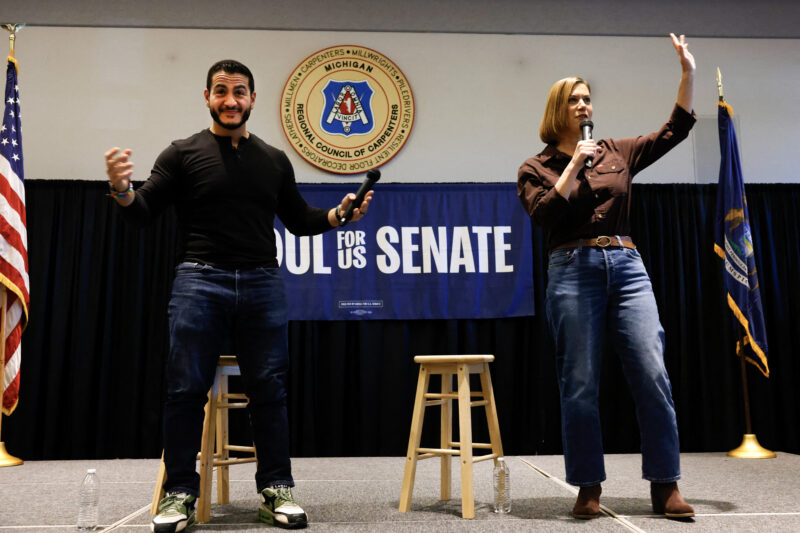
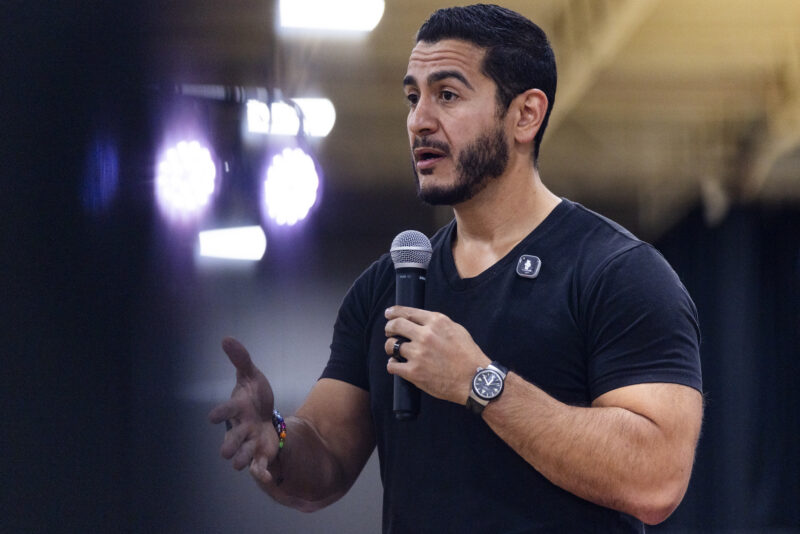
Platner and Abdul el-Sayed’s Senate candidacy in Michigan are the most high-profile far-left candidates to fit the bill, but other lower-profile House candidates like Colorado state Rep. Manny Rutinel and California educator Randy Villegas could also potentially cost Democrats valuable swing seats — in a year in which every contest could determine which party holds the majority.




Please log in if you already have a subscription, or subscribe to access the latest updates.
 Continue with Google
 Continue with Apple