






































This is the second constituent of Moskowitz’s to be arrested for threatening his life since 2024
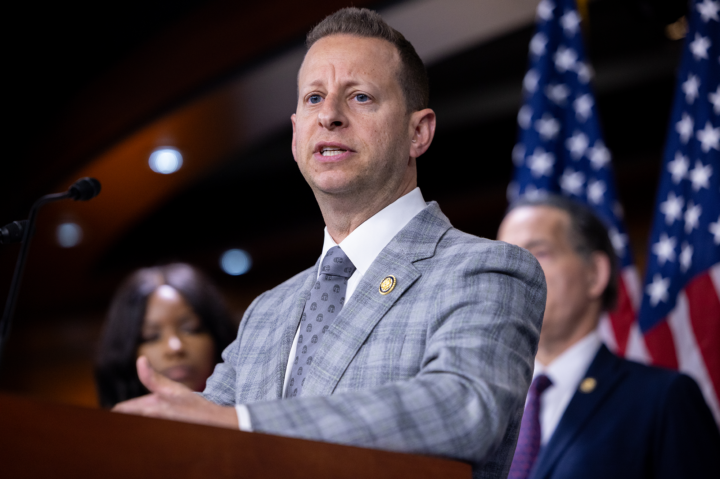
Nathan Posner/Anadolu via Getty Images
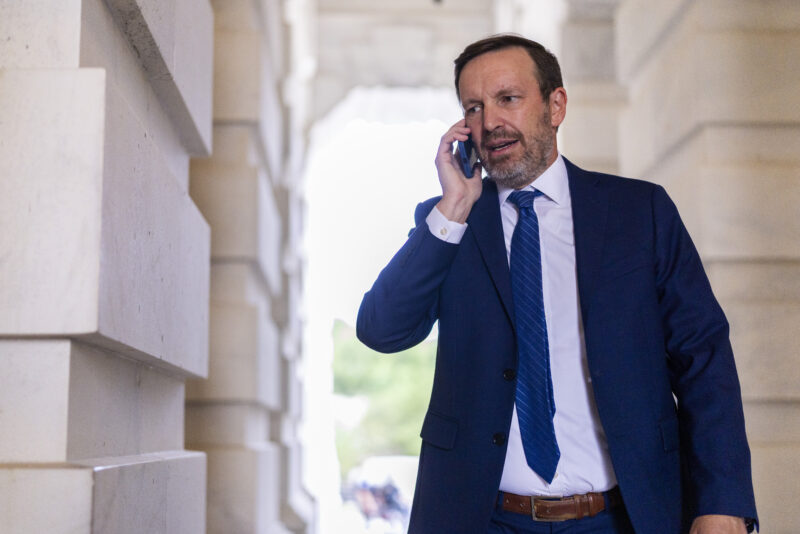
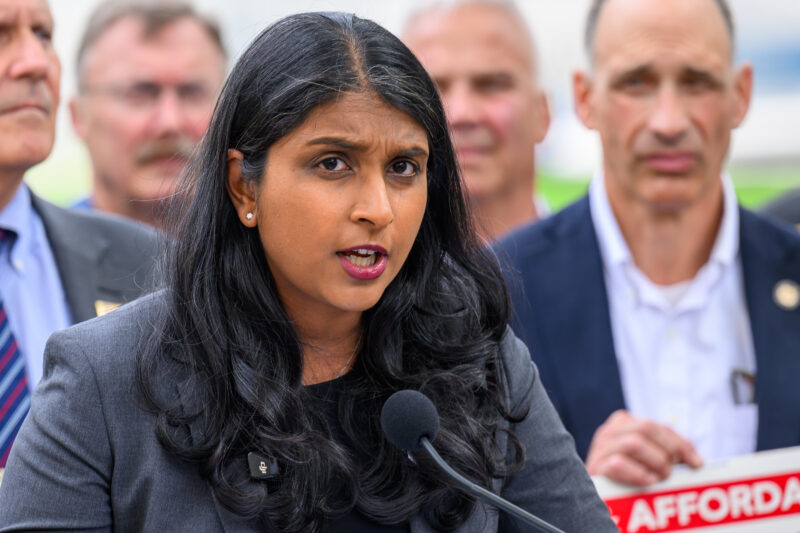
Rep. Jared Moskowitz (D-FL) speaks at a press conference on Capitol Hill on Sept. 8, 2025.


 Add JewishInsider on Google
Rep. Jared Moskowitz (D-FL) said on Thursday that a constituent had been arrested in Boca Raton for making a death threat directed at the Florida congressman, the second such arrest since 2024.
“A constituent of mine has just been arrested in Boca Raton, just a few miles from my house, for threatening my life,” Moskowitz said. “He is currently in the Palm Beach County Jail. I’m grateful to the Florida Department of Law Enforcement (FDLE) and local law enforcement for acting quickly to keep my family and me safe.”
The FDLE and U.S. Capitol Police did not immediately respond to requests for comment. The nature and motive of the threat are not yet clear, as is the identity of the man in custody. The Boca Raton Police Department said it is not the arresting agency and does not have any information to provide.
Moskowitz has spoken publicly about facing heightened security threats as a result of his Jewish identity and outspoken support for the Jewish community and Israel, requiring armed security while in his district. Standing up for Israel, at this point, puts members’ families at risk, he told Jewish Insider earlier this year.
Another man is currently serving a 25-year prison sentence for planning an assassination attempt targeting Moskowitz, after being arrested in 2024. That attacker had a manifesto containing antisemitic rhetoric and a target list that included Jewish institutions.
Other Jewish lawmakers, including Moskowitz’s Florida colleague Rep. Randy Fine (R-FL), have also faced death threats and other security incidents.
A slew of Democratic lawmakers in recent days have received envelopes containing white powder at their district offices across the country, but each incident thus far has been found to be a hoax.
The Congressional Leadership Fund scrapped a planned $6 million campaign against the pro-Israel Democrat days after Cook shifted the redrawn South Florida district to ‘lean Democratic’
Nathan Posner/Anadolu via Getty Images
Rep. Jared Moskowitz (D-FL) speaks at a press conference on Capitol Hill on Sept. 8, 2025.
The Congressional Leadership Fund, the super PAC affiliated with House Republican leadership, on Tuesday pulled its ads against Rep. Jared Moskowitz (D-FL), according to Punchbowl News, a sign that the moderate Democrat is favored to win.
Florida Republicans had redrawn the district, which includes a substantial Jewish population, to be more favorable to Republicans, hoping to boost former Boca Raton Mayor Scott Singer. CLF had been planning to spend up to $6 million in the district.
The Cook Political Report shifted the seat from a “toss-up” to “lean Democratic” last week, in a sign of Moskowitz’s strength. President Donald Trump won the redrawn district by nine points in the 2024 election.
Despite shifts in the electorate overall, Moskowitz has remained highly popular among the area’s Jewish community as one of the most outspoken pro-Israel Democrats in the House. Both candidates have sought to attract the Jewish community vote.
Moskowitz, who easily defeated a far-left Democratic challenger in the primary, entered the final stretch of the race with a substantial cash advantage over Singer, with $1.8 million on hand to Singer’s $560,000.
“Every election is up to the voters. As I continue to talk with them, they say the same thing about bringing down prices and the cost of living, protecting Social Security and Medicare, fixing our healthcare system, and continuing our fight against antisemitism,” Moskowitz said in a statement to Jewish Insider last week. “I am focused on the issues that matter most to the people of South Florida.”
Singer campaign spokesperson Michael Stwarka said that his campaign remains “very confident” in victory and asserted that Singer’s internal polling shows him leading the race.
“Voters are responding to Scott’s proven record. They are souring on Jared especially when they learn he passed zero bills in Congress, that he voted to keep Ilhan Omar on her committee assignment, and that he focused his time stock trading while in office instead of getting things done. His record of results is abysmal and doesn’t stand up when compared to Scott’s. The voters will reject Jared Moskowitz for his abysmal record on Nov. 3,” Stwarka said. “We are seeing that Scott’s messaging is working and that Jared Moskowitz’s unfavorables are going in the wrong direction.”
The district is one of a growing number of competitive seats abandoned by GOP leadership.
The president posted the GOP senator’s personal cell phone number online, urging constituents to pressure him directly

CHRIS DELMAS/AFP via Getty Images
This illustration photo shows a clock in the background of a smartphone showing the time after daylight saving time was implemented in Los Angeles, California, on March 15, 2022.
President Donald Trump and Sen. Tom Cotton (R-AR) publicly sparred over the weekend about legislation that Trump supports, and Cotton opposes, to make daylight saving time permanent.
Trump has been pressuring the Senate to pass the legislation, which the House passed on a bipartisan basis, while Cotton has been its most visible opponent in the Senate. Orthodox Jewish groups have opposed the push to eliminate the time changes, warning of the impact on morning prayer and schoolchildren’s schedules. Barring that, Orthodox groups have urged making standard time permanent instead.
In a major broadside against Cotton, Trump posted the senator’s cell phone number on Truth Social, urging constituents to contact him personally.
“Everyone in Arkansas, a State I love, and won 3 times, the last by … 34 points, tell Tom to, GET IT DONE!” Trump wrote. “It’s very expensive for our Nation where you have high and dangerous steeples to reach, like on churches and municipal buildings. Almost everybody wants ‘The Sunshine Protection Act’ to pass, except for Tom Cotton.”
Trump attached a letter from PGA Tour President Brian Rolapp to his message to Cotton. The golf and leisure industries, particularly in Florida, have been among the most prominent advocates for permanent daylight saving time. The agricultural industry, particularly in northern states, has generally opposed the change, despite claims by Trump.
Though he didn’t address Trump directly, Cotton responded by highlighting a past experiment with ending time changes several decades ago, which quickly became unpopular and was reversed.
“No one likes changing the clock, me included, but Congress has enacted permanent Daylight Savings Time multiple times before and repealed it each time once Americans experienced absurdly late sunrises in the winter,” Cotton said. “Arkansans don’t want their kids going to school in the pitch dark, and I’ll always put Arkansas first.”
Trump fired back by accusing Cotton of blocking the legislation over “ego,” dismissing the past overturning of permanent daylight saving time as a result of congressional negotiating and asserting — contrary to polling from the time that showed substantial opposition to the policy after it was put in place — that “everybody loved it.”
“If Tom Cotton were putting Arkansas first, he would give them an extra hour of daylight and, more importantly, they wouldn’t have to run all over their houses, farms, work places, and everywhere else, twice a year, having to change their Clocks, and often forgetting to do so. That is really putting Arkansas FIRST, and I know, because, unlike Tom, I won that Great State, three times, and by almost 40 points,” Trump said, also emphasizing that Cotton and other Senate Republicans “NEED” the “WIN.”
Sen. Mark Kelly (D-AZ), whose state has utilized permanent standard time for decades, chimed in to say, “Senator Cotton is right. Permanent Daylight Savings has been tried and Americans didn’t like it.”
“The better way is permanent Standard Time because it’s based on science. No dark mornings, it keeps our time in sync with the Sun, and no more changing the clocks. Arizona has been on Standard Time year round since 1968 without issue,” Kelly wrote on X.
McCormick also offered a strong defense of America’s role in the world and commitment to its alliances
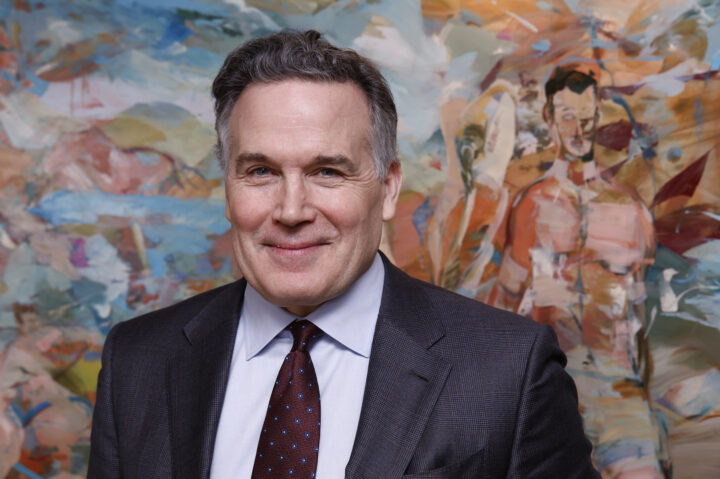
Paul Morigi/Getty Images for Washington AI Network
Sen. Dave McCormick (R-PA) attends the Pre-Alfalfa breakfast hosted by Washington AI Network at Ned's Club Washington, D.C., on Jan. 31, 2026 in Washington, DC.
LAS VEGAS — Asked how he thinks the Republican Party can stop antisemitic figures from being elected in the Republican Party, Sen. Dave McCormick (R-PA) said the GOP should continue continue to “beat the s**t” out of them — electorally.
McCormick, speaking to Jewish Insider on the sidelines of the Republican Jewish Coalition’s conference this weekend, pointed to Rep. Randy Fine’s (R-FL) decisive victory over a neo-Nazi candidate in Florida last month as one such example.
“We live in a country where you get to express your ideas, no matter how horrific and hateful those ideas are, and where anybody can run for office,” McCormick said. “That’s the country I want to live in. But the way that you ensure those ideas don’t get a foothold is you beat the s**t out of them. You beat them in elections. You beat their ideas with better ideas. … Within the Republican Party, we need to have that discipline.”
He said he applies the same logic to beating “these horrible antisemitic ideas on the left with better ideas on the right.” Speaking to the RJC, he argued that the Democratic Party, up to and including its leaders, have made excuses for antisemitism and given it a home in their party, as well as become consumed with an obsession with Israel.
McCormick, who chairs the Senate Foreign Relations Committee’s Middle East subcommittee, told JI that the U.S. should continue to use “any tools at our disposal” against Iran, particularly keeping economic pressure on the regime.
“I think this is all hopefully coming to a fork in the road where the leadership can choose a path to giving up a path to a nuclear weapon and giving up any nuclear weapon program, or continued pressure,” he said.
If Iran refuses to concede, he said the U.S. should continue its campaign with a focus on economic tools and use military force “selectively,” for instance if Iran attempts to place more mines in the Strait of Hormuz.
“It’s a combination of economic and military tools, just with the explicit goal of putting added pressure on the leadership,” McCormick said.
He acknowledged that the war is having impacts at home, particularly at the gas pump, but said he tells constituents that there’s no doubt that Iran would have had a nuclear weapon and the ability to utilize it if the U.S. didn’t take action, so he supports President Donald Trump’s decision to strike.
“There’s trade-offs involved, but I think it was the right step to take,” he said.
During his remarks to the RJC, referencing the late Sen. Lindsey Graham (R-SC), McCormick made a case for continued U.S. engagement in the world as a source of American strength, an idea that he said is under attack from figures on both sides of the aisle.
“Our commitment to freedom is therefore not simply an ideal; it’s a source of national power,” McCormick said. “That doesn’t mean we impose freedom on the world by force, but it does mean we should cherish it everywhere and support it when prudent in the coldest realpolitik terms. A freer world makes America stronger.”
And, he said, “a strong America also requires a commitment to take threats seriously, and when necessary, use force to eliminate them.” He said that the U.S. must take its adversaries seriously when they threaten the country and warned such actors that doing so invites American retaliation.
“Credible deterrence requires the willingness to act,” McCormick continued, “and when all other options are exhausted, it requires us to put our men and women in uniform in harm’s way.”
He also argued that the U.S.’ commitment to strong alliances has been a source of strength. McCormick said that Israel has been a “model ally” but that even close allies can and will have disagreements, and described “tough love” as an important element of any relationship with an ally.
Asked by JI whether he was referring to any specific disagreements with Israel, McCormick said he was not but explained that “we shouldn’t misunderstand a deep-seated friendship and alliance where we’re deeply committed to one another with agreement on everything,” going on to suggest that the “media or the narrative” will take any disagreements out of proportion.
He said that such disagreements should not undermine overall confidence in the strength of the U.S.-Israel relationship.
McCormick indicated that he supports the effort to phase out U.S. military aid in the coming years, but said that increased cooperation going forward in the next generation of warfare, including drones and AI, will be crucial.
“There’s no better wingman in some of the operations that we’ve undertaken than the State of Israel,” McCormick said. “So I think the the next step will be to figure out how to ensure that coordination is happening in the most effective way possible — and I’ve read some of the criticisms around this discussion — in a way that doesn’t sacrifice any autonomy or independence on the part of the United States or on the part of Israel for that matter.”
The Pennsylvania senator said one of his key priorities for the rest of the year is trying to secure energy permitting reform, which he called “the single most important thing we could do for the U.S. economy, global security and the AI revolution” to ensure the U.S. can keep pace in computing power. He said the issue crosses multiple domains, including his work on the Middle East subcommittee.
The Jewish congressman said that the outside interference may have come from foreign sources
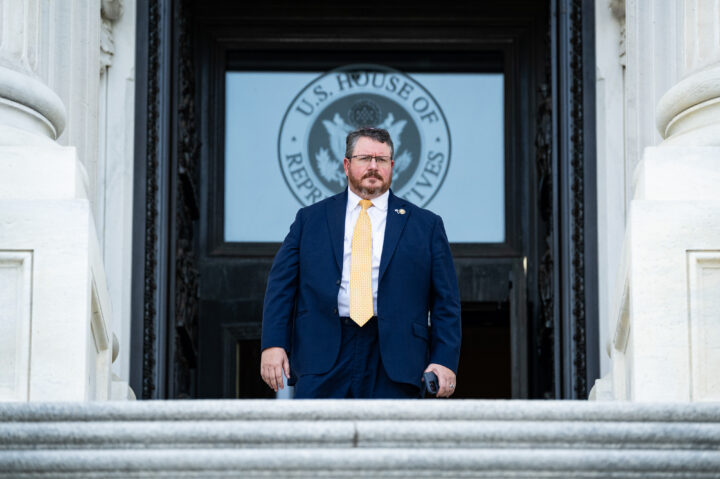
Graeme Sloan/Bloomberg via Getty Images
Representative Randy Fine (R-FL) departs following a vote at the U.S. Capitol in Washington on July 15, 2026.
LAS VEGAS — Rep. Randy Fine (R-FL) alleged in an interview with Jewish Insider this week that an unregistered spending campaign, to the tune of millions of dollars, illegally interfered in his congressional race to aid his neo-Nazi opponent, influencer Dan Bilzerian. Fine added that the money backing that campaign may have come from foreign sources.
Fine, speaking to JI on the sidelines of the Republican Jewish Coalition summit this weekend, said that the group, Florida First Action Network, spent millions on television and mail advertising attacking him without registering with the Federal Election Commission, as required by law.
No group by that name is registered with the FEC. A website for the Florida First Action Network provides few details, stating, “Florida First Action Network is dedicated to promoting American principles, supporting effective leadership, and holding public officials accountable to the people of Florida.” The website provides an address for a postal box in Florida.
“It’s completely illegal,” Fine said, emphasizing that federal law requires transparency in federal election spending. He linked the campaign to a Florida politician and attorney who was listed on the forms for the television ad buys. The attorney, Anthony Sabatini, was also paid by Bilzerian’s campaign for legal services. Fine did not offer specific evidence of a foreign nexus for the funding.
He said that this influx of outside spending allowed Bilzerian and his allies to outspend him 5-to-1, though Bilzerian ultimately lost to Fine by a substantial margin. The congressman said Sabatini and likely Bilzerian should be sent to prison for this activity, and has urged the FBI to investigate.
In an emailed comment to JI, Sabatini did not respond to the substance of Fine’s accusations and instead lobbed a personal insult about Fine’s appearance.
“We cannot have millions of dollars of illegal, anonymous money pouring into our elections. It’s an existential threat to our country,” Fine continued. “If they can do it to me, they can do it anywhere,” he said, adding that allowing such anonymous spending would open a door for American adversaries to interfere directly in U.S. elections and “own Congress.”
Fine’s race was marked by increasingly ugly and antisemitic rhetoric, including consistent antisemitic attacks by Bilzerian — including an ad celebrating Hitler — vandalism of a Fine campaign sign with a swastika and a man arrested for issuing a death threat against Fine on the morning of the primary election.
“It’s not often that you get to say you faced evil and you slayed it, but that’s what we did,” Fine said. “It was very unpleasant, I’m not going to lie. But what was important for me to understand, what I said to my kids, is that I was simply the vessel.”
He said that Bilzerian’s campaign was effectively against the Jewish people, rather than just against Fine himself, and that he felt like he was “taking the blows for the entire Jewish community.”
He said he was ultimately proud of the results in the race and argued that, despite Bilzerian’s 18% finish, racist and antisemitic gubernatorial candidate James Fishback’s 10% result is more reflective of the prevalence of extremist ideology within the GOP base.
He said that the outside spending supporting Bilzerian made a very different case than Bilzerian’s own campaign did — absent the open bigotry espoused by Bilzerian and casting Bilzerian in a misleading positive light while misrepresenting Fine.
“When you spend $3 or $4 or $5 million creating a narrative that’s false in both directions, it’s going to have an impact,” he said. “I ascribe the incremental 8% [difference between Fishback and Bilzerian’s results] to the $5 million worth of lies.”
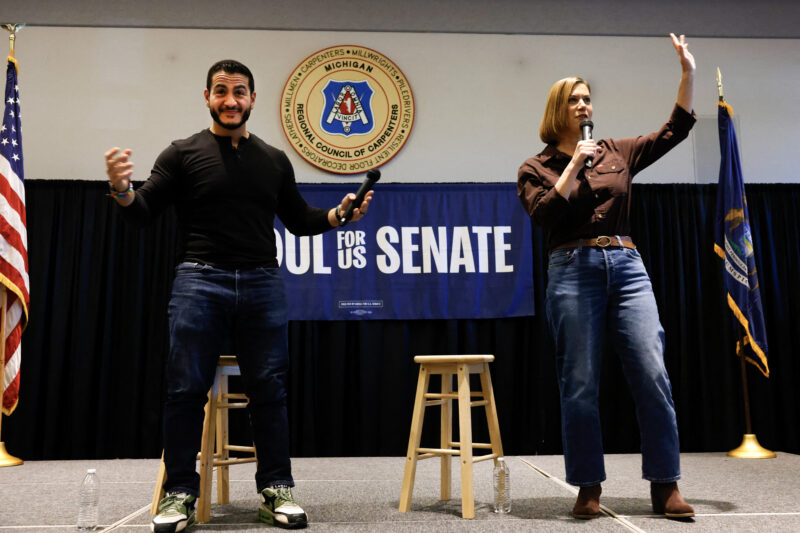
During his speech to the RJC convention, Fine also noted that some of the same donors who supported Bilzerian have also supported far-left anti-Israel candidates like Michigan’s Abdul El-Sayed, describing it as an example of a long-standing “alliance between Nazis and Muslim terrorists.”
Speaking to JI, he called his race, along with the resignation of Rep. Marjorie Taylor Greene (R-GA) and primary defeat of Rep. Thomas Massie (R-KY), proof that Republicans “deal with” and reject antisemitism in their ranks, while “Democrats celebrate theirs.”
He said that he believes that the future of Jews in America and the future of Western civilization is at stake in the midterms, and that the “Democratic Party is lost. And so if we don’t fight back, if we don’t win, we could go the same way. I’m very, very worried about the future of America.”
During his speech during the RJC convention, Fine also reiterated comments he has made in the past decrying what he describes as “mainstream Muslims” — whom he characterizes as those who believe in extreme Islamist ideology — which have previously garnered accusations of Islamophobia.
Fine argued that continuing U.S. aid to Israel — a subject that has become a point of debate among some in the Republican Party — is an America First policy.
“If you’re Israel you want to end that aid and the reason is because giving that aid to Israel gives the United States real leverage over the State of Israel,” he said. “The America First position, which is we like to have our tentacles into the world, is to continue to give that aid.”
He said that ultimately if Israel doesn’t want U.S. aid, it would reject it, but argued that maintaining the strong relationship between the two countries is good for the United States, allowing opportunities to improve weapons systems, share intelligence and more.
“We get so much out of that $3.8 billion [in annual U.S. military assistance to Israel] than we give by doing it, and the same people who obsess about this $3.8 billion don’t obsess about the $380 billion that we waste every year on other things,” he continued. “I think it’s in Israel’s best interest to stop taking the aid. I don’t know that it’s in America’s best interest.”
The Florida congressman, who has been strongly supportive of President Donald Trump and his administration and serves on the House Foreign Affairs Committee, praised the Iran war, saying he believes it’s going well and that the U.S. is making significant progress in destroying Iran’s military, constraining its economy and loosening Iran’s grip over the Strait of Hormuz.
A Brookings Institution study found that of the 104 Democratic Socialists of America-backed candidates running for state legislature, nearly 75% have won their primaries

Spencer Platt/Getty Images
Members of the Democratic Socialists of America May 01, 2019 in New York City.
The Democratic Socialists of America notched another win this week in Florida’s Democratic Senate primary, with the shock victory of state Rep. Angie Nixon, a DSA member, over a much better-funded, establishment-backed challenger.
The far-left group has also notched at least six new victories in deep-blue House districts where its members are all but guaranteed to be elected, and could lead four major U.S. cities — New York, Los Angeles, Seattle and Washington, D.C. — after the midterm elections.
But some of the group’s more overlooked victories have happened at the state level, where the DSA members could wield significant power if they win. A new study by the Brookings Institution, released Wednesday, found that of the 104 state legislative candidates endorsed by national or local DSA chapters in 2026, 76 have won their primaries or advanced to the general election without a primary.
At the local level, another 64 of the 99 DSA-endorsed candidates are moving on to the general election. By comparison, at the congressional level, only 20 of the 64 total DSA-endorsed candidates have made it to general election races.
In New York City, already a comparative bastion of DSA representation in the state Assembly and Senate, eight DSA endorsees have advanced to the general election, including state Senate candidate Aber Kawas, who downplayed the 9/11 attacks, as well as seven state Assembly candidates. In total, the group is expected to have at least 15 members in Albany next year.
Sara Forman, the former executive director of the New York Solidarity Network, a state-level Jewish advocacy organization, said that after New York City Zohran Mamdani’s victory, the DSA seems to be emboldened to “flex their muscles” nationwide, after previously taking a more “surgical” approach at the state and local level.
Forman, who is now a senior advisor at Optimistic Labs, said she thinks the group learned lessons from the Mamdani race, including targeting highly engaged communities and neighborhoods. She also emphasized that the group has spent two decades building out the infrastructure that fueled the recent victories highlighted in the Brookings data.
“The Jewish community needs to take a hard look at this and really decide whether or not we’re willing to break bread” with a group that only looks at the Jewish community for “how they can use us,” she continued, while adding that Jewish community members will likely need to engage with some DSA elected officials in some capacity..
The national DSA organization endorses only a small subset of the DSA-affiliated candidates running nationwide. But outside of New York, five of its endorsees have advanced to general election races in state assembly seats around the country, with some set to coast to election and others facing competitive general election races: Robert LeVertis Bell in Kentucky, Tammy Carpenter in Oregon, Chris Gilmer-Hill in Michigan, Luke Alfaro-Jungmann in New Mexico and Mathewos Samson in Georgia.
Local DSA groups have racked up many more wins, such as state Rep. Maryam Khan’s ouster of an incumbent in a recent Hartford, Conn.-area state Senate seat.
“It’s interesting to me that the places where you’ve seen a lot of the newer elected officials pop up were a little unexpected, Connecticut being one example,” Forman said.
The state-level wins carry the potential to advance the DSA’s agenda, particularly in places such as New York, where the DSA expects its endorsees to work as a bloc in coordination with DSA leaders.
The Brookings study found that most DSA candidates hailed from already liberal areas — 111 were from California and New York alone — and most from districts that heavily favor Democrats. And DSA candidates contested and were nominated in a small fraction of the 7,386 total legislative seats around the country.
“From one perspective, the story of DSA candidates’ influence is overblown. The scarcity of candidates and their lack of strong success rates overall make this look more like a skirmish than a war,” the study’s authors conclude. “Nonetheless, the high-profile wins, fueled by young, white, educated voters, represent a warning to the rest of the party. They signal that unhappiness with the Democratic establishment and, in the post-Biden world, opposition to elderly officeholders can be leveraged by young, charismatic DSA candidates — and reflect an impatience with party leadership that transcends ideology.”
The rapid rise of the far left has alarmed Jewish leaders, who have seen candidates aligned with the DSA or affiliated with other virulently anti-Israel groups and in some cases, embracing antisemitic views. Those ties haven’t stopped them from winning deep-blue primaries across the country.
“Just judging on Missouri, it’s worse than people are realizing,” said Stacey Newman, a former Democratic state lawmaker who now leads the Missouri Alliance Network.
She emphasized that St. Louis-area Democrats elected a growing number of far-left candidates — albeit most not formally DSA-endorsed — and others hostile to Jewish community interests to the Legislature even while reelecting a close Jewish community ally in Rep. Wesley Bell (D-MO). “They all have the same anti-Israel, anti-Jew platforms,” she said.
Forman said that Jewish advocates and their allies at the state level “need to be prepared for what I’m assuming is going to be the incoming push to try to make Israel a state and local issue,” as Mamdani and other DSA members did in New York State with legislation such as the Not On Our Dime Act.
“We really need to be making sure that our advocates and our allies are prepared to push back on that narrative,” Forman said, “but second of all, to remind people that state and local office has nothing to do with foreign policy.”
She said that the existing Jewish educational infrastructure needs to have the “toolkit to be able to say and push back hard and aggressively that this has no place in the state legislature,” and have its messaging clear and prepared.
Newman, whose group led advocacy for an antisemitism bill in the Missouri Legislature, said she feels that the Jewish community increasingly can’t rely on Democrats in Missouri’s legislature to support their priorities. And, she emphasized, much more policy work happens at the state level than the federal level.
“As a former Jewish state legislator, I’m petrified, because we’re all watching what’s happening around the country,” Newman said. “We’re watching Michigan, Wisconsin, we’re watching the Democratic Party throw caution to the wind.”
Plus, Darline Graham says natsec 'not my thing'
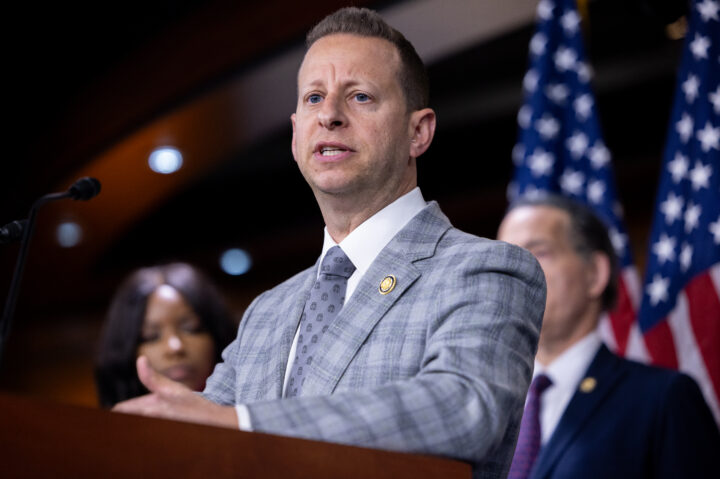
Nathan Posner/Anadolu via Getty Images
Rep. Jared Moskowitz (D-FL) speaks at a press conference on Capitol Hill on Sept. 8, 2025.
Good Wednesday morning.
In today’s Daily Kickoff, we break down the results of yesterday’s primaries in Florida, and talk to foreign policy officials wary of the Trump administration’s Gaza diplomacy. We report on Sen. Darline Graham’s admission during last night’s South Carolina Senate debate that national security was “not my thing,” and cover a new report from the Anti-Defamation League and the Academic Engagement Network about anti-Israel activists’ efforts to exert control over higher education unions. Also in today’s Daily Kickoff: Ehren Stenzler, Jeremy Moss and Yossi Cohen.
Curated by JI Executive Editor Melissa Weiss, with an assist from Danielle Cohen-Kanik.
Today’s Agenda
We’re keeping an eye on the remaining races to be called in yesterday’s primaries in Florida and special election runoff in California’s 14th Congressional District, where state Sen. Aisha Wahab maintains a 1,300-vote lead over Melissa Hernandez with 62% of precincts reporting.
A number of the Florida races were called shortly after polls closed, with Reps. Debbie Wasserman Schultz (D-FL), Jared Moskowitz (D-FL) and Randy Fine (R-FL) fending off challengers from the more extreme wings of their respective parties. More below.
One Thing To Know
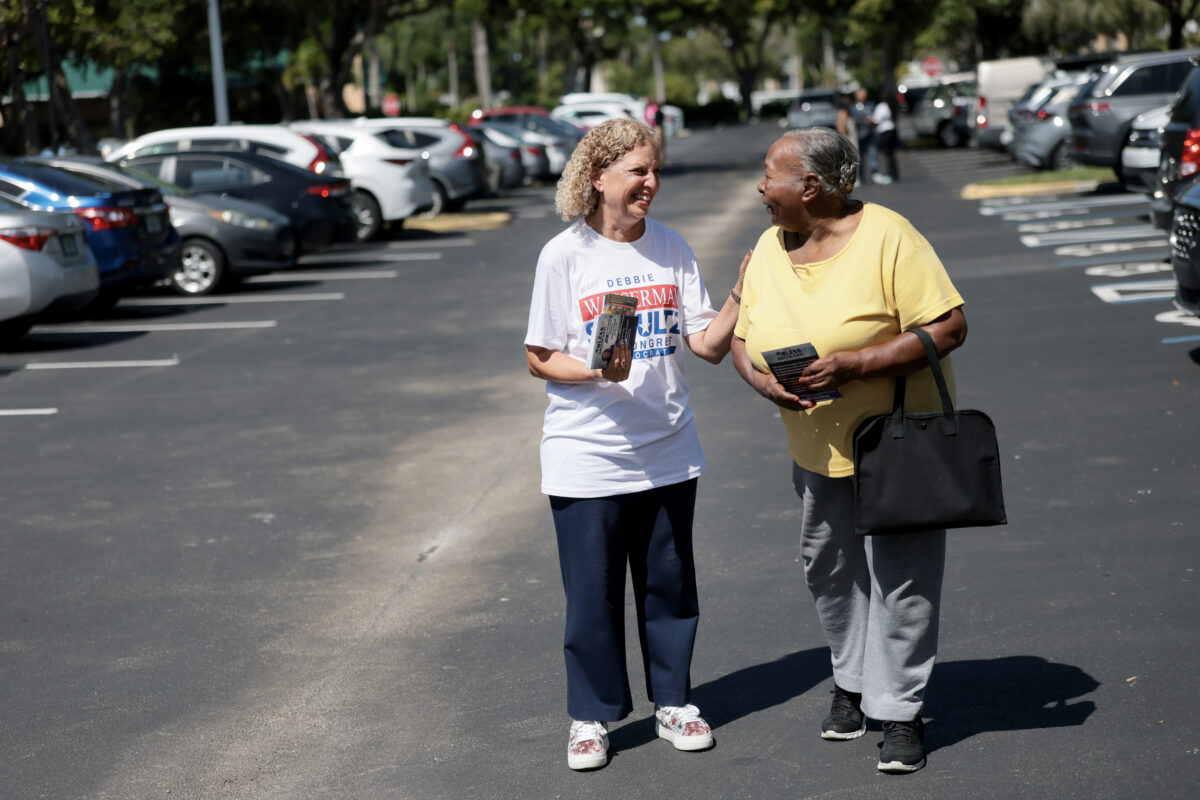
Florida Democrats and Republicans fended off extreme challengers against pro-Israel incumbents in Tuesday night’s primaries, indicating that the state’s older, moderate and notably Jewish electorate was uniquely inhospitable towards the anti-Israel left and the antisemitic right.
Rep. Jared Moskowitz (D-FL) handily defeated socialist challenger Oliver Larkin by nearly a 2-to-1 margin (64-36%), while Rep. Debbie Wasserman Schultz (D-FL) easily prevailed in a newly drawn district against a crowded field of challengers. Elijah Manley — the candidate running against Wasserman Schultz on the Democratic Socialists of America, anti-Israel platform — lagged in third place, with just 13% of the vote.
On the Republican side, Rep. Randy Fine (R-FL) dominated over a neo-Nazi podcaster who made hatred of Jews the central message of his campaign. Fine won renomination with 57% of the vote, while the antisemitic Dan Bilzerian tallied 17% of the GOP vote. And in the governor’s race, James Fishback, who used racist and antisemitic messages as part of his campaign, lagged well behind the Trump-endorsed winner, Rep. Byron Donalds (R-FL), finishing in third place with just 10% of the vote.
The Big Reads
DISARMAMENT DOUBTS
A diplomatic push by Jared Kushner to revive the stalled Gaza peace plan was met with widespread skepticism from Middle East analysts, who warned that the envoy’s timeline for Hamas disarmament is unrealistic, Jewish Insider’s Matthew Shea reports. “What Hamas wants is what Hezbollah has had in Lebanon: someone else runs schools and collects garbage, while they remain in charge behind the scenes. In my view, Kushner’s meeting with Hamas was a terrible mistake that helps to legitimize them,” said Elliott Abrams, who served as special envoy for Iran during the first Trump administration.
game changer
Sen. Darline Graham (R-SC) said at the final GOP primary debate on Tuesday to replace the late Sen. Lindsey Graham (R-SC) that she is “not that informed on national security,” Jewish Insider’s Emily Jacobs reports. Graham made the comments after being asked at Tuesday’s debate if she believed Taiwan and the South China Sea were national security issues for the United States. “My brother was in the Air Force for 33 years, so I will do everything I can to support the military. My dad was in the army. I’m not a polished politician up here. National security is not my thing, not my area of expertise,” Graham said.
campus beat
Dysfunctional union governance is leaving some Jewish faculty and graduate students marginalized and unrepresented by the labor organizations meant to advocate for them, a report released Wednesday by the Academic Engagement Network and the Anti-Defamation League documents. The report, “A Crisis of Representation: Antisemitism and Inclusion in Higher Education Unions,” highlights how activist factions have used low-turnout union elections to push anti-Israel positions without broad member buy-in — often at the expense of Jewish members who say they have faced targeted attacks, Jewish Insider’s Haley Cohen reports.
The Rundown
sunshine state socialism
a whole new ballgame
investigating the investigators
wolverine warriors
campaign controversy
sephardi spotlight
mixed messages
On Our Radar
● The Live Briefing. Word on the street, clips, podcasts and quick updates — the items we’re tracking all day in our Live Briefing on the app (on Apple and Android) and website.
The State Department announced sanctions against Tomoko Akane, president of the International Criminal Court, and Abdoulaye Seye, a senior trial lawyer at the court, as part of the Trump administration’s recently announced campaign to target the body; Secretary of State Marco Rubio said the two individuals “have directly engaged in efforts by the ICC to investigate, arrest, detain, or prosecute officials whose government has not consented to ICC jurisdiction”…
The Department of Defense is demanding that 30 U.S. academic institutions, including Georgetown, UC Berkeley, Harvard, UCLA, USC, Cornell, Duke, Johns Hopkins and NYU, conduct comprehensive reviews of their ties with “foreign entities of concern,” threatening future Pentagon funding for research projects…
A new Suffolk University/Boston Globe poll found Sen. Ed Markey (D-MA) with a 14-point lead over his primary opponent, Rep. Seth Moulton (D-MA), among likely voters…
Former Green Party presidential candidate Jill Stein is facing misdemeanor charges tied to her participation in an anti-Israel protest at Washington University in St. Louis in April 2024, during which she allegedly assaulted a police officer…
LionTree co-founder Ehren Stenzler is joining Moelis as a managing director, alongside Jake Donavan, who served as LionTree’s president of Europe…
Lawyers for Los Angeles Lakers Governor Jeanie Buss are contesting efforts to sell the Buss family’s stake — approximately 17.8% — in the team to Josh Kushner and Bob Iger; Kushner and Iger are still proceeding with their purchase of Mark Walter’s majority stake in the team…
Senior German lawmakers are calling on the EU to sanction Israeli National Security Minister Itamar Ben-Gvir over his comments earlier this week that Israel should conduct “targeted killings” to “remove 30, 40 [people] every night” in Gaza…
French Foreign Minister Jean-Noël Barrot said the country will expel two Iranian diplomats after members of the Islamic Republic’s security service interrogated and allegedly assaulted two French Embassy employees, including the cultural attaché, who were posted in Tehran…
The Israel Football Association withdrew its support for FIFA head Gianni Infantino in what IFA President Moshe Zuares, citing an “unprecedented crisis of confidence” in the FIFA chief, said was a unanimous vote; the move came after Infantino fired FIFA’s COO over his opposition to Infantino’s proposal to sell off portions of the World Cup…
Azerbaijan is suing CNN for defamation, accusing the network of endangering the country by falsely reporting that Baku had allowed Israel to operate from Azerbaijani territory as it mounted attacks against Iran during the war earlier this year…
The United Arab Emirates said it would be cutting off all trade and commercial ties with Iran due to “regional escalations that undermine regional and international peace and security,” after Tehran fired two ballistic missiles at the Gulf state on Tuesday…
Lebanon transferred an Assad-era Syrian military official to Damascus after he was questioned in Beirut earlier this month over crimes he allegedly committed in Syria in 2011; Maj. Gen. Adel Issa, who fled to Lebanon after the fall of Bashar al-Assad, is expected to face trial in Syria…
Former Mossad head Yossi Cohen, who joined SoftBank in 2021 as head of the company’s Israel operations, was appointed to the additional role of senior advisor to SoftBank founder, chairman and CEO Masayoshi Son…
Jewish Insider’s Gabby Deutch and The Forward’s Talia Zax are joining The Atlantic as a staff writer and senior editor, respectively…
Israeli businessman and investor Shmuel Harlap, the former chairman of Israeli auto importer Colmobil, died at 82…
Worthy Reads
Find more Worthy Reads in our Live Briefing via our app (on Apple and Android) and website.
Damage Control: In The Times of Israel, former U.S. Ambassador to Israel Jack Lew considers how Jerusalem can strengthen its relations with Washington amid a generational shift in the U.S. that threatens to derail the decades-long ties between the countries. “As a powerful but small country, Israel’s security depends on continued strategic cooperation with the United States. After fall elections in both countries, it will be urgent for a new government in Israel to take quick action to begin repairing this vital relationship. … This requires difficult decisions, and at least some humility, not a trait typically rewarded in Israeli political life.” [TOI]
Vilified on the Vineyard: The Atlantic’s Marc Leibovich travels to Alan Dershowitz’s home in Martha’s Vineyard to see how the lawyer has adjusted to life in the enclave after his public fallout with Larry David and what he alleges is ostracization from local events over his politics. “The week before our conversation, he had returned to the hallowed cultural battleground of the Pierogi Wars, the West Tisbury farmers’ market. He was wearing his U.S.-Israel shirt (or ‘my Zionist T-shirt,’ of which he has two — one red, one blue) and saw a guy wearing a Free Palestine shirt. ‘I walked up to him. I said, “Can we take a picture together?”’ The man refused. ‘He said, “No, no, no Israel,” and he walked away.’” [TheAtlantic]
EEOC Woes: In The Wall Street Journal, Ken Marcus, the founder of the Louis D. Brandeis Center for Human Rights Under Law, argues in favor of a proposal to end a requirement for large employers to submit race, sex and ethnicity employment data to the federal government. “Many employers and institutions have leaned on demographic frameworks to drive diversity and inclusion programs, sorting employees into broad categories of advantage and disadvantage. Within this schema, Jewish Americans are often folded into racial categories that have little or nothing to do with Jewish identity, meaning they are excluded from conversations about workplace discrimination entirely, even as antisemitic harassment has surged.” [WSJ]
Picture of the Day

Tadesse Getahon, Haimro Alame and Gashau Ayale — members of the Israeli men’s marathon team — showed off their gold medals (with Ayale also holding his individual bronze medal), after arriving at Israel’s Ben Gurion Airport in Lod following the European Athletics Championships in Birmingham, England.
Birthdays
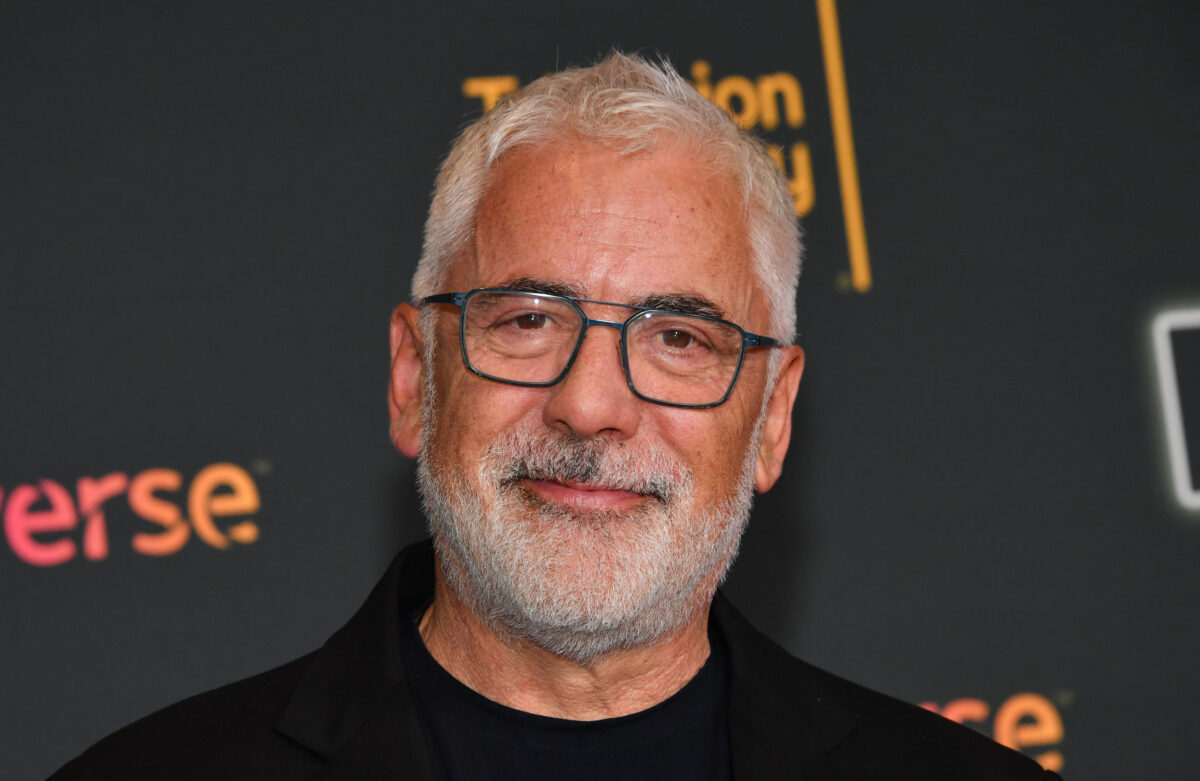
Adam Arkin, actor and director, turns 70
Arthur Rock, one of the earliest Silicon Valley venture capital investors with positions in firms like Intel and Apple, turns 100
Gabriela Shalev, retired as president of Ono Academic College in Israel, she was Israel’s ambassador to the United Nations from 2008 to 2010, turns 85
Neal Slavin, photographer and director of television programs and movies
David Novak, professor emeritus of religion and philosophy at the University of Toronto, he is the author of over a dozen books, turns 85
Bill Clinton, 42nd president of the United States, turns 80
Miriam Baum Benkoe, retired reading teacher for the NYC Department of Education, she co-founded the kosher pantry at Bethesda Hospital in Boynton Beach, Fla.
Mark C. Rifkin, managing partner at Wolf Haldenstein Adler Freeman & Herz
Marc J. Rowan, chairman and CEO of Apollo Global Management, he is the board chairman of the UJA-Federation of New York, turns 64
Julius Genachowski, chairman of the FCC in the Obama administration, he is now a senior advisor at the Carlyle Group, turns 64
Joseph Kahn, executive editor of The New York Times, turns 62
Dan Aloni, managing partner and talent agent at William Morris Endeavor, he is active in the contemporary art world as a collector, turns 62
Omri Sharon, former member of Knesset, he is the son of former Israeli Prime Minister Ariel Sharon, turns 62
Carolynn Wotman, executive administrator of Ventura, Calif., accounting firm, Morgan, Daggett & Wotman
Kyra Sedgwick, actor and producer, known for her role as Deputy Chief Brenda Leigh Johnson on the TNT crime drama “The Closer,” turns 61
Melinda R. Katz, district attorney of Queens, turns 61
Ezra Friedlander, founder and CEO of NYC-based government advocacy firm The Friedlander Group
Eric Louis Zinterhofer, private equity financier and a founding partner of Searchlight Capital Partners, he is on the board of Estee Lauder, turns 55
Yehuda Neuberger, chair of the Orthodox Union and past chair of The Associated: Jewish Federation of Baltimore
Molly Jong-Fast, writer and MS NOW commentator, turns 48
Brett Icahn, businessman and investor, he and a partner successfully managed a hedge fund for his father, Carl Icahn, turns 47
Ross Hinkle, managing partner of Handmade Capital
Nufar Edelman, laser radial sailor, she represented Israel at the 2008 and 2012 Olympics, turns 44
Aaron Yechiel Hirtz, founder and principal at Aron’s Kissena Farms and Cedar Market
Isaac Gortenburg, president at Kansas City-based Eighteen Capital Group
Steven Markowitz, rapper, singer and songwriter, known by his stage name Hoodie Allen, turns 38
Cassandra Federbusz, digital marketing and PR consultant, she is a team manager at HubSpot
Angie Nixon, who called Israel’s war against Hamas a genocide and campaigned with Rep. Rashida Tlaib, will be the party’s candidate against GOP Sen. Ashley Moody
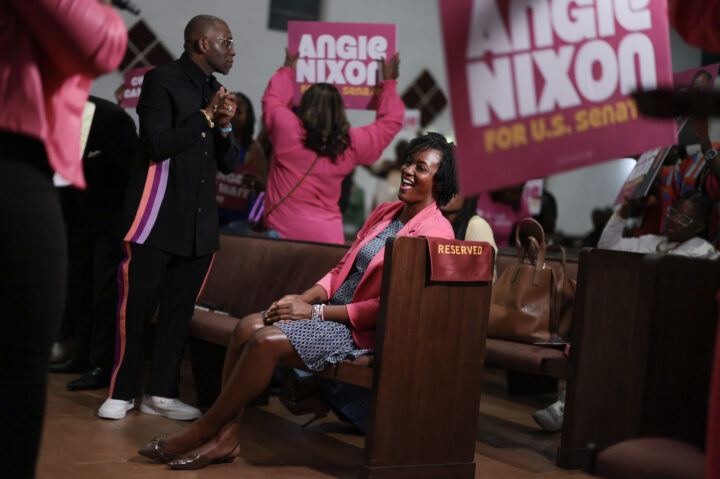
Joe Raedle/Getty Images
Democratic U.S. Senate candidate, Florida state Rep. Angie Nixon participates in a worship service during a visit to the Ebenezer Missionary Baptist Church on August 17, 2026 in Hallandale Beach, Florida.
Democratic Socialists of America-affiliated candidate Angie Nixon, a Florida state representative, won the Democratic primary for Florida’s Senate seat on Tuesday, scoring a major upset over the establishment-backed Alex Vindman.
Vindman, who is Jewish and gained national attention as a whistleblower in President Donald Trump’s first term, brought in $16 million during the campaign while Nixon raised less than $1 million. Her victory is a sign of the shifting political tides in the Sunshine State. .
Her left-wing affiliations are also likely to concern Democrats in the general election in light of the various immigrant constituencies in the state that have generally been hostile to socialist ideology.
Nixon said recently that she would have supported efforts to cut off all U.S. aid to Israel: “We cannot continue to send money to countries that are violating international law, that are violating human rights, that are actively destroying,” she said on local radio.
Nixon campaigned alongside and was endorsed by a series of anti-Israel figures and groups, including Reps. Rashida Tlaib (D-MI) and Ilhan Omar (D-MN), former Rep. Cori Bush (D-MO), former Ohio state Sen. Nina Turner, the virulently anti-Israel group TrackAIPAC and Jewish Voice for Peace.
A month after Hamas’ Oct. 7, 2023, attacks on Israel, Nixon faced accusations of antisemitism by Jewish Democrats in the Statehouse over a resolution she led calling for a ceasefire “in Israel and occupied Palestine,” with just one other lawmaker joining her in support of it. Most House members turned their backs to Nixon as she spoke on the House floor in support of the resolution.
“To be called a terrorist on the House floor. Ignorant. Antisemitic. That was very hurtful. But I will always fight to stand on the right side of history, and I believe that I was on the right side of history then just like I’m on the right side of history now,” Nixon said recently.
Rick Stark, chair of the Florida Democratic Jewish Caucus, said that Nixon joined a Zoom meeting with the group to discuss issues including Israel policy. He characterized her as having no clear understanding of the region.
Stark said that Nixon had not offered a clear answer on whether Israel has a right to exist as a Jewish state, and was not interested in traveling to Israel.
He recounted that she was not familiar with the meaning of the slogan “from the river to the sea,” but she said that she had been told by Palestinian friends that it did not constitute a call for the destruction of Israel.
Steve Schale, a Florida Democratic strategist, told JI before the primary that Nixon had “created a bunch of buzz for herself,” and that she would have a strong base in the Jacksonville area and among Black voters statewide — beyond only the progressive and DSA-aligned coalition.
The results indicated that Nixon, indeed, won comfortably in heavily Black counties and precincts, giving her a broader base of support than just far-left voters.
Vindman is also relatively new to Florida, having moved to the state only recently and attracting accusations of carpetbagging.
“Who would’ve ever thought that a Jewish refugee would make it to the U.S. Army, to the White House, and to becoming a candidate for the U.S. Senate. Only in America is that possible,” Vindman said in a statement.
“I still believe in the American Dream, because I’ve lived it. It’s worth fighting for. Rep. Nixon ran a strong campaign. I will be standing by her side in the fight against Ashley Moody. I hope you’ll join me.”
Jared Moskowitz and Debbie Wasserman Schultz easily fended off socialist challengers while Randy Fine beat a neo-Nazi podcaster
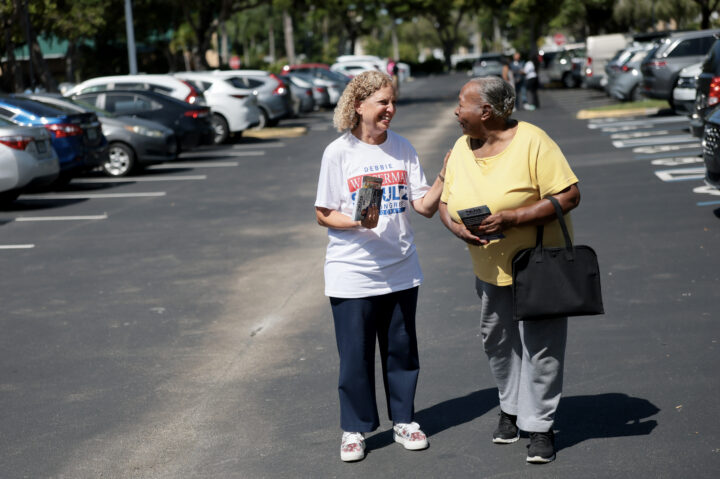
Joe Raedle/Getty Images
Rep. Debbie Wasserman Schultz (D-FL) campaigns outside of the Kings Point Clubhouse polling station on August 18, 2026, in Tamarac, Florida.
Florida Democrats and Republicans fended off extreme challengers against pro-Israel incumbents in Tuesday night’s primaries, indicating that the state’s older, moderate and notably Jewish electorate was uniquely inhospitable towards the anti-Israel left and the antisemitic right.
Rep. Jared Moskowitz (D-FL) handily defeated socialist challenger Oliver Larkin by nearly a 2-to-1 margin (64-36%), while Rep. Debbie Wasserman Schultz (D-FL) easily prevailed in a newly drawn district against a crowded field of challengers. Elijah Manley — the candidate running against Wasserman Schultz on the Democratic Socialists of America, anti-Israel platform — lagged in third place, with just 13% of the vote.
Moskowitz will still be facing a competitive general election in a district that President Donald Trump carried. Former Boca Raton Mayor Scott Singer won the Republican nomination and, like Moskowitz, is an outspoken supporter of the U.S.-Israel relationship.
On the Republican side, Rep. Randy Fine (R-FL) dominated over a neo-Nazi podcaster who made hatred of Jews the central message of his campaign. Fine won renomination with 57% of the vote, while the antisemitic Dan Bilzerian tallied 17% of the GOP vote. And in the governor’s race, James Fishback, who used racist and antisemitic messages as part of his campaign, lagged well behind the Trump-endorsed winner, Rep. Byron Donalds (R-FL), finishing in third place with just 10% of the vote.
Donalds will face former Rep. David Jolly (who served as a Republican in Congress before switching to the Democratic Party) in the general election.
In another victory for the GOP mainstream, former TV anchor Ryan Elijah ousted scandal-plagued (and also Trump-endorsed) Rep. Cory Mills (R-FL), who has been dogged by a series of investigations related to alleged domestic violence and harassment, financial misconduct, sexual misconduct, stolen valor and alleged use of his office for his own financial gain.
But the big surprise of the night came in the Democratic primary to determine a Democratic nominee against appointed Sen. Ashley Moody (R-FL), who was tapped to replace Secretary of State Marco Rubio. Alex Vindman, the star witness in the first impeachment hearing against Trump, lost badly to DSA-backed challenger Angie Nixon despite being supported by national party leaders.
Nixon, a Florida state legislator and community organizer, holds staunchly anti-Israel views, having repeatedly called Israel’s war against Hamas in Gaza a “genocide” and campaigning with Rep. Rashida Tlaib (D-MI) in a preelection rally last weekend.
The outcome means that Moody will be heavily favored to win election in November, taking away any Democratic outside hopes of winning the seat with a more mainstream standard-bearer.
Plus, a Brooklyn pol blames the ‘Zionists’
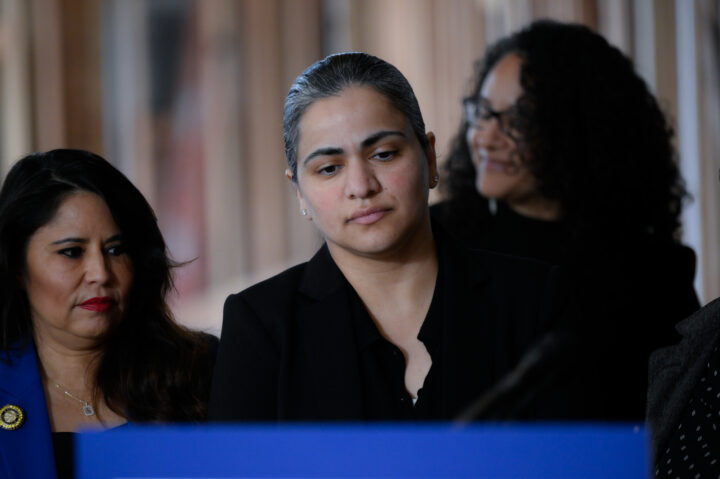
Tayfun Coskun/Anadolu via Getty Images
California state Sen. Aisha Wahab attends a press conference in Hayward, Calif., on March 2, 2026.
Good Tuesday morning.
In today’s Daily Kickoff, we preview today’s primaries in Florida and a special election runoff in California, report on comments by Brooklyn Democratic official Carmella Charrington accusing “Zionists” of being behind a personal property dispute and cover yesterday’s meeting between Jared Kushner and Israeli Prime Minister Benjamin Netanyahu. Also in today’s Daily Kickoff: Justin Ishbia, Ariel Levy and Stefan Zweig.
Curated by JI Executive Editor Melissa Weiss, with an assist from Danielle Cohen-Kanik and Marc Rod.
Today’s Agenda
It’s primary day in Florida. We’ll be watching a number of races around the Sunshine State, including the Democratic primaries in South Florida, where Reps. Debbie Wasserman Schultz, Jared Moskowitz and Lois Frankel are facing challenges from their left.
We’ll also be awaiting the results of the state’s GOP primaries, where fringe elements of the party, including gubernatorial candidate James Fishback and congressional candidate Dan Bilzerian, are mounting bids that are unlikely to succeed but will be instructive as to the extent of the far-right’s reach in the state. More below.
In California, voters in the state’s 14th Congressional District will cast their ballots in the special election runoff between state Sen. Aisha Wahab and former Dublin, Calif., Mayor Melissa Hernandez to succeed former Rep. Eric Swalwell (D-CA) — a race in which the United Democracy Project has invested heavily. More below.
King Abdullah II of Jordan is kicking off a weeklong visit to China today, where he’s slated to meet with President Xi Jinping in Beijing and travel to Shanghai and Shenzhen.
In New York, the two-day Sephardic Rabbinic Conference wraps up this afternoon. Ofir Akunis, Israel’s consul general in New York, is slated to address the gathering today.
One Thing To Know
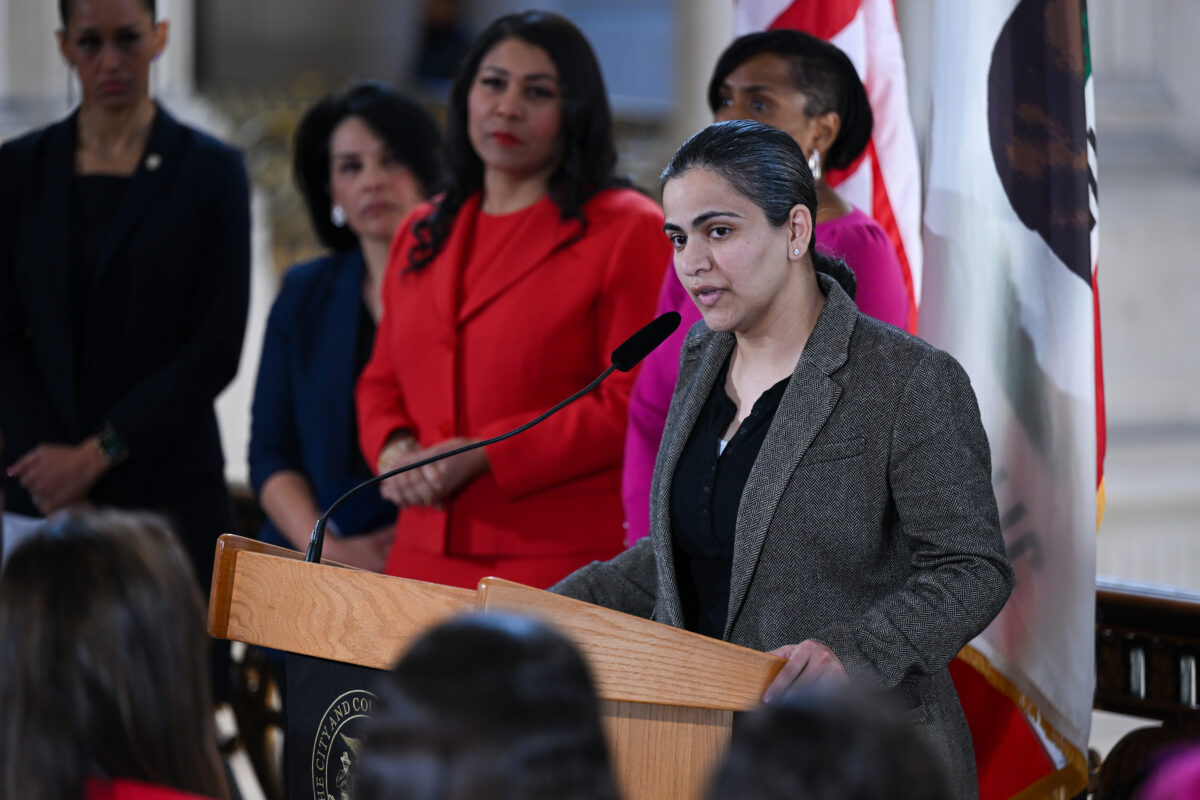
By Matthew Kassel
As primary election season comes to an end, AIPAC is closing out its involvement in a dramatic cycle with an unexpected foray into a low-profile California House race on Tuesday where Israel has not been among the top issues.
In the last two weeks, AIPAC’s super PAC, the United Democracy Project, has spent nearly $2.5 million in an effort to defeat Aisha Wahab, a progressive state senator competing in a special election runoff against Melissa Hernandez, a moderate Democrat who is the president of the Bay Area Rapid Transit board and the former mayor of the East Bay city of Dublin.
The aggressive maneuver, which appears to be AIPAC’s last investment before the general election, has raised eyebrows among some Jewish leaders and Democratic strategists in the state, who see Wahab as favored to replace disgraced former Rep. Eric Swalwell (D-CA) in California’s 14th District, despite the flood of recent attacks against her from UDP and other allied groups.
The Big Reads
READING THE RIGHT
Today’s Republican primaries in Florida will be a critical test for far-right candidates who have built their campaigns on open antisemitism, providing hard data on how popular those views have become in the GOP, Jewish Insider’s Marc Rod reports. Neither gubernatorial candidate James Fishback nor Dan Bilzerian, who is challenging Rep. Randy Fine (R-FL) in Florida’s 6th Congressional District, is expected to win. But the extent of the support they’re able to pick up will be instructive.
blame game
Brooklyn Democratic politician and housing activist Carmella Charrington, who has a history of pushing century-old antisemitic conspiracy theories, blamed the property dispute that launched her to prominence on “Zionists” in a recent interview with an Egyptian podcaster, Jewish Insider’s Will Bredderman reports. In the interview, Charrington raged against the Jewish investors who had acquired the building at the heart of the dispute. “They’re Zionists that basically did this,” Charrington said. “Same thing that they’re doing in the West Bank, it’s the same thing.”
PEACE PROSPECTS
Israeli Prime Minister Benjamin Netanyahu’s office announced on Monday, following his meeting with Jared Kushner, that Israel and the U.S.-led Board of Peace will launch two working groups to address key issues in the board’s plan for disarming Hamas and reconstructing the enclave, Jewish Insider’s Emily Jacobs reports. One group will focus on disarmament and demilitarization in Gaza, the PMO said, while the second will focus on “sanitation, clean water and other public health issues for the people of Gaza and which also impact the people of Israel.”
The Rundown
HATE BY THE NUMBERS
SPEECH CONTROVERSY
On Our Radar
● The Live Briefing. Word on the street, clips, podcasts and quick updates — the items we’re tracking all day in our Live Briefing on the app (on Apple and Android) and website.
President Donald Trump threatened to “bomb the s— out of” Oman if the Gulf state’s talks with Iran over the Strait of Hormuz interfere with U.S. efforts to reach a deal with Tehran…
The U.K. Maritime Trade Operations agency said that a vessel transiting through the Strait of Hormuz earlier Tuesday was struck by a projectile; one casualty was reported in the attack, which caused damage to the ship’s engine room…
Sen. Darline Graham (R-SC) said that she told Israeli Prime Minister Benjamin Netanyahu last month, when the Israeli leader was in Washington for Sen. Lindsey Graham’s (R-SC) funeral, that, like her brother, “I will stand with Israel as well”…
House Minority Leader Hakeem Jeffries (D-NY) criticized the “ongoing siege of Palestinian homes in the West Bank by violent, lawbreaking settlers” and called on the Trump administration to “compel the Israeli government to protect the lives, property and livelihood” of residents.
Jeffries’ comments came as the Ohio-based Palestinian American owner of a West Bank property that has been targeted by settlers returned to the home on Monday night…
U.S. defense technology firm Ondas is acquiring Israeli company Aran Defense in its first acquisition of operations from a company traded on the Tel Aviv Stock Exchange…
The Federal Railroad Administration approved more than $600 million in federal grants for Amtrak to relocate from its facility in Chicago’s South Loop to a new location in nearby Bridgeport; the 47-acre South Loop site is being considered by Chicago White Sox owner-in-waiting Justin Ishbia as the location for a possible new stadium…
The New York Post spotlights incoming Duquesne University freshman Chaim Galbut, who this fall will become the first observant Jewish player in Division I men’s basketball in 25 years…
The New York Times looks at a dispute between the daughter of a Holocaust survivor, the granddaughter of the woman who betrayed the survivor’s family and an author seeking to write about the women’s connection…
The Salzburg, Austria, home that belonged to Stefan Zweig before the writer fled the country in 1934 for England and then Brazil, where he died, was put on the market for $14.5 million…
The Banshee Labyrinth in Edinburgh, Scotland, acknowledged that it had discriminated against a Jewish performer whose stand-up show at the venue during last year’s Fringe festival was canceled over his social media posts about the Israel-Hamas war; comic Philip Simon said the venue had canceled his show “just for being Jewish”…
The IDF said that a member of Palestinian Islamic Jihad who participated in the abduction of an Israeli civilian from Kibbutz Be’eri during the Hamas-led Oct. 7, 2023, terror attacks was killed in a strike in southern Gaza…
Israel has located the remains of Yehuda Katz, who was declared missing after the Battle of Sultan Yacoub during the First Lebanon War in 1982; the remains of two other soldiers who were declared missing following the battle were returned to Israel in 2019 and 2025…
Six Thai migrant workers were injured, two seriously, after an old unexploded ordnance detonated near the northern Israeli town of Metula…
The New Yorker’s Ariel Levy is joining CBS’ “60 Minutes” as a contributor…
Sarah Golabek-Goldman, who served as chief of staff to the Justice Department’s Leo Terrell, is joining the Louis D. Brandeis Center for Human Rights Under Law as director of legal initiatives…
Worthy Reads
Find more Worthy Reads in our Live Briefing via our app (on Apple and Android) and website.
Weaponizing the Waterways: In The Washington Post, Elise Labott looks at how the Iran-backed Houthis are using their control over strategic maritime choke points in the Red Sea to disrupt global shipping lanes. “Washington long assumed that if these vulnerabilities were weaponized, it would be by China or Russia. Instead, the Houthis got there first. Washington is still treating them as a military threat and missing their strategic evolution — under the mistaken assumption that insurgent groups don’t develop interests of their own, or the patience to act on them.” [WashPost]
Two Trump Cards: In The Wall Street Journal, former State Department official Ludovic Hood, now at the Hudson Institute, considers how President Donald Trump can address the stalemate with Iran without delivering a win to the Islamic Republic. “Mr. Trump is caught between political constraints that prevent using adequate military force to change Tehran’s behavior and a defiant regime willing to risk severe economic pain to rebuff Washington’s demands. … Slicing through this Gordian Knot and arriving at a satisfactory outcome, namely a subdued or new government in Tehran, depends on two lines of effort: waging economic warfare against the regime’s revenue sources and rallying partners to undermine Iran and its proxy network in the region.” [WSJ]
Song of the Day

British-Israeli pianist Mendy Portnoy, who is one half of the Portnoy Brothers, released his new solo piano album “Elul” — a piano cover of Hanan Ben Ari’s “Hashiveinu” — six years after the release of Portnoy’s album “Introspection.”
Birthdays

Jessi Ruth Klein, writer, actor and stand-up comedian from NYC, turns 51
FREDERIC J. BROWN/AFP
Sonia Wolff Levitin, Holocaust survivor, novelist, artist and producer, turns 92
Barbara Bluhm-Kaul, art collector, museum trustee in Chicago, Aspen, Colo., and Orange County, Calif., and former member of Cultural Property Advisory Committee to the State Department, turns 86
Jerome Seaman, Baltimore resident
Rabbi Noam Gordon, Ph.D, retired teacher of Talmud at Jerusalem’s Yeshiva Torat Shraga
Susan G. Golding, former two-term mayor of San Diego, the first Jewish mayor of the city, turns 81
John D. Goldman, businessman and former chair of the Jewish Community Federation of San Francisco, turns 77
Cindy Chazan, partner in Chazan-Leipzig Consulting
Gary Silow, retired judge of the Montgomery County (Pa.) Court of Common Pleas, turns 75
Winnie Holzman, dramatist, screenwriter and poet, turns 72
Raphael Schwartz, president at Wyckoff, N.J.-based Benefit Connections
Alan H. Kadish, M.D., president of Touro University, turns 70
Stuart Tochner, employment law attorney in the Los Angeles office of Ogletree Deakins
Timothy Geithner, treasury secretary in the Obama administration, now chairman of Warburg Pincus, turns 65
Jules Polonetsky, CEO of the Future of Privacy Forum, a D.C.-based think tank and advocacy group focused on issues of data privacy, turns 61
Kenneth Goldin, auctioneer, television personality and sports card collector, he is featured on the Netflix TV series “King of Collectibles: The Goldin Touch,” turns 61
David Brog, executive director of the Maccabee Task Force established by Haim Saban and the late Sheldon Adelson, turns 60
Dayvid Figler, criminal defense attorney and media personality in Las Vegas, turns 59
Brian Michael Bendis, award-winning comic book writer and artist for both Marvel and then DC Comics, turns 59
Jason Furman, professor at Harvard’s Kennedy School, he served as chairman of the Council of Economic Advisers during the Obama administration, turns 56
Andrew Wilkow, conservative political talk radio host on the Sirius XM Patriot channel, turns 54
Gabriel Naddaf, Greek Orthodox priest, he serves as a judge in Israel’s religious court system and encourages Christians to enlist in the IDF, turns 53
Nicole Krauss, best-selling author, her novels have been translated into 35 languages, turns 52
Roger Zakheim, director of the Reagan Presidential Foundation and Institute, he was previously a partner in the law firm of Covington & Burling and general counsel of the House Armed Services Committee
David A.J. “Andy” Samberg, actor, comedian, writer, producer and musician, turns 48
Zachary Iscol, former commissioner of New York City Emergency Management, turns 48
Noah Slepkov, fellow at The Jewish People Policy Institute and managing partner of theMadad website
Sarah Breger, editor of Moment Magazine
Sadie Gurman, reporter for The Wall Street Journal covering the Justice Department and federal law enforcement
Laurie Segall, founder and CEO of Mostly Human, a New York-based entertainment media company, turns 41
Olga Rubin, mixed martial artist, she competes in the bantamweight and featherweight divisions, turns 37
Or “Ori” Sasson, Israeli judoka who won Olympic bronze medals at the 2016 and 2020 Summer Olympics, turns 36
Reps. Byron Donalds and Randy Fine are favored to win their races, but the margins for their extreme challengers could signal how far right the GOP base has drifted
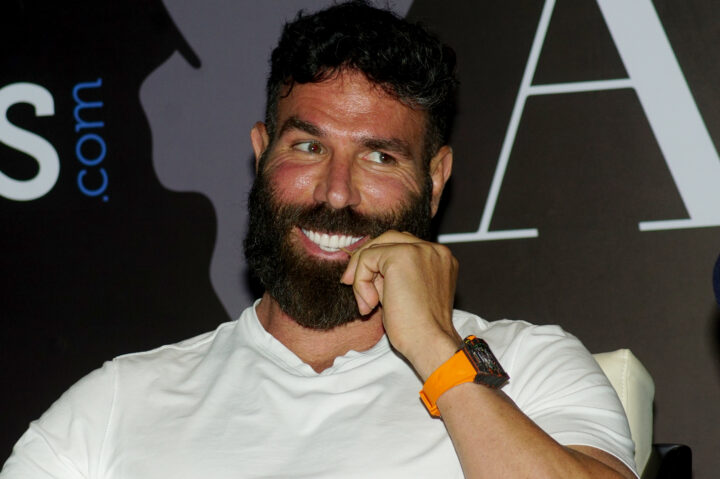
Prodip Guha/Getty Images
Dan Bilzerian on Sept. 13, 2019 in Mumbai, India.
Florida’s Republican primaries on Tuesday will be a critical test for far-right candidates who have built their campaigns on open antisemitism, providing hard data on how popular those views have become in the GOP.
Neither gubernatorial candidate James Fishback nor Dan Bilzerian, who is challenging Rep. Randy Fine (R-FL) in Florida’s 6th Congressional District, are expected to win. But the extent of the support they’re able to pick up will be instructive.
Polling has shown that Rep. Byron Donalds (R-FL) is likely to easily win the gubernatorial primary — and therefore the governorship — with the backing of President Donald Trump. But Lt. Gov. Jay Collins and Fishback will be competing for the second-place slot.
Fishback has embraced and celebrated neo-Nazi influencer Nick Fuentes and his “groyper” followers and leaned into a variety of antisemitic tropes and conspiracy theories. He has also vowed to cut ties with Israel and suggested he would scale back state efforts to combat antisemitism.
He has also run a racist campaign, including repeatedly referring to Donalds, who is Black, as a “slave,” telling a Black Floridian they should be lynched and invoking other bigoted tropes.
Fishback’s campaign has attracted attention from younger GOP voters in particular, with some polls showing him far outpacing Donalds among voters under 35 — as well as support from donors who have backed far-left anti-Israel Democrats.
Ford O’Connell, a Republican strategist in Florida, said that the extent of Donalds’ victory is the key question at the moment. He predicted that Fishback could pick up more than 10% of the vote, and potentially outperform Collins.
“It’s more of a testament to Byron running away with it and everyone knowing it,” O’Connell said, explaining his prediction of a poor performance by Collins. Trump’s endorsement of Donalds — which the president has frequently highlighted — should push Donalds to a commanding victory, he continued.
At the same time, “the one thing that Fishback has shown himself to be good at is garnering media attention. … I think this is about gaining name ID, gaining attention,” O’Connell continued.
He suggested that Fishback’s gubernatorial run might be a bid to gain public attention as a pretext for a future race for a lower political office. “We don’t know what his ultimate goal is. Is he going to run for another office?”
O’Connell also predicted a poor performance by Bilzerian, who has garnered bipartisan criticism in recent days over a blatantly antisemitic and pro-Hitler advertisement targeting Fine posted by Bilzerian on social media.
He predicted that Bilzerian’s final margin will amount to a “statistical anomaly” and that another candidate, Aaron Baker, who is also challenging Fine, may outperform Bilzerian. Baker has also been critical of Israel including opposing aid for its offensive weapons and calling for conditions on U.S. aid.
Bilzerian has put $1 million of his own money into the race, raising an additional $240,000, trailing far behind Fine, who raised more than $4 million. Baker has only raised $109,000.
Collins, the lieutenant governor, endorsed a third candidate in the primary, Charles Gambaro, a local official.
Rep. Cory Mills (R-FL) might be in the most danger of any incumbent Florida Republican, having been dogged for months by a growing series of scandals and investigations related to alleged domestic violence and harassment, financial misconduct, sexual misconduct, stolen valor and alleged use of his office for his own financial gain. Mills has denied any wrongdoing.
Mills’ wedding was also officiated by a radical imam who was believed to be a key fundraiser for Hamas and listed as an unindicted co-conspirator in the 1993 World Trade Center bombing, who also expressed antisemitic and anti-American sentiments in his sermons. Mills denied any knowledge of the imam’s affiliations.
O’Connell predicted that Mills is likely to lose to Ryan Elijah, a former local TV anchor, consistent with a recent poll showing Elijah opening up a commanding lead over Mills ahead of primary day.
“The allegations might have caught up to Cory in terms of winning there. So that looks like an uphill climb for Cory in Florida[‘s 7th Congressional District], based on all the numbers I’ve seen,” O’Connell said. “He would need a hefty Election Day turnout. It’s not unheard of, but it’s just highly unlikely that he’s going to win.”
Both Trump and Florida Gov. Ron DeSantis have backed away from Mills in recent weeks in light of the scandals and declined to intervene in support of him. O’Connell described Mills as “trying to cling to an endorsement” from Trump that largely predated the scrutiny into his scandals.
O’Connell predicted that Republicans would be able to hold the seat even if Mills wins the primary election, though Democrats have seen Mills as potentially a ripe target if he’s renominated.
A number of extremist candidates — on both the left and right — are challenging incumbents across the Sunshine State

Jeff Swensen/Getty Images
Rep. Jared Moskowitz (D-FL), a member of the Task Force on the Attempted Assassination of Donald J. Trump, speaks to the press after touring the shooting site at the Butler Farm Show Grounds on August 26, 2024 in Butler, Pennsylvania.
Tuesday’s Florida primaries are shaping up to be the starkest test yet of how widespread the scourge of antisemitism and extreme anti-Israel views are within both parties.
On the Democratic side, Rep. Jared Moskowitz (D-FL), one of the remaining pro-Israel stalwarts within his party, and Rep. Debbie Wasserman Schultz (D-FL), a pragmatic Jewish lawmaker who is running in a new district after GOP redistricting chopped up her old seat, are both facing serious primary threats from their left flank.
Moskowitz is facing the more direct threat, going up against a Democratic Socialists of America-backed challenger in Oliver Larkin, who is running as a far-left candidate hostile to the U.S.-Israel relationship in a GOP-leaning district with one of the biggest Jewish constituencies in the country.
Larkin’s decision to run on a platform hostile to the district’s Jewish voters would typically be politically problematic. Deciding to campaign with Rep. Rashida Tlaib (D-MI) during the primary’s final stretch is a curious campaign choice, to put it mildly. The blowback was intense enough that several Fort Lauderdale venues declined to host the socialist shindig.
But if there is a surge of left-wing, anti-establishment anger — and latent anti-Israel sentiment from the district’s non-Jewish Democratic voters — it’s worth keeping a close eye on the election results. Even a respectable 40-45% Larkin showing, short of victory, would raise eyebrows about how widespread the far-left ideology has penetrated the party.
After all, Moskowitz’s newly drawn district backed President Donald Trump, and his mainstream record is what’s allowing Democrats to have a good chance at holding the seat. Picking a DSA candidate like Larkin would all but guarantee Republicans pick up a seat that’s not currently at the top of their list.
Republicans will also be nominating their standard-bearer against Moskowitz, with polls suggesting former Boca Raton Mayor Scott Singer holding the edge against business owner Dan Franzese and former state Rep. George Moraitis.
In Florida’s neighboring 20th District, Wasserman Schultz is contending with a changed constituency after she chose to run in a new district with a larger Black population that’s a notch more progressive than her old one. But because multiple Black candidates are splitting the anti-incumbent vote, Wasserman Schultz looks favored to win renomination, though she may do so with a much smaller vote share than usual.
Progressive activist Elijah Manley, who is gay and converted to Judaism, is running in the left-wing lane and attended Tlaib’s socialist rally on Friday. He’s the most credible challenger against Wasserman Schultz, and given that he’s only 27, may end up running again even if comes up short (as analysts expect).
On the Republican side, we’re closely watching how much support two fringe candidates running on openly antisemitic platforms end up receiving in primary races for governor and against Rep. Randy Fine (R-FL), one of only four Jewish Republicans in Congress.
In the governor’s primary, Trump-endorsed Rep. Byron Donalds (R-FL), vying to become the state’s first Black governor, is heavily favored to win the nomination, and likely by a comfortable margin. But the candidacy of openly racist and antisemitic James Fishback has drawn outsized attention on social media. The results will serve as a barometer of whether there’s any real constituency for Fishback’s type of extreme bigotry with the GOP electorate.
The primary polling has been inconclusive in breaking down Fishback’s level of support, with one recent poll showing him only winning 4% of the electorate, with another showing him hitting double-digits. Even as he’s headed towards a decisive defeat, his precise vote total will be watched closely by Republicans eyeing the level of beyond-the-pale racism in their own party.
The other openly racist candidate running is Jew-hating conspiracy theorist and podcaster Dan Bilzerian, who’s challenging Fine. About one-third of Bilzerian’s campaign messages are explicitly antisemitic, according to a study from the Combat Antisemitism Movement, and he’s lent his campaign over $1 million to amplify his message. This year, Israel’s Diaspora Ministry ranked Bilzerian the world’s leading antisemitic influencer for 2025.
Fine is expected to be renominated handily, but as with Fishback, the level of support a neo-Nazi extremist gets in the primary will be an indicator of how widespread this sickness has spread within the Republican Party.
Reps. Jared Moskowitz (D-FL) and Debbie Wasserman Schultz (D-FL) are the latest DSA targets
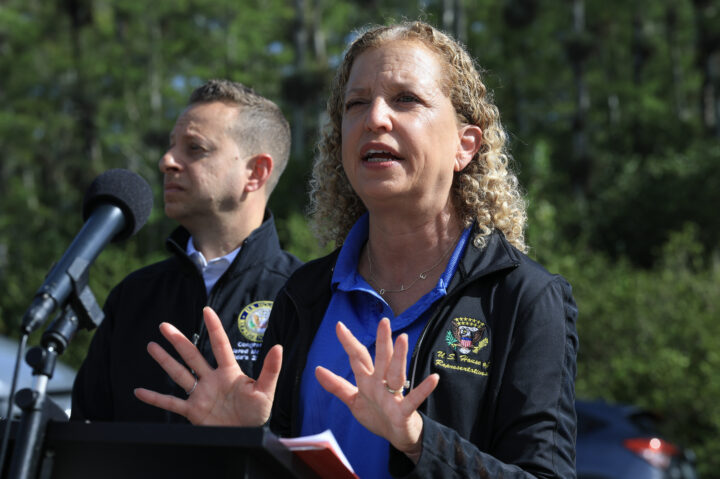
Joe Raedle/Getty Images
Reps. Jared Moskowitz (D-FL) and Debbie Wasserman Schultz (D-FL) speak to the media before a visit to the Dade-Collier Training and Transition Airport on July 12, 2025 in Ochopee, Florida.
Reps. Jared Moskowitz (D-FL) and Debbie Wasserman Schultz (D-FL), two Florida Jewish Democrats known as champions of Israel, are facing primary battles on Tuesday against Democratic Socialists of America-aligned candidates who have made criticism of the incumbents’ stances on Israel major planks of their campaigns.
Moskowitz, running in a heavily Jewish south Florida district, faces a challenge from DSA member Oliver Larkin.
Wasserman Schultz is facing a slew of Democratic opponents after redistricting broke up her previous district. She decided to run instead in a plurality Black seat, a decision that has sparked controversy in both the state and on the Hill. Her most prominent challenger is Elijah Manley, a former DSA member who converted to Judaism as an adult.
Larkin and Manley — alongside progressive Senate candidate Angie Nixon, who faces Jewish Democrat Alex Vindman — rallied on Friday with Rep. Rashida Tlaib (D-MI), one of the most prominent critics of Israel in the House. The event was forced to relocate after the original business hosting the event, The Venue Fort Lauderdale, cancelled the reservation following backlash from Democratic state Rep. Michael Gottleib and others, including far-right commentator Laura Loomer.
“Once we became aware of the full scope and nature of the event and reviewed the publicly circulated promotional materials, we immediately began addressing the matter. Due to security concerns as well as the welfare of attendees and staff, the decision was then made that the event would not proceed at our property,” The Venue said in a statement. “The Venue Fort Lauderdale is Jewish-owned and operated and our values and commitment to the Jewish community are deeply important to us.”
Local media reported that a second venue also backed out of hosting the event before organizers were able to secure a third location, where the event went forward.
Larkin, Tlaib and Nixon also attended a Shabbat event organized by Jewish Voices for Peace. JVP did not identify any Jewish leaders attending the Shabbat event on the invitation.
In spite of the national attention toward the races, longtime Democratic insiders in the state are skeptical that far-left politics is a winning formula in Florida.
“I don’t think this entire state is great for that,” Steve Schale, a longtime Florida Democratic strategist said, pointing to the defeats of former gubernatorial candidate Andrew Gillum and Sen. Bernie Sanders’ (I-VT) presidential campaign in the state.
Mitch Ceasar, a former chair of the Broward County Democratic Party and a former state Democratic chairman, agreed that far-left and anti-Israel positions aren’t likely to have much purchase in the Sunshine State. “I don’t think either one of those things plays in Florida like it would in New York or some other places.”
Neither Larkin nor Manley have picked up the prominent national endorsements of figures such as Sanders or Rep. Alexandria Ocasio-Cortez (D-NY) that have been a boon to other progressive congressional hopefuls. Manley, for his part, secured the endorsement of Rep. Ro Khanna (D-CA).
But other far-left figures have been rallying in support of Larkin in particular, including antisemitic streamer Hasan Piker; far-left Democratic nominees Darializa Avila Chevalier, Claire Valdez and Melat Kiros; former Rep. Jamaal Bowman (D-NY); childrens’ entertainer Ms. Rachel; former Ohio state Sen. Nina Turner; and anti-Israel activist Linda Sarsour.
Manley also appeared on Piker’s livestream show.
Moskowitz — despite an unrelenting barrage of attacks from Larkin’s campaign — has largely stuck to a positive message and declined to engage directly with Larkin.
But Moskowitz has said he believes that he’s “being targeted simply because of my faith and being pro-Israel” and that Larkin has embraced supporters who have “repeatedly trafficked in antisemitic rhetoric and hostility toward the Jewish community.”
Moskowitz has raised nearly $3 million, but has reserved close to $2 million of that for the general election. Larkin raised $689,000 and would enter the general election with just $170,000 left on hand.
Ceasar said Larkin’s campaign has also brought in “a lot of very anti-Jewish overtones,” which have raised particular concerns in light of the public death threats and assassination attempts that Moskowitz has faced.
Schale said he’s been dubious of polling and other data the Larkin campaign has put out that has suggested Larkin is gaining ground on Moskowitz. He added that a Larkin victory would virtually guarantee that Democrats lose the seat in November.
“I remain skeptical that that race is actually going to be all that close,” Schale said, emphasizing that the district, geographically and demographically, is very different from most of the other districts where DSA candidates have had success, including being less urban, older and heavily Jewish.
A poll from Larkin’s campaign on Aug. 5 of 403 likely voters showed Moskowitz leading Larkin by two points, while a Moskowitz poll on July 22 showed Moskowitz leading by 36 points.
Ceasar agreed that Moskowitz should win reelection, noting his strong fundraising performance and that his new district shares about half of its territory with the previous one. “Jared’s a hard worker,” Ceasar said.
He also emphasized that Moskowitz is a well-known quantity in the district since the beginning of his political career.
An individual close to Moskowitz’s campaign noted that half of the expected voters have already voted early, and that the district is generally older. The district is also 25% Jewish and 25% Hispanic — mostly of Cuban and Venezuelan ancestry, populations that are generally hostile to socialist policies. The source noted that the district is deeply purple — split around evenly among Democrats, Republicans and Independents.
All of those factors are likely to favor Moskowitz. There’s also been an effort among Republican-leaning Orthodox Jewish voters to re-register as Democrats to vote for Moskowitz in the primary.
Another source who requested anonymity to speak freely told Jewish Insider they expect Moskowitz to win, but said that his one potential vulnerability is that he’s been somewhat absent from local Democratic club meetings and other gatherings in the district. Moskowitz has also faced criticism, including from the Sun Sentinel — which declined to reendorse him — for failing to appear with or debate Larkin.
Moskowitz, who has young children, faced a credible assassination attempt in 2024 and repeated death threats and other harassment, largely tied to his Jewish identity.
The source said, however, that Moskowitz is very well-known and well-liked and has a long history in the district, and noted that his father was also a leader in the Broward County Democratic Party.
Schale said he was skeptical of a characterization of Moskowitz as disengaged. The lines of the district, Schale noted, changed around three months ago and around 40% of the district is new to him, so campaigning on the ground in much of the district would have been difficult before then as well. He said he’s found Moskowitz to be “incredibly in-touch with his constituents” and “responsive” to them throughout his career.
Caesar told JI that Wasserman Schultz remains the favorite in her race in part because her opponents failed to consolidate. Some Black community leaders had hoped to narrow the field to a head-to-head challenge against Wasserman Schultz, but ultimately the other candidates declined to do so.
Democrats have expressed frustrations with Republicans for creating the redistricting situation, accusing them of deliberately stoking racial tensions through their decisions in drawing the district boundaries in addition to carving up Democratic-held seats.
“I hate the situation all around,” Schale said.
“What the Republicans are doing is they’re going for what I would call a political [Buy One, Get One], and that is that they’re seeking to steal Democratic districts in Florida, while also creating racial disharmony,” Ceasar said.
Wasserman Schultz, Ceasar noted, maintains a substantial fundraising advantage over her opponents. She’s raised $3.3 million, far surpassing Manley’s $1 million, former Broward County Mayor Dale Holeness’ $394,000, former Rep. Sheila Cherfilus McCormick’s (D-FL) $389,000 and rapper and free speech activist Luther Campbell’s $163,000.
The seat has a plurality Black population but not necessarily a majority, and includes a diverse set of communities, Schale noted.
“I’ve talked to several people that think she probably is going to win,” Schale said. “She’s probably in the strongest position to win this thing, but assuming she wins, she’s going to have a very real challenge on Day 1 to build trust in the community with folks who feel like she shouldn’t have run there … and to deliver in a real way. The one thing about her that I know is she’s as tireless as any human being I’ve ever known and she’ll work her tail off.”
Though Manley’s campaign has gained the most national attention, as well as endorsements from some local newspapers, Schale said that Holness is likely to be a strong candidate as well. Cherfilus-McCormick, he said, likely still maintains a base of support in spite of the scandals that led to her resignation from Congress earlier this year, while Campbell has also been an interesting and unique candidate.
“I wouldn’t be surprised if Elijah finished second if he doesn’t win. I also wouldn’t be surprised if Dale was [second],” Schale said. “I don’t know that [Holness] is raising the kind of money and communicating in the same way, but he’s also got a substantially deeper relationship with the district than Elijah does.”
He said Manley’s path to victory would be if other candidates split the more moderate vote and he’s able to squeeze through to victory with around 30% of the vote. With significant Black, Caribbean, Cuban, Venezuelan and Colombian voting populations, “just demographically, the district isn’t set up well for a socialist. And also … a good chunk of them came there escaping socialism.”
A third pro-Israel Jewish Democrat, Rep. Lois Frankel (D-FL), is also facing a challenge that’s gone largely unreported at the national level. Rick Stark, the chair of the Florida Democratic Party’s Jewish Caucus, said that Frankel’s reelection race may be flying under the radar as a true contest.
Her main opponent, Victoria Doyle, who is running to Frankel’s left and has expressed hostility toward AIPAC, has loaned her own campaign $325,000. Frankel is in a much stronger position financially, having raised $2.2 million.
Stark, who lives in Frankel’s district, said he hasn’t seen much outreach from Doyle’s campaign, but noted that Democrats have been particularly hostile this cycle toward older and long-tenured Democratic leaders like Frankel.
“I do think [Frankel] pulls it off, [but] I think it’s going to be a lot closer than [people are] thinking,” Stark said. “A lot of the young folks are tired of us old folks.”
Schale said he hadn’t heard any indication that Frankel’s race would be competitive.
“Our campaign is directed at fighting Donald Trump‘s policies and not on attacking other Democrats. I’m laser-focused on building an affordable America, protecting our Social Security and Medicare, and fighting Trump’s threat to our democracy,” Frankel said in a statement to JI.
In the Senate race, Schale predicted victory for Vindman, a military veteran and National Security Council whistleblower, but said that Nixon is likely to put up a strong performance.
“Angie’s running a very energetic [campaign]. I think she’s created a bunch of buzz for herself,” Schale said. “I think Alex will win, but I wouldn’t be surprised if it’s not close-ish.”
He emphasized that many Florida voters will be unfamiliar with either candidate going into the polls — though Vindman has been able to communicate with more voters — but Nixon will have a base of voters in Jacksonville and Black voters statewide, beyond only progressive and DSA-aligned voters.
Stark said that Nixon had spoken at a Jewish Democratic Caucus Zoom event where she did not demonstrate a clear understanding of issues in the Middle East.
The senator told JI he was worried that fringe ideas could gain momentum if Republicans don’t aggressively push back
Nathan Posner/Anadolu via Getty Images
Sen. Rick Scott (R-FL) talks to reporters at the U.S. Capitol in Washington, DC on July 23, 2026.
Sen. Rick Scott (R-FL) expressed confidence ahead of Florida’s primary elections on Tuesday that voters will reject the Republican candidates who have embraced blatantly antisemitic messages as part of their campaigns.
In an interview on Friday with Jewish Insider, the Florida senator specifically called out James Fishback, who is running against Rep. Byron Donalds (R-FL) and Lt. Gov. Jay Collins (R-FL) in the gubernatorial primary to replace term-limited Gov. Ron DeSantis (R-FL), and Dan Bilzerian, who is challenging Rep. Randy Fine (R-FL) for the GOP nomination for Florida’s 6th Congressional District.
“I’m very optimistic that Byron will win the primary. He’s got to win,” Scott told JI. “We’ve got an antisemite in the race, James Fishback, and so unfortunately, we have to keep fighting this antisemitism around the country. But Byron’s running a good race. He’s worked hard.”
Scott said that he campaigned with Donalds on Thursday near Tallahassee and noted that the House lawmaker “had a big turnout and he did a great job, so we’ve just got to get people out to vote.”
Asked what he’s heard from Florida Republican voters in response to Fishback and Bilzerian’s antisemitic campaign messaging, Scott told JI, “Most people are focused on their job, their kids’ education, public safety, but when you ask about it [Fishback, Bilzerian or other fringe figures in the GOP], they’ll say it’s disgusting. They know it’s wrong.”
“Often in life, if it doesn’t impact you, you don’t think about it, so what we’ve got to say to that is: Hatred impacts all of us somehow,” the Florida senator said. “First, they’re going to attack Jews. I don’t know for what godforsaken reason people have decided it’s okay to attack Jews, but they’re not going to stop there.”
Fishback, who ran an investment firm before entering the gubernatorial race last year, has run a blatantly racist and antisemitic primary campaign. He has repeatedly taunted Donalds, who is Black, over his race, referring to him as “DEI Donalds,” nicknaming him “By’rone” and calling him a “slave” to corporations and the donor class.
As a candidate, Fishback has also defended neo-Nazi podcaster Nick Fuentes and his “groyper” movement.
Bilzerian is a social media influencer with more than 28 million Instagram followers. He gained notoriety in the 2010s for his extravagant lifestyle and has emerged in recent years as a far-right commentator who openly supports Adolf Hitler and calls for “ending the existence” of Israel. He boasts about his record of engaging in Holocaust denial and continues to claim Jews were involved in the 9/11 attacks.
Bilzerian is among the most openly antisemitic candidates to run for federal office in recent memory, launching his campaign by describing Fine, one of the few Jewish Republicans in Congress, as a “fat Jew” and asserting that “Jewish supremacy is the biggest threat to the world today.” He also calls Judaism a “terrible” religion and has expressed a desire to murder “evil” Israelis.
“Everyone wants to complain about the left: They’re antisemitic, they’re anti-Israel, all that,” Scott said. “But we have people in the Republican Party who are [antisemitic and anti-Israel] — people like James Fishback or the guy that’s running against Congressman Randy Fine — so we’ve got to call it out.”
“Antisemitism is not acceptable anywhere,” Scott continued. “If there’s antisemitism [in the GOP], I’ll be glad to call those people out, because it is despicable, it’s disgraceful, it’s un-American, and whether it’s the left that is doing it or people on the right who are doing it, it is wrong.”
Scott was one of several prominent Republicans to condemn Bilzeran over the weekend after the candidate posted an AI-generated video suggesting Hitler’s opinions should be “revisited” and calling Fine a “Jewish [supremacist]” and “Satan’s creepy little [minion]” over imagery of Fine hugging a bag of money. The narrator in the video also referred to Fine as a “satanic whore” as horns were shown growing out of the House lawmaker’s head, and suggested that Fine rapes children.
Bilzerian also faced criticism for posting another AI video accusing Fine of staging an incident last week in which an unknown individual spray-painted a swastika on a Fine campaign sign outside of an early voting site.
“This guy is an actual Republican on the ballot. It’s so disgusting. Every single Republican needs to condemn this evil, and every single news outlet needs to expose how bad and antisemitic he is,” Scott wrote on X on Friday of Bilzerian.
While Scott maintained confidence that Donalds and Fine would beat their fringe primary rivals on Tuesday, he expressed concern that Fishback and Bilzerian’s ideas could become mainstreamed in American politics if he and other Republicans fail to push back on them.
“The more this happens, the more that people will think: Well, that’s okay. So with people like these, you have to say, ‘I don’t want those people in my party,’” Scott told JI. “The Republican Party is a broad coalition of people that care about this country, but we’re not going to allow antisemites into our party, period. They belong in the Democrat Party, which embraces them.”
“Our party is not run by antisemites and will never be run by antisemites as long as I have any power to stop it,” he continued. “We have to fight, fight, fight.”
Fine, who has been vocal about his Jewish identity, has come under intense scrutiny from the left in recent years for his aggressive approach to his advocacy for Israel and against antisemitism.
In February, he faced a wave of condemnations and accusations of Islamophobia from his Democratic colleagues, including 22 Jewish lawmakers and House Minority Leader Hakeem Jeffries (D-NY), for suggesting in a social media post that he would choose dogs over Muslims.
Progressive lawmakers pushed to have Fine censured and urged House Speaker Mike Johnson (R-LA) to revoke his committee assignments in response, but were unsuccessful.
Neo-Nazi podcaster Dan Bilzerian has campaigned as an explicit Jew hater in the primary
Graeme Sloan/Bloomberg via Getty Images
Representative Randy Fine (R-FL) departs following a vote at the U.S. Capitol in Washington on July 15, 2026.
Rep. Randy Fine’s (R-FL) primary opponent, influencer Dan Bilzerian, is pushing blatantly antisemitic and pro-Adolf Hitler messaging in the closing days of Florida’s primary season.
Bilzerian has made no secret of the openly antisemitic tenor of his campaign, having said from the outset that he is challenging Fine because he is Jewish and pushing antisemitic conspiracy theories about Fine, the Jewish community and Israel.
But messaging and advertising from Bilzerian’s campaign has gained increased attention in the final days of the race, after Bilzerian posted a shocking video that leans into a series of blatant antisemitic tropes and overtones.
The two-and-a-half minute AI-generated video repeatedly calls Fine a “fat Jew” and accuses him of serving Israel over the United States. It describes Fine a “Jewish [supremacist]” and “Satan’s creepy little [minion]” over imagery of Fine hugging a bag of money.
It also calls Fine a “satanic whore,” over footage of horns growing out of his forehead, and refers to him as “Shylock.”
Over footage of Hitler, the video asks, “Should we revisit that Austrian painter’s opinions?”
It also suggests that Fine rapes children and calls for him to be tarred, feathered and imprisoned.
“Celebrating Hitler. Having horns grow out of the heads of Jews. Showing me violently assaulted,” Fine said in response to the video. “If this appeals to you, I don’t want your vote. We have a choice on Tuesday, to embrace the kind of Nazism that led to the Holocaust or to repudiate this filth and reaffirm American values and character. Let’s send a resounding message on Tuesday.”
Bilzerian posted another AI video accusing Fine of staging an incident last week in which an unknown individual spray-painted a swastika on a Fine campaign sign outside of an early voting site.
Several prominent Republicans joined Fine in condemning the pro-Hitler Bilzerian ad.
“This brazen Nazi — who’s urging us to ‘revisit’ the opinions of Hitler— revels in Jew hate & defends Sharia law,” Sen. Ted Cruz (R-TX) said on X. “This evil has no place in the Republican Party.”
Sen. Rick Scott (R-FL) said that Bilzerian is “disgusting” and that “every single Republican needs to condemn this evil, and every single news outlet needs to expose how bad and antisemitic he is.”
U.S. Ambassador to Israel Mike Huckabee called Bilzerian’s messaging “possibly the most disgusting … I’ve seen” and said he had “taken Jew-hate to a new low.”
House Speaker Mike Johnson (R-LA) called the attacks “vile” and “disgusting” and said that all leaders on both sides should reject them.
“Antisemitism and outward hatred of Jewish communities have no place in our politics or in America, and we will continue to call them out wherever they arise,” Johnson said. “On Tuesday, voters will reject the revolting rhetoric, and I am proud to endorse [Fine] as he works to continue delivering results for every family in [Florida’s 6th Congressional District].”
Rep. Mike Lawler (R-FL) said the video is “vile and has zero place in our politics, let alone the Republican Party.”
Several Democrats also denounced the video.
“The hateful campaign being run by Daniel Bilzerian in Florida is blatantly antisemitic and shocks the conscience,” House Minority Leader Hakeem Jeffries (D-NY) said. “People of goodwill regardless of political affiliation must reject his vile attacks on the Jewish community. This cannot and will not stand.”
A group of Jewish House Democrats — Reps. Jake Auchincloss (D-MA), Suzanne Bonamici (D-OR), Lois Frankel (D-FL), Laura Friedman (D-CA), Dan Goldman (D-NY), Josh Gottheimer (D-NJ), Greg Landsman (D-OH), Mike Levin (D-CA), Seth Magaziner (D-RI), Jamie Raskin (D-MD), Brad Schnieder (D-IL), Kim Schrier (D-WA), Brad Sherman (D-CA), Eugene Vindman (D-VA) and Debbie Wasserman Schultz (D-FL) — also condemned the attacks on Fine.
“We don’t agree with Randy Fine on much, if anything, and have condemned his racist, islamophobic statements,” the Democrats said. “But the grotesque, antisemitic campaign video posted by Republican Daniel Bilzerian has no place in America. We unequivocally condemn Bilzerian and his hateful antisemitic attacks.”
The Democrats urged social media platforms to take down the video and other antisemitic posts by Bilzeria, and called on the National Republican Congressional Committee and all Republicans to condemn and disavow Bilzerian and his backers.
Landsman also individually called out the post.
“This is a candidate for Congress, on the ballot in Florida on Tuesday. It’s blatant antisemitism, and could lead to violence against Jews,” Landsman said. “Unless he did this on his own, there is an AI company that created this. Which one? Plus, the social media platforms that don’t just allow this, but most likely boost it to millions. Everyone should be condemning this.”
Fine is running against an openly antisemitic online influencer who has derided the congressman as a ‘fat Jew’
Tom Williams/CQ-Roll Call, Inc via Getty Images
Rep. Randy Fine (R-FL) leaves the U.S. Capitol after the last votes of the week on Thursday, September 4, 2025.
A lawn sign for Rep. Randy Fine’s (R-FL) reelection campaign outside an early voting site in Flagler Beach, Fla., was spray-painted with a swastika over the weekend, local news outlets reported on Monday.
Fine is one of the few Jewish Republicans in Congress and has been vocal about his Jewish identity and advocating for Israel and against antisemitism. He’s being challenged in his primary race by Dan Bilzerian, an openly antisemitic online influencer.
Fine said he had placed the sign himself and that it had only been in place for a few days before it was vandalized.
“I was a lot more upset than I expected to be,” Fine told Fox 35. “It’s really really affected me and — I’m not going to lie — I’m pretty upset about it. … It upsets me that I live in a world where Jewish kids, let alone any kid, had to see that, and that there’s someone with so much hate in their heart that they were willing to go onto government property and do this.”
Fox 35 said that local police are investigating the incident. Fine said the vandalism, at a polling site, could constitute voter suppression.
The Anti-Defamation League condemned the vandalism as “a cowardly act of intimidation.”
“As the nation’s remaining primaries take place and campaigns prepare for the November election, there have been a series of antisemitic vandalism incidents targeting political signage. Vandalizing a campaign sign with a swastika or other antisemitic rhetoric is a cowardly act of intimidation that attacks both the Jewish community and our democratic process,” the group said on X. “We strongly condemn any such defacement and urge leaders to speak out. Hate and antisemitism must never be normalized in our elections.”
Bilzerian, who has more than 30 million Instagram followers, is among the most openly antisemitic candidates to run for federal office in recent memory, launching his campaign by describing Fine as a “fat Jew,” asserting that “Jewish supremacy is the biggest threat to the world today,” calling Judaism a “terrible” religion, engaging in Holocaust revisionism, expressing a desire to murder “evil” Israelis and claiming Jews were involved in the 9/11 attacks.
He has accused Fine, as well as President Donald Trump, of putting Israeli interests over American ones.
Fine has also been an outspoken critic of Florida Republican gubernatorial candidate James Fishback, who has also used virulently antisemitic rhetoric on the campaign trail.
Another anti-Israel candidate, Aaron Baker, is also running against Fine.
The app, built by a Jewish founder drawing on his upbringing, lets users block distracting apps for one day of the weekend

Clara Margais/picture alliance via Getty Images
A person looks out to sea on a windy day on Mallorca's Es Carnatge beach in Palma.
A new app called Sabbath is selling an ancient pitch to a modern, phone-addicted crowd: lock technology away for one sacred day a week.
The app, launched earlier this month by Dig Wells — the makers of the reading app Matter and the habit tracker Halo — is designed to help users unplug from sundown to sundown on either Saturday or Sunday. Users pick the apps they wish to block at no cost, while a paid tier adds custom weekday blocks, such as a daily 5-7 p.m. family time or an hour for morning meditation.
Founder Ben Springwater told Jewish Insider the app draws inspiration from Shabbat. “I’m Jewish and I grew up celebrating Shabbat with my family,” he said. His family didn’t keep a strict Sabbath — they drove and used electronics — but Friday night dinner and prayers was “a cornerstone of my life growing up” and “a way to anchor the week,” he recalled. Springwater has since built a similar Shabbat practice with his wife and two young children.
“I have a startup, I work hard and I’m always online. I’m on X a lot. I’ve increasingly been feeling like I need a way to introduce some boundaries and a little bit of rest and recovery into my life,” Springwater told JI.
He said that notion drew him to the idea of observing Shabbat beyond a Friday night meal —- though he wasn’t ready to go full in.
“I like having my phone with me on the weekends and being able to communicate with my friends,” said Springwater. “I don’t want to create impositions that don’t allow me to enjoy the day. But I don’t want to be checking X when I’m out at the park with my family. The rule that I created for myself was no X and no work apps, the ones I compulsively want to turn to.”
Already, there were several popular apps on the market that have built businesses around tracking screentime and helping people block distracting social media. There are also physical devices, such as Brick, that disable apps of a user’s choosing.
“We didn’t want to just add another stone to the pile, but I had gone on my own journey with the Sabbath and saw there was something very simple, powerful and easy about this ancient system of taking one day of rest. So what if we created an app totally oriented around that practice?” said Springwater.
The name Sabbath “popped to mind immediately,” he told JI. “We did talk about how explicitly we want to make this app about religion. Where we came was that we want to connect with the religious tradition. There should be religious undertones but we don’t want to make it denominational.”
The Sabbath app — which Springwater calls “Shabbat with training wheels” — offers an accessible experience for everyone from culturally observant Jews to wellness enthusiasts who may miss the Jewish reference.
“It helps someone who is Sabbath-curious but can’t make that big of a commitment,” said Springwater. “It’s trying to make a bigger tent, get more people to experience some of the benefits and virtues of what Shabbat offers.”
Springwater’s idea has received support even from Jews who already keep Shabbat.
“The world of technology continues to evolve and change at breakneck speeds,” said Rabbi Mordechai Lightstone, the director of Tech Tribe, a New York-based affiliate of Chabad Young Professionals that serves as a gathering place for Jews working in the tech sector. “Even while the trajectory it propels us into continues to remain unknown, I firmly believe that as a society we are capable of using tech — be it social media, AI or whatever else comes our way — for positive and uplifting purposes.”
“But to do that, it’s critical that we align our own internal system with positive and redemptive forces,” Lightstone told JI. “Taking a break from the digital distractions that surround us, as Ben’s App Sabbath encourages, is a key step towards recentering our inner algorithm around the core values that we need to properly channel technology: Community, family, study and meaningful spiritual connection — to very literally touch grass.”
The launch of the Sabbath app arrives just as observing a weekly day of rest — whether Jewish or Christian — has recently gained viral popularity.
Facing terminal stage 4 pancreatic cancer, former U.S. Senator and University of Florida President Ben Sasse shared in recent interviews that he regrets not better honoring the Christian Sabbath. Supermodel Karlie Kloss, who converted to Judaism before marrying businessman Joshua Kushner, shared on a recent podcast that she does not drive or touch her phone on Shabbat. Outside of the religious sphere, tech entrepreneur and longevity biohacker Bryan Johnson frequently posts on X about digital minimalism, advocating for multi-day phone and social media fasts to improve health.
Springwater said the role of his app is not to offer community or shape how people spend their time, but it does include a feature where users can add “friends,” the equivalent of Facebook connections, in order to create some accountability and mutual support.
If a user wants to check Instagram while using Sabbath, they open the app and press “pause,” which requires them to type in a reason. “It introduces this friction so you can’t just open it in the heat of the moment, but you can still do it. There’s a balancing act, you don’t want to make it so impossible because in some cases someone might have to circumvent it,” said Springwater.
“The reason that you type in to end your Sabbath is then visible to your ‘friends’ on [the app]. At the end of Sabbath, you can see if someone had a perfect Sabbath or if they took two breaks. The social features are for accountability and support but they don’t facilitate some sense of community on the Sabbath,” he said.
Springwater said that while fighting antisemitism by building cultural bridges was not the original goal for his app, that idea has grown on him since its launch.
“One of the things that is so hopeful to me about the Sabbath is how crosscutting and universal it is. I’ve observed that a lot of different types of figures across the religious and cultural spectrum have been resonating with this idea. You can come at it with a very explicitly religious value system or a more secular value system, but you can find common cause in what this practice has to offer,” he said.
“There are very few things that so many different types of people can agree on and think is a good thing and all get behind,” continued Springwater. “The World Cup was one of them — it feels like the practice of Sabbath is another.”
An account under the name Brayton Laschinger, charged with throwing a brick through the window of a Sarasota shul, reposted the mayor’s video declaring the Israeli prime minister a ‘war criminal’
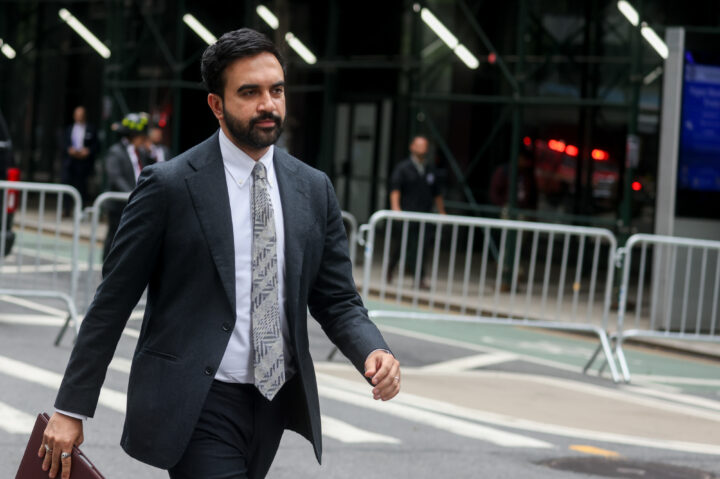
Michael Nagle/Bloomberg via Getty Images
Zohran Mamdani, mayor of New York, arrives to speak to members of the media in New York, on July 7, 2026.
A Florida man accused of hurling a brick through the front window of a Sarasota Chabad House shared New York City Mayor Zohran Mamdani’s video labeling Israeli Prime Minister Benjamin Netanyahu a “war criminal” just days before the crime.
Local police arrested 30-year-old Brayton Laschinger on July 31 and charged him with felony criminal mischief for the attack two days prior on the Lubavitch Chabad of Downtown SRQ. The Sarasota Police Department stated that Laschinger had admitted to targeting the synagogue “because it was a Jewish place of worship” — and had blamed “propaganda on social media” for enraging him in the hours before the vandalism.
The police statements make no mention of Mamdani’s controversial July 21 video assailing Netanyahu as “the architect of a horrific genocide” and a mass maimer of women and children, which the mayor released as a way of confessing he could not make good on his campaign pledge to arrest the Israeli leader during the United Nations General Assembly in September. But an Instagram account bearing Laschinger’s name, and featuring photos of him dating back more than a decade, reposted the clip, which went out on City Hall’s official social media channels a week prior to the attack.
The only other politically tinged shares on Laschinger’s page deal with wildlife conservation.
Jewish leaders had warned that the mayor’s singular and relentless excoriation of Israel and its government could inspire violence against Jews — concerns that only intensified after the double-stabbing of an Asian American and a Jewish man wearing a kippah in Manhattan days after the social media post. There is no proven link between the attack, which authorities have deemed a hate crime, and the mayor’s video.
The accused assailant of the Manhattan stabbing allegedly shouted “Allahu Akbar” and “Justice for Islam” while passing a synagogue displaying the Israeli flag, before ramming a screwdriver into the chest of Moshe Grunhaus. Mamdani has to date refused to engage with suggestions from fellow Democrats that he temper his rhetoric about the Jewish state, even as he has vowed to combat the hate crimes against Jewish New Yorkers that have spiked under his watch.
Anti-Defamation League CEO Jonathan Greenblatt reiterated his call for the mayor to tone down his criticism of Israel on X in a post after highlighting Laschinger’s social media history.
“Words have consequences. Your inflammatory rhetoric can lead to violence,” Greenblatt wrote. “Jewish people and institutions are being attacked in NYC and across the country because of hateful and demonizing rhetoric.”
Mamdani spokesman Sam Raskin noted that the democratic socialist had explicitly denounced violence against Jewish people and institutions, and maintained his broadsides are meant for Israeli leadership alone.
“The mayor’s criticism has always been directed at Benjamin Netanyahu and the actions of his government. He has been clear that no political disagreement, no foreign conflict, and no public statement can ever justify antisemitism or violence against Jewish people or Jewish institutions,” Raskin said in a statement to Jewish Insider. “Every Jewish person deserves to be safe in their home, in their synagogue, and in every neighborhood across our city. The vandalism of a synagogue — whether in New York City or anywhere else — is an abhorrent act of antisemitism. It has no place in our city and stands in direct opposition to the values of this administration.”
Raskin did not answer whether the mayor would dial back his commentary if he believed there was any chance it could inspire violence.
George Moraitis is running against Boca Raton Mayor Scott Singer and businessman Dan Franzese to take on Moskowitz
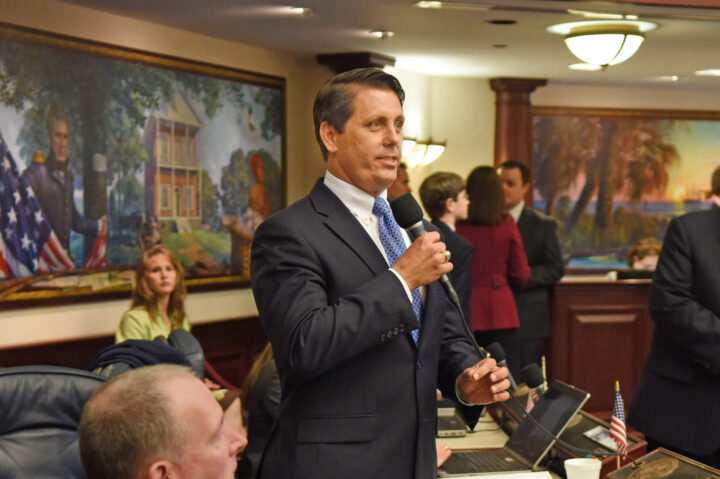
George Moraitis campaign website
Former Florida state Rep. George Moraitis.
Former Florida state Rep. George Moraitis is hoping that a bipartisan approach and his background in the Statehouse and as a military veteran will make him a formidable candidate to take on Rep. Jared Moskowitz (D-FL) in South Florida in November.
Moraitis is running in the Republican primary in Florida’s 25th Congressional District against former Boca Raton Mayor Scott Singer, who is Jewish, and businessman Dan Franzese. In the general election, the winner will face Moskowitz — or his socialist primary challenger — in the district redrawn to favor Republicans.
Republicans are also seeking to block a Libertarian candidate from making it onto the ballot in November, fearing that a third-party candidate could strip away some of the GOP vote and hand a victory to Moskowitz.
Moraitis trails Singer and Franceze in fundraising — Singer has raised nearly $2 million to Franzese’s $1.5 million and Moraitis’ $840,000 — but recently picked up the endorsement of the Sun Sentinel, the largest newspaper in the area.
Moraitis told Jewish Insider he spent his “whole life in public service,” serving in the Navy on submarines and as a state representative. He said he wants to work to “restore the American dream,” protect U.S. national security and defend “our God-given freedoms” of worship, speech and assembly, including combating rising antisemitism, as well as what he described as efforts to shut down churches and Christian prayer.
During his time in the Navy, Moraitis was stationed with the 6th Fleet in Naples, Italy, a role that included helping to defend allies such as Israel, which was at the time part of the U.S.’ European Command. He never had the opportunity to travel to Israel while in the Navy but said he would plan to do so as a member of Congress.
He said that Israel is an important part of both Jewish and Christian “shared spiritual heritage.”
“I appreciate that the Israeli government has done so much to protect religious minorities, particularly the Christians,” Moraitis said. “In addition to having a Jewish state, they’ve done more than anyone in history has done, frankly, to protect the Christians.”
He said he’s seeing challenges on the left and “to some extent on the right” to Israel’s status as a Jewish state. He argued that many of those opposing Israel’s right to exist fail to understand Israel’s creation in the aftermath of the Holocaust and centuries of antisemitism.
“I am committed to the Jewish people having a homeland in the nation of Israel. I mean, I think there’s a spiritual component to that. We definitely have a national component … our own national security is tied to being strong in the Middle East. Israel has been our strongest ally in the world,” Moraitis said. “I am 100% committed to Israel existing as a Jewish homeland and being a strong and important ally of the United States.”
Moraitis said he also supports continued U.S. military aid to Israel — increasingly a hot-button issue on both sides of the aisle.
He said he was supportive of the administration’s efforts to stop Iran from obtaining a nuclear weapon, adding that it was an “open question” whether that goal could be accomplished diplomatically.
He acknowledged that polling has shown the American people would not support an expanded war with Iran but said he supports U.S. efforts to control the Strait of Hormuz and impose a blockade on Iranian ports.
“I do want to give peace a chance. We can’t make this about regime change because we really can’t ultimately control that without huge numbers of casualties and a much bigger effort than what we’re putting into it, and I don’t think the American people are prepared for that,” Moraitis continued.
“I do want to see us get to a peace where Iran gives up their nuclear weapons,” he said. “I do feel that we’ve had to do this. I also feel that we need to move this to a place where we do stop Iran from acquiring a nuclear weapon, whether or not this regime continues on.”
He warned that the United States will regret if it fails to take the opportunity to stop Iran from obtaining a nuclear weapon and continuing to spread terrorism around the region, warning that Iran could attack the United States or Israel if it obtained a nuclear bomb.
In a stance that’s becoming increasingly unpopular among Republicans, Moraitis said he still believes that there will ultimately need to be some form of a two-state solution between Israel and the Palestinians, while emphasizing that neither Hamas nor the Palestinian Authority are equipped to run a Palestinian state and that such a state would need to be demilitarized and might take decades to bring to fruition.
“Israel has to have the right to defend itself. They can’t give up their security to do it, the way they tried to do it … pulling out of Gaza [in 2005]. Obviously it didn’t work because ultimately the vacuum was created and Hamas stepped into it. And so, I think this next effort would have to be something a lot more supervised,” Moraitis said. “But I do ultimately support a transition to an autonomous state.”
In the long run, he said that resolving the continued conflict would be beneficial for both sides.
Asked about addressing antisemitism at home, Moraitis touted the hearings and other efforts by congressional Republicans over the past four years to address antisemitism on college campuses, which he said should continue. He said that the federal government should leverage federal funding to compel schools to take action on antisemitism.
“I just think we need to take a stronger stand on it,” Moraitis continued, specifically raising concerns about Florida Republican gubernatorial candidate James Fishback, who has campaigned on an openly antisemitic line. “There’s just really no place for that in our party or really even in America.”
He also emphasized the need to call out antisemitism when it appears and to continue to fund security grants for communal institutions.
Moraitis argued that he’d be the best-positioned Republican to win the seat in November given his status as a veteran and his experience in the Statehouse. He also argued that he has a “track record of winning — I’ve never lost an election,” arguing that some of his competitors have underperformed the GOP ticket in the past.
“I do feel like if I get up there, I’m doing this for the right reasons. I want to get things done. I have a record of reaching across the aisle to get things done,” he continued. “There’s a lot of things we can do on a bipartisan basis. I think Washington’s gotten too polarized, and I think some of the candidates, the way they’re running is going to make it difficult to govern with these small majorities that we have.”
And he emphasized that, while he’s not Jewish himself, “there’s really not going to be any daylight between myself and [the Jewish candidates running in the seat] on supporting Israel and fighting antisemitism.”
He also said that the Republican Party is “better positioned to support Israel and fight antisemitism” — a pitch to pro-Israel Jewish voters who have been a strong base of support for Moskowitz in the past.
‘I've become used to the right-wing, nationalist, nativist, antisemitic tone, but I'm really shocked about what I'm seeing from the far left — the DSA wing, that is deeply troubling, Vindman said
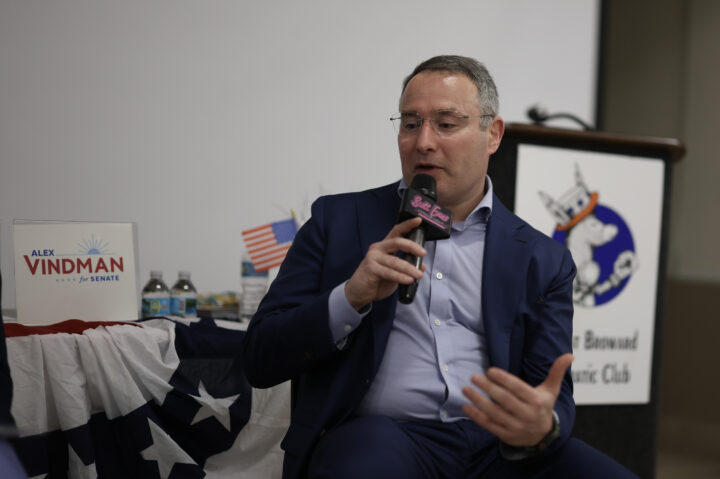
(Joe Raedle/Getty Images)
Retired Lt. Col. Alexander Vindman speaks during a campaign event at the Broward County Democratic Clubs and Caucuses on February 09, 2026 in Sunrise, Florida.
Alexander Vindman, a former Army officer who became nationally known as a National Security Council whistleblower during the first Trump administration and is now running for Senate in Florida as a Democrat, called out rising antisemitism and anti-Israel sentiment on the left in a Zoom meeting with the Florida Democratic Party Jewish Caucus on Tuesday.
Vindman, who is Jewish and who fled the Soviet Union as a child, said he felt protected from antisemitism during his career in the military in the occasional times he experienced it, but faced a wave of antisemitic hatred from the right when he became a whistleblower during the first Trump administration.
He said that he had experienced a significant rise in antisemitic harassment when he declared his Senate campaign, in large part from the left.
“I’ve become used to the right-wing, nationalist, nativist, antisemitic tone, but I’m really shocked about what I’m seeing from the far left — the DSA wing, that is deeply troubling,” Vindman said. “It is not simply criticism of Israel but a conflation of Israel and Judaism, and a rise of antisemitism within what should be a portion of our own big tent.”
He said that leaders have not done enough to address the issue or hold the perpetrators accountable, on all sides of the political spectrum.
“When we fail to do that, we breed impunity and we encourage that kind of behavior,” Vindman said.
He said that challenging antisemitism is a personal issue for him, including protecting his own daughter — whom he said has felt the need to hide her Star of David necklace.
“That is not the world that I grew up in,” Vindmans said. “That is not the world that my daughter should be living in, and that is absolutely something I will fight tooth and nail to make sure that she feels comfortable living her Jewish American life.”
The Senate candidate, whose twin brother, Eugene, represents a Virginia district in the House, also said he believes that Israel has a right to exist, and that as a Jewish refugee from the FSU he feels personally close to the Jewish state. He’s faced attacks on the campaign trail for refusing to describe the war in Gaza as a genocide.
“I’m pretty deeply disturbed by the trend lines that we’re hearing on both sides of the political spectrum, but frankly, to be fair, from the far left that takes up a cry for Palestine, not a two-state solution, which I’m very much in favor of,” Vindman said. “A path that advocates for Palestine and that completely dismisses a safe homeland for the Jewish people … that’s the part that’s deeply troubling to me.”
Vindman, citing his military, intelligence and diplomatic background, said that he would seek a position on the Senate Foreign Relations, Intelligence or Armed Services Committees if he’s elected.
Top contributors to Florida gubernatorial candidate James Fishback are also bankrolling Rashida Tlaib, Ilhan Omar, Abdul El-Sayed and Andre Carson
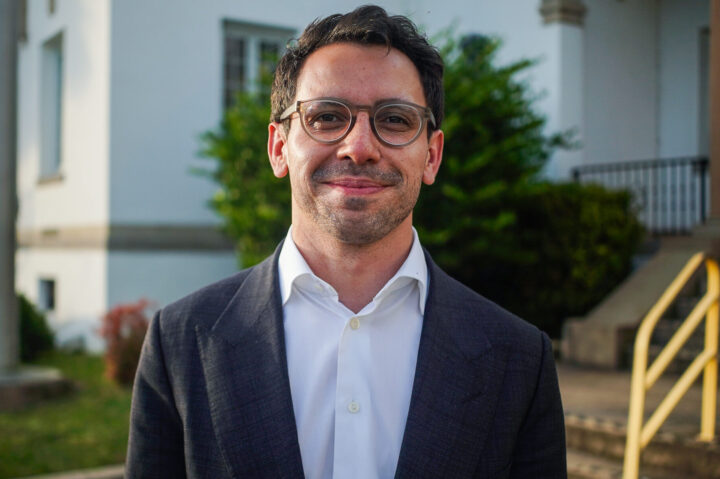
Campaign website
James Fishback
James Fishback, the GOP candidate for Florida governor whom critics call “openly racist” and “openly antisemitic,” ostensibly sits at the opposite end of the political spectrum from the likes of Rep. Rashida Tlaib (D-MI) and Democratic Senate candidate Abdul El-Sayed in Michigan.
But the far-right and far-left politicians share more than just an aversion to Israel — they also overlap in donors, Jewish Insider has found.
As a candidate, Fishback has embraced and celebrated neo-Nazi podcaster Nick Fuentes’ “groyper” movement, propagated the “white genocide” and “great replacement” conspiracy theories, told a Black Floridian they should be lynched and repeatedly taunted Rep. Byron Donalds (R-FL) — his rival to replace Gov. Ron DeSantis — over his race. The radical right candidate has also called the Western Wall “stupid,” referred to fast food as “goyslop,” promised Tucker Carlson he would dump the Sunshine State’s holdings in Israeli bonds, blamed the Iran war on AIPAC and released an ad vowing that no one would be “convicted of antisemitism” for criticizing the Jewish state under his leadership.
But his campaign has proven a magnet for donors to progressive candidates, who have poured tens of thousands of dollars into a PAC supporting his election.
Among the 27 donors to give the maximum $3,000 contribution to Fishback’s bid for Tallahassee is New York-based philanthropist and financier Amed Khan. A longtime associate of the Clinton family and contributor to former Presidents Barack Obama and Joe Biden, as well as to the Democratic National Committee, Khan’s public commentary and political giving has pivoted leftward since the Oct. 7, 2023, Hamas attacks on Israel.
Besides maxing out to Fishback, this cycle the investment banker and Quincy Institute board member has kicked $7,000 to former Maine Senate nominee Graham Platner, the progressive Democrat whose tirades against “oligarchs” and “the establishment” — not to mention his rhetoric on Israel — made him a favorite of the online left before a rape allegation derailed his campaign. In March, Khan donated the maximum $5,000 to Peace, Accountability, and Leadership PAC, an arm of the Institute for Middle East Understanding Policy Project, a dark money nonprofit dedicated to advancing pro-Palestinian narratives and candidates.
And just weeks before contributing to the Republican Fishback in February, Khan gave $3,500 to Gaza flotilla activist Greg Stoker, who is running against Rep. John Carter (R-TX) and Democratic candidate Justin Early on the Green Party line. On the same day he cut a check to the far-right Floridian, Khan donated $3,500 to another Green House hopeful: former Gaza Humanitarian Foundation contractor Anthony Aguilar, who has accused his former employer and the IDF of war crimes.
Khan also gave $3,500 in January to Rep. Ro Khanna (D-CA), part of a pattern of support for the increasingly anti-Israel lawmaker that stretches back to 2019.
In the 2024 cycle, Khan gave $5,000 to Justice Democrats, and donated smaller amounts to Rep. Summer Lee (D-PA), Rep. Ilhan Omar (D-MN), and then-Rep. Jamaal Bowman (D-NY), all figures linked to the Democratic Socialists of America and the left-wing “Squad” in Congress.
But Khan has also maintained support for more mainstream liberal figures, donating $7,000 in June 2025 to former U.S. Ambassador to Ukraine Bridget Brink’s bid for Congress in Michigan, and $14,000 that March to committees affiliated with Sen. Jon Ossoff (D-GA), a Jewish Democrat who has lately clashed with AIPAC and opposed military aid to Israel.
Another of Fishback’s max-out donors is similarly a historic backer of Democrats who lately has ventured into supporting figures on the fringes of both parties: Parviz Tayebati, a Port Biscayne-based tech investor.
Tayebati has donated a total of $19,000 to committees linked to Rep. Thomas Massie (R-KY) and $6,600 to former Rep. Marjorie Taylor Greene (R-GA), both hard-right figures who have increasingly leaned into an anti-Israel identity toward the end of their tenure. He has also donated $3,500 to a PAC supporting one of Greene’s unsuccessful replacements, former state lawmaker Colton Moore, who once was a firm supporter of Israel but more recently became the lone Republican in the state Senate to oppose adopting the International Holocaust Remembrance Alliance’s working definition of antisemitism.
In May, Tayebati gave $2,000 to Platner and another $1,000 to Effie Phillips-Staley, a left-wing Democrat who picked up an anti-Israel drumbeat in her failed bid to become the Democratic nominee against Rep. Mike Lawler (R-NY).
One of the few donors to comment for this story, Tayebati told JI he donated to Fishback after seeing a social media video of him criticizing Israel’s military campaign in the Gaza Strip. However, he called his decision to give money to the candidate “short sighted,” and pleaded ignorance of Fishback’s full views at the time of the donation in January.
“After I found out how extreme and actually antisemitic he is I regretted my support,” Tayebati wrote in a text message, adding that he has changed parties several times in the years since he arrived in the U.S. from Iran. “I am an American citizen and believe anyone who becomes a citizen [in] this country must have their loyalty only to America first and view anyone who is a U.S. citizen but uses their rights and freedom to promote another country as traitors and should be deported.”
Tayebati has also supported a few less extreme candidates, including Dr. Annie Andrews, a Democratic challenger to Sen. Lindsey Graham (R-SC) and Rep. Nancy Mace (R-SC).
Fitting a similar pattern is physician Mohamad Naem of Tampa, Fla., who has given the maximum to Fishback while also donating $7,450 to El-Sayed’s campaign in Michigan, blowing past the $7,000 campaign contribution ceiling. The Senate candidate’s team told JI they would refund the over-the-limit funds, but declined to comment for this piece beyond vowing they had never shared any donor list or had other contact with Fishback.
A longtime supporter of Tlaib, in late 2023 Naem began also sending cash to her Squad colleagues Lee, Bowman, Rep. Ilhan Omar (D-MN) and former Rep. Cori Bush (D-MO). Also in the 2024 cycle, he donated $2,000 to Pervez Agwan and $1,000 to Preston Nouri, both left-wing upstarts who made criticism of Israel and AIPAC a central theme in their campaigns.
Last year, he contributed $3,333.34 to the committees of Rep. Andre Carson (D-IN) and $1,500 to Rep. Delia Ramirez (D-IL), both key backers of legislation that would sever military aid to the Jewish state and of resolutions condemning its actions, while keeping up his support for Omar and Tlaib.
In recent months, along with donations to El-Sayed, Naem has given smaller amounts to Phillips-Staley and to Eric Yonce, another unsuccessful Israel critic who ran for Congress in Florida.
As with Khan and Tayebati, Naem has made a few donations to candidates supportive of Israel, including Sen. Jim Risch (R-ID), Rep. Abe Hamadeh (R-AZ) and Rep. Cory Mills (R-FL). He also gave $1,000 in 2025 to Rep. Marlin Stutzman (R-IN), who in June proposed winding down U.S. aid to Israel, although the congressman has aligned his position with that of Israeli Prime Minister Benjamin Netanyahu.
But Fishback’s other underwriters have shunned centrists in favor of candidates on the party’s margins. Another of his contributors is Hassan Shibly, who left his position as the head of the Florida chapter of the Council on American-Islamic Relations in 2021 following domestic abuse allegations from his wife.
On the federal level, Shibly has given this cycle to Aaron Baker, running as a right-wing, anti-Israel alternative to Rep. Randy Fine (R-FL) and to Mussab Ali, who challenged Rep. Rob Menendez (D-NJ) as an AIPAC-bashing left-wing insurgent. And beginning in November 2023, Shibly has donated $200 each month to Omar in Minnesota.
In an email to JI, Shibly fiercely disavowed all of Fishback’s controversial stances — save one.
“One of the most significant reasons for my support is his stated position that American taxpayer dollars should be prioritized for the needs of Americans rather than funding foreign governments,” Shibly wrote. “I have been outspoken in opposing continued U.S. funding for the Israeli government’s military campaign in Gaza because I believe Israel has committed genocide against the Palestinian people. Ending or substantially reducing U.S. taxpayer funding for that campaign is an issue of profound moral importance to me.”
Current CAIR-Florida director and attorney Mohammad Mubarak gave $1,000 to Fishback, but at the federal level has given thousands more to El-Sayed, Tlaib, Omar and Carson. Radiologist Nabeel Hamoui gave the GOP gubernatorial contender the full $3,000 allowed under law in May, three months after maxing out to El-Sayed’s Senate campaign. In recent cycles, he’s given to Carson, Omar, Bowman, Lee, Bush and Tlaib.
Tampa investor Ramsy Dahla gave the maximum to Fishback, but has never donated to a federal official other than Tlaib. Another longtime Tlaib backer from Tampa, Ymad Elabed, appears to have given double the largest legally permitted contribution to Fishback by donating from two separate addresses.
Meanwhile, another Tampa businessman, Yasin Saad, gave $3,000 to Fishback but has favored Tlaib and recurring Palestinian American congressional candidate Ammar Campa-Najjar at the federal level.
Texas supermarket magnate Salah Nafal is also a member of Fishback’s $3,000 club, even as he’s given strictly to left-wing Israel critics for national offices, including El-Sayed, Platner, Omar and Tlaib, as well as Rep. Analilia Mejia (D-NJ), Michigan democratic socialist Aisha Farooqi and failed Texas congressional candidates Zeeshan Hafeez and Tanya Lloyd.
Meanwhile, Florida First PAC — a state committee dedicated to backing Fishback for governor — picked up a $35,000 contribution in June from Jacksonville law office Farah & Farah. The firm’s founding partner, Eddie Farah, has given $6,000 this cycle to Tlaib while also kicking $2,000 to the committees of Georgia’s Greene. In 2024, he backed Cornel West for president, while also donating to the PAC Counter Coalition, which subsequently ran a small independent expenditure for New York City Mayor Zohran Mamdani.
Oil distributor Basem Ali gave Florida First $5,000 in May, nearly a year after he gave to the Tlaib campaign. Ali has given tens of thousands to the Michigan congresswoman over the course of her career, and also supported Omar and Campa-Najjar, though he has also donated to Rep. Gus Bilirakis (R-FL), a strong Israel supporter.
Black leaders in the district have failed to unite behind a single challenger, leaving the Jewish congresswoman favored in a plurality race but potentially vulnerable down the road
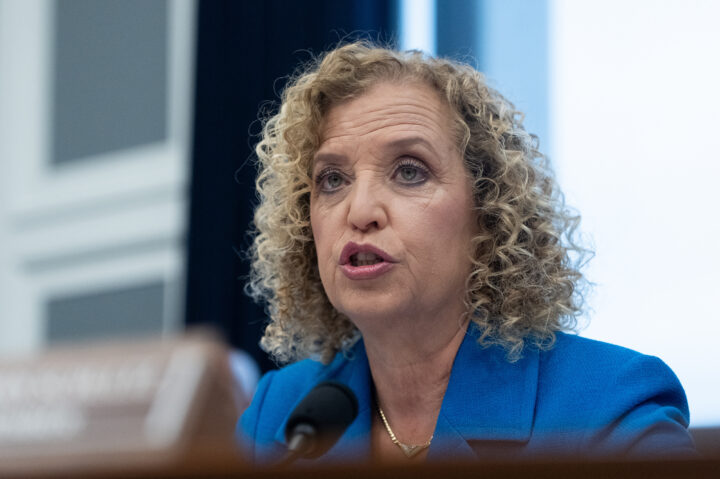
Aaron Schwartz/Bloomberg via Getty Images
Rep. Debbie Wasserman Schultz (D-FL)
Rep. Debbie Wasserman Schultz’s (D-FL) reelection race has turned into a local and national flashpoint following the Republican-led redistricting process in Florida, and risks driving a wedge in traditional Black-Jewish alliances in the state and the party.
Wasserman Schultz is running in South Florida’s newly redrawn 20th Congressional District, a decision pitting the longtime Democratic leader and former Democratic National Committee chair against leaders who have criticized her for running in a seat historically represented by a Black lawmaker.
Yet, Wasserman Schultz also maintains dedicated supporters in the district and her home state at large, especially within the Jewish community.
“I have spent my whole adult life fighting for Broward County, and I want to continue the fight to make life more affordable for the families in CD20 who are stretched to the breaking point by the Trump MAGA agenda,” Wasserman Schultz said in a statement to Jewish Insider.
“And as I meet with voters throughout District 20, the overwhelming response is that voters know my record of standing up for them and delivering billions in local funding for Broward parks, clean water and transit and other projects and all the jobs that come with them,” she continued. “Voters also know that I’ve always spoken out for them and they want me to keep up the critical fight against Trump’s high-cost, corrupt agenda.”
Despite repeatedly expressing support for all Democratic incumbents, House Minority Leader Hakeem Jeffries (D-NY) has so far declined to endorse Wasserman Schultz for reelection.
“As I’ve indicated relative to the congresswoman, she’s had an extraordinary career,” Jeffries told reporters last week. “She’s a valuable member of the House Democratic caucus, and I’m looking forward to having more to say about that when we are closer to the Florida Democratic primary.”
Black leaders in the area brought together various candidates running against Wasserman Schultz in an effort to consolidate around a single candidate, but ultimately failed to do so, leaving a divided field opposing the longtime legislator.
Democratic leaders in and around the district lamented the situation that the redistricting process, that effectively erased Wasserman Schultz’s previous district, has created, accusing the GOP both of trying to gerrymander seats for its own gain as well as create racial divisions in the Democratic Party.
“The situation we’re in is the result of a deliberate decision by the Republican leadership in our state to target all three Jewish members of Congress from South Florida, to target the two African American members of Congress from South Florida and deliberately set something up that was going to result in, let’s say, tension between those two historically allied communities,” said Joe Geller, a former Florida House Democrat, who lives outside the district and is supporting Wasserman Schultz.
Geller argued that the redistricting explicitly violates the Florida state constitution, which bans the drawing of districts based purely on partisanship, arguing that the recent Supreme Court decision allowing for racial gerrymandering doesn’t override that provision.
“This was done deliberately by enemies of both communities to create dissension between traditional allies,” Geller continued. “It’s cynical, it’s illegal and it’s disgusting.”
He said that state courts should immediately halt the redistricting and require that the election be run under the previous lines until the issue can be litigated further, claiming that Republicans had timed the redrawing specifically in order to try to avoid judicial review.
Wasserman Schultz, throughout her time in Congress, has been a fierce and vocal advocate for Israel and for the Jewish community, breaking at times with her party on the issue. She’s currently a co-chair of the Abraham Accords caucus, was a co-founder of the Congressional Jewish Caucus and is one of the most prominent Jewish leaders inside the Democratic caucus.
Mitch Ceasar, a former chair of the Broward County Democratic Party, predicted that, given challengers’ failure to unite behind a single candidate, Wasserman Schultz should still be favored to win the seat with a plurality of the vote.
Wasserman Schultz faced pressure to run in another neighboring district, but, observers on the ground acknowledged, that seat would have been tougher for Democrats to win.
Polling released in early June showed Wasserman Schultz leading with around 39% support, followed most closely by self-described democratic socialist Elijah Manley at 21% and former Broward County Mayor Dale Holness at 15%.
The polling found Wasserman Schultz would trail either of them, or rapper and free speech activist Luther Campbell, in a head-to-head race, though it’s now too late for any candidate to withdraw from the ballot.
A poll by Wasserman Schultz’s campaign released around the same time found her leading all of the other candidates combined, at 52%, with near-universal name recognition and 80% favorability across the district.
Manley’s candidacy is causing consternation among members of the Jewish community, due to the anti-Israel stance he has staked out over the course of the campaign, which includes an endorsement from the antisemitic group TrackAIPAC. Prior to his congressional bid, he described supporters of Israel as cultish and accused pro-Israel Americans of “meddling in our country’s affairs.” He said in 2020 he was in the process of converting to Judaism.
Manley has picked up support from the Florida Democratic Progressive Caucus and the president of the Democratic Black Caucus — though the caucus as a whole did not offer an endorsement.
He has also offered other fringe views, including describing police unions as “terrorist organizations.”
Ceasar noted that, while Manley has gained attention and support, he’s also a perennial candidate for office whose past runs have been unsuccessful. He also mounted a failed bid for the Socialist Party’s presidential nomination in 2020.
Ceasar also said that the other candidates in the race, including Holness, Campbell and former Rep. Sheila Cherfilus-McCormick (D-FL) — the latter of whom resigned from Congress earlier this year and is facing federal criminal corruption charges — have taken more pro-Israel stances.
Wasserman Schultz has long enjoyed strong support from — and spoken proudly of — the Jewish community in the district, joking at times at Jewish community events about representing the large Jewish retiree population.
Ceasar said that there is still a Jewish bloc in the district, but the demographics even in traditionally Jewish parts of the area have been changing, with a growing minority retiree population — though he said that political stances of the two communities are fairly similar.
Cherfilus-McCormick, whose corruption trial isn’t slated to begin until after the election, remains something of a wild card, Ceasar noted. Holness, he said, has posted strong performances in the district in the past. Ceasar said he was somewhat surprised by Campbell’s candidacy, given that he has stronger roots in a neighboring district, which is also an open seat.
Richard Stark, who chairs the Florida Democratic Party Jewish Caucus, which is remaining formally neutral in the race, said that Wasserman Schultz has been a strong and aggressive campaigner going back to her first campaigns for political office — “she worked hard, she campaigned, walked door to door and she got that support, and chances are she’ll do the same thing now.”
Speaking in a personal capacity, Stark said Wasserman Schultz is also popular and well-known for delivering results for various communities she represents. He speculated that, given her stature in the state, Republicans particularly hoped to see her pushed out of Congress.
“She’s a star within the Democratic Party, for the most part. It’s really a shame that we have to have a race like that,” Stark said. “She’s looking for the best that she can do for the United States of America and for the Jewish people.”
Rabbi Mark Winer, Stark’s predecessor as the Jewish Caucus chair, said that Wasserman Schultz is “the most important Democratic politician in Florida, over many, many, many years” who has had “phenomenal influence beyond her district and beyond the Congress” and is a “real force within the district.”
Winer said it’s a “real question for the future whether she’ll get reelected — it’s tough — but she is a formidable politician, she really knows how to do retail politics.”
Winer and Stark traced some of the hostility toward Wasserman Schultz, particularly among progressives, to her role as DNC chair in 2016. Progressives continue to accuse the congresswoman of putting her thumb on the scale for former Secretary of State Hillary Clinton as she campaigned against Sen. Bernie Sanders (I-VT) in the presidential campaign.
Looking further ahead, even if Wasserman Schultz ends up winning with a plurality of the vote against a divided opposition, that could signal vulnerability in a future primary election against a more unified opposition effort. But, Ceasar emphasized, “human nature always makes that difficult.”
The top House Democrat’s decision not to fully endorse the congresswoman was highly unusual, as he later said he ‘stand[s] behind every single House Democratic incumbent’
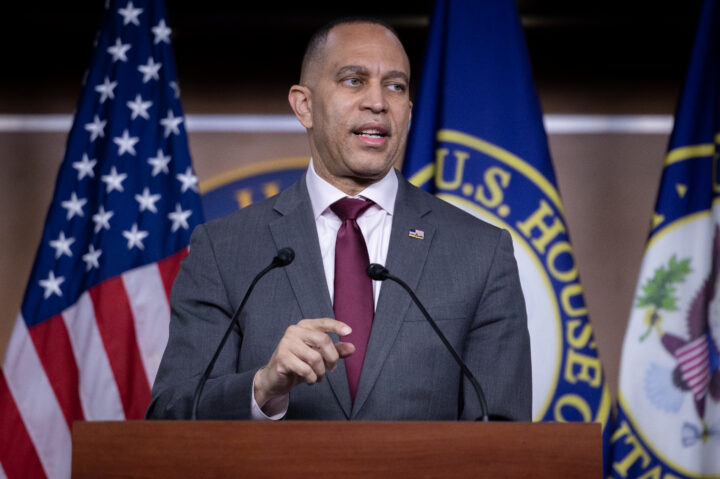
Nathan Posner/Anadolu via Getty Images
House Minority Leader Hakeem Jeffries (D-NY) speaks during his weekly press conference at the U.S. Capitol in Washington, DC on March 19, 2026.
House Minority Leader Hakeem Jeffries (D-NY) declined to fully back Rep. Debbie Wasserman Schultz (D-FL) on Tuesday, when asked at a press conference about her run in Florida’s 20th Congressional District, which has historically been represented by a Black lawmaker.
“Everybody has a right to run where they see fit,” Jeffries said. “They’ve got to go make their case to the people that they hope to represent moving forward, and that’s what I’ve communicated directly to Congresswoman Wasserman Schultz.”
Some Black Democrats in the state have condemned Wasserman Schultz for choosing to run in the 20th District after her current district was redrawn. But given that she is a member of House leadership, a longtime Democratic congresswoman and an incumbent, it’s highly unusual for Jeffries not to offer his full support to Wasserman Schultz, as he traditionally has done for incumbents of all stripes and affiliations.
Jeffries said that Wasserman Schultz has a “strong track record of accomplishment in Congress,” but also said that Florida’s redistricting was a deliberate effort to undermine Black representation.
“I think we all recognize the sensitivities of the moment in terms of an unprecedented, Jim Crow-like assault on Black political representation that has been unleashed by the Supreme Court’s outrageous decision to gut the Voting Rights Act,” Jeffries said. “And that’s an environment that all of us need to be sensitive to as we move forward.”
Jeffries’ decision not to offer his full support to Wasserman Schultz was also notable given that he said, moments later when asked about far-left challengers to other incumbents, “I stand behind every single House Democratic incumbent, whether they’re a member of the Congressional Progressive Caucus … a New Dem or Blue Dog, and I’m going to continue to do that, and then we’ll see what happens at the end of the day, in terms of what the voters decide.”
Wasserman Schultz maintained in a statement that she’d be the best advocate for the district.
“I’m thankful for the strong and broad support I’ve received all over CD20. I’ll continue to talk with Broward voters and make my case that I’ll be the most effective representative for this whole community, and as always, I’m not taking any support for granted,” she said.
Four Black candidates running in the seat met behind closed doors on Monday to discuss unifying around one candidate to take down Wasserman Schultz, the Miami Herald reported on Tuesday.
Her decision has sparked frustration from Black Florida Democrats, who say that the seat should be represented by a Black lawmaker
Aaron Schwartz/Bloomberg via Getty Images
Rep. Debbie Wasserman Schultz (D-FL)
Rep. Debbie Wasserman Schultz (D-FL) announced Friday that she plans to run in Florida’s 20th Congressional District, which has been represented by a Black lawmaker for more than three decades, after her current district was redrawn by Florida Republicans in an effort to secure more seats in the House.
The decision will pit her against scandal-plagued former Rep. Sheila Cherfilus-McCormick (D-FL), who is running again for the seat despite recently resigning ahead of an anticipated expulsion effort, progressive activist Elijah Manley and others running primary challenges against Cherfilus-McCormick.
Her decision has also sparked frustration from Black Florida Democrats, who say that the seat should be represented by a Black lawmaker.
In an announcement statement, Wasserman Schultz and her supporters emphasized Wasserman Schultz’s experience and seniority in the House as a key asset for the community.
“We cannot let Trump destroy Broward County’s power. Having somebody with that experience right now in these turbulent times is so important. … I’ll use all my seniority and clout in Washington to continue to make our lives more affordable and make Broward a safer, less expensive place to live, raise a family, and retire,” she said. “Some people do a lot of talking. I work hard to deliver results.”
Wasserman Schultz has served in Congress for more than 20 years, and is a senior member of the House Appropriations Committee, a member of House Democratic leadership and a former Democratic National Committee chairwoman. She one of several pro-Israel Democrats, including Reps. Jared Moskowitz (D-FL), Darren Soto (D-FL) and Kathy Castor (D-FL), who have had their districts redrawn by redistricting in the state.
Wasserman Schultz has long prided herself on representing a heavily Jewish constituency, joking to Jewish audiences about the number of Jewish retirees in her district.
State Sen. Shevrin Jones, the incoming Florida Democratic Senate leader, expressed disappointment with Wasserman Schultz’s decision while calling her a friend. He said in a statement he’s spoken to her about the issue and emphasized that “Black representation is a non-negotiable for me.”
“Everyone deserves to have a seat at the table to ensure our communities are represented by those with their same lived experience. This is not about Debbie because she has shown she can lead; that’s not the argument nor should it be the fight, at least not mine,” Jones said. “My fight is for Black representation, and I am in the business of expanding it, not diminishing it.”
In a joint statement, the Florida Legislative Black Caucus also criticized Wasserman Schultz’s decision.
“Congresswman Wasserman Schultz’s decision to pursue reelection in this historically Black district, despite explicit requests from the Black community to seek candidacy in a neighboring district, is disheartening,” the statement reads. “Building trust with Black leaders and constituents should be paramount for anyone seeking to represent a majority-Black district. Unfortunately, the actions taken by Congresswoman Wasserman Schultz suggest a failure to prioritize these essential values, perpetuating a narrative of performative allyship rather than meaningful connection.”
Manley condemned Wasserman Schultz as a carpetbagger and compared her to Florida Republicans who redrew the state’s congressional districts.
Wasserman Schultz told Politico she had engaged with more than 100 community leaders in the district, many of them Black, before making her decision, again emphasizing the need for an experienced lawmaker.
Other candidates in the race include Luther Campbell, a musician and free speech advocate, physician Rudolph Moise and former Broward County Mayor Dale Holness.
Plus, acting Labor Secretary Keith Sonderling's Jewish roots

NASHUA, NEW HAMPSHIRE - OCTOBER 13: Republican presidential candidate Florida Gov. Ron DeSantis speaks during the 2023 First in the Nation Leadership Summit on October 13, 2023 in Nashua, New Hampshire.
Good Tuesday morning.
In today’s Daily Kickoff, we look at the implications of Florida Gov. Ron DeSantis’ proposed new congressional map on a handful of Sunshine State seats currently held by pro-Israel Democrats, and profile acting Labor Secretary Keith Sonderling, who prior to his appointment played a role in federal efforts to counter antisemitism. We look at the challenges facing Jewish voters in the Democratic primary in NJ-12, where Israel critic Adam Hamawy is drawing national attention, and interview cookbook author Adeena Sussman about her new book Zariz, out today, that was inspired by the need for quick and easy recipes as Israelis faced disruptive wars. Also in today’s Daily Kickoff: Roy Altman, Liron Fanan and Sergey Brin.
Today’s Daily Kickoff was curated by JI Executive Editor Melissa Weiss and Israel Editor Tamara Zieve, with an assist from Danielle Cohen-Kanik. Have a tip? Email us here.
What We’re Watching
- Talks between the U.S. and Iran remain at an impasse, with the Islamic Republic’s hard-liners reportedly at odds with each other over how the regime should approach negotiations with the West, and whether those talks should include issues related to Iran’s nuclear program.
- King Charles III is set to deliver an address to a joint session of Congress — the second time in history that a British monarch has done so — this afternoon, before a state dinner tonight.
- Education Secretary Linda McMahon will appear before the Senate Appropriations Committee this morning as the committee holds its budget hearing for the Department of Education.
- The Zionist Rabbinic Coalition kicks off its three-day annual conference today, with speakers including Israeli Ambassador to the U.S. Yechiel Leiter, State Department antisemitism envoy Yehuda Kaploun, the Justice Department’s Harmeet Dhillon and the Foundation for Defense of Democracies’ Jonathan Schanzer. The group also plans to honor Rep. Steny Hoyer (D-MD) today with the “Pillar of Zion” award.
- Israel Tech Week continues today in Miami.
What You Should Know
A QUICK WORD WITH JI’S matthew kassel
The hyperpartisan gerrymandering arms race is threatening to derail the careers of several of the strongest allies to the Jewish community within the Democratic Party.
A newly redrawn congressional map proposed by Florida Gov. Ron DeSantis on Monday targets four seats held by pro-Israel Democrats, raising concerns among many Jewish leaders at the state and national levels about the implications of losing pivotal voices helping moderate the Democratic Party’s rhetoric on Israel and antisemitism.
The aggressive redistricting plan, the broad outlines of which were first shared with Fox News, appears to eliminate a pair of South Florida House seats held by two of the most vocal pro-Israel Jewish Democrats in Congress, Reps. Jared Moskowitz (D-FL) and Debbie Wasserman Schultz (D-FL), as well as two districts in Tampa and Orlando held respectively by Reps. Kathy Castor (D-FL) and Darren Soto (D-FL), both of whom are viewed as dependable voices in support of Israel.
The map, which comes amid nationwide redistricting efforts from both parties, is expected to pass the Republican-controlled Legislature in a special session this week, though Democrats have said they intend to challenge it in court. Democrats currently hold seven of the state’s 28 congressional seats, after Rep. Sheila Cherfilus-McCormick (D-FL) resigned last week amid a House ethics investigation. Her seat did not seem to be affected by the map, which is facing accusations of partisan gerrymandering that could run afoul of state laws.
DeSantis has cast the new map as a necessary corrective meant to reflect the state’s changing population. But Jewish Democrats questioned the Republican governor’s motives, while expressing alarm that his plan threatens pro-Israel members, especially as the party has grown increasingly divided on Middle East policy and the rise of antisemitism.
The new congressional lines “risk drawing out members who have represented large Jewish constituencies for decades and dedicated their careers to combating antisemitism and strengthening the U.S.-Israel relationship,” Rep. Josh Gottheimer (D-NJ), a Jewish Democrat who is one of his party’s most outspoken supporters of Israel, told Jewish Insider on Monday. “Losing them would be a massive blow to Congress.”
NORTH STAR
Keith Sonderling’s path to leading the Department of Labor, a role he assumed last week, was relatively straightforward, professionally speaking. But for Sonderling, working to set American labor policy has a more personal resonance, too. He said in his Senate confirmation hearing to serve as deputy secretary that his Jewish grandparents faced religious discrimination at work once they arrived in the United States, after surviving the Holocaust, Jewish Insider’s Gabby Deutch reports.
History lessons: “Although more than willing to work, my grandparents lost employment opportunities based solely on their religious beliefs and life circumstances,” Sonderling, 43, said last year. “It was only through their tenacity and relentless hard work that they overcame the barriers put before them, ultimately paving the path for me to appear here, before you, today.”
JERSEY JOSTLING
The wide open Democratic primary in New Jersey’s 12th Congressional District could pose a difficult dilemma for local Jewish voters and national pro-Israel groups, given the candidacy of Adam Hamawy, a physician who served in Gaza and has made criticism of Israel a centerpiece of his campaign, Jewish Insider’s Marc Rod reports.
State of play: With a crowded field of candidates staking out a range of views on the U.S.-Israel relationship, the race poses tough strategic questions for the pro-Israel community — if it wants to block Hamawy from becoming the Democratic nominee. With such a divided field, a candidate could win the nomination in the June 2 primary with a small plurality.
EYE ON ISLAMABAD

Lawmakers are expressing skepticism over Pakistan’s expanding role in the Middle East, cautiously welcoming its involvement in U.S.-Iran negotiations while questioning its defense aspirations in the region and whether it can truly serve as an impartial intermediary — even as the Trump administration increasingly engages with the country, Jewish Insider’s Matthew Shea reports.
Proceed with caution: “I think the approach has to be: don’t trust, but verify,” Sen. Richard Blumenthal (D-CT) told JI. “[Pakistan] has certainly been a somewhat ambiguous force in many ways. They’ve been disruptive to some relationships. They’re a nuclear-armed power, but they are definitely a force, and if they can play a constructive role here we should welcome it. It doesn’t mean that we have to accept their word on everything they do or say.”
LEGAL APPROACH
U.S. District Judge for the Southern District of Florida Roy Altman decided to apply the same legal methodology that judges, lawyers and juries have deployed in courtrooms across America for centuries to address six legal accusations being wielded against Israel by its detractors, in a new book called Israel On Trial: Examining the History, the Evidence and the Law. Altman sat down with Jewish Insider’s Haley Cohen, just ahead of the book’s release today, to make the case for examining Israel through a legal lens.
Providing perspective: “Legal questions allow us to pare back the vitriol, emotion, bias and prejudice. That’s what we do with jurors every day in this country,” Altman told JI. “For hundreds of thousands of years, human beings have been accustomed to living in small groups. It was really important in the context of that environment to tell the truth and for the group as a whole to be able to decide whether the person was telling the truth.”
HUSH-HUSH

Congressional hopeful and former New York City Comptroller Brad Lander — Mayor Zohran Mamdani’s favored candidate to dislodge sitting Rep. Dan Goldman (D-NY) — refused to comment on Mamdani’s veto of a bill that would set NYPD policy around security perimeters at educational facilities during protests, even as a Jewish group Lander co-founded denounced the mayor’s move, Jewish Insider’s Will Bredderman reports.
Unreachable: Lander has not issued a public statement on the move and failed to respond to calls or text messages on his personal cell phone from JI, while his campaign did not answer queries sent via phone and email regarding Mamdani’s controversial Friday veto, the first of his mayoralty.
BOOKSHELF

Adeena Sussman’s Tel Aviv kitchen is a chef’s dream. The long marble countertop next to the stove extends out from the gas range, perfect for preparing ingredients, pouring drinks and entertaining. “This is my safe room,” Sussman half-jokingly told Jewish Insider’s Melissa Weiss. Her actual safe room is a floor below, used frequently during the war with Iran, in the midst of which JI visited the cookbook author last month, weeks before the release of her third book, Zariz: 100 Easy, Breezy, Tel Aviv-y Recipes, out today.
Comfort food: The first sentence of the introduction of Zariz begins: “When the going gets tough, the cooking gets easy.” Sussman began writing the book in the weeks after the Oct. 7, 2023, Hamas terror attacks, amid regular rocket fire that frequently sent Israelis, including Sussman, who made aliyah a decade ago, to their shelters. “It’s simple cooking for complicated times,” Sussman explained of the book’s origins. Nearly two and a half years after she began writing the book, “it hasn’t gotten any less complicated.”
Worthy Reads
The Common Foe Theory: In Foreign Policy, the Foundation for Defense of Democracies’ Ahmad Sharawi posits that the U.S. could play a role in bringing Syria and Israel together over their shared opposition to Hezbollah, which poses threats to both countries. “Now, the United States could help pressure both sides to work together more effectively. Indirect coordination or tacit understandings about red lines could significantly reduce friction while tightening constraints on Hezbollah’s movement in Syria. Crucially, Israel could provide Damascus with intelligence that would help it crack down on Hezbollah-linked networks, particularly those tied to weapons transfers and cross-border operations.”[ForeignPolicy]
Tying Mossad’s Hands?: In his Substack “Between Us,” Nadav Eyal looks at the degree to which the Mossad’s plans to target Iran — which so far have left the regime damaged but in power — were hamstrung by the U.S. and other regional actors. “The plan included, as was widely reported in The New York Times, a massive deployment of Kurdish forces in a broad invasion of Iran. This was thwarted by Turkey, which successfully used its influence to prevent the plan from being activated. Had such an invasion taken place, the Islamic Republic would have faced a severe crisis — forced to divert resources to suppress both an internal uprising and an armed incursion.” [BetweenUs]
Israel is Real: In the “Boundless Insights” Substack, Adam Hummel argues that the debate over Zionism ignores the reality of Israel’s existence. “Israelis don’t owe anyone an argument for their existence. They don’t need to win the debate about whether Zionism was the right idea in 1897. They don’t need to persuade Ezra Klein or Hasan Piker or the student encampments that their country’s creation in 1948 was just. The debate is over, not because one side won, but because the thing itself came into being. They are a people. They speak a language. They live on a piece of land and have mortgages. That is what peoples do. The Greeks do it. The Poles do it. The Québécois do it. The arguments about whether they should are, at this point, a leisure activity for people who live elsewhere.” [Boundless]
Word on the Street
German Chancellor Friedrich Merz said that the U.S. is being “humiliated” by Iran amid stalled talks, adding that the “Iranians are clearly stronger than expected and the Americans clearly have no truly convincing strategy in the negotiations either”…
President Donald Trump, speaking to CBS News’ “60 Minutes Overtime,” said, in response to conspiracy theories swirling around the attack at the White House Correspondents’ Dinner, that people who say “Oct. 7 didn’t happen, and World War II didn’t happen and the Holocaust didn’t happen — and many things didn’t happen” are “more sick than they are con people”…
The California man accused of opening fire at the White House Correspondents’ Dinner on Saturday night made his first court appearance on Monday, where he was charged with attempting to assassinate Trump, as well as two firearms charges; Cole Tomas Allen, who did not enter a plea, is expected to face additional charges…
The Wall Street Journal does a deep dive into the recent spike in domestic anti-government violence, finding that attacks and plots targeting the government are at their highest levels in more than three decades…
The New York Times looks at how Google co-founder Sergey Brin has begun to move to the right, citing the Democratic Party’s leftward shift on a variety of core issues, including Israel; Brin told the Times, “I fled socialism with my family in 1979 and know the devastating, oppressive society it created in the Soviet Union. I don’t want California to end up in the same place”…
David Ellison’s Paramount filed a request for approval from the FCC for Saudi Arabia’s Public Investment Fund, the Qatar Investment Authority and Abu Dhabi’s L’imad Holding Co. to collectively take a nearly 50% stake in Paramount’s equity interests…
All five of Pennsylvania’s living former governors, both Republicans and Democrats, released a statement on Monday calling on state officials to prioritize the safety and security of Gov. Josh Shapiro; the letter comes days after Pennsylvania Treasurer Stacy Garrity — Shapiro’s leading Republican opponent in this year’s gubernatorial race — said the state would not pay for security upgrades at Shapiro’s private home, Jewish Insider’s Gabby Deutch reports…
Amir Makled, who earlier this month beat Jordan Acker in the race for the Democratic nomination to the University of Michigan’s Board of Regents, defended sharing social media content praising Hezbollah and demonizing Israelis, while saying he “disavow[s] antisemitism completely”…
A federal judge in Pennsylvania delayed an order that would have required the University of Pennsylvania to turn over information to the Trump administration by Friday about Jewish faculty and individuals affiliated with Jewish campus organizations…
Security experts speaking to eJewishPhilanthropy’s Jay Deitcher warned that philanthropic and Jewish organizations are increasingly at risk as AI enables the proliferation of cyberattacks…
Jewish Community Relations Council of New York’s Mark Treyger, the Met Council’s David Greenfield, UJA-Federation of New York’s Eric Goldstein, Jewish Voters Action Network’s Maury Litwack and Teach Coalition’s Sydney Altfield were among those named to City & State New York’s New York City Power 100 list…
Ynet interviews Liron Fanan, the general manager of the NBA G League’s Cleveland Charge, shortly after she was named the league’s first female executive of the year…
Ukraine’s Foreign Ministry summoned Israel’s ambassador in Kyiv amid reports that Israel had allowed a second Russian ship carrying grain looted from Ukraine to dock in the port of Haifa; Israeli Foreign Minister Gideon Sa’ar clashed on X with his Ukrainian counterpart over the allegation, saying, “Evidence substantiating the allegations have yet to be provided”…
Bahrain revoked the citizenships of dozens of people accused of “glorifying or sympathizing” with Iran; Manama revoked 69 total citizenships, including relatives of those alleged to be supporting Tehran…
Adam Safran, who served as legislative director for former Rep. Sheila Cherfilus-McCormick (D-FL), has joined AIPAC as director for policy and government affairs…
Eugene Kontorovich is joining Advancing American Freedom as a senior legal fellow…
Shayndi Raice, who was previously The Wall Street Journal’s deputy bureau chief for the Middle East and North Africa based out of Israel, was tapped by CBS News to serve in a newly created foreign editor role based out of London; Claire Day, the outlet’s London bureau chief, is set to depart her role next month…
Disability advocate Matan Koch died at 44…
Australian novelist David Malouf, whose writings focused on the country’s dual historical identities as a British empire colony and a rugged outback, died at 92…
Pic of the Day

Israeli President Isaac Herzog met this morning with leaders of Central Asian Jewish communities during his visit to the Beit Rachel synagogue in Astana, Kazakhstan’s capital city.
Birthdays

Actress and film critic, she is the writer and star of the CBC comedy series “Workin’ Moms,” Catherine Reitman turns 45…
Former Israeli ambassador to the U.S., he also served four terms in the Knesset, Zalman Shoval turns 96… White House chief of staff for Presidents Reagan and Bush 41, secretary of the treasury and secretary of state, James Baker turns 96… Retired judge of the Maryland Court of Appeals (now known as the Supreme Court of Maryland), Judge Irma Steinberg Raker turns 88… Retired four-star United States Marine Corps general, Robert Magnus turns 79… Retired SVP and COO of IPRO and former president of the Bronx/Riverdale YM-YWHA and the Riverdale Jewish Center, Harry M. Feder… Cantor who has served in Galveston, Texas, Houston and Buffalo, N.Y., Sharon Eve Colbert… Criminal defense attorney, his clients have included Hunter Biden and Jared Kushner, Abbe David Lowell turns 74… Author of 28 books, lecturer, podcaster, tour guide in Jerusalem and film producer, Rabbi Hanoch Teller turns 70… Director of congregational engagement at Temple Beth Sholom of Miami Beach, Fla., Mark Baranek… Associate justice of the Supreme Court of the United States, Elena Kagan turns 66… American-born Israeli writer and translator, director and senior fellow at Z3, David Hazony turns 57… Director of criminal justice innovation, development and engagement at USDOJ during the Biden administration, Karen “Chaya” Friedman… Comedy writer, television producer and showrunner, Daniel Joshua Goor turns 51… Retired soccer player, she played for the U.S. Women’s National Soccer Team from 1997 to 2000, Sara Whalen Hess turns 50… Founder of GlobeTrotScott Strategies, Scott Mayerowitz… Model, actress and TV host, known for her role in the soap opera “Fashion House,” Donna Feldman turns 44… CEO and founder of The Branch, Ravi Gupta… Freelance journalist, formerly at ESPN and Sports Illustrated, Jason Schwartz… Senior editor at Politico Magazine, Benjamin Isaac Weyl… President of Saratoga Strategies, a strategic communications and crisis management firm, Joshua Schwerin… Head coach of the women’s soccer team at Yeshiva University, Ryan Alexander Hezekiah Adeleye turns 39… Israeli artist and photographer, Neta Cones turns 38… Marketing director at College Golf Experience, Jeffrey Hensiek… Associate in the finance department of Fried, Frank, Harris, Shriver & Jacobson, Robert S. Murstein… Senior reporter for Cybersecurity Dive, Eric J. Geller… Founder and CEO of Diamond Travel Services, Ahron Fragin… Midfielder for Major League Soccer’s St. Louis City, Daniel Ethan Edelman turns 23…
The plan proposed by the Florida governor eliminates seats held by four pro-Israel House Democrats, including two Jewish members

Joe Raedle/Getty Images
Florida Gov. Ron DeSantis on September 17, 2024 in West Palm Beach, Florida.
The hyperpartisan gerrymandering arms race is threatening to derail the careers of several of the strongest allies to the Jewish community within the Democratic Party.
A newly redrawn congressional map proposed by Florida Gov. Ron DeSantis on Monday targets four seats held by pro-Israel Democrats, raising concerns among many Jewish leaders at the state and national levels about the implications of losing pivotal voices helping moderate the Democratic Party’s rhetoric on Israel and antisemitism.
The aggressive redistricting plan, the broad outlines of which were first shared with Fox News, appears to eliminate a pair of South Florida House seats held by two of the most vocal pro-Israel Jewish Democrats in Congress, Reps. Jared Moskowitz (D-FL) and Debbie Wasserman Schultz (D-FL), as well as two districts in Tampa and Orlando held respectively by Reps. Kathy Castor (D-FL) and Darren Soto (D-FL), both of whom are viewed as dependable voices in support of Israel.
The map, which comes amid nationwide redistricting efforts from both parties, is expected to pass the Republican-controlled Legislature in a special session this week, though Democrats have said they intend to challenge it in court. Democrats currently hold seven of the state’s 28 congressional seats, after Rep. Sheila Cherfilus-McCormick (D-FL) resigned last week amid a House ethics investigation. Her seat did not seem to be affected by the map, which is facing accusations of partisan gerrymandering that could run afoul of state laws.
DeSantis has cast the new map as a necessary corrective meant to reflect the state’s changing population. But Jewish Democrats questioned the Republican governor’s motives, while expressing alarm that his plan threatens pro-Israel members, especially as the party has grown increasingly divided on Middle East policy and the rise of antisemitism.
The new congressional lines “risk drawing out members who have represented large Jewish constituencies for decades and dedicated their careers to combating antisemitism and strengthening the U.S.-Israel relationship,” Rep. Josh Gottheimer (D-NJ), a Jewish Democrat who is one of his party’s most outspoken supporters of Israel, told Jewish Insider on Monday. “Losing them would be a massive blow to Congress.”
Former Rep. Ron Klein (D-FL), a Jewish Democratic leader in South Florida, told JI he was troubled by the new map, calling the effort to “throw out” four pro-Israel members “very problematic” and “very dangerous” for the Jewish community, particularly amid dwindling Jewish representation in the House.
“When I was in Congress, there were a lot more Jewish representatives than there are today,” Klein noted. “It’s a big deal,” he said of the implications of potential redistricting.
Andrew Weinstein, a Democratic activist in South Florida close to Moskowitz and Wasserman Schultz, echoed that sentiment. “At a time when the Jewish community is constantly under threat, it would be a real loss to no longer have them in Congress,” he told JI in an interview, describing the two lawmakers as “proudly and openly supportive of” Jewish issues.
“Their prominence, I would say, is an important factor,” he explained.
Brian Romick, president of Democratic Majority for Israel, dismissed the map as a “blatant attempt to push out pro-Israel Democratic champions in Congress.”
“It’s bad for our country, it’s bad for those who care about Israel and it’s a violation of Florida’s redistricting constitutional amendment,” he said in a statement to JI. “We urge lawmakers to reject this shameless partisan stunt.”
Halie Soifer, the CEO of the Jewish Democratic Council of America, told JI that “South Florida is home to one of the largest Jewish communities in the country, which is why most of South Florida is represented by Democrats — because historically, and certainly under” President Donald Trump, “it’s only Democrats who share democratic and Jewish values.”
She suggested that DeSantis’ plan could ultimately “backfire on the GOP and and benefit Democrats in November,” citing Trump’s low approval ratings as well as Republicans’ unilateral effort to formalize a new map without voter feedback, in contrast with recent successful Democratic redistricting efforts in California and Virginia.
Richard Stark, president of the Florida Democratic Party Jewish Caucus, told JI he was “outraged that the supposedly pro-Jewish governor of Florida seeks to eliminate the congressional seats of mostly Jewish members,” adding of DeSantis, “Not surprising and certainly not pro-Jewish.”
For her part, Wasserman Schultz claimed that “DeSantis drew up illegal, partisan maps in a backroom and made sure Fox News got them before lawmakers did.”
“This clear effort to steal more seats for Republicans shows his total contempt for Florida voters, who voted two-to-one in favor of a ban on partisan gerrymandering in our Constitution,” she said in a statement to JI on Monday. “This nakedly partisan scheme breaks state law. While Republicans focus on cherry-picking their voters, I’ll keep fighting for better jobs and schools and take on the healthcare and housing high-cost crisis that Republicans continue to ignore.”
Soto, meanwhile, called the map “illegal,” telling reporters on Monday he plans to continue to run in Florida’s 9th Congressional District — which could be significantly redrawn to favor Republicans.
Moskowitz told JI he would need to take a closer look at the map but that DeSantis’ effort could result in some “dummymander situations,” as other Democrats suggested in response to the effort.
He said he did not believe DeSantis had intentionally targeted pro-Israel Jewish members. “DeSantis is just trying to eliminate Democrats,” Moskowitz said. “It just so happens that the Democrats in South Florida happen to be Jewish. If he wants four seats, where is he getting four seats from?“
Even as Jewish Democrats say they are worried that the new map could push dependable members out of Congress, some strategists expressed skepticism that the plan, pending further information, would have its intended effect of adding four new Republicans to the delegation.
Steve Schale, a Democratic strategist in Florida, said the map “clearly impacts both” Wasserman Schultz and Moskowitz, “but both will have a place where they can run and win — particularly this cycle.”
“Just based on what I know of these communities, this isn’t a map that guarantees a four-seat pick up by any stretch of the imagination,” he told JI, “and one can argue, might create some additional Democratic opportunities that didn’t exist before this map.”
Senior congressional correspondent Marc Rod and Washington reporter Matthew Shea contributed to this report.
In a media studies class, students performed Sieg Heil salutes and mockingly wore yarmulkes in a presentation advancing antisemitic conspiracy theories

Benjamin B. Braun/Getty Images for IRONMAN
Nov. 1, 2025 in Panama City Beach, Florida.
A new complaint filed with the Department of Education accuses a Florida Panhandle school district of violating Title VI of the Civil Rights Act by ignoring years of antisemitic harassment against a Jewish student, including Nazi salutes performed in the classroom.
The complaint, filed Thursday with the DOE’s Office for Civil Rights by the Anti-Defamation League and Akerman law firm, requests that the agency initiate an investigation into the Bay County School District over allegations that the student, who is currently in 11th grade, faced antisemitic discrimination consistently since elementary school.
Approximately 27,000 students are enrolled in Bay District K-12 public schools, which operates 49 schools. Bay County has one of the smallest Jewish communities in Florida, with fewer than 1,000 Jewish individuals.
The student — who is one of the only Jewish students in the district— is referred to throughout the complaint as “Student A.” He said he was forced to transfer out of A. Crawford Mosely High School mid-year as a result of the bullying and has suffered adverse mental health impacts and academic challenges. Before transfering, the student said he made the decision to hide his Star of David necklace, wearing it inside his shirt so it was not visible to classmates.
Incidents alleged in the complaint, while the student was still enrolled at Mosley High School, included a group of students in a media studies class presenting two PowerPoint projects, in August and September 2025, which displayed antisemitic conspiracy theories portraying Jews as powerful, greedy, manipulative and in control of banks, the media and government.
The students performed Sieg Heil salutes and mockingly wore yarmulkes while making the presentation. None of the student presenters were Jewish. The teachers present in the classroom did nothing to stop it, even as the presentations did not address the assignment, according to the complaint — which alleges that one teacher laughed during one of the presentations.
The complaint alleges the district ignored repeated outreach from the student’s mother — a former 20-year employee of the district — who sought better inclusion of Jewish culture, including teaching the story of Hanukkah, following her son’s harassment.
“Bullying and harassment have persisted during Student A’s time enrolled in the district, but the district’s institutional neglect of Jewish students isolated Student A and left him to suffer in silence,” the complaint alleges. The district “knew, or should have reasonably known, that Student A was being isolated, singled out and excluded from school-wide holiday celebrations and other programs.”
The complaint suggests reforms the DOE could require the school district to adopt, including usage of the International Holocaust Remembrance Alliance’s working definition of antisemitism — which is codified in Florida state law — and enforcement of a zero-tolerance policy for antisemitic conduct. It also suggests implementation of mandatory antisemitism training for all students, administrators, school board members, teachers, faculty and staff, and modification of programs to include Jews, such as revising the “Christmas Break” to read “Winter Break” on the academic calendar.
Neither the Bay School District nor the office of Florida Gov. Ron DeSantis responded to requests for comment from Jewish Insider about the complaint.
The vote was the latest defeat by anti-Israel activists within the Democratic National Committee
Alex Wong/Getty Images
Committee members wait for the beginning of a meeting of the Democratic National Committee’s Rules and Bylaw Committee in Washington, DC
Democratic Party activists on Thursday voted to reject a measure that criticized the involvement of AIPAC in Democratic primaries and the American political system.
The resolution was debated during a meeting of the Democratic National Committee’s Rules Committee at the DNC’s New Orleans meeting. Committee members were considering new policy resolutions, including one introduced by a Florida activist that took aim at AIPAC and the group’s “undue influence over democratic debate and policymaking.” It was voted down in a voice vote.
“The DNC made clear today that all Democrats, including millions who are AIPAC members, have the right to participate fully in the democratic process,” AIPAC spokesperson Deryn Sousa told Jewish Insider.
Jewish Democratic advocates who were in the meeting room praised the decision.
“We’re pleased that the resolution that wrongly singled out AIPAC was defeated, and that the other anti-Israel resolutions failed to move forward. These measures would be a gift to Republicans, would further fracture our party and do nothing to bring Israelis and Palestinians closer to peace,” Democratic Majority for Israel CEO Brian Romick, who attended the meeting, told JI after the vote.
Halie Soifer, the CEO of the Jewish Democratic Council of America, said the group agrees with the goal of getting dark money out of politics but that AIPAC should not be targeted explicitly.
“We agree with the rejection of dark money in politics — a topic covered in another more expansive resolution adopted by the committee — but also believe that singling out any individual organization is both unproductive and unnecessarily divisive,” Soifer, who also attended the meeting, told JI.
Earlier in the meeting, the committee voted to support a measure “condemning the influence of dark money in the 2026 Democratic primary elections” that called out the artificial intelligence and cryptocurrency industries.
The vote by the DNC’s resolutions committee comes as the Democratic Party faces growing internal strife about its long-standing support for the U.S.-Israel relationship, as some party activists seek to push the group to the left. A new Pew Research Center poll released this week revealed that 80% of Democrats and Democratic-leaning independents have an unfavorable view of Israel — an increase from 69% who said the same last year.
Two other resolutions that touched on Israel-related issues were referred to a working group on the Middle East that DNC Chair Ken Martin created last summer to help smooth over some of the party’s fissures on the Israeli-Palestinian conflict.
One of these referred to Israel’s actions in Gaza as a genocide and called for conditioning U.S. military aid to Israel, and the other called for de-escalation in Iran and Gaza. A third resolution on the Middle East, condemning the U.S. missile strike that hit a girls’ school in Iran and killed at least 165 people, passed.
A notable takeaway was just how different the preferences of Boomers and Gen Zers were — even among those affiliated with the same party
Campaign website
James Fishback
A pair of new polls — one in a Democratic Senate primary in Maine and one in a Republican gubernatorial primary in Florida — should sound alarm bells about the political and ideological trajectory of Gen Z voters, and the younger generation’s creeping tolerance of antisemitism that transcends party ID.
While the top lines from the polls generated the most headlines, the more notable takeaway was just how different the preferences of Boomers and Gen Zers were — even among those affiliated with the same party. The younger voters gravitated toward the candidates with checkered (at best) records on antisemitism.
James Fishback, a 31-year-old Republican investor who made a name for himself with incendiary social media posts attacking Israel and invoking antisemitic tropes, is barely winning a following among most Florida Republicans as he runs for governor. But among younger Republican voters, he appears to be building a growing base of support.
Graham Platner, an anti-establishment oyster farmer who for years had a skull-and-bones Totenkopf tattoo on his chest, a symbol adopted by a Nazi SS unit, is barely facing any backlash from Maine voters in his outsider Senate campaign. (He had the tattoo covered up during the campaign, amid widespread controversy.) Indeed, he may soon become the favorite to win the Senate seat in Maine, fueled by near-universal support among younger Democratic voters.
The polling underscores the dramatic generational disconnect.
In the University of North Florida poll, Fishback only received 6% support among Florida Republican voters, badly trailing front-runner Rep. Byron Donalds (R-FL), who is 47, by 25 points. But among voters 18-34 years old, the little-known Fishback is dominating Donalds, 31-8%. (It’s worth noting the subsample of young voters is small, but the polling is consistent with anecdotal reporting that Fishback has built a base of support among younger right-wing voters.)
Meanwhile in Maine, a Senate poll conducted by the University of New Hampshire found Platner, 41, not only holding a commanding primary lead over the state’s 78-year-old sitting governor, Janet Mills, (64-26%), but comfortably leading Sen. Susan Collins (R-ME) in a potential general election matchup. His support is fueled by Gen Z Democrats, who back him over Mills overwhelmingly, by a 73-point margin (84-11%). Those 65 and older preferred Mills, who is 78, by a four-point margin, 49-45%.
At the very least, these polls underscore that experience and credentials — no less the policy knowledge and credibility typically required of governors and senators — are barely valued by younger voters.
At worst, it’s an indicator that radicalism is actually a selling point for young voters, who are getting most of their information from social media sites whose algorithms promote polarization and extremism, and very little from reliable, trusted sources.
As we’ve noted before, it shouldn’t be a surprise that given the incentive structure on social media, antisemitism is thriving. If you build even artificial demand for extremism, the supply of hateful influencers — and eventually like-minded political candidates — will follow.
Some Venezuelan Jews see similarities in the response of far-left activists to Trump’s capture of Maduro and their criticism of Israel’s actions in Gaza

Michele Eve Sandberg/Sipa USA)(Sipa via AP Images
Mural artist from Venezuela, Pedro Martin, pictured. A mural depicting Venezuelan President Nicolas Maduro portrayed as captured is seen in the Wynwood Arts District in Miami, Florida.
When Valerie Stramwasser woke up on Saturday, Jan. 3, she glanced at her phone and saw hundreds of WhatsApp messages.
“I’m like, ‘Oh my god, something happened.’ I first thought that it was something in the family, and then I opened up and I hear, ‘We’re free.’ We’re free. It happened,” Stramwasser told Jewish Insider on Thursday. “Literally tears of joy.”
Stramwasser, 37, lives in Hollywood, Fla., with her husband and two children, but she grew up in Caracas, Venezuela. She was forced to flee the country as a teenager after a failed kidnapping attempt against her. She hasn’t been back in years, not even for the funerals of her grandparents.
The tears of joy began when she saw the news that the U.S. military had captured Venezuelan President Nicolás Maduro and his wife, and flown them to New York to stand trial on narco-terrorism charges. Stramwasser and her husband, who is also Venezuelan, couldn’t wait to tell their 8- and 11-year-old children the news.
“As a mom, you tell the stories to your kids, and they know how much I miss my country. But I’ve never been able to go back,” Stramwasser recounted. Then they drove to her brother’s house to celebrate and watch President Donald Trump discuss the operation. “This is one of the most important things that, as a Venezuelan, you can hear in the past 30 years.”
“Growing up there, it was a community of about 28,000 Jews that were living there. It was a vibrant community, a very successful and respected community,” said Paul Kruss, a city commissioner in Aventura, Fla., who also owns a popular local bagel shop. “Now there’s maybe 4,500 that live there, which should tell you all you need to know about the kind of brain drain that they had. It wasn’t only the Jewish community that fled.”
An economic crisis that began under the country’s socialist president, Hugo Chávez, who was elected in 1999, grew exponentially worse when Maduro came to power in 2013 after Chávez’s death. The resulting poverty, starvation and crime have led to a massive refugee crisis of roughly 8 million people who have left the South American country. Amid the global diaspora of Venezuelans, many are cheering the removal of Maduro, whom they view as responsible for deteriorating standards of living, repression and political dysfunction plaguing the country.
Stramwasser is one of hundreds of thousands of those Venezuelans who now call Florida home, including several thousand Venezuelan Jews who have developed outposts of their once-strong Caracas community centers in Miami.
“Growing up there, it was a community of about 28,000 Jews that were living there. It was a vibrant community, a very successful and respected community,” said Paul Kruss, a city commissioner in Aventura, Fla., who also owns a popular local bagel shop. His mother, who was from Warsaw, Poland, moved to Caracas after surviving the Holocaust. “Now there’s maybe 4,500 that live there, which should tell you all you need to know about the kind of brain drain that they had. It wasn’t only the Jewish community that fled.”
The surprise operation has largely garnered support from Republicans, while Democrats are more skeptical, including many who are outspoken critics of Maduro, igniting a debate in Congress about presidential war powers. Senate Minority Leader Chuck Schumer (D-NY) said Trump should not have acted without congressional approval.
“Maduro is a horrible, horrible person, but you don’t treat lawlessness with other lawlessness, and that’s what’s happened here,” Schumer said over the weekend.
In Florida, even among Democrats, the reaction was more celebratory.
“The capture of the brutal, illegitimate ruler of Venezuela, Nicolás Maduro, who oppressed Venezuela’s people is welcome news for my friends and neighbors who fled his violent, lawless, and disastrous rule,” Rep. Debbie Wasserman Schultz (D-FL) said in a statement. “However, cutting off the head of a snake is fruitless if it just regrows. Venezuelans deserve the promise of democracy and the rule of law, not a state of endless violence and spiraling disorder.”
The question of what comes next for Venezuela remains unanswered. The country’s interim president is Delcy Rodríguez, the vice president and oil minister, who was close to Maduro.
“The good thing about what just happened is that sometimes bad people in the world need a message to be sent. If they know that they can do bad things, and no one will come for them, well, they will just keep doing bad things,” said Brian Fincheltub. “ We want to go back, so we are very happy with this.”
Secretary of State Marco Rubio laid out a three-step process for Washington’s plans in Venezuela: stabilizing the country, followed by allowing American companies access to the Venezuelan market and, finally, a transition of power. But the U.S. has not laid out plans for a new political regime in Venezuela.
The Venezuelans cheering on the ouster of Maduro are content to wait a bit longer.
“She’s been part of the problem, no question,” Kruss said of Rodríguez. “I’m hopeful that the United States will be guiding them and letting the Venezuelan people decide who they want to be their leader, and I think this is just a transition period.”
Brian Fincheltub grew up in the Caracas Jewish community, which he called “one of the best in the world.” He was a social activist working in the slums of Caracas, but due to his ties to the opposition party, he fled the country in 2018 to avoid being jailed. Venezuela’s National Assembly named opposition leader Juan Guaidó acting president of Venezuela in 2019, setting up a showdown with Maduro, who never ceded power. Fincheltub moved to Washington to serve as Venezuela’s consul general under Guaidó’s opposition rule. Now Fincheltub works at the World Bank.
Fincheltub supports Trump’s actions, which he said is not about politics — that he would have supported the move had President Joe Biden done the same thing.
“The good thing about what just happened is that sometimes bad people in the world need a message to be sent. If they know that they can do bad things, and no one will come for them, well, they will just keep doing bad things,” said Fincheltub, 38. “ We want to go back, so we are very happy with this.”
Some Venezuelan Jews see similarities in the response of far-left activists to Trump’s capture of Maduro and their criticism of Israel’s actions in Gaza.
“People who are not Venezuelan, who did not grow up under Chávez or Maduro, who did not lose their country, their safety, their future, feel entitled to explain Venezuela to us,” said Valerie Stramwasser, who has said Florida will remain her home even if Venezuela elects a new government. “The same goes for people who are not Jewish, who have never lived the history, the wars, the constant existential threat, feel entitled to explain the Israel-Palestine conflict to us.”
“The same ones that were attacking Israel and the Jewish people are the same ones, or many of them, that are attacking President Trump, or that are attacking what happened in Venezuela,” Fincheltub said. “This is not about President Trump or President Biden. This is about the liberation of Venezuela.”
Stramwasser posted a video making a similar point on Instagram, where her posts usually get a couple thousand views. This one has been viewed more than 500,000 times.
“People who are not Venezuelan, who did not grow up under Chávez or Maduro, who did not lose their country, their safety, their future, feel entitled to explain Venezuela to us,” said Stramwasser, who has said Florida will remain her home even if Venezuela elects a new government. “The same goes for people who are not Jewish, who have never lived the history, the wars, the constant existential threat, feel entitled to explain the Israel-Palestine conflict to us.”
History, she added, will be on her side.
“History is very clear about this,” Stramwasser said in the video. “Those who confuse aggressors with victims don’t end up on the right side of history.”
Fishback has sought to cast next year’s Republican primary as 'very clearly a two-person race,' but political operatives are skeptical his bid will amount to on-the-ground traction even as he provokes controversy from behind the screen
Campaign website
James Fishback
In recent weeks, James Fishback, a 30-year-old Republican investor who last month launched a long-shot campaign for governor of Florida, has drawn online attention for a series of incendiary social media posts attacking Israel and invoking antisemitic tropes.
In addition to praising followers of the neo-Nazi influencer Nick Fuentes, comments for which he has refused to apologize, Fishback has promoted a range of extreme anti-Israel positions, including in a recent campaign ad vowing to defend those who accuse the Jewish state of genocide. He has taken repeated aim at the pro-Israel organization AIPAC, which he calls a “foreign lobbying group,” saying its supporters are “slaves” and that his own “allegiance is to America.”
“I’ll be the first to admit that I fell for the ‘Israel is our greatest ally’ scam and the lie that criticizing Israel is ‘antisemitic,’” he wrote in a social media post this week. “It wasn’t until I was offered a paid trip to Israel this summer (which I never took) that I realized how cringe and pathetic the propaganda was.”
In using such inflammatory rhetoric, Fishback, a political newcomer, is likely seeking to capitalize on the views of a younger audience of far-right voters increasingly fueling anti-Israel as well as antisemitic sentiment in the GOP, which has recently forced the party to confront a growing schism within its ranks over its ideological direction.
But while Fishback has sought to cast next year’s Republican primary as “very clearly a two-person race” between him and Rep. Byron Donalds (R-FL) — the pro-Israel GOP front-runner now dominating the polls while reporting a $40 million fundraising advantage — political operatives in both parties are skeptical his insurgent bid will ultimately amount to any sort of meaningful on-the-ground traction even as he continues to provoke controversy from behind the screen.
“Social media is the only reason anyone has heard of Fishback, and 20 years ago no one would even be talking about him,” Steve Schale, a Democratic strategist in Florida, told Jewish Insider. “Unless he stumbles into a pile of cash, it’s hard for me to see this being more than just an effort to get clicks.”
Fishback, the CEO of an anti-DEI investment firm called Azoria, is hardly the first candidate hoping to translate social media clout into votes or fame. A growing cohort of young influencers seeking office has emerged in recent years, so far with no success.
Deja Foxx, a progressive TikTok activist who ran for Congress in Arizona this summer, had raised a lot of money and appeared to be gaining momentum near the end of the campaign. But despite the hype, Foxx fell short by nearly 40 points — losing out to a more established local lawmaker.
In the race to succeed outgoing Florida Gov. Ron DeSantis, Donalds, a three-term congressman who is endorsed by President Donald Trump, is heavily favored to clinch the nomination over a handful of lesser-known primary rivals. Multiple surveys have shown him leading by double digits — with support from a range of state elected officials. Fishback, for his part, claimed just 2% of the vote in a recent poll.
“Although we’re still in the early stages of this race, it’s almost game, set, match,” said Ford O’Connell, a Republican strategist in Florida. “Byron Donalds is dominating the field, approaching 50% in the polls. Once voters realize he has Trump’s endorsement, he becomes the clear favorite. In GOP primary politics, Trump’s endorsement is the platinum standard.”
“If you look at any legitimate polling I would say Mr. Fishback has a very tall mountain to climb,” Will McKinley, a GOP lobbyist and government consultant in the state, echoed to JI.
Jim Cherry, a Republican pollster in Florida, said his “firm does political polling and as of this point, no client has requested that we include Fishback in any gubernatorial head-to-head questions.”
A college dropout and former hedge fund analyst, Fishback attracted some attention in conservative circles after he pitched DOGE “dividend checks” to a receptive Elon Musk, though the plan never took off. He later launched a super PAC to oppose Musk when the billionaire mogul fell out with Trump. He announced his gubernatorial bid in mid-November, pledging to “build on” DeSantis’ “historic record.”
Fishback has portrayed himself as a strong ally of DeSantis, who has so far declined to publicly back anyone in the race, while dismissing Donalds’ bid. But Fishback’s hostility to Israel puts him at odds with the governor, who has long touted his support for the Jewish state.
Meanwhile, Fishback’s recent comments on Israel are almost certain to alienate a sizable population of Jewish voters who live in Florida and can help tip the scales in close elections.
“In my opinion, he’s not a serious candidate and is simply trying to be incendiary to get attention,” said Gabriel Groisman, a Jewish Republican donor and a former mayor of Bal Harbour, Fla.
He declined to comment further, saying that doing so would be “counterproductive.”
In a statement to JI Thursday, Sam Markstein, spokesperson for the Republican Jewish Coalition, dismissed Fishback as “a radical fringe candidate who has decided that the way to run his campaign is to attack the Jewish community and our ally Israel.”
“It won’t work — and Republican Floridians will resoundingly reject him in the GOP primary,” he said.
Fishback, in response, said the “only poll that matters is on Election Day: August 18, 2026,” adding: “Until then, I am committed to earning Floridians’ votes by visiting all 67 counties to meet folks where they are, hear their concerns and share my vision for a more affordable Florida.”
“If elected, I’ll be a governor for all Floridians,” he continued in a statement to JI. “As a Christian, I have never ‘attacked’ anyone for their faith. I will protect religious freedom and ensure the safety of all Floridians.”
Gov. Ron DeSantis’ executive order comes less than a month after Texas did the same
Joe Raedle/Getty Images
Florida Gov. Ron DeSantis on September 17, 2024 in West Palm Beach, Florida.
Florida Gov. Ron DeSantis, following a recent move by Texas Gov. Greg Abbott, signed an executive order on Monday designating the Muslim Brotherhood and Council on American-Islamic Relations as foreign terrorist organizations.
The order instructs the Florida Department of Law Enforcement and the Florida Highway Patrol to “undertake all lawful measures to prevent unlawful activities in Florida” by the Brotherhood or CAIR. It states that all executive and cabinet agencies may not provide “any contract, employment, funds, or other benefit or privilege” to either organization or individuals who have “provided material support or resources” to one or both groups.
The order also directs the state’s Domestic Security Oversight Council to “conduct a comprehensive review of existing statutory authorities, regulations, and policies for addressing threats” from the Brotherhood and CAIR, and to “submit recommendations for any additional action needed” from the governor or the state legislature by Jan. 6, 2026.
“The Muslim Brotherhood’s Islamist ideology is irreconcilable with foundational American principles of life, liberty, and the pursuit of happiness reflected in the Declaration of Independence and the United States Constitution, especially including the right to religious freedom and the equal protection of the laws,” the order states.
DeSantis said in a post on X on Monday, “Florida agencies are hereby directed to undertake all lawful measures to prevent unlawful activities by these organizations, including denying privileges or resources to anyone providing material support.”
CAIR and CAIR-Florida jointly responded to the order by vowing legal action against the DeSantis administration.
“We look forward to defeating Governor DeSantis’ latest Israel First stunt in a court of law, where facts matter and conspiracy theories have no weight,” the organizations said in a joint statement. “In the meantime, we encourage all Floridians and all Americans to speak up against this latest attempt to shred the Constitution for the benefit of a foreign government.”
The order comes less than a month after Abbott issued a similar declaration targeting both groups as foreign terrorist organizations, and weeks after President Donald Trump signed an executive order designating the Brotherhood as a foreign terrorist organization.
On Capitol Hill, Republicans in the House and Senate are working on advancing standalone legislation reinstating the Brotherhood’s FTO designation, though House lawmakers recently stripped a key provision from their bill mandating the designation of eligible Muslim Brotherhood branches and the entire Muslim Brotherhood as terrorist organizations.
The far-right candidate is banking on a win in the Republican primary, but the general election will be more of a challenge in a solidly blue South Florida district

Loomer for Congress
Laura Loomer shot to fame in far-right circles as a kind of viral stunt performer who seemed unusually intent on staging random acts of provocation. Three years ago, the 27-year-old conservative agitator disrupted a “Julius Caesar” production — heavy on Trump allusions — in Central Park, and was promptly removed by security officers. In 2018, Loomer handcuffed herself to Twitter’s New York headquarters after she was kicked off the site for tweeting, among other things, that Rep. Ilhan Omar (D-MN) was “anti Jewish.” The list goes on.
“I’m literally the most censored person in the world,” claimed Loomer, adding that she has been banned from virtually every mainstream social media platform, including Instagram, Facebook and Periscope, as well as other services like Uber, Lyft and PayPal.
Now, Loomer is hoping she can pull off what may be her biggest stunt yet: running for Congress in South Florida’s solidly blue 21st congressional district, which includes President Donald Trump’s official Palm Beach residence, Mar-a-Lago. The seat is currently held by four-term incumbent Rep. Lois Frankel (D-FL).
Despite Loomer’s fringe status, experts in Florida state politics believe that she has a solid chance of winning the Republican primary today. Loomer, who entered the race last August, has racked up endorsements from the likes of Rep. Matt Gaetz (R-FL) and Roger Stone. Though Trump has not made an endorsement, he has tweeted in support of the candidate. And Loomer has outraised all of her opponents, having pulled in nearly $1.2 million, according to the latest filings from the Federal Election Commission.
Loomer has taken donations from some high-profile contributors on the right, including the deplatformed conspiracy theorist Alex Jones; Lydia Brimelow, who is married to the founder of the white nationalist website VDARE; Home Depot co-founder Bernie Marcus; and former U.S. ambassador Eric Javits.
“When I filed to run, people were mocking me on the left and the right because, I guess you could say, I’ve been a controversial figure, and a lot of people have very strong feelings about me because of the way that big tech and the media have demonized me,” Loomer told Jewish Insider in a recent interview, adding: “Now they just have egg on their face because I’m the frontrunner.”
Still, Loomer’s war chest is not a sure sign of voter support, as many of the donations she has received have come from outside the state, according to former Florida Congressman Ron Klein, who chairs the Jewish Democratic Council of America. “People think she’s a viable candidate, but that’s not necessarily the case,” he told JI. “If she was raising money in the district, it would mean she had more momentum.”
“Her game is to be the shock candidate,” Klein added. “She says things that will shock the conscience, and that’s what makes it newsworthy.”
Born and raised in Arizona, Loomer attended Barry University in Miami Shores. Previously, she worked for James O’Keefe’s guerilla journalism outfit, Project Veritas, as well as Rebel Media, a right-wing Canadian news operation. Loomer moved to Palm Beach, she said, about two-and-a-half years ago after a stint in New York.
Loomer, who is active on right-wing social media sites like Parler and Gab, decided to run for Congress because of her experiences being booted from online platforms. “I do believe that big tech censorship is the most pressing issue this election cycle, along with restoring law and order,” said Loomer, who alleges, without evidence, that social media sites including Twitter and Facebook have enabled protest movements like Black Lives Matter, which she describes as antisemitic, while silencing its critics.
Loomer, who is Jewish, said she feels a strong sense of connection with her faith. “I’m not a hyper-religious person,” she said. “I’m Jewish, but for me, it’s an identity. You know, being Jewish is also — it’s cultural, it’s political, and it’s a race. They classify being Jewish as a race now. And so you’re ethnically Jewish.”
Her grandfather, the late Harry Loomer, was a pioneering psychiatrist who was born in Brooklyn and earned his medical degree in Vienna, where he witnessed the Nazi annexation of Austria in 1938 and was arrested by the Gestapo only to be released when the U.S. consulate intervened.
Loomer describes herself as an “open Zionist” and has been to Israel, she estimated, five times — first on a Birthright trip in college and subsequently with the United West, a Florida-based nonprofit that the Southern Poverty Law Center has classified as an “active anti-Muslim group.”
“What we do is we take people to Israel to learn about national security and Zionism,” said Loomer, adding that last year’s trip was focused on border security.

Loomer poses with Roger Stone (Loomer Campaign)
Loomer is one of several far-right Republican candidates this cycle who have emerged as contenders in congressional elections, including Marjorie Taylor Greene, a QAnon believer who recently won her runoff in Georgia’s 14th district and is expected to claim victory in the general election.
Joseph Uscinski, an associate professor of political science at the University of Miami who specializes in conspiracy theories, said that candidates like Greene and Loomer have been able to harness support by taking advantage of low-turnout elections. “These alt-right and QAnon people can win because primaries attract very few voters,” he told JI.
But even if Loomer advances beyond her primary, she will have a hard time defeating Frankel in a district rated “solid Democratic” by The Cook Political Report. “In that district, it’s almost impossible to see how Loomer pulls it off,” said Rick Wilson, a former Republican strategist and so-called “Never Trumper,” who is based in Florida.
Loomer’s incendiary comments will also likely alienate her from voters in the district, according to Steven Tauber, a professor of political science at the University of South Florida. “Loomer certainly has supporters,” he said, “but she is extremely divisive because of her bigoted statements against Muslims and her outrageous claims that mass shootings, including Parkland, were staged.”
Steven Schale, a Democratic strategist in Florida, was more emphatic in his appraisal of Loomer’s chances. “Do I think a candidate whose views and public statements are so absurdly loony that she’s even been banned by basically every platform imaginable — she can’t even get food delivered by Uber Eats — do I think she can beat Lois Frankel?” he said. “Let’s just say I have a better chance of being named the starting quarterback for the Jaguars.”
Loomer disagrees that she won’t be able to harness support should she make it to November, citing an internal poll that she claims gives her a nine-point lead over Frankel in the general election. When JI requested the poll in a text message, Loomer replied with a link to a Breitbart report but did not go into specifics about the manner in which the poll was conducted.
A separate poll from an outside firm puts Loomer four points behind Frankel in a hypothetical matchup.
Polls aside, Karen Giorno, Loomer’s campaign manager, who previously served as Trump’s chief Florida strategist during the 2016 election, believes her candidate should not be underestimated. “Is it a blue district? Yes,” she said. “Is it unflippable? No.”
Giorno told JI that she came out of retirement to help Loomer get elected. “She is kind of a political celebrity in her own right, but she reminds me very much of a little mini Donald Trump,” Giorno enthused. “You know, she doesn’t sleep; he doesn’t sleep. They work off of four hours a night, if that. They are a bundle of energy.”
For her part, Frankel seems unconcerned by the prospect of going up against a young conservative rabble-rouser with no experience in government. “With COVID-19 still rampant in Florida, I am focused on saving lives and livelihoods,” the congresswoman told JI through a spokesperson.

YouTube
Former New York City mayor and 2020 presidential candidate Michael Bloomberg is expected to announce his national Jewish leadership team at an event in the battleground state of Florida next week, according to an invitation obtained by Jewish Insider.
The “United for Mike” campaign event will take place at the Aventura Turnberry Jewish Center & Tauber Academy in South Florida on Sunday afternoon. According to the invite, Jewish community leaders will have “an opportunity to hear directly from” Bloomberg “about his priorities and plans for our future.”
In recent weeks, the Bloomberg campaign quietly expanded its Jewish outreach team, adding several staffers who worked in Bloomberg’s mayoral administration. Journalist and author Abigail Pogrebin joined the campaign as director of Jewish outreach in November.
Jewish voters represent 3 to 6 percent of the electorate in Florida, one of the toss-up states that could determine the outcome of the presidential race. According to a 2016 exit poll, 68 percent of Jews in the state voted for Hillary Clinton.
Florida, which is holding its Democratic primary on March 17, uses proportional representation to determine its 219 Democratic National Convention delegates.
Former Miami Mayor Manny Diaz joined the team this week as a policy advisor and surrogate, and the campaign has for weeks been flooding Florida’s airwaves with Bloomberg ads. Earlier this month, Bloomberg states director Dan Kanninen explained the campaign’s focus on the state to Politico, “Florida is a critical March state and key battleground state for beating Donald Trump this fall.”
Please log in if you already have a subscription, or subscribe to access the latest updates.
 Continue with Google
 Continue with Apple