























The Florida Republican also described a clash he had with Tucker Carlson

Samuel Corum/Getty Images
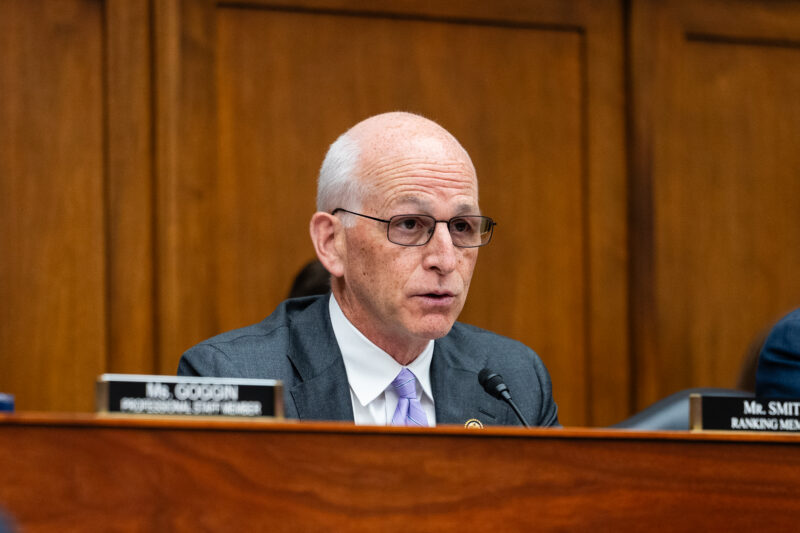
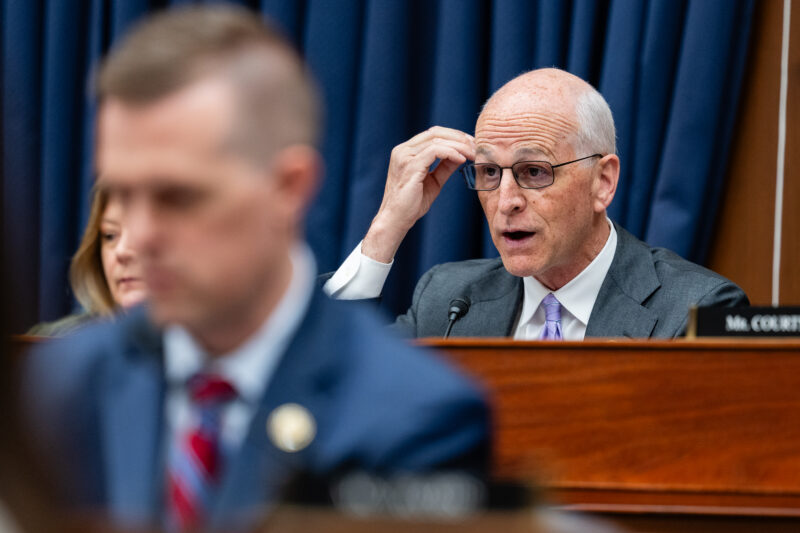
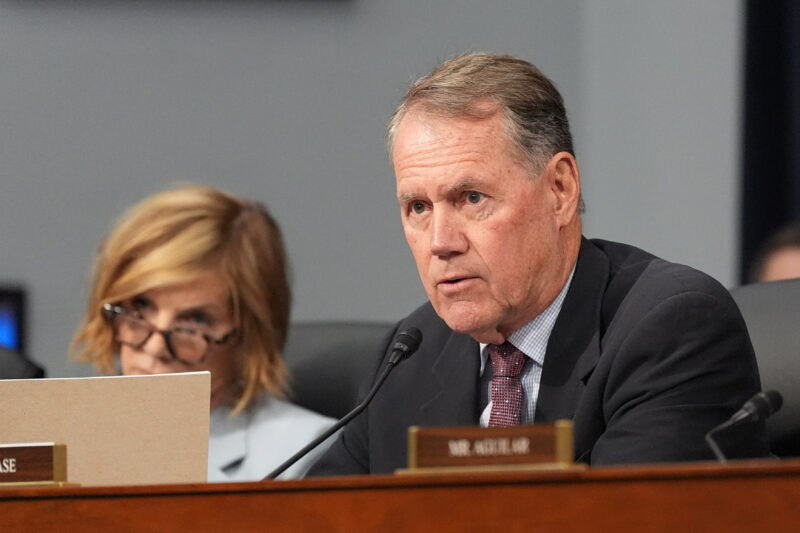
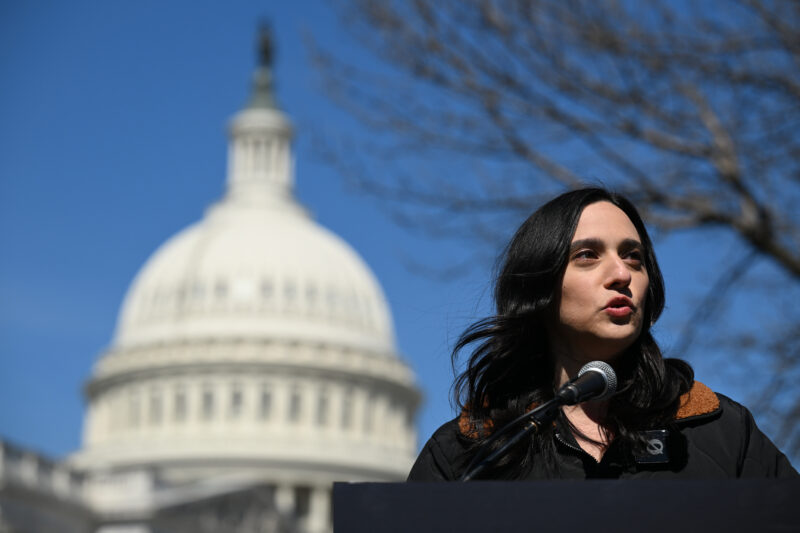
Rep. Brian Mast (R-FL) speaks during a House Committee on Foreign Affairs hearing on Capitol Hill on January 11, 2024 in Washington, DC.


 Add JewishInsider on Google
Rep. Brian Mast (R-FL) said on Friday that there is a concerted network, on both the right and left, pushing antisemitic and anti-Israel ideology to the point that it has become “pervasive,” particularly among younger people.
Speaking at a Hudson Institute conference on antisemitism, Mast, the chair of the House Foreign Affairs Committee, said he does not have a “silver bullet” to address the problem because of how widespread it has become. He recounted a recent speech in a class at a military academy where he saw “probably a 50/50 divide about why we have this [U.S.-Israel] relationship, what is the benefit of this relationship?”
The Florida Republican said that he sees a “very specific network that is in place that works together to sow antisemitism that is now, in many cases, working on the left and right across the media, to go out there and put this wedge in this relationship.”
Mast described the effort as “pervasive, systematic, planned out, orchestrated” and a “very, very serious global threat across multi-national organizations, media across the globe and adversaries and terrorist organizations.”
Mast said that in response “we need to do a really good effort of showing the pervasive effort to drive this wedge — through antisemitism, is my opinion — between the United States of America and one of our greatest allies anywhere in all of these spheres — military capabilities, relationships, intelligence sharing, geography, signals intelligence, geospatial intelligence, human intelligence — all these different things that we are so close in, beyond the trust that we have.”
The Foreign Affairs Committee chair said that Europe is one of the U.S.’ “biggest adversaries” in the fight against antisemitism, describing its actions post-Oct. 7, particularly several states’ decisions to recognize a Palestinian state, as “the most unhelpful thing that could possibly be done.” He said that those efforts emboldened the terrorist groups fighting Israel.
Mast said he had not interacted much with Tucker Carlson, one of the most prominent anti-Israel voices on the right, but had a direct conversation with Carlson after the commentator attacked the congressman for his time in the Sar-El program, where he volunteered in a support capacity alongside the Israeli Defense Forces. Mast said he told Carlson he was overlooking that Mast’s ultimate loyalty is to the United States, not to Israel.
“You never bothered to ask the question of, ‘How many countries have I taken an oath to support and defend?’ Just one: the United States of America,” Mast said he told Carlson, going on to emphasize he took that oath five times as a member of the military and an equal number as a member of the House, in addition to nearly losing his life three or four times in U.S. military service. “You’re connecting dots that don’t exist because you failed to ask some really fundamentally important questions which is, ‘Where do your allegiances lie?’”
Mast said he decided to sign up for the IDF volunteer program during Operation Protective Edge in 2014, when he faced down anti-Israel demonstrators in Boston following his time in the military.
“Some of these people draping themselves — like we see on our college campus here — draping themselves in Palestinian flags, chanting, rallying, whatever, they started harassing me and my family for being a U.S. service member,” Mast said. “At the end of that night, we got home and I told my wife, ‘I don’t know what it’s going to look like, I’m going to find a way. I’m going to show my support for Israel against this hypocrisy and against these pricks that we encountered.’”
Jewish Insider senior national correspondent Gabby Deutch contributed reporting.
‘The version approved by the House Foreign Affairs Committee lacks the teeth of the original House bill as well as the current legislation in the Senate,’ an official at a pro-Israel group said

Getty Images
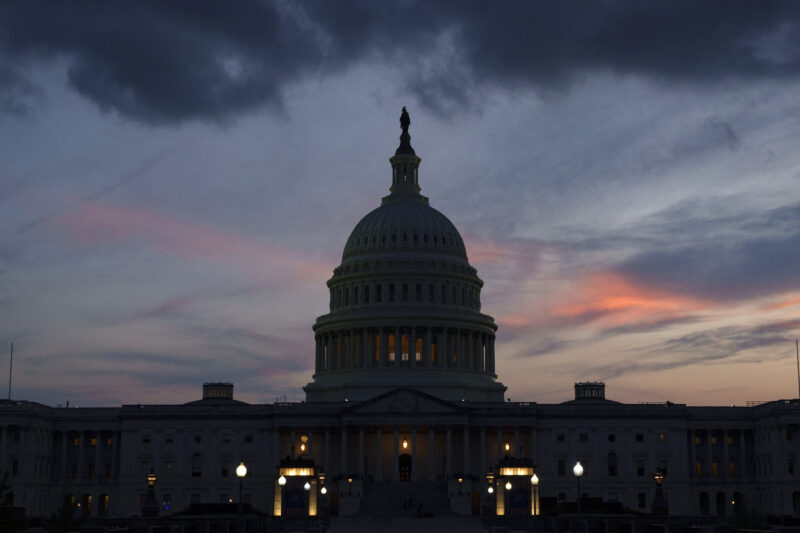
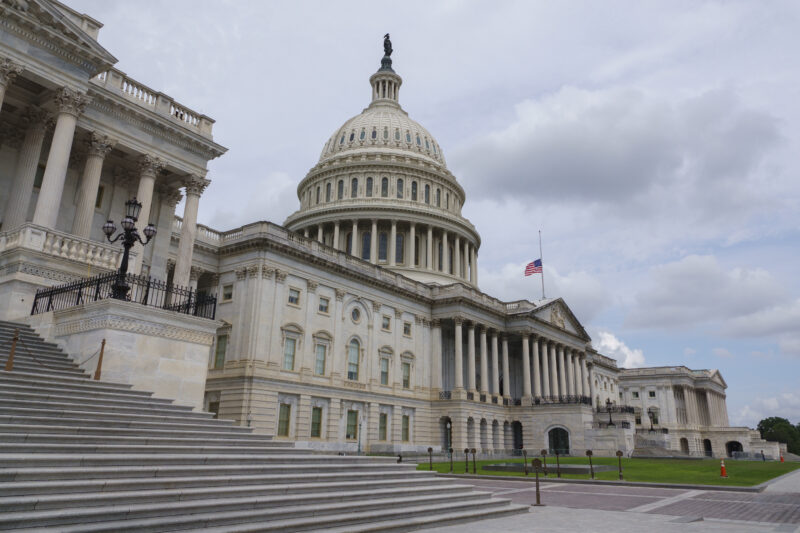
U.S. Capitol Building
The House Foreign Affairs Committee removed key provisions of a bill designed to designate the Muslim Brotherhood as a terrorist organization when it approved the legislation last week, prompting concerns from some conservatives.
The bill was amended by a voice vote to strip out provisions mandating the designation of eligible Muslim Brotherhood branches and the entire Muslim Brotherhood as terrorist organizations, including backing from the committee’s chairman, Rep. Brian Mast (R-FL).
The original legislation, introduced in both the House and Senate, included language requiring that the secretary of state assess each branch of the Muslim Brotherhood and report to Congress on whether those branches meet the criteria for designation as a terrorist group under either of two authorities.
It then mandated that the administration designate those branches that meet the criteria as terrorist groups and impose sanctions pursuant to those designations, and required that those sanctions remain in place for at least four years. It would also impose sanctions on the entire Muslim Brotherhood.
The amended legislation mandates only the assessment of Muslim Brotherhood chapters “that pose a threat to United States national security interests,” rather than all branches of the group — potentially allowing some branches of the group to duck scrutiny — and requires a report to Congress on whether those branches “ha[ve] been designated” as terrorist groups. Most significantly, it removes the specific mandate that the branches in question and the full Muslim Brotherhood be designated as terrorist groups and sanctioned pursuant to the findings of that report.
In effect, the changes remove key provisions that made the legislation broader than an executive order issued by the Trump administration last month, which authorized the designation of certain Muslim Brotherhood branches as terrorist organizations, but did not mandate an assessment of all branches for terrorist activity or require that the entire organization be designated and sanctioned.
“The bill reported out of committee codifies the Trump administration’s bold efforts to counter the Muslim Brotherhood,” a House Foreign Affairs Committee spokesperson told Jewish Insider, when asked about the changes.
“This is one part of a broader process to work directly with the administration as they advance towards imposing a full designation. There should be no question about House Foreign Affairs Committee Republicans’ commitment to hold terrorist groups accountable, and we are in lockstep with the administration in doing so.”
A spokesperson for Rep. Mario Diaz-Balart (R-FL), the lead Republican sponsor of the bill, said he is “thrilled the bill made its way out of committee and is grateful to Chairman Mast for providing that opportunity,” adding that discrepancies between final House and Senate legislation would need to be worked through in a conference committee. “We look forward to engaging throughout the process,” the spokesperson added.
An official at a pro-Israel organization, reflecting concerns about the amended legislation among some conservatives, said that the legislation should be stronger.
“While the legislation is still a step in the right direction, the version approved by the House Foreign Affairs Committee lacks the teeth of the original House bill as well as the current legislation in the Senate put forward by Senator [Ted] Cruz,” the official told JI.
“President Trump has been crystal clear about the threat posed by the Muslim Brotherhood. When President Trump says that we will not tolerate those who fuel and fund radical terrorism, it should be backed up with the strongest possible legislation that will cement his legacy on this issue.”
Mast, who had already expressed concerns about lifting the sanctions, met with Syrian President Ahmad al-Sharaa earlier this week, alongside other lawmakers

Kent Nishimura/Getty Images
Rep. Brian Mast (R-FL) speaks during a news conference at the U.S. Capitol on September 9, 2024 in Washington, DC.
House Foreign Affairs Committee Chair Rep. Brian Mast (R-FL) told Jewish Insider that, after his meeting with Syrian President Ahmad al-Sharaa earlier this week, he’s going to “think about” his skeptical stance on the repeal of sanctions on Syria under the Caesar Civilian Protection Act.
Mast has previously expressed concerns about lifting the sanctions, a move which the Trump administration supports.
The Senate approved the repeal of the Caesar Act as part of its draft of the 2026 National Defense Authorization Act, but the House has not yet approved similar legislation. Mast would need to approve the Senate proposal for it to be included in the final defense bill. He told The Hill last week that “discussions on Caesar Repeal are ongoing but my concerns should be obvious to anyone following the situation in Syria.”
The House Financial Services Committee voted on a bipartisan basis in July for legislation conditioning the lifting of the sanctions on Syria meeting a series of human rights, anti-corruption and counterterrorism standards.
Asked if the meeting had changed his views on the issue, Mast said that he had read at length about al-Sharaa and his background — al-Sharaa is a former terrorist commander affiliated with ISIS and Al-Qaida — prior to the meeting. Mast is a military veteran who lost his legs to a terrorist bombing in Afghanistan.
“We had a lot of conversation, good conversation,” Mast said. “I asked him very pointedly [to] explain why we’re no longer his enemy. He gave a pretty good answer. Said he was hoping for a noble future for his people, one free of radicalism, fundamentalism … and ISIS. So it was a good answer.”
Opponents of the full repeal effort argue that sanctions should remain on the books to ensure Syrian compliance with U.S. priorities and human rights, particularly in light of the massacres of religious minority groups.
Mast did not issue any support for sanctions relief for Syria; the congressman is seen as a key holdout for the move
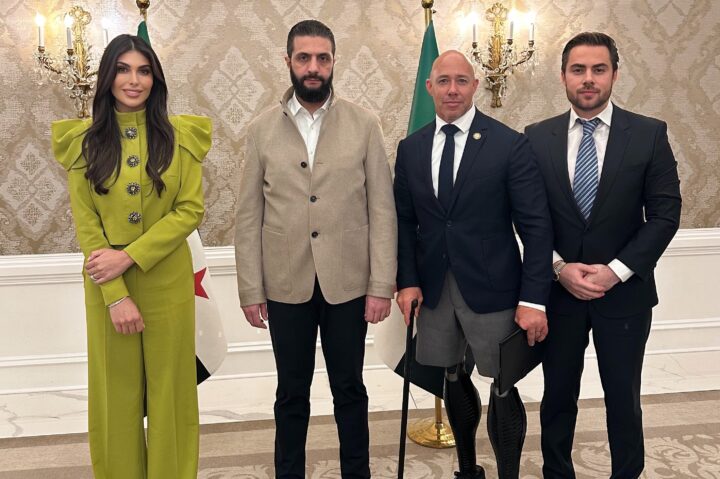
Jasmine Naamou and Tarek Naemo with Syrian President Ahmad al-Sharaa and Rep. Brian Mast (R-FL) (courtesy)
Rep. Brian Mast (R-FL) met on Sunday with Syrian President Ahmed al-Sharaa, who is in Washington for a meeting with President Donald Trump. Mast said he confronted al-Sharaa over his terrorist past.
“We had a long and serious conversation about how to build a future for the people of Syria free of war, ISIS, and extremism,” Mast said in a statement.
Mast is an Army veteran who lost both legs while serving as an explosive ordinance disposal technician in Afghanistan in 2010. Al-Sharaa is a former commander in ISIS and Al-Qaida and later in a Syrian splinter group.
“He and I are two former soldiers and two former enemies. I asked him directly ‘Why we are no longer enemies?’” Mast continued. “His response was that he wishes to ‘liberate from the past and have a noble pursuit for his people and his country and to be a great ally to the United States of America.’”
Mast, a Trump ally, concluded, “Today, he will meet with President Trump and officially join the Global Coalition to Defeat ISIS.”
Notably, Mast’s statement is absent any direct praise for al-Sharaa or his efforts, or any commitment to supporting sanctions relief for the Syrian regime, which Trump has encouraged Congress to enact.
Some Syrian diaspora activists have targeted Mast, who chairs the House Foreign Affairs Committee, in recent days, describing him as the largest obstacle to the repeal of human rights sanctions on Syria under the Caesar Act.
Meanwhile, Mast is facing criticism from some conservatives for sitting down with al-Sharaa.
Far-right influencer Laura Loomer, who has a long history of anti-Muslim activism and is an ally of Trump as well, said she was “really stunned” by the two meeting.
“Imagine getting your legs blown off by Muslim terrorists and then posing for a photo with an Islamic terrorist,” Loomer said on X. “How many of @RepBrianMast’s fellow brothers and sisters in uniform were killed by Islamic terrorists like Julani?”
Loomer has also criticized the Trump administration for welcoming al-Sharaa to the White House.
The Foreign Affairs chair reportedly said ‘they would have to figure out which side they were on: American or China/Iran’
Samuel Corum/Getty Images
Rep. Brian Mast (R-FL) speaks during a House Committee on Foreign Affairs hearing on Capitol Hill on January 11, 2024 in Washington, DC.
Rep. Brian Mast (R-FL), the chairman of the House Foreign Affairs Committee, confronted the ambassadors of Rwanda, Jordan and Qatar, among other countries, over their relationships with U.S. adversaries in China and Iran, at a dinner last night, per a source familiar with the congressman’s remarks.
According to Politico, the Rwandan and Jordanian ambassadors to the United States hosted a dinner honoring Mast, the House Foreign Affairs Committee chair, also attended by the ambassadors of Qatar, Kuwait, France, Luxembourg, Singapore, Switzerland and Costa Rica.
Mast told the leaders “they would have to figure out which side they were on: American or China/Iran,” a source familiar with the situation told Jewish Insider. “Described as like chess. Sometimes you don’t get to choose who is a pawn and a queen, but you get to decide what side you are on.”
Mast is a longtime, and outspoken, pro-Israel lawmaker who volunteered with a group supporting the Israeli Defense Forces following his own military service.
Please log in if you already have a subscription, or subscribe to access the latest updates.
 Continue with Google
 Continue with Apple