












































Israel and Lebanon agree to extend ceasefire, establish joint security zones
Israeli Ambassador Yechiel Leiter said the two sides are working to ensure Hezbollah's permanent removal from the border area, warning fighters who remain will ‘know exactly what's coming.’
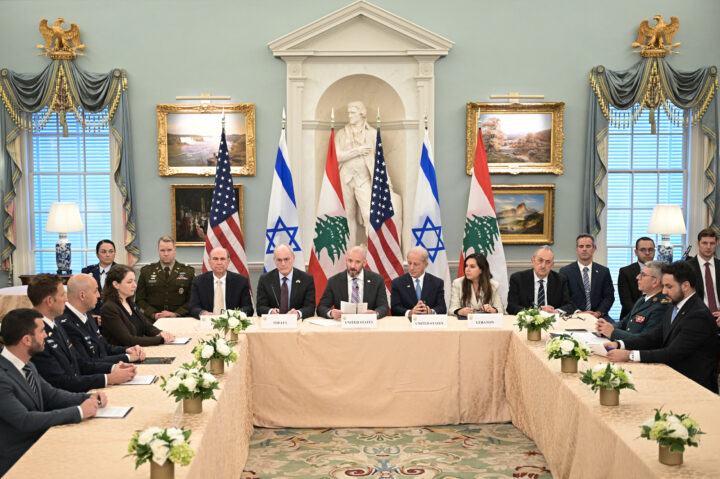
Oliver Contreras/AFP via Getty Images
Israeli Ambassador to the US Yechiel Leiter, State Department Chief of Staff Daniel Holler, US Ambassador to Lebanon Michel Issa and Lebanese Ambassador to the US Nada Hamadeh attend a meeting between Israeli and Lebanese delegations hosted by the United States at the State Department in Washington, DC, on June 3, 2026.


 Add JewishInsider on Google
Israel and Lebanon agreed on Wednesday to extend their ceasefire — which in practice has been tenuous — on the condition that Hezbollah disarms and withdraws from Israel’s northern border, and to jointly establish “pilot zones” where the Lebanese Armed Forces “will take exclusive control of the territory.”
The parties, together with the U.S., announced the developments in a joint statement at the conclusion of the second and final day of the fourth round of peace talks between Israeli and Lebanese officials at the State Department.
State Department Counselor Dan Holler, Israeli Ambassador to the U.S. Yechiel Leiter, Lebanese Ambassador to the U.S. Nada Hamadah, U.S. Ambassador to Lebanon Michel Issa and several U.S. military representatives participated in Wednesday’s talks. The group will reconvene for the next round of talks the week of June 22 “with a view toward reaching a comprehensive agreement,” the statement said. A State Department official told JI that the exact time and venue for the upcoming discussions have not yet been decided.
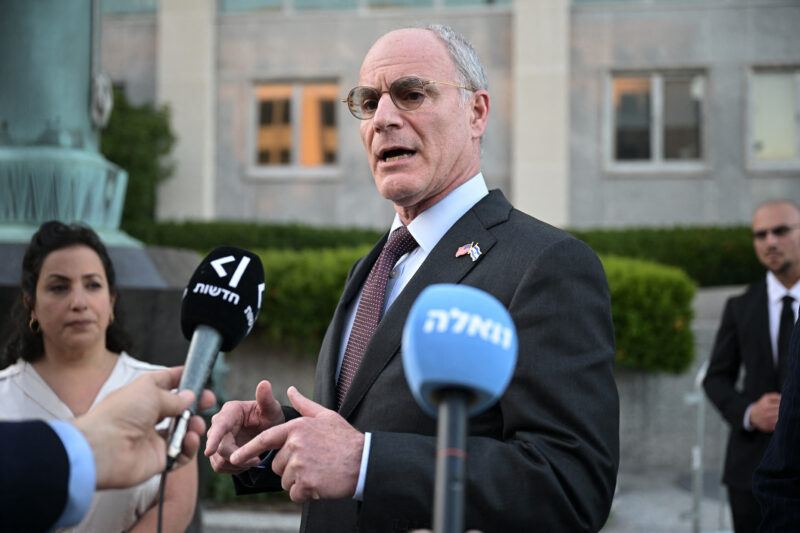
Speaking to reporters in Foggy Bottom, Leiter touted Wednesday’s agreement as a “relatively unprecedented” achievement.
“Israel entered Lebanon after Hezbollah decided to join the war of Iran against Israel, and we’re pushing Hezbollah back. We’ve brought the people of Lebanon to the understanding that we’re not the enemy, Hezbollah is,” Leiter said in response to a question from Jewish Insider. “Now, we’re going to work together to rid the country of this Iranian proxy on Israel’s border, which deprives Israel of its security and the Lebanese people of their freedom.”
On the creation of the “pilot zones,” Leiter said the effort “will be guided by the United States. Special units in the Lebanese army will take control of various areas and gradually spread out throughout the south, so we don’t go into another pattern where Israel leaves, Hezbollah comes back and we go through the same thing from the last 40 years.”
Leiter also noted that Israel would allow Hezbollah terrorists to evacuate from southern Lebanon to the country’s north for a brief, unspecified period of time.
“The first step is that the Hezbollah fighters, these terrorists who have come down to the south, have to go back to the north. They came down recently. We’re talking about some 2,000-plus terrorists,” the Israeli ambassador said. “So we’re going to see them go back to the north. We will guarantee them safe passage as long as they leave, but after a certain amount of time, which is not very long, if they don’t make their way back to the north, then they know exactly what’s coming, and Lebanon understands what’s coming.”
Asked by JI what Israel believes President Donald Trump’s red line is when it comes to their ability to go after Hezbollah in Beirut or elsewhere in Lebanon, Leiter said that Trump, Israeli Prime Minister Benjamin Netanyahu and Lebanese President Joseph Aoun are in agreement about Israel’s right to respond to attacks from the Lebanese terrorist group.
“If Hezbollah is intent on disrupting the ceasefire, the result is going to be on them, and that’s something that President Trump, Prime Minister Netanyahu and President Aoun have made very clear,” Leiter said. “We are together on this agenda to see to it that Iran is not to be allowed any longer to facilitate violence against Lebanon, against Israel through Hezbollah.”
The Israeli ambassador credited the Lebanese government for “trying for several weeks now to get Hezbollah to stop firing” at Israel and “to assert within Lebanon that there is a legitimate government, they are in control and Iran doesn’t control Lebanon.”
Leiter dismissed the suggestion that Trump and Netanyahu’s tense phone call on Monday, during which the president referred to the Israeli prime minister as “f***ing crazy” over Israel’s military escalation in Lebanon, impacted the outcome of this week’s talks or indicated a split between the two on the security concerns posed by Hezbollah.
“Prime Minister Netanyahu and President Trump have met seven times over the past year, more than any other foreign leader, and President Trump visited Jerusalem. They’ve spoken on the phone about 60 times, so we’re talking about hours and hours and hours of conversation,” Leiter said. “Taking out one ‘bleep’ from all those conversations and making that the hallmark of their relationship is a mistake. Lovers have spats. They may have had a little lovers’ spat this week, that’s OK.”
“When we’re so close, we’re going to have conversations that sometimes are heated, but the bottom line is that America, Israel, Lebanon are united on keeping Iran out of the equation. That’s the most important thing,” he continued.
More Stories
PHOTO OP
Letitia James opponent met with Black Hebrew Israelite group
trump talk
Trump backs Netanyahu on Oct. 7 warnings, won’t say if he deserves another term

SEEDS OF PEACE
Slotkin defends El-Sayed, says not all Jewish voters have the same priorities

VIRGINIA IN VIEW
DMFI launches $1 million ad campaign supporting Elaine Luria

Daily Kickoff
FlyDubai hero credits TV crash course
TAKING AIM
House Democrats introduce sanctions bill targeting settlement expansion
Please log in if you already have a subscription, or subscribe to access the latest updates.
 Continue with Google
 Continue with Apple