







































Senators see UAE’s OPEC withdrawal as boost for U.S. energy interests
‘There may be a freer market ahead,’ Sen. Blumenthal told JI

OPEC headquarters in Vienna


 Add JewishInsider on Google
Lawmakers said that the United Arab Emirates’ decision to withdraw from the Organization of Petroleum Exporting Countries could yield positive economic benefits for the U.S. and is a sign that the regional alignment of the Gulf countries is shifting.
Sen. Chris Coons (D-DE) told Jewish Insider that the recent move shows “the continued fragmentation of the Gulf Cooperation Council and of the relations between our Gulf partners as Saudi and the Emirates are pursuing different security paths.”
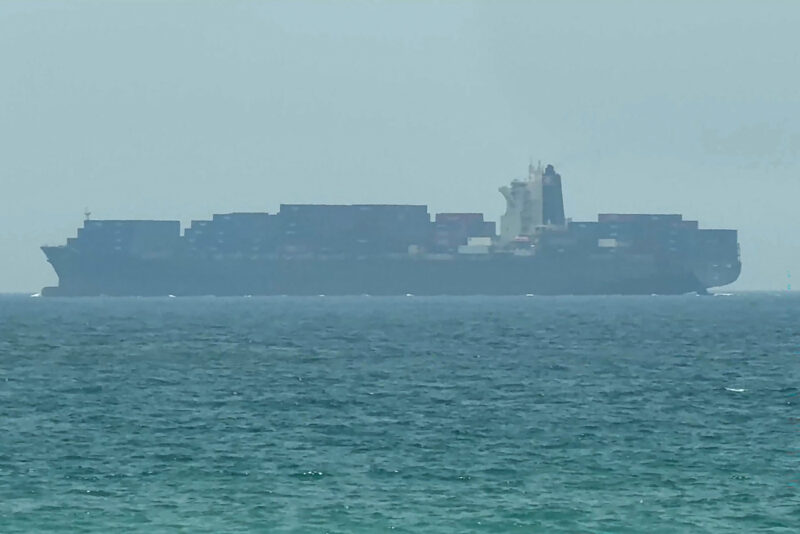
“I think it is a reminder that the Gulf is under enormous pressure because Iranian attacks have knocked out a fair amount of oil and gas production capability,” Coons said. “The closure of the Strait of Hormuz continues to threaten the stability of their economies, and some of the underlying tensions between our allies and partners in the region are becoming more evident.”
Sen. John Cornyn (R-TX) told JI he was “trying to understand” what the move would mean, noting that if the UAE “wouldn’t be limited in terms of what they can produce into the world’s oil supply,” it would be a positive development.
“That would probably be a good thing in terms of increasing the supply and hopefully bringing down prices,” Cornyn said. “I think all they [OPEC countries] care about is themselves. As long as they can make money, they’ll do it. And they’re a cartel. We call them a cartel for a reason, but I think right now, more supply would be good and hopefully bring down gas prices.”
OPEC, which coordinates production policies among major oil producers to influence global supply and prices, is de facto led by Saudi Arabia with members including Iran, Iraq, Kuwait, Libya, Nigeria, Venezuela and Algeria.
Cornyn added that he believes Iran has, through the course of the war, “done an amazing thing, which is to unify a bunch of countries in the Gulf that used to try to fight each other.”
“I’m hopeful after the Strait of Hormuz is open — which I think President [Donald] Trump should not stop until that happens — that we’ll hopefully see an increased normalization of relationships between Saudi Arabia and Israel,” Cornyn said. “And it looks to me like it could end up being a really positive thing in the long run.”
Sen. Richard Blumenthal (D-CT) also said that Abu Dhabi’s departure from OPEC “may signal that the cohesion of OPEC is splintering and its power may be lessening … and there may be a freer market ahead.”
Experts said that the UAE has considered making such a move in the past, but it was the ongoing war with Iran that accelerated Abu Dhabi’s decision to break from the bloc and chart a more independent path.
Analysts also conveyed that the shift reflects both long-standing economic frustrations within OPEC and a broader geopolitical recalibration following the conflict — one that is likely to strengthen the UAE’s ties with the United States and Israel while widening its divide with Saudi Arabia.
“The political and economic predicates for this move have been building for a while, and events of the last two months accelerated the decision,” said Jonathan Ruhe, a fellow at the Jewish Institute for National Security of America.
Ruhe noted that the UAE had long been constrained by OPEC production quotas, often “bearing the brunt” of cuts while other members failed to comply.
“All of this foregone revenue could have been spent on further diversifying the Emirati economy and pursuing ambitions to be a world leader in AI and other technologies,” Ruhe said, adding that tensions were compounded by political strains with Saudi Arabia over regional issues including conflicts in Yemen, Sudan and Israel.
“The UAE’s spare production capacity is at an even greater premium now, and it can bypass the Strait of Hormuz with some of these seaborne exports. And with no production cap, it can invest more in additional Hormuz bypass routes,” he added.
While those pressures have existed for years, experts said the Iran war proved to be a turning point. Hussain Abdul-Hussain, a research fellow at the Foundation for Defense of Democracies, said the UAE was “dismayed” by the lack of response from regional organizations during the conflict, particularly after Iranian strikes on Gulf energy infrastructure.
“The UAE was expecting at least some sort of move by OPEC to denounce all the strikes against energy facilities from a fellow OPEC member [Iran], and this didn’t happen,” Abdul-Hussain said, with a similar dynamic occurring in the Arab League.
Experts said the fallout from the war is also expected to bring the UAE closer to Washington and Jerusalem. Abdul-Hussain pointed to reports that Israel deployed an Iron Dome battery to the UAE during the conflict — a potential sign that the nations could share increased goodwill moving forward.
“The UAE has been adamant on saying that they will not forget those who took their side in the war, and they will not forget those who didn’t take their side,” Abdul-Hussain said. “On Israel, I think [their ties] … will grow much, much stronger moving forward.”
Beyond shifting regional ties, Abdul-Hussain said the move is likely to be welcomed by Washington, noting that in “the United States, regardless of who’s in the White House, we don’t like OPEC.”
“We call them an oil cartel,” he added. “They try to regulate oil prices and not always in our favor. So we’ll be happy to see the market play its role without having someone putting their thumb on the scale.”
Abdul-Hussain also noted that Saudi Arabia was “always trying to control the price of the market.” He said that the UAE’s decision “undermines the positions of both Saudi Arabia and Iran.”
“Before the war with Iran broke out, a schism had shown between the Saudis and the Emiratis,” Abdul-Hussain said. “Some thought that the war would bring them closer together, but I think the war didn’t, because you could see that the posture during the war and after the war was completely opposite.”
Kristin Diwan, a senior resident scholar at the Arab Gulf States Institute, echoed that “differences over strategy confronting Iran is driving the Gulf states in different directions.” She added that the UAE is willing to chart its own path, free from deference to Saudi Arabia. “I expect this will extend to other Arab and Islamic multilateral organizations as well.”
Steven Cook, a senior fellow at the Council on Foreign Relations, said that Abu Dhabi’s decision is a reflection of a broader regional realignment underway in which there will be “roughly two different blocs.” He noted in a statement that one such bloc might consist of “Israel, UAE, Bahrain, Kenya, Greece, Cyprus, Ethiopia, Somaliland, maybe Lebanon and Egypt,” with another consisting of “Turkey, Qatar, Saudi Arabia and Pakistan.”
“You have discussions among the Turks, Saudis, Egyptians and Pakistanis for a security pact. This is a long-held dream among Turkish Islamists and the others seem interested. On the other hand, the Emiratis, Israel and the rest are drawing closer to each other,” Cook said. “This does not bode well for regional integration that the Saudis, Americans, Israelis and others have been seeking, but CENTCOM will hold the GCC Plus and Israel together on security issues so it won’t be a total split,” Cook said.
More Stories
STANDING FIRM
Haley Stevens defends AIPAC spending in her failed Senate run
COMMUNITY CONCERN
Atlanta Jewish Times publisher accuses Ossoff of ‘lying’ about Israel support

BLAME GAME
Brooklyn Democratic leader who promoted infamous antisemitic tract rips ‘Zionists’ in new video

RED LINE
Randy Fine’s primary opponent pushes openly antisemitic, pro-Hitler messaging
MIXED MESSAGES
U.S. accuses Israel of striking Syrian airbase
SURVEY SAYS
Poll: Mike Rogers holds narrow lead over Abdul El-Sayed in high-stakes Michigan Senate race
Please log in if you already have a subscription, or subscribe to access the latest updates.
 Continue with Google
 Continue with Apple