












































Plus, CNN walks back coverage downplaying NYC terror attempt

JULIEN DE ROSA / AFP via Getty Images
A person points at a page on the Marinetraffic website that shows commercial boats traffic on the edge of the Strait of Hormuz near the Iranian coast, in Paris on March 4, 2026.


 Add JewishInsider on Google
This P.M. edition is reserved for our premium subscribers — offering a forward-focused read on what we’re tracking now and what’s coming next. Please don’t hesitate to share your thoughts and feedback by replying to this email.
📡On Our Radar
Notable developments and interesting tidbits we’re tracking
President Donald Trump denied reports that U.S. intelligence has found Iran is taking steps to deploy mines in the Strait of Hormuz, but said if it has been done, “we want them removed, IMMEDIATELY!” If not, he warned, “the Military consequences to Iran will be at a level never seen before,” and if they are removed, “it will be a giant step in the right direction.”
Shortly after, Trump confirmed the U.S. has “hit, and completely destroyed, 10 inactive mine laying boats and/or ships.”
Aramco, the world’s top oil exporter out of Saudi Arabia, warned oil markets will face “catastrophic consequences” if the strait continues to be impacted by the war. “While we have faced disruptions in the past, this one by far is the biggest crisis the region’s oil and gas industry has faced,” CEO Amin Nasser told reporters…
The White House asked Israel not to target any more Iranian energy facilities, Axios reports, citing harm to Iranian civilians, the hope to cooperate with the Iranian oil industry after the war and potential for Tehran to retaliate against Gulf states…
Around 140 U.S. servicemembers have been injured in the course of the campaign against Iran, Defense Department spokesperson Sean Parnell said today, the majority of whom have already returned to service…
After receiving a classified briefing in the Senate Armed Services Committee, Sen. Richard Blumenthal (D-CT) told reporters, “I emerged from this briefing as dissatisfied and angry, frankly, as I have from any past briefing in my 15 years in the Senate. … We seem to be on a path toward deploying American troops on the ground in Iran.”
Blumenthal continued, “There is also, as disturbingly as anything else, the specter of active Russian aid to Iran … with intelligence and perhaps with other means, and China also may be assisting”…
The U.S. ordered the departure of its diplomats and their families from southern Turkey after two attempted Iranian missile strikes in the area; it’s the first mandated departure of U.S. officials outside of the Gulf and Lebanon since the start of the war…
Israeli Prime Minister Benjamin Netanyahu issued a statement to the “people of Iran” hinting at a coming opportunity for a popular uprising. He wrote on X, “We are waging a historic war for liberty. This is a once in a lifetime opportunity for you to remove the Ayatollah regime and gain your freedom. … In the coming days we will create the conditions for you to grasp your destiny. … When the time is right, and that time is fast approaching, we will pass the torch to you”…
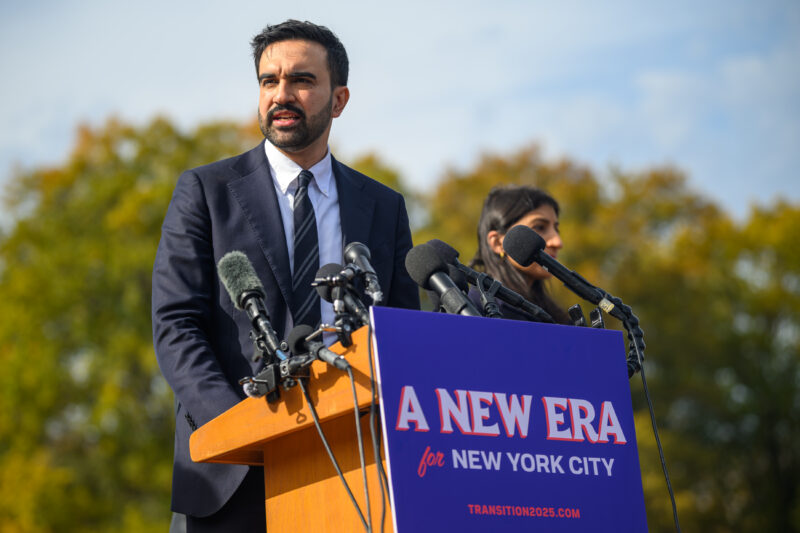
CNN significantly changed a story and removed a social media post today that downplayed the attempted terror attack outside Gracie Mansion, New York City Mayor Zohran Mamdani’s official residence, over the weekend, initially writing that the suspects traveled from Pennsylvania for “what could’ve been a normal day” during the city’s “abnormally warm weather.”
CNN later deleted its post on X and added an editor’s note to its story, saying that the language “failed to reflect the gravity of the incident thereby breaching the editorial standards we require for all our reporting”…
The NYPD evacuated Carl Schurz Park near the mayor’s mansion today after a suspicious device was found in the vicinity; it was determined to be “non-threatening”…
Secure Community Network said there was no known threat to the Jewish community following an active shooter incident Tuesday afternoon near the Agudath Israel of Baltimore synagogue, during which a Baltimore Police officer and a suspect were shot in what appeared to be a domestic incident…
A week ahead of Illinois’ primary election, a new poll conducted by an outside group backing Rep. Raja Krishnamoorthi (D-IL) shows the congressman with a double-digit lead in the race for Senate, up 11 points over his next closest competitor, Lt. Gov. Juliana Stratton. Over 87,000 early votes have already been cast in the race, 40,000 votes more than had been cast at the same point in early voting during the 2022 primaries…
Morris Katz, the Democratic strategist who has shaped the campaigns of progressive politicians hostile to Israel including Mamdani and Maine Senate candidate Graham Platner, is now behind the campaign of another populist Democrat: Allison Ziogas, a first-time candidate attempting to unseat Rep. Nicole Malliotakis (R-NY). Trump won 61% of the vote in Malliotakis’ Staten Island–based district in 2024, making it difficult for any Democrat to prevail…
The Anti-Defamation League released its 2026 Campus Antisemitism Report Card, which showed a “clear upward trend” in universities taking steps to address antisemitism, the organization said. Almost two dozen schools received A grades.
UCLA Chancellor Julio Frenk celebrated his university’s improvement from a D to a B, but said in a statement, “a grade is a waypoint, not a destination. … While we have made clear progress in addressing antisemitism, we have more to do in our shared goal of eradicating it in its entirety”…
⏩ Tomorrow’s Agenda, Today
An early look at tomorrow’s storylines and schedule to keep you a step ahead
Keep an eye out in Jewish Insider for a look at a late flurry of spending against far-left social media influencer Kat Abughazaleh in Illinois’ 9th Congressional District, as pro-Israel groups indicate concern that the virulently anti-Israel Democrat could win the seat.
President Donald Trump will host an event in Hebron, Ky., tomorrow, with Republican congressional candidate Ed Gallrein in attendance. Gallrein is challenging Rep. Thomas Massie (R-KY) with Trump’s endorsement — Massie will not be attending the event, which is taking place in his district.
Fox News’ Bret Baier will speak in conversation with journalist Gary Rosenblatt at Temple Emanu-El’s Streicker Center in New York City.
Stories You May Have Missed
SCOOP

Local DSA chair Justin Yuan wrote on social media, ‘Love Hamas. Simple as’
BLUEGRASS BATTLE
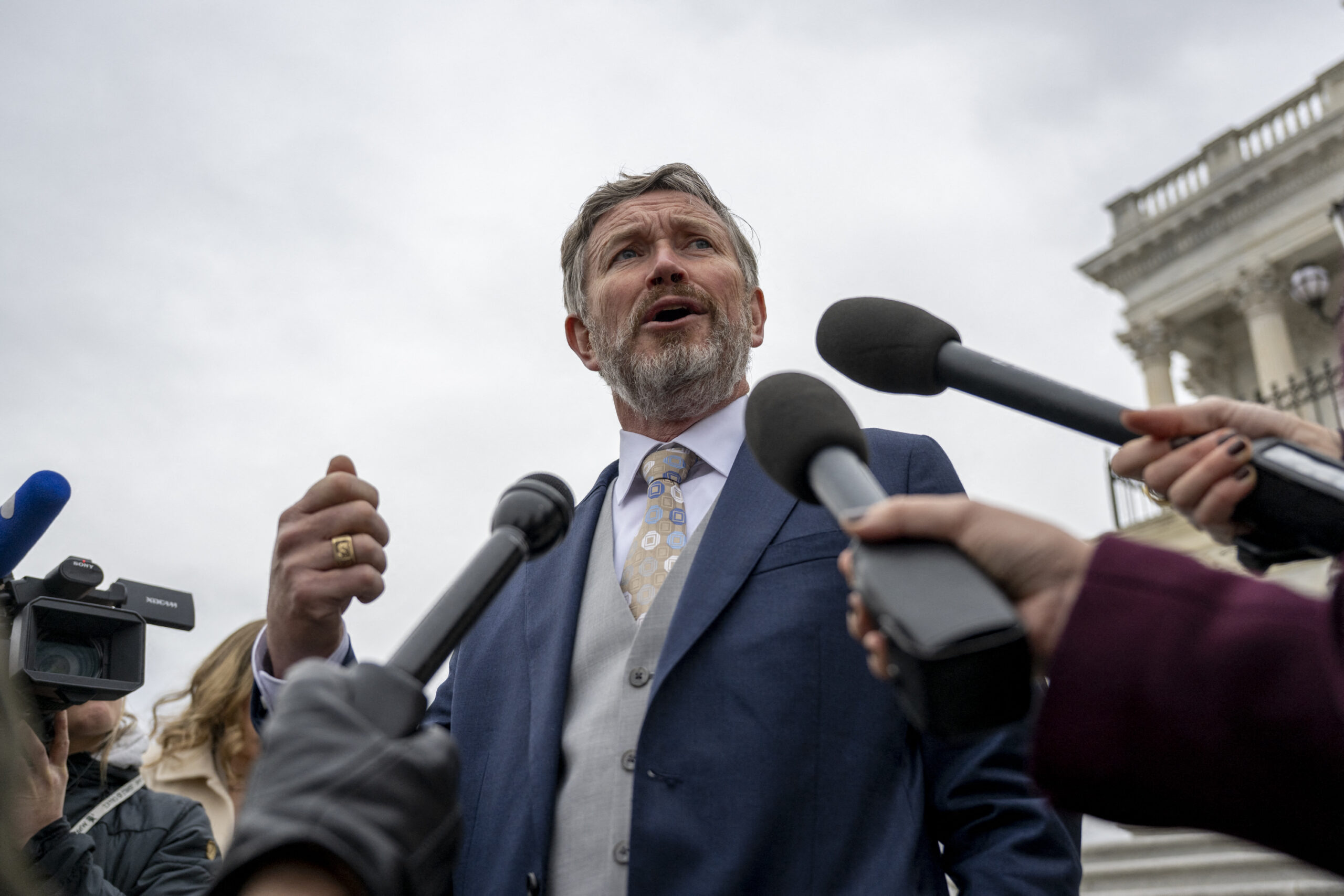
President Trump is set to rally with Massie’s opponent this week
Plus, Trump says Iran operation 'very complete'

Sean Gallup/Getty Images
Sen. Lindsey Graham (R-SC) speaks at the 62nd Munich Security Conference on February 13, 2026 in Munich, Germany.
This P.M. edition is reserved for our premium subscribers — offering a forward-focused read on what we’re tracking now and what’s coming next. Please don’t hesitate to share your thoughts and feedback by replying to this email.
📡On Our Radar
Notable developments and interesting tidbits we’re tracking
President Donald Trump praised Australian Prime Minister Anthony Albanese for assisting the members of Iran’s women’s soccer team, who are in Australia competing in the Women’s Asian Cup, amid fears for their persecution should they be forced to return home.
The president had called for Albanese to grant the athletes political asylum, saying they would “most likely be killed” if they were repatriated to Iran, and later commended him for “doing a very good job having to do with this rather delicate situation,” with five athletes “already taken care of, and the rest are on their way”…
Trump disputed reports that the U.S. is preparing to deploy ground troops to secure nuclear material at the Isfahan enrichment site in Iran, telling the New York Post, “We haven’t made any decision on that. We’re nowhere near it.” He also told CBS News that “the war is very complete, pretty much,” and the U.S. is “very far” ahead of his initial four-to-five-week timeline…
Trump has communicated to aides that he would support the assassination of Mojtaba Khamenei, Iran’s new supreme leader, if Khamenei does not acquiesce to U.S. demands, including ending Iran’s nuclear program, U.S. officials told The Wall Street Journal…
The Lebanese government has requested direct negotiations with Israel, sending the message through U.S. Ambassador to Turkey Tom Barrack, Axios reports. Washington and Jerusalem were reportedly skeptical about the idea, with Beirut thus far failing to disarm or rein in Hezbollah activities as the terror group continues to launch missiles into Israel…
NATO missile defense systems intercepted another Iranian missile heading for Turkey, a spokesperson announced today, the second time Iran has attempted to strike the NATO country’s territory…
Sen. Lindsey Graham (R-SC) threatened to impose “consequences” on Saudi Arabia for its unwillingness to join the U.S. campaign against Iran, as the U.S. evacuates its embassy in Riyadh and the kingdom continues to endure Iranian attacks, which have so far resulted in the deaths of two civilians and one U.S. servicemember. “Question — why should America do a defense agreement with a country like the Kingdom of Saudi Arabia that is unwilling to join a fight of mutual interest?” Graham wrote on X…
Talks to advance Trump’s 20-point peace plan in Gaza, including the issue of Hamas’ disarmament, have been at a standstill during the campaign against Iran, Reuters reports, as Gulf countries that pledged funds to help rebuild the enclave have come under fire and flight disruptions have prevented mediators from traveling…
The criminal complaint filed in the Southern District of New York today against the two Pennsylvania men who allegedly hurled improvised explosive devices toward a protest against New York City Mayor Zohran Mamdani on Saturday stated that both men explicitly identified ISIS as their inspiration, Jewish Insider’s Will Bredderman reports.
“This isn’t a religion that just stands when people talk about the blessed name of the Prophet [Muhammad],” Emir Balat, 18, told police, according to the charging documents. He also said he had hoped to pull off something “even bigger” than the 2013 Boston Marathon bombing, which he noted had caused “only three deaths”…
The White House moved today to designate the Sudanese Muslim Brotherhood as a Specially Designated Global Terrorist entity and announced plans to impose a Foreign Terrorist Organization designation on March 16, JI’s Matthew Shea reports, in the Trump administration’s latest crackdown against Muslim Brotherhood affiliates…
A new poll from the campaign of Rushern Baker, former executive of Maryland’s Prince George’s County, found him leading the crowded Democratic field seeking to succeed retiring Rep. Steny Hoyer (D-MD). Though a plurality of likely primary voters (28%) said they’re still undecided, Baker polled at 22% compared to former U.S. Capitol Police officer Harry Dunn’s 15% and Hoyer-endorsed state Del. Adrian Boafo’s 3%…
Rep. Kevin Kiley of California officially switched his party affiliation from Republican to independent — he had filed for reelection as an independent, but said today he would leave the party for the rest of his term as well. The move narrows the GOP majority even further, 217-214, but Kiley said he’ll continue to caucus with Republicans, blunting the impact…
Politico looks at the flurry of independent candidates seeking to unseat congressional Republicans in GOP-leaning districts, clashing with local Democratic establishments in the process…
⏩ Tomorrow’s Agenda, Today
An early look at tomorrow’s storylines and schedule to keep you a step ahead
Keep an eye out in Jewish Insider — we’ll have a profile of Dario Amodei, the Jewish CEO of Anthropic, which sued the Pentagon today over its decision to label the AI company a “supply chain risk.”
The Senate Armed Services Committee is expected to receive a classified briefing on the status of the U.S. and Israeli campaign against Iran.
The Republican Jewish Coalition and conservative magazine National Review will hold a daylong symposium on antisemitism, with remarks from Sens. Jim Banks (R-IN), Tom Cotton (R-AR) and Ted Cruz (R-TX); Noah Pollak, senior advisor at the Department of Education; Kenneth Marcus, founder of the Louis D. Brandeis Center for Human Rights Under Law; Rabbi Yehuda Kaploun, the State Department’s antisemitism envoy; Leo Terrell, senior counsel to the assistant attorney general for civil rights; and Texas Lt. Gov. Dan Patrick.
Georgia’s 14th Congressional District will hold its special election to fill the seat vacated by Rep. Marjorie Taylor Greene (R-GA), with more than a dozen candidates on the all-party ballot. The district leans strongly Republican but the GOP field is split among nine candidates, raising the possibility that the Democratic front-runner — retired Army Brig. Gen. Shawn Harris — could slip into the April runoff.
Stories You May Have Missed
SCOOP

NYC First Lady Rama Duwaji showed support for far-left orgs applauding Hamas rampage
POWER PLAYER

Ad maker Morris Katz has been instrumental in elevating Israel antagonists into office as part of a move to reshape the Democratic Party
Plus, Kristi Noem gets the boot
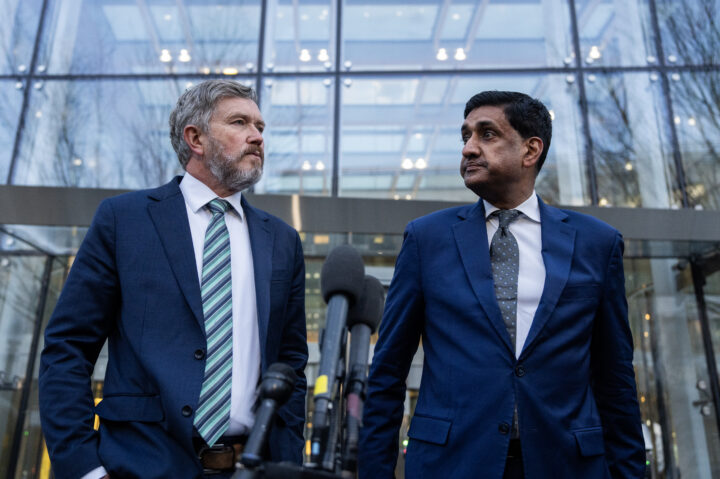
Tom Williams/CQ-Roll Call, Inc via Getty Images
Reps. Thomas Massie, (R-KY), left, and Ro Khanna, (D-CA), conduct a news conference outside a Department of Justice office in NoMa on Monday, February 9, 2026.
Good Thursday afternoon,
This P.M. edition is reserved for our premium subscribers — offering a forward-focused read on what we’re tracking now and what’s coming next.
It’s me again — Danielle Cohen-Kanik, U.S. editor at Jewish Insider and curator, along with assists from my colleagues, of the Daily Overtime. Please don’t hesitate to share your thoughts and feedback by replying to this email.
📡On Our Radar
Notable developments and interesting tidbits we’re tracking
President Donald Trump announced he’s replacing Kristi Noem as homeland security secretary with Sen. Markwayne Mullin (R-OK), after Noem had rankled the president and some Republican members of Congress with her oversight of widespread turmoil at the agency, among other issues. Mullin still needs to be confirmed by the Senate to assume the post.
Mullin, if confirmed, would take the helm of DHS amid its continued partial shutdown, and as it has repeatedly come under fire for its handling of issues related to antisemitism from lawmakers and Jewish community groups. Noem, meanwhile, will become special envoy to a new security initiative for the Western Hemisphere being launched by Trump this weekend…
House Speaker Mike Johnson (R-LA) and other GOP leadership called on Rep. Tony Gonzales (R-TX) to drop out of his reelection race, after the lawmaker admitted yesterday to having an affair with a staffer who later committed suicide. Gonzales is headed to a May runoff with his primary opponent, social media influencer Brandon Herrera; if Gonzales does step aside, Herrera, who has a history of antisemitic posts about the Holocaust, is all but guaranteed the GOP nomination in a solidly Republican district…
Trump said he “[has] to be involved in the appointment” of the next Iranian leader, in an interview with Axios, “like with Delcy [Rodriguez] in Venezuela.” He called Mojtaba Khamenei, son of the late Supreme Leader Ayatollah Ali Khamenei who has emerged as his father’s likely successor, “unacceptable.” The president’s comments seem to widen the administration’s stated war aims, which have thus far focused on eliminating Iran’s naval, air and nuclear assets.
Trump also insisted in the interview that Israeli President Isaac Herzog issue a pardon for Prime Minister Benjamin Netanyahu “today,” as he wants Netanyahu “to focus on the war and not on the f**king court case. I want the only pressure on Bibi to be the fighting against Iran”…
Some Democratic lawmakers — including Sens. Jack Reed (D-RI), Gary Peters (D-MI), Tim Kaine (D-VA) and Elissa Slotkin (D-MI) — told Politico they won’t “rule out” voting in favor of an emergency supplemental funding request to shore up the military should one come from the administration amid the campaign against Iran, despite widespread Democratic condemnation of the White House’s failure to consult Congress beforehand…
A vote on a war powers resolution to stop the military campaign in Iran failed in the House this afternoon 219-212, with two Republicans — Reps. Thomas Massie (R-KY) and Warren Davison (R-OH) — crossing the aisle in support and four Democrats — Reps. Greg Landsman (D-OH), Henry Cuellar (D-TX), Jared Golden (D-ME) and Juan Vargas (D-CA) — breaking with their party to oppose it.
Reps. Josh Gottheimer (D-NJ) and Jared Moskowitz (D-FL) both changed their positions and voted in favor of the resolution, weeks after Moskowitz told Jewish Insider — before the campaign began — that its sponsors “should just rename [the resolution] the Ayatollah Protection Act because that’s what it does.” Asked by JI about the shift in his stance today, Moskowitz answered, “I didn’t flip at all. Circumstances have changed since my first statement”…
Antisemitic podcaster Tucker Carlson’s latest extreme rhetoric took aim at the Chabad Lubavitch movement, with sweeping conspiratorial language accusing the Hasidic sect of seeking to start a “religious war” amid the U.S. and Israeli strikes on Iran, JI’s Gabby Deutch reports.
Carlson argued in an episode of his show that dropped last night that Jews see the war against Iran as an opportunity to feud with Islam and to target Christians. Carlson’s remarks prompted outrage among Chabad’s backers, who pointed out that Chabad emissaries have for decades played a crucial role in connecting American Jews to their faith and to each other…
In a conversation with ABC News, Trump said this afternoon that Tucker “has lost his way. I knew that a long time ago, and he’s not MAGA. MAGA is saving our country. … Tucker is really not smart enough to understand that”…
In a discussion with the New York Post, Trump railed against European countries which have continued to oppose the campaign against Iran, calling Spain “a loser” and the U.K. “very disappointing.” Canadian Prime Minister Mark Carney, meanwhile, said today that the Iran war is a “failure” of the international order, but would not “categorically rule out” Canada’s participation…
Iran’s indiscriminate attacks are bringing allies together worldwide: Ukrainian President Volodymyr Zelensky said he’s deploying specialists to assist the U.S. after Washington requested “specific support in protection” against Iranian Shahed drones, which Ukraine has been battling for several years as Russia has regularly deployed them, and the European Union and Gulf Cooperation Council held a joint meeting to discuss Iran’s “unjustifiable, unprovoked, and unlawful attacks”…
The New York Times profiles Lt.-Gen. Eyal Zamir, the IDF’s chief of staff, as he helps lead Israel’s efforts in the campaign against Iran…
⏩ Tomorrow’s Agenda, Today
An early look at tomorrow’s storylines and schedule to keep you a step ahead
Keep an eye out in Jewish Insider for a look at Jack Cocchiarella, the progressive Gen Z podcaster who has made a name for himself hosting high-profile Democratic candidates — including California Gov. Gavin Newsom in New Hampshire tonight — and who has recently taken a turn towards bashing Israel.
Team Israel will play its first games of the 2026 World Baseball Classic on Saturday against Venezuela and on Sunday against Nicaragua.
Also Sunday, AJ Edelman, the Israeli Olympic bobsled team pilot, will speak in conversation with Neil Goldman at Chabad of West Village in New York.
Birthright Israel’s Excelerate26 summit is also taking place in New York this weekend, with keynote speeches on Sunday from Robert Kraft, owner of the New England Patriots; Anne Neuberger, former deputy national security advisor during the Biden administration; and Sheryl Sandberg, former COO of Meta.
We’ll be back in your inbox with the Daily Overtime on Monday. Shabbat Shalom!
Stories You May Have Missed
MILITARY UPDATE

Tehran also attacked Azerbaijan for the first time, launching drones that injured two at Nakhchivan International Airport
ABOUT-FACE

The Arizona senator’s outspoken commentary has repeatedly placed blame for the military operation on Israel, leading one Jewish Democrat to pull her support
Plus, Qatar rebuffs Iranian diplomacy

Kayla Bartkowski/Getty Images
Sen. John Cornyn (R-TX) speaks with press in the Hart Senate Office Building on April 07, 2025 in Washington, DC.
Good Wednesday afternoon,
This P.M. edition is reserved for our premium subscribers — offering a forward-focused read on what we’re tracking now and what’s coming next.
It’s me again — Danielle Cohen-Kanik, U.S. editor at Jewish Insider and curator, along with assists from my colleagues, of the Daily Overtime. Please don’t hesitate to share your thoughts and feedback by replying to this email.
📡On Our Radar
Notable developments and interesting tidbits we’re tracking
On the fifth day of the joint U.S.-Israeli military campaign against Iran, Secretary of Defense Pete Hegseth announced the accomplishment of several key objectives, Jewish Insider’s Matthew Shea reports, including that “the leader of the unit” responsible for the assassination attempt on President Donald Trump in November 2024 “has been hunted down and killed.”
Hegseth also revealed that an American submarine sank an Iranian warship by torpedo, the first time such a thing has been accomplished since World War II. Responding to concerns over whether the U.S. will be able to maintain enough munitions throughout the conflict, Hegseth dismissed “stories and speculation,” instead asserting: “Iran cannot outlast us”…
Iranian Foreign Minister Abbas Araghchi called Qatar’s foreign minister, Sheikh Mohammed bin Abdulrahman Al Thani, to insist that Iranian drones and missiles attacking Qatar are really directed at U.S. assets and “not intended to target the Gulf state.”
Al Thani “categorically rejected” that claim, according to Qatar’s foreign ministry, “citing the civilian and residential areas inside the country struck by the attacks.” He told Araghchi that Iran’s actions do not “indicate any genuine desire for de-escalation or resolution” and are trying to drag Qatar into a war “that is not theirs”…
Israeli Prime Minister Benjamin Netanyahu called the White House Monday to ask about intelligence that indicated the U.S. might be communicating with Iran, Axios reports, which administration officials told him was false. A New York Times report found that Iran’s Ministry of Intelligence had indirectly sent a message to the CIA attempting to start negotiations to end hostilities…
NATO air defense systems shot down an Iranian missile that was flying through Iraq and Syria on its way toward Turkey, the Turkish defense ministry said this morning. It’s the first attack by Iran on a NATO country’s territory. The U.K. and France, also NATO countries, are sending additional planes and warships to the region after Iran targeted a British base in Cyprus…
White House Press Secretary Karoline Leavitt, asked about reports of the U.S. arming Kurdish militias to assist in regime change in Iran, told reporters that Trump has spoken to Kurdish leaders in recent days about the U.S. military base in northern Iraq, but “any report suggesting that the president has agreed to any such plan” about arming the Kurds “is completely false and should not be written”…
Leavitt also said that the U.S. is now coordinating with Spain on the military operation in Iran, after Trump threatened yesterday to cut off all trade with Madrid over its refusal to let the U.S. use military bases on its soil and its lack of defense spending. Spain categorically denied that it is cooperating with the U.S. or has changed its position at all…
Secretary of State Marco Rubio held phone calls with Turkish Foreign Minister Hakan Fidan, Cypriot Foreign Minister Constantinos Kombos and Italian Foreign Minister Antonio Tajani about the campaign against Iran. Turkey and Cyprus have both faced attacks by Iranian projectiles, while Italy summoned its Iranian ambassador to protest the attack on Cyprus…
Trump indicated he’s close to offering his endorsement to Sen. John Cornyn (R-TX), who beat expectations by finishing ahead of right-wing Texas Attorney General Ken Paxton in yesterday’s primary. While both Republicans are headed to a May runoff, a Trump endorsement would make Cornyn the clear favorite to win the Republican nomination — and alleviate a lot of GOP anxiety over the possibility that a scandal-plagued Paxton could lose to state Rep. James Talarico, the newly minted Democratic nominee…
In North Carolina, Rep. Valerie Foushee (D-NC) holds a narrow lead over her far-left opponent, Durham County Commissioner Nida Allam, who has indicated she will seek a recount. Foushee said in a statement that she would “welcome the opportunity” for a recount and is “confident that the Democratic voters of North Carolina will have nominated me to serve a third term”…
Hegseth will headline a fundraiser next week for Rep. Zach Nunn (R-IA), after four servicemembers who were previously stationed in his district were killed by an Iranian drone in Kuwait on Sunday. Nunn, who has been a staunch ally of Israel in the House, is facing a competitive reelection race as Democrats target his seat in their attempt to take back the chamber…
⏩ Tomorrow’s Agenda, Today
An early look at tomorrow’s storylines and schedule to keep you a step ahead
Keep an eye out in Jewish Insider for a breakdown of the Senate’s consideration of the Iranian war powers resolution, led by Sens. Tim Kaine (D-VA) and Rand Paul (R-KY), which is currently on track to fail on a procedural vote.
The House Foreign Affairs Committee will hold a hearing on “advancing national security through diplomacy” with Sarah Rogers, the under secretary of state for public diplomacy.
The Muslim World League will host an interfaith iftar gathering on Capitol Hill.
Stories You May Have Missed
IN THE CROSSHAIRS

Also Wednesday, an Israeli F-35I fighter jet shot down an Iranian YAK-130 fighter jet over Tehran, marking the first time an F-35 jet shot down a manned fighter aircraft, IDF says
PUSHING BACK
Republicans and some Democrats insisted Trump made the decision, while other Democrats said that the timing of the onset of hostilities was impacted by Israel’s plans
Plus, Alex Soros boosts antisemitic conspiracy theorist
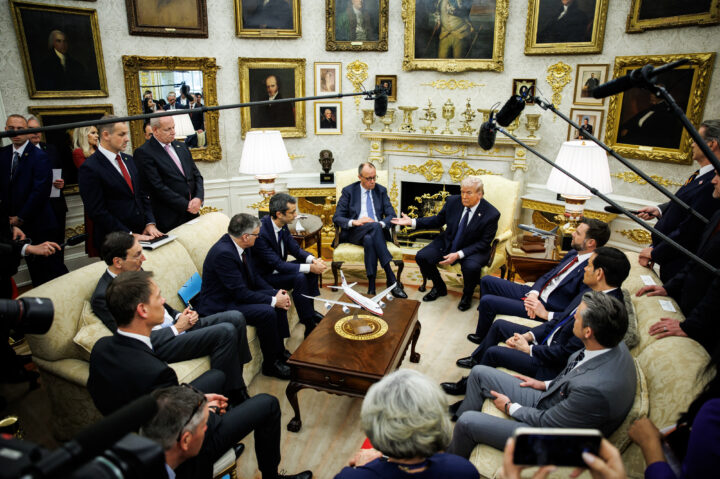
Samuel Corum/Sipa/Bloomberg via Getty Images
Friedrich Merz, Germany's chancellor, center left, and US President Donald Trump during a meeting in the Oval Office of the White House in Washington, DC, US, on Tuesday, March 3, 2026.
Good Tuesday afternoon,
This P.M. edition is reserved for our premium subscribers — offering a forward-focused read on what we’re tracking now and what’s coming next.
It’s me again — Danielle Cohen-Kanik, U.S. editor at Jewish Insider and curator, along with assists from my colleagues, of the Daily Overtime. Please don’t hesitate to share your thoughts and feedback by replying to this email.
📡On Our Radar
Notable developments and interesting tidbits we’re tracking
The Trump administration emphatically denied reports, based on partial comments made by Secretary of State Marco Rubio yesterday, that Israel forced the U.S. to launch the operation against Iran.
“If anything, I might’ve forced Israel’s hand,” President Donald Trump told reporters while meeting with German Chancellor Friedrich Merz in the Oval Office today. “You see, we were having negotiations with these lunatics, and it was my opinion that they [Iran] were going to attack first.”
Defense Secretary Pete Hegseth boosted the president’s comments, saying, “This is 100% correct,” while Rubio insisted his original remarks were misrepresented…
Trump continues to share optimistic assessments of the war’s progress: he told Politico that Iran is running out of missile launchers while claiming the U.S. has “a virtually unlimited supply” of weapons, saying, “wars can be fought ‘forever,’ and very successfully, using just these supplies”…
The Israeli Air Force struck a building where senior clerics had gathered to elect Iran’s next supreme leader, Israeli Ambassador to the U.S. Yechiel Leiter told CNN, “and there’s a very good chance that the electors won’t be readily available for any further meetings”…
Trump is open to backing militias in Iran who will work to mount regime change, U.S. officials told The Wall Street Journal, after he held phone calls with Kurdish leaders who maintain armed groups along the Iran-Iraq border.
Trump has wavered in recent comments on his vision for the future of Iran, saying today that “somebody from within” might be the best option to lead, rather than individuals like exiled former crown prince, Reza Pahlavi. At the same time, Trump told reporters, “Most of the people we had in mind are dead. And now we have another group, they may be dead also. Pretty soon we’re not gonna know anybody”…
Trump ordered the U.S. Development Finance Corporation to provide political risk insurance for all maritime trade traveling through the Gulf, as oil traffic has essentially halted and energy prices have soared. The U.S. Navy will also, if necessary, begin physically escorting tankers through the Strait of Hormuz, Trump said…
Ukrainian President Volodymyr Zelensky offered his country’s assistance to the UAE, as the Gulf country has been targeted by over 1,000 Iranian drones and missiles since the operation began Saturday. Ukraine has become particularly skilled in combating Iranian Shahed drones, something the UAE has little experience with, as Russia has regularly used them in its attacks on Ukraine…
The U.S. Embassy in Saudi Arabia was struck with two Iranian drones, with no casualties reported; the embassy was closed, along with U.S. embassies in Kuwait and Beirut. The State Department ordered the mandatory departure of all non-emergency personnel in several countries and has begun “actively securing military aircraft and charter flights for American citizens who wish to leave” the region…
The International Atomic Energy Agency confirmed that Iran’s underground Natanz nuclear enrichment plant was struck in the course of hostilities in recent days. Trump has claimed the site was rendered inoperable during the U.S.’ June 2025 strikes…
Alex Soros, one of the progressive movement’s most influential donors, boosted a social media post today about U.S. casualties in the war with Iran from Max Blumenthal, a prominent anti-Israel conspiracy theorist, Jewish Insider‘s Matthew Kassel reports.
Soros also praised Spain for its refusal to allow the U.S. to use joint bases on its soil, calling Madrid the “leader of the free world” and reprimanding other European countries for not doing the same…
After issuing a statement solely attacking the U.S. and Israel over the campaign against Iran — which provoked backlash from members of the Iranian dissident and diaspora communities — New York City Mayor Zohran Mamdani acknowledged the “systematic repression” of the Iranian people by the regime, while declining to criticize the late Supreme Leader Ayatollah Ali Khamenei, JI’s Will Bredderman reports.
Even as he acknowledged Tehran’s bloody suppression of protesters, Mamdani did not directly answer a reporter’s question at a press conference today about whether the Middle Eastern nation was better off without the radical cleric who ruled for nearly 37 years…
Amazon Web Services operations are “significantly impaired” after three of its data centers in the Middle East were struck by Iranian drones — two directly hit in the UAE and one sustaining damage in Bahrain. The strikes “caused structural damage, disrupted power delivery to our infrastructure, and in some cases required fire suppression activities that resulted in additional water damage,” AWS said…
⏩ Tomorrow’s Agenda, Today
An early look at tomorrow’s storylines and schedule to keep you a step ahead
Keep an eye out in Jewish Insider for a look at the results of today’s high-stakes primary elections in North Carolina and Texas and their implications for pro-Israel voters.
The Heritage Foundation will hold an event to launch its 2026 “Index of U.S. Military Strength” with remarks from Sen. Jim Banks (R-IN) and Reps. August Pfluger (R-TX), Pat Harrigan (R-TX) and Matt Van Epps (R-TN).
The U.S. Commission on International Religious Freedom will release its annual report tomorrow on Capitol Hill.
Stories You May Have Missed
SQUARING OFF
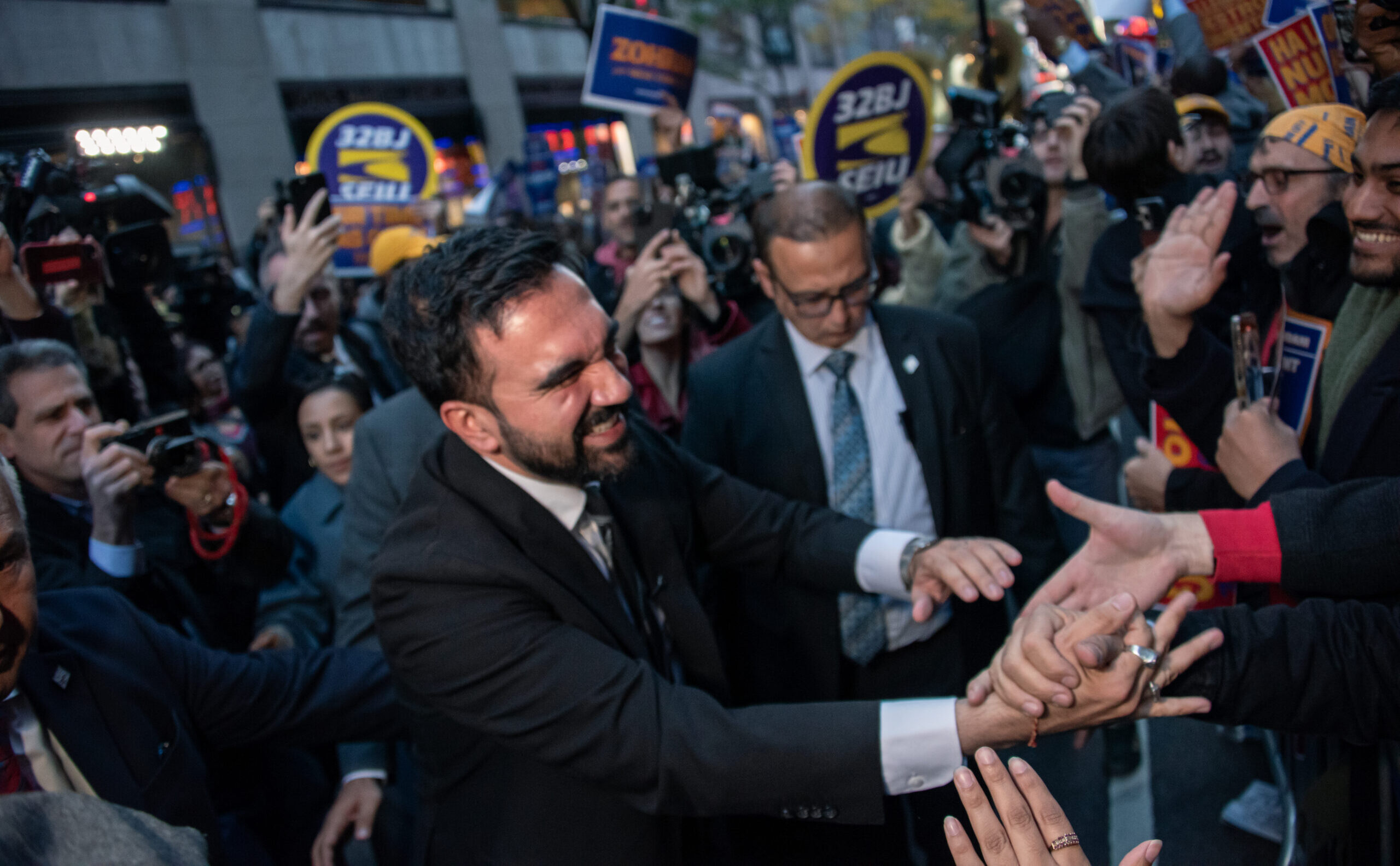
A trio of Mamdani backers united with tech and real estate investors to boost anti-Israel candidates
PARTY PERSPECTIVE

Speaking at J Street’s national summit, Sen. Tim Kaine also said ‘virtually all’ Democratic senators now seek the group’s endorsement
Plus, Tehran takes aim at global energy
Fatemeh Bahrami/Anadolu via Getty Images
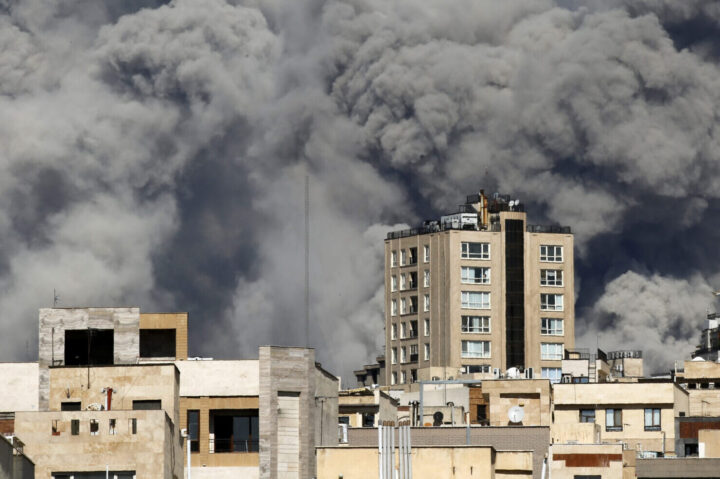
Smoke rises from the area after it was targeted in attacks as a series of explosions are heard in Tehran, Iran on March 01, 2026.
Good Monday afternoon,
This P.M. edition is reserved for our premium subscribers — offering a forward-focused read on what we’re tracking now and what’s coming next.
It’s me again — Danielle Cohen-Kanik, U.S. editor at Jewish Insider and curator, along with assists from my colleagues, of the Daily Overtime. Please don’t hesitate to share your thoughts and feedback by replying to this email.
📡On Our Radar
Notable developments and interesting tidbits we’re tracking
President Donald Trump and senior U.S. defense officials laid out an open-ended timeline for the ongoing bombing campaign against Iran in several press briefings and interviews today, Jewish Insider’s Matthew Shea and Emily Jacobs report.
Trump and Defense Secretary Pete Hegseth both declined to rule out a U.S. ground invasion of Iran, while Joint Chiefs Chairman Gen. Dan Caine announced more American troops are en route to the region. “Every president says, ‘There will be no boots on the ground.’ I don’t say it. I say ‘probably don’t need them,’ [or] ‘if they were necessary,’” Trump told the New York Post.
The president repeatedly said the operation is “ahead of schedule,” but added that the U.S. military is prepared to continue the campaign beyond his initial four-to-five-week timeline. Trump also told CNN that the “big wave” of strikes on Iran “hasn’t even happened. The big one is coming soon”…
On the American public’s perception of the strikes, Trump said, “I think that the polling is very good, but I don’t care about polling. I have to do the right thing. This should have been done a long time ago.” A new CNN poll found that 41% of Americans support the strikes against Iran, while 59% disapprove…
After Hezbollah jumped into the conflict by launching strikes on Israel overnight, prompting Israeli fire on Hezbollah targets in Lebanon in return, Lebanese Prime Minister Nawaf Salam banned the terror group’s “military activities,” restricting it “to the political sphere.”
Salam said the group’s actions are now “illegal” and called on the Lebanese Armed Forces to “prevent any attacks originating from Lebanese territory,” a long-awaited show of resolve from Beirut. The LAF has struggled to disarm Hezbollah forces since the signing of a ceasefire agreement with Israel in November 2024…
On a ground invasion of Lebanon, IDF spokesperson Brig. Gen. Effie Defrin said, similarly to the U.S. position on Iran, “all options are on the table”…
U.S. casualties in the course of the operation increased today to six servicemembers…
Qatar’s Ministry of Defense condemned attacks by Iran on a power plant and an oil facility in the country, further indicating Tehran is setting its sights on civilian and energy infrastructure. The targeted energy plant, Ras Laffan, is responsible for around a fifth of all global natural gas production — Qatar halted production after the strike which, along with decreased passage through the vital Strait of Hormuz, sent oil prices soaring…
Iran continues to sustain heavy losses: The U.S. said it has sunk all 11 of Iran’s warships in the Gulf of Oman while Qatar shot down two Iranian SU-24 tactical bombers, which were developed by Russia; the UAE also intercepted around 150 Iranian drones and 15 missiles today in addition to hundreds over the weekend…
U.K. Prime Minister Keir Starmer reiterated in an address to parliament today that Britain will not be joining the strikes on Iran but will allow the U.S. to use its bases for “defensive actions,” noting that Iran has already struck a military base in Bahrain that houses around 300 British troops. “France and Germany are also prepared to enable U.S. action to destroy Iran’s capability to fire missiles and drones from the source,” Starmer added.
Trump said he was “very disappointed” with Starmer in an interview with The Telegraph, saying the prime minister “took far too long” in deciding to allow U.S. forces to utilize its bases…
NATO Secretary-General Mark Rutte praised the campaign, calling it “really important … because it is taking out, degrading the capacity of Iran to get its hands on nuclear capability, the ballistic missile capability.” But, he said, “there are absolutely no plans whatsoever for NATO to get dragged into this”…
GOP lawmakers are pushing Democrats to agree to a funding deal for the still-shuttered Department of Homeland Security, as hostilities with Iran raise concerns about domestic terror threats…
The war is also making its way into some of the most heated primary races unfolding across the country: In North Carolina’s 4th Congressional District, anti-Israel activist Nida Allam, who is challenging Rep. Valerie Foushee (D-NC), put out a new campaign ad just before tomorrow’s primary slamming “Trump and Netanyahu’s reckless war.”
Allam accused the administration of using “our taxpayer dollars to bomb a school in Iran, killing over 100 elementary school children,” even though there has been no proof that the U.S. was responsible for the strike…
Some pro-Israel Democratic candidates in Illinois also took harsh stances against the Iran operation: state Sen. Laura Fine, running in Illinois’ 9th Congressional District, called for Trump’s impeachment, while Cook County Commissioner Donna Miller, running in the 2nd District, and Chicago Treasurer Melissa Conyears-Ervin, running in the 7th District, called the strikes “reckless” and “immoral,” respectively…
⏩ Tomorrow’s Agenda, Today
An early look at tomorrow’s storylines and schedule to keep you a step ahead
Keep an eye out in Jewish Insider for a rundown of the high-profile primaries on the ballot tomorrow in North Carolina and Texas.
German Chancellor Friedrich Merz will meet with President Donald Trump at the White House for a conversation that was set to focus on negotiations between Russia and Ukraine but will likely be overshadowed by the ongoing operation against Iran. Germany joined the U.K. and France over the weekend in offering a supportive but cautious stance on the hostilities.
It will be a busy day on the Hill, where administration officials including Secretary of State Marco Rubio, Defense Secretary Pete Hegseth, CIA Director John Ratcliffe and Joint Chiefs Chairman Gen. Dan Caine will hold all-member briefings on Iran for the House and Senate. Rubio is briefing the Gang of Eight again this afternoon, and national security committees in both chambers were briefed over the weekend.
Elbridge Colby, the under secretary of defense for policy, will brief the Senate Armed Services Committee on the Pentagon’s National Defense Strategy; Colby has previously drawn bipartisan ire from the committee over a lack of consultation by his team and alleged rogue decision-making on a range of issues by his office.
The Senate Judiciary Committee will hold a hearing on oversight of the Department of Homeland Security with testimony from Homeland Security Secretary Kristi Noem.
The Capitol Jewish Forum will host its annual Capitol Hill Purim celebration, attended by a number of Jewish lawmakers.
Stories You May Have Missed
WEIGHING IN

The resolutions are unlikely to pass; if they do, they will need two-thirds support to override an inevitable presidential veto
CLOSING RANKS

UAE and Saudi leaders spoke by phone; the GCC affirmed its ‘right to respond’
Plus, Mamdani makes surprise WH visit

Umman Foreign Ministry/Handout/Anadolu via Getty Images
Special Envoy Steve Witkoff (C) advisor Jared Kushner (L) meet with Omani Foreign Minister Badr bin Hamad Al Busaidi (R), who is mediating between the parties in the third round of Iran-U.S. negotiations held in Geneva, Switzerland, on February 26, 2026.
Good Thursday afternoon!
This P.M. edition is reserved for our premium subscribers — offering a forward-focused read on what we’re tracking now and what’s coming next.
It’s me again — Danielle Cohen-Kanik, U.S. editor at Jewish Insider and curator, along with assists from my colleagues, of the Daily Overtime. Please don’t hesitate to share your thoughts and feedback by replying to this email.
📡On Our Radar
Notable developments and interesting tidbits we’re tracking
U.S.-Iran negotiations wrapped up for the day in Geneva without a decisive result: Omani Foreign Minister Badr Albusaidi said the sides had made “significant progress” while Iranian Foreign Minister Abbas Araghchi told state media they negotiated “very seriously,” but no agreement was reached.
Araghchi said technical experts will meet on Monday in Vienna at the International Atomic Energy Agency and fourth round negotiations will take place later next week, after consultations in both capitals…
Secretary of State Marco Rubio told reporters yesterday that Iran “poses a very grave threat to the United States” and is trying to reconstitute its nuclear program. “After their nuclear program was obliterated, they were told not to try to restart it, and here they are. You can see them always trying to rebuild elements of it. They’re not enriching right now, but they’re trying to get to the point where they ultimately can.”
Beyond the nuclear issue, Rubio said, Iran also has “conventional weapons that are solely designed to attack America and attack Americans. … These things have to be addressed.” While the current talks are focused solely on Tehran’s nuclear program, “it’s also important to remember that Iran refuses to talk about ballistic missiles to us or to anyone, and that’s a big problem”…
House Democratic leaders said in a joint statement today that they plan to force a vote “as soon as Congress reconvenes next week” on a resolution blocking military action against Iran without congressional authorization, Jewish Insider’s Marc Rod reports. Three Democrats have already indicated they will oppose the resolution, with other defections likely to follow…
U.S. forces raided a ship last month and seized cargo heading from China to Iran, officials told The Wall Street Journal, part of a broader effort to head off Iran’s covert arms purchases after the 12-day war last June. The cargo was reportedly intended for Iranian companies that procure weapons for the regime’s missile program…
The Journal interviews fighter pilots involved in the U.S. bombing campaign against the Houthis last spring, as military assets are once again amassing in the Middle East for a potential operation against Iran…
Maine Senate candidate Graham Platner amplified a social media post today from a far-right conspiracy theorist well-known for viciously antisemitic commentary — before quickly deleting the statement, JI’s Matthew Kassel reports. In a comment on X, Platner approvingly boosted a remark opposing war with Iran from Stew Peters, who has said Judaism is “satanic” and a “death cult,” promoted blood libels and called for a “final solution” to mass-deport American Jews…
The issue is particularly sensitive for Platner, who earlier in his campaign faced scrutiny over a Nazi tattoo on his chest, which he has since had covered. He was pressed today on a YouTube call-in show about his knowledge of the tattoo’s symbolism because of his self-identification as a WWII history enthusiast.
“I was well aware that they [Nazis] used a similar-looking thing,” Platner said. “You have to admit it’s not a ‘similar-looking thing,’ it’s the same thing. … Anyone who’s remotely a WWII buff knows what that is,” the caller replied. Platner answered, “I’m not going to apologize for something that I didn’t know about or do”…
New York City Mayor Zohran Mamdani made an unannounced visit to the White House to meet with President Donald Trump today. Among other issues, the two discussed housing and immigration activities…
The family of Francesca Albanese, the U.N. special rapporteur for Israel and the Palestinian territories, sued Trump and other administration officials yesterday in district court, alleging that the sanctions imposed on Albanese by the U.S. violate her First, Fourth and Fifth Amendment rights…
Israeli President Isaac Herzog and Foreign Minister Gideon Sa’ar attended an iftar meal to break the Ramadan fast hosted by UAE Ambassador to Israel Mohamed Al Khaja in Tel Aviv, where Herzog said that the “members of the Abraham Accords should be treated in an upgraded manner as they pursue the noble cause of peace.”
“And this I say especially,” Herzog continued, “when there are nations who are spreading hate, spreading blasphemy against nations who seek peace — against the Emiratis, against the Israelis,” ostensibly referring to Saudi Arabia…
As Indian Prime Minister Narendra Modi wrapped up his trip to Israel today, the two countries signed 16 memorandums of understanding to expand cooperation in fields including agriculture and AI. Modi also met with the cast of “Fauda”…
⏩ Tomorrow’s Agenda, Today
An early look at tomorrow’s storylines and schedule to keep you a step ahead
Keep an eye out in Jewish Insider for a profile of Sam Bregman, the Jewish cowboy-hat wearing former district attorney running for governor of New Mexico.
ADL’s Desert Region will hold its annual conference at Arizona State University, with speakers including ADL CEO Jonathan Greenblatt, Arizona Gov. Katie Hobbs, Phoenix Mayor Kate Gallego and state Rep. Alma Hernandez.
J Street’s annual conference will kick off Saturday in Washington. Speakers will include former Israeli Prime Minister Ehud Olmert, Sens. Chris Van Hollen (D-MD), Brian Schatz (D-HI), Adam Schiff (D-CA), Tim Kaine (D-VA) and Chris Murphy (D-CT) and Reps. Nancy Pelosi (D-CA), Sara Jacobs (D-CA), Sean Casten (D-IL) and Madeleine Dean (D-PA). J Street’s PAC will hold an event with Roy Cooper, the former governor of North Carolina now running for Senate, and phone banking sessions for Evanston, Ill., Mayor Daniel Biss, running for the House.
We’ll be back in your inbox with the Daily Overtime on Monday. Shabbat Shalom!
Stories You May Have Missed
EDUCATION CONSTERNATION
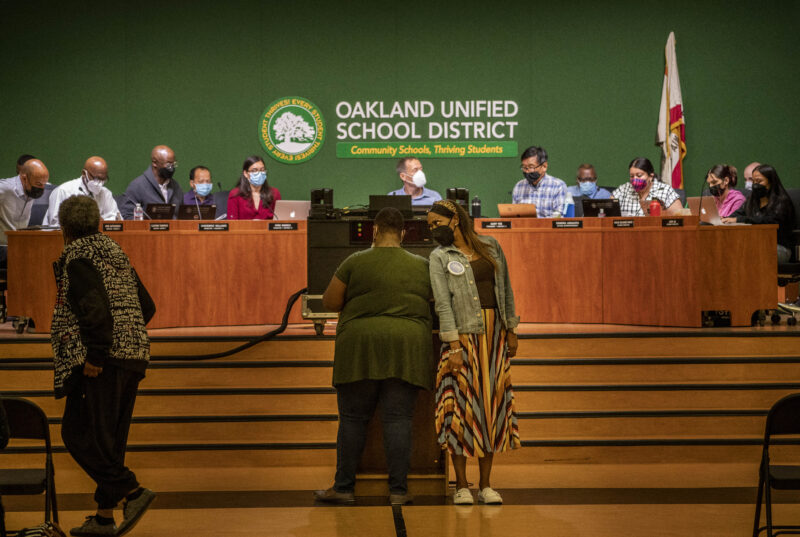
The suit highlights several complaints from Jewish parents and children statewide, in school districts including Berkeley, Los Angeles, Santa Clara, San Francisco, Campbell Union, Fremont, Etiwanda and Oakland
PRAIRIE STATE DEBATE

The far-left influencer, running competitively in a Chicago-area district with a sizable Jewish constituency, debated primary rivals Laura Fine and Daniel Biss on Wednesday
Plus, Witkoff calls for indefinite Iran nuclear deal

Mario Tama/Getty Images
An attendee wears a jacket at an Iowa caucus watch party organized by Metro D.C. Democratic Socialists of America, on February 3, 2020 in Washington, DC.
Good Wednesday afternoon!
This P.M. edition is reserved for our premium subscribers — offering a forward-focused read on what we’re tracking now and what’s coming next.
It’s me again — Danielle Cohen-Kanik, U.S. editor at Jewish Insider and curator, along with assists from my colleagues, of the Daily Overtime. Please don’t hesitate to share your thoughts and feedback by replying to this email.
📡On Our Radar
Notable developments and interesting tidbits we’re tracking
Ahead of the third round of U.S.-Iran negotiations taking place in Geneva tomorrow, Vice President JD Vance told Fox News that President Donald Trump “has a number of other tools at his disposal” besides diplomacy to ensure “the craziest and worst regime in the world” does not obtain nuclear weapons, following on the president’s remarks during last night’s State of the Union calling Iran “the world’s No. 1 sponsor of terror”…
In response to Trump’s comments, where he also said Iran was developing advanced ballistic missiles and had killed 32,000 protesters, Iranian Foreign Ministry spokesperson Esmail Baghaei tied Trump to the “law of propaganda coined by Nazi [chief propagandist] Joseph Goebbels.”
“This is now systematically used by the U.S. administration and the war profiteers encircling it, particularly the genocidal Israeli regime … Whatever they’re alleging in regards to Iran’s nuclear program, Iran’s ballistic missiles, and the number of casualties during January’s unrest is simply the repetition of ‘big lies,’” Baghaei wrote on X…
White House Special Envoy Steve Witkoff, who is leading Iran negotiations alongside Jared Kushner, reportedly told AIPAC members at the group’s summit in Washington yesterday that any deal reached with Iran should not have a “sunset clause,” as the 2015 Joint Comprehensive Plan of Action was criticized for.
“We start with the Iranians with the premise that there is no sunset provision. Whether we get a deal or not, our premise is: you have to behave for the rest of your lives,” Witkoff told the group, according to Axios. He said talks are currently focused only on the nuclear issue, but if they are successful, the administration would look to hold additional talks on Tehran’s missile program and support for terror proxies…
Satellite photos analyzed by the Associated Press appear to show U.S. ships that typically dock in Bahrain as part of the U.S. Navy’s 5th Fleet have moved out to sea. The 5th Fleet similarly scattered its ships during the U.S. strikes in Iran last June…
Dutch airline KLM announced a suspension of flights between its hub in Amsterdam and Israel’s Ben Gurion Airport starting March 1 until further notice, saying in a statement that it is currently “not commercially or operationally feasible for KLM to operate flights to Tel Aviv.” It’s the first airline to pause flights amid the current unrest with Iran…
On the campaign trail, Washington, D.C., mayoral candidate Janeese Lewis George vowed to reject the “Zionist lobby” in a questionnaire seeking the endorsement of the Metro D.C. chapter of the Democratic Socialists of America, Jewish Insider’s Gabby Deutch reports, a category that the DSA said includes AIPAC, Democratic Majority for Israel, Christians United for Israel and J Street.
Referencing her appearance at an event with the Jewish Community Relations Council of Greater Washington in December, Lewis George assured the DSA she “disagree[s] with the JCRC on a number of issues,” including its opposition to describing Israel’s actions in Gaza as a genocide and its “definition of antisemitism that criminalizes dissent, and their attacks on activists.”
Ron Halber, CEO of the JCRC, told JI, “As far as I’m concerned, [the DSA’s questionnaire] is an antisemitic manifesto. They are making the price of their endorsement the social exclusion of Jews”…
Illinois state Sen. Laura Fine, a Democrat running for an open Illinois House seat, unapologetically championed her backing for Israel in a position paper obtained by JI’s Marc Rod, amid attacks from anti-Israel activists and groups over her support for the Jewish state and backing from pro-Israel supporters.
Fine described Israel in the paper as “more than just a strategic ally, it is a beacon of democracy in one of the world’s most volatile regions,” as she and some of her primary opponents, including Evanston Mayor Daniel Biss and far-left activist Kat Abughazaleh, are set to participate in a televised debate tonight…
The U.S.-led Board of Peace released a video today laying out its vision for Gaza. The board’s goal by Year 3 is to fully rebuild the southern Gazan city of Rafah and have Gaza “connected to the world through an Abrahamic gateway, linking it with Egypt, Israel, Jordan, Saudi Arabia, the UAE and extending to India and Europe.” By the board’s 10th year, it said, Gaza will be “self-governed,” without specifying who will oversee the enclave and how Hamas will be removed from power…
Knesset Speaker Amir Ohana awarded Indian Prime Minister Narendra Modi the newly established Medal of the Knesset, the highest honor of the body, after Modi’s address there today. His remarks were warmly received by members of Knesset and Israeli Prime Minister Benjamin Netanyahu, who was also in the chamber…
Following Israel’s recognition of Somaliland’s independence in December, Jerusalem accepted the appointment of Mohamed Hagi as the first Somaliland ambassador to the Jewish state (and its first fully accredited ambassador anywhere in the world). Hagi “was a member of the inner circle of officials who promoted the establishment of relations between Israel and Somaliland,” the Israeli Foreign Ministry said, and vowed that a reciprocal Israeli ambassador “will soon be appointed”…
Former Harvard President Larry Summers will remain on leave from his teaching position at the Ivy League school for the duration of the academic year, at which point he will retire, Harvard announced today, after files released by the Department of Justice showed Summers maintained a relationship with sex trafficker Jeffrey Epstein after the financier had been convicted of prostitution involving a minor…
⏩ Tomorrow’s Agenda, Today
An early look at tomorrow’s storylines and schedule to keep you a step ahead
Keep an eye out in Jewish Insider for a preview of Fox Nation’s new docudrama on King David, offering a dramatic reenactment of the biblical coming-of-age story of the Jewish leader.
White House Special Envoy Steve Witkoff and Jared Kushner will hold discussions with Iranian Foreign Minister Abbas Araghchi in Geneva, mediated by Omani Foreign Minister Badr Albusaidi.
California Jewish groups including the JCRC Bay Area, the Jewish Federation of Los Angeles and Jewish California, which rebranded today from its previous name of JPAC, are hosting a forum for candidates running for governor, as Gov. Gavin Newsom reaches his term limit. Participating candidates include former presidential contender Tom Steyer, Rep. Eric Swalwell (D-CA), San Jose Mayor Matt Mahan and former Los Angeles Mayor Antonio Villaraigosa, all of whom are Democrats, as well as Republican commentator Steve Hilton.
Stories You May Have Missed
PUSHING BACK
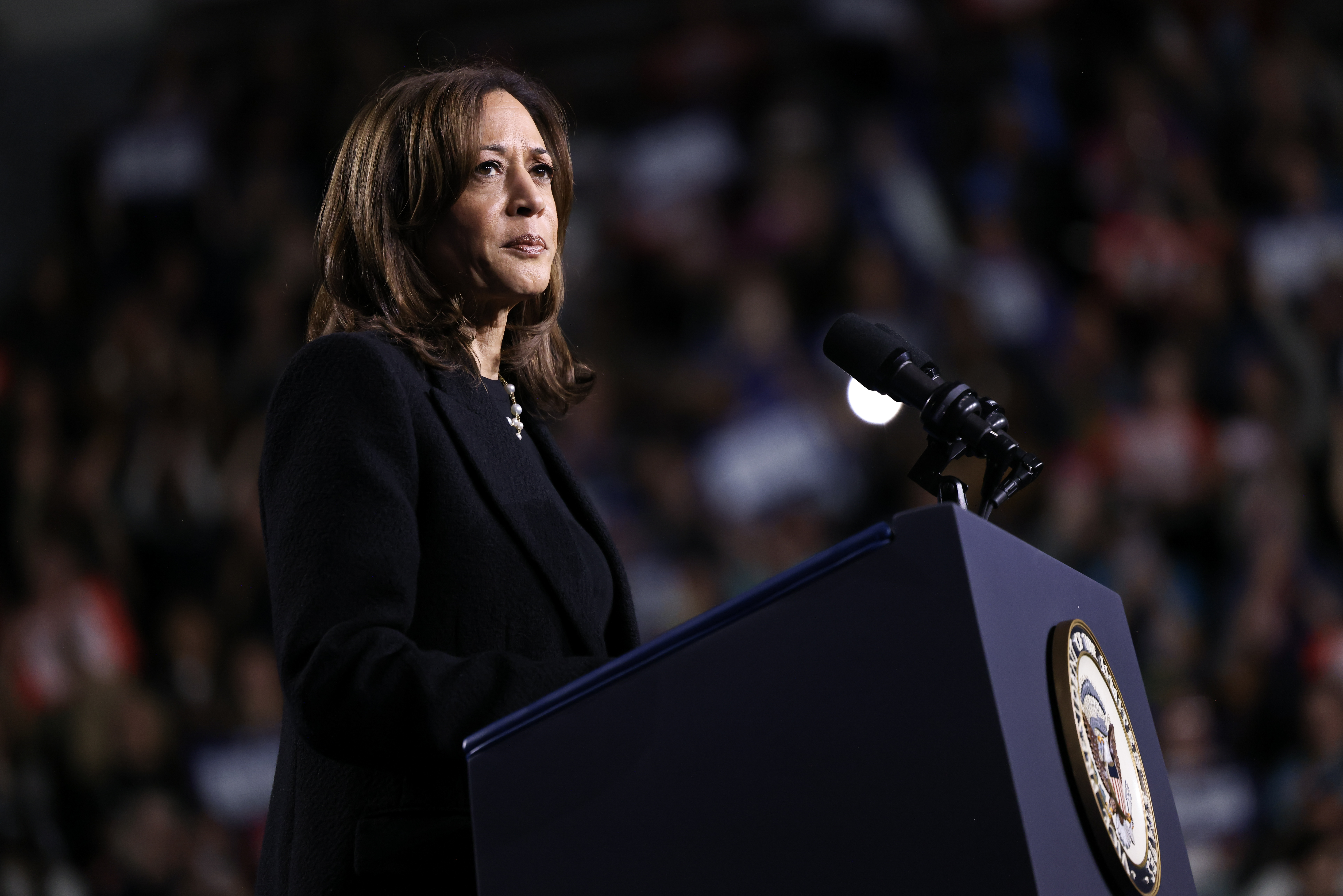
Rep. Jared Moskowitz, representing a swing district: ‘The idea that the vice president lost every swing state because she wasn’t more extreme on this issue is laughable’
CAPPELLO’S CAMPAIGN

The Air Force veteran, who served for six years at the U.S. Embassy in Israel, said Israel should continue to make efforts toward peace
Plus, Trump says Iran won't rule out nuclear weapons
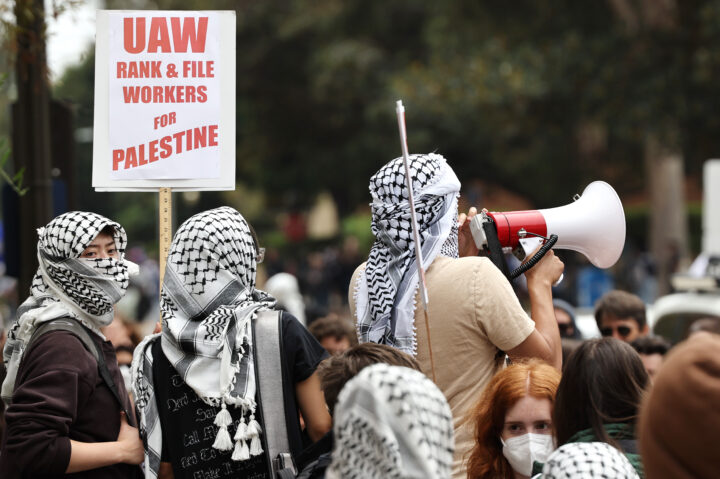
Mario Tama/Getty Images
Protestors gather after police cleared a new encampment on the UCLA campus on May 23, 2024 in Los Angeles, California.
Good Tuesday afternoon!
This P.M. edition is reserved for our premium subscribers — offering a forward-focused read on what we’re tracking now and what’s coming next.
It’s me again — Danielle Cohen-Kanik, U.S. editor at Jewish Insider and curator, along with assists from my colleagues, of the Daily Overtime. Please don’t hesitate to share your thoughts and feedback by replying to this email.
📡On Our Radar
Notable developments and interesting tidbits we’re tracking
Previewing his State of the Union address tonight, where it remains to be seen if he will make any announcements on Iran, President Donald Trump told reporters, “Iran wants to make a deal more than I do, but they just won’t say the sacred phrase: ‘We won’t build nuclear weapons,’” signaling that the two sides are still at an impasse ahead of the third round of negotiations scheduled for Thursday…
Secretary of State Marco Rubio briefed the congressional Gang of Eight, the bipartisan set of leaders advised on classified matters by the executive branch, this afternoon to provide an update on Iran, with CIA Director John Ratcliffe reportedly joining the discussion. The White House did not brief the group before striking Iran last June, drawing ire from Democrats…
Ahead of the meeting, Senate Minority Leader Chuck Schumer (D-NY) told C-SPAN about potential Iran strikes, “Closed-door briefings are fine, but the administration has to make its case to the American people on something as important as this”…
Around a dozen U.S. F-22 stealth fighter jets departed from the U.K. today to be deployed at an Israeli Air Force base in the south of the country, as over 150 aircraft are being moved to the region. Military experts told The Washington Post that the “assets being assembled are indicative of a multiday campaign without a ground invasion”…
The Coast Guard is investigating a swastika drawn at its primary recruit training center in New Jersey, where Coast Guard commandant Adm. Kevin Lunday quickly flew to address recruits and staff about the incident. Lunday recently came under fire from Congress, and had his confirmation delayed, over a change in Coast Guard policy that downgraded the swastika from a prohibited hate symbol to “potentially divisive,” which was eventually walked back.
Regarding the recent incident, Lunday said in a statement to The Washington Post, “Anyone who adheres to or advances hate or extremist ideology — get out. Leave. You don’t belong in the United States Coast Guard and we reject you”…
Rep. Brad Sherman (D-CA) is pushing for legislation to require an affirmative congressional vote prior to the U.S. reaching any nuclear deal with Saudi Arabia, Jewish Insider’s Marc Rod reports, following a notification from the administration to Congress indicating that it is moving toward a deal that could allow Riyadh to enrich uranium for civilian purposes.
The notification procedures, which do not include specific terms of a potential deal, suggest that Saudi Arabia will not be required to agree to more intrusive International Atomic Energy Agency inspections or “gold standard” safeguards — which would require Saudi Arabia to agree not to enrich or reprocess nuclear material — used for the U.S. nuclear cooperation agreement with the United Arab Emirates…
The Justice Department sued the University of California today under Title VII of the Civil Rights Act, which prohibits employment discrimination, alleging that the UCLA campus created a “hostile work environment against Jewish and Israeli faculty and staff.”
During campus anti-Israel protests in 2024, the DOJ said, “the University allowed antisemitic harassment to continue unabated for days” and “has ignored, and continues to ignore, gross and repeated violations” of time, place and manner restrictions on student protest. The department further claimed Jewish and Israeli faculty at the school have been physically threatened, ostracized, harassed, forced to take leave and assaulted…
The New York Times details efforts by New York’s business community and Democratic establishment to organize and promote the moderate wing of the party in response to New York City Mayor Zohran Mamdani’s rise to power. Some of the individuals involved, including former Gov. Andrew Cuomo allies Phil Singer and Steven Cohen, are considering forming PACs, watchdog groups, lobbying campaigns and more…
New York’s Working Families Party endorsed Brooklyn Borough President Antonio Reynoso to replace retiring Rep. Nydia Velázquez (D-NY) yesterday over Mamdani’s objections. The mayor has been backing Assemblymember Claire Valdez, who, like Mamdani, is a member of the Democratic Socialists of America and a vocal critic of Israel, and he had lobbied the WFP to endorse her or to stay out of the race. WFP’s director, Jasmine Gripper, told the Times, “At the end of the day, Zohran is an individual who gets to weigh in as an individual”…
A new poll from the University of New Hampshire found oyster farmer Graham Platner with a commanding lead among likely Senate Democratic primary voters, outdistancing Gov. Janet Mills by 34 points, with the primary less than four months away. In a general election matchup with incumbent Sen. Susan Collins (R-ME), Platner leads Collins by 11 points, while Mills and Collins are neck-and-neck…
Khalid Turaani, executive director of the Ohio branch of the Council on American-Islamic Relations (CAIR), testified at the Ohio Senate Judiciary Committee last week against a bill to codify the International Holocaust Remembrance Alliance’s working definition of antisemitism, where he claimed that Israel operates the world’s largest human skin bank and harvests the skin from deceased Palestinians. “And if I call them Nazis,” Turaani continued, “your law is going to punish me.”
The Anti-Defamation League’s Ohio River Valley office condemned Turaani’s speech, saying that the “antisemitic organ harvesting myth plays on the blood libel trope, which has spurred the torture, murder, and expulsion of Jews for centuries”…
The U.S. Embassy in Israel announced that, as part of the government’s “efforts to reach all Americans,” the embassy will be providing consular services for one day only at several locations across Israel and the West Bank, including Ramallah and the Jewish settlement of Efrat…
⏩ Tomorrow’s Agenda, Today
An early look at tomorrow’s storylines and schedule to keep you a step ahead
Keep an eye out in Jewish Insider for the highlights from President Donald Trump’s State of the Union address, taking place at 9 p.m. ET tonight, as all eyes are on possible U.S. military action against Iran.
Indian Prime Minister Narendra Modi arrives in Israel tomorrow, where he will be greeted by Prime Minister Benjamin Netanyahu before addressing the Knesset. In the evening, the two leaders will have dinner at Jerusalem’s King David Hotel. Read JI’s interview on Modi’s visit with Israeli Ambassador to India Reuven Azar.
The New York City Council will hold its first hearing on Council Speaker Julie Menin’s bill aiming to create “buffer zones” around houses of worship to protect from disruptive protests. The bill’s language was updated last night to remove the original 100-foot figure, which had reportedly emerged as a point of concern for the NYPD.
Congressional candidates from Illinois’ 9th District, where pro-Israel spending is boosting state Sen. Laura Fine and attacking Evanston Mayor Daniel Biss, will hold a debate on local news.
Stories You May Have Missed
SHIFTING STANCE

The progressive activist ran as a pro-Israel candidate in a neighboring swing district, but is now walking back her support as she runs to succeed Rep. Bonnie Watson Coleman
PRAIRIE STATE OF PLAY
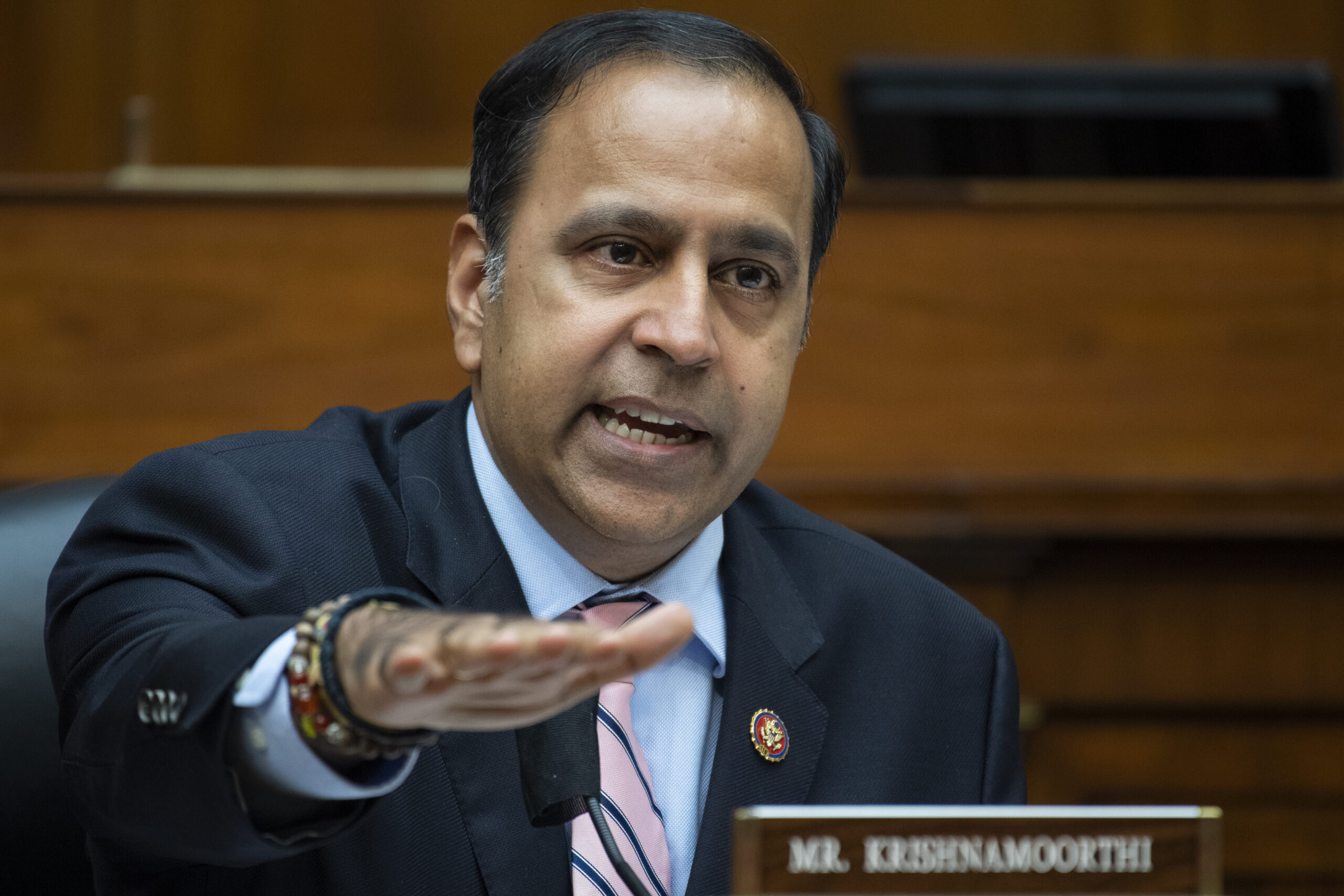
Lt. Gov. Juliana Stratton seems to be running to the congressman’s left on Israel, even as Rep. Robin Kelly is the most outspoken critic of Israel in the race
Plus, major Dem donor calls out 'Jew hate' in party
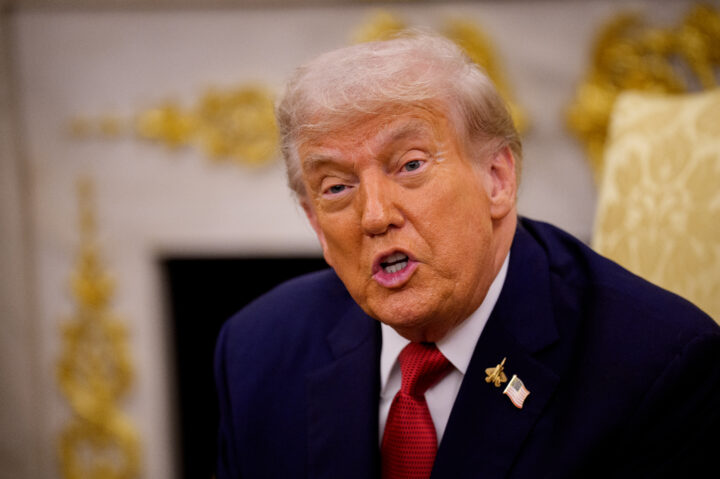
Andrew Harnik/Getty Images
President Donald Trump in the Oval Office at the White House on September 25, 2025 in Washington, DC.
Good Monday afternoon!
This P.M. edition is reserved for our premium subscribers — offering a forward-focused read on what we’re tracking now and what’s coming next.
It’s me again — Danielle Cohen-Kanik, U.S. editor at Jewish Insider and curator, along with assists from my colleagues, of the Daily Overtime. Please don’t hesitate to share your thoughts and feedback by replying to this email.
📡On Our Radar
Notable developments and interesting tidbits we’re tracking
As rumors abound about the possibility and timing of U.S. strikes on Iran, the State Department ordered the evacuation of non-essential personnel and their families from the U.S. Embassy in Beirut. “Based on our latest review, we determined it prudent to reduce our footprint,” a State official told Fox News…
Nearby, amid the buildup of U.S. military assets in the region, American refueling and cargo planes were spotted at Ben Gurion Airport…
President Donald Trump denied reports that Pentagon officials, namely Joint Chiefs of Staff Chairman Gen. Dan Caine, are raising concerns about striking Iran, writing on Truth Social this afternoon, “General Caine, like all of us, would like not to see War but, if a decision is made on going against Iran at a Military level, it is his opinion that it will be something easily won.”
“He has not spoken of not doing Iran, or even the fake limited strikes that I have been reading about, he only knows one thing, how to WIN and, if he is told to do so, he will be leading the pack,” Trump said of Caine, while alluding to the potential breadth of military action against Iran…
Secretary of State Marco Rubio pushed back his visit to Israel, originally scheduled for this weekend, to March 2, The Jerusalem Post reports, days after the next round of U.S.-Iran negotiations in Geneva on Thursday…
Sen. Chris Coons (D-DE), a leader on foreign policy among Democrats in Congress, told Jewish Insider’s Emily Jacobs that he heard “pretty stark early warning signs of some challenges where core allies do not share our priorities” on a potential Iran strike during his recent trip t0 Europe, which included stops at the Munich Security Conference, along with meetings in Ukraine and Moldova with top European diplomats.
Coons laid out what he hopes to see from the president: “A) Consult Congress. B) Make a case to the American people about why this is in our national security interest. C) Clarify what on earth he’s planning with this Board of Peace … And D) If he’s going to work with close allies to ramp up pressure to try and achieve something at the negotiating table, he should work with close allies”…
Anthony Driver Jr., a union organizer and candidate in Illinois’ 7th Congressional District, doubled down on his recent repudiation of AIPAC, despite previously having little public record on Israel policy issues. Following a press conference last week where Driver, who is running against AIPAC-backed Chicago Treasurer Melissa Conyears-Ervin, denounced the pro-Israel group, he returned donations from major Democratic Party donor Michael Sacks over the finance executive’s ties to AIPAC.
Sacks, who was a major backer of former President Barack Obama and former Chicago Mayor Rahm Emanuel, said in his reply, “It is truly sad there is so much anti Israel sentiment and outright Jew hate that Anthony found himself in this position. I can only hope that the electorate rejects hate in all forms”…
As more details emerge about Rep. Tony Gonzales’ (R-TX) alleged affair with a staffer who later committed suicide, a poll commissioned by the campaign of Brandon Herrera, Gonzales’ opponent, shows the congressman trailing Herrera by a whopping 24 points among likely GOP primary voters. The story, which entered the news cycle right as early voting kicked off, could catapult Herrera, a social media influencer with a history of antisemitism, to the Republican nomination and on to Congress…
Investigators at the cryptocurrency giant Binance found last year that about $1.7 billion had been sent from two accounts to Iranian entities with links to terror groups, The New York Times reports, even after Binance pleaded guilty to violating anti-money laundering laws in 2023 and vowed to prevent sanctioned actors from accessing its platform. Trump pardoned Binance founder Changpeng Zhao, who was jailed for his role in the saga, in October 2025…
The Atlanta Jewish Film Festival backtracked in its defense of a juror selected for a judging panel who had posted antisemitic and anti-Israel content online, whom it had stood behind even after the Israeli Consulate in Atlanta announced it was withdrawing its funding and support of the event over the pick.
The festival changed its tune yesterday, saying it is “first and foremost, a Jewish institution” and has “a responsibility, particularly at this fraught time, to stand firmly against antisemitism and to affirm the Jewish people’s right to self-determination.” It said it would review its “organizational processes and policies, including those related to antisemitism, BDS, and cultural boycotts”…
The French Foreign Ministry has moved to block U.S. Ambassador to France Charles Kushner’s access to government officials after he declined to appear for a summons by Foreign Minister Jean-Noël Barrot today, which was issued after the U.S. Embassy reposted comments by Trump about a far-right French activist who was killed in a clash with far-left protesters. It was Kushner’s second summons, after his first last year when he accused the French government of not adequately combating antisemitism…
⏩ Tomorrow’s Agenda, Today
An early look at tomorrow’s storylines and schedule to keep you a step ahead
Keep an eye out in Jewish Insider for a look at Sue Altman’s shifting views on Israel as the formerly pro-Israel congressional candidate is now running in New Jersey’s more heavily Democratic 12th Congressional District.
We’ll be watching for mention of President Donald Trump’s thinking on Iran as he delivers the annual State of the Union address tomorrow night. Virginia Gov. Abigail Spanberger will deliver the Democratic response.
The House Foreign Affairs Committee will hold a hearing on “advancing national security through commercial diplomacy” with Jacob Helberg, under secretary of state for economic affairs, who recently told JI that he hopes the Pax Silica initiative, which he leads, “will pave the way for peace and economic integration” in the Middle East.
Australia’s royal commission on antisemitism, formed after the Hanukkah terror attack at Sydney’s Bondi Beach, will hold its first public hearing, though no testimony or evidence will be heard.
Stories You May Have Missed
OVERTON WINDOW
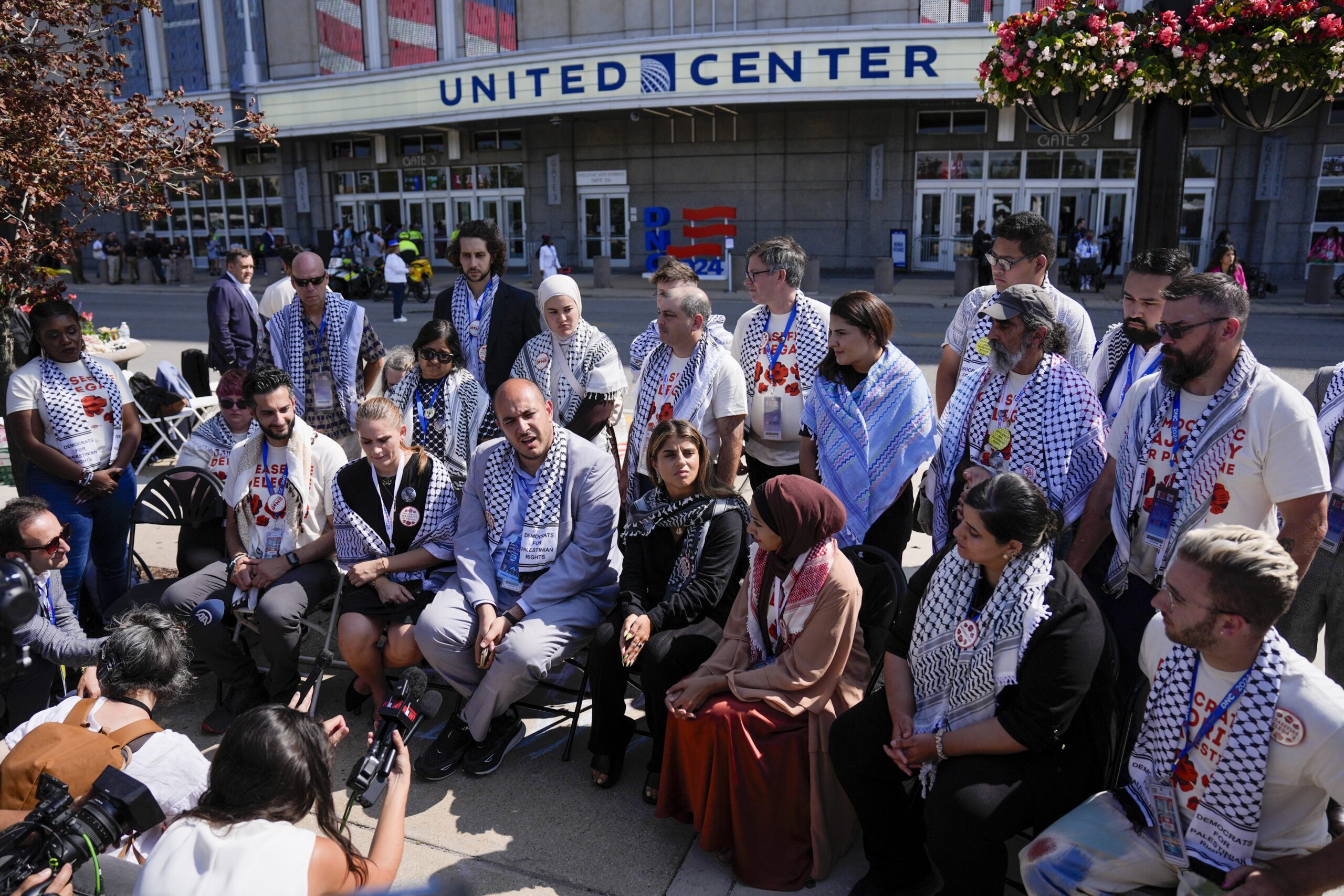
Former Democratic Rep. Kathy Manning: ‘There is no doubt that we are living through very difficult times for American Jews’
BIG TENT SHABBAT
The dinner was hosted by Rabbi Yehuda Kaploun, the U.S. antisemitism special envoy
The Israeli-Russian Princeton researcher was kidnapped in Baghdad in 2023 by Kataib Hezbollah, an Iranian-backed terrorist group

Eric Tucker/AP Photo
In this Sept., 2018 selfie image provided by Emma Tsurkov, right, she and Elizabeth Tsurkov are shown in Santa Clara Valley, Calif.
President Donald Trump announced Tuesday that Elizabeth Tsurkov, an Israeli-Russian researcher at Princeton University, was released by an Iranian-backed terrorist group in Iraq to the U.S. Embassy in Baghdad.
Tsurkov was kidnapped in Baghdad in 2023 while working on her doctoral thesis by Kataib Hezbollah, an Iranian-backed terrorist group separate from Lebanese Hezbollah.
“I am pleased to report that Elizabeth Tsurkov, a Princeton Student, whose sister is an American Citizen, was just released by Kata’ib Hezbollah (MILITANT Hezbollah), and is now safely in the American Embassy in Iraq after being tortured for many months,” Trump said on Truth Social. “I will always fight for JUSTICE, and never give up. HAMAS, RELEASE THE HOSTAGES, NOW!”
Tsurkov’s sister Emma, who has been a vocal advocate for her freedom, thanked the Trump administration in an X post, noting that her sister had been in captivity for more than 900 days.
“We are so thankful to President Trump and his Special Envoy, Adam Boehler. If Adam had not made my sister’s return his personal mission, I do not know where we would be,” Tsurkov said. “We also want to thank Josh Harris and his team at the US Embassy in Baghdad for the support they provided to our sister and the team at the nonprofit Global Reach who advocated relentlessly for my sister’s safe return.”
Princeton University President Christopher L. Eisgruber also celebrated her release.
“The release of Princeton graduate student Elizabeth Tsurkov brings relief and joy to the University community, and we celebrate that she will be reunited with her family. We thank President Trump for securing Elizabeth’s release,” Eisgruber said. “We are also grateful to those who worked tirelessly to bring an end to her terrible ordeal, including her family, friends and advocates.”
Multiple groups of U.S. lawmakers had appealed to administration officials to work to secure Tsurkov’s release. Kataib Hezbollah, the group that kidnapped Tsurkov, holds an official role in the Iraqi government.
Tsurkov’s captors released a video in 2023 in which Tsurkov claimed to be an Israeli and American spy, which Emma Tsurkov said was clearly made under duress.
Sen. Andy Kim (D-NJ), who helped lead efforts earlier this year to advocate for Tsurkov’s release, told Jewish Insider he spoke on Tuesday evening with Emma Tsurkov while she was on a videoconference with her sister, a conversation he said was “very emotional.”
The Tsurkov family, Kim said, has been through “so much” and “I can’t even imagine what it’s been like for Elizabeth.”
“My immediate thoughts [are] just making sure she’s getting the care she needs. I’ve done a lot in the past … when I was at the State Department on hostages and the kind of care they need coming out of it,” he said. “So it’s going to be a long road ahead.”
He said that he wishes Emma “all the best with the recovery” and offered the family any help he can provide to ensure she receives the care she needs. He said he hopes to see both sisters in the United States in the future.
He added that Emma Tsurkov’s “strength as a sister, just being there, just holding that hope for Elizabeth … it’s amazing, it’s inspiring.”
Kim said he had not yet been briefed by the administration on Tsurkov’s release, including the terms by which the administration was able to secure Tsurkov’s freedom.
Sen. Jacky Rosen (D-NV), who joined a push with Kim for Tsurkov’s freedom, said in a statement, “I’m relieved to hear the news that Elizabeth Tsurkov has finally been released after being held hostage by extremists in Iraq for over two years. I’ve been proud to advocate for her release and applaud all the efforts that made this possible. My thoughts are with Elizabeth and the Tsurkov family as they reunite, and I wish them peace and healing.”
Rep. Jamie Raskin (D-MD), who led an appeal from House members for Tsurkov’s release, told JI, “I am overjoyed for Elizabeth Tsurkov’s family and loved ones on this happy occasion. I have long pushed for Elizabeth’s safe return and I’m sending her my prayers and solidarity as she returns home to recover from a 903-day-long nightmare.”
Sen. Cory Booker (D-NJ) said on X, “I am deeply grateful that Elizabeth Tsurkov has been released and will finally be reunited with her family and loved ones. Thankful for all who partnered in advocating for her release and for all who tirelessly worked to ensure her safe return.”
In an interview with JI, Huckabee pinned the humanitarian issues in Gaza on Hamas and the U.N.
Maya Alleruzzo/AP Photo
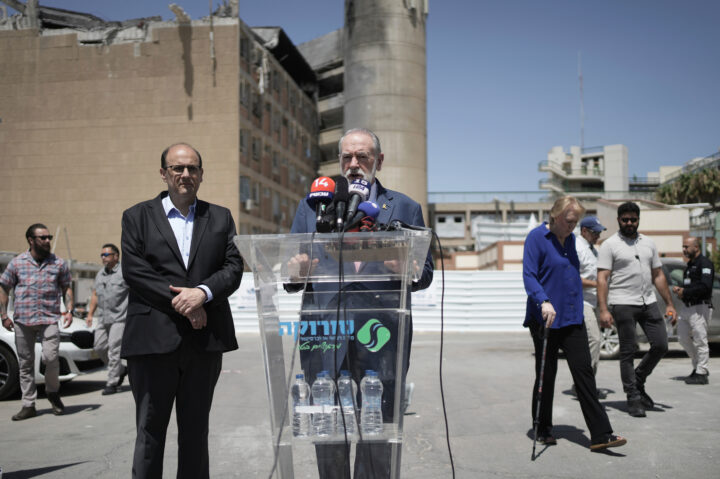
U.S. Ambassador to Israel Mike Huckabee speaks to journalists with Director General of Soroka Medical Center Dr. Shlomi Codish, left, outside a hospital building that was struck by an Iranian missile, Thursday, June 26, 2025 in Beersheba, Israel.
Since his arrival in Israel in April, former Arkansas Gov. Mike Huckabee has made his mark as the first evangelical U.S. ambassador to Israel — and possibly the most effusive in his remarks about the Jewish state.
That may be why a leaked letter he wrote to Israeli Interior Minister Moshe Arbel last week, expressing “profound disappointment” that an issue delaying work visas for Christian organizations had gone unresolved and suggesting that Israelis may be treated in kind by the U.S., drew so much attention.
A day after the letter leaked, the ambassador visited Taybeh, a Palestinian village in the West Bank where there had been a fire in a field near a church, writing on X that “desecrating a church, mosque or synagogue is a crime against humanity and God,” and “I will demand those responsible be held accountable.” With Taybeh church leaders blaming settlers, Huckabee’s comments were interpreted in many media accounts as doing the same, though he later clarified that he was not attributing the fire to anyone.
But with the visa issue resolved and the world’s attention on the humanitarian situation in Gaza and the latest round of collapsed negotiations for a ceasefire and hostage-release deal, Huckabee was back to standing firmly behind Israel in an interview with Jewish Insider in his office at the U.S. Embassy in Jerusalem on Thursday. With an a guitar hanging on the wall behind him emblazoned with an American flag and President Donald Trump’s slogan “make America great again,” Huckabee pinned the humanitarian issues in Gaza on Hamas and the U.N and the failure of negotiations on Hamas, and was critical of other Western countries that have come out against Israel, accusing them of emboldening the Gazan terrorist group.
The interview has been condensed and edited for clarity.
Jewish Insider: There’s a lot of pressure on Israel over humanitarian aid in Gaza and claims that residents of Gaza are starving. Israel says that they are letting more food in but no one is distributing it, while much of the world doesn’t believe that. I want to ask you: Do you think there is really starvation in Gaza? What is really happening?
Ambassador Mike Huckabee: This very morning, I had a visit from someone who returned yesterday from three days in Gaza. He firsthand went and saw the [Gaza Humanitarian Foundation] feeding sites, talked to people, not only from the staffing and the distribution, but he talked to people in Gaza … He came to the conclusion, first of all, that absolute lies that are being told, not only about GHF and what they’re doing, but are also being told about the deprivation.
There are clearly people who need food and medicine. That’s not a doubt. But the biggest reason that people are not getting the food and medicine they need is that Hamas is doing its best to cause the people to suffer. They want to get the photos of the most disastrous consequences possible.
The photos that I also saw, which were very disturbing but also revealing, [were of] hundreds and hundreds of pallets of food that are sitting out in the sun ready to be distributed, but the U.N. won’t move them. Hundreds of trucks filled with food and medicine, and the U.N. claims that they’re trying to help. No, they’re not. They are as much a part of the problem, if not the biggest part of the problem there is. And this food could be distributed right now, but the U.N. isn’t doing it. The NGOs aren’t doing it, and the World Food Program isn’t doing it, because they just drop it off. Then, basically, they’re waiting on Hamas to come and steal it so [the group] can turn around and sell it to the people that ought to be getting it for free. It is a scam.
It is a disgrace and an outrage that the story that is being told is that GHF is killing people, and they’re not. They haven’t fired one round at anybody … It’s simply not true. It is sadly being reported sometimes because Hamas will release a news story and the Associated Press, CNN, The Washington Post, will gobble it up. They’ll print it without any verification … That’s what Israel is up against. It’s what the U.S. is up against every single day, with really, really horrible misinformation about what’s happening.
JI: Why do you think countries that purport to be friends of Israel and the U.S. — 26 countries signed a letter to Israel about the aid including the U.K., Canada, France — are believing Hamas?
MH: It’s hard for me to understand why they would do that without doing a little better job of verifying the information. If they would, they would have a totally different picture…
The other day there was the story of the 26 countries that came out and did this condemnation of Israel. If you read the news release, it’s all about Israel, all about what they haven’t done right, and a lot of the things in the story are just untrue. The biggest just shocker of it all, was that there was one brief mention of the fact that the war was started by Hamas on Oct. 7, as a passing reference, without really giving the qualifier that this war should have ended on Oct. the 8th, but Hamas doesn’t want it to, and they’re doing everything they can to make sure it doesn’t…
I’ve been shocked that very few other nations and even nonprofit organizations have been willing to stand up and help in the distribution of the food through the GHF, because the whole model was based on … No. 1, get food to people who are hungry, and No. 2, do it in a way that it doesn’t get stolen by Hamas. That’s been accomplished; over 85 million meals now have been served and continues to operate at almost 2 million meals a day.
It hasn’t been perfect. There have been hiccups, but [that happens] when you have that many people coming to a site and trying to get that much food out to people. Heck, you can go to Walmart on Christmas Eve … and it’s bedlam. Sometimes you stand in the long line and sometimes they ran out of what you wanted, but that’s true in the most efficient retailer on the planet. This is being done out in the middle of a desert for heaven’s sakes, and has really worked pretty doggone good.
Well, we just want people to get the truth and to get the food, but we don’t want Hamas to steal it, which is what they have done through the U.N. model, which has been an absolute disaster.
Maybe the U.N. is more interested in preserving the machinery of the U.N. than they are in feeding people. And I know that sounds harsh, but I absolutely am on the record for that, because when I see just thousands of pallets, thousands of tons of food sitting that could be consumed by people, it’s sitting there because the U.N. doesn’t really have any incentive to go out and actually get it to the people. They can just present that ‘We carried X number of trucks in.’ How many people got fed from that? Bigger question is, how many of those trucks or pallets are going to be looted by Hamas, who will then sell it to the people that are hungry?
JI: Do you think that there’s something that Israel needs to be doing differently at this point with regards to humanitarian aid?
MH: Get their message out more strongly. You know, they have a good message about what they’re trying to do. They’re trying to protect the people who are delivering the food. Food isn’t being delivered by the IDF. That was one of the key points; they didn’t want the military giving the food, because there’s a distrust, and we understand that, so we brought our own contractors in. But you can’t give food away in a war zone without having the military who’s prosecuting the war involved, at least on the perimeter, so that they can make sure that there’s a secure route in and a secure route out … Israel has a much better story to tell than the world is hearing, and it’s very frustrating, especially when so-called allies are attacking Israel and not even really mentioning Hamas.
JI: Hamas is degraded, but it’s still a force in Gaza and it’s still holding hostages. We’re talking a day after Hamas essentially rejected the temporary ceasefire and hostage deal being offered. But there was talk before that of turning the proposed 60-day ceasefire into a permanent one, even though Hamas has not been eliminated. How does the Trump administration see things going forward?
MH: The president has said repeatedly, without any equivocation, that Hamas can’t stay, and they can’t govern. … And frankly, it’s the right message. They can’t stay, they can’t govern. It would be like saying the Nazis can stay in Germany after World War II and have a hand in governing the future; nobody would have thought that was a good idea … Hamas built tunnels bigger than the London Underground so they could kill Jews. It’s a horrible, horrible story, and people need to put the blame where it falls, and that’s on Hamas and not on Israel.
JI: The negotiations seem to have reached a dead end. What more do you think that could be done to get the hostages home?
MH: If everyone in the world puts enough pressure on Hamas and says it won’t be just Israel and the U.S. coming to get you, it’ll be the whole world coming to get you. It’s like in the movie “Tombstone” and Wyatt Earp says, “I’m coming for you, and hell is coming with me.” That’s the kind of message that we need to say. The problem is Israel has made concession after concession. They have made offer after offer. The U.S. has intervened time and time and time again and gone to, I don’t know how many different talks, meetings and negotiations, but every time you will hear “we’re close,” we think we’re about there, and then Hamas changes all the conditions at the last minute, or just outright rejects them…
[On Wednesday, Hamas] went back to a position that [it] had abandoned in the past. So when there’s not a good faith negotiation going on, and then you have to ask: Whoever thought there was going to be? These are the people that murdered pregnant women in front of their families, and that raped women in front of their children. When people do things like that, these aren’t people you sit down and work out a negotiation to buy a home from or sell a car to. So, while everybody has hopes that this is going to end and soon, all the hostages returned and Hamas is gone, it’s up to Hamas whether or not that’s going to happen.
JI: Do you think the letter from the 26 countries emboldened Hamas to harden its position?
MH: That’s the real tragedy. It’s not just that they’re condemning Israel, but by condemning Israel and barely mentioning Hamas, they’re empowering Hamas to just keep hanging on.
There needs to be a collective across-the-whole-globe condemnation of Hamas with this clarity of message that what they’ve done is evil and holding hostages for nearly 700 days can’t be justified under any conditions … The families who have been put through a living hell over this deserve to be relieved.
JI: What about the Qataris? Do you think that the U.S. is doing enough to put pressure on them? It seems that they are doing everything they can to try to stay on President Trump’s good side.
MH: One thing they could do — if that’s their goal, to be in the president’s good graces — would be to be key in bringing this to a resolve. And I hope they do. I hope they use every influence they have, and they truly have some. I mean, they’ve been housing some of the Hamas leaders since all of this started. And Al Jazeera, which is one of the most despicable propaganda machines in the world, is financed by them…
I’ll leave [the details] to the headquarters in Washington, but nobody would be disappointed if [Qatar] did more.
JI: There’s also President Trump’s plan to to turn Gaza into a ‘riviera.’ There has not been a lot of progress. Where do things stand? Is the U.S. asking any countries to accept Gazan refugees?
MH: I think it’s more of an Israeli mission to make that decision. What the president has said is U.S. policy is that people who are there who want to leave should be free to leave. They shouldn’t be forced to leave and face expulsion, but neither should people be forced to stay. It ought to be an individual, personal decision on the part of the people who are right now living in what is anything less than an ideal circumstance.
JI: So you’re saying the U.S. is not involved in trying to find countries that will accept them?
MH: It’s not something that has been shared with me as to being an immediate issue. I know that there is definitely talk that this would be a great opportunity for people to have a fresh start that has been discussed at both the U.S. and Israeli levels. And I think everybody thinks that would be a wonderful thing if people had that option, and if countries were willing to say, “Hey, we’d love to have people come and be part of our labor force and immigrate to our country.” But I don’t know that there’s any specific plans that the U.S. has made on that…
The U.S. took a position several months ago when the president said … ’We’ll just take [Gaza] over. Immediately, within 24 hours, you had four or five Gulf countries saying, “Oh no, no, we want a piece of it. We’ll help govern.” People who don’t understand the president and how he works probably didn’t get it that the whole point was to force people to pony up and get in the game, and that’s exactly what happened…
What he does want to do is to see that these people have a chance for a better life, economically, and just from a security standpoint, they’re never going to have it under Hamas … Who runs [Gaza in the future]? Good question. Maybe it comes to the place where there’s a number of Middle Eastern countries that come and really make a partnership and a coalition and invest the money to rebuild it and give people an opportunity to have a decent and deserved life.
JI: There have been terrible clashes and massacres of the Druze minority in Syria in recent weeks. It seems from U.S. Ambassador to Turkey Tom Barrack, who’s also envoy to Syria, that the Trump administration still wants to give new Syrian President Ahmed al-Sharaa a chance. Is that causing friction with Israel, which tried to stop the violence against the Druze with airstrikes?
MH: Right now, the ceasefire has held for two days, which doesn’t seem like a lot of time, but in Syrian time, that’s a lot of time. There were some horrific things that have happened, especially to the Druze. The Israelis were very bold in standing up for the Druze and showing their support … literally going in and trying to help them with supplies and standing up assistance in every way they could. I thought it was an admirable thing, because the Druze have stood with Israel.
The head sheikh of the Druze community [Muwaffaq Tarif] was sitting right where you are on Tuesday afternoon. We had a very candid meeting about the situation they faced. They’re deeply grateful for Israel’s support. It did mean a lot to them that they weren’t just left hanging…
I’ve had several conversations with Ambassador Barrack over the course of the last week and before. It’s a fragile situation. Nobody’s going to deny that al-Sharaa is not exactly the person the U.S. would have picked … but he’s who we got.
What the president [Trump] did was, I think, bold, but also brilliant, at a time when al-Sharaa realized he doesn’t have the military or economic capacity to make Syria viable. He’s got to find a partner. He’s like the kid that goes to the prom and doesn’t have a date. Somebody’s going to go over there and say, “Would you dance with me?” Do we want it to be Iran, Russia, China? Absolutely not. President Trump comes in and says, “You can dance with me, but if you do, terrorism has to go away.” We can’t have these relationships with bad guys and remilitarize Syria and turn it into another nightmare like Assad. [Al-Sharaa] wisely decided that that was a better partnership than any offer he had. That’s where we are now.
Everybody has anxieties about where this could go, but we also are in a place where it could turn the corner, go very well, and we could see normalization between Syria and Israel, and that would have looked really unthinkable two years ago.
JI: You don’t think that the last couple weeks have taken a Syria-Israel agreement off the table?
MH: No, I don’t at all. I think it showed some of the challenges that we face. A lot of things happened because of misunderstanding and lack of communication. When [the Syrian military] went south of Damascus with artillery and tanks, it looked like they were getting ready for a military operation. They should have better communicated to the Israelis [and said,] “This is not a threat to you. We’re not moving this equipment in there because we’re going to come across the border.” You know, everybody should have talked to each other better.
JI: But Israel wants that part of Syria, the south, entirely demilitarized. Do you think that’s something that Syria would agree to?
MH: Yes, I do. You want Syria to have some security forces, you’ve got to have that, but they don’t need a full-scale military with an air force and all the others. I think there are regional interests that would help provide a level of security for them that does not require the standing up of a navy and army … The ideal is to help them to become stable economically.
JI: There was reporting after the Israeli strikes in Syria that some people in the Trump administration called Netanyahu a madman and asked, “What country are they going to bomb next?” Does that ring true to you?
MH: I think that people who know don’t talk, and people who talk don’t know … I hate this kind of stuff where a person pretends that he knows something and blabs it out. The president has been very clear, again, without equivocation, that he and [Netanyahu] are very close friends. I saw with my own eyes and was in the room when there was an extraordinary level of camaraderie and cooperation … For all this talk about how there’s this terrible clash and all I would say, look at what is on the record, what is sourced with firsthand source, and dismiss the nonsense that people say … I discount it as somebody who’s trying to be important when they’re not that important.
JI: Still, it seems like there’s a kernel of truth to there being some sort of push and pull within the Trump administration, and even more so within the broader Republican Party, about foreign policy and how to relate to Israel. Do you think this is going to be a problem for Israel?
MH: I really don’t see that. I mean, are there moments where Israel and the U.S. will disagree? Of course, [it] happens in partnerships, whether you’re in business or in marriage. I’ve been married 51 years. I guarantee you, my wife and I have had disagreements, sometimes, some pretty strong ones. She would tell you that she’s right and I’m always wrong. That’s part of the way we’ve stayed together 51 years. But it doesn’t mean that you don’t love each other and that you don’t stay together.
It’s part of the process of being adults that you hash out your differences. So I don’t have any doubts that there are times they may have a conversation that they’re not on the same page … I haven’t been privy to those, but that would be normal.
JI: We’re coming out of a complicated week for Israel and Christians. There was an issue with work visas for people working in Christian organizations. How is that going to work going forward?
MH: It really wasn’t a big issue, except within that one area. And fortunately, we have it all resolved, and everybody’s happy … Really the new arrangement is the old arrangement, and that was that the process through which people would be granted visas coming to teach or to be a part of a Christian organization. It’s been handled the same exact way for decades, and we were very clear. We didn’t want anything new … Just do what you’ve been doing. It’s been working very well. There have been no problems with it. And then all of a sudden, in January, before I came, apparently there was a change in the way it was processed, and it was creating an enormous level of bureaucratic problems for the organizations, and they were frustrated, and it involved deep investigations and a lot of paperwork and cost…
So we had a meeting with a minister. Thought it went well and thought everything was resolved. The problem continued to happen. So if we would call with one specific case, it would get resolved, but then another one would come up, and then another … So I sent a letter. It was terse, but I felt it was an honest assessment of, look, we thought this was fixed. It isn’t. Here’s the problems it’s causing. We did not leak the letter, but it got leaked. I don’t know who sent it out, but that’s beyond the point. It resulted in immediate attention…
The point that I was making was that at a time when Israel needs all the friends it can get, and some of the best friends you have, the evangelical Christians in America, you really don’t want to tell them they’re not welcome, and that’s the message that’s being sent … We have to get it fixed. So we did, so everybody’s happy.
JI: By unfortunate coincidence, this was the same week where an IDF shell hit the church in Gaza, and then there was a fire near a church in Taybeh that Palestinians blamed on Israel.
MH: I think that it was unfortunate they were all happening at the same time, but they’re totally separate and not tied together in any way. The State of Israel didn’t do anything in Taybeh. And you know, [the shelling of] the Church of the Holy Family was a horrible thing, but to their credit, [the IDF] admitted that it was a terrible mistake and they apologized for it. It’s not something you would ever want to see happen. But Israel doesn’t get enough credit for owning up to a mistake when they make one and trying to make it right, and I appreciate that about them.
JI: You hear these voices of people saying Israel is going to lose Christian support. And there are polls that show young evangelical support for Israel in decline. Do you think that Israel needs to be doing something differently or reaching out more?
MH: I think there is some lessening of the support … There are several things at play. One is the advent of a lot of Middle Eastern studies on college and university campuses, highly funded by Gulf states that are pouring billions of dollars into these programs, and they’re somewhat indoctrinating influences … That’s part of it, and a lot of it is that maybe there’s just not a good historical context for some of the younger people that they don’t know.
I’m convinced that one of the most important things people can do is to come to Israel and see for themselves. Don’t even take my word for it. You just come. That’s what I’ve been doing for 52 years. When I tell people my views of Israel, I tell them, look, it’s not something I read in a book or watched on a documentary or listened to some people give lectures. I’ve been coming here for 52 consecutive years. I’ve watched this country develop and grow and change … which I think had more credibility than just “I was at a march somewhere in Palo Alto [Calif.] and carried a sign for a few blocks. That’s something I hope happens more and more. The Jewish community has Birthright that brings a lot of young Jewish people here. There’s now an organization called Passages, and it’s bringing a lot of Christian kids here. I think that’s the most wonderful thing that can happen.
JI: Is the Trump administration still trying to negotiate with Iran? The Europeans said they will snap back sanctions if there isn’t an agreement by the end of August, and an Israeli official recently said the U.S. was hoping they would do it sooner. Is that true?
MH: I don’t know whether there’s any U.S. policy on hoping it would come sooner. Frankly, I’m just glad to hear the Europeans stand up for something that is right for a change. You know, they’ve been beating up Israel instead of Hamas for a while, and it’s kind of refreshing for them to realize that Iran’s playing games, and they’re still beating their chest and making threats that make no sense in light of what they’ve just been through.
In “Monty Python and the Holy Grail,” King Arthur cuts off [the Black Knight’s] arm, then his other arm, and then his legs. And the guy says, “‘tis but a scratch.” I mean, that’s Iran. They got their arms and legs cut off, and they’re hollering, “Just a scratch, you didn’t get me’” … And you just want to say to them, “Did you not get the message? You just got your brains kicked out, and this would be a good time for you to experience a little humility and recognize you’re never going to have a nuclear weapon. Everybody’s telling you this, even Europe is telling you this. They’re about to put sanctions on you because of it, and this might be a good time to reassess your aspirations to be a nuclear-weapon country.” So I’m grateful that Europe is talking this way, and if they do it in August, wonderful. That’s better than not doing it at all. And maybe — probably not, but maybe — Iran comes to [its] senses.
JI: You recently made an appearance in the courtroom for [Israeli Prime Minister Benjamin] Netanyahu’s trial with a Bugs Bunny doll. Was that something that the president wanted you to do, or was that your idea? Some Israelis are concerned that the country or the judiciary could be penalized over Netanyahu’s trial the way President Trump threatened to raise tariffs on Brazil over the corruption trials against former President Jair Bolsonaro. Is that a possibility?
MH: I have not heard anything like that … [Trump] had two very significant, substantial statements about the trials here because he himself has been put through an extraordinary level of lawfare. It’s just been shocking as an American citizen, to watch this, where they try to file charges, both civil and criminal, anywhere they can find a court that’ll take him, New York, the District of Columbia, Georgia, Florida…
I think what he’s trying to say is that if you’re going to want to change the government, do it at the ballot box. You don’t do it in the courtroom. What he saw happening to the prime minister here, he saw as a mirror reflection of what was going on there [in the U.S.]. And it’s not so much that it’s an accusation about the courts or their integrity here, but the act of prosecuting and the tenacity of prosecution while a prime minister is going through the middle of two wars and trying to get hostages released.
As far as my being there, I hadn’t seen a circus in a long time, so I decided to go.
2020 Democratic hopeful says the U.S. should not be taking sides in the Israeli-Palestinian conflict

AP Photo/John Locher
Democratic presidential candidate Sen. Elizabeth Warren, D-Mass., speaks at the Iowa Democratic Wing Ding at the Surf Ballroom, Friday, Aug. 9, 2019, in Clear Lake, Iowa.
Sen. Elizabeth Warren (D-MA) said during a live CNN town hall on Wednesday night that the U.S. embassy in Israel should be moved to wherever the capital is agreed upon in negotiations with the Palestinians.
Figure it out: “The parties should negotiate whether or not the capital is in Jerusalem, where the capital is, and then the United States should move its embassy to be in the capital of each of the two states in a two-state solution,” Warren said. But Warren did not say whether she would reverse President Donald Trump’s decision to move the embassy to Jerusalem.
Stop political handouts: Warren indirectly criticized Trump for taking unilateral moves to favor Israeli Prime Minister Benjamin Netanyahu. “Our job is to get [the Israelis and the Palestinians] to the negotiating table and stop handing out — for political reasons — just favors to one side and hurting the other,” she said.
Read the full exchange below:
Chris Cuomo: Senator, a key ally in the region, of course, Israel. President Trump moved the U.S. embassy from Tel Aviv to Jerusalem. Would you move the embassy back out of Jerusalem?
Warren: “I — here’s the overall approach we need to use. We need to encourage both Israel and the Palestinians to negotiate with each other. The United States should not be putting a thumb on the scale, should not be saying, in these negotiations, ‘We stand only with one party.’ We should recognize that Israel has a right to its security. The Palestinians have a right to self-determination and to be treated with respect.”
“The two-state solution has been the official policy of the United States and of Israel for nearly 70 years now. How do you make that happen? You want to be a good friend to Israel and to the Palestinians. Keep pushing them to the negotiating table. Let them negotiate, for all of the pieces they want, how they create a long-term, sustainable home for Palestinians and a safe, stable home for the Israelis. But our job is to get them to the negotiating table and stop handing out for political reasons just favors to one side and hurting the other. That does not in the long run move that region closer to peace and it does not treat the people in the region with the respect they deserve.”
Cuomo: So the embassy?
Warren: “The embassy is what they should be negotiating. They should be negotiating the capital.”
Cuomo: Where — where the U.S. embassy is?
Warren: “No, they should be negotiating what constitutes the capital. That’s really my point, is that that’s what the parties should decide. The parties should negotiate whether or not the capital is in Jerusalem, where the capital is, and then the United States should move its embassy to be in the capital of each of the two states in a two-state solution.”
Please log in if you already have a subscription, or subscribe to access the latest updates.
 Continue with Google
 Continue with Apple