


















































Plus, Trump puts Oman in the crosshairs

Shalev Shalom
Israeli President Isaac Herzog meets with Jared Kushner at the President's Residence in Jerusalem on Aug. 17, 2026.


 Add JewishInsider on Google
Good Monday afternoon.
This P.M. briefing is reserved for our premium subscribers like you — offering a forward-focused read on what we’re tracking now and what’s coming next.
Today’s Daily Overtime was curated by JI U.S. Editor Danielle Cohen-Kanik.
📡On Our Radar
Notable developments and interesting tidbits we’re tracking
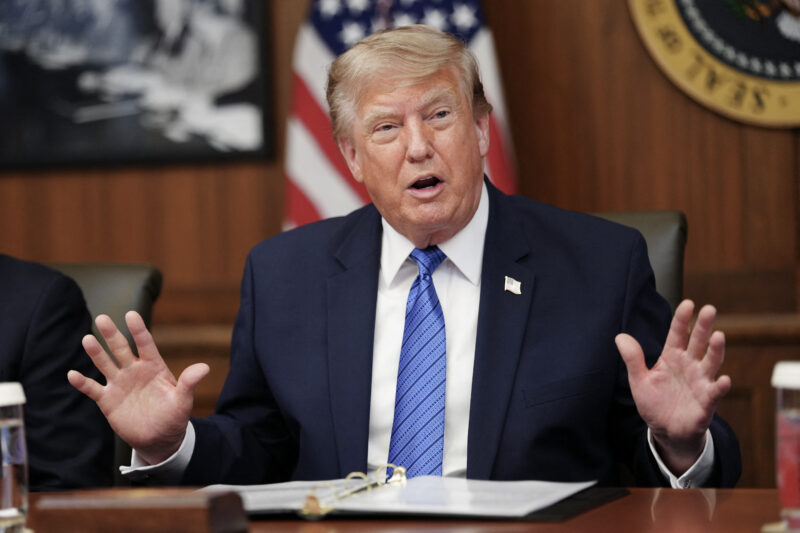
President Donald Trump confirmed to Fox News this morning that the White House is communicating directly with the Islamic Revolutionary Guard Corps and said that Tehran should “raise the white flag of surrender,” as the 60-day memorandum of understanding between the U.S. and Iran — which was intended to lead to the creation of a permanent peace agreement but was quickly deemed moot by both parties — officially expired today without a deal in sight.
Jared Kushner separately told Fox News about the status of talks with Iran that Trump is “focused on economic pressure” but is still open to reaching an agreement, adding that dialogue between the White House and “different areas of the Iranian government” is “probably more robust than it’s maybe ever been” and that the conversations are “positive”…
Trump also threatened in his interview to “bomb the sh*t out of” Oman if the country “gets in the way,” amid Muscat’s negotiations with Tehran over the Strait of Hormuz.
Speaking later to reporters in the Oval Office, Trump said he doesn’t think Oman “behave[s] very well” and that the U.S. would “handle them very easily.” He also reaffirmed his recent claim that he intends to declare the strait a U.S. territory, saying he “think[s] it’s a great idea”…
Responding to Trump’s threat, Sen. Tim Kaine (D-VA) announced he intends to introduce a war powers resolution when the Senate returns from recess to prohibit U.S. military action against Oman…
Israeli Prime Minister Benjamin Netanyahu’s office said he had “deep and constructive discussions” with Board of Peace head Nickolay Mladenov and Kushner in Jerusalem today, where the parties agreed to establish two working groups: one on the “disarmament and demilitarization of Gaza,” which they agreed should happen before “any reconstruction,” and a second on sanitation and public health concerns in the enclave.
Israeli President Isaac Herzog also met with the group and said he was “impressed that Israel’s security interests are an important and central element of their plan”…
After the meetings, Kushner told Fox News that he predicts there will be progress in starting to demilitarize Gaza “in as little as 30 days” and beginning to fill in Hamas’ terror tunnels “in the next 60 to 90 days.”
Despite Trump stating in his interview that Israel should not be conducting any more strikes in Gaza, Kushner said the Board of Peace would “not restrict Israel’s right to defend itself” and that if Hamas doesn’t follow through on its commitments, Israel will “have a lot more support from the U.S.” to “finish the job.” He called his Sunday meeting with Hamas leaders “cordial” and said they “said all the right things” but that they are “hard to trust”…
Trump said today it’s “most appropriate” that he “stay out of” Israel’s upcoming elections but added that he “may endorse somebody” anyway….
Iranian Foreign Minister Abbas Araghchi disputed claims by Masrour Barzani, prime minister of the region of Kurdistan, that his office was attacked by Iranian drones: “Kurdish friends should be vigilant against false-flag ploys to sow discord between neighbors,” Araghchi said on X, claiming that Iran has historically “protected” the Kurds. It was a striking characterization given that Iran has repeatedly struck Kurdish opposition bases in Iraqi Kurdistan, including during the current war, and has a decades-long history of suppressing its own Kurdish population…
New York City leaders are condemning a series of inflammatory posters opposing a new housing development in Chelsea that use antisemitic, racist and homophobic language, including a call to “stop Zionist occupation of Manhattan,” tying the project to “foreign wealth dirty zionist money” and claiming that “Talmudists are trained to cheat.”
City Hall called the posters “vile” and claimed the rhetoric “has absolutely no place in our city’s political discourse,” while Mark Treyger, CEO of the Jewish Community Relations Council of New York, said, “Disagreement over housing policy is legitimate. Dehumanizing your neighbors is not”…
Reps. Pramila Jayapal (D-WA) and Dan Goldman (D-NY) continued to spar this week over the University of Washington’s decision to cancel a planned speech by antisemitic influencer Hasan Piker, Jewish Insider’s Marc Rod reports.
After Goldman argued initially against Jayapal’s denunciation of the school, the congresswoman said she “completely disagree[s] with [Goldman’s] analysis of free speech”; Goldman responded that students have ample access to “Piker’s racist and anti-American views,” but the university has a responsibility to prevent discriminatory conduct or a hostile environment for Jewish students that could interfere in their ability to participate on campus…
⏩ Tomorrow’s Agenda, Today
An early look at tomorrow’s storylines and schedule to keep you a step ahead
Keep an eye on Jewish Insider for a look at AIPAC’s involvement in tomorrow’s special election in California’s 14th Congressional District, where state Sen. Aisha Wahab is facing off against former Dublin, Calif., Mayor Melissa Hernandez, who is backed by the pro-Israel group.
Florida will also hold its primary elections tomorrow, where several pro-Israel and Jewish candidates are facing off against far-right and far-left extremists. Read more on the races and their implications here.
The Sephardic Rabbinical Conference will conclude in New York with speakers including Israeli Consul General Ofir Akunis; Daniel Rosenthal, vice president for government relations at UJA-Federation of New York; Rabbi Elie Buechler, director of programs at the Orthodox Union Advocacy Center; and rabbis from around the world.
Stories You May Have Missed
SENATOR SITDOWN
Rick Scott: We have to ‘fight, fight fight’ antisemites running in the Republican Party
The senator told JI he was worried that fringe ideas could gain momentum if Republicans don’t aggressively push back
SEPHARDIC SUMMIT
Sephardic rabbis and leaders gather in New York to build a stronger voice in Jewish institutional life

The second annual Sephardic Rabbinic Conference, backed by the Orthodox Union and UJA-Federation, will bring together around 150 participants from a dozen countries to address leadership gaps and Diaspora institution-building
Plus, CA considers making Jews an ethnicity
Leonardo MUNOZ / AFP via Getty Images
New York City Mayor Zohran Mamdani arrives for a news conference at Gracie Mansion in New York City on March 9, 2026.
Good Thursday afternoon.
This P.M. briefing is reserved for our premium subscribers like you — offering a forward-focused read on what we’re tracking now and what’s coming next.
Today’s Daily Overtime was curated by JI U.S. Editor Danielle Cohen-Kanik.
📡On Our Radar
Notable developments and interesting tidbits we’re tracking
New York City Mayor Zohran Mamdani announced today that his Office to Combat Antisemitism will be releasing a municipal plan to combat antisemitism, Jewish Insider’s Will Bredderman reports.
The mayor marketed the plan as the “first-in-the-nation,” even as former Mayor Eric Adams already released a “blueprint” for combating antisemitism on his last day in office, which included the city adopting the International Holocaust Remembrance Alliance’s working definition of antisemitism — a policy that Mamdani repealed on his first day.
The move comes days after Mamdani hosted a roundtable with rabbis in the city who asked the mayor to back off his attacks on Israel, a request that Mamdani did not reference or commit to addressing in his remarks…
The California state Legislature is considering a bill to require state agencies to include “Jewish” as an ethnicity option on all forms that collect demographic data. The move would make California the first state to officially consider Judaism as more than a religion for identification purposes…
A federal judge dismissed a lawsuit yesterday brought by the Trump administration against Harvard University alleging that the school showed “deliberate indifference” to antisemitism on campus in the aftermath of the Oct. 7, 2023, Hamas terror attacks.
The judge ruled that the few campus incidents cited by the administration were “too isolated and episodic” to find “any institutionalized noncompliance with Title VI persists at Harvard to this day”…
Rep. Pramila Jayapal (D-WA), former chair of the Congressional Progressive Caucus, said on X today that she had communicated her “concerns” to the University of Washington about its decision to cancel an appearance by far-left, antisemitic streamer Hasan Piker, and encouraged student groups who “want to hear from Mr. Piker to work with the University to ensure they can proceed.”
Piker had earlier this week denounced Democrats who didn’t “speak out against this clear violation” of the First Amendment due to his “position as a prominent critic of Israel”…
Former Democratic Maine Senate nominee Graham Platner is expected to headline a Labor Day rally for the Hancock County Maine Democrats next month, his first public appearance since dropping out of the Senate race after he was accused of rape by a former romantic partner…
White House advisor Jared Kushner is planning a trip to Israel next week with Board of Peace head Nickolay Mladenov to meet with Israeli Prime Minister Benjamin Netanyahu and other officials to discuss the Hamas disarmament deal, Axios reports…
CENTCOM announced today it is undertaking efforts to establish the “first-ever multi-domain, multinational attack drone task force,” including consulting with and inviting regional partners to join, that will work to utilize unmanned, one-way attack drones “from above, on, and below the sea” in the Middle East…
The U.S. has lost roughly a quarter of its fleet of MQ-9 Reaper drones in the war with Iran, sources told The Washington Post, as the armed drones have been targeted by Tehran and its proxies in Yemen and Iraq…
The Pentagon is sending the USS George Washington aircraft carrier to replace the USS Abraham Lincoln in the Middle East, as reports and lawmakers indicate that conditions aboard the ship are deteriorating after a record 200 days without a port call; Defense Secretary Pete Hegseth dismissed the concerns about the Abraham Lincoln today as “completely misrepresented”…
Sen. Darline Graham (R-SC), facing a runoff special election to be the GOP nominee for her late brother’s Senate seat, announced she is co-sponsoring the Jewish American Security Act, the U.S.-Israel FUTURES Act, a bill on Iran sanctions and a bill on Iranian human rights and internet access…
⏩ Tomorrow’s Agenda, Today
An early look at tomorrow’s storylines and schedule to keep you a step ahead
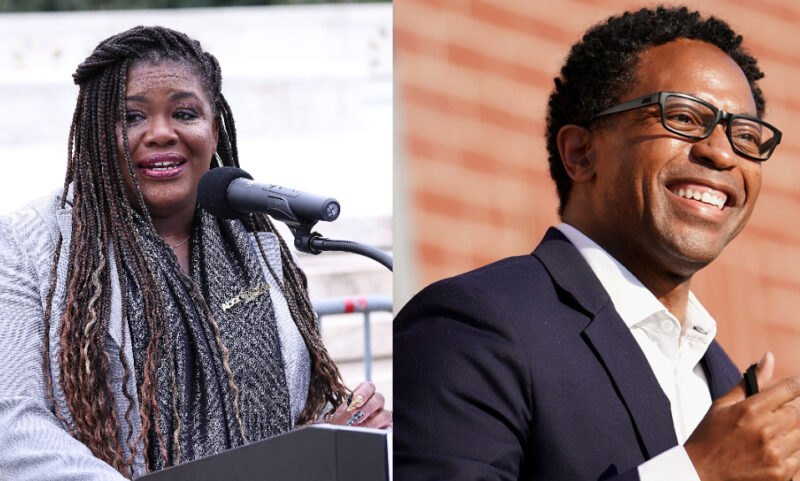
Keep an eye on Jewish Insider for a look at how Rep. Nancy Pelosi (D-CA) is avoiding contending with the anti-Israel turn of her preferred successor, San Francisco Supervisor Connie Chan, in her race against state Sen. Scott Wiener.
President Donald Trump will appear with Nassau County Executive Bruce Blakeman, the GOP candidate for New York governor, at an event on Long Island honoring law enforcement officials.
Rep. Rashida Tlaib (D-MI), a member of the Squad, will appear at a rally in Fort Lauderdale, Fla., alongside anti-Israel progressives running against Jewish Democrats Reps. Jared Moskowitz (D-FL) and Debbie Wasserman Schultz (D-FL), as well as socialist Colorado Democratic congressional nominee Melat Kiros.
We’ll be back in your inbox with the Daily Overtime on Monday. Shabbat shalom!
Stories You May Have Missed
NEW BATTLEGROUND
Jewish leaders build up local grassroots organizing to counter radical forces in politics

There’s widespread interest within the Jewish community to develop efforts to counter the growing populist rage and anti-Jewish hate, city by city
SCOUT’S HONOR
Scouting America offers ‘safe space’ for Jewish campers to hold Shabbat services

The group’s new national chair, Ricky Mason, is believed to be the first national chair to receive an aliyah at the Scouts’ Torah service
Plus, Josh Kushner and Bob Iger ball out
Jemal Countess/Getty Images for Breakthrough T1D)
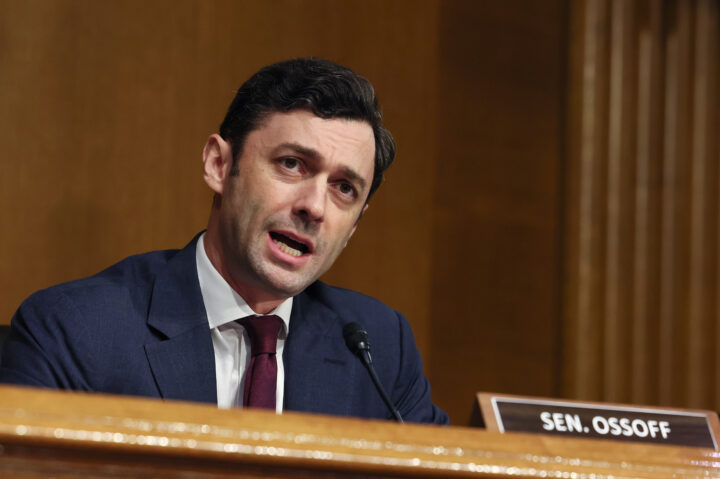
Sen. Jon Ossoff (D-GA) questions witnesses during a hearing held to examine a future without Type 1 Diabetes with a focus on accelerating breakthroughs and creating hope at the Dirksen Senate Office Building on July 09, 2025 in Washington, DC.
Good Wednesday afternoon.
This P.M. briefing is reserved for our premium subscribers like you — offering a forward-focused read on what we’re tracking now and what’s coming next.
Today’s Daily Overtime was curated by JI U.S. Editor Danielle Cohen-Kanik.
📡On Our Radar
Notable developments and interesting tidbits we’re tracking
A State Department official pushed back on Israeli Defense Minister Israel Katz’s comments in southern Lebanon today, where he said the IDF would remain deployed in a security zone, contrary to the agreement signed between Washington, Jerusalem and Beirut.
“The United States expects all parties to act in a manner consistent with the Framework they agreed to, and Israel clearly stated that it has no territorial ambitions in Lebanon. A permanent military presence in South Lebanon is not consistent with the commitments made in the Framework, or the long-term peace and security of both states,” the official told Axios…
Sources told Reuters that Israel and Lebanon have agreed that countries including Britain, Italy, Switzerland and Indonesia could contribute troops to an international force meant to oversee Hezbollah’s disarmament; an Israeli official denied any decisions had been made on the issue…
President Donald Trump continued to boast about the success of the U.S. campaign against Iran, stating again in a post on Truth Social today that the U.S. “has total control over the Strait of Hormuz” and that the Islamic Revolutionary Guard Corps is “decimated and fleeing.”
Meanwhile, out of the 166 ships that have transited the strait so far this month — a significant decrease from the average before the war — only two are known to have used the U.S.- and Oman-backed route, according to The Wall Street Journal…
In a rare interview with Western media, top IRGC advisor Mohammad Reza Naqdi told “PBS News Hour” that Iran is prepared to continue hostilities through the end of Trump’s term and accused the U.S. of waging a “war without strategy”…
The New York Times documents the efforts being made by Gulf countries to construct routes to move oil out of the region that do not rely on the Strait of Hormuz…
Board of Peace head Nickolay Mladenov denied in a post in Hebrew today that there is any financial agreement between the board and Hamas, refuting a report by Israeli public broadcaster Kan that the board would cover Hamas’ debts up to $400 million.
The disarmament roadmap states that the new Palestinian technocratic government will “assess the legitimate commitments to suppliers, contractors and other parties — up to a total amount of no more than $400M — and address them”; Mladenov said in his post that such processes “are not channeled through Hamas” and that “all accounts are open to full scrutiny by the donor governments”…
The publisher of the Atlanta Jewish Times, Michael Morris, penned an open letter to Sen. Jon Ossoff (D-GA) today pressing the senator over his repeated votes to block U.S. military sales to Israel, Jewish Insider’s Marc Rod reports.
“I apologize for being blunt, but please, stop lying to me and your constituents. I hear you claim, over and over again, that you support Israel — that your support is ‘ironclad.’ It is not,” Morris wrote…
Rep. Haley Stevens (D-MI) denied today that the more than $30 million of support she received from AIPAC’s super PAC in her failed run for U.S. Senate backfired, saying on CNN that those who criticize AIPAC “maybe don’t understand what the group is” and that she’s “proud of the friendships and the relationships I have there [and] the really good Americans” who make up its membership…
White House Press Secretary Karoline Leavitt is stepping away from her role at the end of the month, Trump announced today, in order to spend more time with her family. The president said Leavitt will now serve as “one of my top outside advisors”…
Josh Kushner, managing partner of the venture capital firm Thrive Capital, and former Disney CEO Bob Iger have agreed to purchase a controlling interest in the Los Angeles Lakers for a record-breaking price of $12.5 billion, JI’s Matthew Shea reports…
⏩ Tomorrow’s Agenda, Today
An early look at tomorrow’s storylines and schedule to keep you a step ahead
Keep an eye on Jewish Insider for a look at local Jewish political organizing efforts in major cities across the country.
The Hudson Institute will hold an event examining the state of the ongoing conflicts in the Gulf with the Foundation for Defense of Democracies’ Behnam Ben Taleblu and Hudson’s Michael Doran, Ludo Hood and Zineb Riboua.
Stories You May Have Missed
TRUST, BUT VERIFY
Rabbis hope ‘open, honest dialogue’ with Mamdani brings belated change in Israel rhetoric
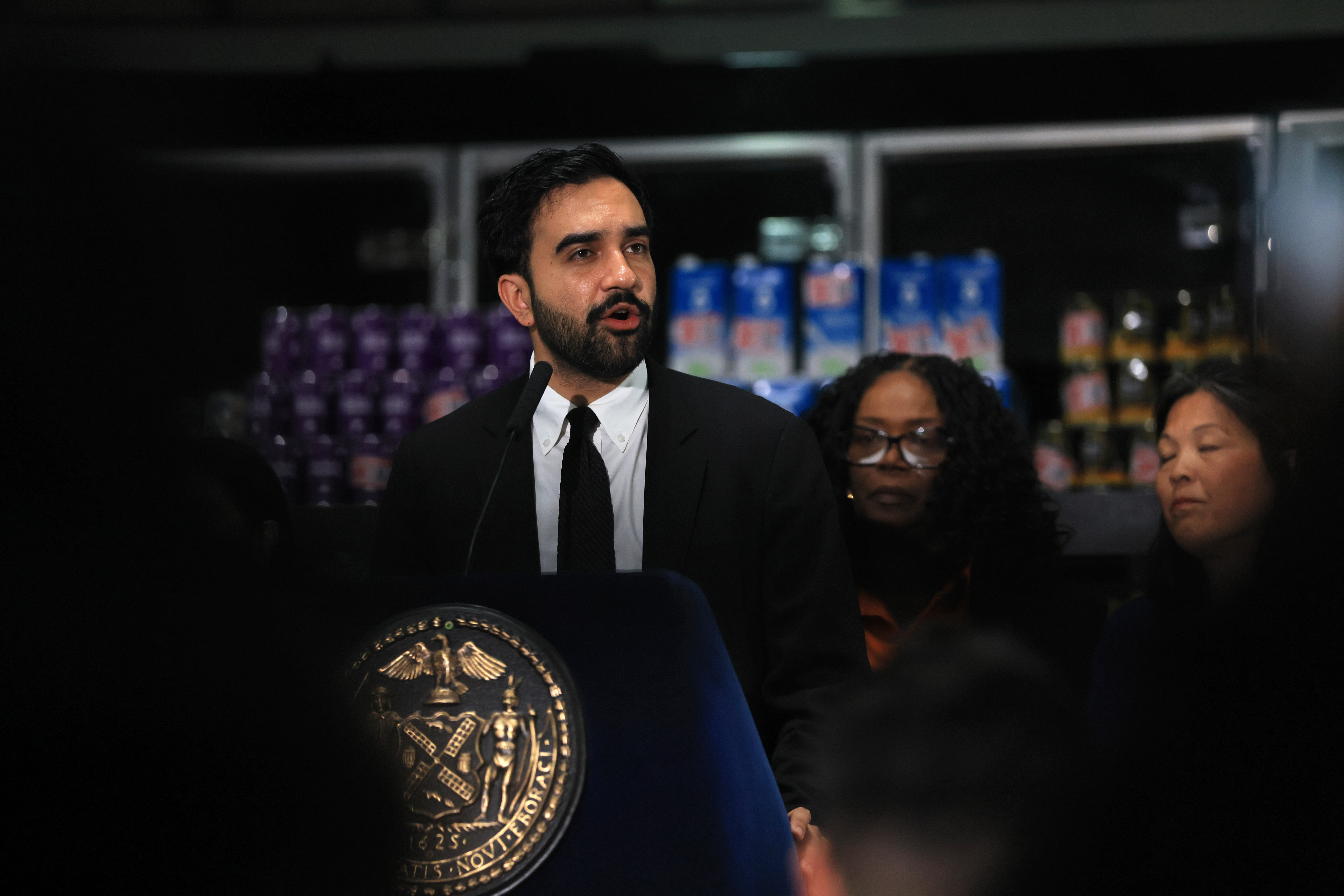
Mamdani’s antisemitism czar invited a cross-section of rabbis and Jewish leaders broadly sympathetic to the mayor for the candid conversation
BALLIN’ OUT
Josh Kushner, Bob Iger purchase Los Angeles Lakers for record $12.5 billion

The sale is the largest purchase price for any sports team in American history
Plus, City Hall and NYPD clash over Rama Duwaji's travel plans

Javier Campos/NurPhoto via Getty Images
A woman waves a Venezuelan flag during a march in amid the COVID-19 pandemic, in Caracas, Venezuela on May 25, 2021. (Photo by )
Good Tuesday afternoon.
This P.M. briefing is reserved for our premium subscribers like you — offering a forward-focused read on what we’re tracking now and what’s coming next.
Today’s Daily Overtime was curated by JI U.S. Editor Danielle Cohen-Kanik.
📡On Our Radar
Notable developments and interesting tidbits we’re tracking
Mohsen Rezaei, secretary of Iran’s Supreme National Security Council, insisted today that any agreement reached between Iran and Oman on administering the Strait of Hormuz is separate from Tehran’s broader closure of the waterway, which will only be lifted once the U.S. accedes to Iran’s demands.
Meanwhile, Pakistani Interior Minister Mohsin Naqvi, a key mediator between the U.S. and Iran, met today with Iranian Foreign Minister Abbas Araghchi in Tehran. Islamabad’s defense minister, Khawaja Asif, told Bloomberg that developments are “shaping up again in favor of a peace arrangement”…
CENTCOM said it disabled a Panama-flagged cargo ship sailing toward Iranian ports today by firing two Hellfire missiles into the vessel’s engine room, the third such incident since the U.S. blockade began…
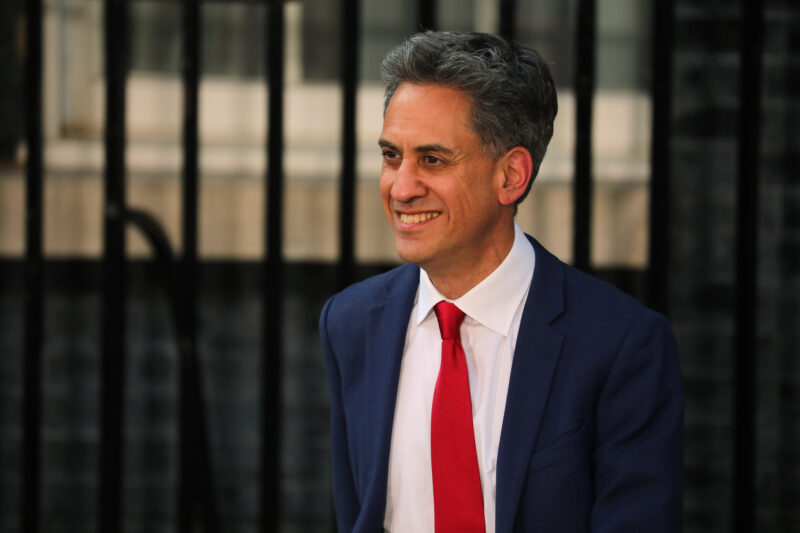
Ed Miliband, who last month was appointed by new U.K. Prime Minister Andy Burnham to be foreign secretary, said he had a “frank and constructive first call” with Israeli Foreign Minister Gideon Sa’ar today, during which the British diplomat raised the issues of settler violence, settlement expansion and the humanitarian situation in Gaza, among others.
The discussion came a day after Miliband met with British Jewish community leaders, who said they were “impressed” by the foreign secretary’s “longer-term commitment to maintaining the conversation”…
Sa’ar announced that Israel and Venezuela have agreed to renew consular relations — establishing a coordination mechanism to provide consular services to each country’s citizens — in the first official channel between the two since Caracas severed diplomatic ties in 2009. The move builds on the Israeli aid delegation dispatched to Venezuela after the June 24 earthquakes…
The Palestinian technocratic committee meant to govern Gaza convened a joint coordination meeting with several U.N. agencies — including the World Food Program, UNICEF and the World Health Organization — as well as representatives from the Board of Peace and former U.K. Prime Minister Tony Blair’s Institute for Global Change to coordinate on humanitarian aid and reconstruction issues…
Former Mossad head Yossi Cohen said at a conference in Israel today that Israeli operatives have “toured” Iran’s Fordow nuclear facility “many times” in order to “understand” it, and called the U.S. operation to bomb the site during the 12-day war in June 2025 “the fulfillment of all my dreams”…
The NYPD denied that its officers will be accompanying New York City First Lady Rama Duwaji on a trip to Lebanon and Syria next month after City Hall said that, “upon the strong recommendation of the NYPD, the First Lady’s security detail will be joining her” on the trip.
“The NYPD does not send officers to countries with level four travel advisories for discretionary reasons,” the NYPD said today, referring to the State Department’s ranking system that currently designates the two countries as “do not travel” locations. Mayor Zohran Mamdani later said the diverging statements stemmed from a “miscommunication,” and that when his wife makes the trip “it will be without any NYPD detail”…
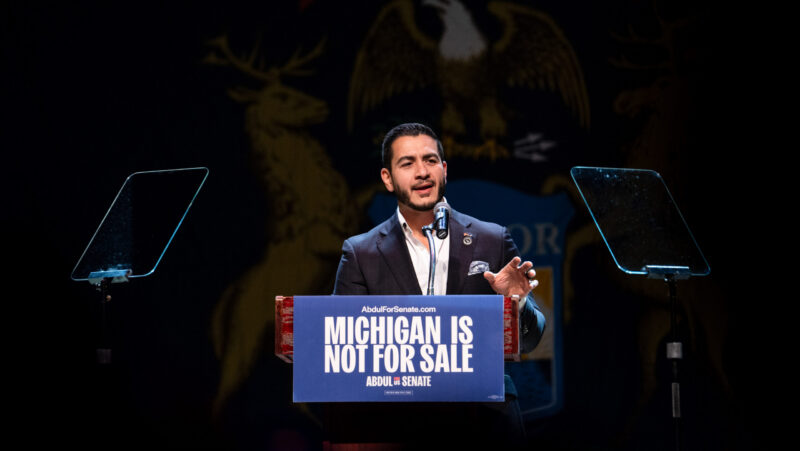
Democratic Michigan Senate nominee Abdul El-Sayed has made private over 100 YouTube videos from his time as a podcaster and commentator, CNN reports, including videos in which he lambasted fireworks on the Fourth of July, floated replacing the Second Amendment and voiced support for prison abolition…
The Democratic Congressional Campaign Committee added Brian Poindexter, the Democratic nominee in Ohio’s 7th Congressional District, to its “Red to Blue” program as he aims to unseat Rep. Max Miller (R-OH). Democratic leadership will offer Poindexter strategic support as the district, previously considered a long shot for Democrats given its GOP leanings, is now seen as a key flip opportunity as Miller navigates accusations of domestic violence by his ex-wife…
The campaign of Francesca Hong, the socialist seen as the front-runner in today’s Democratic primary election for governor of Wisconsin, was rebuffed by Sen. Bernie Sanders (I-VT) as she sought his endorsement due to her perceived weaknesses as a candidate, Politico reports; her campaign is planning to overhaul its staff to address such issues if she proceeds to the general…
⏩ Tomorrow’s Agenda, Today
An early look at tomorrow’s storylines and schedule to keep you a step ahead
Keep an eye on Jewish Insider for results from key primaries taking place today in Minnesota, South Carolina, Connecticut and Wisconsin.
Stories You May Have Missed
THE CAPITAL’S KOSHER CONUNDRUM
D.C. has a kosher restaurant problem. Owners say to blame the math

D.C. has a kosher restaurant problem. Owners say to blame the math
DSA UNFILTERED
DSA co-chair calls Oct. 7 attacks ‘largely inevitable,’ says she would have attended Oct. 8 rally
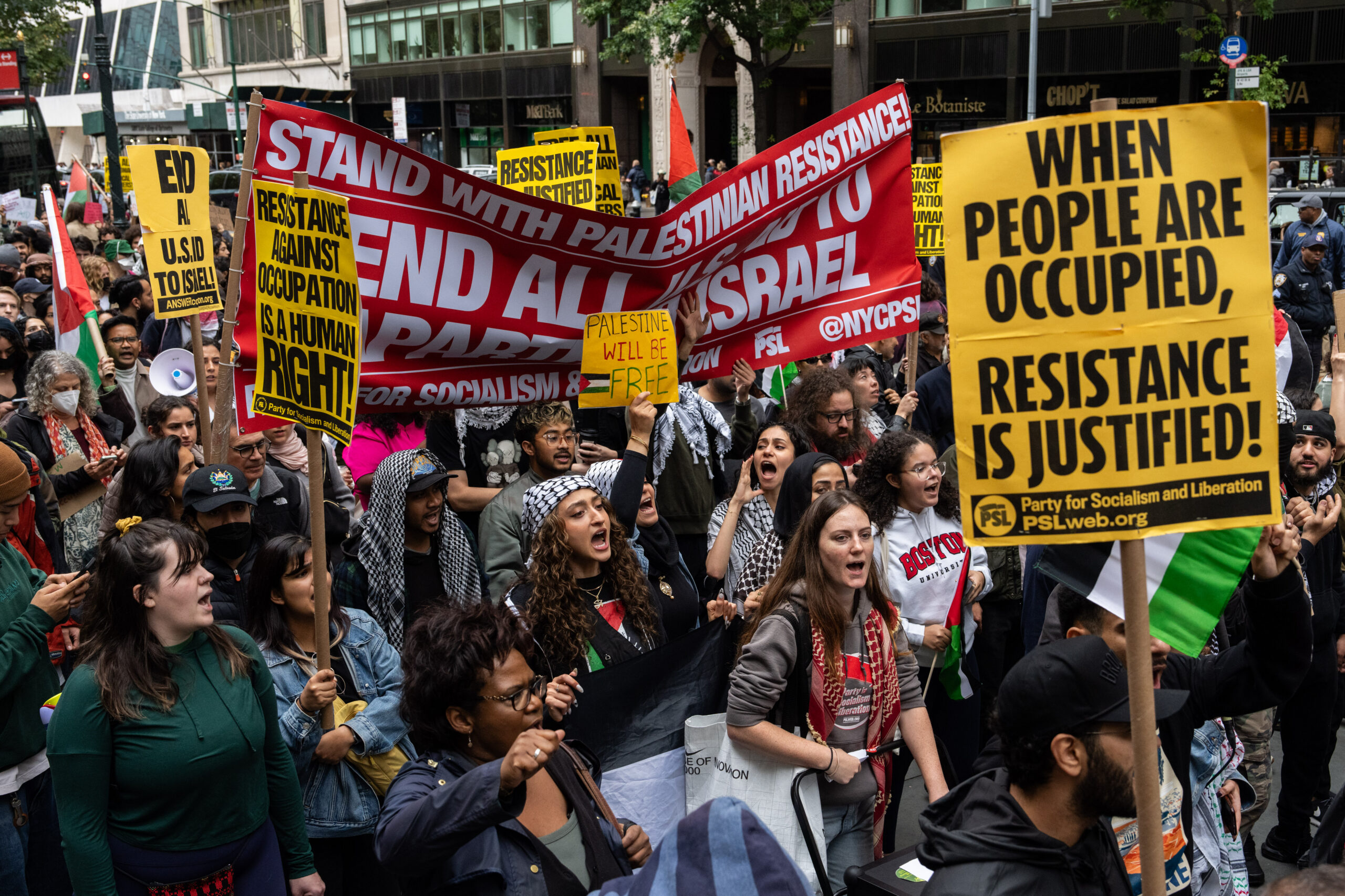
‘If you put people in an open-air concentration camp … you have to expect that they are going to not take that for that long,’ Megan Romer said of the Oct. 7 attacks
Plus, new app offers Shabbat experience ‘with training wheels’
(Aaron Schwartz / AFP via Getty Images)
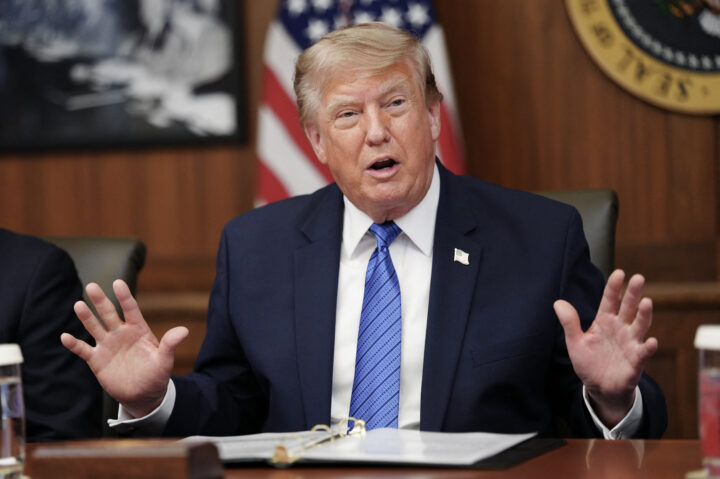
US President Donald Trump speaks during a Cabinet meeting at Camp David in Maryland, on July 31, 2026.
Good Monday afternoon.
This P.M. briefing is reserved for our premium subscribers like you — offering a forward-focused read on what we’re tracking now and what’s coming next.
Today’s Daily Overtime was curated by JI U.S. Editor Danielle Cohen-Kanik.
📡On Our Radar
Notable developments and interesting tidbits we’re tracking
Responding to a recent demand from Iran that the U.S. fully compensate it for its war costs in order to reopen the Strait of Hormuz, President Donald Trump issued his own demand today that Tehran compensate the U.S. “for all of the people that they have killed and gravely wounded with their roadside bombs and many conflicts,” as well as pay reparations to the “families of the hundreds of thousands of innocent protestors that Iran has killed over the last 50 years.” Trump said he instructed U.S. representatives to “put this firmly into any, and all, future negotiations” with Tehran…
Shortly after Israeli Prime Minister Benjamin Netanyahu said yesterday that Israel rejects the Hamas disarmament deal, Board of Peace head Nickolay Mladenov told Israel’s Channel 12 that the deal is “the only way” that “guarantees” that the Hamas attacks of Oct. 7, 2023, “will not occur again.”
“Nobody is required to do anything — last of all Israel — before we actually have verified steps on the ground,” Mladenov said, referring to the IDF’s eventual withdrawal from Gaza after all of Hamas’ weapons are “stored, and ultimately rendered unusable,” by the Palestinian technocratic government…
The International Atomic Energy Agency will remove nuclear material stored at a secret site in Syria tied to the fallen Assad regime, Axios reports, per an agreement reached between Trump, Jerusalem and Damascus…
Megan Romer, a national co-chair of the Democratic Socialists of America, said in a podcast interview last week that the Oct. 7 attacks were “largely inevitable” — “If you put people in an open-air concentration camp and you deprive them of rights, of dignity, of food, of the ability to live in safety, you have to expect that they are going to not take that for that long,” she said — and that she would have attended the anti-Israel Times Square rally on Oct. 8 had she been in the area, Jewish Insider’s Gabby Deutch reports…
Michigan Attorney General Dana Nessel said on MS NOW today that Abdul El-Sayed, the state’s Democratic nominee for Senate, should “tone down his rhetoric” about Israel and AIPAC in order to help combat antisemitism in the Democratic Party.
“Not everything is about AIPAC, not everything is about Israel. … Even if we wiped Israel off the face of the earth tomorrow, you know, everyday Michiganders’ lives wouldn’t be better on” issues such as housing and healthcare, Nessel said…
The University of Washington on Friday reversed its decision to host far-left, antisemitic influencer Hasan Piker, citing a flawed planning process, JI’s Haley Cohen reports.
The event listing, which has since been removed from the university website, described Piker as a “journalist and wildly popular content creator” who has “become an authoritative voice for millennials and Gen Z,” and as someone who is “armed with sharp analysis and an irreverent wit”…
The new conservative government in Colombia, which recently returned its ambassador to Israel, today recognized Israeli sovereignty over the Golan Heights, becoming the second country to do so after the U.S.
Colombia’s Foreign Ministry announced the move shortly after a powerful earthquake struck the country, killing over 100 people…
A new app called Sabbath is selling an ancient pitch to a modern, phone-addicted crowd: lock technology away for one sacred day a week. The app — which founder Ben Springwater calls “Shabbat with training wheels” — is “trying to make a bigger tent, get more people to experience some of the benefits and virtues of what Shabbat offers,” he told JI’s Haley Cohen, by allowing users to block certain apps from sundown to sundown on either Saturday or Sunday…
The Cook Political Report updated its rating of Rep. Max Miller’s (R-OH) district from “Likely Republican” to “Toss Up” after the deadline passed for Miller to drop out of his reelection race, which he declined to do despite facing serious domestic abuse allegations. Miller has denied the accusations levied against him by his ex-wife and her father, Sen. Bernie Moreno (R-OH)…
Politico explores how Rep. Nancy Pelosi (D-CA) is using her political clout to boost her preferred successor, San Francisco Supervisor Connie Chan, over Chan’s opponent, state Sen. Scott Wiener, including lining up endorsements and hosting major fundraisers…
“Fauda” star Lior Raz announced that the fifth season of the series, set two years after the Oct. 7 attacks, is coming to Netflix on Sept. 8…
⏩ Tomorrow’s Agenda, Today
An early look at tomorrow’s storylines and schedule to keep you a step ahead
Keep an eye on Jewish Insider for a look at D.C.’sever-evolving kosher food scene.
Connecticut, Minnesota, Vermont and Wisconsin will hold primary elections tomorrow, with South Carolina and Alabama holding special elections as well.
We’ll be watching the outcomes in Minnesota’s Senate race, where Rep. Angie Craig (D-MN) and Lt. Gov. Peggy Flanagan are neck-and-neck, as well as the Wisconsin governor’s race, where democratic socialist Francesca Hong is favored to win the Democratic nomination.
In the South Carolina special Republican Senate primary, Sen. Darline Graham (R-SC) is trying to hold her late brother’s seat in a race widely expected to head to an Aug. 25 runoff. And in Connecticut’s 1st District, longtime Rep. John Larson (D-CT) faces his first serious primary challenge in decades from former Hartford Mayor Luke Bronin.
Kenneth Marcus, the chairman of the Louis D. Brandeis Center for Human Rights Under Law, will testify before a hearing of the Equal Opportunity Employment Commission tomorrow, urging the commission to repeal rules requiring employers to keep and submit yearly reports breaking down their workforce by race, sex and ethnicity.
Marcus argued to JI that the practice has “created the impression that the agency is pushing them to use racial preferences in order to improve their numbers.” He said the situation has left Jews either “invisible because we’re not counted, or potentially stigmatized because we are,” and that “counting by race or ethnicity has never been helpful for the Jewish people and has sometimes been dangerous.” He said that eliminating these requirements would allow the EEOC to focus more fully on specific complaints of alleged discrimination.
Stories You May Have Missed
GOPHER BROKE
The latest Senate showdown between the center and the left set in Minnesota

Left-wing Lt. Gov. Peggy Flanagan’s anti-Israel message is being complicated by her outreach to AIPAC earlier in the campaign
CONNECTICUT COMPETITION
Longtime Connecticut congressman faces primary challenger making generational case for change
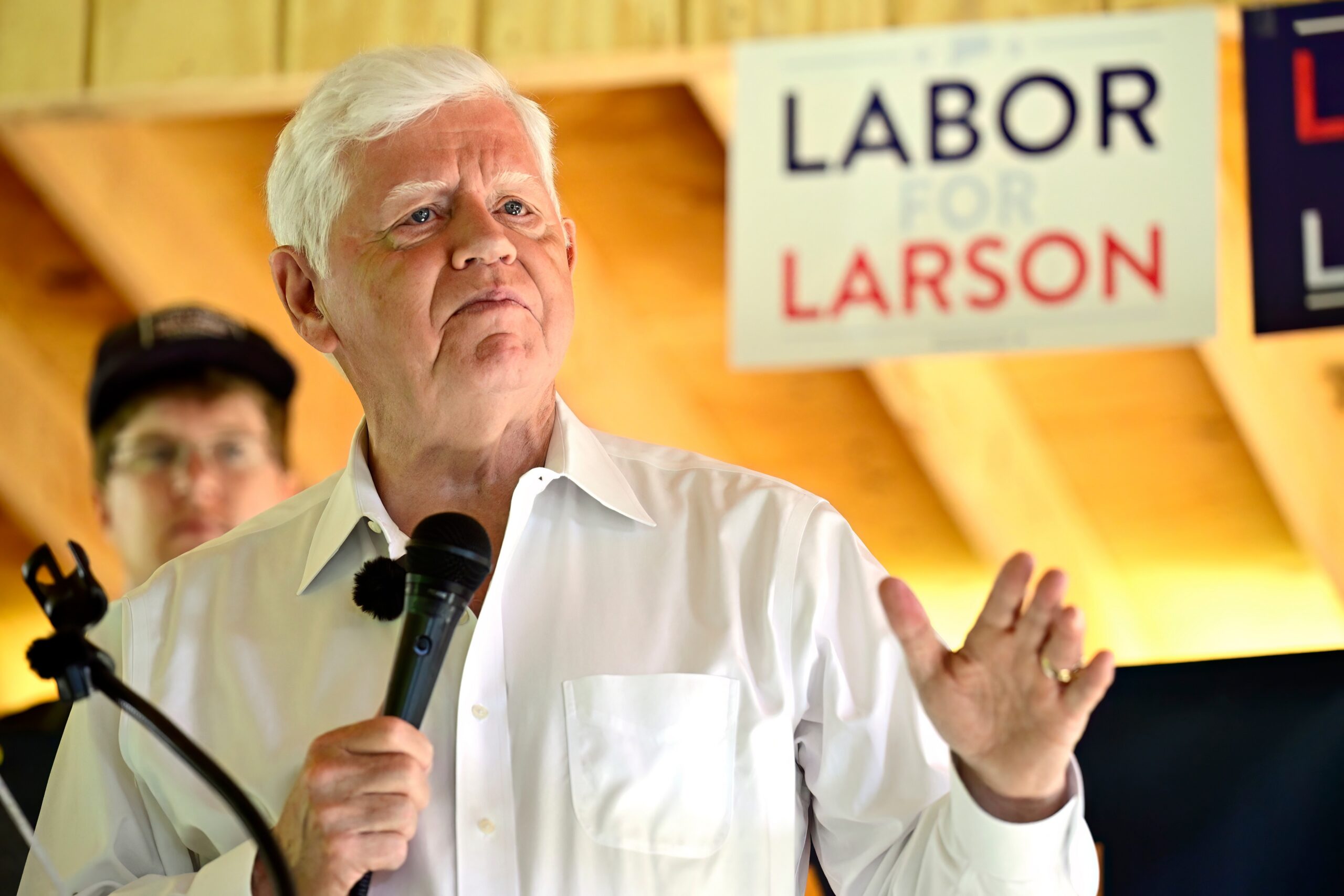
Rep. John Larson, a Democrat, supports continued U.S. aid to Israel, while former Hartford Mayor Luke Bronin has said he would not back further offensive aid but does support Iron Dome
Plus, Israel and Turkey trade barbs over Syria
Tom Williams/CQ-Roll Call, Inc via Getty Images
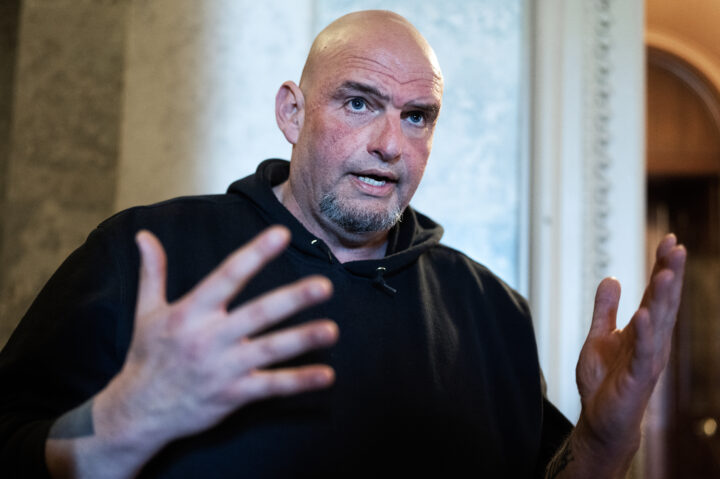
Sen. John Fetterman (D-PA) talks with reporters after the Senate luncheons in the U.S. Capitol on Tuesday, March 11, 2025.
Good Thursday afternoon.
This P.M. briefing is reserved for our premium subscribers like you — offering a forward-focused read on what we’re tracking now and what’s coming next.
Today’s Daily Overtime was curated by JI U.S. Editor Danielle Cohen-Kanik.
📡On Our Radar
Notable developments and interesting tidbits we’re tracking
President Donald Trump disputed reports that the U.S. is running low on critical munitions as a result of the Iran war, claiming on Truth Social last night that the country has “massive amounts of ‘munitions,’ especially of certain types” and that more are being manufactured and shipped to the U.S. “as needed”…
The IDF struck several targets in southern Lebanon again today “in response to the incident yesterday” during which two IDF soldiers were killed and four severely injured in an explosion that the army attributed to Hezbollah.
The strikes came during the last day of Israel-Lebanon talks in Rome, which a State Department official said were “productive on the technical and expert levels” and brought the parties “a lot closer on what needs to be done to advance and expand the pilot zone process”…
Jonathan Cowan, president of the center-left group Third Way, told The New York Times that the group plans to spend $15 million ahead of the 2028 presidential election to target the Democratic Socialists of America after Abdul El-Sayed’s primary win in the Michigan Senate race. “It is deeply troubling to see radical, far-left candidates winning in places that are potentially presidential swing states,” Cowan said. El-Sayed was not endorsed by the DSA, though he was championed by the far left…
Sen. John Fetterman (D-PA) told Jewish Insider’s Emily Jacobs that he believes El-Sayed’s victory has put Michigan in play for Republicans to win in November. “[El-Sayed] will quickly discover a primary is a much different situation in this state [than the general election], when you’re accountable for winning the other side. I can’t wait to see him campaign for the general. I have got my popcorn for that,” Fetterman said…
Sen. Elissa Slotkin (D-MI) joined Sen. Ted Cruz (R-TX) and Reps. Brad Knott (R-NC) and Tom Suozzi (D-NY) today in introducing the Right to Worship Act, a federal bill that would ban activity that knowingly disrupts or impedes access to scheduled religious services within 100 feet of the entrance of a house of worship, JI’s Marc Rod reports…
California Gov. Gavin Newsom appointed Lele Yutzy as the state’s first director of its Office of Civil Rights, which was created under a bill enacted last year that acknowledged the prevalence of antisemitism in the state’s public schools and pledged to tackle discrimination. The office is also required to appoint an antisemitism prevention coordinator…
Sen. Jon Husted (R-OH) joined Sen. Bernie Moreno (R-OH) in calling on Rep. Max Miller (R-OH), Moreno’s former son-in-law, to drop out of his reelection race and resign from Congress amid growing scrutiny of domestic violence allegations made against Miller, JI’s Marc Rod reports…
New Jersey Gov. Mikie Sherrill‘s Mission to Deliver PAC endorsed a series of Democratic candidates with national security or military backgrounds, including Rep. Seth Moulton (D-MA) in his primary campaign to oust Sen. Ed Markey (D-MA).
Asked in a debate on local news earlier this week if Israel committed war crimes in Gaza, Markey answered an emphatic “yes” and called to end all military aid to Israel, while Moulton called the conflict an “absolute moral atrocity” and highlighted his rejection of AIPAC’s support but did not answer in the affirmative…
Sen. Mitch McConnell (R-KY) said in a statement today that he has been discharged from the hospital after a fall in Juneand will continue his recovery at home, without indication of when he will return to Capitol Hill…
The feud between Jerusalem and Ankara continued today as Turkish Foreign Minister Hakan Fidan claimed Israel’s “attacks targeting Syria’s sovereignty and territorial integrity” are “among the greatest threats to the country’s stability.”
Israeli Foreign Minister Gideon Sa’ar in turnaccused Fidan of hypocrisy, arguing that Turkey currently occupies 5% of Syria while the IDF holds a buffer zone “that comprises just one-tenth of one percent of Syrian territory”…
An extremist Israeli settler, Yinon Levi, was charged by the Israeli State Attorney’s Office with reckless homicide over the July 2025 killing of Palestinian activist Awdah Hathaleen, who had been featured in the Oscar-winning documentary “No Other Land” about home demolitions in the West Bank…
The Yemeni Defense Ministry said the Houthis attacked the internationally recognized government’s military forces in several locations — reportedly killing dozens of soldiers — and that the military would retaliate against the terror group “at the appropriate time and place.”
The hostilities mark Yemen’s latest potential slide back towards its brutal civil war that devastated the country from 2014 until the Houthis and the Saudi-backed government reached a ceasefire in 2022…
The United Arab Emirates has successfully transported more oil through the Strait of Hormuz in the last two months than any other country despite ongoing military hostilities in the area, Bloomberg reports, by utilizing tankers that switch off their transponders during the risky crossing…
⏩ Tomorrow’s Agenda, Today
An early look at tomorrow’s storylines and schedule to keep you a step ahead
Keep an eye on Jewish Insider for a look at the special election to replace former Rep. Eric Swalwell (D-CA), where AIPAC’s United Democracy Project super PAC is working to boost Dublin, Calif., Mayor Melissa Hernandez over state Sen. Aisha Wahab.
A deal to reopen the Strait of Hormuz may still emerge, though its reported contours are raising concerns among experts that it could grant Tehran unprecedented oversight over the international shipping route, Jewish Insider’s Matthew Shea reports.
In the latest development, Iranian state media reported today that the country’s parliament is considering a preliminary bill to bar American, Israeli and other “hostile” vessels from utilizing the strait.
We’ll be back in your inbox with the Daily Overtime on Monday. Shabbat shalom!
Stories You May Have Missed
MICHIGAN MALAISE
Jewish Democrats in Michigan weigh crossing party lines after El-Sayed’s Senate primary win
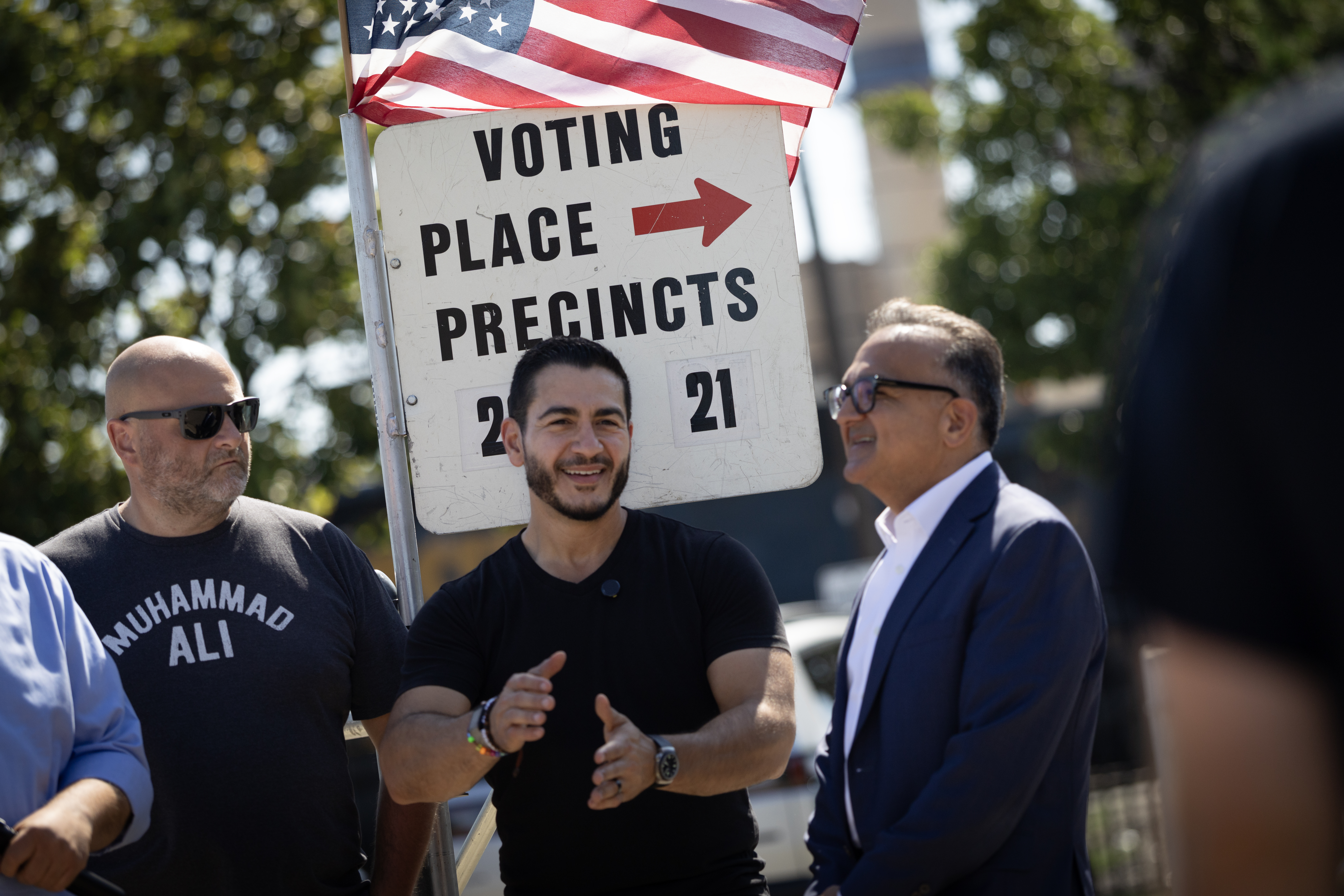
Several Jewish Democrats in the battleground state are now indicating that they will break with a party they have long called home and instead vote for the Republican nominee, Mike Rogers, in the November election
CASE STUDY
Generational challenge threatens Ed Case in Hawaii’s under-the-radar primary
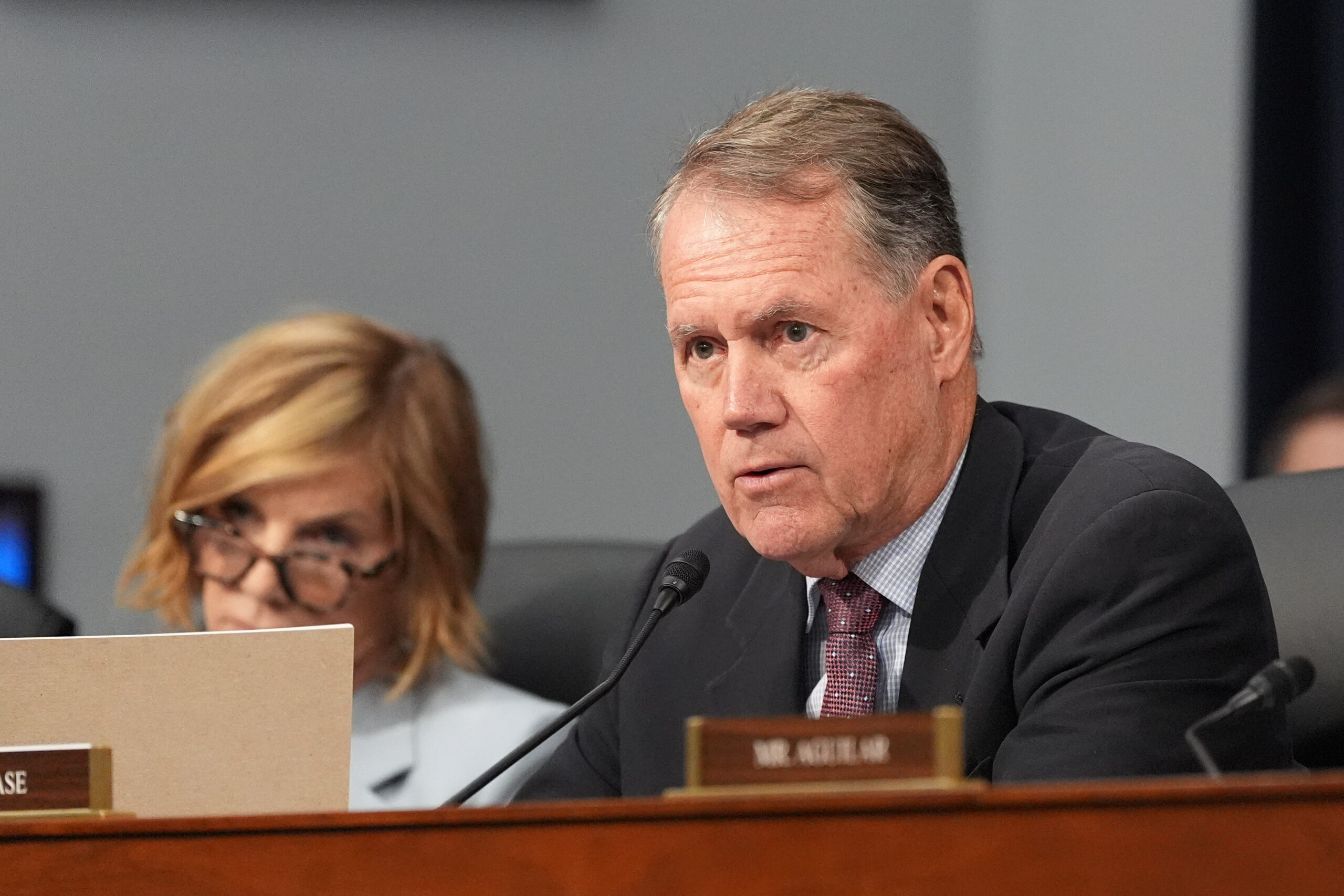
A 42-year-old progressive state senator has quietly closed the gap on the 73-year-old pro-Israel incumbent, with internal polls showing a tightening race before Saturday’s vote
Sens. Susan Collins, Lisa Murkowski and Rand Paul again broke with their party to vote for the resolution with most Democrats, while Sen. John Fetterman voted against it
Kevin Carter/Getty Images
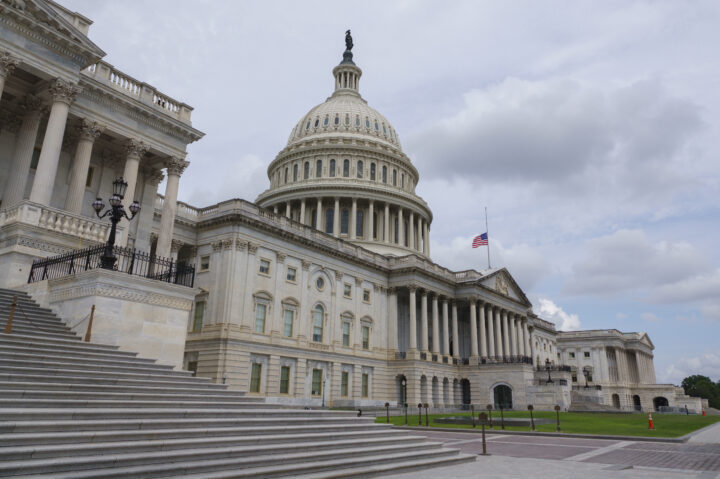
U.S. Capitol building on July 12, 2026 in Washington, DC.
The Senate narrowly blocked another push by Democrats to force an end to the Iran war, 50-49, with the vote falling along now-predictable lines.
Sens. Susan Collins (R-ME), Lisa Murkowski (R-AK) and Rand Paul (R-KY) broke with their party to vote for the resolution with most Democrats, while Sen. John Fetterman (D-PA) voted against it.
The resolution comes as the Trump administration is debating how to proceed in the war, including whether to ramp up military operations or seek a renewed diplomatic arrangement with Tehran.
Sen. Kirsten Gillibrand (D-NY), the lead sponsor of the latest resolution, accused Republicans of having “abandoned their duties as elected officials and refus[ing] to keep President Trump in check,” highlighting rising gas prices and the deaths of U.S. service members.
‘I represent a pro-Israel, anti-Netanyahu district and this is a pro-Israel, anti-Netanyahu vote,’ Rep. Jake Auchincloss told JI
Bill Clark/CQ-Roll Call, Inc via Getty Images
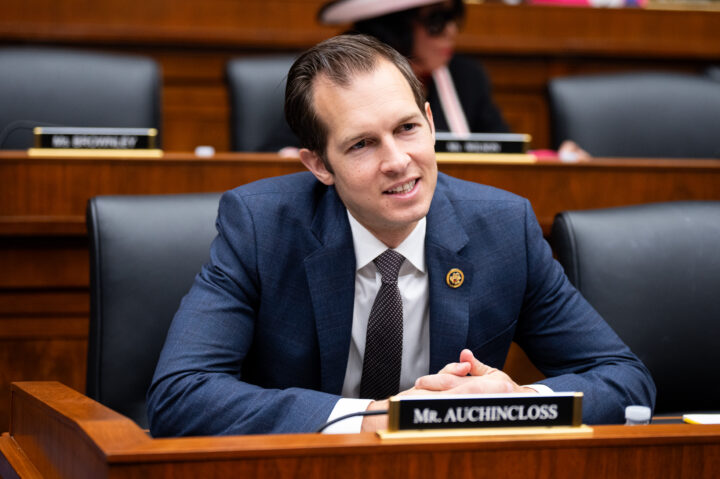
Rep. Jake Auchincloss (D-MA) participates in the House Transportation Committee hearing on Thursday, June 27, 2024.
Of the 103 House Democrats who voted to cut off the $3.3 billion in U.S. aid to Israel last week, few came as more of a surprise than Rep. Jake Auchincloss (D-MA), a Jewish Democrat who has generally been a reliable pro-Israel vote in the House.
Auchincloss, in an interview with Jewish Insider this week, said that he approached the vote as a protest of the war with Iran, and argued that the vote wasn’t anti-Israel.
“This president, in conjunction with Prime Minister Netanyahu, has launched an illegal, catastrophic war that nine out of 10 Israelis think has led to Iranian gains, and that even fewer of my constituents support,” Auchincloss said. “And foreign military financing is a form of appropriations for a war I believe to be illegal and unwise.”
He also pointed to comments by Israeli Prime Minister Benjamin Netanyahu calling for the U.S. to phase out aid to Israel over the next 10 years, arguing that Democrats can’t be expected to take a position on aid “to the right of Netanyahu” — though the Israeli prime minister hasn’t called for an immediate halt to aid.
“That grant of foreign military financing is a privilege that Congress grants annually to both our head of government and to counterparty heads of government,” Auchincloss said. “Every year, Congress has the right — Congress has the responsibility — to determine whether that privilege is warranted. Given Trump and Netanyahu’s decision-making about this debacle with Iran, I do not think it is warranted.”
He said he would evaluate his position on future FMF to Israel on a year-by-year basis depending on whether he believes such aid is deserved. “That’s not only my right as a member of Congress, that’s my responsibility — particularly when 18 Americans have died overseas.”
But he said that he continues to support the U.S-Israel relationship and said the U.S. should continue to work to preserve Israel’s qualitative military edge (QME), and suggested he would not, at this point, support a cutoff of support for Israeli missile-defense systems or an embargo on Israel buying U.S. systems with its own funds.
He said he also believes in continued U.S. support for the Abraham Accords and other efforts to bring Israel and the region closer together, including through the India-Middle East-Europe Corridor (IMEC).
Some observers have seen Auchincloss’ vote as a concession to left-wing Democrats in his suburban Massachusetts district, in light of the party’s shifting stance on Israel and primary challenges to other pro-Israel Democrats. The district includes a substantial Jewish population.
Auchincloss himself won his first primary in 2020 with 22% of the vote, scoring a narrow victory over a divided field that included several candidates to his left. Some on the left still see him as vulnerable to a one-on-one challenge in a future race — or as a potential candidate for higher office in deep-blue Massachusetts.
“I represent a pro-Israel, anti-Netanyahu district and this is a pro-Israel, anti-Netanyahu vote,” Auchincloss asserted, arguing that he’s “confident … a majority of my Jewish constituents would agree with me.”
“I hear why people see this vote through the lens of primaries and the national Democratic scene,” Auchincloss said. “I represent about 100,000 Jewish constituents. They are super smart and engaged on this issue. If I try to take political votes or symbolic votes or too-clever-by-half 4D-chess votes, it doesn’t hang together. I have to be able to defend the internal logic of each and every vote to this community, and I am confident that I can say to this community on this vote: This is a rejection of Trump and Netanyahu’s decision-making to take away the credit card.”
Asked whether the U.S.-Israel relationship can be sustained and repaired while Netanyahu continues to lead Israel — as some prominent U.S. figures have suggested that Netanyahu being ousted in the upcoming Israeli elections is necessary to continued bilateral relations — Auchincloss said that the relationship should be bigger than any one leader.
“The U.S.-Israel alliance is deeper than personalities,” he said. “Certainly, you know, Congress and our decisions about appropriations and policy need to be calibrated to the individuals who are going to be executing that policy, right? But the U.S.-Israel alliance is based on shared interests, on common values, and a long history.”
He suggested he was unconcerned by AIPAC’s decision to halt fundraising for him following the vote, explaining that his votes aren’t shaped by endorsements or contributions and that he’s taken votes both supported and opposed by AIPAC over the course of his career.
Though he diverged from House Minority Leader Hakeem Jeffries (D-NY) on the Israel aid vote, Auchincloss praised the Democratic leader’s approach to the issue and called it a model for how the party as a whole should approach Israel policy going forward.
“Hakeem is pointing the way with a steady hand, which is to say, ‘We’re a party that supports qualitative military edge for Israel, which is surrounded by terrorists and the world’s largest state sponsor of terrorism, and has a right to defend itself against those terrorists and needs QME to be able to do that, but we’re not a party that yields congressional oversight to Trump and Netanyahu as Republicans have,”’ Auchincloss said.
Asked about the possibility of conditions on further U.S. aid to Israel, Auchincloss said that the next U.S.-Israel memorandum of understanding should be crafted around supporting Israel’s QME, expanding and supporting normalization and, critically, provisions that can garner support from both chambers of Congress and both parties.
Even as he sided with progressives in the party on the Israel aid vote, Auchincloss has also found himself vocally at odds with the left over his criticisms of former Maine Senate candidate Graham Platner.
Auchincloss long opposed Platner and faced strong backlash from the party in late May for saying that Platner’s tattoo and comments about it were “disqualifying” and saying he would support another candidate in the primary if he were a Maine voter.
“Character should matter in politics,” Auchincloss told JI. “Ten years ago, Republicans decided that it doesn’t. They’ve become a cult of personality, and Platner demonstrates to Democrats the hazards of agreeing that character doesn’t matter.”
“And I think it’s a problem for the Democratic Party to wrestle with [the fact] that it would have been more politically damaging for him to have a Star of David tattoo than to have a Totenkopf tattoo,” Auchincloss continued, an apparent reference to comments from a Platner supporter on the campaign trail earlier this year.
Auchincloss also said he remains concerned about surging antisemitism globally, and continues to be involved in other efforts to combat antisemitism and anti-Israel sentiment, including as one of a handful of Democrats who signed a letter earlier this week condemning plans by Malaysia to round up and expel Israeli citizens.
He said he’s been in discussions with Jewish community groups about the role of social media in promulgating antisemitism and is working on legislation to combat it, while also arguing that it will require a “multifaceted approach.”
“Antisemitism tends to mushroom in failed societies, and social media has become a failed society as one big online toxic brew. And politics is downstream of media and information and culture,” Auchincloss said.
He said that even as political leadership is necessary to call out and reject antisemitic candidates, leaders also need to look “upstream to media and culture and information,” particularly on antisemitism.
Auchincloss is making his own efforts to steer the direction of the Democratic Party, including as the chair of Majority Democrats, a new campaign group backing moderate and liberal Democratic lawmakers and candidates around the country.
In his view, Auchincloss said that he sees himself and the group as occupying a third corner of the party, separate from the left and the establishment. “There is the opportunity for a faction that will redefine the center of American politics and be disruptive of the establishment without being socialist,” Auchincloss said.
He said he believes his faction and the party as a whole should be focused on “the new American dream” — a robust primary and secondary education, the ability to own a home by age 30 and retire by 65 — as “partners to help you achieve that economic security.” Auchincloss said the party should also be aggressive about confronting corruption across the political spectrum and should not yield “faith, family and the flag” to conservatives.
“I don’t think Americans are going to vote for Democrats to lead this country if they don’t think Democrats like this country,” Auchincloss said. “And so we have to be the party of patriotism — not of blood and soil nationalism, but of true constitutional patriotism. And then, finally, we need a cross-ideological governing platform that is willing, even self-consciously celebratory, of dragging and dropping good ideas from across factions of American life.”
He also said that Democrats should be strongly supportive of public safety, including cracking down on petty crime, and support a national wealth tax.
Auchincloss pointed to Sen. Jon Ossoff (D-GA), increasingly seen as a potential 2028 presidential candidate, as someone who he believes is a strong leader for the party, particularly on anticorruption issues.
He said that he sees an anti-establishment mood across the party — which he said will look different in deep-blue and purple seats, while emphasizing that Democratic Socialists of America members have won “about 1%” of Democratic Party primaries.” He said he believes that the extremism problem is much more severe on the GOP side, asserting that 2020 election deniers have won more than half of GOP primaries to date.
“American politics is horseshoeing, but it’s not horseshoeing symmetrically,” Auchincloss alleged.
Asked whether he’s comfortable being in the same political coalition as those DSA members, Auchincloss said that he’s “not a bouncer” and doesn’t have the capability to police who’s winning Democratic primaries.
“What I’m concerned about is less about being a bouncer at the door and more about do we have music at this party that people want to come and dance to? Like, are we filling the room? Because enrollments for Democratic Party are going down,” Auchincloss said.
He said that, as with Platner, character matters, but that Democrats also shouldn’t be fixated on a “checklist at the door” for who can and can’t be part of the party, and should instead concentrate on a “governing vision” that will attract voters.
The VP warned of a ‘very discreet, extremely well-funded campaign’ by Israeli actors who want to see the war extended ‘not towards any objective, but just indefinitely’

Chip Somodevilla/Getty Images
U.S. Vice President JD Vance speaks during a Turning Point USA event at Akins Ford Arena at the Classic Center on April 14, 2026 in Athens, Georgia.
Vice President JD Vance told podcaster Joe Rogan on Wednesday that he is worried American politicians are being swayed by Israeli “influence campaigns.”
In the three-hour interview on “The Joe Rogan Experience,” Vance warned of a “very discreet, extremely well-funded campaign” to derail negotiations between the U.S. and Iran.
“What does bother me is when those operations, those influence campaigns, actually affect American political judgment, because they shouldn’t. Because we should be thinking, What is in the best interest of the United States of America?”
Vice President JD Vance told Joe Rogan he is worried American politicians are being swayed by Israeli “influence campaigns" and warned of a “very discreet, extremely well-funded campaign” to derail negotiations between the U.S. and Iran.
— Jewish Insider (@jewishinsider) July 15, 2026
Read more: https://t.co/yN72h76DSY pic.twitter.com/eAeh8eAJNm
The interview comes after a series of recent statements in which Vance has criticized Israel’s handling of the Iran war. Last month, he issued a rebuke to Israeli leaders critical of President Donald Trump’s decision to negotiate with Iran, urging them against “attacking the only powerful ally” they have left.
“[Israel is] a country of 9 million people. We have 330 million people. And so, of course, they’re going to try to persuade Americans. They’re going to try to move Americans in one direction or another,” Vance told Rogan. He noted that Israel’s efforts to influence American foreign policy are not themselves suspect — “a lot of other countries do [it],” Vance said — but, rather, that American officials will act in ways that do not serve the American public as a result of Israel’s urging.
Vance compared these alleged Israeli efforts to influence campaigns by Qatar and Russia. “It doesn’t bother me that Qatar tries to influence the United States …. I like a lot of the Qataris, just like I like a lot of the Israelis …. It frankly doesn’t even bother me that Russia or some of these other countries do it. It’s just the nature of being a political leader in 2026,” he said.
He also claimed such Israeli influence campaigns are supportive of war for its own sake: “There are some people within their system we know beyond a shadow of a doubt who are manipulating and trying to change American public opinion to keep the war going on indefinitely. Again, not towards any objective, but just indefinitely,” he said.
In the interview, Vance described an ongoing “massive pro-Israel, anti-Israel debate in the United States of America,” and painted himself as the “reasonable moderate” in that conversation. For that reason, Vance said, he has “been accused of being an antisemite.”
“I guess some people say that I’ve insulted the Jewish religion, which is insane. Like, I have a ton of respect for the Jewish religion,” said Vance. But even as he defended himself against charges of antisemitism, he suggested that his accusers need to acknowledge that American political support for Israel is receding.
“I’ve never heard a good, compelling argument for why I’m an antisemite, even though I’ve been accused of being an antisemite by many people. But what I say to these guys is, look at public opinion, look at the way young Republicans versus Republicans over the age of 65 approach this issue,” said Vance. “Right now, Israel is losing the public opinion battle in the United States of America. It is a simple and obvious fact. Donald Trump has said that publicly.”
What he supports instead is a reevaluation of the U.S.-Israel relationship, he said.
“Israel is an ally like France or like the United Kingdom. We’re going to have disagreements with them. We’re going to have agreements with them,” said Vance. “So my approach to this is to say, you know what? When we’re partnered, great, let’s work together. When we’re not, let’s just be honest about it. And for that, people attack me for being an antisemite or anti-Israel, and they don’t see the writing on the wall, that I’m actually just the guy advocating for a normal relationship with a normal country that’s based around shared interests, as opposed to based around something else.”
It’s a position that sounds similar to recent policy positions adopted by J Street, the progressive Israel advocacy group. J Street said in April, when it announced that the U.S. should no longer support any foreign military aid to Israel, that the country should be treated as a “normal ally — not an exception that receives unquestioning, blank check support from the United States.”
Later in the interview, in a lengthy discussion about disgraced financier Jeffrey Epstein, Vance agreed with Rogan’s comments that some have claimed that Epstein may have been connected to the Mossad, Israel’s intelligence service.
“He clearly had connections to the highest levels of American intelligence. He clearly had connections to the highest levels of Israeli intelligence,” said Vance.
Senate Democrats voted in lockstep to block a procedural motion to open debate on the 2027 National Defense Authorization Act
Getty Images
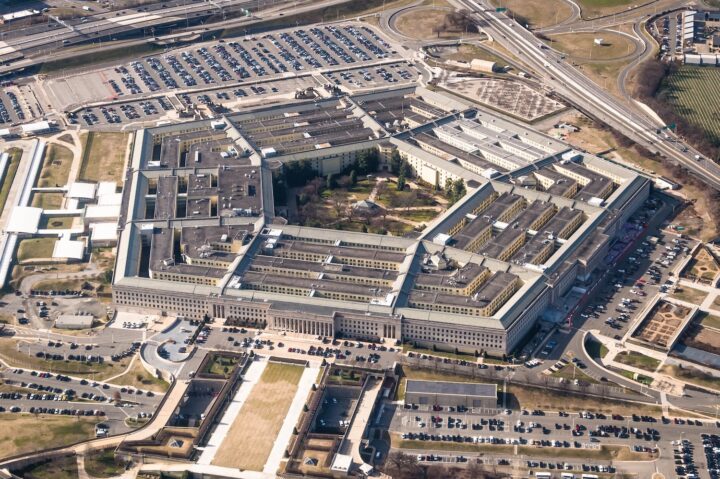
The Pentagon
Citing concerns about the Iran war and the administration’s elevated defense funding request, Senate Democrats voted in lockstep on Tuesday evening to block a procedural motion to open debate on the 2027 National Defense Authorization Act, despite the bill passing out of the Armed Services Committee with bipartisan support.
The decision to block the start of debate on the NDAA — an annual must-pass bill that typically garners strong bipartisan support — is a rare step by Democrats signaling significant frustrations with the Trump administration’s ongoing war against Iran.
Sen. Jack Reed (D-RI), the top Democrat on the Armed Services Committee, said in a statement that he continues to support provisions in the bill, “but I cannot vote to proceed to a bill that enables an ongoing war against Iran that Congress never authorized and the American people overwhelmingly oppose.”
He said that Democrats are seeking amendments to “require accountability” for the war that have been rejected by Republicans. Reed added that Democrats also cannot support a significant increase in defense spending without more reliable accounting of the costs of the Iran war or “basic information” about it, and without a corresponding increase in non-defense spending.
Sen. Patty Murray (D-WA), the ranking member of the Senate Appropriations Committee, similarly cited the Iran war as a primary reason for her opposition to the bill.
“I will always do everything in my power to take care of our servicemembers and keep our country safe, but this bill authorizes President Trump’s absurd $1.5 trillion defense budget request while doing nothing to put an end to his disastrous war or prevent him from starting more costly conflicts abroad,” Murray said in a statement. “I refuse to endorse President [Donald] Trump’s obscene war budget, and I refuse to move this bill forward as Trump pushes our country deeper into a war the American people oppose”
Sen. Jeanne Shaheen (D-NH), the ranking Democrat on the Senate Foreign Relations Committee, said in a statement that it is “vital that we both pass the NDAA and that we constrain the President’s lawless and costly war against Iran.”
“With the President re-launching his self-defeating war, I voted against the motion to end debate on the NDAA, so we can continue to advocate for greater transparency and an end to this conflict,” Shaheen continued.
She said that amendments to reduce overall spending and withhold any congressional authorization for the Iran war failed along party lines during the closed-door committee markup of the NDAA.
Six progressive Democrats — Sens. Chirs Van Hollen (D-MD), Bernie Sanders (I-VT), Jeff Merkley (D-OR), Peter Welch (D-VT), Ed Markey (D-MA) and Elizabeth Warren (D-MA) — said they would vote against the motion to demand a vote on removing a provision on U.S.-Israel cooperation from the bill, and urged colleagues to do the same.
Though some anti-Israel voices have tried to paint that provision as the reason the Democratic caucus voted en masse against the bill, most Democrats did not cite that in their own statements on the bill.
Sen. John Fetterman (D-PA), the only Senate Democrat who has unreservedly supported the Iran war, was not present for the vote.
Republicans called the Democratic blockade dangerous to national security.
Sen. Chuck Grassley (R-IA) called the vote “SHAMEFUL” and said that the vote demonstrates that Democrats don’t take national security issues, which he described as the most important responsibility of the federal government, seriously.
The South Carolina Republican had recently returned from a trip to Kyiv, Ukraine, and Ankara, Turkey

Amir Levy/Getty Images
Senator Lindsey Graham (R-SC) speaks at a press conference on US-Israel relations on February 17, 2025
Sen. Lindsey Graham (R-SC), who represented South Carolina in the Senate for more than two decades and was a stalwart supporter of Israel during his time in office, died on Saturday, his office announced. He was 71.
Graham, who served in the House of Representatives for more than a decade before being elected to the Senate in 2002, had recently returned from Ukraine, where he met with Ukrainian President Volodymyr Zelensky. Prior to Ukraine, he had been part of a bipartisan U.S. delegation in Ankara, Turkey, for the NATO summit.
Sen. Lindsey Graham (R-SC) @LindseyGrahamSC died Saturday following what his office described as “a brief and sudden illness.”
— Jewish Insider (@jewishinsider) July 12, 2026
Israeli Prime Minister @netanyahu called him “a great American patriot and a great champion of the Israel-American alliance.”
President Donald Trump… pic.twitter.com/sKzQc2XnmT
NBC News reported that emergency personnel had responded on Saturday evening to a call regarding a cardiac arrest at Graham’s home on Capitol Hill.
A longtime advocate for Israel, Graham traveled to the country in the immediate aftermath of the Oct. 7, 2023, Hamas terror attacks, making at least 10 trips to the region since the onset of the Israel-Hamas war. He last traveled to Israel days before the outbreak of the Iran war in February 2026, during which he met with Israeli Prime Minister Benjamin Netanyahu.
Graham was openly critical of Iran and skeptical of Western engagement with the Islamic Republic. He was a vocal opponent of the 2015 Joint Comprehensive Plan of Action and favored military engagement to address the threats posed by the Islamic Republic. He defended the Trump administration’s recent negotiations with Tehran, but said in June that he thought those talks were “going to fail.”
The South Carolina Republican had been up for reelection in November after easily clearing the GOP field in the state’s primary last month. Graham’s death is expected to trigger a special primary in the state to determine who will replace him on the ballot.
The Republican lawmaker was swiftly eulogized by top Israeli political figures.
Israeli Prime Minister Benjamin Netanyahu said Israel had “lost one of its greatest friends.” Graham, Netanyahu said, “understood that the security of Israel and America are inseparable. He devoted his life to defending America, strengthening our alliance and standing up for the free world.”
Israeli President Isaac Herzog said in a statement that he was “shocked and heartbroken” to learn of Graham’s death, calling the senator a “dear friend” and a “great American patriot, a great friend of Israel.”
“Senator Graham was a beacon of moral clarity and a true leader of the U.S.-Israel partnership,” Herzog said. “We will never forget how he stood by the people of Israel in our most difficult moments, and we will remain eternally grateful for his sense of justice, truth, and loyalty.”
In a social media post, former Israeli Prime Minister Naftali Bennett, who is running in the current election, mourned Graham as one of the country’s “greatest friends,” who “stood with Israel through our darkest hours, with courage.”
Democrats, and some Republicans skeptical of the war effort, have indicated that they’re hesitant if not outright opposed to voting for additional funding for the war

ATTA KENARE / AFP via Getty Images
Explosions erupt following strikes at Tehran Oil Refinery in Tehran on March 7, 2026.
The Trump administration on Wednesday formally sent an $87.6 billion supplemental funding request to replenish stockpiles and otherwise cover the costs of the war with Iran to Congress.
The official notification came in a letter from Office of Management and Budget Director Russell Vought on behalf of President Donald Trump to House Speaker Mike Johnson (R-LA), which was subsequently forwarded to Senate GOP leadership offices.
The defense supplemental request includes $67 billion for the Department of Defense to resupply munitions stocks and prevent the cost of the U.S. troop deployment to the Middle East during Operation Epic Fury, the operation conducted last summer against Iran, from cutting into the Pentagon’s budget.
The bill also requests some additional funding for the State Department and Coast Guard related to the operations.
Administration estimates for the cost of the war have fluctuated significantly: initial reports indicated the Pentagon wanted to ask Congress for $200 billion for the war alone, while officials testified that the munitions costs of the war were between $20 billion and $30 billion. Reconstruction costs for the U.S. bases damaged or destroyed during the war have not yet been accounted for.
Democrats, and some Republicans skeptical of the war effort, have indicated that they’re hesitant if not outright opposed to voting for additional funding for the war, meaning that the legislation might struggle to clear the 60-vote threshold necessary for passage in the Senate.
In addition to the Iran war funding, the supplemental includes a variety of other requests relating to a smorgasbord of other subjects from the Ebola outbreak to supporting farmers, construction projects in Washington, D.C., and New York’s Penn Station and others.
Sen. Roger Wicker (R-MS), the chairman of the Senate Armed Services Committee, released a statement expressing his full support for the supplemental request.
“I fully support the defense supplemental request submitted to Congress today and look forward to working with my colleagues to move it forward legislatively as soon as possible. We must ensure our service members have everything they need to face an increasingly dangerous world,” Wicker said in a statement. “This supplemental funding is essential in the near term to maintain readiness through training and military pay.”
He added that the “request would also accelerate immediate production of key capabilities, from exquisite munitions to low-cost hypersonics, strike weapons, and drones.”
Sen. Kevin Cramer (R-ND) told reporters that he supports the supplemental.
“I think there should be a lot of support for it — you don’t have to agree with the president’s decisions in Iran to understand we need to modernize, we need more munitions, we have some catching up to do in terms of our weapons systems,” Cramer said. “I, frankly, thought it was pretty modest.”
Sen. Susan Collins (R-ME), the chair of the Senate Appropriations Committee, told Jewish Insider that she hasn’t had a chance to review the request yet, but that the committee plans to hold a public hearing about it.
Collins said “I have no idea, I really don’t” as to whether Republicans will be able to secure the Democratic support that will be necessary to pass the bill, but she was skeptical.
“I haven’t looked at it, and it also depends on whether they’re going to play politics,” Collins added. “I was also not encouraged by Vice Chair [Patty] Murray’s comments.”
Sen. Bill Cassidy (R-LA), who lost the Republican primary contest for his reelection bid to a Trump-backed challenger last month and has since become one of the Senate’s leading swing votes, told JI that he will need to review the supplemental before deciding whether to support it.
Sen. Chris Coons (D-DE), the top Democrat on the Senate Appropriations Defense subcommittee, told JI he was skeptical of the request.
“I’m still reviewing it. My initial reaction is I’m opposed to the supplemental as it is,” Coons said. “I’m open to finding ways to provide the resources that our war fighters need and that will defend our country, but I’m not open to billions of dollars for things like the Golden Fleet or the Golden Dome.”
Coons said that “it’s hard for me to get too excited about a supplemental when we don’t yet have clarity about if reconciliation 3.0 is the only supplemental and, frankly most importantly, what’s the status of the war. I’m not going to vote for a backdoor authorization for the war in Iran.”
The Delaware senator told JI that he has “pressed in every conversation” with the Trump administration “the importance of funding for Ukraine and securing cutting-edge drone interceptor capability to defend the United States.”
Sen. Patty Murray (D-WA), the top Democrat on the Appropriations Committee, released a statement late Wednesday criticizing the president for launching “a reckless and costly war with Iran — without authorization from Congress or the support of the American people — that he should never have started, and now, instead of doing anything to help families get by, he is asking taxpayers to pick up the tab and give him billions more to wage wars overseas.”
Murray noted that the president “is making this request for more funding as the Pentagon already has a historic annual budget and sits on over $100 billion in unspent funding Republicans provided in their Big Ugly Bill.”
She also argued that the Trump administration “has failed to answer basic questions about its aims and justification for the Iran war and failed to provide the most basic information about its costs.”
And the Washington senator said that the bill is “an attempt to secure tens of billions of additional dollars for unrelated Pentagon priorities that should rightly be considered through the annual appropriations process.”
Murray did not explicitly commit to voting against the supplemental request. She instead vowed to “closely review” it and said she would “ensure we take care of our servicemembers,” though she warned that, “I will not rubber-stamp tens of billions more for this disastrous war of choice.”
Secretary of Defense Pete Hegseth briefed some House Republicans in a classified setting on the supplemental, and the White House’s request for a $350 billion reconciliation bill to provide additional Pentagon funding, at the Capitol on Wednesday. Some Senate Republicans have said the reconciliation bill is a nonstarter.
The meeting took place a few hours before Vought’s letter to Johnson, which was sent earlier in the day, was made public and came ahead of an expected fight over the funding request to replenish stockpiles and otherwise pay for the war in Iran.
Rep. Don Bacon (R-NE) emphasized after the meeting that the supplemental is necessary to restock the munitions the U.S. needs to counter its adversaries, and to take care of servicemembers.
He also offered support for the larger $350 billion request, which he said is just a first step toward bringing the U.S.’ defense budget in line with where it needs to be to ensure the country’s global status and take care of troops.
He also praised Hegseth’s discussion of the U.S. memorandum of understanding with Iran. Bacon said he has not always been impressed by Hegseth, but found that he was “more prepared” and had a “good grasp” of the details.
Rep. August Pfluger (R-TX), the chair of the Republican Study Committee, the GOP caucus that organized the briefing, also made the case for the reconciliation bill, arguing that we “have a once in a lifetime opportunity to have a generational impact on our military,” and argued that it’s going to be up to Republicans “to make sure the future generations have the resources, have the weapons systems, are trained and are outfitted to make sure that they defend this country.”
Rep. Rich McCormick (R-GA) said that Hegseth argued to lawmakers that, before the Iran war, the Iranians were not negotiating in good faith, and “now they are,” which is a sign of progress.
“So you could say they accomplished that mission. I think it wasn’t good enough at all. I think we could have had an unconditional surrender,” McCormick said, arguing that the U.S. should have struck Iran’s oil facilities and set back Iran’s economy by decades, and could have ended the war by now on its own terms.
“I just don’t see how they had any negotiation power at all,” McCormick said. He said that if Iran doesn’t make a deal, he expects a return to war.
He also argued that, even prior to the supplemental, the U.S. has sufficient munitions to “obliterate all of Iran, easily, and then some.”
The package would face steep hurdles in the Senate, where lawmakers have already balked at the Pentagon's initial $1.5 trillion funding request

SAUL LOEB / AFP via Getty Images
Chairman of the Joint Chiefs of Staff Gen. Dan Caine speaks as a map of the Strait of Hormuz is displayed during a press briefing at the Pentagon in Washington, DC, on April 16, 2026.
The Trump administration is planning to ask Congress to approve an $80 billion request for additional funding to replenish stockpiles and otherwise pay for the war in Iran, according to several reports.
That request comes on top of a push for a $1.15 trillion regular defense budget for 2027 as well as another $350 billion for the Pentagon that the administration wants Congress to pass through a partisan reconciliation process — a $1.5 trillion request in total that Republican lawmakers have criticized and some key Senate Republicans have described as unrealistic.
The supplemental request, too, could prove difficult to pass, requiring 60 votes in the Senate. Many Democrats declared at the outset of the war that they would refuse to pass any supplemental funding for the effort, and have further balked at the initial $1.5 trillion defense budget request.
Secretary of Defense Pete Hegseth is set to brief some House Republicans on Wednesday about the administration’s defense funding requests and the war in Iran.
Sen. Thom Tillis (R-NC) indicated he’s generally supportive of the anticipated $80 billion request, and argued that many of his colleagues could be convinced to support it if it’s primarily focused on restocking expended U.S. munitions supplies.
“It doesn’t surprise me. I think a part of what we need to do is figure out how much of that is for replenishment, that’s basically to get us the base load pre-conflict,” Tillis told Jewish Insider. “So I think the more that people spend on describing at that level, the more likely it is you’ll get support for it, and particularly if they only focus on what’s critical to get back to pre-conflict baselines. I think most members would say we got to do that.”
Sen. Mark Kelly (D-AZ), a military veteran who has generally been more moderate on defense issues than some of his more progressive colleagues, indicated he’s more skeptical of the proposal.
“I always want to make sure that the troops have what they need to do a really hard job and defend themselves especially,” Kelly said.
But, he continued, when he joined the Senate in 2022, the total defense budget was $650 billion, and the $1.5 trillion the administration is now seeking is higher than much of the rest of the world’s defense budgets combined.
He said that some of the systems the administration is asking for, such as space-based missile defense, are impractical or unneeded, “so I want to see the munitions be replaced, but let’s do it within a responsible top line of the defense bill, not this crazy, overly inflated number.”
Sen. Josh Hawley (R-MO), who had called for a prompt end to the war and has been supportive of talks with the Iranian regime, said he was withholding judgement on the supplemental request until the administration actually submits it.
Initial reports indicated the Pentagon intended to request as much as $200 billion for the war, but Pentagon officials testified last month that the costs of the war — excluding anticipated rebuilding costs of U.S. facilities in the region, came in between $20 and $30 billion.
“I don’t want to get out ahead of what the Pentagon will propose here,” Hawley said. “There’s been multiple iterations, so next week it may be something different. Let’s let them come up with something.”
Blinken is the second top Biden administration official to champion Khanna, a likely 2028 presidential prospect and outspoken critic of Israel

Andrew Caballero-Reynolds/AFP via Getty Images
Secretary of State Tony Blinken speaks at the Atlantic Council in Washington, D.C, on January 14, 2025.
Former Secretary of State Tony Blinken offered support for Rep. Ro Khanna’s (D-CA) stance on the Iran war and the U.S. deal with Iran in a post on X on Tuesday.
Blinken praised the “wise words from my friend [Khanna],” reposting a Fox News op-ed by the congressman making the case that “stopping the Iran war is good. But Trump’s deal is worse than the JCPOA.”
He’s the second prominent former Biden administration official to draw closer to Khanna in the lead-up to the 2028 presidential primary, joining former White House Chief of Staff Ron Klain, who has reportedly been advising Khanna behind the scenes as he prepares for a presidential run.
The comments also come as some progressive presidential contenders call for the Democratic Party to purge its ranks of foreign policy advisors who served in the Biden administration, given its general support for Israel.
Khanna, in the op-ed published on Fox News’ website, praised the “welcome news” of the end of the war in Iran, but called the war “a self-inflicted disaster that cost American lives and burned through taxpayer dollars” and said the deal reached is more favorable for Iran than the 2015 Joint Comprehensive Plan of Action from which President Donald Trump withdrew.
“The details of the ceasefire released this week show that Vice President [JD] Vance woefully misled Americans on at least five accounts when he claimed the administration’s deal was better than the JCPOA that President Obama negotiated in 2015,” Khanna continued. “A better deal for ending this war would have been anchored in tough diplomacy and economic pressure rather than blunt force.”
The only times in the op-ed Khanna mentioned Israel — a frequent target of criticism by the congressman — were to argue that “through tough diplomacy” the U.S. could have worked with Lebanon to disarm Hezbollah so it could not threaten the Lebanese people or Israel, and “used Iran’s temporary loss of military capabilities as an opportunity to restart negotiations over a two-state solution for Israelis” along the lines of the Arab Peace Initiative.
The resolution passed 50-48 with GOP Sens. Paul, Murkowski, Collins and Cassidy voting with Democrats in favor
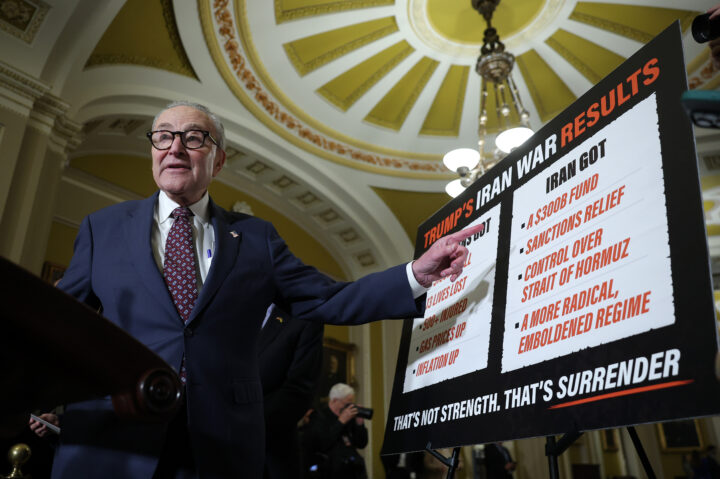
Photo by Kevin Dietsch/Getty Images
U.S. Senate Minority Leader Chuck Schumer (D-NY) speaks to reporters after the weekly Senate policy luncheons at the U.S. Capitol on June 23, 2026 in Washington. Schumer spoke out against President Trump's Iran deal and a the need for the Senate to pass a War Powers Resolution regarding Iran.
The Senate voted on Tuesday to pass a House-passed war powers resolution directing the administration to withdraw U.S. forces from Iran — a congressional rebuke of the administration over the war in Iran — though legally its effects are likely to be largely symbolic.
The resolution passed by a 50-48 vote, with Republican Sens. Rand Paul (R-KY), Lisa Murkowski (R-AK), Susan Collins (R-ME) and Bill Cassidy (R-LA) again voting in favor and Sen. John Fetterman (D-PA) voting against it. Ultimately, GOP absences enabled the resolution to go forward.
But the resolution, now passed by both chambers, came in the form of a concurrent resolution, which is not submitted to the president and, based on past court precedent, is not seen as carrying the force of law — though a House Democratic aide argued to CNN that the measure would be binding.
Rep. Greg Meeks (D-NY), the ranking member of the House Foreign Affairs Committee and lead Democratic sponsor of the war powers resolution, insisted in a statement, “Regardless of what President Trump says, this measure is binding under the War Powers Resolution, and I will explore all legal avenues to ensure the Executive complies with the will of Congress.”
Unlike previous efforts, however, the concurrent resolution did not require other procedural votes by the Senate, allowing Democrats to take advantage of the Republican absences and move directly toward final passage to deliver a message of rebuke to the administration.
The Senate still has other war powers resolutions pending, including one which passed an initial procedural hurdle, but currently lacks the support to pass through an additional procedural vote and final passage with full attendance. That legislation, which comes in a different form as joint resolutions, would be presented to the president if passed and set up a potential veto or other legal fight.
Republicans warned that adopting the resolution would send a further signal to Iran that it does not need to negotiate or make any compromises with the U.S. as part of ongoing talks.
Seattle Mayor Katie Wilson said she was briefed on a 'credible threat' to the city and decided to turn on CCTV cameras around the soccer stadium for the games

Harry How/Getty Images
Alireza Jahanbakhsh Iran trains with teammates one day ahead of the FIFA World Cup 2026 Group G match between IR Iran and New Zealand at Centro Xoloitzcuintle on June 14, 2026 in Tijuana, Mexico.
As the Iranian national soccer team begins the 2026 World Cup amid high-level diplomatic negotiations to end the war between the U.S. and Iran, American security officials — and American Jewish communities already operating under elevated threat conditions — are facing challenges beyond soccer,
The first security and political consideration concerns the Iranian delegation itself: The United States has occasionally restricted entry for sports officials and delegations from adversarial countries — from Soviet Olympic officials during the Cold War to Cuban baseball and Iranian karate representatives in recent years.
The Trump administration, facing pressure from FIFA, did eventually issue visas several weeks ago — after months of uncertainty — to the 26 members of Iran’s national team, though more than a dozen staff members and officials associated with the team were not granted visas due to security concerns. The team is set to play on Monday and next week in Los Angeles, against New Zealand and Belgium, respectively, and against Egypt in Seattle on June 26.
“The visas necessary for Iran to compete in the World Cup, including for athletes and necessary support staff, have been issued,” the State Department told ESPN. “We will not allow the Iranian team to abuse this system to sneak terrorists into the United States under false pretenses.”
One of the people rejected is reportedly Mehdi Taj, head of the Iranian soccer federation, who was previously a commander in Iran’s Islamic Revolutionary Guard Corps. The team is also not allowed to stay on U.S. soil overnight; it relocated its training camp from Tucson, Ariz., to Tijuana, Mexico, and will return to Mexico after the final whistle of each of its matches.
The host cities are already on alert: Seattle Mayor Katie Wilson, a Democrat, said she was briefed on a “credible threat” to the city during the World Cup, which so alarmed her that she decided to turn on CCTV cameras around the soccer stadium for the duration of the games, counter to her longstanding opposition to the surveillance system.
Amid an already heightened threat environment for Jewish communities in the aftermath of the Oct. 7 attacks and amid the Iran war, thousands of fans from around the world flocking to the U.S. to cheer on their favorite teams presents an additional security challenge.
Secure Community Network, a Jewish communal security organization, told Jewish Insider that “there are no known specific threats to the Jewish community directly related to the World Cup,” though the group “has been proactively engaged with the Jewish Federation of Greater Seattle and other World Cup host cities well in advance of the tournament.”
SCN cited the 2006 shooting attack on the Seattle Jewish Federation that killed one and wounded five others, perpetrated by a Pakistani national who said he was “angry at Israel,” as “continu[ing] to inform the local community’s commitment to security and preparedness.” The Seattle and Los Angeles Jewish federations declined to comment.
Oren Segal, the Anti-Defamation League’s senior vice president of counter-extremism and intelligence, called Iran’s participation in the World Cup “a moment for vigilance, not alarm.” He predicted that the event “will likely attract some protest activity from groups seeking to leverage the global attention surrounding the tournament to advance their causes,” and said “the appropriate response is proactive coordination with local law enforcement and ensuring that community members are informed, prepared, and supported.”
Plus, Ron Klain goes to bat for Platner

Getty Images
A large plume of smoke rises over Tehran after explosions were reported in the city during the night on March 28, 2026 in Tehran, Iran.
This P.M. edition is reserved for our premium subscribers like you — offering a forward-focused read on what we’re tracking now and what’s coming next.
Today’s Daily Overtime was curated by JI U.S. Editor Danielle Cohen-Kanik.
📡On Our Radar
Notable developments and interesting tidbits we’re tracking
After the U.S. conducted strikes yesterday in Iran, President Donald Trump said from the Oval Office this morning that the U.S. would “hit them hard again today” and told Fox News that he may target Iranian power plants and bridges because Tehran is “tapping the United States along” in negotiations.
As Trump convened his national security team in Washington this afternoon to discuss military options, Defense Secretary Pete Hegseth told reporters CENTCOM will be “busy tonight” with “bombs dropping on key facilities in Iran”…
Trump also revealed today that he directed the U.S. military last month to “execute a secret mission” to assist oil tankers and other commercial vessels in transiting the Strait of Hormuz, an effort that “has resulted in more than 100 MILLION Barrels of Oil” and over 200 commercial ships moving through the waterway. His Truth Social post was a clarification of earlier comments that seemed to suggest the U.S. was stealing this oil directly out of Iran; U.S. operations to facilitate passage in the strait have been previously reported…
Trump provided Fox News with new details of the downing of the U.S. Army helicopter earlier this week, describing how an Iranian drone became lodged between the two pilots in the cockpit who guided the helicopter into the sea, where they were rescued “for the first time in U.S. military history” by an unmanned sea drone…
Qatari mediators visited Tehran today in the hopes of pushing Iranian officials to engage more effectively in negotiations with the U.S., Axios reports, after Trump had grown increasingly frustrated with their intransigence over the last two weeks, even as he continued to signal the two sides were approaching a deal…
U.S. Ambassador to the U.N. Mike Waltz met with UAE Foreign Minister Abdullah bin Zayed Al Nahyan in Abu Dhabi, the highest-level U.S. official to publicly visit the Gulf since the Iran war began…
Israeli Prime Minister Benjamin Netanyahu blasted Turkish President Recep Tayyip Erdoğan as an “antisemitic dictator” today after Erdoğan condemned Israel’s “network of murder” in Syria and Lebanon and threatened a “very clear and strong response” if Turkish interests in the region were jeopardized. Netanyahu said Erdoğan, whom he accused of supporting Hamas, lacks the moral authority to criticize Israel.
Trump, when asked in the Oval Office about the potential for war between Israel and Turkey, described Erdoğan as a “hell of a leader” and said, “I don’t think that will happen as long as I’m president”…
More than 20 countries, including the U.S., issued a joint statement condemning “lethal plotting and malign actions” by Iran’s security forces working with international and local criminal groups in Europe, North America and Australia, including their efforts to target “Iranian dissidents, journalists and Jewish and Israeli communities and interests”…
The Department of Justice indicted eight individuals associated with the University of Michigan for allegedly threatening university leaders, law enforcement, businesses and the Jewish Federation of Metropolitan Detroit over the conspirators’ perception of their “purported financial support of Israel.”
The individuals “discussed methods by which to harm the targets and their families, including poison, bombs, and psychological torture,” engaged in extensive vandalism and threw jars filled with noxious chemicals into homes, according to the department…
An immigration judge ordered earlier this month that Columbia University anti-Israel protest leader Mohsen Mahdawi be deported to Jordan, after a lengthy legal battle in which the Trump administration claimed Mahdawi has been involved in and supported terrorist violence. Mahdawi, who has not been charged with a crime, is still seeking review of his removal proceedings in federal court…
The Senate Education and Natural Resources Committee advanced the Holocaust Education and Antisemitism Lessons (HEAL) Act by a voice vote…
The National Republican Senatorial Committee, in a memo to donors, acknowledged that the “political fundamentals in Maine remain challenging” for Sen. Susan Collins (R-ME) to retain her seat against scandal-plagued challenger Graham Platnerand called it a “fatal mistake to assume Platner is too damaged to win”…
Trump offered Collins his backing today after having long been at odds with the senator: Asked if she has his full endorsement, Trump said, “She does, because she’s a sane woman. She’s not my best friend at all … but she’s a sane person and she’s a respected person.” He called Platner a “thug,” a “phony” and a “bad person”…
Ron Klain, the former chief of staff to President Joe Biden, defended Platner’s tattoo of a Nazi symbol in a comment responding to the Republican Jewish Coalition on Instagram, Jewish Insider’s Marc Rod reports: Klain claimed the Totenkopf “was a skull and crossbones to remember [Platner’s] fallen comrades from his service in Afghanistan,” an explanation Platner’s campaign has not previously offered…
Former New York City Comptroller Brad Lander, running against Rep. Dan Goldman (D-NY) in the 10th Congressional District, denied to JI’s Will Bredderman that he’s backing Darializa Avila Chevalier in her race against Rep. Adriano Espaillat (D-NY) — even as the two appeared together in an ad paid for jointly by both of their campaigns…
Kennedy scion Jack Schlossberg, running in the Democratic primary for New York’s 12th District, came out yesterday in support of the Block the Bombs Act, JI’s Matthew Kassel reports, despite having previously expressed skepticism about the bill seeking to broadly restrict weapons sales to Israel…
Meanwhile, Public First Action, the PAC linked to AI giant Anthropic, is spending $1.2 million on a Knicks-themed ad in support of Schlossberg’s opponent, Alex Bores, who has become a leading advocate for AI regulation on the campaign trail. The ad is set to air tonight during Game 4 of the NBA Finals, Politico reports…
⏩ Tomorrow’s Agenda, Today
An early look at tomorrow’s storylines and schedule to keep you a step ahead
Keep an eye out in Jewish Insider for a look at the state of play in Israel’s elections, taking place this fall.
The House Appropriations Defense Subcommittee will hold a closed-door markup of the 2027 defense spending bill.
Reps. Don Beyer (D-VA) and Ritchie Torres (D-NY) will speak at a Progressive Policy Institute event on “Working Toward a New Era of Patriotism and Democratic Renewal” at the National Press Club in Washington.
Stories You May Have Missed
SIDESTEPPING QUESTIONS
Senior House Democrats profess ignorance of Hamawy’s controversial past
House Foreign Affairs Committee ranking member Greg Meeks said of the Democratic N.J. congressional nominee, ‘I don’t like to talk about somebody I don’t know’
LASHING OUT
Micah Lasher says he’s ‘exhausted’ by political ‘obsession’ with Israel

The Democratic congressional hopeful aired his frustration when asked about his stance regarding U.S. aid to the Jewish state at a candidate forum
The president told Fox News that Washington is nearing a decision on additional strikes against Iran, arguing that Tehran has dragged out negotiations and must now ‘pay the price’
Getty Images
A large plume of smoke rises over Tehran after explosions were reported in the city during the night on March 28, 2026 in Tehran, Iran.
President Donald Trump said on Wednesday morning that the U.S. could soon launch additional strikes against Iranian power plants and bridges, raising the prospect of a broader military campaign against Tehran as he accused Iran of dragging the U.S. along in diplomatic negotiations.
The president’s comments to Fox News’ Trey Yingst came hours after the U.S. military announced it had targeted Iranian air defense, ground control and surveillance radar sites in response to Iran downing a U.S. Army helicopter on Monday. Iranian state media, meanwhile, claimed attacks on U.S. military facilities in Bahrain, Kuwait and Jordan.
Trump said in a post on Truth Social on Wednesday morning that Iran had “taken too long to negotiate a deal that would have been great for them” and warned that Tehran would now “have to pay the price.”
Trump made similar threats regarding targeting Iranian power plants and bridges as a way to escalate hostilities when he was unsatisfied with negotiations in April, though such strikes were not carried out.
Trump also disclosed new details about the incident that precipitated the latest U.S. action: According to the president, an Iranian drone became lodged between the two pilots of a U.S. Apache helicopter who guided the helicopter into the sea, where they were rescued “for the first time in U.S. military history” by an unmanned sea drone.
Plus, Israeli confidence in Trump hits new low

U.S. Navy via Getty Images
A U.S. Sailor signals the launch of an MH-60R Sea Hawk helicopter, attached to Helicopter Maritime Strike Squadron 70, on the flight deck of the world's largest aircraft carrier, USS Gerald R. Ford (CVN 78), while supporting Operation Epic Fury on February 28, 2026.
This P.M. edition is reserved for our premium subscribers like you — offering a forward-focused read on what we’re tracking now and what’s coming next.
Today’s Daily Overtime was curated by JI U.S. Editor Danielle Cohen-Kanik.
📡On Our Radar
Notable developments and interesting tidbits we’re tracking
President Donald Trump announced today that Iran was responsible for downing a U.S. Apache helicopter over the Strait of Hormuz last night, and vowed to respond out “of necessity.” Trump had reportedly told aides his “red line” for resuming military action would be if Iran killed any more Americans, though he confirmed in his post on Truth Social that both American pilots involved were “safe and uninjured.”
Later, however, in a call with The Wall Street Journal, Trump appeared to downplay the incident, saying it “wasn’t a big deal” and that “the pilot is fine”…
Top GOP lawmakers echoed Trump’s initial assessment that the U.S. must respond: Sen. Ted Cruz (R-TX) told Jewish Insider’s Matthew Shea that Iran should face “significant consequences.” Rep. Mike Rogers (R-AL), chairman of the House Armed Services Committee, similarly said the U.S. must “vigorously respond,” and Sen. Ted Budd (R-NC) pushed for “decisive action”…
Iranian Foreign Minister Abbas Araghchi signaled that Tehran is distancing itself from the episodeand not claiming it as a direct attack on the U.S. He said in a statement, “Foreign forces in proximity to our territory are at constant risk on account of their own human errors, plain accidents, or potentially being caught in crossfire. To reduce risk, best solution is for them to leave”…
Trump, speaking to ABC News, openly mused about whether Israeli Prime Minister Benjamin Netanyahu “even wants to continue” and run in Israel’s upcoming elections, slated to take place this fall. “He’s a wartime prime minister. We will very shortly win the war one way or the other, and you know he’s a wartime prime minister,” Trump said…
A gunman from Lebanon entered Israeli territory and fired on IDF troops, who killed him before he crossed the border fence, the IDF said. The infiltration set off a widespread search for potential accomplices, though none were found…
Before the latest round of missile fire between Israel and Iran, U.S. and Iranian negotiators had focused their discussions on four major elements of a nuclear deal, officials told The New York Times, even as the Trump administration has said nuclear issues will be discussed in a subsequent round of negotiations.
The key points reportedly include how long Iran will suspend uranium enrichment, diluting the country’s stockpile of already enriched uranium, dismantling three of its major nuclear facilities and “snap” inspections of all relevant sites inside the country…
A new survey from the Israel Democracy Institute found the share of Israelis who believe the country’s security is a primary consideration for Trump has plummeted to 44%, down from 60% who said the same in March at the beginning of the Iran war, JI’s Matthew Shea reports.
It’s the lowest level of Israeli trust in Trump since the institute began tracking the metric when he was elected to a second term in November 2024, coming as Washington and Jerusalem seemingly diverge on their strategies and ultimate goals of the war with Iran…
Twenty-one countries issued a joint statement urging Israel not to implement a new law requiring international NGOs wanting to operate in the West Bank and Gaza to register with and be vetted by the Israeli government, calling the law “part of a broader pattern of restrictive measures” that “constrain the urgently needed humanitarian response.”
Israel’s Foreign Ministry dismissed the concerns and claims of the countries as “completely unfounded and detached from reality” as it said there are “immense amounts of humanitarian aid entering the Gaza Strip”…
Randy Villegas, a left-wing Democrat running to unseat Rep. David Valadao (R-CA) in California, claimed victory today in the jungle primary over Jasmeet Bains, a moderate Democrat who had been favored by pro-Israel leaders as well as the party’s national leadership, JI’s Matthew Kassel reports. Democratic Majority for Israel’s super PAC had spent heavily to help Bains with a $500,000 TV ad buy opposing Villegas…
United Democracy Project, the AIPAC-affiliated super PAC, is spending $2 million on an initial ad buy this week to boost Rep. Haley Stevens (D-MI) in the Democratic primary for Michigan’s open Senate seat, a UDP spokesperson confirmed to JI’s Matthew Kassel. The ad touts Stevens’ record fighting for the auto industry, opposing Medicare cuts and working to cap insulin prices in Congress…
⏩ Tomorrow’s Agenda, Today
An early look at tomorrow’s storylines and schedule to keep you a step ahead
Keep an eye out for timely analysis of today’s primary election results in Maine, Nevada and South Carolina from Jewish Insider Editor-in-Chief Josh Kraushaar — premium JI subscribers like you will receive it first.
The Senate Energy & Natural Resources Committee will hold a markup of the HEAL Act, a bipartisan bill examining Holocaust education efforts across the country.
The Culture for Peace Institute will hold a conference in Washington with speakers including State Department antisemitism envoy Rabbi Yehuda Kaploun; Sens. John Fetterman (D-PA) and Dan Sullivan (R-AK); and Reps. Nick LaLota (R-NY), Randy Fine (R-FL), Andy Barr (R-KY), Mike Lawler (R-NY), Max Miller (R-OH), Tom Suozzi (D-NY), Elise Stefanik (R-NY) and Derrick Van Orden (R-WI).
Elsewhere in Washington, Iran International will hold a town hall focused on the conflicts in Lebanon and Iran, featuring the Middle East Institute’s David Hale and Alex Vatanka as well as Dan Diker, president of the Jerusalem Center for Security and Foreign Affairs.
In the evening, lawmakers will take the field for the annual Congressional Baseball Game at Nationals Park.
In New York, the Conference of Presidents of Major American Jewish Organizations will hold its annual antisemitism convening, bringing together communal professionals, experts and others to discuss efforts to combat antisemitism.
New York state Assemblymember Claire Valdez, Brooklyn Borough President Antonio Reynoso and City Councilmember Julie Won — the top Democratic candidates for New York’s 7th Congressional District to replace retiring Rep. Nydia Velázquez (D-NY) — will face off for a debate on local news channel PIX11.
The Auschwitz Jewish Center Foundation will honor New York City Council Speaker Julie Menin, former Israeli hostage Elkana Bohbot and Gazan human rights lawyer Moumen Al-Natour at its gala in Manhattan.
Stories You May Have Missed
MOUNTING SCRUTINY
Will Avila Chevalier’s ‘beyond the pale’ views sink the DSA challenger’s campaign against Espaillat?

Avila Chevalier has a long record of extreme views, including calling for the abolition of police, voicing pro-Russia sentiment and rejecting Israel’s existence
SPECTATOR SPECTACLE
A who’s who of notables packed Madison Square Garden for Game 3 of the NBA Finals
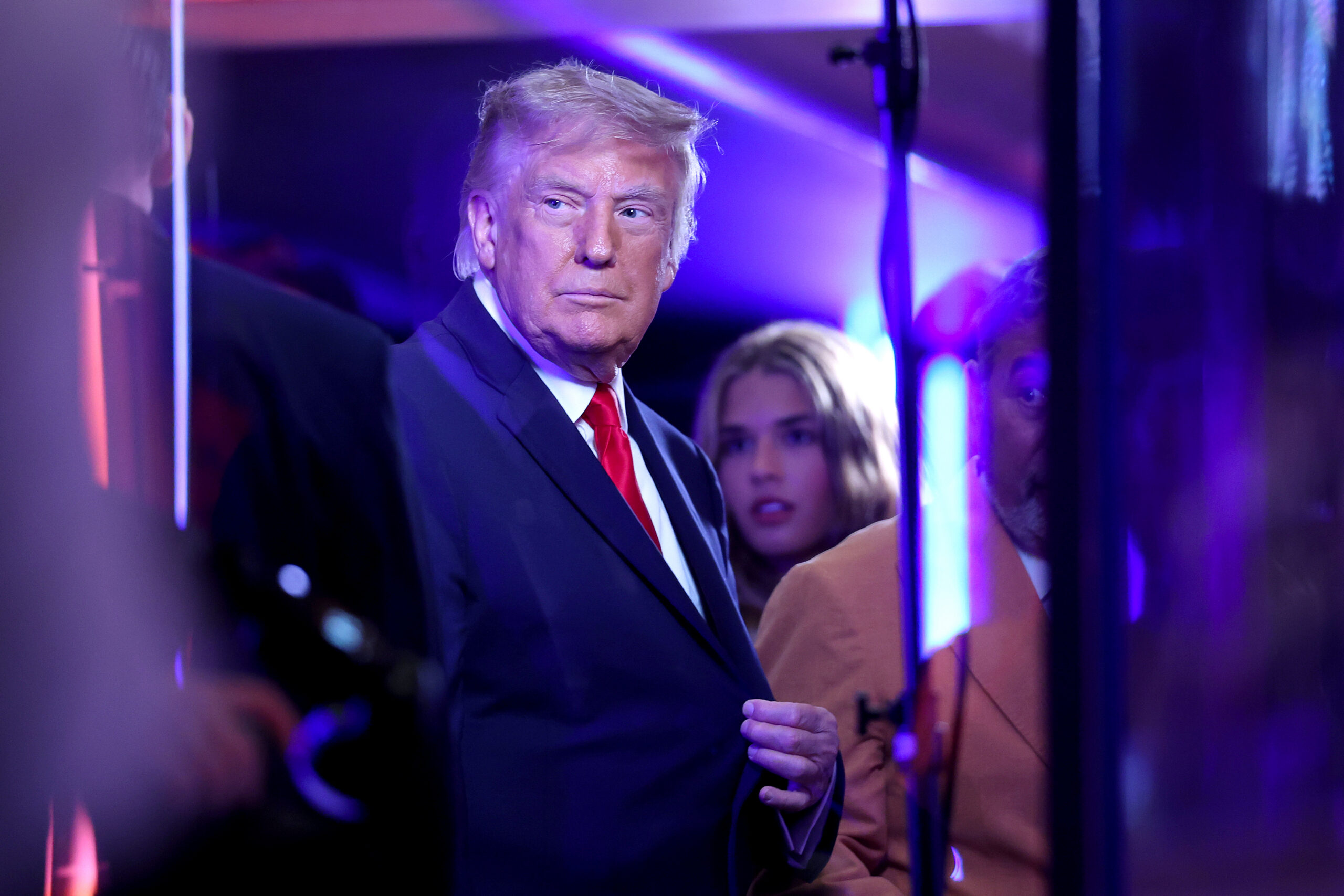
Trump, Mamdani, Witkoff, Kraft, Lutnick and more watched the game
Plus, AIPAC wades into Mich. Senate race

SAUL LOEB/AFP via Getty Images
President Donald Trump shakes hands with Israeli Prime Minister Benjamin Netanyahu during a meeting in the Oval Office of the White House in Washington, DC, on April 7, 2025.
This P.M. edition is reserved for our premium subscribers like you — offering a forward-focused read on what we’re tracking now and what’s coming next.
Today’s Daily Overtime was curated by JI U.S. Editor Danielle Cohen-Kanik.
📡On Our Radar
Notable developments and interesting tidbits we’re tracking
President Donald Trump cautioned Israeli Prime Minister Benjamin Netanyahu that if Israel went forward with a plan to escalate its strikes on Iran today, “you will be on your own very soon,” the president recalled in an interview with Axios, after which the Israeli leader reportedly called off the attack. Trump also claimed the U.S. and Iran are nearing a “phenomenal deal. We are getting everything we wanted”…
Netanyahu subsequently said in a video statement that, while Israel is “holding its fire” against Iran, Jerusalem has “a full right to self-defense” and is “exercising it to the extent necessary” — a message he said he relayed “with appreciation and respect in my good conversations with my friend President Trump.” But Netanyahu warned that if Iran resumes its attacks on Israel, the IDF would respond with “overwhelming force”…
Mohammad Bagher Ghalibaf, the speaker of the Iranian parliament, said in an address today that Iran’s simultaneous military strikes and diplomacy are part of an intentional strategy and that, though Tehran is seeking to end the war, it does not want to normalize relations with Washington…
U.S. forces disabled another empty oil tanker attempting to sail to Iranian ports today after it failed to disobey orders to stop by firing a precision munition into the ship’s engineering and steering spaces, CENTCOM announced. It’s the seventh such vessel U.S. forces have disabled since the blockade began…
Thirty-eight Senate Democrats, led by Sens. Adam Schiff (D-CA), Tim Kaine (D-VA) and Minority Leader Chuck Schumer (D-NY), demanded in a letter to Trump that the administration provide Congress with the legal opinion backing its determination that U.S. hostilities against Iran have ended, given the ongoing strikes and U.S. presence in the region…
At next week’s G7 summit in France, which Trump will be attending, European leaders will attempt to secure the president’s support for a U.K. and France-led effort to de-mine the Strait of Hormuz, Bloomberg reports…
The J7, a coalition of Jewish communal organizations representing the seven largest Jewish Diaspora populations, urged Canadian Prime Minister Mark Carney to prioritize action over further study after he announced Ottawa’s new Ministerial Advisory Council on Rights, Equality and Inclusion would examine rising antisemitism in the country.
Arguing that the problem has already been well documented, the groups called for a “whole-of-government” response focused on enforcement and countering extremist ideologies and terror movements…
United Democracy Project, the AIPAC-aligned super PAC, began buying ad time in Michigan today, in what appears to be the pro-Israel group’s first foray into the state’s heated Democratic Senate primary…
The Wall Street Journal interviews activists Daniel Moraff and Leanne Fan, who, along with consultant Morris Katz, recruited Graham Platner to run for Senate in Maine. The two said that their own vetting process of Platner did not turn up the Nazi tattoo he had on his chest, nor the full extent of his controversial Reddit posts, but they believed none of what they had seen at the time “will or should stop him from becoming a U.S. senator”…
The two factions of Williamsburg, Brooklyn’s Satmar community united behind Brooklyn Borough President Antonio Reynoso in the race to succeed retiring Rep. Nydia Velazquez (D-NY). Reynoso, a native of the district, clashed with some of the Hasidic sect’s leaders as a city councilmember but rebuilt relationships in subsequent years. New York City Mayor Zohran Mamdani, who has found allies in the Satmar sect while in office, is backing Reynoso’s opponent, Assemblymember Claire Valdez…
Ahead of tonight’s Knicks NBA Finals game against the San Antonio Spurs at Madison Square Garden, The Forward examines the chant sweeping New York City — “My mayor Muslim, my bagel Jewish, my Christian Dior, Knicks in four!” — and what it says about the city’s identity…
⏩ Tomorrow’s Agenda, Today
An early look at tomorrow’s storylines and schedule to keep you a step ahead
Keep an eye out in Jewish Insider for a look at the view from Washington on Trump’s attempt to pressure Netanyahu not to retaliate to Iran’s recent ballistic missile attacks.
Maine, Nevada, North Dakota and South Carolina will hold their primary elections tomorrow.
The House Foreign Affairs Committee will hold a markup of various bills, including one to direct the State Department to impose sanctions on the leaders and family members of the Rapid Support Forces (RSF) and the Sudanese Armed Forces (SAF) responsible for genocide, war crimes and crimes against humanity in the Sudanese civil war.
The House Appropriations Committee will mark up the FY 2027 spending bills for Labor, Health and Human Services and Homeland Security.
The Atlantic Council will kick off its two-day Global Energy Forum with remarks from Energy Secretary Chris Wright; Ben Black, CEO of the U.S. International Development Finance Corporation; Alaska Gov. Mike Dunleavy; and representatives from Kuwait, Egypt, Syria and more.
Agudath Israel of America will celebrate the opening of its new office on Capitol Hill with a tribute to its longtime vice president for government affairs, Rabbi Abba Cohen, who is set to step down after 37 years at the organization.
Stories You May Have Missed
PROMISES AND PERILS
As AI reshapes society, Jewish leaders grapple with what comes next

Rabbi Mordechai Lightstone: ‘When we ascribe human attributes — emotions, consciousness and soul — to AI, we risk transforming a sophisticated instrument into an idol’
GOLDEN MEMORIES
In Altneu art exhibit, artists grapple with the end of American Jewry’s ‘Golden Age’

A new exhibition at the Upper East Side synagogue uses paintings of everyday Jewish life to explore nostalgia and identity as Jewish artists increasingly feel unwelcome in cultural spaces
The Israeli prime minister said that Israel had finished retaliating against Iran, but would defend itself against further attacks

Kevin Dietsch/Getty Images
Israeli Prime Minister Benjamin Netanyahu speaks during a meeting with U.S. President Donald Trump in the Oval Office of the White House on April 7, 2025 in Washington, DC.
Israeli Prime Minister Benjamin Netanyahu said on Monday that, though Israel is “holding its fire” against Iran, Jerusalem has “a full right to self-defense” and is “exercising it to the extent necessary.”
The prime minister warned that if Iran resumes its attacks on Israel, the IDF would respond with “overwhelming force.”
Netanyahu’s statement follows a series of tit-for-tat exchanges between Israel and Iran and its proxies that began with Hezbollah’s fire on northern Israel on Sunday. After Israel struck Hezbollah targets in Beirut, Iran fired a wave of ballistic missiles at Israel, prompting the IDF to strike military targets, as well as a petrochemical facility, in Iran.
Netanyahu also suggested he had pushed back on President Donald Trump’s request for Israel to not respond to Iranian strikes on Sunday. He said he had relayed to the White House the message about Israel’s right to self-defense “with appreciation and respect in my good conversations with my friend President Trump.”
Trump asked Netanyahu on Sunday to keep Israel’s strikes against Iran limited to prevent escalation, once it became clear that Israel would not stand down, according to a report from The Wall Street Journal. On Monday, Netanyahu agreed to a second request from Trump to halt Israel’s attacks, sources told the outlet.
Plus, John's bolting to a guilty plea

Daryn Slover/Portland Press Herald via AP
Senate candidate Graham Platner acknowledges the large crowd that attended Platner's town hall, Sept. 25, 2025, at Bunker Brewing in Portland, Maine.
This P.M. edition is reserved for our premium subscribers like you — offering a forward-focused read on what we’re tracking now and what’s coming next.
Today’s Daily Overtime was curated by JI U.S. Editor Danielle Cohen-Kanik.
📡On Our Radar
Notable developments and interesting tidbits we’re tracking
Three women who were romantically involved with Maine Senate candidate Graham Platner told The New York Times in a detailed exposé that the presumptive Democratic nominee had been “toxic,” physically threatening, misogynistic and unfaithful during their yearslong relationships.
One former partner, Lyndsey Fifield, confirmed Jewish Insider’s reporting from October that Platner had known what the Nazi symbol tattooed on his chest represented and had taught her the word for it, calling it “my Totenkopf”…
John Bolton, President Donald Trump’s national security advisor during his first term, intends to plead guilty to illegally retaining sensitive national security information, CNN reports, a charge that could carry up to five years in prison…
Trump told aides he would only consider resuming military action against Iran — besides the skirmishes in the Strait of Hormuz, which the administration has insisted do not qualify as warfare — if Iran were to kill American troops, U.S. officials told The Wall Street Journal…
Trump lambasted the House’s “meaningless vote” yesterday passing an Iran war powers resolution “right in the middle of my final negotiations to end the War with the Islamic Republic of Iran. Who would do such an unpatriotic thing,” he mused…
Lebanese President Joseph Aoun told reporters today that the ceasefire announced yesterday with Israel would take effect only after Hezbollah approved of the proposal, given that it’s contingent on the terror group’s disarmament and withdrawal from southern Lebanon; Hezbollah leader Naim Qassem then rejected the agreement, calling the negotiations “absurd, humiliating and insulting,” and claiming Hezbollah’s withdrawal at this time would mean “surrender, defeat and achieving the enemy’s goals”…
Israel and Hezbollah then continued to exchange fire in southern Lebanon, where a UNIFIL peacekeeper was killed today after a mortar shell struck a U.N. position in the area. The IDF said the launch trajectory of the mortar “clearly indicates” it was launched by Hezbollah…
The House rejected a war powers resolution by Rep. Rashida Tlaib (D-MI) that aimed to block U.S. support for the Israeli operations in Lebanon, after House Democratic leaders publicly came out against the effort. But the Democratic leaders said they would support a future effort by Tlaib along similar lines that will include carveouts for other U.S. operations inside Lebanon, indicating that Tlaib’s next effort is likely to pick up greater Democratic support…
Iran and Russia signed a $25 billion memorandum of understanding on nuclear cooperation, Iranian state media reported…
The Times takes a look at how Qatar and the U.S. came to dominate the global liquefied natural gas market and how disruptions to Qatari exports amid the Iran war are exposing the risks of that concentration while potentially increasing America’s energy and geopolitical leverage…
In its markup of the 2027 National Defense Authorization Act, the House Armed Services Committee blocked by a voice vote an effort to strip out a relatively routine provision on cooperation with Israel, which has become the subject of criticism and misinformation online. Both the chairman and ranking member of the committee said that critics were misrepresenting the provision and what it entails…
Republicans on the House Appropriations Committee proposed providing $315 million for the Nonprofit Security Grant Program in 2027, a slight increase from 2026 funding levels but far below the $1 billion that supporters of the program in the House and Jewish and other faith communities have advocated for, JI’s Marc Rod reports. Jewish groups called the proposal appreciated, but vastly inadequate, given the current threat level…
Sen. Chris Van Hollen (D-MD) called out recent AIPAC and crypto-linked spending in the crowded Democratic primary to replace retiring Rep. Steny Hoyer (D-MD), where AIPAC’s super PAC has invested heavily in support of Hoyer-endorsed Adrian Boafo, JI’s Matthew Kassel reports. Van Hollen accused the “outside groups” of “trying to buy this congressional seat,” and said the groups “do not have the voters’ interests at heart”…
A week after winning his primary runoff against anti-Israel Rep. Al Green (D-TX), Rep. Christian Menefee (D-TX) co-sponsored the Block the Bombs Act. Menefee was seen as the more pro-Israel choice in the race, who Jewish community leaders hoped would provide a fresh start after their relationship with Green collapsed…
Israeli Prime Minister Benjamin Netanyahu appointed Brig. Gen. Guy Markizeno as his military secretary, after his previous military secretary, Maj. Gen. Roman Gofman, became director of the Mossad earlier this week. Markizeno, who currently serves as military secretary to Defense Minister Israel Katz, has “extensive experience in coordinating between the political echelon and the military echelon,” Netanyahu said in a statement…
Israeli Foreign Minister Gideon Sa’ar announced Israel will open its first embassy in the Slovenian capital of Ljubljana, calling the rise of center-right Prime Minister Janez Janša, whose government was approved by the country’s parliament today, a “new chapter” in Israel-Slovenia relations after “years of the hostility of the previous government”…
The Times interviews Iranian soccer federation head Mehdi Taj, who said the Iranian national team’s U.S. visas have still not been approved less than two weeks before the team is set to play its first World Cup match in the country, while the team trains in Mexico rather than its planned home base in Arizona. Taj was formerly a commander in Iran’s Islamic Revolutionary Guard Corps…
⏩ Tomorrow’s Agenda, Today
An early look at tomorrow’s storylines and schedule to keep you a step ahead
Keep an eye out in Jewish Insider for a look at the new art exhibit at Manhattan’s Altneu synagogue grappling with the end of American Jewry’s “golden age.”
We’ll be watching to see how the latest revelations about Platner‘s past play out on the campaign trail ahead of Tuesday’s primary election, where Democratic Gov. Janet Mills is still on the ballot. Rep. Ro Khanna (D-CA) is expected to join Platner at his Get Out the Vote rally in Bar Harbor, Maine, tomorrow evening.
We’ll be back with the Daily Overtime on Monday. Shabbat Shalom!
Stories You May Have Missed
SITTING IT OUT
UDP faces questions from N.J. Jewish leaders why it stayed on sidelines against Hamawy

Hamawy, despite his past ties to a convicted terrorist, faced minimal scrutiny from outside groups — including many of his primary rivals
CAPITOL CONCERNS
GOP lawmakers argue Hamawy’s terror ties could pose national security risk in House
‘Anybody that’s tied to that should never be elected to Congress, and if he is, I think should never serve on a national security committee,’ Rep. Michael McCaul told JI
Plus, Rubio defends Israel's Lebanon strikes
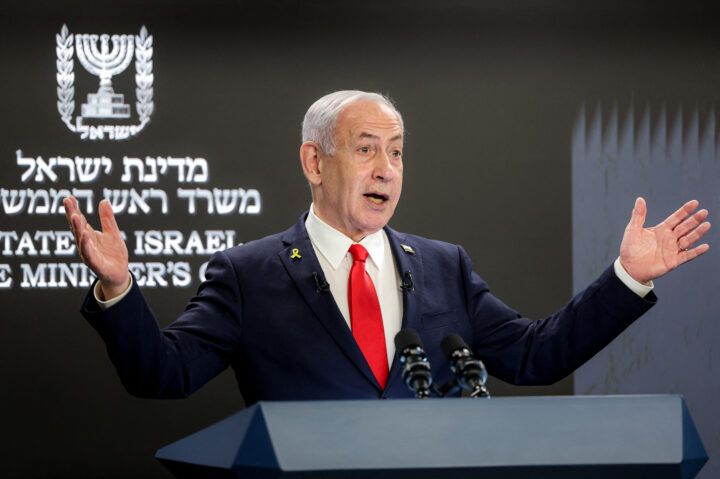
ABIR SULTAN/POOL/AFP via Getty Images
Israel's Prime Minister Benjamin Netanyahu gives a press conference at the Prime minister's office in Jerusalem on August 10, 2025.
This P.M. edition is reserved for our premium subscribers like you — offering a forward-focused read on what we’re tracking now and what’s coming next.
Today’s Daily Overtime was curated by JI U.S. Editor Danielle Cohen-Kanik.
📡On Our Radar
Notable developments and interesting tidbits we’re tracking
Israeli Prime Minister Benjamin Netanyahu told CNBC’s Sara Eisen today that he wants to start the process of winding down U.S. aid to Israel in the final two years of the Trump administration, as both countries work toward reaching a new memorandum of understanding, Jewish Insider’s Emily Jacobs reports.
“We’re now working on a memorandum of understanding which will bring down the aid,” Netanyahu said. “I want it to start in the last two years of the Trump administration and I want it to keep going down, coming to zero.” His comments suggest he’s looking to begin phasing out aid even while the current MOU is set to provide Israel with $3.8 billion in U.S. military assistance annually through FY 2028…
Despite President Donald Trump’s public acknowledgement of a confrontational phone call with Netanyahu regarding Israeli operations in Lebanon, Secretary of State Marco Rubio largely defended Israel’s attacks against the Lebanese terrorist group, JI’s Marc Rod reports.
Rubio said at a House Foreign Affairs Committee hearing today that Hezbollah reached out to the U.S. government through Lebanese authorities and said that it would stop launching missiles into Israeli territory if Israel did not attack Beirut, but Hezbollah went back on that agreement and launched rockets at Israel within hours…
Trump avoided directly answering a question from reporters this afternoon if the U.S. ceasefire with Iran still stands, after Iran launched several ballistic missile attacks around the region last night.
“There is a reason for certain things, and there’s usually a reason that sometimes makes sense. We got it, we nipped it in the bud very quickly … but some people would say they were slightly provoked because we took a strong action for a different reason. So they were reciprocating,” the president said…
Sens. John Fetterman (D-PA) and Dave McCormick (R-PA) told JI’s Emily Jacobs on Tuesday that they both believe antisemitism is worse on the left than on the right, arguing that the electoral success of far-left candidates with antisemitic records in Democratic primaries distinguishes the left from the right, as similarly controversial candidates have struggled in GOP primary contests…
The anti-Israel American Priorities super PAC pledged to spend $2 million backing New York City Mayor Zohran Mamdani’s chosen congressional candidates: former City Comptroller Brad Lander, running to unseat Rep. Dan Goldman (D-NY); Darializa Avila Chevalier, challenging Rep. Adriano Espaillat (D-NY); and Claire Valdez, running to succeed Rep. Nydia Velazquez (D-NY). All three candidates have denounced super PAC spending in the past…
Maine Senate candidate and presumptive Democratic nominee Graham Platner released an internal poll showing he still leads his general election opponent, Sen. Susan Collins (R-ME), by a margin of four points after potential voters are told about his most recent scandals. The latest figures from Platner’s camp mark a drop from the roughly eight-point advantage the Democratic candidate has held in previous polls…
In the race to succeed retiring Rep. Nancy Pelosi (D-CA), state Sen. Scott Wiener and Connie Chan, a member of the San Francisco Board of Supervisors who was endorsed by Pelosi, will advance to the general election. With half of votes counted so far in the jungle primary, Wiener won 41% and Chan received 28%, while Saikat Chakrabarti, a wealthy tech entrepreneur aligned with the anti-Israel left, came in third with 15%…
In Montana’s 1st Congressional District, where Rep. Ryan Zinke (R-MT) is retiring, smokejumper Sam Forstag prevailed in the Democratic primary, where several of the candidates, including Forstag, had expressed views critical of Israel. Forstag now faces an uphill battle against Trump-endorsed Republican military veteran Aaron Flint in the general election, given the district’s GOP leanings…
The NYPD arrested an NYU student today for raising a flag that displayed swastikas and a Star of David atop a university building last month. The perpetrator was a fourth-year NYU student at the time of the incident and has not yet received a diploma, a university spokesperson told JI’s Haley Cohen. The New York Times reported that the man is named Alexander Stepnowsky, a music technology student who was charged with a hate crime and trespassing…
⏩ Tomorrow’s Agenda, Today
An early look at tomorrow’s storylines and schedule to keep you a step ahead
Keep an eye out in Jewish Insider for a look at why pro-Israel groups chose not to engage in New Jersey’s 12th Congressional District to oppose anti-Israel Democratic nominee Adam Hamawy in yesterday’s primary election.
The House Armed Services Committee will hold a markup of the 2027 National Defense Authorization Act, where Rep. Ro Khanna (D-CA) said he will attempt to strip out a routine provision facilitating expanded U.S.-Israel cooperation.
Treasury Secretary Scott Bessent will testify before the House Ways & Means Committee.
New York City Council Speaker Julie Menin and City Councilmember Virginia Maloney will meet with Manhattan Holocaust survivors at UJA-Federation of New York headquarters to mark Holocaust Survivor Day.
Brandeis University’s Jonathan Sarna will sit in conversation with Princeton’s Laura Arnold Leibman at Temple Emanu-El in New York City to discuss the Jewish experience of the American Revolution, a month ahead of the U.S. Semiquincentennial.
UN Watch will hold its annual gala in Geneva, where the group will honor free speech and women’s rights activists Abnousse Shalmani and Ayaan Hirsi Ali.
Stories You May Have Missed
PAC PLAY
AIPAC betting big on pro-Israel Democrat and party favorite in Maryland
State Del. Adrian Boafo is Steny Hoyer’s favored candidate, and is getting support from Democratic leaders across the state
PLATNER POSITIONS
Senate Dems wary after latest Platner revelations, but stick by him
Most aren’t calling for him to leave the race, or throwing their support behind Gov. Janet Mills, who still remains on the primary ballot even after suspending her campaign
The Pennsylvania Democrat, the most hawkish member of his party on Iran, told JI that failing to eliminate Tehran's nuclear threat would undermine the president's legacy

Andrew Harnik/Getty Images
Sen. John Fetterman (D-PA) speaks at a rally for Democratic vice presidential nominee Minnesota Gov. Tim Walz at York Exposition Center UPMC Arena on October 2, 2024 in York, Pennsylvania.
Sen. John Fetterman (D-PA) said on Tuesday that he is growing increasingly concerned that President Donald Trump may agree to a deal with Iran that does not ensure the retrieval of Tehran’s stockpile of enriched uranium or that the regime will never acquire a nuclear weapon.
Fetterman, who has become the most hawkish Democrat in Congress on Iran and the sole member of his party to vote against every Iran war powers resolution in recent months, spoke with Jewish Insider in Washington about the possible outcomes of the ongoing peace talks. The Pennsylvania senator acknowledged that he and Trump had taken political heat from their respective parties over their stances on the conflict, but argued that solving the Iranian nuclear issue would be legacy-defining for the president.
“Nuclear dust, that’s the reason why we’re here. This is why I was reasoned and OK with setting myself politically on fire to be the only Democrat for the last 90 days voting against these war powers acts,” Fetterman told JI. “Presidents always talk about their legacy. At this point, if you cave just for political convenience, what kind of legacy is that?”
“I appreciate every now and then when Trump will say, ‘Well, it [the war in Iran] is only going to be about that nuclear dust,’ but Israel is never allowed to fully pulverize their enemies,” he continued. “They’re fighting a nation where they like martyrdom and that’s what they celebrate. It’s so dumb.”
The Pennsylvania senator addressed the negative U.S. public perception of the war, arguing that the president was acting in a “Churchillian” manner by taking on the Iranian regime, and expressing concern that reversing course in Iran could indicate the Trump administration’s lack of commitment to Taiwan, in the event of a Chinese invasion.
“I hope after that silly visit to China that they [the Trump administration] aren’t now like, ‘Well, we’re going to turn our back to Taiwan,’” he added, referencing the president’s summit in Beijing last month with Chinese President Xi Jinping. “These are all fights for civilization and democracy. I don’t care if it’s in Gaza or Iran, Taiwan against Chinese communism or Russia and Ukraine, it’s the same fight, and that’s why it’s our special responsibility, it’s America’s, to stand with these allies.”
Fetterman pointed to the pressure Democrats faced during the 2024 election to take a firmer stance in opposition to Israel’s war in Gaza due to the high death toll of Palestinians. He argued that those of his Democratic colleagues who had worked to restrain Israel since Hamas’ Oct. 7, 2023, attacks on the Jewish state had damaged their credibility.
“How can you trust these people?” he asked of those Democrats. “Two years ago they were all demanding and pushing for a ceasefire. Can you believe where we would be now if we had a ceasefire? Can you imagine if Israel had to grovel to get their people back? Can you imagine if Iran could be a nuclear power by now?”
“If [there was] a ceasefire in July [2024] based on the pressures from the election in ‘24, [former Hamas chief Yahya] Sinwar would be alive. Hezbollah would be intact. They could launch thousands of rockets at will — and think of the capabilities that Iran could be at now,” he added. “Where’s the outrage? They pretended to be so worried about it. It was politically convenient to try to push Israel into a position that would put Iran on the path to nuclear power, and [leave] their proxies fully intact.”
Plus, Trump's unconventional pick for intel chief
Brooks Kraft LLC/Corbis via Getty Images
International flags at the State Department in Washington.
This P.M. edition is reserved for our premium subscribers like you — offering a forward-focused read on what we’re tracking now and what’s coming next.
Today’s Daily Overtime was curated by JI U.S. Editor Danielle Cohen-Kanik.
📡On Our Radar
Notable developments and interesting tidbits we’re tracking
President Donald Trump again dismissed reports that Iranian negotiators have cut off dialogue with the U.S. as “false and erroneous,” writing in a post on Truth Social that discussions have continued “four days ago, three days ago, two days ago, one day ago, and today”…
About the current talks, Secretary of State Marco Rubio told the Senate Foreign Relations Committee today that the U.S. is not offering Iran any sanctions relief in exchange for reopening the Strait of Hormuz, and that sanctions relief would only be on the table if Tehran makes concessions related to its nuclear program in the next phase of negotiations, Jewish Insider’s Marc Rod reports…
The Trump administration sent a fresh slate of diplomatic nominations to the Senate for approval today, but noticeably absent was a full-throated push to fill critical ambassadorial vacancies across the Middle East and North Africa, even as the Iran conflict has increased the need for coordination and dialogue in the region, JI’s Matthew Shea reports.
The newest list of nominees included only two names for the MENA area: Donald Blome, tapped to serve as assistant secretary of state for Near Eastern affairs — a role that acts as the principal advisor on U.S. foreign policy across the region — and Nick Oberheiden, nominated to be U.S. ambassador to Egypt…
In a highly unusual move, Trump appointed Bill Pulte, the director of the Federal Housing Finance Agency and chairman of Fannie Mae and Freddie Mac, as acting director of national intelligence, after DNI Tulsi Gabbard announced she will resign effective June 30. Pulte, who has no prior experience in an intelligence role, has been a staunch Trump loyalist and led some of the president’s retribution efforts against his political adversaries…
The fourth round of Israel-Lebanon diplomatic talks began at the State Department today, and is expected to last through tomorrow…
At an emergency meeting of the U.N. Security Council yesterday requested by France, every country except for the U.S. called for Israel to immediately withdraw from southern Lebanon and deescalate military hostilities in the country…
The heads of the Conference of Presidents of Major American Jewish Organizations met today with Egyptian President Abdel Fattah El-Sisi and Maj. Gen. Hassan Rashad, head of the country’s General Intelligence Service, in Cairo, where they discussed U.S.-Egypt relations and Middle East security…
A new poll of 600 likely voters in the Michigan Senate Democratic primary conducted for the campaign of physician Abdul El-Sayed found him leading the pack with 34% of the vote, two months ahead of Election Day. Rep. Haley Stevens (D-MI) came in second with 31% and state Sen. Mallory McMorrow trailed at 19%…
Harmeet Dhillon, the assistant attorney general for civil rights, appearing at the American Jewish Committee’s Global Forum in Washington, condemned the “egregious examples of antisemitism that have transpired here at home on American soil” since the Oct. 7, 2023, attacks on Israel as “devastating and antithetical to our values as a nation,” JI’s Emily Jacobs reports…
The backlash to the participation of Israeli Finance Minister Bezalel Smotrich and other far-right Israeli politicians in the Israel Day on Fifth parade in New York City over the weekend continues: Mark Treyger, the head of the Jewish Community Relations Council of New York, which organizes the parade, told The New York Times that he had been blindsided by their attendance.
“There was a complete lack of transparency here,” Treyger said, adding that the Israeli consulate in New York had declined to share with him who would be attending. Dan Rosenthal, a top official at the UJA-Federation of New York, wrote on X that both New York City Mayor Zohran Mamdani and Smotrich “believe in a one-state solution”…
White House Correspondents’ Association President Weijia Jiang announced that the Correspondents’ Dinner will be rescheduled for July 24, after April’s event was cut short by a shooting attack. Trump said he will once again give remarks at the gathering, which will take place at the Waldorf Astoria hotel in Washington…
⏩ Tomorrow’s Agenda, Today
An early look at tomorrow’s storylines and schedule to keep you a step ahead
Keep an eye out in Jewish Insider for the results of today’s high-stakes Democratic primary in New Jersey’s 12th Congressional District, where plastic surgeon Adam Hamawy, whose past terror ties have raised red flags about his candidacy, is the favorite to win.
Secretary of State Marco Rubio will be back on the Hill testifying before the House Foreign Affairs Committee and a Senate Appropriations subcommittee, while Homeland Security Secretary Markwayne Mullin will appear before the House Homeland Security Committee.
State Department antisemitism envoy Yehuda Kaploun and the Argentine Embassy in Washington will co-host a commemoration ceremony at the U.S. Institute of Peace marking the 32nd anniversary of the bombing of the Argentine Israelite Mutual Association (AMIA), with remarks from House Foreign Affairs Committee Chairman Brian Mast (R-FL) and AMIA President Osvaldo Armoza.
The Jewish Democratic Council of America will host a candidate forum for the New York 12th Congressional District Democratic primary at the Streicker Center in New York City.
Stories You May Have Missed
Hard Ro To Hoe
Khanna’s hostile turn towards Israel divides Silicon Valley Jews

His critics once saw him as an ally, but fear he’s pandered to extremists as he raises his national profile ahead of the 2028 presidential election
GROWING THREAT
Cheap, deadly and hard to spot: Hezbollah’s drones create urgent security threat for Israel

‘You just have Israeli soldiers completely unaware. If you can’t hear the drone, if you don’t know that it’s there until it’s too late, it’s too late,’ said FDD’s David Daoud
Plus, Huckabee says next MOU will end Israel aid

Marwan Naamani/picture alliance via Getty Images
Pro-Iranian Hezbollah supporters wave the party flags during a ceremony in a southern Beirut suburb on May 5, 2026.
This P.M. edition is reserved for our premium subscribers like you — offering a forward-focused read on what we’re tracking now and what’s coming next.
Today’s Daily Overtime was curated by JI U.S. Editor Danielle Cohen-Kanik.
📡On Our Radar
Notable developments and interesting tidbits we’re tracking
President Donald Trump announced that Israel would not carry out strikes against Hezbollah in Beirut in exchange for the terror group halting its attacks on northern Israel, hours after Israeli Prime Minister Benjamin Netanyahu made a statement instructing the IDF to strike Hezbollah targets in the Lebanese capital.
While Trump said he had a “very good call with Hezbollah” as part of the negotiations, the Lebanese Embassy in Washington later clarified that the message was relayed through Lebanese officials rather than communicated directly from the president to the terror group.
Netanyahu said after the announcement that he had informed Trump that “if Hezbollah does not stop attacking our cities and civilians, Israel will strike terrorist targets in Beirut,” while the IDF will continue hitting targets in southern Lebanon as planned…
The news came hours after Iranian state-linked media reported that Tehran had suspended negotiations with the United States and warned it could direct its proxies, including the Houthis in Yemen, to target shipping through the Bab el-Mandeb Strait — another critical global trade route — in response to Israel‘s continued military operations against Hezbollah…
Trump disputed the reporting, writing on Truth Social this afternoon that “talks are continuing, at a rapid pace, with the Islamic Republic of Iran,” despite having told NBC News earlier in the day that he would welcome a pause in talks if the reports were accurate. “I think we’ve been talking too much, if you want to know the truth,” Trump told the outlet. “I think going silent would be very good, and that could be for a long time”…
Amid the diplomatic dance, military operations have escalated: The U.S. struck several sites in Iran over the weekend after Iran downed an American MQ-1 drone. U.S. forces also intercepted two Iranian ballistic missiles targeting American forces based in Kuwait last night, CENTCOM said…
Michael Makovsky, the president and CEO of the Jewish Institute for National Security of America, criticized the Trump administration’s recent handling of the U.S. war in Iran, telling Jewish Insider’s Emily Jacobs on Friday, before the events of this weekend, that the “U.S. has lost the plot on Iran” and that a deal with the regime now “wouldn’t be worth the paper it’s written on”…
Responding to claims from former National Counterterrorism Center head Joe Kent that U.S. aid to Israel does not confer benefits to America, U.S. Ambassador to Israel Mike Huckabee defended the relationship and said the next U.S.-Israel memorandum of understanding, after the current one expires in 2028, will end aid to Israel and “be based on trade”…
Republican Jewish Coalition CEO Matt Brooks celebrated his group’s role in ousting Rep. Thomas Massie (R-KY) in his primary election earlier this month at the organization’s “America 250”-themed gala held last night in Manhattan, JI’s Haley Cohen reports.
“Being anti-Israel in today’s Republican Party is not — unlike the Democratic Party — a path to success,” said Brooks, who called defeating Massie a “critical victory” for the direction of the GOP and conservative movement…
Pennsylvania Gov. Josh Shapiro told CNN that he believes Israel is being unfairly singled out for criticism as a Jewish state: “For those who do not want there to be a Jewish state, oftentimes they will predicate their views on this notion that being grounded in a religion and being a democracy can’t coexist,” he said.
“I think it’s important to point out the hypocrisy of that view when there are 46 majority Muslim nations, 23 of which have Islam as their official religion … and only one has Judaism as their official religion, and yet we’re focused on just the Jewish state,” Shapiro continued. (Important to note: While Israel has a Basic Law declaring it the nation-state of the Jewish people, the country does not have an official state religion)…
El Al announced it will restart nonstop flights between Israel and San Francisco on Oct. 25, citing high demand for the route between the tech hubs, which was paused in 2020 at the beginning of the COVID-19 pandemic. The three weekly flights will be numbered LY49, in a nod to the San Francisco 49ers NFL team…
The Israeli Ministry of Defense said France has barred Israeli officials from participating in the Eurosatory defense show in Paris later this month. Israeli defense firms, which can participate but will not have a dedicated Israeli national pavilion, can only showcase air-defense systems and are prohibited from displaying offensive weapons systems…
⏩ Tomorrow’s Agenda, Today
An early look at tomorrow’s storylines and schedule to keep you a step ahead
Keep an eye out in Jewish Insider for coverage of tomorrow’s key primary elections across the country — including House races in New Jersey, California, Montana, Iowa, New Mexico and South Dakota, California’s gubernatorial race and Montana’s open-seat Senate race — several of which will serve as a referendum on the Democratic Party’s progressive versus establishment divide.
On the Hill, Secretary of State Marco Rubio will appear before the Senate Foreign Relations Committee and the House Appropriations Committee. Homeland Security Secretary Markwayne Mullin will testify at a Senate Appropriations Committee hearing, and acting Attorney General Todd Blanche will speak at a House Appropriations Committee hearing. The Senate Select Committee on Intelligence will also hold a closed intel hearing.
Israeli Prime Minister Benjamin Netanyahu and President Isaac Herzog will attend a command change ceremony at Mossad headquarters to inaugurate Maj. Gen. Roman Gofman as the new head of the agency, after the Israeli High Court rejected petitions today calling for Gofman’s appointment to be annulled on ethical and procedural grounds.
The Israel Democracy Institute will kick off its two-day Eli Hurvitz Conference on Economy and Society in Jerusalem.
Stories You May Have Missed
ANGELENO AFFAIRS
Wide-open Los Angeles mayoral race could hinge on support from Jewish voters

The race features an embattled Mayor Karen Bass facing a spirited challenge from her right in reality TV star Spencer Pratt, and from her left in City Councilmember Nithya Raman
BIG SKY BATTLE
Most Montana Democrats running for Rep. Ryan Zinke’s seat slam U.S.-Israel relationship
Two of the four Democrats in the race have also faced scrutiny over antisemitic activity online
Makovsky said Trump’s reported deal with Tehran ‘wouldn’t be worth the paper it’s written on’
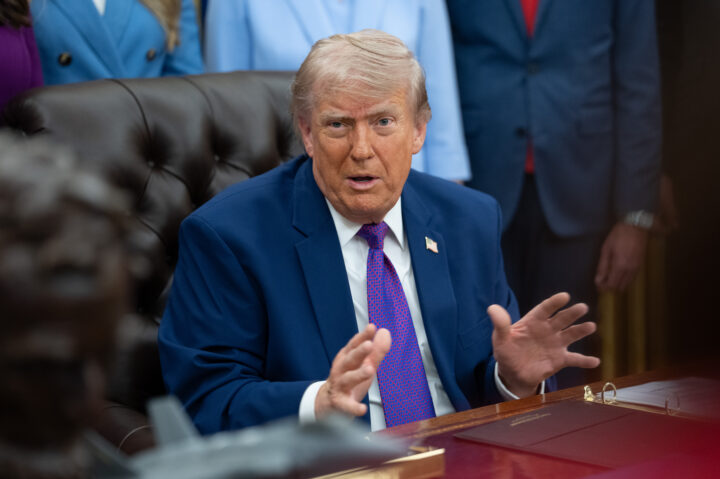
Aaron Schwartz/Sipa/Bloomberg via Getty Images
President Donald Trump speaks during a maternal healthcare event in the Oval Office of the White House in Washington, DC, US, on Monday, May 11, 2026.
Michael Makovsky, the president and CEO of the hawkish Jewish Institute for National Security of America, criticized the Trump administration’s recent handling of the U.S. war in Iran, expressing concern about the possibility of a broader peace deal that does not address key issues.
“The U.S. has lost the plot on Iran,” Makovsky told Jewish Insider on Friday. “After significant military achievements, declaring the ceasefire was a huge mistake, and there was too much hype about what pressure a blockade alone would achieve. The net result has reduced U.S. leverage, and the perception that America is vulnerable if gasoline nears $5 per gallon.”
Makovsky said that the U.S. “should not pursue a deal” with Iran, arguing that such an agreement “wouldn’t be worth the paper it’s written on.” He said that a deal “will only enrich and strengthen the regime and demoralize the Iranian people.”
“Instead, the U.S. should resume military operations for a couple weeks, weaken the regime and its nuclear and conventional capabilities further, cease the military campaign while maintaining the blockade and support the Iranian people in every way possible,” he said.
Makovsky spoke to JI in response after President Donald Trump’s announcement on Friday that he was nearing a decision on the agreement reportedly reached by U.S. and Iranian negotiators to extend the ongoing ceasefire by 60 days, reopen the Strait of Hormuz and continue nuclear talks. Makovsky made the comments prior to this weekend’s fighting between the two countries, with the U.S. striking Iranian air defenses and drone sites after Iran downed an American MQ-1 drone and shot missiles at U.S. forces based in Kuwait.
“Based on what appears to being negotiated, the Strait of Hormuz will be opened in return for certain Iranian pledges about what will be worked out in further negotiations,” Makovsky said. “There are even reports about a possible international investment fund in Iran, which would be preposterous with this regime.”
After holding a Situation Room meeting on Friday, Trump reportedly requested several amendments to the negotiated deal, including firmer commitments around Iran’s stockpile of enriched uranium, leading to another round of negotiations. Iranian state media reported on Monday that its delegation was suspending talks with the U.S. over Israel’s continued strikes against Hezbollah in Lebanon.
Plus, Jill Biden's advice to Joe on Bibi
Tasos Katopodis/Getty Images
Israeli Ambassador to the United States Yechiel Leiter
This P.M. edition is reserved for our premium subscribers like you — offering a forward-focused read on what we’re tracking now and what’s coming next.
Today’s Daily Overtime was curated by JI U.S. Editor Danielle Cohen-Kanik.
📡On Our Radar
Notable developments and interesting tidbits we’re tracking
Despite recent clashes between the U.S. and Iran — including Iranian missile and drone attacks around the region last night — negotiators from both countries have reportedly agreed to terms for a 60-day ceasefire with continued negotiations on Iran’s nuclear program, U.S. sources confirmed to the White House press pool.
President Donald Trump has not yet given his stamp of approval to the deal, Axios reports, and has told mediators he wants a couple of days to consider it…
In the meantime, Iranian state media reported a renewed exchange of fire in the Strait of Hormuz this afternoon, as Iranian forces were said to have fired “warning shots” at four vessels and engaged air defenses against a “hostile aircraft”…
Treasury Secretary Scott Bessent warned that the U.S. “will not tolerate any effort to impose a tolling system in the Strait of Hormuz,” specifically cautioning Oman that the Treasury Department will “aggressively target” any actors involved in facilitating such tolls. Bessent said during a press conference this afternoon that he spoke with the Omani ambassador to the U.S. this morning who assured him Muscat has no plans to do so…
In an excerpt of her forthcoming memoir, View From the East Wing, shared with The Atlantic, former First Lady Jill Biden recalls leaving her husband notes on the bathroom mirror during his time as president, including her views on Israel’s war in Gaza. “Net has to stop,” she once wrote, in a reference to Israeli Prime Minister Benjamin Netanyahu. Before a phone call between him and President Joe Biden, she advised, “Be strong. Don’t let BN use your goodness”…
A week after describing J Street as “a cancer within the Jewish community,” Israeli Ambassador to the U.S. Yechiel Leiter doubled down on his critique of the organization, stating that the liberal advocacy group’s recent actions are “decidedly not pro-Israel,” Nira Dayanim reports for Jewish Insider.
Speaking today at the Re-Charging Reform Judaism summit at the Stephen Wise Free Synagogue in Manhattan, Leiter was resolute, but more measured in his criticism: “I believe the tent, as we call it, should be wide and as inclusive as possible. But it cannot be inclusive to those who are contributing to the efforts of those seeking the collapse of the tent,” he said…
Rep. Jared Moskowitz (D-FL) announced today that he would seek reelection in a new South Florida House district recently drawn to favor Republicans, after his own was largely erased, JI’s Matthew Kassel reports, setting the stage for what is expected to be a costly and competitive race…
Rep. Josh Gottheimer (D-NJ) met with UAE National Security Advisor Tahnoon bin Zayed Al Nahyan in Abu Dhabi today, where the two “reviewed the distinguished strategic relations” between the UAE and U.S…
Kip Talley, the chief of staff to Rep. Mike Collins (R-GA) — who is currently the front-runner for the GOP runoff in Georgia to take on Sen. Jon Ossoff (D-GA) — used his position to push to free Charles Johnson, a notorious Holocaust denier who was jailed for contempt of court, according to text messages reviewed by Slate. Talley sent the messages in a group chat that also included neo-Nazis Nick Fuentes and Richard Spencer…
A new Democratic super PAC called Project 218 dropped nearly $400,000 in support of progressive organizer Sue Altman in New Jersey’s 12th Congressional District Democratic primary, just days ahead of the election next week. The paid ads are intended to counter the nearly $1.5 million spent by the anti-Israel American Priorities super PAC in support of Altman’s opponent, Adam Hamawy, who has faced scrutiny over his work with a group tied to Al-Qaida…
New York City Mayor Zohran Mamdani is considering endorsing democratic socialist Darializa Avila Chevalier in her insurgent bid to unseat Rep. Adriano Espaillat (D-NY), according to The New York Times, changing course from his pledge to back Espaillat, which came after the congressman endorsed Mamdani in the mayoral general election…
UJA-Federation of New York purchased 20,000 bags of Bamba peanut snacks in response to the Park Slope Food Coop’s decision to boycott Israeli-made products, which the federation intends to distribute at the Israel Day parade in the city on Sunday…
Democratic Michigan Gov. Gretchen Whitmer, seen as a potential presidential contender, ruled out a run for the White House in the next election, telling a local Fox outlet, “I think there will be a robust group of people running for president. I will not be one of them in 2028”…
CBS Editor-in-Chief Bari Weiss tapped former New York Times and Vanity Fair contributor and documentarian Nick Bilton as executive producer of “60 Minutes,” after the former head of the program, Tanya Simon, was fired today amid disagreements over issues including editorial independence of the top-rated weekly news program…
Mutra, a high-end kosher restaurant in North Miami run by Israeli chef Raz Shabtai, received a Michelin star today, which the restaurant said makes it the first fully kosher establishment to do so…
⏩ Tomorrow’s Agenda, Today
An early look at tomorrow’s storylines and schedule to keep you a step ahead
Keep an eye out in Jewish Insider for a look at how Israel and antisemitism have become a flashpoint in the Democratic primary for Montana’s 1st Congressional District. A sneak peek:
“Though the district leans Republican, that hasn’t stopped a majority of Democrats in the field from racing to the left on Israel policy, a dynamic that was on clear display at a recent debate.”
Rep. Jim Clyburn (D-SC) will host his annual Famous Fish Fry tomorrow in Columbia, S.C., an event that has evolved into a key stop for Democratic presidential hopefuls. Among those with an eye on 2028, Rep. Ro Khanna (D-CA) and Kentucky Gov. Andy Beshear are expected to attend the gathering.
Israeli and Lebanese military representatives are expected to hold discussions at the Pentagon tomorrow, Israeli media reports, without diplomatic representation.
Defense Secretary Pete Hegseth is in Singapore, where he will deliver remarks at the Shangri-La Dialogue, a high-level defense summit, on Saturday.
The annual “Israel Day on Fifth” parade will take place in New York City on Sunday, with organizers predicting “one of the biggest turnouts ever” as well as the largest-ever Knesset delegation, JI’s Will Bredderman reports. Breaking with 61 years of tradition, Mayor Zohran Mamdani will skip the festivities, while NYPD Commissioner Jessica Tisch will serve as grand marshal.
Elsewhere in the city on Sunday, the Republican Jewish Coalition will hold its gala celebrating the forthcoming 250th anniversary of the United States with speakers including U.S. Ambassador to the U.N. Mike Waltz, Israeli Ambassador to the U.N. Danny Danon, Knesset Speaker Amir Ohana, Rep. Randy Fine (R-FL) and Republican Nassau County Executive Bruce Blakeman, who is running for New York governor.
In Washington, the American Jewish Committee’s Global Forum kicks off on Sunday with a plenary featuring former Israeli hostages Keith and Aviva Siegel, Vanderbilt University Chancellor Daniel Diermeier and AJC CEO Ted Deutch.
We’ll be back with the Daily Overtime on Monday. Shabbat Shalom!
Stories You May Have Missed
SCOOP
DSA quietly poised to make inroads in NYC’s congressional delegation
Two DSA-backed challengers have a credible shot at winning seats, while Rep. Dan Goldman is down in polls against Brad Lander
Q&A
State Dept official Sarah Rogers urges protecting free speech while fighting antisemitism
‘The Nazis may have the right to post, but also the Nazis are bad and sick and stupid,’ Rogers told JI
Plus, Lasher sits out buffer bill victory lap

GPO
Bahrain Foreign Minister Khalid bin Ahmed Al Khalifa, Israeli Prime Minister Benjamin Netanyahu, President Donald Trump, and United Arab Emirates Foreign Minister Abdullah bin Zayed al-Nahyan during the Abraham Accords signing ceremony at the White House on Sept. 15, 2020.
This P.M. edition is reserved for our premium subscribers like you — offering a forward-focused read on what we’re tracking now and what’s coming next.
Today’s Daily Overtime was curated by JI U.S. Editor Danielle Cohen-Kanik.
📡On Our Radar
Notable developments and interesting tidbits we’re tracking
Speaking at a Cabinet meeting today at the White House, President Donald Trump signaled that he may not agree to a deal to end the war with Iran if Middle East countries including Saudi Arabia and Qatar do not join the Abraham Accords. “I think those countries owe it to us,” he said, adding, “I’m not sure we should make a deal if they don’t sign.”
Secretary of State Marco Rubio was vague about the prospects and timeline for such an agreement with Iran, saying, “I think there’s been some progress and some interest, and we’ll see over the next few hours and days whether progress could be made”…
The White House also denied reports from Iranian state media about the contents of an apparent draft agreement, calling it a “complete fabrication.” Among other details, the deal would have seen Iran maintain some control over the Strait of Hormuz in conjunction with Oman; at the Cabinet meeting, Trump said about the prospect, “Oman will behave just like everybody else or we’ll have to blow them up”…
Sarah Rogers, the under secretary of state for public diplomacy, maintained in an interview with Jewish Insider’s Emily Jacobs that the Trump administration’s commitment to free speech, including for extreme views, does not take away from its opposition to antisemitism, claiming that “the Nazis may have the right to post, but also the Nazis are bad and sick and stupid”…
Reps. Marlin Stutzman (R-IN) and Abe Hamadeh (R-AZ) met today in Israel with Prime Minister Benjamin Netanyahu and Foreign Minister Gideon Sa’ar, where they discussed regional issues including Lebanon and Syria. Both lawmakers are active on issues of Middle East policy in Congress and were some of the first members to visit Syria, where Hamadeh’s family is from, after the fall of dictator Bashar al-Assad…
Despite publicly billing himself as the candidate most critical of Israel in the race for New York’s 12th Congressional District, Kennedy scion Jack Schlossberg told a group of supporters at Manhattan’s exclusive Harmonie Club earlier this month that he has “been a stronger supporter of Israel than I ever thought I would be standing here today with you, because of educating myself on the issue,” according to a recording obtained by Politico. “I probably would have continued funding Israel’s offensive weaponry within the years following Oct. 7,” he told the group.
Schlossberg denied that the comments mark a change from his previous stances, and said that he has consistently opposed all weapons sales to Israel while supporting funding for the Iron Dome…
Several Jewish New York state legislators, including Assemblymembers Sam Berger, Simcha Eichenstein, Nily Rozic, Kalman Yeger and Aron Wieder and Sen. Sam Sutton, released a statement applauding the Legislature’s passage yesterday of a bill establishing a 50-foot buffer zone around religious institutions, calling it a “strong message to the Mayor that the Jewish community is not afraid to stand up.”
Assemblymember Micah Lasher, who was a sponsor of the bill and is running for Congress in the 12th District, did not sign on…
The Museum of Jewish Heritage in Manhattan announced the appointment of former federal prosecutor Tali Farhadian as its new CEO, with her term set to begin on Sept. 8. A Persian Jew born in Tehran, Farhadian has had a storied legal career including clerking for the late Supreme Court Justice Sandra Day O’Connor, serving as counsel to former Attorney General Eric Holder and teaching at NYU and Columbia law schools…
Far-right activist Bo French won the Republican nomination for a spot on Texas’ powerful oil and gas regulatory commission in yesterday’s primary runoff, heading to a general election against Democratic state Rep. Jon Rosenthal, the only Jewish member of the Texas state Legislature (who also identifies as agnostic and “multireligious”)…
Harvard has selected four new Radcliffe Fellows for the 2026-2027 academic year who have histories of anti-Israel activism, The Washington Free Beacon reports, including an English professor from Gaza’s Al-Aqsa University, which has ties to Hamas…
The Heritage Foundation added four new members to its board, including Israeli American conservative political theorist Yoram Hazony, after several members resigned in the aftermath of Heritage President Kevin Roberts’ defense of Tucker Carlson over his interview with neo-Nazi Nick Fuentes…
⏩ Tomorrow’s Agenda, Today
An early look at tomorrow’s storylines and schedule to keep you a step ahead
Keep an eye out in Jewish Insider for a look at the Trump administration’s decision to keep many ambassador positions vacant, as the clock ticks down for any potential nominations before the end of the current Congress.
U.S. Ambassador to Israel Mike Huckabee will deliver the commencement address at Yeshiva University’s graduation ceremony at Louis Armstrong Stadium in Queens, N.Y.
Stories You May Have Missed
SCOOP
Leading N.J. Dem congressional candidate Adam Hamawy volunteered with Al-Qaida-tied group in Bosnia
After traveling with the ‘Blind Sheikh,’ Hamawy worked with Benevolence International Foundation, later shuttered as an Al-Qaida front
EXCLUSIVE
New report documents $65 million Qatari campaign to influence U.S. education at all levels
The Institute for the Study of Global Antisemitism and Policy in its report, called for a federal investigation of Qatar’s influence efforts targeting American education
‘I'm not sure we should make the deal if they don't sign,’ the president said at a Cabinet meeting
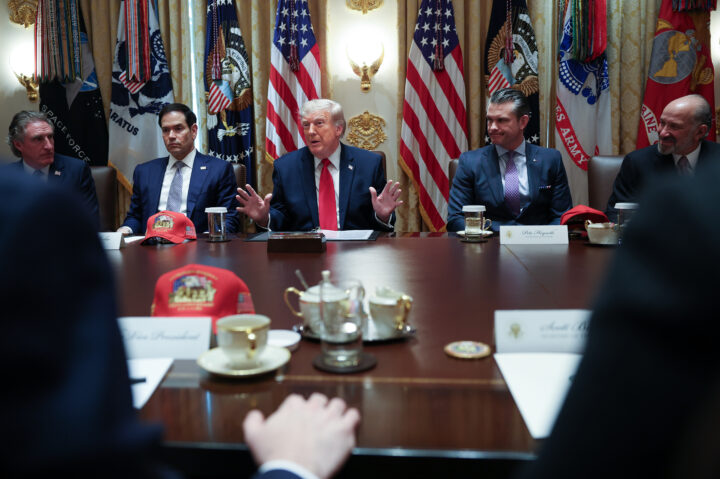
Win McNamee/Getty Images
President Donald Trump speaks during a Cabinet Meeting in the Cabinet Room of the White House on May 27, 2026 in Washington, DC.
President Donald Trump signaled on Wednesday that he may not agree to a deal to end the war with Iran if Saudi Arabia, Qatar and other countries in the region do not join the Abraham Accords, arguing that the Gulf nations “owe that to us.”
The president made the comments while taking questions from reporters during a Cabinet meeting at the White House, where he was asked if he would accept a peace agreement with Iran that did not address uranium enrichment. Trump responded that he would agree to a deal that allows for continued negotiations on some issues, though he repeatedly said he would not allow for “a crummy agreement.”
He expressed hesitation about moving forward with any peace deal with Iran that did not include commitments from Saudi Arabia, Qatar, Kuwait and others to normalize relations with Israel.
“I would like to have the countries we were talking about — Saudi Arabia, UAE, Qatar and the others — we’d like to have them immediately join, and [White House Special Envoy] Steve Witkoff is working on that with Jared [Kushner] and some others, but I would like to have them join the Abraham Accords,” Trump said. “It would be historic if they do it. I think they owe that to us, to be honest, because that really would be a tremendous sign. I think those countries owe it to us.”
Addressing Witkoff, the president said, “I’m not sure we should make the deal if they don’t sign, if you want to know the truth. If they don’t sign to join the Abraham Accords, I don’t know.”
When pressed if that meant he viewed an Iran deal as contingent on those countries joining the Abraham Accords, Trump responded: “I don’t know. I don’t want to say that. I’m not going to give you what’s contingent, what’s not. I can say that we can make a good deal right now, but maybe not a great deal, and if it’s not a great deal, we’re not making it.”
“We can make a great deal with this guy right here,” he continued, pointing to Defense Secretary Pete Hegseth. “But that’s a lot nastier, probably wouldn’t go as quickly … but it would be foolproof.”
Addressing reports from Iranian state media that Oman may assist Iran in overseeing the Strait of Hormuz once the war is over, Trump later said, “Oman will behave just like everybody else or we’ll have to blow them up.”
Plus, the IDF targets Hamas' succession plans

Peter W. Stevenson/The Washington Post via Getty Images
Pennsylvania Gov. Josh Shapiro sits for an interview at the Pennsylvania State Capitol on June 11, 2025.
This P.M. edition is reserved for our premium subscribers like you — offering a forward-focused read on what we’re tracking now and what’s coming next.
Today’s Daily Overtime was curated by JI U.S. Editor Danielle Cohen-Kanik.
📡On Our Radar
Notable developments and interesting tidbits we’re tracking
No agreement has materialized between the U.S. and Iran today, as the Iranian Foreign Ministry denounced U.S. strikes in the country last night as a sign of “bad faith and unreliability” and warned Tehran “will leave no act of aggression unanswered”…
The IDF carried out a strike against Mohammed Odeh, Hamas’ new military commander in Gaza and one of the “architects” of the Oct. 7 attacks, Israeli Prime Minister Benjamin Netanyahu and Defense Minister Israel Katz said in a joint statement, days after Israel killed his predecessor, Izz al-Din al-Haddad…
The IDF has also expanded its military campaign against Hezbollah beyond the security zone established in the ongoing Israel-Lebanon ceasefire, in an effort to combat drone attacks by the terror group on Israel’s northern communities. Netanyahu said at the start of a Security Cabinet meeting today that Israel is “operating with significant forces on the ground and taking control of strategically dominant positions” in Lebanon.
U.S. officials reportedly approved of the plan but warned Israel “not to bring down buildings in Beirut,” for fear of impacting talks with Iran…
Iran has begun restoring some internet access for its citizens, an Iranian official and watchdog groups said today, curbing what is reportedly the longest nationwide internet shutdown in history at nearly three months long…
Mike Needham, a close advisor to Secretary of State Marco Rubio, will transition from the State Department, where he serves as counselor and head of policy planning, to deputy national security advisor and assistant to the president at the White House…
Netanyahu is considering appointing his advisor Caroline Glick to the position of Israeli consul in New York, according to Israel’s Channel 12. Glick has drawn scrutiny for her repeated criticisms of the Reform and Conservative movements as well as liberal Israel advocacy groups…
CENTCOM denied reporting by The Wall Street Journal that it has restarted “Project Freedom” and said U.S. forces are “not currently escorting commercial vessels through the Strait of Hormuz.”
And the State Department called reports that the U.S. and Israel are working to strip Jordan of its custodianship of the Al-Aqsa Mosque in Jerusalem “categorically false”…
Pennsylvania Gov. Josh Shapiro warned in an interview with Politico that efforts within the Democratic Party to single out AIPAC as “toxic” could be seen as silencing Jewish voices in the American political system.
“Do I agree with every political decision they’ve made, every endorsement they made? Of course not,” Shapiro said of the pro-Israel group. “I think what we have seen is a weaponization of that. … When you have people who are advocating for issues that they feel strongly about and they are having their voices silenced, I think that’s a problem in our system”…
In a letter sent to Trump today, more than 90 House Republicans, led by Rep. Mike Lawler (R-NY), called for the administration to “fully dismantle” the United Nations Relief and Works Agency and to rethink its operations “not only in Gaza, but across the West Bank, Jordan, Lebanon, and Syria,” Jewish Insider’s Marc Rod reports.
UNRWA has “perpetuated the refugee crisis and reinforced the conditions that have allowed terrorism to persist,” the lawmakers wrote, arguing that in serving as the primary provider of public services in several countries, the agency “has reduced incentives for host governments to pursue long-term solutions”…
The Justice Department sued UCLA today for allegedly violating Title VI of the Civil Rights Act due to its “deliberate indifference to race and national origin discrimination against Jewish and Israeli students”; it’s the Trump administration’s latest move in its legal campaign against the school, as it also pursues a Title VII lawsuit alleging UCLA discriminated against its Jewish and Israeli employees…
The final version of a New York state “buffer zone” law will make it a Class B misdemeanor — one of the lowest levels of criminal offenses — to “knowingly” infringe on the right of access or egress to a religious institution, or to cause those entering or exiting to fear for their safety from a distance of less than 50 feet, JI’s Will Bredderman reports.
The bill, which is expected to pass as part of a package around the state budget, is less punitive than the original legislation endorsed by Gov. Kathy Hochul, which would have charged such obstruction as a felony, but doubles the buffer zone from its original distance of 25 feet…
The Park Slope Food Coop, a high-profile progressive Brooklyn institution with around 17,000 members, is set to vote this evening whether to enact a BDS policy against selling Israeli-made products, an issue that has ignited a political flashpoint among New York Democrats and caused the vote to go virtual, with organizers citing security concerns.
Rep. Dan Goldman (D-NY) has encouraged members to oppose the measure, while his congressional primary opponent, former New York City Comptroller Brad Lander, said he would vote against it if he was a member but would not tell others to do so. City Council Speaker Julie Menin said in a statement today that the “proposed boycott serves to further divide New Yorkers” and that she hopes the co-op will reject the effort…
New York City Mayor Zohran Mamdani declined, in an interview with a local news outlet, to endorse a candidate in New York’s 12th Congressional District — where he noted he is a constituent — calling it a “pleasure” to serve with both Micah Lasher and Alex Bores in the state Assembly…
After doubling down on his claim that presumptive Maine Senate Democratic nominee Graham Platner’s tattoo of a Nazi Totenkopf is “disqualifying,” Rep. Jake Auchincloss (D-MA) reiterated today that he still will not endorse Platner’s opponent, Sen. Susan Collins (R-ME): “Susan Collins is a rubber stamp for the worst admin in history. Claims that I would endorse her, implicitly or otherwise, ignore my track record supporting Democrats to take back both chambers. … Regardless of what happens in Maine, Democrats need to take back the Senate and I’ll keep working hard to make it happen”…
Jeremy Burton, CEO of the Jewish Community Relations Council of Greater Boston, condemned as “crazy and disgusting” a video of a man in the city dressed as Adolf Hitler stomping on an Israeli flag…
⏩ Tomorrow’s Agenda, Today
An early look at tomorrow’s storylines and schedule to keep you a step ahead
Keep an eye out in Jewish Insider for results from today’s primary runoff elections in Texas, where we’re tracking the races between Sen. John Cornyn (R-TX) and Trump-endorsed Attorney General Ken Paxton for U.S. Senate; antisemitic conspiracy theorist Maureen Galindo and establishment-backed sheriff’s deputy Johnny Garcia for the Democratic nomination in the 35th District; and Reps. Al Green (D-TX) and Christian Menefee (D-TX) in the member-on-member primary for the newly redrawn 18th District.
Trump will convene a Cabinet meeting tomorrow at the White House — relocated from the historic Camp David in Maryland due to weather — where the issue of negotiations with Iran is expected to feature prominently on the agenda.
Stories You May Have Missed
PLANNING AHEAD
Pro-Israel groups grapple with the future of Israel funding
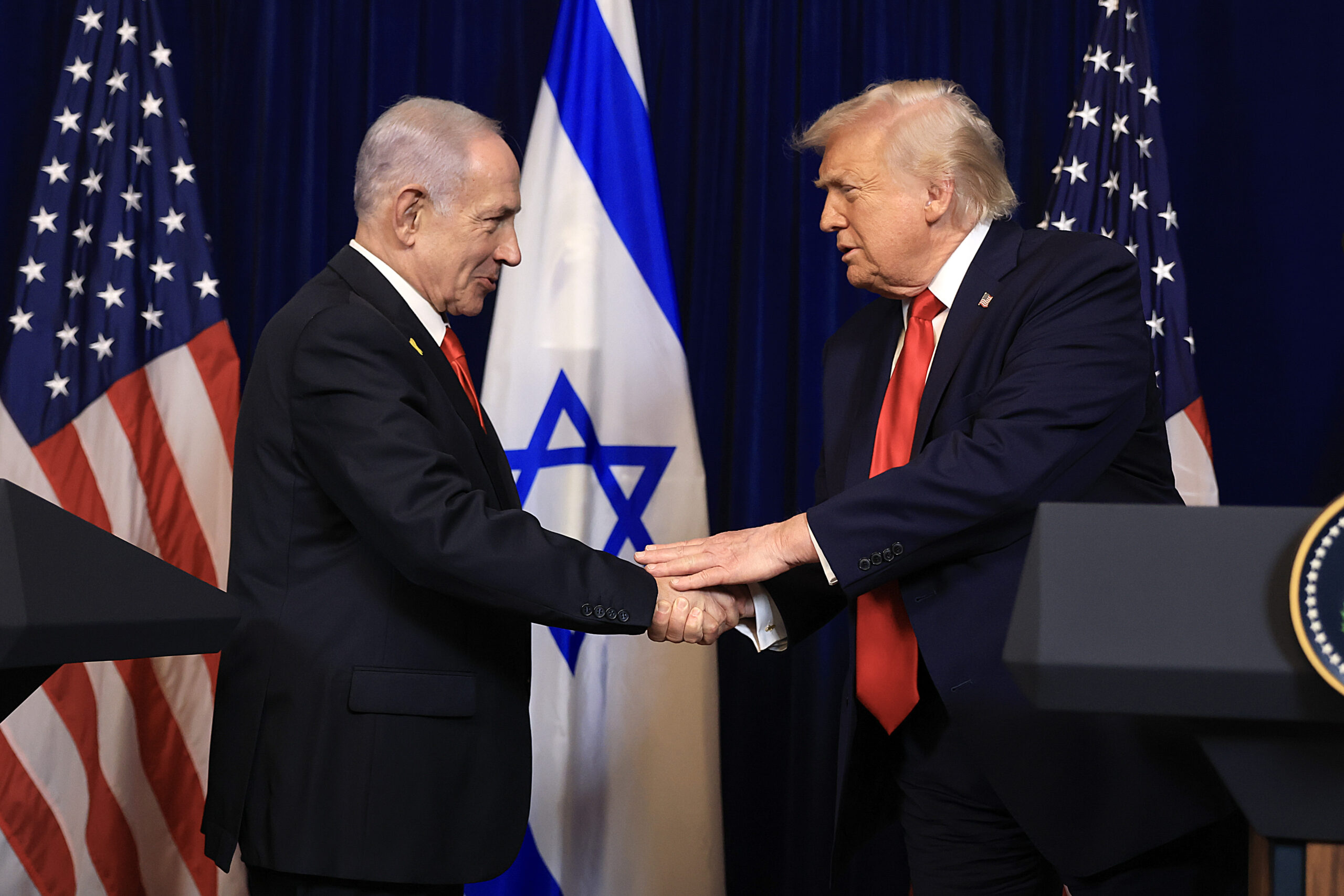
Jewish and pro-Israel groups seem at pains to clarify how they are now assessing an issue that has long been key to their advocacy — particularly as the conversation around funding and the possibility for a new MOU has rapidly evolved in recent months
CALLING OUT HATE
DCCC announces spending campaign against antisemitic Texas candidate, branding her ‘MAGA Maureen’
The $34,000 ad is in response to a GOP-linked outside spending campaign boosting the extremist candidate
Plus, Platner's Nazi tattoo is 'disqualifying,' Auchincloss says
Jim Lo Scalzo/EPA/Bloomberg via Getty Images
President Donald Trump, right, and Benjamin Netanyahu, Israel's prime minister, during a news conference in the State Dining Room of the White House in Washington, DC, US, on Monday, Sept. 29, 2025.
Good Tuesday morning.
In today’s Daily Kickoff, we look at the latest in U.S.-Iran talks amid ongoing negotiations aimed at ending the war, and explore how Jewish and pro-Israel groups are approaching the future of Israel funding ahead of the expiration of the current U.S.-Israel MOU in 2028. We talk to Reps. Josh Gottheimer and Jared Moskowitz about Chris Rabb’s primary victory months after the Pennsylvania Democrat shared an antisemitic conspiracy theory about the Bondi Beach Hanukkah attack, and report on Rep. Jake Auchincloss’ assertion that Graham Platner’s Nazi tattoo is “disqualifying” for an office-seeker. Also in today’s Daily Kickoff: Asher Luzzatto, Mendy Worch and Kirill Dmitriev.
Today’s Daily Kickoff was curated by JI Executive Editor Melissa Weiss and Israel Editor Tamara Zieve, with an assist from Danielle Cohen-Kanik. Have a tip? Email us here.
What We’re Watching
- We’re monitoring news out of Washington and also out of Doha, Qatar, where Middle East officials, including an Iranian delegation, are meeting to continue talks aimed at ending the Iran war.
- Secretary of State Marco Rubio, who spent the long weekend in India, said before departing for Armenia today — hours after the U.S. conducted what it said were defensive strikes overnight on Iranian targets — that negotiations were ongoing. “I think it’s a lot of talking back and forth going on about specific language in the initial document, so it’ll take a few days,” Rubio noted. “The president’s expressed his desire to make it. He’s either going to make a good deal or no deal.”
- Earlier this morning, Iranian Supreme Leader Ayatollah Mojtaba Khamenei warned in a written statement that “From now on, the slogans ‘Death to America’ and ‘Death to Israel’ will be the dominant slogans of the Islamic nation and the oppressed people of the world. The United States will have no safe haven to spread evil and establish its military bases in the region.”
- We’re also keeping an eye on the Israel-Lebanon border following Israeli Prime Minister Benjamin Netanyahu’s directive to “crush” Hezbollah, as well as Israel’s scaled-up attacks targeting parts of the country held by the Iran-backed terror group.
What You Should Know
A QUICK WORD WITH JI’S MELISSA WEISS
For many Americans, Memorial Day weekend marked the unofficial start of summer, with barbecues, weddings and trips to the beach. For President Donald Trump — who opted against attending his own son’s wedding in the Bahamas, citing “circumstances pertaining to Government” — the weekend was spent on calls with Middle East leaders and inching the U.S. closer to a deal with Iran.
The working assumption in Jerusalem and Washington last week — noted in our Daily Kickoff last Thursday — was that the White House preferred a deal with Tehran over a resumption of fighting, owing to increasing opposition to the war and a slew of recent GOP defections on war powers resolutions indicating concerns among Republicans that renewed military action could further damage the party’s midterm prospects.
That assumption was actualized over the weekend, with a series of Truth Social posts by Trump indicating that a deal was near, with the finer details yet to be ironed out. Among the details reportedly in the draft agreement: a 60-day extension of the ceasefire, a lifting of the U.S. blockade of the Strait of Hormuz, Iran’s commitment not to seek nuclear weapons as well as the disposal of its stockpile of enriched uranium and an end to fighting on every front — including Lebanon.
In a Truth Social post, Trump — who convened a call with a group of Arab leaders, and a separate call with Israeli Prime Minister Benjamin Netanyahu — said that he was “mandatorily requesting that all Countries immediately sign the Abraham Accords,” suggesting that Saudi Arabia and Qatar should be the first new countries to normalize relations with Israel, followed by Pakistan, Turkey, Egypt and Jordan (though the latter two have already enacted peace treaties with Israel, and Ankara and Jerusalem have diplomatic relations).
The reported contours of the burgeoning agreement drew rebukes from hawkish Senate Republicans. “If the result of all that is to be an Iranian regime — still run by Islamists who chant ‘death to America’ — now receiving billions of dollars, being able to enrich uranium & develop nuclear weapons, and having effective control over the Strait of Hormuz, then that outcome would be a disastrous mistake,” Sen. Ted Cruz (R-TX) said. Read more here.
But even as Washington and Tehran moved closer to a deal, the U.S. carried out what it called “self-defense strikes” on Iranian targets, including missile launch sites and vessels around the Strait of Hormuz. And in Lebanon, Israel ramped up strikes on Hezbollah targets, with Netanyahu vowing to “crush” the Iran-backed terror group.
PLANNING AHEAD
Pro-Israel groups grapple with the future of Israel funding
Late last month, AIPAC circulated a memo stressing its support for the current 10-year memorandum of understanding between the United States and Israel, which guarantees $3.8 billion in annual military aid and missile-defense funding to Israel through 2028. The memo was notable for what it left out: calling to negotiate a follow-up MOU — the future of which has been a topic of ongoing speculation among analysts and lawmakers beginning to think about the contours of a potential new agreement in a changing political landscape, Jewish Insider’s Matthew Kassel reports.
Winds of change: Jewish and pro-Israel groups seem at pains to clarify how they are assessing an issue that has long been key to their advocacy. Israeli Prime Minister Benjamin Netanyahu has called for winding down U.S. financial aid over the next decade. Michael Makovsky, the president and CEO of the Jewish Institute for National Security of America, said he believed Israel “made a mistake” in choosing to forgo U.S. financial aid. He suggested that the U.S. sign “one more” MOU with Israel to cover the next 10 years and help Israel replenish its munitions stocks amid the war against Iran, which he believes is key to advancing American interests in the region. “It zeroes down at the very end,” he explained to JI.
DOUBLING DOWN
After Mills withdrawal, Auchincloss reiterates Platner’s Nazi tattoo ‘disqualifying’

Rep. Jake Auchincloss (D-MA) said on Monday that Maine Democrat Graham Platner’s tattoo of a Nazi totenkopf was “disqualifying,” weeks after Gov. Janet Mills’ departed from the Democratic primary race, leaving Platner as the party’s presumptive nominee challenging Sen. Susan Collins (R-ME).
What he said: “I find that tattoo and his commentary about it to be personally disqualifying,” Auchincloss told CNN. “I hope Maine voters agree with me. I think it would be a mistake for the Democratic Party to think that Graham Platner’s brand of the Democratic Party is what wins us durable majorities throughout this country.”
CANDIDATE CRITIQUE
Moskowitz, Gottheimer concerned by Rabb’s primary victory following Bondi post

Reps. Jared Moskowitz (D-FL) and Josh Gottheimer (D-NJ) expressed concerns about Chris Rabb’s Democratic congressional primary victory in Philadelphia last week, which is likely to send the Pennsylvania state legislator to Washington next year in a deep-blue district, Jewish Insider’s Marc Rod reports.
Point of concern: They expressed particular concern about a post shared on Rabb’s Instagram account that described the Bondi Beach Hanukkah terror attack in Sydney as a false flag operation, which Rabb’s campaign has attributed to an unnamed former staffer and disavowed. In a new statement to JI, Rabb pushed back, emphasizing his connections to the Jewish community and explaining that the post was shared by a former contractor with whom the campaign had cut ties, without his approval.
Scoop: Sens. Elissa Slotkin (D-MI) and James Lankford (R-OK) wrote to Secretary of Homeland Security Markwayne Mullin on Thursday urging him to take action to move forward stalled Nonprofit Security Grant Program funding, an issue both lawmakers raised with Mullin during his confirmation hearing.
SCOOP
Janeese Lewis George’s political director shared videos calling Israel ‘evil’ and supporting BDS
The highest-paid staffer on Washington, D.C., mayoral candidate Janeese Lewis George’s campaign has a social media history showing deep-seated hostility toward Israel and adherence to far-left views on the Middle East, according to a review of the staffer’s public posts, Jewish Insider’s Gabby Deutch reports.
Online presence: Makia Green, Lewis George’s political director, posts frequently on Instagram, often a mix of photos or videos of herself alongside TikTok videos that she downloads and shares to her own profile. In the months after the Oct 7, 2023, Hamas attacks in Israel, Green’s posts on Instagram, where she has 6,400 followers, regularly centered on anti-Israel advocacy. One video she shared in December 2023 called Israel an “imaginary state.” Another post that month featured a video with someone saying “Israel is a bitch, so evil.”
CALLING OUT HATE
DCCC announces spending campaign against antisemitic Texas candidate, branding her ‘MAGA Maureen’
The Democratic Congressional Campaign Committee announced plans for a last-minute spending campaign against Maureen Galindo, an antisemitic Texas Democratic candidate who garnered condemnation this week for comments calling to imprison and castrate Zionists, Jewish Insider’s Marc Rod reports.
Ad boost: Texas’ primary is set for today and the race has garnered significant national attention in the past week after a local reporter shared Galindo’s comments about internment camps for Zionists. The DCCC is spending $34,000 on the ad spot, which describes her as “MAGA Maureen,” emphasizing an allegedly Republican-linked outside spending campaign to boost her campaign.
Switching seats: Rep. Debbie Wasserman Schultz (D-FL) announced Friday that she plans to run in Florida’s 20th Congressional District, which has been represented by a Black lawmaker for more than three decades, after her current district was redrawn by Florida Republicans in an effort to secure more seats in the House, JI’s Marc Rod reports.
STEPPING DOWN
DNI Tulsi Gabbard to resign, citing husband’s illness
Director of National Intelligence Tulsi Gabbard is resigning effective June 30, citing her husband’s recently diagnosed “extremely rare form of bone cancer,” she wrote in a resignation letter, Jewish Insider’s Melissa Weiss and Marc Rod report. “Unfortunately, I must submit my resignation, effective June 30, 2026,” she wrote in her letter, which was first reported by Fox News Digital. “My husband, Abraham, has recently been diagnosed with an extremely rare form of bone cancer.”
Warm words: President Donald Trump posted Gabbard’s resignation letter publicly, and thanked Gabbard for her service. “Unfortunately, after having done a great job, Tulsi Gabbard will be leaving the Administration on June 30th,” Trump said. “Tulsi has done an incredible job, and we will miss her.” Trump tapped Aaron Lukas, a longtime CIA official who got his start at the Cato Institute, to serve as acting DNI following Gabbard’s departure at the end of June.
Worthy Reads
Dmitriev’s Detail: The Atlantic’s Robert Worth profiles Kirill Dmitriev, the Ukraine-born, U.S.-educated special envoy for Russian President Vladimir Putin who leads the country’s sovereign wealth fund and who has been tasked by Moscow to negotiate an end to the Russia-Ukraine war with White House Special Envoy Steve Witkoff and Jared Kushner. “Putin chose Dmitriev for this job not only because of his reassuring American credentials — degrees from Stanford and Harvard Business School, work experience at McKinsey and Goldman Sachs — but because his profile matches that of his two main American interlocutors. He is an oligarch whose glamorous blond wife is close friends with Putin’s younger daughter. That makes him a virtual son-in-law of the ruler, and it may be the reason his real-estate holdings alone have soared from some $5 million to $100 million over the past decade.” [TheAtlantic]
Still Running for Something: Politico’s Ben Jacobs profiles Rep. Elise Stefanik (R-NY) as the New York Republican, who is not seeking reelection this year after a brief gubernatorial bid and having had her nomination to be U.N. ambassador pulled, considers her next political moves. “Further, Stefanik, who is Catholic, has become very popular among Jewish voters — a reputation burnished by her book on antisemitism. One Democratic operative marvelled at the reception that Stefanik received at a recent AIPAC event in New York City. ‘Guys who were good Democrats and regularly supported strong progressive candidates were on their feet cheering,’ says the operative, granted anonymity to speak frankly.” [Politico]
The Gift That Is Ben-Gvir: In an The Atlantic piece headlined “Israel’s Human Wrecking Ball,” Avi Issacharoff raises concerns about the reputational and societal damage to Israel he believes is being caused by Israeli Security Minister Itamar Ben-Gvir, who last week was filmed berating Gaza flotilla participants in a since-viral video. “The latest provocation by Ben-Gvir proved something that many Israelis have suspected for years: Ben-Gvir is not merely a nightmare for Israeli liberals, but the fulfillment of the fantasies of Israel’s enemies. He provides them with precisely the ammunition they need to argue, time and again, that Israel, in its fight against Hamas and Hezbollah, is the aggressor, and a cruel one at that. Ben-Gvir is a gift to the terrorist groups and the countries that seek Israel’s destruction.” [TheAtlantic]
Owens’ Omissions: The Wall Street Journal‘s William McGurn questions Hunter Biden’s recent appearance on antisemitic conspiracy theorist Candace Owens’ podcast, during which Owens’ questions to the son of the former president focused heavily on Israel. “But not asking key questions about what was going on in the Biden White House is shirking a duty. There are still many questions that deserve answers, and they can be asked in a way that doesn’t attack former President Biden. One that comes to mind is whether Joe stayed on too long because his friends and family didn’t want him to step aside. Another has to do with all those snide digs on Israel. Maybe Ms. Owens could have asked Hunter if his father or Zohran Mamdani better represents the Democratic Party these days.” [WSJ]
The Trolling of America: In The New York Times, Jessica Brandt, who from 2023-2025 served as an official in the Office of the Director of National Intelligence, warns that Iran and other malign actors, such as China, are utilizing emerging internet technologies and trends. “But with the Lego-style videos and other satirical content, Iran and its supporters are using a different tool for influencing public opinion. It’s not disinformation. It’s not traditional war propaganda. It’s trolling. No one is being deceived because deception isn’t the point. Reach, ridicule and cultural resonance are. … Iran is exploiting a gap that our current defenses weren’t built to close. We need to address it before a more capable adversary decides to do the same.” [NYTimes]
Word on the Street
Sen. Jim Risch (R-ID), the chair of the Senate Foreign Relations Committee, warned that the Lebanese government and Lebanese Armed Forces “need to step up and take immediate action to ensure Hezbollah is fully and permanently disarmed” or risk losing U.S. support…
In The New York Times, Sen. Chris Van Hollen (D-MD) calls on the U.S. to recognize a Palestinian state “that is subject to clear benchmarks, including free and fair elections” while “ending taxpayer-funded support” for Israel; the Maryland Democrat also called for Saudi Arabia to normalize relations with Israel…
Rep. Alexandria Ocasio-Cortez (D-NY) endorsed New Jersey doctor and anti-Israel activist Adam Hamawy in the race to succeed outgoing Rep. Bonnie Watson Coleman (D-NJ) in the state’s 12th Congressional District…
Federal officials are investigating whether antisemitic streamer Hasan Piker and other far-left activists, including CodePink’s Madea Benjamin, violated U.S. sanctions during their recent trip to Cuba…
An investigation by the Colorado Advisory Committee to the U.S. Commission on Civil Rights found that Denver Mayor Mike Johnston and the city’s police chief, through their refusal to tamp down on demonstrators at the anti-Israel encampment at the city’s Auraria Campus, which hosts several state and city colleges, violated Jewish students’ civil rights…
Former Columbia graduate student Mahmoud Khalil plans to appeal to the Supreme Court last week’s decision by an appellate court not to review his case as the anti-Israel campus protest leader continues to fight the government’s deportation case against him…
The Wall Street Journal looks at developer Asher Luzzatto’s efforts to convert unused office space in downtown Denver into more than 1,000 housing units and mixed-use spaces…
The Wexner Foundation told alumni on Thursday that it will spin off its flagship leadership programs into an independent nonprofit, marking a major development within the Jewish philanthropic landscape that comes as the foundation’s benefactor, Les Wexner, continues to face pushback for his past ties to financier Jeffrey Epstein, JI’s Gabby Deutch reports…
Pope Leo XIV cautioned of the dangers of artificial intelligence in a new encyclical letter, comparing this juncture of its advancement to the choice “between constructing [the Tower of] Babel or rebuilding Jerusalem” after the Babylonian exile, which he described as a collaborative effort “with God at the center”…
Australia’s royal commissioner investigating antisemitism in the country warned against harassing and intimidating witnesses who have given testimony about their experiences with antisemitism…
Federal prosecutors in Germany filed charges against a Danish national accused of operating as an agent of Iran’s Islamic Revolutionary Guard Corps, who, with support from the IRGC’s Quds Force, allegedly planned to attack leaders of Germany’s Jewish community as well as Jewish grocery stores in Berlin…
The New York Post reports that Mohammad Baqer Saad Dawood Al-Saadi, the Iraqi national arrested in Turkey on charges of planning attacks on Jewish and Israeli targets, had also plotted to assassinate Ivanka Trump in retaliation for President Donald Trump’s 2020 strike that killed Al-Saadi’s mentor, Quds Force head Qasem Soleimani…
The head of Iran’s national soccer association said that the national team’s World Cup training base was moved from the U.S. to Tijuana, Mexico, after previously being assigned to Tucson, Ariz….
Haaretz reports that Shin Bet head David Zini traveled to the United Arab Emirates to meet with Mohammed Dahlan, a rival of Palestinian Authority President Mahmoud Abbas who has ties to members of the Palestinian technocratic group helping to administer Gaza…
Semafor spotlights Qatari minister Ali Al Thawadi, who represents Doha on the Gaza Executive Board, as the official plays a quiet but influential role in Middle East policy and Doha’s diplomatic dealings, including in efforts to end the U.S.-Iran war…
Etihad will add a sixth daily flight from Abu Dhabi to Israel next month for a total of 42 flights per week, making Israel the destination to which the airline has the most weekly flights…
Speaking on Sunday at an event honoring the winners of the Jerusalem Unity Prize, Israeli President Isaac Herzog condemned the normalization of “a terrible process of brutalization,” amid ongoing settler attacks on Palestinians in the West Bank and reports of brutality against Palestinian detainees…
Israeli software company Wix plans to lay off approximately 1,000 employees — roughly 20% of its staff — in the coming months, amid plummeting stock values and rising costs related to the company’s early adoption of AI technologies…
Israel-Canadian legal scholar and political scientist Ran Hirschl died at 62…
Manny Nosowsky, a New York Times crossword creator who had a first career as a urologist, died at 94…
Pic of the Day

Singer Mendy Worch released the video for his song “Jungle,” featuring TYH Boys. Worch said the song was inspired by a teaching from his rabbi, who shared his grandfather’s wisdom that “you don’t need to fix the whole giant jungle at once. If you just light up your own little corner, that light will start to spread. It will travel further and further until it fills the entire world.”
Birthdays

Journalist and educator, the mother of Janet (anthropologist and UCSF professor), Anne (co-founder of 23andMe) and the late Susan (former CEO of YouTube), Esther Hochman Wojcicki turns 85…
Public speaker, teacher and author of dozens of books on the English language, he writes a weekly column that is syndicated in newspapers throughout the U.S., Richard Lederer turns 88… Member of the House of Representatives (D-IL) since 1999, she is not seeking reelection this year, Janice Danoff “Jan” Schakowsky turns 82… Former SVP of News at NPR, after a lengthy career at the New York Daily News, The New York Times and the Associated Press, Michael Oreskes turns 72… Co-founder and CEO of Mobileye which he sold to Intel in 2017, he is also a professor at Hebrew University, Amnon Shashua turns 66… NYC real estate developer, past chair and board member of The Charles H. Revson Foundation and a former commissioner on the NYC Planning Commission, Cheryl Cohen Effron… Former brigadier general in the IDF, she has been a member of the Knesset for the Likud since 2009, currently serving as minister of transportation, Miriam “Miri” Regev turns 61… Counsel in the government affairs practice of Paul Hastings, Dina Ellis Rochkind… Photographer, her work has appeared in galleries and been published in books, Naomi Harris turns 53… Communications strategist at O’Connell & Goldberg, Eileen Esther Alkabes… South Florida entrepreneur, Sholom Zeines… Senior program officer for media and communications at Maimonides Fund, Rebecca Friedman… Former minor league baseball player, he has become one of the leading agents for NBA players, with five contracts of over $100 million each, Jason Glushon turns 41… Author of a book on the 1929 origins of the current Arab-Israeli conflict, Yardena Schwartz… CEO and director of the National Jewish Advocacy Center, Mark Goldfeder… Co-founder of Stories Abroad Tours and consultant on policy and advocacy for progressive causes, Arielle Gingold… Assistant professor of law at Wayne State University Law School, Benjamin L. Cavataro… Toronto-born Israeli actor and singer, best known as the protagonist of the Israeli television series “Split,” Melissa Amit Farkash turns 37… Senior manager of strategic partnerships and engagement at U.S. Pharmacopeia, Morgan A. Jacobs… Catcher in the Philadelphia Phillies organization, he played for Team Israel in the 2023 World Baseball Classic, Garrett Patrick Stubbs turns 33… Eytan Merkin…
Plus, see JI's summer reading list recs
Alex Wong/Getty Images
Committee members wait for the beginning of a meeting of the Democratic National Committee’s Rules and Bylaw Committee in Washington, DC
This P.M. edition is reserved for our premium subscribers like you — offering a forward-focused read on what we’re tracking now and what’s coming next.
Today’s Daily Overtime was curated by JI U.S. Editor Danielle Cohen-Kanik.
📡On Our Radar
Notable developments and interesting tidbits we’re tracking
Jewish Insider’s Gabby Deutch has compiled our team’s summer reading list to kick-start the long weekend. Take a look at the new releases we’re recommending from this spring, as well as books we’re looking forward to in the coming months…
President Donald Trump struck a confident note on the U.S.’ ability to secure Iran’s already enriched uranium, telling reporters in the Oval Office today, “We will get it. We don’t need it, we don’t want it. We’ll probably destroy it after we get it, but we’re not going to let them have it.” He’s also still hinting at renewed military operations: “We’re going to either make sure they don’t have a nuclear weapon or we’re going to have to do something very drastic,” he said…
Former New York City Comptroller Brad Lander — who polls show running well ahead of Rep. Dan Goldman (D-NY) in next month’s Democratic primary — broadened his already sweeping criticism of Israel in a speech to a Queens mosque earlier this month, suggesting the country’s actions against Hezbollah in Lebanon could constitute genocide, JI’s Will Bredderman reports…
More than 2,000 New Jersey rabbis and lay leaders signed a petition to New Jersey Gov. Mikie Sherrill and state lawmakers urging them to take prompt action to implement the International Holocaust Remembrance Alliance’s working definition of antisemitism in the state, JI’s Marc Rod reports.
“We were deeply dismayed that legislation to adopt the IHRA definition was recently shelved for political reasons, despite broad support in the legislature and clear evidence of rising antisemitism,” the letter, which was organized by the Jewish Majority, reads, referencing former Gov. Phil Murphy’s efforts to quash the bill last year…
Critics of Qatari funding of American universities are watching Northwestern University’s incoming president, Mung Chiang, to see how he handles the school’s upcoming contract renewal for its satellite campus in Doha, JI’s Haley Cohen reports.
Northwestern’s contract to operate its campus in Qatar (NU-Q) is set to expire at the end of the 2027-2028 academic year. Interim President Henry Bienen said earlier this month that the NU-Q review process is “ongoing” and would be left up to the university’s new leadership…
Democratic National Committee Chair Ken Martin released the DNC’s long-awaited 2024 election “autopsy” today, ending months of pressure from activists demanding answers for the party’s losses last year; the 192-page document, the contents of which Martin disavowed, does not mention the party’s policies on Israel, Gaza or the Middle East, which critics had alleged sank Vice President Kamala Harris’ presidential bid…
A new poll conducted for the Jewish Voters Resource Center found American Jewish voters’ top priorities in the midterm elections are the “future of democracy” and cost of living, with antisemitism ranked as the third most important issue, though it was the No. 1 “dealbreaker” that would cause a candidate to lose their vote. Israel ranked fifth among most important issues, while the Iran war — which 62% of American Jews disapproved of — ranked nearly last.
Ninety percent of respondents said they were concerned about antisemitism in the U.S., including 63% who said they were very concerned. Only 16% of respondents said they think Israel’s war in Gaza was a success, while the rest were nearly split in considering it a failure or being unsure…
Former Israeli Ambassador to the U.S. Michael Herzog said today that he does not view J Street, the progressive Israel advocacy group, as a pro-Israel organization, JI’s Marc Rod reports, weighing in on the escalating war between his successor, Ambassador Yechiel Leiter, and J Street.
“To me, to be pro-Israel is to draw a clear line between criticizing Israeli government policies — and supporting anti-Israel agendas and libels de-legitimizing the State of Israel,” Herzog said on X…
The Senate abruptly departed for its Memorial Day recess, not set to return until June, without taking up the partisan reconciliation bill to fund immigration enforcement and security for the White House ballroom; the primary source of the delay is opposition from Republicans to the administration’s proposed $1.8 billion “anti-weaponization” fund, expected to give payouts to Jan. 6 defendants and other Trump allies. The House is also set to depart a day earlier than anticipated…
Board of Peace head Nickolay Mladenov published in a series of posts on X a 15-point plan to “complete the implementation” of Trump’s 20-point Gaza peace plan. Hamas’ disarmament, Mladenov said, would not be “unilateral” or require “immediate surrender”; instead, it would be a “phased, Palestinian-led and internationally verified process” that would see arms transferred to the Palestinian technocratic committee governing Gaza rather than Israel…
The State Department’s Office of the Inspector General is conducting an investigation into the Gaza Humanitarian Foundation, according to the Financial Times, focused on how the now-defunct aid organization spent a $30 million federal grant it received last June…
The Atlantic’s David Frum argues that rising antisemitic violence in the West — such as the attack on his hometown synagogue in Toronto when a gunman fired 20 bullets at its exterior — makes recent media coverage of Israel especially dangerous, criticizing Nicholas Kristof’s dubiously sourced New York Times column alleging systemic sexual abuse of Palestinian prisoners by Israeli officials as “the new blood libel”…
⏩ Tomorrow’s Agenda, Today
An early look at tomorrow’s storylines and schedule to keep you a step ahead
Keep an eye out in Jewish Insider for the results of this afternoon’s expected Iran war powers vote in the House, which could pass, depending on attendance. Rep. Jared Golden (D-ME), until now the lone Democratic holdout, is expected to flip his vote in favor.
President Donald Trump is expected to deliver remarks tomorrow in Rockland County, N.Y., at a campaign event for Rep. Mike Lawler (R-NY), as the congressman faces a competitive reelection in his swing district.
Secretary of State Marco Rubio will travel to Sweden tomorrow to attend a meeting of NATO foreign ministers; from there, he will embark on a three-day visit to India, stopping in several cities for meetings on energy security, trade and defense cooperation.
On Sunday, the left-wing “Pod Save America” will host a Michigan Senate Democratic primary forum with candidates Rep. Haley Stevens (D-MI), state Sen. Mallory McMorrow and far-left Abdul El-Sayed, who has been championed by the podcast’s hosts.
In observance of Shavuot and Memorial Day, we’ll be back with the Daily Overtime on Tuesday. Chag sameach!
Stories You May Have Missed
LIBRARY LOOK
Obama presidential center touts Iran nuclear deal as key part of former president’s legacy

The new presidential center, scheduled to open June 19 in Chicago, highlights Obama’s ‘strategic engagement with adversaries’
FACING THE HEAT
Track AIPAC under fire as Democrats condemn its extremist Texas pick
The anti-Israel account rescinded its endorsement of Maureen Galindo, who called to imprison Zionists, after a groundswell of Dem condemnation
Plus, TX Dem gets the preemptive boot

Julie Menin, speaker of the New York City Council and Zohran Mamdani, mayor of New York, arrive for an announcement in the Brooklyn borough of New York, US, on Monday, Jan. 12, 2026 (Photographer: John Lamparski/Bloomberg via Getty Images)
This P.M. edition is reserved for our premium subscribers like you — offering a forward-focused read on what we’re tracking now and what’s coming next.
Today’s Daily Overtime was curated by JI U.S. Editor Danielle Cohen-Kanik.
📡On Our Radar
Notable developments and interesting tidbits we’re tracking
President Donald Trump and Israeli Prime Minister Benjamin Netanyahu held a heated phone call on Tuesday where they discussed a potential peace deal with Iran that was drafted by Qatar, Pakistan and other mediators, Axios reports, with Netanyahu pushing for a return to war.
Responding to reports that Netanyahu favors continuing strikes, Trump said on Wednesday that the Israeli leader “will do whatever I want him to do”…
Trump said the U.S. and Iran are “right on the borderline” of either securing a deal or resuming the war, telling reporters the process “could go very quickly, or could be a few days.” Iran’s Islamic Revolutionary Guards Corps, meanwhile, threatened to strike “beyond the region” should military operations continue…
The Jewish Democratic Council of America announced a dual endorsement today of Rep. Haley Stevens (D-MI) and state Sen. Mallory McMorrow in Michigan’s three-way Senate Democratic primary, Jewish Insider’s Matthew Kassel reports, saying, “There are two candidates who stand with our community on issues of importance to Jewish voters, and there is one who does not.”
While JDCA CEO Halie Soifer acknowledged concerns that Stevens and McMorrow could end up splitting the more-moderate vote and inadvertently propelling the far-left Abdul El-Sayed to the nomination, she told JI the dual endorsement was meant to reflect JDCA’s broader assessment of the stakes of the race…
New York City Council Speaker Julie Menin is backing a new buffer zone bill for schools that aims to avoid another veto from Mayor Zohran Mamdani, JI’s Will Bredderman reports; the revised legislation narrows the language to early childhood facilities and K-12 schools and carves out other educational facilities, addressing concerns from the mayor and other councilmembers…
A new poll from the independent Pan Atlantic Research firm found presumptive Maine Senate Democratic nominee Graham Platner leading incumbent Sen. Susan Collins (R-ME) 48-41% among likely voters. There was a stark educational divide: Platner led Collins by 20 points among those with a four-year college degree or higher, while the candidates were neck-and-neck among those without…
Reps. Josh Gottheimer (D-NJ) and Jared Moskowitz (D-FL) vowed that if Maureen Galindo, the antisemitic conspiracy theorist running in the Democratic primary for Texas’ 35th District, is elected to Congress, “we will force a vote to expel her every single day we are here.”
All Jewish Democratic members of Congress also joined to condemn Galindo’s “vile, bigoted, and antisemitic views,” calling her “desperate and unhinged”…
Yesterday’s primary elections saw Rep. Andy Barr (R-KY) secure the GOP nomination for retiring Sen. Mitch McConnell’s (R-KY) Senate seat, while in Georgia, former Rep. Mike Collins (R-GA) and former football coach Derek Dooley will head to a runoff next month after neither received 50% in the race to take on Sen. Jon Ossoff (D-GA)…
Former Rep. Barney Frank (D-MA), who represented the Boston area in Congress for more than three decades and was the first openly gay member of Congress, died on Tuesday, JI’s Gabby Deutch reports. He was 86.
In the final weeks of his life, Frank did a series of interviews to promote his forthcoming book, even as he anticipated not making it to the release date. In a May 8 interview with the Jewish Telegraphic Agency, Frank said he believed Democrats should reject far-left litmus tests, but said Israel policy is “180 degrees” different and that Democrats need to make clear their opposition to Netanyahu…
Netanyahu, along with other Israeli officials, issued a sharp condemnation of far-right National Security Minister Itamar Ben-Gvir after he released a video showing himself taunting detained flotilla activists, JI’s Matthew Shea reports.
In the video, Ben-Gvir waves a large Israeli flag over blindfolded activists kneeling on the ground and shouts, “Welcome to Israel, we are the masters.” Netanyahu said the way his Cabinet minister “dealt with the flotilla activists is not in line with Israel’s values and norms”…
James Murdoch, the son of media mogul Rupert Murdoch, is purchasing, through his media holding company Lupa Systems, New York magazine, the Vox Media Podcast Network and Vox.com from Vox Media. Murdoch’s other business ventures include an investment firm, Bodhi Tree, founded in 2022 with $1.5 billion from the Qatar Investment Authority. His expanded holdings in American media mark a homecoming of sorts — his father owned New York magazine from 1977-1991…
⏩ Tomorrow’s Agenda, Today
An early look at tomorrow’s storylines and schedule to keep you a step ahead
Keep an eye out in Jewish Insider for an interview with the two Republican candidates running for the University of Michigan Board of Regents, as they see an opening to pitch themselves to voters over Amir Makled, an anti-Israel Democratic nominee.
The Capital Jewish Museum in Washington will open to the public to mark the one-year anniversary of the shooting that killed Israeli Embassy staffers Yaron Lischinsky and Sarah Milgrim.
The Jewish Community Relations Council of Greater Washington will hold candidate forums with D.C. mayoral hopefuls Janeese Lewis George and Kenyan McDuffie.
Stories You May Have Missed
DEM DISCUSSIONS
Center-left think tank’s conference avoids the elephant in the room: Israel

The Center for American Progress hosted leading Democratic officials and featured several panels on foreign policy. Israel was barely discussed
FLOURISHING FRIENDSHIPS
Iran war is leading to stronger alliance between Israel, India and the UAE, experts say

The emerging partnership is being sharpened by a rival alliance between Pakistan and Saudi Arabia
The emerging partnership is being sharpened by a rival alliance between Pakistan and Saudi Arabia

(Press Information Bureau (PIB)/Anadolu via Getty Images)
Indian Prime Minister Narendra Modi meets with Prime Minister of Israel Benjamin Netanyahu in New Delhi, India on February 25, 2026.
While some geopolitical relationships have been tested by the Iran war, others have been strengthened: Emerging alignments between Israel, the United Arab Emirates and India are creating new opportunities for cooperation among three countries increasingly bound by shared defense and economic interests, experts said.
During the war, Israel provided the UAE with an Iron Dome defense battery and IDF operators to help protect the Gulf nation from Iranian attacks, officials have confirmed. But India also moved to support the Emiratis, establishing an air bridge to allow the country to import and export goods amid disruptions caused by the closure of the Strait of Hormuz, according to Hussain Abdul-Hussain, a research fellow at the Foundation for Defense of Democracies.
The growing cooperation between India and the UAE predates the war, experts said, but the conflict has accelerated it. On Friday, the two countries agreed on the framework for a strategic defense partnership, a step that could deepen ties between New Delhi and Abu Dhabi amid the regional fallout from the war.
Abdul-Hussain told Jewish Insider that the partnership also extends to Israel, which has remained a key ally of both countries. He said the emerging alignment is rooted in overlapping economic and strategic interests and shared adversaries.
“Absolutely there’s an alliance that’s emerging,” Abdul-Hussain said. “I think the three of them are like three pieces of a puzzle that fit neatly together.”
Abdul-Hussain said the UAE’s expected expansion of oil production could bring it even closer to India, one of the world’s largest energy importers. He argued that the UAE’s departure from OPEC and its ambition to increase oil output could position India as Abu Dhabi’s “biggest customer.”
He said the partnership is also driven by the defense and technology strengths of India and Israel, as well as the UAE’s position as a regional hub.
“If you add all these things together — energy and technology and military, and the size of the population of India, the dynamic technological economy of Israel, and then you put the UAE in the middle between them — I think the three of them can really help one another and push each other up,” Abdul-Hussain said. “They have a lot of mutual interests and they can get a lot of benefits from the cooperation.”
Edmund Fitton-Brown, a former British diplomat and senior fellow at FDD, said the new strategic defense framework between India and the UAE could allow New Delhi to provide Abu Dhabi with “significant help” in several areas, including cyber, communications, training and technology.
He said the partnership could include “joint patrols to defend against Iranian threats to cables and shipping lanes,” as well as broader military cooperation.
Experts also said the deeper significance of the emerging alignment lies in how Israel, the UAE and India are responding to rival powers that are increasingly coordinating in ways that threaten their interests. For India and the UAE, Pakistan has become a key point of overlap: New Delhi views Islamabad as its chief regional adversary, while Abu Dhabi has grown increasingly wary of Pakistan’s ties to Iran and its deepening defense relationship with Saudi Arabia.
“They understand that there’s an alliance of enemies,” Abdul-Hussain said, pointing to Iran and Saudi Arabia as UAE adversaries, Pakistan and Iran as Indian adversaries and Iran and Turkey as Israeli adversaries. “Each one in this alliance is happy to be in this alliance because they understand that their enemies are also ganging up together against them.”
Jonathan Ruhe, a fellow at the Jewish Institute for National Security of America, similarly said the new alignment “reflects how shared threats from Iran are driving deeper cooperation within, and beyond, the region.”
“Recent deals to strengthen Emirati-Indian trade, technology and security cooperation pick up on initial progress that preceded Hamas’ Oct. 7 attack and its disruptions to regional integration,” Ruhe said. “They also reflect how our Middle East partners don’t automatically look to American leadership like they used to.”
Abdul-Hussain pointed to the UAE’s shifting posture toward Pakistan as an example of how the war has reshaped regional alignments. Before the conflict, he noted that Abu Dhabi had grown closer to India while still avoiding an explicit break with Islamabad — a calculus that has since changed.
“Until this war, the UAE, even though they had become close with India, had not really taken sides between India and its traditional rival Pakistan,” he said. “Shortly after the war stopped, the Pakistanis had $3 billion in loans from the Emiratis that had matured, and the Pakistanis asked the Emiratis to extend the time or to reissue the debt again, and the Emiratis refused,” he said.
Abdul-Hussain said Pakistan’s warm ties with Iran, including its role hosting mediation between Washington and Tehran, added to Abu Dhabi’s frustration.
“We know that Pakistan is — even though they’re hosting the mediation between the U.S. and Iran — much closer to Iran,” he said. “They’re friends with Iran, and I think this friendship didn’t go well with the Emiratis.”
Ruhe said there is “logic to the Pakistan-Saudi angle of closer UAE-India ties,” but argued that China remains “India’s abiding concern here.” He pointed to Beijing’s weapons sales to Islamabad, which he said “inflicted real damage on Indian forces last year.”
Simon Henderson, a senior fellow at The Washington Institute for Near East Policy, was more skeptical, saying the “so-called pact seems to be words rather than substance” and that the current state of Gulf politics remains “hard to define.”
“Everything has been thrown up in the air and we are waiting to see how they land,” Henderson said.
Plus, Trump's Paxton endorsement puts Texas in play

Noam Galai/Getty Images
Sen. James Lankford speaks during the 'March For Israel' at the National Mall on November 14, 2023 in Washington, DC.
This P.M. edition is reserved for our premium subscribers like you — offering a forward-focused read on what we’re tracking now and what’s coming next.
Today’s Daily Overtime was curated by JI U.S. Editor Danielle Cohen-Kanik.
📡On Our Radar
Notable developments and interesting tidbits we’re tracking
Sens. Jacky Rosen (D-NV) and James Lankford (R-OK) introduced the Jewish American Security Act today, a broad new effort to address antisemitism across multiple sectors of American society, Jewish Insider’s Marc Rod reports.
The bill — launched at a Jewish Federations of North America press conference on Capitol Hill — aims to combat antisemitism on campus and online, as well as streamline and provide $1 billion in funding for the Nonprofit Security Grant Program, and has broad support among Jewish community groups and across all major religious denominations.
William Daroff, CEO of the Conference of Presidents of Major American Jewish Organizations, told JI it was “deeply encouraging to see this bill come together with bipartisan, bicameral support at a time when that kind of consensus is all too rare”…
President Donald Trump endorsed Texas Attorney General Ken Paxton over Sen. John Cornyn (R-TX) ahead of the state’s heated GOP primary runoff next Tuesday, JI’s Emily Jacobs reports. Trump, who has repeatedly praised both candidates, claimed Cornyn “is a good man … but he was not supportive of me when times were tough.”
If Paxton wins the May 26 runoff, Democrats plan to invest millions behind their nominee, state Rep. James Talarico, who is trying to become the first Democrat to win a Senate seat in Texas since 1988. General election polling indicates that a matchup between Talarico and Paxton — who carries significant legal and ethical baggage — would be highly competitive…
Activist Maureen Galindo, a candidate for the Democratic nomination in Texas’ 35th Congressional District who has continuously trafficked in antisemitic conspiracy theories, pledged in an Instagram post last week to turn an immigrant detention center in south Texas into a “prison for American Zionists.” “It will also be a castration processing center for pedophiles which will probably be most of the Zionists,” she continued.
Jewish and Democratic groups, including Democratic Majority for Israel, are backing Galindo’s opponent, Bexar County sheriff’s deputy Johnny Garcia. In a statement about Galindo’s comments, DMFI accused Republicans of funding her campaign and “deliberately elevating one of the most grotesque antisemites in America”…
Trump blasted Rep. Thomas Massie (R-KY) for sending a campaign text to voters, as election day is underway in Kentucky, with a statement from Trump endorsing Massie — from 2022. Trump has endorsed Massie’s opponent, Ed Gallrein, in today’s Republican primary.
“Horrible Congressman Thomas Massie put out an old Endorsement, from many years ago, of him by me long before I found out that he was the Worst Congressman in the History of our Country,” Trump wrote on X — his first post on the platform in months…
New polling from the campaign of Navy veteran Rebecca Bennett shows her with a 20-point lead in the Democratic primary for New Jersey’s 7th Congressional District, the seat held by Rep. Tom Kean Jr. (R-NJ) — who is drawing increasing scrutiny for his monthslong unexplained absence from Congress. Bennett, who is leading the pack in fundraising, polled at 35% among likely primary voters, while Tina Shah came in second at 15%…
After abruptly scrapping a strike on Iran planned for today, Trump gave a vague timeline for renewed diplomacy, saying Tehran has only “a limited period of time” to return to the negotiating table. “Two or three days. Maybe Friday, Saturday, Sunday. Maybe early next week,” he told reporters today.
Hours after calling off the strike yesterday evening, Trump met with his national security team to discuss military options in Iran, Axios reports, suggesting resumed strikes are still on the table…
Speaking at the No Money for Terror Conference in Paris, Treasury Secretary Scott Bessent called on U.S. allies to “step up” and join Washington in taking aggressive economic action against Iran and its broader terrorism financing networks, JI’s Matthew Shea reports.
Bessent’s comments came as the Treasury Department announced sanctions against four individuals associated with the pro-Hamas flotilla traveling towards Gaza, as well as a suite of sanctions against Iranian shadow banking operations and 19 regime-linked vessels…
The Emirati Defense Ministry said that drone attacks that caused a fire at the UAE’s nuclear power plant over the weekend were launched from Iraqi territory, where several Iran-backed militias are based…
Adm. Brad Cooper, the head of U.S. Central Command, told members of the House Armed Services Committee that reports that Iran had managed to reconstitute many of its drone and missile sites struck during U.S. operations were inaccurate…
Twenty-five Republican senators led by Sen. Tom Cotton (R-AR) wrote a letter to Trump urging him to “fully dismantle” the U.N. Relief and Works Agency and remove it from the U.N. budget, citing the agency’s “systemic infiltration by Hamas and other U.S.-designated terrorist organizations”…
The Oklahoman, a local daily newspaper, pulled down an opinion article published on Monday comparing the Oklahoma City Thunder NBA team to Israel — an “underdog that has become hated.” The article, written by a pro-Israel Jewish Oklahoman, was “mistakenly published,” the paper’s executive editor said, and “did not align with our opinion standards”…
⏩ Tomorrow’s Agenda, Today
An early look at tomorrow’s storylines and schedule to keep you a step ahead
Keep an eye out in Jewish Insider for a readout from the Center for American Progress’ IDEAS Conference, where more than a dozen Democrats, several with national ambitions, shared their policy visions today in Washington.
The Jewish Federations of North America, Conference of Presidents of Major American Jewish Organizations, Combat Antisemitism Movement and Weitzman National Museum of American Jewish History will host a breakfast with lawmakers on Capitol Hill to celebrate Jewish American Heritage Month, with a keynote speech from Sam Salz, believed to be the first and only Orthodox Jew to play Division I college football.
The Senate will begin consideration on the reconciliation bill to fund immigration enforcement, as well as security for the new White House ballroom, during which Senate Democrats could force votes on a range of issues, including the war in Iran.
The House Foreign Affairs Committee will hold a budget hearing on State Department-adjacent entities, with testimony from former lawmaker and diplomat Tom Malinowski (D-NJ), National Endowment for Democracy President Damon Wilson and Inter-American Foundation CEO Sara Aviel.
The House Committee on Education & Workforce will hold a hearing on antisemitism in healthcare settings. Witnesses will include Deena Margolies, an attorney from the Louis D. Brandeis Center for Human Rights Under Law; Jamie Beran, CEO of the progressive Jewish organization Bend the Arc; Eveline Shekhman, CEO of the American Jewish Medical Association; and Dr. Jacob Agronin from Temple University Hospital.
Sarah Rogers, the under secretary of state for public diplomacy, will speak at the Hudson Institute about the U.S.’ public diplomacy strategy abroad, with opening remarks from Sen. Eric Schmitt (R-MO).
Stories You May Have Missed
PROBLEMATIC PLATFORMING
Nevada GOP candidate Marty O’Donnell hosted neo-Nazi influencer on podcast

In August 2025, O’Donnell hosted a popular far-right influencer best known by his online pseudonym ‘Raw Egg Nationalist’ on his podcast for a friendly discussion
MICHIGAN MIDDLE GROUND
McMorrow walks the line on Israel, floats Iron Dome for Palestinians
In an interview with leftist podcasters Matt Bernstein and Emma Vigeland, the Michigan Senate candidate backed Israel’s access to Iron Dome systems, suggested Palestinians should also have them
Not all Republicans were in favor of the president’s announcement; ‘He’s going to have to go to war at some point, so might as well do it,’ Sen. Rick Scott told JI

Tasos Katopodis/Getty Images
U.S. President Donald Trump waves to the media after walking off of Air Force One at Miami International Airport on April 11, 2026 in Miami, Florida.
President Donald Trump announced on Monday that he was calling off a planned U.S. attack on Iran, which he said was scheduled for Tuesday, at the request of Saudi Arabia, Qatar and the United Arab Emirates to allow peace talks to continue.
The commander-in-chief wrote on his Truth Social platform that the leaders of the three Gulf nations had asked him to hold off because “serious negotiations are now taking place” and they believed that “a deal will be made, which will be very acceptable to the United States of America, as well as all countries in the Middle East, and beyond.”
The possible U.S.-Iran deal, Trump said, “will include, importantly, NO NUCLEAR WEAPONS FOR IRAN!”
The president wrote that he had “instructed” Defense Secretary Pete Hegseth, Joint Chiefs of Staff Chairman Gen. Dan Caine and the U.S. military “ to be prepared to go forward with a full, large scale assault of Iran, on a moment’s notice, in the event that an acceptable deal is not reached.”
Axios reported on Monday that Trump is considering restarting military operations in Iran after rejecting Iran’s latest proposal in ongoing peace talks, and the president told the New York Post in an interview earlier in the day that Iranian leaders were aware of “what’s going to be happening soon.” He did not elaborate further, though he noted that he was “not open” to making any concessions in negotiations.
Speaking at an event focused on healthcare affordability at the White House on Monday afternoon, Trump said, “We were getting ready to do a very major attack tomorrow. I’ve put it off for a little while. Hopefully maybe forever, but possibly for a little while because we’ve had very big discussions with Iran.”
“We’ll see what they amount to,” he continued.
Sen. Rick Scott (R-FL) was not optimistic that negotiations would yield any result.
“He’s going to have to go to war at some point, so might as well do it,” Scott told Jewish Insider on Monday evening. “I don’t believe they’re going to come to their senses.”
Sen. Josh Hawley (R-MO), who has been urging the president to ignore calls to return to war, said he was glad to see Trump announce that he would not be resuming military strikes.
“Where we’re at now is I think a good place, in terms of the president has said that hostilities are terminated, his word, so that’s good. I hope that we can get to a more definite resolution of the conflict,” Hawley continued.
Sen. Lindsey Graham (R-SC) said on X that he had “every confidence” that Trump would “not continue to tolerate a refusal to negotiate in good faith along with Iran’s defiant aggression in the Strait of Hormuz and throughout the region,” and appeared to argue in favor of additional military action now.
“A short but forceful response now would reset the conflict in all the right ways,” Graham said. “When it comes to Iran, it is imperative that we negotiate from a position of strength and dominance. We must finish what we started. I fear continuing negotiations without a forceful response prolongs the conflict, gives our allies doubt and will further embolden the Iranian terrorist regime.”
Plus, Massie's antisemitic closing message

Daniel Torok/The White House via Getty Images
President Donald Trump and Secretary of State Marco Rubio (R) sit in the Situation Room as they monitor the mission that took out three Iranian nuclear enrichment sites, at the White House on June 21, 2025 in Washington, DC.
This P.M. edition is reserved for our premium subscribers like you — offering a forward-focused read on what we’re tracking now and what’s coming next.
Today’s Daily Overtime was curated by JI U.S. Editor Danielle Cohen-Kanik.
📡On Our Radar
Notable developments and interesting tidbits we’re tracking
President Donald Trump announced that, at the request of Qatari, Saudi and Emirati leaders, he was calling off an attack on Iran he said was planned for tomorrow, after the heads of state assured him Iran would agree to a deal that “will include, importantly, NO NUCLEAR WEAPONS FOR IRAN!”
Trump said he had instructed Defense Secretary Pete Hegseth and Chairman of the Joint Chiefs of Staff Gen. Dan Caine to “be prepared to go forward with a full, large scale assault of Iran, on a moment’s notice, in the event that an acceptable Deal is not reached”…
A new New York Times/Siena poll found 35% of respondents said they sympathize more with Israelis, while 37% said they sympathize more with Palestinians. There was a stark partisan divide: Among Republicans, 66% said they sympathize more with Israelis, while just 17% of Democrats said the same.
Meanwhile, the poll found nearly two-thirds of respondents overall said they disapprove of the Iran war, including 91% of Democrats and 23% of Republicans. Eighty-one percent of Democrats said the costs of the Iran war would not be worth the benefits; 50% of Republicans said they thought it would be worth it, but 32% were unsure…
Several New York City Jewish leaders — including JCRC CEO Mark Treyger, the UJA-Federation of New York and Rabbi Joseph Potasanik, executive vice president of the New York Board of Rabbis — plan to skip Mayor Zohran Mamdani’s Shavuot event taking place this evening at Gracie Mansion, the New York Post reports, after the mayor released a video on Friday for “Nakba Day” that sparked outrage among the Jewish community.
Asked about the backlash, Mamdani claimed his “door is always open” for Jewish leaders “beyond just this evening’s event,” while doubling down on his decision to post the video, saying he was “proud to commemorate Nakba Day” because there are “many Nakba survivors in New York City”…
Two dozen Jewish lawmakers and candidates from both parties shared with Axios a stream of antisemitic voicemails and messages they’ve received, including repeated death threats and praise of Nazis. “It’s no longer a Republican and a Democrat [issue],” said Rep. Max Miller (R-OH). “Both ends of our parties are wackadoos who hate Jews”…
Ahead of tomorrow’s primary elections in Kentucky, Rep. Thomas Massie (R-KY) is going out with an antisemitic bang: He accused his opponent, Trump-backed Navy veteran Ed Gallrein, of being the “puppet” of the Republican Jewish Coalition, which has spent nearly $4 million opposing Massie. The congressman further claimed “a coalition of Israel’s lobbyists and donors” is executing a “blatant attempt to buy a KY congressional seat” and that the RJC is “running [Gallrein’s] race.”
Gallrein, meanwhile, got a boost from Hegseth, who appeared today in Hebron, Ky., to urge voters to turn out for the GOP challenger. Hegseth — who claimed he was there in his personal capacity, as his appearance broke a longstanding tradition of defense secretaries who typically avoid engaging in electoral politics — praised Gallrein as a military leader who would remain loyal to Trump…
House Majority Leader Steve Scalise (R-LA) endorsed Rep. Julia Letlow (R-LA) in her runoff for U.S. Senate, after she finished in first place in the Louisiana primary held over the weekend, ousting Sen. Bill Cassidy (R-LA). Letlow, who is already endorsed by Trump, is expected to prevail over state Treasurer John Fleming…
A man named Zaid Gitesatani was arrested today on a hate crime charge for assaulting a Jewish man in June 2024 in the heavily Orthodox Pico-Robertson neighborhood of Los Angeles, as the victim was walking his dog near a synagogue that was hosting an Israeli real estate event.
In the days following the assault, Gitesatani posted screenshots of a video of the incident to his Instagram account with the caption, “The Chosen People sometimes need a good smack to wake up” and claimed he “whopped 2 zios,” among other comments, according to the Justice Department…
The three leading Democratic candidates in the race for executive of Montgomery County, Md., — Councilmembers Andrew Friedson, Evan Glass and Will Jawando — pledged to address the rise of antisemitism within the local school system in a discussion today with the Jewish Community Relations Council of Greater Washington, Jewish Insider’s Haley Cohen reports.
Jawando, the most progressive Democrat in the race, said, “I am disappointed that MCPS has not accepted” the training recommended by the JCRC earlier this month. “I will continue to urge them to do so”…
Rahm Emanuel, the former Chicago mayor and prospective 2028 presidential candidate, is slated to discuss the future of U.S.-Israel relations at Tel Aviv University on July 8, according to an announcement from the school today, JI’s Matthew Kassel reports…
Israeli-founded AI startup Decart raised $300 million at a nearly $4 billion valuation for software that helps AI companies switch more easily between chips from Nvidia, which invested in the company, and its rivals…
Police said they “neutralized” a threat during an active shooter situation today at the Islamic Center of San Diego, the largest mosque in the county. Local news reported two suspects are dead, and the mosque’s chairman said a security guard had been killed…
⏩ Tomorrow’s Agenda, Today
An early look at tomorrow’s storylines and schedule to keep you a step ahead
Keep an eye out in Jewish Insider for a preview of tomorrow’s primaries in Kentucky and Pennsylvania.
CENTCOM Commander Adm. Brad Cooper will testify before the House Armed Services Committee.
The Senate Appropriations Committee will hold a budget hearing on the Department of Justice.
The Jewish Federations of North America will hold a press conference on the Hill with House and Senate lawmakers and hundreds of community leaders on the need for increased funding for the Nonprofit Security Grant Program.
The Center for American Progress will hold its 2026 IDEAS Conference in Washington with speakers including Govs. Gavin Newsom, Wes Moore, Mikie Sherrill and Abigail Spanberger, Senate Minority Leader Chuck Schumer (D-NY), House Minority Leader Hakeem Jeffries (D-NY), Sens. Cory Booker (D-NJ), Ruben Gallego (D-AZ) and Elizabeth Warren (D-MA), Minneapolis Mayor Jacob Frey and columnist Ezra Klein.
The Middle East Forum will begin its three-day policy conference in Washington, with keynote speeches from White House official Seb Gorka, Israeli Ambassador to the U.S. Yechiel Leiter and Deputy Special Presidential Envoy Morgan Ortagus.
The Stephen Wise Free Synagogue in Manhattan will hold its spring benefit where it will honor Amb. Deborah Lipstadt, the former State Department antisemitism envoy, with its Light of Freedom Award, and synagogue lay leader and attorney Ira Bogner with its Shem Tov Award.
Tomorrow is Jewish Community Day at Nationals Park in Washington as the team faces off against the New York Mets.
Stories You May Have Missed
DEM DYNAMICS
DSA’s ascent tests Democratic Party’s ideological boundaries

If elected mayor of Washington, D.C., Janeese Lewis George’s victory would hand a major win to Washington’s Democratic Socialists of America chapter
CAMPAIGN COMPANY
Claire Valdez sat for interview with Twitch streamer who called Jews ‘demonic ethnicity’

The far-left congressional candidate also liked a post celebrating Oct. 7 shortly after the attacks
The vote ended in a 212-212 tie, with two new House Republicans voting to force an end to the war

Kevin Carter/Getty Images
The U.S. Capitol Building is seen at sunset on May 31, 2025 in Washington, DC.
The House voted by the narrowest possible margin to reject Democrats’ latest effort to force an end to the war in Iran, with a final tied vote of 212-212.
Reps. Tom Barrett (R-MI) and Brian Fitzpatrick (R-PA) both voted with Democrats and Rep. Thomas Massie (R-KY) for the war powers resolution, while Rep. Jared Golden (D-ME) again voted against it.
Following the vote, an angry shout about Golden could be heard from a lawmaker on the Democratic side of the chamber. Golden said in a statement on Wednesday that he would vote for a “‘clean’ war powers resolution to remove the United States from hostilities against Iran,” pointing to a potential upcoming vote next week on a resolution by Rep. Greg Meeks (D-NY), but said that the resolution that came up for a vote on Thursday was flawed.
Wednesday’s resolution, of which Golden was an original co-sponsor, set a 30-day timeline for the war operations in Iran, a deadline which has long since passed.
“I supported this resolution when it was introduced, but unfortunately its proposed 30-day deadline lacks any real meaning now that we are more than 70 days into this conflict,” Golden said. “It no longer passes the straight-face test. I look forward to voting for a clean, relevant resolution as soon as possible.”
But, Golden continued, the “law is clear” and the administration’s “window for unilateral military engagement has closed. Hostilities, including the use of the U.S. fleet to impose a blockade of Iranian ports, cannot legally continue unless the president seeks, and wins, Congressional approval.”
Barrett and Fitzpatrick both represent swing districts, and Barrett recently introduced an Authorization for Use of Military Force to limit the U.S. operations in Iran. Should Barrett and Fitzpatrick maintain their positions and attendance otherwise remain the same, a war powers resolution could pass as early as next week.
Barrett, when he introduced the AUMF, said that he believes operations in Iran are ongoing in spite of claims to the contrary by the administration and that Congress needs to reclaim its constitutional authority over war powers.
Rep. Warren Davidson (R-OH), who voted for the first Democratic war powers resolution earlier this year and “present” on a second one in April, flipped his vote to “no” on this third effort. Davidson said he wanted to allow President Donald Trump space to negotiate and that any vote before the 90-day mark of the war would be “political.”
House progressives have gradually introduced a barrage of war powers resolutions, with the goal of potentially forcing votes as frequently as every day, meaning many more such votes are on the horizon.
Plus, Vance vouches for Susan Collins
Getty Images
A large plume of smoke rises over Tehran after explosions were reported in the city during the night on March 28, 2026 in Tehran, Iran.
This P.M. edition is reserved for our premium subscribers like you — offering a forward-focused read on what we’re tracking now and what’s coming next.
📡On Our Radar
Notable developments and interesting tidbits we’re tracking
During their meeting today in Beijing, President Donald Trump and Chinese President Xi Jinping discussed the issue of Iran, where the Chinese leader “did offer, he said, ‘if I can be of any help at all I would like to be of help,’” Trump recalled to Fox News’ Sean Hannity. “Anybody that buys that much oil has obviously got some kind of a relationship with them,” Trump added.
Secretary of State Marco Rubio told NBC News about the discussion that the “Chinese side is not in favor of militarizing the Strait of Hormuz and they’re not in favor of a tolling system,” which are positions the Trump administration shares…
At a meeting of foreign ministers of the BRICS bloc in India today, Iranian Foreign Minister Abbas Araghchi accused the UAE of “direct involvement” in military operations against Iran; Araghchi later met on the sidelines with Russian Foreign Minister Sergey Lavrov…
CENTCOM Commander Adm. Brad Cooper testified at a Senate Armed Services Committee hearing that the U.S. and Israeli campaign against Iran has severely degraded its capabilities across a variety of fronts, to the extent that it will take years to reconstitute, Jewish Insider’s Marc Rod reports.
Cooper said that 90% of Iran’s defense industrial base has been destroyed and that support to key Iranian proxies Hamas, Hezbollah and the Houthis has been “completely cut off.”
Treasury Secretary Scott Bessent, meanwhile, said on CNBC’s “Squawk Box” that the U.S. believes Iran has run out of storage capacity for its crude oil and will need to cut off oil production, a key marker that may put more pressure on the regime to agree to a deal…
Saudi Arabia has begun to consider promoting a nonaggression pact between Middle East countries and Iran once the war ends, according to the Financial Times, fearing that the conflict will leave Iran weaker but more hardline and conflict-prone. Several European countries are reportedly supporting the effort…
The House unanimously passed a resolution yesterday evening recognizing Jewish American Heritage Month and calling on elected officials to combat antisemitism…
Israeli Prime Minister Benjamin Netanyahu and Foreign Minister Gideon Sa’ar said they will initiate a defamation lawsuit against The New York Times over Nicholas Kristof’s column earlier this week alleging widespread Israeli sexual violence against Palestinian prisoners, which critics said used dubious sourcing and elevated conspiracy theories…
The Times looks under the hood of the campaign of Jack Schlossberg, running in New York’s 12th District Democratic primary, which sources described as “so erratic and plagued by turnover that it raises questions about how he might handle himself as a member of Congress”…
Vice President JD Vance, speaking at a rally in Maine, praised Sen. Susan Collins (R-ME) — despite her strained relationship with the president — as she heads to a competitive general election against presumptive Democratic nominee Graham Platner.
“Sometimes I get frustrated with Susan Collins, I almost wish that she was more partisan,” Vance said. “But the thing I love about Susan is she is independent, because Maine is an independent state. And frankly, if she was as partisan as I sometimes wish that she was, she would not be a good fit for the people of Maine”…
The United Federation of Teachers endorsed Rep. Dan Goldman (D-NY) in his competitive primary race against former New York City Comptroller Brad Lander next month; Goldman has been racking up labor support ahead of the June 23 primary against the progressive Lander, who is endorsed by New York City Mayor Zohran Mamdani…
Tune Inn, the D.C. bar where William Paul, son of Sen. Rand Paul (R-KY), accosted Rep. Mike Lawler (R-NY) with an antisemitic rant, announced that the younger Paul would be barred from the establishment going forward. The elder Paul hasn’t made any statement on the confrontation…
A flag with two swastikas and a Star of David was flown atop a building at New York University during a popular graduation event yesterday, reportedly appearing on top of the Steinhardt School of Culture, Education and Human Development, named for Jewish benefactors Michael and Judy Steinhardt. The flag was quickly removed and police say an investigation is underway…
⏩ Tomorrow’s Agenda, Today
An early look at tomorrow’s storylines and schedule to keep you a step ahead
Keep an eye out in Jewish Insider for a look at the emerging bloc of Sunni countries uniting against Israel’s allies, potentially complicating the Jewish state’s regional strategy.
The White House will host a reception with Jewish leaders tomorrow evening to kick off Shabbat 250, an initiative announced by President Donald Trump in his proclamation marking Jewish American Heritage Month where he encouraged Jewish Americans to “observe a national Sabbath” to celebrate the approaching Semiquincentennial of the United States.
Several Jewish organizations and institutions will also be marking the day with special events, including a Shabbat 250 dinner being held in Washington by the Combat Antisemitism Movement and American Association of Jewish Lawyers and Jurists.
New York City Police Commissioner Jessica Tisch will speak at Friday evening Shabbat services at Temple Emanu-El in Manhattan.
The Lennart Meri Conference, an annual foreign policy and security summit in Estonia, begins tomorrow. Speakers include several foreign leaders, former Israeli National Security Advisor Eyal Hulata and Israeli Russian researcher and former hostage Elizabeth Tsurkov.
Indian Prime Minister Narendra Modi is kicking off an international tour tomorrow with a visit to the UAE, later heading to several European countries.
We’ll be back with the Daily Overtime on Monday. Shabbat Shalom!
Stories You May Have Missed
FAMILY TIES
Alex Bores’ father, a key ally in his son’s House campaign, celebrated Israeli deaths, equated Zionists with Nazis
Alex Bores has invoked his labor bona fides through his union chief father in his run for the heavily Jewish Manhattan seat
PHILLY FRONTRUNNER
Far-left state Sen. Chris Rabb surging ahead in Philadelphia primary

Rabb is facing off against state Sen. Sharif Street, a former state Democratic Party chair, and Ala Stanford, a physician and activist
Plus, Lasher links with Mamdani consultant
POOL/AFP via Getty Images
Israeli Prime Minister Benjamin Netanyahu arrives for a press conference in Jerusalem on March 19, 2026.
This P.M. edition is reserved for our premium subscribers like you — offering a forward-focused read on what we’re tracking now and what’s coming next. Please don’t hesitate to share your thoughts and feedback by replying to this email.
📡On Our Radar
Notable developments and interesting tidbits we’re tracking
Israeli Prime Minister Benjamin Netanyahu’s office announced that he secretly traveled to the UAE during the war with Iran and met with President Sheikh Mohammed bin Zayed, leading to a “historic breakthrough in relations” between the two countries.
The UAE, however, called the prime minister’s report “baseless” and denied the meeting occurred, saying in a statement that its relations with Israel “are public … and are not based on secrecy or hidden arrangements.”
But Netanyahu’s not the only one to make an under-the-radar visit: Mossad chief David Barnea also reportedly traveled to Abu Dhabi twice during the war, sources told The Wall Street Journal…
Netanyahu’s governing coalition submitted a bill today to dissolve the Knesset and trigger early elections, which is expected to receive a vote next week. If the measure passes, elections would have to be held within five months, though it’s possible they could happen in early September, so as not to coincide with the High Holy Days and the anniversary of the Oct. 7, 2023, attacks.
The move appears to be an attempt to thwart the opposition, which submitted similar bills yesterday after Degel HaTorah, part of the ultra-Orthodox coalition party United Torah Judaism, said it would support such efforts due to the coalition’s failure to pass a law exempting yeshiva students from military service…
Sen. Lisa Murkowski (R-AK) became the latest of a small number of Senate Republicans to break ranks and vote today with the majority of Democrats in favor of an effort to force an end to the war in Iran, Jewish Insider’s Marc Rod reports.
She joined her colleagues Sens. Susan Collins (R-ME) and Rand Paul (R-KY) in supporting the war powers resolution, but the effort still fell short of a majority of the Senate — or of the 60-vote threshold needed for passage — with a final vote of 50-49…
Paul’s son,William Paul, drunkenly accosted Rep. Mike Lawler (R-NY) yesterday, telling Lawler in front of a NOTUS reporter that, if anti-Israel Rep. Thomas Massie (R-KY) is to lose his reelection race, it will be because of “your people” and “you Jews,” going on to accuse Jews of being “anti-American” and prioritizing Israeli interests. Lawler, who is not Jewish, reportedly defended his support for Israel and told Paul he was being antisemitic.
Paul apologized in a post on X today, claiming he “had too much to drink and said some things that don’t represent who I really am”…
The Board of Peace is considering implementing its governance and reconstruction efforts solely in the parts of Gaza not under Hamas control, Axios reports, a contingency option written into the Gaza peace plan in case the terror group refused to disarm…
In an unlikely pairing, New York state Assemblymember Micah Lasher has enlisted Fight Agency, a top progressive consulting firm, to cut ads for his campaign for the 12th Congressional District, JI’s Matthew Kassel reports.
The firm — which was co-founded by Morris Katz, who rose to prominence as an advisor for New York City Mayor Zohran Mamdani’s campaign — prides itself on elevating left-wing, anti-establishment candidates, including current clients and Senate hopefuls Graham Platner in Maine and Abdul El-Sayed in Michigan. Lasher, meanwhile, has called himself a “proud Zionist Jew” and has close connections to the state’s Democratic establishment…
A new nonprofit aiming to counter Mamdani has already raised over $1 million, according to its co-founder Phil Singer, who also worked on a super PAC for former Gov. Andrew Cuomo in the mayoral race. NYC Common Sense intends to run ads and issue policy papers about Mamdani’s policies with which it disagrees and file lawsuits as needed…
House Minority Leader Hakeem Jeffries (D-NY) called for an increase in funding for the Nonprofit Security Grant Program to $1 billion, JI’s Gabby Deutch reports from the Jewish Democratic Council of America’s leadership summit in Washington.
Noting that the Pentagon now estimates the cost of the Iran war at $29 billion, Jeffries asked, “How is it possible that we can’t spend at least 500 million [on NSGP]? I think the number should be even higher. Why wouldn’t we spend a billion dollars to make sure that the communities that we care about across this country are safe?”…
In a speech to parliament, King Charles III laid out his legislative priorities, including several aimed at combating the recent spate of violent attacks on the British Jewish community. One would permit the government to designate the Islamic Revolutionary Guards Corps as a terrorist organization and create a new penalty for those who attack synagogues on behalf of foreign actors like Iran, with a potential of up to 14 years in prison…
Open Society Foundations, founded by left-wing philanthropist George Soros and run by his son Alex, announced it will provide $30 million to organizations combating antisemitism and Islamophobia over the next three years.
In a video statement, Alex Soros spoke of the personal nature of the investment, mentioning his father, who is a Holocaust survivor, and his wife, who is Muslim. OSF President Binaifer Nowrojee further cited the “deep injustices occurring in the Middle East,” which she said are “fueling indiscriminate prejudice, dehumanization, and violence directed against both Muslims and Jews”…
The Senate confirmed Kevin Warsh to be chairman of the Federal Reserve this afternoon on a largely party-line vote, with only Sen. John Fetterman (D-PA) crossing the aisle to support the nominee, who is also the son-in-law of philanthropist Ronald Lauder. It’s the narrowest margin of approval for any Fed chair since the position became Senate confirmed in 1977…
⏩ Tomorrow’s Agenda, Today
An early look at tomorrow’s storylines and schedule to keep you a step ahead
Keep an eye out in Jewish Insider for a conversation with Rep. Mike Lawler (R-NY) about his antisemitic run-in with William Paul.
President Donald Trump and Chinese President Xi Jinping will hold bilateral talks in Beijing.
Back in Washington, Israel and Lebanon will hold their third round of ambassador-level talks — which will reportedly include military representatives for the first time — to continue discussions on a peace deal framework and efforts to disarm Hezbollah.
CENTCOM Commander Adm. Brad Cooper and AFRICOM Commander Gen. Dagvin Anderson will appear before the Senate Armed Services Committee for a hearing on the posture of their respective areas of command.
The congressional Abraham Accords Caucus will hold an event on the implications of the tensions in the Strait of Hormuz, including Reps. Craig Goldman (R-TX) and Brad Schneider (D-IL) and the Middle East Institute’s Ambassador Yael Lempert and Karen Young.
The Israeli American Council will host a gala in New York City, featuring a keynote speech from former CENTCOM Commander Erik Kurilla with special guests Miriam Adelson and former Mossad Deputy Director Henrike Weissberg. The event will honor Yakir Gabay, a member of the Gaza Board of Peace’s executive board, and his wife, Elena.
Stories You May Have Missed
HEATED BACKLASH
Israeli officials, AJC slam Nick Kristof’s NYT column as modern-day ‘blood libel’

Kristof, citing testimonies from victims, alleged that Israeli security forces and settlers committed sexual abuse against Palestinian prisoners; critics argue he relied on Hamas propaganda
SOUNDING THE ALARM
Lawmakers offer dire warnings about rising antisemitism at ADL reception
Former House Majority Leader Steny Hoyer said antisemitism has worsened to the point that Jews aren’t guaranteed safety in the U.S.
Despite the three Republican defections, the measure still failed to pass

Kevin Carter/Getty Images
U.S. Capitol Building on January 18, 2025 in Washington, DC.
Sen. Lisa Murkowski (R-AK) became the latest of a small number of Senate Republicans to break ranks and vote with the majority of Democrats in favor of an effort to force an end to the war in Iran on Wednesday.
She joined Sen. Susan Collins (R-ME), who voted for the second time for such an effort, and Sen. Rand Paul (R-KY), who has consistently voted with Democrats on the issue. Nevertheless, the effort still fell short of a majority of the Senate, or of the 60 vote threshold needed for passage, with a final vote of 49 in favor to 50 against.
Sen. John Fetterman (D-PA) remained the only Democrat to vote against the war powers effort.
Murkowski has been working with other Senate Republicans on an Authorization for Use of Military Force to set limits on the U.S. operations against Iran, but it remains unclear when she plans to introduce it or what its scope will be.
Murkowski and Collins’ votes suggest they’re unconvinced by the administration’s assertions that the military operations that began in late February have now concluded. The War Powers Act sets a 60-day deadline for military action without congressional approval.
“You’ve got a timeline that has taken us beyond the 60 days,” Murkowski told reporters. “I thought that perhaps we would get … more clarity from the administration in terms of where we are, and I haven’t received it. So I felt that it was now time to advance a discharge so that we can discuss our responsibilities as Congress under the War Powers Act.”
Collins said following the prior vote, two weeks ago, that she had voted for the resolution in order to enforce the War Powers Act.
Sen. Josh Hawley (R-MO), who previously said his position might change after the 60-day mark and has been urging the administration not to restart military operations, again voted against the war powers effort.
“I think the administration’s in compliance, the president’s [in] compliance with the war powers statute given his certification to Congress … saying that he had terminated hostilities under Operation Epic Fury,” Hawley told Jewish Insider, echoing comments he made earlier this week. “I welcome the termination of hostilities … I’m glad [Trump] has resisted some of my colleagues’ calls to return to large-scale bombing and is pursuing an end to the conflict. I think that’s good.”
Senate Majority Leader John Thune (R-SD) had urged Republicans not to break ranks on the issue while President Donald Trump is in China on a state visit this week.
“Right now, the president’s overseas,” Thune said. “He’s negotiating with the Chinese on a whole range of issues, some of which bear on national security, and I think it would be best if everybody hung together and supported the president.”
Sen. John Curtis (R-UT), who had previously expressed opposition to any military operations beyond the 60-day deadline, also voted against the resolution. He suggested to reporters that the efforts from Democrats were not “serious.”
“I’ve yet to see a serious war powers vote. Let’s admit it, all this is a poke at the president,” Curtis said.
Curtis told reporters later in the day that the situation and the path forward is not simple, and that many questions including whether the U.S. is in a ceasefire, whether hostilities have actually stopped and whether the U.S. is drawing down from operations in Iran need to be answered to shape his approach to the issue.
He said that there is not “any question in my mind” that the 60-day period has expired. He reiterated that he would not fund the war beyond 60 days without congressional authorization.
Asked by JI whether he would introduce his own war powers resolution or AUMF as an alternative to those pushed by Democrats, Curtis indicated he does not plan to do so. “Ever since 1973,” when the War Powers Act was first passed, “Congress has struggled with what the answer is.”
He said he wants to ensure the administration maintains freedom to act in an emergency scenario. He said that drawing the proper boundaries is “not easy, and there’s a reason nothing’s been done on it. It’s not a matter of will, it’s a matter of where do you draw that line? I do think it’s time to have that conversation and count me in, in a group that would try to define that.”
Asked about the potential for renewed military action, he said he would have to evaluate it and the requirements for notifying Congress based on events as they occur.
Sen. Thom Tillis (R-NC) told reporters he wants to work with the administration on an AUMF, dismissing comments by Secretary of Defense Pete Hegseth yesterday indicating that the administration feels it does not need and does not plan to seek an AUMF if it returns to combat.
The House is set to vote on a war powers resolution on Thursday, which stands a greater chance of passage. However, Rep. Warren Davidson (R-OH), who voted for the first war powers resolution that came before the House earlier this year, said he plans to vote “present” tomorrow, as he did on the second House vote.
Jewish Insider Washington reporter Matthew Shea contributed reporting.
Plus, El-Sayed's physician creds called into question

Mario Tama/Getty Images
An attendee wears a jacket at an Iowa caucus watch party organized by Metro D.C. Democratic Socialists of America, on February 3, 2020 in Washington, DC.
This P.M. edition is reserved for our premium subscribers like you — offering a forward-focused read on what we’re tracking now and what’s coming next. Please don’t hesitate to share your thoughts and feedback by replying to this email.
📡On Our Radar
Notable developments and interesting tidbits we’re tracking
UJA-Federation of New York has tapped longtime Jewish educator Michael Kay as its next CEO, the country’s largest Jewish federation shared exclusively with Nira Dayanim for Jewish Insider, marking a generational change that signals the growing importance of day schools on the Jewish communal agenda.
Kay, 46, currently serves as head of school at The Leffell School in Westchester County, N.Y., and will step into his new role on Oct. 5, succeeding Eric Goldstein, 66, a former Wall Street lawyer who will step down after 12 years in the role…
President Donald Trump continued to hedge today on resuming military action in Iran while keeping open diplomatic options: “We’re either going to make a deal or they’re going to be decimated,” he said of Iran while departing for his state visit to China. “So one way or the other, we win.”
Earlier in the day, Trump told the “Sid & Friends in the Morning” radio show that he’s anticipating Iran’s economic collapse due to the U.S. blockade of its ports. “It’s just a question of time, we don’t have to rush anything,” the president said…
Kuwait accused Iran of attempting to invade its Bubiyan Island today, claiming six members of the Islamic Revolutionary Guards Corps attacked soldiers on the strategic piece of Kuwaiti territory where the Gulf state, with assistance from China, is building a large port…
Sen. Lindsey Graham (R-SC) expressed frustration with Defense Secretary Pete Hegseth and Joint Chiefs Chairman Gen. Dan Caine at a Senate Appropriations Committee hearing as they declined to comment on a report that Pakistan harbored Iranian military aircraft from U.S. strikes.
Asked, if the report were to be accurate, if the U.S. should reconsider Pakistan’s role as mediator between the U.S. and Iran, Hegseth and Caine said they “didn’t want to get in the middle of ongoing negotiations.” Graham replied, “Well I do! I want to get in the middle of these negotiations. I don’t trust Pakistan as far as I can throw them … No wonder this damn thing is going nowhere”…
Jay Hurst, the Pentagon’s comptroller, testified that the cost of the war has risen to $29 billion — up from the $25 billion figure the Pentagon cited just two weeks ago…
Hezbollah leader Naim Qassem wrote in a letter to terror group operatives that a deal between the U.S. and Iran is “the strongest card” for “stopping [Israel’s] aggression” in Lebanon, while slamming the Lebanese government for engaging in direct talks with Jerusalem, the third round of which are slated to take place this week in Washington…
Asked at the Politico Security Summit in Washington if she still calls herself a Zionist, Sen. Elissa Slotkin (D-MI) said, “I believe in a Jewish State of Israel, yes. And that to me isn’t a radical thing to say and I always have. I can say that in the same breath that I criticize the military policy of Bibi Netanyahu.”
Slotkin said that “as someone who served three tours in Iraq” she has “concerns with the way the Israelis are organizing military policy right now. … What I can’t accept, though, is collective punishment that comes from saying, ‘well, I don’t like Bibi Netanyahu’s military policy so Jews in America’s synagogues should be attacked,’” she continued…
Senate Majority Leader John Thune (R-SD) told the Washington Examiner he’s open to Israeli Prime Minister Benjamin Netanyahu’s proposal to wind down U.S. aid to Israel over the next decade: The proposal “has been sort of a given, I think, in our foreign aid budget” for “a long time,” he said, “but if that’s how the Israeli leader feels about it — feels like they’re able to deal with their national security threats with their own resources — then I guess I would listen to what he has to say”…
Two weeks ahead of the Texas Senate Republican primary runoff, Thune said he “still [doesn’t] know where [Trump] is headed” in his intent to endorse either Sen. John Cornyn (R-TX) or Attorney General Ken Paxton, but “someone would clearly benefit from it.”
Cornyn, meanwhile, told reporters he doesn’t expect Trump to make an endorsement at all. “We can’t wait, and we’re not waiting. We’re getting prepared, and we are optimistic,” he said. (Still, in what may be a last-ditch effort to secure the president’s support, Cornyn introduced a bill yesterday to rename U.S. Route 287 as Interstate 47 in honor of Trump, the country’s 47th president)…
Politico cast doubt on Michigan Senate candidate Abdul El-Sayed’s claim and campaign talking point that he is a practicing physician, finding that “there’s overwhelming evidence that he’s had no experience as a licensed medical doctor.”
While El-Sayed did attend prestigious medical schools and served as executive director of the Detroit Health Department, he was never granted a medical license in either Michigan or New York, where he says he has practiced, and appears not to have treated patients since his schooling days, despite claiming repeatedly in campaign pitches that he is a physician…
AIPAC denied accusations by El-Sayed and others that it is behind the Center for Democratic Priorities super PAC, a new group supporting Rep. Haley Stevens (D-MI) in the Michigan Senate Democratic primary, and also noted it “isn’t funding any group’s efforts” in Pennsylvania’s 3rd Congressional District, where critics have alleged the pro-Israel group is behind efforts to support candidate Ala Stanford…
Speaking on a webinar with other Washington-area Jewish leaders today, Ron Halber, the CEO of the Jewish Community Relations Council of Greater Washington, excoriated the Democratic Socialists of America as an “evil” organization committed to driving Jews out of society, JI’s Marc Rod reports.
“I think they’re a fringe, radical, antisemitic organization,” Halber said, adding that the group wants to make Jews feel “isolated” and force them to “renounce Zionism” and their connection to Israel in order to participate in the political process…
New York City Mayor Zohran Mamdani released his city budget proposal this afternoon, which includes $26 million annually for the Office to Prevent Hate Crimes, a significant increase from its current budget of around $3 million…
Under Secretary of State for Economic Affairs Jacob Helberg hosted a lunch at the State Department with officials from Gulf Cooperation Council countries as well as Jordan to discuss technology supply chains and the India-Middle East-Europe Economic Corridor…
⏩ Tomorrow’s Agenda, Today
An early look at tomorrow’s storylines and schedule to keep you a step ahead
Keep an eye out in Jewish Insider for coverage of tonight’s forum of New York 12th Congressional District Democratic candidates moderated by JI Editor-in-Chief Josh Kraushaar.
The Israeli Embassy in Washington will host its belated Yom Ha’Atzmaut reception.
The Jewish Democratic Council of America’s conference in Washington continues, with speakers including Senate Minority Leader Chuck Schumer (D-NY), House Minority Leader Hakeem Jeffries (D-NY), Sen. Chris Coons (D-DE), Rep. Nancy Pelosi (D-CA), Minneapolis Mayor Jacob Frey, diplomat Dennis Ross, The Washington Institute’s Dana Stroul and former national security officials Jake Sullivan, Jeremy Bash and Jon Finer.
Stories You May Have Missed
DEMOCRATIC FAULT LINES
Race to replace Pelosi offers early test of whether progressive Jews welcomed on the left
State Sen. Scott Wiener has called Israel’s actions in Gaza a genocide and is open to conditions on offensive aid to the Jewish state, but is still derided as a ‘Zionist’
ECONOMIC OUTLOOK
Israel’s business leaders see opportunity amid war, political shifts

‘I’m not an investment advisor, but you can see that if you were not in Israel in the past two years, you probably missed out, if Israel was not part of your portfolio,’ Seffy Zinger, chair of the Israel Securities Authority, told JI
Sen. Lindsey Graham said that he ‘wouldn’t be surprised’ if the report was true and it may require a ‘complete reevaluation’ of the country’s mediator role

Jacquelyn Martin - Pool/Getty Images
Vice President JD Vance arrives for talks with Iranian officials on April 11, 2026 in Islamabad, Pakistan.
Senators on both sides of the aisle on Monday expressed concerns about a report by CBS News that Pakistan had sheltered multiple Iranian military aircraft at an air force base in the country since shortly after the U.S.-Iran ceasefire in April, raising questions about the country’s neutrality as a meditator.
Sen. Lindsey Graham (R-SC) said the U.S. may need to reassess whether Pakistan, which helped broker the recent U.S.-Iran ceasefire deal, can continue to serve as a mediator between the warring parties.
“If this reporting is accurate, it would require a complete reevaluation of the role Pakistan is playing as mediator between Iran, the United States and other parties,” Graham said on X. “Given some of the prior statements by Pakistani defense officials towards Israel, I would not be shocked if this were true.”
Sen. Roger Wicker (R-MS), the chairman of the Senate Armed Services Committee, told Jewish Insider that the report is “not good news,” adding, “I don’t think there will be any more negotiations taking place in Pakistan.”
Sen. Mark Kelly (D-AZ) said he’d seen the CBS report and suggested it raised questions about Pakistan’s neutrality.
“Does that make you neutral? Not as neutral as we would like,” Kelly said. “I do think there needs to be somebody, some country in the middle, that has a stake in this.”
Sen. Ted Budd (R-NC) said that the report raises concerns for him about Pakistan’s neutrality as an arbiter in the talks as well.
The report comes as Pakistan is making moves to assert itself as a regional leader, signing a defense pact with Saudi Arabia and working toward one with Qatar, as well as building ties with Egypt and Turkey.
Islamabad also worked to support Iran’s economy during the war, despite U.S. sanctions and financial pressure.
Pakistan’s role as a mediator raised some questions on Capitol Hill, but other lawmakers have viewed Islamabad as a potentially productive partner — at a time when few other mediators were available.
Plus, Jew hatred pushes Pa. justice out of Dem Party
Aaron Schwartz/Sipa/Bloomberg via Getty Images
President Donald Trump speaks during a maternal healthcare event in the Oval Office of the White House in Washington, DC, US, on Monday, May 11, 2026.
This P.M. edition is reserved for our premium subscribers like you — offering a forward-focused read on what we’re tracking now and what’s coming next. Please don’t hesitate to share your thoughts and feedback by replying to this email.
📡On Our Radar
Notable developments and interesting tidbits we’re tracking
President Donald Trump sounded a pessimistic note today about the state of the ceasefire with Iran, telling reporters in the Oval Office it’s “unbelievably weak” and on “massive life support” while calling Iran’s proposal to end the war, which he rejected yesterday, a “piece of garbage.”
The president was set to meet this afternoon with his national security team to discuss next steps with Iran, including a potential return to military action and resumption of Project Freedom in the Strait of Hormuz, according to Axios.
A number of hawkish Republican lawmakers are encouraging the president to resume military operations, including Senate Armed Services Committee Chairman Roger Wicker (R-MS), Sen. Lindsey Graham (R-SC) and Rep. Derrick Van Orden (R-WI)…
The UAE has secretly carried out military attacks on Iran during the course of the war, The Wall Street Journal reports, after being on the receiving end of the majority of Iran’s ballistic missile and drone attacks. Abu Dhabi’s targets have included an Iranian oil refinery, struck in early April as Trump was announcing the ceasefire…
Graham called for a potential “complete reevaluation” of Pakistan’s role as mediator between the U.S. and Iran following a CBS News report that Islamabad had permitted Iran to shelter some of its military aircraft from U.S. strikes in Iran. “Given some of the prior statements by Pakistani defense officials towards Israel, I would not be shocked if this were true,” Graham said…
Democratic Majority for Israel PAC is mounting a six-figure mail campaign to boost Bexar County sheriff’s deputy Johnny Garcia in his Democratic primary runoff against activist and conspiracy theorist Maureen Galindo. The campaign is slated to start tomorrow, exactly two weeks from primary day in Texas’ newly redrawn 35th Congressional District…
Axios spotlights the increasingly heated primary between Rep. Thomas Massie (R-KY) and Navy veteran Ed Gallrein, who is backed by Trump. The race, scheduled for May 19, has already seen $25.6 million in outside spending — including an ad from a pro-Massie group featuring antisemitic tropes targeting Jewish GOP donor Paul Singer — making it the most expensive U.S. House primary in history…
The New York Times highlights Nebraska’s contentious Senate race, where several candidates have been accused of acting as “plants” intending to siphon votes for the other party (and one candidate isn’t intending to run for Senate at all), as Democrats largely line up behind independent Dan Osborn, realizing their party brand has been tainted in the Midwest…
A new poll by New Jersey congressional candidate Adam Hamawy, who has made criticism of Israel a centerpiece of his campaign, found him leading the crowded Democratic primary field for the 12th District with 19% of likely voters, up from a March poll by his campaign that found him winning just 5%. His surge coincided with a spending blitz by the anti-Israel super PAC American Priorities, which poured $1 million into pro-Hamawy ads in the district…
New York state Assemblymember Alex Bores released his first ad of the Democratic primary for New York’s 12th Congressional District, highlighting his advocacy for AI regulation and involvement in workers’ rights as positioning him to take on Trump. Rep. Pat Ryan (D-NY), citing Bores’ AI focus, endorsed the former Palantir employee today…
Pennsylvania Supreme Court Justice David Wecht announced today that he is changing his party registration from Democrat to independent, citing increasing antisemitism in the Democratic Party. In his statement, Wecht said Democrats have changed since he served as vice chair of the state party 25 years ago: “Nazi tattoos, jihadist chants, intimidation and attacks at synagogues, and other hateful anti-Jewish invective and actions are minimized, ignored, and even coddled,” he said.
“Acquiescence to Jew-hatred is now disturbingly common among activists, leaders and even many elected officials in the Democratic Party. I can no longer abide this. So, I won’t,” he wrote…
Israeli Diaspora Minister Amichai Chickli prohibited anti-Israel influencer Tyler Oliveira from entering the country as he landed in Ben Gurion Airport today; Chikli told right-wing influencer Laura Loomer that Israel “has strong immigration policies, and if you come to Israel with the intent on inciting violence and hatred against Jewish people, you will not be allowed entry into our country.”
Oliveira has recently released videos purporting to expose welfare fraud among ultra-Orthodox communities in Kiryas Joel, N.Y., and Lakewood, N.J., widely denounced as antisemitic, which he discussed at length on Tucker Carlson’s podcast last week while again invoking antisemitic conspiracy theories…
Trump tapped Kari Lake, former far-right Arizona gubernatorial candidate and short-lived head of the U.S. Agency for Global Media, as ambassador to Jamaica, seen as a step down for the one-time close Trump ally. He also named far-right Pennsylvania state Sen. Doug Mastriano as ambassador to Slovakia…
Trump has invited several business leaders to join him on his trip later this week to China, including Elon Musk, outgoing Apple CEO Tim Cook, BlackRock’s Larry Fink, Meta’s Dina Powell McCormick, Goldman Sachs’ David Solomon, Citi’s Jane Fraser and Blackstone’s Stephen Schwarzman, among others…
⏩ Tomorrow’s Agenda, Today
An early look at tomorrow’s storylines and schedule to keep you a step ahead
Keep an eye out in Jewish Insider for a look at the race to succeed Rep. Nancy Pelosi (D-CA), where state Sen. Scott Wiener is testing whether progressive Jews can still win among the Democratic left.
Defense Secretary Pete Hegseth and Joint Chiefs Chairman Gen. Dan Caine will testify before the House Appropriations Defense Subcommittee as well as the Senate Appropriations Committee for Pentagon budget hearings. Later, FBI Director Kash Patel is also scheduled to appear before Senate Appropriations for a separate budget hearing.
Politico will host its Security Summit in Washington — speakers at the confab will include exiled Iranian Crown Prince Reza Pahlavi; former Homeland Security Secretary Alejandro Mayorkas; Sens. Deb Fischer (R-NE) and Elissa Slotkin (D-MI) and Reps. Adam Smith (D-WA), Jim Himes (D-CT) and Mike Turner (R-OH).
Elsewhere in Washington, the Anti-Defamation League will hold a reception to celebrate Jewish American Heritage Month.
In New York, the funeral for longtime ADL head and storied Jewish leader Abe Foxman, who died on Sunday at 86, will be held at Park Avenue Synagogue.
Democratic primary candidates for New York’s 12th Congressional District including Bores, George Conway and Micah Lasher will take part in a forum at West Side Institutional Synagogue moderated by JI Editor-in-Chief Josh Kraushaar.
Across the river, Democratic candidates seeking to unseat Rep. Tom Kean Jr. (R-NJ) in New Jersey’s 7th Congressional District — including Rebecca Bennett, Michael Roth, Tina Shah and Brian Varela — will participate in a debate moderated by the New Jersey Globe.
Israeli singer Noam Bettan will represent the Jewish state in Vienna for the first semifinal of the international singing competition Eurovision; Israel’s participation in the contest has been marked by protests and boycotts of several European countries, as well as accusations of Israel’s meddling in voting processes that have been dismissed by Eurovision organizers.
Stories You May Have Missed
HISTORY LESSONS
Minnesota Vikings owner Mark Wilf leads players, high school students on Holocaust Museum trip

The players also toured the National Museum of African American History as part of the D.C. visit
RACE TO WATCH
In America’s largest Jewish district, Democratic candidates split over Israel, antisemitic protests

As Alex Bores and Jack Schlossberg woo the left, Micah Lasher emerges as favorite among Jewish voters
‘I would say the ceasefire is on massive life support,’ the president said on Monday after rejecting Iran’s latest proposal
Aaron Schwartz/Sipa/Bloomberg via Getty Images
President Donald Trump speaks during a maternal healthcare event in the Oval Office of the White House in Washington, DC, US, on Monday, May 11, 2026.
President Donald Trump said on Monday that the U.S. ceasefire in Iran is “unbelievably weak” and on “massive life support” after rejecting the regime’s latest proposal to end the war.
Trump made the comments while speaking to reporters from the Oval Office on Monday during an event on expanding maternal healthcare access. Asked about the status of the ongoing ceasefire, Trump described it as being at its “weakest” point and criticized the last offer sent by the Iranians in ongoing peace talks as “a piece of garbage.”
“It is unbelievably weak, I would say. I would call it the weakest right now,” Trump said of the ceasefire. “After reading that piece of garbage they sent us, I didn’t even finish reading it. I said, ‘I’m not gonna waste my time reading it.’ I would say it’s one of the weakest, right now. … I would say the ceasefire is on massive life support, where the doctors walks in and says, ‘Sir, your loved one has approximately a one percent chance of living.’”
The comments come ahead of the president’s reported Monday afternoon meeting with his national security team, including Vice President JD Vance, Secretary of State Marco Rubio, Defense Secretary Pete Hegseth, Joint Chiefs Chairman Gen. Dan Caine, CIA Director John Ratcliffe and Special Envoy Steve Witkoff.
The group is set to discuss next steps in Iran, according to Axios, including a potential return to military action and possibly resuming Project Freedom, the operation aimed at reopening the Strait of Hormuz to commercial traffic, after Trump suspended it last week.
Several Republican lawmakers have begun to urge the president to return to military operations, including Senate Armed Services Committee Chairman Roger Wicker (R-MS), who told Trump on X that he’s “been generously patient with the murderous Iranian Islamist regime” but it’s time to “get back to business” and “restart Project Freedom.”
Sen. Lindsey Graham (R-SC) said on Sunday it’s “time to consider changing course” from the diplomatic route. “Project Freedom Plus sounds pretty good right now,” he added, referencing a plan by Trump to involve other countries in the mission to open the strait. Rep. Derrick Van Orden (R-WI) said bluntly in response to a post from the White House, “Start bombing again. It is the only thing they understand.”
Trump also said on Monday that he was “disappointed” with Kurdish leaders in Iraq for not following through with supporting an armed offensive against the Iranian regime, accusing them of not providing arms to the Iranian people in an effort to spark a popular uprising.
The Iranian people, Trump said, “have no weapons, they have no guns. We thought the Kurds were going to give them weapons, but the Kurds disappointed us. The Kurds take, take, take, and they have a great reputation in Congress. Congress says: ‘Oh, they fight so hard.’ They fight hard when they get paid. So I’m very disappointed in the Kurds.”
“I said it wasn’t going to work,” he continued, referencing reported U.S. and Israeli efforts to convince Kurdish leaders to launch a ground invasion of Iran. “I said they’ll never get there and I was right. I like to be right, in this case [it’s] too bad, but we sent some guns with ammunition and they were supposed to be delivered, but they kept it. I said they’re gonna keep it, but what do I know?”
Kurdish leaders have denied U.S. claims that they held on to weapons that American forces provided to them to pass along to the Iranian people, or that they received any arms from the U.S. in the first place.
‘We've degraded a lot of it. But all that is still there, and there's work to be done,’ the Israeli prime minister told CBS
Screenshot
Israeli Prime Minister Benjamin Netanyahu in CBS “60 Minutes” interview with Major Garrett
Israeli Prime Minister Benjamin Netanyahu said in a CBS “60 Minutes” interview on Sunday that the war against Iran is not yet over, in spite of the weekslong ceasefire and assertions by the U.S. administration that the operations that began in February have concluded.
In the interview with Major Garrett, Netanyahu also reiterated his call to end direct U.S. financial aid for Israel over the next 10 years.
Netanyahu said that, while the joint U.S. and Israeli operations in Iran accomplished much, the war is “not over,” with nuclear material still in Iran, and certain Iranian enrichment sites, proxies and ballistic missile efforts surviving.
“We’ve degraded a lot of it. But all that is still there, and there’s work to be done,” he said, adding that any diplomatic agreement with Iran should address all of those areas. Netanyahu said that he would be happy to see an agreement, if it covers those areas, but that both Israel and the United States are prepared to re-engage militarily if it does not.
The Islamic Republic regime, he added, is at its “weakest point” but “it’s not over.” Asked whether there is anyone on the Iranian side capable of negotiating a durable deal, Netanyahu declined to disclose his views publicly, but said he had shared his opinion with Trump.
Netanyahu denied reports that he had assured Trump prior to the beginning of the war that the Iranian regime would fall.
“[We] both agreed that there was both uncertainty and risk involved,” Netanyahu said. “And I remember … I said, and he said that there’s danger in action, in taking action. But there’s greater danger in not taking action.”
Addressing a question about the physical condition and influence of Iran’s supreme leader, Ayatollah Mojtaba Khamenei, who was reportedly seriously wounded at the beginning of the war and has made no public appearances since, Netanyahu said, “I think he is alive.”
“What his condition is, it’s hard to say,” Netanyahu said. “You know, he’s holed up in some bunker or in some secret place and he’s, I think he’s trying to exert his authority. I don’t think he has the same authority that his father had … that’s also creating the disruptions in the regime.”
Asked whether the U.S. and Israel had underestimated the likelihood that Iran would close the Strait of Hormuz, he said that they came to understand the issue over the course of the war. But he argued that Tehran’s decision to close the Strait has proven costly for Iran, in light of the U.S.-imposed blockade.
He also declared that Iran would have had a nuclear weapon now, or within two months, if Israel and the U.S. had not carried out their operations in 2025 and 2026.
“The most pointed success is knocking out 20 top nuclear scientists who were working on the atomic bombs to be used against Israel, America and anyone else,” Netanyahu said.
🇮🇷WATCH: Iran might already have a nuclear bomb, had Israel not launched its two military operations, Israeli PM Netanyahu said on his "60 Minutes" CBS interview.
— Jewish Insider (@jewishinsider) May 11, 2026
Read more here: https://t.co/ABBvkCPGHp pic.twitter.com/chDlNiYKeB
“I think taking out that amount of know-how — it doesn’t eliminate the know-how but it sets them back,” he continued. “Does it mean that they can’t produce a device? No. But it means that if they planned this arsenal of nuclear atomic bombs that they thought they’d have by now — that’s gone, that’s been pushed back, and it’s important they don’t have an atomic arsenal. But they would have had it and we would have faced certain death. So the greatest accomplishment is we’re alive.”
Netanyahu recounted conversations in 2016 and 2024 with Trump in which Trump expressed concern about Iran’s nuclear program. Asked why the U.S. had not acted militarily until 2025, Netanyahu said that Trump had been hopeful that sanctions imposed in his first administration would stop Iran’s nuclear program, but they did not fully do so.
Netanyahu reiterated his call to draw down and ultimately end direct U.S. financial support for Israel over the next decade — despite tensions that his stance has caused with supporters of Israel on both sides of the aisle. He also said he wants to begin drawing down financial support now, rather than waiting for the next Congress, adding that “it could go down very fast.”
Israeli PM Benjamin Netanyahu: "I want to draw down the American support to Israel to zero."
— Jewish Insider (@jewishinsider) May 11, 2026
In a "60 Minutes" CBS interview, Netanyahu reiterated his call to end direct U.S. financial aid for Israel over the next 10 years.
Read more here: https://t.co/4AXZP3RyUc pic.twitter.com/3NI5nWNW47
He said that the future of the relationship should be focused on joint projects equally funded by both Israel and the United States, from which the two countries would share equally. Such a system is how missile defense funding is currently provided, among other projects, but that funding has also come under attack by some in the U.S.
Netanyahu blamed social media, and the manipulation of American social media users by hostile foreign actors using bot farms, for cratering support for Israel among the American people.
“While they’re attacking us with the equivalent of F-35, we’re trying to fight them with a Polish cavalry,” Netanyahu said. “So I think we have to engage on that front, not by censorship but by finding ways that are applicable to democracies. … We have a problem. I recognize it. And we have to get our act together.”
Asked about Gaza, Netanyahu said that Hamas still must be disarmed, demilitarized and deradicalized, and that he has asked the U.S. to provide names of countries that are willing to send in their own troops to carry out that effort, given that Hamas has reneged on its ceasefire obligations. He suggested that Israel may ultimately need to carry out that mission itself.
“If it comes down to us, then we’ll have to do it, but we’ll choose the time and the circumstances in which to do it because we’ve got a few other things,” he said. “But we are not going to let Hamas ever threaten Israel again.”
The Israeli prime minister said that Israel had destroyed more than 90% of Hezbollah’s missile and rocket stockpile, but that the group still maintains thousands of such weapons. He said that an invasion of Lebanon was necessary to prevent a repeat of the Oct. 7, 2023, Hamas incursions into Israel from Israel’s north.
Asked about Russian and Chinese support for Iran during the current war, Netanyahu largely dodged the question. He argued that an emboldened Iran is not in China’s best interests, and said that Russian military support to Iran has “not been a big issue” — while declining to comment on intelligence support, which Moscow has reportedly provided Tehran in the form of targeting data for missile and drone attacks throughout the region.
Jewish Insider’s Israel editor Tamara Zieve contributed to this report.
Plus, Colorado firebomber gets life in prison

Mark Makela/Getty Images
Sen. Susan Collins (R-ME) addresses the press on Nov. 6, 2022.
This P.M. edition is reserved for our premium subscribers like you — offering a forward-focused read on what we’re tracking now and what’s coming next. Please don’t hesitate to share your thoughts and feedback by replying to this email.
📡On Our Radar
Notable developments and interesting tidbits we’re tracking
Saudi Arabia and Kuwait have lifted restrictions on the U.S.’ use of their military bases and airspace after a series of tense calls between President Donald Trump and Saudi Crown Prince Mohammed bin Salman, according to The Wall Street Journal.
The administration is now seeking to restart Project Freedom and assist commercial ships in transiting the Strait of Hormuz, an effort Trump said he paused on Tuesday at the request of Pakistan “and other countries.” The renewed effort could begin as soon as this week…
Meanwhile, Iranian state media reported several explosions along the country’s coast in recent hours; an American official told Axios and Fox News that the U.S. attacked Iranian targets in the area, but claimed it did not constitute a return to war…
Rep. Tom Barrett (R-MI), who represents a Lansing-based swing district, introduced today the first authorization for use of military force (AUMF) that would limit the length and scope of U.S. military operations in Iran, Jewish Insider’s Marc Rod reports. A group of Senate Republicans is working on a similar effort, amid concerns that the war could be a political liability for the GOP in the midterm elections.
Barrett claimed that U.S. operations in Iran “are ongoing,” despite the administration’s notification to Congress that they had concluded as of May 1; the proposed authorization would expire on July 30 and would ban “sustained ground combat operations,” seizing or holding any territory and “nation-building” operations in Iran…
The Trump administration issued sanctions against actors involved in exploiting Iraq’s oil sector to fund Iranian terror activities, including Iraqi Deputy Minister of Oil Ali Maarij Al-Bahadly…
Sen. Susan Collins (R-ME) and her presumptive opponent, Democrat Graham Platner, released their first ads of the general election Senate race since Gov. Janet Mills dropped her Democratic primary bid.
Collins’ ad highlights her work in restoring a Maine infrastructure project without addressing Platner, while Platner’s ad slams Collins for “selling us out” to the “Epstein class” and for supporting the Iran war (Collins is one of the only Republicans who has supported a war powers resolution to end U.S. operations in Iran)…
Our Revolution, an advocacy group spun off of Sen. Bernie Sanders’ (I-VT) 2016 presidential campaign, today endorsed New York state Assemblymember Alex Bores in the competitive Democratic primary for the state’s 12th Congressional District, JI’s Will Bredderman reports.
Following Sanders, Our Revolution has aligned with student anti-Israel protesters and advocated against military aid to the Jewish state. Its endorsement of Bores emphasized the former Palantir employee’s signature issue — regulating artificial intelligence — and didn’t mention Israel policy…
A new Emerson College poll of likely Democratic primary voters in Massachusetts found Sen. Ed Markey (D-MA) leading his challenger, Rep. Seth Moulton (D-MA), 37-32%, ahead of the Sept. 1 primary. Nearly 30% of respondents, however, are still undecided if they want to support their incumbent senator or Moulton, 32 years Markey’s junior, who is positioning himself as a generational change.
Markey has been hostile to Israel and Jewish communal measures in Congress, particularly in the wake of the Israel-Hamas war in Gaza; Moulton had been known as more moderate, but shifted to the left on Israel issues after announcing his Senate run, including denouncing his previous affiliation with AIPAC…
State Department officials confirmed to several outlets that Israeli Ambassador to the U.S. Yechiel Leiter and Lebanese Ambassador to the U.S. Nada Hamadeh are expected to hold talks in Washington next Thursday and Friday to discuss the ongoing ceasefire, even as Israel and Hezbollah continued trading fire this week…
The federal Board of Immigration Appeals reopened deportation proceedings against Columbia University protest leader Mohsen Mahdawi, after a judge dropped the case in February. The Department of Homeland Security has characterized Mahdawi, who has not been charged with a crime, as a “ringleader” in anti-Israel protests at Columbia and claimed he admitted to being involved in and supporting terrorist violence…
Mohamed Soliman, the man accused of firebombing an Israeli hostage awareness march in Boulder, Colo., last June, was sentenced to life in prison today after pleading guilty to all 101 charges filed against him, including one count of murder for an 82-year-old victim who died of her wounds…
Religious leaders gathered at the White House this afternoon for an event marking the National Day of Prayer, including Rabbi Levi Shemtov, executive vice president of American Friends of Lubavitch (Chabad); Nathan Diament, executive director of the Orthodox Union Advocacy Center; and Rabbi A.D. Motzen, national director of government affairs at Agudath Israel. Environmental Protection Agency Secretary Lee Zeldin, who is Jewish, was among those who delivered remarks…
The Louis D. Brandeis Center for Human Rights Under Law sent a letter to Acting Attorney General Todd Blanche yesterday requesting that the Justice Department launch an investigation into whether Georgetown University must register under the Foreign Agents Registration Act, following a Washington Free Beacon report that the university agreed to consult the Qatari government on speakers and themes for its Islamophobia initiative, for which Qatar provided a grant…
The Israeli Health Ministry said there are currently no hantavirus patients in Israel, Hebrew media reported. One individual reportedly returned to Israel with a strain of hantavirus from Eastern Europe last year, but that strain, passed from rodents to humans, is a “different virus altogether” from the strain that spreads between humans that has been identified on a cruise ship en route to Spain, an infectious disease expert told The Times of Israel…
⏩ Tomorrow’s Agenda, Today
An early look at tomorrow’s storylines and schedule to keep you a step ahead
Keep an eye out in eJewishPhilanthropy for an interview with Rabbi Mike Uram, incoming chancellor of the Jewish Theological Seminary.
The Capital Jewish Museum in Washington is hosting an after-hours party this evening to celebrate Jewish American Heritage Month.
UJA-Federation of New York will host a Shabbat dinner tomorrow for young Wall Street professionals.
The Altneu Synagogue in New York City will host its second annual gala on Sunday, including a performance and awards show.
We’ll be back in your inbox with the Daily Overtime on Monday. Shabbat Shalom!
Stories You May Have Missed
DOHA DYNAMICS
Iran’s attacks on Qatar could prompt regional realignment, experts say

They said, however, it’s unlikely the rift with Tehran will engender any goodwill towards Israel
PROTEST POLITICS
New York Democrats condemn Park East demonstrators’ rhetoric as Mamdani doubles down

The mayor again condemned the Israeli real estate event while the governor, attorney general and council speaker ripped protesters’ extremist behavior
Plus, mohel madness continues in Belgium

Bill O'Leary/The Washington Post via Getty Images
A sign for Georgetown Law School, in front of the McDonough building in Washington, DC.
This P.M. edition is reserved for our premium subscribers like you — offering a forward-focused read on what we’re tracking now and what’s coming next. Please don’t hesitate to share your thoughts and feedback by replying to this email.
📡On Our Radar
Notable developments and interesting tidbits we’re tracking
President Donald Trump continues to send mixed signals about the direction of the Iran war, writing this morning on Truth Social that, “assuming Iran agrees to give what has been agreed to,” he will end the war as well as the blockade of Iranian ports. If Tehran does not agree (to what has apparently already been agreed to), “the bombing starts” at a “much higher level and intensity than it was before”…
Iran has struck over 200 U.S. military structures or pieces of equipment across the Middle East since the war began, according to a Washington Post analysis, including hangars, barracks, fuel depots, aircraft and radar, communications and air defense equipment…
White House official Seb Gorka announced while unveiling Trump’s U.S. counterterrorism strategy today that U.S. officials will meet with representatives from several foreign governments this week to ask for assistance in combating terrorism emanating from Iran and elsewhere, Jewish Insider’s Emily Jacobs reports.
The strategy highlights the Muslim Brotherhood as “the root of all modern Islamist terrorism” and says the U.S. will turn increased attention to Africa, as “straggler” ISIS terrorists from Syria and Iran migrate there in search of “ungoverned space” to take over…
Iranian Foreign Minister Abbas Araghchi said he held “a constructive meeting” in Beijing with Chinese Foreign Minister Wang Yi, where Wang affirmed “Iran’s right to uphold national sovereignty and national dignity”…
The Board of Peace, whose leaders met with Israeli Prime Minister Benjamin Netanyahu in Jerusalem yesterday, will not expect Israel to abide by the terms of the Gaza ceasefire if Hamas does not disarm, according to a document sent by Board of Peace head Nickolay Mladenov and advisor Aryeh Lightstone to the Palestinian technocratic committee governing Gaza, The Times of Israel reports.
“Failure by Hamas to accept the framework within a reasonable timeframe … shall render such commitments null and void,” the officials wrote, saying Israel will not be expected to refrain from military action or ensure humanitarian aid reaches the enclave…
Lebanese media reported the third round of Lebanon-Israel ambassador-level talks will take place in Washington next week.
Lebanese Prime Minister Nawaf Salam, meanwhile, called talk of a meeting directly between him and Netanyahu “premature,” despite Trump’s repeated claims that he was inviting the two leaders to the White House. “Lebanon is not seeking normalization with Israel, but rather peace,” Salam told reporters…
Belgium has indicted three mohels, Jewish religious authorities who conduct ritual circumcision, on criminal charges, Israeli Foreign Minister Gideon Sa’ar announced. The men were initially arrested in a raid last year for practicing medicine without a license, sparking outcry from the Jewish community.
Sa’ar called the move a “scarlet letter on Belgian society” and said the country has joined a “short and short and shameful list … of countries that use criminal law to prosecute Jews for practicing Judaism.” U.S. Ambassador to Belgium Bill White, who has also been outspoken on the issue, called it a “shameful stain on Belgium” that “is wrong and won’t be tolerated” by the U.S…
Israel will provide jet fuel to Germany, the Israeli energy ministry said, after Germany requested assistance in addressing its fuel shortage due to disruptions in the Strait of Hormuz…
Former Northwestern University President Morton Schapiro withdrew as Georgetown University Law Center’s commencement speaker after learning that several students had raised objections to his selection — due to pro-Israel opinion articles the Jewish academic had authored after the Oct. 7 Hamas attacks, JI’s Haley Cohen reports.
The school replaced Schapiro with David Cole, a professor who criticized congressional hearings on campus antisemitism as a form of “McCarthyism” aimed at chilling free speech and defended “antisemitic advocacy” as a First Amendment right…
Meanwhile, Rutgers University’s School of Engineering has canceled a commencement speech by alum and entrepreneur Rami Elghandour after students raised concerns about his social media activity, which is dedicated overwhelmingly to criticism of Israel.
Elghandour — who was an executive producer of the film “The Voice of Hind Rajab,” about a young Palestinian girl who died during the Israel-Hamas war — has consistently accused Israel of genocide, apartheid and police brutality and torture of Palestinians, and repeatedly praised the professor who made an unsanctioned jab at Israel at the University of Michigan’s recent commencement ceremony…
Rep. Mike Lawler’s (R-NY) political consulting firm was paid more than $72,000 by advocacy and political groups he controlled, Politico reports, in a scheme that watchdogs say is not illegal but raises conflict of interest concerns.
And a hacker stole over $3,000 of campaign funds from Sen. Cory Booker (D-NJ)…
Ted Turner, the founder of CNN who pioneered the 24-hour news cycle, died at 87…
⏩ Tomorrow’s Agenda, Today
An early look at tomorrow’s storylines and schedule to keep you a step ahead
Keep an eye out in Jewish Insider for a look at how New York Democrats are responding to yesterday’s threatening protest outside an Israeli real estate event at Park East Synagogue in Manhattan.
President Donald Trump will host Brazilian President Lula da Silva at the White House for talks on economic and security issues, despite Trump’s at-times acrimonious relationship with the left-wing South American leader.
Secretary of State Marco Rubio will meet with Pope Leo XIV at the Vatican following weeks of escalating attacks by Trump on the pontiff, including on Monday when Trump told Hugh Hewitt that the pope is “endangering a lot of Catholics” by being critical of the Iran war. Rubio is also set to meet on Friday with Italian officials including Prime Minister Giorgia Meloni, whom Trump has also clashed with since the beginning of the war.
The Washington Institute for Near East Policy will hold the keynote dinner of its annual Founders Conference — this year’s being focused on the Iran war — in Washington.
Stories You May Have Missed
MISSION TO WRAP
How Yossi Farro, the 22-year-old tefillin wrapper, chases influential Jews from coast to coast

The Chabad-raised New Yorker has been wrapping tefillin with tech founders, financiers and celebrities on the sidelines of the elite Milken Conference in L.A.
FRONT LINES
Jewish leaders warn of new front in anti-Israel campus activity: targeting Hillels

Efforts to delegitimize Hillels tell Jewish students ‘that their identity is suspect and that their safety and belonging is up to the vote of their fellow students,’ AJC’s Laura Shaw Frank said
Plus, Adam Hamawy defends terror ties

Selçuk Acar/Anadolu via Getty Images
Anti-Israel demonstrators gather at 'No Settlers on Stolen Land' protest against a Nefesh b'Nefesh event at the Park East Synagogue in Manhattan in November 2025.
This P.M. edition is reserved for our premium subscribers like you — offering a forward-focused read on what we’re tracking now and what’s coming next. Please don’t hesitate to share your thoughts and feedback by replying to this email.
📡On Our Radar
Notable developments and interesting tidbits we’re tracking
Defense Secretary Pete Hegseth insisted at a press conference this morning that the ceasefire with Iran is not over, despite repeated violations by both sides in recent days. “Ultimately, this is a separate and distinct project,” Hegseth said of the new U.S. mission to escort commercial shipping vessels through the Strait of Hormuz, “and we expected there would be some churn at the beginning.”
Joint Chiefs Chairman Gen. Dan Caine said similarly that even though Iran has fired on commercial vessels nine times, seized two container ships and attacked U.S. forces more than 10 times since the ceasefire began, that is all “below the threshold of restarting major combat operations”…
Can there be a ceasefire without a war? Secretary of State Marco Rubio claimed at his own press conference in the afternoon that Operation Epic Fury, as the Iran war was called, is finished, and the U.S. has moved onto Project Freedom in the strait, only hitting Iranian targets in response to attacks from Tehran.
President Donald Trump similarly downplayed the war effort, calling it a “skirmish” and telling reporters in the Oval Office that Iran still “wants to make a deal.” Meanwhile, Iran shot ballistic missiles, cruise missiles and drones at the UAE for the second day in a row, the Emirati Defense Ministry said…
A majority of Israelis believe that ending the war with Iran under the current conditions would undermine the country’s security, Jewish Insider’s Matthew Shea reports: 64% of Jewish Israelis said ending the war in its current state is “only slightly or not at all aligned” with Israel’s security interests, in a new poll by the Israel Democracy Institute. Nearly half of Arab Israelis (48.5%) said the same…
Incoming Israeli Air Force chief Maj. Gen. Omer Tischler, who assumed his role today, said at his handover ceremony that the IAF is “closely monitoring what is happening in Iran, and are prepared to take the entire Air Force eastward, if we are required to do so”…
Thirty House Democrats sent a letter to the Trump administration urging it to publicly acknowledge Israel’s nuclear weapons program, which neither Israeli nor U.S. officials have ever confirmed publicly.
The lawmakers, led by Rep. Joaquin Castro (D-TX), a vocal Israel critic, said the threat of nuclear warfare has escalated amid the Iran war: “The risks of miscalculation, escalation, and nuclear use in this environment are not theoretical,” they wrote. “Congress has a constitutional responsibility to be fully informed about the nuclear balance in the Middle East, the risk of escalation by any party to this conflict, and the administration’s planning and contingencies for such scenarios”…
Israeli Prime Minister Benjamin Netanyahu met with Board of Peace head Nickolay Mladenov in Jerusalem today, along with U.S. Ambassador to Israel Mike Huckabee, Board of Peace advisor Aryeh Lightstone, Netanyahu advisors Caroline Glick and Ophir Falk, venture capitalist Michael Eisenberg and tech entrepreneur Liran Tancman.
Mladenov said in a statement that the discussion was “positive and substantive” and the parties “reaffirmed our commitment to the full implementation” of the 20-point Gaza peace plan…
U.K. Prime Minister Keir Starmer, convening an emergency summit with Jewish, business, education and government leaders at 10 Downing St., called for a whole-of-society approach to combating antisemitism as the country’s Jewish community has been repeatedly targeted by violent attacks.
Starmer said officials are investigating whether Iran is behind the recent events, announced universities will be required to produce reports on antisemitism on campus and called for the government’s Arts Council to “claw back” funding from organizations that engage in antisemitism…
Tonight, the radical PAL-Awda group is planning a protest outside Park East Synagogue in Manhattan to disrupt a reported Israeli real estate event — Jewish New Yorkers will be watching to see how the protest is handled by city leaders as opposed to the group’s last demonstration outside the same synagogue in November, when protesters harassed attendees and chanted “death to the IDF” and “globalize the intifada.”
Similar to his stance on November’s protest, New York City Mayor Zohran Mamdani’s spokesperson told far-left Drop Site News the mayor is “deeply opposed” to the real estate event, which he said is promoting settlements that are “illegal under international law and deeply tied to the ongoing displacement of Palestinians.” Still, Mamdani’s administration said it has “also been clear that we are committed to ensuring safe entry and exit from any house of worship.”
Assemblymember Micah Lasher, who is running for New York’s 12th Congressional District, condemned the planned protest, saying its purpose is “to create fear in the hearts of Jewish New Yorkers,” while expressing optimism that the NYPD will “make sure that a protest does not turn into a gauntlet of hate through which Jews must pass”…
New Jersey congressional candidate Adam Hamawy, a trauma surgeon who has made criticism of Israel central to his campaign, defended his yearslong relationship with the “Blind Sheikh,” who was convicted of terrorism for his role in the 1993 World Trade Center bombing: Hamawy’s campaign told Politico that reporting on the candidate’s testimony in defense of Omar Abdel-Rahman at his trial are “guilt-by-association attacks on Muslim and Arab candidates”…
A new poll of the Texas GOP Senate runoff from the University of Houston’s Hobby School of Public Affairs found the race neck-and-neck just three weeks from Election Day: Attorney General Ken Paxton polled with a three-point lead over incumbent Sen. John Cornyn (R-TX), with 7% of likely runoff voters still undecided…
The Washingtonian released its list of Washington’s 500 most influential people of 2026, including: AIPAC’s Elliot Brandt, J Street’s Jeremy Ben-Ami, the Hudson Institute’s Michael Doran, the Center for International Policy’s Matt Duss, the Anti-Defamation League’s Aykan Erdemir, the Washington Post’s David Ignatius, Qatar lobbyist Jim Moran, the Quincy Institute’s Trita Parsi, the American Jewish Committee’s Julie Fishman Rayman, the Washington Institute’s Dennis Ross, New Jewish Narrative’s Hadar Susskind and SKDK’s Jill Zuckman…
⏩ Tomorrow’s Agenda, Today
An early look at tomorrow’s storylines and schedule to keep you a step ahead
Keep an eye out in Jewish Insider for a look at the latest front in the campus anti-Israel movement: student activists targeting Hillel, the world’s largest Jewish campus organization.
The Manhattan Institute will host its Alexander Hamilton Award Dinner, honoring former Sen. Ben Sasse (R-NE), who is suffering from terminal pancreatic cancer, and Jeff Yass, founding partner of Susquehanna International Group.
The Stephen Wise Free Synagogue will host a Democratic candidate forum for New York’s 12th Congressional District featuring Alex Bores, Micah Lasher, Jack Schlossberg and George Conway.
Stories You May Have Missed
RAHM UNBOUND
How Rahm Emanuel is recalibrating on Israel ahead of 2028
In an interview with Jewish Insider, Emanuel outlines his views amid changing winds in a Democratic Party increasingly antagonistic to the pro-Israel perspective that had long been central to his identity
FAMILIAR FACE
Direction of Dem policy group raises red flags after hiring of new leader with history of anti-Israel activism
National Security Action named Maher Bitar, a former Biden official and Students for Justice in Palestine student activist, as its new leader
Hegseth said the numerous recent violations were expected as the U.S. launched its mission to escort ships through the Strait of Hormuz
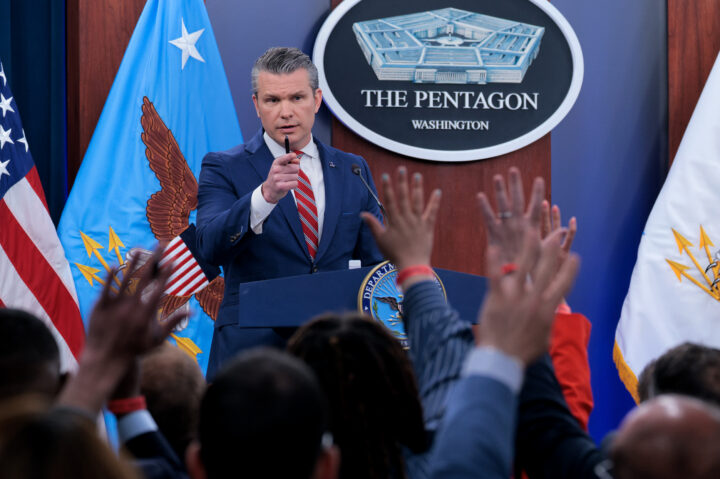
Chip Somodevilla/Getty Images
Secretary of Defense Pete Hegseth calls on reporters during a press briefing at the Pentagon on May 05, 2026 in Arlington, Virginia.
Defense Secretary Pete Hegseth said on Tuesday that the ceasefire between the U.S. and Iran was still in effect, despite numerous ceasefire violations by both sides in recent days.
“No, the ceasefire is not over,” Hegseth said during a press briefing at the Pentagon alongside Chairman of the Joint Chiefs of Staff Gen. Dan Caine. “Ultimately, this is a separate and distinct project,” Hegseth said of the new U.S. mission to escort commercial shipping vessels through the Strait of Hormuz, “and we expected there would be some churn at the beginning, which happened, and we said we would defend and defend aggressively, and we absolutely have.”
“Iran knows that, and ultimately, the president is going to make a decision whether anything were to escalate into a violation of a ceasefire. But certainly, we would urge Iran to be prudent in the actions that they take, to keep that underneath this threshold,” the defense secretary continued.
President Donald Trump announced on Sunday that U.S. forces would ensure the Strait of Hormuz is reopened to commercial traffic by escorting vessels and deflecting missile and drone attacks from Iran. Referring to the operation as “Project Freedom,” Trump warned on Monday that Iran would be “blown off the face of the earth” if the regime attempted to interfere.
Hegseth continued, “This is about the straits. This is about freedom of navigation. This is about international waterways. This is about free flow of commerce, all the things that happened before and that only Iran is contesting. So right now, the ceasefire certainly holds, but we’re going to be watching very, very closely.”
Caine said similarly that even though Iran has fired on commercial vessels nine times, seized two container ships and attacked U.S. forces more than 10 times since the ceasefire began, that is all “below the threshold of restarting major combat operations.”
Hegseth was pressed by reporters whether Trump was considering seeking congressional authorization to continue military operations in Iran, as many lawmakers believe the president has run out the 60-day clock for a war launched without congressional approval.
“Our view is … that ultimately, with the ceasefire, the [60-day] clock stops. If it were to restart, that would be the president’s decision. That option is always there, and Iran knows that, and that’s why their choices on freedom are important,” Hegseth said. “The president retains the opportunity and the capabilities — more capabilities than we have at the start of this — to restart major combat operations if necessary.”
Asked about alleged assertions by Israeli Prime Minister Benjamin Netanyahu and Mossad Director David Barnea that Israel would not abide by or participate in the ceasefires in Iran or Lebanon, Hegseth rejected claims that Israel was forcing the American president’s hand.
“I will say those questions are based on the false premise that somehow President Trump is being pulled in by Prime Minister Netanyahu to any of these actions,” Hegseth told reporters. “President Trump has led at every step of this based on his view of American interests and America First, and we’re grateful that Israelis have been very capable partners at many steps of this.”
“They may have some objectives at times that are slightly different than ours, but there’s only one hand on the wheel ultimately directing this, whether it’s Project Freedom or previously Operation Epic Fury, and it’s President Trump,’ he continued. “So we’re grateful for their input, their insights, the existential nature of the threat they face from an Iranian bomb, the capabilities that they can bring to that, but ultimately the coordination will happen with the leadership of President Trump.”
64% of Jewish Israelis said in a new IDI survey that ending the war under its current conditions is not in the best interest of Israel’s security

Alexi J. Rosenfeld/Getty Images
People take shelter in an underground bomb shelter amid reports of incoming missiles on February 28, 2026 in Tel Aviv, Israel.
A majority of Israelis believe that ending the war with Iran under the current conditions would undermine the country’s security, according to a new poll from the Israel Democracy Institute.
The survey, conducted between April 26-30, over two weeks into the ceasefire between the U.S. and Iran, found that 64% of Jewish Israelis said ending the war in its current state is “only slightly or not at all aligned” with Israel’s security interests. Nearly half of Arab Israelis (48.5%) said the same.
Despite ongoing U.S.-Iran negotiations and a fragile ceasefire, most Israelis expect a return to further escalation. Overall, 62% of respondents said they believed a return to widescale conflict was likely, including roughly two-thirds of Jewish respondents (64%) and 52% of Arab respondents. Since the survey was conducted, the ceasefire has grown more precarious, with both sides alleging violations.
In the first week after Israel and the U.S. launched joint strikes on Iran’s top officials, 80% of Israelis — including 93% of Jewish Israelis — said they supported the war against Iran.
The latest survey also points to shifting perceptions of U.S. influence over Israeli decisionmaking. A majority of Jewish Israelis now believe the Trump administration exerts greater influence over Israel’s defense policy than the Israeli government itself, with that share rising from 45% in October 2025 to 56.5% in the newest survey. Over the same period, the percentage of Jewish Israelis who see their own government as the primary decisionmaker in its military actions dropped from 24% to 15%.
Among Arab Israelis, views moved in the opposite direction: The share who believe the U.S. holds greater influence fell from 39.5% to 25.5%.
Meanwhile, the survey revealed pessimistic attitudes as they relate to U.S.-brokered talks between Israel and Lebanon, including the ongoing ceasefire. Nearly 80% of Jewish Israelis believe there is a fairly low to very low likelihood of reaching a “stable diplomatic defense arrangement with the Lebanese government, that will include the disarming of Hezbollah.” Among Arab Israelis, 45% believe the likelihood of a deal between Beirut and Jerusalem is fairly high to very high.
The poll also pointed to deepening concern among Israelis from across the political spectrum over the recent decline in positive attitudes toward Israel in the U.S., with a majority of respondents — 72% — calling the decline “somewhat or very worrying for Israel.” The survey reported no difference in this issue among Jews and Arabs.
The poll surveyed a representative sample of Israeli adults, including 601 Jewish respondents and 150 Arab respondents.
Plus, NYC Jews ring alarm bells after vandalism

Amirhossein KHORGOOEI / ISNA / AFP via Getty Images
Vessels are pictured anchored in the Strait of Hormuz off Bandar Abbas in southern Iran on May 5, 2026.
This P.M. edition is reserved for our premium subscribers like you — offering a forward-focused read on what we’re tracking now and what’s coming next. Please don’t hesitate to share your thoughts and feedback by replying to this email.
📡On Our Radar
Notable developments and interesting tidbits we’re tracking
The ceasefire between the U.S. and Iran appears to be on its last legs: Iran opened fire on U.S. warships and commercial vessels today, CENTCOM head Adm. Brad Cooper said, and shot several missiles and drones at the UAE for the first time since early April — some missiles were reportedly intercepted by the Iron Dome system Israel deployed to the country at the beginning of the war, while one drone sparked a fire at the Fujairah oil complex.
The UAE also condemned an Iranian drone attack on an oil tanker affiliated with the state-owned Abu Dhabi National Oil Company in the Strait of Hormuz, calling it an “act of piracy”…
Signaling a possible return to hostilities, President Donald Trump told Fox News Iran will be “blown off the face of the earth” if it fires on ships being escorted through the strait by the U.S. as part of “Project Freedom” (which he said on Truth Social this afternoon has already happened).
CENTCOM, meanwhile, announced it had assisted two U.S.-flagged merchant ships in successfully transiting the Strait of Hormuz as of this morning…
Trump’s allies largely continue to stand behind the war effort: Sen. Lindsey Graham (R-SC) called for “big, strong and short” strikes on Iran in defense of the UAE, while Pershing Square CEO Bill Ackman called the war “a very good one” that will resolve shortly with “a resolution that is going to be very, very favorable.”
Asked about the impact on investing in the region, Ackman told CNBC the Middle East “has been reset in a very positive way,” with an expansion of the Abraham Accords and a “peace dividend” likely to come…
A small group of Senate Republicans are working on an Authorization for the Use of Military Force to receive a vote in Congress if military operations in Iran do pick back up, Semafor reports, as many lawmakers agree that Trump has run out the 60-day clock for a war launched without congressional approval (some Republicans believe the clock has been paused during the ceasefire). The AUMF would “likely limit ground troops and provide for a finite period of conflict,” according to the outlet…
The Democratic Congressional Campaign Committee added eight more candidates to its “Red to Blue” program, a move that could offer additional resources to the campaigns, including several in competitive Democratic primaries, as the party seeks to shore up its strongest candidates and flip the House amid a poor national environment for Republicans.
The new recruits include union leader Bob Brooks in Pennsylvania’s 7th District as well as Bexar County sheriff’s deputy Johnny Garcia in Texas’ 35th — Garcia is facing Maureen Galindo, who has espoused a range of antisemitic conspiracy theories, in a runoff later this month…
Rep. Nancy Pelosi (D-CA) endorsed Rep. Al Green (D-TX) in his runoff later this month against Rep. Christian Menefee (D-TX), Green announced today. Jewish leaders have been optimistic about unseating Green in the member-on-member race — a consequence of Texas’ redistricting process — as Green has grown increasingly hostile to Israel in the wake of the Oct. 7 attacks.
The reported endorsement marks an improvement in the lawmakers’ relationship: Green and Pelosi had clashed during her time as House speaker over Green’s effort to impeach Trump…
Members of the Democratic National Committee are considering ways to limit Chair Ken Martin’s influence, The Bulwark reports, after his appearance on the “Pod Save America” podcast last week where he defended his decision not to release the “autopsy” report of the 2024 election and as members worry the organization is struggling to remain relevant and fiscally sound…
Politico details the Republican campaign to persuade Sen. John Fetterman (D-PA) to switch party affiliations and help keep Democrats from retaking the Senate in the midterm elections — despite Fetterman’s insistence that he will never renounce the Democratic Party…
Multiple Jewish homes, a synagogue and a Jewish center in Queens — which contains a preschool — were vandalized with swastikas and other antisemitic graffiti overnight, leaving Jewish residents questioning their safety amid a spate of antisemitic incidents, Jewish Insider’s Haley Cohen reports. The NYPD is searching for at least four individuals responsible for the vandalism, according to New York City Council Speaker Julie Menin.
“I have a Jewish community that is seriously questioning whether it is still welcome in this city,” said Democratic state Assemblymember Sam Berger. Mark Treyger, CEO of the Jewish Community Relations Council of New York, said, “This is not normal and we need city leaders to act now”…
New York magazine spotlights the race for New York’s 12th District and the personas of its four front-runners — social media guru Jack Schlossberg, establishment operative Micah Lasher, AI critic Alex Bores and reformed Republican George Conway — as each seeks to represent one of the wealthiest, oldest, most educated and most densely populated congressional districts in the country…
⏩ Tomorrow’s Agenda, Today
An early look at tomorrow’s storylines and schedule to keep you a step ahead
Keep an eye out in Jewish Insider for comments from U.S. Ambassador to the U.N. Mike Waltz on Iran and the Board of Peace, as JI’s Gabby Deutch spoke with him on the sidelines of the Milken Conference in Los Angeles.
Trump announced Defense Secretary Pete Hegseth and Joint Chiefs Chairman Gen. Dan Caine will hold a press briefing in the morning, amid cracks in the ceasefire with Iran.
The James W. Foley Legacy Foundation, which advocates for American hostages and journalists abroad, will honor Bar Ben Yaakov and Matan Sivek of the Hostages and Missing Families Forum as well as Qatari minister Mohammed Al-Khulaifi at its annual Freedom Award gala at the National Press Club in Washington, hosted by CBS’ Margaret Brennan.
The Manhattan Jewish Historical Initiative will induct honorees into its Jewish Hall of Fame in a ceremony at Bryant Park: Inductees include Ari Ackerman, philanthropist and co-owner of the Miami Marlins; New York City Council Speaker Julie Menin; singer-songwriter Melissa Manchester; and Ariel Zwang, CEO of the American Jewish Joint Distribution Committee.
CNN will hold a primary debate for California’s crowded gubernatorial race including Republicans Chad Bianco and Steve Hilton and Democrats Xavier Becerra, Matt Mahan, Katie Porter, Tom Steyer and Antonio Villaraigosa.
Vice President JD Vance is expected to appear at a campaign event for Rep. Zach Nunn (R-IA) in Iowa after several postponements — the event, which had been dubbed “Top Nunn” in reference to the “Top Gun” movies, had originally been scheduled for mid-March but drew criticism when several servicemembers from Nunn’s district were killed in the U.S. war with Iran.
Stories You May Have Missed
RESOLUTION REJECTED
New School rejects student government vote to cut ties, defund Hillel

Hillel called the vote ‘deeply painful and antisemitic’; the New School said it would ensure the student government ‘acts within its actual purview’ moving forward
CAMPAIGN CONTROVERSY
Far-left Pa. candidate pushed Bondi Beach conspiracy theory
Chris Rabb, the DSA-endorsed House candidate in a Philadelphia congressional race, blamed the Sydney Hanukkah attack on ‘Zionists’
Plus, Keir Starmer vows protection for British Jews

Daryn Slover/Portland Press Herald via AP
Senate candidate Graham Platner acknowledges the large crowd that attended Platner's town hall, Sept. 25, 2025, at Bunker Brewing in Portland, Maine.
This P.M. edition is reserved for our premium subscribers like you — offering a forward-focused read on what we’re tracking now and what’s coming next. Please don’t hesitate to share your thoughts and feedback by replying to this email.
📡On Our Radar
Notable developments and interesting tidbits we’re tracking
Maine Gov. Janet Mills, citing financial constraints, dropped her campaign for U.S. Senate this morning, leaving oyster farmer Graham Platner as the Democratic nominee to face off against Sen. Susan Collins (R-ME) in the general election, Jewish Insider‘s Matthew Kassel reports.
Senate Minority Leader Chuck Schumer (D-NY) and Sen. Kirsten Gillibrand (D-NY), the Democratic Senatorial Campaign Committee chair, praised Mills and said they will “work with” Platner to defeat Collins — a tepid endorsement that underscores Democratic leadership’s uncomfortable relationship with the far-left nominee in a state that they have targeted as one of their best pick-up opportunities this cycle…
The Senate rejected Democrats’ sixth war powers effort to force the Trump administration to end the war in Iran. The latest resolution, sponsored by Sen. Adam Schiff (D-CA) and Schumer, failed by a 50-47 vote, with Collins flipping her vote to side with Democrats for the first time…
In testimony before the Senate Armed Services Committee, Defense Secretary Pete Hegseth claimed the 60-day timeline for the administration to seek congressional authorization to continue the war in Iran has been “paused” during the ongoing ceasefire. The White House said separately it is in “active conversations” with lawmakers about the deadline which, under a traditional calendar, is set to occur tomorrow…
President Donald Trump announced the U.S. is “studying and reviewing the possible reduction of troops in Germany,” days after Chancellor Friedrich Merz claimed the U.S. is being “humiliated” by Iranian leadership.
Merz “should spend more time … fixing his broken country … and less time on interfering with those getting rid of the Iran Nuclear threat,” Trump wrote on Truth Social. Germany currently hosts the largest U.S. air base in Europe as well as tens of thousands of U.S. troops…
The House passed a bill to fund most of the Department of Homeland Security, ending the monthslong shutdown a day before the department was set to run out of emergency funds to pay employees.
The bill funds agencies including the Coast Guard, Federal Emergency Management Agency and Transportation Security Administration and includes $300 million in funding for the Nonprofit Security Grant Program, an increase over the $274.5 million allocated for the program last year but still short of requests from the Jewish community of up to $1 billion. Republicans will now attempt to fund immigration enforcement through a separate budget reconciliation process…
Following the stabbing of two Jewish men in a London suburb yesterday, the latest in a series of attacks against London’s Jewish community, British Prime Minister Keir Starmer delivered an address pledging policy changes and a shift in government attitudes toward antisemitic antagonism, JI’s Haley Cohen reports.
Among other policies, Starmer called to prosecute the use of the phrase “globalize the intifada”; introduce legislation to shut down charities that promote antisemitic extremism; prevent “hate preachers” from entering the country and speaking on college campuses; and work to hasten sentencing of perpetrators of antisemitic attacks…
Evanston, Ill., Mayor Daniel Biss, the Democratic nominee for Illinois’ 9th Congressional District, urged the state’s Legislature to reverse a policy he had once supported as a member of the General Assembly — a ban on investing in companies that engage in the Boycott, Divestment and Sanctions movement against Israel. Biss vowed that if elected to Congress, as expected in the deep-blue district, he will oppose similar policies that seek to counteract the BDS movement.
“Whether or not you believe in boycotting Israel or Israeli products from the occupied West Bank, or in boycotts in general, we should all be able to agree that our government must not be wielded to stop people from using their economic agency to advocate for their values,” Biss wrote on Substack…
Former Boca Raton Mayor Scott Singer, a Republican, has shifted his congressional bid from Florida’s 23rd Congressional District to the newly drawn 25th District. The seat is currently by Rep. Debbie Wasserman Schultz (D-FL) but is much more Republican-friendly under the new lines, one of several eliminated districts represented by pro-Israel Democrats. Singer told JI when he was attempting to unseat Rep. Jared Moskowitz (D-FL) in the 23rd that his alignment with the GOP has been shaped by his Jewish faith…
⏩ Tomorrow’s Agenda, Today
An early look at tomorrow’s storylines and schedule to keep you a step ahead
Keep an eye out in Jewish Insider for a look at where British Jews stand as their government signals it will take more seriously the spate of violent attacks targeting their community.
The McCain Institute’s Sedona Forum kicks off in Arizona, with speakers including Sens. Mark Kelly (D-AZ), Ruben Gallego (D-AZ), Sheldon Whitehouse (D-RI) and Peter Welch (D-VT), Reps. Don Bacon (R-NE), Jason Crow (D-CO) and Mike Lawler (R-NY), Arizona Gov. Katie Hobbs, Munich Security Council CEO Benedikt Franke, outgoing World Food Program head Cindy McCain, AFRICOM Commander Gen. Dagvin Anderson, former NATO Ambassador Kurt Volker and Arizona Cardinals owner Michael Bidwill.
Former Rep. Cori Bush (D-MO) will join far-left influencer Hasan Piker’s Twitch stream in her effort to win back her seat from Rep. Wesley Bell (D-MO).
We’ll be back in your inbox with the Daily Overtime on Monday. Shabbat Shalom!
Stories You May Have Missed
SPECIAL ELECTION SIGNALS
Mamdani bruised but not beaten after City Council candidate loss
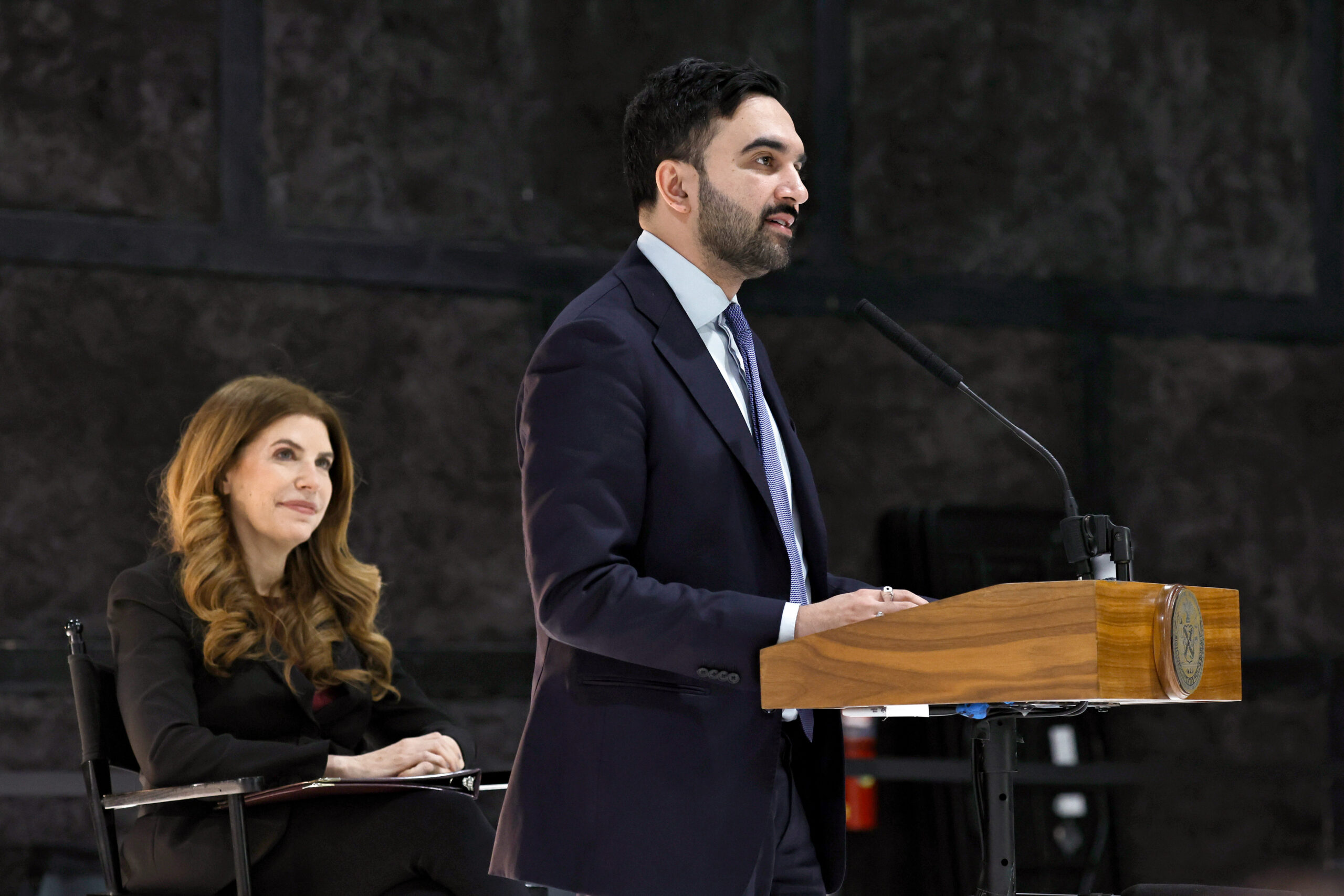
The result of the special election signals Council Speaker Julie Menin’s growing political clout, but doesn’t guarantee an override of Mamdani’s veto of her buffer zone legislation
WAR WEARY
GOP senators express uncertainty about authorizing extension of Iran war
Under the War Powers Resolution, a president cannot sustain military operations for more than 60 days without congressional approval or requesting a 30-day extension
Under the War Powers Resolution, a president cannot sustain military operations for more than 60 days without congressional approval or requesting a 30-day extension
Tom Williams/CQ-Roll Call, Inc via Getty Images
Sen. Mike Rounds (R-SD) talks with reporters in the U.S. Capitol on Tuesday, March 3, 2026.
Senate Republicans are increasingly skeptical about the future of U.S. military engagement in Iran as the 60-day deadline for the war mandated by the War Powers Resolution approaches.
Under the 1973 law, the president cannot sustain military operations for more than 60 days without congressional authorization or a formal declaration of war, after which U.S. forces must be withdrawn. The White House can request a 30-day extension — with written justification to Congress — should it present “unavoidable military necessity.”
Short of a formal declaration of war, Congress can authorize continued operations through an Authorization for the Use of Military Force (AUMF), similar to that enacted following the 9/11 attacks, which would provide the legal basis for the administration to sustain the campaign.
But the prospects for such a measure remain uncertain, as it would require a high-stakes public vote that could divide Republicans.
With the 60-day deadline approaching this week, GOP lawmakers told Jewish Insider they expect the White House to comply with the statute and notify Congress of a 30-day extension — though they remain uncertain and divided over whether they would support authorizing continued military action.
Sen. Thom Tillis (R-NC) said he will not “quibble” over whether the exact deadline is met, however he stressed that the White House should respect the law on the books.
“I’m not going to quibble over a day or two, but people are saying we don’t know if the War Powers Resolution is constitutional … the reality is it’s on the books, ratified by Congress,” Tillis said. “[The White House should] follow it and at least ask for an extension, and give us clarity on why you need the extension beyond the 60 days. Then it gives them 30 days to be clear on what they need for the appropriations request,” he said, referring to the coming supplemental funding request from the administration.
Tillis did not indicate whether he believed an authorization would be needed, but said he would “support an AUMF that is drafted and supported by Republicans.” He called the recent rounds of war powers votes initiated by Democrats “political theater.”
“They’re not a serious effort to understand the details of what the president wants to accomplish and then provide congressional support to do it,” Tillis said. “I think if we do that, it strengthens our hand in dealing with the murderers posing as the mullahs of Iran.”
Sen. Mike Rounds (R-SD) did not commit to whether he would support an AUMF. He told JI that it will depend on several factors, including an explanation from the White House.
“It’ll depend on the information that they [the White House] provide to us, and we’ll see if they’re actually intending to stay there for an extended period of time, or if they’re going to have boots on the ground, or whether they’re going to be withdrawing from the area based on any kind of peace agreement,” Rounds said.
Rounds said his “expectation” is that the White House will “notify us [Congress] of an additional 30-day extension.”
“We’ve begun the process now of both classified and an open hearing tomorrow,” Rounds said, referring to a Senate Armed Services Committee hearing taking place on Thursday with Defense Secretary Pete Hegseth and Joint Chiefs Chairman Gen. Dan Caine. “So I think now steps will start to happen in terms of a more complete congressional review.”
However, Rounds noted that regardless of where the war heads, he expects that “this chapter in our history has not closed.”
“I suspect we’re still going to have to deal with an Iranian regime, which is a threat to the entire world,” he said.
Tillis said he had not heard anything on the White House potentially asking for a 30-day extension, but said in response to Rounds’ comments that “[Rounds] is on the Senate Armed Services committee, so that’s good news. I would expect Senate Armed Services Committee members to know before me. That’s good.”
Sen. Josh Hawley (R-MO) also did not signal whether he would support an AUMF. While he noted that he believes the White House has “been very careful to follow the war powers framework this whole conflict,” he stressed that he would like to see hostilities wind down and is skeptical of voting for a move that opens up the conflict further.
“Hopefully [there will be] an end to the war,” Hawley said, adding that he hopes “the president and secretary of state will be able to come back to Congress [and say] that they’re working to end the conflict and that active hostilities are over.”
He added that he wants the White House to do something “better than ask for 30 more days.”
“Clearly the president is trying to get to a peace deal here, I mean he says it everyday. It’s clear what he’s trying to do. He does not want to go back,” Hawley said. “We’re not bombing. He has said he doesn’t want to go back to that, which I agree with by the way. So I think we should bring this to a close.” President Donald Trump said on Wednesday that he’s rejecting Iran’s latest proposal to end the war as it omits any concessions on the country’s nuclear program.
Hawley said that Congress “can always debate an AUMF” if the White House doesn’t ask for a 30-day extension, but emphasized that he would prefer to “keep on that track” of winding down the war.
“I don’t really want to authorize a war, I want to end it,” Hawley said. “If we can’t, if the administration doesn’t ask for more time, if there are no additional certifications from them, I think we’re in AUMF territory, which would be kind of unfortunate. I would prefer not to vote to open up a conflict that I think ought to be wound down.”
Sen. John Cornyn (R-TX), meanwhile, said that he would be “open” to supporting an AUMF, but “would be skeptical that it could pass.” He added that Trump is “relying on his own power within the Constitution.”
“We don’t have any American troops on the ground, and I don’t think that’s the president’s idea,” Cornyn said. “I mean, we’ve seriously degraded their ability to threaten their neighbors and that’s a good thing.”
“But unfortunately, it looks like now the supreme leader is out of the picture, that the more radical IRGC elements [are coming to power], which you can’t trust them so I wouldn’t trust any agreement that you might have,” Cornyn added. “I think President Trump ought to finish the job he started and make sure there’s not a threat to us or to the region for the foreseeable future.”
Plus, Trump rejects latest Iran proposal

Chip Somodevilla/Getty Images
Michigan Attorney General Dana Nessel speaks on stage during the third day of the Democratic National Convention at the United Center on August 21, 2024 in Chicago, Illinois. Delegates, politicians, and Democratic Party supporters are in Chicago for the convention, concluding with current Vice President Kamala Harris accepting her party's presidential nomination.
This P.M. edition is reserved for our premium subscribers like you — offering a forward-focused read on what we’re tracking now and what’s coming next. Please don’t hesitate to share your thoughts and feedback by replying to this email.
📡On Our Radar
Notable developments and interesting tidbits we’re tracking
Two Jewish men in a heavily Jewish suburb of London were stabbed this morning in what police have deemed a terrorist incident, Jewish Insider’s Haley Cohen reports. The victims — one in his 70s and one in his 30s — remain hospitalized in stable condition, according to the Metropolitan Police, after the attack shortly before noon in Golders Green.
The suspect, a 45-year-old man who also attempted to stab law enforcement, was arrested on suspicion of attempted murder. The man had “a history of serious violence and mental health issues,” Metropolitan Police Commissioner Mark Rowley said. It’s the latest in a string of violent attacks against Jewish individuals and sites around London in recent months…
President Donald Trump said he is rejecting Iran’s latest proposal to end the war, which included opening the Strait of Hormuz and postponing talks on its nuclear program, telling Axios that he will maintain the U.S.’ naval blockade until Tehran agrees to address its nuclear ambitions.
“The blockade is somewhat more effective than the bombing. They are choking like a stuffed pig,” the president said. Still, CENTCOM has planned a “short and powerful” wave of strikes on Iran to spur progress in negotiations, sources told the outlet…
In a heated and lengthy House Armed Services Committee hearing, Defense Secretary Pete Hegseth repeatedly defended the execution of the Iran war, including the blockade of the Strait of Hormuz and the cost to American taxpayers, and stood by the ouster of several top defense officials under questioning from both Democrats and Republicans. The Pentagon’s chief financial officer, Jules Hurst III, said the Iran war has cost the U.S. “about $25 billion” already, most of it being spent on munitions…
Even as Trump intends to keep the pressure on Iran, the USS Gerald R. Ford aircraft carrier will reportedly leave the Middle East and sail back to Virginia in the coming days after having been deployed for a record 10 months at sea. Two other aircraft carriers are still operating nearby in the Arabian Sea to enforce the blockade…
Israeli Prime Minister Benjamin Netanyahu’s office denied Hebrew media reports that he was planning a visit to the U.S. next week, saying “no such plans are currently in place.” Trump has said he intends to invite Netanyahu and Lebanese President Joseph Aoun to the White House in the near future…
Michigan Senate candidate Mallory McMorrow deleted thousands of old social media posts in which she disparaged the state of Michigan and expressed a range of progressive views, including comparing Trump and his supporters to Nazis, according to a CNN investigation. The state senator is now positioning herself as a more pragmatic candidate…
Two-thirds of Michigan Democratic Party delegates voted for Amir Makled, an attorney who has expressed support for Hezbollah, among other anti-Israel stances, as one of the Democratic nominees for University of Michigan regent at the state party convention earlier this month, according to internal voting records obtained by The Detroit News.
The widespread support for Makled included far-left Jewish attorney general nominee Eli Savit and United Auto Workers President Shawn Fain, but the majority of members of Congress and the state Legislature in attendance voted for unseated Jewish regent Jordan Acker over Makled…
Elected Jewish Democrats are speaking out on the antisemitic vitriol they face on a regular basis: It’s “excruciating and agonizing,” Michigan state Rep. Noah Arbit told The New York Times. “We have never seen anything like this in my lifetime in public office,” Rep. Brad Sherman (D-CA) said.
Michigan Attorney General Dana Nessel shared, “I rarely, if ever, get threats for being gay or for being a woman. They have been fast and furious and nearly always about me being Jewish,” including regularly being called an “AIPAC whore.” Rep. Greg Landsman (D-OH) added, “There are times when it feels like people don’t want you as part of the political system at all”…
Kennedy scion Jack Schlossberg has released his first paid ad in his run for New York’s 12th Congressional District, spotlighting one of his highest-profile endorsees — former House Speaker Nancy Pelosi (D-CA). Even as Schlossberg narrowly leads in several polls of the crowded Democratic primary, the ad is emblematic of the political newcomer’s challenge in the race as he seeks to prove he’s experienced enough to represent the district…
The State Department issued a report to Congress finding that the Palestinian Authority has continued to issue payments and benefits to terrorists and their families in its “pay-for-slay” program “through new mechanisms and under a different name,” despite PA President Mahmoud Abbas having pledged to end the program. PA officials also “continue to fail to publicly condemn acts of violence against U.S. and Israeli citizens in violation of the Taylor Force Act,” the report says…
The Supreme Court issued a ruling today in a Louisiana gerrymandering case weakening a key provision of the Voting Rights Act, limiting when states can draw majority-minority congressional districts. Amid a flurry of mid-decade redistricting already underway, the decision could prompt new map changes and legal challenges ahead of November’s midterm elections and the 2028 cycle…
⏩ Tomorrow’s Agenda, Today
An early look at tomorrow’s storylines and schedule to keep you a step ahead
Keep an eye out in Jewish Insider for a look at how Senate Republicans are approaching the impending 60-day deadline laid out in the War Powers Act for President Donald Trump to seek congressional approval for the war in Iran.
Defense Secretary Pete Hegseth and Joint Chiefs Chairman Gen. Dan Caine will face further questioning at a hearing of the Senate Armed Services Committee on the Pentagon’s 2027 budget, after a similar hearing in the House today.
The Department of Justice will host this year’s federal interagency Holocaust remembrance program, featuring remarks from Holocaust survivor Frank Cohn, U.S. Special Envoy for Holocaust Issues Ellen Germain, Assistant Attorney General Harmeet Dhillon and Under Secretary of State for Economic Affairs Jacob Helberg.
Stories You May Have Missed
NON-NEGOTIABLE VALUES
Politico owner Axel Springer doubles down on corporate principles

‘Nobody should work for Axel Springer despite the essentials or in disagreement with one of the essentials,’ the company’s CEO told Politico staff on Monday
CLAIM OF ANTISEMITISM
Mallory McMorrow reveals Michigan Democratic activist accosted her husband with antisemitic slur
The Senate candidate shared that her husband, who is Jewish, was verbally attacked in front of their 5-year-old daughter
Plus, Georgia goes after foreign funding of K-12 schools

Ryan Lim / AFP via Getty Images
ADNOC Gas, a subsidiary of the Abu Dhabi National Oil Company, facility in Abu Dhabi on March 3, 2026.
This P.M. edition is reserved for our premium subscribers like you — offering a forward-focused read on what we’re tracking now and what’s coming next. Please don’t hesitate to share your thoughts and feedback by replying to this email.
📡On Our Radar
Notable developments and interesting tidbits we’re tracking
The UAE announced it will leave OPEC effective May 1, in a significant blow to the international body largely led by Saudi Arabia that coordinates production among petroleum exporting countries. Abu Dhabi — which joined OPEC nearly 60 years ago — said it will pursue a new independent strategy, including increasing its oil output, amid the Iran war’s disruption of global energy markets…
Iran, meanwhile, is trying to avoid shutting down its own oil production and wait out the U.S. blockade by finding new ways to store and ship its crude oil, including using improvised containers and transport routes to China over land. Analysts predict Tehran will fill its remaining storage capacity in less than three weeks.
President Donald Trump claimed this morning that Iran informed the U.S. “they are in a ‘State of Collapse’” and “want us to ‘Open the Hormuz Strait,’ as soon as possible, as they try to figure out their leadership situation”…
Just as King Charles III is enjoying a state visit to Washington, including delivering his first address to a joint session of Congress this afternoon, remarks made by U.K. Ambassador to the U.S. Sir Christian Turner have resurfaced: Turner alleged in a discussion with British students in Washington in February that the U.S.’ only “special relationship” is “probably Israel” and not the U.K., according to audio obtained by the Financial Times…
Sen. Bernie Sanders (I-VT) predicted more Democrats, and some Republicans, will join his efforts to block arm sales to Israel, which he intends to continue, after the majority of the Democratic caucus voted in favor of his most recent Joint Resolutions of Disapproval. “The problem for the Democrats is that AIPAC is enormously powerful … but [Democrats are] increasingly choosing to support what the people back home want,” he told Politico.
Sanders also agreed with characterizations that he might be considered the new Democratic leader over Senate Minority Leader Chuck Schumer (D-NY), given that more of the caucus voted with him than with Schumer, who opposed the measure…
Democratic Majority for Israel’s PAC had placed an ad buy in support of nonprofit leader Denise Powell in the Democratic primary for Nebraska’s swing 2nd Congressional District, but pulled it after the group New Democrat Majority increased its spending in support of Powell, Punchbowl News reports…
Politico surveys the state of Kentucky’s 4th Congressional District, where Navy veteran Ed Gallrein is locked in a dead heat with incumbent Rep. Thomas Massie (R-KY) ahead of the May 19 primary, despite Gallrein’s endorsement from Trump and millions of dollars in anti-Massie spending, including from pro-Israel groups, as Massie maintains a loyal following…
Education Secretary Linda McMahon claimed today that she’s trying to rebuild and expand the Department of Education’s Office for Civil Rights, even as the administration pushes for tens of millions in funding cuts this year, Jewish Insider‘s Marc Rod reports.
At a Senate Appropriations subcommittee hearing, McMahon claimed that the 2027 budget submitted by the Trump administration contains more funding to hire lawyers at OCR, refusing to acknowledge, to lawmakers’ bewilderment, that the administration’s budget calls for a 35% funding cut to the office…
Following a report spotlighting Qatari funding in Georgia public schools, the state’s General Assembly became the first in the country to pass legislation requiring the disclosure of foreign funding in statewide K-12 schools, JI’s Haley Cohen reports.
The Foreign Funding Transparency and Accountability Act requires public school districts, public universities and technical colleges to report funding of $10,000 or more from foreign countries or entities, naming specifically Qatar and Saudi Arabia — the two largest foreign funders of American universities…
California is now considering changing state law after the secretary of state’s office mailed an official voter guide to all registered voters last week that contained a statement by a fringe gubernatorial candidate that listed extreme antisemitic conspiracy theories, including that Israel assassinated Charlie Kirk, carried out the 9/11 attacks and plans to “enslave” the “goyim.”
The secretary of state’s office told The Times of Israel today that it is working with the state Legislature to make clear “content that is not permitted” in candidate statements “while preserving the ability of candidates to present their qualifications to voters”…
Citadel CEO Ken Griffin is escalating the hedge fund’s feud with New York City Mayor Zohran Mamdani to Gov. Kathy Hochul, announcing he’ll meet with her on Thursday to discuss the future of the city after Mamdani used Griffin’s Manhattan penthouse to promote a new tax on luxury second homes. Citadel has threatened not to move forward with its plans for a massive 62-story Midtown development after what Griffin denounced as the “personal attack” and New York’s need to “put their fiscal house in order”…
⏩ Tomorrow’s Agenda, Today
An early look at tomorrow’s storylines and schedule to keep you a step ahead
Keep an eye out in Jewish Insider for a look at the results of a New York City Council special election, which will be an early signal of Mayor Zohran Mamdani’s political capital.
Defense Secretary Pete Hegseth and Joint Chiefs Chairman Gen. Dan Caine will testify before the House Armed Services Committee; while the hearing is focused on the Pentagon’s 2027 budget request, lawmakers are expected to press the defense officials about the Iran war in their first appearance before the committee since the war began.
Sen. Tim Kaine (D-VA) took the unusual step of inviting the press to participate in a closed-door meeting of the Senate Health, Education, Labor and Pensions Committee with Education Secretary Linda McMahon about the Trump administration’s planned cuts to the department.
The House Foreign Affairs Committee will hold a hearing on “U.S. accountability at the United Nations” with witnesses including the American Enterprise Institute’s Brett Schaefer as well as Eugene Kontorovich, who recently departed the Heritage Foundation and has joined Mike Pence’s Advancing American Freedom organization.
The House Committee on Education and Workforce will hold a hearing on the First Amendment in higher education.
The Lawfare Project will host the Unite Against Extremism summit in New York City with remarks from the Justice Department’s Leo Terrell; Anila Ali, a Pakistani Muslim interfaith leader; Jonathan Schanzer, executive director of the Foundation for Defense of Democracies; and Ari Ackerman, co-owner of the Miami Marlins.
Stories You May Have Missed
NORTH STAR
Acting Labor Secretary Keith Sonderling guided by Holocaust survivor grandparents
‘My interest in protecting all Americans’ rights in the workplace is undoubtedly shaped by my grandparents,’ said Sonderling, who assumed leadership of the agency last week after Lori Chavez-DeRemer’s resignation
BOOKSHELF
Adeena Sussman’s new cookbook spotlights simple cooking for complicated times

‘I had this concept that I put forth for myself, everything should have 12 or fewer ingredients, and I wanted to use very minimal pots and pans,’ Sussman told JI of her book, ‘Zariz: 100 Easy, Breezy, Tel Aviv-y Recipes’
The report from the State Department provides the most comprehensive justification yet for the campaign, including that the U.S. had acted at the ‘request of and in collective self-defense of its Israeli ally’

Mowj / Middle East Images / AFP via Getty Images
Plumes of smoke rise following reported explosions allegedly near Iran's Ministry of Intelligence on Araqi Street in Tehran on March 1, 2026.
Nearly two months after the U.S. and Israel jointly launched a military campaign against Iran dubbed Operation Epic Fury, Washington acknowledged in a new State Department memo that its decision to participate in the conflict came — at least in part — at Israel’s request.
The statement, in a document authored by State Department Legal Advisor Reed Rubinstein, notes that defending Israel is just one part of a larger rationale for attacking Iran’s capabilities that Rubinstein says relies on decades of evidence. But it comes after several Trump administration officials pushed back on the narrative that Israel had forced the White House’s hand.
“The United States is engaged in this conflict at the request of and in the collective self-defense of its Israeli ally, as well as in the exercise of the United States’ own inherent right of self-defense,” Rubinstein wrote in the document, dated Apr. 24.
The memo is the most detailed look yet at the Trump administration’s justification for the latest conflict with Iran, which began on Feb. 28. Lawmakers, including leading Republicans, have at times expressed frustration that the administration is not being transparent enough in providing information about the war effort.
There is currently a ceasefire in place as the two countries are engaged in negotiations, although President Donald Trump has threatened to restart military strikes if a deal is not reached.
While Rubinstein writes that Israel requested the U.S. participate in striking Iran, his broader argument is that Iran has demonstrated “malign aggression” against the U.S., Israel and other allies in the region for decades. Therefore, according to Rubinstein, this latest salvo is merely the next stage of a decades-old conflict that began anew last June.
“The operations recommenced in late February were part of an armed conflict with Iran that has been ongoing for years and, at the very least, since June 2025” when the U.S. and Israel struck Iran’s nuclear and military facilities, Rubinstein writes. Since the conflict did not officially end in June — a ceasefire is not the same as a formal agreement to end hostilities — he concludes that it has been ongoing, and the current fighting is just a new phase in the war.
“If a conflict has not ended, then it must be ongoing,” Rubinstein argues.
The memo documents Iran’s extensive history of targeting American forces and assets, including through its proxies like Hamas and Hezbollah. He dates this part of his analysis back to 1979, when the Islamic Republic was created, arguing that the country has been attacking the U.S. and its “interests and its allies” ever since. It was Iran’s “clear pattern of unprovoked aggression and direct and proxy attacks against Israel and the United States” that spurred the U.S. to act last June, he writes.
Rubinstein concludes by pointing out Iran’s response to the U.S. attacks: “wreaking havoc throughout the region.” That, according to Rubinstein, “further underscores the fundamental necessity, utility, reasonableness, and lawfulness of Operation Epic Fury’s mission and goals.”
The Christian Zionist group said it has secured ‘every available billboard’ in Massie’s congressional district for a month ahead of the May 19 primary

DANIEL HEUER/AFP via Getty Images
Rep. Thomas Massie (R-KY) speaks to reporters at the US Capitol on Washington, DC on November 18, 2025.
President Donald Trump’s effort to unseat Rep. Thomas Massie (R-KY), a longtime thorn in his side, got another big-money boost as Christians United for Israel Action Fund, the advocacy arm of the Christian Zionist group, announced that it is spending six figures to blanket Massie’s congressional district with dozens of billboards hitting the congressman over his opposition to the Iran war.
“For one full month, CUFI Action Fund will dominate Kentucky’s 4th Congressional District outdoor advertising space by securing every available billboard in the district, creating a broad and highly visible message presence across the region,” CUFI Action Fund senior director Ari Morgenstern told Jewish Insider. “The buy spans key communities across the district, ensuring the message reaches voters in both local population centers and along major commuter and travel routes.”
Morgenstern said that the billboards are expected to reach “1.487 million adult impressions each week,” along major roadways across the district. The Kentucky primary election, where Massie is facing off against Trump-endorsed Navy veteran Ed Gallrein, is on May 19.
The billboard displays an image of President Donald Trump atop the American flag alongside Massie atop the Iranian flag, with the captions “Kentucky = Trump Country,” “Tell Massie: Support Peace Through Strength” and “No Support for Iranian Regime.”
The campaign banks on the notion that GOP primary voters in the deep-red district remain strongly supportive of the Iran war.
AIPAC’s United Democracy Project super PAC is also going on the offensive against Massie with a substantial TV ad campaign, which focuses on Massie’s opposition to the war in Iran. The Republican Jewish Coalition has spent $3.5 million in the district to oppose Massie as well.
Massie’s campaign did not immediately respond to a request for comment.
Majority Leader Thune said about a congressional vote to extend the war, ‘hopefully that question won't be a necessary one that we’ll have to answer’

Kayla Bartkowski/Getty Images
Sen. Majority Leader John Thune (R-SD) calls on reporters at the U.S. Capitol on January 14, 2025 in Washington, DC.
Senate Majority Leader John Thune (R-SD) said Tuesday that he’s hopeful that the war in Iran is close to winding down, in advance of a deadline that could require congressional action for the war to continue.
Under the War Powers Act, unilateral military action undertaken by the president without congressional authority is limited to 60 days — with a 30-day extension for draw-down purposes.
Thune emphasized that the administration’s current goal is to reopen the Strait of Hormuz, and that Senate Republicans support efforts to isolate the Iranian regime and their economy.
“We get the strait open again — and that’s sort of their last resort. The military effort here has been extraordinarily successful. This is sort of the last dying gasp of this regime, is to try and shut down the strait,” Thune said in a press conference after a GOP conference meeting. “The administration is making an effort to ensure that it’s open, that there’ll be traffic in and out there. And hopefully that will be successful and we can begin to see this thing wind down.”
Pressed on whether Republicans would be open to voting to continue the war if it extends beyond 90 days, Thune suggested that wouldn’t be necessary.
“At this point, most of us, I believe, feel pretty good about what the American military has achieved there in terms of its objectives,” Thune said. “It’s a hypothetical down the road. … I think the administration has a clear objective, a clear plan, and if they can execute on it, hopefully that question won’t be a necessary one that we’ll have to answer.”
Sen. Mike Rounds (R-SD) said that it’s “not quite time” yet for a full Senate discussion on the war, but said that he does want to see the administration more fully lay out its strategy and plan as the war continues and approaches the 60-day deadline at the end of April.
“We do expect that the administration will be laying out their plan for after the end of seven, eight, nine weeks,” Rounds said. “We have to know what the next steps are, and that’s part of our due diligence that we have to do.”
Sen. Steve Daines (R-MT) said that Republicans did not discuss the possibility of an authorization for the war during their meeting.
Other Republicans have argued that the provision of the War Powers Act that sets out the 60-day deadline, is not enforceable and that Republicans on Capitol Hill are not paying attention to it.
Sen. Lindsey Graham (R-SC) said that the U.S. should “finish the job” rather than extending a ceasefire agreement with Iran if the regime is not willing to agree to U.S. demands, including a permanent end to nuclear enrichment, surrendering all of its already enriched uranium, fully reopening the strait and abandoning its ballistic missile program and support for terrorism.
Senate Minority Leader Chuck Schumer (D-NY) said that Senate Democrats plan to bring forward another war powers resolution to stop the war on Wednesday, and will continue to force votes on similar resolutions weekly until the war ends. For now, most Republicans seem likely to continue to vote against the legislation.
Senate Republicans also indicated that they’re not likely to attempt to include supplemental funding for the Iran war in an upcoming partisan budget reconciliation package, which is focused on border security and immigration funding currently being blocked by Democrats.
Thune, who has said he wants an “anorexic-like” reconciliation package, again indicated on Tuesday at a press conference after a Senate Republican lunch meeting that the package will be tightly “focused” to fund immigration enforcement.
“I think we’re going to do a very skinny reconciliation,” Sen. Roger Wicker (R-MS), the chair of the Senate Armed Services Committee, said when asked about Republicans’ discussions on Iran during the conference meeting.
Sen. John Kennedy (R-LA) said that he has not heard anything about either the timing or the size of the supplemental request the administration plans to submit. Initial reports indicated that the Pentagon wanted to ask for $200 billion, but more recent reports have indicated that the final request will be lower.
Republicans have discussed advancing another reconciliation package before the end of the year, though some members of the conference, like Kennedy, have openly expressed skepticism that such an effort would be possible.
At this point, given the strong and widespread opposition among Democrats to the war in Iran, it’s unclear whether a funding package for the war would be able to clear the 60-vote filibuster threshold necessary for passage in the Senate.
The group ranges from pro-Israel Democrats like Sen. Kirsten Gillibrand to anti-Israel members like Sen. Chris Van Hollen
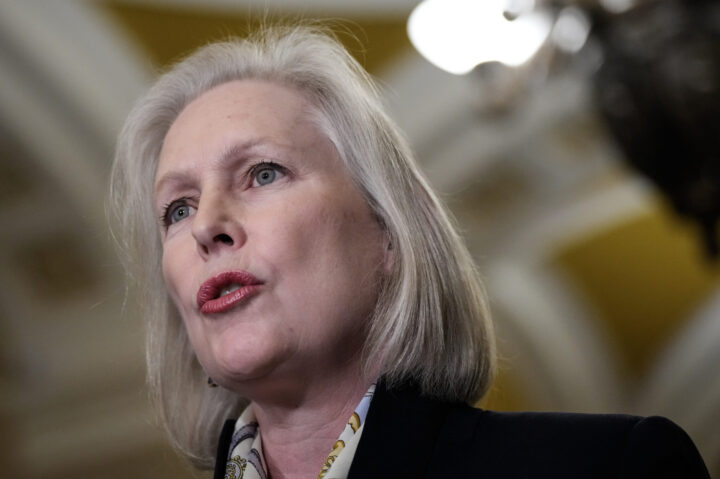
Drew Angerer/Getty Images
Sen. Kirsten Gillibrand (D-NY) speaks at a news conference following a closed-door lunch meeting with Senate Democrats at the U.S. Capitol on October 31, 2023, in Washington, D.C.
A group of six additional Senate Democrats plan to file new war powers resolutions this week to halt the war in Iran, a move that would allow Democrats to continue forcing votes on the war for the foreseeable future.
Previously, a different group of six Democrats introduced similar resolutions, and Democrats have called up two of them thus far, with plans to call up a third this week. So far, the resolutions have all failed along mostly party lines, with all senators remaining consistent in their votes.
The latest group of lawmakers includes Sens. Jeff Merkley (D-OR), Kirsten Gillibrand (D-NY), Chris Van Hollen (D-MD), Mark Kelly (D-AZ), Raphael Warnock (D-GA) and Andy Kim (D-NJ).
The array of lawmakers involved in the latest effort spans from staunch progressives and critics of Israel to generally more pro-Israel members.
“President Trump chose to start a war knowing it was going to raise gas prices on Americans already struggling to get by,” Gillibrand said in a statement. “The president, and his party, just don’t care about anyone other than themselves. They lie, cheat and steal to enrich themselves and leave regular folks with the bill. It is long past time for Republicans in Congress to stand up and do their job.”
House Democrats also plan to call up a war powers resolution this week, which may pass given that some Democrats who previously opposed a war powers effort and a handful of Republicans have indicated they plan to change their votes.
The latest set of six resolutions will not be eligible for floor votes immediately, but Democrats can call up the other four resolutions introduced previously at will. Senate Democrats are also likely to force votes on matters related to the Iran war during the upcoming reconciliation process, which Republicans aim to use to fund immigration enforcement and other priorities.
‘We should never, ever be bullied, as maybe President Trump was, by any other world leader,’ the Pennsylvania governor said on the ‘All-In Podcast’
Peter W. Stevenson/The Washington Post via Getty Images
Pennsylvania Gov. Josh Shapiro sits for an interview at the Pennsylvania State Capitol on June 11, 2025.
Pennsylvania Gov. Josh Shapiro accused President Donald Trump of being “bullied” into starting a war with Iran, suggesting in an interview with the “All-In Podcast” that Israel had pressured the U.S. into joining a military campaign against the Islamic Republic.
“America should never be led around by any other nation. It should always be about America’s interests, our national security interests, the interests of expanding freedom and opportunity for the American people,” said Shapiro, who was responding to a question from tech investor Jason Calacanis about whether the U.S. followed Israel into an unnecessary war. “We should never, ever be bullied, as maybe President Trump was, by any other world leader.”
In the interview, Shapiro continued a line of criticism that he has used regularly against Trump’s handling of the war in Iran: that the president doesn’t know what he’s doing and has failed to offer a sufficient explanation to the American public.
“This was a war of choice. The president never defined the objectives. It is clear he doesn’t know how the hell to get out of this,” Shapiro said.
Shapiro’s allegation that Israeli Prime Minister Benjamin Netanyahu had led the U.S. into war with Iran was a rhetorical escalation for the pro-Israel Democrat. While he reasserted the same pro-Israel, anti-Netanyahu argument that he has been making for years now, Shapiro also made clear that it is America’s goals — and not Israel’s — that he cares about.
“I don’t view this issue as a Jewish American,” Shapiro said. “I view this issue as an American, and I view this issue in a way of trying to understand what is the best thing for America, which to me is having peace and stability in the Middle East.”
Even as Shapiro went after Trump for his handling of the war, he offered a word of praise about a different Republican, Sen. Ted Cruz (R-TX), and his approach to antisemitism within his own party.
“I think on the issue of antisemitism, we have got to be in a place where we universally condemn it. And I think what you’re seeing from some folks on the right and some folks on the left is they’ll only call it out if it’s said by a political opponent or someone they disagree with,” said Shapiro. “I frankly respect people on the right like Ted Cruz, who have pulled it out within the Republican Party. I’ve tried to call it out when it rears its ugly head in my party.”
The “All-In Podcast” is hosted by four Silicon Valley investors, including David Sacks, co-chair of Trump’s Council of Advisors on Science and Technology.
The former director of the National Counterterrorism Center promoted a report from Drop Site News that the U.S. was trying to kill a servicemember whose plane was downed over Iran

AP Photo/Jenny Kane
Former congressional candidate and counterterrorism official Joe Kent speaks during a debate at KATU studios on Monday, Oct. 7, 2024, in Portland, Ore.
Joe Kent, the former director of the National Counterterrorism Center who resigned over his opposition to the Iran war, shared a post on social media spreading false claims from Iranian state-linked media and Drop Site News that the U.S. was attempting to kill the servicemember whose fighter jet was shot down over Iran over the weekend prior to him being rescued.
The initial statement on Saturday from Drop Site, a far-left news outlet sympathetic to Hamas and totalitarian regimes, cited a report by Tasnim News, which is linked to the Islamic Revolutionary Guard Corps, claiming that the U.S. had “lost hope” of recovering an airman whose jet was downed over Iran on Friday and was instead “attempting to kill him.”
The post was then amplified by Kent with the message: “Praying for the rescue of our downed pilot & the safe return of our Special Operators going in to get him back. [U.S. Air Force Pararescuemen and Combat Search and Rescue] Air crews are top notch.”
The Iranian-state media claim reposted by Kent came a day before President Donald Trump announced on Sunday that the lost crew member had been rescued following what he hailed as a “daring” operation by U.S. forces to retrieve him — contradicting the claim that Washington had been attempting to bomb and kill the missing servicemember.
In his post on Truth Social, Trump said that the servicemember’s location was being monitored “24 hours a day,” adding that the U.S. was “diligently planning for his rescue.”
Kent initially resigned from his post in March over the war in Iran, claiming that Tehran posed “no imminent threat to our nation” and accusing the U.S. of starting the war “due to pressure from Israel and its powerful American lobby.”
Three out of four Jewish Israelis back the war, down 15 points since the first week of the war

Ori Aviram / Middle East Images / AFP via Getty Images
Israelis take shelter in an underground metro station in Ramat Gan, in Israel's Tel Aviv District, on February 28, 2026.
Jewish Israelis’ support for the war against Iran dropped by 15 points from the first week of the war, according to a poll released by the Israel Democracy Institute on Monday.
In the first week of the war, 93% of Jewish Israelis supported continuing the war, while in the latest IDI poll — conducted nearly a month into the war — 78% support it. More than twice as many Israeli Jews (11.5%) oppose the war as did at the beginning of March (4%).
As at the start of the war, only a minority of Arab Israelis are in favor of it, with their support dropping from 26% to 19%.
Most Israelis said Iran was more resilient than anticipated, with 56% of Jewish Israelis and 51% of Arab Israelis answering in the affirmative.
Most Jewish Israelis (62%) said that Prime Minister Benjamin Netanyahu launched Operation Roaring Lion against Iran for strategic and security-related reasons, while most Arab Israelis (55%) said he was motivated by personal and political considerations.
Over a third (35%) of Jewish Israelis said that the war against Iran would be sustainable in Israeli society for a month, while 28% said Israelis can bear it as long as needed to meet the operation’s goals. Among Arab Israelis, 33% said Israelis could endure the war for a month, while only 5% said the Israeli public can sustain it as long as needed.
At the same time, there was a rise in hope among Israelis: When respondents were asked for their outlooks in four areas, optimism about social cohesion was up eight percentage points from last month, reaching 30%; optimism about the economy rose to 34% from 31%; and optimism and the future of democracy reached 44%, up from 39%. Optimism about national security stayed about the same at 47%.
The vast majority of Arab Israelis reported that their mental health (85%) and financial situation (89%) had deteriorated, a slight increase from the last time IDI asked the poll question in November. Among Jewish Israelis, 43% reported a deterioration in their mental state and 36% in their financial situation, almost identical to the November 2025 findings.
The poll was conducted among a sample of 756 Israeli adults from March 22-26, with a 3.56% margin of error.
Sen. Lisa Murkowski said she’s concerned Trump will deploy ground troops while the Senate is on recess
Heather Diehl/Getty Images
Sen. Lisa Murkowski (R-AK) walks through the Capitol on March 23, 2026 in Washington, DC.
Thursday brought a series of new signals that at least a small number of ideologically varied Republican lawmakers are growing frustrated with the war in Iran and with the administration’s frequently shifting rhetoric about it — including from some otherwise-hawkish lawmakers.
Sen. Lisa Murkowski (R-AK), who previously called for an end to the war, told Bloomberg on Thursday that she’s working on a potential authorization for use of military force in Iran, to limit the scope of the U.S. operation and prevent the deployment of ground troops.
“I don’t know what else to do,” Murkowski told the outlet. “I’m worried we get out of town and the president goes in with ground troops aiming for a full takeover.” The Senate is scheduled to be in recess for the next two weeks.
After Murkowski’s comments, The Wall Street Journal reported that President Donald Trump was considering deploying an additional 10,000 troops to the Middle East.
Rep. Don Bacon (R-NE), who has generally been supportive of the war effort, told NOTUS on Thursday after a House Armed Services Committee briefing the day prior that he was unclear on the U.S.’ plans and goals in the war.
“I don’t know the plan,” Bacon said. “What is the end-state goal? What is the mission? I think clarity there would be helpful.”
Rep. Rob Wittmann (R-VA) also told the outlet that he’s seeking “more granularity, more specificity on what specifically is happening on the ground, and then how is that leading to achieving the military objectives.”
Rep. Mike Rogers (R-AL), the Armed Services Committee chairman, emerged from the briefing Wednesday frustrated with what he said was a lack of information from the administration, warning officials that their reticence could have “consequences.”
Meanwhile, Rep. Nancy Mace (R-SC), who’s been more critical of the war in general, indicated to Axios she’s now inclined to vote for an upcoming war powers resolution to end the war, bringing it closer to the threshold for passage. She added, “War with Iran needs to end. President Trump has won the war, time to exit.”
House Democrats were initially expected to call a vote on that legislation this week, but have delayed their plans until after the congressional recess, saying they still don’t think they have the votes to pass it.
Regardless of whether the resolution passes the House, it remains unlikely to pass the Senate and could be vetoed by Trump. But passage of the resolution in the closely divided House would be a rebuke of Trump and his strategy.
Former CENTCOM head Gen. Frank McKenzie: ‘If you are sitting down at CENTCOM right now, you are satisfied with where you are’

Tolga Akbaba/Anadolu via Getty Images
A view shows explosions lighting up the skyline amid ongoing US-Israel attacks in Tehran, Iran, on March 25, 2026.
Former U.S. Central Command head Gen. Frank McKenzie said Wednesday that the U.S. military is “in the heart of the plan” in its war against Iran, pointing to major military achievements against Tehran’s missile and military capabilities, while cautioning that the conflict remains a grinding, long-term campaign.
As the conflict between the U.S., Israel and Iran nears the one-month mark, officials say Iran’s capabilities have been severely degraded, while President Donald Trump has asserted that the war is nearly over and that its objectives have largely been achieved.
At the same time, reports indicate that Iran has rejected Trump administration proposals to negotiate an end to the conflict, while the Pentagon is deploying the military’s highly specialized 82nd Airborne Division to the Middle East — raising fresh questions about the trajectory of the war and the broader strategy.
During a webinar hosted by the Jewish Institute for National Security of America, McKenzie said the U.S. is “accomplishing the objectives that we set out. CENTCOM is executing a long-prepared campaign plan. This is not something that we’ve drawn up on the back of the envelope day-to-day. These are things that have been studied and refined for many years. If you are sitting down at CENTCOM right now, you are satisfied with where you are.”
McKenzie said one of the clearest indicators of success is that Iran has been unable to generate the kind of large ballistic missile salvos that U.S. military planners had long feared.
“Iran has not been able to mount massive volleys against Israel. Have they been able to fire some number of missiles against our targets? Yes, but not the massive volleys that we thought would make it hard for us to defend,” McKenzie said, attributing that in part to Iran’s own strategic miscalculation.
“The Iranians made a mistake in designing their ballistic missile force. They mistook hardening and burying for security,” McKenzie said. “The truth of warfare today is this: if you can see it, you can hit it. If you can hit it, you can kill it. And even if you dig yourself deep underground with these beautiful missile cities, that just makes it easier for us to strike and destroy these missiles wholesale rather than retail.”
Yaacov Ayish, former head of the IDF’s general staff, also said that “significant progress” has been made. He noted that Iran’s ballistic missile capabilities have subsided.
“When I’m thinking about the amount of ballistic missiles launched by the Iranians compared to what they had planned, I think they are in a very very bad place, and this is due to the fact that not only their command control capabilities were shattered since day one of this war, but also because we [the IDF] are, together with the U.S., hunting their launching capabilities.”
McKenzie said the U.S. is also making progress against Iran’s drone threat, though he acknowledged that it remains an evolving challenge. Throughout the conflict, Tehran has launched over 2,000 low-cost, easy-to-produce drones at targets across the Middle East.
“We are still absorbing how to employ and defend against drones, as is really everybody else,” he said. “The best way to do that is going to be by striking where the drones are manufactured, where they’re launched. The worst way to do it is to defend them in the terminal area.”
McKenzie also addressed the conflict over the Strait of Hormuz, where Iran has effectively blocked one of the world’s most critical oil routes. He said the U.S. has already struck Iran’s major naval assets and is now focused on “preparatory steps in order to clear” it.
“What that means is first clearing those craft, getting rid of Iranian submarines, looking at the fast-attack craft, the small cigarette-boat type vessels that can swarm out from the northern to the southern coast of Iran … to affect shipping in the region,” McKenzie said. “CENTCOM is busy on a program of doing that. I think there’s probably some days left ahead of work to finish that. But it’s progressing.”
He said Iran also retains a “large and capable stack of mines,” and suggested CENTCOM has likely been targeting both the mines and the vessels used to lay them.
“You don’t have to clear the whole Strait of Hormuz,” McKenzie said. “You’ve got to clear a route that you’re going to bring vessels through.”
Ayish noted that he sees “two ways to solve” the tension at the strait.
“One is the diplomatic channel that is under discussion between the U.S. and the Iranians via certain mediators, and there is the military option,” Ayish said. “When you are analyzing the achievements that were achieved, it seems like both options are viable, and I think the major reason for the Iranians to go into this negotiation is because they know that it’s very imminent. Both options are seriously on the table.”
When asked whether CENTCOM had failed to adequately prepare for what had unfolded in the strait, McKenzie rejected that premise.
“I’m not sure I’d agree with that assertion,” he said. “You build your plan off the forces that you have. We’ve always thought there’d be a struggle over this. The nature of warfare is you can’t get everything you want. Sometimes it takes a little while to get that. I think we’re working toward that end right now.”
McKenzie also declined to rule out the possibility of U.S. boots on the ground, an outcome many Democrats and some Republicans have strongly opposed.
“I think it’s certainly something we want the Iranians to worry about,” McKenzie said. “I would certainly leave that on the table, and then I wouldn’t share what I was going to do. I think we want them to be very worried about that.”
Meanwhile, while Ayish noted a goal of achieving “a situation that will allow a regime change in the future in Iran,” McKenzie said the U.S. is not directly pursuing regime change in Tehran, even if it could emerge as a consequence of the campaign, even as Trump told reporters Tuesday that regime change had already been achieved.
“The United States is not pursuing regime change directly. It may be a product of what we’re doing,” McKenzie said. “We’d like to get to a point where there’s going to be some entity in Tehran that will negotiate the objectives we want for this campaign, whether it’s a completely new regime or a version of this regime that is so affected by pressure that they’re willing to make these concessions.”
The Senate Budget Committee chair said he’d prefer to pass the supplemental through normal legislative procedures, rather than folding it into a reconciliation process

Photo by Kevin Dietsch/Getty Images
Sen. Lindsey Graham (R-SC) speaks during a news conference at the U.S. Capitol on July 30, 2021 in Washington, DC.
Sen. Lindsey Graham (R-SC) said Wednesday that he still hopes to pass supplemental military funding to support the war in Iran through regular legislative procedures, rather than incorporating it into an anticipated party-line budget reconciliation bill.
Graham, who chairs the Senate Budget Committee, which oversees reconciliation, announced on Wednesday that the committee would be pursuing a new reconciliation bill, to include funding for both the military and homeland security.
But asked by Jewish Insider whether he expects Iran war funding — the Pentagon has proposed an ask of more than $200 billion for the war — to be included in the reconciliation bill, as some Republicans have been discussing, Graham said he would still like to pass it through normal procedures.
“That might be difficult — hopefully we can do it through normal order,” Graham said.
Sen. Susan Collins (R-ME), who chairs the Senate Appropriations Committee, also previously expressed a preference for approving the funding through regular order, rather than reconciliation.
Both paths come with significant hurdles: With nearly all Senate Democrats opposed to the war and many opposed to additional funding, trying to pass the Iran war supplemental through normal procedures may run up against a Democratic filibuster.
But the reconciliation process, which only needs a 50-vote majority, would require near-unanimous support from House Republicans, something that may be difficult to rally on any reconciliation bill — regardless of the policy issues — but especially so when a handful of House Republicans have expressed opposition to or skepticism of the war effort.
Graham said Wednesday morning on X that the Budget Committee would “expeditiously move toward creating a second budget reconciliation bill.”
“The purpose of the second reconciliation bill is to make sure there is adequate funding to secure our homeland and to support our men and women in the military who are fighting so bravely,” Graham said. “President Trump and Leader [John] Thune [R-SD] are right to push for a second reconciliation bill to address the threats we face and keep our elections secure and fair.”
Even outside of the war-related funding, President Donald Trump is seeking a $1.5 trillion budget for the Pentagon for 2027, an increase of more than 50%. Some reporting around the ongoing talks to reopen the Department of Homeland Security has suggested that funding for immigration enforcement could be separated from the current funding debate and passed through reconciliation.
In an interview on CNN, Platner accused Israel of committing genocide and alleged that the Trump administration started the war to distract from the Epstein files

Sophie Park/Getty Images
Senate candidate from Maine Graham Platner speaks at a town hall at the Leavitt Theater on October 22, 2025 in Ogunquit, Maine.
Graham Platner, the progressive Maine Senate candidate, in a CNN interview that aired Sunday accused Israel of committing genocide and said the U.S. should cut off all aid, as well as dismissed concerns that bringing the Iran war to a halt would endanger U.S. forces in the region.
“I fundamentally believe that a nation that is committing a genocide should not be a place that we are putting money. We should be leveraging the fact that we have a lot of power in this relationship due to our funding,” Platner said in the interview. “We should be leveraging that to, frankly, get the Israeli government to stop behaving in such an utterly atrocious fashion.”
Platner said that he would vote against any further funding for the war in Iran, dismissing concerns that cutting funding for the war would leave U.S. forces in harm’s way, despite ongoing attacks by Iran.
“I’ve been very close to the realities of wars [in Iraq], and that was a war that never should have happened, and that we find ourselves here with another war that should not be happening, that is resulting in destruction and horror, all, frankly, on the taxpayers dime,” Platner said. “That is money that should be spent here in the United States, on schools, on hospitals, on infrastructure.”
He said that U.S. troops would not be in danger if Congress defunds the operation “because the troops should not be in harm’s way. End the war. Bring people home. Stop bombing. We started this thing, we can end it.”
Platner said he believes the Trump administration started the war to distract from revelations in the Epstein files because “Benjamin Netanyahu finally found a president that was sucker enough to launch the war that he’s been pushing for for 30 years.”
Delta and United Airlines aren’t listing any direct flights to Tel Aviv until the summer amid the war with Iran

Chen Junqing/Xinhua via Getty Images
A passenger walks at Ben Gurion International Airport near Tel Aviv, Israel, Oct. 31, 2023.
As the Iran war continues, major U.S. airlines have extended suspensions of direct flights to Tel Aviv, upending travel plans for thousands hoping to visit Israel for Passover, when the country typically sees a surge in visitors, and beyond.
As of Tuesday, United Airlines’ website shows direct flights from the New York region’s Newark Liberty International Airport to Israel, a route that usually operates multiple times daily, are unavailable through June 16. The only available flights from Newark to Tel Aviv’s Ben Gurion Airport are operated by Lufthansa, United’s partner, and require a layover in Frankfurt.
Lufthansa has suspended its flights to Israel through April 9.
United’s direct flights from Israel to Chicago O’Hare and Washington Dulles International Airport, which typically each run a few times a week, are also suspended.
The first available direct New York to Tel Aviv flight on Delta Airlines website is available June 1. When the Iran conflict initially began, Delta said it would suspend flights from New York’s John F. Kennedy International Airport until at least April 1. The airline had been planning to restart its Atlanta-Tel Aviv flights in April for the first time since the Oct. 7, 2023, terrorist attacks, but now has postponed those plans until Aug. 4.
American Airlines, which has not flown directly to Israel since Oct. 7, has delayed the resumption of its service to Tel Aviv until April 23, a spokesperson for the airline told Jewish Insider on Tuesday. It also suspended operations to and from Doha, Qatar, through May 7 due to tension in the region.
Before the conflict with Iran began, American Airlines announced plans to resume direct flights to Ben Gurion from John F. Kennedy starting on March 28, just days ahead of the Passover holiday. Tickets went on sale in October. The announcement, which made American the last of the major U.S. carriers to resume flights to Israel after Oct. 7, came weeks after Israel and Hamas agreed to a ceasefire in the Gaza war.
Throughout much of the war, the Israeli carrier El Al was the only reliable option for direct travel to and from the U.S., leading to a shortage of flights to meet travelers’ demands amid soaring ticket prices.
United and Delta both briefly resumed service between Israel and the New York area for short periods in 2024 after suspending all flights on Oct. 7. Both airlines fully reinstated flights earlier this year until the Iran war started.
Please log in if you already have a subscription, or subscribe to access the latest updates.
 Continue with Google
 Continue with Apple