




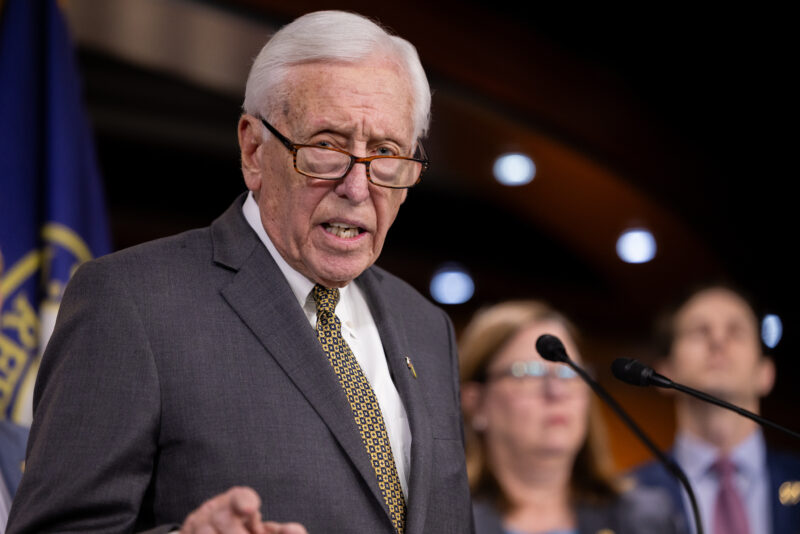



















The nominee faced opposition from Democrats and Sen. John Curtis over his past views on Israel and Jewish people
DOMINIC GWINN/Middle East Images/AFP via Getty Images
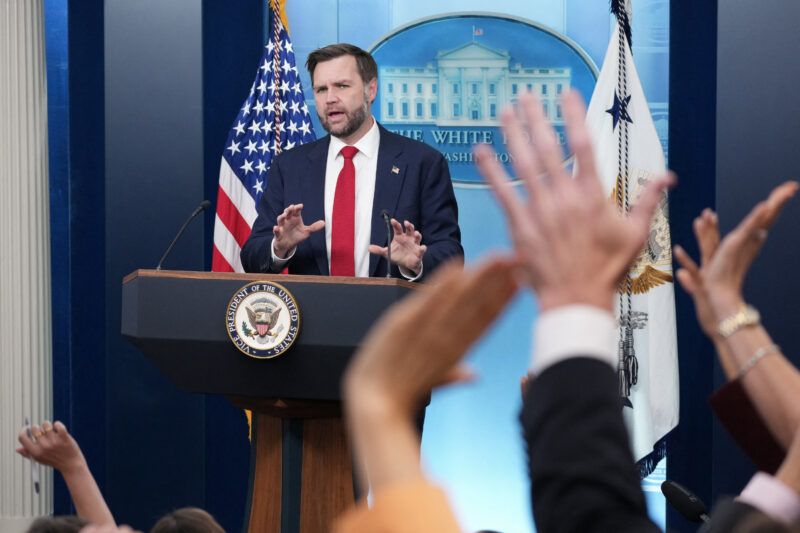
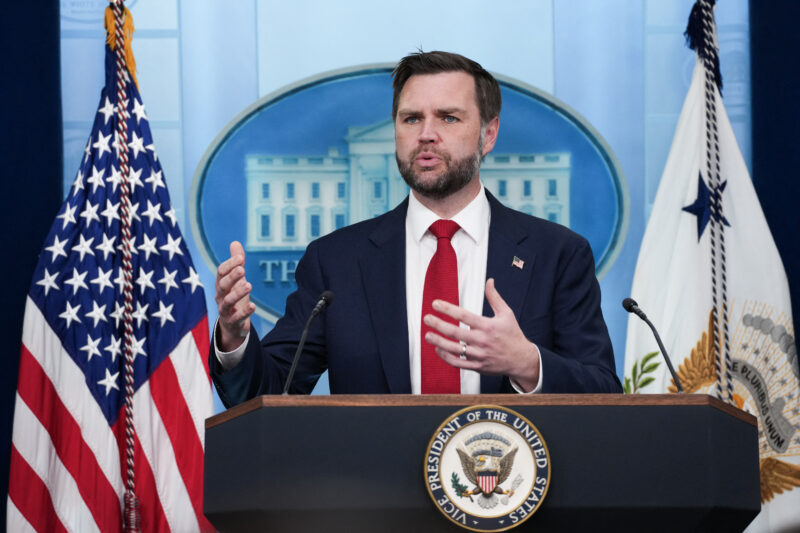
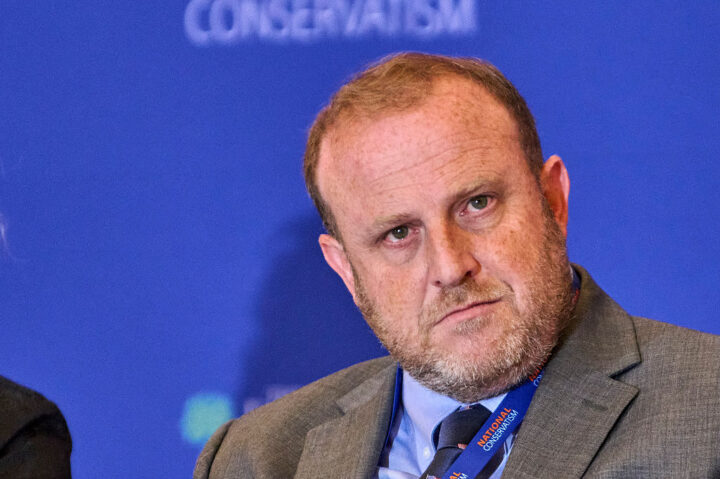
Jeremy Carl speaks at the National Conservatism Conference in Washington D.C., Sept. 3, 2025.


 Add JewishInsider on Google
With no clear path to confirmation in the Senate a month after he was grilled and struggled to explain his past views and writings at a confirmation hearing, Jeremy Carl withdrew his nomination to be assistant secretary of state for international organizations on Tuesday.
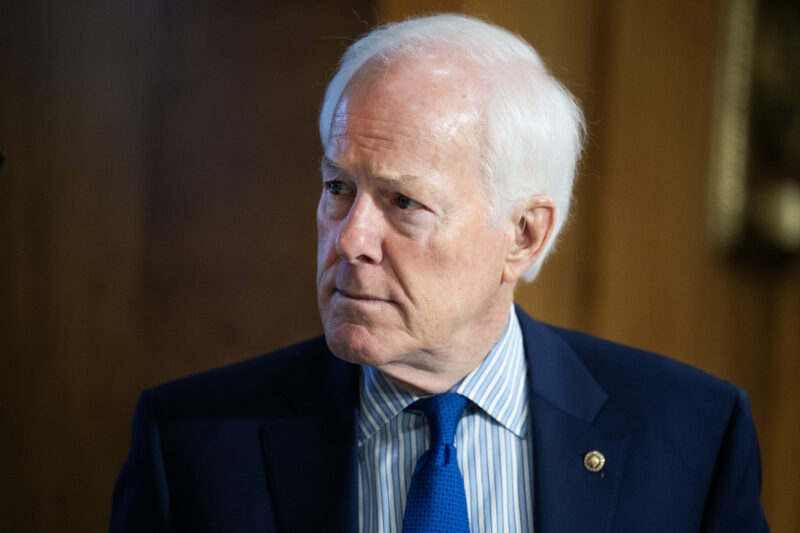
Carl faced unified opposition from Democrats on the Senate Foreign Relations Committee, as well as Sen. John Curtis (R-UT), who said after the hearing he found Carl’s past comments downplaying the U.S.-Israel relationship and his “insensitive remarks about the Jewish people unbecoming of the position for which he has been nominated.”
The nominee had previously expressed a range of derogatory views about Jews, describing them as having a victim mentality, downplaying the significance of the Holocaust to the Jewish story and experience and musing about the need to address the what he called the “Jewish Question.” He also espoused a view of the United States as a white, Christian nation, claiming that white people are undergoing a “cultural genocide” and deliberate replacement.
Curtis’ opposition was sufficient to prevent Carl’s nomination from advancing out of the committee, leaving Carl with no clear path to confirmation.
“I am tremendously grateful to President Trump for nominating me and then (upon expiration of my original nomination) renominating me for this role, and I am also grateful to Secretary Rubio and his team for their continued support throughout this long and time-consuming process,” Carl said on X.
He added that, with no path to unanimous support from Republicans on the committee, he did “not wish to have the President, Secretary Rubio, or the rest of his team waste valuable time and energy attempting to change that decision.”
The backtracking was sufficient for Sens. Jacky Rosen and Tammy Duckworth to announce they would release their holds on the Coast Guard commandant’s confirmation proceedings
Al Drago/Getty Images
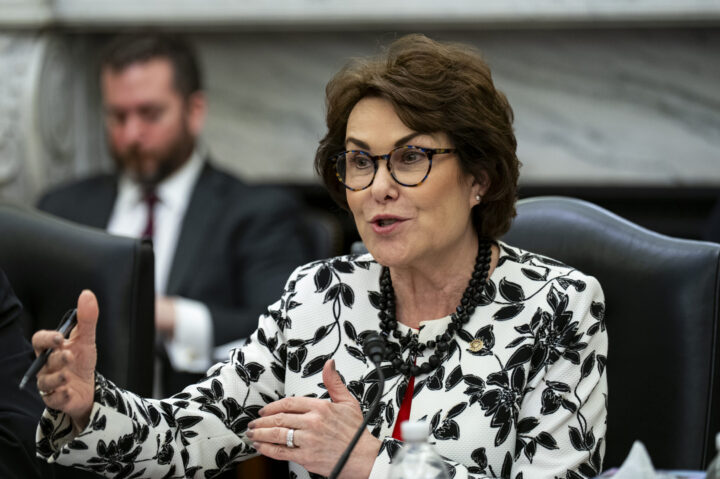
Sen. Jacky Rosen (D-NV), ranking member of the Senate Armed Services Subcomittee on Cybersecurity, speaks during a hearing on Artificial Intelligence cyber capabilities, on Capitol Hill on March 25, 2025 in Washington, DC.
After pressure from Capitol Hill — including a blockade by Democratic senators of the confirmation of the Coast Guard commandant — the Coast Guard struck from its disciplinary policies language describing swastikas and nooses as “potentially divisive,” rather than as explicitly banned hate symbols.
The Washington Post initially reported that the language around displays of such symbols would be changed last month, prompting bipartisan outrage from Capitol Hill. Though Department of Homeland Security officials denied the changes, acting Coast Guard commandant Adm. Kevin Lunday issued new guidance to clarify that such displays were still banned hate symbols and repeatedly reassured lawmakers as such.
Yet, this week, the Post reported that the “potentially divisive” language had gone into effect anyway, prompting another wave of confusion and outrage from Capitol Hill, with some lawmakers accusing Lunday of misleading them. Sens. Jacky Rosen (D-NV) and Tammy Duckworth (D-IL) said they would block Lunday’s confirmation in response to the latest change, and some Republicans expressed frustration at the continued flip-flopping and sought answers from DHS.
Secretary of Homeland Security Kristi Noem denied any wrongdoing and attacked critics, but said Thursday on X, “The pages of superseded and outdated policy will be completely removed from the record so no press outlet, entity or elected official may misrepresent the Coast Guard to politicize their policies and lie about their position on divisive and hate symbols.”
Noem’s description of the “superceded and outdated policy” appears to refer to the “potentially divisive” language, but the language of policy now on the books remains unclear.
The Post reported that the Guard had indeed deleted the language downgrading swastikas and nooses from hate symbols to “potentially divisive,” and that the Coast Guard manual now includes a black bar covering the relevant portion of its table of contents and a reference to a separate civil rights manual.
Noem claimed that new Coast Guard policies, in addition to the Coast Guard’s existing civil rights manual, “strengthens our ability to report, investigate, and prosecute those who violate longstanding policy,” and that the updated policy and order issued by Lunday last month “double[d] down on that language and further clarif[ied] the display of divisive and hate symbols and flags prohibited as a violation of Coast Guard policy and the Uniform Code of Military Justice.”
Lawmakers on both sides of the aisle had raised concerns that the updated policy issued by Lunday weakened investigative and accountability procedures for displays of swastikas as compared to the previous policy.
Noem dismissed critics as promulgating a “demonstrably false story.”
The secretary’s announcement came after Rosen and Duckworth placed holds on Lunday’s confirmation, which was expected to be finalized this week, over the policy. Noem demanded an end to these delays and Lunday’s prompt confirmation.
The latest developments were sufficient reassurance for the two Democrats to announce they would be lifting their holds.
But Rosen said she’ll be placing a hold on another DHS nominee in a bid for accountability going forward.
“While I continue to have reservations about the process by which this happened and the confusion created by leadership at the Department of Homeland Security, I am pleased to see that the policy now directly refers to stronger language against swastikas and nooses,” Rosen said in a statement. “For this reason, I will be lifting my hold on Acting Commandant Kevin Lunday. I appreciate his lifetime of service to our country and look forward to working with him to continue to strengthen anti-harassment policy at the Coast Guard.”
To ensure the “ongoing implementation of the policy,” Rosen said she’d place a hold on Sean Plankey, nominated to lead the Cybersecurity and Infrastructure Security Agency, who is currently overseeing the Coast Guard in a role at DHS.
“I will keep that hold in place until we see that this new policy works to protect our men and women in uniform from racist and antisemitic harassment,” Rosen said.
She also said that some at the Coast Guard and DHS have been “evasive, misleading, and elusive” about the policies being put in place since the scandal first began, and that there was “absolutely no valid reason” to alter existing policy in the first place.
She also highlighted that even after the Coast Guard initially agreed last month to drop the “potentially divisive” language, the new policy included changes that “would’ve weakened the Coast Guard’s standards and potentially allowed swastikas and nooses to be displayed.”
Duckworth said, “Swastikas and nooses are divisive symbols of hate. No gray area. No debate. Admiral Lunday told me he agreed with this statement — so it made absolutely no sense that the Coast Guard policy ever said otherwise. With this policy reversed, I will lift my hold.”
Kaploun’s nomination was advanced out of committee on Wednesday, with bipartisan backing

Joe Raedle/Getty Images
President Donald Trump and Rabbi Yehuda Kaploun light a candle during an Oct. 7th remembrance event at the Trump National Doral Golf Club on Oct. 7, 2024 in Doral, Florida.
Rabbi Yehuda Kaploun, the Trump administration’s nominee to be the State Department’s special envoy to monitor and combat antisemitism, is expected to come before the full Senate for a confirmation vote before the end of the year, two sources familiar with the situation confirmed.
Kaploun’s nomination was advanced out of the Senate Foreign Relations Committee on Wednesday with the support of all committee Republicans and two Democrats, Sens. Jeanne Shaheen (D-NH) and Jacky Rosen (D-NV). Shaheen is the committee’s ranking member.
Kaploun’s nomination is included in a package of nearly 100 mid-level nominees for a variety of different federal agencies and posts.
Senators will not have the opportunity to vote on Kaploun’s nomination individually, but the nomination package as a whole is likely to be approved. Only a simple majority vote of the Senate will be required to approve the nominations.
The exact timing of the vote will depend on various procedural factors, but Kaploun is likely to be confirmed before the Senate leaves for its winter recess in two weeks, a source familiar with the situation said.
Kaploun wasn’t included in a previous version of this nomination package, which was filed before he cleared the Foreign Relations Committee. That version of the package was defeated on the Senate floor earlier Thursday because a nominee who did not meet the qualifications for inclusion had been part of the package. As they refiled a new version, Republicans added several additional nominees, including Kaploun.
Facing procedural obstacles from Democrats that were slowing confirmation proceedings on the Senate floor to a crawl, Republicans changed the chamber’s rules earlier this year to allow themselves to approve some lower-level nominees in such groups by a simple majority vote, rather than the previous 60-vote threshold.
Jewish Insider’s senior national correspondent Gabby Deutch and congressional correspondent Emily Jacobs contributed reporting.
His confirmation vote, by a 47-43 vote, comes days before the start of the U.N. General Assembly
Michael M. Santiago/Getty Images
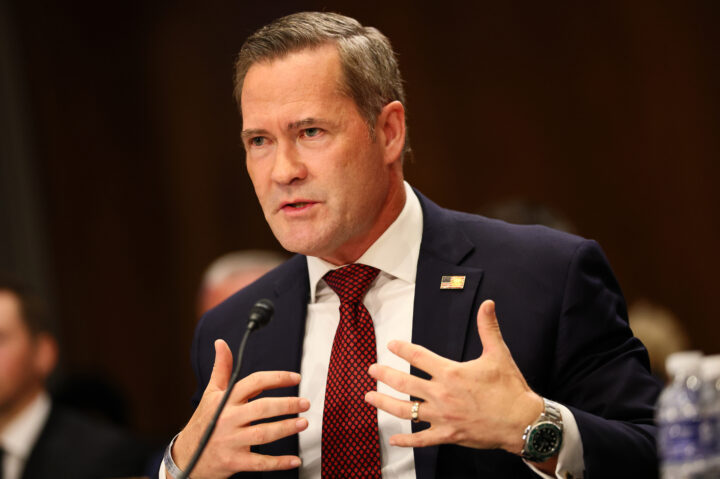
Former National Security Advisor Mike Waltz testifies during his confirmation hearing before the Senate Committee on Foreign Relations in the Dirksen Senate Office Building on July 15, 2025 in Washington, DC.
The Senate confirmed former National Security Advisor Mike Waltz on Friday to be U.S. ambassador to the United Nations, capping off a monthslong confirmation process that was marred by delays just days before the start of the U.N. General Assembly next week.
Waltz, a former congressman from Florida and a Green Beret, was confirmed by a 47-43 vote in the Senate on Friday afternoon, with three Democrats and one Republican crossing party lines. Sens. Jeanne Shaheen (D-NH), the ranking Democrat on the Senate Foreign Relations Committee, John Fetterman (D-PA) and Mark Kelly (D-AZ) voted in favor of Waltz’s nomination, while Sen. Rand Paul (R-KY) was the only Republican to oppose.
Waltz’s journey to his current role began when President Donald Trump removed him from his post as White House national security advisor in late April and selected him to replace Rep. Elise Stefanik (R-NY) as his pick for U.N. ambassador. The White House pulled Stefanik’s nomination in late March, more than two months after the Senate Foreign Relations Committee had advanced her nomination, amid concerns that her absence in the House could hurt Republicans’ ability to govern with their slim majority.
The former national security advisor was facing heavy scrutiny at the time over the Signal chat incident in which Waltz inadvertently added Atlantic Editor-in-Chief Jeffrey Goldberg to a group chat of top national security officials discussing imminent strikes on the Houthis on the non-secure messaging app. Prior to the “Signalgate” incident, Waltz had already been viewed as a vulnerable target for ideological rivals and personal foes in the administration because of his hawkish approach on foreign policy.
While Trump initially stood by Waltz, he eventually relented and in early May announced his intention to move the former congressman to the U.N. post. Waltz had already faced a setback after Trump fired six National Security Council officials whose views were aligned with Waltz. Their ouster was driven by an intervention by far-right activist Laura Loomer.
Waltz, a staunch supporter of Israel and an outspoken critic of Iran, faced delays of his own during his Senate confirmation process this summer, with Paul siding with all Democrats on the Foreign Relations Committee to block his nomination from advancing to the full Senate over concerns with Waltz’s national security and foreign policy positions.
Shaheen eventually broke the stalemate in July, voting for Waltz because of his public and private support for continued U.S. global engagement than other figures in the administration, as well as potential alternatives Trump could nominate.
Multiple outlets reported at the time that Shaheen, who is retiring next year, conditioned her support for Waltz on the Trump administration committing to providing $75 million in aid to Haiti and Nigeria, which had just been approved. Sen. Jim Risch (R-ID), the chairman of the committee, told Jewish Insider that the aid package was not directly tied to Shaheen’s support for Waltz.
During his confirmation hearing that month, Waltz said he would serve as a blockade to “anti-Israel resolutions” in the U.N. General Assembly and vowed to push for the dismantlement of the United Nations Relief and Works Agency over some of its employees’ involvement in the Oct. 7, 2023, Hamas attacks. He also said he supported U.S. sanctions against Francesca Albanese, the U.N. special rapporteur for Israel and the Palestinian territories, amid widespread accusations she has espoused antisemitic rhetoric in her commentary on Israel.
Waltz will take over for Dorothy Shea, the career diplomat who filled the role in an acting capacity as chargé d’affaires during the nine-month vacancy. His first full week on the job will coincide with the General Assembly, bringing world leaders together in New York City for high-level discussions on issues ranging from Russia’s war in Ukraine to European countries’ push for Palestinian statehood.
Yehuda Kaploun and former Rep. Mark Walker have not yet had committee hearings scheduled
Joe Raedle/Getty Images
President Donald Trump and Rabbi Yehuda Kaploun light a candle during an Oct. 7th remembrance event at the Trump National Doral Golf Club on Oct. 7, 2024 in Doral, Florida.
Several major Jewish organizations are expected to call on the Senate to “swiftly” confirm President Donald Trump’s nominees for special envoy to monitor and combat antisemitism and international religious freedom ambassador.
The groups, led by the Jewish Federations of North America, are writing in a letter to Senate Majority Leader John Thune (R-SD) and Senate Minority Leader Chuck Schumer (D-NY) that filling the roles is “of utmost importance in fighting growing antisemitism and ensuring freedom of religion or belief worldwide,” according to a draft obtained by Jewish Insider. The letter is set to be sent on Tuesday, according to a source with knowledge of the draft.
“We dare not delay in filling these critical positions that protect human rights around the world,” the letter states. “To that end we strongly urge you to prioritize filling these positions, sending a powerful signal to governments around the world that the United States upholds our constitutionally guaranteed rights to life and liberty, to freedom of religion and belief, and calls on them to do the same.”
In April, Trump tapped Rabbi Yehuda Kaploun, an Orthodox businessman and Chabad rabbi who served as a campaign surrogate, to serve as the next U.S. special envoy to monitor and combat antisemitism. In the Biden administration, that role was filled by Deborah Lipstadt, a Holocaust historian at Emory University. In May, the two authored a joint op-ed, with former antisemitism envoy Elan Carr, calling for action after two Israeli Embassy staffers were killed outside the Capital Jewish Museum in Washington.
Trump named former Rep. Mark Walker (R-NC) as the U.S. ambassador-at-large for international religious freedom. Both positions require Senate confirmation, and neither has had a confirmation hearing yet.
“We believe that these ambassador-at-large positions are crucial to protecting vital human rights, promoting religious freedom and vigorously confronting the global surge in antisemitism,” the Jewish organizations wrote.
JFNA CEO Eric Fingerhut told JI on Tuesday that the positions must be filled to help Jewish organizations combat rising antisemitism.
“The 141 Jewish Federations across our system are on the front lines of responding to and combatting antisemitism, and every single day we hear from them about the elevated levels of antisemitism our communities are facing,” Fingerhut said. “The government is a critical partner in our fight against antisemitism, both at home and around the world, so we must make sure that these roles do not remain vacant.”
A spokesperson for Thune did not respond to a request for comment.
A spokesperson for Schumer referred to the hold the Senate minority leader currently has on dozens of Trump nominees, and Trump’s recent message to Schumer to “go to hell” after bipartisan negotiations broke down. The spokesperson declined to comment specifically on Kaploun or Walker.
“President Trump has focused on promoting religious freedom and fighting antisemitism in a historic way,” White House deputy press secretary Anna Kelly told JI in a statement. “He wants all of his nominees confirmed as quickly as possible, including Yehuda Kaploun and Mark Walker, whose roles will be critically important to protecting Americans of faith.”
Current signatories to the letter include the Conference of Presidents of Major American Jewish Organizations, the Anti-Defamation League, the Orthodox Union, the Israeli-American Council, the Zionist Organization of America, Hadassah, American Jewish Committee, Agudath Israel, B’nai Brith International, the Louis D. Brandeis Center for Human Rights Under Law, NORPAC, Combat Antisemitism Movement, Religious Zionists of America and the American Association of Jewish Lawyers and Jurists.
A White House spokesperson did not respond to a request for comment.
This story was updated at 9:35 a.m. ET on Aug. 27, 2025.
Sen. Jeanne Shaheen told JI she doesn’t know of any Democrats planning to support him out of committee, leaving his nomination deadlocked

KHALIL MAZRAAWI/AFP via Getty Images
Joel Rayburn, then-deputy assistant secretary for Levant affairs and special envoy for Syria, speaks during a session on reconciliation and reconstruction at the 2019 World Economic Forum on the Middle East and North Africa in Jordan on April 6, 2019.
Joel Rayburn, the Trump administration’s nominee to be assistant secretary of state for Near Eastern affairs, faces a difficult path to confirmation, with no Democrats on the Senate Foreign Relations Committee expected to support him, leaving the vote to move him to full Senate consideration deadlocked.
Sen. Jeanne Shaheen (D-NH), the ranking member of the Senate Foreign Relations Committee, told Jewish Insider on Tuesday that she’s not aware of any committee Democrats planning to vote to move Rayburn’s nomination out of committee, and Sen. Rand Paul (R-KY) told JI last week that he opposes Rayburn.
A spokesperson for Sen. Chris Murphy (D-CT) confirmed he’s opposing Rayburn and a source familiar with the matter said the same of Sen. Chris Van Hollen (D-MD). Asked to confirm that they were planning to oppose Rayburn, the other Democratic members of the Foreign Relations Committee did not respond to requests for comment.
If all of them oppose Rayburn’s nomination, that leaves the committee vote on Rayburn’s nomination tied, preventing it from moving forward to the full Senate.
A spokesperson for Sen. Jim Risch (R-ID), the committee’s chairman, did not comment.
Senate Republicans could still call a full Senate vote to discharge Rayburn’s nomination from the committee, but it’s unclear if they will be eager to spend floor time on that process as they work to finalize a budget reconciliation package ahead of the July 4 recess.
Asked about the possibility of a floor vote to discharge Rayburn, Shaheen responded that it “will be very difficult” to move Rayburn’s nomination forward at this point.
If Rayburn’s nomination fails, it would be a blow to national security-focused conservatives, with whom Rayburn is aligned, and could reopen another key post to someone affiliated with the isolationist wing of the Republican Party.
Please log in if you already have a subscription, or subscribe to access the latest updates.
 Continue with Google
 Continue with Apple