




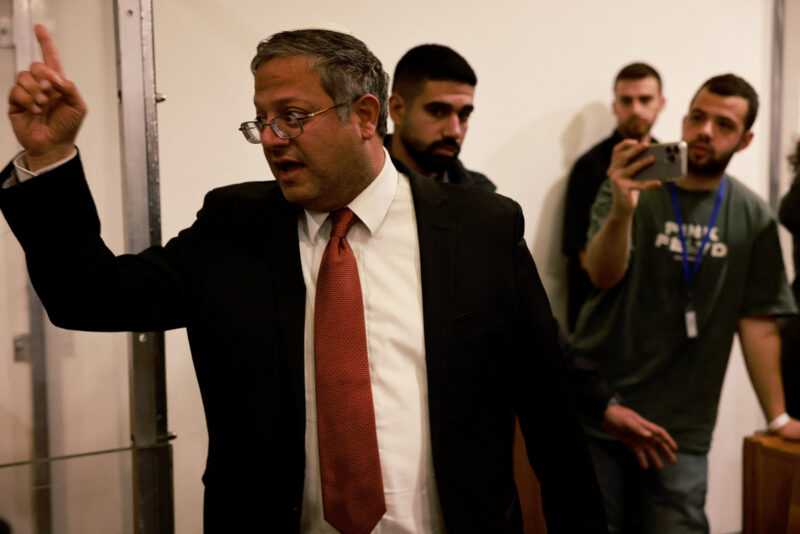


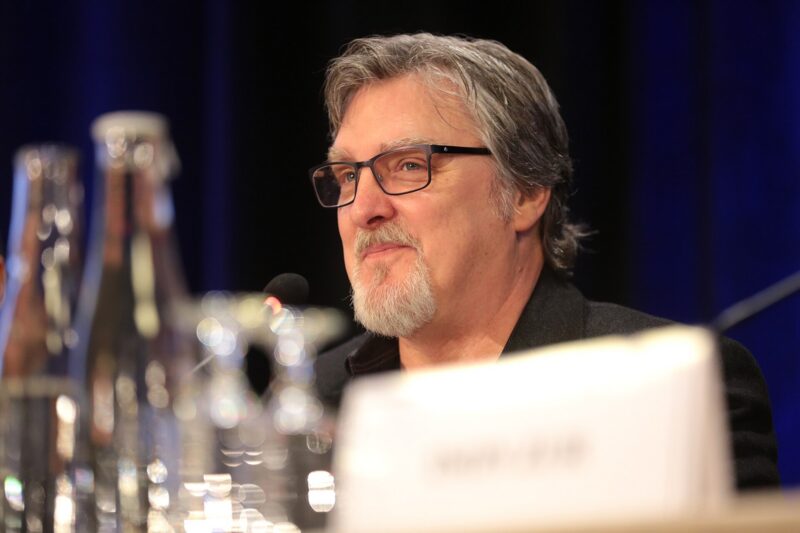




















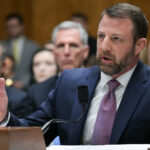


Leo Terrell will chair the new advisory panel while embarking on a 15-city swing to engage Jewish communities and local officials on combating antisemitism

Win McNamee/Getty Images
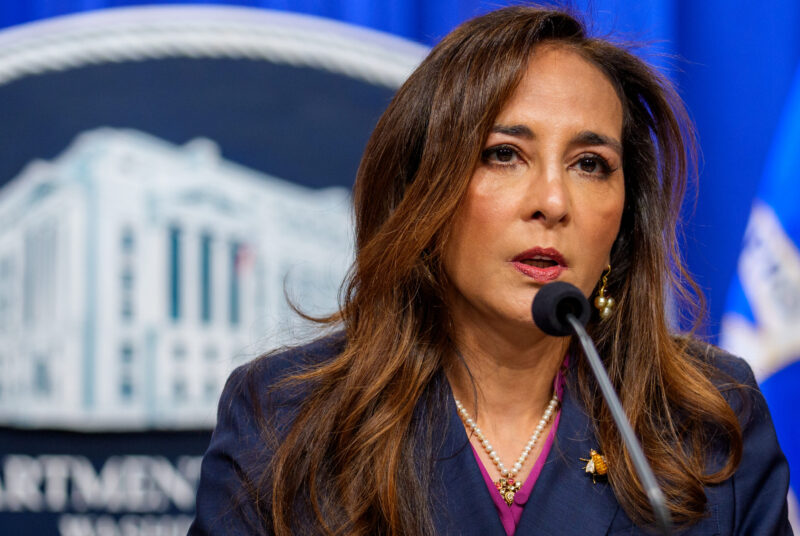
Leo Terrell at an event in the East Room of the White House on February 20, 2025.


 Add JewishInsider on Google
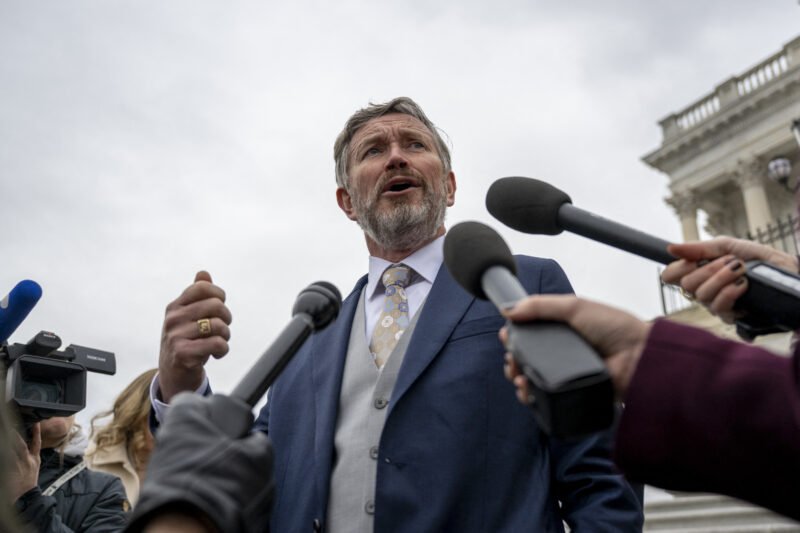
The Justice Department announced on Tuesday that Leo Terrell, senior counsel to the assistant attorney general for civil rights and chair of the Department of Justice’s antisemitism task force, will oversee the creation of the DOJ’s Antisemitism Advisory Committee. As part of the role, Terrell will embark on a 15-city nationwide tour to connect with local faith leaders and law enforcement officials about combating antisemitism.
The department described the panel in a press release on Tuesday as “a new advisory body” that will recommend strategies to the attorney general and other department leadership “on coordinated, timely, and effective responses to antisemitism.”
The committee “will consist of citizen leaders dedicated to combatting antisemitism” and individuals nominated to serve will be “subject to approval by the president,” the release said. (The task force, by contrast, is solely composed of DOJ officials.)
“Members will come from a wide range of backgrounds but share a common goal of developing innovative solutions to address antisemitism across the country,” the department said of the “forthcoming launch” of the panel.
Terrell told Jewish Insider in an interview late Tuesday that he had submitted a list of nominees to President Donald Trump after receiving the green light from acting Attorney General Todd Blanche to launch both initiatives and was awaiting approval from the White House.
The tour, described by the department in a second press release as a “National Awareness & Action Tour to combat antisemitism,” will involve Terrell meeting with “individuals and local communities impacted by antisemitism” and “working to identify practical solutions to combat antisemitism at the local level.”
“This national tour is an important step in ensuring communities across the country know the federal government stands ready to work with them to confront antisemitic threats, protect public safety, and uphold civil rights,” Blanche said in a statement.
Terrell has not determined yet if the tour will include public appearances to engage with Jewish leaders. His schedule is in the process of being finalized, and the senior DOJ official told JI he is open to extending the number of cities beyond the initial 15 stops on the agenda.
As for who he will meet during his travels, Terrell acknowledged that he did not expect to receive much engagement from many leading Democratic officials in major cities, such as New York City Mayor Zohran Mamdani, Chicago Mayor Brandon Johnson or Los Angeles Mayor Karen Bass. Instead, he said he hopes to engage directly with Jewish community stakeholders in these places and urge Jewish Americans to get involved in local elections.
“We’re talking about going to Jewish communities, first of all, to light a fire under them, but also to ask how we resolve these issues when sometimes you’ve got an absentee district attorney, with an absentee mayor, with an absentee school board, with an absentee school superintendent?” Terrell said. “Most importantly, there’s going to be a great emphasis on taking back these school districts and local prosecutor jobs in elections. There’s going to be a focus on putting pressure on some of these politicians in local cities in towns.”
He told JI that his primary objective with both initiatives is to determine what solutions the Trump administration can implement to combat domestic antisemitism on a federal level, as well as ascertain what the federal government should encourage state and local officials to do to address the problem closer to home.
“My position is that antisemitism is a local issue. What I mean by that is, we see the results of failures to address it at the local level — in the cities, in the school districts and areas like that,” Terrell said. “Not all of the solutions are in Washington. The solutions are in Los Angeles, Detroit, Chicago, San Francisco, in big cities, small cities, mid-sized cities in the South.”
“How do we get prosecutors in local cities to address antisemitic content that is being ignored and protected under the umbrella of free speech? How do we stop the curriculum problems that are developing in K-12 schools by teachers’ unions that support antisemitic misconduct?” he added. “How do we stop the issues caused by what I call the ‘Jewish tax,’ where Jewish citizens have to pay exorbitant security fees in order to worship or to have events? These are things that are happening at the local level.”
Terrell said he is “wide open” to considering ideas from Jewish leaders across the country about solutions to the domestic antisemitism scourge, arguing that he believed “out-of-the-box thinking” was required at this moment.
Terrell said that he viewed the success of the federal programs he hopes to enact over the remainder of the second Trump administration as a necessity, arguing that those initiatives yielding tangible results would make it difficult for a future president to shut down.
“With this advisory committee, we’re going to work on the problem of antisemitism. We’re not going to be just talking, having hearings and things of that sort. This is not an advisory council that’s going to write a report that collects dust. I’m not in for that, I’m in for finding working solutions,” Terrell told JI. “Recognizing the problem is one thing. What to do is another.”
“I think that’s going to be the task of the commission, because I believe guardrails need to be put up before this president’s term in office is over,” he continued. “The president, in my opinion, has been the best friend that the Jewish American community has had in the White House. He’s committed. My biggest concern from here at DOJ is getting some guardrails up so the next president or the next White House will continue these programs.”
Professor Derek Peterson ‘deviated from the remarks he had shared,’ the university said after Peterson denounced the ‘injustice and inhumanity of Israel’s war in Gaza’

GETTY IMAGES
Aerial view of the University of Michigan campus with detailed stone buildings and green spaces, contrasting with the urban backdrop of Ann Arbor
The University of Michigan apologized after the outgoing chair of the faculty senate, who has a history of anti-Israel advocacy, delivered an unapproved jab at Israel at a commencement ceremony on Saturday.
Derek Peterson, a tenured professor of history and African studies, praised “the pro-Palestinian student activists who have over these past two years opened our hearts to the injustice and inhumanity of Israel’s war in Gaza,” during his campus-wide commencement address to loud cheering from students.
The university’s president, Domenico Grasso, said in a statement later on Saturday that the remarks were “hurtful and insensitive to many members of our community.”
“We regret the pain this has caused on a day devoted to celebration and accomplishment. For this, the university apologizes,” Grasso continued. “The Faculty Senate Chair deviated from the remarks he had shared before the ceremony. The Chair’s comments were inappropriate and do not represent our institutional position. Nor do they represent the diversity of views across our entire faculty … The Chair’s remarks were expected to be congratulatory, not a platform for personal or political expression. Introducing such commentary in this setting was inappropriate and did not align with the purpose of the occasion.”
Grasso said he will “work with university leadership to review and refine future commencement programming” but did not announce any disciplinary action against Peterson.
In January 2024, Peterson authored and presented a faculty senate resolution urging the university to divest from companies with ties to Israel amid its war in Gaza. The resolution passed with a 38-17 vote.
The University of Michigan experienced virulent campus antisemitism and anti-Israel activity since the Oct. 7, 2023, terrorist attacks in Israel, including an assault of a Jewish student and the repeated harassment of a Jewish Board of Regents member.
Sarah Hubbard, a UMich regent, called on her board colleagues to “make lasting changes that will change the course of this conduct.”
Hubbard called Peterson’s comments “incredibly troubling and disappointing,” in a post on X. “It is very difficult to execute meaningful consequences on tenured faculty but as a leader I can help set the tone and expectations for their conduct. His conduct was unbecoming for a leader of the greatest university in the world,” she said.
In a joint statement, Michael Schostak and Lena Epstein, the Republican candidates in the upcoming UMich regent election, also said they were “deeply troubled” by the university’s decision to select Peterson as a commencement speaker “given his divisive track record.”
‘Just because someone is a hateful antisemitic looney-tune doesn’t mean they can’t win office,’ one Jewish community activist said of Shelly Arnoldi

Shaban Athuman/Richmond Times-Dispatch via AP
Shelly Arnoldi looks over her notes during a Joint Commission on Administrative Rules meeting regarding the Youngkin's administration's proposed K-12 transgender policies on Monday, Dec. 19, 2022, at Pocahontas Building in Richmond, Va.
A new candidate for Republican county chair in Virginia’s largest jurisdiction is facing scrutiny over a range of antisemitic social media posts in which she has told Jews to “move to Israel,” spread conspiracy theories about Jewish control of U.S. politics and expressed admiration for prominent neo-Nazis and Holocaust deniers, among other extremist comments.
Shelly Arnoldi, who recently launched her bid to lead the Fairfax County Republican Committee, is stoking concerns among Jewish community leaders now seeking to raise awareness about her extensive public record of promoting antisemitic tropes while demonizing Israel.
While Arnoldi is not seen as a particularly viable candidate in the upcoming Feb. 28 election, local political observers say, her campaign has still given some pause to both Jewish and Republican activists who worry her radical views underscore a creeping embrace of antisemitic sentiment in the GOP fueled by leading far-right commentators including Tucker Carlson, whose interviews she has eagerly endorsed.
“She does not appear to be a serious person,” one Jewish community activist told Jewish Insider on condition of anonymity to address a sensitive topic. “But just because someone is a hateful antisemitic looney-tune doesn’t mean they can’t win office. She strikes me as someone who would continue to run, and in that regard I consider her to be a real threat.”
In recent months, Arnoldi has instructed Jewish social media critics to “move to Israel,” where she has said they “belong,” while promoting antisemitic materials alleging Zionist plots to subvert American governance and to weaken Christian representation. She has also suggested that Jews “appear to control the world,” said that “nobody cares about Jews” and claimed that “Israel owns us,” among multiple other derogatory and conspiratorial remarks posted to X.
Meanwhile, Arnoldi has frequently voiced her enthusiastic support for antisemitic influencers and conspiracy theorists on the far right, such as Nick Fuentes, Candace Owens and Ian Carroll, the latter of whom she has called a “brave man.”
Several posts were flagged by antisemitism watchdogs on social media this week. Arnoldi, who has accused her critics of attempting to smear her, did not return a request for comment from JI.
A new letter circulated on social media by Jewish community activists on Monday called attention to what it described as Arnoldi’s “sustained pattern of antisemitic rhetoric,” saying it is “incompatible with party leadership.”
“If elevated to chair,” the letter warned, “this record will not remain local or contained.”
Arnoldi, who in November ran an unsuccessful campaign for state delegate as an independent, is challenging the incumbent GOP chair, Katie Gorka, who declined to comment on the race when reached by JI on Tuesday.
Even if Republicans face long odds of winning elected office in Fairfax County — increasingly a Democratic stronghold — Arnoldi’s insurgent campaign still carries implications for the future direction of GOP politics in one of the largest jurisdictions in the D.C. area, some party observers cautioned.
Gary Aiken, a former Republican candidate for Fairfax supervisor, expressed alarm at Arnoldi’s campaign on Tuesday. “If these are the kinds of people running for chairman, I may have to get more involved again,” he told JI.
Still, Mike Ginsberg, a member of the Fairfax County Republican Party who also serves as its general counsel, downplayed such concerns — even as he acknowledged that Arnoldi’s messaging would likely resonate with a minority faction of committee members whom he noted are “perpetually disaffected and constantly complaining.”
“People of a certain age would analogize her to Statler and Waldorf in ‘The Muppet Show’ from the 1970s — criticizing from the peanut gallery without making any constructive contributions,” Ginsberg, who is Jewish, told JI. “Statler and Waldorf at least had the benefit of being entertaining — Shelly does not.”
“Put bluntly, Shelly Arnoldi is a crank,” he added. “Every party has them. She is ours.”
The congressional candidate faced blowback from state Jewish leaders after flip-flopping on his genocide accusation, a word that he previously opted not to use

Yalonda M. James/San Francisco Chronicle via Getty Images
California state Sen. Scott Wiener (D-San Francisco) on Tuesday, November 18, 2025.
California state Sen. Scott Wiener announced on Thursday that he is stepping down from his role as one of the co-chairs of the California Legislative Jewish Caucus, capping off nearly two weeks of controversy and frustration among Jewish leaders in the state after the San Francisco Democrat declared Israel’s actions in Gaza to be a genocide.
Wiener said in a statement, which was obtained by Jewish Insider, that the decision was prompted in part by the fallout of his genocide comments.
“My campaign is accelerating, and my recent statements on Israel and Gaza have led to significant controversy in the Jewish community. The time to transition has arrived,” Wiener said. He will remain in the role until Feb. 15.
Wiener, who is running for Congress in a competitive Democratic primary to fill the seat being vacated by retiring Rep. Nancy Pelosi (D-CA), has long declared himself a progressive Zionist while also criticizing the government of Israeli Prime Minister Benjamin Netanyahu and Israel’s actions in Gaza.
But after a candidate forum this month where his two competitors were quick to say Israel has committed genocide in Gaza, Wiener faced pressure from his left to use the word himself, and released a video a few days later changing his stance.
“I’ve stopped short of calling it genocide, but I can’t anymore,” Wiener said. A coalition of local and statewide Jewish advocacy groups responded with a statement saying his position “is both incorrect and lacks moral clarity.”
Wiener said Thursday that the American Jewish community “is navigating an extremely difficult moment in time,” and called for more dialogue.
“As we move through this moment, it is even more important for Jews here and globally to foster open dialogue and acceptance of disagreement, even on the hardest of issues,” Wiener said. “Since I stated my view that the Netanyahu government committed a genocide in Gaza, I have had many in-depth conversations with members of the Jewish community with a range of perspectives. While many in the community strongly disagree with my view, I am grateful for their willingness to engage with me and hear my perspective, showing once again the deep respect for difference in our community.”
In an interview with Politico this week, Wiener said he had avoided using the word “genocide” until now because of the harm and hurt it would cause the Jewish community.
“Until now, I have not used the word genocide really for two reasons: First of all, it is an extremely sensitive issue in the Jewish community,” Wiener said. “And [second] particularly because the word genocide has been weaponized against Israel and against Jews for a long time. There are people who think Israel’s mere existence is genocide.”
He said he’s heard from Jewish voters and leaders in the days since who are unhappy with his statement, but asked them to remember his record.
“If you’re mad at me, if you feel betrayed, I respect and honor that. But just also remember how many times I’ve gone to the mat for this community, and the bullets I’ve taken for this community,” Wiener said.
Sen. Bill Cassidy told the largest teachers’ union in the country it has ‘lost sight’ of its congressionally chartered purpose

Kayla Bartkowski/Getty Images
Sen. Bill Cassidy (R-LA) speaks to reporters following the weekly Republican Senate policy luncheon at the U.S. Capitol on March 11, 2025, in Washington, D.C.
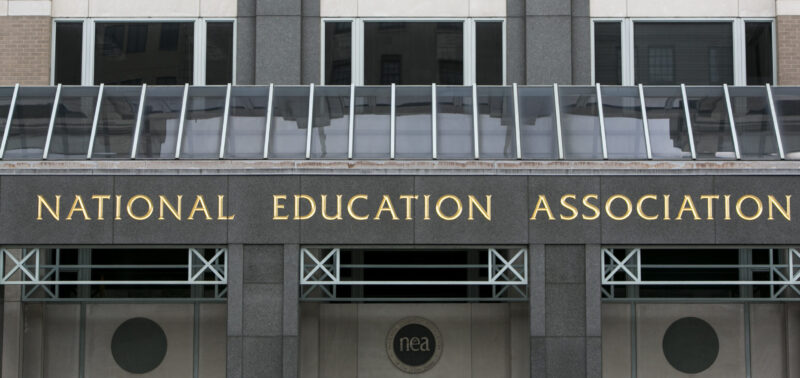
Sen. Bill Cassidy (R-LA), the chairman of the Senate Health, Education, Labor and Pensions Committee, sent a letter on Thursday to the National Education Association accusing the largest teachers’ union in the country of a “deeply troubling” pattern of antisemitism within its ranks.
“The Jewish people have suffered assaults on their identity, religion, culture, and lives for millennia. Disturbingly, we are witnessing a rise in antisemitic sentiment across the Western world, including in the United States,” Cassidy wrote. “Let me put it plainly: antisemitism in all its forms is abhorrent and has no place within our society, especially at our K-12 schools, higher institutions of learning, workplaces, and within unions.”
Cassidy said that the NEA has “lost sight” of its congressionally chartered purpose, adopting a “misplaced” focus on “political activism, foreign policy, and environmental and social justice causes” and becoming “hostile” to Jewish NEA members.
The letter lists out a litany of incidents including a map sent in a mass email to three million NEA members describing the entire land of Israel as “indigenous” Palestinian territory and linking to resources from Hamas-supporting organizations, an attempted boycott of the Anti-Defamation League and reported harassment of Jewish delegates at the NEA’s national conference.
It also raises concerns about a series of provisions included in the 2025 NEA handbook, including language about Holocaust Remembrance Day that “significantly glossed over and failed to mention the attempted annihilation of the Jewish people under the Nazi regime”; one-sided language on the “Palestinian Nakba” that fails to acknowledge Arab attacks on Jews or the United Nations’ role in Israel’s founding; and language that aims to separate anti-Zionism from antisemitism.
Cassidy said that Jewish NEA members have informed the committee that they “are feeling increasingly threatened and ostracized” by the NEA’s “seeming indifference” to them, have been blocked from leaving the national NEA and have had no recourse to address these issues.
NEA representatives at schools have been “increasingly hostile” to Jewish teachers as well, Cassidy said, targeting them for supporting Israel, denying the Oct. 7 attacks and downplaying and denying antisemitism.
Cassidy said the NEA has repeatedly failed to properly and fulsomely apologize for these incidents. In one case, he said, “the NEA’s retroactive statement appears to be a sloppy, insincere, and reactionary attempt [to] move on from its unacceptable behavior.”
Cassidy put forward dozens of questions to the organization, including the process that allowed for the anti-Israel map to be sent out and whether those involved had been held accountable, the NEA’s response to Jewish members who were harassed and the approval process for the handbook language, and how and why it has responded — or not responded — to antisemitism, among various others.
‘This is not complicated,’ the senator’s office said, ‘and there is no reason why there should be conflicting policies in place’

Andrew Harnik/Getty Images
Sen. James Lankford (R-OK) speaks during a news conference on Capitol Hill on May 1, 2024 in Washington, DC.
A spokesperson for Sen. James Lankford (R-OK), a co-chair of the Senate antisemitism task force, told Jewish Insider on Wednesday that the Coast Guard had assured Lankford in recent weeks that the service would be correcting its policy to make clear that swastikas would be banned — before reverting this week to a policy that had prompted criticism from Lankford and other lawmakers.
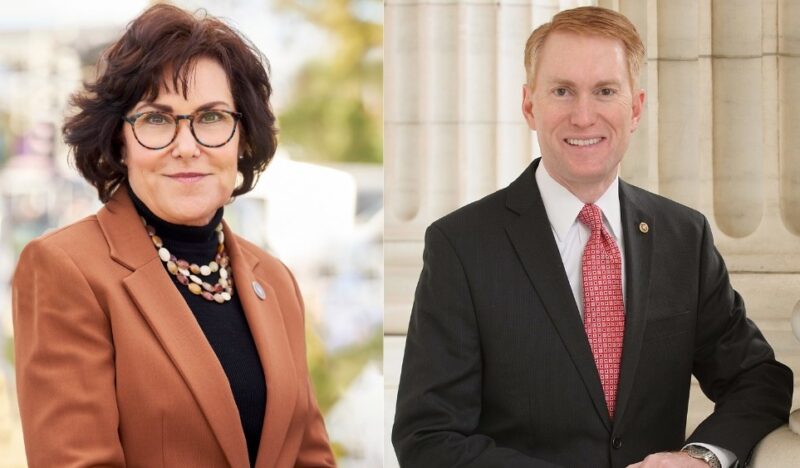
Lankford and antisemitism task force co-chair Sen. Jacky Rosen (D-NV) spoke to Coast Guard commandant Adm. Kevin Lunday last month after initial reports that the service would begin classifying swastikas and nooses as “potentially divisive” rather than explicitly banned hate symbols. The Coast Guard has now reverted back to describing the symbols as “potentially divisive,” The Washington Post revealed on Tuesday.
“This is not complicated,” the spokesperson said late Wednesday. “The senator was provided assurances that the policy was corrected and there is no reason why there should be conflicting policies in place. Hate symbols have no place in America or in the Coast Guard.”
Earlier in the day Wednesday, Lankford told JI he was working to connect with the Coast Guard to clarify the situation. He said he’d had several conversations with Lunday, as recently as last week, and was “surprised that this is still an issue” because Lunday had been “exceptionally clear with where the Coast Guard policy actually is, that swastikas [are] absolutely prohibited, a noose would be prohibited. He’s been very, very, very clear on it.”
He said that Lunday had been very responsive to his questions and was clear that “we would never, ever allow anything like that to be able to exist, because that’s divisive and we consider it absolute hate.”
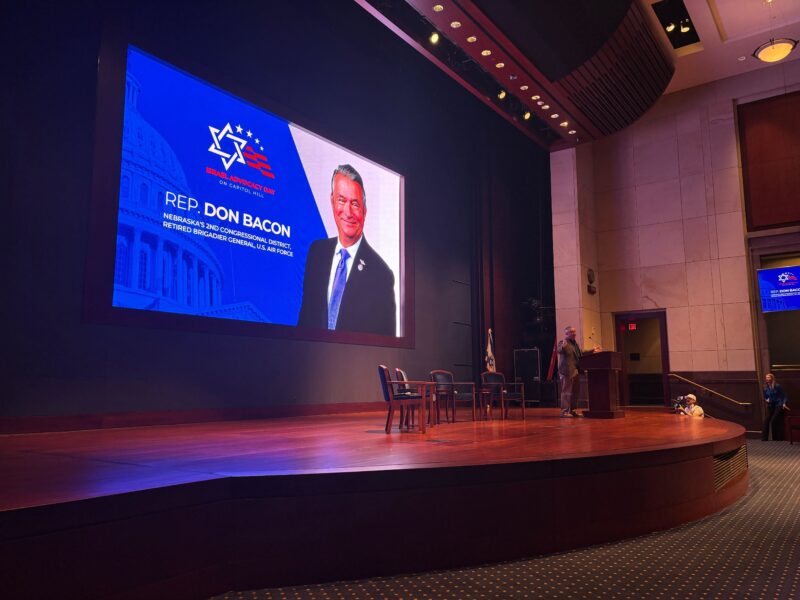
Few other Republicans have spoken out publicly about the latest policy change. One exception has been Rep. Don Bacon (R-NE), a co-chair of the House antisemitism task force, who said that Lunday will need to answer for the change.
“Now that we know this is policy, it shows complete tone-deafness on the Coast Guard and the Department of Homeland Security,” Bacon said. “In light of the horrific events at Bondi Beach and as a chair of the House Bipartisan Task Force for Combating Antisemitism, I will continue to stand against antisemitism in all forms. Admiral Lunday will have to clarify his Nov. 20 memo condemning this policy in light of the now-enacted policy from the Commandant at his upcoming confirmation hearing.”
Lunday, currently serving in an acting capacity, had a confirmation hearing in the Senate Commerce, Science and Transportation committee in November and was reported favorably out of that committee, but at least two Senate Democrats have placed holds on Lunday’s confirmation, which was expected for a vote this week, according to The Washington Post.
The Florida Republican also described a clash he had with Tucker Carlson

Samuel Corum/Getty Images
Rep. Brian Mast (R-FL) speaks during a House Committee on Foreign Affairs hearing on Capitol Hill on January 11, 2024 in Washington, DC.
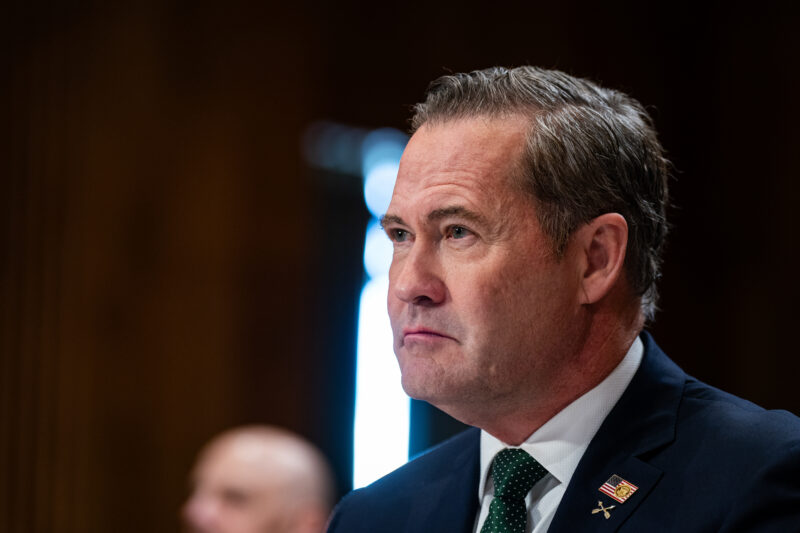
Rep. Brian Mast (R-FL) said on Friday that there is a concerted network, on both the right and left, pushing antisemitic and anti-Israel ideology to the point that it has become “pervasive,” particularly among younger people.
Speaking at a Hudson Institute conference on antisemitism, Mast, the chair of the House Foreign Affairs Committee, said he does not have a “silver bullet” to address the problem because of how widespread it has become. He recounted a recent speech in a class at a military academy where he saw “probably a 50/50 divide about why we have this [U.S.-Israel] relationship, what is the benefit of this relationship?”
The Florida Republican said that he sees a “very specific network that is in place that works together to sow antisemitism that is now, in many cases, working on the left and right across the media, to go out there and put this wedge in this relationship.”
Mast described the effort as “pervasive, systematic, planned out, orchestrated” and a “very, very serious global threat across multi-national organizations, media across the globe and adversaries and terrorist organizations.”
Mast said that in response “we need to do a really good effort of showing the pervasive effort to drive this wedge — through antisemitism, is my opinion — between the United States of America and one of our greatest allies anywhere in all of these spheres — military capabilities, relationships, intelligence sharing, geography, signals intelligence, geospatial intelligence, human intelligence — all these different things that we are so close in, beyond the trust that we have.”
The Foreign Affairs Committee chair said that Europe is one of the U.S.’ “biggest adversaries” in the fight against antisemitism, describing its actions post-Oct. 7, particularly several states’ decisions to recognize a Palestinian state, as “the most unhelpful thing that could possibly be done.” He said that those efforts emboldened the terrorist groups fighting Israel.
Mast said he had not interacted much with Tucker Carlson, one of the most prominent anti-Israel voices on the right, but had a direct conversation with Carlson after the commentator attacked the congressman for his time in the Sar-El program, where he volunteered in a support capacity alongside the Israeli Defense Forces. Mast said he told Carlson he was overlooking that Mast’s ultimate loyalty is to the United States, not to Israel.
“You never bothered to ask the question of, ‘How many countries have I taken an oath to support and defend?’ Just one: the United States of America,” Mast said he told Carlson, going on to emphasize he took that oath five times as a member of the military and an equal number as a member of the House, in addition to nearly losing his life three or four times in U.S. military service. “You’re connecting dots that don’t exist because you failed to ask some really fundamentally important questions which is, ‘Where do your allegiances lie?’”
Mast said he decided to sign up for the IDF volunteer program during Operation Protective Edge in 2014, when he faced down anti-Israel demonstrators in Boston following his time in the military.
“Some of these people draping themselves — like we see on our college campus here — draping themselves in Palestinian flags, chanting, rallying, whatever, they started harassing me and my family for being a U.S. service member,” Mast said. “At the end of that night, we got home and I told my wife, ‘I don’t know what it’s going to look like, I’m going to find a way. I’m going to show my support for Israel against this hypocrisy and against these pricks that we encountered.’”
Jewish Insider senior national correspondent Gabby Deutch contributed reporting.
A DNC advisor told JI that Martin made clear to Jewish leaders that he 'is aligned with the community and that frankly people want full-throated leadership'

Aaron J. Thornton/Getty Images for One Fair Wage
Ken Martin, DNC chair candidate, speaks at the "Win With Workers" Rally and Press Conference at the DNC Midwestern Candidate Forum on January 16, 2025 in Detroit, Michigan.
Ken Martin, the chair of the Democratic National Committee, spent Friday calling Jewish leaders, seeking to reassure them that he does not condone the phrase “globalize the intifada,” two sources with knowledge of the meetings told Jewish Insider. Among the leaders he called were senior officials at the Anti-Defamation League and the American Israel Public Affairs Committee.
The meetings came shortly after a clip of Martin discussing New York City Democratic mayoral nominee Zohran Mamdani went viral online. PBS NewsHour anchor Amna Nawaz asked Martin to respond to concerns from Jewish colleagues that Mamdani’s refusal to condemn the phrase “globalize the intifada” was “very disturbing, potentially dangerous” — and asked Martin outright whether he agreed.
“There’s no candidate in this party that I agree 100 percent of the time with, to be honest with you. There’s things that I don’t agree with Mamdani that he said,” Martin told Nawaz. In the interview, he did not specifically address the “globalize the intifada” language.
The clip quickly garnered backlash, and on Friday morning Martin began doing damage control.
“I’ve never supported or condoned the phrase ‘globalize the intifada’, a phrase which is reckless and dangerous, as it can been [sic] seen as a green light to terror, and it should be unequivocally condemned,” Martin wrote in a Friday morning post on X. “Let me be clear, at a time of rising antisemitism, there’s no place for rhetoric that can be seen as a call to violence.”
In the Friday phone calls, Martin faced criticism from the Jewish leaders, the two sources confirmed. But a DNC senior advisor told JI that Martin made clear he stood with them against the harmful rhetoric.
“By the end of it there was an understanding that Ken does understand and is aligned with the community and that frankly people want full-throated leadership,” the advisor said. “This language isn’t about Democrats. This is just not acceptable, period, and as a party it’s not acceptable.”
But Martin still held his fire against Mamdani because Mamdani himself did not utter the phrase “globalize the intifada,” the DNC advisor explained. Rather, Mamdani defended its use by others.
In the PBS interview, Martin said he is committed to leading a “big tent” party.
“You win by bringing people into your coalition. We have conservative Democrats. We have centrist Democrats. We have labor progressives like me, and we have this new brand of Democrat, which is the leftist,” Martin said.
Martin said the Democratic Party should be a ‘big tent’ that includes ‘new’ leftists

Rod Lamkey, Jr./AP
Democratic National Committee chairman Ken Martin speaks after winning the vote at the Democratic National Committee winter meeting at the Gaylord National Resort and Convention Center in National Harbor, Md., Feb. 1, 2025.
Democratic National Committee Chairman Ken Martin declined on Wednesday to criticize New York City Democratic mayoral nominee Zohran Mamdani’s refusal to condemn the “globalize the intifada” slogan. The DNC chair, who was elected earlier this year, praised the party for being a “big tent” comprising different ideologies, including “leftists” such as Mamdani.
Asked during a “PBS NewsHour” interview about concerns from Jewish Democrats regarding Mamdani’s refusal to condemn the phrase, Martin replied, “There’s no candidate in this party that I agree 100 percent of the time with, to be honest with you. There’s things that I don’t agree with Mamdani that he said.”
Martin said that he had learned through his 14 years as chairman of the Minnesota Democratic Party and his tenure at the DNC “that you win through addition. You win by bringing people into your coalition. We have conservative Democrats. We have centrist Democrats. We have labor progressives like me, and we have this new brand of Democrat, which is the leftist.”
“We win by bringing people into that coalition. And at the end of the day, for me, that’s the type of party we’re going to lead. We are a big tent party. Yes, it leads to dissent and debate, and there’s differences of opinions on a whole host of issues. But we should celebrate that as a party and recognize, at the end of the day, we’re better because of it,” Martin said.
Martin also argued that national Democrats could learn from Mamdani’s primary campaign performance in terms of focusing their message away from President Donald Trump and toward a forward-looking vision.
“He campaigned for something. And this is a critical piece. We can’t just be in a perpetual state of resisting Donald Trump. Of course, we have to resist Donald Trump. There’s no doubt about it for all the reasons we just talked about. But we also have to give people a sense of what we’re for, what the Democratic Party is fighting for, and what we would do if they put us back in power,” Martin said.
“One of the lessons from Mamdani’s campaign is that he focused on affordability. He focused on a message that was resonant with voters and he campaigned for something, not against other people or against other things. He campaigned on a vision of how he was going to make New York City a better place to live,” he continued.
Martin praised the methods by which Mamdani’s campaign got its message out.
“The other lessons, of course, is the tactics he used to get his message out, both a very aggressive in-person campaigning, meeting voters where they’re at, and then also in those digital spaces, using very creative messaging to cut through the noise and to get to voters in an inexpensive but authentic way,” he said.
Please log in if you already have a subscription, or subscribe to access the latest updates.
 Continue with Google
 Continue with Apple