




























Lawmakers preparing to introduce federal buffer zone legislation
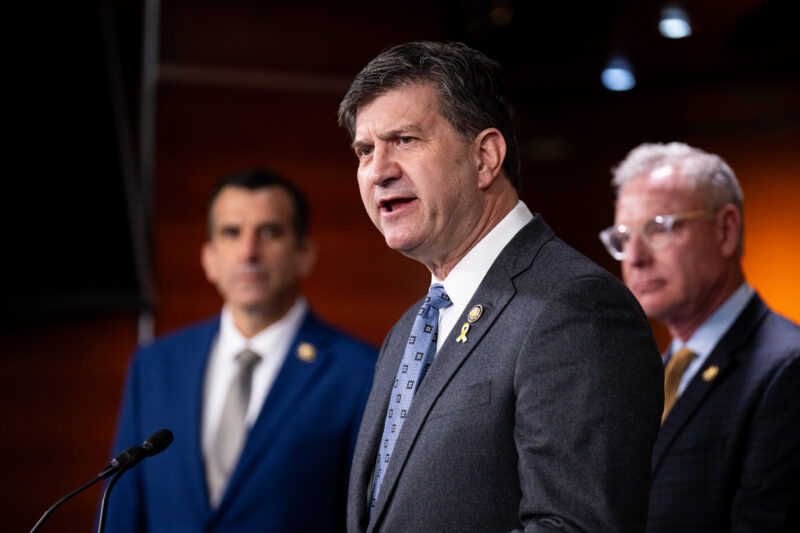
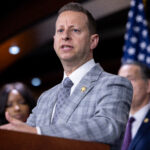
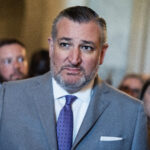
The bill has been spearheaded by Sen. Ted Cruz and Rep. Brad Knott; Cruz’s staff reached a compromise on Sunday with Rep. Tom Suozzi to secure his support.
Jewish Federations of North America
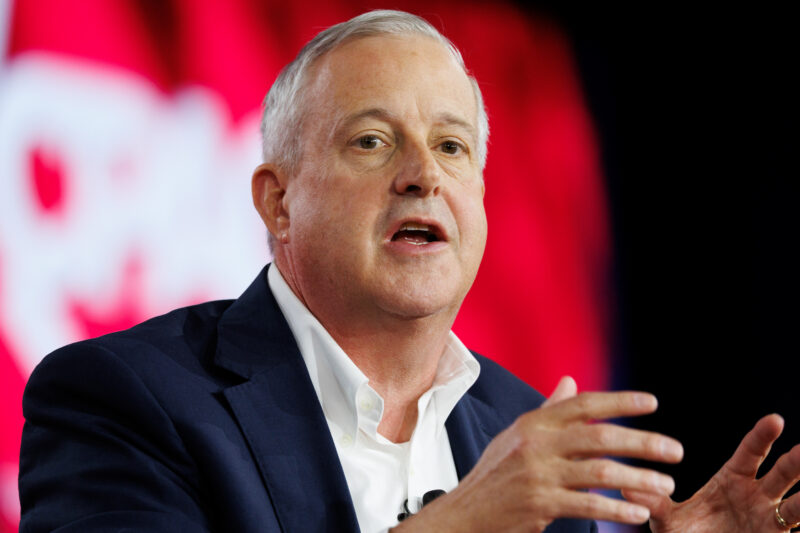
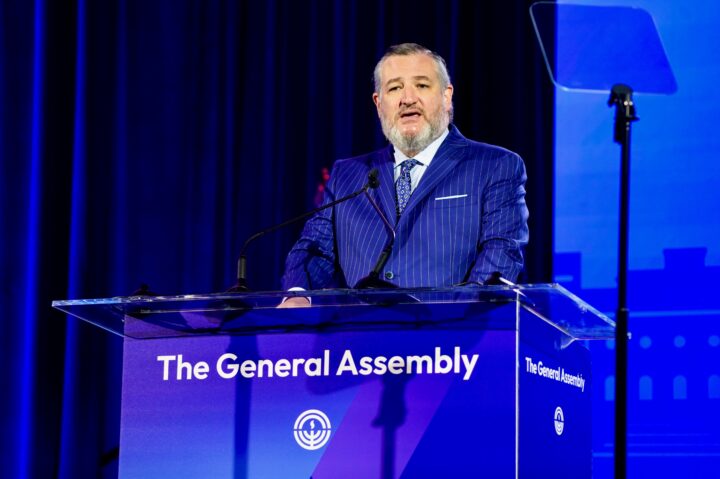
Sen. Ted Cruz (R-TX) speaks at the Jewish Federations of North America's General Assembly on Nov. 18, 2025.


 Add JewishInsider on Google
Sen. Ted Cruz (R-TX), Rep. Brad Knott (R-NC) and Rep. Tom Suozzi (D-NY) are preparing to introduce federal legislation that would establish a 100-foot buffer zone around religious institutions, within which conduct that disrupts religious services or interrupts access to the place of worship would be banned during religious services.
The Right to Worship Act aims to address demonstrations around synagogues and other houses of worship that have become a growing concern for the Jewish community following anti-Israel and antisemitic protests outside synagogues that have turned violent. Several states have pursued similar legislation.
Cruz and Knott have been working on the bill for some time, and two sources familiar with the situation said that “intense negotiations” had been ongoing between Cruz and Suozzi’s teams to reach a bipartisan compromise balancing the desire to protect religious worship and free speech rights. A source said a deal was reached on Sunday evening.
“The First Amendment guarantees every American the right to freely exercise their faith, and Congress has a duty to ensure that guarantee is met,” Cruz said in a statement to Jewish Insider. “In recent years, we have seen organized acts of hate meant to disrupt and deny that right, which have been untenably defended as speech. That is why I am introducing the Right to Worship Act, and I urge my colleagues to support it.”
According to draft bill text viewed by JI, the buffer provision would impose fines for such activity, and impacted individuals, the Department of Justice or state attorneys general would be able to bring suits under the statute. It also includes language protecting non-disruptive First Amendment activity.
Knott did not respond to requests for comment and Suozzi did not comment for this article.
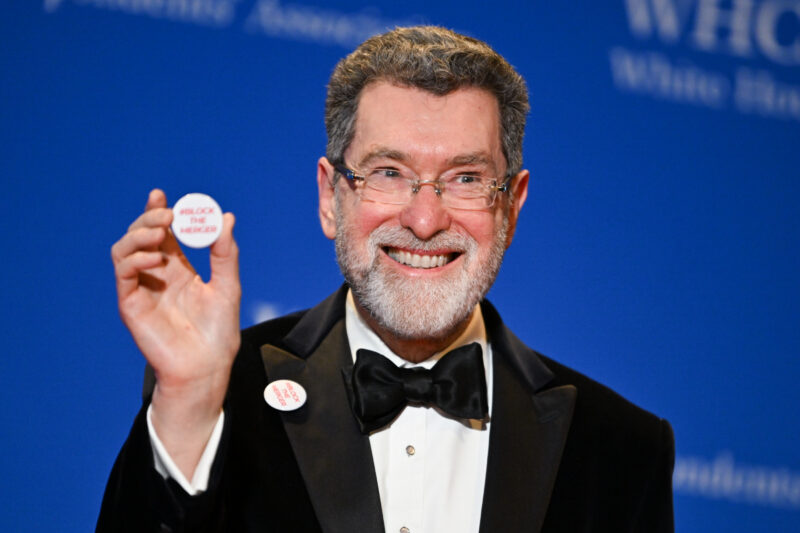
Sander Gerber, the CEO of Hudson Bay Capital and a lead architect of the Taylor Force Act, helped craft the new legislation, inspired in part by the decades-long weekly antisemitic protests outside his father’s synagogue in Ann Arbor, Mich. — an issue Gerber’s father previously sought to appeal to the Supreme Court.
Gerber said that officials at various levels, including the Department of Justice under the Trump administration have said that they’re unable to step in under the existing FACE Act because the conduct at the Ann Arbor synagogue is not physically threatening or obstructive. The FACE Act, invoked on multiple occasions by the current Justice Department, bars the use of force, threats or obstruction to block access to reproductive health services or to obstruct the right to worship.
“The Ann Arbor City Council passed a resolution saying these protesters are antisemitic. The mayor said he can’t move them away because his legal team won’t let them. Leo Terrell at DOJ said there’s nothing he can do because they’re not threatening,” Gerber told JI. “So it’s a gap in the FACE Act. Here you have intentional disruption [and] harassment, so how do you navigate free speech within that?”
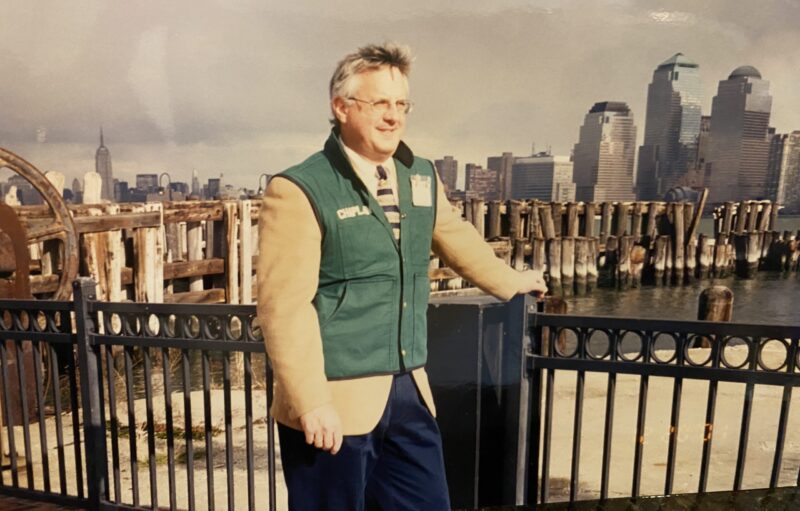
Moshe Davis, who led former New York City Mayor Eric Adams’ office to combat antisemitism, has also been involved in crafting the bill, which he said aims to fill gaps in existing law and in some of the state and local buffer zone bills like the one in New York City, which he described to JI earlier this year as “watered down.”
He said he began working with Gerber on the legislation after being pushed out of the New York City government by Mayor Zohran Mamdani, and the pair got in touch with House Speaker Mike Johnson (R-LA) — who has been strongly supportive — about the effort after a spate of incidents at houses of worship, as well as communicated with the Department of Justice to work through any potential First Amendment Issues. He also praised Cruz and his staff’s work on the bill.
“I started this work in New York City, responding to the mobs targeting synagogues,” Davis told JI. “What we have seen since is a national problem that reaches every faith and requires a federal answer. No American should be afraid to walk into their house of worship.”
Johnson did not respond to requests for comment.
Nathan Diament, the executive director of the Orthodox Union Advocacy Center, which has also been working to support the bill, said, “The need for this legislation in the face of recent actions taken against shuls, as well as other houses of worship, is clear. And — it’s realistic for Congress to pass this bill in September.”
Suozzi previously introduced the SACRED Act, an alternative buffer zone bill, earlier this year, with the backing of several major Jewish community groups. Suozzi’s bill, cosponsored by Max Miller (R-OH), is different from the new one in that it allows greater leeway for demonstrations inside the buffer zone as long as they are nonviolent and nonthreatening.
Suozzi’s bill was also backed by the Anti-Defamation League, American Jewish Committee, Orthodox Union, Hadassah, Hindu American Foundation, Islamic Society of North America, Jewish Federations of North America, UJA-Federation of New York, the Holocaust Memorial and Tolerance Center and Agudath Israel of America. Leaders of communities impacted by antisemitic violence have been lobbying in support of Suozzi’s bill.
“No one should have to fight their way through harassment and intimidation to simply pray in peace. That’s why ADL is grateful members like Senator Cruz and Representatives Suozzi and Knott have recognized the urgency of this growing problem and made a clear commitment to protecting safe access to houses of worship,” Lauren Wolman, the senior director of government relations and strategy for ADL said in a statement.
“ADL has always championed the core principle at the heart of this issue: everyone, regardless of their faith, should be able to worship freely and safely,” Wolman continued. “We look forward to continuing to work with Congress to build consensus around the long-overdue critical protections needed to help safeguard the First Amendment right to religious worship.”
In the Senate, Sen. Bernie Moreno (R-OH) previously expressed interest in attempting to advance the SACRED Act by unanimous consent.
Davis said that advocates have also been in communication with groups representing other religions to secure their support as well. NORPAC, the grassroots pro-Israel group, lobbied in favor of the bill in advance of its formal introduction during its Capitol Hill advocacy day in May, and the Combat Antisemitism Movement has worked to support the legislation as it has taken shape.
The Family Research Council, a Christian group, is also among the organizations supporting the bill.
Proponents have already launched an advocacy website, ProtectingWorship.org to rally support for the bill in advance of its introduction. The site highlights incidents targeting both the Jewish and Christian communities, and defends the constitutionality of the legislation.
“Outside synagogues, churches, mosques, and temples, organized groups have learned to exploit a gap in federal law — surrounding houses of worship with amplified noise, blocking entrances, and creating an atmosphere of intimidation designed to make worshippers turn around and go home,” the website states. “They stop just short of physical violence, because they know the law stops there too.”
The website emphasizes the bill is narrowly tailored, of significant government interest, that there are many other channels for protest and that it’s neutral to the content of the protests. It also provides legal memoranda from two different law firms supporting the draft legislation.
More Stories
TEPID RESPONSE
Rubio holds back criticism of U.K. sanctions against Israeli settlements
Settlement Showdown
U.K. Foreign Secretary Ed Miliband announces sanctions against Israeli settlements

Hard cover, soft launch
Assouline puts Tel Aviv on the coffee table at last
TEXAS TROUBLE
Ted Cruz slams Dems for not speaking out against College Dems’ Hasan Piker invitation

Doha Dealings
CNN’s ties with Qatar deepen with October summit in Doha
analysis
Netanyahu’s U.N. visit presents test for Mamdani and NYPD
Please log in if you already have a subscription, or subscribe to access the latest updates.
 Continue with Google
 Continue with Apple