


























Iranian regime ‘won’t make it’ to the end of Trump’s term, former NSC official predicts
Robert Greenway predicted that reduced Iranian threat would make it easier for Arab states to join the Abraham Accords
Aspen Security Forum
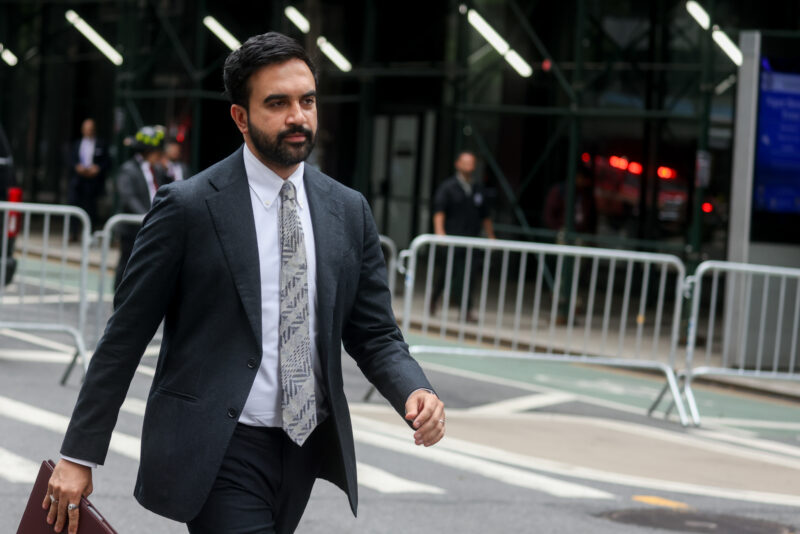
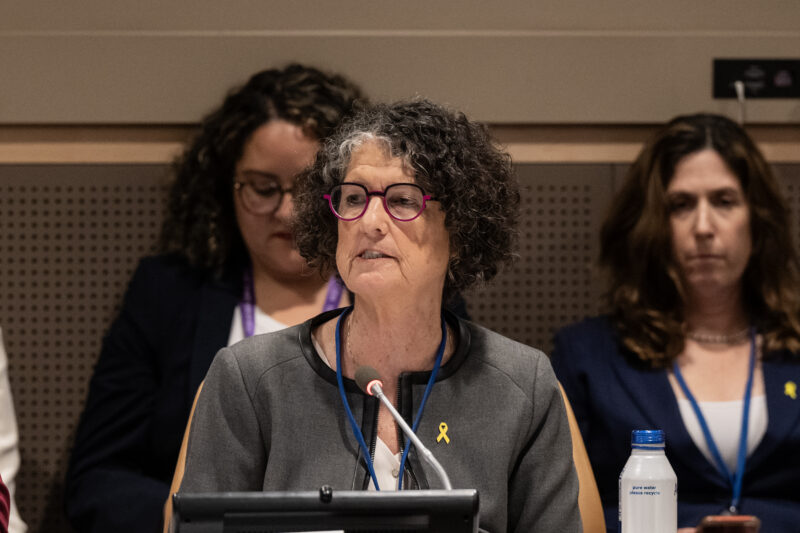
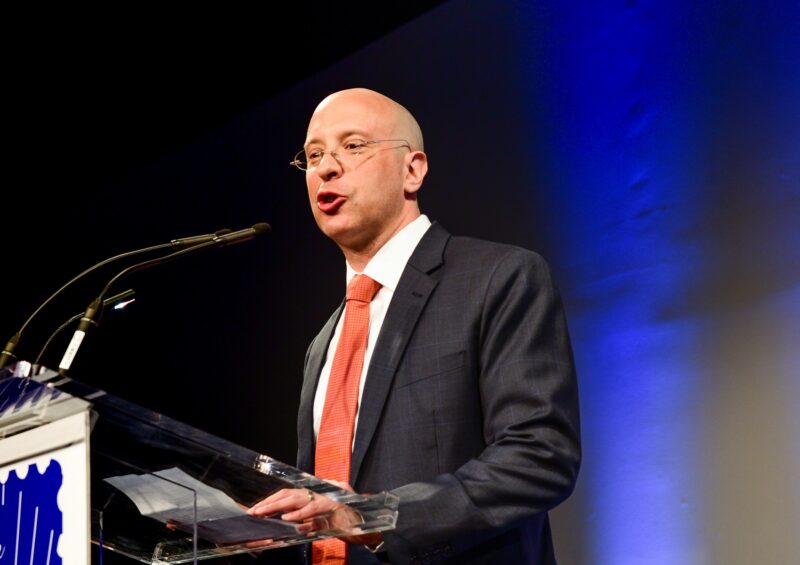
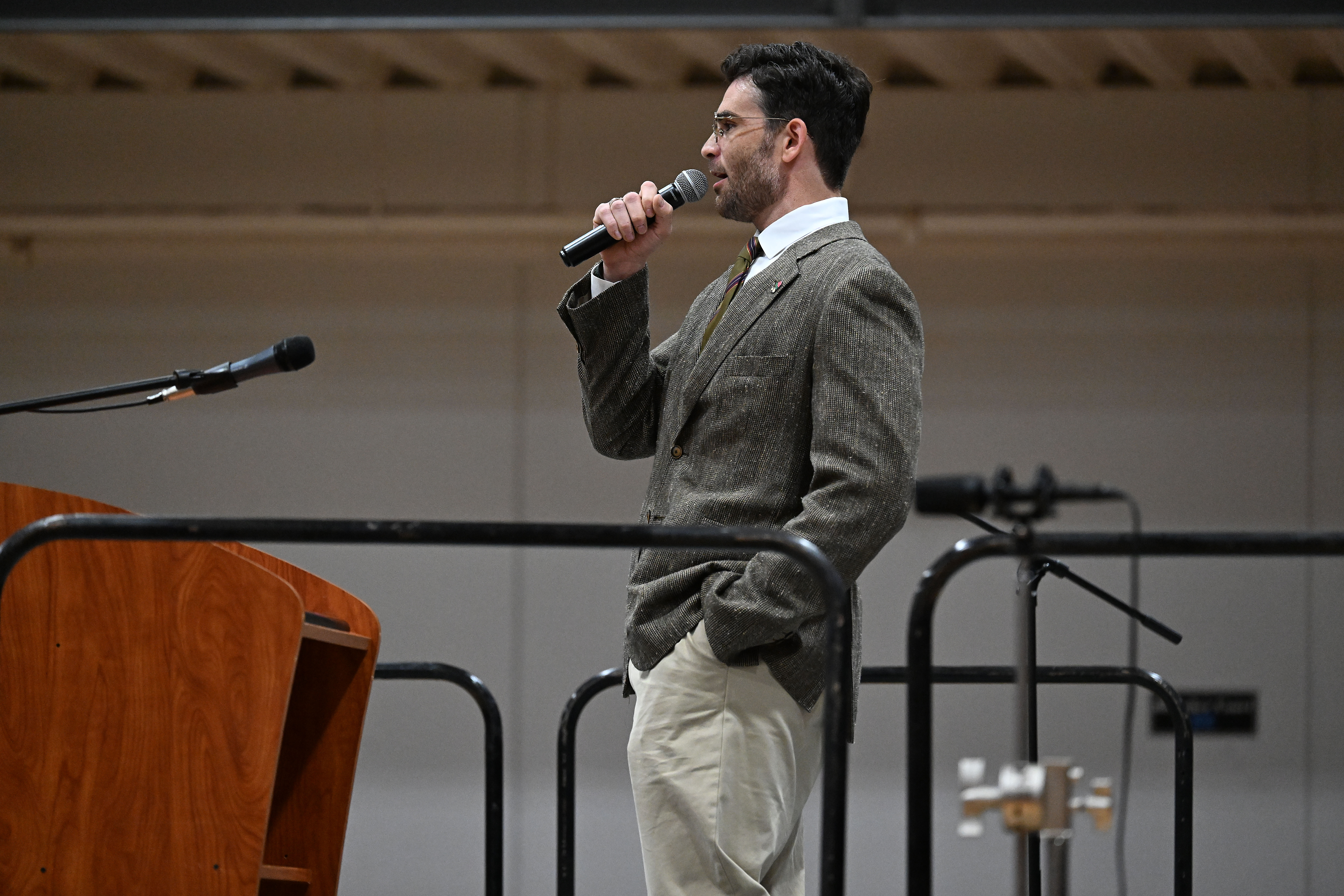
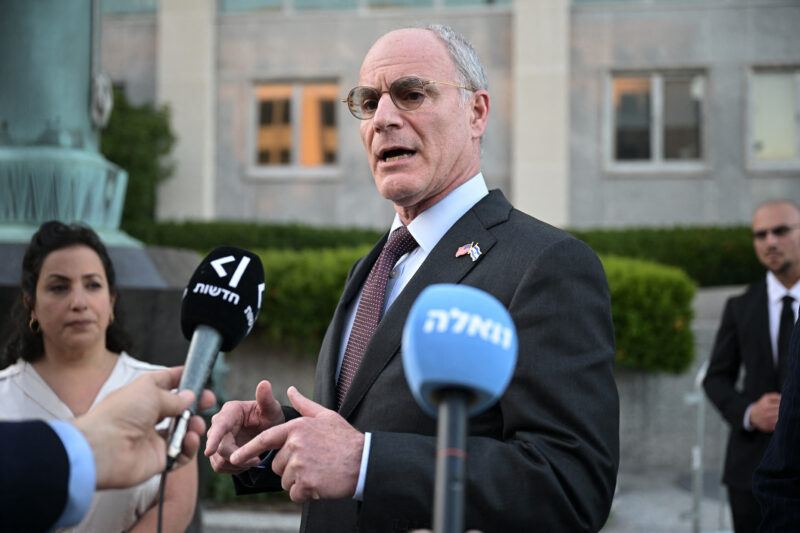
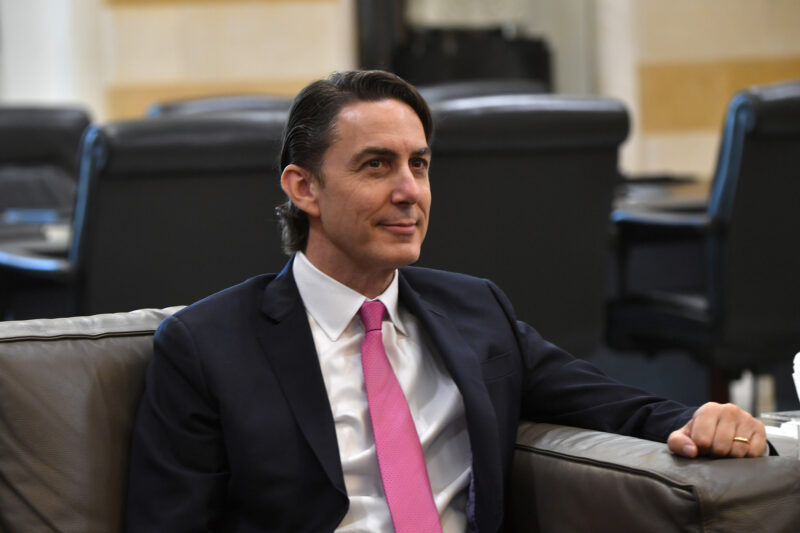
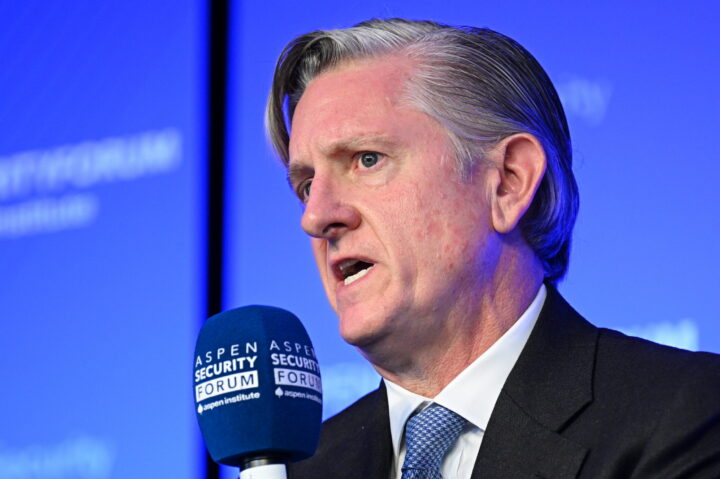
Robert Greenway speaks at Aspen Security Forum, July 17, 2026.


 Add JewishInsider on Google
ASPEN, Colo. — Robert Greenway, who led the Middle East and North Africa portfolio on the National Security Council during President Donald Trump’s first administration, predicted to Jewish Insider in an interview last month that the Iranian regime would not “make it” to the end of Trump’s time in office.
Greenway’s comments came amid the resumption of hostilities between the U.S. and Iran in late July, following the collapse of the countries’ memorandum of understanding, prior to the latest pause in U.S. strikes.
“We’ve really put ourselves in a position where we’ve got massive leverage. Their economy is virtually non-existent. I think it’s dead. We’re just waiting for the funeral, I think their political leadership is in turmoil,” Greenway said in an interview on the sidelines of the Aspen Security Forum. “The military has been decimated, and very little capacity remains to threaten the United States and our interests. That’s the reality of it. Despite claims to the contrary — those are not serious claims. They’re not supported by the facts.”
Greenway said that the administration’s military success had allowed it to “indulge a potential diplomatic path” that it knew was “unlikely” to actually succeed.
After the war, Greenway said that the U.S.’ regional approach should include working to contain Iran, building on the burgeoning regional security architecture developed with other Middle East allies and expanding the Abraham Accords. He was bullish about the chances for expanded normalization in spite of the apparent obstacles created by the wars in Gaza and Iran.
“The destruction [and] the attrition [in] Iran lowers the price of admission” for the Abraham Accords, Greenway said. “The math equation works here because we’ve reduced the Iranian threat. So there isn’t a massive requirement for us to provide enormous capabilities” to Arab states as a price for normalization.
Greenway was involved in negotiating the Abraham Accords during Trump’s first administration and continued to work to promote normalization after leaving the administration, first as the executive director of the Abraham Accords Peace Institute and later as the director of the Allison Center for National Security at the Heritage Foundation.
“Getting Saudi Arabia and the other states integrated into the region with Israel and expanding the accords is different now than it was a year or four years ago,” Greenway continued. “But it is still, I think, practical, necessary and achievable.”
He was dismissive of Saudi statements that the kingdom intends to condition normalization on a path to a two-state solution, arguing that such statements are a “public rhetorical mechanism that serves a purpose” but won’t be enforced in practice.
Greenway was a member of the Heritage Foundation when the group issued a report last year — which was controversial at the time — calling for the gradual phasing out of U.S. military aid to Israel. In the months since, the concept has been endorsed by Israeli Prime Minister Benjamin Netanyahu and some American supporters of Israel, and most observers expect that a drawdown of direct financial support will be a component of the next U.S.-Israel memorandum of understanding.
He said that phasing out U.S. aid would insulate Israel from American attempts to exert leverage over Jerusalem, such as that undertaken by the Biden administration. He said that the threat of growing Democratic shifts against Israel are a key reason for the U.S. to work to ensure that Israel no longer needs aid.
“Let’s improve Israel’s economy, let’s improve the trade that exists between our two countries, the security cooperation that exists between our two countries and our industries, and let’s improve Israel’s relationship to its neighbors, and if we can, reduce the threat,” Greenway said of the path to phasing out aid.
But he also said that aid should only be phased out “if Israel was in a financial position to do it, and its security relative to its neighbors was increased.”
He argued that Israel “doesn’t want” the U.S. involved in its relations with the Palestinians. Instead, he said the U.S. can best help Israel through economic ties and working to broker relationships with its neighbors, things Israel “can’t do … for itself.”
Greenway — as a Trump ally — was something of an outlier at the Aspen conference, which has generally attracted more traditional internationalist voices on the left and right. He said he wanted to urge the attendees to judge Trump and his administration by their results, rather than by rhetoric.
He pointed to the administration’s policy on Russia as one example. He argued that, while Trump has been accused of “coddling” Russia, he’s managed to severely damage Russia’s economy as well as press European countries to curtail their energy purchases that had been fueling Russia’s war machine.
“That actually, concrete, matters, right? And again, if you’re using a different lens and arbiter to look at how policies actually succeed or prevail or not, you can get to dangerous places,” Greenway said.
Greenway was also involved in crafting the Project Esther antisemitism strategy at the Heritage Foundation. Asked about how to avoid the encroachment of antisemitism on the right, Greenway pointed back to that strategy, and argued that Republicans have been more successful in fighting antisemitism in their party than Democrats.
“Republicans aren’t electing high officials that hold antisemitic principles and anti-Israel positions,” Greenway said. “I can’t say the same for the Democratic Party. … You cannot, as a Republican, stand up and make antisemitic comments and expect to survive, much less win an election or even become a candidate representing the party. It just isn’t going to happen.”
But he also said that there is a “very real struggle” to resist those trends and the problem of growing youth antisemitism crosses party lines, a phenomenon he blamed on conservatives “losing control of curricula and institutions and education.”
He said conservatives should work to reform educational systems and have zero tolerance for antisemitism.
More Stories
HATE MAIL
Son of GOP challenger to Gov. Wes Moore called Jews ‘pedophiles’ and ‘Satan worshipping scum’
speaking out
In open letter, dozens of retired U.S. military leaders reject genocide allegations against Israel

EXCLUSIVE
Bipartisan House resolution honors pilot, passengers who stopped FlyDubai hijacking

MINORITY PROTECTIONS
House Democrats urge Rubio to respond to Turkey’s crackdown on LGBTQ community
OBAMA BOOST
Obama to campaign with Abdul El-Sayed at rally with Michigan Dems
TERROR UPDATE
Netanyahu says FlyDubai Omani co-pilot underwent ‘Islamist radical indoctrination’
Please log in if you already have a subscription, or subscribe to access the latest updates.
 Continue with Google
 Continue with Apple