








































Bernie Sanders’ 2020 Jewish liaison says his old boss is promoting antisemitism
Joel Rubin: Sanders has endorsed ‘the most categorically anti-Israel, antisemitic candidates that we've seen in a generation, if ever’
Scott Olson/Getty Images
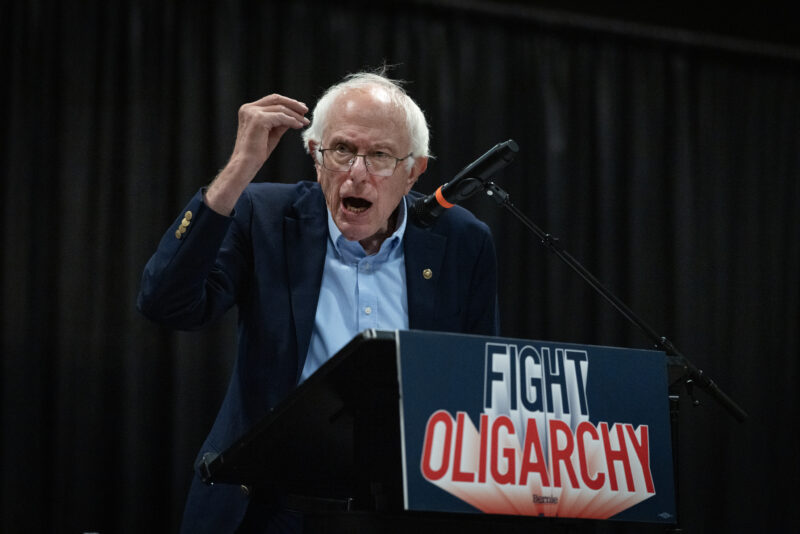
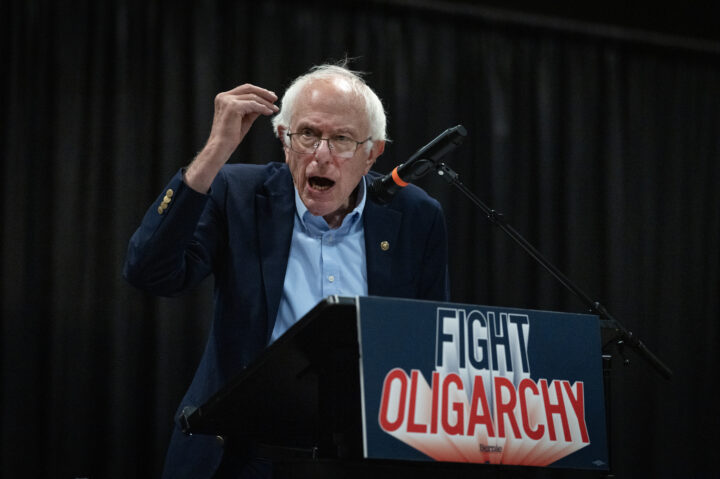
Sen. Bernie Sanders (I-VT) speaks to guests during the first stop on his "Fighting Oligarchy" tour, Midwest swing, at the RiverCenter on August 22, 2025 in Davenport, Iowa.


 Add JewishInsider on Google
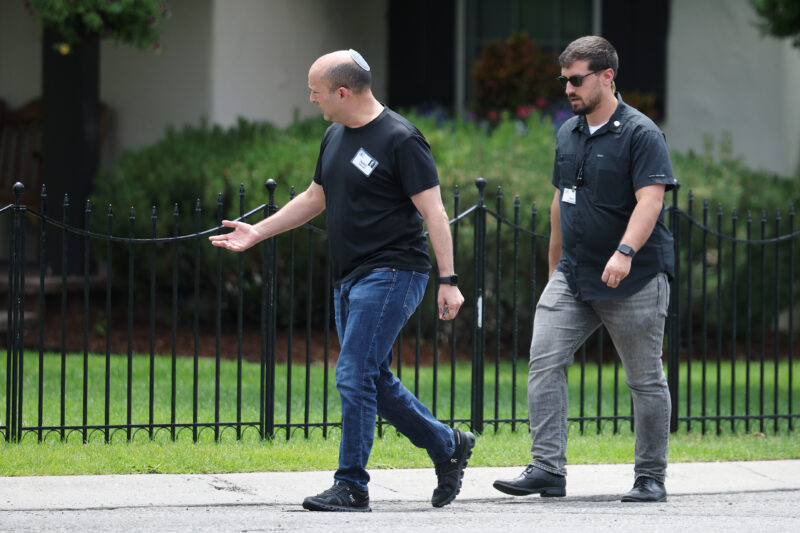
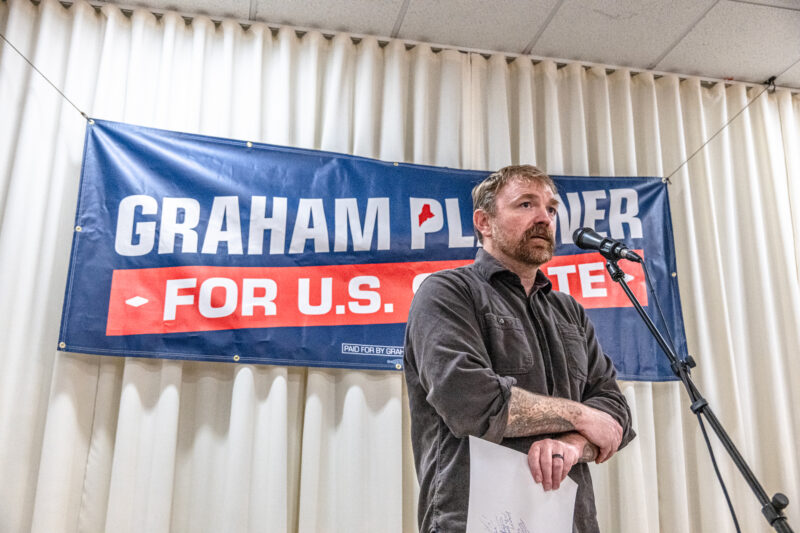
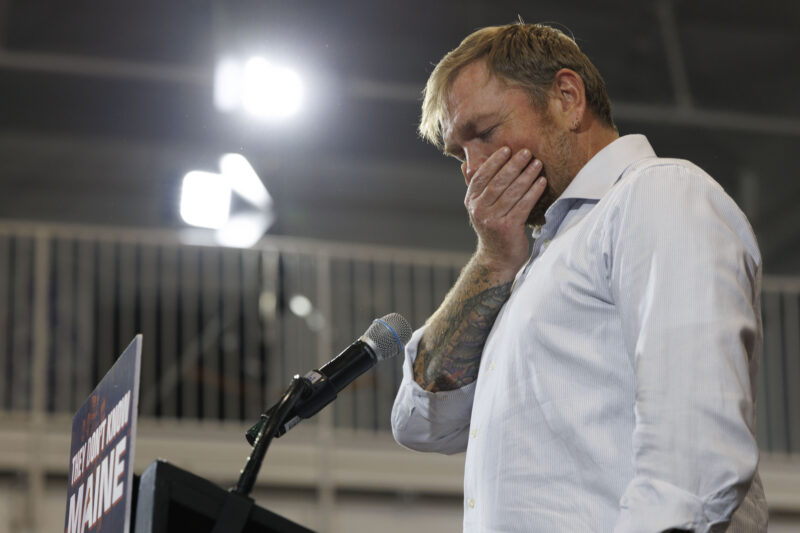
ASPEN, Colo. — Joel Rubin, a former State Department official who led Jewish outreach for Sen. Bernie Sanders’ (I-VT) 2020 presidential campaign, is now excoriating his former boss and the movement he has built for elevating stridently anti-Israel candidates — most notably former Maine Senate candidate Graham Platner.
The anti-Israel and antisemitic wave that’s taken hold on the left as a result of the efforts of Sanders and his allies, Rubin said, is bad for the Jewish community and politically unwise for the Democratic Party and for the U.S.’ own strategic interests.
“I think what Sanders and the Sanders operation have done is shove into our system the most categorically anti-Israel, antisemitic candidates that we’ve seen in a generation — if ever, certainly within the Democratic Party — and it’s by design,” Rubin said in an interview with Jewish Insider last week on the sidelines of the Aspen Security Forum. “It’s not by accident, and it’s very disruptive intentionally. The goal is to undermine Democratic unity and even rationality on Israel at this stage.”
He said that Sanders and his allies have directed anger and frustration toward Israel into a “highly unproductive debate about whether or not Israel should exist and whether or not we should support it or have any relationship” — rather than a “constructive” discussion of how the U.S. can work to resolve issues with a longtime ally and partner that plays an important role in American national security.
Sanders, Rubin said, has become an “outright hostile actor.”
Sanders did not respond to a request for comment.
Rubin has been particularly critical of Sanders and progressive strategists for the “creation” and promotion of Platner, whom Rubin called a manufactured “fake test tube [candidate]” out of “central casting for the left.”
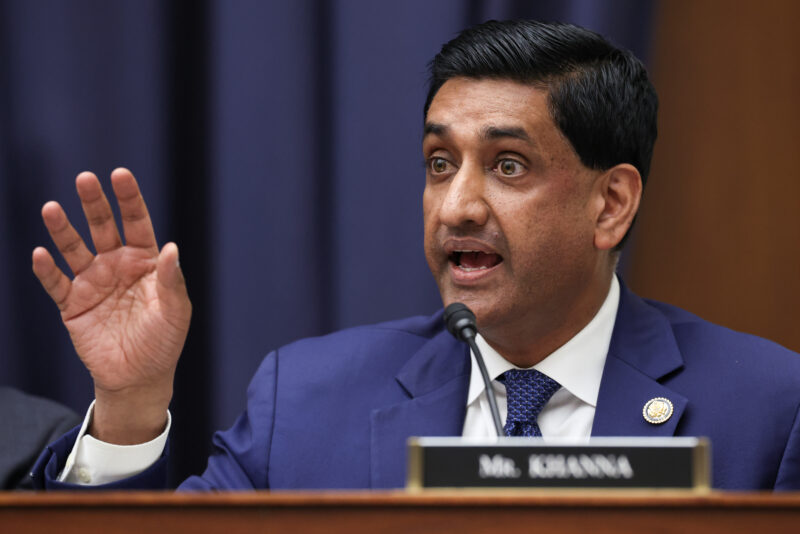
He said that he’s angry with Sanders, as well as other Platner backers including Rep. Ro Khanna (D-CA) and Sen. Chris Van Hollen (D-MD), for continuing to promote Platner even through a litany of controversies, starting with his Nazi tattoo.
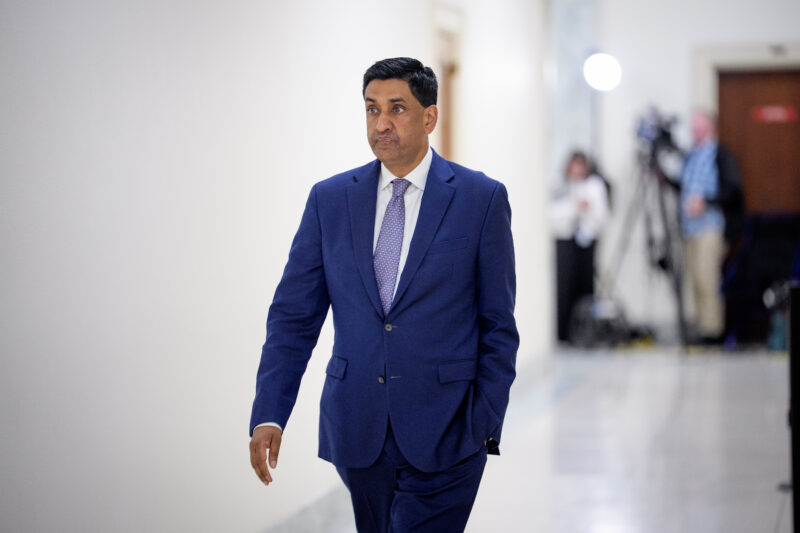
Khanna declined to comment.
Rubin said Sanders and his allies, and the candidates they have promoted, have taken a similar approach in campaigns around the country, counting on a backlash toward Israel and the pro-Israel Jewish community to launch them into office.
“I’m extremely disappointed. I feel like it violates the goals of promoting peace in the Middle East and the two-state solution, and I believe that it exacerbates the pain and distress that the American Jewish community is experiencing right now in Israel policy,” Rubin said. “I had higher hopes for a senator who is Jewish, and his team who knows very well what’s out there.”
He said that the American left is now following the model of former Labour party leader in Britain, Jeremy Corbyn — who faced a damning Equality and Human Rights Commission finding of antisemitism within the party under his leadership — and the movement is “no longer progressive — it’s something much darker.”
“It’s a hate-based narrative they’re promoting,” Rubin said. He said that Sanders and others on the left are on a mission to break the Democratic Party’s ties to the Jewish state and the U.S.-Israel relationship, with no argument for how that would produce a positive outcome.
When he worked for Sanders’ 2020 campaign, Rubin said that he was “given latitude to communicate messages about him and his views on Israel and peace and antisemitism that were positive,” with a focus on solving issues and creating solutions, while disassociating from “the most hateful voices.”
“That’s no longer the case. I don’t know what’s going on inside that operation. There is no line. There is no bottom. There is no low,” Rubin said. “And what it’s doing now is gutting American Jewish confidence in the Democratic Party, which is not a way to win elections, and it’s unethical as well, considering American Jews have been a bedrock community supporting the Democratic Party.”
He said the party should be pushing for policies that move toward peace, which is “not what these people are advocating for.” He said that the effort is also playing into the hands of conservatives, allowing them to frame themselves as the only ones taking action against antisemitism.
“We need leadership, and the progressive community needs to stop scapegoating Jews for all problems in the world,” Rubin said.
Progressives like congressional candidates Scott Wiener in California and Brad Lander in New York as well as Khanna are “desperately afraid of saying anything somewhat rational about Jews and Israel for fear of being attacked” — but are facing attacks anyway, discovering that it’s impossible to satisfy far-left voices while they are pushed to take ever more extreme positions.
Rubin argued that policymakers and advocacy groups like J Street, for which he was the founding political director, have a responsibility to lead and to set boundaries of what is and is not acceptable discourse on Israel, to stand up to the extremes and to strongly reject antisemitism. “Right now, nobody’s stepping up,” Rubin said.
J Street did not respond to a request for comment.
Rubin said that President Barack Obama, under whom he served, understood the importance of continuing the U.S.-Israel relationship and of treating pro-Israel American Jews as patriotic and leaders within the Democratic Party, even as he supported policies like diplomacy with Iran. He said that level of nuance and respect has vanished.
Rubin has never been aligned with AIPAC, and was critical of its strategies in this year’s primaries, but said that the left is targeting American Jews and supporters of Israel writ large through attacks on AIPAC — a phenomenon he has personally experienced. He compared it to the targeting and marginalization of Jews in a variety of professional sectors over the past three years.
“Any person who’s Jewish who expresses any level of support [for Israel], no matter where on the spectrum, is now a Jewish person who needs to be targeted for harassment, and is described as an AIPAC [supporter] trying to insidiously control the American political system for a foreign power,” Rubin said.
“The American Jewish community doesn’t deserve this,” Rubin continued. “The Jewish American community on the Democratic side has been a foundational funder, organizer, elected leader, organizational leader, powerful leading voice of infrastructure in the liberal openness of American life in the last 50, 60 years, and now we’re getting beaten up as if we were the opponent. It’s totally offensive and it’s politically dangerous for the Democratic Party to do that as well.”
Speaking to JI as the House was voting on an amendment to cut $3.3 billion in U.S. aid to Israel, Rubin warned of the “moral hazard” of the vote, arguing that many Democrats in safe blue seats would vote in favor of the amendment for political signaling purposes — “pandering to the base” that is “very much moving into a hostile position” — knowing that the amendment was going to fail.
Rubin predicted, correctly, that moderate Democrats in purple districts, “the majority-makers,” would take a more nuanced view focused on the impacts of the policy and oppose the amendment.
He praised House Minority Leader Hakeem Jeffries (D-NY) for opposing the amendment, but said that the Democratic Party is now in the midst of an “existential fight” over Israel as a result of Sanders and progressive activists making the Israeli-Palestinian conflict a “top-level issue” for the party and the left.
Rubin — who lives in Maryland — was also strongly critical of Van Hollen, saying the senator had “turned his back on the Maryland Jewish community,” despite its strong support for him in the past, particularly in his 2016 Senate race.
“The Jews of Montgomery County — our lane, our world, East Kensington — were his foundation of political and financial support,” Rubin said. “I can’t find a person who isn’t upset about what he’s done to turn his back on us.”
A Van Hollen spokesperson said in a statement, “Our office has heard from constituents from the Jewish community of Maryland who hold a wide array of views – including many that share the Senator’s concerns about the actions of the Netanyahu government. The Senator appreciates the diversity of opinions his constituents hold on these and other issues and will always respect and support their right to express their views and have a dialogue.”
Looking ahead to the 2028 election, Rubin said he’s seeing a shift in the Democratic Party. While candidates used to travel to Israel to show their support for Israel and the Jewish community, he said that candidates are going to Israel for “stunts” and for the purpose of “castigating the Israelis to curry favor with the base,” referring to recent visits by Khanna and former Chicago Mayor Rahm Emanuel, and predicted that other candidates would take a similar approach.
But he warned that this pandering to the Democratic base won’t win Democrats the presidency.
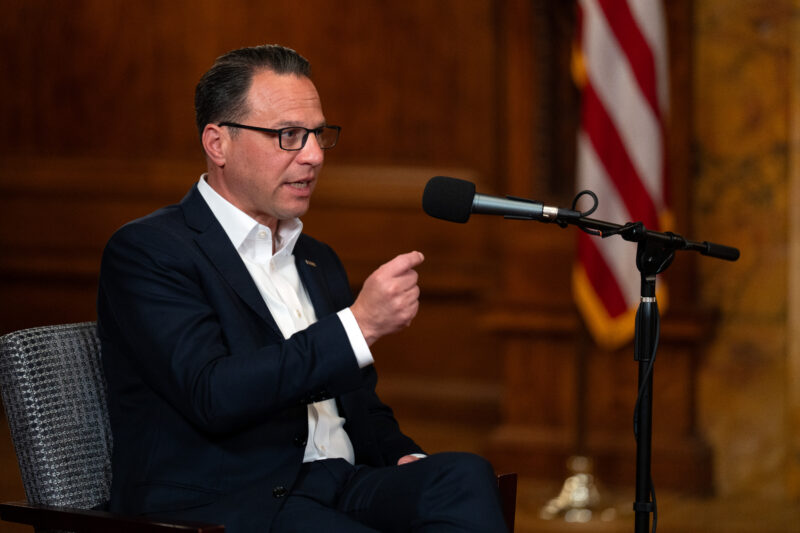
“If we have a candidate that only talks to the base of the party, we are not going to win the middle ground states in the upper Midwest,” Rubin said, arguing that a candidate like Pennsylvania Gov. Josh Shapiro, who has been criticized by the left for his support for Israel and Jewish identity, is far better positioned to win the White House.
Rubin also said that the U.S. should and must maintain its relationship with Israel going forward, calling it “our best ally in the Middle East” on a range of issues including fighting shared enemies, intelligence sharing and joint development of weapons systems — in addition to a range of economic and non-military benefits that are often overlooked.
He said that Democrats can be leaders in highlighting the non-military benefits of the relationship, from climate technology to a potential trade corridor through the Middle East and broader regional normalization and integration efforts.
He said that a Democratic president should harness those opportunities and move toward a similar relationship that the U.S. has with other allies like France or Japan, “a rich, diverse, legislatively supported, strong relationship that does include military-to-military cooperation, coordination and sales, but that is not the the whole relationship.”
But Rubin said that the left and the Democratic base don’t seem to have the appetite for any of that, and “that’s bad for the United States.”
More Stories
MICHIGAN MATTERS
Jewish leaders worried about Michigan’s prime position on Dems’ 2028 calendar

dinner dish
Trump says U.S. is still negotiating with Iran but Tehran isn’t ‘ready’ for a deal

U-TURN
Trump administration withdraws UPenn subpoena requesting information on Jewish staff

ON THE HILL
Senate rolls Iran sanctions extension into Russia sanctions bill
TEMPERATURE CHECK
Mamdani refuses to engage with calls to tone down Israel rhetoric after UWS stabbing

analysis
The left’s real test isn’t the primaries. It’s November
Please log in if you already have a subscription, or subscribe to access the latest updates.
 Continue with Google
 Continue with Apple