
































Jordanian foreign minister says deal with Iran should address proxies and regional aggression
Speaking at the Aspen Security Forum, Safadi said a deal must be 'comprehensive enough' to address Iran’s regional provocations and accused Netanyahu of lying about who is securing the Jordan-Israel border
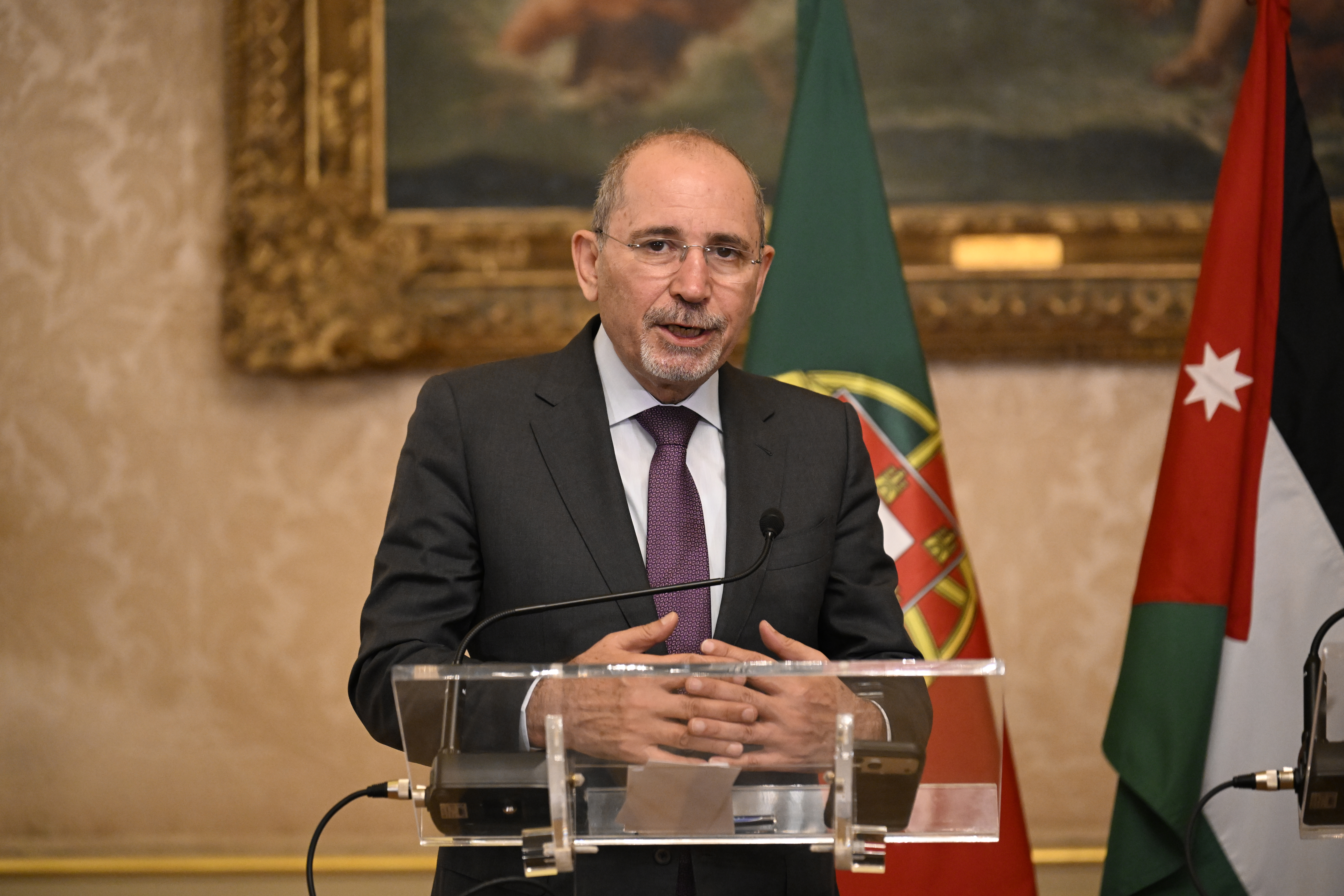
Horacio Villalobos#Corbis/Corbis via Getty Images
Jordan's Deputy Prime Minister and Minister of Foreign Affairs Ayman Safadi delivers remarks on May 18, 2026 in Lisbon, Portugal.


 Add JewishInsider on Google
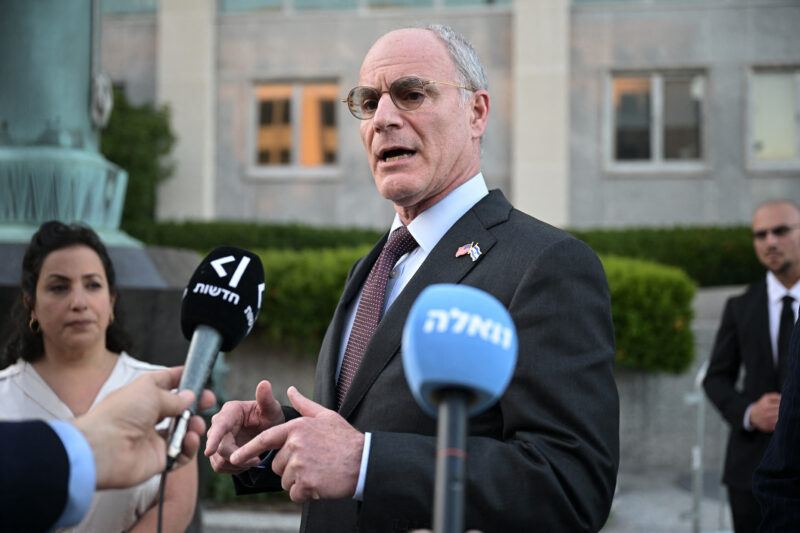
ASPEN, Colo. — Jordanian Deputy Prime Minister Ayman Safadi repeatedly emphasized on Wednesday that any deal with Iran should be comprehensive and ensure an end to Iran’s support for proxy groups and confront its efforts to destabilize the region.
The position suggests concern in the Arab world that a U.S. deal with Iran would not cover the regime’s long-running regional provocations — a concern Arab partners similarly raised about former President Barack Obama’s nuclear deal with Iran.
“All of us in the region have always wanted good relations with Iran, but we said in order for those good relations to be had, Iran’s interventionism in the region, its meddling in the affairs of the area, non-respect for sovereignty of states must end,” Safadi, who also serves as Jordan’s foreign minister, said at the Aspen Security Forum. “Let’s put all those issues on the table and hopefully come up with a deal that will address all sorts of tension and allow for the region to enjoy the peace and stability that we deserve.”
Safadi emphasized that both Iran’s nuclear program and reopening the Strait of Hormuz are important, but that a deal also must address “other aspects that cause tension in the region,” including Iran’s proxies and regional aggression, and must be “comprehensive enough to make sure that we don’t find ourselves in the same place that we have been for years.”
Safadi also criticized Iran for closing the Strait of Hormuz and for retaliating against Jordan and Gulf states for U.S. and Israeli strikes on Iran.
He accused Israeli Prime Minister Benjamin Netanyahu of lying about the situation along the border between Jordan and Israel — asserting that Jordan, rather than Israel, is carrying the brunt of securing that border, and that much of the smuggling is coming from Israel into Jordan rather than the other way around.
He also blamed Israel for “manufactur[ing] unreal threats” in order to perpetuate an unproductive “strategy of perpetual conflict.”
Safadi criticized Israeli policy and activities in the West Bank, which he said are “undermining our objective of achieving a just and lasting peace” for both Israelis and Palestinians, and amount to a policy of annexation and encroachment on Muslim and Christian holy sites.
He also urged Israel against undermining a two-state solution without presenting a viable alternative.
“If you undermine the two-state solution, then where do you go from here? What are you going to do with 5 million Palestinians who live in Gaza and the West Bank?” Safadi said. “The two-state solution is the only path to that just and lasting future. The Israeli government has completely refused that. What we say is, ‘Okay, … what do you want? Put that plan on the table. … Tell us what is your alternative to that.’ And you hear nothing.”
Safadi further warned that a flare-up in violence in the West Bank would undermine efforts to restore peace in Gaza. He said that spreading hate or antagonism on either side is unproductive and, at some point, “you can’t walk back if you cross a certain threshold.”
In Gaza, he called for the implementation of the U.S.-backed 20 point peace plan and lamented the delays on numerous fronts, also accusing Israel of blocking aid from Jordan from flowing into Gaza.
Safadi also called for an end to “power politics” in Lebanon — referring to the continued IDF presence — while expressing support for a long-term strategy to ensure Lebanese sovereignty and monopoly on arms. He argued that a military option alone for disarming Hezbollah is not viable, and that there is no short-term answer for restoring full Lebanese government control.
“I don’t believe that the military option should be on the table because it will only lead to the destruction of the country,” Safadi said, calling instead for a comprehensive social, economic and political strategy. “We have to have a comprehensive strategy that must be realistic, that must take into account what can and cannot be done, that must factor in what is the price of one option over the other, and obviously none of us want Lebanon to go into civil war.”
More Stories

IN THE CROSSHAIRS
Posters target University of Oregon Hillel executive director as ‘enemy of the people’

Daylight Between Them
Trump, Cotton feud over daylight saving time legislation

Life after captivity
The Siegels lost their home and community on Oct. 7. Now they’re finding their way forward

EXCLUSIVE
Bipartisan House resolution honors pilot, passengers who stopped FlyDubai hijacking
Mayor Unmoved
Mamdani brushes off pro-Hamas heckling at Oct. 7 vigil

BACK FROM THE GULF
Sen. Murphy accuses admin of ‘active cover-up’ of Iran war, vows to leverage funding to end war
Please log in if you already have a subscription, or subscribe to access the latest updates.
 Continue with Google
 Continue with Apple