






























































Senate defense bill calls for strict new conditions on funding for Lebanese Armed Forces
The proposed restrictions come after top Senate lawmakers publicly expressed frustration in recent months with the LAF’s failure to take concrete steps to fully disarm Hezbollah
MAHMOUD ZAYYAT / AFP via Getty Images
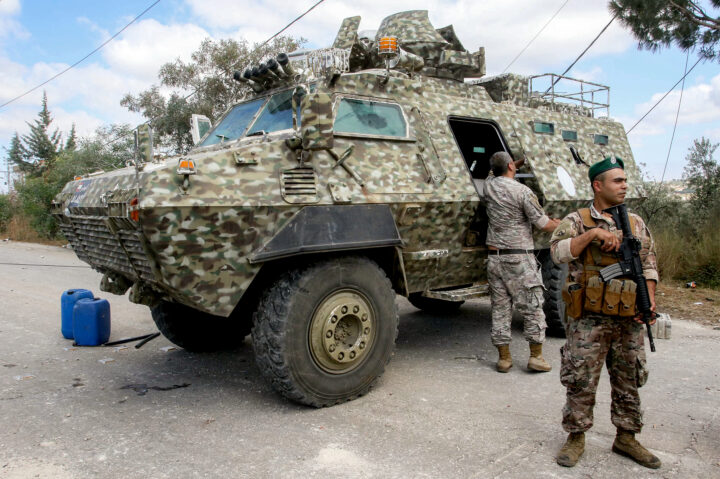
Lebanese army forces set up a checkpoint at the entrance of the village of Ghandourieh in southern Lebanon on June 15, 2026, preventing people from crossing towards villages the Israeli military is believed to have deployed.


 Add JewishInsider on Google
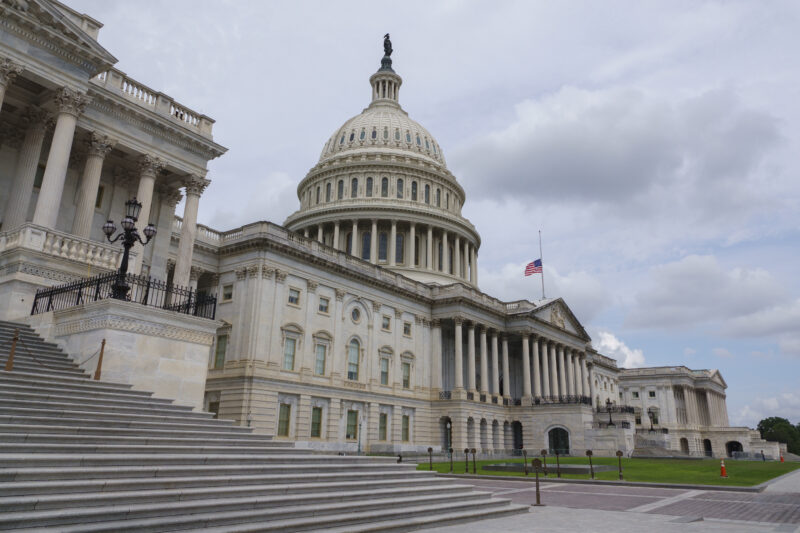
The Senate’s version of the 2027 National Defense Authorization Act proposes sweeping new conditions on U.S. support for the Lebanese Armed Forces. The proposed restrictions come after top Senate lawmakers publicly expressed frustration in recent months with the LAF’s failure to take concrete steps to fully disarm Hezbollah, and argued that the U.S. should not provide unconditional funding for the LAF.
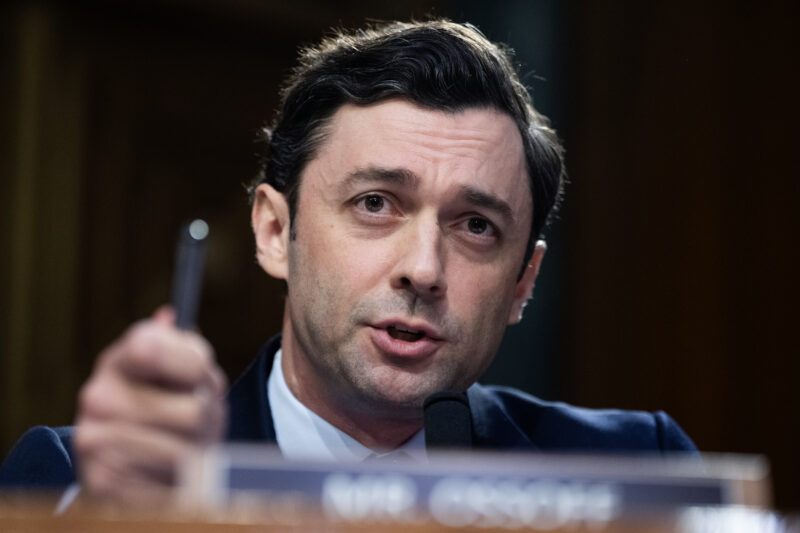
Sen. Roger Wicker (R-MS), the chair of the Armed Services Committee, which produces the NDAA, said in late April that “Congress should not support the LAF unless it acts to disarm Hezbollah completely — and immediately.”
Sen. Jim Risch (R-ID), who chairs the Foreign Relations Committee, echoed Wicker, adding that it was “well past time for the LAF to take tangible action to fully disarm Hezbollah and for the Lebanese government to follow through on long-promised economic reform. The era of complacency and unconditional bailouts must come to an end.”
Support for the LAF, which would be limited to no more than $36 million, is conditioned on the LAF’s work to disarm Hezbollah. No more than 5% of that funding can be provided until the administration certifies to Congress that Lebanon has outlawed Hezbollah’s activities and that the LAF is actively working to disarm Hezbollah, prevent the Iranian-backed group’s rearmament and prevent attacks on Lebanon’s neighbors — including Israel.
The administration would then be required to re-certify every 90 days to Congress that the LAF is continuing to act against Hezbollah to the full extent of its capabilities, with a mandatory suspension of aid if it cannot meet that certification.
The quarterly reports would also include specific data on the number of weapons seized from Hezbollah and other metrics regarding the LAF’s efforts to degrade Hezbollah, as well as the makeup and capacities of the LAF forces.
President Donald Trump on Tuesday publicly condemned Israel’s operations against Hezbollah, suggesting — in a move that baffled both lawmakers and experts — that Syria’s military could instead be called upon to deal with the Hezbollah threat.
The NDAA would block U.S. counterterrorism assistance to Syria until the administration can certify the Syrian government is taking action to demobilize, disarm and monitor foreign fighters and jihadists in the country, implement a system to “fairly integrate” the Kurdish-led Syrian Democratic Forces into the Syrian military and prevent attacks on minorities including Kurds and Druze.
The provision comes amid continued scrutiny on Capitol Hill of the Syrian government’s efforts to protect minorities after the U.S. withdrew sanctions on the Syrian government.
As previously reported, the NDAA, which was finalized last week but not released in full until Tuesday, includes a version of the FUTURES Act, which has become a hot-button issue in the context of the House version of the NDAA, seeking to centralize and expand existing defense collaboration efforts between the two partners.
But it also includes a second provision on joint development, requesting the administration provide Congress with a plan to establish a partnership between the U.S. and Israel on defense industrial priorities, with the goal of supporting the defense industrial bases in both countries, providing opportunities for industries in both countries to cooperate and collaborate and supporting defense development and startups in both countries.
The legislation additionally proposes boosting funding for cooperation on subterranean operations — previously billed as counter-tunnelling efforts — from $80 million to $100 million, and counter-drone programs from $70 million to $100 million. The bill also authorizes $1 million for cybersecurity cooperation with Israel.
That funding would still have to be approved separately in the appropriations process later this year.
The NDAA also includes two different provisions to enhance defense cooperation with both Israel and other Middle East allies.
One, the Abraham Accords Defense Cooperation Initiative, would establish a program to expand defense cooperation between the U.S. and the Abraham countries, to address various threats in the region. It encourages each country in the region to provide matching funds for the program.
The other, which pulls language from the OASIS in the Middle East Act, aims to develop a coordinated air- and missile-defense acquisition strategy alongside Israel, Abraham Accords members and other Middle East allies to ensure adequate resources to protect the U.S. and its allies in the event of future conflicts.
The provision further requires the administration to explain its work to replenish interceptor stockpiles that have reportedly been severely degraded in the war, assess the possibility for co-production with various Middle East allies of interceptor systems, consider an creating an air-defense stockpile in the Middle East and improve joint development and acquisition of low-cost interceptor options.
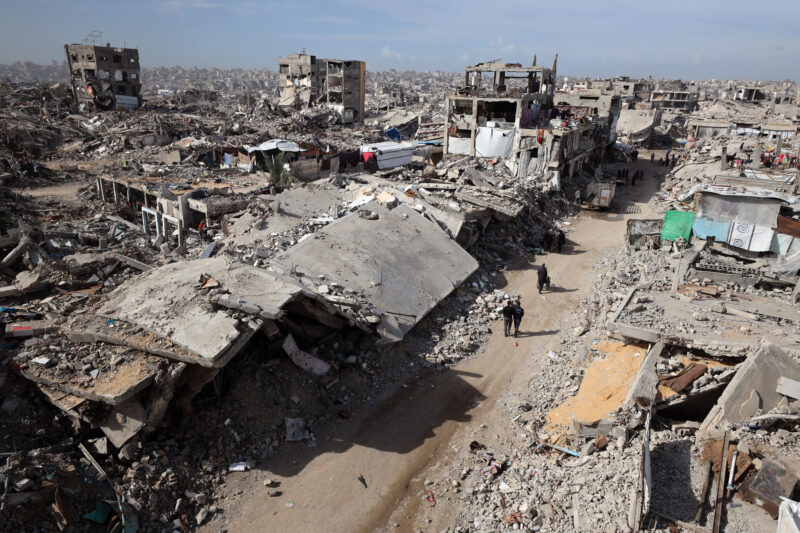
The NDAA, which provides formal congressional authorization for the Civil Military Cooperation Center overseeing the implementation of the ceasefire plan in Gaza, requires the administration to provide Congress with information on plans for and actual deployment of the International Security Force in Gaza and its involvement in disarming Hamas, as well as on granular, specific details on the amount and types of aid moving into Gaza.
Plans for the ISF have largely failed to materialize, and the force has not yet deployed inside Gaza, where efforts to disarm Hamas have stalled in light of the terrorist group’s intransigence.
More Stories

RIPPLE EFFECT
New York’s suburban Dems face a Mamdani dilemma

PRAIRIE STATE PRIORITIES
Illinois Democrats spend big for anti-Israel candidate running for state Senate
HILLTOP FORECAST
Democratic foreign policy veterans preview party’s shifts on Middle East policy

UNLOCKING THE KEYSTONE
RJC drops $400,000 to boost Brian Fitzpatrick in Pennsylvania swing district

STUDENT SAFETY
Federal civil rights complaint accuses Montgomery County, Md., schools of ignoring antisemitic harassment

EXCLUSIVE
Jewish groups urge Treasury, State to clarify response to European settlement sanctions
Please log in if you already have a subscription, or subscribe to access the latest updates.
 Continue with Google
 Continue with Apple