





























































Israel ‘will be a central arena’ of potential U.S.-Iran conflict, IDF general says
The U.S. is moving additional military assets to the region while Israeli Home Front Command is preparing civilian infrastructure

IDF
The site of an Iranian ballistic missile strike in Beersheba, Israel, June 20th, 2025.


 Add JewishInsider on Google
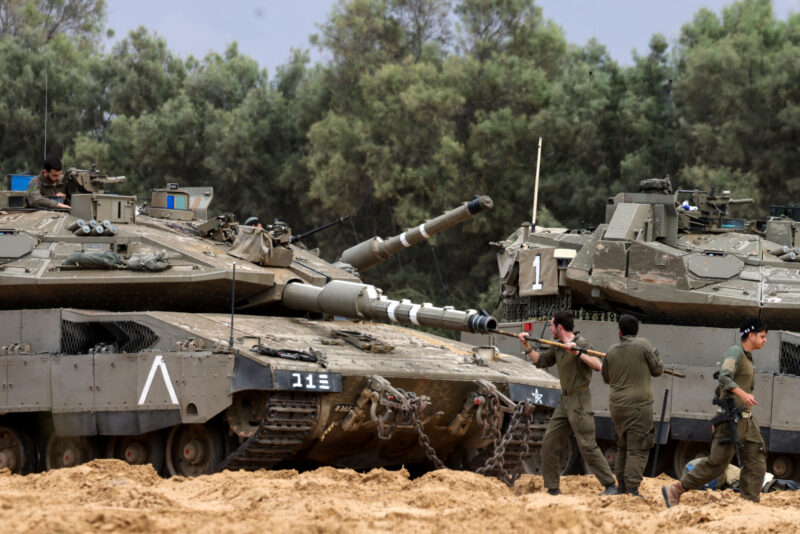
Amid signals and reports that the U.S. is preparing for military action against Iran in the coming days, the IDF has been preparing Israeli civilian infrastructure to be a central target of the Islamic Republic’s retaliation.
Home Front Command chief Maj.-Gen. Shay Klapper told the Knesset Foreign Affairs and Defense Committee on Wednesday that “the Home Front Command will be a central arena in relevant operational scenarios and is a significant component of Israeli society’s resilience and ability to save lives.”
Klapper said that the Home Front Command has been working to improve preparedness since Operation Rising Lion, the 12-day war between Israel and Iran last June, adding that “the IDF is prepared for every scenario.”
Committee Chairman Boaz Bismuth (Likud) said that in Israel, “the homefront is the front, and the front is the homefront. Wars are won on the homefront, too.”
“These are challenging days,” Bismuth added. “There is not one [Israeli] who doesn’t ask himself several times a day when there will be a campaign against Iran. The entire population and homefront are preparing.”
The Knesset committee meeting was scheduled in advance of Tuesday’s meeting in Geneva between Iranian and American negotiators. Iranian Foreign Minister Abbas Araghchi told state TV after the meeting that the sides agreed to exchange draft agreements at the next round of talks. American officials told Axios that Iran must submit its detailed draft in two weeks; in 2025, amid the war between Israel and Iran, Trump gave Tehran two weeks to enter talks, and when rebuffed, launched strikes targeting the Islamic Republic’s nuclear facilities three days later.
Meanwhile, the U.S. and Israel appear to be preparing to launch a campaign against Iran, with the USS Abraham Lincoln aircraft carrier and a strike group in the region, and the USS Gerald R. Ford, another aircraft carrier, on the way. The USS Pinckney, a guided-missile destroyer, was also sent to CENTCOM’s area of responsibility, bringing the number of U.S. Navy vessels in the region to 12. In recent days, 50 American fighter jets have flown toward the Middle East, and over 150 military cargo flights have moved ammunition to the region. Earlier this week, Sen. Lindsey Graham (R-SC) said the U.S. is “on the verge of eliminating” the Iranian regime, within “weeks, not months.”
Homefront Preparedness Subcommittee Chairman Michel Buskila said that homefront preparedness “is the line of defense for Israeli civilians.”
“In a multi-front scenario, civilian resilience is an essential part of national resilience. Our responsibility is to ensure that the systems are prepared, that the alerts are precise, that local government are part of the coordination and the citizens of Israel know they have someone to count on.”
The committee meeting was closed to the media, but the committee released selected quotes and information from Klapper’s briefing.
A significant portion of the meeting was dedicated to talk of building protective rooms for Israelis who do not have them, such as those who live in homes built over 30 years ago, and much of Israel’s Bedouin population. Klapper said the goal is for there to be protective spaces for 100% of the population within a decade.
Klapper also reviewed the different kinds of alerts the Home Front Command uses, including outdoor sirens and an app.
More Stories

NOT ON BOARD
Lansing Mayor Andy Schor, a Jewish Democrat, says he’s not supporting El-Sayed

CAMPUS CHRONICLES
The freshmen on Oct. 7, 2023, who became Jewish leaders in the terror attacks’ aftermath

HATE MAIL
Son of GOP challenger to Gov. Wes Moore called Jews ‘pedophiles’ and ‘Satan worshipping scum’

CITY HALL CRITICISM
Mamdani’s Oct. 7 statement assailing ‘genocide in Gaza’ provokes outrage from Jewish groups

Doha’s Darling
Murphy, Qatar’s ‘reliable ally’ in the Senate, huddles with emir and chief Qatari negotiator in Doha
Daily Overtime
Nessel feels the heat over El-Sayed support
Please log in if you already have a subscription, or subscribe to access the latest updates.
 Continue with Google
 Continue with Apple