























Why Israel remains concerned about its border with Syria, as U.S. pushes for a deal
Since Syrian President Ahmad al-Sharaa toppled and replaced Assad, Israel has been extremely skeptical about the former leader of Syria’s branch of Al-Qaida
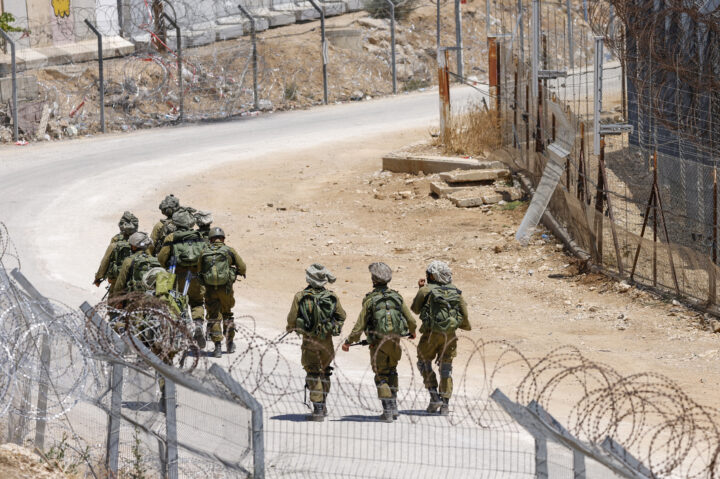
(Photo by JALAA MAREY/AFP via Getty Images)
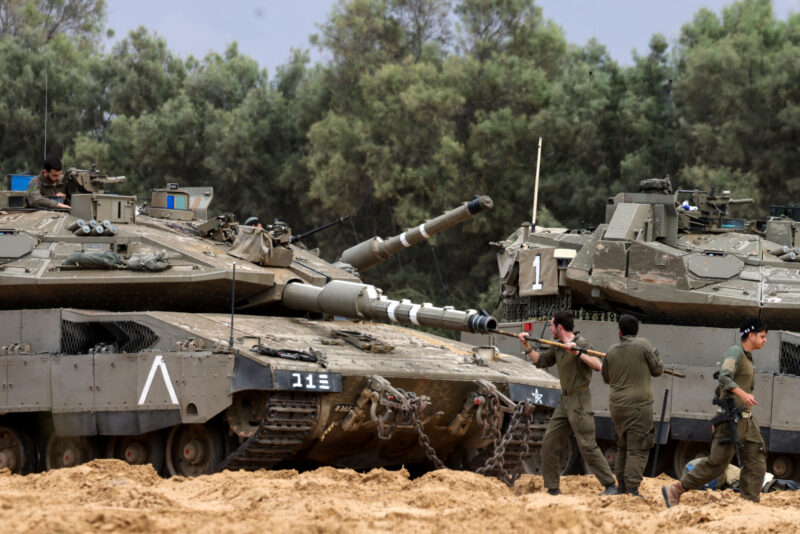
Israeli troops patrol the border fence with Syria near the Druze village of Majdal Shams in the Israel-annexed Golan Heights on July 23, 2025.


 Add JewishInsider on Google
Tensions escalated between Washington and Jerusalem this week over Israel’s handling of Syria and negotiations for a possible agreement to renew the 1974 ceasefire between the two neighboring countries, with adjustments.
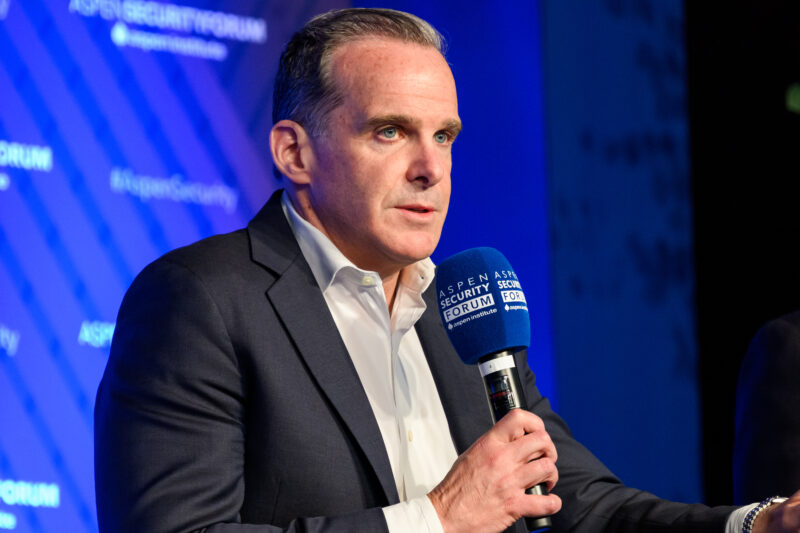
Speaking at The Jerusalem Post conference in Washington on Wednesday, U.S. Ambassador to Turkey Tom Barrack, who also serves as the Trump administration’s Syria envoy, said the time is ripe for Israel and Syria to reach an agreement: “It’s the easiest place to show the world a soft hand and bridge grievances.”
In Barrack’s telling, an agreement between Syria and Israel will only be possible with an immediate, complete Israeli withdrawal from the buffer zone between the countries. The IDF has held the 155-square-mile area since the fall of Syrian President Bashar Assad a year ago, and Israel has sought to withdraw incrementally and remain at the peak of Mount Hermon.
Instead, Barrack said, “Let’s not fight over geography. What we’re concerned about is we’re not going to let Oct. 7 happen ever again,” so the focus should be on demilitarizing the area south of Damascus. “Syria knows its future depends on a security and border agreement with Israel. Their incentive is non-aggressive toward Israel,” Barrack said. However, he added, “After Oct. 7, Israel doesn’t trust anybody. … The Syrians have been unbelievably cooperative.”
Israeli Foreign Minister Gideon Sa’ar, however, was skeptical in his remarks at the same event: “The gaps between us and Syria have widened. They have new demands. Of course, we want an agreement, but we are further from one now than we were a few weeks ago.”
Since Syrian President Ahmad al-Sharaa toppled and replaced Assad, Israel has been extremely skeptical about the former leader of Syria’s branch of Al-Qaida, whom Sa’ar and others have branded a “terrorist in a suit.” The concerns have not dissipated over the course of the last year, even as President Donald Trump embraced al-Sharaa as a “young, attractive guy” with a “tough past” and dropped sanctions, Europe moved towards lifting sanctions, as well, and Abraham Accords countries have accepted him.
“The train has left the station; the whole world accepts al-Sharaa as the legitimate leader of Syria and is ignoring his jihadi background as well as that of the people heading his military – but we can’t ignore it,” Sarit Zehavi, founder and president of the Alma Research and Education Center, which focuses on Israel’s north, told JI.
In late November, during an IDF raid on the town of Beit Jinn to arrest two Syrian terrorists, a firefight broke out, leaving 13 Syrians dead and six IDF soldiers injured.
In a celebration of a year since Assad’s fall, the Syrian Army paraded through the streets of Damascus, chanting “Gaza, Gaza, our rallying cry … From your blood I forge my ammunition.” Israel’s bellicose Diaspora Affairs Minister Amichai Chikli shared the video with the message: “War is inevitable.”
Zehavi quipped about the celebrations: “I’m not sleeping any better at night. The message is ‘we will save Syria from the Zionist occupation.’ A regime that wants peace doesn’t do these things, nor does a regime that is disconnecting itself from Islamism.”
Beyond the concerns about al-Sharaa’s jihadi past seeping into the present, Jerusalem is skeptical about the longevity of his regime and the stability of Syria as one, cohesive political entity.
Shira Efron, distinguished Israel policy chair and senior fellow at RAND, told JI that “the hilltops Israel is holding now in Syria, especially the Hermon, are really strategic, security-wise, and it doesn’t make sense to withdraw when you have a neighbor who is still unstable.”
Israel is also concerned about the Druze minority in Syria, which has close ties to Israeli Druze, who are an important political constituency and hold prominent positions in the Israeli security establishment. Israel has pledged to protect the Druze in Syria, and the IDF has acted to that end.
“The greater mindset in Israel post-Oct. 7 is that we messed up so badly reading the intentions of an adversary that we are not taking any chances,” Efron said. “We are preemptively taking out their capabilities because we cannot trust their intentions, let alone when we are talking about a controversial figure with a very complicated past – and that’s the understatement of the century.”
While Efron acknowledged that “Israel has valid concerns,” she warned that time is not on its side. She said that Israel may have missed an opportunity to use the leverage it had to reach better terms earlier this year, when al-Sharaa was more eager to reach an agreement, the West had not fully embraced him and Trump was not cracking jokes with him in the Oval Office.
Now, Zehavi said, “Israel thought it would be able to withdraw [from southern Syria] and stay in Hermon, widen the buffer zone and al-Sharaa doesn’t want either.”
That being said, Efron posited that Israel has room to maneuver within what appear to be the current parameters of the talks, including asking for American guarantees, negotiating timelines for withdrawal with stages conditioned on Damascus keeping its commitments to demilitarize southern Syria and demanding protections for the Druze.
Zehavi, however, said any agreement would be “with someone Israel can’t trust. It can only be based on guarantees. The worst-case scenario would be if, in the end, Syria is an Islamist state with Western support. That is what needs to be prevented.”
More broadly, Efron said, “it doesn’t make sense to get into battles with the Americans” or for Israel to “act like it’s being dragged kicking and screaming into agreements, like we forgot how to use the diplomacy muscle.” She was optimistic that an agreement could “pave the way to water cooperation and maybe further cooperation.”
More Stories
SPEAKING OUT
Jewish groups call for apology after educators asked to condemn Israel to attend Italy trip
PRESIDENTIAL ENDORSEMENT
Trump gives Netanyahu ‘complete and total endorsement’
analysis
Democrats hope to ride a historic Senate wave, but face several speed bumps
SECURITY SETBACK
Saudi Arabia postpones ‘Davos in the Desert’ until 2027 amid Houthi attacks
HILLTOP FORECAST
Democratic foreign policy veterans preview party’s shifts on Middle East policy
analysis
Playing to the cameras in the West Bank
Please log in if you already have a subscription, or subscribe to access the latest updates.
 Continue with Google
 Continue with Apple