


















































GOP Sen. Mike Rounds: ‘I’ll believe it when I actually see it happening’
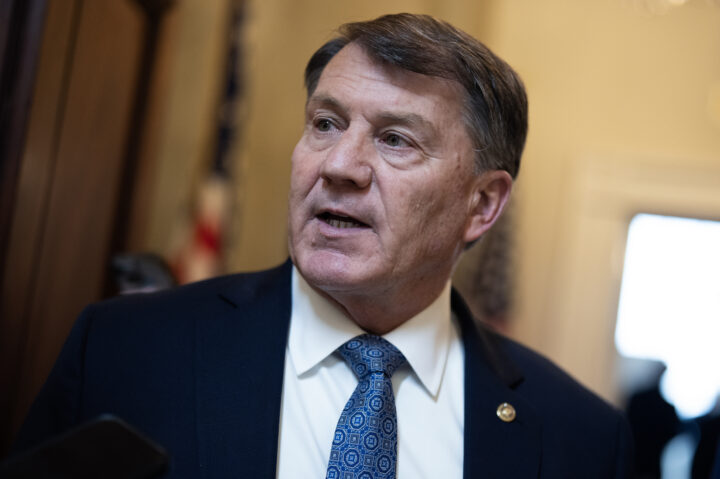
Tom Williams/CQ-Roll Call, Inc via Getty Images
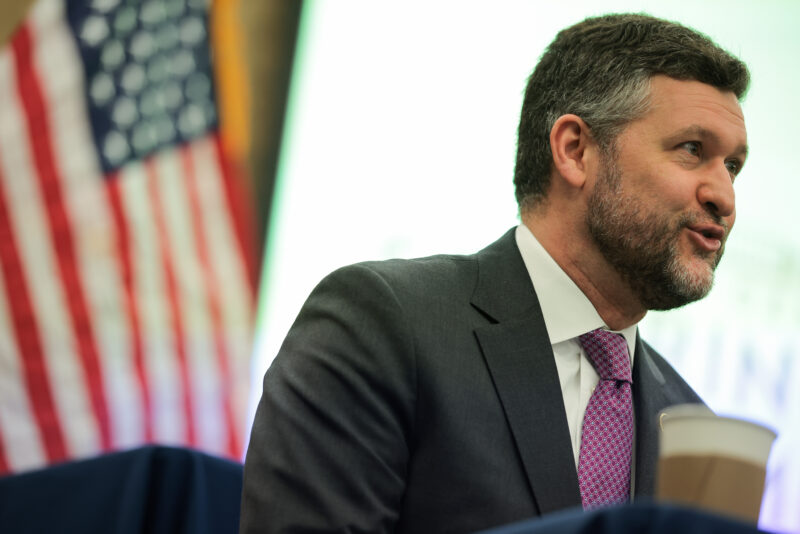
Sen. Mike Rounds (R-SD) talks with reporters in the U.S. Capitol on Tuesday, March 3, 2026.


 Add JewishInsider on Google
U.S. lawmakers expressed deep skepticism on Tuesday over the international Board of Peace’s newly announced Hamas disarmament framework, pointing to violations already taking place in Gaza and a lack of indications that Hamas is serious about honoring a deal as evidence that the ambitious peace proposal faces near-insurmountable hurdles.
The pushback comes less than a week after President Donald Trump announced that the Board of Peace had brokered an agreement calling for the “complete disarmament of Hamas and all other armed groups” in the enclave, at which point the IDF is expected to completely withdraw.
However, the agreement hit immediate turbulence over the weekend. Despite the plan calling for an immediate cessation of hostilities, the Israel Defense Forces carried out multiple strikes across Gaza. On Monday, Board of Peace High Representative Nickolay Mladenov held a “constructive and detailed” meeting in Jerusalem with Israeli Prime Minister Benjamin Netanyahu, requesting a full pause in military operations to allow disarmament efforts to begin.
Netanyahu said in a video statement on Tuesday that the U.S. “sent us a draft” of the agreement, but “we didn’t agree. It wasn’t our draft. We sent our responses.” He vowed that Israeli troops would not pull back from their current lines in Gaza until disarmament was complete.
Against the backdrop of hostilities and diplomatic friction, members of Congress across the aisle voiced serious doubts on Tuesday about the viability of the deal.
“There will be no real peace for Gaza or Israel as long as Hamas has weapons and is allowed to ruthlessly rule over innocent Palestinians,” Rep. Josh Gottheimer (D-NJ) told Jewish Insider. “I’m cautiously encouraged by this plan, but let’s not kid ourselves — Hamas has a long record of lying, and they’ve broken their word before, over and over. I’ll be watching every step of this until Hamas is fully disarmed.”
Sen. Richard Blumenthal (D-CT) was succinct in his assessment, noting that “it’s not really yet what I would call a deal,” given the resistance it has already faced.
Republicans also expressed skepticism that Hamas would live up to its end of the agreement.
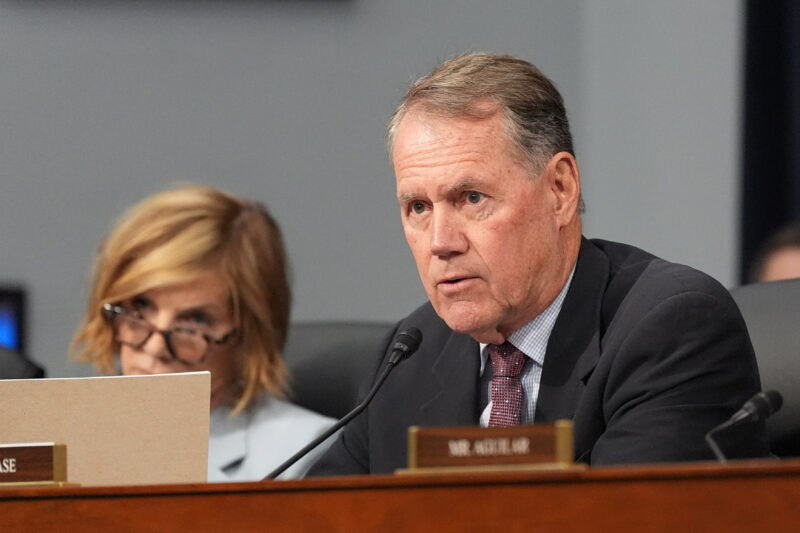
“I suspect that while this may have good intentions to it, I’ll believe it when I actually see it happening,” Sen. Mike Rounds (R-SD) told JI.
Sen. John Kennedy (R-LA), meanwhile, pointed the finger at international bodies and critics of Israel, arguing that enforcing Hamas’ disarmament will require real forces on the ground rather than unhelpful rhetoric from foreign observers.
“This plan will work, but first you’ve got to take their weapons, and they’re not going to just give up their weapons,” Kennedy said. “They’re going to say ‘Israel has to withdraw first, and then we’ll give up our weapons,’ and they won’t give up their weapons … My question is, where are all these other backseat drivers that have been criticizing Israel? Where are they? This is their chance for peace.”
“Other people in the world, including but not limited to the United Nations, who are preaching in Israel and in America about how we screwed up Gaza, they need to get off their ice-cold lazy butts and send some of their troops, along with Israeli troops, to disarm Hamas,” Kennedy added. “And they won’t do it. They just want to sit there and criticize us and the president.”
Officials and analysts warned that Hamas is seeking to cede administrative control of Gaza while retaining its weapons and remaining the dominant force in the enclave

Photo by Moiz Salhi/Anadolu via Getty Images
Hamas spokesperson Hazem Qassem and Director of the Government Media Office in Gaza Ismail Al-Thawabta deliver a press statement following the announcement that the head of the Government Emergency Committee had resigned and the committee had been dissolved as part of the transfer of governance in the Gaza Strip to the National Gaza Administration Committee, on July 6, 2026.
American and Israeli officials expressed skepticism on Monday that Hamas would follow through with its pledge to dissolve its governing body that has ruled Gaza for over two decades.
Hamas announced the dissolution of the “Emergency Committee,” the terrorist organization’s governing body, and the resignation of Mohammed al-Farra as the committee’s chief on Monday. The terrorist group said that it was prepared to transfer authority to the National Committee for the Administration of Gaza (NCAG), the technocratic committee established under President Donald Trump’s Gaza peace plan and overseen by the Trump administration’s Board of Peace.
The announcement did not address whether the terrorist group would disarm, a key facet of the Gaza peace plan. Hamas’ announcement came after the Board of Peace convened a series of meetings last week to advance plans for the NCAG to take over the governance of Gaza.
The Board of Peace said that it was withholding judgment on the announcement, instead vowing to assess Hamas’ “actions, not promises, to meet the critical needs of the people of Gaza.”
“Decisions must be comprehensive with respect to the requirements as set out in the Roadmap for advancing governance, security, and transition in Gaza,” the board said in a statement. “We look forward to the successful conclusion of discussions on this Roadmap, including on the implementation mechanisms necessary to enable the National Committee for the Administration of Gaza to assume full governing authority.”
The board’s statement also noted that the “core principle” of the ongoing peace efforts in Gaza “remains one authority, one law and one weapon,” and reiterated its position that Hamas must disarm. “A genuine transfer of authority must enable the NCAG to exercise its mandate independently, including taking the administrative and governance decisions entrusted to it.”
Israeli Foreign Minister Gideon Sa’ar dismissed the move outright, saying that Hamas had agreed to give up governing control of the Gaza Strip in a largely symbolic overture while sidestepping disarmament calls.
“Hamas’s trick is simple. Hamas’s apparent willingness to ‘make room’ for a technocratic government is designed to prevent its own disarmament,” Sa’ar wrote on X. “Hamas seeks to replicate the ‘Hezbollah model’ in Gaza: a technocratic administration would be responsible for garbage collection and other municipal services, while Hamas would remain the dominant military force.”
“As long as Hamas retains its weapons, any civilian government will of course operate as Hamas dictates,” he continued. “This would allow Hamas to continue oppressing the Palestinian people in Gaza, while pursuing its jihadist war against Israel.”
Sa’ar went on to note that Israel “insists on the full implementation of the Trump plan, with its core principles being the disarmament of Hamas and all other terrorist organizations, and the complete demilitarization of the Gaza Strip.”
Elliott Abrams, who served as Iran envoy under the first Trump administration, similarly expressed doubt about the prospect of Hamas giving up its weapons and influence in Gaza.
“In my view, this is Hamas trying to become Hezbollah,” Abrams told Jewish Insider. “Hamas used to run everything, up to and including garbage collection. They were the government of Gaza. Hezbollah uses a different mode: there is a Lebanese government providing public services, so Hezbollah can just concentrate on being an army and a terrorist group.”
“This offer by Hamas does not suggest that they will disarm, and as Board of Peace chairman [Nickolay] Mladenov has said, without Hamas disarmament there will be zero progress,” he continued.
Steven Cook, a senior fellow at the Council on Foreign Relations, said that he believes Hamas is seeking to retain power and authority in Gaza without having to govern or be held accountable for the new government’s potential shortcomings.
“[Hamas] will cede governing to technocrats who represent no one but will retain its arms to ensure that Hamas remains the center of power and authority in Gaza,” Cook said.
Analysts argued that unless Hamas disarms, the group will remain in power and progress on the president’s Gaza plan will remain stalled. Jonathan Ruhe, a fellow at the Jewish Institute for National Security of America, called the announcement from Hamas “fairly meaningless” without disarmament.
“Hamas can proclaim it’s ceding administrative authority to technocrats, but it will retain de facto power in its slice of Gaza as long as it still has a monopoly on violence there,” Ruhe said. “Until and unless Hamas actually disarms, voluntarily or otherwise, anything else the group says or does is fairly meaningless in terms of the peace plan’s vision for stabilization, reconstruction, and new governance in Gaza.”
Ruhe also suggested that Hamas made the announcement in an effort to shift the pressure toward Israel without fulfilling its own commitments.
“The group’s official line is telling. Hamas cynically frames this step as removing the pretext for Israel’s ‘occupation’ of Gaza, even though it knows full well that demilitarization is a two-sided commitment, not a unilateral obligation on Israel,” Ruhe said. “This shows how Hamas wants to cherry pick parts of the Gaza peace plan, in order to put pressure on Israel, but without fulfilling its own commitments to disarm under that same plan.”
Neomi Neumann, an adjunct fellow at The Washington Institute for Near East Policy, similarly argued that Hamas is seeking to put the “blame game into an Israel area.”
“I think their [Hamas] message is: ‘We have given up the government in Gaza, and now Israel is on the side of preventing the progress,’” Neumann said. “For Hamas, they understand that if they will stay with the same position. [At] the end of the day, Mladenov will declare [Hamas] as a rejectionist organization, so as a result I think that Hamas is trying to frame the move … in order to survive.”
Neumann expressed skepticism that Hamas would give up its weapons in addition to governance in Gaza, adding that there is a “very low” chance that Hamas changes its mind. However, she said, “you can never say never.”
“We also thought that [Hamas] will never bring back the hostages,” Neumann said. “I think that if the United States and Turkey and Qatar will push Hamas very hard and put pressure on Hamas, they will say they are willing to give up the heavy weapons, but they won’t find it easy to say they are willing to give up their guns because everybody can kill them and in the end of the day they know they need to continue to control the Gaza Strip with weapons.”
Still, she noted that the situation remains a “disaster” from the Israeli perspective.
“From Israel’s point of view, I think it will be a disaster, because they [Hamas] just will get stronger.” Neumann said. “Iran will continue now to give much more money to Hamas. They [Hamas] won’t let any other power to emerge and to get strong, and it will be very complicated.”
‘Syria’s a pretty complicated mess, currently,’ Sen. James Lankford said. ‘They’ve still got to deal with ISIS’ presence there and the Syrian refugees in Lebanon need to return back to Syria.’

Marwan Naamani/picture alliance via Getty Images
Pro-Iranian Hezbollah supporters wave the party flags during a ceremony in a southern Beirut suburb on May 5, 2026.
Senators and Middle East policy experts expressed skepticism regarding President Donald Trump’s suggestion on Tuesday that Syria, rather than Israel, should handle the task of combating Hezbollah in Lebanon, following the president’s strident criticism of Israel’s attacks on the Iranian-backed terrorist group.
Trump said on the sidelines of the G7 summit in Évian-les-Bains. France, that Israel’s operations in Lebanon had moved too slowly and had been “vicious.” “I suggested to Israel to let Syria take care of Hezbollah, because to be honest with you, I think they do a better job of doing it,” Trump said.
“Syria’s a pretty complicated mess, currently,” Sen. James Lankford (R-OK) said. “They’ve still got to deal with ISIS’ presence there and the Syrian refugees in Lebanon need to return back to Syria. I think that’s the Syria connection there.”
Lankford said that he expected the Lebanese Armed Forces to say they would address the situation in Lebanon rather than bringing Syrian forces into the country. He added that Syria’s role should be limited to repatriating Syrians to Lebanon and eliminating ISIS in Syria as stabilization measures.
Sen. Richard Blumenthal (D-CT) dismissed the idea outright. “I have never heard that Syria is a viable opponent of Hezbollah,” Blumenthal said. “I heard him, literally, live talk about it, and it seems almost absurd to think of Syria as a viable opponent to Hezbollah.”
He also emphasized that “Hezbollah is attacking Israel, not Syria” and “Israel has to defend itself against Hezbollah. It can’t depend on Syria. In fact — it can’t depend on anyone exclusively. It has to defend itself against Hezbollah, and that’s just a fact of life.”
He said that the “solution” to achieve peace “is to stop Iran from supporting Hezbollah.”
“What?” a bewildered Sen. Chris Coons (D-DE) responded when asked by JI for his reaction to Trump’s suggestion.
“Yeah, sure,” Coons added. He then put his hands over his face and sighed before saying in an exasperated tone: “Oh my god.”
Sen. John Cornyn (R-TX) also appeared to dismiss the idea, indicating that he was confused by Trump’s comments, telling JI: “I didn’t understand that.”
Sen. Pete Ricketts (R-NE) was largely noncommittal on the viability of Trump’s proposal, saying, “If Syria would go after Hezbollah, that would be a great thing.”
Middle East policy experts also expressed concern over Trump’s notion that Syria could play a “better” role in confronting Hezbollah than Israel, asserting that Damascus does not have the ability to take on such a task.
“The president’s remarks unfortunately show his complete lack of familiarity with Lebanon and Syria,” Elliott Abrams, former Iran envoy under the first Trump administration, told JI. “Syrian troops entered Lebanon in 1976 and did not withdraw until 2005. While they dominated Lebanon they killed something like 60,000 Lebanese. To suggest the return of Syrian forces to Lebanon is absurd and would instantly be rejected by all Lebanese.”
David Daoud, a senior fellow at the Foundation for Defense of Democracies, similarly criticized the statement, saying it is important to “distinguish the rhetoric from what’s realistic.”
“Syria today does not have the capability nor the will to occupy Lebanon, which is what would be necessary to dismantle Hezbollah,” Daoud said. “Their country has just emerged from a 14-year devastating civil war, they’re economically broke, they’re just starting to reintegrate into the international community.”
He said that such actions would go beyond the responsibilities that the Syrian people expect from Al-Sharaa’s new transitional government.
“The mandate that the Syrian people have given him is ‘Rebuild our country, give us a normal life, we don’t want wars, we don’t want expansionism,’” Daoud explained. “So there’s that element. If they go too far, they end up like [former Syrian President Bashar] al-Assad.”
Yoni Tobin, a senior policy analyst at the Jewish Institute for National Security of America, said the idea that Syria would be better-equipped to take on Hezbollah than Israel “is a fanciful one.”
“Israel has spent decades successfully fighting against, studying, and penetrating Hezbollah, and has eliminated thousands of its field operatives and missile sites,” Tobin said. “When’s the last time, for example, that Syria detonated several thousand Hezbollah walkie-talkies at once?”
Tobin warned that the prospect of Syrian forces entering Lebanon would be “dangerous” and could threaten U.S. and Israeli security interests. He noted that al-Sharaa’s close ties with Turkey are particularly alarming.
“Even if Syrian forces were to somehow succeed at disarming Hezbollah, that would only replace an Iranian sphere of influence on Israel’s northern border with – yet another – Turkish one,” Tobin said. “That prospect alone should alarm Washington.”
Former U.S. Ambassador to Israel Daniel Shapiro suggested that allowing Syrian forces to confront Hezbollah could “unify the Lebanese against that irresponsible proposal.”
“It recalls previous episodes of Syrian occupation, and could unleash violence across the country,” Shapiro said. “What the Syrian government can do is work to shut down smuggling networks across the porous Syrian-Lebanese border, which could deprive Hezbollah of the ability to resupply its weapons.”
Analysts also dismissed Trump’s criticism of Israeli operations in Lebanon.
“Trump’s criticism of Israel for fighting back against Hezbollah is equally wrong,” Abrams said. “Israel’s strike killed Ali Musa Daqduq, who was a Hezbollah terrorist who led the kidnapping and murder of five American soldiers in 2007. The president should be thanking Israel for that — and he should not be making light of drone strikes as ‘a minor little thing.’”
Daoud said that while individual Israeli military actions in Lebanon may have “crossed the line” and are open to criticism, he “totally disagrees” with Trump’s claim and pressure on Israel.
“I think President Trump is framing it in that way because this is undermining his desire for a deal,” Daoud said, arguing that criticism and pressure should instead be directed toward Lebanon.
Daoud said that Hezbollah retains “massive and overwhelming” support from the Lebanese public, adding that Beirut remains “unwilling and unable to deal with Hezbollah properly.”
“I reject this narrative that the Trump administration is trying to promote, which is that Lebanon is not the problem, Hezbollah is the problem, Hezbollah is the enemy of Lebanon,” he added. “This is fiction. I reject the nonsense that Hezbollah is an Iranian occupation of Lebanon. Hezbollah is part of the government…they are in parliament, they are Lebanese.”
Pro-Israel Democrats can express some relief after results out of North Carolina and Texas

JEFF KOWALSKY/AFP via Getty Images
People cast their in-person early ballot for the 2024 general election at the Northwest Activities Center on October 29, 2024 in Detroit, Michigan.
A strong anti-incumbent mood is apparent in the electorate, based on primary results from North Carolina and Texas’ congressional primaries Tuesday night. Meanwhile, one sitting Democratic lawmaker who lost support from AIPAC is narrowly fending off a challenge from a virulently anti-Israel challenger who campaigned in the closing days of the primary against the Iran war.
Big picture: There’s a deep skepticism of the political establishment throughout the country within both parties. Rep. Dan Crenshaw (R-TX), a center-right hawk who was one of the stars of the 2018 GOP freshman class, badly lost to state Rep. Steve Toth, a right-wing challenger backed by Sen. Ted Cruz (R-TX).
Sen. John Cornyn (R-TX) is doing a bit better than public polls suggested, but still is only polling in the low 40s against MAGA-aligned Texas Attorney General Ken Paxton in a race that’s headed to a runoff.
Rep. Tony Gonzales (R-TX), who has been enmeshed in scandal after his extramarital affair with a staffer, who later died by suicide, became public, is leading social media influencer Brandon Herrera, but is also only polling in the low-40s and will also be headed to a runoff.
On the Democratic side, Rep. Valerie Foushee (D-NC), who was boosted to office in 2022 with AIPAC support but has since grown more critical of Israel, is clinging to a one-point lead (49-48%) over Durham County Commissioner Nida Allam, who would have become one of the most anti-Israel lawmakers in Congress if she was elected. Allam was backed by the far-left Justice Democrats and received support from a new super PAC attempting to elect anti-Israel lawmakers.
The Iran war may have played a key role in the primary. Foushee won the early vote by an eight-point margin, but Allam carried the Election Day vote by six points — after airing an ad blasting the war in Iran and baselessly accusing the United States of targeting civilians.
And in a member-against-member Democratic primary in Texas, Rep. Al Green (D-TX), one of the most left-wing members of Congress who has been a reliable vote against Israel, is narrowly trailing newly elected Rep. Christian Menefee (D-TX), a more mainstream Democrat. Menefee looks like the favorite, but is short of the 50% necessary to avoid a runoff.
Meanwhile, former Rep. Colin Allred (D-TX) is on track to reclaim his old suburban Dallas seat, unseating Rep. Julie Johnson (D-TX) in the process. But he’s likely heading to a runoff as well.
All told, pro-Israel Democrats can express a bit of relief toward Tuesday night’s primary results. Assuming Foushee holds on to victory, it blocks the path of a Rep. Rashida Tlaib (D-MI) prototype from getting elected to Congress. If Allam prevailed, she could have held that safely Democratic seat — and an anti-Israel platform — for many years.
And Menefee’s advantage against Green in Texas is undoubtedly a win for Jewish voters, potentially replacing an anti-Israel detractor with a stronger ally (if he holds on in the runoff).
On the negative side, the successor to Rep. Jasmine Crockett (D-TX) in the House is expected to be Frederick Haynes III, the congresswoman’s pastor who delivered a scathing sermon against Israel one day after Hamas’ Oct. 7 terror attack against the Jewish state. Haynes was backed by Justice Democrats and an anti-Israel group (IMEU Policy Project), but didn’t have much serious primary competition.
The highest-profile race of the night was Crockett’s Senate primary campaign against state Rep. James Talarico. Talarico prevailed, defeating Crockett 53-46%, with most votes counted. Talarico is hoping to emerge as a sleeper candidate in red-state Texas, and some Democrats believe he has an outside chance of succeeding — especially if he faces the scandal-plagued Paxton.
A few general election showdowns also now look set: Rep. Don Davis (D-NC), drawn into a tougher district, will face a rematch against Republican retired Army Col. Laurie Buckhout this year. And Rep. Vicente Gonzalez (D-TX), drawn into a more Republican district, will face Republican attorney Eric Flores — in a key bellwether race of whether Republicans will be able to maintain their recent inroads with Hispanic voters.
The South Carolina senator offered rare Republican skepticism of Trump’s plan, expressing doubt that Hamas will fully disarm without further engagement

Amir Levy/Getty Images
Senator Lindsey Graham (R-SC) speaks at a press conference on US-Israel relations on February 17, 2025 at the Kempinski Hotel in Tel Aviv, Israel.
Sen. Lindsey Graham (R-SC) expressed skepticism on Monday that Hamas will comply with disarmament requirements in its U.S.-backed ceasefire agreement with Israel, saying that finishing off the terrorist group may require further confrontation from Israel.
“To expect Hamas to disarm without the threat of confrontation is unrealistic,” Graham wrote in a post on X. “Therefore, it is my growing belief that Hamas is not going to disarm but instead is in the process of consolidating power in Gaza by attacking those who oppose them.”
Few Republican lawmakers have thus far questioned if President Donald Trump’s 20-point peace plan — which has brought all the living hostages back to Israel — will be sufficient to take Hamas out of power in Gaza.
“Under the current approach, every day that goes by allows Hamas to get stronger and more lethal,” said Graham. “The world needs to understand that Israel cannot tolerate this outcome. If Israel feels it needs to reengage in Gaza to finish Hamas off, they have my full support.”
Israel currently controls 58% of Gaza, marked by a yellow “initial withdrawal line,” while Hamas maintains a presence in the western part of the enclave. The terrorist group has failed to disarm or relinquish power yet, as indicated in Phase 1 of Trump’s proposal, instead mobilizing more fighters and clashing with rival Palestinian gangs.
Phase 2 Trump’s plan envisions an International Stabilization Force, comprised of troops from mediating countries, to stabilize the Gaza Strip. However, several leaders have indicated they have little appetite to participate, including the King of Jordan, who told the BBC “nobody will want to touch” peace enforcing.
“I completely agree with the King of Jordan’s analysis regarding what it takes to stabilize the Gaza strip,” Graham said on X. “To expect an international force to go to war with Hamas to require their disarmament is unrealistic.”
With Trump’s plan at a standstill, experts say a new strategy may be required in Gaza.
“If Hamas refuses to disarm and no international force steps forward that is prepared to do the hard work of forcibly disarming it, why should the world grant Hamas a total veto over positive movement on the rest of Trump’s 20-point plan?” John Hannah, a senior fellow at the Jewish Institute for National Security of America, told Jewish Insider. “There’s no doubt that both in Israel and the United States there is active discussion of how to take advantage of this.”
Republicans, experts warn Ankara’s involvement in Gaza peace plan could endanger Israel ties and embolden Hamas

Burak Kara/Getty Images
Turkey's President Recep Tayyip Erdogan speaks to supporters at his party’s Istanbul mayoral candidate Murat Kurum's campaign rally on March 29, 2024 in Istanbul, Turkey.
Vice President JD Vance’s suggestion on Tuesday that the U.S. would welcome Turkish troops playing a role in the proposed stabilization force in Gaza was met with skepticism from leading Republican lawmakers and experts in Washington.
Vance told reporters in Israel that while the U.S. would not “force” Israel to accept Turkish troops “on their soil,” the Trump administration believed “that there’s a constructive role for the Turks to play.”
Asked about the prospect of Ankara’s involvement in President Donald Trump’s peace plan for the region while appearing alongside Israeli Prime Minister Benjamin Netanyahu the next day, the vice president replied that the U.S. does not view Israel as a “vassal state” or a “client state” but as a “partner.”
“The president believes very strongly that … Israel, honestly with our Gulf Arab allies, can play a very positive leadership role in this region to where, frankly, the United States can care less about the Middle East because our allies in the region are stepping up and taking control and taking ownership of their area of the world,” Vance said.
The vice president made the comments in response to Netanyahu suggesting that he took issue with the notion of Turkey playing a role in the future of Gaza. “We will decide together about that. So I have very strong opinions on that. Want to guess what they are?” the prime minister quipped.
Vance’s embrace of the Turkish troop proposal prompted leading Republicans in Washington to voice their concerns about allowing the country to install forces inside Gaza as part of the proposed International Stabilization Force, citing Israel’s opposition to the idea, Turkey’s openly hostile posture toward the Jewish state and Ankara’s ties to Hamas.
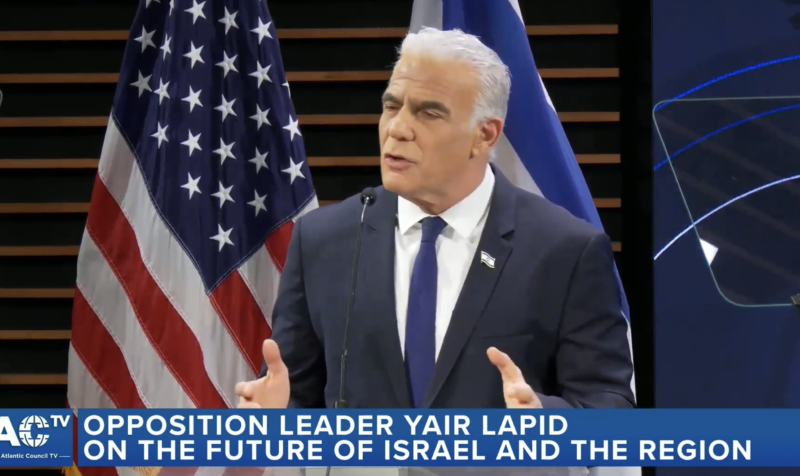
“I found it interesting that the opposition leader, Mr. [Yair] Lapid, who I know and like, was adamant that Turkey and Qatar have very limited roles in Gaza because of the relationship with Hamas and the Muslim Brotherhood,” Sen. Lindsey Graham (R-SC) told Jewish Insider.
“I appreciate Turkey and Qatar as allies, but when it comes to Israel, [Turkish President Recep Tayyip] Erdogan’s been terrible in terms of rhetoric. I appreciate the role they played in trying to get the ceasefire, but the appetite in Israel for Turkey and Qatar to have a major role is pretty limited, given the history,” he continued.
Graham said that he was “hoping we can find a stabilizing force. People keep mentioning Egypt. Maybe that works, but I don’t buy into the idea Hamas will ever change their stripes. They have to be dealt out of Palestinian society.”
“It’s very important for Israel to have a stabilizing force that they trust that understands the danger Hamas presents,” the South Carolina senator argued.
Jonathan Ruhe, a fellow for American strategy at the Jewish Institute for National Security of America, expressed similar doubts.
“There’s a million reasons why it won’t be viable to have a long term Israeli military presence on the ground in Gaza. But the same goes for Arab partners,” Ruhe told JI. “Having Turkish forces in there particularly strikes me as a bad idea. Turkey is not an impartial force. They are a capable and experienced military, but mostly doing things the United States and Israel don’t want them to be doing.”
“Turkey does not deserve anything like the benefit of the doubt. Their intentions are certainly suspect given their close ties to Hamas. Having a Turkish military presence literally on [Israel’s] front doorstep in Gaza could actually be worse,” Ruhe continued. “I wouldn’t see them doing anything concrete and substantive to prevent Hamas from basically reestablishing itself as the main actor on the ground in Gaza.”
Beyond a potential incapability to root out Hamas, Ruhe suggested that enabling Turkish troop presence in Gaza could be counterintuitive to U.S. interests in other ways.
“Hamas might actually find it in their interest to try and stoke tensions between Turkey and Israel. That would be a massive headache for the U.S., having, technically, a NATO ally at daggers drawn with our closest partner in the Middle East,” Ruhe said.
One senior GOP senator offered a blunt assessment while speaking on condition of anonymity about Vance’s comments. “They’re pushing Israel into a terrible situation. Turkey and Qatar are the benefactors of Hamas. It’s like putting a fox in the henhouse,” the senator said.
Sen. Mike Rounds (R-SD) did not disagree with Vance’s suggestion that Turkey had a role to play in the broader peace plan, but questioned the likelihood that Israel would accept such a proposal.
“Would Israel accept Turkish forces? That, I think, is the key. I think that’s the most important part of this,” Rounds told JI. “I do think our ally, our NATO ally, Turkey, could play a very constructive role in the Middle East in terms of keeping the peace, but that’s not an easy thing to do because Turkey and Israel have had strained relations.”
Many academics who have fought antisemitism in education said they have concerns towards Trump’s plan

David L. Ryan/The Boston Globe via Getty Images
Signs at a MIT Grad Student Union press conference on October 10, 2025.
As the Trump administration ratchets up its efforts to influence higher education, the latest White House proposal for colleges and universities is being met with skepticism from academics — even as its authors say its implementation should be a no-brainer.
That’s in reference to a White House document called the “Compact for Academic Excellence in Higher Education,” a 10-point plan that the federal government is asking universities to sign in order to get preferential treatment for the federal funds upon which many research universities rely.
If the schools don’t agree to the terms in the compact — which include commitments to end race-based hiring and admissions, limits on foreign enrollment and a pledge to foster greater ideological diversity — they risk losing billions of dollars.
The compact reflects an evolution of a familiar Trump administration argument: that America’s preeminent educational institutions have strayed from their mission, letting politics interfere with their raison d’etre as centers of academic excellence. Combating antisemitism on college campuses — a cause the White House has prioritized this year — provided President Donald Trump a foray into greater oversight of higher education. But there appears to be no direct line from that fight against antisemitism to the broader ideological framework in this compact, which makes only a passing reference to antisemitism.
A White House official who worked on the compact called it a “basic, basic easy low hurdle,” telling Jewish Insider that the document is “a nonpartisan, neutral concept.”
Many academics, including several who have spoken out against antisemitism and against universities’ handling of it in recent years, don’t agree.
“Fundamentally, the premise of the document is inconsistent with our core belief that scientific funding should be based on scientific merit alone,” Massachusetts Institute of Technology President Sally Kornbluth said last week, making MIT the first university to formally reject the compact.
The White House wrote to MIT and eight other campuses this month, giving them early access. Brown University joined MIT in rejecting the compact on Wednesday, but the other seven universities haven’t yet responded ahead of the Oct. 20 deadline.
With the compact, Trump is making the case that universities have a fiduciary responsibility to American citizens that they have not met, as academia has “lost its way,” according to the administration official.
“It’s for the taxpayers,” said the official, who requested anonymity to speak openly about a negotiating process that is mostly taking place behind closed doors. “This administration is here to support research … but at the same time we also can’t abdicate our responsibility to you and myself. There are a lot of people who are cutting checks to the IRS because that’s what they have to do, and they don’t even go to college.”
But where the Trump administration sees “good hygiene,” according to the official, many academics worry the compact’s far-reaching goals could amount to an overreach that impinges on free speech and academic freedom.
“It’s something that everybody’s talking about, and people are taking it very seriously,” said David Myers, a professor and the chair of Jewish history at the University of California, Los Angeles. “It really seems to touch upon one of the cardinal principles of university governance, which is autonomy and independence.”
Menachem Rosensaft, an adjunct law professor who teaches about antisemitism and the Holocaust at Cornell University, called the compact “overkill, with a number of positive items in it, but overall problematic for any independent university of college.”
Rosensaft questioned how the compact addresses antisemitism, if at all: Antisemitism is only mentioned in a section about foreign students, which accuses those who are “not properly vetted” with “saturating the campus with noxious values such as antisemitism and other anti-American values.”
Academics concerned about antisemitism told JI that the Trump administration is right to point out that severe problems exist in higher education. But many are unsure how this compact will address the issues Jewish students face.
“I often wonder if a compact like this had come out of the Biden administration or a Harris administration, whether, from the faculty, there’d be that same kind of knee-jerk reaction [that] we have to oppose everything that comes out of the administration — when actually, when you read this line by line, there’s a lot of things we can agree with,” said Miriam Elman, a former political science professor at Syracuse University.
“If you look at certain things individually, they’re OK. I don’t have any problem with freezing tuition, for example, or with arresting grade inflation. I don’t have any problem with teaching [Western civilization]. The problem is that, as a whole package, it’s kind of the antithesis of what universities are meant to do,” said Norman Goda, a historian and professor of Holocaust studies at the University of Florida. “And if the addressing of antisemitism is one of the aims of this, then I don’t know how that is done.”
Miriam Elman, a former political science professor at Syracuse University, said that some of the immediate skepticism of the compact is likely due to politics. But that doesn’t alleviate all of her concerns.
“I often wonder if a compact like this had come out of the Biden administration or a Harris administration, whether, from the faculty, there’d be that same kind of knee-jerk reaction [that] we have to oppose everything that comes out of the administration — when actually, when you read this line by line, there’s a lot of things we can agree with,” said Elman, who is the executive director of the Academic Engagement Network, which fights academic boycotts of Israel.
“But we also are not naive. The Trump administration does have an agenda. It does have priorities, and it is wrapping those priorities into the fight against campus antisemitism. So there is a lot of concern.”
The compact appears to be primarily directed at undergraduate programs. Dr. Philip Greenland, a professor of medicine at Northwestern University, said his colleagues at the medical school are generally not worried about the compact in the way many humanities professors are. “It could affect the medical school in a secondary way: If Northwestern is drawn into this and doesn’t comply, we may never get our federal funding back,” said Greenland. The Trump administration froze $790 million in federal funding for Northwestern in April.
“Although the compact doesn’t seem to be talking about antisemitism, in the end, people will remember: How did the administration go after the universities?” said Pamela Nadell, the chair in women’s and gender history at American University and the author of a new book about antisemitism in America. “They said that they were promoting antisemitism.”
“I think it’s in some sense a good thing that it doesn’t call out, specifically, that this is about antisemitism,” Greenland continued. “What the compact seems to be more about is a claim, which is justifiable, that universities have become very, very ideological in one direction … People are claiming that the compact will deprive them of their free speech. But what that doesn’t recognize is that the current situation deprives other people of their free speech and their free expression.”
The Trump administration official told JI that the compact is “all-encompassing,” and argued that its broad mandate includes antisemitism — but not only that.
“It overlaps, but the compact isn’t a compact to stop antisemitism. It’s a compact to return to lawful academic excellence and a marketplace of ideas, [and] that includes eradicating antisemitism,” said the official.
Pamela Nadell, the chair in women’s and gender history at American University and the author of a new book about antisemitism in America, argued that the Trump administration’s earlier actions targeting antisemitism will come to be viewed as the pretext for what is now a much larger and more strategic rewriting of federal policy toward institutions of higher education.
“Although the compact doesn’t seem to be talking about antisemitism, in the end, people will remember: How did the administration go after the universities?” said Nadell. “They said that they were promoting antisemitism.”
Coons: ‘Having Iran on its back foot and having the Iranian enrichment progress halted is something I'm not going to criticize’
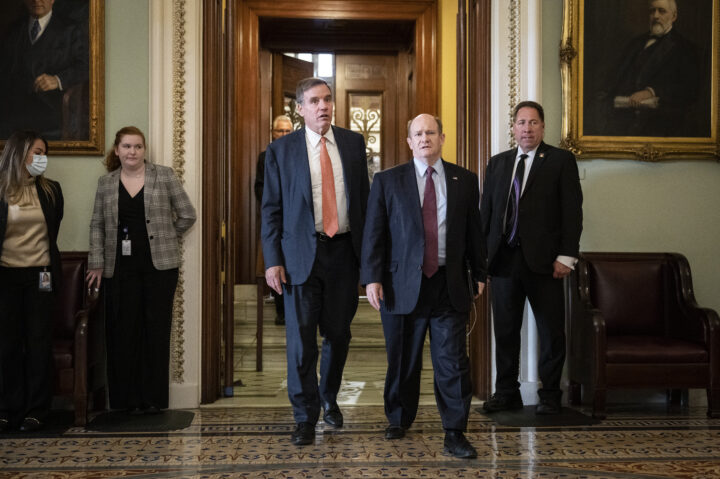
Drew Angerer/Getty Images
Sen. Mark Warner (D-VA) and Sen. Chris Coons (D-DE) leave the Senate floor and walk to a luncheon with Senate Democrats at the U.S. Capitol on June 15, 2021 in Washington, DC.
ASPEN, Colo. — Sen. Chris Coons (D-DE) said Friday that the U.S. strikes on Iran could ultimately produce a positive outcome, a softening of the Delaware senator’s previous skepticism.
“The strike on Iran is one that I disagreed with because of the process, the lack of consultation with Congress, the partisan way that Republicans were notified at the most senior levels [and]Democrats were not,” Coons said at the Aspen Security Forum.
He said he also had not expected that the administration would be able to avoid significant Iranian retaliation and an escalating conflict.
“I frankly, did not believe that we would end up in the period we seem to be in where a counter-strike by Iran against American soldiers and interests has not yet come,” Coons continued.
But, he said, “if it actually ends up securing a movement towards regional peace and really knocking down Iran’s nuclear enrichment program, it’s a good thing. I mean, having Iran on its back foot and having the Iranian enrichment progress halted is something I’m not going to criticize.”
Coons added that he is concerned that the administration lacks a clear plan for the path forward or the commitment to sustain pressure on Israeli Prime Minister Benjamin Netanyahu to end the war in Gaza and pursue “Saudi-Israeli-Palestinian reconciliation and recognition.”
Sen. Mark Warner (D-VA), speaking alongside Coons, argued that President Donald Trump had overplayed the strikes’ effectiveness and missed the opportunity to capitalize on them.
“I would also grant on the Iran strike that I had the same concerns, and I was Gang of Eight and did not get told,” Warner said, referring to the group of eight senior congressional leaders who are traditionally briefed on important intelligence matters by the executive branch. “In [Trump’s] effort to claim total credit, he turned something that was a success, but by saying within two hours ‘total obliteration’ when we didn’t even try to fully take out all the enriched uranium [storage] sites set a standard that was too high.”
“Setting Iran back dramatically was important,” Warner said. “But then you had everybody trying to kowtow to this level that is unattainable unless you have troops on the ground.”
He said the only way to ensure Iran’s nuclear program won’t continue is to reach a deal to allow nuclear inspectors back into the country, and that he expected Trump was pursuing that path after the strikes, but “it feels like that moment has already passed.”
The two Democratic senators also spoke about their concerns about the upcoming 2026 appropriations process, and Office of Management and Budget Director Russ Vought’s recently reported comments that he wanted to see the process be less bipartisan. They raised concerns that Republicans would seek to walk back bipartisan appropriations deals through recissions down the road.
Warner, the vice chair of the Senate Intelligence Committee, railed against Director of National Intelligence Tusli Gabbard as untrustworthy and “not competent,” accusing her of politicizing the intelligence community and mishandling classified information. He said he believes that close intelligence partners are curtailing their information-sharing with the U.S. due to concerns about Gabbard and the Trump administration.
Addressing the Signalgate scandal, when top administration officials discussed operational plans against the Houthis in Yemen on an unsecured private messaging app, Warner said “the Israeli government was extraordinarily upset” about the incident.
Please log in if you already have a subscription, or subscribe to access the latest updates.
 Continue with Google
 Continue with Apple