


































Jewish California CEO David Bocarsly: ‘This is not a policy disagreement — it is a sustained campaign targeting Jewish students and the community that advocates for them’
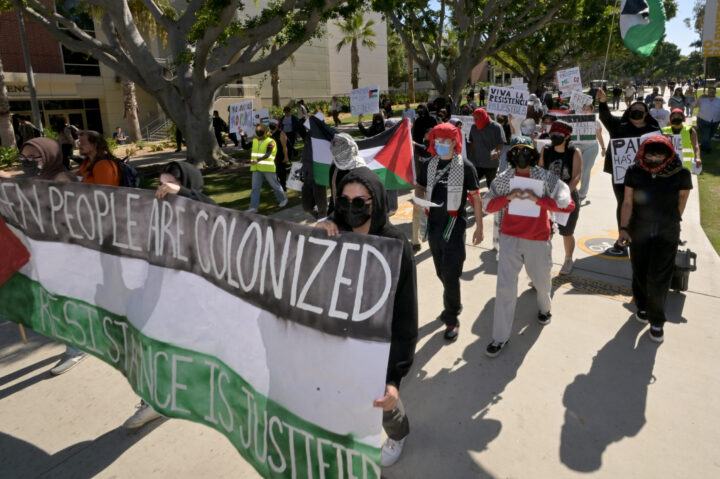
Brittany Murray/MediaNews Group/Long Beach Press-Telegram via Getty Images
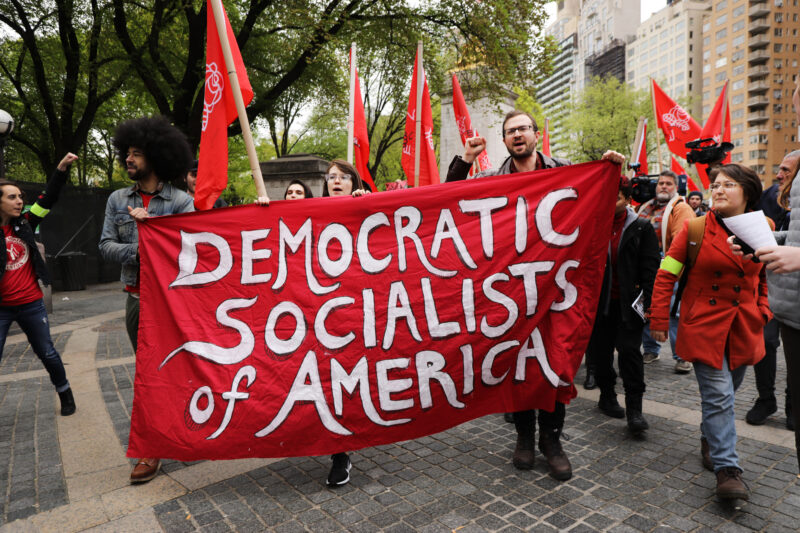
LA F.U.E.R.Z.A, a student-run advocacy group, marched through the campus of CSU Long Beach for a Day of Resistance protest for Palestine in Long Beach on Tuesday, October 10, 2023.


 Add JewishInsider on Google
The 29,000-member California Faculty Association, California State University’s teachers’ union, is spearheading a backdoor legislative push to repeal the time, place and manner restrictions implemented across the state’s university system following its 2024 anti-Israel encampments.
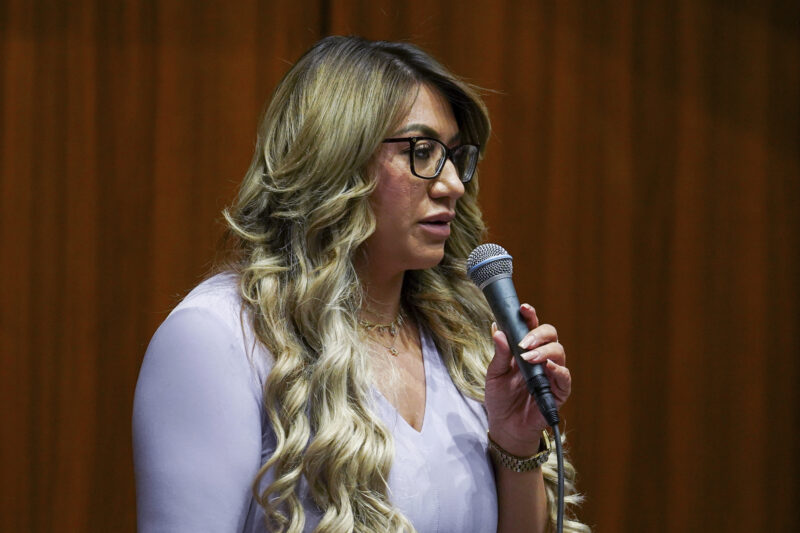
The California Faculty Association, which represents faculty across the 23 campuses of the California State University system, announced it would sponsor AB 2551, authored by Assemblymember Sade Elhawary. AB 2551 would repeal SB 1287 — California’s landmark campus safety and civil rights law — in its entirety by Jan. 1, 2029.
Under SB 1287, which was introduced in August 2024, California’s public universities and colleges must adopt and enforce rules against violence, harassment, intimidation and discrimination.
It mandates the establishment of clear, content-neutral protest guidelines and requires schools to provide mandatory student training on free speech limits. The legislation bars tent encampments, overnight demonstrations and in some cases wearing masks, signatures of the spring 2024 anti-Israel protest movements both within the Cal State schools and across universities nationwide. Cal State LA played host to a 40-day encampment in 2024, in which protesters barricaded and trashed an administration building.
“SB 1287 was the product of a public and transparent year-long negotiation process — hearings, testimony, amendments, and ultimately an overwhelming bipartisan vote,” said David Bocarsly, CEO of Jewish California, a coalition of local Jewish organizations formerly known as JPAC. “Jewish students across California are safer because of it. AB 2551 uses a backroom maneuver to fully erase that progress — without public process and without consulting the communities this law was designed to protect. Other communities wouldn’t stand for that, and we won’t either.”
According to Jewish California, AB 2551 bypassed the normal legislative process through a “gut-and-amend” maneuver. This tactic replaces a bill’s existing language with entirely new provisions late in the session, effectively avoiding the rigorous public hearings and committee scrutiny that landmark measures like SB 1287 undergo. Consequently, the July 1 Senate Education Committee hearing will likely be both the first and last policy committee vote the bill receives.
Ahead of the hearing, dozens of local Jewish organizations are leading a coordinated push against the bill. The executive directors of every CSU and University of California campus Hillel, joined by Hillel International CEO Adam Lehman and Senior Vice President Mark Rotenberg, submitted a joint opposition letter.
“The serious disruptions that had made parts of their campuses inaccessible quickly dissipated,” they wrote. “Jewish students who had withdrawn from campus life began returning. Importantly, the law did not silence free speech — it established a clear line between constitutionally protected expression and conduct that violates university rules and Jewish students’ civil rights by shutting them out of their own university.”
The bill was also opposed on Monday by the University of California in a letter to Senate Education Committee Chair Sasha Renée Pérez, warning that AB 2551 would “repeal important provisions of the University’s TPM framework that were recently implemented to strengthen campus safety, protect civil rights, combat antisemitism, and support the consistent administration of content-neutral conduct standards,” and that repeal “could complicate these ongoing efforts and diminish the effectiveness” of campus safety tools the university has invested significant resources to build.
Furthermore, the Jewish community and the California Legislative Jewish Caucus were reportedly not consulted before the maneuver, despite SB 1287 being one of the Jewish community’s top legislative priorities two years ago.
CFA previously targeted the Jewish community last October when its candidate endorsement questionnaire singled out Jewish California — alongside the oil, tobacco, and police industries —- as a group that “harms working families,” asking political candidates to refuse to engage with the body.
In March, CFA sponsored AB 2159, an attempt to gut AB 715, California’s landmark K-12 antisemitism prevention law. That bill was defeated following advocacy from Jewish groups.
“CFA singled out our community for boycott. Then they sponsored legislation to gut our K-12,” said Bocarsly. “We said last time that CFA has an antisemitism problem. Three strikes confirms it. This is not a policy disagreement — it is a sustained campaign targeting Jewish students and the community that advocates for them.”
The Caesar sanctions repeal comes in spite of hesitation from some lawmakers on Capitol Hill, who argued that the sanctions should remain on the books

Kevin Carter/Getty Images
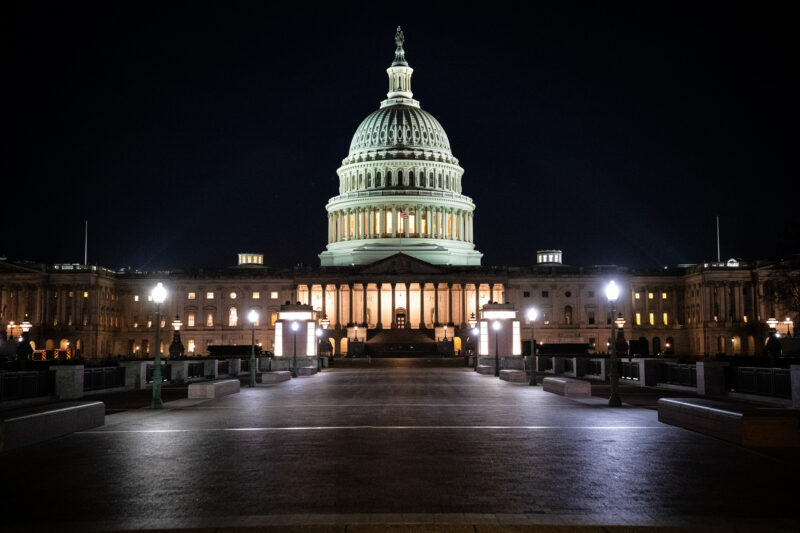
U.S. Capitol Building on January 18, 2025 in Washington, DC.
The final version of the 2026 National Defense Authorization Act negotiated by Senate and House leaders includes a full and unconditional repeal of U.S. sanctions on Syria under the Caesar Civilian Protection Act, as well as a repeal of the war authorizations that allowed for the Iraq war and the first Gulf War.
The Caesar sanctions repeal comes in spite of hesitation from some lawmakers on Capitol Hill, who argued that the sanctions should remain on the books, with relief contingent on the Syrian government meeting various benchmarks. Supporters of full sanctions relief have argued that it’s necessary in order to put Syria on a more predictable and stable financial footing and provide confidence to foreign investors to support reconstruction projects.
Rep. Brian Mast (R-FL), the chairman of the House Foreign Affairs Committee, who had been skeptical of the prospect of unconditional repeal, ultimately decided to provide his approval to include it in the bill.
The legislation requires the administration to report to Congress twice per year to certify whether the Syrian government is complying with a range of U.S. priorities, including cooperating with counter-ISIS efforts, removing foreign fighters from the Syrian government, protecting minority rights, non-aggression toward Israel, integrating the Kurdish-led Syrian Democratic forces, complying with U.S. sanctions, prosecuting human rights abusers and combating narcotics production.
It includes a nonbinding provision that “the president may consider whether to impose targeted sanctions on individuals under existing authorities” if these conditions are not met for two reporting periods, but includes no binding snapback provisions mandating the reimposition of sanctions.
The repeal of the Iraq war authorization has been a longtime priority for lawmakers on both sides of the aisle, but others have argued that a more deliberative approach is needed to ensure that the U.S. maintains its ability to target Iranian proxies or terrorist groups in Iraq.
Largely outside of Middle East policy, the legislation contains a number of provisions seemingly aimed at countering isolationist pushes from within the administration, including provisions to ensure that U.S. aid to Ukraine continues and that the U.S. does not significantly draw down its troop presence in Europe or South Korea.
It also includes a provision seemingly aimed at responding to senators’ public concerns about a lack of transparency and communication by Under Secretary of Defense for Policy Elbridge Colby, mandating that he personally brief Congress twice next year about the national defense strategy.
Overall, the bill proposes a defense budget $8 billion above the Trump administration’s 2026 request — though any actual funding allocations will have to be approved separately through the still-pending appropriations process.
Within the Middle East domain, the NDAA authorizes annual funding for joint missile-defense programs with Israel, including Iron Dome, David’s Sling and Arrow, guaranteed under the memorandum of understanding with Israel that lasts through 2028.
The explanatory report accompanying the bill requires the administration to brief Congress on Israel’s current Arrow stockpiles — systems that saw heavy use during Iran’s ballistic missile attacks on Israel earlier this year — including potential obstacles to increasing Arrow production capacity and inventory and the possibility of creating “fully redundant Arrow production capacity in the United States.”
Addressing existing regional air- and missile-defense cooperation programs, the report directs the administration to brief Congress on progress toward an integrated air and missile architecture, as well as lessons learned during the past two years of war in the Middle East and the impacts of existing cooperation efforts during that time.
It also requires the Pentagon to brief Congress on any delays in providing aircraft or air-launched munitions to Israel and the “feasibility and advisability” of providing Israel with American systems to fill those gaps in the interim.
The NDAA proposes increasing funding for joint U.S.-Israel anti-tunnelling programs to $80 million, a $30 million increase. The report requires the administration to study potential steps to secure the border between Egypt and Gaza to cut down on smuggling into the enclave via tunnels, drones and the Mediterranean Sea.
The legislation also expands existing U.S.-Israel cooperative programs countering airborne drone threats to include other unmanned systems, including sea- and land-based drones, and proposes funding of $70 million, a $15 million increase.
It extends both the counter-tunnel and counter-drone programs through 2028.
The bill also proposes providing $35 million for a new program to pursue military applications of emerging technologies such as AI, quantum computing and cybersecurity in cooperation with allies like Israel.
The legislation also directs the administration to create a U.S.-Israel Defense Industrial Base Working Group to expand defense production cooperation with Israel, and study the possibility of integrating Israel into the National Technology and Industrial Base, alongside other key U.S. allies.
The explanatory report directs the Defense Department to consider creating a “regional outreach center” of the Defense Innovation Unit in Israel; the House draft of the NDAA had included a requirement that the Pentagon establish such an office.The DIU is a relatively new Pentagon unit with offices around the U.S. that works to allow the military to more quickly adopt emerging commercial technologies.
In an effort to address international boycotts and other punitive measures against Israel, the NDAA requires the administration to continually assess the impact of arms embargoes, sanctions and other restrictions imposed on Israel and the ways the U.S. might be able to mitigate those impacts.
The explanatory report instructs the Pentagon to avoid participating in international arms exhibitions that exclude Israeli companies.
But the final NDAA does not include a provision from the House draft of the bill instructing the administration to engage with top allies to ensure they do not enforce International Criminal Court arrest warrants against the U.S. or Israel.
The report states that the U.S. should engage in “regular military exercises of increasing complexity” with Israel, to include “other regional partners as well when feasible,” and requires the administration to report to Congress on such exercises.
In an effort to address growing cooperation among Iran, China, Russia and North Korea, the legislation instructs the administration to establish a whole-of-government effort to respond to such alliances, including establishing working groups in several Cabinet agencies, charged with providing recommendations to the administration and Congress.
The NDAA expands existing required reports on Iran’s nuclear capabilities, mandating the administration provide additional information to Congress about Iran’s support to its terrorist proxies, its nuclear advancements and its production of new weapons systems like single-use drones.
It further requires prompt notification to Congress if the intelligence community finds that Iran has made the decision to produce a nuclear weapon from its stockpiles of highly enriched uranium.
The bill also includes a new authority permitting the U.S. to quickly send weapons seized in transit from Iran to the Houthis to U.S. allies, potentially including Israel and Ukraine.
The NDAA instructs the administration to create a strategy for expanding U.S. security partnerships with Jordan and Lebanon, including working to ensure the disarmament of Hezbollah. It requires the Defense Department to set out benchmarks for cutting off support to the Lebanese Armed Forces if they fail to make progress in or are unwilling to disarm Hezbollah.
The legislation also includes a provision to withhold 25% of U.S. security assistance to Iraq until the administration certifies that the Iraqi government is taking steps to weaken Iran-aligned militia groups in Iraq and remove members of Iran-aligned groups operating as part of the Iraqi security forces, though the secretary of defense can waive those conditions.
And it requires the administration to declassify all documents related to the Iranian proxy attack on the U.S.’ Tower 22 Facility in Jordan in January 2024, which killed three U.S. service members.
Matching an executive order from the Trump administration, the legislation codifies a new designation and sanctions regime for countries engaging in wrongful detention of U.S. citizens, with a requirement that the State Department report to Congress on whether Iran should be so designated.
In addition to the Caesar Act repeal, other Syria-related provisions in the bill require the administration to report to Congress on the possibility and security concerns involved in reopening the U.S. embassy in Damascus, the U.S.’ force posture in Syria and any planned changes to U.S. forces in the country.
It does not include a more stringent provision from the Senate version of the bill requiring the Pentagon to certify that drawing down U.S. forces in Syria would not compromise U.S. priorities.
The NDAA also provides continued authorization for the U.S. to assist vetted Syrian groups in combating terrorism in the country.
The bill additionally mandates that the Defense Department report to Congress on the possibility of expanding the Comprehensive Security Integration and Prosperity Agreement — an economic and security pact with Bahrain — to include other countries.
And it requires the administration to develop a plan to counter foreign efforts to “continue or expand” the civil war in Sudan.
The legislation does not include a House-proposed provision extending through 2029 the authorization — currently set to lapse on Jan. 1, 2027 — for the U.S. weapons stockpile in Israel, which Israel can tap into in emergencies.
It also excludes House provisions that aimed to tackle Hezbollah’s operations in South America and to encourage defections by senior Iranian officials. A House provision awarding medals to those servicemembers involved in the U.S. strikes on Iranian nuclear facilities in June was not included either.
Other provisions from the House draft of the bill relating to antisemitism, including prohibiting Department of Defense funding for schools that failed to take action against antisemitic demonstrations, and requiring reports on antisemitism in the Pentagon and transnational antisemitic extremism, were also excluded.
The NDAA will also include a nonbinding provision urging the administration to reimpose sanctions on Syria if its new government does not meet certain human rights conditions, source tells JI
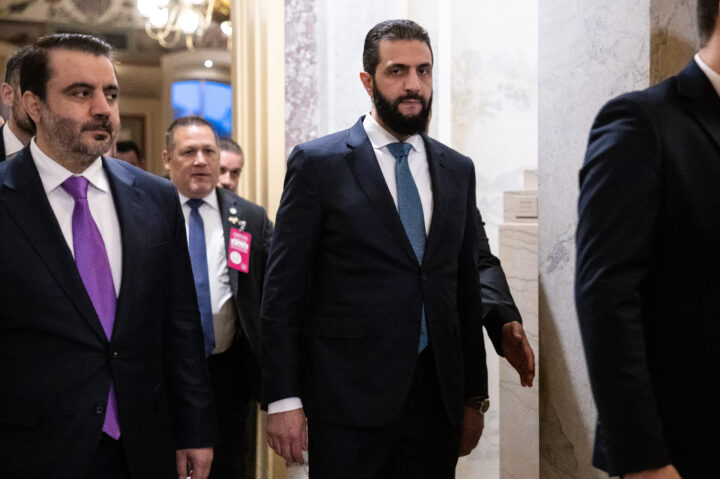
Francis Chung/POLITICO via AP Images
Syrian President Ahmed al-Sharaa departs a meeting in the Senate Foreign Relations Committee hearing room at the U.S. Capitol, Nov. 10, 2025.
A full repeal of human rights sanctions on Syria under the Caesar Civilian Protection Act is likely to pass Congress as part of the 2026 National Defense Authorization Act, after House Foreign Affairs Committee Chair Rep. Brian Mast (R-FL) signed off on the measure, according to a source familiar with the matter.
The NDAA, which Congress aims to finalize in early December after its Thanksgiving recess, will include a full repeal of the sanctions, but also a nonbinding provision urging the administration to reimpose sanctions on Syria if its new government does not meet certain human rights conditions, the source told Jewish Insider. Barring any unexpected developments, the provision should be on track to pass Congress in the must-pass legislation.
The Senate approved similar provisions in its version of the NDAA earlier this year, but the House version of the bill included no such language, and Mast’s approval was needed to incorporate the provision into the final version of the bill being negotiated between both chambers.
President Donald Trump has been urging Congress to repeal the sanctions, an effort supported by many Syrian diaspora activists, including Rabbi Yosef Hamra, the brother of the country’s last chief rabbi, who now lives in the U.S.
But others, including activists from other Syrian minority communities and some lawmakers, have argued that the sanctions should remain on the books to provide leverage and accountability to ensure the protection of minorities and the Syrian government’s cooperation on other matters like counterterrorism.
Mast had been skeptical of lifting sanctions, but indicated to JI his position was softening last week. He met earlier this month with Syrian President Ahmad al-Sharaa in Washington.
Mast told The Hill, which was first to report the news, that his position is that the sanctions should be, “Fully repealed, to have mechanisms, or rather a sentiment that sanctions should be reinstituted if a number of conditions are not met. … Still fully repealed.”
The House version of the bill does not contain such a repeal, leaving its passage up to negotiation

GETTY IMAGES
A general view of the U.S. Capitol Building from the National Mall, in Washington, D.C., on Thursday, May 29, 2025.
The Senate approved the repeal of strict sanctions legislation targeting the now-deposed Assad regime in Syria, as part of its version of the 2026 National Defense Authorization Act.
Lawmakers on both sides of the aisle have been working to repeal or roll back the sanctions, known as the Caesar Act, for several months, though the effort is not without some opponents.
The chamber also passed, as part of a bipartisan package of amendments, an amendment led by Sens. Lindsey Graham (R-SC) and Chris Van Hollen (D-MD) — opposed by some Syrian-American activists — that requires regular reports to Congress certifying Syria’s compliance with a variety of U.S. priorities and urges the administration to reimpose sanctions if such verification cannot be completed.
The House version of the NDAA does not include a similar provision, so whether the sanctions repeal is included in the final bill, and in what form, will be subject to negotiations between the two chambers. Legislation placing a variety of conditions on the suspension of the Caesar Act, rather than repealing the sanctions, has gained momentum in the House.
The Senate also approved, by voice vote, an amendment that would repeal the Authorizations for Use of Military Force that allowed for the Iraq and Gulf wars. With similar provisions included in the House version of the bill, the repeal of those war authorizations, a long-term goal of lawmakers on both sides of the aisle, looks increasingly likely this year.
Opponents have argued that the process has moved too quickly and with too little deliberation and consultation with the administration, and that repealing the authorities could jeopardize counterterrorism operations.
The upper chamber rejected an amendment that would have barred the modification of a Qatari-donated jumbo jet to serve as Air Force One, by a party-line vote of 50 to 46.
Other provisions added to the legislation in bipartisan amendment packages include programs aimed at countering foreign information manipulation and interference by adversaries like Iran; a study of the potential security conditions for reopening the U.S. embassy in Damascus, Syria; and legislation aimed at countering the wrongful detentions of U.S. citizens by adversaries like Iran by creating a new designation and penalties for countries engaging in such activity.
The legislation also expands and modifies various U.S.-Israel cooperative military programs.
Rabbi Yosef Hamra, the brother of the last chief rabbi of Syria, says ‘lifting the Caesar sanctions is essential to restore synagogues and cemeteries [and] safeguard irreplaceable Jewish heritage’

Rami Alsayed/NurPhoto via Getty Images
Syrian President Ahmad Al-Sharaa attends the signing ceremony of a strategic agreement to develop Tartus Port in Damascus, Syria, on July 13, 2025.
A debate is quietly simmering in Washington over the prospect of repealing congressionally mandated sanctions on Syria, an effort that has bipartisan support — but is not without its opponents.
As part of the Senate’s ongoing consideration of the 2026 National Defense Authorization Act, a provision was included in a bipartisan consensus package of amendments that would fully repeal the Caesar Act, a strict sanctions framework imposed in response to the Assad regime’s human rights violations. Should the NDAA move forward on the Senate floor, the amendment is almost certain to pass.
The sanctions are currently being waived by the Trump administration, but can only be permanently repealed, before their 2029 expiration date, by Congress.
Some on Capitol Hill are pushing for a more cautious approach, keeping the sanctions on the books, at least in the short term, while pushing for the Syrian government, led by former Al-Qaida commander Ahmad al-Sharaa, to abide by a series of conditions in exchange for continued waiving of the sanctions.
Sens. Lindsey Graham (R-SC) and Chris Van Hollen (D-MD) introduced a series of amendments to the Senate NDAA taking such an approach. The first would suspend the sanctions but keep them sanctions on the books indefinitely, past 2029, and require compliance with a series of conditions to keep the sanctions paused.
A second, updated amendment would keep the sanctions on the books for the next four years and would recommend but not require the reimposition of sanctions if the conditions in question are not met.
The Graham-Van Hollen amendment is unlikely to have sufficient support to pass the Senate.
A similar debate is playing out in the House, where the Financial Services Committee voted to advance a bill, led by Rep. Mike Lawler (R-NY), that would condition the lifting of sanctions, over the objections of lawmakers who have called for immediate and unconditional relief.
Activists in the Syrian-American diaspora community, including Rabbi Yosef Hamra, the brother of the last chief rabbi of Syria, who now resides in Brooklyn, are calling for Congress to reject efforts to condition sanctions relief, and want lawmakers to fully repeal the Caesar Act as quickly as possible.
Hamra, in a letter to congressional offices on behalf of the Jewish Heritage in Syria Foundation that was shared with Jewish Insider, expressed “grave concern” about the original Graham proposal, saying it would endanger Syrian Jews and prevent their ability to rebuild their community.
“This measure would put in place snapback provisions which would extend the Caesar Syria Civilian Protection Act indefinitely, including provisions harsher than those applied during the Assad regime’s worst atrocities,” Hamra wrote. “Lifting the Caesar sanctions is essential to restore synagogues and cemeteries, safeguard irreplaceable Jewish heritage and re-establish a mutli-faith community in Syria after more than 30 years in exile. Simply put, this amendment would be devastating to the Jewish community in Syria.”
Hamra noted that members of the Syrian Jewish community have begun to return to the country and work to rebuild and restore Jewish sites and artifacts, which he said requires “a stable, predictable policy environment that encourages investment, cultural preservation, and the safe return of refugees.”
He argued that the sanctions “should be completely repealed with no risk of snapping back. Any attempt to prevent this law from being completely repealed without risk of snapback would be a disaster” by discouraging support for projects inside the country, which he said would halt efforts to rebuild.
Henry Hamra, the son of the rabbi, told JI he also rejects the updated Graham-Van Hollen amendment.
“A watered down amendment by Senator Graham has the same chilling effect and damage of any amendment that requires conditions and threatens snapback sanctions of any kind,” Henry Hamra said in a statement to JI. “That’s why the Jewish Syrian community in the United States supports a clean repeal of the Caesar Act with no conditions it is the right and moral thing to do.”
Henry Hamra told JI that extensive work is needed to restore old synagogues, Torah scrolls and other artifacts that have been long neglected and added, “We need all the sanctions to be lifted to help us out.”
A source supporting the repeal effort said Treasury officials told Congress that keeping the Caesar Act — which includes mandatory secondary sanctions provisions on individuals doing business with those sanctioned — on the books in any form, even if the sanctions are being waived, has created an environment of uncertainty that has made foreign countries and businesses unwilling to invest in long-term development and reconstruction efforts in Syria.
“This is more than a two-year or a short-term thing to rebuild the whole neighborhood, [it] would take years. American companies, too, by the way, are interested in working in Syria. As long as Caesar is an authority, and there’s snapback for it, people will be wary to do that,” Mouaz Moustafa, the executive director of the Syrian Emergency Task Force, told JI. “And the progress, including on some of the conditions that are being placed, itself, would be stifled if [the] Caesar Act remains in perpetuity.”
Moustafa’s group is also opposing any action short of full Caesar repeal, and argues that anything less would be a punishment to the Syrian people.
A spokesperson for AIPAC told JI that the organization “do[es] not oppose the lifting of the Caesar sanctions but believe[s] Congress should make clear its expectations for the new Syrian government and lay out the conditions under which sanctions could be reimposed.”
John Hannah, a senior fellow at the Jewish Institute for National Security of America and a national security advisor to former Vice President Dick Cheney told JI he opposes the sanctions repeal, and that he favors a conditional approach like that outlined in the Lawler bill.
Hannah said that there is “some significant evidence” that Syrian President Ahmad al-Sharaa is willing to engage on U.S. security priorities which justifies some easing of sanctions, “but our big concern is that the administration has had kind of a blind spot on internal matters in Syria with regards to governance and particularly with the relationship of Damascus to the key minority groups, some of them quite well armed.”
He warned that Syria’s future is being “undermined” by internal governance issues, including what he described as an “Islamist, Sunni-supremacist” and “highly centralized, authoritarian” approach to statebuilding by al-Sharaa, and by the two high-profile massacres of religious minority groups in recent months.
“[Al-Sharaa] has shown himself to be a ruthless pragmatist and I think the U.S. has just got to use the significant leverage it does have and continues to have, which is primarily wrapped in Caesar — to apply that equally as effectively as we have on the security priority to a set of priorities about the process of internal governance in Syria,” Hannah said. He argued that the U.S. should not “just surrender that prematurely, particularly after these extraordinary levels of violence we’ve seen inside of Syria that are completely undermining the possibility of a stable, cooperative Syrian partner to the United States.”
He warned that al-Sharaa’s “particular vision of Syria” is the greatest risk and potential driver of another collapse and devolution back into civil war in Syria — more so than the potential impacts of sanctions, as argued by proponents of sanctions relief. “We can’t tolerate another 1,500-person massacre of some minority inside of Syria. I think it’ll break the country,” Hannah added.
He said the U.S. should condition sanctions relief on legitimate dialogue and efforts to include and protect minorities, including Druze and Alawites, Western involvement in training and professionalizing the Syrian military and the expulsion of foreign jihadists from the Syrian government. Under such conditions, he said he’d be supportive of repealing Caesar in two years, ahead of its current expiration in 2029.
Hannah said that by making clear the U.S. is “fully committed to continuing to issue waivers,” as long as “we see a sustained level of progress here,” it should provide “sufficient green lights” to wealthy Arab states and others to begin ramping up investments.
He also urged the U.S. to work with regional and European allies to develop a joint approach and outreach strategy for Syria, and said that the time is not right for the U.S. to remove its remaining military forces from the country and surrender the leverage those troops provide.
Correction: Rabbi Yosef Hamra is the brother of the last chief rabbi of Syria. A previous version of the story identified Hamra as his nephew.
Other passed amendments aimed to counter the BDS movement, strengthen the U.S.-Israel defense partnership and counter the Iranian regime
GETTY IMAGES
A general view of the U.S. Capitol Building from the National Mall, in Washington, D.C., on Thursday, May 29, 2025.
The House passed its version of the 2026 National Defense Authorization Act on Wednesday, including an amendment that would repeal the Authorizations for Use of Military Force that allowed for the Iraq war and the Gulf War.
The House also passed a series of amendments aimed at countering the Boycott, Divestment and Sanctions movement targeting Israel and enhancing defense cooperation with Israel.
An effort to repeal the Authorization for Use of Military Force passed by a bipartisan 261-167 vote, with 49 Republicans voting with 212 Democrats in favor of the amendment.
Rep. Brian Mast (R-FL), the chair of the House Foreign Affairs Committee, said he agreed that there should be sunsets on AUMFs, but said that changes should not be made without discussions with key U.S. military leaders about how the repeal would impact U.S. activities and counterterrorism efforts and whether additional authorities would be needed to re-authorize ongoing U.S. operations.
“These are questions that were not asked, and the answers were not given,” Mast said. “We have, I think, probably large agreement on reasons to sunset things, but it should not be done in absence of doing something of this gravity in the proper way.”
Rep. Greg Meeks (D-NY), the ranking member of the Foreign Affairs Committee, said that the AUMFs are “long obsolete” and that keeping them effective “only risk[s] abuse by administrations of either party to sanction military force that Congress has not consented or approved.”
He said he’s committed to ensuring that the provision remains in the final version of the NDAA agreed to in negotiation with the Senate.
Repeal efforts for the AUMFs have seen substantial momentum in recent previous years.
Other amendments approved by voice votes as part of broader amendment packages aimed to counter international targeting of Israel, including banning the Defense Department from contracting with entities boycotting Israel, instructing the administration to monitor the impact of global arms embargoes, and other sanctions imposed on Israel, and determine how the U.S. can mitigate such issues. They also urged the administration to engage with allies to ensure they do not enforce International Criminal Court arrest warrants against Israeli officials and called on the Pentagon not to participate in defense exhibitions that exclude Israel.
To further reinforce U.S.-Israel defensive cooperation, other amendments would order the creation of a Defense Innovation Unit field office in Israel to engage with the government and private sector there on technological development and mandate that the U.S. and Israel study the possibility of integrating Israel into the U.S. defense industrial base.
Additionally, the House added requirements that the Pentagon report to Congress on the status of integrated air and missile defense cooperation in the Middle East, including lessons learned from recent attacks in the region; on joint U.S.-Israel efforts to increase production of Arrow missile defense interceptors, stockpiles of which were significantly depleted during the Israel-Iran war, including whether further authorizations or funding are needed; on U.S.-Israel joint military exercises, the missions rehearsed and how regional partners can be invited to join; and on the status of pending deliveries of military aircraft and air-launched munitions, including the reasons for any delays and how they can be resolved.
Other amendments would require the U.S, Egypt and Israel to study steps that they can take to block smuggling into Gaza from tunnels in Egypt or via the Mediterranean Sea and the Pentagon to report to Congress on the U.S.-Bahrain partnership agreement and possibilities for expanding it to include other regional allies.
Additional amendments seek to support Iranian dissidents and counter the Iranian regime: requiring a strategy on encouraging and enticing top Iranian officials to defect; requiring the Pentagon to help develop technologies to counter internet blockages imposed by Iran and other adversaries; requiring a strategy to counter Iran and Hezbollah’s operations in South America; and expanding reporting requirements regarding Iran’s terrorism strategy, proxies, relationship with Russia, supply chains and weapons production capabilities.
Another amendment would require the Pentagon to quickly release all files on the Iranian proxy attack on the Tower 22 facility in Jordan that killed U.S. service members in January 2024.
An additional amendment would award a medal to servicemembers involved in the U.S. strikes on Iran’s nuclear facilities.
Two amendments by Rep. Marjorie Taylor Greene (R-GA), which aimed to block U.S. support for Ukraine and Taiwan, were resoundingly defeated 372-60 and 422-9, respectively. An amendment proposed by Greene to strip out programs supporting Israel from the bill did not receive consideration or a vote on the floor.
Greene made similar efforts to block funding for Israel, Ukraine and Taiwan during consideration earlier this year of 2026 Pentagon funding, which were defeated along similar lines.
The amended NDAA passed the House by a 231-196 vote, with just 17 Democrats voting for the bill as most voiced objections to provisions relating to transgender medical care and renewable energy, among other issues. The Senate is considering its own version of the NDAA this week as well.
Among a slew of other issues, a series of proposed amendments aimed at cracking down on Turkey were not approved for consideration on the House floor.
Proponents on both sides of the aisle say that repealing the Caesar Act sanctions will remove obstacles to reconstruction and stabilization efforts in post-Assad Syria

Kevin Carter/Getty Images
The U.S. Capitol Building is seen at sunset on May 31, 2025 in Washington, DC.
Bipartisan groups of House and Senate members have introduced legislation to repeal the Caesar Syria Civilian Protection Act, sanctions legislation passed in 2019 targeting the former Syrian government led by Bashar al-Assad, a step that proponents say will help remove obstacles to reconstruction and stabilization efforts in post-Assad Syria.
The administration recently announced that it would be lifting all sanctions on Syria, but the Caesar Act sanctions can only be temporarily waived, for periods of 180 days, barring a full repeal by Congress. Administration officials have indicated that they’d support such a step, and sanctions relief, in principle, has broad support on both sides of the aisle.
The sanctions, named for a pseudonymous individual who documented the Assad regime’s torture of civilians, also targeted Syrian critical industries, individuals and businesses that supported or did business with the Syrian government and Iranian and Russian entities that supported the Syrian government.
Sens. Jeanne Shaheen (D-NH) and Rand Paul (R-KY) introduced legislation on Wednesday to repeal the sanctions.
Reps. Joe Wilson (R-SC), Jimmy Panetta (D-CA), Marlin Stutzman (R-IN), Lou Correa (D-CA), Jack Bergman (R-MI), Pramila Jayapal (D-WA), Anna Paulina Luna (R-FL) and Mike Levin (D-CA) introduced a similar bill in the House last week.
“We can keep the new Syrian authorities accountable without decimating the economy,” Shaheen said in a statement. “Sustained diplomatic engagement can yield tremendous results.”
Paul argued against the Caesar Act sanctions in principle, saying they had been too broadly targeted.
“While the Caesar Act was intended to isolate the Assad regime, it has ended up punishing everyday Syrians — fueling poverty, crippling recovery, and blocking progress toward peace,” Paul said. “This repeal is about restoring a more targeted, principled approach that holds bad actors accountable without inflicting unnecessary suffering on the very people we claim to support.”
The timeline for the repeal effort is somewhat unclear: Secretary of State Marco Rubio testified in May that the administration’s ultimate goal would be to repeal the act, conditioned on the new Syrian government “mak[ing] enough progress” on U.S. priority issues.
But U.S. Ambassador to Turkey Tom Barrack, who also serves as U.S. envoy to Syria, indicated greater urgency, calling for Congress to repeal the sanctions within the first 180-day waiver period, which is renewable if the sanctions are not repealed before then.
“I promise you the one person who has less patience with these sanctions than all of you is President Trump,” Barrack said during a visit to Syria to meet with President Ahmad al-Sharaa last month.
The House lawmakers leading the repeal legislation represent a broad spectrum of the House, ranging from a former chair of the House Progressive Caucus to a former House Freedom Caucus member, and including Israel hawks on both sides of the aisle.
“The Assad regime sanctioned by the Caesar Act no longer exists, and it is time to repeal the law to provide long-term certainty to those who would like to invest in the reconstruction and rebuilding of Syria,” Wilson said in a statement.
Panetta said that repealing the sanctions would help the U.S. “position itself as a partner for continued progress” as adversaries aim to gain a foothold in Syria.
“The repeal of these broad sanctions will give foreign partners the certainty they need to invest in the Syrian economy and give their new government a chance to succeed,” Jayapal said.
Please log in if you already have a subscription, or subscribe to access the latest updates.
 Continue with Google
 Continue with Apple