

















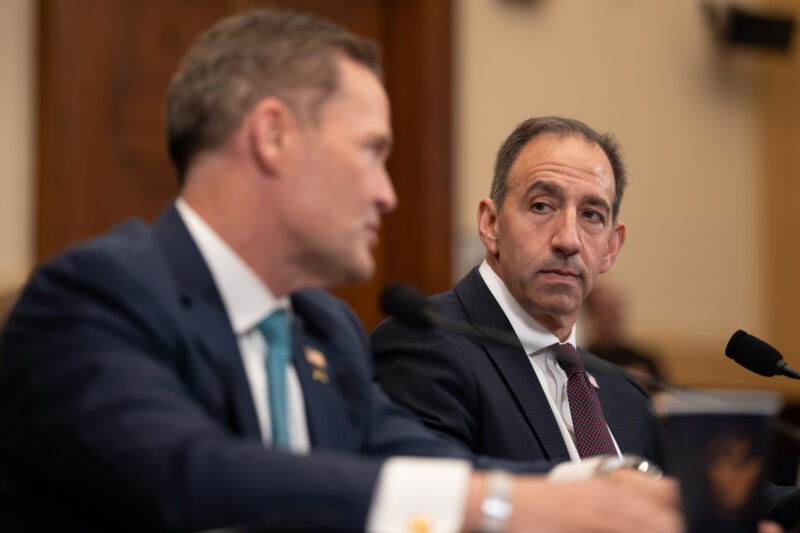


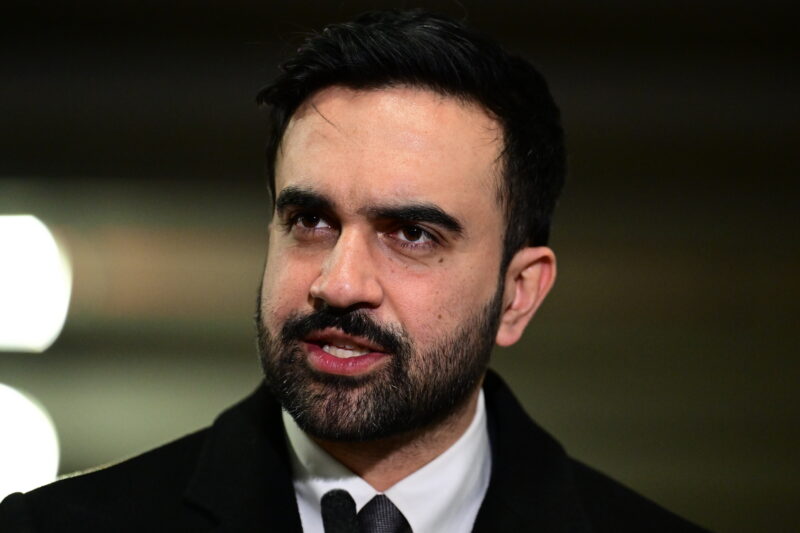









Israeli Ambassador Yechiel Leiter said Khanna had declined a request to coordinate with the embassy for the trip where he was stopped by Israeli settlers in the West Bank
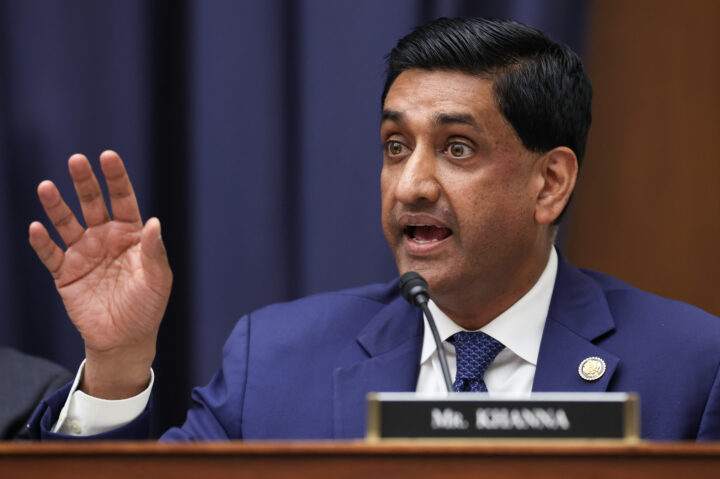
Photo by Win McNamee/Getty Images
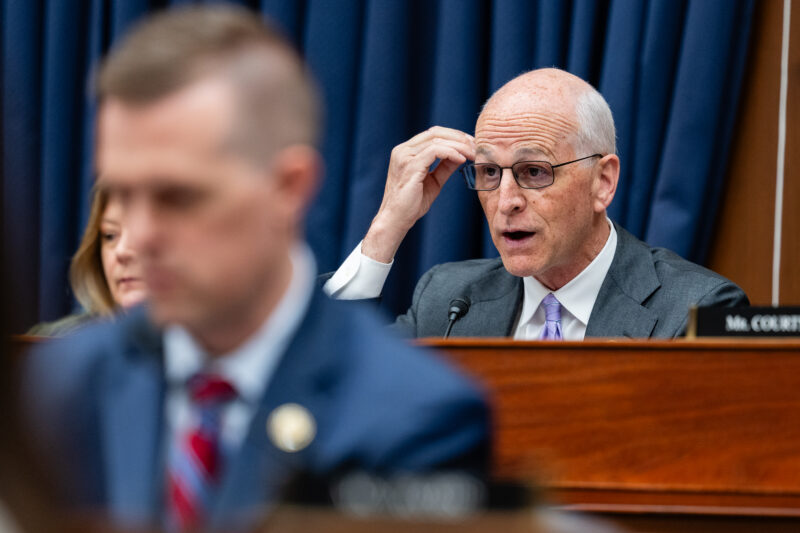
Rep. Ro Khanna (D-CA) questions U.S. Secretary of Defense Pete Hegseth as he testifies before the House Armed Services Committee April 29, 2026.


 Add JewishInsider on Google
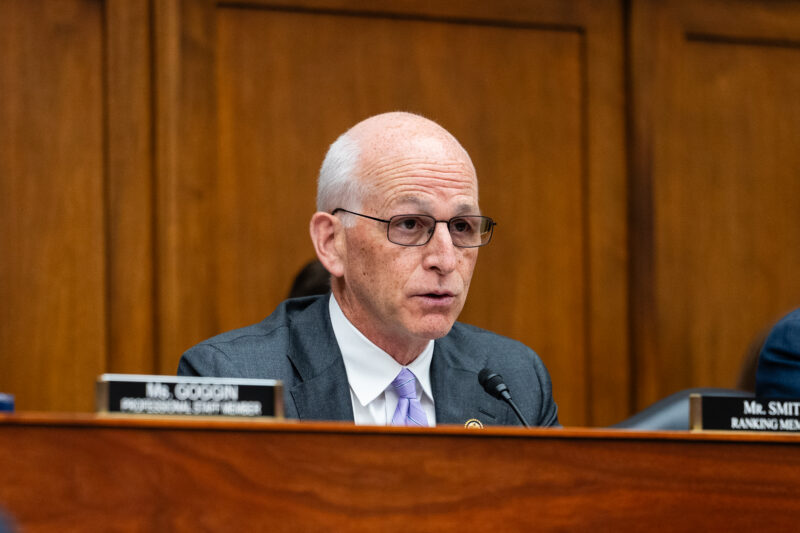
Rep. Ro Khanna (D-CA) on Sunday called on Israeli Prime Minister Benjamin Netanyahu to launch an investigation after the lawmaker said he was harassed by Israeli settlers in the West Bank last week, an incident Netanyahu attributed to a small group of “vigilantes.”
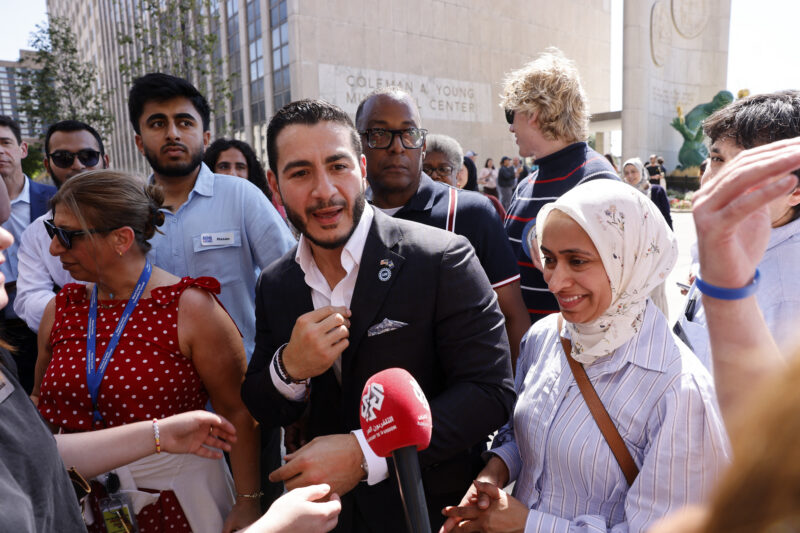
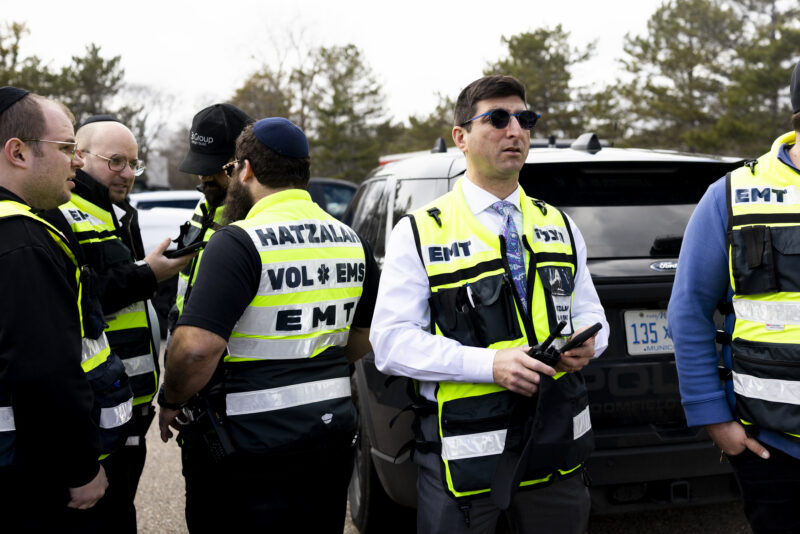
During his first known trip to Israel and the West Bank since October 2024, Khanna said that his delegation’s van had been surrounded, stopped and taunted last Wednesday by Israeli settlers armed with U.S.-made M4 rifles during a tour of the southern West Bank, an incident that a New York Times photographer traveling in a different vehicle said he witnessed.
Khanna claimed IDF vehicles then appeared, and the soldiers spoke amiably with the settlers and continued to block the road themselves after the settlers departed. The IDF denied that the visitors were detained by military personnel.
Cameron Kasky, an aide to Khanna, said the group was held for over an hour and appealed to the U.S. Embassy in Jerusalem for assistance. Kasky previously ran in the Democratic primary in New York’s 12th Congressional District on an explicitly anti-Israel platform.
Khanna told NBC News the incident had made him “more resolved” to consider a presidential run in 2028.
“I have something unique to offer about the injustices of Palestinians,” he told the Times. “I’m going to go to every corner of America, regardless of whether I run or not, and tell their stories and tell the story of what is happening in the West Bank.”
An IDF spokesperson told NBC that troops and police officers were dispatched to the scene in a “closed military zone” after a “report was received regarding Israeli civilians who were unlawfully blocking the vehicle of foreign nationals.” The military said the soldiers reopened the road and let the delegation through.
Israel Police said that officers on the scene did not witness any violence and that the group was stopped in a restricted zone. Israel prohibits its citizens from entering certain areas of the West Bank without an IDF permit, particularly Palestinian Authority-controlled Area A, which are typically marked with warning signs. Foreign civilians are generally not legally barred from these areas, though they may be subject to security advisories or temporary restrictions.
Police added that Khanna’s tour group leader was warned of a possible arrest and that the group was told that civilians were not permitted in the area, before being released. Khanna said that his office had alerted the Israeli Embassy in Washington of his visit — a claim that was denied by the Israeli Ambassador to the U.S. Yechiel Leiter.
Speaking on CBS’ “Face the Nation,” Leiter said that Khanna’s team did not alert Israeli authorities, saying instead that the California lawmaker had ignored a request from officials to allow them to assist in coordinating the trip.
“We reached out to him [Khanna] when we heard he was going to Israel … We suggested he visit with survivors of the Oct. 7 [2023] massacre, that he visit the borders so he understands the issues that we have on our borders and so on,” Leiter said. “He [Khanna] ignored that and he decided to coordinate his trip not with Israel, but with Palestinian activists and with J Street.”
“There was a question about visas, that’s all,” Leiter added of Khanna’s outreach to the embassy. “But when we requested that he coordinate the trip with us, he rejected that by basically staying silent.”
J Street President Jeremy Ben-Ami on Sunday denied that J Street had any involvement in organizing Khanna’s visit.
Speaking on NBC’s “Meet the Press” on Sunday, Khanna called the encounter “unprecedented” and accused the IDF of “lying.”
“They had violent settlers detain American citizens, including an American government official,” Khanna said. “You had these settlers brandishing M4s, kicking the tires of our van, laughing at us, mocking us, videotaping us. We were detained for about 20 minutes, fearful for our lives. Then the IDF comes, four soldiers, they tell our translator that they’re on the side of the settlers.”
Also appearing on NBC on Sunday, Netanyahu insisted that Israel is “a country of laws” and blamed the confrontation on a fringe group of “vigilantes.”
“We’re a country of laws, and people who break the law, we take them to court,” Netanyahu said. “There is a vigilante effort, not by the settler community … There are 150 juvenile delinquents that are not part of that community. They come from other parts of Israel. I don’t want vigilantes of any kind, and we are working to put them under the law.”
Responding to Netanyahu’s remarks, Khanna pushed the Israeli leader to further investigate the matter.
“The prime minister needs to open an investigation on these violent settlers,” Khanna said. “They need to be prosecuted … their outpost needs to be investigated, and he [Netanyahu] needs to have an investigation on these four IDF officers.”
“Security cameras can see that they were involved in the detention of American citizens,” he added. “How dare they mistreat people with an American passport that way?”
The unfolding situation in Maine comes amid a broader trend in American politics in which immoral or questionable behavior by one’s peers has at times been ignored or obfuscated to serve a perceived 'greater good'
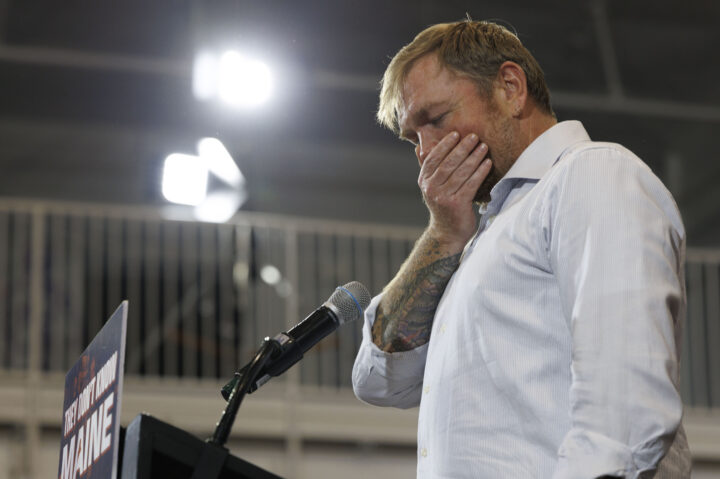
(CJ Gunther/Getty Images)
Democratic U.S. Senate candidate Graham Platner speaks at his Primary Election event on June 9, 2026 in Blue Hill, Maine.
When an ex-girlfriend of Graham Platner told Politico in a story published on Monday that the Maine Democratic Senate candidate had raped her in 2021 after entering her home while heavily intoxicated, she said she did so because the response to a recent New York Times report on Platner’s past dubious behavior had focused on discrediting Lyndsey Fifield, one of the women who featured prominently in the story, over her ties to the GOP.
Jenny Racicot, a Democrat, hadn’t wanted to go public with the rape accusation (which she had shared off-record with the Times), in part because she and Platner were largely politically aligned. “One of the reasons I didn’t come forward sooner was, the huge moral conflict that I had between supporting his politics, but not supporting him as a person,” Racicot told Politico. “My part of the story [in the NYT] was just a read-over,” Racicot said. “And the story was Lyndsey, and the accusations of her being politically motivated.”
The unfolding situation in Maine comes amid a broader trend in American politics in which immoral or questionable behavior by one’s peers has at times been ignored or obfuscated to serve a perceived “greater good” of electing a political ally despite their failing moral standards.
In recent years, both major parties have increasingly tolerated conduct that would have once been considered disqualifying — even as the #MeToo movement briefly changed the nature of the discourse. Similar arguments have surfaced across political controversies over the last decade (including against President Donald Trump), with supporters of embattled candidates and officials insisting that policy positions outweigh personal conduct and dismissing allegations as politically motivated.
In a short span of time, the 2017 rallying cry of “Believe women” gave way to “Believe women whose politics align with ours” — a mindset that extended to the widespread denial of Hamas’ sexual violence during the Oct. 7, 2023, terror attacks and against the Israeli hostages kept in captivity in Gaza.
But yesterday’s Politico report, which prompted calls from Platner’s most prominent backers — including Rep. Ro Khanna (D-CA) and Sens. Elizabeth Warren (D-MA) and Ruben Gallego (D-AZ) — for him to end his bid, may mark the point at which previous defenses of the Maine Democrat become politically untenable.
Since shortly after the launch of his campaign, Platner — a virtual unknown before last summer — has faced numerous controversies, from his tattoo of an SS totenkopf to Reddit comments praising Hamas tactics to the revelation that he exchanged inappropriate messages with numerous women despite being married. The Wall Street Journal reported last month that Platner’s vetting process — normally a weeks-long process — took place in a matter of days, expedited by Platner’s top strategist and done at a fraction of the cost of a standard background check, which likely would have flagged at least some of these issues.
Yet none of those allegations proved politically fatal — and Platner ended up winning the Democratic primary with 72% of the vote. Platner’s defenders echoed the rhetoric of many of Trump’s early backers: that the party establishment had targeted him, that the media had unfairly covered the incidents and that a candidate’s positions, rather than their personal lives, should be on the ballot.
Unlike Trump, who was weeks away from his 2016 presidential victory when the infamous “Access Hollywood” tape leaked, Platner had only recently clinched his party’s nomination after Gov. Janet Mills ended her bid. He can still be replaced on the ballot, provided he exits the race by next Monday, though any new candidate will face a much more difficult battle against Sen. Susan Collins (R-ME) in what had been the Democrats’ best hope for a pickup and control of the Senate.
Now, the question is whether American politics still has a meaningful threshold beyond which partisan leanings give way to concerns about character and ethics — or whether that threshold has simply become much higher than it once was.
Renewed scrutiny of congressional hopefuls Graham Platner and Adam Hamawy highlight the potential for far-left candidates to complicate the party’s midterm ambitions
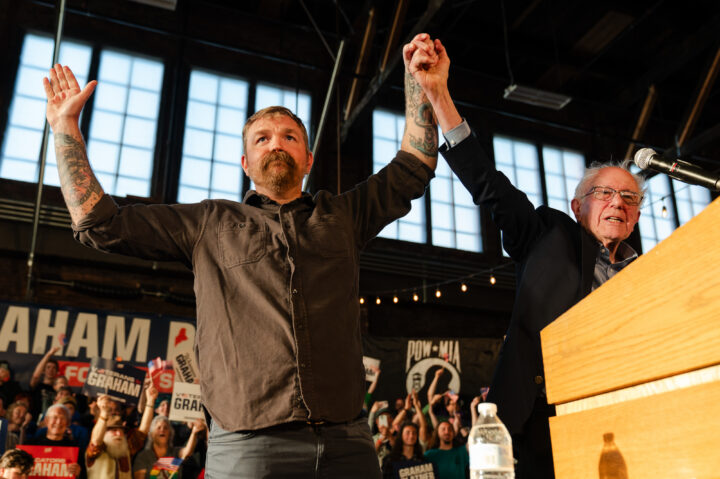
Sophie Park/Bloomberg via Getty Images
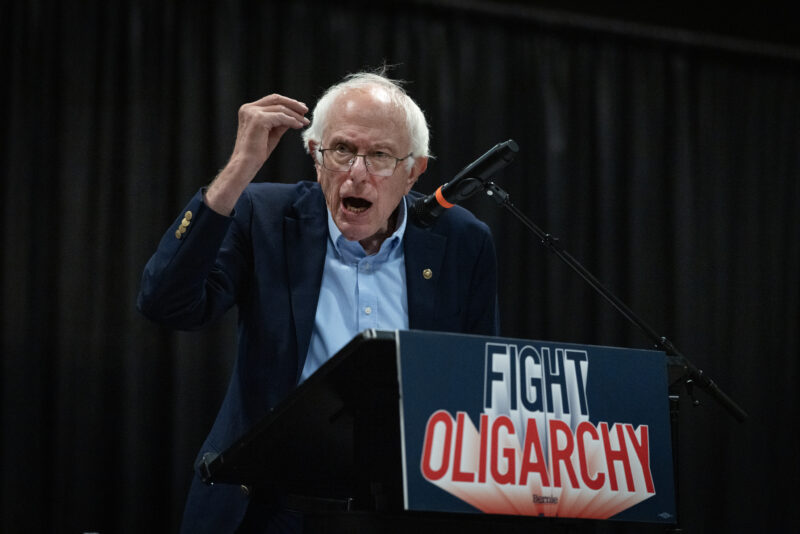
Graham Platner, Democratic Senate candidate for Maine, left, and Sen. Bernie Sanders (I-VT) during a Fighting Oligarchy event in Portland, Maine, on May 25, 2026.
The latest revelations that Graham Platner, the Democrats’ anti-establishment, far-left standard-bearer in the Maine Senate race, was sending sexually explicit texts to as many as a dozen women while he was married — an issue his wife raised to campaign staff as a potential liability — is another sign that the candidate’s extensive baggage may be too much for the party to handle. (As commentator Haviv Rettig Gur posted on X: “I’m starting to think that SS tattoo might have been a red flag.”)
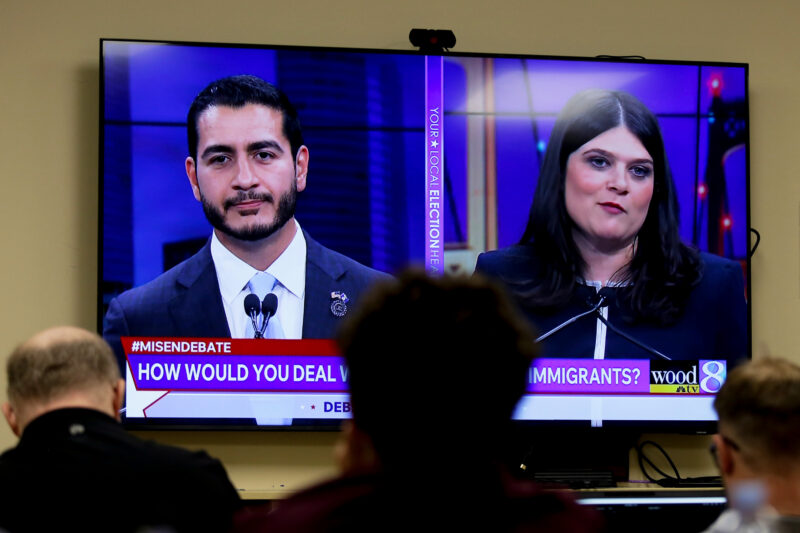
Meanwhile, a New York Times interview, published over the weekend, with leading New Jersey Democratic congressional candidate Adam Hamawy about his past affiliations with Islamist extremists is going to raise more red flags for Democrats.
Asked about his travels with Omar Abdel Rahman, known as the “Blind Sheikh,” who was connected to the 1993 World Trade Center bombing, Hamawy downplayed the spiritual leader’s jihadist sermons. “He wasn’t preaching death and destruction all the time,” Hamawy said. “He had certain views that he spoke in certain forums, but that’s not what he did every single day.”
With the calendar now approaching June, it’s yet another reminder that Democrats are on the verge of nominating some truly radical and damaged candidates for congressional office as a critical mass of primaries take place this month.
Many of the races are taking place in safely blue seats, so Democrats haven’t raised that much concern over candidates such as Hamawy, whose terror ties (including volunteer work for what was later revealed as an al-Qaida front group) at the very least, raise questions about suitability for public office.
But others, such as Platner, are running in battleground Senate seats where the stakes couldn’t be higher. In California and Montana, candidates are running in swing districts where the battle for the House majority will be fought.
If May was the month that tested President Donald Trump’s power over the Republican Party (lesson: he’s still firmly in control of GOP voters), June will be the month that determines whether the Democratic Party is going to abandon its moderate moorings and nominate a roster of radicals.
The stakes couldn’t be higher — especially for Jewish Democrats, who have been among the leading voices alarmed by the rise of these candidates, who, not surprisingly, often hold virulently anti-Israel views and don’t have a problem mainlining antisemitic rhetoric.
While Platner’s expected nomination and Hamawy’s potential one are generating the most attention, several under-the-radar races will have a direct bearing on the Democrats’ midterm prospects.
In California’s congressional races, the pro-Israel advocacy group Democratic Majority for Israel has been involved in two swing-district races where the group fears left-wing candidates could jeopardize the party’s chances of a pickup. In the seat held by Rep. David Valadao (R-CA), the group endorsed Assemblywoman Jasmeet Bains and has been airing ads on her behalf in the Central Valley-based district.
Bains is facing a Democratic challenge from school board trustee Randy Villegas, who has landed endorsements from many of the leading anti-Israel lawmakers in Congress and who many Democrats fear could cost the Democrats a seat if he’s the nominee against the battle-tested Valadao.
In the race to succeed retiring Rep. Darrell Issa (R-CA) in a San Diego-area district, the pro-Israel group has endorsed San Diego Councilwoman Marni von Wilpert, who is running against Ammar Campa-Najjar, who is of mixed Palestinian and Mexican American descent and has twice unsuccessfully run for Congress. The district was redrawn to elect a Democrat, but it still remains a competitive battleground.
In Iowa, Democrats will be choosing whether to nominate the party-favored state Rep. Josh Turek, the more moderate candidate, or go with a true-blue progressive in state Sen. Zach Wahls. The nominee is expected to face Rep. Ashley Hinson (R-IA) in a state that Democrats hope will become competitive, given the rough national environment for Republicans.
And in Montana’s 1st District, in the race to succeed retiring Rep. Ryan Zinke (R-MT), Jewish leaders are alarmed by several candidates in the Democratic primary field over their anti-Israel rhetoric and online antisemitic activity. Army veteran Matt Rains appears to be the most mainstream Democratic candidate of the four in the race, but lags behind in fundraising.
The district has been solidly Republican since its creation, but in a Democratic wave, it’s competitive enough that it could flip. Given the extreme rhetoric of some of the Democratic candidates, however, that prospect would be less likely.
Also of note: Los Angeles voters will be determining which two candidates will square off in a runoff for mayor. Assuming embattled Los Angeles Mayor Karen Bass finishes in the top two, her opponent will either be running further to her left (Los Angeles City Councilwoman Nithya Raman) or to her right (reality star Spencer Pratt). The matchup will determine whether the campaign focuses more on catering to progressive voters or moderates disenchanted with the direction of the city.
Kristof, citing testimonies from victims, alleged that Israeli security forces and settlers committed sexual abuse against Palestinian prisoners; critics argue he relied on Hamas propaganda

Victor Boyko/Getty Images for Aurora Humanitarian Initiative
Nicholas Kristof speaks at the "Global Pulse Check" during the Humanitarian Summit and 2025 Human Rights and Humanitarian Forum at the UCLA Luskin Conference Center on May 07, 2025 in Los Angeles, California.
Nicholas Kristof’s New York Times column alleging widespread Israeli sexual violence against Palestinian prisoners was certain to generate intense debate and scrutiny, given the sensitivities involved in covering such a highly charged subject.
But after it was published on Monday, his opinion piece, headlined “The Silence That Meets the Rape of Palestinians,” has faced particularly heated backlash, including accusations of antisemitism and claims Kristof relied on discredited sources to advance his message.
Kristof, a veteran Times opinion columnist who has frequently reported on atrocities in far-flung locales, argued that Israeli leaders have ignored what he calls a well-documented pattern of sexual violence against Palestinians, even as Israeli Prime Minister Benjamin Netanyahu had “rightly” beseeched “civilized leaders” to “speak up” after Hamas was found to have engaged in a campaign of gender-based rape and brutalization targeting women during the Oct. 7, 2023, attacks.
Citing recent interviews with 14 Palestinian victims, including men and women, some of whose accounts he says he corroborated, Kristof relays a number of graphically detailed stories implicating members of the Israeli security forces and settlers whom he claims have escaped accountability.
Despite the direct testimonies he presented, critics have countered with a range of rebuttals, claiming that he drew a false equivalence between Israel and Hamas, that his column overstated the existence of alleged misconduct and that his broader assessment rests on questionable data and sources that weaken his central thesis.
Former Israeli Prime Minister Ehud Olmert, who was quoted in the column as saying he was not surprised to hear about accounts of sexual violence, also wrote in a statement to the Times obtained by the journalist Eli Lake that “the positioning” of his comments “after pages of such allegations misrepresents my views.”
Meanwhile, Israel’s Foreign Ministry, in a social media post on Monday, dismissed Kristof’s column as “one of the worst blood libels ever to appear in the modern press,” saying it “will fight these lies with the truth.”
On Tuesday, echoing others who took issue with the column, the ministry said that Kristof had referenced a report by a Geneva-based NGO, Euro-Med Human Rights Monitor, whose founder “has documented ties to senior Hamas leaders,” raising questions about the accuracy of its conclusion that Israel uses “systematic sexual violence” that is “widely practiced as part of an organized state policy.”
The American Jewish Committee also expressed concerns about Kristof’s decision to cite allegations that Israel had trained police dogs to rape Palestinian prisoners, a claim that critics have rejected as a thinly sourced conspiracy theory. The AJC, for its part, said the allegation represented “a modern-day blood libel in the ‘paper of record.’”
“Allegations of abuse toward Palestinians deserve serious, rigorous investigation,” the organization wrote in a social media post on Tuesday. “Yet this piece, while opinion, appeared to be presented as an investigative report and fell alarmingly short of that standard while amplifying inflammatory narratives that have real-world consequences in a time of surging hatred toward Israelis and Jews worldwide.”
Kristof, who has defended his column in several social media posts, questioned “those who say that canine rape is impossible, despite the many Palestinians who have described it.”
“I’d note that at least three different medical journal articles discuss rectal injuries in humans from anal penetration by dogs,” he wrote on Tuesday. “Sigh.”
In a separate post after publication, Kristof voiced appreciation for “the intense interest in” his column. “For skeptics, why not agree on Red Cross and lawyer visits for the 9,000 Palestinian ‘security’ prisoners?” he replied. “If you think these abuse allegations are false, such monitoring visits would be protective. So why not?”
He also dismissed a viral but unverified social media post alleging Times discussions about “retracting” the column as “completely untrue,” a response backed up by the newspaper itself.
“There is no truth to this at all,” a spokesperson for the Times said in a statement posted to social media, adding that Kristof “traveled to the region to report firsthand on the stories of Palestinians who suffered abuse, and his article collects accounts in the victims’ own words, backed by independent studies.”
The Times did not respond to a request for comment from Jewish Insider regarding other reactions to the column and how or if it is now weighing the criticism.
Haviv Rettig Gur, an Israeli journalist, criticized the column as “obvious propaganda,” but acknowledged that “there really is abuse” that Israel must confront.
“The problem is real,” he said in a lengthy post. “It’s far smaller than they claim, but real nonetheless. And when discipline and morality break down, it can only get worse. We either crack down now or we watch it fester and grow.”
He also noted that the column had overshadowed a comprehensive new report, released on Tuesday by an independent Israeli group, concluding that Hamas had committed “systematic” and “widespread” sexual violence on Oct. 7 as part of a “calculated strategy.”
The Times spokesperson said in a statement that the report “had no bearing on” Kristof’s “opinion column or its publication timing.”
Michael Cohen, a pro-Israel political commentator based in New York City, argued in social media post that “two things can be true at the same time.”
“Kristof’s piece properly highlighted the horrible prison conditions for Palestinian detainees in Israel (which are well documented) while also leaning into arguments (the dogs’ story in particular) that are based on weak evidence from unreliable sources,” he wrote on Tuesday. “Lots of people are focusing on the latter and ignoring the former — and vice versa.”
“I know it’s verboten on this website (or elsewhere) to suggest nuance in anything related to” Israelis and Palestinians, Cohen added, “but that’s usually where the truth lies.”
Carlson claimed Vance is ‘in a tough spot’ as the Iran war is counter to his worldview

Chip Somodevilla/Getty Images
(L-R) Tucker Carlson, Rep. Byron Donalds (R-FL), former President Donald Trump, and Sen. JD Vance (R-OH) appear on the first day of the Republican National Convention at the Fiserv Forum on July 15, 2024 in Milwaukee, Wisconsin.
In a wide-ranging New York Times interview published on Saturday, far-right podcaster Tucker Carlson offered an unusually personal defense of Vice President JD Vance, describing him as a close friend while suggesting he is being undermined by hawkish forces inside the White House amid tensions over the administration’s military actions in Iran.
Carlson, who played a key role in encouraging President Donald Trump to select Vance as his 2024 running mate, said he remains a close supporter of the vice president on a personal level.
“I couldn’t be a bigger fan of him as a man,” Carlson told New York Times podcast host Lulu Garcia-Navarro. He added that Vance is “in a tough spot” because his long-held foreign policy views clash with the administration’s decision to attack Iran in February.
Carlson went on: “I know him well and think so much of him as a person. And it is my guess that, based on his past behavior, that he’s doing everything he can to mitigate what he sees as the ill effects of [the Iran war]. But it’s kind of hard to call the shots when you’re vice president, because that’s not in the Constitution.”
Pressed by Garcia-Navarro when he last spoke to the vice president, Carlson declined to answer. “I don’t know. I mean, I would never characterize that,” he said. “I don’t want to cause him more problems. I would just say I’m not advising. No one’s seeking my counsel. I’m not trying to influence anything. I gave it my best shot. Didn’t work.”
Carlson also took a swipe at Secretary of State Marco Rubio, baselessly alleging that backers of Washington’s top diplomat have been engaging in “nonstop treachery” against Vance. “There are people in the White House who want to hurt JD Vance and have wanted that since the very first day. They were bitter. They wanted Marco Rubio to be the choice as vice president,” Carlson said.
The comments come as Carlson — once a key Trump ally — has publicly broken with the president over Iran policy, describing Trump as being possessed by demonic forces.
Trump, for his part, gave an interview to the New York Post last month calling Carlson a fool and irrelevant to his decision-making. “Tucker’s a low IQ person that has absolutely no idea what’s going on,” the president told the Post. “He calls me all the time; I don’t respond to his calls. I don’t deal with him. I like dealing with smart people, not fools.”
Coverage of social media activity by the wives of Rep. Dan Goldman and Mayor Zohran Mamdani has raised questions about how — and when — the press scrutinizes the families of public officials
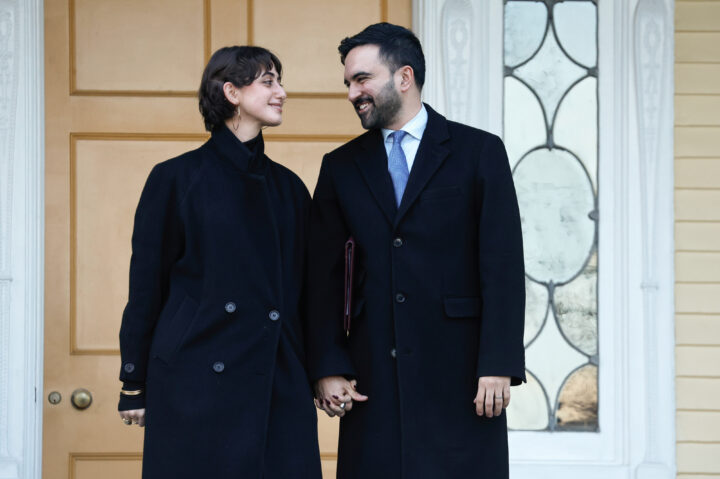
John Lamparski/Bloomberg via Getty Images
Zohran Mamdani, mayor of New York, and his wife Rama Duwaji during a news conference at Gracie Mansion in New York, US, on Monday, Jan. 12, 2026.
Recent days have offered a tale of two New York public officials’ wives and a revealing look at inconsistent standards from some mainstream media outlets on how they scrutinize the families of elected officials depending on the political viewpoints expressed.
The first was a New York Times story focused on the pro-Israel social media posts of Rep. Dan Goldman’s (D-NY) wife. Under the headline “Congressman Faces Questions About Wife’s Social Media Stances on Israel,” the Times wrote of the instances — believed to be 10 in all — that Corinne Goldman, who served as treasurer on her husband’s campaign, liked posts related to the Israel-Hamas war in the weeks after the Oct. 7, 2023, Hamas terror attacks, including one comparing “Jews for Palestine” to “Chickens for KFC.”
Days later, Jewish Insider uncovered the social media activity of Rama Duwaji, the Syrian-American wife of New York City Mayor Zohran Mamdani, in the days after the attacks. That activity included liking posts that unambiguously celebrated Hamas’ Oct. 7, 2023, attacks — as they were underway — and included still images from the attacks, in which more than 1,200 were killed and 251 taken hostage.
The only Jewish communal official quoted in the Times’ story was Sophie Ellman-Golan, the director of strategic communications at the far-left Jews For Racial & Economic Justice, which endorsed Mamdani in last year’s Democratic mayoral primary.
A day after JI’s report, The Free Press published its own investigation that found Diwaji had liked dozens of additional anti-Israel posts, including one saying Israel was waging a “vile land grab” and another that suggested that the Times, which had done its own investigation into sexual violence on Oct. 7 had “fabricated” a “mass rape” hoax.
In his first public statement addressing JI’s reporting, Mamdani said his wife — who less than a month ago was the subject of a cover profile and photo shoot for The Cut — was a “private person.”
It was a response that was unsatisfactory to some. Deborah Lipstadt, the Biden administration’s special envoy to monitor and combat antisemitism, responded to Mamdani’s statement by rhetorically asking, “But Jessica Tisch has to apologize when her brother says something?” — referring to the NYPD commissioner’s recent apology over her brother’s assertion that Mamdani was an “enemy of the Jewish people.”
The Times, which covered Mamdani’s response, changed its headline on the story at least twice after publication, from “Mamdani Says His Wife’s Views on Gaza Are No One’s Business,” to “Mamdani Defends Wife Amid Criticism of her Support for Palestinian Cause,” eventually landing on “After Social Media Scrutiny, Mamdani Says His Wife Is a ‘Private Person.’”
In response to the second headline, Tel Aviv-based research analyst Daniel Paul Rubenstein wrote on X that he “did not expect to see the New York Times refer to the October 7 Massacre as an expression of the ‘Palestinian Cause’ – but here we are.”
The social media defense of Duwaji from elements of the left was swift, with many arguing that New York City’s first lady — who lives in Gracie Mansion at the taxpayer’s expense — should not be subject to criticism over her views, despite those views including the embrace of terrorism.
In a misdirection, some turned their ire toward Bari Weiss, after CBS News shared a 60-second clip confirming JI’s reporting.
Former Obama administration official Ben Rhodes took to X to say, “There’s a war, high prices, job losses, AI unleashed, and on and on. But Bari Weiss’s CBS is on the case of the NY Mayor’s wife’s likes from years ago. WTF is going on.” Meanwhile, Status’ Natalie Korach dedicated the bulk of Sunday’s newsletter to Weiss and Mamdani, saying that the reporting — though first done by JI — “struck many as peculiar, something that might have appeared on The Free Press, Bari Weiss’ anti-woke and vehemently pro-Israel opinion site.”
An April 2025 Pew Research Center survey found 72% of Jewish Americans held a favorable view towards Israel
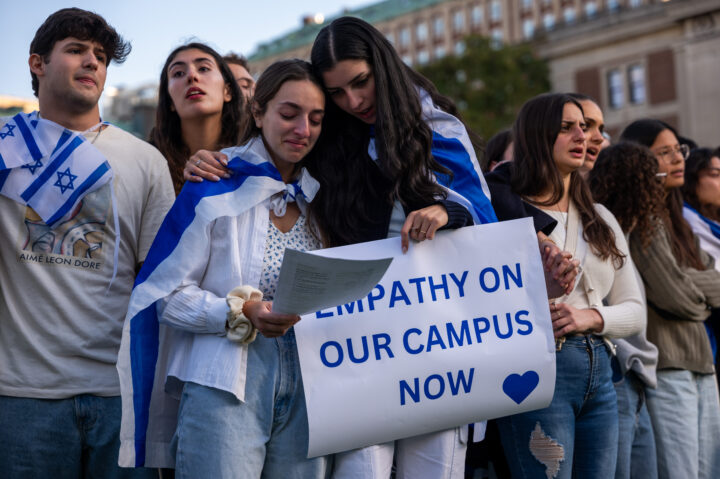
Spencer Platt/Getty Images
Columbia students participate in a rally and vigil in support of Israel in response to a neighboring student rally in support of the Palestinians at the university on October 12, 2023 in New York City.
One of the biggest challenges in our modern media ecosystem is breaking out of the echo chambers that so many are locked into.
Ezra Klein’s New York Times column this week, headlined “Why American Jews No Longer Understand Each Other,” is a worthwhile example of how even the best-intentioned columnists can struggle to understand the world outside their own social and informational bubble.
The column portrays a vocal minority of anti-Zionist sentiment within the Jewish community as much larger than it actually is. The characterization of a roughly even divide within the Jewish community between Zionists and anti-Israel Jews is at odds with numerous reputable polls tracking Jewish public opinion.
Public polling serves as a useful reality check to much of the framing in the column, and underscores the breadth of Jewish support towards Israel. An April 2025 Pew Research Center survey found 72% of Jewish Americans held a favorable view towards Israel. A fall 2024 poll of Jewish voters commissioned by the conservative Manhattan Institute found 86% of Jews considering themselves “a supporter of Israel.” A spring 2024 survey of Jewish voters commissioned by the Democrat-affiliated Jewish Electoral Institute (JEI) found 81% of Jewish respondents were emotionally attached to Israel.
This doesn’t paint the portrait of a community that is meaningfully divided over Israel — even amid the wave of negative, if not hostile, coverage towards the Jewish state in recent months.
Klein’s column interviews four Jewish voices — from anti-Israel polemicist Peter Beinart to the publisher of the anti-Zionist Jewish Currents publication to the rabbi of a deeply progressive Park Slope synagogue to self-proclaimed “progressive Zionist” Brad Lander — while just one (former Biden antisemitism envoy Deborah Lipstadt) reflects the mainstream Jewish majority.
The other canard advanced in the column is that younger Jews, in particular, have become hostile towards Israel. And while Gen Z Jews’ level of support for the Jewish state is not as high as their older counterparts, the degree of support towards Israel among the younger Jewish generation is still significant — especially when compared to their non-Jewish counterparts on campuses.
A November 2023 poll commissioned by the American Jewish Committee asked: “Thinking about what being Jewish means to you, how important is caring about Israel?” Two-thirds of Jewish respondents between the ages of 18-29 said it was important — with 40% saying it was “very important.” (Over four-fifths of Jews older than 30 responded in the affirmative.)
A February 2024 Pew Research Center study found a 52% majority of Jews ages 18-34 considered Israel’s conduct in its war against Hamas to be acceptable, while 42% disagreed. By a 61-26% margin in the same poll, Gen Z Jews also favored the U.S. continuing to provide military aid to Israel to help it defeat Hamas.
In a thorough study and survey of Jewish student public opinion in the summer of 2024, Tufts University political scientist Eitan Hersh flagged that the source of anti-Israel Jewish student opinion is almost entirely concentrated among the “very liberal” faction of Jewish students on campus, which make up 18% of the Jewish population. That closely matches the 22% of Jewish students who said they feel no connection to Israel at all.
By comparison, an outright 54% majority of Jewish college students said they “feel their own well-being is connected to what happens to Jews in Israel.”
“We see that the gaps between liberals and very liberals (the former more moderate, the latter further left) are enormous. In fact, they vastly exceed the gaps between conservatives and liberals,” Hersh concluded.
Indeed, the biggest disconnect on college campuses these days is between Jewish students, who still largely support Israel, and their non-Jewish counterparts, who have become downright hostile towards the Jewish state — or, among elements of the right, have become more apathetic towards Israel.
For example, Hersh’s survey found that 51% of Jewish college students blamed Hamas for the conflict in Gaza, while 18% blamed Israel. But among non-Jewish college students, more blamed Israel (35%) than Hamas (18%) for the current war. Nearly one-third (30%) said both, in a sign of apathy and exhaustion towards the conflict.
Those findings are consistent with a new analysis from political science professor Eric Kaufmann in Tablet, which found that far from becoming more critical of Israel, liberal Jews on campus have instead become more isolated from their non-Jewish peers while moving more towards the political center.
“Ivy League Jews went from being well to the left of the median Ivy League student to leaning right of the average,” Kaufmann concluded. “In the Ivy League, Jews now self-censor more than conservatives do.”
The New York Times columnist says she is worried Jews in the United States could one day consider fleeing over antisemitism
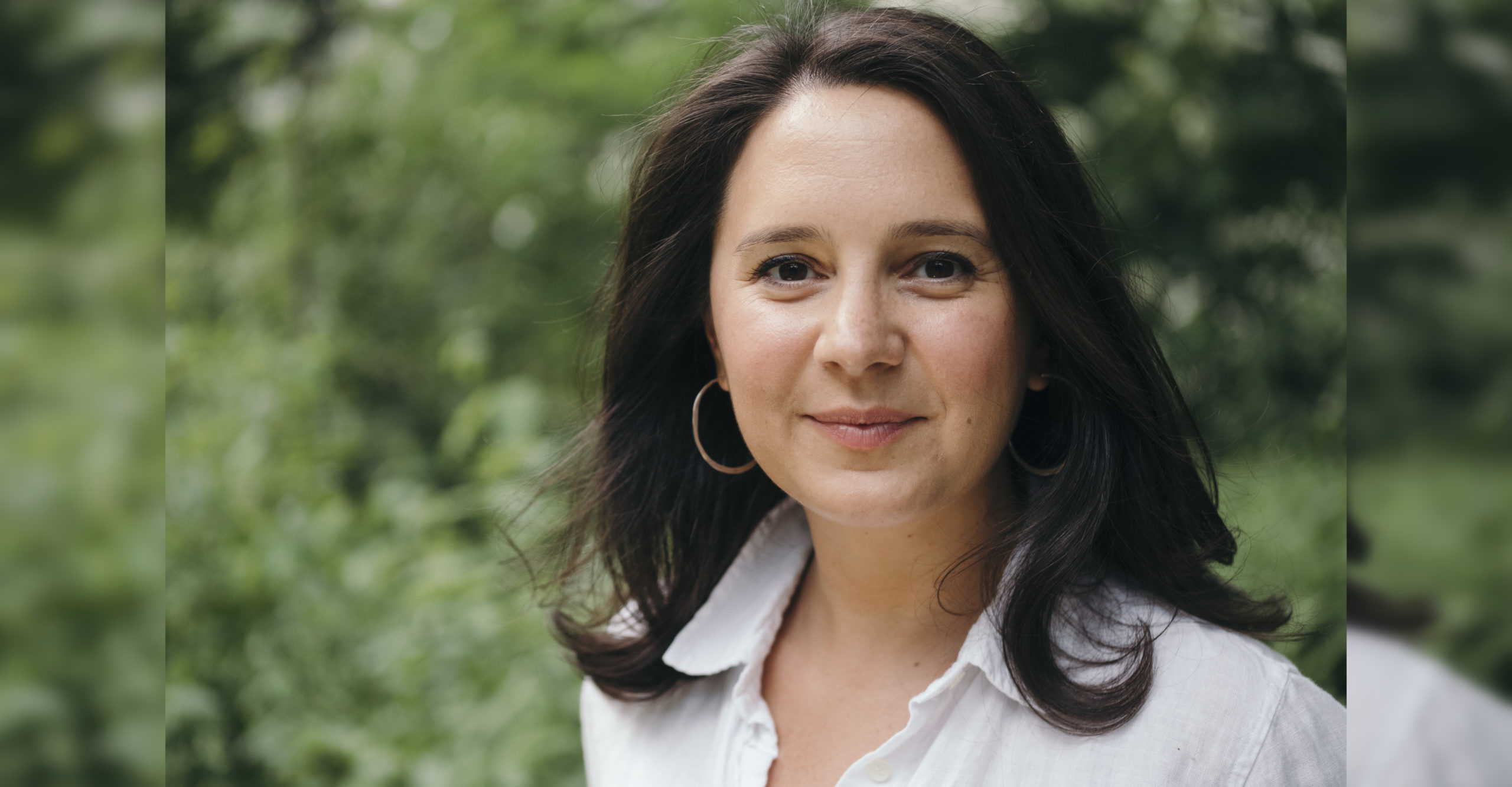
Sam Bloom
New York Times editor Bari Weiss was gearing up to write a book about censorship and the policing of free speech in the 21st century. Then a gunman opened fire at a synagogue in Pittsburgh in October 2018, killing 11 Jewish worshippers.
Weiss, a native of Pittsburgh, had celebrated her bat mitzvah at the Tree of Life synagogue. The scourge of deadly antisemitic violence had hit closer to home than she ever thought possible. And that attack and its aftermath made it clear to Weiss that the book she really needed to be writing in this moment was How to Fight Anti-Semitism, which will be published tomorrow.
“Antisemitism is something that I had been following closely my whole life,” Weiss told Jewish Insider in a recent interview. “But it had sort of remained mostly something that was happening to other people in other places.”
The deadly shooting changed that view, and deeply affected Weiss. She opens her book in a very personal way, detailing her reactions and experiences in Pittsburgh in the days after the attack. It is hard not to hear despair, anger and fear in her opening words, after not just one but two deadly synagogue shootings in the span of six months.
“It was clear after the Poway attack [in April] that Jews — never mind everyone else living in a divided nation awash in weapons owned by people who could radicalize themselves in front of computer screens — had reason to be afraid in America,” Weiss wrote.
But by the book’s conclusion, Weiss sounds a much more optimistic note, championing a defiant, joyous Judaism that refuses to back down, and an unapologetic love for the State of Israel, flaws and all. The book’s final chapter exhorts Jews to “practice a Judaism of affirmation, not a Judaism of defensiveness” as a way to combat the dark forces of antisemitism, and to not being afraid to call out antisemitic sentiments from any part of the spectrum.
“My intent with the book was always for it to have a really energizing, positive message for people,” she said. “I think Jewish history teaches us nothing other than that.” And in the book’s opening, she said, “I really tried hard to take myself back to that morning [after the Pittsburgh shooting], and tried to help the reader go there with me.”
In just 200 pages, Weiss lays out a brief history of anti-Jewish bigotry, her classification of the three categories of antisemitism — from the right, the left and radical Islam — and her proposals for how Jews around the world can fight the ancient hatred.

While Weiss had always known about and studied antisemitism around the world, she was shocked when it reared its ugly head in the United States. Could Jews in the U.S. one day contemplate emigrating — the way many French and British Jews have in recent years?
“I wouldn’t have written this book if I didn’t think that was in some ways a possibility,” she told JI. “Does it worry me right now that if you are a man walking around Crown Heights with a kippa and tzitzit out, that you might be physically assaulted? That to me is a pretty wild state of affairs, and one that has been largely overlooked in the past.”
The New York Times columnist pulls no punches in calling out the insidious antisemitism on both the right and the left of the political spectrum, including that emanating from the White House.
“In the nearly three years he has been in office, Donald Trump has trashed — gleefully and shamelessly — the unwritten rules of our society that have kept American Jews and, therefore, America safe,” she writes. “He has, at every opportunity, turned the temperature up rather than down. And he has genuinely appeared to have relished his role as the fomenter of chaos and conflict.”
But Weiss still opines in her book that “anti-Semitism that originates on the political left is more insidious and perhaps more existentially dangerous… calling out politicians like Steve King is easy. Calling out Ilhan Omar is not. That is because Omar is herself targeted by racists and lunatics who wish her harm because of her faith, her gender, or the color of her skin.” She makes it clear that “two things can be true at once: Ilhan Omar can espouse bigoted ideas. And Ilhan Omar can herself be the hate object of bigots, including the president of the United States.”
While Weiss doesn’t believe she is entirely alone in calling out antisemitism across the political spectrum, she said it can be disheartening to watch people let one or the other slide.
“There are lots of people who are loath to look at the ugliness on their own side,” she told JI. “The reality is that 75% of Jewish Americans vote for Democrats. We live in blue states… what does it mean when the place we thought was our natural home starts to look less and less hospitable?”
Weiss has penned a book that is both personal and academic, and one that she hopes will appeal to Jews and non-Jews alike.
“I want people to have the sense that they’re listening into the conversations that our community has around our Shabbat dinner table,” she said. While she notes the core appeal of the book is to the Jewish community, “I think that anyone who knows anything about history understands that a society where antisemitism thrives is a society that is dead or dying. And there are lots of signs that America in its current state is in a sort of spiraling period.”
The developer Bruce Ratner will succeed Robert M. Morgenthau, the former Manhattan district attorney, as chairman of the Museum of Jewish Heritage – A Living Memorial to the Holocaust, The New York Times reports.

(L-R) Bruce Ratner, Brooklyn Borough President Marty Markowitz, and Jay Z
Mr. Ratner will initially serve as chairman-elect, a new position created to help in an orderly succession. Following a transition period, Mr. Morgenthau will become chairman emeritus – also a new position, created to recognize his service as chairman since 1982.
Mr. Ratner has served on the board since 1996. He was the co-chair of the building committee, and his firm, Forest City Ratner Companies, provided pro-bono construction project management for the museum’s expansion, the Robert M. Morgenthau Wing, which opened in 2003.
The museum, which is located in Battery Park City and opened in 1997, is dedicated to educating people about Jewish life before, during and after the Holocaust.
“I strongly believe that Bob’s sense of justice and the power of the law are derived directly from his involvement with these issues,” Mr. Ratner said in a statement.
“The Museum of Jewish Heritage reminds us that we must always be vigilant,” he added, “and that we must all be prepared to say ‘Never again.’ ”
Please log in if you already have a subscription, or subscribe to access the latest updates.
 Continue with Google
 Continue with Apple