


















The organizations cited the ‘unprecedented and escalating threat environment’ facing religious communities
Emily Elconin/Getty Images
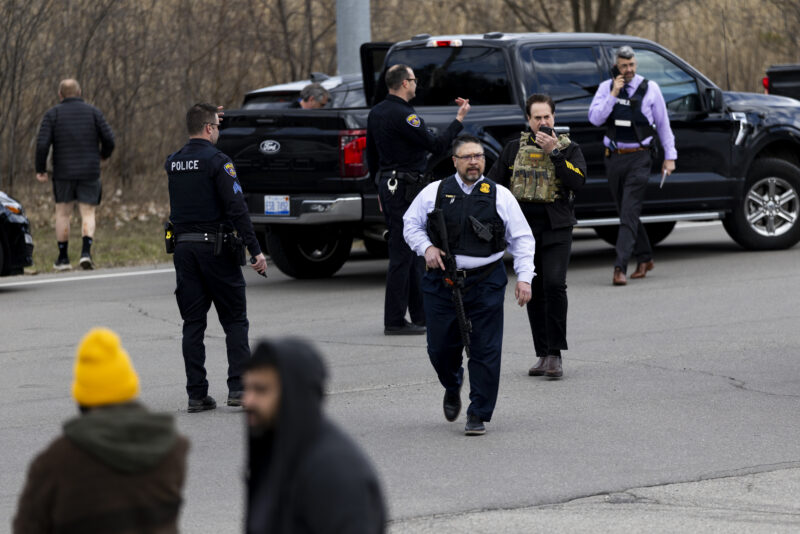
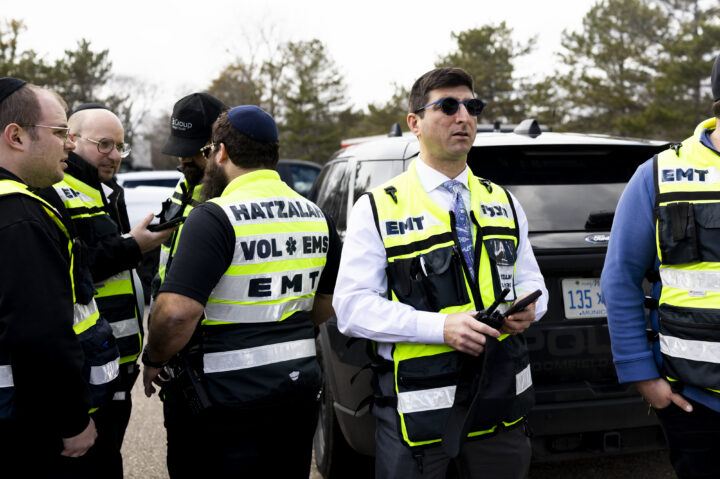
Members of Hatzalah of Michigan, a Jewish volunteer emergency medical service survey the area near Temple Israel following reports of an active shooter on March 12, 2026 in West Bloomfield, Michigan.


 Add JewishInsider on Google
Citing an “unprecedented and escalating threat environment facing religious communities and institutions” across the country, a coalition of Jewish groups, joined by organizations representing a range of other faiths, is urging Senate and House leaders to significantly expand funding for the Nonprofit Security Grant Program.
“We write as a broad coalition of faith-based and cultural organizations to express our deep concern about the unprecedented and escalating threat environment facing religious communities and institutions across the United States. This threat is not abstract; it is very real and felt by the communities we represent on a daily basis,” the groups wrote in a letter, led by the American Jewish Committee, to the top leaders of each chamber.
They said that faith-based institutions “should be able to solely focus on serving and strengthening their communities, but in this heightened threat environment, they instead must also worry about the next attack and whether they have the resources to stay safe,” and that members of targeted religious communities are forced to “weigh the risk of violence against the act of worship.”
The letter urges Congress to provide “up to $1 billion” for the NSGP — a significant expansion of funding from its 2025 funding level of $274.5 million, and the proposed 2026 funding level of $300 million.
“Previous funding has not kept pace with demand,” the groups wrote. “More must be done to bolster this program; therefore, we encourage you to engage with communities in your district and to encourage the same of your respective caucuses. We have no doubt you’ll hear about the fear and threats our communities are facing at this moment, and therefore, we urge you to allocate appropriate resources to address this threat.”
The religious organizations also urged swift passage of the long-gestating Pray Safe Act, which would create a centralized federal clearinghouse to provide security guidance to religious institutions, including training resources and information about available grant opportunities.
Additional Jewish organizational signatories included the Anti-Defamation League, the Conference of Presidents of Major American Jewish Organizations, Hillel International, the JCC Association of North America, the Jewish Federations of North America, the Rabbinical Assembly, the Union for Reform Judaism, the Orthodox Union and the United Synagogue of Conservative Judaism.
They were joined by groups representing the Muslim, Lutheran, Greek Orthodox, Hindu, Evangelical, Seventh-day Adventist, Sikh and Catholic communities.
The top Democratic leaders in New York, over a month after the primary, aren’t supporting Mamdani — but aren’t willing to speak out against him, either
Michael M. Santiago/Getty Images
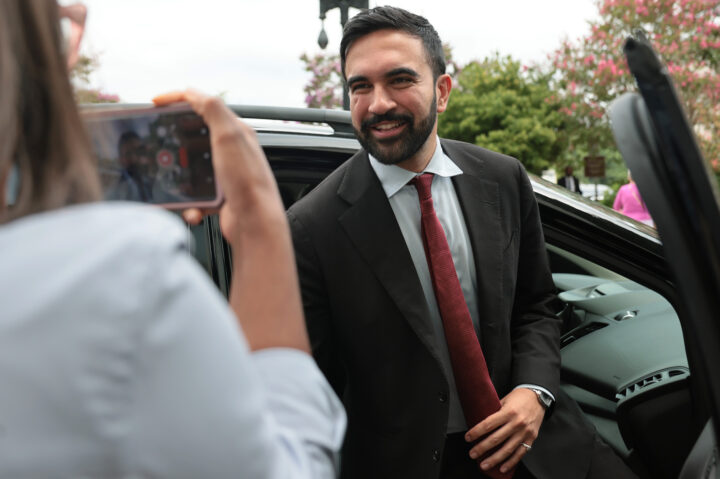
NYC Mayor Zohran Mamdani briefly speaks with reporters as he leaves the Dirksen Senate Office Building on July 16, 2025 in Washington, DC.
One of the defining features of our politics over the last decade has been the declining power of institutions, combined with the growing influence of individuals acting in their narrow self-interest, frequently at the expense of the public interest.
President Donald Trump’s ability in 2016 to bypass the Republican establishment benefitting from a crowded, self-interested opposition, was one of the seminal moments in our brave new world of individualism over institutionalism. Party institutions, outside-group spending and strident media criticism were no match for the grassroots army that rallied to Trump in that election.
Ten years later, the inability of moderate Democrats and other mainstream institutions to organize any coalition against the campaign of far-left New York City Democratic mayoral nominee Zohran Mamdani looks like the culmination of a dynamic where leaders feel powerless to lead, and are instead simply standing aside, ceding any influence to a cadre of ideological activists within the party.
What’s remarkable about this moment is that the top Democratic leaders in New York, over a month after the primary, aren’t supporting Mamdani — but aren’t willing to speak out against him, either. Senate Minority Leader Chuck Schumer (D-NY), House Minority Leader Hakeem Jeffries (D-NY), New York Gov. Kathy Hochul and Sen. Kirsten Gillibrand (D-NY) have all stayed on the sidelines, reflecting the state of political purgatory that many mainstream leaders are in right now.
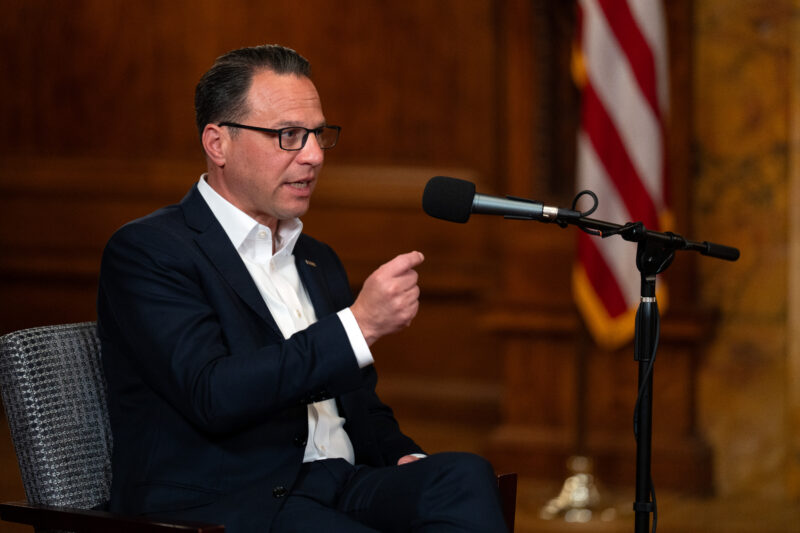
There are a handful of Democratic leaders who are speaking out more directly in response to Mamdani’s rise. Pennsylvania Gov. Josh Shapiro, a potential 2028 presidential contender, offered moral clarity in his interview with JI’s Gabby Deutch last week. “When supporters of yours say things that are blatantly antisemitic, you can’t leave room for that to just sit there,” Shapiro said of Mamdani.
Rep. Laura Gillen (D-NY), representing a suburban Long Island district with a sizable Jewish constituency, called Mamdani “a threat to my constituents.” Jeffries, to his credit, has all but conditioned his support for Mamdani to the candidate’s condemnation of “globalize the intifada” rhetoric.
What’s missing is any organized effort to rally behind one of the other Democratic options on the general election ballot in order to consolidate the Mamdani opposition. It’s not for lack of options — with the sitting New York City mayor and the former New York governor on the ballot — even if the alternatives are deeply flawed. Only about half of Democratic voters are lining up behind Mamdani, and he’s polling under 40% in the post-primary polls — an unusually weak position for a Democratic nominee in a deep-blue city.
With Mamdani celebrating his recent marriage in his birthplace of Uganda this past week amid creeping criticism from prominent elected officials, it would have been an opportune time for anti-Mamdani forces to go on offense. But instead, the race is stuck in neutral, with Mayor Eric Adams and former Gov. Andrew Cuomo spending as much time sniping against each other instead of the front-runner.
What’s holding the Mamdani opposition back is a generalized fear of leadership’s ability to make a difference. Would Schumer or Jeffries taking a tougher line against Mamdani significantly move the political needle, or drive the left-wing grassroots against them? Just look at the blowback Gillibrand received for noting in a radio interview that Jewish New Yorkers were alarmed by Mamdani’s public statements on Israel and antisemitic rhetoric.
For Jewish groups, is it worth further antagonizing Mamdani when he remains the favorite to become the city’s next mayor? The fact that a candidate excusing “globalize the intifada” rhetoric was able to comfortably win a Democratic primary — in the place with the largest Jewish population of any city in the world — was a shock to the system.
Coloring all these deliberations is the sense that something has shifted in our body politic — that radicalism isn’t the political turnoff that it once was. But there’s something of a Catch-22 to these internal deliberations: The less willing leaders are to confront the extremes, the more the Overton window shifts to accommodate them.
Please log in if you already have a subscription, or subscribe to access the latest updates.
 Continue with Google
 Continue with Apple