

































Analysts said that while Israel could help Riyadh in combating the attacks, any cooperation is likely to be limited and politically fraught
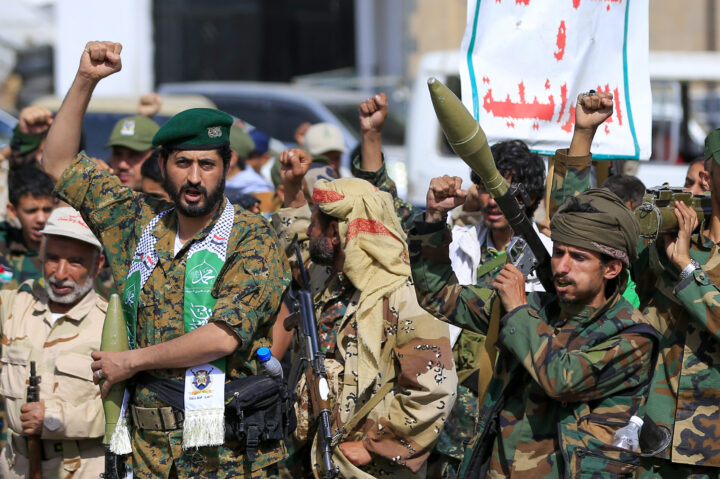
(Mohammed HUWAIS / AFP via Getty Images)
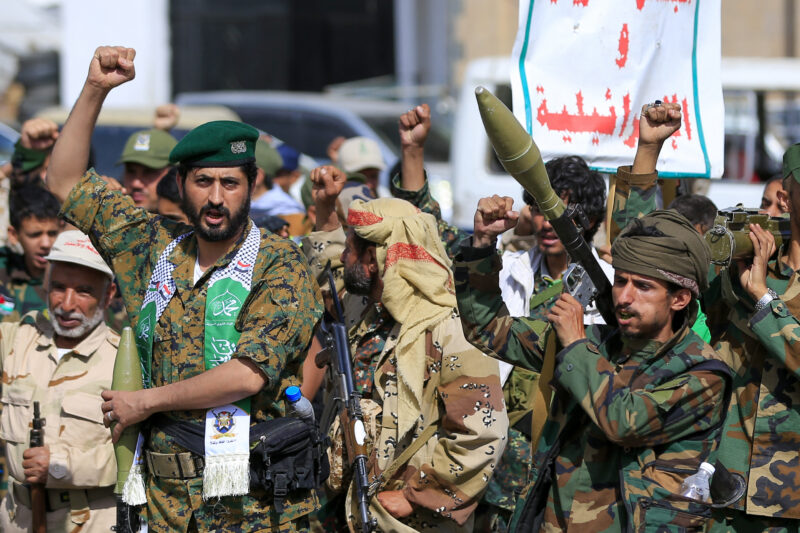
Fighters loyal to the Houthi authorities, shouts slogans during a rally to recruit more fighters, in Sanaa on September 10, 2026.


 Add JewishInsider on Google
Saudi Arabia’s escalating conflict with the Houthis has revealed just how challenging it has become for the U.S. to deter the Iran‑backed terrorist group, former officials and regional experts say, as Houthi gains along the Red Sea raise alarms about global shipping and give Tehran fresh leverage.
Analysts said that while Israel could help Riyadh in combating the attacks, any cooperation is likely to be limited and politically fraught.
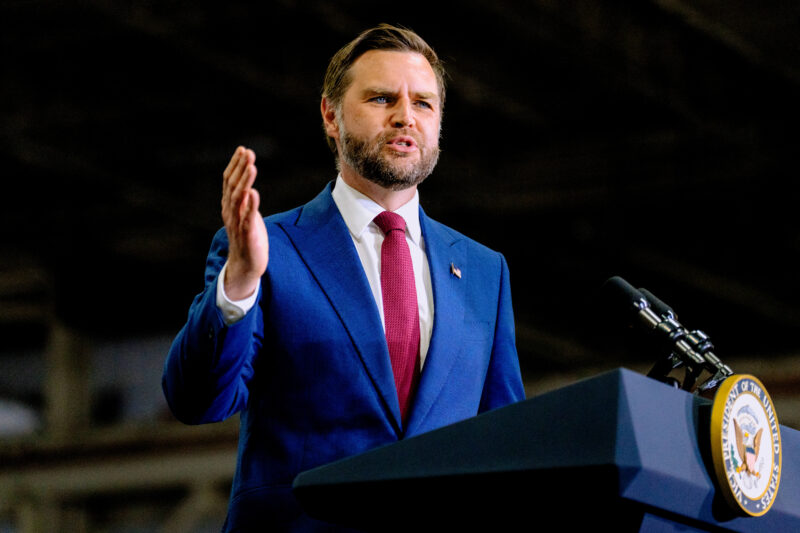
Saudi Arabia on Tuesday issued an alert for a possible attack on the holy city of Mecca amid escalating strikes by the Houthis, a U.S.-designated terrorist group. A day earlier, Vice President JD Vance said the administration was “on top” of the issue and confirmed the U.S. is in direct talks with the group, following recent clashes between the Houthis and the Saudi-backed Yemeni government in which the Houthis seized the port of Mocha, Perim Island inside the Bab el-Mandeb Strait and the Hanish archipelago to the north, giving them control of an alternative shipping route to the Strait of Hormuz.
Experts told Jewish Insider the Houthis’ latest advances are the product of years of preparation, Iranian support and a willingness to absorb losses that would force other militias to the table.
“The Houthis have exploited the lack of a cohesive opposition inside Yemen to prepare for this situation, Iran has resumed aiding them with weapons and advisors, and they benefit from only having to fight one foreign enemy at a time,” Jonathan Ruhe, a fellow at the Jewish Institute for National Security of America, told JI.
“The Houthis are also very risk-acceptant and willing to tolerate losses that have compelled Iran and other proxies into ceasefires. U.S.-Israeli operations could likely exploit the Houthis’ latest advances, but Saudi air and naval power have never shown any serious capacity to degrade the Houthis militarily.”
Steven Cook, a senior fellow at the Council on Foreign Relations, said the Houthis have “acquired a lot of weapons and weapons technology from Iran. Yemen’s government-backed forces are not that good. Saudi Arabia and others don’t want to go in on the ground. The U.S. doesn’t want to commit ground forces. Air power can only do so much.”
Edmund Fitton‑Brown, a former British diplomat now at the Foundation for Defense of Democracies, said the Houthis “have been building and pre-positioning” while the internationally recognized Yemeni government’s forces “are weakened by loss of cohesion, following the dispute over southern secession and the departure of Emirati forces.”
Experts said Houthi advances to capture Mokha and territory near the Bab el‑Mandeb Strait are particularly concerning for Washington and American partners who have counted on the waterway as an alternative to the Strait of Hormuz amid roiled energy markets. Analysts also noted that the disruptions provide Iran leverage in the broader conflict with the U.S.
“It is a concerning development,” Cook said. “Somewhere between 15-20% of global trade passes through the Red Sea … And the Houthis sitting on the Mandeb Strait certainly gives Iran leverage. One of its allies can throttle the global economy.”
“It is important to underline that even if there is an agreement on the Strait of Hormuz, it doesn’t mean that the situation in the Mandeb Strait will be resolved,” Cook added. “The Houthis have their own beef with Saudi Arabia and the current round of fighting is connected to, but not directly related to, the situation in the Strait of Hormuz.”
Ruhe agreed that the advances near Bab el‑Mandeb “give Iran indirect leverage by rattling global markets and threatening the best energy export alternative to Hormuz.” But he emphasized that the Houthis are “far more independent of Tehran than Hezbollah or other proxies,” adding that “they are focused on expanding control inside Yemen and fighting the Saudis, so they prefer not to risk direct U.S. and Israel involvement for the time being, even if Iran might press them.”
In response, Saudi Arabia has reportedly sought U.S. assistance, however, reports indicate President Donald Trump is uninterested in getting involved. Reporting from Israeli media in recent days has also suggested that Saudi Arabia may be quietly exploring potential Israeli assistance as the two countries have established contact through CENTCOM. Analysts said that such cooperation between Jerusalem and Riyadh is possible and would be helpful, but argued it is unlikely to come to fruition.
“[There are] rumors abound about the Saudis asking Israel for help,” Cook said. “It is possible. If the rumors are true and it is now public, I expect vigorous Saudi denials, but the Israelis have capabilities that the Saudis could use. If it happens, I expect that the Israelis will want something in return, which will likely be related to the Palestinians or public acknowledgement of Israeli help.”
Ruhe similarly noted that while Israeli assistance could help Riyadh, he argued that Saudi Arabia is focused on U.S. assistance, stressing that the U.S. and Israel remain “stretched thin” militarily.
“Logically, Israel could assist with military intelligence, which is a particular Saudi weakness,” Ruhe noted, “but Riyadh seems to be looking squarely to Washington for assistance. For now, at least, the U.S. and Israel are stretched thin, and don’t want to divert resources and attention from Iran and other fronts. For the United States, this includes precious air-to-ground munitions and interceptors. Ideally, CENTCOM-led multilateral maritime task forces could assist with freedom of navigation, but this has proven difficult even in less trying times.”
Alexander Gray, who served as chief of staff on the National Security Council during Trump’s first administration, said that he believes the U.S. will ultimately get involved and “provide various types of support” to Saudi Arabia, noting that Washington has “long been a primary security partner of the Kingdom.”
“The Houthi threat is real and serious, primarily to Saudi Arabia, its energy security, and the global commercial traffic going through the Red Sea,” said Gray. “The U.S. has long been the primary security partner of the Kingdom, and President Trump and the Crown Prince have developed a strong relationship that serves the interests of both countries. Ultimately, I anticipate the U.S. will provide various types of support to KSA to ensure that additional strain will not be placed on the global energy supply chain.”
However, some experts warn that Washington’s current approach risks reinforcing the sense that the Yemen front is Riyadh’s problem to manage, rather than a key piece of the wider confrontation with Tehran.
“My biggest concern is that the Trump administration does not seem to understand the extent to which the Houthi problem is part of the larger challenge posed by Iran,” said Matthew Levitt, a senior fellow at The Washington Institute for Near East Policy. “The administration no longer has a senior special envoy for Yemen, and officials describe the Houthi escalation as a primarily Saudi problem rather than a regional challenge. The Houthis have their own interests, but they are also important members of Iran’s proxy alliance, as evidenced by Houthi cooperation with Iraqi Shia militias in their July drone attack on Saudi Arabia.”
The flare‑up is also the first major test of the Mecca Joint Defense Agreement, a NATO-style mutual defense pact signed in August under which Saudi Arabia, Pakistan and Turkey guaranteed each other’s defense. However, Islamabad and Ankara have so far stayed on the sidelines.
“The Mecca agreement was never primarily about collective defense against Iran and its proxies, but rather about signaling to Washington, New Delhi, and others,” Ruhe argued. “Over the past year, Riyadh’s growing isolation drove it into the arms of two partners who have their own reasons for joining the Mecca accord, none of which include getting dragged into Yemen’s forever war.”
Fitton-Brown argued that the failure of Pakistan and Turkey to mobilize underscores what several analysts describe as the gap between Saudi Arabia’s ambitions for the pact and its real‑world value when put to the test.
“It reveals it as the loose alliance that it is,” he said. “Pakistan and Turkey have no intention of sacrificing troops in Yemen. The Saudis look desperate: weak in the face of Iran; weak in the face of the Houthis; desperate for help from the Americans, alienated from the UAE, desperate for new allies but those allies are at best fair weather friends. A US-Saudi-Emirati-Israeli reset may be their best bet — the U.S. also badly needs them not to weaken or fail — but it won’t be an easy sell with [Saudi Crown Prince Mohammed bin Salman].”
Rep. Mike Lawler: ‘Iran and its Houthi proxies have now simultaneously put pressure on two of the world’s most important maritime checkpoints’
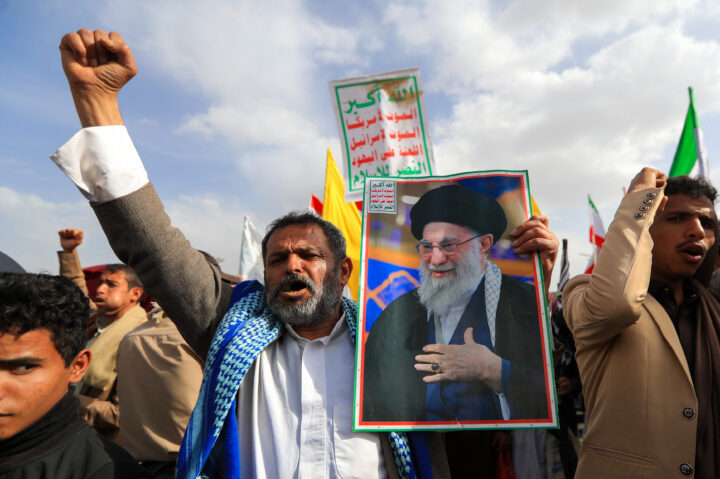
Photo by Mohammed HUWAIS / AFP via Getty Images
A Yemeni supporter of the Iran-backed Houthi movement holds a portrait of Iran's slain supreme leader, Ayatollah Ali Khamenei, during a protest against U.S. strikes on Iran in Sanaa on July 10, 2026.
Middle East experts urged members of Congress on Tuesday to empower the Yemeni government and resume diplomatic efforts to constrain the Houthis in Yemen, warning that the Trump administration’s bombing campaign against the Houthis and the subsequent ceasefire have failed to deter the group from targeting commercial shipping in the Red Sea.
At a House Foreign Affairs Committee Middle East subcommittee hearing on the threats posed by the Houthis to U.S. interests in the Red Sea, Nadwa Al-Dawsari, an associate fellow at the Middle East Institute, and Allison Minor, the director of the Project for Middle East Integration at the Atlantic Council, testified that the Trump administration’s approach to containing the Iran-backed terror group had not sufficiently weakened or deterred it.
“The United States does not have an ambassador appointed to Yemen, to Saudi Arabia or to the UAE, the countries that are most important to resolving the conflict,” Minor said. “We have career diplomats in place as chargé d’affaires, but unfortunately, it’s not sufficient.”
Asked who is filling that void by Rep. Bill Keating (D-MA), Minor replied: “You have caretaker career diplomatic staff in place. I think there are a handful of envoys this administration has appointed for a series of global conflicts. I don’t think they have the bandwidth currently for Yemen.”
Lawmakers from both parties expressed concern over the negative impact on the economy caused by the Houthis’ repeated disruptions to commercial shipping in the Red Sea, with several connecting the campaign with Iran’s closure of the Strait of Hormuz. (Most recently, the Houthis have been attacking targets in Saudi Arabia, including ships, airports and oil facilities.)
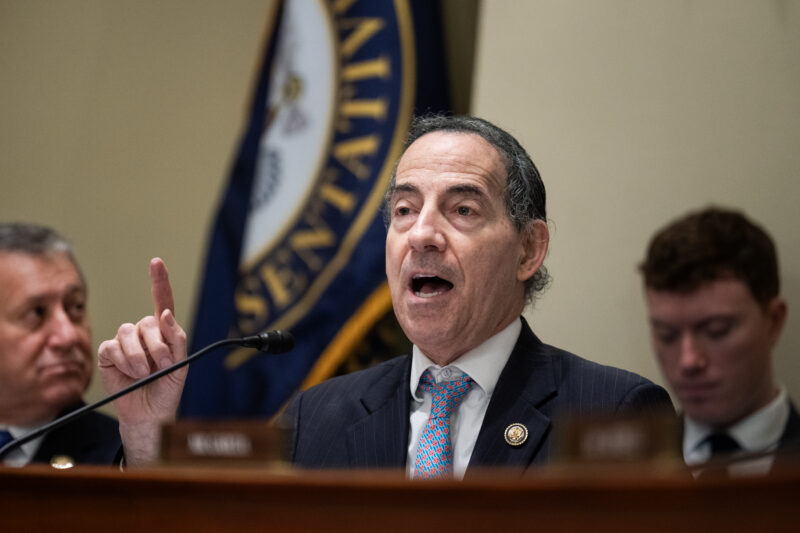
“[The Houthis] have targeted American forces, attacked our partners and threatened commercial vessels transiting one of the world’s most important waterways,” Rep. Mike Lawler (R-NY), who chairs the subcommittee, said.
“Iran transformed a local armed movement into a terrorist organization capable of threatening Americans and disrupting international commerce. … This becomes even more dangerous in Yemen when the Red Sea and the Strait of Hormuz are involved. Iran and its Houthi proxies have now simultaneously put pressure on two of the world’s most important maritime checkpoints.”
Pressed on what Congress could do to protect freedom of navigation and commercial shipping in the Red Sea, Minor warned that, “until we have a durable resolution to this threat, we will continue to see a disruption to commerce that has immediate impacts on global energy markets and long-term consequences for freedom of navigation globally.”
Minor also agreed with Keating’s suggestion that “the closure and the limitation on the Strait [of Hormuz] has given the Houthis even more leverage than before.”
Minor and Al-Dawsari concurred that the Trump administration has failed to develop a durable Yemen policy or provide enough support to the Yemeni government to counter Houthi influence and territorial control.
Both witnesses criticized the ongoing ceasefire between the U.S. and the Houthis as strategically unproductive, pointing to the terrorist group’s increased recruiting numbers and continued attacks on commercial shipping. The two urged the Trump administration to not treat the ceasefire as a long-term strategy.
Al-Dawsari and Minor also rejected the notion that prior U.S. military operations had significantly diminished the Houthis’ ability or willingness to fight.
“U.S. military pressure has imposed real costs on the Houthis, but airstrikes alone will not eliminate the threat,” Al-Dawsari said. “The Houthis have not been degraded.”
“Air strikes have disrupted Houthi operations and … undermined some of their capabilities, but the Houthis have proven that they are able to regenerate some of these capabilities,” she continued. “The Houthis have not engaged in peace negotiations in good faith. They used that time to rebuild their capabilities, recruit more fighters and prepare for the next war.”
Minor argued that, “U.S. airstrikes and Israeli strikes all failed to eliminate Houthi capabilities or alter their strategy. … Each time the Houthis have come under attack from U.S. or Israeli strikes, they have used this to fuel their recruitment.”
Neither witness supported the idea of a U.S. military operation targeting the Houthis involving
ground troops, and both agreed that the Trump administration should fill the vacant U.S. special envoy for Yemen post and surge humanitarian assistance.
But Al-Dawsari and Minor diverged on how to achieve a lasting solution that eliminates the group’s fighting capacity and ensures the Yemeni government can maintain control of the country.
Minor argued that the Trump administration needs to address the lack of a broader American diplomatic apparatus in the region while pursuing a “viable negotiated settlement that can contain Houthi threats while addressing the governance issues that have been fueling this Houthi threat for over a decade.” While Minor did not rule out the viability of military force completely, she urged the U.S. to stop “vacillating between costly U.S. military intervention and disengagement.”
Al-Dawsari, meanwhile, encouraged the Trump administration to partner with Saudi Arabia on a broader effort to provide intelligence and military training, as well as any other assistance, “to support the Yemeni government militarily, politically and economically.” She also urged lawmakers to continue supporting the Houthis’ Foreign Terrorist Organization (FTO) designation.
“The most important source of leverage is territory,” Al-Dawsari said. “The United States needs to do the one thing that it hasn’t done yet: support the Yemeni government to take territory from the Houthis.”
“This is not the United States’ war, and it shouldn’t be,” she argued. “We need to provide [the government] with the necessary military and economic and political support in order to be able to take on the Houthis on their own long-term. That’s the only way to do it. There is no other substitute.”
Experts said suspected Saudi strikes on Yemen’s main airport were aimed at stopping Iran from establishing an airlink with the Houthis, which could be used to funnel weapons to the terror group
Photo by Mohammed HUWAIS / AFP via Getty Images
A Yemeni supporter of the Iran-backed Houthi movement holds a portrait of Iran's slain supreme leader, Ayatollah Ali Khamenei, during a protest against U.S. strikes on Iran in Sanaa on July 10, 2026.
Airstrikes on Yemen’s Sanaa International Airport on Monday were intended to stop Iran and the Houthis from breaking a decades-long air blockade and opening an uncontrolled air link between Tehran and its Yemeni proxy, regional analysts said — a corridor they warn could let Iran resupply the Houthis directly with weapons for future campaigns against Saudi Arabia and Israel.
The Houthis accused Saudi Arabia of carrying out the strikes and vowed to retaliate, with a spokesperson claiming the period of “de-escalation” between Riyadh and the terror group was over. Later Monday, the group said it had fired on Saudi Arabia’s Abha International Airport.
The Saudi-backed Yemeni government took responsibility for the original attacks, with Defense Minister Gen. Taher al-Aqili saying on X that the strikes hit the runway to stop an Iranian aircraft — carrying the Houthi delegation returning from the funeral of the late Iranian Supreme Leader Ayatollah Ali Khamenei — from landing. The Houthis said the plane was diverted to Hodeida Airport, and the government ordered all airports under its control closed until further notice.
Riyadh has not claimed responsibility for the attack in Sanaa, but “it was certainly responsible,” said Edmund Fitton-Brown, a former British diplomat and senior fellow at the Foundation for Defense of Democracies.
“The attack was intended to resist Iranian and Houthi efforts to break the air blockade on the Houthi-controlled part of Yemen that has existed for more than a decade,” Fitton-Brown told JI. “Iran and the Houthis took the opportunity of Khamenei’s funeral to test Saudi resolve. Their explicit intention is to establish a regular air link between Iran and Sanaa, uncontrolled by the Saudis or their allies.” He warned such a link would let Iran funnel weaponry to the terror group for “future campaigns” against Israel and Saudi Arabia, as well as in the Red Sea.
President Donald Trump reportedly gave his blessing for the strikes to Saudi Crown Prince Mohammed bin Salman, who called him on Friday to get U.S. backing for military action against the Houthis, according to an Axios report.
Kristin Diwan, a senior resident scholar at the Arab Gulf States Institute, said similarly that “there were well-founded fears on the part of the Yemen government and the Saudis that the Houthis would use this as a pretext to get around U.N. restrictions and to normalize flights from Iran. If they succeeded, these flights could funnel weapons and other material support to the Houthis.”
The renewed tensions between Saudi Arabia and the Houthis come after a period of relative calm in Yemen’s decade-long civil war, which began in 2014 when the Houthis seized the capital, Sanaa, and much of northern Yemen – forcing the internationally recognized government into exile.
A Saudi-led coalition, including the United Arab Emirates, intervened the following year in support of the government. The parties have held a fragile truce since 2023, which has lasted even as the Houthis launched strikes around the region in the aftermath of the Oct. 7 Hamas attacks in Israel.
Today, the Houthis control Sanaa and much of northern Yemen, including most major population centers, while the Saudi-backed government controls much of the south.
The incident “fits a long-term pattern of covert Iranian assistance to the Houthis, which remains subject to U.N. Security Council prohibitions,” said Jonathan Ruhe, a fellow at the Jewish Institute for National Security of America. “Riyadh wants to prevent the Houthis from recovering after being hit hard by U.S.-Israeli strikes last year, before the counter-Houthi coalition fractured.”
Ruhe said that while the “counter-Houthi coalition is weakened right now,” he noted that the Houthis are also not at full strength.
“Riyadh might be calculating that it’s better to deal with Houthi retaliation now, and to assert the Yemeni government’s authority to keep Iran out of the country, than to stand by and wait for the Houthis to rearm and become a major problem once again,” Ruhe said.
“Riyadh historically has seen Yemen as its own soft underbelly, long before the Houthis ever took Sanaa. Iran is the obvious threat on the kingdom’s front door, but Saudis’ threat perception from the south has always been acute, which leads it to be more assertive in Yemen than people might normally expect,” he continued.
“There is a contradiction [on the part of the Saudis] between trumpeting the strength and resolve of the Saudi-led coalition on Yemen and the Saudi-Emirati quarrel that erupted over southern Yemeni independence late last year and it’s still not fully resolved,” Fitton-Brown said. “Ironically, Iranian and Houthi overreach may drive the Saudis and Emiratis back into each other’s arms.”
Fitton-Brown said next steps could also depend on what the Houthi retaliation looks like. He noted that the terror proxy could employ drone or missile attacks on Saudi Arabia or disrupt shipping in the region.
“[The Houthis] may attack Saudi Arabia directly with drones and missiles, as they have in the past. Or they may decide that it is time to resume disruption of the Red Sea and [the] Bab el-Mandeb [strait], compounding the impact of Iran’s blockade of the Strait of Hormuz on the global economy,” Fitton-Brown said. “That risks drawing a U.S.-led united international response.”
Diwan noted that the Houthis have shown a willingness to “take revenge” on key assets in the region. She said the group could “take revenge both through provocations in the Bab el-Mandeb strait and aerial strikes on Saudi airports in the west.”
Ruhe said that while the Houthis have notably been silent during the conflict between Washington and Tehran, their lack of involvement “can’t be taken for granted going forward.” He similarly noted that Houthi retaliation is possible as Iran seeks to “ratchet up pressure on shipping chokepoints and key regional energy infrastructure,” such as the Red Sea, which has been a bypass for Saudi oil exports that would have previously gone through the Gulf.
The Houthis have spoken openly about their plans to initiate an invasion akin to Oct. 7 through Jordan and Syria
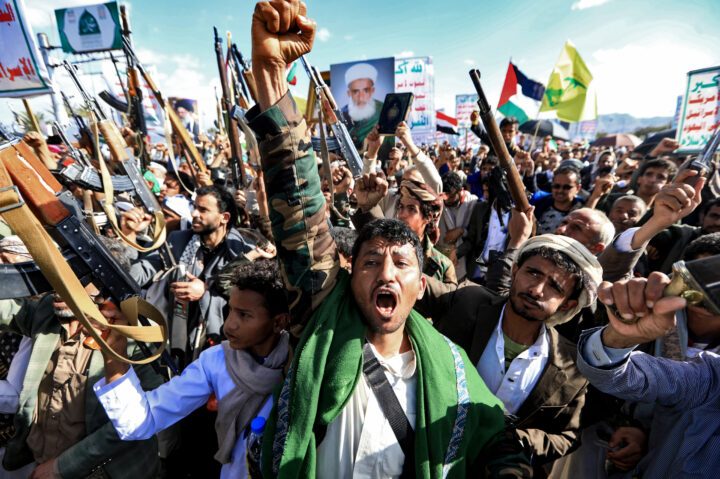
Mohammed HUWAIS / AFP via Getty Images
Supporters of the Iran-backed Houthi movement brandish their weapons as they rally in solidarity with Iran and Lebanon in the Yemeni capital Sanaa on April 10, 2026.
Like a desperate poker player holding an ace in the hole, Iran has a “strategic reserve” if the ceasefire in the war with Israel and the U.S. collapses and fighting resumes: the Houthis, the Tehran-backed Yemeni terrorist group.
How Iran plays the Houthi card has been the subject of concern in Israel, with analysts telling Jewish Insider that everything from a ground invasion from the east — with echoes of Hamas’ Oct. 7, 2023, rampage in southern Israel — to making good on the threat to block the Bab el-Mandeb Strait to further choke off international shipping remains in play.
Yoni Ben-Menachem, a senior Middle East analyst at the Jerusalem Center for Security and Foreign Affairs, told JI that the Houthis planned “to take revenge and bring back their honor” since Israel killed much of their leadership in August 2025.
“They see that Israel’s air defenses are strong, and it’s hard for them to reach military achievements with missiles and drones. They want to surprise Israel, so they are looking at ways to do it on the ground,” he said.
One scenario that Israel has actively prepared for, even before this year’s war with Iran, is a Houthi ground invasion via Syria and Jordan.
The IDF said in September that it has intelligence indicating that the Houthis initiated a training course named “Al Aqsa Flood,” as Hamas called the Oct. 7 attacks. The group planned to take advantage of the instability in Syria and political weaknesses in Jordan to invade Israel from the east, deploying tens of thousands of terrorists on a killing spree, heading toward Jerusalem. In January, the IDF’s Central Command led a training exercise, together with Israeli Border Patrol and police, on how to counter such a scenario.
In addition, the IDF has continued the construction of a security fence along the border with Jordan.
Yossi Mansharof, a lecturer at Haifa University, told JI that the Houthis speak openly about a possible land invasion in their media channels: “They say they intend to invade and … reach Dimona [in southern Israel], conquer [Israeli] towns.”
Mansharof said that while an invasion via the Red Sea and Eilat, at Israel’s southern tip, would be closer to the Houthis’ home base, such a move is “unrealistic; they would have to go undetected by the IDF.”
However, he said, the 186-mile border between Israel and Jordan is particularly porous, and if Hamas could break through the Gaza fence, as it did on Oct. 7, the Houthis may be able to do the same in Jordan. In addition, Iran has long worked to gain a foothold in Jordan.
“Iran is a shared enemy” of Israel and Jordan, Mansharof said. “Iran violates Jordanian sovereignty, and some of the missiles shot at Israel land in their territory. … Iran wants to establish terrorist infrastructure [in Jordan], and King Abdullah has said in Davos and in media interviews that he is concerned about Iran.”
In addition, Mansharof said, the Shi’a militias in Iraq, which shares a border with Jordan, have close ties with the Houthis.
A Houthi attack could also be part of an Iran-led multi-front assault on Israel, which Iranian officials — including a top advisor to Mohammad-Bagher Ghalibaf, Iran’s parliamentary speaker and leader of negotiations with the U.S. — have spoken about for years, Mansharof said.
“They want to advance a mutli-front attack on Israel from all of the axis of resistance arenas,” Mansharof said. “They want to end the story, not just have more rounds of fighting [with Israel]. … A Houthi invasion can be part of that.”
Ben-Menachem argued that a more realistic scenario in the near term is that the Houthis would help the Iranians by blockading Bab el-Mandab, a strait passing from the Gulf of Aden to the Red Sea, to cut off global shipping at a second point while the Strait of Hormuz, which is under Iranian control, remains closed. Saudi Arabia is reportedly especially concerned about this possibility, as the Gulf state uses the waterway to move much of its oil.
The Iranians have been saving the Houthis as their “strategic reserve” in case of renewed fighting with the U.S., Ben-Menachem said, and should the Yemeni terrorists join the war, “their target will be first the U.S. and then Israel.”
“The Iranians see that the most effective move is to pressure the U.S. and harm the world economy,” he said.
Still, Mansharof said, Israel “should not wait for the Houthis to take initiative. Israel needs to choose the timing [for military action], because at some point, the war with the Houthis will resume. … Israel needs to build advanced intelligence capabilities and cooperate with the Americans to create a jumping-off point. … It’s a just war of defense for Israel.”
Jerusalem’s recognition of Somaliland in December could provide Israel with a physical base for such an attack and would “break the supply chain of Iranian aid to the Houthis” from Somalia, which is just across the Gulf of Aden from Yemen, Mansharof noted.
Ben-Menachem said Israel’s announcement last year that it had discovered the Houthis’ plan served to undermine it.
“Israel must repeatedly warn them and say they know what they’re planning. We shouldn’t take it off the agenda, talking about it is part of the deterrence … [The Houthis’] success depends on the element of surprise. If we show that they can’t surprise us, it will lower their motivation,” he said.
The bill declares that 'Houthi efforts to indoctrinate Yemenis into a violent, anti-Semitic, and extremist worldview are a threat to a Yemeni-led peace process and to regional stability'
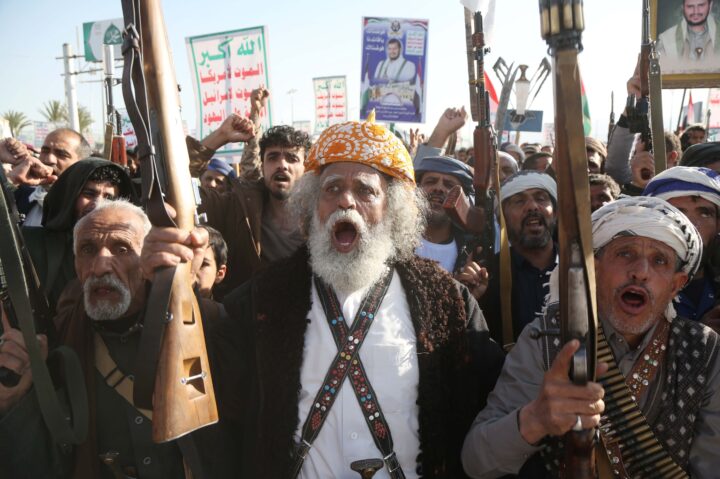
Mohammed Hamoud/Anadolu via Getty Images
Thousands of Houthi supporters gather to mark Independence Day in Sanaa, Yemen, on November 30, 2025.
Sens. Dave McCormick (R-PA) and Jacky Rosen (D-NV) are pushing for additional sanctions on the Houthis in response to the group’s violations of human rights and hostage-taking in a new bill set to be introduced Friday.
The pair are the chair and ranking member, respectively, of the Senate Foreign Relations Committee’s Middle East subcommittee.
The Houthi Human Rights Accountability Act would require the administration to assess whether members of the Houthis have committed gross violations of human rights, obstructed the delivery of humanitarian aid or have been involved in taking American hostages or supporting hostage-taking, qualifying them for sanctions under U.S. law.
The bill also declares that it is the sense of Congress that “Houthi efforts to indoctrinate Yemenis into a violent, anti-Semitic, and extremist worldview are a threat to a Yemeni-led peace process and to regional stability” and that “it is counter to United States policy to provide support to the Houthis in Yemen.”
The legislation requires the administration to report to Congress on such Houthi indoctrination efforts, the threats the group poses to regional stability, obstacles to humanitarian aid delivery in Houthi-controlled areas of Yemen and human rights abuses committed by the Iran-backed terror organization.
The bill would sunset five years after its passage.
Companion legislation advanced through the House Foreign Affairs Committee by a unanimous vote last week.
“The Houthis have terrorized the Yemeni people, the region, and Americans for far too long,” Rosen said in a statement. “With Iran’s support, the Houthis have prevented crucial, lifesaving aid from reaching civilians and unlawfully detained humanitarians and diplomats, including current and former local staff of the U.S. Mission in Yemen just this week. I’m proud to introduce this bipartisan bill to hold the Houthis accountable. I’ll continue working across party lines to support efforts to combat Iranian-backed aggression and stabilize the Middle East.”
The Houthis have for several years detained current and former local staff of the U.S. embassy in Yemen. The administration on Wednesday issued a statement condemning those arrests and detentions.
“The Houthis’ campaign of terror and destruction remains a threat to global maritime trade, our regional allies, and the people of Yemen,” McCormick said. “The severity of the Houthi menace is magnified by their human rights abuses, antisemitism, and their continued theft of international humanitarian aid. This bipartisan, bicameral bill will ensure Houthi terror remains on the global agenda and position the United States at the forefront of efforts to steadily increase pressure on the group.”

Tom Williams/CQ-Roll Call, Inc via Getty Images
Senate Armed Services Committee Chairman Roger Wicker (R-MS) arrives for a confirmation hearing in Dirksen building on Tuesday, May 13, 2025.
Good Friday morning.
In today’s Daily Kickoff, we talk to senators about how the Trump administration should address the Houthis deadly attacks on ships in the Red Sea this week despite the terror group’s supposed ceasefire with the U.S., and report on DNC Chair Ken Martin’s dismissal of Zohran Mamdani’s defense of the “globalize the intifada” slogan. We have an exclusive on a bipartisan letter from lawmakers demanding answers from Elon Musk regarding his AI chatbot’s antisemitic screeds, and talk to the family members of fallen IDF soldiers whose bodies are still being held in Gaza. Additionally, we feature a rundown of the who’s who at this week’s annual Sun Valley conference. Also in today’s Daily Kickoff: Larry David, Robert Kraft and Jochanan Senf.
For less-distracted reading over the weekend, browse this week’s edition of the Weekly Print, a curated print-friendly PDF featuring a selection of recent Jewish Insider and eJewishPhilanthropy stories, including: Jewish students forge ahead in attending Ivy League universities, despite fears of antisemitism; Israel shifts approach to Syria’s new government as apprehension wanes; and As teachers unions target ADL and oppose antisemitism bill, Jewish educators sound the alarm. Print the latest edition here.
What We’re Watching
- Fox will air an hour-long interview tomorrow night with Israeli Prime Minister Benjamin Netanyahu, recorded with Mark Levin during the Israeli leader’s trip to the U.S. this week.
- On Sunday, former Reps. Steve Israel (D-NY) and Peter King (R-NY) will sit with author Daniel Silva at Long Island’s Sid Jacobson JCC to discuss Silva’s latest novel, An Inside Job.
What You Should Know
A QUICK WORD WITH JI’S JOSH KRAUSHAAR
Since Zohran Mamdani won the Democratic nomination for New York City mayor, there’s been a fascinating disconnect between the polls showing Mamdani still vulnerable in the general election and the sclerosis among political leaders unable to make the tough decisions on whether to rally behind an alternative in a bid to stop the socialist candidate from becoming the next mayor.
There hasn’t been much good polling since the primary, but the most recent general election surveys all paint a picture of Mamdani leading the race with a plurality, but far below what a typical Democratic nominee should be receiving after a stunning, come-from-behind defeat of former New York Gov. Andrew Cuomo.
One poll, conducted by the Democratic firm Slingshot Strategies between July 2-6, found Mamdani winning 35% of registered voters, Cuomo at 25%, Republican nominee Curtis Sliwa tallying 14%, Mayor Eric Adams at 11% and attorney Jim Walden at 1%. Thirteen percent said they were undecided.
A late-June poll by the GOP firm American Pulse found Mamdani at 35%, Cuomo at 29%, Sliwa winning 16% and Adams with 14%. Asked whether they were leaning towards voting for Mamdani or anyone but Mamdani, it was close to an even split, with 48% leaning towards Mamdani and 46% preferring anyone else.
Of note, both polls found the combined Cuomo and Adams vote — which roughly encompasses the lion’s share of the moderate Democratic electorate — narrowly outpacing Mamdani’s share of support. In other words, the Mamdani alternative wouldn’t necessarily need a large portion of the Republican vote to prevail.
SEA CHANGE
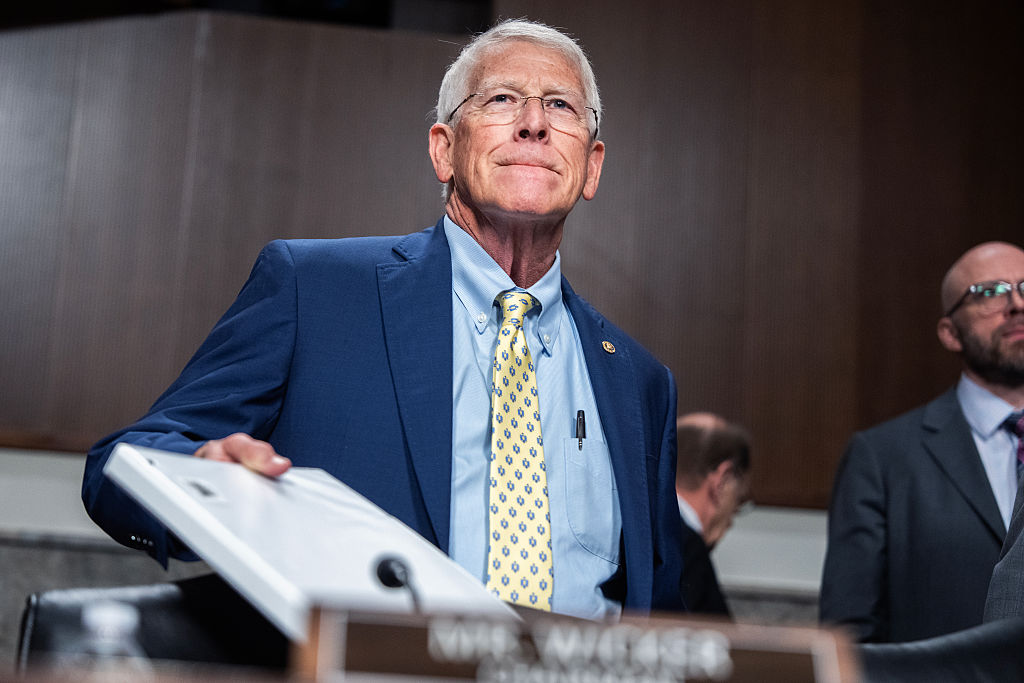
A top Senate lawmaker indicated on Thursday that he’s open to resumed U.S. involvement in the campaign against the Houthis, amid a ramp-up of the group’s attacks on commercial shipping in the Red Sea and Israel that comes two months after the U.S. and the Houthis reached a ceasefire that ended the American bombing campaign against the group, Jewish Insider’s Marc Rod reports.
Notable quotable: “The Houthis need to be totally eliminated,” Sen. Roger Wicker (R-MS), the chair of the Senate Armed Services Committee, told JI. “They have no purpose other than to kill free people.” Asked if the U.S. should become involved directly against the Houthis again, Wicker said, “I wouldn’t rule that out.”
Read the full story here, plus additional comments from Sens. Mark Kelly (D-AZ), James Lankford (R-OK), Mike Rounds (R-SD) and Ted Budd (R-NC).
Exclusive

A group comprised largely of Democratic House lawmakers wrote to Elon Musk on Thursday condemning the antisemitic and violent screeds published by X’s AI chatbot Grok earlier this week, calling the posts “deeply alarming” and demanding answers about recent updates made to the bot that may have enabled the disturbing posts, Jewish Insider’s Marc Rod reports.
Ongoing issue: “We write to express our grave concern about the internal actions that led to this dark turn. X plays a significant role as a platform for public discourse, and as one of the largest AI companies, xAI’s work products carry serious implications for the public interest,” the letter reads. “Unfortunately, this isn’t a new phenomenon at X. Grok’s recent outputs are just the latest chapter in X’s long and troubling record of enabling antisemitism and incitement to spread unchecked, with real-world consequences.”
slogan saga

Democratic National Committee Chairman Ken Martin declined on Wednesday to criticize New York City Democratic mayoral nominee Zohran Mamdani’s refusal to condemn the “globalize the intifada” slogan, Jewish Insider’s Emily Jacobs reports. The DNC chair, who was elected earlier this year, praised the party for being a “big tent” comprising different ideologies, including “leftists” such as Mamdani.
Tent talk: Asked during a “PBS NewsHour” interview about concerns from Jewish Democrats regarding Mamdani’s refusal to condemn the phrase, Martin replied, “There’s no candidate in this party that I agree 100 percent of the time with, to be honest with you. There’s things that I don’t agree with Mamdani that he said.” Martin said that he had learned through his 14 years as chairman of the Minnesota Democratic Party and his tenure at the DNC “that you win through addition. You win by bringing people into your coalition. We have conservative Democrats. We have centrist Democrats. We have labor progressives like me, and we have this new brand of Democrat, which is the leftist.”
garden state race
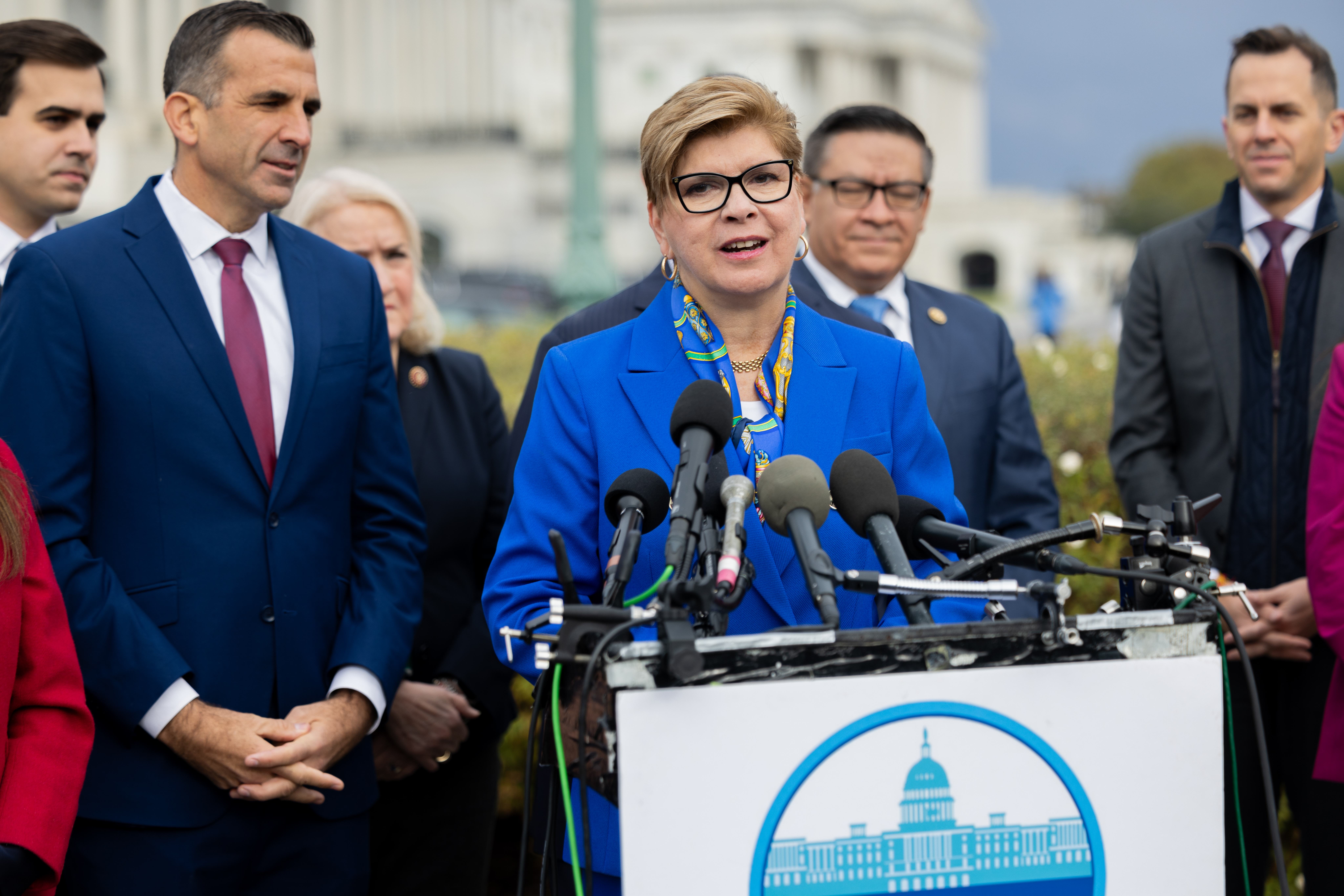
As she works to defend her seat from a growing list of Republican challengers, Rep. Nellie Pou’s (D-NJ) liberal political positioning and voting record place her in a unique position for a Democrat in whose district President Donald Trump scored a surprise win last November, at the same time Pou was elected for the first time, Jewish Insider’s Marc Rod reports.
Key example: One vote last month highlights that dynamic: she was the only Democrat representing a Trump-won district to vote last month against a Republican-led resolution condemning the antisemitic attack in Boulder, Colo., urging stronger enforcement of immigration laws and supporting Immigration and Customs Enforcement. Pou, and nearly all other Democrats, voted in favor of a second resolution condemning a series of recent antisemitic attacks without the immigration language.
hostage hopes talks

As negotiations continue for a temporary ceasefire in Gaza, in which half of the remaining 50 hostages are expected to return to Israel over 60 days, families of those still being held are waiting to learn if their loved ones will be among those coming home soon. About 20 of the hostages are thought to be alive, but the families of the 30 others are also hoping to have a measure of closure, with their loved ones’ remains returned to be buried in Israel, Jewish Insider’s Lahav Harkov reports.
‘Nerve-wracking’ wait: Rabbi Doron Perez described this period, in which there is constant discussion of a possible deal with hostages’ bodies returned to Israel, “is very nerve-wracking. … It aggravates the wound.” His son Daniel was a 22-year-old officer in the IDF armored corps on Oct. 7, 2023, when Hamas attacked Israel. For five months, the family thought Daniel had been kidnapped, before learning that he had been killed on the day of the terrorist attacks and his body taken to Gaza. When there is no talk of negotiations, Perez said, “You start thinking again, ‘Where is Daniel? Where is his body? Where is he being held?’ Some were found in cemeteries, some in tunnels, some in cupboards. You try to put it out of your mind, the vivid thoughts of where he may be, but [news about negotiations] brings it up again.”
inside story

The Friends of the Israel Defense Forces has been thrown into turmoil following the leak of an internal investigative report to the Israeli news outlet Ynet last week that detailed serious allegations against the organization’s top leadership, particularly its board chair, Morey Levovitz, of mismanagement, wasteful spending and creating a toxic work environment, eJewishPhilanthropy’s Judah Ari Gross reports.
Fresh concerns: Since the 18-page report was leaked last week, eJP has spoken with several current and former FIDF employees and lay leaders across the United States and Israel to assess its veracity, finding that in addition to the allegations that were included in the report, current and former employees have also raised credible concerns within the organization about dishonest fundraising tactics and the improper handling of sexual harassment claims. “When you have 60-80 employees saying the same thing, at some point, it can’t not be true,” one former employee told eJP.
Read the full story here and sign up for eJewishPhilanthropy’s ‘Your Daily Phil’ newsletter here.
Worthy Reads
On the Nobel Watch: In his “Clarity” Substack, former Israeli Ambassador to the U.S. Michael Oren reflects on Israeli Prime Minister Benjamin Netanyahu’s visit to Washington this week. “As Netanyahu knows well, the president deserves a Nobel Prize for making peace between Israel and Saudi Arabia, but the Saudis won’t negotiate as long as the IDF is fighting in Gaza. So Trump wants a ceasefire that’s acceptable not only to the U.S. and Israel but also to Hamas. … But beyond a Gaza ceasefire, the key to the regional transformation remains America’s continued commitment to deter Iranian aggression. Though badly battered by Israel and the United States, Iran will certainly try to recover from Operation Rising Lion and Operation Midnight Hammer — first by sending armed bands across our northern border and soon by trying to rebuild Fordow.” [Clarity]Anxious in Iran: In The Atlantic, Roya Hakakian considers the impact of last month’s war between Israel and Iran on the Islamic Republic’s small Jewish community. “The signs in Iran are ominous — and the pleas from Iranian Jewish elders may now go unheard. The community’s old talisman may no longer hold its charm. An overlooked victim of the 12-day military operation against Iran is Iranian civil society, especially its minorities, particularly Jewish Iranians, who were already at risk. Since the war, their conditions have infinitely worsened — a fact that should lead the Trump administration to reconsider its refugee ban. The United States took on a moral responsibility for Iran’s persecuted citizens when it became a combatant against their oppressive regime.” [TheAtlantic]
Word on the Street
State officials are pressuring the White House and the Federal Emergency Management Agency to post the agency’s long-overdue guidelines for applicants for security grants, warning that the continued failure to do so is imperiling security and counterterror efforts across the country…
Rep. Mike Lawler (R-NY) introduced bipartisan legislation on Thursday that would expedite arms sales to U.S. partners that normalize relations with Israel and work with the U.S. in its efforts to counter Iran and its terrorist proxies, Jewish Insider’s Emily Jacobs and Marc Rod report…
The Hill talks to Jewish House Democrats, including Reps. Debbie Wasserman Schultz (D-FL), Brad Schneider (D-IL) and Jared Moskowitz (D-FL), concerned over New York City Democratic mayoral nominee Zohran Mamdani’s defense of the phrase “globalize the intifada” and refusal to recognize Israel’s right to exist as a Jewish state…
eJewishPhilanthropy’s Jay Deitcher looks at how pulpit rabbis are responding to the IRS’ recent decision that will allow clergymembers to endorse political candidates while retaining their congregations’ tax-exempt status…
Former Columbia University graduate student Mahmoud Khalil, who was held in an immigration detention center for months as the government sought to deport him over his anti-Israel campus organizing, filed a $20 million lawsuit against the Trump administration…
Unilever tapped executive Jochanan Senf to be the next CEO of subsidiary Ben & Jerry’s, amid a yearslong dispute with the ice cream company’s board over its social justice initiatives; Senf had previously served as the managing director of Ben & Jerry’s in Europe…
The New York Times reports on Bill Ackman’s foray this week into professional tennis, where he played a doubles match alongside former professional tennis player Jack Sock, losing in straight sets…
Larry David is set to write and star in a new sketch comedy series about U.S. history for HBO, working with former President Barack Obama and former First Lady Michelle Obama’s Higher Ground company, following the end of his long-running “Curb Your Enthusiasm” series on the network…
The Forward spotlights White Oak, Pa., a mill town that once boasted a large Jewish community, as it struggles to draw in new Jewish families…
A new report from a U.K. parliamentary committee found that the threats posed by Iran to the country — including targeted assassinations and attacks on dissidents — are similar to those posed by Russia…
An Israeli security guard was killed in a terror attack at a West Bank shopping complex; the assailants, who were killed at the scene, were reportedly police officers in the Palestinian Authority’s force who had recently completed their training…
Israel will allow more humanitarian aid into Gaza utilizing additional access routes and distribution points, following meetings between Israeli and EU officials…
A senior Israeli official said that at least some of the enriched uranium stored at the Fordow nuclear facility in Iran survived the U.S.’ bunker-buster strikes on the facility last month, and could feasibly be accessed by Iranian nuclear engineers…
Israeli Defense Minister Israel Katz warned that Israel could conduct future strikes on Iranian targets if it feels threatened, saying that “Israel’s long arm will reach you in Tehran, Tabriz, Isfahan, and anywhere you try to threaten or harm Israel”…
The U.S. re-upped its travel warning urging American citizens against traveling to Iran, as Tehran confirmed the arrest last month of an 18-year-old French-German cyclist who had been traveling through the country…
Alan Hassenfeld, a former executive of Hasbro Games and major Jewish philanthropist who was a mainstay of the Rhode Island Jewish community, died at 76…
Pic of the Day

New England Patriots owner Robert Kraft and his wife, Dana Blumberg, are among the attendees at the Allen & Company Sun Valley Conference in Sun Valley, Idaho, this week.
The annual invite-only retreat kicked off earlier this week, once again drawing a who’s who of media moguls, tech titans, political heavyweights and dealmakers. A-listers and boardroom titans traded suits for the fleece vests commonly associated with Sun Valley and jeans and polo shirts as they huddled for panels, private chats and leisurely walks in the Idaho sun.
This year’s attendees include Mark Zuckerberg, Tim Cook, Jeff Bezos, Sam Altman, Sheryl Sandberg, Mike Bloomberg, Ivanka Trump, Jared Kushner, Joshua Kushner, Yousef Al Otaiba, Mathias Döpfner, Diane von Furstenberg, Barry Diller, Brian Roberts, Adam Silver, Gary Bettman, Mitch Rales, Bob Iger, Alex Karp and more.
Birthdays
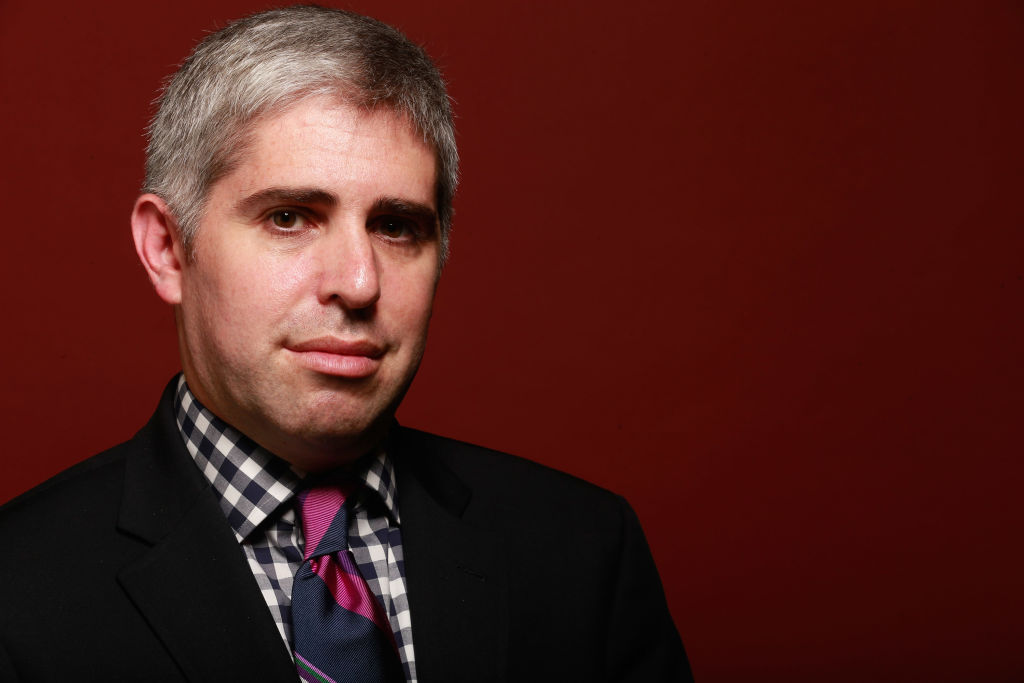
Founder and CEO of Wisconsin-based Good Karma Brands, Craig Karmazin turns 50…
FRIDAY: Entrepreneur, investment banker, civil servant and political advisor, Stephen Berger turns 86… Developmental psychologist at Harvard, he was selected in the 1981 inaugural class of MacArthur genius fellows, Howard Gardner turns 82… Member of the U.K.’s House of Lords, he was PM Tony Blair’s special envoy to the Middle East for nine years, Baron Michael Abraham Levy turns 81… U.S. senator (D-MA), Ed Markey turns 79… EVP of the Milken Family Foundation and past chair of the board of trustees of JFNA, Richard V. Sandler turns 77… Journalist covering classical music, he is the author of Genius & Anxiety: How Jews Changed the World, 1847-1947, Norman Lebrecht turns 77… Founder of Schnur Associates, she spent 12 years as executive director of the Greater New York Coalition for Soviet Jewry, Zeesy Schnur… West Orange, N.J., resident, Jeffrey Maas… Actress, she portrayed Frau Farbissina in the Austin Powers film series, Mindy Lee Sterling turns 72… Singer-songwriter, known by his stage name “RebbeSoul,” Bruce Burger turns 68… Founder and retired CEO of Sidewalk Labs (an Alphabet company), he was previously CEO of Bloomberg L.P., Daniel L. Doctoroff turns 67… Group EVP of public relations for Discovery Channel and Science Channel from 2007 until 2023, Laurie Goldberg… Executive chairman of Aston Martin and the owner of the Aston Martin Formula 1 Team, Lawrence Stroll turns 66… Radiation oncologist at the Dana-Farber Cancer Institute and Brigham and Women’s Hospital, Harvey Jay Mamon, MD, Ph.D…. Managing member at Samuel Capital Management, Barry Mannis… Former member of the Knesset for the Likud party, Yaron Mazuz turns 63… Former commander of the IDF’s Southern Command, now in the IDF Reserves, Maj. Gen. Shlomo “Sami” Turgeman turns 61… Judge of the U.S. Court of Appeals for the 11th Circuit since 2014, Judge Robin Stacie Rosenbaum turns 59… Retired tax attorney, she now bakes challahs on Manhattan’s UWS to benefit the UJA, Adina Tamar Spiro Wagman… Executive editor of The City, Alyssa A. Katz… Founder of Koz and Effect LLC, Lindsey Caren Kozberg… Consultant focused upon social impact strategies, Joshua D. Wachs… Actor, podcaster and lead singer of the band Sun Spin, Michael Owen Rosenbaum turns 53… Ukrainian-born computer scientist and internet entrepreneur, Max Levchin turns 50… Principal at Civitas Public Affairs Group, Celine Mizrahi… Chabad rabbi at Washington University in St. Louis, Rabbi Hershey Novack… Comedian, podcaster and political commentator, Katherine Rose “Katie” Halper turns 44… Screenwriter and executive producer, Theodore Beren Bressman… Retired ice hockey forward, he played for 19 seasons in the U.S., Canada and Europe, now a businessman in Destin, Fla., Jacob Micflikier turns 41… Executive director of the New Democrat Coalition, Anne Sokolov… and her twin sister, a co-founder at Social Goods, Kate Sokolov… Offensive guard in the NFL for eight seasons until 2015, his Hebrew name is Gedalia Yitzhak, Geoff Schwartz turns 39… Senior deputy associate counsel in the White House Counsel’s office during the Biden administration, Matthew J. Rosenbaum… Bryan Stone…
SATURDAY: Former U.S. Ambassador to the U.N. Human Rights Council, Rita E. Hauser turns 91… Former congressman (R-OK) for 16 years, Marvin Henry “Mickey” Edwards turns 88… Former executive director of the Crown Heights Jewish Community Council, Dan Botnick… Canadian journalist, social activist and author of three bestselling books, Michele Landsberg turns 86… Former member of the Florida House of Representatives for eight years, Franklin Sands turns 85… Best-selling author, screenwriter, and playwright, sister of the late Nora Ephron, Delia Ephron turns 81… Professor of religion at the University of Vermont, he was an advisor to Bernie Sanders on his 2016 presidential campaign, as an undergraduate at Yale his roommate was Joe Lieberman, Richard Sugarman turns 81… Co-founder of Imagine Entertainment, his films and TV series have been nominated for 47 Academy Awards and 217 Emmys, Brian Grazer turns 74… Obstetrical nurse and board-certified lactation consultant in NYC, Rhona Yolkut… Founding executive director (now retired) of Newton, Mass.-based Gateways: Access to Jewish Education, focused on children with special educational needs, Arlene Remz… Businessman born in Ukraine, living in London, co-owner of the Midland Group with holdings in steel, shipping, real estate, agriculture and sports, Eduard Shifrin turns 65… Former member of the Knesset for the Blue and White party, he grew up in Raleigh, N.C., as Albert Rosenthal, Alon Tal turns 65… Chief television critic for The New York Times, James “Jim” Poniewozik turns 57… Chairwoman of the Federal Communications Commission until this past January, Jessica Rosenworcel turns 54… Israeli journalist and former member of Knesset for the Yisrael Beiteinu party, Anastassia Michaeli turns 50… Founder of Innovation Policy Solutions, a D.C.-based health care consulting and advocacy firm, Jennifer Leib… U.S. senator (I-AZ) until January 2025, Kyrsten Sinema turns 49… Israeli news anchor, television presenter and journalist, Yonit Levi turns 48… Winner of an Olympic gold medal (Athens, 2004) and a silver medal (Sydney, 2000) as a freestyle swimmer, now in the product development software business, Scott Daniel Goldblatt turns 46… Senior reporter at CNN, Edward-Isaac Dovere… Partner in the Des Moines-based public relations firm AdelmanDean Group, Liz Rodgers Adelman… Israeli media personality, sociologist and fashion and jewelry designer, Ortal Ben Dayan turns 44… U.S. senator (D-NJ), Andrew Kim turns 43… President of executive communications firm A.H. Levy & Co based in NYC, Alex Halpern Levy… Intensive care nurse now living in Jerusalem, Rena Meira Rotter… Benjamin Birnbaum… Actress, she is well known for playing a Jewish character on television (the title character in “The Marvelous Mrs. Maisel”), though she herself is not of Jewish descent, Rachel Brosnahan turns 35… National director of Teach Coalition, Sydney Altfield… Board member of the Peres Center for Peace and Innovation and the Israel Policy Forum, Steven Koppel…
SUNDAY: Scottsdale, Ariz., resident, retired teacher, Howie K. Kipnes… Actor whose films have grossed more than $10 billion, his maternal grandmother was Anna Lifschutz, a Jewish immigrant from Minsk, he is best known as the title character in the “Indiana Jones” film series, Harrison Ford turns 83… Fellow at the University of Arizona College of Medicine, Michael W. Cohen, MD… Ridgefield, Conn., resident, Louis Panzer… Lecturer on the federal budget process following 37 years at various federal agencies, Johnny Cahn… Co-host of “Pardon the Interruption” on ESPN since 2001, Anthony Irwin “Tony” Kornheiser turns 77… Actress, best known for her role as Frenchy in “Grease,” Edith “Didi” Conn turns 74… Author of crime and suspense novels, he is also a conservative commentator, Andrew Klavan turns 71… Guide and educator at Yad Vashem, the World Holocaust Remembrance Center, Rabbi Dr. Eric Marshall Lankin… Senior manager of regulatory and legislative affairs at PJM Interconnection, Stuart Widom… Country music artist, Victoria Lynn Shaw turns 63… Television executive and producer, she was the president of HBO’s entertainment division until 2008 and was responsible for commissioning “The Sopranos,” “The Wire” and other hit shows, Carolyn Strauss turns 62… Film director and screenwriter, Shari Springer Berman turns 62… Television writer, David X. Cohen turns 59… Author and journalist, Katie Roiphe turns 57… Chief legal officer and chief policy officer at HackerOne, Ilona Cohen… Owner of the D.C. area franchises of SafeSplash Swim Schools, Jennifer Rebecca Goodman Lilintahl… Founder of Omanut Collective, Sarah Persitz… Director of major gifts at American Friends of Magen David Adom, Yishai Mizrahi… Creator, writer and producer of the TV show “Casual” which ran from 2015 to 2018, Alexander “Zander” Sutton Lehmann turns 38… Aspen, Colo.-based neuro-linguistic programming coach, she is also the CEO and founder of entertainment agency Art of Air, Ariana Gradow… Managing director at BDT & MSD Partners, Nicholas Avery Newburger… Managing partner at Surround Ventures, Jared Kash… Television and film actor, Wyatt Jess Oleff (family name was Olefsky) turns 22… Technology investor and executive, Eric A. Kohlmann… Reporter at Punchbowl News, Max Cohen…
The terror group has once again ramped up its attacks on international shipping in the Red Sea two months after reaching a ceasefire with the U.S.
Tom Williams/CQ-Roll Call, Inc via Getty Images
Senate Armed Services Committee Chairman Roger Wicker (R-MS) arrives for a confirmation hearing in Dirksen building on Tuesday, May 13, 2025.
A top Senate lawmaker indicated on Thursday that he’s open to resumed U.S. involvement in the campaign against the Houthis, amid a ramp-up of the group’s attacks on commercial shipping in the Red Sea and Israel that comes two months after the U.S. and the Houthis reached a ceasefire that ended the American bombing campaign against the group.
The Iran-backed Yemeni terrorist group has attacked and sunk two cargo ships passing through the Red Sea this week, killing several members of the ships’ crews and wounding and kidnapping others. The Houthis have also launched new strikes on Israel.
“The Houthis need to be totally eliminated,” Sen. Roger Wicker (R-MS), the chair of the Senate Armed Services Committee, told Jewish Insider. “They have no purpose other than to kill free people.”
Asked if the U.S. should become involved directly against the Houthis again, Wicker said, “I wouldn’t rule that out.”
Sen. Mark Kelly (D-AZ) told JI that if the Houthis continue to block Red Sea shipping, “we’ve got to figure out a path forward on how to respond. It can’t be a long-term thing for ships to go around the Horn of Africa.”
Sen. James Lankford (R-OK) said he wouldn’t, at this point, discuss possible American action, but emphasized that any Houthi activity has Iran’s hand behind it.
“The Houthis have decided the war against Israel is not over, and that doesn’t happen without Iranian support,” Lankford said, noting Iran’s assistance in providing intelligence, training and arms to the Yemeni terror group. “That would tell me Iran’s not done with their acts of terrorism in the region. … We have to decide, and Israel has to make a determination — as they have, of late — to be very, very clear. And Israel has carried out additional strikes on the Houthis to try to make that stop.”
Sen. Mike Rounds (R-SD) said, “I’m not sure what our interests are there right now, but most certainly, we have told them in the past that if they want to have a ceasefire, we’ll support a ceasefire. If they want to get back in the middle of it, I suspect that the administration may very well have a response to that.”
He said that he couldn’t discuss the possibility of a U.S. response without having been briefed on the situation.
Sen. Ted Budd (R-NC) said he would need to think further about what circumstances would require American intervention.
“You’ve seen their main source, of Iran, be taken offline,” Budd told JI. “It remains to be seen what Iran is going to do in connection with the Houthis, but they’re a malevolent force that needs to be dealt with.”
Asked for comment on whether the Houthis’ strikes violated the group’s ceasefire with the U.S. or what might prompt further American action against the terrorist organization, the White House referred JI to a State Department press release condemning the attacks.
“These attacks demonstrate the ongoing threat that Iran-backed Houthi rebels pose to freedom of navigation and to regional economic and maritime security,” State Department spokesperson Tammy Bruce said. “The United States has been clear: we will continue to take necessary action to protect freedom of navigation and commercial shipping from Houthi terrorist attacks, which must be condemned by all members of the international community.”
Please log in if you already have a subscription, or subscribe to access the latest updates.
 Continue with Google
 Continue with Apple