
































Houthi gains leave Saudi Arabia short on options and looking to Washington
Analysts said that while Israel could help Riyadh in combating the attacks, any cooperation is likely to be limited and politically fraught
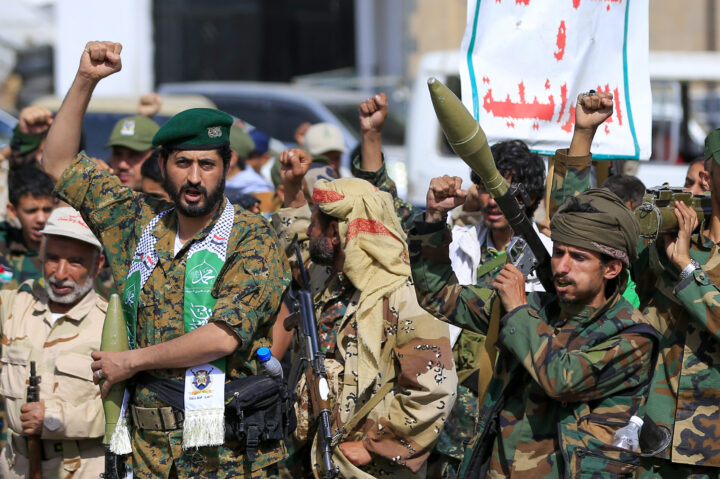
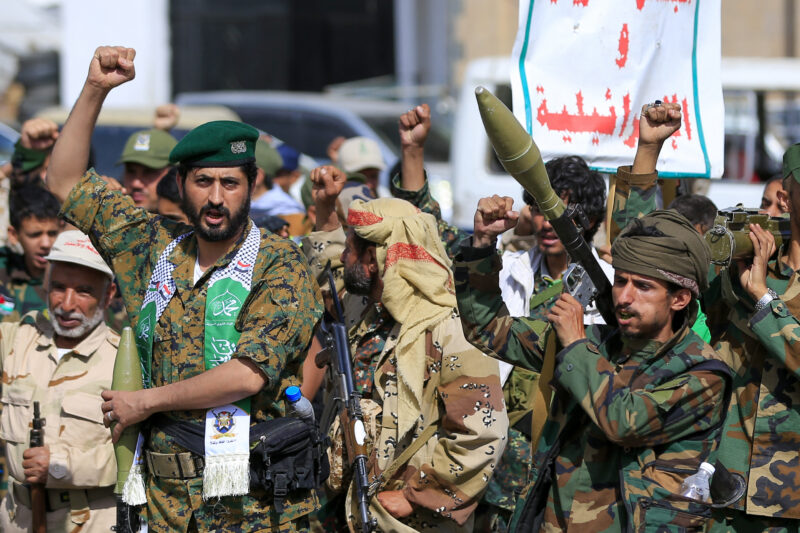
(Mohammed HUWAIS / AFP via Getty Images)
Fighters loyal to the Houthi authorities, shouts slogans during a rally to recruit more fighters, in Sanaa on September 10, 2026.


 Add JewishInsider on Google
Saudi Arabia’s escalating conflict with the Houthis has revealed just how challenging it has become for the U.S. to deter the Iran‑backed terrorist group, former officials and regional experts say, as Houthi gains along the Red Sea raise alarms about global shipping and give Tehran fresh leverage.
Analysts said that while Israel could help Riyadh in combating the attacks, any cooperation is likely to be limited and politically fraught.
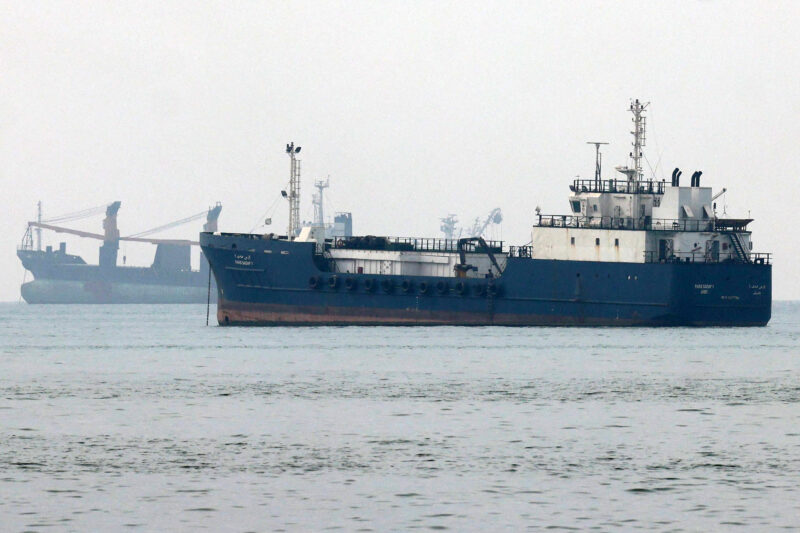
Saudi Arabia on Tuesday issued an alert for a possible attack on the holy city of Mecca amid escalating strikes by the Houthis, a U.S.-designated terrorist group. A day earlier, Vice President JD Vance said the administration was “on top” of the issue and confirmed the U.S. is in direct talks with the group, following recent clashes between the Houthis and the Saudi-backed Yemeni government in which the Houthis seized the port of Mocha, Perim Island inside the Bab el-Mandeb Strait and the Hanish archipelago to the north, giving them control of an alternative shipping route to the Strait of Hormuz.
Experts told Jewish Insider the Houthis’ latest advances are the product of years of preparation, Iranian support and a willingness to absorb losses that would force other militias to the table.
“The Houthis have exploited the lack of a cohesive opposition inside Yemen to prepare for this situation, Iran has resumed aiding them with weapons and advisors, and they benefit from only having to fight one foreign enemy at a time,” Jonathan Ruhe, a fellow at the Jewish Institute for National Security of America, told JI.
“The Houthis are also very risk-acceptant and willing to tolerate losses that have compelled Iran and other proxies into ceasefires. U.S.-Israeli operations could likely exploit the Houthis’ latest advances, but Saudi air and naval power have never shown any serious capacity to degrade the Houthis militarily.”
Steven Cook, a senior fellow at the Council on Foreign Relations, said the Houthis have “acquired a lot of weapons and weapons technology from Iran. Yemen’s government-backed forces are not that good. Saudi Arabia and others don’t want to go in on the ground. The U.S. doesn’t want to commit ground forces. Air power can only do so much.”
Edmund Fitton‑Brown, a former British diplomat now at the Foundation for Defense of Democracies, said the Houthis “have been building and pre-positioning” while the internationally recognized Yemeni government’s forces “are weakened by loss of cohesion, following the dispute over southern secession and the departure of Emirati forces.”
Experts said Houthi advances to capture Mokha and territory near the Bab el‑Mandeb Strait are particularly concerning for Washington and American partners who have counted on the waterway as an alternative to the Strait of Hormuz amid roiled energy markets. Analysts also noted that the disruptions provide Iran leverage in the broader conflict with the U.S.
“It is a concerning development,” Cook said. “Somewhere between 15-20% of global trade passes through the Red Sea … And the Houthis sitting on the Mandeb Strait certainly gives Iran leverage. One of its allies can throttle the global economy.”
“It is important to underline that even if there is an agreement on the Strait of Hormuz, it doesn’t mean that the situation in the Mandeb Strait will be resolved,” Cook added. “The Houthis have their own beef with Saudi Arabia and the current round of fighting is connected to, but not directly related to, the situation in the Strait of Hormuz.”
Ruhe agreed that the advances near Bab el‑Mandeb “give Iran indirect leverage by rattling global markets and threatening the best energy export alternative to Hormuz.” But he emphasized that the Houthis are “far more independent of Tehran than Hezbollah or other proxies,” adding that “they are focused on expanding control inside Yemen and fighting the Saudis, so they prefer not to risk direct U.S. and Israel involvement for the time being, even if Iran might press them.”
In response, Saudi Arabia has reportedly sought U.S. assistance, however, reports indicate President Donald Trump is uninterested in getting involved. Reporting from Israeli media in recent days has also suggested that Saudi Arabia may be quietly exploring potential Israeli assistance as the two countries have established contact through CENTCOM. Analysts said that such cooperation between Jerusalem and Riyadh is possible and would be helpful, but argued it is unlikely to come to fruition.
“[There are] rumors abound about the Saudis asking Israel for help,” Cook said. “It is possible. If the rumors are true and it is now public, I expect vigorous Saudi denials, but the Israelis have capabilities that the Saudis could use. If it happens, I expect that the Israelis will want something in return, which will likely be related to the Palestinians or public acknowledgement of Israeli help.”
Ruhe similarly noted that while Israeli assistance could help Riyadh, he argued that Saudi Arabia is focused on U.S. assistance, stressing that the U.S. and Israel remain “stretched thin” militarily.
“Logically, Israel could assist with military intelligence, which is a particular Saudi weakness,” Ruhe noted, “but Riyadh seems to be looking squarely to Washington for assistance. For now, at least, the U.S. and Israel are stretched thin, and don’t want to divert resources and attention from Iran and other fronts. For the United States, this includes precious air-to-ground munitions and interceptors. Ideally, CENTCOM-led multilateral maritime task forces could assist with freedom of navigation, but this has proven difficult even in less trying times.”
Alexander Gray, who served as chief of staff on the National Security Council during Trump’s first administration, said that he believes the U.S. will ultimately get involved and “provide various types of support” to Saudi Arabia, noting that Washington has “long been a primary security partner of the Kingdom.”
“The Houthi threat is real and serious, primarily to Saudi Arabia, its energy security, and the global commercial traffic going through the Red Sea,” said Gray. “The U.S. has long been the primary security partner of the Kingdom, and President Trump and the Crown Prince have developed a strong relationship that serves the interests of both countries. Ultimately, I anticipate the U.S. will provide various types of support to KSA to ensure that additional strain will not be placed on the global energy supply chain.”
However, some experts warn that Washington’s current approach risks reinforcing the sense that the Yemen front is Riyadh’s problem to manage, rather than a key piece of the wider confrontation with Tehran.
“My biggest concern is that the Trump administration does not seem to understand the extent to which the Houthi problem is part of the larger challenge posed by Iran,” said Matthew Levitt, a senior fellow at The Washington Institute for Near East Policy. “The administration no longer has a senior special envoy for Yemen, and officials describe the Houthi escalation as a primarily Saudi problem rather than a regional challenge. The Houthis have their own interests, but they are also important members of Iran’s proxy alliance, as evidenced by Houthi cooperation with Iraqi Shia militias in their July drone attack on Saudi Arabia.”
The flare‑up is also the first major test of the Mecca Joint Defense Agreement, a NATO-style mutual defense pact signed in August under which Saudi Arabia, Pakistan and Turkey guaranteed each other’s defense. However, Islamabad and Ankara have so far stayed on the sidelines.
“The Mecca agreement was never primarily about collective defense against Iran and its proxies, but rather about signaling to Washington, New Delhi, and others,” Ruhe argued. “Over the past year, Riyadh’s growing isolation drove it into the arms of two partners who have their own reasons for joining the Mecca accord, none of which include getting dragged into Yemen’s forever war.”
Fitton-Brown argued that the failure of Pakistan and Turkey to mobilize underscores what several analysts describe as the gap between Saudi Arabia’s ambitions for the pact and its real‑world value when put to the test.
“It reveals it as the loose alliance that it is,” he said. “Pakistan and Turkey have no intention of sacrificing troops in Yemen. The Saudis look desperate: weak in the face of Iran; weak in the face of the Houthis; desperate for help from the Americans, alienated from the UAE, desperate for new allies but those allies are at best fair weather friends. A US-Saudi-Emirati-Israeli reset may be their best bet — the U.S. also badly needs them not to weaken or fail — but it won’t be an easy sell with [Saudi Crown Prince Mohammed bin Salman].”
More Stories
LESSONS LEARNED?
Three years after Oct. 7, Israel’s security is ‘much better,’ but risks loom
speaking out
In open letter, dozens of retired U.S. military leaders reject genocide allegations against Israel
Daily Overtime
New York braces for Oct. 7 protests

Daily Kickoff
Three years, familiar fears on 10/7 anniversary

Cross-Party Call
JCPA urges candidates in both parties to reject antisemitism ahead of midterms
CAMPAIGN TRAIL
‘There is no Palestinian nation,’ Ofer Winter says as party dips in polls
Please log in if you already have a subscription, or subscribe to access the latest updates.
 Continue with Google
 Continue with Apple