












































Strikes on Yemen’s Sanaa Airport test fragile truce between Houthis and Riyadh
Experts said suspected Saudi strikes on Yemen’s main airport were aimed at stopping Iran from establishing an airlink with the Houthis, which could be used to funnel weapons to the terror group
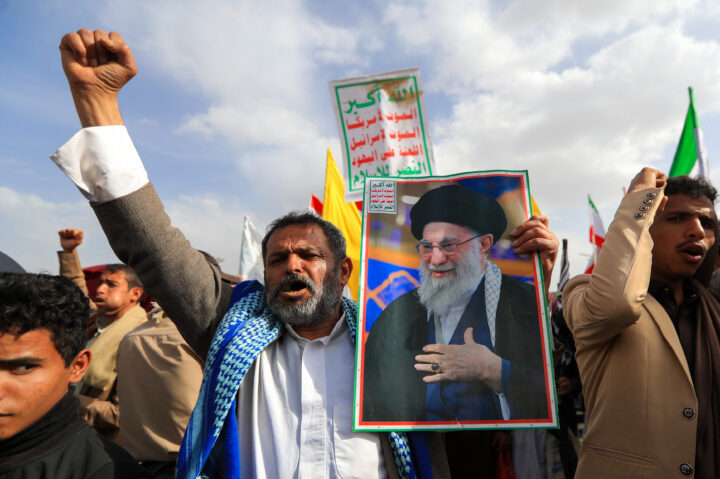
Photo by Mohammed HUWAIS / AFP via Getty Images
A Yemeni supporter of the Iran-backed Houthi movement holds a portrait of Iran's slain supreme leader, Ayatollah Ali Khamenei, during a protest against U.S. strikes on Iran in Sanaa on July 10, 2026.


 Add JewishInsider on Google
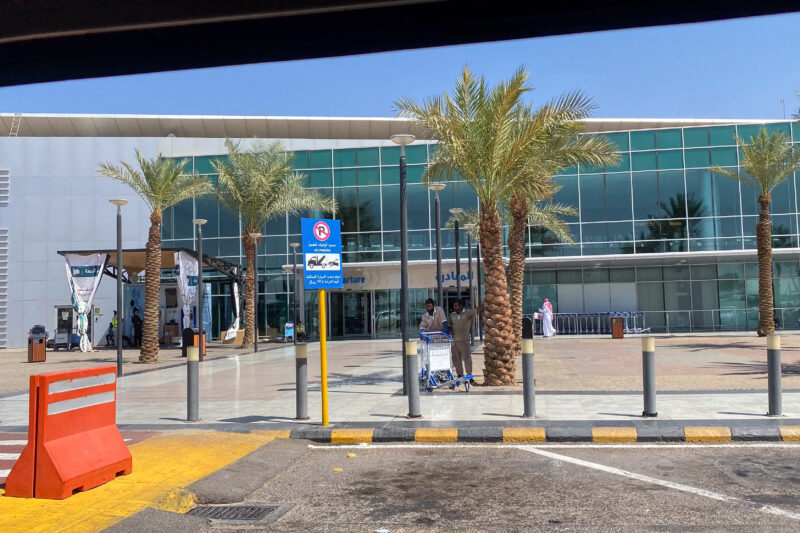
Airstrikes on Yemen’s Sanaa International Airport on Monday were intended to stop Iran and the Houthis from breaking a decades-long air blockade and opening an uncontrolled air link between Tehran and its Yemeni proxy, regional analysts said — a corridor they warn could let Iran resupply the Houthis directly with weapons for future campaigns against Saudi Arabia and Israel.
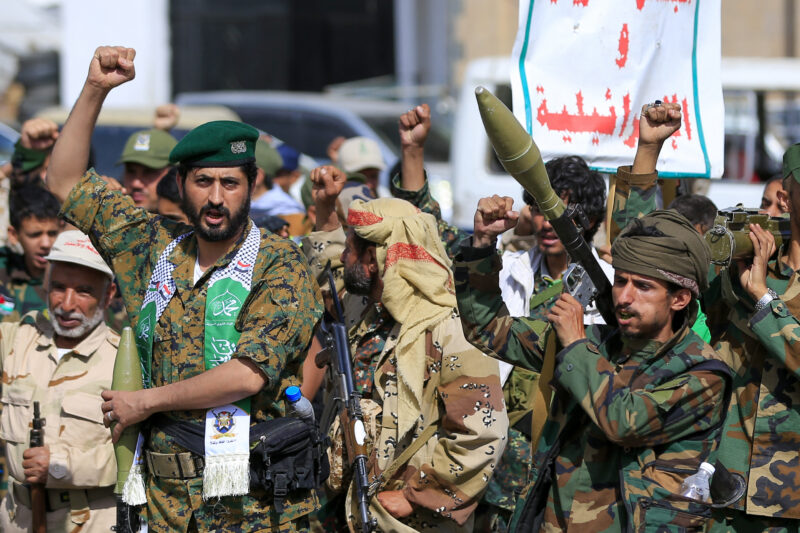
The Houthis accused Saudi Arabia of carrying out the strikes and vowed to retaliate, with a spokesperson claiming the period of “de-escalation” between Riyadh and the terror group was over. Later Monday, the group said it had fired on Saudi Arabia’s Abha International Airport.
The Saudi-backed Yemeni government took responsibility for the original attacks, with Defense Minister Gen. Taher al-Aqili saying on X that the strikes hit the runway to stop an Iranian aircraft — carrying the Houthi delegation returning from the funeral of the late Iranian Supreme Leader Ayatollah Ali Khamenei — from landing. The Houthis said the plane was diverted to Hodeida Airport, and the government ordered all airports under its control closed until further notice.
Riyadh has not claimed responsibility for the attack in Sanaa, but “it was certainly responsible,” said Edmund Fitton-Brown, a former British diplomat and senior fellow at the Foundation for Defense of Democracies.
“The attack was intended to resist Iranian and Houthi efforts to break the air blockade on the Houthi-controlled part of Yemen that has existed for more than a decade,” Fitton-Brown told JI. “Iran and the Houthis took the opportunity of Khamenei’s funeral to test Saudi resolve. Their explicit intention is to establish a regular air link between Iran and Sanaa, uncontrolled by the Saudis or their allies.” He warned such a link would let Iran funnel weaponry to the terror group for “future campaigns” against Israel and Saudi Arabia, as well as in the Red Sea.
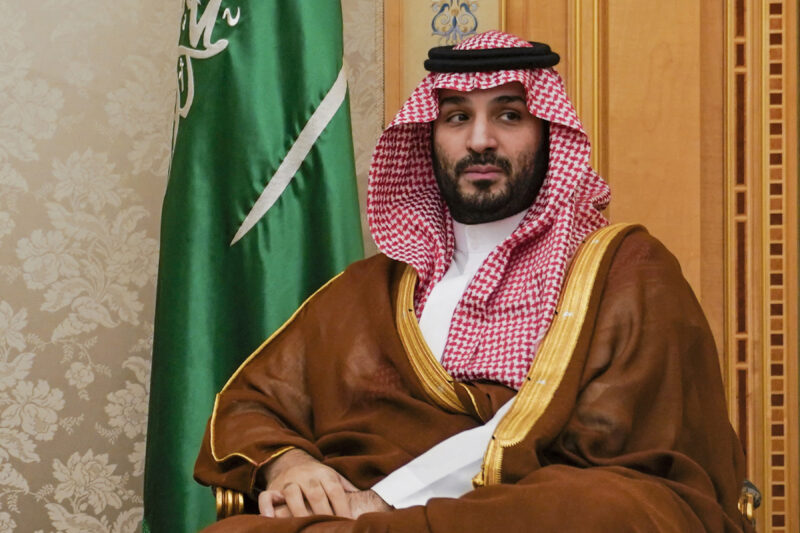
President Donald Trump reportedly gave his blessing for the strikes to Saudi Crown Prince Mohammed bin Salman, who called him on Friday to get U.S. backing for military action against the Houthis, according to an Axios report.
Kristin Diwan, a senior resident scholar at the Arab Gulf States Institute, said similarly that “there were well-founded fears on the part of the Yemen government and the Saudis that the Houthis would use this as a pretext to get around U.N. restrictions and to normalize flights from Iran. If they succeeded, these flights could funnel weapons and other material support to the Houthis.”
The renewed tensions between Saudi Arabia and the Houthis come after a period of relative calm in Yemen’s decade-long civil war, which began in 2014 when the Houthis seized the capital, Sanaa, and much of northern Yemen – forcing the internationally recognized government into exile.
A Saudi-led coalition, including the United Arab Emirates, intervened the following year in support of the government. The parties have held a fragile truce since 2023, which has lasted even as the Houthis launched strikes around the region in the aftermath of the Oct. 7 Hamas attacks in Israel.
Today, the Houthis control Sanaa and much of northern Yemen, including most major population centers, while the Saudi-backed government controls much of the south.
The incident “fits a long-term pattern of covert Iranian assistance to the Houthis, which remains subject to U.N. Security Council prohibitions,” said Jonathan Ruhe, a fellow at the Jewish Institute for National Security of America. “Riyadh wants to prevent the Houthis from recovering after being hit hard by U.S.-Israeli strikes last year, before the counter-Houthi coalition fractured.”
Ruhe said that while the “counter-Houthi coalition is weakened right now,” he noted that the Houthis are also not at full strength.
“Riyadh might be calculating that it’s better to deal with Houthi retaliation now, and to assert the Yemeni government’s authority to keep Iran out of the country, than to stand by and wait for the Houthis to rearm and become a major problem once again,” Ruhe said.
“Riyadh historically has seen Yemen as its own soft underbelly, long before the Houthis ever took Sanaa. Iran is the obvious threat on the kingdom’s front door, but Saudis’ threat perception from the south has always been acute, which leads it to be more assertive in Yemen than people might normally expect,” he continued.
“There is a contradiction [on the part of the Saudis] between trumpeting the strength and resolve of the Saudi-led coalition on Yemen and the Saudi-Emirati quarrel that erupted over southern Yemeni independence late last year and it’s still not fully resolved,” Fitton-Brown said. “Ironically, Iranian and Houthi overreach may drive the Saudis and Emiratis back into each other’s arms.”
Fitton-Brown said next steps could also depend on what the Houthi retaliation looks like. He noted that the terror proxy could employ drone or missile attacks on Saudi Arabia or disrupt shipping in the region.
“[The Houthis] may attack Saudi Arabia directly with drones and missiles, as they have in the past. Or they may decide that it is time to resume disruption of the Red Sea and [the] Bab el-Mandeb [strait], compounding the impact of Iran’s blockade of the Strait of Hormuz on the global economy,” Fitton-Brown said. “That risks drawing a U.S.-led united international response.”
Diwan noted that the Houthis have shown a willingness to “take revenge” on key assets in the region. She said the group could “take revenge both through provocations in the Bab el-Mandeb strait and aerial strikes on Saudi airports in the west.”
Ruhe said that while the Houthis have notably been silent during the conflict between Washington and Tehran, their lack of involvement “can’t be taken for granted going forward.” He similarly noted that Houthi retaliation is possible as Iran seeks to “ratchet up pressure on shipping chokepoints and key regional energy infrastructure,” such as the Red Sea, which has been a bypass for Saudi oil exports that would have previously gone through the Gulf.
More Stories

Arrivederci, Reggio
Jewish preschool educators forced to condemn Israel to attend Reggio Emilia conference

BREAKING POINT
For some Jewish Democrats, Michigan’s debate was the ‘final straw’ for El-Sayed
EXCLUSIVE
Lawmakers call for Congress to mandate creation of Pentagon hate symbols policy
POLICY PIVOT
On Oct. 7 anniversary, senior Democrats call for changes in U.S.-Israel policy
Mayor Unmoved
Mamdani brushes off pro-Hamas heckling at Oct. 7 vigil
analysis
Chris Murphy’s selective outrage in the Middle East
Please log in if you already have a subscription, or subscribe to access the latest updates.
 Continue with Google
 Continue with Apple