































The pro-Israel advocacy group now allows its supporters to donate to 178 Republicans and 72 Democrats running for Congress
Alex Wong/Getty Images
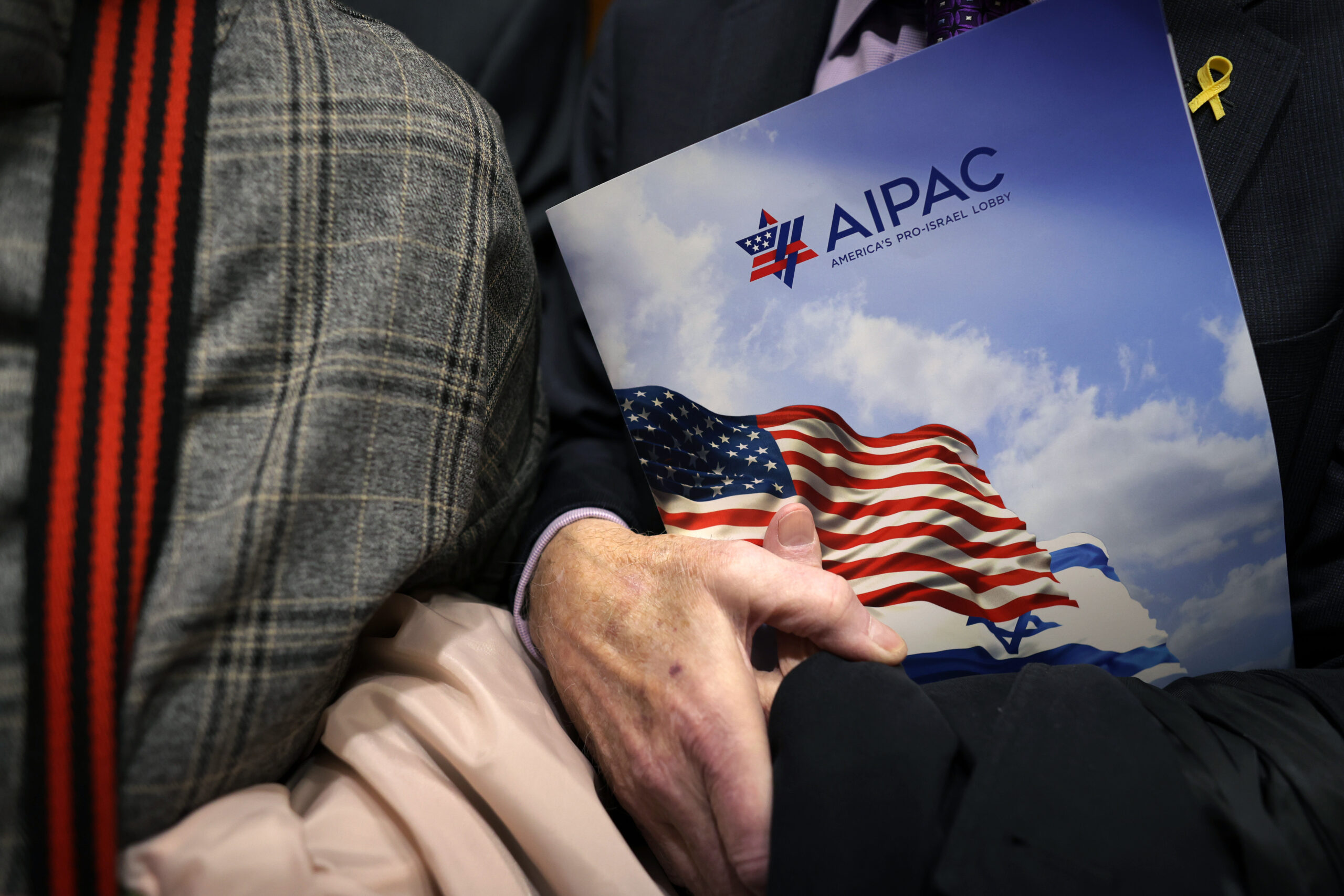
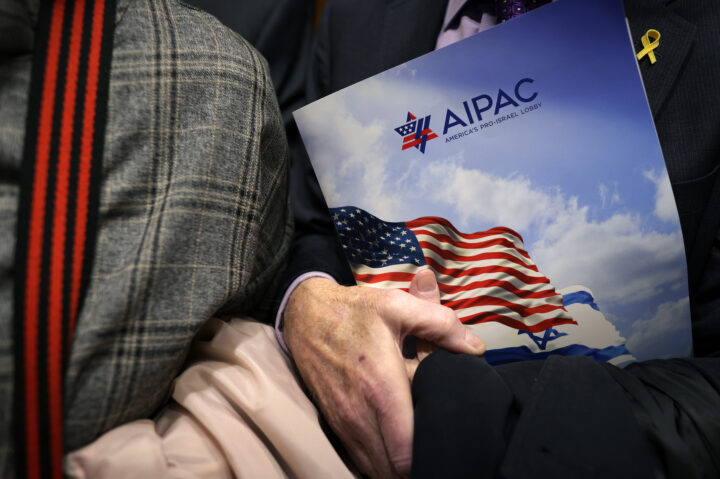
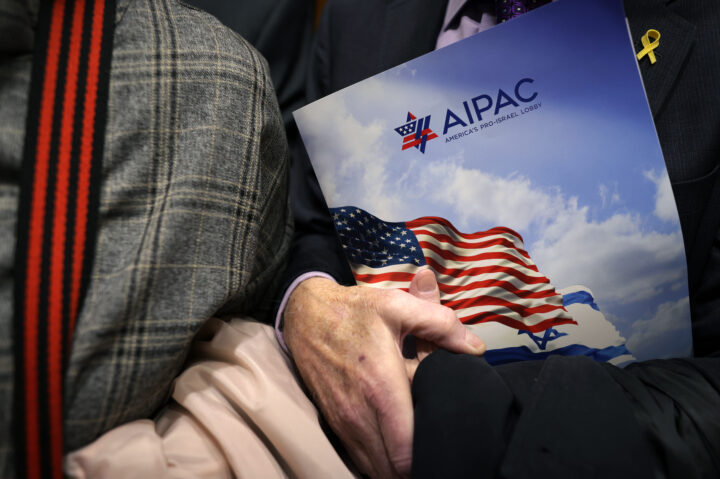
A visitor holds an AIPAC folder in an elevator in Rayburn House Office Building on March 12, 2024 on Capitol Hill in Washington, DC.


 Add JewishInsider on Google
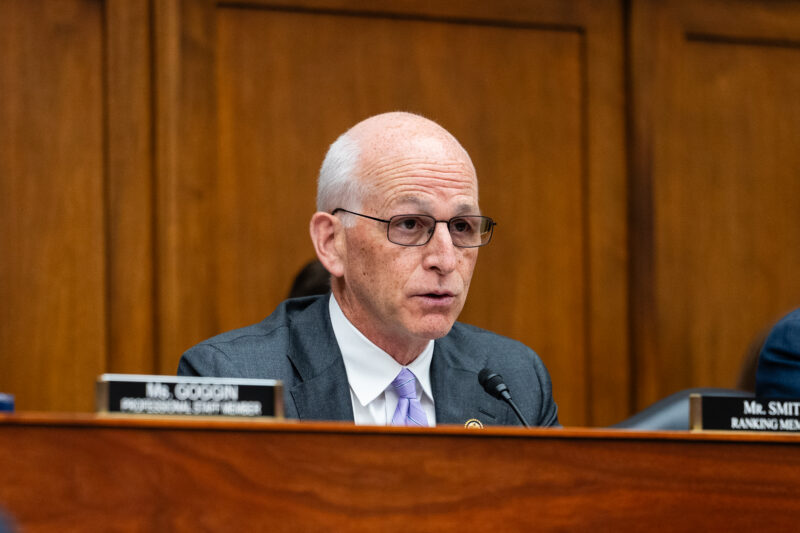
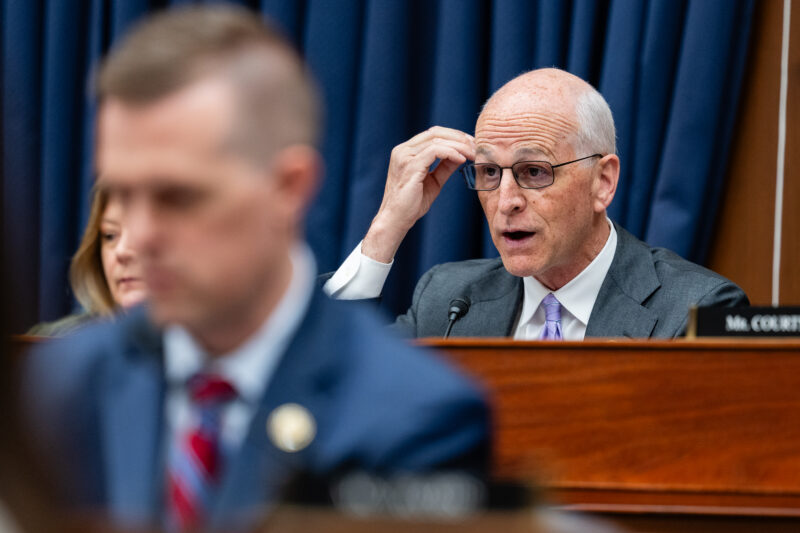
Days after 104 members of Congress voted in favor of a measure that sought to end U.S. aid to Israel, AIPAC will no longer allow donations through its political action committee to 18 lawmakers it endorsed who voted in favor of the legislation.
The group did not announce the change. But the endorsement page on AIPAC’s political giving portal — where supporters can donate to candidates who have been endorsed by AIPAC — removed the option for individuals to route money to those lawmakers.
AIPAC now allows its supporters to donate to 72 Democratic candidates in the House and Senate, compared to 178 Republican candidates — meaning 71% of the candidates the group is now actively supporting are Republicans, and just 29% are Democrats.
Rep. Thomas Massie (R-KY), an anti-Israel Republican who was defeated this year in a GOP primary, introduced the amendment to a State Department funding bill knowing it would fail, which it did: 314 members voted against it.
He was the only Republican to support it, along with 103 Democrats. Ten Democrats voted present on the amendment, which would have eliminated the $3.3 billion in annual foreign military financing provided by the U.S. to Israel, according to the terms of the 2016 memorandum of understanding between the two countries.
The 18 AIPAC endorsees who voted in favor of the measure were Reps. Gabe Amo (D-RI), Jake Auchincloss (D-MA), Julia Brownley (D-CA), Katherine Clark (D-MA), Laura Friedman (D-CA), Maggie Goodlander (D-NH), Josh Harder (D-CA), Steven Horsford (D-NV), Glenn Ivey (D-MD), Julie Johnson (D-TX), Bill Keating (D-MA), Seth Magaziner (D-RI), Richard Neal (D-MA), Joe Neguse (D-CO), Nancy Pelosi (D-CA), Brittany Pettersen (D-CO), Pat Ryan (D-NY) and Adam Smith (D-WA).
On its website, AIPAC delineates retiring lawmakers, who are no longer raising money, with a brief explanation thanking them for their “ongoing support for the U.S.-Israel relationship.” On the profiles of retiring Reps. Brownley, Pelosi and Johnson, AIPAC removed the line expressing thanks.
Three AIPAC-endorsed lawmakers — Reps. Shontel Brown (D-OH), Sarah Elfreth (D-MD) and Chris Pappas (D-NH) — voted “present” on the measure. AIPAC is still supporting them.
The group did not formally rescind its endorsement of any lawmakers after the vote, according to an AIPAC source, even though they are no longer going to receive financial support from the organization.
An AIPAC spokesperson declined to comment.
In our decentralized political environment, it’s easier than ever for a critical mass of ideologically committed small-dollar donors to power insurgent, ideologically driven campaigns

GETTY IMAGES
Large amount of US dollar cash
The second-quarter congressional fundraising reports, which were posted on Wednesday, paint a picture of far-left, anti-Israel candidates drawing financial fuel from a growing small-dollar donor network of like-minded individuals.
Nearly all of the Democratic Socialists of America-aligned or virulently anti-Israel candidates were among the Democrats’ leading fundraisers, including lawmakers (like Reps. Rashida Tlaib [D-MI] and Ilhan Omar [D-MN]) who are not facing particularly competitive races.
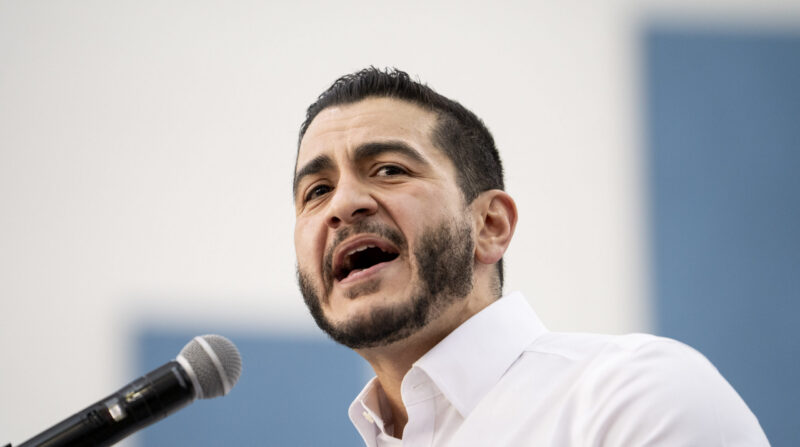
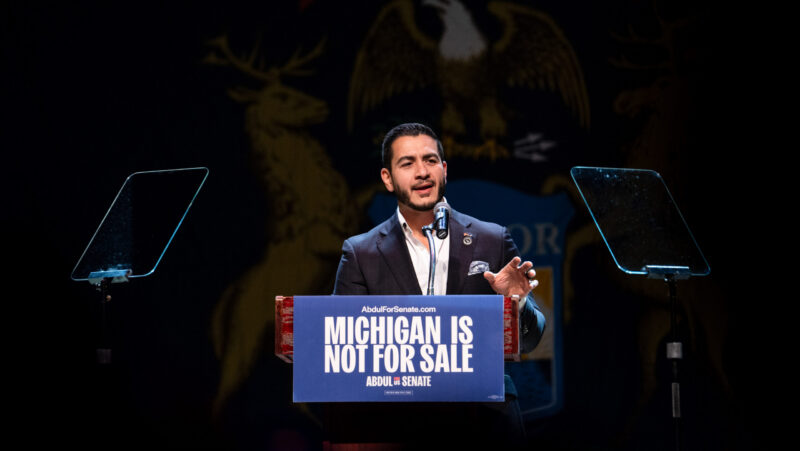
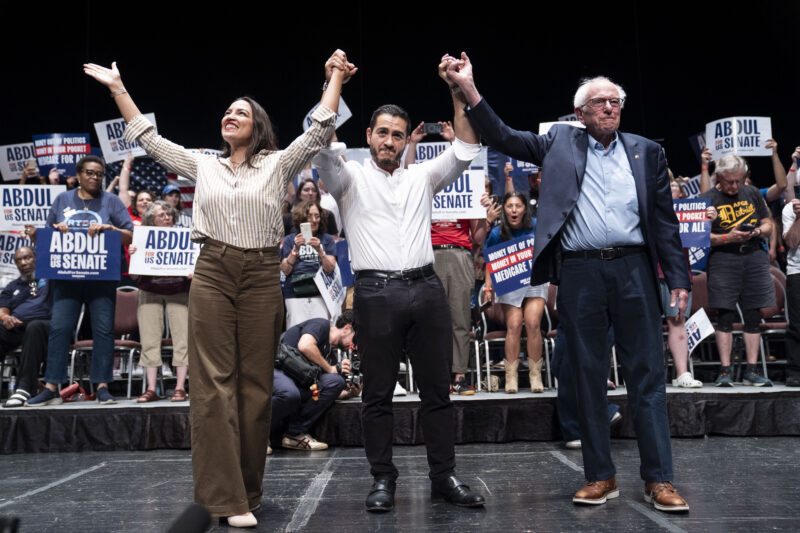
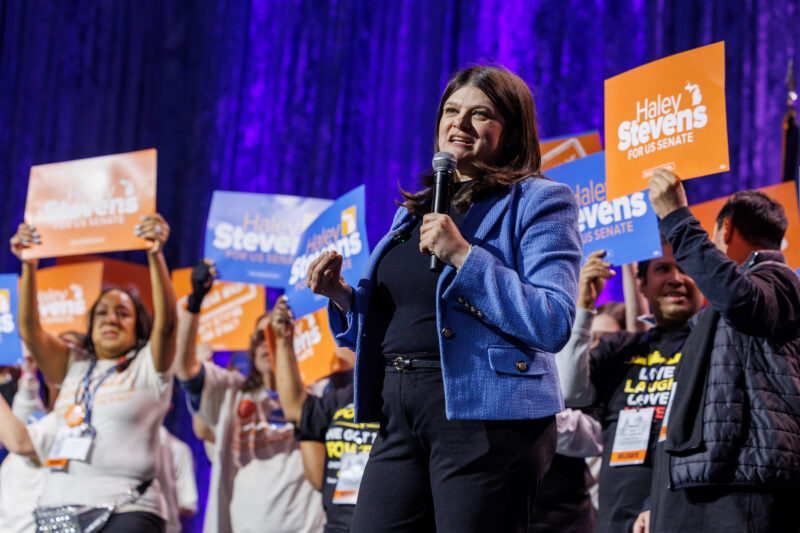
The highlights: Abdul El-Sayed raised $4.6 million between April and June in the Michigan Senate primary, more than double the $2.1 million that Rep. Haley Stevens (D-MI) brought in. Disgraced former Maine Senate candidate Graham Platner took in a whopping $9.1 million before dropping out amid allegations of rape, outpacing Sen. Susan Collins’ (R-ME) $5.7 million haul.
On the House side, the DSA duo who won New York City congressional nominations last month — doctoral student Darializa Avila Chevalier and state Assemblywoman Claire Valdez — nearly hit the million-dollar mark in fundraising.
Avila Chevalier raised $952,000 in the run-up to her primary against Rep. Adriano Espaillat (D-NY), coming close to matching the Congressional Hispanic Caucus chairman’s fundraising. Meanwhile, Valdez brought in $942,000 for the quarter, significantly more than the party-backed progressive favorite Antonio Reynoso, the Brooklyn borough president.
The list goes on: Adam Hamawy’s past ties to Islamist radicals didn’t prevent him from winning the nomination in New Jersey’s 12th District, and certainly didn’t stunt his fundraising. Hamawy raised $987,000 in the second quarter, a staggering sum for a low-profile open-seat race. That’s well more than double the total of his nearest fundraising rival.
Melat Kiros, the 29-year-old DSA-backed insurgent who ousted Rep. Diana DeGette (D-CO), also outraised the longtime lawmaker in the homestretch of the campaign. Kiros brought in $712,000 between April and June, while DeGette only raised $694,000.
What does this say about the state of our politics?
In the recent past, radical candidates faced significant hurdles, not just because their message generally turned off moderate-minded voters but because they lacked institutional support, which limited their ability to raise money and be financially viable.
It was once common for party leaders and other aligned outside groups to flood favored candidates with donations and leverage their financial advantage to create institutional guardrails.
But in our decentralized political environment, it’s easier than ever for a critical mass of ideologically committed small-dollar donors to power insurgent, ideologically driven campaigns. And with party-aligned organizations (like labor unions and EMILY’s List) atrophied and the impact of pro-Israel money diminished in Democratic primaries as the party turns against the Jewish state in the wake of the war in Gaza, the establishment has lost a lot of its juice.
As important, the victory of Mayor Zohran Mamdani in New York City opened up the pocketbooks of a growing roster of Muslim and Arab donors whose top political issues include their deep antipathy towards Israel.
The notion of a socialist, anti-Israel candidate winning in New York City sounded fanciful before the rise of Mamdani. His victory proved that if like-minded individuals mobilize behind favored candidates, they can have an outsized impact in the political process — especially given the Democratic public’s declining support for the Jewish state.
The rise of an anti-Israel super PAC like American Priorities to compete against AIPAC in Democratic primaries wouldn’t have been possible without Mamdani’s victory. The time when pro-Israel groups could rely on their financial firepower — without facing a countering force in competitive primaries — is now over.
It’s a reminder that money alone can only go so far in politics, and that strategy, tactics and message are just as important in determining electoral success. If the far-left forces face their comeuppance, it’s going to be because their message is unappealing to average Americans, not because they’re going to be outspent by the establishment.
Plus, Vance alleges Israeli influence campaign to extend Iran war
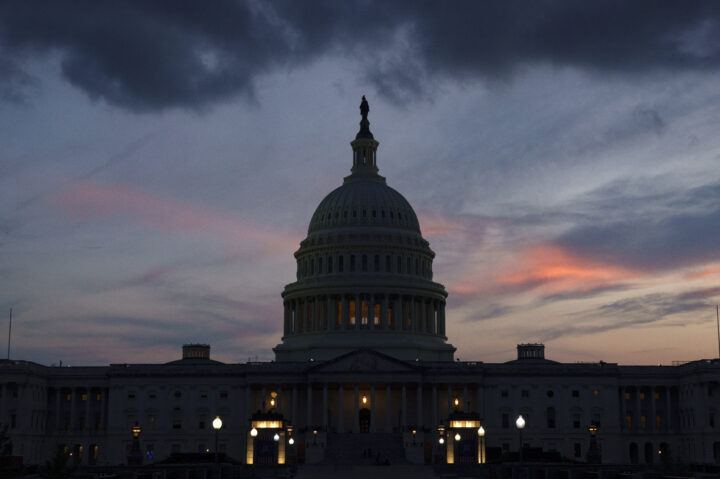
Photo by Kevin Carter/Getty Images
The sun sets behind the U.S. Capitol Building on July 8, 2026 in Washington, D.C.
Good Wednesday afternoon.
This P.M. briefing is reserved for our premium subscribers like you — offering a forward-focused read on what we’re tracking now and what’s coming next.
Today’s Daily Overtime was curated by JI U.S. Editor Danielle Cohen-Kanik.
📡On Our Radar
Notable developments and interesting tidbits we’re tracking
More than 100 House Democrats, about half of the caucus, voted in favorof Rep. Thomas Massie’s (R-KY) amendment to strip all U.S. aid to Israel out of the State Department appropriations bill this afternoon, including several leaders of the caucus such as Rep. Katherine Clark (D-MA), the No. 2 House Democrat, and former House Speaker Nancy Pelosi (D-CA).
While the amendment was overwhelmingly defeated, 314-104, the large segment of Democrats supporting the measure indicates a growing shift away from the party’s historic support for Israel…
Vice President JD Vance, in an episode of “The Joe Rogan Experience” released today, stated repeatedly that Israeli actors are engaged in a “very discreet, very well-funded” influence campaign to extend the war in Iran: “There are some people within their system we know beyond a shadow of a doubt who are manipulating and trying to change American public opinion to keep the war going on indefinitely. Again, not towards any objective, but just indefinitely,” he alleged.
Vance also said that the late disgraced financier Jeffrey Epstein “clearly had connections to the highest levels of Israeli intelligence” and to “elements of the Israeli deep state that were left of center”…
The U.S., Israel and Lebanon, wrapping up talks in Rome this week, agreed on the structure and guidelines for implementing the two pilot zones the parties agreed to create in southern Lebanon, a State Department official said today, without specifying a timeline for the IDF’s withdrawal. The parties will now engage in expanded technical talks to implement the trilateral agreement reached in the last round of negotiations…
CENTCOM began another round of strikes against Iran this afternoon; coming after strikes earlier in the day, the pace of the operations appears to be gaining momentum. President Donald Trump is reportedly considering expanding U.S. military efforts to include more airstrikes, utilizing ground forces and targeting nuclear sites again, according to The Wall Street Journal…
Three senior U.S. officials connected to the Board of Peace, the Trump-led body created to resolve the conflict in Gaza, have been meeting with congressional offices this week to request $200 million for the International Stabilization Force, two people with knowledge of the meetings told Jewish Insider’s Gabby Deutch. The meetings mark the first time that Board of Peace representatives have approached Congress with a funding request…
Ahead of today’s deadline, candidates have begun releasing their fundraising reports for the second quarter. In Georgia, where some in the Jewish community have felt torn between two less-than-ideal options in Sen. Jon Ossoff (D-GA) and his opponent, Rep. Mike Collins (R-GA), Ossoff holds a commanding fundraising advantage: The senator reported raising$20 million this quarter with $42 million in the bank, while Collins raised $2.1 million, leaving him with $2.2 million in cash on hand…
Meanwhile, Michigan Senate candidate Abdul El-Sayed released his 2025 tax returns, which he is not legally obligated to do but was pressured to do by his opponent in the Democratic primary, Rep. Haley Stevens (D-MI). El-Sayed’s reported total income was over $680,000, nearly $300,000 of which was unspecified as to its source…
The anti-Israel American Priorities super PAC made an initial investment of $375,000 to boost El-Sayed in the race; El-Sayed has repeatedly railed against super PAC involvement in politics — particularly that of AIPAC’s United Democracy Project, which is spending heavily in favor of Stevens…
Rep. Hilary Scholten (D-MI), speaking to Semafor about electability concerns in the Democratic Party, criticized progressives who “prop up other candidates who have said really problematic things.” The moderate congresswoman added that El-Sayed, who has been criticized for comments about Stevens seen as misogynistic, “has a problematic record with women”…
A new Quinnipiac poll of Pennsylvania voters found Gov. Josh Shapiro leading his Republican opponent in his reelection race by 13 points, 53-40%, with a 56% overall approval rating. Sen. John Fetterman (D-PA) had a 77% approval rating among Republicans, but only 19% among voters in his own party. Nearly half (49%) of voters said the Democratic Party has moved too far to the left, while 42% said the Republican Party has moved too far to the right…
Former White House senior official Brett McGurk is releasing a book, Brink: Inside the Race to Free the October 7 Hostages, on his role leading U.S. efforts under former President Joe Biden to secure the release of hostages held by Hamas after the Oct. 7, 2023, attacks, due out on Oct. 6 to coincide with the third anniversary of the attacks…
The New York Times examines the role that Hollywood superagent Ari Emanuel could play in the potential presidential run of his brother, former Chicago Mayor Rahm Emanuel, as politicians increasingly seek access to media as part of their campaigns; among those close to Ari Emanuel are the UFC’s Dana White, commentator Joe Rogan, pundit Stephen A. Smith as well as Elon Musk…
⏩ Tomorrow’s Agenda, Today
An early look at tomorrow’s storylines and schedule to keep you a step ahead
Keep an eye on Jewish Insider for a look at what this afternoon’s vote on Massie‘s amendment to cut all U.S. aid to Israel means for the future of Israel policy in the Democratic Party.
At least eight Democratic candidates vying to replace former nominee Graham Platner on the ballotfor U.S. Senate in Maine will take the debate stage tomorrow evening in their first chance to pitch themselves to voters, ahead of the state Democratic Party’s nominating convention later this month.
President Donald Trump will give an address to the nation in the evening, which he has said will largely focus on American election security.
The American Federation of Teachers’ annual convention will kick off in Washington. The second largest teachers’ union in the U.S., the AFT has previously featured anti-Israel resolutions at its gatherings.
The Aspen Security Forum continues with several panels on the Middle East, including speakers such as Akif Çağatay Kılıç, top advisor to Turkish President Recep Tayyip Erdoğan; Ayman Safadi, Jordan’s foreign minister; Sen. Chris Murphy (D-CT); Ted Deutch, CEO of the American Jewish Committee; Dan Shapiro, former U.S. Ambassador to Israel; Rahm Emanuel; Anne Neuberger, former deputy national security advisor; and Salam Fayyad, former prime minister of the Palestinian Authority.
Stories You May Have Missed
SPACE MAN
The Israeli scientist at the center of Trump’s search for answers on UFOs

Harvard professor Avi Loeb believes his research, which propelled him to the White House, could usher in a ‘new messianic era’
LITMUS TEST
Khanna pressed to support Oct. 7 attacks in Drop Site interview
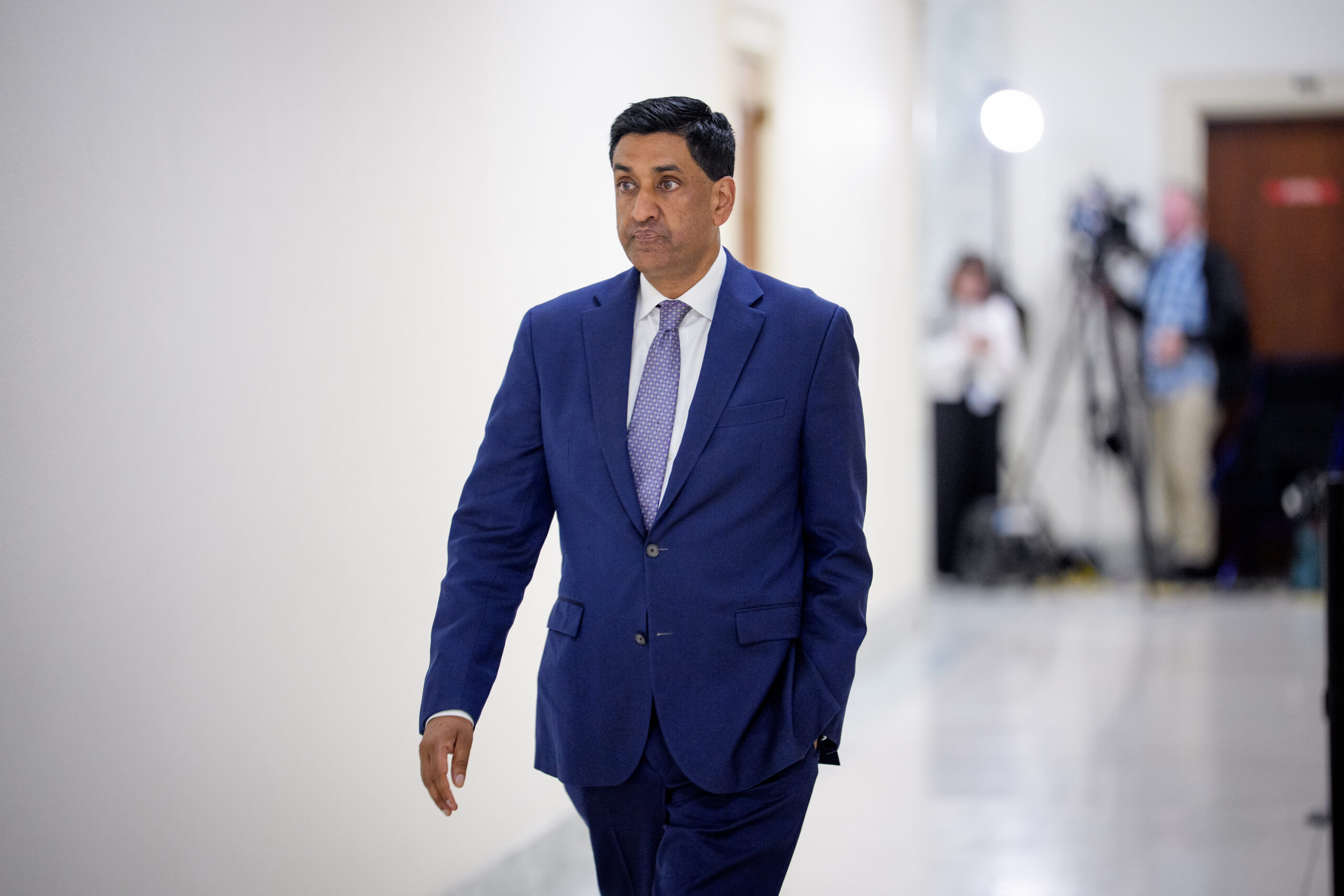
The congressman angered Drop Site co-founder Jeremy Scahill by refusing to condone the attacks; Scahill accused Khanna of promoting a ‘double standard’
A top donor to American Priorities PAC, which has backed far-left Democratic candidates, has donated to Marjorie Taylor Greene, Thomas Massie and Greg Abbott

Drew Angerer/Getty Images
Rep. Marjorie Taylor Greene (R-GA) departs a closed-door GOP caucus meeting at the U.S. Capitol January 10, 2023 in Washington, DC.
A recently launched super PAC positioning itself as a progressive counterweight to AIPAC’s involvement in Democratic primary elections has accepted financial contributions from a number of individuals who have also donated to Republicans, campaign filings show.
The financial support for American Priorities PAC, created in February, has come even as AIPAC and its super PAC have faced backlash from critics on the left who accuse it of meddling in Democratic primaries as a sort of front group for GOP-funded attacks against anti-Israel candidates in safely blue districts.
AIPAC’s super PAC, United Democracy Project, has taken far more from GOP-linked donors than its new rival, American Priorities — now funded largely by a handful of deep-pocketed contributors. UDP supports both Democrats and Republicans.
But American Priorities, which has thus far only supported Democrats and pledged to spend at least $10 million during the midterms, has not acknowledged that the source of some of its funding is from donors who have at the same time given to GOP candidates and groups — and more extensively than previously reported.
A spokesperson for American Priorities did not respond to a request for comment about whether the group is comfortable with such financial support and how it views the donations in relation to AIPAC’s own pro-Israel fundraising.
American Priorities, which has raised $5.4 million thus far, has sought to mimic AIPAC’s playbook of spending aggressively in progressive congressional districts to elect its preferred primary candidates. The new group is investing significantly in New Jersey’s 12th District race on Tuesday on behalf of Adam Hamawy — a plastic surgeon who opposes all U.S. aid to Israel and whose past ties to a convicted terrorist mastermind as well as a now-shuttered al-Qaida-linked group in Bosnia have drawn scrutiny in the final weeks of the election.
The super PAC has vowed to spend around $2 million by the end of the crowded primary — where Hamawy has been surging — and it recently reached $500,000 in another race in California boosting Randy Villegas, a progressive critic of Israel running for a red-leaning seat held by Rep. David Valadao (R-CA), who is endorsed by AIPAC.
Those investments have been fueled, most notably, by at least $525,000 from Hussein Mahrouq, a Texas businessman who has backed far-right Republicans including the recently ousted Rep. Thomas Massie (R-KY) and former Rep. Marjorie Taylor Greene (R-GA), both of whom have been accused of using antisemitic tropes about Jews and Israel.
In 2024, Mahrouq, one of the top contributors to American Priorities, also gave $100,000 to boost Texas Republican Gov. Greg Abbott and donated $25,000 to Republican Lt. Gov. Dan Patrick, state filings show.
Meanwhile, American Priorities accepted a $5,000 contribution from Omar Khawaja, a personal injury lawyer in Houston, who in March donated to a super PAC supporting hard-right Texas Attorney General Ken Paxton, who won last week’s GOP primary run-off in the state’s closely watched Senate race. Khawaja has also contributed to a Republican House candidate in Texas as well as Massie, who is among the most vocal critics of Israel in the GOP congressional caucus, according to filings.
Moiz Ali, an entrepreneur and investor in Texas who gave $150,000 to American Priorities in March, also donated to Massie last fall — shortly before he drew a challenger, Ed Gallrein, who defeated the libertarian congressman earlier this month with the backing of President Donald Trump. AIPAC also spent heavily against Massie, a top target of the group this cycle.
Another American Priorities donor, Nadeem Baig, a gastroenterologist in New Jersey who gave $50,000, has previously contributed to former Sen. Ben Sasse (R-NE), former Rep. Leonard Lance (R-NJ) and Rep. Darin LaHood (R-IL), all of whom have been known as staunch supporters of Israel. LaHood is backed by AIPAC, while Lance served as a co-chair of the House Republican Israel Caucus before he was unseated in 2018.
In a statement shared with Jewish Insider by a spokesperson for Mahrouq, he called himself “an independent businessman, not affiliated with any political party,” and said that his “support has always been guided by what I believe is in the best interest of the United States, its economic strength, security and long-term prosperity.”
“I have supported individuals and organizations across the political spectrum when their positions align with those priorities,” he continued. “My focus is not partisan politics, but rather promoting policies that strengthen America, encourage opportunity, and serve the interests of American citizens. I believe decisions affecting our country should be made based on what is best for the United States, independent of pressure from any foreign government, foreign interest group or partisan agenda.”
Mahrouq was the only American Priorities donor reached for comment by JI who shared a response.
The contributions to Massie and Greene in particular suggest anti-Israel sentiment can transcend partisan boundaries, in the way pro-Israel advocacy has been seen as a bipartisan effort connecting Democrats and Republicans.
Still, American Priorities has only backed Democrats, while AIPAC has championed bipartisan advocacy — even as it has stirred controversy over its engagement in Democratic races that show the group is navigating mounting hostility toward Israel from candidates and elected officials.
American Priorities is led by Hannah Fertig, a strategist with ties to Sen. Bernie Sanders (I-VT) and the far-left group Justice Democrats, which also gave to the super PAC and is likewise backing Hamawy in his primary on Tuesday. “We want our foreign policy views to reflect where the Democratic base has moved, particularly on Gaza, and on unconditional U.S. military to Israel,” Fertig told Semafor in March following the group’s launch. “We’re seeing this as a generational inflection point, and we launched because there’s a huge gap in the progressive spending ecosystem.”
The advantage of having a defined group of reliable donors can be neutralized by an online feeding frenzy that galvanizes enough individuals to give to a radical cause or candidate
Nam Y. Huh/AP
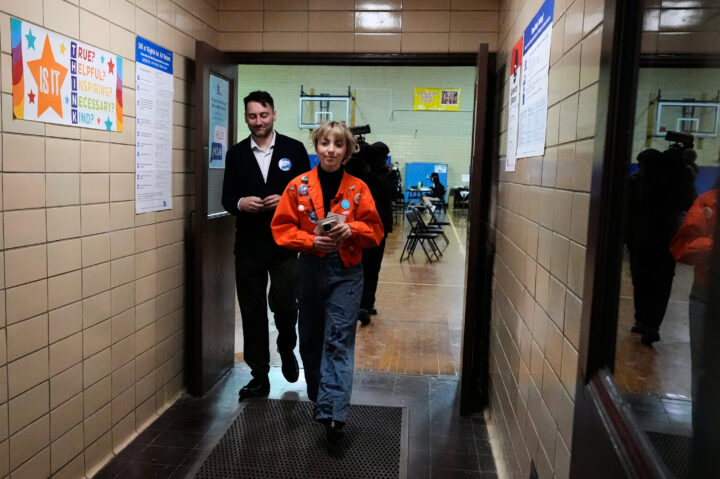
Democratic candidate for Congress, Kat Abughazaleh, right, and her boyfriend Ben Collins, leave the Chicago Park District Loyola field house after voting in the primary election for the upcoming midterms, in Chicago, Tuesday, March 17, 2026.
Tomorrow (April 15) isn’t just Tax Day, but it’s also the deadline for candidates vying in the pivotal midterms to report their latest fundraising figures — an important marker on the political calendar in determining which candidates are raising enough money to run credible campaigns and which will be left financially behind.
Historically, having a critical mass of prominent, well-heeled supporters was a prerequisite for a congressional candidate being able to get their message out to the public.
Not long ago, candidates with extreme or exotic views — such as those affiliated with the Democratic Socialists of America on the left or those embracing conspiracy theories on the far right — would have a hard time being taken seriously by rank-and-file donors, who typically want a back a winner and would shy away from those with far-out-of-the-mainstream views.
Similarly, the pro-Israel community historically benefited from the presence of strong organizations like AIPAC that helped pool supporters’ money to favored candidates, giving them outsized impact within both parties. More recently, AIPAC’s super PAC has led the way in engaging directly in political campaigns, directly spending money on behalf of favored candidates and attacking some of the most radical candidates on the ballot.
But in our brave new decentralized world of politics and media, where a critical mass of small-dollar donations from passionate individuals can easily be amassed online (especially through an incendiary video clip or well-timed fundraising appeal), the comparative advantage of having a defined group of reliable donors can be neutralized by an online feeding frenzy that galvanizes enough individuals to give to a radical cause or candidate.
At the same time, the social media-driven public conversation — without any guardrails and few standards — has totally transformed what is viewed as normal. One recent example: 27-year-old Kat Abughazaleh, a far-left social media influencer without any roots in the Chicago-area district she was running in, raised well over $3 million for her (unsuccessful) primary campaign, fueled by high-volume, low-dollar, largely out-of-state contributions.
If Tip O’Neill once said all politics is local, the opposite is true today. All politics is now nationalized, with the most outlandish hot takes and incendiary commentary most likely to go viral.
The same viral clips that lead unsuspecting audiences to extreme voices like Hasan Piker and Candace Owens live in the same ecosystem that makes it easy for a candidate like Abughazaleh to bring in big money. It’s not a coincidence that former Rep. Marjorie Taylor Greene (R-GA) and Rep. Alexandria Ocasio-Cortez (D-NY) were among the top fundraisers within their respective parties this cycle.
There are two different ways for Jewish and pro-Israel voices to adapt to this still-evolving revolution in both media and politics — one on the supply side and one on the demand side.
On the demand side, it’s clear that the algorithmic preferences for leading social media platforms prioritize constant unthinking engagement (at best) and rage and radicalism (at worst).
It doesn’t seem like a coincidence that Twitter/X’s decision to unblock neo-Nazi influencer Nick Fuentes from the platform in May 2024 quickly led to an upsurge in antisemitic content being embraced by a wide range of far-right podcasters. There are thoughtful policy proposals that have been floated to do a better job regulating what has increasingly become an anarchic space.
Most of the focus, however, has been on how politicians and outside groups can adapt on the supply side. As Obama campaign manager David Plouffe wrote in The New York Times last week, “A successful campaign in 2026 must operate like a full-time production studio… It means creating output tailored specifically for TikTok or Instagram or YouTube.”
Plouffe also noted that campaigns need to focus on what he called “answer engine optimization” for artificial intelligence, essentially working to ensure friendlier responses from AI bots.
If the old media and fundraising model was to rely on scale (of donations) and volume (of ads) to persuade voters, the new media ecosystem requires nimbleness and adaptability. Raising the most money and saturating the airwaves with advertisements was once a time-tested tool of success.
Now, campaigns and advocacy groups alike are facing a multifront challenge, figuring out whether to accommodate what appears to be a new political and media reality where the loudest and most polarizing voices prevail — or fight for a more fair-and-balanced ecosystem while also engaging with the fractured landscape as best as possible.
The retiring New Jersey congresswoman clashed with Cohen in 2019 after she voted against a resolution opposing the BDS movement
Nathan Posner/Anadolu via Getty Images
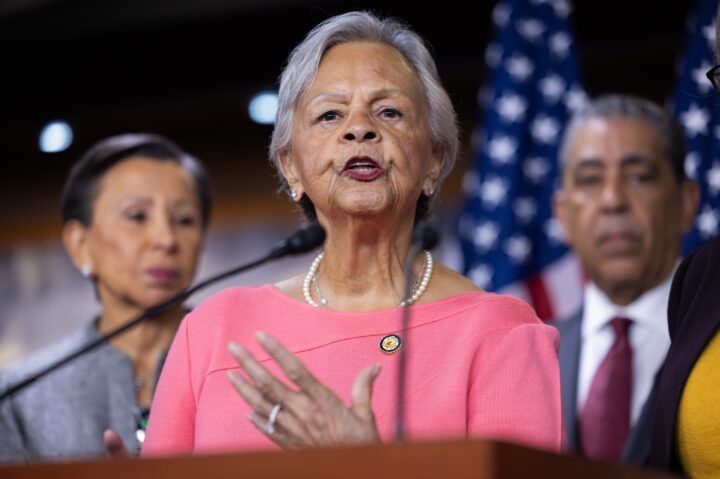
Rep. Bonnie Watson Coleman (D-NJ) speaks at a press conference with other House Democrats on articles of impeachment against Homeland Security Secretary Kristi Noem, in Washington, DC on January 14, 2026.
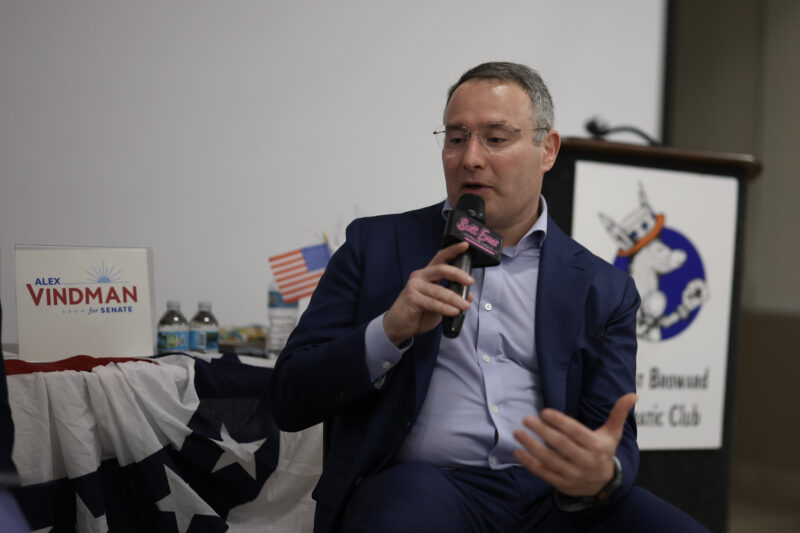
Rep. Bonnie Watson Coleman (D-NJ) urged voters in her district not to vote for East Brunswick Mayor Brad Cohen, one of the 17 candidates running to replace her, accusing him of being a “hardline supporter” of Israeli Prime Minister Benjamin Netanyahu.
Cohen, the top fundraiser in the field, was singled out for criticism by Watson Coleman, who declined to endorse a candidate in the 12th Congressional District primary, according to the New Jersey Globe.
“He’s a hardline supporter of Netanyahu, who is a despot, a corrupt leader,” Watson Coleman, a longtime critic of Israel, told the news outlet.
Cohen currently holds a substantial fundraising lead in the race to replace Watson Coleman, with $279,000 raised and $263,000 cash on hand as of the end of 2025.
Cohen told the Globe that Watson Coleman’s characterization of him is false, and that he disagrees with certain actions of the Israeli government.
“I have a lot of respect for Congresswoman Watson Coleman. She spent her first Passover at my house when she became a congresswoman, so our history goes back a long time,” Cohen said. “On most issues, we’re completely on the same page. But I think she’s mischaracterizing me when she calls me a hardliner.”
He did not respond to a request for comment from Jewish Insider.
Cohen is a prominent figure in the local Jewish community and a self-described AIPAC member, who also testified in support of legislation codifying the International Holocaust Remembrance Alliance’s working definition of antisemitism in the state legislature and pushed back against efforts to adopt a ceasefire resolution in the East Brunswick town council, according to the Jewish Link, a regional Jewish news outlet.
He and Watson Coleman clashed in 2019 after she voted against a resolution opposing the Boycott, Divestment and Sanctions movement targeting Israel, though he defended her from accusations of antisemitism a year later.
Cohen urged the East Brunswick public school district to investigate whether an antisemitic hate crime had occurred in 2024 when a picture of a Jewish student group was erased from the high school yearbook and replaced with a picture of Muslim students.
During a visit to Israel in 2022, Cohen signed a sister city agreement between East Brunswick and Yavne, Israel.
Other notable candidates in the race include Sue Altman, the former state director for Sen. Andy Kim (D-NJ), a progressive activist who ran for Congress on a pro-Israel platform in 2024 in a neighboring district, and Adam Hamawy.
Hamawy is a physician and veteran who gained prominence as a vocal critic of Israel after he volunteered as a doctor in Gaza in 2024. He’s endorsed by Sen. Tammy Duckworth (D-IL), whose life he saved after her helicopter was shot down in Iraq, and he was Watson Coleman’s guest to President Donald Trump’s address to Congress in 2024.
Watson Coleman praised five of the 17 candidates in the race, including Altman and Hamawy, as “hardworking, good people,” but said she would otherwise not “[put] my finger on this in any way, shape, or form.”
Cohen has already faced antisemitic attacks during his congressional campaign, including an Instagram page dedicated to attacking him that portrays him with devil horns and drinking blood, and derisively characterizes him as “Israel first” and a “Zionist … destroying usa.”
State Sen. Laura Fine, former Rep. Melissa Bean and Cook County Commissioner Donna Miller are getting a big bump for their respective campaigns

State Sen. Laura Fine/Facebook
State Sen. Laura Fine
A pair of well-financed groups, whose origin is currently unknown, is set to begin running ads boosting moderate pro-Israel candidates in a series of open House seats in Chicago, each of whom is facing off against vocal anti-Israel opponents.
The ads — being run by newly formed super PACs Elect Chicago Women and Affordable Chicago Now — boost state Sen. Laura Fine, running in the 9th Congressional District, former Rep. Melissa Bean (D-IL), running in the 8th District and Cook County Commissioner Donna Miller, running in the 2nd District.
The ad buys for the two groups add up to millions of dollars across the three races.
Given that the groups were just launched, FEC filing policies will not require them to disclose their donors until close to Election Day. But the ads, which do not focus on Israel policy, are widely rumored to be connected to the United Democracy Project, the AIPAC-affiliated super PAC.
UDP did not immediately respond to a request for comment, and AIPAC has not made formal endorsements in any of the races in question.
Fine has established herself as a supporter of Israel during her campaign, and Bean had a pro-Israel record in office. Miller’s public record on the issue is less established.
A spokesperson for Evanston, Ill. Mayor Daniel Biss, running in the 9th, declared that ads were being run by “a right-wing dark money super PAC” and that Fine “is being propped up by Trump supporters, AIPAC donors, and right-wing super PACs.”
Biss has called for a ban on offensive weapons transfers to Israel and far-left influencer Kat Abughazaleh, another leading candidate in the race, has taken even stronger anti-Israel positions.
State Sen. Robert Peters, a 2nd District candidate who also strongly condemned Israel during the war in Gaza, posted a video earlier this week accusing “AIPAC and Trump donors” of “pouring cash” into Miller’s campaign, warning that “AIPAC and Trump allies” are “trying to buy this seat.”
One of Bean’s leading challengers in the 8th is Junaid Ahmed, who supports an arms embargo and an end to all military aid to Israel.
In several progressive-minded districts across the country, UDP has utilized similar pop-up groups and not disclosed its involvement until after Election Day.
The pro-Fine ad praises her record in office on issues like health insurance and gun control, as well as points to her support for a ban on Immigration and Customs Enforcement agents in Chicago. It calls her “the fighter we need to stop Donald Trump.”
ICE has become a major issue in the race, with both Biss and Abughazaleh attending anti-ICE demonstrations. Abughazaleh is under indictment for allegedly conspiring to injure ICE officers during a protest.
The pro-Bean ad highlights her support for the Affordable Care Act in her previous service in Congress, even though she “knew it might cost her an election,” and includes a photo of her with former President Barack Obama. It frames her new run for Congress as a continued effort to protect healthcare access from GOP attacks.
The pro-Miller ad highlights her work with Planned Parenthood and her work to protect pregnant mothers and combat domestic violence on the Cook County Commission. It also frames her as a fighter against President Donald Trump.
All three moderates — Fine, Miller and Bean — solidified their places as leading contenders in their respective races this week by leading in fundraising in the fourth quarter of 2025.
Fine also released an internal poll this week showing herself and Biss tied for the lead in her race, with Abughazaleh in third and other candidates trailing.
Bean is seen as the front-runner in her race, given her established record. Miller, in spite of her strong fundraising, could face headwinds running against former Rep. Jesse Jackson, Jr. (D-IL), who has strong local and institutional support but struggled to raise money last quarter.
In many of the closely watched Democratic primaries pitting pro-Israel candidates against anti-Israel antagonists, both sides posted strong fundraising figures
Kevin Dietsch/Getty Images
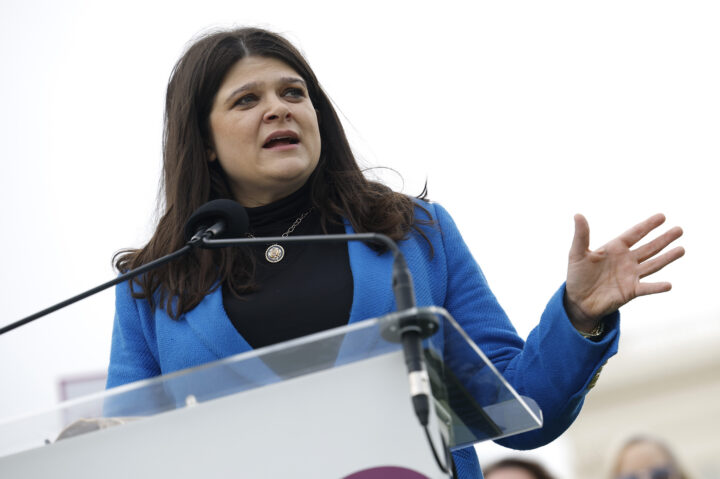
Rep. Haley Stevens (D-MI) speaks at a National Breast Cancer Coalition rally outside the U.S. Capitol on May 06, 2025 in Washington, DC.
Pro-Israel candidates and organizations showcased healthy financial hauls over the final three months of 2025, according to newly released fundraising reports. The strong totals were headlined by AIPAC’s United Democracy Project super PAC, which ended last year with an imposing $95.8 million on hand (up significantly from $40.7 million last cycle at this time), after raising $61.6 million in the final six months of 2025.
In many of the closely watched Democratic primaries pitting pro-Israel candidates against anti-Israel antagonists, both sides posted strong fundraising figures.
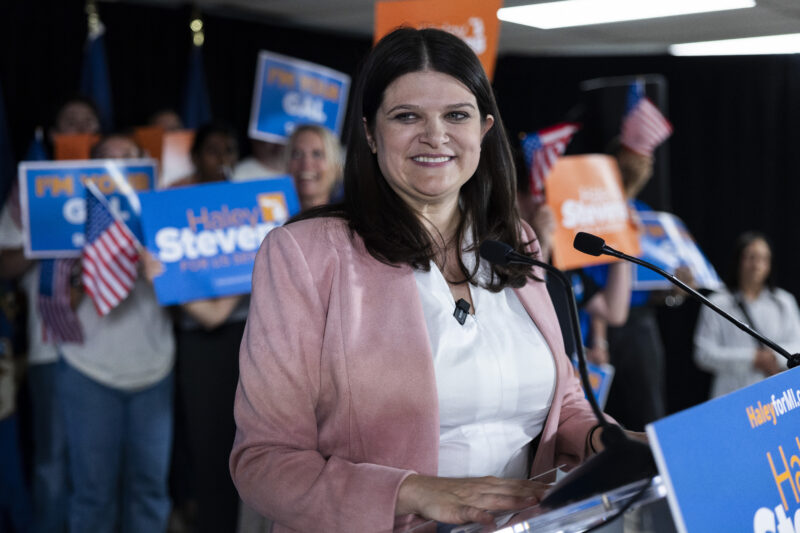
In Michigan’s hotly contested Senate race, Rep. Haley Stevens (D-MI) raised $2.1 million in the fourth quarter of 2025 and banked $3.05 million at the end of the year. Stevens, a stalwart ally of the state’s Jewish community, narrowly outraised physician Abdul El-Sayed ($1.8 million raised), who has made hostility to Israel central to his campaign, and state Sen. Mallory McMorrow ($1.7 million), who has tagged Israel’s war against Hamas as a genocide.
Stevens also has significantly more cash on hand ($3 million), aided by her time spent raising money in the House. Both McMorrow and El-Sayed have just under $2 million cash on hand.
In Illinois’ closely watched open 8th District race, former Rep. Melissa Bean (D-IL) showcased her fundraising skills to comfortably lead the crowded primary field, bringing in $772,000 in the fourth quarter. Bean, a pro-Israel moderate during her last stint in Congress, nearly doubled the fundraising haul of Junaid Ahmed, a leading anti-Israel challenger, who brought in $360,000.
In the race to succeed retiring Rep. Jan Schakowsky (D-IL), pro-Israel state Sen. Laura Fine raised an impressive $1.2 million — three times her fundraising total in the previous quarter — and banked $1.4 million. Her haul outdistanced her two anti-Israel rivals: Evanston Mayor Daniel Biss (who raised $659,000 and banked $1.37 million) and social media influencer Kat Abughazaleh (who raised $1.1 million, but spent $1.4 million, leaving her with $811,000 cash on hand).
In New York City’s top primary clash, Rep. Dan Goldman (D-NY) outraised former New York City Comptroller Brad Lander in fundraising, bringing in $1.1 million to Lander’s $629,000. But Lander only entered the race in early December, a sign he could catch up to the congressman in fundraising if he keeps up the pace. (Goldman’s campaign told JI that he already raised $851,000 in January, suggesting his fundraising has already accelerated.)
In the Bronx, Rep. Ritchie Torres (D-NY) brought in a significant $519,000 in fourth-quarter contributions, and has a whopping $14.9 million cash on hand to spend as he faces several challengers running to the anti-Israel left in the primary.
In the crowded primary to succeed retiring Rep. Jerry Nadler (D-NY), state Assemblyman Alex Bores has emerged as the early fundraising leader, bringing in $2.2 million and ending the year with $2 million. That’s more than three times the $672,000 that Nadler-endorsed state Assemblyman Micah Lasher raised, and a little under twice his cash on hand ($1.2 million). Meanwhile, social media influencer Jack Schlossberg, the Kennedy scion, tapped his fundraising networks to bring in $1.1 million.
Rep. Mike Lawler (R-NY) was one of the top House fundraisers as he prepares for a tough reelection in a swing district, bringing in $1.28 million for the fourth quarter. His leading Democratic opponent, military veteran Cait Conley, announced she raised around $560,000 during the same period. Peter Chatzky, one of the few Democrats running as a harsh critic of Israel in the heavily Jewish district, poured in about $5 million of his own money into the race. And Beth Davidson, another Democratic candidate, raised $264,000 — a decline from previous quarters, as some party leaders have gotten behind Conley.
On the Senate side, a pair of far-left, anti-Israel candidates posted healthy hauls in their races against establishment-backed moderates. In Maine, oyster farmer Graham Platner brought in a notable $4.6 million in the quarter in his primary against Gov. Janet Mills, who raised a solid $2.7 million. And in Minnesota, Lt. Gov. Peggy Flanagan was outraised by moderate Rep. Angie Craig (D-MN) but still managed to bring in $1 million (compared to Craig’s $2 million).
The big Republican primary to watch is in Kentucky, where Navy SEAL Ed Gallrein, who has been endorsed by President Donald Trump, scored a massive fundraising haul against anti-Israel Rep. Thomas Massie (R-KY), bringing in over $1.2 million compared to the congressman’s $638,000 total. Massie still holds about twice as much cash on hand as his upstart challenger, banking $2.18 million to Gallrein’s $933,000.
It’s important to remember that, while fundraising totals are an important signal of a candidate’s viability, the strongest fundraisers aren’t always the most successful. And the fact that numerous far-left candidates are also raising big bucks — when in the recent past, they would have struggled to show viability — is a warning that holding mainstream views isn’t the automatic ticket to primary success it once was.
The haul signals Ed Gallrein, who came into the race with President Trump’s endorsement, is emerging as a formidable opponent
DANIEL HEUER/AFP via Getty Images
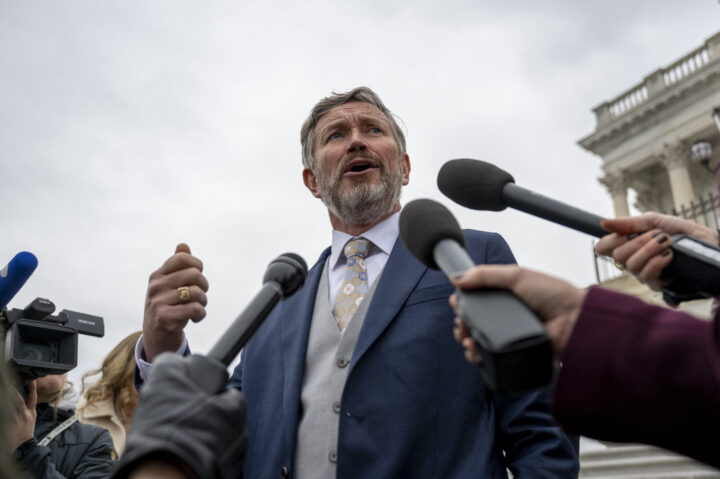
Rep. Thomas Massie (R-KY) speaks to reporters at the US Capitol on Washington, DC on November 18, 2025.
Ed Gallrein, the Republican primary challenger to Rep. Thomas Massie (R-KY) backed by President Donald Trump, said Friday that he had raised $1.2 million in the final quarter of 2025, a sizable sum that puts him in strong financial shape in preparation for a grueling race against Massie.
Gallrein’s fundraising haul signals that he’s a more viable candidate than Massie’s previous challengers, and highlights the power of Trump’s endorsement.
Trump and his allies have also committed significant resources to the effort to defeat Massie, an isolationist Republican who has frequently opposed legislation to combat antisemitism and has broken with Trump on many key elements of his agenda, including on issues related to Israel and Iran.
Gallrein’s campaign has also attracted interest from pro-Israel Republicans.
“This fundraising number reflects the overwhelming support Ed’s campaign has received right out of the gate,” Gallrein spokesperson Lance Trover said in a statement. “President Trump endorsed Ed because he knows Ed is fighting to put America First and will partner with him to unleash our economy, lower taxes, and stop the woke agenda.”
Massie, however, has also proven to be a strong fundraiser as he gears up for a reelection fight: he reported raising $1.8 million and having more than $2 million on hand as of the end of September.
Gallrein is a Kentucky native and former Navy SEAL.
Most of DMFI’s fundraising haul this year comes from one wealthy Democratic donor in Indiana
Alex Wong/Getty Images
A visitor holds an AIPAC folder in an elevator in Rayburn House Office Building on March 12, 2024 on Capitol Hill in Washington, DC.
The latest round of fundraising reports filed by leading pro-Israel advocacy groups suggests that they are in strong financial shape as the midterms come into view, even as some of the top pro-Israel candidates have underperformed with their fundraising in key races.
United Democracy Project, a super PAC affiliated with the pro-Israel lobbying group AIPAC, raised $13.5 million in the first half of 2025, according to its mid-year fundraising report filed late last week, with nearly $39 million on hand at the end of June.
Those figures were far higher than the $8.8 million in contributions the group had pulled in during the same six-month period in 2023, at the beginning of the last election cycle. The group, which ultimately raised much more in the months following Hamas’ Oct. 7, 2023, attacks, had $9 million on hand at the time, federal filings show.
Among the top donors to UDP this cycle are Blair Frank, a portfolio manager at Capital Group, who gave $1.5 million — marking the only seven-figure contribution. The Kraft Group, a holding company led by Robert Kraft, the owner of the New England Patriots, gave $500,000 — as did four other donors including Sanford Grossman, Michael Leffell, David Messer and Andrew Schwartzberg, according to the new filings.
Meanwhile, AIPAC’s bipartisan political action committee, which has yet to issue endorsements in a range of key House and Senate races, raised $2.6 million last month — and was sitting on nearly $14 million at the end of June, its latest monthly filing shows. By contrast, the group had raked in around $1.5 million in June 2023, with nearly $1.4 million on hand.
The fundraising indicates that pro-Israel donors are being driven to contribute amid a new shift in which a growing number of Democratic lawmakers, as well as some Republicans, have endorsed blocking aid to Israel over its handling of the humanitarian crisis in Gaza. That trend has coincided with the Democratic nomination of Zohran Mamdani, an avowed critic of Israel, in New York City’s mayoral race, opening up an ongoing debate over the party’s future direction.
Marshall Wittmann, an AIPAC spokesperson, said in a statement that “grassroots pro-Israel activists are deeply engaged in the political process given the critical importance of the U.S.-Israel relationship as the Jewish state battles aggression from Iran and its terrorist proxies.”
“As the 2026 midterm elections approach, that increased involvement will ensure that the voice of the pro-Israel community will be heard,” Wittmann told Jewish Insider on Monday.
On the Democratic, rather than bipartisan, side of the equation, DMIF PAC, Democratic Majority for Israel’s political arm, reported raising $2.1 million so far this year, with $2.6 million on hand heading into July.
While the group’s latest cash haul was buoyed largely by a single $2 million contribution from Deborah Simon, a pro-Israel donor in Indiana, its new filing indicates a healthier financial situation than its last mid-year report in 2023, when DMFI PAC pulled in just over $700,000 during the first six months of that year, with only a small amount more in reserve funds.
DMFI PAC, which worked alongside UDP to unseat two Squad-aligned Israel critics in House races last cycle, has not yet announced endorsements in next year’s primaries.
Despite relatively robust fundraising for the two groups, such donor enthusiasm has yet to translate to some key races in which pro-Israel candidates are lagging behind their opponents. Rep. Haley Stevens (D-MI), a longtime ally of AIPAC who is running for Senate, was recently outraised by state Sen. Mallory McMorrow and Abdul el-Sayed, an outspoken critic of Israel. And in an open-seat House primary in the Chicago suburbs, Laura Fine, a state senator who is touting her pro-Israel positions, fell well behind her two left-leaning rivals.
One prominent pro-Israel activist who is close to AIPAC, speaking on the condition of anonymity to address what he called an “undeniable shift” in the Democratic Party on Israel, said he was unfazed by such fundraising at this stage of the primary cycle — noting that Stevens in particular has a “reservoir of support that is out there waiting” within the Jewish and pro-Israel communities.
“We are committed to the cause which we think is deeply in America’s interest, and we’re not going to give up,” he told JI. “People like us are just going to get more animated by this, not scared off.”
Please log in if you already have a subscription, or subscribe to access the latest updates.
 Continue with Google
 Continue with Apple