
































Plus, IHRA gains traction in LATAM

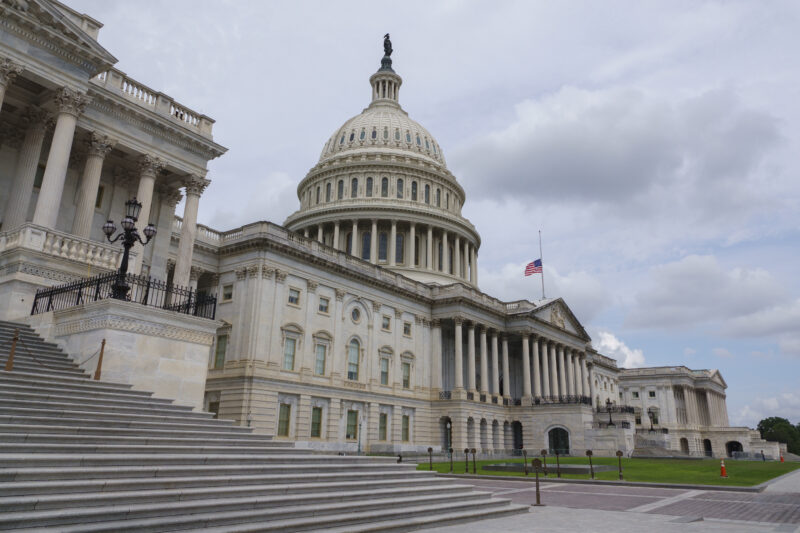
Anna Moneymaker/Getty Images
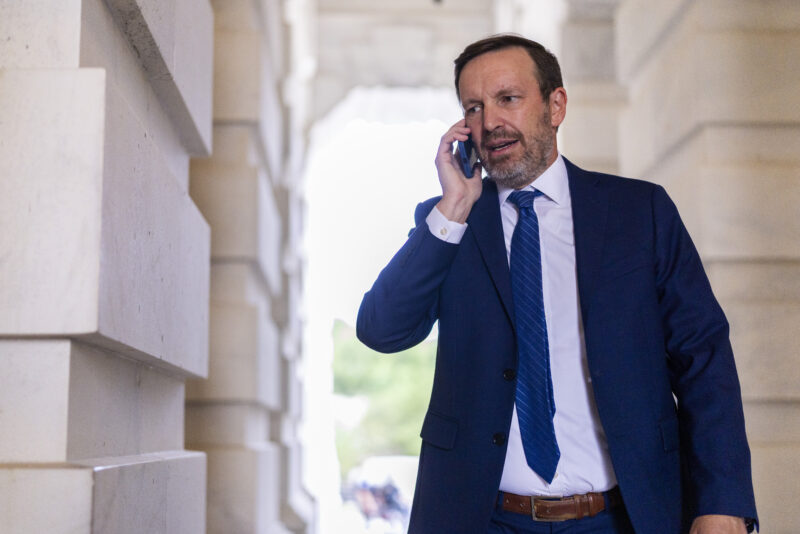
Sen. Chris Murphy (D-CT) speaks during a news conference following the weekly Senate Democratic policy luncheon meeting at the U.S. Capitol Building on September 19, 2023, in Washington, DC.


 Add JewishInsider on Google
Good Tuesday morning.
In today’s Daily Kickoff, we cover yesterday’s Israeli Embassy commemoration of the Oct. 7, 2023, Hamas terror attacks, report on new Department of Justice charges against a Gaza-based Hamas commander accused of funneling money from the U.S. to the terror group, and report on State Department antisemitism envoy Yehuda Kaploun’s announcement that more Latin American countries are set to adopt the International Holocaust Remembrance Alliance’s working definition of antisemitism. Also in today’s Daily Kickoff: David Zini, Jonathan Powell and Zach Kessel.
Today’s Daily Kickoff was curated by JI Executive Editor Melissa Weiss, with assists from Tamara Zieve and Danielle Cohen-Kanik.
Today’s Agenda
The Israeli military is on high alert ahead of the anniversary tomorrow of the Oct. 7, 2023, Hamas-led terror attacks, the country’s defense minister, Israel Katz, said this morning. Katz cited intelligence that suggested that Hamas was planning to carry out attacks on IDF forces operating in Gaza.
Shin Bet officials are in the United Arab Emirates today and participating in the interrogation of the FlyDubai co-pilot who attacked the aircraft’s captain and planned to crash the plane.
The three-day National Conservatism Conference kicks off today in Jerusalem. Speakers include the White House’s Seb Gorka, Israeli Foreign Minister Gideon Sa’ar, Finance Minister Bezalel Smotrich, Diaspora Affairs Minister Amichai Chikli, former Polish President Andrzej Duda and former Israeli National Security Advisor Meir Ben-Shabbat. Smotrich spoke this morning on the topic of U.S.-Israel relations, calling for a transition from “a relationship of dependence to a partnership between two independent nations.”
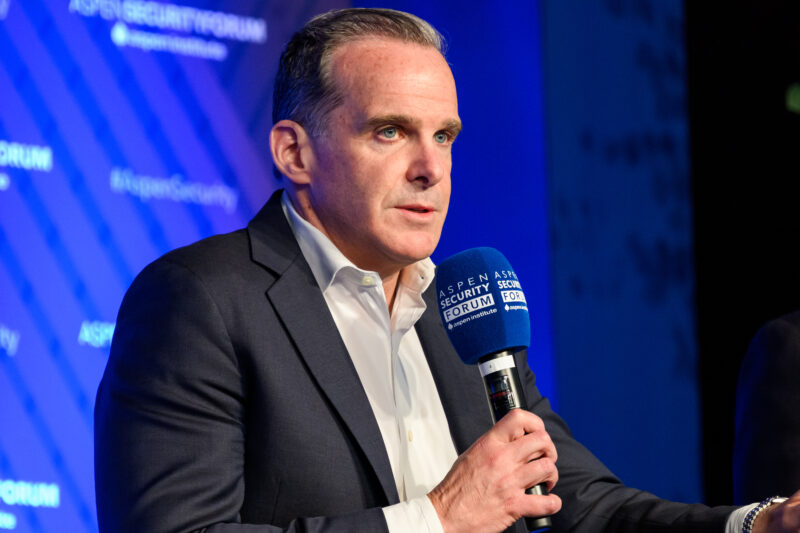
Former White House coordinator for the Middle East Brett McGurk is out today with Brink: Inside the Race to Free the October 7th Hostages, about his efforts while serving in the Biden administration, where he held a number of counterterror and national security roles, to secure the release of the hostages held in Gaza.
One Thing To Know
ANALYSIS
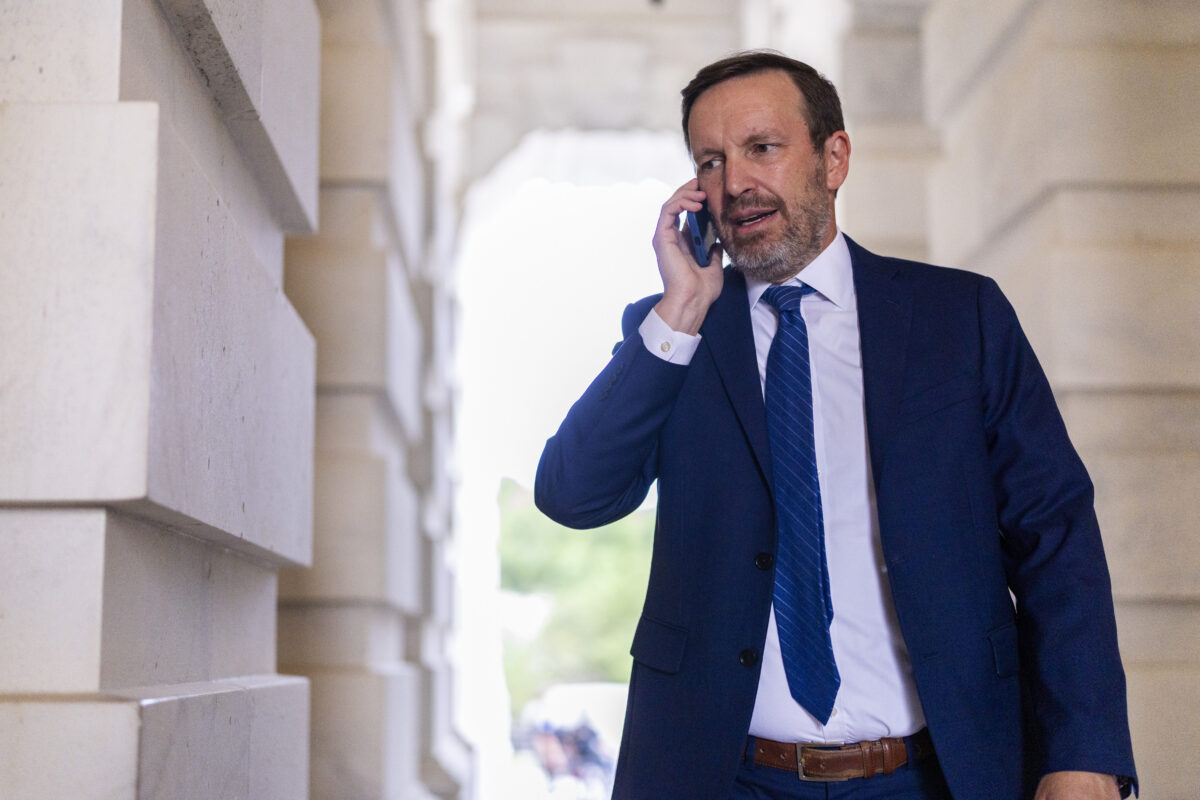
By Marc Rod
Sen. Chris Murphy (D-CT) has made a name for himself as a progressive leader on the national stage who has often spoken out against Middle East allies — including Israel, over its war against Hamas in Gaza, and Saudi Arabia, over its human rights record.
But Murphy, in the middle of a trip across the Middle East that included meetings in Qatar earlier this week, made no mention of Doha’s checkered human rights record — never mind its role, in the eyes of its detractors, as a leading backer of anti-Israel propaganda, funder of antisemitic activity on college campuses and a supporter of terrorism — even as he offered criticisms of Saudi Arabia on a later leg of the same trip.
Murphy instead spent his trip lavishing praise on the gas-rich country, speaking of Qatar as an essential ally of the United States.
The Big Reads
embassy commemoration
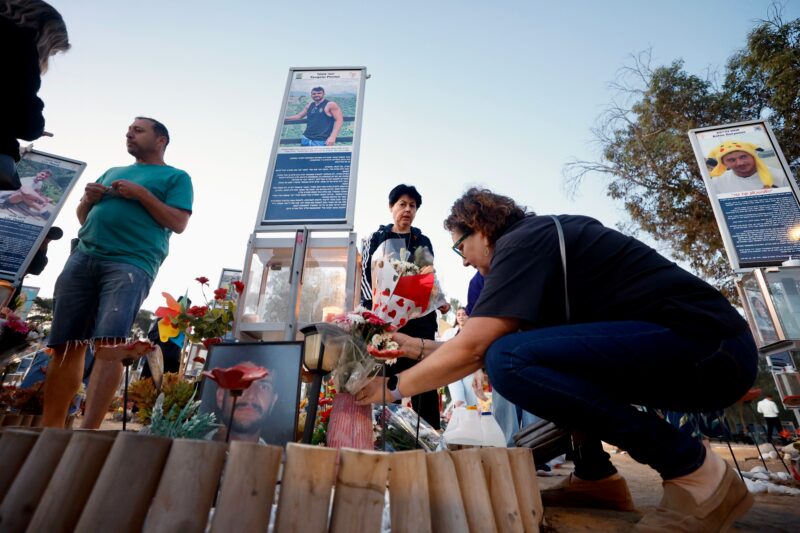
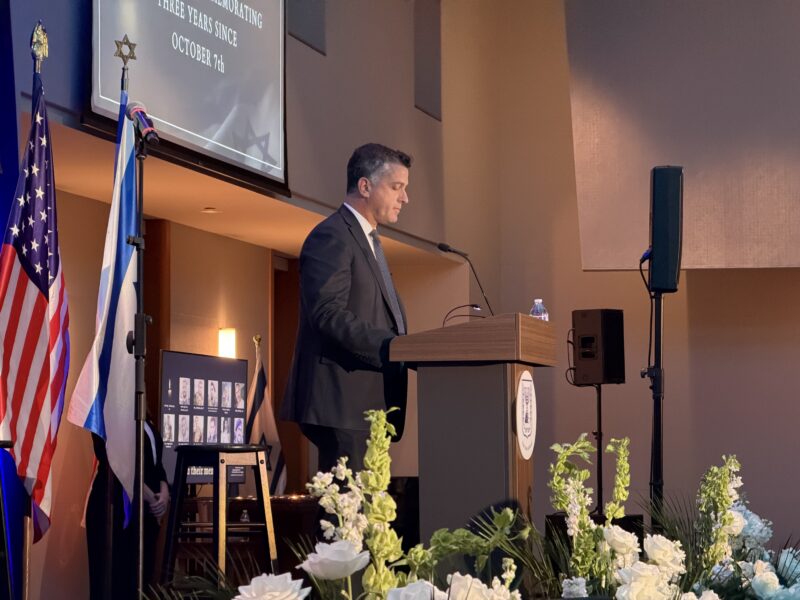
Michael Needham, the deputy U.S. national security advisor, said on Monday that the Oct. 7, 2023, Hamas-led attacks on Israel and their aftermath are part of a shared civilizational war pitting the United States, Israel and other allies against enemies of the West. The Oct. 7 attacks were met with praise and “gleeful celebration of inhuman barbarism, savagery and death” both in Gaza and around the world, Needham said in remarks at an event organized by the Israeli Embassy in Washington to commemorate the third anniversary of the attack, Jewish Insider’s Marc Rod reports. “What was clear then is that each of our countries is locked in a battle between civilization and barbarism,” Needham said. “That the war between the people of Israel and the terrorists of Hamas is a war that is playing out in various forms, here in the United States and in Europe and across the whole of the Western world.”
gaza grift?
The Department of Justice on Friday announced charges against a Gaza-based Hamas commander as well as the arrests of three U.S.-based affiliates for allegedly funneling money from the U.S. to Hamas, under the guise of charitable humanitarian fundraising. Three others were also arrested in France as part of the investigation, Jewish Insider’s Marc Rod reports. The lynchpin of the alleged conspiracy is Gaza-based Hamas official Saleem Alzaq, a member of Hamas’ Al-Qassam Brigades and one of its propaganda offices, who promotes the terror group’s fighters on various social media platforms. According to the indictment, Alzaq operated an international fundraising network for Hamas, which he promoted through social media campaigns under the guise of humanitarian aid to people in Gaza.
regional shift
Ambassador Yehuda Kaploun, the State Department’s antisemitism envoy, revealed on Monday that the U.S. expects several Latin American countries to adopt the International Holocaust Remembrance Alliance’s working definition of antisemitism in the coming months, Jewish Insider’s Emily Jacobs reports. Kaploun made the comments at a press conference about the Trump administration’s efforts to combat antisemitism ahead of the third anniversary of Hamas’ Oct. 7, 2023, attacks on Israel, after being asked to analyze how regional leaders have responded to the rise in anti-Jewish hate. “There’s a conference in November where we expect to have more Latin American countries to join the IHRA Accords,” Kaploun said. “The Dominican Republic just announced that they’re joining the IHRA Accords. Colombia is revisiting that. Guatemala, Paraguay, Costa Rica, Chile are all in discussions.”
The Rundown
EXCLUSIVE
seeds of peace
obama boost
campaign trail
On Our Radar
● The Live Briefing. Word on the street, clips, podcasts and quick updates — the items we’re tracking all day in our Live Briefing on the app (on Apple and Android) and website.
The U.S.’ weekend withdrawal of a dozen B-1 bomber jets from the U.K.’s RAF Fairford base was prompted by concerns of a potential Iranian drone attack on the facility and the servicemembers based there…
The U.S., Argentina, Canada, Colombia, Costa Rica, the Dominican Republic, Guyana, Paraguay, Peru and Trinidad and Tobago condemned Iranian and Iran-backed terrorist activity in the Western Hemisphere on Monday, citing lethal plots, illicit fundraising, political interference and efforts to bolster terrorist networks…
Israeli officials told CBS News that Israel had temporarily closed its airspace, scrambled fighter jets and was prepared to shoot down the FlyDubai plane had passengers not retaken control of the cockpit minutes after the flight’s Omani co-pilot attempted to incapacitate his captain.
The Wall Street Journal does a deep dive into the security failures that led to the in-flight attack, finding that co-pilot Hamam al-Hammami had been previously assigned to a desk job and banned from flying at Oman Air over concerns about his extremist beliefs, which had prompted the airline to send him to a deradicalization program…
Senate Majority Leader John Thune (R-SD) said there was “no clear path forward or consensus” on a bill that would establish permanent daylight saving time; the legislation, which has been strongly opposed by Orthodox Jewish groups, has been the subject of clashes between some GOP senators, including Sen. Tom Cotton (R-AR) and President Donald Trump, the latter of whom supports the change…
The Senate Leadership Fund super PAC is putting $5 million into Sen. Darline Graham’s (R-SC) bid for a full term as an “insurance policy” amid polls that show Democratic Senate candidates gaining ground in a number of red-state races…
The U.K. chair of Amnesty International resigned from the country’s Green Party over its vote this week to adopt a resolution equating Zionism and racism, alleging that the party is “failing to confront prejudice” in its ranks…
U.K. National Security Advisor Jonathan Powell quietly visited Israel last week in an effort to intercede in the planned Israeli closure of the U.K. consulate in east Jerusalem, which had been prompted by London’s decision last month to block the sale of West Bank settlement products…
A Kuwaiti man who attempted to attack the Israeli Embassy in London last year was sentenced to life in prison with a minimum term of 20 years after being convicted of preparing a terrorist act…
Shin Bet head David Zini threatened during this week’s Israeli Cabinet meeting to seek administrative detention for Jewish extremists who engage in settler violence in the West Bank; Zini reportedly clashed with Orit Strock, the country’s settlements and national projects minister, over the uptick in violence…
Yemeni forces backed by Saudi Arabia on Monday recaptured several areas near the Bab el-Mandeb Strait from the Iran-backed Houthis, including the Red Sea city of Mocha, while a Houthi official claimed that the terror group attacked a Saudi oil refinery…
Arielle Pardes is joining Business Insider’s Discourse team as a senior correspondent…
Zach Kessel is joining The Wall Street Journal’s opinion desk as the assistant editor of the publication’s “Free Expression” newsletter…
Worthy Reads
Find more Worthy Reads in our Live Briefing via our app (on Apple and Android) and website.
The Choice Israelis Face: The New York Times’ Bret Stephens considers how Israelis can address the challenges of the current domestic political situation as well as the country’s global standing. “For Israelis to surmount the formidable challenges they face, in pursuit of both victory and peace, the spirit of service — of giving yourself, doing it yourself, taking possession of your destiny against daunting odds — must win out over the spirit of entitlement. And for Israel’s genuine well-wishers, including the good-faith critics, to push that spirit forward, they need to draw a firm moral line against those who simply want Israel gone.” [NYTimes]
Pod Squad: In The Free Press, Peter Savodnik argues that the hosts of “Pod Save America” — former Obama aides Jon Favreau, Jon Lovett and Tommy Vietor and their Crooked Media network — have used their platform to boost the far left of the party, becoming unofficial kingmakers of a largely leaderless Democratic Party. “There was a new rage on the left [after President Donald Trump 2024 election win], and it built on the old rage, and it was fueled by Harris’s loss and the perceived haplessness and venality and limp-wristedness of whatever was left of the Democratic establishment. The Pod Bros were quick to tap into that — weaving together their frustrations with the old guard and their mounting anger with Israel over Gaza, an anger that now felt more justified, more white-hot with the pro-Israel Trump returning to the White House.” [FreePress]
Picture of the Day
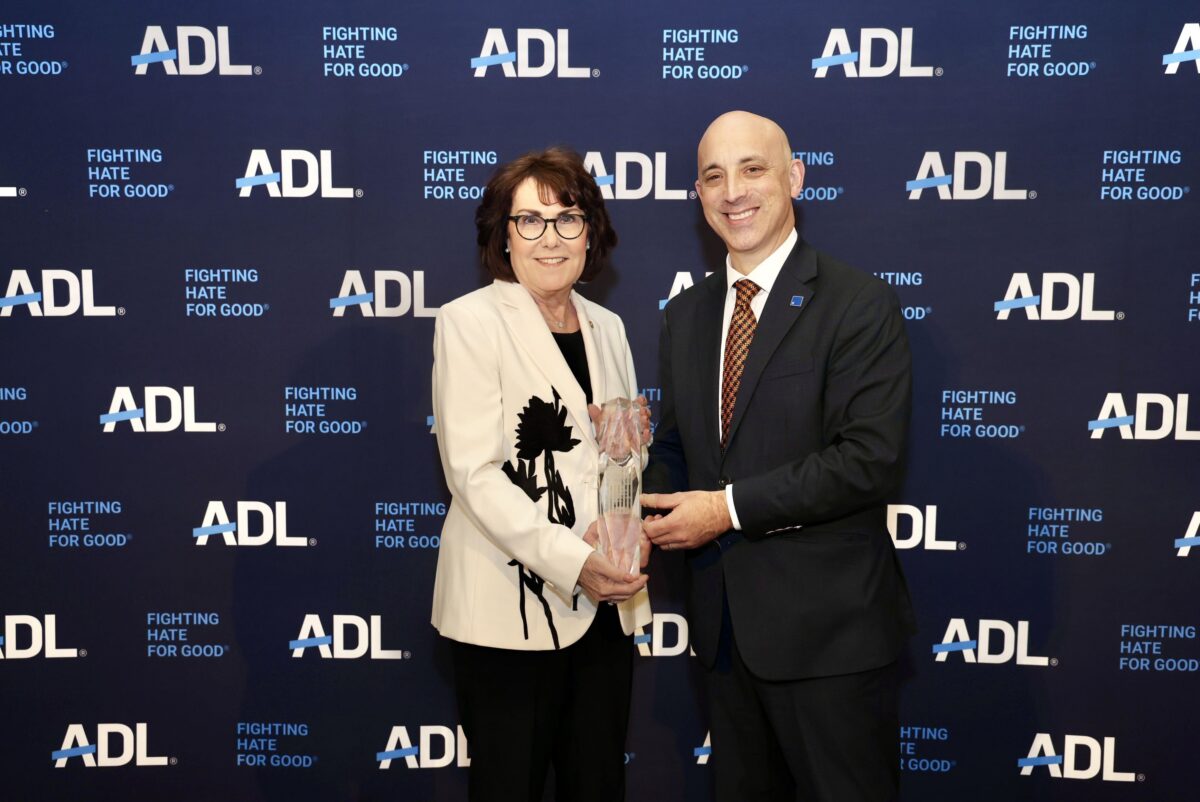
On behalf of herself and Sen. James Lankford (R-OK), Sen. Jacky Rosen (D-NV) accepted the Anti-Defamation League’s Levenson Family Defender of Democracy Award from CEO Jonathan Greenblatt at the group’s Spotlight on Hope event in Washington this week, in honor of their work combating antisemitism, including their leadership of the Senate antisemitism task force and leadership on the Jewish American Security Act. Courtesy
Birthdays
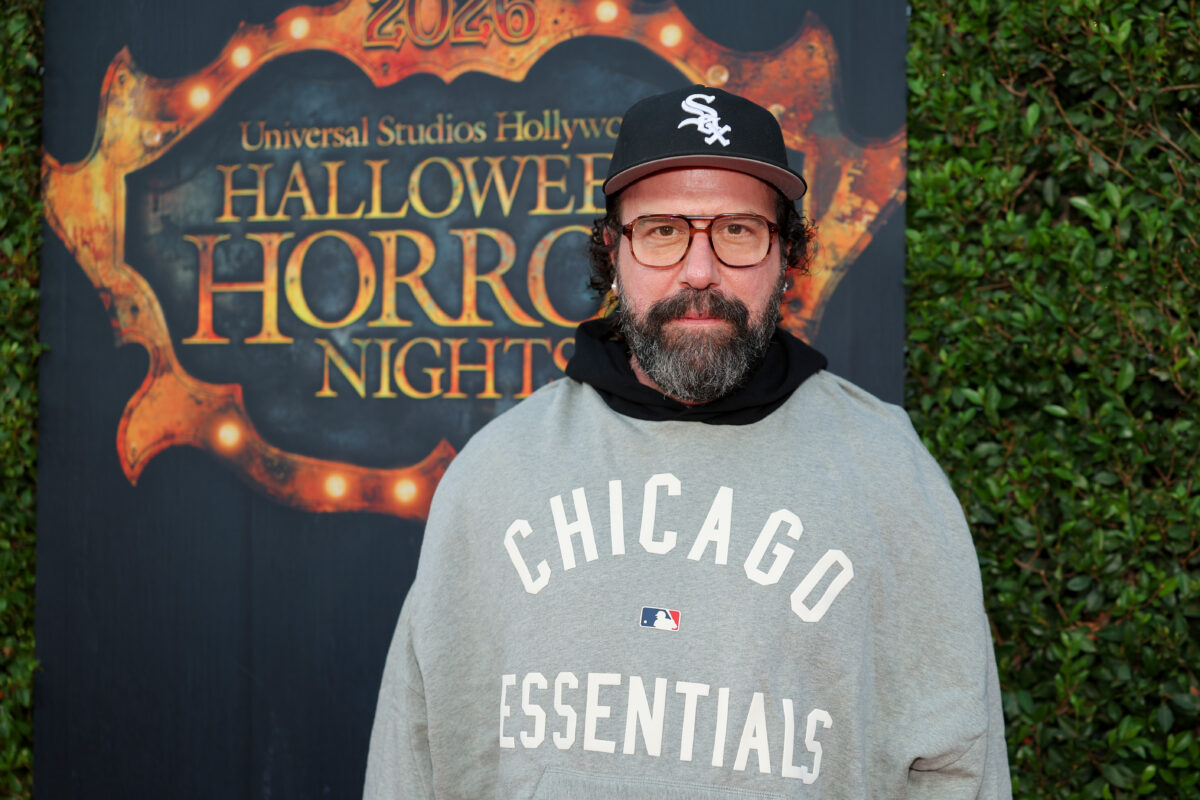
Brett Gelman, actor and comedian, turns 50
RICH POLK/GETTY IMAGES FOR UNIVERSAL STUDIOS HOLLYWOOD
Rosanne Selfon, owner of Lancaster, Pa.-based industrial supplier Samuel Miller & Son, she is a past president of Women of Reform Judaism
Leslie Moonves, former chairman and CEO of CBS, he is a great-nephew of David Ben-Gurion, turns 77
David Brin, awarded a Ph.D. at UCSD in space science, consultant to NASA and author of many science fiction novels, turns 76
Uzi Vogelman, retired justice of the Supreme Court of Israel, turns 72
Elliot Karp, former director of philanthropy at Temple Emanu-El of Westfield (N.J.)
Jan Kanas, Bexley, Ohio-based real estate agent
Jonathan Alter, correspondent on the networks of NBC and author of best-selling books on Presidents Obama, FDR and Jimmy Carter, turns 69
Sanford Akselrad, spiritual leader emeritus of Congregation Ner Tamid in the Las Vegas suburbs since 1988
Joel Weingarten, former member of the New Jersey General Assembly, he is now the managing director of Quest Associates, turns 67
Moshe Lion, mayor of Jerusalem since 2018, turns 65
Jeffrey Mendelsohn, founder and CEO of Coalition Strategy Group and associate VP of advocacy and civic engagement at the Jewish Federations of North America
Samuel Zev Brown, attorney in Lakewood, N.J., where he is active on the boards of many local businesses, civic organizations and charitable institutions
Rabbi Raymond Jasen, board member and lecturer at the Museum at Eldridge Street, board chair of the Queens Botanical Garden, and former partner-in-charge of KPMG LLP’s NY Financial Services Tax Practice, turns 60…
Julie Menin, speaker of the New York City Council, the first Jewish person to hold that role, turns 59
Kevin Rader, member of the Florida Senate until 2020, now an insurance agent, turns 58
Aaron Lieberman, former member of the Arizona House of Representatives, now founder and CEO of Buzze, turns 55
Sean “Shmop” Weisbord, director of sales at Convergence Workforce
Evan R. Bernstein, newly minted CEO of B’nai B’rith International after serving as VP of community relations at JFNA and CEO of Community Security Service, turns 52
Hindy Poupko Galena, EVP of community strategy and external relations at UJA-Federation of New York
Deena Eisenberg Pulitzer, Jerusalem-based senior advisor for Israel Strategies at the William Davidson Foundation
And her twin sister, Elisheva Goldman, global event planner
Olivia Thirlby, actor best known for her role in “Juno” and more recently in “Oppenheimer,” turns 40
Madeline Burak, legislative director for the governor of Nevada
The ringleader of the alleged conspiracy is Gaza-based Hamas official Saleem Alzaq, a member of Hamas’ Al-Qassam Brigades and one of its propaganda offices

Valerie Plesch/picture alliance via Getty Images
Department of Justice - Federal Bureau of Investigation
The Department of Justice on Friday announced charges against a Gaza-based Hamas commander as well as the arrests of three U.S.-based affiliates for allegedly funnelling money from the U.S. to Hamas, under the guise of charitable humanitarian fundraising.
Three others were also arrested in France as part of the investigation.
The lynchpin of the alleged conspiracy is Gaza-based Hamas official Saleem Alzaq, a member of Hamas’ Al-Qassam Brigades and one of its propaganda offices, who promotes the terror group’s fighters on various social media platforms. According to the indictment, Alzaq operated an international fundraising network for Hamas, which he promoted through social media campaigns under the guise of humanitarian aid to people in Gaza.
Posting largely in Arabic, Alzaq purported to be a “Media personality and social activist. Report all the news of Palestine and the events of Gaza in particular. I collect donations for the poor and orphans in Gaza.”
He raised funds on behalf of a group that claimed to “provide food or cash to civilians in Gaza who are in need” and “cook meals which we distribute to the refugees,” as well as providing clothing, rent, healthcare, wells and other communal services.
The indictment alleges that he has raised close to $2 million since 2020, including $626,000 from American donors. Alzaq remains at large.
Alzaq, communicating with one of his American co-conspirators, said in messages that Hamas fighters were present at the Al-Shifa Hospital in Gaza, which Israel raided as a Hamas command center. He and the American associate frequently spoke in code, referring to funds for Hamas as “bread.”
Alzaq also complained that U.S. social media platforms had removed his accounts, on which he openly praised Hamas, saying the platforms were targeting “activists in Gaza that publish the news of Gaza.”
The three U.S.-based men who were arrested, Abdel Adhami and Omar Adhami, brothers in Louisiana, and Raed Yousef, in Florida, allegedly contributed in excess of $155,000 total to the Hamas financing network.
Abdel Adhami also allegedly fundraised from others in the U.S. in support of Hamas using his own social media. Adhami expressed a wish to be able to participate directly in Hamas’ terrorist activities.
The network was first detected when Alzaq made contact with an undercover NYPD officer, claiming to be soliciting funds for children in Gaza, and connected him with Adhami.
Alzaq boasted in communications with the NYPD officer of having a broad network of U.S.-based associates and supporters, including Palestinian and American young people.
“My friends are in New York, so many of them,” Alzaq said in a December 2025 voice message, according to an FBI affidavit, “and all over the United States.” Alzaq said the supporters in New York “are all from Palestine, from the West Bank and from Jerusalem, and they are American, all of them; they are young people and they send me [money] all the time.”
Adhami claimed to the NYPD officer that the funds would be transferred to a charitable organization, to which Alzaq had access.
The network utilized various methods, including cryptocurrency, Western Union transfers, PayPal, Zelle, Cashapp, Venmo and cash to solicit and collect money from American donors, and communicated on Snapchat, WhatsApp, Telegram and Instagram.
The individuals arrested in France allegedly assisted in collecting and transferring the money raised for Hamas.
“Anyone who finances or assists terrorist organizations responsible for the deaths of American citizens should expect to be prosecuted by the Department of Justice,” Attorney General Todd Blanche said in a statement. “For decades, members of Hamas have raised funding to carry out brutal terrorist attacks. Under the leadership of President Trump, the Department of Justice will continue pursuing terrorists who kill Americans, dismantling terrorist finance networks, and delivering justice for the families of victims.”
FBI Director Kash Patel said that the FBI will “never forget the horrific attack on Israel by Hamas on October 7, 2023 — and we will never stop our efforts to cut off funding to Hamas terrorists.”
“These subjects allegedly engaged in a conspiracy that extended beyond national borders to funnel money to Hamas and fuel violent attacks, using cryptocurrency, to try to hide their criminal activity,” he continued.
NYPD Commissioner Jessica Tisch credited the NYPD with uncovering the network.
“The NYPD’s counterterrorism work knows no borders,” Tisch said. “Our intelligence analysts uncovered this international finance network and built the case that exposed more than $2 million being funneled to Hamas. … This is the kind of extraordinary counterterrorism work the NYPD does every day to disrupt threats before they reach New Yorkers, and I thank our law enforcement partners for helping us dismantle this network.”
Terrell said the 'wrong people are in charge' while claiming that not all laws that could protect Jewish Americans are being enforced
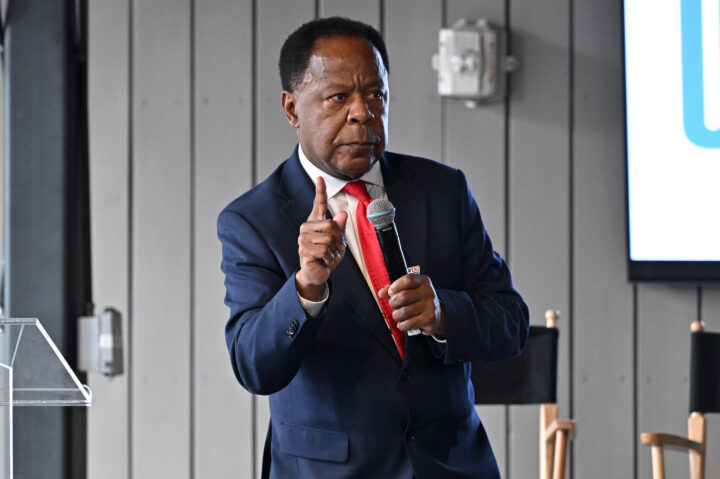
Roy Rochlin/Getty Images for End Jew Hatred / The Lawfare Project
Leo Terrell speaks onstage during Unite Against Extremism on April 29, 2026 in New York City.
LAS VEGAS — Leo Terrell, a senior counsel at the Department of Justice and head of the DOJ’s antisemitism task force, confirmed a report in The New York Times on Monday of friction between himself and Harmeet Dhillon, the assistant attorney general for civil rights and Terrell’s onetime boss, including that the two have not communicated directly in more than a year.
Terrell also previewed plans for his upcoming national tour to combat antisemitism, which he said aims to grow the tent of allies in fighting antisemitism as well as leverage public-private partnerships, social media, new data tracking tools and more to expand efforts to combat Jew hatred.
The Times reported that Terrell repeatedly complained about disrespect by Dhillon, that the two clashed over investigations into Columbia University, that Dhillon sought to block Terrell from Fox News appearances and that she sought to remove Terrell’s top aide.
“That story is accurate, 100%. That’s an accurate representation of my relationship with Harmeet Dhillon,” Terrell said in an interview with Jewish Insider on the sidelines of the Republican Jewish Coalition’s leadership summit. When pressed on Dhillon’s own public comments about her work fighting antisemitism, he said only that the media should “go beyond the headlines and learn the truth.”
Dhillon has spoken publicly on numerous occasions about her efforts to fight antisemitism, with a particular focus on efforts to utilize the FACE Act, which prevents individuals from obstructing access to houses of worship, to go after protesters targeting synagogues and what she said are broader efforts to dismantle the groups behind such incidents. She has also been involved in efforts to combat antisemitism on college campuses.
Though he initially said that he would not speak further about Dhillon beyond confirming the Times reporting, Terrell made further disparaging allusions to her during his conversation with JI, including stating that some laws on the books to protect Jewish Americans are not being enforced.
“The wrong people are in charge. The wrong people. Take that statement [with] one of the questions you asked me previously. When you’ve got people who consider Tucker Carlson a friend and a client, and want to make sure no one knows — give me a break. They’re in the government. Give me a break,” Terrell said. “I’m not putting two and two together. You’re smart enough, but those things are kept buried.”
Dhillon previously served as an attorney for Carlson.
The Department of Justice did not immediately respond to a request for comment from Dhillon.
Despite his apparent tension with Dhillon, Terrell offered high praise for others in the administration including President Donald Trump, Attorney General Todd Blanche and Associate Attorney General Stanley Woodward, who he said have been fully supportive of all of his efforts and proposals related to his work.
“Even though [antisemitism] exists, this administration honestly is working to try to curb it,” Terrell said. “I know I could do a lot more, and so the job that I have to do is to do more, and with Trump, Blanche and Woodward, I can do it. And then you work around other people and you just go forward. But I love the work that I’m doing. I wish it wasn’t necessary, but I will continue this job in the manner I’m doing as long as I’m able to do it.”
With the backing of Trump, Blanche and Woodward, Terrell is about to launch a 15-city tour on combating antisemitism, focusing on cities where the Jewish community has faced attacks. He said the details of the private partners that will be part of the tour should be finalized this week.
He emphasized, during remarks to the RJC, the need to “expand the base” of those fighting antisemitism beyond the Jewish community and usual allies. He emphasized to JI that fighting antisemitism isn’t an issue for the Jewish community alone.
Terrell said that goal is central to his tour, which aims to bring together allies across the entire American community, from all religions and races, and go beyond “talking to the choir” at events like the RJC summit.
The tour will also include senior members of other departments including the Labor, Treasury and State departments, to target the problem of antisemitism from various angles — from going after antisemitic unions to targeting the nonprofit status of groups promoting antisemitism to expelling visa-holders who are spreading antisemitism.
Terrell also aims to bring in nongovernmental figures from other walks of life, including sports and other pop culture figures. He said he hopes that 90% of the figures speaking during the tour will be non-Jews.
“I’m not trying to change Hasan Piker. I’m not trying to change Tucker Carlson. I’m trying to change the 60% of the people in the middle that have been getting misinformation,” Terrell said.
Partnering with media figures and influencers outside of government, Terrell is also aiming to create a social media campaign to support his efforts across platforms and forums.
And he said he will be launching an app to nationally track every incident of antisemitism across the country, including whether local law enforcement and prosecutors take action.
He said he’ll also work to hold accountable local officials in the cities he’s visiting who have failed to take antisemitism seriously, and to address the creeping growth of antisemitism in K-12 schools.
And he will aim to visit with every local Jewish community in each city.
Terrell described his work as urgent to pursue before the end of the current administration, while a supportive president remains in office.
“If we don’t set up guardrails right now, this country is in trouble because we have a president right now, in my opinion, who has taken such an aggressive step towards fighting antisemitism,” he said. “We’ve got to do something now.”
In addition to the tour, Terrell is launching a 15-person bipartisan advisory council on combating antisemitism, the appointees for which are awaiting approval from Trump. The council, he said, aims to write actionable recommendations for how various cabinet agencies can be better addressing antisemitism that can be implemented immediately.
Though he was not able to disclose all of the members he recommended for the commission, Terrell mentioned that Sen. John Fetterman (D-PA) is one.
Terrell said that he believes that the recent FBI statistics showing antisemitic hate crimes comprising a majority of religious hate crimes in the country in 2025 and the second-largest category of hate crimes overall likely undercount the extent of the problem because of what he described as issues in major cities’ governance.
Large cities like New York City, Terrell said, ignore or misrepresent incidents of antisemitism as free speech or downplay the severity of antisemitic attacks. “That is a pattern and a practice in a lot of cities,” he said.
He added that the data also doesn’t capture the hundreds of thousands of dollars the Jewish community spends annually on security costs so that it can gather safely — what Terrell refers to as the “Jewish tax.”
The 26-year-old man emailed Fine on Florida's primary election day last week threatening to behead the Jewish congressman and calling him a Nazi
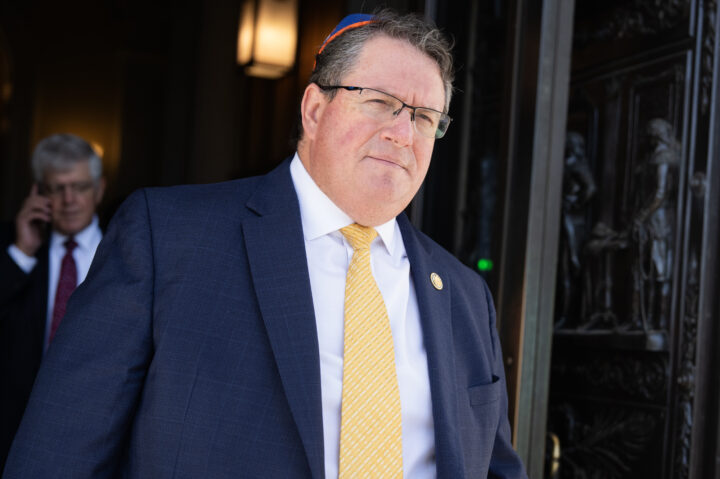
Tom Williams/CQ-Roll Call, Inc via Getty Images
Rep. Randy Fine (R-FL) leaves the U.S. Capitol after the last votes of the week on Thursday, September 4, 2025.
The Department of Justice announced Tuesday that a 26-year-old Ohio man had been arrested and charged for sending an email threatening to kill Rep. Randy Fine (R-FL) and his family.
Fine has faced ongoing harassment and threats, some tied to his outspoken advocacy for Israel and his Jewish identity. According to Fine, the incident marked the fourth time an individual had been arrested for threatening his life in the past decade.
The email, sent to Fine on Florida’s primary election day last week, makes a series of explicit and violent threats against Fine and his family, including threatening to behead the congressman, and describing him as a “Nazi.” The email also includes a threat against President Donald Trump.
Fine said that the email far surpassed any of the previous death threats he had received in the past.
“If they think this will make me afraid, they are wrong,” Fine said on X. “There is no place in our political system for this. And those who make these threats — whether to a Republican or Democrat — will go to prison for a very long time.”
Fine thanked law enforcement for tracking down and arresting the perpetrator within 36 hours.
Numerous other Jewish members of Congress have also faced death threats or assassination attempts in recent years, as well as various incidents of harassment at their homes and in their communities, and many have said that they fear for their safety.
The lawmakers argue the meeting, which was canceled after interference by the State Department, should be investigated for potentially violating of the Logan Act

Photo by MADISON SWART/Hans Lucas/AFP via Getty Images
New York Working Families Party co-directors Ana Maria Archila (R) and Jasmine Gripper (L) take the stage during a rally in support of Zohran Mamdani at Brooklyn Steel in Brooklyn, New York, on May 4, 2025.
Several House Republicans sent a letter on Thursday to the Department of Justice calling for an investigation into whether New York City Mayor Zohran Mamdani and his international affairs commissioner, Ana María Archila, violated the Logan Act by scheduling a meeting with the Iranian ambassador to the United Nations.
Archila, who heads the New York City Mayor’s Office for International Affairs, had previously scheduled a July 7 meeting with Amir-Saeid Iravani, Iran’s U.N. ambassador, before the State Department intervened and the meeting was canceled.
Mamdani claimed last week that the meeting was “made in error” and had been scheduled without his knowledge. The mayor also stressed that the Iranian mission had reached out to his team and not the other way around.
The lawmakers argue that the planned meeting should be investigated for potentially violating the Logan Act, a centuries-old statute that prohibits American citizens from negotiating with foreign governments without authorization on behalf of the United States.
The letter was led by Rep. Addison McDowell (R-NC) and also signed by Reps. Buddy Carter (R-GA), Clay Fuller (R-GA), Pat Fallon (R-TX), Randy Fine (R-FL), Riley Moore (R-WV), Wesley Hunt (R-TX), Lauren Boebert (R-CO), Pete Sessions (R-TX), Pat Harrigan (R-NC), Rich McCormick (R-GA), Claudia Tenney (R-NY), Anna Paulina Luna (R-FL), and Max Miller (R-OH).
The lawmakers said they were especially concerned about the attempted meeting in light of negotiations between the U.S. and Iran being “in a critical stage.”
“Given its timing, we believe this proposed meeting may have presented significant national security risks,” the letter reads. “In light of this, we respectfully ask that the Department of Justice investigate potential violations of the Logan Act on the part of the mayor’s office.”
“We support President Trump’s efforts to shore up American economic and national security interests in the Middle East, and we understand the vulnerable nature of continued peace negotiations,” it continues. “For that reason, we believe that a formal investigation is necessary to determine whether Commissioner Archila, acting on behalf of Mayor Madani, engaged in any unlawful activity or communication with the Islamic Republic of Iran.”
The mayor’s office did not immediately respond to a request for comment.
‘We don’t need your money (it’s probably coming from AIPAC anyways),’ the shop wrote in a since-deleted social media post
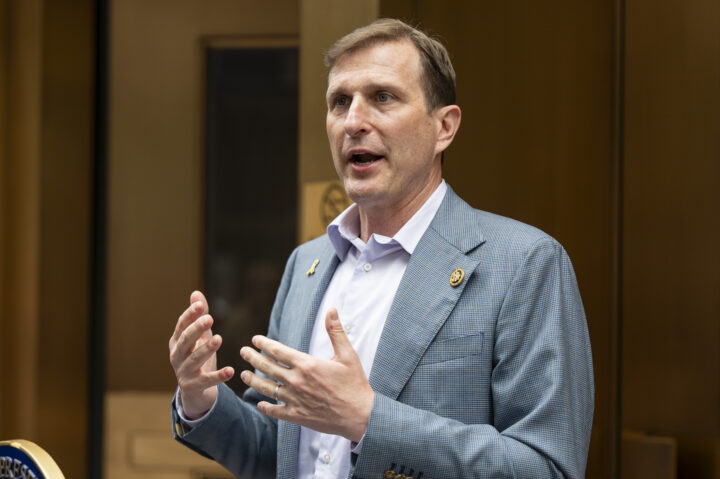
Mostafa Bassim/Anadolu via Getty Images
Rep. Dan Goldman (D-NY) speaks to members of the press during a press conference on ICE practices in immigration courts outside Ted Weiss Federal Building in New York, U.S., May 29, 2025.
The Department of Justice’s Civil Rights Division is investigating a Brooklyn cafe after it banned Rep. Dan Goldman (D-NY) from its store, posting discriminatory messages online that accused the congressman of enabling genocide and tying him to AIPAC.
“Federal law prohibits public accommodations such as coffee shops from discriminating against patrons based on their race, religion, or national origin. These actions are not only reprehensible, they’re potentially illegal. The Civil Rights Division has opened an investigation, and will bring an enforcement action if warranted,” Harmeet Dhillon, the DOJ’s assistant attorney general for civil rights, said.
“We see that you stopped by our shop today for a coffee. Do you see how it doesn’t taste like genocide juice?” Poetica Coffee in Williamsburg wrote in a since-deleted Instagram post with an image of Goldman standing at the register. “We don’t serve racists, fascists, homophobes, genocide enablers. Too bad we didn’t recognize you right away, or we would have turned you away.”
“We don’t need your money (it’s probably coming from AIPAC anyways),” the post continued. “Don’t ever come to Poetica.” The shop said it refunded Goldman for his $9.82 purchase.
The coffee shop is owned by Parviz Mukhamadkulov, who has frequently used social media to share posts condemning Israel. Poetica Coffee’s website claims it serves “whoever walks through the door is treated with unconditional dignity.”
Goldman is facing a primary challenge from former New York City Comptroller Brad Lander in Tuesday’s election. Both candidates are Jewish and self-identified “progressive Zionists,” although in a debate earlier this month Goldman declined to join Lander in calling the Israeli military actions a “genocide.”
Plus, Ron Dermer's new shop

Craig Hudson for The Washington Post via Getty Images
D.C. councilmember and mayoral candidate Janeese Lewis George is seen on Capitol Hill for a press conference in Washington, DC on March 10, 2025.
Good Wednesday morning.
In today’s Daily Kickoff, we report on the Trump administration’s plan to transfer the Education Department’s Office for Civil Rights to the Department of Justice, and talk to Senate Republicans about their skepticism that Iran will follow through with any nuclear commitments it makes to the U.S. We scoop the launch of former Israeli Strategic Affairs Minister Ron Dermer’s new strategic advisory firm, and cover President Donald Trump’s comments on Qatar and Iran on the sidelines of the G7 in France. Also in today’s Daily Kickoff: Amir Tibon, Ken Marcus and Noa Kirel.
Today’s Daily Kickoff was curated by JI Executive Editor Melissa Weiss and Israel Editor Tamara Zieve. Have a tip? Email us here.
What We’re Watching
- We’re awaiting the White House’s release of the memorandum of understanding between the U.S. and Iran hours after Bloomberg published what it said was the 14-point draft MOU.
- President Donald Trump said earlier today that the U.S. would resume military activity against Iran if he didnt like the MOU, the text of which he noted was not final. “It’s a memorandum of understanding, and if I don’t like it, we’ll go back to shooting at them, dropping bombs on their heads. I don’t like it if they don’t behave. We’ll go right back to dropping bombs right smack in the middle of their head,” Trump said in France.
- Trump, who is returning to Washington after the G7 summit concludes later today, announced on Truth Social the postponement of the confirmation hearing for Jay Clayton to be director of national intelligence, which had been slated to take place this afternoon before the Senate Intelligence Committee. Trump said that before Clayton could be confirmed, the Senate needed to confirm Sullivan & Cromwell partner Jamie McDonald as U.S. attorney for the Southern District of New York.
- The Senate Homeland Security Committee is holding a hearing for a number of Trump administration nominations this morning, including Cameron Hamilton to be the administrator of FEMA.
- The Senate Foreign Relations Committee is holding its markup on a number of pieces of legislation, including the Iran Human Rights, Internet Freedom, and Accountability Act, the Eastern Mediterranean Gateway Act, the BANNED in Latin America Act targeting Hezbollah and Iran’s activities in the Western Hemisphere, and the Preventing External Aggression and Conflict Escalation in Sudan Act. The SFRC will also mark up legislation repealing some Syria sanctions.
- This afternoon on Capitol Hill, Sen. Peter Welch (D-VT) is holding a press conference with former Columbia University anti-Israel activist Mohsen Mahdawi.
- The Louis D. Brandeis Center for Human Rights Under Law is convening a daylong summit for more than 50 leading litigators and legal experts at the Capital Jewish Museum in Washington on Wednesday to address the legal challenges of defending Jewish students and employees. More below.
- The Atlantic Council is holding an event this afternoon with Sens. Jeanne Shaheen (D-NH) and Thom Tillis (R-NC) focused on next month’s NATO summit in Turkey.
- In New York, the Children’s Museum of Manhattan is holding a ticker tape celebration for kids to celebrate the New York Knicks’ NBA championship win over the weekend. Actor Amy Schumer and author Jessica Seinfeld are set to serve as the parade’s grand marshals.
What You Should Know
A QUICK WORD WITH JI’S GABBY DEUTCH AND mARC ROD
Voters in Washington, D.C., appeared poised to elect Councilmember Janeese Lewis George to be their Democratic nominee for mayor, all but guaranteeing, come November, that she will be elected in November to replace Mayor Muriel Bowser, who is not seeking another term after 12 years in office. The race has not been called, but Lewis George leads by more than 15,000 votes with 64% of the votes counted.
Lewis George, a 38-year-old member of the Democratic Socialists of America, ran a campaign powered by local labor unions that was focused on cost-of-living issues and countering President Donald Trump. She is on track to defeat Kenyan McDuffie, a former councilmember who ran on a more pragmatic platform that eschewed DSA’s brand of radical politics.
The candidates’ views on Israel did not define the race, but they were a throughline in the background. Lewis George filled out a DSA endorsement questionnaire early in the campaign in which she pledged to avoid engaging with “the Israeli government or Zionist lobby groups.” Later, she promised to stand firm in fighting antisemitism while also supporting Palestinian human rights. McDuffie tried to use the comments to appeal to anti-DSA voters and Jewish Washingtonians.
Lewis George will represent a shift from Bowser, a moderate Democrat who in 2019 led a trade mission to Israel and who regularly addressed the annual AIPAC policy conference in Washington before AIPAC canceled the event after 2020.
Meanwhile, it was a short night in Georgia, where Rep. Mike Collins (R-GA) quickly claimed victory over former college football coach Derek Dooley in a Senate primary runoff. Collins picked up a last-minute endorsement from President Donald Trump, while Dooley’s backing by Gov. Brian Kemp wasn’t enough to push him to victory.
Collins ultimately finished the race around 10 points ahead of Dooley, a similar margin as in the primary election earlier this year. Dooley was widely seen as the more moderate and more electable of the two Republicans, as compared to Collins, who has been trailed by a series of scandals. Republicans may struggle to reclaim the seat from Sen. Jon Ossoff (D-GA) with Collins as their standard-bearer in the race.
Transferring responsibilities
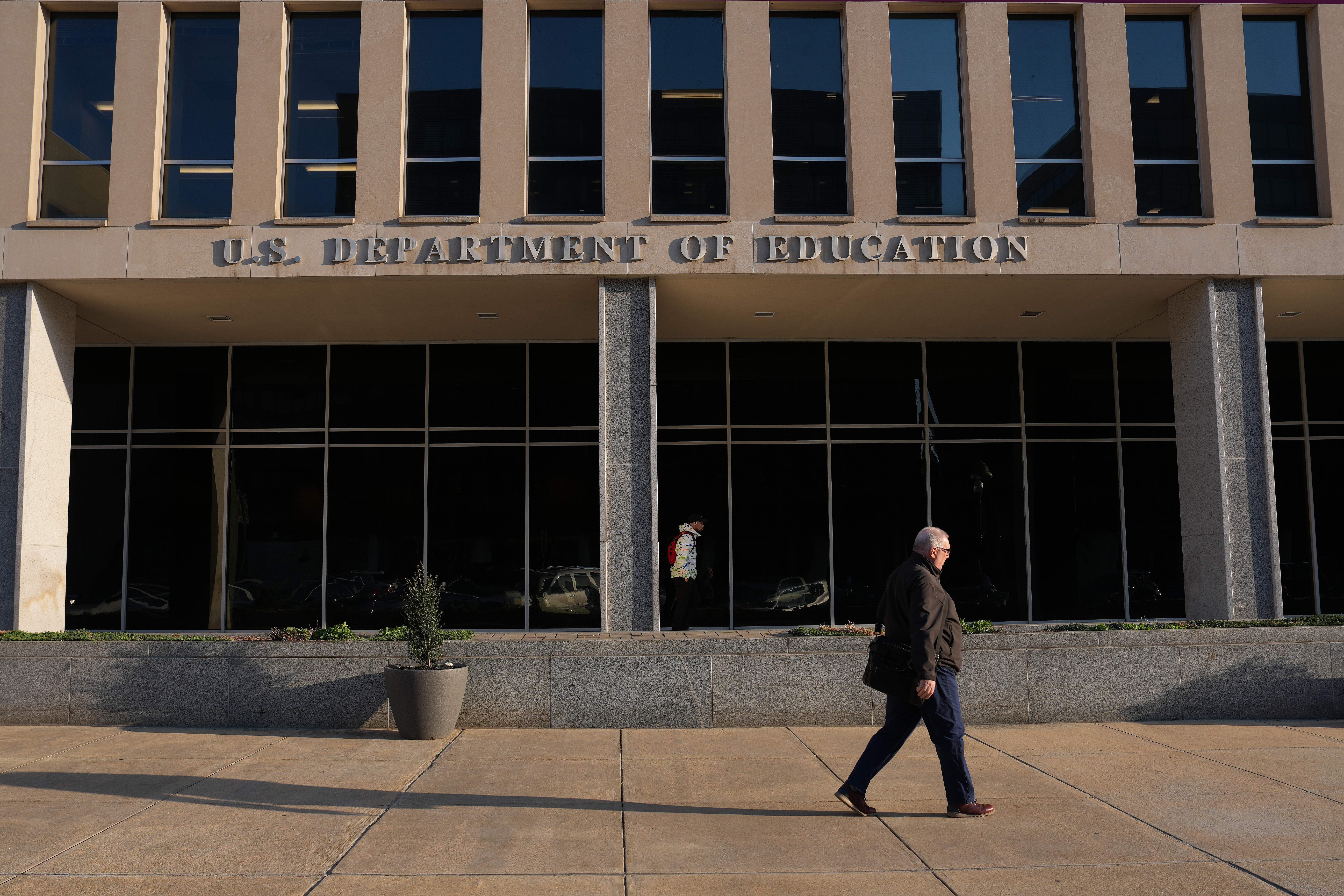
The Trump administration announced on Tuesday that it will transfer many of the responsibilities of the Education Department’s Office for Civil Rights, the division that investigates civil rights violations at American schools and universities, to the Justice Department, Jewish Insider’s Gabby Deutch reports.
What this means: The move marks a major step in the White House’s efforts to dismantle the Education Department and significantly reduce or distribute its work. The formal agreement hands to the Justice Department’s Civil Rights Division the core of OCR’s work: investigating and attempting to resolve discrimination complaints against schools and universities. It leaves OCR with the authority to refer cases out and sign off on the results, but has DOJ handling nearly every aspect of the investigation.
Exclusive: In an interview with JI’s Haley Cohen ahead of the National Legal Strategy Summit, Ken Marcus, founder and chairman of the Brandeis Center said, “We’re looking forward to getting the Justice Department perspective because coordination between the government and private organizations are so important.”
TRUST ISSUES

Republican senators said on Tuesday that they’re skeptical that Iran will hold to any commitments it has made or may make in negotiations with the U.S., and urged the administration to release the terms of the memorandum of understanding announced on Sunday. The administration has not yet communicated any specific plans to brief Congress on the deal, Jewish Insider’s Marc Rod and Emily Jacobs report.
Senators say: “Rather than an end to the activities in Iran, I think it’s more of an intermission,” Sen. John Cornyn (R-TX) told reporters. “We still haven’t seen what the documents look like, and regardless of what they look like, I don’t think you can trust the Iranian regime.” Sen. Thom Tillis (R-NC) emphasized that the U.S. has been in similar positions with Iran before, and that they have not resulted in a viable long-term agreement. He told JI that he thinks it’s “generous to call it a deal, it sounds like it’s a deal in progress … and if we’re making progress, that’s good.”
Read the full story here with additional comments from Senate Majority Leader John Thune (R-SD), Senate Minority Leader Chuck Schumer (D-NY) and Sens. John Kennedy (R-LA), Rick Scott (R-FL), Pete Ricketts (R-NE), Eric Schmitt (R-MO), Chris Coons (D-DE) and Tim Kaine (D-VA).
Trump talk: Trump said on Tuesday during a meeting with United Arab Emirates President Sheikh Mohamed bin Zayed Al Nahyan on the sidelines of the G7 Summit in France that he was hopeful that a full deal with Iran would come soon because, he asserted, U.S.-Iranian ties had improved “and the relationship is now normalized,” JI’s Gabby Deutch reports.
BIBI BACKLASH

President Donald Trump expressed disappointment on Tuesday with Israel’s recent military actions in response to Hezbollah, criticizing a strike on a Hezbollah stronghold in Beirut as “vicious” and suggesting that Israel step back and let Syria handle the fight against the Iranian-backed terror group, Jewish Insider’s Matthew Shea reports.
What he said: Speaking with the Qatari emir Sheikh Tamim bin Hamad Al Thani on the sidelines of the G7 summit in France, Trump said, “I didn’t like that he [Netanyahu] did an attack based on … a very minor little thing with some drones that were released,” Trump said, referring to a Hezbollah drone strike on northern Israeli communities on Sunday. “I saw that [Israeli] attack, I saw where that bomb went. That was vicious, that was too much.”
Reactions: Senators and Middle East policy experts expressed skepticism regarding Trump’s suggestion on Tuesday that Syria should handle Hezbollah in Lebanon, JI’s Marc Rod, Matthew Shea and Emily Jacobs report.
ON THE HILL

The Senate’s version of the 2027 National Defense Authorization Act proposes sweeping new conditions on U.S. support for the Lebanese Armed Forces. The proposed restrictions come after top Senate lawmakers publicly expressed frustration in recent months with the LAF’s failure to take concrete steps to fully disarm Hezbollah, and argued that the U.S. should not provide unconditional funding for the LAF, Jewish Insider’s Marc Rod reports.
Terms and conditions: Support for the LAF, which would be limited to no more than $36 million, is conditioned on the LAF’s work to disarm Hezbollah. No more than 5% of that funding can be provided until the administration certifies to Congress that Lebanon has outlawed Hezbollah’s activities and that the LAF is actively working to disarm Hezbollah, prevent the Iranian-backed group’s rearmament and prevent attacks on Lebanon’s neighbors — including Israel.
COPPER STATE CLASH
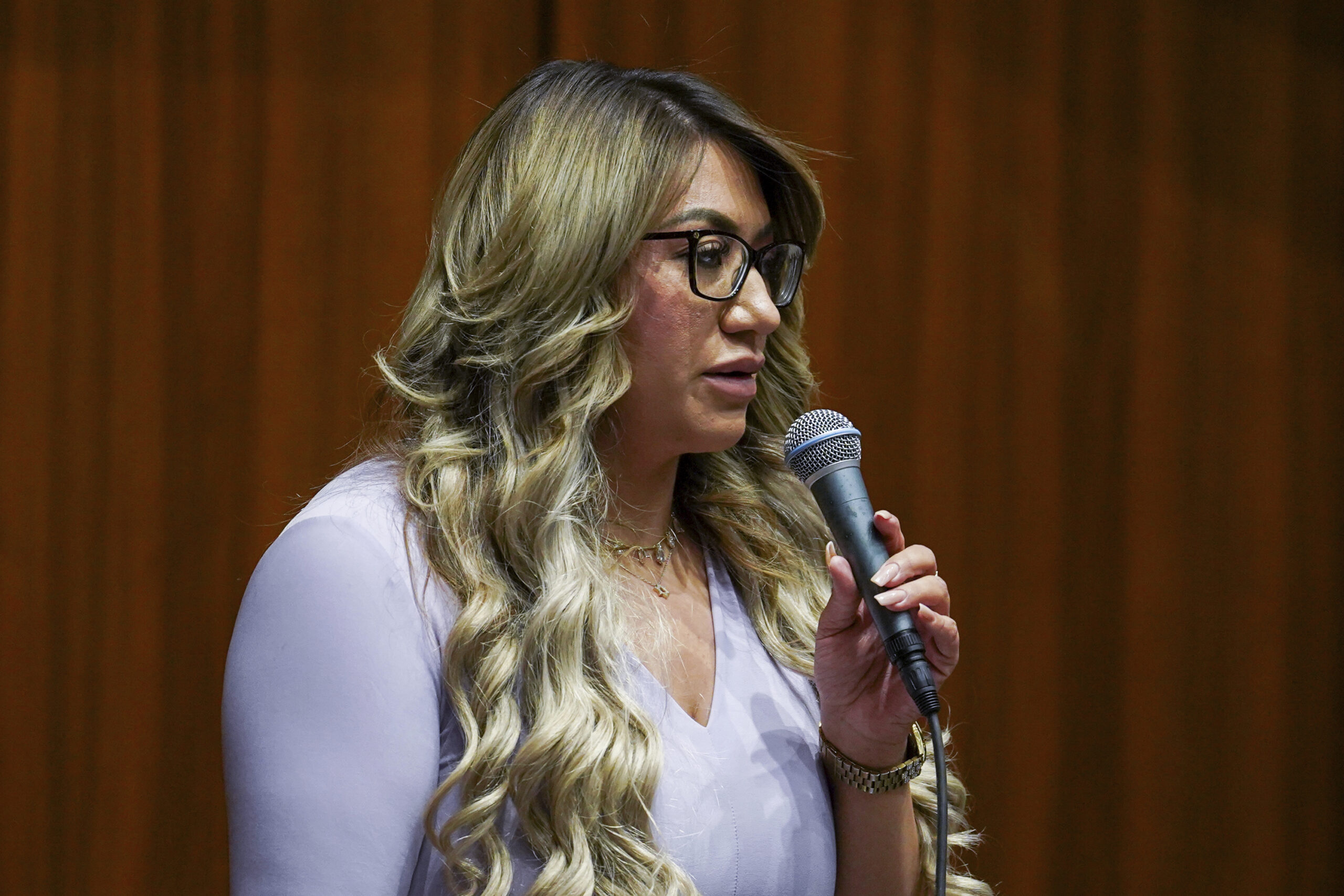
Alma Hernandez, a Jewish Democrat and Arizona representative now running for an open state Senate seat in Tucson, is raising alarms about rhetoric from her primary opponent that she and other Jewish leaders claim has crossed a line into antisemitism — with no pushback from local elected officials. Hernandez, who is term-limited in Arizona’s House, identifies as a “proud Zionist,” fueling tensions with some Democratic colleagues, particularly on the left, Jewish Insider’s Matthew Kassel reports.
Israel angle: Hernandez’s left-wing rival in the state’s July 21 primary election, Rocque Perez, a former Tucson city council member, has throughout his campaign fixated to an unusual degree on her pro-Israel views and frequently cast Hernandez as influenced by “foreign” and “overseas interests” in a thinly veiled allusion to Israel, saying that he is vying “to unseat” an “Israel-First Dem tied to big money.” Hernandez said in an interview with JI, “At the end of the day, I consider this guy to be an antisemite, and someone who is so obsessed that this is all he talks about.”
EXCLUSIVE
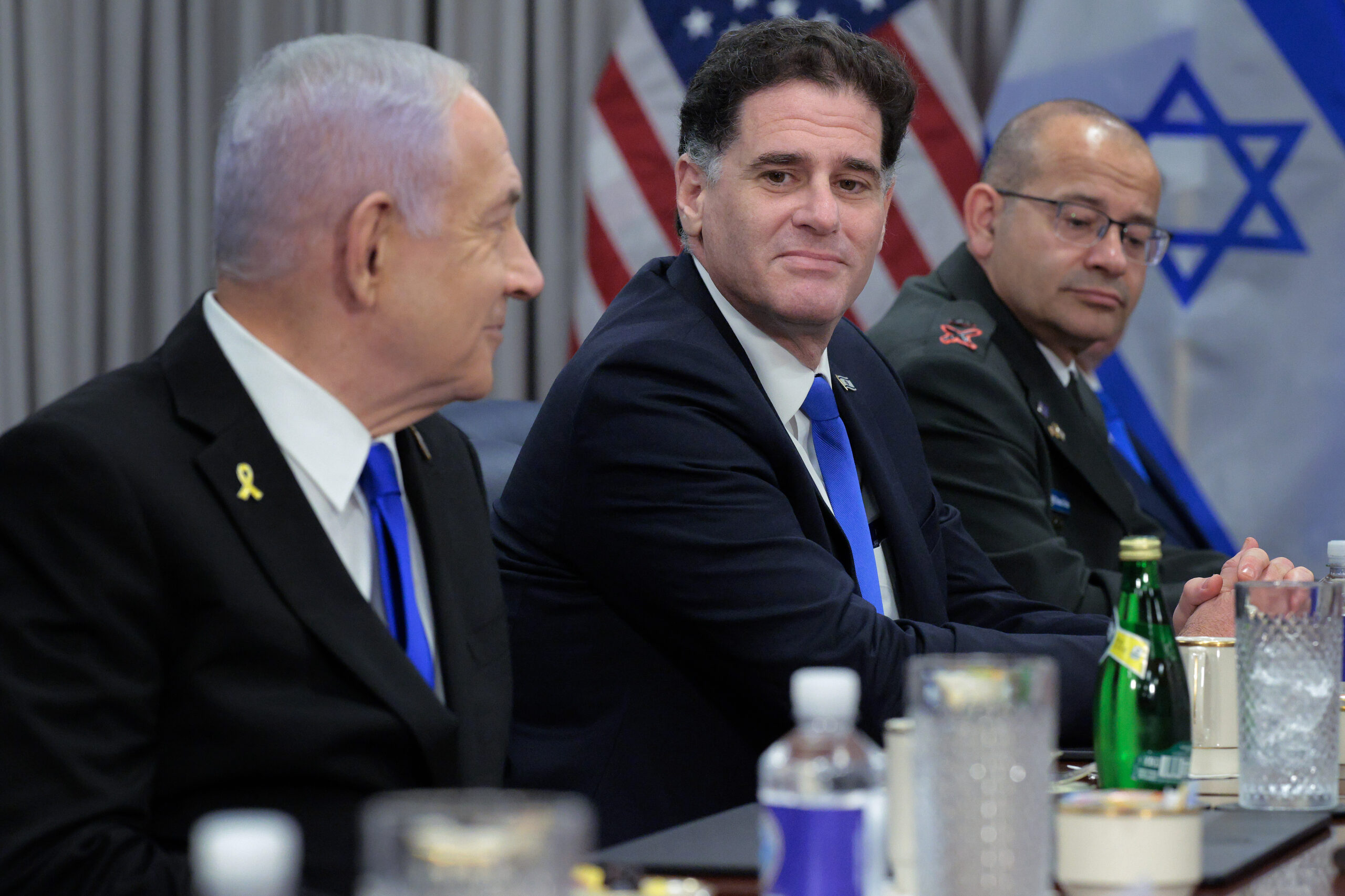
Former Israeli Strategic Affairs Minister Ron Dermer is launching the Dermer Consulting Group (DCG), a Jerusalem-based strategic advisory firm focusing on the U.S., Israel and the Middle East, Jewish Insider’s Melissa Weiss has learned.
Transition: Dermer, who has long been a part of Israeli Prime Minister Benjamin Netanyahu’s inner circle, officially departed the Israeli government in November, after twice extending his tenure. Dermer previously served as Israel’s ambassador to the U.S., leaving the posting in 2021 after eight years. He was named strategic affairs minister the following year. Yarden Golan, who previously served as Dermer’s chief of staff, is a co-founder of the firm and will serve as managing director.
Worthy Reads
Still Joined at the Hip: In The Washington Post, Michael Singh, the managing director and a senior fellow at The Washington Institute for Near East Policy, suggests that the relationship between Washington and Jerusalem remains strong amid reports of clashes between Israeli Prime Minister Benjamin Netanyahu and President Donald Trump. “It is the rare state that is not only capable but willing to act in America’s stead, projecting power far more effectively than U.S. allies with gross domestic products many times Israel’s. The Jewish state’s capability is the product of a unique mix of societal factors, but is also in part the product of a decades-long, bipartisan strategy of building up Israel’s capabilities and its interoperability with the U.S. military.” [WashPost]
War Wound: The New York Times’ Bret Stephens posits that Iran has emerged from the war with the U.S. and Israel as the victor. “War is a contest of wills. And in that contest, the hard men of Tehran appear to have scored a decisive victory over the vain man of Washington. … There’s a word for this: debacle. Not because the war, for all its costs or errors of execution, was a mistake. It’s because this pretense of a peace is an act of geopolitical self-harm that will haunt our standing in the world for years to come.” [NYTimes]
Hardliners’ Lament: The Guardian’s Patrick Wintour reports on anger over the memorandum of understanding between Washington and Tehran among Iran’s hardliners who view the agreement as a capitulation. “Faced with the onslaught, Iranian officials led by Mehdi Mohammadi, an adviser to the head of the negotiating team, Mohammad-Bagher Ghalibaf, mounted a detailed rebuttal in an audio message insisting the deal would end the war, including Israel’s offensive in Lebanon, and that Tehran has not been required to make any new commitments on its nuclear programme, leaving the means of disposal of its highly enriched uranium – including down-blending inside Iran – to future discussions lasting 60 days. Mohammadi also said that by referring to ‘Iranian arrangements,’ the text would allow Iran and Oman to charge fees for passage through the strait of Hormuz, and would even prevent Israeli commercial ships using the waterway.” [TheGuardian]
Word on the Street
In his new book, Communion: Finding My Way Back to Faith, Vice President JD Vance writes that TPUSA founder Charlie Kirk, who was killed at a campus event in September, had raised concerns to Vance shortly before his death that some young conservatives “were going from legitimate disagreement with the Israeli government to antisemitism”…
In a review of the book, Wall Street Journal columnist Barton Swaim criticized what he called Communion’s “egregious sloppiness,” noting that portions of the book about accountability for the circumstances of Vance’s upbringing differ widely from similar components of his 2016 memoir, Hillbilly Elegy…
The U.S. is reportedly in talks with the Palestinian Authority to deepen the strained relations between Washington and Ramallah; The Times of Israel reports that Saudi Arabia is assisting the PA in its reform efforts…
Despite having previously approved a similar motion, the Senate on Tuesday narrowly defeated a procedural vote on a war powers resolution to prevent further military action against Iran, as the administration moves forward in negotiations with Tehran, JI’s Marc Rod reports…
The FBI announced on Tuesday that it had disrupted a sophisticated attack targeting the UFC fight on the White House lawn on Sunday, with Fox News reporting that one suspect allegedly told investigators that the attack was targeting “capitalist elites,” “billionaires” and politicians who received donations from AIPAC, JI’s Marc Rod reports…
Rep. Josh Gottheimer (D-NJ) said he requested an “immediate” classified briefing on the attempted attack, calling on “every leader in every party” to reject political violence and saying, “the temperature must come down”…
Sen. Bernie Sanders (I-VT) endorsed former Rep. Cori Bush (D-MO), who while in Congress was a member of The Squad and a strident critic of Israel, in her comeback bid against Rep. Wesley Bell (D-MO)…
The Anti-Defamation League filed a complaint with the Department of Education’s Office for Civil Rights on behalf of a Boulder middle-school student whom the ADL said faced years of antisemitic harassment, alleging that teachers and administrators at a Boulder school did not address the situation…
The Wall Street Journal looks at how Iranian Americans in Los Angeles — where the Iranian national team played against New Zealand this week — are viewing Iran’s World Cup presence with a mix of emotions…
A new poll released by the Council for a Secure America found that a majority of Lebanese and Syrians have negative views of Hezbollah, with 68% of Syrians polled saying that the Iranian-backed group’s presence in Syria has been negative, and 59% of Lebanese surveyed saying Hezbollah has had a negative impact on Lebanon…
U.K. Foreign Secretary Yvette Cooper said the government had asked the country’s Advertising Standards Authority to probe whether a recent event at a London synagogue promoting home sales in Israel — which sparked large-scale protests in the synagogue’s vicinity — involved the sale or promotion of properties in the West Bank…
Israeli journalist Amir Tibon was awarded the Sami Rohr Prize for Jewish Literature on Tuesday for The Gates of Gaza: A Story of Betrayal, Survival, and Hope in Israel’s Borderlands, his harrowing account of survival on Oct. 7, 2023, JI’s Christina Sher reports…
Project Shema, which focuses on antisemitism in progressive spaces, relaunched as an independent 501(c)3 organization, four years after first beginning its activities, which included workshops and trainings, with the support of grants and workshop revenue, eJewishPhilanthropy’s Jay Deitcher reports…
Israeli Finance Minister Bezalel Smotrich said he had invalidated parts of the 1997 Hebron Agreement that gave construction and planning powers to Palestinian officials; Smotrich said that decision-making powers over the Jewish Tomb of the Patriarchs and the adjoining Muslim Ibrahimi Mosque now fall to Israeli authorities…
Song of the Day

Noa Kirel teamed up with her mother, Ilana, for a duet in the Israeli pop star’s latest song, “Iconic Woman,” which dropped on YouTube on Tuesday, in honor of Pride month, alongside an AI-generated music video featuring both women.
Birthdays
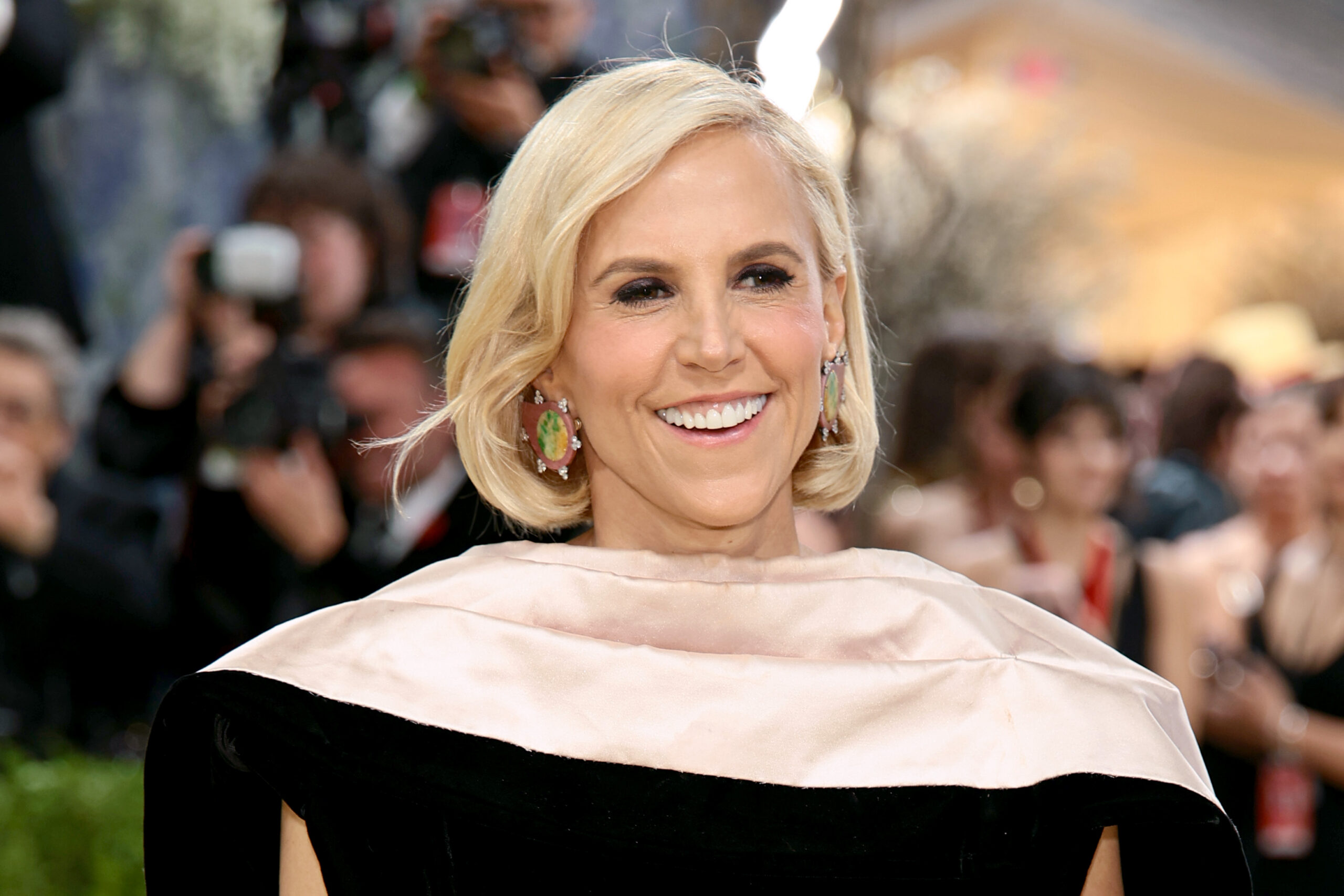
Fashion designer, daughter of Reva Schapira, Tory Burch turns 60…
Diplomat and attorney, undersecretary of state for international security affairs in the Carter administration, former longtime U.N. special representative, Matthew Nimetz turns 87… Winner of the 2001 Nobel Prize in economics, professor at Georgetown and UC Berkeley, he is married to former Treasury Secretary Janet Yellen, George Akerlof turns 86… One of the world’s best-selling singer-songwriters over the course of seven decades, born Barry Alan Pincus, Barry Manilow turns 83… Former member of the Knesset for the Zionist Union and Labor party, Eitan Broshi turns 76… Chairman of the Federal Trade Commission during the Obama administration, Jonathan David (“Jon”) Leibowitz turns 68… Deputy administrator of the Federal Highway Administration during the first two years of the Biden administration, Stephanie Pollack turns 66… President of the San Francisco Board of Supervisors until January 2025, Aaron Dan Peskin turns 62… Singer and composer, a pioneer of the Turkish and Arab music genres in Israel, Ofer Yoel Levy turns 62… Active in interfaith peace initiatives between Judaism and Islam and in encounters for Jews with Eastern religions, Rabbi Yakov Meir Nagen (born Genack) turns 59… Founder and chairman of Shavei Israel, Michael Freund turns 58… British historian, columnist and musician, Dominic Green, Ph.D. turns 56… Comedian, actor, director, writer and producer, Michael Showalter turns 56… International human rights attorney who serves as managing director of the law firm Perseus Strategies, Jared Matthew Genser turns 54… Screenwriter, television producer, director and voice actor, Matthew Ian Senreich turns 52… Advocacy, philanthropic and political counsel and founding partner at LAVA Strategies, David Elliot Horwich… SVP for the economic program at Third Way, a center-left think tank advancing a pro-growth economic agenda, Gabe Horwitz… Chief philanthropy officer of Jewish Federation of Broward County, Keith Mark Goldmann… VP of government affairs for the Conservation Lands Foundation, David Eric Feinman… Former rabbi of the Elmora Hills Minyan in Union County, N.J., now an LCSW therapist in private practice, Rabbi Michael Bleicher… NYC-based senior editor for The Hollywood Reporter, Alexander Weprin… Professional surfer and musician, his family owns Banzai Bagels on the Hawaiian island of Oahu, Makua Rothman turns 42… Founder and executive director of the Zioness Movement, designed to empower progressive Zionists, Amanda Berman… Director of national outreach for the East at the New Israel Fund, Alexander Willick… Award-winning college football and basketball analyst for NBC Sports and SiriusXM, Nicole Auerbach… Former member of the U.S. Ski Team’s alpine program, he competed for the USA in both the 2014 (Sochi) and 2018 (PyeongChang) Winter Olympics, Jared Goldberg turns 35… Senior art director at Business Insider, Rebecca Zisser… Shortstop for Team Israel at the 2020 Olympics, Scott Burcham turns 33… Actor known for her roles in the CBS series “Fam,” the Netflix series “Grand Army,” the HBO series “I Love LA,” and the film “Marty Supreme,” Odessa Zion Segall Adlon turns 26… D.C.-based real estate agent, Mounira Al Hmoud…
Five people are in custody after the FBI disrupted a plot that allegedly involved explosive-laden drones, a sniper team, and a plan to storm the White House gate
Jeff Bottari/Zuffa LLC
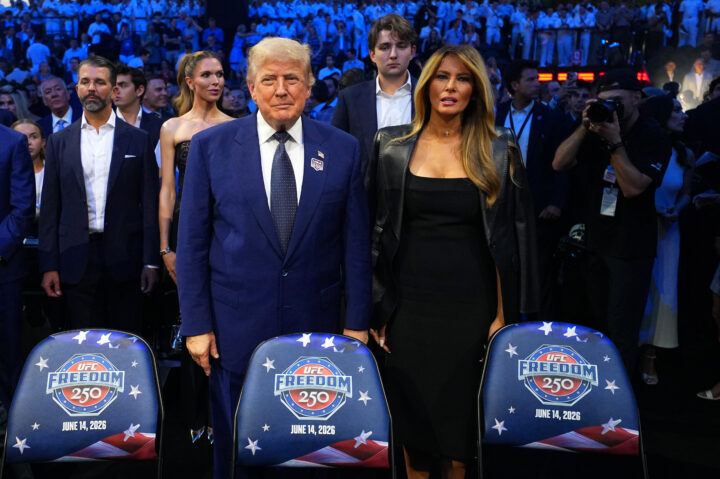
U.S President Donald J. Trump, First Lady of the United States Melania Trump attend the UFC Freedom 250 event on the South Lawn at the White House on June 14, 2026 in Washington, DC.
The FBI announced on Tuesday that it had disrupted a sophisticated attack targeting the UFC fight on the White House lawn on Sunday, with Fox News reporting that one suspect allegedly told investigators that the attack was targeting “capitalist elites,” “billionaires” and politicians who received donations from AIPAC.
FBI Director Kash Patel said on X that multiple individuals outside the D.C. area were in custody in connection with the attack in what he said was a multi-state operation. Fox News reported that five arrests had been made and 23 people were identified as being involved.
In an announcement, the Department of Justice said that the investigation is still ongoing and that arrests were carried out in Ohio, Missouri, Nebraska and California.
According to a criminal complaint released by the DOJ, one of the suspects, Tycen Proper, “appeared to identify potential US Congressional targets due to their support for the American Israel Public Affairs Committee (AIPAC), noting donations the members previously received from AIPAC” and identified several specific leaders he planned to focus on because they “were supportive of Israel.”
The targets included Sens. Marsha Blackburn (R-TN), Tom Cotton (R-AR), Shelley Moore Capito (R-WV) and Jim Justice (R-WV), Rep. Carol Miller (R-WV) and West Virginia state Del. Tristan Leavitt.
According to the complaint, another one of the suspects identified Israeli Prime Minister Benjamin Netanyahu, who some claimed would be attending the fight, as another primary target, alongside President Donald Trump, Vice President JD Vance and Elon Musk.
According to Fox News, the attack plot called for attacking buildings near the event using explosive-laden drones, forcing an evacuation from the UFC event into the path of a sniper team, followed by an attempt to storm the White House gate.
Fox News reported that authorities have identified no foreign connection to the attempted attack.
Schools that fail to institute required policies for two years would lose their federal funding
Andrew Harnik/Getty Images & DOMINIC GWINN via Getty Images
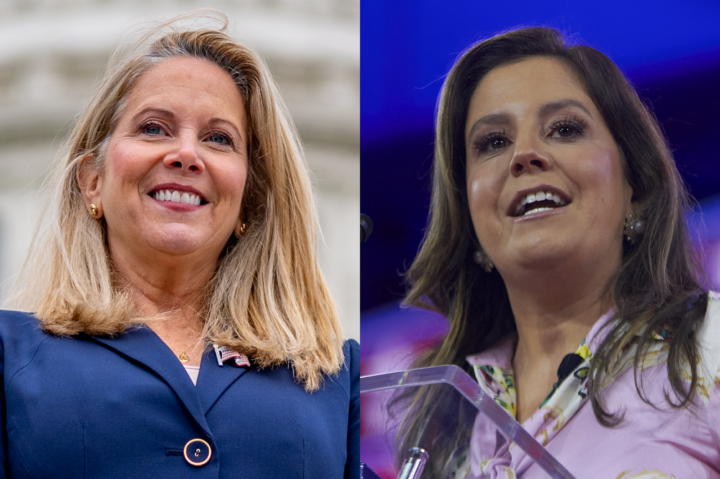
Laura Gillen (D-NY) and Reps. Elise Stefanik (R-NY)
Reps. Elise Stefanik (R-NY) and Laura Gillen (D-NY) this week introduced the Student Protection and University Accountability Act, which aims to compel schools to institute clear policies for addressing antisemitism and other forms of discrimination under Title VI of the Civil Rights Act, or face losing their federal funding if they fail to do so.
The bill requires schools to designate a specified Title VI coordinator and to develop clear procedures for investigating student complaints and publicize those procedures, as well as to publicly display guidance from the Department of Education on Title VI complaints.
The bill also requires schools to provide timely notifications to complainants if an investigation is opened or declined, and on the outcome of such an investigation, as well as create a system for maintaining records of complaints and how they were addressed.
Schools would be required to certify annually to the Department of Education that they are complying with these provisions, and would be ineligible for federal funding if they fail to comply for two years in a row.
The legislation also limits the circumstances under which the Department of Education’s Office for Civil Rights can dismiss Title VI complaints before they are fully investigated, and requires the department to brief Congress monthly on investigations and how it plans to address them.
Some of the bill’s provisions have been included in other antisemitism legislation, including the Jewish American Security Act, a bipartisan and bicameral package of measures to combat antisemitism. Some provisions also mirror regulations around Title IX, which addresses sex-based discrimination on campuses.
“The surge of antisemitism on college campuses since October 7th is shocking and unacceptable,” Gillen said in a statement. “Colleges and universities must be held accountable for enforcing civil rights and protecting all students from harassment and discrimination. I’m proud to co-lead this bipartisan bill to stop antisemitism and all forms of hate on campus.”
Stefanik did not respond to a request for comment.
Nathan Diament, the executive director of the Orthodox Union Advocacy Center, said the bill aims to ensure that antisemitism complaints are taken seriously and addressed.
“We appreciate Reps. Stefanik and Gillen’s leadership and effort to create actionable and enforceable policy surrounding Jewish students’ legally protected rights on campus,” Diament said. “Many university administrations give second-class status to complaints about antisemitism on campus and have ignored, dismissed, or dragged out those complaints with no resolution or accountability.”
“Passing the Student Protection and University Accountability Act will be a critical victory for Jewish students who have faced attacks and for any student experiencing discrimination under Title VI because it will compel university administrators to put proper procedures in place or automatically lose their eligibility for federal funds,” he continued.
Leo Terrell will chair the new advisory panel while embarking on a 15-city swing to engage Jewish communities and local officials on combating antisemitism

Win McNamee/Getty Images
Leo Terrell at an event in the East Room of the White House on February 20, 2025.
The Justice Department announced on Tuesday that Leo Terrell, senior counsel to the assistant attorney general for civil rights and chair of the Department of Justice’s antisemitism task force, will oversee the creation of the DOJ’s Antisemitism Advisory Committee. As part of the role, Terrell will embark on a 15-city nationwide tour to connect with local faith leaders and law enforcement officials about combating antisemitism.
The department described the panel in a press release on Tuesday as “a new advisory body” that will recommend strategies to the attorney general and other department leadership “on coordinated, timely, and effective responses to antisemitism.”
The committee “will consist of citizen leaders dedicated to combatting antisemitism” and individuals nominated to serve will be “subject to approval by the president,” the release said. (The task force, by contrast, is solely composed of DOJ officials.)
“Members will come from a wide range of backgrounds but share a common goal of developing innovative solutions to address antisemitism across the country,” the department said of the “forthcoming launch” of the panel.
Terrell told Jewish Insider in an interview late Tuesday that he had submitted a list of nominees to President Donald Trump after receiving the green light from acting Attorney General Todd Blanche to launch both initiatives and was awaiting approval from the White House.
The tour, described by the department in a second press release as a “National Awareness & Action Tour to combat antisemitism,” will involve Terrell meeting with “individuals and local communities impacted by antisemitism” and “working to identify practical solutions to combat antisemitism at the local level.”
“This national tour is an important step in ensuring communities across the country know the federal government stands ready to work with them to confront antisemitic threats, protect public safety, and uphold civil rights,” Blanche said in a statement.
Terrell has not determined yet if the tour will include public appearances to engage with Jewish leaders. His schedule is in the process of being finalized, and the senior DOJ official told JI he is open to extending the number of cities beyond the initial 15 stops on the agenda.
As for who he will meet during his travels, Terrell acknowledged that he did not expect to receive much engagement from many leading Democratic officials in major cities, such as New York City Mayor Zohran Mamdani, Chicago Mayor Brandon Johnson or Los Angeles Mayor Karen Bass. Instead, he said he hopes to engage directly with Jewish community stakeholders in these places and urge Jewish Americans to get involved in local elections.
“We’re talking about going to Jewish communities, first of all, to light a fire under them, but also to ask how we resolve these issues when sometimes you’ve got an absentee district attorney, with an absentee mayor, with an absentee school board, with an absentee school superintendent?” Terrell said. “Most importantly, there’s going to be a great emphasis on taking back these school districts and local prosecutor jobs in elections. There’s going to be a focus on putting pressure on some of these politicians in local cities in towns.”
He told JI that his primary objective with both initiatives is to determine what solutions the Trump administration can implement to combat domestic antisemitism on a federal level, as well as ascertain what the federal government should encourage state and local officials to do to address the problem closer to home.
“My position is that antisemitism is a local issue. What I mean by that is, we see the results of failures to address it at the local level — in the cities, in the school districts and areas like that,” Terrell said. “Not all of the solutions are in Washington. The solutions are in Los Angeles, Detroit, Chicago, San Francisco, in big cities, small cities, mid-sized cities in the South.”
“How do we get prosecutors in local cities to address antisemitic content that is being ignored and protected under the umbrella of free speech? How do we stop the curriculum problems that are developing in K-12 schools by teachers’ unions that support antisemitic misconduct?” he added. “How do we stop the issues caused by what I call the ‘Jewish tax,’ where Jewish citizens have to pay exorbitant security fees in order to worship or to have events? These are things that are happening at the local level.”
Terrell said he is “wide open” to considering ideas from Jewish leaders across the country about solutions to the domestic antisemitism scourge, arguing that he believed “out-of-the-box thinking” was required at this moment.
Terrell said that he viewed the success of the federal programs he hopes to enact over the remainder of the second Trump administration as a necessity, arguing that those initiatives yielding tangible results would make it difficult for a future president to shut down.
“With this advisory committee, we’re going to work on the problem of antisemitism. We’re not going to be just talking, having hearings and things of that sort. This is not an advisory council that’s going to write a report that collects dust. I’m not in for that, I’m in for finding working solutions,” Terrell told JI. “Recognizing the problem is one thing. What to do is another.”
“I think that’s going to be the task of the commission, because I believe guardrails need to be put up before this president’s term in office is over,” he continued. “The president, in my opinion, has been the best friend that the Jewish American community has had in the White House. He’s committed. My biggest concern from here at DOJ is getting some guardrails up so the next president or the next White House will continue these programs.”
The request includes cuts of $1.3 billion to FEMA grant programs, a category which includes the Nonprofit Security Grant Program
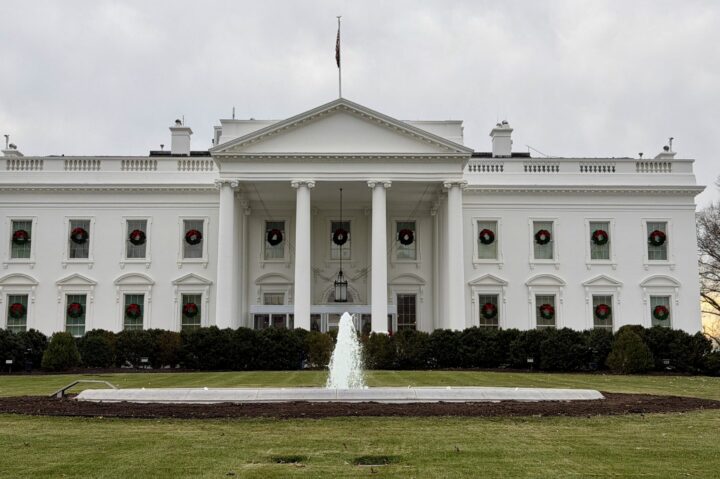
Daniel SLIM / AFP via Getty Images
The White House is seen in Washington, DC, on December 17, 2025.
The Trump administration’s 2027 top-line budget request to Congress calls for significant funding increases for the Department of Defense, while pushing for cuts to certain programs at the Federal Emergency Management Agency and the Department of Justice.
The budget request affirms President Donald Trump’s previously stated desire for a $1.5 trillion defense budget in 2027 — a $441 billion increase over 2026 funding levels.
The request urges cuts of $1.3 billion to non-disaster grant programs at FEMA, a category which includes the Nonprofit Security Grant Program, which has been critical to protecting Jewish community institutions and for which both lawmakers and Jewish community groups have sought increased funding.
The request does not specifically spell out how NSGP funding would be impacted, but states broadly that the budget “reduces wasteful FEMA grant programs, refocusing the agency on sound emergency management while encouraging States and communities to build resilience and use their unique local knowledge and resources in disaster response.”
The budget document does specifically lambast FEMA’s “Targeted Violence and Terrorism Prevention” program, which has support from some groups in the Jewish community, as having been “weaponized to target Americans exercising their First Amendment rights.”
At the DOJ, the administration again aims to eliminate the Community Relations Service, which has received support from some Jewish community groups in the past, charged with helping to mediate communal conflicts based on various forms of hatred and discrimination. It describes the program as a “woke [enterprise] that fails to serve the core function of the Department to fight crime and protect American communities.”
Lawmakers ultimately rejected efforts to fully defund CRS last year, though they did cut $4 million from the office’s budget.
“CRS has a long track record of supporting fringe leftist organizations such as Black Lives Matter and legitimizing riotous behavior that puts America’s police in the crosshairs,” the budget request continues.
The budget request also continues to push for the elimination of the Department of Education, though it doesn’t include a specific line item for the Office for Civil Rights, which is responsible for addressing, among other issues, antisemitism on college campuses. The administration had sought significant cuts to that office in 2026.
The administration called for $2.7 billion in cuts to the U.S.’ funding for international organizations including the United Nations, particularly taking aim at the United Nations regular budget and U.N. peacekeeping missions.
It specifically criticizes anti-Israel bias at the U.N.: The budget document states that the U.N. Human Rights Council and its commission of inquiry on Israel “has failed to uphold any semblance of impartiality or conduct objective investigations.”
The administration requested $15.2 million in additional funding for the Treasury Department’s Office of Terrorism and Financial Intelligence, “making key investments in critical cyber capabilities, sanctions targeting, and combating illicit financial activity” — with a focus on countering cartels.
More specific line-item requests should be released in the coming days.
The lawsuit accuses UCLA of permitting harassment against Jewish and Israeli faculty

Getty Images
Royce Hall building on University of California (UCLA) campus in Los Angeles, California, USA - May 28, 2023.
Building on a monthslong battle between the Trump administration and the University of California, the Department of Justice filed a suit on Tuesday against the university system, alleging that its Los Angeles campus failed to protect Jewish and Israeli faculty and staff in accordance with Title VII of the Civil Rights Act of 1964, which prohibits employment discrimination.
The 81-page DOJ complaint, filed in California’s Central District, alleges that since the Oct. 7, 2023 terrorist attacks in Israel, UCLA “has ignored, and continues to ignore, gross and repeated violations of viewpoint-neutral time, place, and manner restrictions. Jewish and Israeli faculty have been physically threatened, had their classrooms disrupted, and had their workplaces papered with disturbing images.”
“Numerous Jewish and Israeli employees have been forced to take leave, work from home, and even leave their jobs to avoid the hostile work environment,” the suit alleges.
In a statement to Jewish Insider, Mary Osako, UCLA’s vice chancellor of strategic communications, said the university has “taken concrete and significant steps to strengthen campus safety, enforce policies, and combat antisemitism in a systemic and sustained manner.”
Osako said those efforts have included hiring a Title VI/Title VII officer “to ensure professionalized oversight and accountability” and strengthened time, place, and manner policies “to protect both free expression and campus operations.”
The federal suit is a significant escalation of the government’s crackdown on what it alleges are failures across the University of California system to address antisemitism. Multiple civil rights investigations have been launched into the system and individual campuses.
The lawsuit comes seven months after UCLA settled a federal lawsuit with Jewish students who alleged that the university permitted antisemitic conduct during the spring 2024 anti-Israel encampments on the campus.
Yitzchok Frankel, then a second-year law student at UCLA, filed suit against the university in June 2024, claiming that he was “harassed and blocked from approaching the encampment by antisemitic activists, all with the assistance of UCLA security.” Two other Jewish UCLA students and a UCLA medical school professor later joined the suit. As part of the settlement, UCLA agreed to provide support to community organizations engaged in combating antisemitism.
Last year, the Trump administration sought more than $1 billion and a range of concessions from the university in order to restore funding frozen over alleged antisemitism, which was never paid — even after some research money was restored.
A federal judge in San Francisco ruled in November in a preliminary injunction that the Trump administration could not fine the University of California or cut the school system’s federal funding over claims it allows antisemitism or other types of discrimination.
The government did not offer a specific financial demand of UCLA in Tuesday’s lawsuit, but it suggested “awarding damages” to “aggrieved Jewish and Israeli UCLA employees.”
Jewish groups praised the move for allowing law enforcement to increase its security presence at religious institutions, which is often paid for by the houses of worship themselves

Brandon Bell/Getty Images
A law enforcement vehicle sits near the Congregation Beth Israel synagogue on January 16, 2022 in Colleyville, Texas.
The House and Senate’s negotiated 2026 funding package for the Department of Justice includes funding for state and local law enforcement specifically allocated for protecting religious institutions.
The explanatory report accompanying the bill, released Monday, instructs the Department of Justice to allocate at least $5 million in DOJ law enforcement grant funding to agencies “seeking to enhance security measures for at-risk religious institutions and to address the precipitous increases in hate crimes targeting individuals on the basis of religion.”
Such funding, aimed at providing law enforcement with additional resources to step up their security presence at synagogues and other houses of worship, has been pursued by Jewish community groups particularly amid rising antisemitic attacks in the wake of the Oct. 7, 2023, attacks in Israel.
Nathan Diament, the executive director of the Orthodox Union Advocacy Center, told Jewish Insider the issue is one that the OU has been working on for some time, noting that many police seen stationed outside synagogues are often off-duty and being paid by the synagogues themselves, not their municipalities.
“It always struck us as a little crazy that communities have to pay out of pocket” to ensure police protection, Diament said, while noting that local law enforcement are often low on funding and cannot always spare the personnel. By dedicating some of the pool of federal funds that the Department of Justice provides annually to local law enforcement, police would be able to deploy on regular duty or on overtime, Diament said.
He said that OU had worked with the Justice Department under the Biden administration to issue guidance to police instructing them that they can, but were not required to, use the grant funding to deploy officers to protect religious institutions. He said he’d had discussions with Trump administration DOJ personnel about specifically allocating existing grant funding to that purpose earlier this year, but the officials said that congressional authorization would be needed.
Diament described this language in the report as a first step forward. He said that OU is hoping to see the language incorporated into the bill text itself before passage.
He said that the program could grow in the future depending on needs and the political debates on police funding, and emphasized that — if the bill passes — OU will urge the DOJ to allocate more than the allotted minimum of $5 million.
Diament also noted that providing police protection at no cost to Jewish institutions can help other security funding provided through the Nonprofit Security Grant Program “go further” and be applied to other security needs.
Diament credited Sen. Jerry Moran (R-KS), the chair of the Senate Appropriations Committee subcommittee responsible for Justice Department funding, and Rep. Grace Meng (D-NY), the ranking member of the corresponding House committee, as key champions of the new provision.
Moran cited the killing of Sarah Milgrim, an Israeli Embassy employee and Kansas resident shot and killed at the Capital Jewish Museum last year, in a statement on the effort.
“In the months since then, the Jewish community has been rocked by numerous attacks that have prompted increased police presence at synagogues and houses of worship across the country,” he continued. “The freedom to worship is one of the most fundamental rights enshrined in our Constitution. While it is disheartening that places of worship and faith-based organizations are coming under attack, we have a responsibility to protect these institutions and in doing so, protect the rights of Americans of all faiths.”
“In recent years, there has been a significant rise in attacks on houses of worship of Americans of many faiths, including the Jewish community,” Meng said in a statement to JI. “As Ranking Member of the House Appropriations Subcommittee on Commerce, Justice, Science, and Related Agencies, public safety is a top priority for me. That’s why I was proud to work across the aisle to secure millions in federal funds to make it easier for houses of worship to hire security personnel. This bipartisan win will help stop incidents before they occur and builds on existing programs that help at-risk institutions enhance their physical security.”
The six-point security plan spearheaded by the Jewish Federations of North America and a coalition of more than 40 Jewish groups in response to the Capital Jewish Museum shooting also called for the government to “increase funding for local police and law enforcement to create capacity for both monitoring and protecting Jewish institutions” because “[t]he demands on local and state law enforcement far outpace their capacity to meet the need, which disproportionately affects targeted communities like the American Jewish community.”
“At a time when antisemitic threats are growing more frequent and more dangerous, federal funding to protect at-risk institutions, prevent hate crimes and support Holocaust education are essential,” Lauren Wolman, the Anti-Defamation League’s senior director of government relations and strategy, said in a statement. “ADL welcomes language in the FY2026 Conferenced CJS, E&W, and Interior funding bill that dedicates resources to help law enforcement enhance security for at-risk religious institutions and respond to the sharp rise in religion-based hate crimes.”
“We are pleased to see continued support for key programs that strengthen law enforcement, prevention and education,” Wolman continued. “The reality is that the need far outpaces current investment. Combating antisemitism requires sustained resources, coordination, and accountability across the federal government.”
Eric Fingerhut, the CEO of JFNA, also praised the new funding.
“It is critical that local law enforcement agencies have the resources to protect the Jewish communities they serve. Given the rising threats of violence to Jewish events and institutions, local law enforcement definitely needs federal help,” Fingerhut said. “This appropriation is an important recognition of that need and we look forward to working with Congress to develop the most effective and expansive assistance to local law enforcement possible.”
The negotiated bill also preserves funding for a series of hate crimes prevention grant programs supported by major Jewish community groups, providing $35 million under a series of programs, for which the original House version of the bill had not allocated any funding and which the Trump administration had aimed to slash. The Senate proposal included the $35 million in funding.
It also provides $20 million for the Department of Justice’s Community Relations Service — a cut of $4 million from 2025 funding levels. The House version of the bill and the administration had aimed to shutter the CRS, which is charged with helping to mediate communal conflicts based on various forms of hatred and discrimination, completely.
Plus, Israel weighs Oct. 7 tribunals
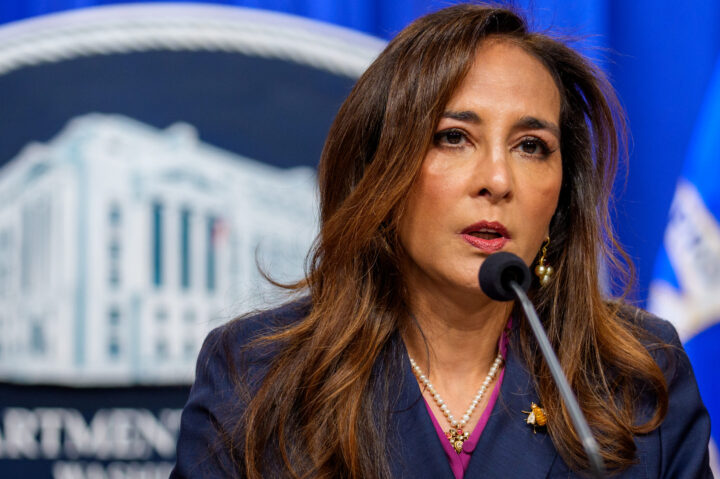
Andrew Harnik/Getty Images
Assistant Attorney General for Civil Rights Harmeet Dhillon speaks during a news conference at the Justice Department on September 29, 2025 in Washington, DC.
Good Friday morning.
In today’s Daily Kickoff, we talk to the Department of Justice’s Harmeet Dhillon about the agency’s efforts to address antisemitism, and look at Rep. Mikie Sherrill’s outreach to Jewish voters in the homestretch of New Jersey’s gubernatorial race. We cover yesterday’s Senate Foreign Relations Committee hearing for Amer Ghalib, the Trump administration’s embattled nominee to be U.S. ambassador to Kuwait, and spotlight efforts in Israel to put the perpetrators of the Oct. 7, 2023, attacks on trial. Also in today’s Daily Kickoff: Larry Summers, Rabbi Elliot Cosgrove, Eliya Cohen and Ziv Aboud.
Today’s Daily Kickoff was curated by Jewish Insider Executive Editor Melissa Weiss and Israel Editor Tamara Zieve. Have a tip? Email us here.
For less-distracted reading over the weekend, browse this week’s edition of The Weekly Print, a curated print-friendly PDF featuring a selection of recent Jewish Insider and eJewishPhilanthropy stories, including: Graham Platner says ‘I am not a secret Nazi’ after photos of his tattoo emerge; A 21-year-old from rural Argentina travels 5,000 miles to learn — and teach — tolerance; and Britain’s Jewish community wants actions, not words, after Manchester synagogue attack. Print the latest edition here.
What We’re Watching
- Secretary of State Marco Rubio continues his visit to Israel. Rubio met on Thursday evening with Israeli Prime Minister Benjamin Netanyahu and is slated to meet with other senior officials today.
- Early voting begins tomorrow in New York City’s mayoral election.
- And in Florida, the Jewish National Fund’s annual Global Conference for Israel continues through the weekend.
- In Israel, Daylight Saving Time ends on Sunday, putting Israelis six hours — instead of seven — ahead of the East Coast for the next week.
What You Should Know
A QUICK WORD WITH JI’S MATTHEW KASSEL
As polls show Rep. Mikie Sherrill (D-NJ) with a narrow lead in the run-up to New Jersey’s gubernatorial election, less than two weeks away, the Democratic lawmaker has stepped up her efforts to court the state’s sizable Jewish community — whose support could make the difference in what is expected to be a close race.
In recent weeks, Sherrill has previewed a plan of action to counter antisemitism in a webinar led by Jewish Democrats, joined calls for the state’s largest teachers’ union to fire an editor of its magazine over antisemitic and pro-Hamas social media comments and met with Orthodox Jewish leaders in Lakewood who represent an influential voting bloc.
The moderate congresswoman, who has held a northern New Jersey House seat since 2019, has condemned her Republican rival, Jack Ciattarelli, for appearing onstage at an event last weekend just after a Muslim affairs advisor had said he was “not taking money from Jews,” a remark Sherrill called “blatant antisemitism” from her opponent’s “inner circle.”
In addition to attending a Jewish event with Rep. Josh Gottheimer (D-NJ) late last month in Bergen County, Sherrill is also expected to join Pennsylvania Gov. Josh Shapiro and other Democratic leaders for a fundraiser on Saturday hosted at the home of Shawn Klein, the Jewish deputy mayor of Livingston, in northeastern New Jersey.
The increased engagement and attention to Jewish issues comes as Sherrill finds herself in a tightening race against Ciattarelli, who came close to unseating term-limited Democratic Gov. Phil Murphy in 2021 and was trailing by just five points in a poll released Thursday. The state’s significant Jewish population could help tip the scales for either candidate — with Ciattarelli depending on particularly robust turnout from the Orthodox community.
Her engagement otherwise comes as she has faced lingering reservations from some Jewish leaders in the state who believe she embraced a more critical approach to Israel in the aftermath of Hamas’ Oct. 7, 2023, attacks, including early calls for a pause in fighting in Gaza.
QUAD CONTROL

When Harmeet Dhillon started her role as assistant attorney general for civil rights at the Justice Department in April, she refocused the division’s priorities to explicitly follow the aims of President Donald Trump: rooting out antisemitism, eradicating diversity, equity and inclusion programs and ending the participation of transgender athletes in women’s sports. The move was met with controversy among the civil rights division’s staff, many of whom are civil servants, not political appointees. In an interview at the Justice Department on Thursday, Dhillon told Jewish Insider’s Gabby Deutch that she does not intend to crack down on free speech despite the prevalence of antisemitism at American universities — a position that she said diverged from what some members of Congress and Jewish activists have asked of her.
Pushing back: But while Dhillon, a Republican operative and civil rights attorney from San Francisco, is committed to rigorously carrying out Trump’s agenda, she is attempting to do so while also remaining committed to protecting free speech. “People in the Jewish community have pressured me to issue guidance to outlaw certain kinds of speech on the campus, and I haven’t gone that far. I don’t think that’s appropriate,” Dhillon said. “I think that you can criticize Israel. Many Jews criticize Israel. You can criticize the United States’ role. You can support the aspirations of the Palestinian people. You can even support Hamas, to a degree.”
BETWEEN IRAQ AND A HARD PLACE
Amer Ghalib, the mayor of Hamtramck, Mich., and President Donald Trump’s embattled nominee to be U.S. ambassador to Kuwait, struggled to win over skeptical senators of both parties during his confirmation hearing on Thursday as he faced a grilling over his long record of promoting antisemitic ideas and embracing anti-Israel positions as an elected official, Jewish Insider’s Emily Jacobs reports.
Ghalib grilling: Ghalib was grilled by Democrats and Republicans on the Senate Foreign Relations Committee, which began when the committee’s ranking Democrat, Sen. Jeanne Shaheen (D-NH), called out his litany of antisemitic comments and denial of sexual violence during Hamas’ Oct. 7 attack. It culminated with Sen. Ted Cruz (R-TX), after questioning Ghalib about his past opposition to the Abraham Accords and support of boycotts against Israel, announcing at the end of the hearing that he would not be able to support his nomination. He also faced bipartisan scrutiny over his recent characterization of Saddam Hussein, the former Iraqi dictator who invaded Kuwait, as a “martyr” — a social media post senators found stunning given that he’s being tapped as ambassador to the country Hussein invaded.
CLEAN-UP
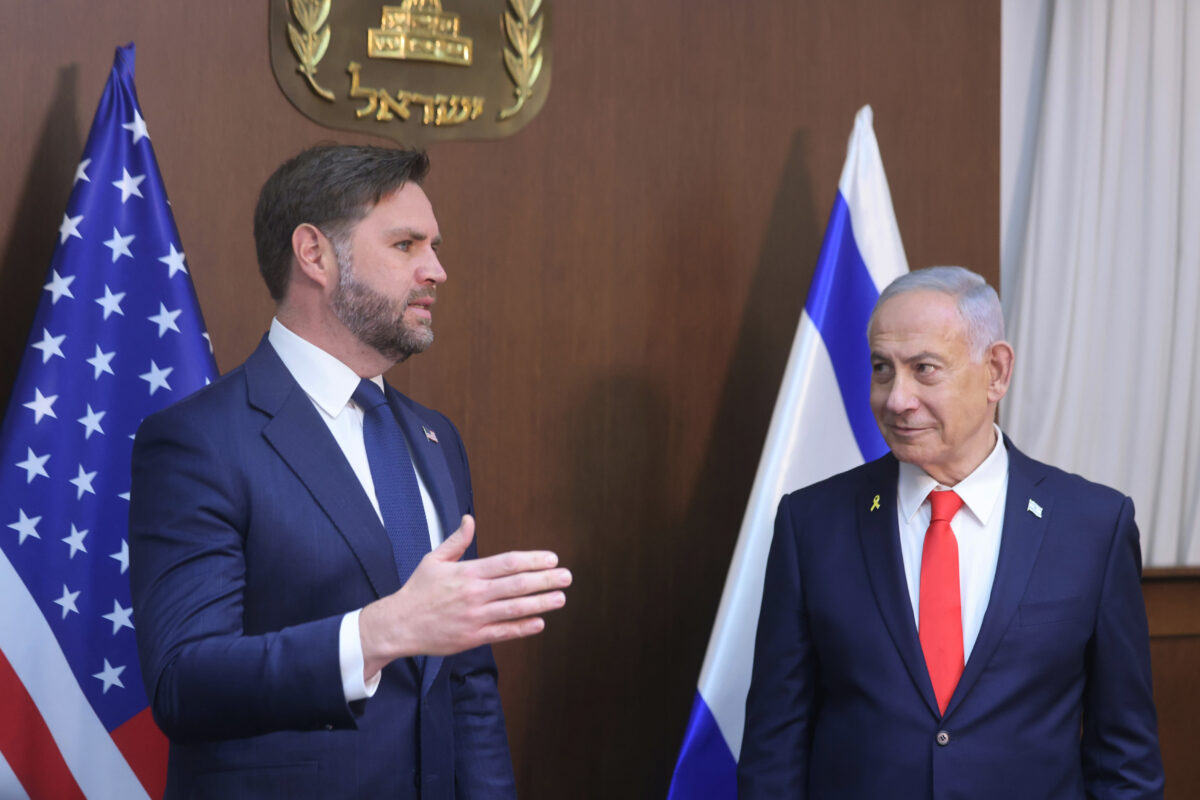
Israeli Prime Minister Benjamin Netanyahu distanced himself on Thursday from the Knesset’s approval of two bills to extend Israeli sovereignty to the West Bank, after President Donald Trump, Vice President JD Vance and Secretary of State Marco Rubio spoke out against annexation. The Knesset approved two settlement annexation bills brought by right-wing members of the opposition in preliminary votes on Wednesday, despite the coalition whipping votes against them, Jewish Insider’s Lahav Harkov reports.
Fallout: Vance was asked about the vote on his way onto Air Force Two departing Israel on Thursday, and said that he was “confused” and found the vote “weird.” He said he asked about the vote and was told it was symbolic. “If it was a political stunt, it was a very stupid political stunt, and I personally take some insult to it,” he said. Netanyahu attempted to repair the damage of the votes on Thursday morning, with a statement from his office calling them “a deliberate political provocation by the opposition to sow discord during Vice President JD Vance’s visit to Israel.” Israeli Ambassador to the U.S. Yechiel Leiter assisted in Netanyahu’s damage control efforts, calling Sen. Lindsey Graham (R-SC) to clarify the situation.
MANIFESTO MAYHEM

An anonymous manifesto was sent on Wednesday to two Pomona College student-run newspapers by demonstrators who recently stormed a campus vigil for the second anniversary of Hamas’ Oct. 7, 2023, terrorist attacks. The emailed manifesto states that “Zionism is a death cult that must be dealt with accordingly,” Jewish Insider’s Haley Cohen reports.
Chain of events: It was sent days after an on-campus event commemorating the Oct. 7 anniversary was disrupted by four masked and keffiyah-clad individuals who barged in chanting “Zionists not welcome here.” The memorial, sponsored by Hillel in a university building and scheduled on the Hebrew calendar anniversary of the attacks, featured a talk by Yoni Viloga, who survived the attack on his family’s home in Kibbutz Mefalsim. The disruption, which also included chants of “Zionism is still a colonial ideology” and “You’re all complicit in genocide,” lasted about two minutes, until campus safety officers arrived. The perpetrators of last week’s demonstration wrote in the manifesto that “Viloga served in the zionist occupational forces and is a settler on stolen land. Knowing this, we had to act.”
DISCUSSION REOPENED

The return of the final, living hostages to Israel last week has reopened discussion of putting the Palestinian perpetrators of the Oct. 7, 2023, atrocities in Israel on trial. Israeli Justice Minister Yariv Levin threw his support behind legislation to allow for the formation of a special tribunal to prosecute Hamas terrorists who are part of the Nukhba, the terrorist group’s special forces unit, on charges of genocide, which carries the death penalty, Jewish Insider’s Lahav Harkov reports.
Legislative plans: The bill is meant to “ensure that the legal process will be run efficiently and to ensure that justice will be done and seen,” Levin said in a joint statement with the bill’s sponsors, Simcha Rothman, the chairman of the Knesset Law, Constitution and Justice Committee, of the Religious Zionist Party, and Yisrael Beitenu lawmaker Yuli Malinovsky. The group plans to bring the legislation to a first vote as soon as possible and usher it through the process “at the greatest speed, with a shared aim to bring the Nukhba terrorists to justice soon.” Levin, Rothman and Malinovsky said that the office of the Israeli state attorney, the country’s chief prosecutor, has drafted indictments against Nukhba terrorists.
PULPIT POLITICS
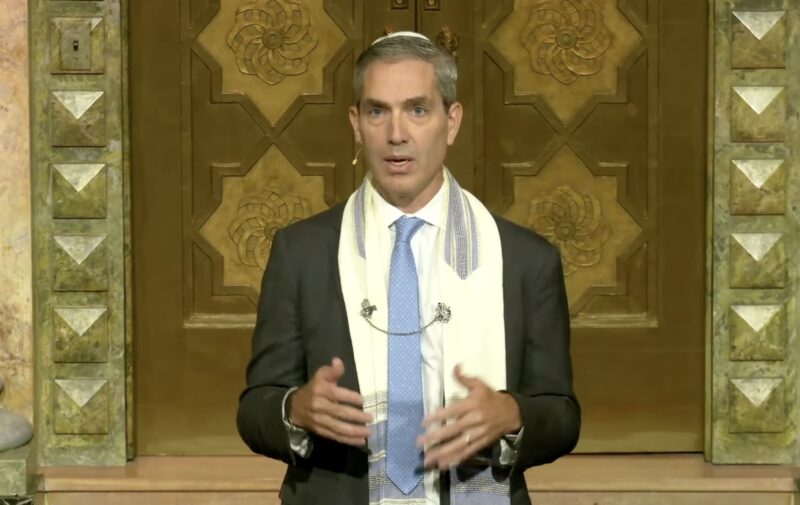
Since July’s IRS decision to allow religious figures to endorse candidates in houses of worship, pulpit rabbis have held their tongues, but this past Shabbat, Rabbi Elliot Cosgrove of the Conservative Park Avenue Synagogue on Manhattan’s Upper East Side pleaded with congregants not to vote for Democratic mayoral candidate Zohran Mamdani and he endorsed former New York Gov. Andrew Cuomo, the independent candidate, for the Nov. 4 mayoral election. Preaching politics into the pews has always been a fine line. Prior to July’s IRS decision, the Johnson Amendment, a 1954 tax code, caused congregations to lose tax-exempt status if leaders endorsed candidates (not policies), but it was rarely enforced. The line blurred more as Mamdani stoked fears in New York, with prominent rabbis like Rabbi Ammiel Hirsch, the leader of Manhattan’s Reform Stephen Wise Free Synagogue, taking aim at Mamdani on his podcast and in sermons, and more than 900 rabbis signing a petition condemning Mamdani earlier this week, eJewishPhilanthropy’s Jay Deitcher reports.
Cosgrove’s call: Cosgrove crossed a Rubicon by outwardly endorsing Cuomo from the pulpit. Some in the Jewish community told eJP that given the risk posed by a Mamdani mayoralty, this is something that should have occurred more often and far earlier. Others expressed concerns that — regardless of one’s opinions of a specific candidate — this kind of politicization of religion ultimately puts Jews and democracy in danger. “As a rabbi, the safety of the Jewish people is my preeminent concern,” Cosgrove told eJP. In the past, he has never been this outright political. The rules dictated by the IRS had nothing to do with his decision to condemn Mamdani or endorse Cuomo, he said. “Just because you can doesn’t mean you should. This was an exceptional circumstance.”
Read the full story here and sign up for eJewishPhilanthropy’s Your Daily Phil newsletter here.
Worthy Reads
Foreign Policy Pivot: The Washington Post’s David Ignatius looks at what he describes as the “misallocation of priorities” in the Trump administration, amid growing Russian intransigence and Washington’s pivot away from Europe. “The FBI’s most experienced national security agents have been purged; cyber defenses at several agencies have been slashed; scores of veteran CIA analysts and operations officers have quit or been forced out; alliances with friendly intelligence services have weakened. … Intelligence cooperation is close to hardwired among the U.S., Britain and the other three English-speaking ‘Five Eyes’ partners. But even some of the Five Eyes services are moderating what they tell Washington, U.S. intelligence officials believe. What worries intelligence veterans is that Trump is balking at countering a real Russian drive to subjugate Ukraine and sabotage NATO — and focusing instead on military strikes against drug cartels and [Venezuelan President Nicolás] Maduro.” [WashPost]
‘Laugh-Washing’ in Saudi?: In The Wall Street Journal, former U.S. Ambassador to Saudi Arabia Michael Ratney responds to pushback against comedians performing at the recent Riyadh Comedy Festival over the country’s human rights record. “It is a conservative nation with a legal system that has yet to catch up with the country’s modern and global ambitions. Spend some time there and you will see the dissonance: an explosion of creative expression even while political speech is curtailed. … But life for Saudis is undeniably better than it was a few years ago, especially for women, who have more control over their lives than at any point since the founding of the modern Saudi state. In my experience, average Saudis care more about their country’s current transformation than its shortcomings. Most foreign visitors to Saudi Arabia I met, particularly those who remember it from a decade ago, say the country seems happier, healthier and more energized. For the Saudi leadership, those are more important gauges of success than the judgments of foreigners who know little of their kingdom and, in the Saudi view, hold their country to someone else’s standards and someone else’s values.” [WSJ]
Word on the Street
In his recently published interview with Time magazine, President Donald Trump suggested he could lean on Israel to release imprisoned Palestinian senior official Marwan Barghouti, who is serving five life sentences for his role in terror attacks that have killed Israelis…
The Gaza Humanitarian Foundation, which suspended its aid distribution efforts in Gaza following the implementation of a ceasefire between Israel and Hamas, is in discussions with U.S. and Israeli officials about a potential role in a postwar Gaza…
The Wall Street Journal reports on Hamas’ efforts to fight its dismantlement — one of the key points of Trump’s 20-point plan to end the war…
Trump‘s run-in last month at a Washington restaurant with members of the radical Code Pink group prompted conversations between administration officials and Secret Service over the president’s security…
Politico looks at the influx of high-profile Democratic surrogates to Virginia and New Jersey ahead of both states’ gubernatorial elections, amid a broader debate over the future direction of the party…
Maine Senate candidate Graham Platner hired a new campaign manager and in-house attorney and is having staff sign non-disclosure agreements following the departure of his previous campaign manager amid controversy over Platner’s tattoo of a Nazi symbol and recently uncovered homophobic Reddit posts…
A poll from the University of New Hampshire that was fielded amid Platner’s controversies showed the hard-left Democrat leading Gov. Janet Mills, who entered the race last week, by 34 points…
New York City Mayor Eric Adams, who dropped his reelection bid last month, endorsed former New York Gov. Andrew Cuomo, who is mounting an independent bid after falling short in the primary; the endorsement came two days before the start of early voting…
Sen. Ted Cruz (R-TX) appeared at a fundraiser for Rep. Mike Lawler (R-NY) in Monsey, N.Y., on Thursday evening, Jewish Insider’s Emily Jacobs reports…
The editor of Portland, Ore., newspaper The Jewish Review said his outlet was blocked from attending a recent virtual press conference, organized by the Portland chapter of the Democratic Socialists of America, on Israel; Rockne Roll, the only staff member of the Jewish Federation of Greater Portland-owned publication, said he was removed from the press conference and not allowed to reenter…
Former Harvard President Larry Summers clashed with university administrators during the removal of an anti-Israel installation on the Cambridge campus…
University of Michigan police arrested three individuals — who were not affiliated with the university — for resisting and obstructing police, disorderly conduct and other charges during a protest outside an on-campus event hosted by the campus’ chapter of Students Supporting Israel…
The New York Times profiles Israeli-American mentalist Oz Pearlman…
The Trump administration is facing increasing pressure to secure the release of a Palestinian-American teenager who was arrested in the West Bank in February and charged with throwing rocks at soldiers…
Former Israeli hostage Eliya Cohen, who was released earlier this year after more than 500 days in captivity, got engaged to his longtime girlfriend, Ziv Aboud, who survived the Oct. 7, 2023, attack on the Nova music festival; Cohen had previously said he would not propose until hostages Alon Ohel and Elkana Bohbot, who were released from captivity last week, were freed…
Israel’s “Eretz Nehederet” sketch comedy show parodied the relationship between President Donald Trump and senior Israeli officials…
The Wall Street Journal reports on the resurgence of the Islamic State in Syria following the fall of the Assad regime and the U.S.’ lessening troop presence in the country…
Michael Smuss, the last surviving fighter of the Warsaw Ghetto Uprising, died at 99…
Manhattan restaurateur Shelly Fireman, who popularized Italian-American cuisine in his restaurants, which included Bond 45 and Cafe Fiorello, died at 93…
Pic of the Day

Well-wishers welcomed former Israel hostage Alon Ohel back to his home in northern Israel today after he was released from hospital. During the two years that Ohel was held by Hamas in Gaza, his eye injury, caused by shrapnel on Oct. 7, 2023, when he was abducted from the Nova music festival, was left untreated.
Birthdays

Staff writer for The New York Times Magazine, her 2019 novel Fleishman Is In Trouble hit the best-seller lists, Taffy Brodesser-Akner turns 50 on Sunday…
FRIDAY: Genealogist who specializes in the research of Jewish roots in Poland and the former Soviet Union, Miriam Weiner turns 83… Writer and adjunct instructor at Queensborough Community College, Ira Greenfest… Stock market analyst who has published books and appears regularly on CNBC and Bloomberg TV, Charles Biderman turns 79… Retired Pentagon official, Judy Gleklen Kopff… Financial planner and president of Laredo, Texas-based International Asset Management, Joseph Rothstein… Democratic member of the U.S. House of Representatives from Southern California since 1997, Brad Sherman turns 71… Retired executive editor of The Washington Post, Martin “Marty” Baron turns 71… Chattanooga, Tenn.-based billionaire and CEO of Mohawk Industries, the world’s largest flooring company, Jeffrey S. Lorberbaum turns 71… U.S. senator (R-SD), Mike Rounds turns 71… U.S. senator (D-OR), Jeff Merkley turns 69… Program director at the Lucius N. Littauer Foundation, Alan Divack… Co-founder and former CEO of Sirius Satellite Radio (now Sirius XM Radio), he made aliyah in 2002, David Margolese turns 68… Producer of CBS’ “60 Minutes,” Henry Schuster… Russian-Ukrainian businessman, he is a supporter of Jewish initiatives in Europe and a co-founder of the Genesis Prize, German Khan turns 64… Professor and chair of politics at the University of Hull in the U.K. for 18 years until this past June, Raphael Cohen-Almagor turns 64… Political correspondent for The New York Times and author of (((Semitism))): Being Jewish in America in the Age of Trump, Jonathan Weisman… Russian businessman and former owner of the Premier League’s Chelsea Football Club, Roman Abramovich turns 59… Co-founder of the Ira Sohn Conference Foundation, focused on pediatric cancer research and care, Evan Sohn… Political communications consultant, Tovah Ravitz Meehan… Israeli author and editor of science fiction and fantasy, Vered Tochterman turns 55… Businesswoman, model, actress and television personality, she has appeared on more than 250 magazine covers, Caprice Bourret turns 54… Fashion designer, Zac Posen turns 45… Founding partner of Be Clear Communications, Matt Lehrich… Rapper, singer, songwriter, record producer and actor, born to a Jewish mother in Toronto, he celebrated his bar mitzvah, Aubrey Drake Graham now known as Drake turns 39… Executive director at Flatbush Community Fund, Yitzy Weinberg… Director of community engagement at Friends of the IDF, Yehuda Joel Friedman…
SATURDAY: Senior U.S. District Court judge based in Brooklyn, appointed by President Reagan, Judge Edward R. Korman turns 83… Former chief policy and strategy officer of Oscar Insurance, following stints as a Supreme Court clerk, White House counsel, chancellor of the NYC schools and EVP at News Corporation, Joel Klein turns 79… Board chair of the Israel Policy Forum from 2016 until 2023, she also serves as president of the Goldman Environmental Foundation, Susie Gelman turns 71… President of Dallas-based SPR Ventures, he serves on the boards of Texas Capital Bancshares and Cinemark, Steven Rosenberg… Acting deputy secretary of state during the latter part of the Biden administration, her family name was Nudelman, Victoria Jane Nuland turns 64… Television personality and author of 16 books, Bruce Feiler turns 61… Voice actress and singer, best known for voicing Asajj Ventress in “Star Wars: The Clone Wars,” Nika Futterman turns 56… Actor, he is currently starring on the CBS show “The Equalizer,” Adam Charles Goldberg turns 55… Television screenwriter, showrunner, executive producer and director, best known for running the television medical drama “Grey’s Anatomy,” Krista Vernoff turns 54… Actress, she has appeared as various characters on the FX anthology series “American Horror Story,” Leslie Erin Grossman turns 54… State Department official, she is married to Rep. Brad Sherman, Lisa Nicola Kaplan… Physician, author and public speaker on health issues, Michael Herschel Greger, MD turns 53… Sharon Iancu… Rapper and songwriter, known professionally as The Alchemist, Daniel Alan Maman turns 48… Director of the Chabad House at Princeton University, Rabbi Eitan Yaakov Webb… Singer and songwriter who competed in the ninth season of “American Idol” (2010), Vered “Didi” Benami turns 39… Singer and model, she has released three albums and toured internationally, Hannah Cohen turns 39… Program officer at San Francisco’s Koret Foundation, Rachel Elana Schonwetter… Director of community relations at the Baltimore Jewish Council, Josh Sherman… Musician, known professionally by the mononym “Grandson,” Jordan Edward Benjamin turns 32… Budding public intellectual, Cole S. Aronson turns 29… Executive director of FairTest, Harry Feder…
SUNDAY: Former chief justice of the New Jersey Supreme Court, the first woman to serve in that position, Deborah Tobias Poritz turns 89… South African judge who led the 2009 U.N. Fact Finding Mission on the Gaza Conflict of that year, Richard Goldstone turns 87… Veteran Israeli war correspondent, winner of the 2018 Israel Prize, Ron Ben-Yishai turns 82… Actress best known as one of “Charlie’s Angels,” she now develops and markets her own brands of clothing and perfume, Jaclyn Smith (family name was Kupferschmidt) turns 80… Chiropractor in White Plains, N.Y., Leonard Linder, DC… Certified life coach and hypnotherapist, Evie Sullivan… CEO at MDI Real Estate Services in Grand Blanc, Mich., Gary Hurand… Former secretary of state, Hillary Rodham Clinton turns 78… Media critic at The Baltimore Sun, assistant professor at Goucher College and the author of The Jews of Prime Time, David Lee Zurawik turns 76… Aventura, Fla., resident, Cecilia Kleiman… Illustrator and graphic memoirist, he is an emeritus professor at Kutztown University of Pennsylvania, Martin Lemelman turns 75… Rabbi of Congregation K.I.N.S. and Dean of Ida Crown Jewish Academy, both in Chicago, he is a past president of the Rabbinical Council of America, Leonard Matanky, Ph.D. turns 67… Senior counsel in the antitrust division of the USDOJ, Perry Howard Apelbaum turns 67… Director of communications at the Washington Institute for Near East Policy, Jeffrey Rubin… Pulitzer Prize-winning author, Stacy Madeleine Schiff turns 64… Cultural commentator and mathematician, Eric Ross Weinstein turns 60… Founding partner and president of Global Strategy Group, Jefrey Pollock… Screenwriter, director, producer and editor, Jessica Sharzer turns 53… Canadian-born television and film actor, David Julian Hirsh turns 52… Author and broadcast journalist for NBC, Katherine Bear Tur turns 42… Figure skater who won a 2006 Olympic silver medal, plus three World Championship medals and the 2006 U.S. Championship, Alexandra Pauline “Sasha” Cohen turns 41… Executive director of product management at Politico, Danielle Feldman… Head coach for the NHL’s San Jose Sharks, he is the youngest head coach in the NHL and the league’s first Jewish head coach in over 30 years, Ryan Warsofsky turns 38… Journalist for The Wall Street Journal, recently freed after being unlawfully detained in a Russian prison, Evan Gershkovich turns 34… Tel Aviv resident, Dr. Alberto Calo…
The lawsuit invokes a rarely used provision prohibiting individuals from using force or threats to prevent another person’s exercise of the right to worship
Valerie Plesch/picture alliance via Getty Images
Department of Justice - Federal Bureau of Investigation
The Department of Justice filed a civil suit on Monday against several protesters and anti-Israel groups for their involvement in a demonstration at a New Jersey synagogue, Congregation Ohr Torah, last November.
The DOJ complaint alleges that the Party for Socialism and Liberation-New Jersey, American Muslims for Palestine-New Jersey and six individuals engaged in physical assaults and antisemitic and threatening chants, as well as defying police orders.
The complaint alleges that the defendants broke through a police line, marched onto synagogue property and attempted to physically block Jewish worshippers from entering the synagogue.
Two are accused of using vuvuzelas — large plastic horns typically used at sporting events — as a “weapon reasonably known to lead to permanent noise-induced hearing loss,” blowing them inches from one attendee’s ear with the intention of causing “serious bodily harm.” One of the same defendants allegedly physically tackled another attendee, grabbed his throat and put him in a chokehold. Another also reportedly “deployed a stink bomb” to obstruct access to the synagogue.
According to the complaint, the event was originally set to take place in a private home, but was relocated to the synagogue “due to credible threats of violence from certain Defendants.” One of the defendants was recorded on camera delivering a threatening letter to that private home, and the home address was posted online.
The complaint alleges that these actions were intended to intimidate Jewish worshipers and prevent their participation in religious observance, in violation of federal law, and that comments captured on video indicate they were motivated by antisemitic animus.
The complaint states that the vuvuzela sounds overpowered the memorial service and Torah sermon.
The suit was brought under the Freedom of Access to Clinic Entrances (FACE) Act, traditionally used against those who block access to abortion clinics, but which also includes provisions barring the use of force, threats, intimidation or physical obstruction to interfere with the right to worship.
The event in question was an Israel real estate fair and spiritual event, which the complaint describes as “a religious event centered on the Jewish obligation to live in the Land of Israel, a tenet of Jewish faith.”
According to the complaint, it “was to include prayer, a religious memorial service for the late Rabbi Avi Goldberg, a Torah sermon, religious songs with biblical verses, prayerful dancing, educational activities about the religious obligation to live in Israel, a real estate fair, and a festive barbecue in the synagogue’s parking lot — all part of the religious observance.”
“This Justice Department will vigorously enforce the right of every American to worship in peace and without fear,” Assistant Attorney General Harmeet K. Dhillon, who leads the DOJ’s Civil Rights Division, said in a statement. “Those who target houses of worship and violate our federal laws protecting people of faith are on notice that they will face the consequences.”
Nathan Diament, the executive director of public policy for the Orthodox Union, praised the DOJ for filing the lawsuit, and said that he had pressed the Biden administration to file similar cases, but was rebuffed.
“We applaud Attorney General Bondi and Assistant Attorney General Dhillon for bringing this suit to protect the Jewish community and all people of faith who have the constitutional right to worship without fear of harassment,” Diament told Jewish Insider. “OU Advocacy urged the Biden administration to bring FACE Act lawsuits to no avail. Hopefully, violent protestors will now be held accountable, and this lawsuit will send a strong message to anyone who targets houses of worship.”
The complaint further notes that PSL and AMP have histories of organizing violent protests and other incidents targeting Jewish institutions and pro-Israel events, and that “unless restrained, Defendants are likely to continue violating the FACE Act, given their history of targeting Jewish religious events with violence and intimidation.”
The lawsuit requests a permanent injunction against such activity by the defendants, an order that they be banned from coming within 50 feet of the private home or synagogue and that they pay compensatory damages to victims and a fine to the government.
The administration alleges that GW’s anti-Israel encampment last spring led to harassment, abuse and assault

Ingfbruno/Flickr
George Washington University became the latest target of the Trump administration’s crackdown on campus antisemitism on Tuesday when the Department of Justice notified the D.C. private school that it is in violation of federal civil rights law.
In a letter addressed to GW President Ellen Granberg, the DOJ described the university administration as “deliberately indifferent” to antisemitism on campus and claimed that it took “no meaningful action” to combat increased antisemitism since the Oct. 7, 2023 terrorist attacks. More than 25% of the undergraduate students on GW’s campus identify as Jewish.
The letter called the anti-Israel encampment that overtook the center of GW’s campus for nearly two weeks in 2024 a “hostile environment” where “Jewish students [were] being harassed, abused, intimidated and assaulted by protesters.” The encampment, which began on April 25, was cleared on May 8 just hours before a planned Capitol Hill hearing on the D.C. government’s handling of the protest, after repeated public requests for assistance from GW’s administration.
“Based on its investigation, the Department has concluded that GW took no meaningful action and instead was deliberately indifferent to the hostile educational environment on its campus in violation of Title VI,” the letter said.
“We have received the letter and are currently reviewing its contents to respond in a timely manner,” Shannon McClendon, a GW spokesperson, told Jewish Insider.
“GW condemns antisemitism, which has absolutely no place on our campuses or in a civil and humane society. Moreover, our actions clearly demonstrate our commitment to addressing antisemitic actions and promoting an inclusive campus environment by upholding a safe, respectful, and accountable environment. We have taken appropriate action under university policy and the law to hold individuals or organizations accountable, including during the encampment, and we do not tolerate behavior that threatens our community or undermines meaningful dialogue.”
Teddy Schneiderman, a rising junior at GW who is president of the campus chapter of Alpha Epsilon Pi, told JI that if the university makes changes in light of the government crackdown, he would like to see it provide a campus police presence at Jewish events and institutions, such as Shabbat dinners.
“This would offer visible reassurance and protection at a time when safety is a significant concern for the Jewish community, especially following the tragic murder of two Israeli Embassy staff earlier this year in Washington, D.C. Taking such action would send a clear message that GW is committed to safeguarding all students, including the Jewish community and allow us to continue to safely demonstrate our Jewish pride,” said Schneiderman.
Rabbi Levi Shemtov, the executive vice president of American Friends of Lubavitch (Chabad), which oversees Chabad’s national and local activities, including on GW’s campus, told JI that during the encampment, he would have agreed with the government’s allegation of GW’s indifference. “I’ll never forget what I saw with my own eyes for weeks,” Shemtov said. “But I do believe things have slightly improved, given President Granberg’s increased focus on the problem.”
“If the university wants to resolve this without prosecution, they are being given a very generous chance by the DOJ to do so,” said Shemtov.
“We expect that the steps taken to resolve this matter will result in a GW that is safe and welcoming for Jewish students and faculty, and where teaching and research can thrive,” Abbey Frank, interim executive director of GW Hillel, said in a statement.
The DOJ wrote that it seeks “immediate remediation” with the university, giving campus administration until Aug. 22 to indicate whether it would like to engage in dialogue. Similar investigations earlier this year at schools including Harvard and Columbia resulted in the Trump administration pulling millions of dollars in federal funding. It restored Columbia’s funding in July, following months of negotiations and a $200 million settlement.
At the ICC summit, the DOJ’s Terrell said extra security costs borne by Jewish communities are ‘offensive’
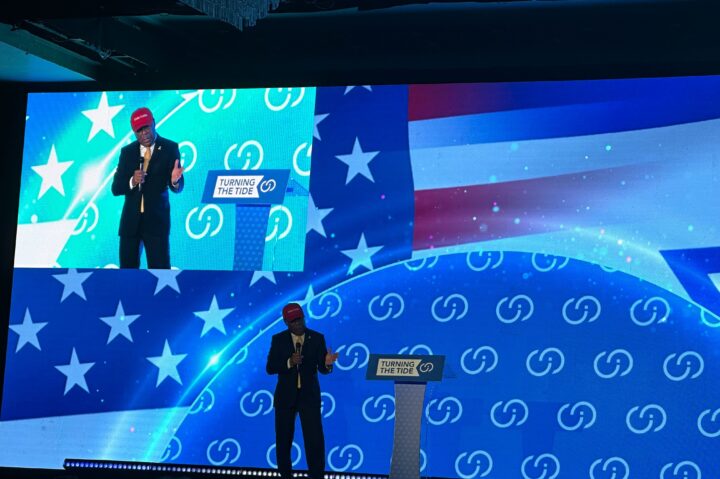
Haley Cohen
Leo Terrell, senior counsel to the assistant attorney general for civil rights, addresses the Israel on Campus Coalition three-day annual leadership summit held in Washington on Sunday, July 27th, 2025.
Leo Terrell, senior counsel to the assistant attorney general for civil rights, said he is intent on eliminating what he called “the Jewish tax” in an address on Sunday to hundreds of Jewish college students gathered for the Israel on Campus Coalition’s three-day annual leadership summit held in Washington.
“For those who don’t know what the Jewish tax is — for you to have this convention, for you to walk your child to a synagogue down the street — you have to pay for extra security,” said Terrell, who heads the Department of Justice’s antisemitism task force. “It makes no sense. It’s unfair. It’s wrong. I find it offensive that it’s being allowed throughout this country. I’m doing everything I can to eliminate it.”
Terrell’s comments came as the Federal Emergency Management Agency announced last month that it had awarded $94.4 million in security grant funding to a total of 512 Jewish organizations nationwide.
Terrell, who wore a baseball cap embroidered with the name “Hadar Goldin,” an IDF soldier abducted and killed by Hamas in 2014 whose body remains held by the terrorist group, shared that he has faced “fights and arguments” with some colleagues over how to strategically address antisemitism. He said that some colleagues have called to “cut a deal, to move on,” an apparent reference to the Trump administration’s recent settlement with Columbia University following a monthslong battle over the Ivy League university’s record dealing with antisemitism.
“I will not compromise,” Terrell said. “No, how can you ask a group [to] compromise freedom? There is no compromise on your equality, your freedom, you have the right to go to schools, to walk down the streets and not be worried and not be afraid.”
Terrell, a former civil rights attorney and a conservative media personality, told the crowd that eradicating antisemitism is a “full-time commitment,” one that he’s decided to take on in part due to Jewish involvement in the Civil Rights Movement.
“I’m not a Jewish American. I’m a Black American. I also understand the history of this great country. Before becoming a lawyer, I was a school teacher. I grew up in the ‘60s,” Terrell said. “I remember Jewish Americans walking hand in hand with Black Americans making sure they got their civil rights.”
The administration has warned that the U.S. and Israeli attacks on Iran could prompt further attempts to harm the Jewish community domestically

SAUL LOEB/AFP
Former Florida Attorney General Pam Bondi testifies before a Senate Judiciary Committee hearing on her nomination to be U.S. Attorney General, on Capitol Hill in Washington, DC, on January 15, 2025.
Attorney General Pam Bondi said on Wednesday that the Department of Justice was keeping a close eye on potential homeland threats to the Jewish community that may be motivated by the American and Israeli military strikes on Iran.
Bondi’s comments followed recent administration warnings about potential Iran-linked “sleeper cells” in the country or radicalization of individuals domestically by Shia or Iranian propaganda.
Bondi, asked by Sen. Jerry Moran (R-KS) about potential threats to the Jewish community, highlighted the Capital Jewish Museum attack, the firebombing of activists at a hostage-awareness march in Boulder, Colo., and the arson attack on Pennsylvania Gov. Josh Shapiro’s home as a series of connected incidents.
“We are all over these cases, working hand in hand with the FBI, with Homeland Security, all of our agencies are working so well together to try to combat this throughout our country,” Bondi said. “Without getting into detail in this setting, Iran, of course, is a threat. They have been a threat, and they always will be a threat to our country. And we are working hand in hand with all of our agencies to protect Americans and to keep us safe. We have a 24/7 command center at the FBI set up for situations just like you described, senator.”
Bondi again addressed “sleeper cell” concerns later in the hearing, adding that the administration had arrested 1,500 undocumented Iranian immigrants in the country, saying she would want to discuss the issue further in a classified setting.
“Have they invaded our country? Absolutely,” Bondi said.
She also identified Jerusalem Cafe, a coffee shop in Oakland, Calif., that expelled a customer for wearing a Star of David hat and which has menu items honoring terrorists, as part of a trend connected to the antisemitic attacks.
“My Civil Rights division is all over that,” Bondi said. “My Civil Rights division is going after them with full force.”
Sen. Lindsey Graham (R-SC) urged Bondi to “reconsider” pulling security details from former U.S. officials such as former Secretary of State Mike Pompeo, whom Iran has targeted for assassination.
Sen. Gary Peters (D-MI) asked Bondi about officials who have been reassigned from counterterrorism and cybersecurity to immigration-related cases, raising concerns that the terrorism cases were being sapped of resources.
She said the DOJ team is attentive to national security threats, arguing that national security “is going hand in hand with the people who have come into our country through our borders.” Bondi added that the DOJ is also focused on foreign cybersecurity threats.
The shift comes as the Trump administration issued executive orders designed to combat antisemitism

Hans Gutknecht/MediaNews Group/Los Angeles Daily News via Getty Images
A Gaza Solidarity Encampment by the Occidental College Students for Justice in Palestine on the campus of Occidental College in Eagle Rock on Monday, April 29, 2024.
Members of Bowdoin University Students for Justice in Palestine who set up an anti-Israel encampment last week inside the college’s student union building are now facing disciplinary action from the school — including prohibition from attending classes pending permission from the dean’s office.
At Columbia University last month, administrators launched an investigation — together with law enforcement — just hours after anti-Israel demonstrators used cement to clog the sewage system in the School of International and Public Affairs building and sprayed the business school with red paint.
Days before that, Columbia suspended a student who participated in a masked demonstration in which four people barged into a History of Modern Israel class, banged on drums, chanted “free Palestine” and distributed posters to students that read “CRUSH ZIONISM” with a boot over the Star of David.
The University of Michigan announced last week that Students Allied for Freedom and Equality, the campus’ SJP chapter, would be suspended for up to two years. Weeks earlier, George Mason University barred the leaders of its SJP chapter from campus for four years after they were caught vandalizing a university building.
The recent crackdowns on SJP and its affiliated groups — along with other episodes of anti-Israel extremism on campus — are the latest indication that university administrators are approaching antisemitic incidents with a new seriousness since the Trump administration issued executive orders aimed at deterring campus antisemitism.
Several campus leaders welcomed the shift. For too long “there were no consequences,” said Mark Yudof, chair of the Academic Engagement Network and the former president of the University of California system. “The new Trump administration is very serious and I’ve told [certain universities] they are in jeopardy.”
“Many of these campuses are at risk,” Yudof told Jewish Insider. In response, “they are saying SJP can have chapters, but they’re violating rules by preventing people from crossing campus or doing overnight encampments or occupying the library.”
Yudof called the Title VI settlements that came in the final days of the Biden administration “relatively weak” and noted that university requirements could “become much stricter in terms of what they need to do by way of enforcement” if the remaining complaints are settled.
Even with the recent investigation and suspension at Columbia, the university’s Hillel director, Brian Cohen, noted that other university investigations remain open, such as ones against students involved with the encampments and the takeover of Hamilton Hall last April. “These cases should have been resolved months ago, and many of the students involved in those cases remain on campus and continue to break university rules,” Cohen said. “Complicating this all is that despite the best efforts of Columbia’s Public Safety Department to identify students who violate university rules and policies, they are hamstrung by university policies that allow students to conceal their identities.”
Trump claimed during his 2024 campaign that, if reelected, U.S. universities that failed to address antisemitism would lose accreditation and federal support. In the weeks leading up to Trump’s return to the White House, a number of universities rushed to settle antisemitism complaints with the Biden administration’s DOE in its final days.
Weeks after Inauguration Day, Trump issued an executive order calling on every federal agency and department to review and report on civil and criminal actions available within their jurisdiction to fight antisemitism.
Under the executive order, the Department of Justice is directed to review existing antisemitism cases and prepare to more actively bring legal action against those who commit acts of antisemitism in violation of federal civil rights laws. The Department of Education is directed to conduct a thorough review of pending Title VI complaints and investigations. The order also “demands the removal of resident aliens who violate our laws,” according to a White House fact sheet.
Days later, the DOJ announced a new multi-agency task force whose “first priority” will be to “root out anti-Semitic harassment in schools and on college campuses,” according to an announcement by the department. The DOE also took its first major action under the new administration to combat antisemitism by launching investigations into alleged antisemitic discrimination at five universities — Columbia University; the University of California, Berkeley; Portland State University; Northwestern University and University of Minnesota, Twin Cities.
“Any student group that openly and continually violates campus rules and/or the law must be held accountable,” Sara Coodin, American Jewish Committee’s director of academic affairs, told JI. “We are glad to see administrators taking steps to enforce their rules and regulations that are meant to foster campus environments welcoming to all students.”
A spokesperson for the Anti-Defamation League echoed that the group is “pleased that many universities are now holding student organizations accountable for violations.”
“We have been calling for the last 16 months for universities to enforce their policies and codes that govern conduct of students, faculty and student organizations,” the ADL said in a statement to JI, noting that because these types of disciplinary cases often take some time to move through the processes, “it is difficult to attribute recent action to the new administration.”
“But as we have said, fighting antisemitism requires a whole-of-society approach and we welcome the focus and actions from the Trump administration to combat antisemitism on campus,” the statement said.
Cary Nelson, former president of the American Association of University Professors, emphasized that cracking down on SJP activity does not suppress political speech. “An SJP chapter that has its campus recognition withdrawn can still post messages on Instagram or X, so its group speech rights remain intact,” Nelson told JI. “Students and faculty remain free to endorse SJP messages.”
“Moreover, some banned SJP chapters continue to organize campus events,” Nelson said. “But the bans cancel campus funding and send the message that violating laws or campus regulations have consequences, including public condemnation.” Nelson also pointed out that even with the new rules, on many campuses, SJP’s faculty partners, Faculty for Justice in Palestine, retain recognition and can function as SJP surrogates.
The new multi-agency group will focus on schools and college campuses
Valerie Plesch/picture alliance via Getty Images
Department of Justice - Federal Bureau of Investigation
The Department of Justice announced a new multi-agency task force on Monday whose “first priority” will be to “root out anti-Semitic harassment in schools and on college campuses,” according to an announcement by the department.
The formation of the task force comes days after President Donald Trump signed an executive order calling on every federal agency and department to review and report on civil and criminal actions available within their jurisdiction to fight antisemitism.
Under the executive order, the DOJ was directed to review existing antisemitism cases and prepare to more actively bring legal action against those who commit acts of antisemitism in violation of federal civil rights laws. The order also “demands the removal of resident aliens who violate our laws,” according to a White House fact sheet.
Other agencies involved in the new task force include the Department of Education and the Department of Health and Human Services, according to the DOJ.
In a statement, Leo Terrell, senior counsel to the assistant attorney general for civil rights, said that the department “takes seriously our responsibility to eradicate this hatred [antisemitism] wherever it is found.”
“The Task Force to Combat Anti-Semitism is the first step in giving life to President Trump’s renewed commitment to ending anti-Semitism in our schools,” said Terrell, who will head the task force.
Trump claimed during his 2024 campaign that, if reelected, U.S. universities that failed to address antisemitism would lose accreditation and federal support. In the weeks leading up to Trump’s return to the White House, a number of universities rushed to settle their antisemitism complaints with the Biden administration’s DOE in its final weeks.
The new administration’s focus on tackling antisemitism appears to be impacting administrators’ behavior. Over the last week, some of the universities that have been in the spotlight for slow — or nonexistent — crackdowns on antisemitism have been more responsive.
Columbia University, for example, recently suspended a student for participation in a masked demonstration in which four people barged into a History of Modern Israel class, banged on drums, chanted “free Palestine” and distributed posters to students that read “CRUSH ZIONISM” with a boot over the Star of David.
At Chapman University, the group Students for Justice in Palestine was stripped of a Martin Luther King Jr. Community Award last week due antisemitic demonstrations, including its involvement last year in the illegal anti-Israel campus encampment movement. The award was meant to honor groups “making strides in the area of diversity, social justice and community empowerment.”
Please log in if you already have a subscription, or subscribe to access the latest updates.
 Continue with Google
 Continue with Apple