

























Trump says U.S.-Iran relationship ‘now normalized’
The president said he would send the agreement to Congress and suggested it could lead more Arab countries to join the Abraham Accords
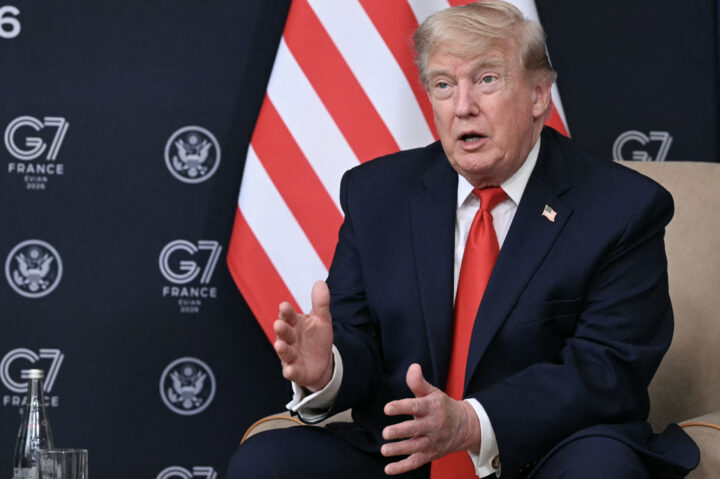
Photo by Mandel NGAN / AFP via Getty Images
U.S. President Donald Trump delivers remarks as he attends a bilateral meeting with UAE's President during the G7 summit, in Evian, eastern France, on June 16, 2026.


 Add JewishInsider on Google
As the U.S. and Iran prepare to formally sign an agreement ending the recent fighting between the two countries, President Donald Trump on Tuesday said he was hopeful that a full deal would come soon because, he asserted, U.S.-Iranian ties had improved.
“Iran wants to get it done. They have to get back to business, and the relationship is now normalized,” Trump said during a meeting with United Arab Emirates President Sheikh Mohamed bin Zayed Al Nahyan on the sidelines of the G7 Summit in France.
Trump said he expects a final deal to be negotiated in the 60-day period that is reportedly outlined in the memorandum of understanding that both countries signed, even as he added that the timing may change.
“I think it’s going to go pretty quickly. It could go faster. It could take longer, too,” he said.
Without offering specifics, Trump pledged to release the text of the MOU after the formal signing ceremony on Friday in Switzerland, which will be attended by Vice President JD Vance.
“I’d like to get a formal setting first before we do that, but I have no problem with that. It’s a great document. Here’s what it says: Iran will never have a nuclear weapon,” Trump said. “It won’t have one to buy, to develop. They will not have a nuclear weapon, and I would say that’s about 99.9% of what I wanted, because we couldn’t let that happen.”
He drew a comparison between the U.S.-Iran MOU his administration negotiated and the 2015 Joint Comprehensive Plan of Action.
“It’s a very important document, and unlike Obama, who could have destroyed the Middle East with the horrible JCPOA — it is the worst agreement that was a road to a nuclear weapon,” said Trump. “Mine is a wall against a nuclear weapon.” Trump withdrew from the JCPOA in 2018 and relied heavily on a new “maximum pressure” sanctions policy. In the years that followed, Iran began to stockpile enriched uranium.
Responding to a question about how to keep the Strait of Hormuz open, Trump said, “Have a United States with a strong president. Thats the only way you could do it, I guess … We have all the agreements we want. The agreements for bad people don’t mean anything.”
Trump speculated that the deal with Iran would lead additional Arab nations to join the Abraham Accords.
“I think they’re all going to come into the Abraham Accords. The only conflict was a place called Iran,” Trump said. “I understand that. It’s a little bit tough when people were afraid of Iran, but I think they’re going to all start coming in.” Trump has been saying for weeks that he wants Arab states to join the Abraham Accords after the Iran war ends, but several — Saudi Arabia in particular — have said that they will not do so until Israel commits to make progress toward the creation of a Palestinian state.
Asked whether an agreement should be approved by Congress, Trump said he is open to doing so.
“I never thought about sending, never even thought about it, but I will. I will send it to Congress. I like the idea,” he said.
More Stories
PEACH STATE PUNCHES
Rep. Mike Collins ducks question about white nationalist influencer son-in-law at Senate debate
DAYLIGHT DEBATE
Brett McGurk pushes back on former Biden WH colleagues who called for greater pressure on Israel
EDIT WARS
Wikipedia failed to address coordinated anti-Israel campaign, new ADL study finds
SPENDING SCRAPPED
GOP leadership super PAC cancels spending plans against Rep. Landsman
EMPIRE STATE EXCHANGE
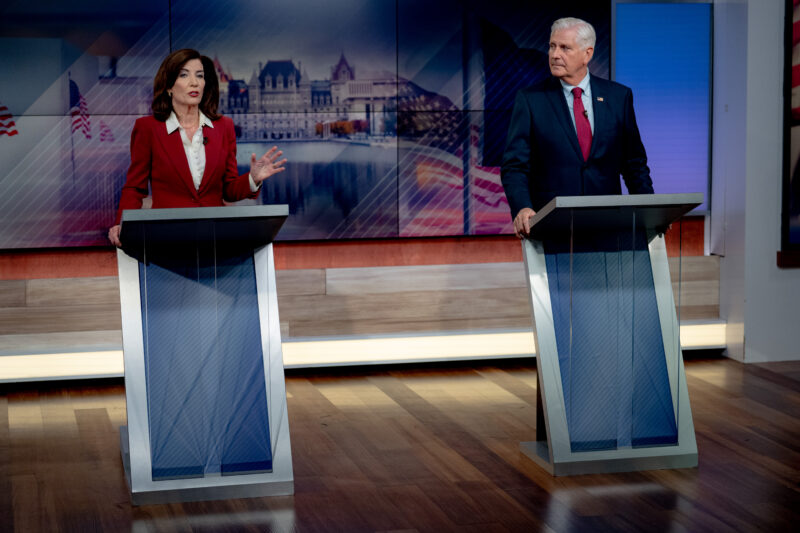
Debating Hochul, Blakeman reiterates graphic warnings about anti-Israel protesters
IN THEIR MEMORY
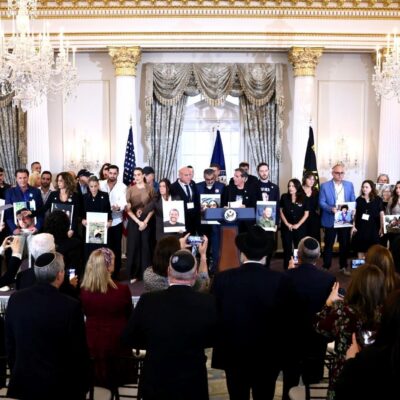
Administration officials join bereaved families for Oct. 7 commemoration event
Please log in if you already have a subscription, or subscribe to access the latest updates.
 Continue with Google
 Continue with Apple