



















































The districts are seen as longshots for Democrats; DMFI PAC’s Brian Romick said, ‘Winning battleground districts like theirs is essential to building a broad coalition’

Bill Clark/CQ-Roll Call, Inc via Getty Images
Rep. Don Davis (D-NC) greets early voters at the Craven County Board of Elections office in New Bern, N.C., on the first day of early voting on Thursday, October 15, 2026.


 Add JewishInsider on Google
Democratic Majority for Israel’s PAC announced on Thursday that it will spend $7 million to fund digital, television and radio ads supporting Reps. Don Davis (D-NC) and Shomari Figures (D-AL).
Both districts were seen as longshots for Democrats after Republicans redrew the maps in North Carolina and Alabama to strongly favor the GOP in both seats. The Cook Political Report rates Davis’ seat as a “toss up” and Figures’ race as “likely Republican.”
The group is set to spend $2 million supporting Figures and $5 million supporting Davis, according to Punchbowl News.
“With less than two weeks to go till Election Day, DMFI PAC is all in to back principled, pro-Israel Democrats Don Davis and Shomari Figures, both of whom face tougher elections thanks to Republican redistricting,” DMFI PAC President Brian Romick said in a statement. “Winning battleground districts like theirs is essential to building a broad coalition, winning back the House majority, and putting Hakeem Jeffries in the speaker’s chair. DMFI PAC is proud to support strong congressmen like Don and Shomari ahead of this critical election.”
In a statement shared on X, DMFI noted that it is “proud to support our friends in the Congressional Black Caucus.”
Ahead of election day, DMFI is also backing former Rep. Elaine Luria (D-VA) in a Virginia swing seat.
Recent polling by Davis supporters has shown him with a healthy lead over his GOP opponent, Laurie Buckhout, while Buckhout internal polling has put her narrowly ahead. Davis, initially elected with support from AIPAC’s super PAC, has been a vocal supporter of Israel in office.
Figures has also been supportive of Israel, including voting earlier this year against an amendment to cut off U.S. aid to the Jewish state.
DMFI President Brian Romick: ‘We are equally clear that there is no lasting peace without Israeli responsibility and no Palestinian state without credible Palestinian governance’

Adobe Stock
Two flags: American and Israeli waving in the blue sky
Democratic Majority for Israel, the Democratic pro-Israel advocacy group, released a proposal on Thursday for a “modernized U.S.-Israel relationship,” with a focus on reimagined ties between the countries following the end of the current memorandum of understanding on military aid, set to expire in 2028.
The plan comes as Democrats grapple with the future of the U.S.-Israel relationship, particularly ahead of a potential Democratic majority in one or both chambers of Congress, which could bring renewed efforts to end or substantially condition U.S. military aid and sales to the Jewish state.
The framework laid out by DMFI mirrors the policies likely to be championed by moderate pro-Israel Democrats in the coming Congress.
“‘Cut everything’ and ‘defend everything’ are shortcuts. Neither is a serious policy for advancing peace in the region,” DMFI said in a press release. “Our vision offers a path grounded in security, responsibility, regional cooperation, and sustained American leadership.”
DMFI said that the U.S. should fulfill its commitments on military aid through the end of the current MOU, arguing that failing to do so “would diminish the close defense partnership through which the United States and Israel plan, develop, and produce the capabilities both countries need to confront shared threats.”
The group maintained that the U.S. and the region “have far more to gain from a stronger and more effective partnership” than from cutting off the U.S.-Israel relationship, and that the path forward will help secure military victories against Iran and its proxies, protect American troops and civilians, support regional partners and strengthen the path toward a two-state solution.
Beyond 2028, the group urged focusing on “more joint development and production in missile defense, cybersecurity, and emerging technologies” — which itself has proven to be a controversial idea among some congressional Democrats and, to a lesser extent, Republicans.
But it also did not fully rule out the potential for “some” continued military aid and missile defense funding past 2028, while suggesting that such aid would likely be phased out “over time, and by mutual agreement … toward an increasingly reciprocal relationship centered on joint investment, innovation, and technological advantage.”
And it said that the U.S. still “has a strategic and moral interest in ensuring that Israel can deter and defend against threats to Israel’s fundamental security,” including preserving Israel’s qualitative military edge and ensuring that Israel maintains access to the military capabilities it needs.
DMFI said that cooperative military programs redound to the U.S.’ benefit, allowing “access to capabilities, operational experience, and regional insights that would be difficult and costly to replicate independently,” while allowing Israel and other partners to “shoulder more of the security burden” while the U.S. turns attention toward China and the Indo-Pacific.
The group emphasized that continued support for Israel “does not require support for every decision made by an Israeli government” and that the U.S. should speak out when Israel undermines “shared interests, democratic values, prospects for peace, or Israel’s own long-term security” and work with Israel to ensure that security assistance “continues to be used in accordance with U.S. law and that military operations incorporate effective measures to minimize civilian harm.”
But it also firmly rejected the Boycott, Divestment and Sanctions movement and other efforts to delegitimize Israel and deny its right to exist as a Jewish state, as well as double standards singling out Israel.
“Criticism of Israeli governments and policies is legitimate, but political debate about Israel must never become a vehicle for antisemitism or collective blame of Jews,” the DMFI plan argues.
It said that the U.S., Israel, Palestinians and Arab states should continue to push toward a two-state solution, and that such a path includes obligations for both Israelis and Palestinians, and steps to improve conditions for Palestinians even without broader final-status negotiations.
The group said Israel must act to halt settler violence in the West Bank; “preserve the territorial integrity, economic viability, and institutional capacity necessary for legitimate Palestinian governance and eventual statehood”; and not work to weaken the Palestinian Authority, arguing that it’s in Israel’s interest to ensure stronger PA institutions and economic conditions as an alternative to extremism.
At the same time, DMFI’s plan describes Israeli skepticism of and concern about a Palestinian state as valid and based on Israel’s experience, particularly in the Oct. 7, 2023 attacks, and said that security arrangements around a two-state solution must “give Israelis confidence that a future Palestinian state will not become another base for terrorism.”
It also argues that the PA is a critical part of a two-state solution but must be significantly reformed to reject terrorism, support Hamas’ removal, stop incitement, overhaul educational materials that incite terrorism, combat corruption and improve governance.
“A reformed PA must demonstrate that it can serve its population, maintain security, govern responsibly, and act as a credible partner for peace before assuming responsibility for Gaza,” DMFI said. “The United States and its regional partners should help the PA undertake these reforms while establishing clear benchmarks to measure and verify progress.”
DMFI called on Arab states to work to strengthen the PA while integrating more closely with Israel.
In Gaza, the DMFI plan largely aligns with the 20-point peace plan put forward by the Trump administration, including disarming Hamas, establishing governance and ensuring humanitarian assistance, which “will require sustained American leadership and diplomatic engagement over many years.”
It argues that recovery and reconstruction should start in Israeli-controlled areas with a shift toward civilian governance and international oversight.
The plan speaks in broad strokes about a path forward for Iran, describing diplomacy as “an essential tool” to addressing Iran’s various threats, “backed by credible deterrence, rigorous verification, economic pressure, and close coordination with allies and regional partners,” alongside “military force [when] necessary” with clear goals and congressional authorization.
It also calls on Lebanon to disarm Hezbollah and offers support for “stable governance” in Syria that will block Iran and other terrorist groups from using Syrian territory to attack Israel.
“DMFI is proposing a vision for the Middle East that a Democratic majority can actually govern with: security for Israel, self-determination for the Palestinian people, and stability for the region, with every party carrying obligations you can name, measure, and verify,” DMFI President Brian Romick said in a statement. “Our commitment to Israel’s security is ironclad, and we are equally clear that there is no lasting peace without Israeli responsibility and no Palestinian state without credible Palestinian governance.”
Former Chicago Mayor Rahm Emanuel, who is seen as a potential presidential contender, also praised the plan. The Democratic operative delivered a major speech in Israel earlier this year offering criticisms of Israeli policy and calling for an end of unconditional support for the Jewish state.
“DMFI is right to put regional stability, Israel’s security, and Palestinian self-determination in the same conversation. None succeeds on its own,” Emanuel said. “The next step is to make the Arab states full partners in building a credible path to Palestinian sovereignty and Israeli security — and to be clear that America’s support for Israel does not mean silence when its government makes choices that undermine both.”
Rep. Lois Frankel (D-FL), the ranking member of the House Appropriations Committee subcommittee that oversees U.S. military aid to Israel, said in a statement on the proposal that “U.S. partnership with Israel is essential to our national security and to advancing peace and stability in the Middle East” and that the DMFI plan “offer[s] a thoughtful and serious vision for strengthening that relationship to meet today’s challenges, while making clear that American interests, Israel’s security and Palestinian self-determination can be advanced together.”
Rep. Brad Schneider (D-IL), who co-chairs the Congressional Jewish Caucus and the Abraham Accords Caucus and is a leader among moderate pro-Israel Democrats, said, “Especially at this critical moment, it is vitally important to chart a course that strengthens the U.S.-Israel relationship and advances our mutual security interests and shared democratic values. I look forward to working with DMFI and others committed to this effort to help shape that future.”
The digital ad targets Luria’s opponent, Rep. Jen Kiggans, over her support for Trump’s policies
Tom Williams/CQ-Roll Call, Inc via Getty Images
Former Rep. Elaine Luria (D-VA) testifies in the Capitol Visitor Center on January 6, 2026.
Democratic Majority for Israel’s PAC announced Tuesday that it is launching a $1 million digital ad campaign targeting Rep. Jen Kiggans (R-VA), who is running against former Rep. Elaine Luria (D-VA).
The toss-up Tidewater Virginia seat is a top target for Democrats in November, one of several districts that DMFI is working to help Democrats flip in the midterms. Luria was among the most outspoken supporters of Israel on Capitol Hill during her two terms in office.
The ad focuses on hitting Kiggans over her support of President Donald Trump’s policies, painting her as a pawn of the president who sides with him unquestioningly.
It features a clip of Trump praising Kiggans.
“Elaine Luria has a proven record of putting her district first, standing up for our servicemembers and veterans, and being a strong voice for the U.S.-Israel relationship. DMFI PAC’s Majority Project is fighting to win back the House, and VA-02 is one of the seats that will decide it. We’re all-in to send Elaine Luria back to Congress,” DMFI PAC Brian Romick said in a statement.
Kiggans campaign spokesman Calvin Moore called the ad “blatantly false” and said “Elaine Luria’s allies should be ashamed to run it.”
“Their ‘100%’ lie relies on an outdated and inaccurate analysis white ignoring Congresswoman Kiggans’ clear record of standing up to both parties when it’s right for Virginia,” Moore said, referring to a claim in the ad that she has voted 100% of the time with Trump, which does not reflect her complete voting record. “From taking on her own party to protect green energy jobs to standing up to Republicans to protect affordable health care, it’s why Kiggans is consistently rated one of the most bipartisan Members of Congress.”
DMFI also launched paid advertisements backing Johnny Garcia and Marni von Wilpert, Democratic candidates in Texas and California, earlier in the congressional cycle.
DMFI President Brian Romick: ‘Our hope is that this pause will be temporary and that, through a candid conversation about the path forward, we can resume our endorsement’
Kayla Bartkowski/Getty Images
Rep. Pat Ryan (D-NY) speaks during a Democratic Steering and Policy Committee hearing in the U.S. Capitol on April 10, 2025 in Washington, DC
DMFI PAC, Democratic Majority for Israel’s political arm, is pausing its endorsements of nine Democratic House members who voted this month to end all U.S. aid to Israel, underscoring the depth of its frustration even as the group also seeks to preserve relationships with lawmakers it had championed.
In a new letter that the group intends to circulate among the lawmakers, Brian Romick, the president of DMFI PAC, expressed his disappointment with their votes in favor of the amendment introduced by Rep. Thomas Massie (R-KY), which did not pass, and said their endorsements would be temporarily suspended with a goal of engaging in a constructive dialogue on the issue.
“Because of that vote, we are pausing our endorsement and taking your name off the list of supported lawmakers on the DMFI PAC website,” Romick said in the letter, the full text of which was shared exclusively with Jewish Insider on Sunday. “At the same time,” he added, “our hope is that this pause will be temporary and that, through a candid conversation about the path forward, we can resume our endorsement.”
The Democrats include Reps. Laura Friedman (D-CA), Josh Harder (D-CA), Chrissy Houlahan (D-PA), Glenn Ivey (D-MD), Kevin Mullin (D-CA), Richard Neal (D-MA), Joe Neguse (D-CO), Brittany Pettersen (D-CO) and Pat Ryan (D-NY).
DMFI PAC has previously backed other pro-Israel Democrats who also voted against funding to Israel, notably including Rep. Jake Auchincloss (D-MA). But the nine members now receiving letters were the only incumbents it had endorsed this cycle who approved the amendment, according to a spokesperson.
DMFI PAC’s diplomatic approach highlights the politically sensitive terrain that pro-Israel groups find themselves navigating after the controversial vote. The amendment drew backing from a total of 103 House Democrats, nearly half the caucus, many of whom were seen as supporters of Israel and said they approved the measure to register opposition to Israeli Prime Minister Benjamin Netanyahu as well as the Iran war.
The group’s decision comes after AIPAC retaliated against 18 of its Democratic endorsees who voted for the amendment by removing fundraising links from its online political portal or cutting language that had thanked some members for their support of Israel.
In an interview with JI on Sunday, Romick said the group’s intention with the letter is “to give people a path back to the pro-Israel movement” rather than permanently ending its longstanding relationships over a measure that it had strongly urged Democrats to vote against.
“Obviously it was a rough vote and it’s been a rough moment,” Romick acknowledged. “But the pro-Israel movement right now needs to be making friends, and I think being able to say ‘I support Israel’s security, I support Palestinians’ national aspirations over the long term, even if it’s not something today’ — I think that’s a reasonable position” and “we want to try to help Democrats land there and continue to support Israel’s security.”
He believes “members are looking for a path back to being in the pro-Israel movement,” he said, citing his recent conversations with House lawmakers. “I don’t think we should be pushing away friends right now.”
It remains to be seen whether all of the former DMFI PAC endorsees will be receptive to preserving “strong relationships and open channels of communication,” as described in the letter from Romick.
A spokesperson for Ryan, for example, said after the vote that he no longer wanted DMFI PAC’s support. The moderate New York lawmaker also promised to return his campaign donations from AIPAC, whose backing he likewise rejected in a social media post.
An AIPAC spokesperson told JI last week that its “members nationwide saw Rep. Ryan reject their participation in the political process,” and said the group is now “helping his donors receive a refund.”
Rep. Brad Schneider (D-IL), a pro-Israel stalwart who voted against the amendment, told JI he was encouraged by DMFI’s outreach to the lawmakers whose endorsements have been paused. “I think it’s the right decision,” he told JI.
“I know that if we’re going to improve the prospects for positive outcomes in the Middle East,” he added, “we need to find common ground with people across a lot of different ideas and ideologies, bring people together and move forward in a single direction, and that’s what I hope we can do.”
Jewish organizations across the political spectrum question whether the deal will curb Iran’s nuclear program or its support for regional proxies

Tom Williams/CQ-Roll Call, Inc via Getty Images
President Donald Trump conducts a news conference in the White House briefing room about the war in Iran on Monday, April 6, 2026.
As details begin to emerge about the Trump administration’s agreement with Iran to end the war and lift the U.S. blockade of the Strait of Hormuz, some mainstream Jewish organizations are treating the deal as a preliminary step — focusing on the 60-day negotiating period ahead, while others are expressing skepticism about the contours of the agreement.
AIPAC, in a statement that came late Monday afternoon after many other organizations had already spoken out, framed the current MOU as a preliminary step, focusing more on the upcoming negotiations, while emphasizing the need for more details about how the current deal affects Israel.
“The announced MOU kicks off a new 60-day window for talks. We look forward to learning the full details of the framework for these negotiations, including whether the deal preserves the sovereign right of our democratic ally Israel to respond to the security threats it confronts,” AIPAC said in a statement.
The group also emphasized that “Congress will play a critical role in working with the administration throughout these negotiations and in reviewing the ultimate agreement.”
It said any deal should require the removal of all enriched uranium from Iran, the dismantling of its enrichment capacity and should address Iran’s missile and drone programs and end its support for terrorist proxies.
The American Jewish Committee also did not take a definitive position on the current agreement, saying on X that the organization “await[s] developments about the reported 60-day ceasefire agreement” but emphasized the need to continue to focus on Iran’s long-running threats.
The AJC said that any ultimate deal with Iran at the conclusion of the upcoming 60-day negotiating period should ensure Iran cannot obtain a nuclear weapon, rebuild its ballistic missile program, continue to support terror proxies, threaten U.S. allies and partners or hold the Strait of Hormuz hostage.
“AJC also strongly supports the legitimate aspirations of the Iranian people for greater freedom, opportunity and dignity, and hopes that those aspirations are eventually realized,” the statement continued. “As the contours of this and future agreements become more clear, we will continue to engage with our partners in the U.S., the Middle East, and around the world to make this vision a reality.”
Other groups offered a more directly negative reaction to the emerging details of the MOU.
The Zionist Organization of America, which has been strongly supportive of Trump administration policies and President Donald Trump himself, praised the president for carrying out military operations against Iran but said that “the pending deal with Iran is concerning.”
“The deal appears to be an ‘agreement to negotiate’ — which enables the Iranian regime to obtain massive oil revenue and time to build up its military and terror arsenals, while leaving the genocidal Iranian regime and its nuclear and missile stockpiles in place, and positioning the Iranian regime to continue and strengthen its 47-year war to destroy the U.S., Israel, and the West,” ZOA National President Mort Klein said. “[T]he little that we know is deeply problematic.”
Klein said it “makes no sense” for the U.S. to let up on its blockade of Iran unless Iran fully gives up its nuclear program and missile stockpile. He also expressed concerns that the deal will allow Hezbollah to regroup and rearm, and that Trump demanded that Israel stand down against Hezbollah.
“Pressuring Israel to not respond to threats of annihilation and attacks on her people is not, as the president called it, a ‘Great Deal [that] will bring Peace and Security to the whole Region,’” Klein said.
“Disturbingly, the interim Iran deal does not appear to be even close to the U.S.-Israel war goals of eliminating the existential dangers of Iran’s nuclear program and ballistic missiles, ending the Iranian regime’s support for its terror proxies, and helping the Iranian people overturn the brutal, genocidal Iranian regime,” he continued.
Democratic groups are also skeptical.
Democratic Majority for Israel CEO Brian Romick criticized the administration’s “incoherent and erratic strategy” and said that “there are concerning details about what is and isn’t in this deal.” Romick called on the administration to lean on “experienced negotiators and technical experts” in the next phases of talks, “rather than relying on friends, family, and donors.”
He said that any deal must permanently end Iran’s nuclear program, constrain its ballistic missiles, address Iran’s support for terrorism and ensure that the Islamic Revolutionary Guard Corps and Iran’s terrorist proxies do not receive additional support as a result of sanctions relief or the unfreezing of assets, and that it must be thoroughly vetted by Congress.
“Despite this tentative deal, the reality is Israel still faces constant threats from Iranian-backed terrorist groups like Hamas and Hezbollah. President Trump must not limit or interfere with our ally’s ability to defend itself from very real threats along its border,” Romick continued.
The Jewish Democratic Council of America’s CEO Halie Soifer took an even more strident tone.
“Donald Trump’s deal with Iran isn’t a deal at all. At best, it’s a statement of intention — a ‘concept of a plan’ — lacking details. At worst, it’s an admission of defeat by the United States,” Soifer said, describing it as a weaker deal than the 2015 Joint Comprehensive Plan of Action.
She argued that the “reckless war” gave Iran a “chokehold” on the U.S. and global economy that it will continue to exercise in the future, gave Iran a stronger hand in nuclear negotiations, solidified the current regime, harmed the Iranian people and gained the U.S. nothing.
“Today, Iran is unquestionably further from regime change — and this Iranian regime is stronger — than before the war,” Soifer said. “Trump repeatedly berated the Obama administration for offering sanctions relief and unfreezing Iranian assets as part of the JCPOA. The amount of financial benefit Iran received from the JCPOA will be dwarfed by the amount of money going to Iran following Trump’s defeat.”
Soifer also criticized Trump for sidelining and ignoring Israel throughout the talks.
J Street has thus far been an outlier in expressing support for the deal.
The group’s president, Jeremy Ben-Ami, said J Street “welcomes” the announcement, while also criticizing the war effort as a whole.
“The lesson is the same one many experts and former security officials have warned about for years: There is no sustainable military solution to the challenge posed by Iran’s nuclear diplomacy,” Ben-Ami said. “Durable constraints on Iran’s nuclear activities can only be achieved through pragmatic and sustained diplomacy.”
Ben-Ami argued that the deal would be largely similar to the JCPOA, adding, “We urge lawmakers to support this agreement to end the fighting and push to ensure future diplomatic efforts address the security threats presented by Iran.”
The Republican Jewish Coalition has not issued a full statement of its own on the deal, but has indicated support thus far, sharing on its X account two Truth Social posts from Trump about the Strait of Hormuz being reopened and the lifting of the U.S. blockade. RJC did not immediately respond to a request for comment.
Plus, the race to replace Pelosi

Tasos Katopodis/Getty Images
U.S. President Donald Trump waves to the media after walking off of Air Force One at Miami International Airport on April 11, 2026 in Miami, Florida.
Good Tuesday morning.
In today’s Daily Kickoff, we do a deep dive into the race to succeed Rep. Nancy Pelosi, in what has become something of a proxy battle in the war for the identity of the Democratic Party, and report on an effort by Democratic Majority for Israel to boost a Texas congressional candidate whose far-left opponent has trafficked in antisemitic tropes. We talk to Senate Republicans about the possibility of resuming military operations against Iran, and have the scoop on Gerald Steinberg’s decision to step down from the helm of NGO Monitor early next year, and the first interview with his successor, Olga Deutsch. Also in today’s Daily Kickoff: Daniel Septimus, Rom Braslavski and Ben Shapiro.
Today’s Daily Kickoff was curated by JI Executive Editor Melissa Weiss and Israel Editor Tamara Zieve, with assists from Danielle Cohen-Kanik and Marc Rod. Have a tip? Email us here.
What We’re Watching
- Defense Secretary Pete Hegseth and Chairman of the Joint Chiefs of Staff Gen. Dan Caine are both slated to testify this morning at back-to-back House and Senate Appropriations Committee budget hearings. In the afternoon, FBI Director Kash Patel will testify before Senate Appropriations.
- The Anti-Defamation League is holding a Jewish American Heritage Month reception this evening on Capitol Hill.
- Elsewhere in Washington, the Jewish Democratic Council of America is kicking off its annual summit tonight with a reception at the Watergate Hotel. The group will honor Sen. Elissa Slotkin (D-MI) and Rep. Steny Hoyer (D-MD), and will hear from Sens. Jacky Rosen (D-NV) and Mark Kelly (D-AZ) and Reps. Debbie Wasserman Schultz (D-FL), Jason Crow (D-CO), Chris Deluzio (D-PA), Maggie Goodlander (D-NH) and Chrissy Houlahan (D-PA).
- The funeral for former Anti-Defamation League head Abe Foxman, who died on Sunday, will take place this morning at Park Avenue Synagogue.
- In New York City tonight, three of the top candidates in the open congressional race in NY-12 — George Conway and Assemblymembers Alex Bores and Micah Lasher — will participate in a forum at the West Side Institutional Synagogue moderated by Jewish Insider Editor-in-Chief Josh Kraushaar.
- Elsewhere in New York, the American Jewish Committee will present Cardinal Timothy Dolan with the group’s Nostra Aetate at Sixty Award, honoring Dolan’s interfaith efforts on the 60th anniversary of the groundbreaking Vatican declaration.
- Across the Hudson, the New Jersey Globe is hosting a primary debate for the Democrats running in New Jersey’s 7th Congressional District. ER physician and former government official Tina Shah, former Navy pilot Rebecca Bennett and businessmen Brian Varela and Michael Roth will participate in tonight’s debate, which starts at 7 p.m. ET.
- Israeli Eurovision entrant Noam Battan will perform tonight when the contest’s semifinals kick off in Vienna.
What You Should Know
A QUICK WORD WITH JI’S GABBY DEUTCH
Over the last two years, the second semester of the academic year at American universities coincided with crisis and chaos. In 2024, it was anti-Israel encampments overtaking campus quads across the country; last year, it was threats from the Trump administration to slash hundreds of millions of dollars in funding and ban foreign students.
By comparison, the spring of 2026 has been relatively smooth sailing for research universities, even with a bit of hubbub over graduation speakers scrutinized for their stance on Israel and Gaza at a few schools, including the University of Michigan and Georgetown Law.
But it’s not that things have gone back to the pre-Oct. 7, pre-Donald Trump normal. University administrators have just gotten better at managing an ambient sense of friction: Conflict between university leaders and activist faculty and students is still bubbling under the surface, and the threat of funding cuts at the federal level lingers.
According to several university presidents who gathered last week at the Milken Institute Global Conference in Los Angeles, the task before universities is to win back the trust of skeptical Americans.
“The world of higher education, I think, is still in turmoil,” Vanderbilt University Chancellor Daniel Diermeier told Jewish Insider in an interview at the Milken confab. “I think the time when a university does say that’s all overblown and everything is great, that’s over. At least the vast majority of university presidents know that there are challenges, and they want to take them on.”
democratic fault lines

The race to fill the seat of Rep. Nancy Pelosi (D-CA) in California’s 11th Congressional District has become somewhat of a proxy battle in the war for the identity of the Democratic Party, where describing Israel’s war in Gaza as a genocide, supporting arms embargoes to Israel and attacking Zionism as a racist ideology have become much more common since the Oct. 7, 2023, Hamas terrorist attacks and the subsequent war in Gaza, Gabe Stutman reports for Jewish Insider. The outcome of the race will help answer an important question: Can a progressive candidate still win in a deep-blue district like San Francisco without fully embracing the politics of the anti-Zionist left?
State of play: The race is by most accounts a three-way contest between state Sen. Scott Wiener, Connie Chan, a progressive member of the San Francisco Board of Supervisors who has the backing of major labor organizations but has struggled to compete in fundraising, and Saikat Chakrabarti, a wealthy tech entrepreneur who entered progressive politics working for Sen. Bernie Sanders (I-VT) during his 2016 presidential bid and later served as Rep. Alexandria Ocasio-Cortez’s (D-NY) chief of staff.
EXCLUSIVE

Democratic Majority for Israel’s political arm is kicking off an ad campaign on Tuesday to boost Johnny Garcia, a sheriff’s deputy in Bexar County, Texas, in his Democratic runoff election later this month against Maureen Galindo, a San Antonio activist who has faced scrutiny for trafficking in antisemitic tropes, Jewish Insider’s Matthew Kassel reports.
Getting behind Garcia: “Democrats need candidates who can build broad coalitions and win in November,” Brian Romick, the chair of DMFI PAC, told JI. “Johnny Garcia is a coalition builder who supports a strong U.S.-Israel relationship and has been clear in standing against antisemitism. His opponent, on the other hand, proudly embraces vile, antisemitic conspiracies and if she advances could put a Democratic House majority at risk.”
TEHRAN TALKS

With President Donald Trump publicly mulling the resumption of military action against Iran, fault lines are opening up among Senate Republicans over the prospect of a renewed military effort, Jewish Insider’s Marc Rod reports.
State of play: Some Senate Republicans are publicly calling for the U.S. to resume military operations. Others are leaving the prospect of military action on the table without fully ruling out a diplomatic path, while offering varying degrees of skepticism about how realistic a deal actually would be. Sen. Josh Hawley (R-MO) urged Trump to ignore calls from some of his more hawkish colleagues to restart military operations.
Pakistan problems: Senators on both sides of the aisle, including Sens. Lindsey Graham (R-SC), Mark Kelly (D-AZ) and Ted Budd (R-NC), on Monday expressed concerns about a report by CBS News that Pakistan had sheltered multiple Iranian military aircraft at an air force base in the country since shortly after the U.S.-Iran ceasefire in April, raising questions about the country’s neutrality as a mediator, JI’s Marc Rod reports.
PARTY SWITCH

The Israeli financiers, investors and entrepreneurs who attended last week’s Milken Institute Global Conference in Beverly Hills brought an upbeat attitude about Israel’s economy, even two-and-a-half years into near-constant war that began with Hamas’ Oct. 7, 2023, attacks, Jewish Insider’s Gabby Deutch reports.
Exceeded expectations: “When the war began, I think none of us — none of the regulators in Israel, and almost none of the players or the investors in Israel — thought or believed that after two-and-a-half years of war, Israel would show such growth, such resilience,” Seffy Zinger, chair of the Israel Securities Authority, told JI in an interview. “I’m not an investment advisor, but you can see that if you were not in Israel in the past two years, you probably missed out, if Israel was not part of your portfolio.”
SPEAKING OUT
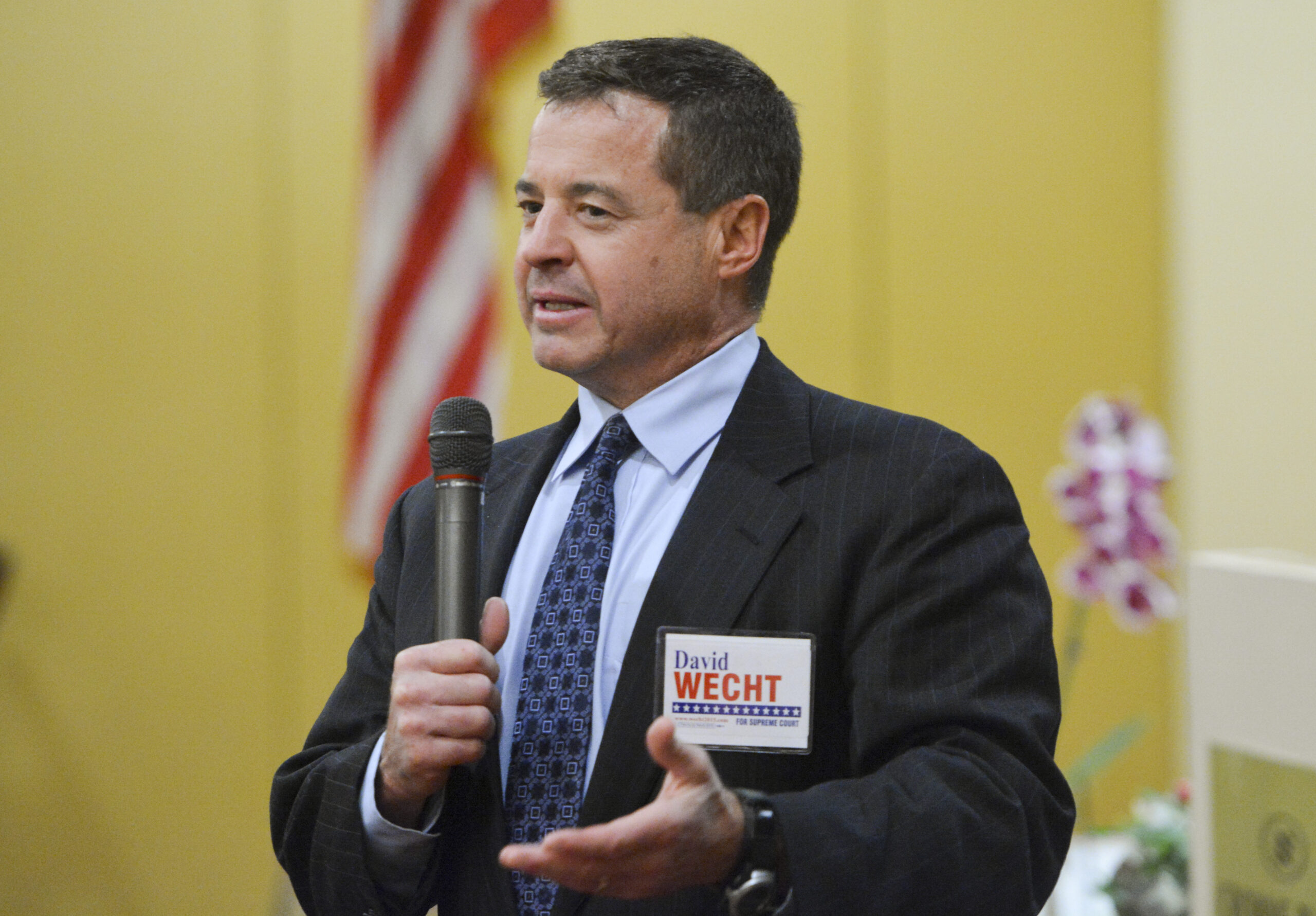
Pennsylvania Supreme Court Justice David Wecht, a former vice-chair of the Pennsylvania Democratic Party, announced Monday he has left the party, citing “anti-Jewish” actions and “acquiescence to Jew-hatred” within the party, including from elected officials, Jewish Insider’s Haley Cohen reports.
What he said: “Acquiescence to Jew-hatred is now disturbingly common among activists, leaders and even many elected officials in the Democratic Party. I can no longer abide this,” wrote Wecht, who was elected as a Democrat in 2015. He added that he is no longer affiliated with any political party. “That terror came from the right,” he wrote. “Jew-hatred has always festered on the fringe of that sector.” But, Wecht continued, “in the quarter century that has passed” since his leadership position, “the Democratic Party has changed.”
scoop
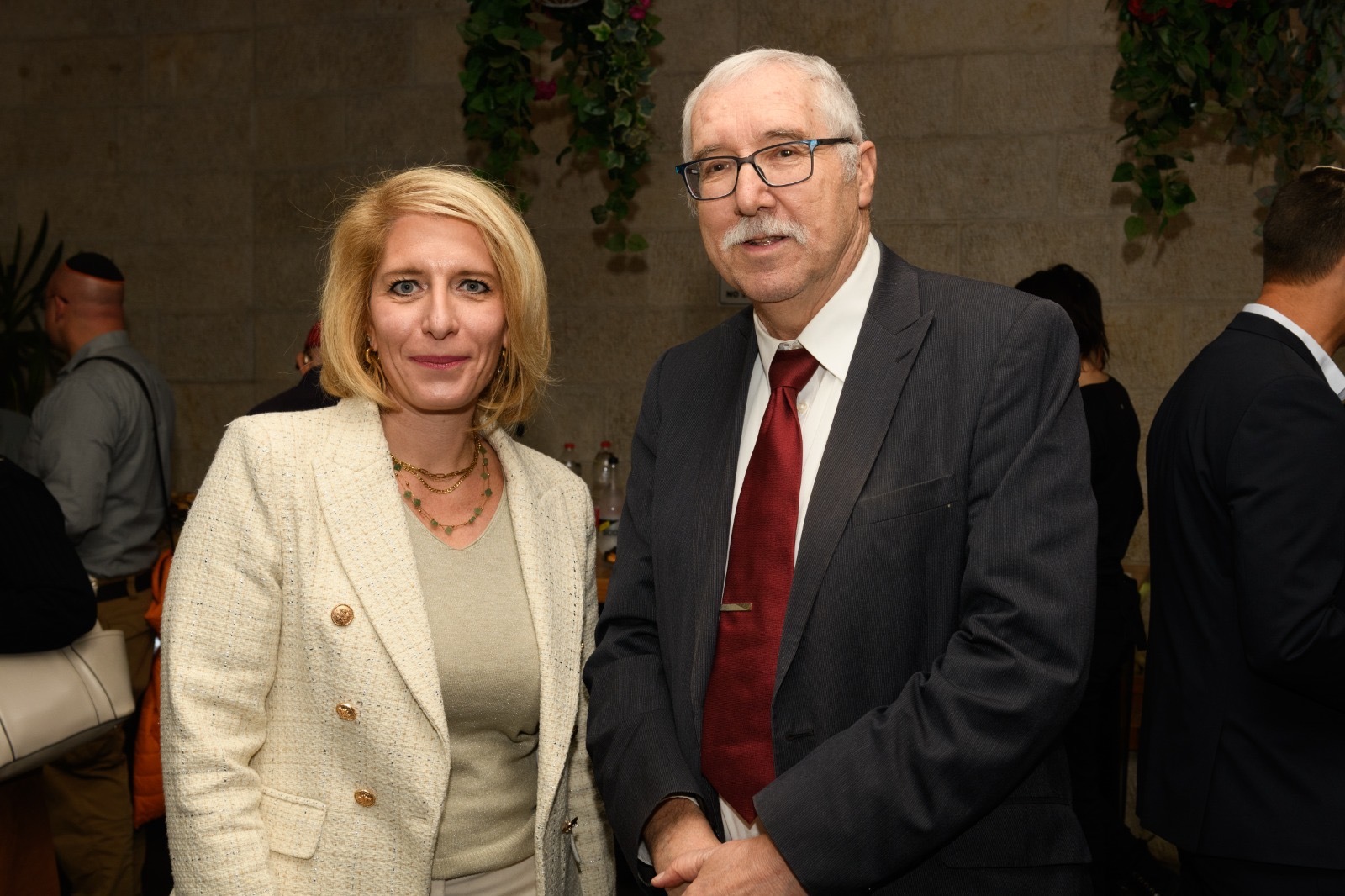
NGO Monitor President Gerald Steinberg is set to step down in January, 25 years after founding the Jerusalem-based watchdog group focused on scrutinizing nonprofit organizations critical of Israel and their funding sources, Jewish Insider’s Tamara Zieve reports. Olga Deutsch, 47, currently NGO Monitor’s vice president, will succeed Steinberg following a months-long transition process at the organization, which since its inception has been closely associated with its founder.
Passing the baton: Steinberg, 74, who resigned from his position as a professor of political science at Bar-Ilan University seven years ago, told JI, “There is a point in one’s life where one has to decide the different priorities. And I’ve done this long enough, and other people can have more energy and can take over.” Deutsch told JI that she hopes to “open the next exciting chapter,” while preserving the “character of the organization that Gerald created, which is serving as pioneers and continuing to flag the new fronts through which the Jewish state and the Jewish people are being attacked or put in danger.”
Worthy Reads
Abe as Mentor: In eJewishPhilanthropy, William Daroff, the CEO of the Conference of Presidents of Major American Jewish Organizations, eulogizes former Anti-Defamation League head Abe Foxman, who died on Sunday. “He combined toughness and warmth in a way few leaders can. He expected seriousness. He spoke with moral clarity. He pushed younger Jewish leaders to think bigger about our responsibility to the Jewish people and the broader democratic society in which we live. He also challenged me, usually in private, though occasionally in the public pages of newspapers. Abe Foxman knew exactly when to make a point, and exactly how to make it land.” [eJP]
Miller Lite: The Atlantic’s Michael Scherer and Nick Miroff spotlight the waning influence of Stephen Miller in the second Trump administration. “White House insiders said that Miller remains a top adviser to the president, that he has a singular relationship to Trump built over the past decade, and that his job is not in jeopardy. Immigration enforcement remains a central theme of the administration and is expected to feature prominently in Trump’s midterm-election messaging. … But Trump, who has previously joked that Miller’s ‘truest feelings’ are so extreme that they should not be aired publicly, has also told others in recent weeks that he understands Miller sometimes goes too far, advisers told us.” [TheAtlantic]
Word on the Street
President Donald Trump said that the ceasefire with Iran was on “life support” following Washington’s rejection of Tehran’s latest response to the U.S. proposal to end the war, Jewish Insider‘s Emily Jacobs reports…
CNN looks at efforts by Iran to recruit operatives in Europe to carry out attacks on Jewish targets…
The United Arab Emirates reportedly carried out strikes on Iran during the active military campaign launched by the U.S. and Israel, targeting among other things an oil refinery on the Lavan Island in the Persian Gulf…
U.S. Ambassador to Israel Mike Huckabee, speaking at the Tel Aviv Conference today,confirmed that Israel sent missile-defense batteries and operating personnel to the UAE during the war with Iran…
The Financial Times spotlights Iran’s “mosquito fleet” of Islamic Revolutionary Guard Corps fast-attack boats that are engaging commercial and military vessels in the Strait of Hormuz…
Rep. Pat Ryan (D-NY) and 17 other Democrats introduced a bill to ban further funding for military operations against Iran…
Trump nominated Cameron Hamilton to head FEMA, a year after Hamilton, who mounted a failed 2024 bid for Congress, was fired as the interim head of the agency…
Kevin Warsh is expected to be confirmed as the next head of the Federal Reserve as early as tomorrow…
Trump invited several business leaders to join him on his trip later this week to China, including Elon Musk, outgoing Apple CEO Tim Cook, BlackRock’s Larry Fink, Meta’s Dina Powell McCormick, Goldman Sachs’ David Solomon, Citi’s Jane Fraser and Blackstone’s Stephen Schwarzman, among others…
Trump announced the nominations of Kari Lake, the former head of the U.S. Agency for Global Media, and Pennsylvania state Sen. Doug Mastriano to be, respectively, the ambassadors to Jamaica and Slovakia…
Former Rep. Billy Long (R-MO), who has been nominated to be U.S. ambassador to Iceland, shared a three-minute clip of a speech by neo-Nazi influencer Nick Fuentes on X on Sunday, Jewish Insider’s Marc Rod reports…
The New York Times spotlights the work of Fuentes’ acolytes to build on the antisemitic conspiracy theorist’s political movement, an effort that coalesced around a conference of influencers and fringe candidates from both parties in a sparsely attended summit; the low turnout was attributed in part to the absence of Fuentes, who distanced himself from the gathering…
Puck News does a deep dive into the recent layoffs at Ben Shapiro’s Daily Wire, finding that the recent decision to cut approximately 20% of the company’s staff was fueled by a combination of internal business disagreements and the “‘vibe shift’ among the MAGA base” that has divided conservatives in recent years…
A judge in Santa Clara County, Calif., ordered a Jewish prosecutor to recuse himself from a case against anti-Israel student protesters at Stanford University after the prosecutor described the incident as antisemitic in campaign literature, Jewish Insider’s Haley Cohen reports…
The Wall Street Journal’s Shira Kaplan reflects on the sanctity of Shabbat following President Donald Trump’s call for the American Jewish community to observe a “national Sabbath” this weekend…
Daniel Septimus is departing Sefaria after 13 years atop the organization, eJewishPhilanthropy’s Jay Deitcher reports…
Australian Jewish musicians testifying on Tuesday before the country’s royal commission into antisemitism in the country detailed the yearslong ostracization they experienced from the arts community for their support for Israel…
Israeli journalist Haviv Rettig Gur breaks down the “obvious propaganda” in a recent New York Times opinion piece by Nicholas Kristof about alleged Israeli abuses of Palestinian prisoners…
Former Israeli hostage Rom Braslavski, who was one of the last hostages to be freed after spending more than 700 days in Hamas captivity, called for the resignation of all members of the current Israeli government, whom he called “miserable cowards”…
Israel’s Civil Commission on October 7 Crimes Against Women and Children released its comprehensive report on sexual violence during the Oct. 7, 2023, Hamas terror attacks and during hostages’ time in captivity…
The Knesset passed, with the support of 93 of the body’s 120 lawmakers, a law establishing a military tribunal to try terrorists who took part in the Oct. 7 attacks…
E.U. member states unanimously voted to sanction Hamas leaders as well as Israeli settlers in a bid to target extremism; the vote came after Hungary, no longer under the leadership of Viktor Orbán, removed its longstanding opposition to the measure…
Israel denied entry to YouTuber Tyler Oliveira, who in recent months has posted videos suggesting that Jews were “invading” communities in New York and New Jersey…
The Israeli soldier photographed desecrating a statue of the Virgin Mary in a southern Lebanese village was sentenced to three weeks in a military prison, while the soldier who took the photo received a sentence of two weeks…
Iran executed a graduate student convicted of spying on behalf of the CIA and Mossad; Erfan Shakourzadeh, who attended the prestigious Iran University of Science and Technology, denied the charges in a letter written before his execution…
Pic of the Day

Ukrainian President Volodymyr Zelensky (left) met in Kyiv earlier today with Palantir CEO Alex Karp.
Birthdays

Acclaimed architect and master planner for the World Trade Center site in Lower Manhattan, he also designed the Jewish Museum in Berlin, Daniel Libeskind turns 80…
Israeli agribusiness entrepreneur and real estate investor, he was chairman and owner of Carmel Agrexco, Gideon Bickel turns 82… Former member of the California state Senate for eight years, following six years as a member of the state Assembly, Lois Wolk turns 80… Chairman of the Israel Paralympic Committee, he served for four years as a member of the Knesset for the Yisrael Beiteinu party, Moshe “Mutz” Matalon turns 73… Former Washington correspondent for McClatchy and then the Miami Herald covering the Pentagon, James Martin Rosen turns 71… SVP and deputy general counsel at Delta Air Lines until 2024, now chief legal officer at private aviation firm Wheels Up, Matthew Knopf turns 70… Professor at Emory University School of Law, he has published over 200 articles on law, religion and Jewish law, Michael Jay Broyde turns 62… Actress known for her role as Lexi Sterling on “Melrose Place,” she also had the lead role in many Lifetime movies, Jamie Michelle Luner turns 55… Founder of strategic communications and consulting firm Hiltzik Strategies, Matthew Hiltzik turns 54… Communications officer in the D.C. office of George Soros’ Open Society Foundations until last year, Jonathan E. Kaplan… First-ever Jewish governor of Colorado, he was a successful serial entrepreneur before entering politics, Jared Polis turns 51… Professor of mathematics at Bar-Ilan University and a scientific advisor at the Y-Data school of data science in Israel, Elena Bunina turns 50… Italian politician, she is the first-ever Jewish mayor of Florence, Sara Funaro turns 50… Israeli pastry chef and parenting counselor, she is married to former Israeli Prime Minister Naftali Bennett, Gilat Ethel Bennett turns 49… Author, blogger and public speaker, Michael Ellsberg turns 49… Senior advisor at Accelerator for America Action, Joshua Cohen… Technology and social media reporter at Bloomberg, Alexandra Sophie Levine… Executive director of government affairs at BridgeBio, Amanda Schechter Malakoff… A government affairs and public policy manager for YouTube, Erica Arbetter… Haifa-born actress and model, she is known for her lead roles in seven films since 2014, Odeya Rush turns 29…
The pro-Israel Democratic group is boosting party-backed Johnny Garcia, who finished second to Maureen Galindo in primary
Getty Images
Voting booths stand ready for use in a U.S. election.
Democratic Majority for Israel’s political arm is kicking off an ad campaign on Tuesday to boost Johnny Garcia, a sheriff’s deputy in Bexar County, Texas, in his Democratic runoff election later this month against Maureen Galindo, a San Antonio activist who has faced scrutiny for trafficking in antisemitic tropes.
“It’s not about what politicians say. It’s about what they do,” a new mailer from DMFI PAC says, while touting Garcia’s pledges to cut healthcare costs and invest in public schools as well as his background in law enforcement. “Johnny Garcia has always stood up and fought for working people across Texas.”
The mailer, first shared with Jewish Insider, is part of a six-figure expenditure, a spokesperson for DMFI PAC confirmed.
With two weeks until the May 26 runoff, DMFI PAC is now prioritizing the race for Texas’ redrawn 35th Congressional District, a red-leaning open seat in the San Antonio area that national Democratic leaders believe could be competitive in November, depending on the nominee.
“Democrats need candidates who can build broad coalitions and win in November,” Brian Romick, the chair of DMFI PAC, told JI. “Johnny Garcia is a coalition builder who supports a strong U.S.-Israel relationship and has been clear in standing against antisemitism. His opponent, on the other hand, proudly embraces vile, antisemitic conspiracies and if she advances could put a Democratic House majority at risk.”
The mailers come as Galindo receives some unexpected help from a new pop-up super PAC linked to Republicans, called Lead Left PAC, that is spending in the race to bolster her bid, recent filings show, raising suspicions that the GOP is meddling in a Democratic contest to prop up a weaker candidate.
The group, whose website metadata links to an “America First” portal aligned with Republicans, is dropping $43,000 in mailers supporting Galindo. It has not yet disclosed its donors even as it also invests in other Democratic races across the country.
Both DMFI PAC and the Democratic Congressional Campaign Committee, which is backing Garcia, have criticized the effort. Lead Left PAC did not respond to a request for comment.
Despite spending virtually no money, Galindo, who gained prominence on social media while promoting a range of conspiracy theories about Jews and Israel, narrowly finished first in the crowded March primary with 29% of the vote, two points ahead of Garcia, who placed second.
During the race, Galindo has said that Jews “own Hollywood” and “worship the synagogue of Satan,” railed against Israeli “blood money” and amplified baseless claims that the Department of Homeland Security is based in Tel Aviv, among other extreme remarks that were first surfaced by JI in March.
Asked to comment on her antisemitic social media activity, Galindo told The Washington Free Beacon last week that “billionaire Zionists and their puppet journalists are FAKE Jews who create antisemitism to harm and harvest off the real Jews.”
“We must end Zionism to protect the Jews and Semites,” she added in a statement, echoing recent comments to JI in response to questions about her rhetoric.
Last week, the DCCC added Garcia to its “Red to Blue” program for House candidates competing in battleground districts. The decision to intervene late in the contested race underscores how party officials see Galindo’s baggage as an impediment to claiming a potentially winnable seat, even in what is expected to be a wave year for Democrats.
For the GOP, which is fielding two candidates in the runoff, such baggage could be an asset, as Lead Left’s recent intervention — and pushback from Garcia and his allies — has suggested.
In a statement, Madison Andrus, a DCCC spokesperson, accused Republicans of “uplifting an openly antisemitic candidate to boost their dwindling chances.”
The nonpartisan Cook Political Report has ranked the election “likely Republican,” though other experts have called it a toss-up as Republicans face a difficult national political environment amid rising gas prices tied to the broadly unpopular U.S.-Israeli war in Iran.
The vote was the latest defeat by anti-Israel activists within the Democratic National Committee
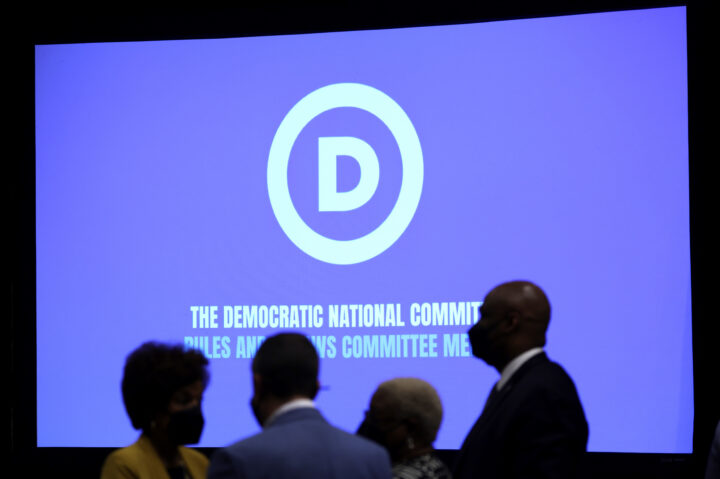
Alex Wong/Getty Images
Committee members wait for the beginning of a meeting of the Democratic National Committee’s Rules and Bylaw Committee in Washington, DC
Democratic Party activists on Thursday voted to reject a measure that criticized the involvement of AIPAC in Democratic primaries and the American political system.
The resolution was debated during a meeting of the Democratic National Committee’s Rules Committee at the DNC’s New Orleans meeting. Committee members were considering new policy resolutions, including one introduced by a Florida activist that took aim at AIPAC and the group’s “undue influence over democratic debate and policymaking.” It was voted down in a voice vote.
“The DNC made clear today that all Democrats, including millions who are AIPAC members, have the right to participate fully in the democratic process,” AIPAC spokesperson Deryn Sousa told Jewish Insider.
Jewish Democratic advocates who were in the meeting room praised the decision.
“We’re pleased that the resolution that wrongly singled out AIPAC was defeated, and that the other anti-Israel resolutions failed to move forward. These measures would be a gift to Republicans, would further fracture our party and do nothing to bring Israelis and Palestinians closer to peace,” Democratic Majority for Israel CEO Brian Romick, who attended the meeting, told JI after the vote.
Halie Soifer, the CEO of the Jewish Democratic Council of America, said the group agrees with the goal of getting dark money out of politics but that AIPAC should not be targeted explicitly.
“We agree with the rejection of dark money in politics — a topic covered in another more expansive resolution adopted by the committee — but also believe that singling out any individual organization is both unproductive and unnecessarily divisive,” Soifer, who also attended the meeting, told JI.
Earlier in the meeting, the committee voted to support a measure “condemning the influence of dark money in the 2026 Democratic primary elections” that called out the artificial intelligence and cryptocurrency industries.
The vote by the DNC’s resolutions committee comes as the Democratic Party faces growing internal strife about its long-standing support for the U.S.-Israel relationship, as some party activists seek to push the group to the left. A new Pew Research Center poll released this week revealed that 80% of Democrats and Democratic-leaning independents have an unfavorable view of Israel — an increase from 69% who said the same last year.
Two other resolutions that touched on Israel-related issues were referred to a working group on the Middle East that DNC Chair Ken Martin created last summer to help smooth over some of the party’s fissures on the Israeli-Palestinian conflict.
One of these referred to Israel’s actions in Gaza as a genocide and called for conditioning U.S. military aid to Israel, and the other called for de-escalation in Iran and Gaza. A third resolution on the Middle East, condemning the U.S. missile strike that hit a girls’ school in Iran and killed at least 165 people, passed.
The ad portrays the repeat Congressional candidate, running to succeed Rep. Darrell Issa (R-CA), as a perennial flip-flopper

Sandy Huffaker/Getty Images
Ammar Campa-Najjar (D-CA) speaks during a 2018 campaign rally at Grape Day Park in Escondido, Calif.
The pro-Israel group Democratic Majority for Israel’s super PAC launched its first ad of the 2026 campaign, targeting frequent Democratic candidate Ammar Campa-Najjar, accusing him of hypocrisy and of flip-flopping on his positions.
The ad, set to air on television, contrasts past comments by Campa-Najjar about whether he would work with President Donald Trump or support his impeachment with his current hostile stance toward the president — running now in a bluer district.
It also highlights past inconsistencies in his stance on abortion — he once opposed it in all cases, but later described himself as pro-choice.
“Ammar Campa-Najjar has been a DSA-backed candidate whose record of flip-flops on Trump, impeachment, and abortion makes clear he will say whatever it takes to get elected, and voters in CA-48 see right through it,” DMFI president Brian Romick said in a statement.
DMFI is backing San Diego City Council member Marnie von Wilpert for the open seat, which was redrawn to favor Democrats. Rep. Darrell Issa (R-CA), who currently represents the district, is retiring from Congress.
Campa-Najjar, who was born in California and raised in Gaza, is the son of a Palestinian Authority official. He has run unsuccessfully for Congress two times before, losing to Issa by eight points in 2020 and losing to former Rep. Duncan Hunter (R-CA) in 2018.
He is the boyfriend of Rep. Sara Jacobs (D-CA), who represents a nearby southern California district.
Romick and DMFI argued that nominating Campa-Najjar would endanger Democrats’ chances of winning the seat. It’s making a similar case in two other GOP-held swing districts the group is hoping to help flip.
“A candidate who can’t hold a consistent position on the most basic issues isn’t just untrustworthy, he’s unelectable,” Romick continued. “DMFI PAC’s Majority Project is fighting to take back the House, and that means making sure seats like CA-48 are won by candidates with the credibility to actually deliver. Campa-Najjar is not that candidate.”
The pro-Israel Democratic group warns that nominating far-left candidates will cost the party winnable seats against GOP incumbents

Daniel Knighton/Getty Images
City of San Diego Councilmember Marni von Wilpert rides in the Port of San Diego Holiday Bowl Parade on December 28, 2022 in San Diego, California.
As Democratic Majority for Israel prepares for the midterms amid growing divisions in the party over Middle East policy, the pro-Israel group is now focusing much of its energy on three under-the-radar House races for swing seats in California and Colorado that could be key to the party’s chances of reclaiming the majority in Congress.
In those primaries, DMFI’s political arm recently endorsed a trio of relatively moderate, pro-Israel Democrats facing opponents whom, the group feels, have demonstrated anti-Israel records or questionable positions on Middle East policy — qualities that could hamper their odds of winning Republican-held districts in the November election.
“These definitely rank high on our list of priorities,” Brian Romick, DMFI’s president and the chair of its super PAC, said in an interview with Jewish Insider on Tuesday. “These are all strong places where this matters.”
DMFI’s political arm is backing Marni von Wilpert, a San Diego councilwoman seeking the nomination in California’s 48th Congressional District; Jasmeet Bains, a California assemblywoman and a physician competing in the state’s 22nd District; and Shannon Bird, a former Colorado legislator running to unseat a vulnerable freshman Republican in the state’s 8th District. The nonpartisan Cook Political Report has ranked each of the races as “toss-ups” in its election forecast.
“We think all three of these candidates are strongly pro-Israel and have great relationships and records with the community,” Romick noted, calling them “the kind of candidates we need who can win both primaries and generals” and “hold these seats over the long term.”
DMFI’s efforts underscore how the organization is choosing to highlight consequential races in which the interests of Democratic Party leaders converge with its own, a notable alignment during a moment when Israel — and outside spending from pro-Israel groups — has emerged as one of the most polarizing sources of internal conflict in reliably blue districts.
One of DMFI’s “major goals” this cycle, Romick explained, is to “both elect pro-Israel candidates and help Democrats take back the House,” citing Republicans’ narrow three-seat majority as partly motivating its calculus. “If we win these three seats, then Democrats are in the majority with pro-Israel candidates.”
“I don’t think that anyone else is in that lane, and I think that’s an important distinction for us,” he told JI.
Romick declined to share if DMFI PAC plans to invest in the three primaries, following election cycles in which the group has spent heavily to help unseat vocally anti-Israel Democrats in deep blue House districts. “Possibly,” he hinted. “But I don’t want to show my hand.”
Here’s a rundown on the state of play in those races:
San Diego showdown
In California’s 48th District, redrawn last year to give Democrats an edge, von Wilpert is running in a crowded open primary to replace Rep. Darrell Issa (R-CA), who has long been a fixture in state and national politics. Her top opponent in the June race, Ammar Campa-Najjar, twice unsuccessfully competed for the seat in 2018 and 2020 — and is familiar to voters as a perennial candidate in a district covering the San Diego area.
Campa-Najjar outraised the field in the last quarter of 2025 and has claimed endorsements from a range of House members — including his girlfriend, Rep. Sara Jacobs (D-CA).
During his race against Issa in 2020, Campa-Najjar, who is of mixed Palestinian and Mexican-American descent, stressed support for Israel as an important strategic partner, broadly aligning with mainstream Democratic sentiment regarding Middle East policy. He said in a candidate questionnaire solicited by JI at the time, for instance, he believed the U.S. should maintain foreign aid to Israel.
In a statement to JI on Tuesday, Campa-Najjar said his “Middle East foreign policy remains consistent,” arguing that the “United States must help broker a lasting peace to end the bloodshed between Israelis and Palestinians.”
“As a new member of Congress, I’ll put forward a meaningful agenda for the day after that promotes a stable, secure, and prosperous future for both Israel and Palestine,” he continued. “That future is only possible with new leadership, with Palestinians no longer under Hamas rule and the Israelis no longer burdened by Netanyahu’s failures,” he added, in a reference to the right-wing Israeli prime minister.
Still, Romick echoed other critics of Campa-Najjar in noting that the candidate had previously changed his positions on key issues as part of a conservative makeover in his last election, raising questions over his commitment to upholding support for Israel as a lawmaker.
“He’s on record as anti-Trump. He’s on record as pro-Trump,” Romick said. “You never know what you’re going to get and that’s obviously dangerous when people shift a lot on Israel.”
Andrew Lachman, the political committee chair of California Jewish Democrats, said his organization reviewed questionnaires from both candidates and concluded that von Wilpert’s record in backing Jewish community causes was more substantive. The group gave von Wilpert a rating of “strong support” and is “neutral” on Campa-Najjar.
“Campa-Najjar seems interested in building a relationship with the Jewish community, but with respect to a record of resolutions and legislation to support the Jewish community, von Wilpert had a voting record and a record of supporting the Jewish community that was much more clearly defined,” he told JI.
For her part, von Wilpert said in a statement to JI that she “strongly” supports “Israel’s right to exist as a secure, Jewish democratic state and defend itself from the real threats it faces.”
“To me, ensuring Israel’s security and building peace for all in the region, including getting the two-state solution back on track, are inseparable, and U.S. leadership is indispensable to achieving both outcomes,” she added. “Only when a nation feels safe and secure, can it take the necessary steps to make peace.”
Both von Wilpert and Campa-Najjar are endorsed by J Street, the progressive Israel advocacy group.
Last week, Jim Desmond, a Republican member of the San Diego County Board of Supervisors, also filed to run for the seat that is now being vacated by Issa.
Under the newly drawn district lines, former Vice President Kamala Harris would have narrowly defeated President Donald Trump by three points.
Bakersfield battle
In a GOP-held district hours north of San Diego that includes part of Bakersfield, Bains is facing off against a progressive rival, school board trustee Randy Villegas, to challenge Rep. David Valadao (R-CA), who took office in 2021 but is now confronting a difficult national environment for Republicans. .
Villegas has gained endorsements from some of the most prominent Israel critics in Congress, including Sen. Bernie Sanders (I-VT) as well as Reps. Pramila Jayapal (D-WA) and Ro Khanna (D-CA), along with the virulently anti-Israel AIPAC Tracker, which said in a social media post that Villegas had signed on to a January 2024 letter pressing for “an immediate ceasefire in Gaza and to end the weaponization of antisemitism claims against Israel’s critics.”
“In Congress, Randy will fight to end the flow of unconditional military aid to Israel that fuels the ongoing genocide in Gaza and ethnic cleansing in the West Bank,” AIPAC Tracker said in its January endorsement. “He is ready to champion a foreign policy that centers human rights over militarism.”
Villegas’ campaign did not respond to a request for comment about his foreign policy views concerning Israel.
Speaking with JI, Romick characterized Villegas as “the most obvious” source of concern for pro-Israel Democrats among the three primaries that DMFI is now eyeing, referring in part to his early demand for a ceasefire just a few months after the Oct. 7 Hamas attacks. “He consistently has an anti-Israel record,” Romick said.
Lachman, meanwhile, said his group had not yet weighed in on the primary. “I do know that Bains has a reputation as a fighter for progressive values, but one who can build coalitions in order to sustain them,” he told JI. “Whereas, I don’t think Villegas is known for that.”
In a statement shared with JI on Tuesday, Bains said she believes “in Israel’s right to exist, defend itself and live in peace as a secure nation.”
“As a doctor,” she pledged, “my priority will always be protecting all human life and for that we must ensure advancing lasting peace. That’s why I believe a two-state solution is a necessary path forward to ensure long-term security and the dignity of people across the region.”
Valadao, for his part, is backed by AIPAC, which calls the congressman “a steadfast supporter of the U.S.-Israel alliance throughout his six terms representing the Golden State’s Central Valley.”
Colorado clash
Meanwhile, in a Colorado House race to take on Rep. Gabe Evans (R-CO), two Democrats are vying for their party’s nomination with differing records of public commentary on Israel as well as the rise of antisemitism.
Bird, who resigned from the Colorado legislature in January to focus on her congressional bid, has long been vocal in her support for Israel and opposition to antisemitism, which she recently called a “global cancer” after the terror attack targeting the Jewish community in Bondi Beach, Australia late last year.
During the war in Gaza, she frequently highlighted the plight of hostages on social media while issuing statements standing with Israel. “Lessons learned from history make clear that the world must stand with and protect Israel,” she wrote in one X post in 2024. Bird’s campaign did not return a request for comment from JI.
By contrast, her chief rival in the June primary, Manny Rutinel, a progressive state representative, has condemned recent instances of antisemitism — but does not appear to have clarified his stances on key issues regarding Israel.
While he has garnered endorsements from some pro-Israel House members such as Reps. Adriano Espaillat (D-NY) and Rob Menendez (D-NJ), his past record of activism has raised some concerns among pro-Israel Democrats who privately worry he will assume a hostile approach to Israel if he is elected. Republicans have indicated that they are eager to run against him in the general election.
As an undergraduate at the University of Florida, for example, Rutinel attended a demonstration in 2014 that was co-organized by Students for Justice in Palestine, the extreme anti-Israel group that has recently expressed alignment with Hamas, according to a local news story covering the event at the time.
The campus demonstration was “aimed to raise awareness for police brutality in Ferguson, Mo., and military oppression in Palestine,” the article noted.
In a statement to JI, however, a spokesperson for Rutinel said he “has never affiliated with Students for Justice in Palestine.”
“While in college at the time of the Ferguson protests, he attended a demonstration to protest police brutality in the United States,” the campaign spokesperson explained. “Manny supports Israel’s right to exist and supports a two-state solution with secure borders to bring peace.”
Rutinel also “supports U.S. security assistance to Israel in line with the Obama administration’s 2016 memorandum of understanding,” the spokesperson added, when asked about his views on conditioning aid to Israel, which has become a litmus test of sorts for left-wing candidates.
Evans, an Army veteran endorsed by AIPAC, has cited his service in the Middle East as motivating his staunch support for Israel and opposition to a nuclear Iran. The first-term congressman is viewed as one of the most vulnerable House Republicans seeking reelection in a district north of Denver.
The resolution also criticizes Paul Ingrassia, a Trump administration official who said in a group chat that he has a ‘Nazi streak’
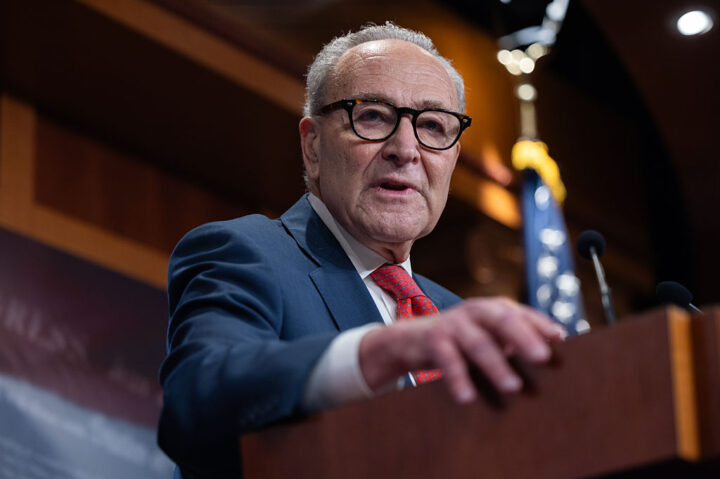
Nathan Posner/Anadolu via Getty Images
Senate Minority Leader Chuck Schumer (D-NY) speaks at a press conference following recent elections as the government shutdown continues in Washington, DC on November 5, 2025.
Senate Minority Leader Chuck Schumer (D-NY) and nearly all Senate Democrats are set to introduce a resolution on Monday condemning neo-Nazi influencer Nick Fuentes, Tucker Carlson for hosting Fuentes on his show.
The legislation also highlights that Heritage Foundation President Kevin Roberts defended Carlson and Fuentes and notes that the Trump administration nominated an official who expressed affinity for the Nazis, referring to Paul Ingrassia.
The resolution comes weeks after Carlson’s friendly sit-down with Fuentes prompted a reckoning in the conservative movement over antisemitism on the far right and its normalization in certain circles. Schumer reportedly sought Republican backing for the resolution, but no Republicans have signed on at this point.
The resolution outlines Fuentes’ long history of overt antisemitic activity, as well as the series of antisemitic comments that Fuentes repeated on Carlson’s podcast. It highlights Carlson’s failure to “push back on or reject the claims made by Fuentes” and that Carlson “at times even validat[ed] his framing.” It also notes that Carlson was a keynote speaker at the 2024 Republican National Convention.
The legislation states that the Senate “strongly rejects the views of and platforming of Nick Fuentes” and “condemns the effort by Tucker Carlson to platform and mainstream Nick Fuentes.”
The resolution also specifically highlights that Roberts posted a video defending Carlson and attacking those criticizing him — accusing Roberts of employing “antisemitic dog whistles” — as well as for refusing to take down the video even as he as apologized for portions of it.
It calls on “all elected officials, thought leaders and community leaders to reject and condemn white supremacy and antisemitism whenever and wherever they occur.”
And it highlights that President Donald Trump nominated Paul Ingrassia — who said in an unearthed group chat that he has a “Nazi streak in me from time to time” — for an administration post and has since named him to a different role in the administration after his nomination was withdrawn. The resolution does not specifically name Ingrassia.
The resolution is being sponsored by every Senate Democrat.
The legislation has been supported by a series of Democratic-affiliated and progressive-minded Jewish groups, including Democratic Majority for Israel, the Jewish Council for Public Affairs, the Jewish Democratic Council of America, Jewish Women International, the Union for Reform Judaism, Hadassah and the National Council of Jewish Women.
“The platforming of individuals who promote hateful, antisemitic, and white supremacist rhetoric is dangerous and entirely at odds with American values,” JWI CEO Meredith Jacobs said in a statement. She said that Congress “must forcefully condemn any attempt to mainstream antisemitism” and other hatred and “the fact that such condemnation is not universal underscores the very real and present danger that these ideologies are gaining ground in our society.”
JCPA CEO Amy Spitalnick said that antisemitic and white supremacist extremism “threatens every single one of our communities and the core of our democracy – yet we’ve seen political leaders continue to embrace and platform this deadly hate and those who peddle it, like Nick Fuentes” and urged all senators to support the resolution.
DMFI urged the Senate to “send a powerful message that there is no place for these hateful ideologies in our society by passing this measure.”
Halie Soifer, the CEO of JDCA, condemned Republicans for not signing onto the resolution.
“This issue should not be partisan, yet not one Republican has joined this resolution, and the President of the United States has refused to condemn Fuentes, Tucker Carlson’s platforming of Fuentes, and the hate they’ve espoused,” Soifer said in a statement. “We’re deeply concerned about Republicans placing politics above efforts like this one to combat white nationalism, antisemitism, and hate, and strongly encourage them to join this effort.”
UPDATE: This article was updated to reflect that the legislation’s findings highlight Heritage Foundation president Kevin Roberts’s defense of Carlson and Fuentes but the resolution does not specifically condemn him.
As political activists reflect on Mellman’s life, several Jewish Democrats told JI that his clear-eyed support for Israel — and his ability to articulate its strategic importance to Democrats — will leave a lasting impact on the party

Tom Williams/Roll Call/Getty Images
Mark Mellman
In the wake of Mark Mellman’s death last week, the longtime Democratic pollster is being remembered for his leadership of Democratic Majority for Israel, an advocacy group he helped launch in 2019 to counter a growing hostility toward Israel on the left, a value proposition that proved prescient.
But his role leading the group, in what turned out to be the capstone to his decades-long career, was serendipitous — and almost didn’t happen.
The group’s founding board members “reached out to Mark for advice on who we should hire,” one of the board members, speaking anonymously to discuss the details of the group’s founding, told Jewish Insider. “And Mark said, ‘I’ll do it.’ We went, ‘OK.’ We weren’t expecting that.”
San Francisco Democratic fundraiser Sam Lauter, a former AIPAC activist who has been involved with DMFI from the beginning, said Mellman’s role atop DMFI gave the group “instant credibility.” Weeks later, Mellman was weighing in on a series of tweets from then-freshman Rep. Ilhan Omar (D-MN) that trafficked in antisemitic tropes.
As political activists reflect on Mellman’s life, several Jewish Democrats told JI that his clear-eyed support for Israel — and his ability to articulate its strategic importance to Democrats — will leave a lasting impact on the party.
“He really worked hard to help candidates understand why the U.S.-Israel relationship was so important, why it was important to the United States [and] why it was important to support that relationship,” said former Rep. Kathy Manning (D-NC), who became DMFI’s board chair this year. “I think he brought clarity to that discussion whenever he had it, and he was unequivocal about it. I think that helped a lot of people think about how you talk about the relationship to people who don’t necessarily understand it or don’t support it.”
While Mellman, who died at 70 last Thursday of pancreatic cancer, has long been involved in Jewish causes and conducted research for Jewish groups, that only became his bread-and-butter in the final years of his life. Over a decades-long career as a leading pollster, he helped elect prominent Democrats across the country.
“As someone who has come up through Jewish Democratic politics professionally over the past two decades, there’s no bigger giant in the field,” said Aaron Keyak, who most recently served in the Biden administration as deputy antisemitism special envoy.
Mellman worked for 30 U.S. senators and over two dozen members of Congress, and he advised Israeli politician Yair Lapid and his Yesh Atid party. Nate Silver, the founder of the polling website FiveThirtyEight, once called Mellman the most accurate pollster in the country. Mellman was the chief pollster for John Kerry’s presidential campaign against George W. Bush in 2004.
According to those who knew him, he never wavered on his core values. He spoke publicly about turning down requests from Democrats who didn’t align with his positions in support of abortion access and gun control. Most of all, he stuck to his support for Israel.
“He’s as blue of a Democrat as anyone, and also understands that just because you identify as a member of the Democratic Party doesn’t mean you need to support everything all Democrats do, or even specific candidates that are nominated by the party,” said Keyak. “He’s someone who is true to his convictions in a time when far too many in Washington, D.C., shape their policy beliefs based off of the individual politician that the party has nominated.”
Last year, Mellman and DMFI invested heavily to challenge anti-Israel Democratic incumbents Jamaal Bowman (D-NY) and Cori Bush (D-MO). The group’s efforts prevailed.
“Success in this profession and in this industry is not an easy place to achieve, and very few people achieve it and hold on to their integrity and their ethics and just still be a mensch,” Lauter said. “Accompanying all the ability that he had, Mark was a mensch.”
Stevens, who is running as the mainstream Democrat in the race, welcomed support this week from the group Democratic Majority for Israel
DOMINIC GWINN/Middle East Images/AFP via Getty Images
Michigan Rep. Haley Stevens speaks at a rally featuring First Lady Dr. Jill Biden during a 2024 campaign event supporting Vice President Kamala Harris in Clawson, MI, during the 2024 presidential election, Monday, Oct. 14, 2024.
As two Democratic Michigan Senate candidates compete for the votes of anti-Israel voters with accusations of genocide against the Jewish state, Abdul El-Sayed, is going after state Sen. Mallory McMorrow, as insufficiently and inauthentically critical of Israel.
Rep. Haley Stevens (D-MI), meanwhile, is solidifying her support for Israel, receiving an endorsement this week from Democratic Majority for Israel and calling herself a “proud pro-Israel Democrat [who] believe[s] America is stronger when we stand with our democratic allies, confront antisemitism and extremism, and keep our promises to our friends abroad and our working families here at home.”
With significant Arab and Muslim and Jewish constituencies, Israel policy issues are poised to play a significant role in Michigan’s Democratic primary next year.
El-Sayed entered the race as a vocal critic of Israel, while McMorrow, in recent months, has joined him in describing the war in Gaza as a genocide, as well as saying she would support efforts to cut off offensive weapons shipments to Israel.
El-Sayed, in a recent event at Michigan State University, criticized McMorrow for not taking that position sooner, describing allegations of genocide in Gaza as a matter of clear and incontrovertible fact. Video of the comments was published by the Michigan Advance.
He compared McMorrow’s position to someone taking months to decide that the sky is blue and saying, “let me give you five caveats about why it might not be blue.”
El-Sayed also suggested that McMorrow’s positions changed because she was seeking support from AIPAC, and only took a more critical stance on Israel after the group declined to support her. The far-left publication Drop Site alleged that McMorrow had been seeking an AIPAC endorsement earlier in the year and had authored a pro-Israel position paper.
McMorrow’s campaign has denied that she completed a questionnaire for AIPAC and McMorrow said last month she would not accept the group’s support. AIPAC has previously endorsed Rep. Haley Stevens (D-MI), who has maintained her position on Israel, in House races, but has not weighed in on the Senate race.
“When there’s 20,000 kids who died, that’s a genocide,” El-Sayed said in his remarks at Michigan State. “When people who are from the very country that committed — whose government committed that genocide say it’s a genocide, at some point you kind of just gotta be like, ‘Oh it’s a f***ing genocide.’ … “I don’t pretend that when 20,000 babies are murdered by our tax dollars, that there’s hemming and hawing about saying because it’s the truth.” El-Sayed was referring to numbers from the Hamas-run Ministry of Health indicating that almost 20,000 children and teenagers were killed in the war.
He suggested that McMorrow is trying to “package” herself as a progressive changemaker while the “substance” of her policies is “the same old politics.”
Asked last month whether the war in Gaza is a genocide, McMorrow said that it is.
“We have [Israeli Prime Minister] Benjamin Netanyahu trying to tell us what we’ve been seeing with our own eyes is not true,” McMorrow said. “It is true. And two things can be true at once. … The position of the United States should not be that we support Netanyahu with no check and balances.”
Asked about El-Sayed’s criticisms, McMorrow’s campaign referred Jewish Insider to those remarks.
Mellman led campaigns for more than 30 U.S. senators, as well as dozens of members of Congress
Tom Williams/Roll Call/Getty Images
Mark Mellman
Mark Mellman, a longtime Democratic political strategist and former president of Democratic Majority for Israel, died this week after a long illness.
Mellman, CEO of the Mellman Group, led campaigns for more than 30 U.S. senators, including former Senate Majority Leader Harry Reid (D-NV) and Sen. Brian Schatz (D-HI), as well as dozens of members of Congress, including Reps. Steny Hoyer (D-MD) and Seth Moulton (D-MA). He worked on John Kerry’s 2004 presidential campaign and was the former president of the American Association of Political Consultants.
He was also a fixture of election coverage and commentary, analyzing presidential debate performances for PBS and The Wall Street Journal, writing a longtime column for The Hill, and more.
In Israel, Mellman was the longtime advisor to opposition leader Yair Lapid and his Yesh Atid party, including during Yesh Atid’s meteoric rise from a new party to the second-largest in the Knesset in the 2013 election and Lapid’s brief time as prime minister in 2022.
Lapid paid tribute to Mellman as “a friend and a mentor. A man with a huge heart and a wonderful sense of humor. He was also a trusted advisor and a brilliant strategic mind. …He will be sorely missed by me, my family and everyone at Yesh Atid.”
Mellman co-founded Democratic Majority for Israel in 2019 to support pro-Israel Democrats and counter rising anti-Israel sentiment in the party. He led DMFI, one of the first pro-Israel organizations to donate directly to political campaigns, for six years, until he stepped down earlier this year.
Todd Richman, the co-founder and former co-chair of Democratic Majority for Israel, wrote on X, “The news of @MarkMellman passing away is devastating. He will be sorely missed especially within the pro-Israel community. His stature, intellect, knowledge of the issues, his ability to understand trends and his overall credibility helped make @DemMaj4Israel into the powerhouse that it is today.”
“We could not have done this without him,” Richman continued. “I remember when Ann Lewis and I met with Mark just to get additional thoughts on how we can build this organization, and he told us he would like to be the organization’s CEO. Ann and I couldn’t believe it. It was like manna from heaven. DMFI would not be where it is today without him.”
Mellman also worked with AIPAC in 2015 on a campaign against the Iran nuclear deal.
He was an active member of the Kesher Israel synagogue in Georgetown.
Matt Brooks, CEO of the Republican Jewish Coalition, posted on X that he “always had tremendous respect for Mark Mellman.”
Democratic Arizona state Rep. Alma Hernandez called Mellman “a passionate, strong voice for Israel…one sharp, good man and an amazing pollster. Boy, did he know his stuff. … I know the pro-Israel [Democrat] world lost a true leader.”
William Daroff, the CEO of the Conference of Presidents of Major American Jewish Organizations, said, “Mark Mellman never stood on the sidelines. He stood shoulder-to-shoulder with our community and worked to elect leaders who shared his own unwavering commitment to Israel and the Jewish people. He brought strategy, integrity and courage to every fight. I was proud to call him my friend, and our community is stronger because he gave it his voice, his talent and his heart.”
Mellman leaves behind his wife, three children and grandchildren. His funeral will be held on Sunday.
The pro-Israel Democratic group also backed Chris Pappas and Roy Cooper in their battleground Senate races

Carlos Osorio/AP
Rep. Haley Stevens (D-MI) speaks Tuesday, Aug. 2, 2022, at an election night party in Birmingham, Mich.
Democratic Majority for Israel on Thursday announced its endorsements of Reps. Haley Stevens (D-MI), Angie Craig (D-MN) and Chris Pappas (D-NH) and former Gov. Roy Cooper as they seek the Senate seats in their respective states.
Stevens faces a particularly competitive primary against state Sen. Mallory McMorrow and former Wayne County health director Abdul El-Sayed, both of whom have sided with the far left on Israel issues and publicly rejected pro-Israel backing. El-Sayed has attacked Stevens over her pro-Israel stance.
DMFI’s endorsement marks the first formal involvement by a pro-Israel group in the race. AIPAC’s PAC and super PAC, which have previously provided significant support for Stevens, have not yet issued an endorsement.
Craig, another moderate pro-Israel Democrat, also faces a left-wing opponent critical of Israel in Lt. Gov. Peggy Flanangan. Cooper and Pappas, both moderates who have been supportive of Israel, are seen as the clear frontrunners in their primaries.
“Chris Pappas, Haley Stevens, Angie Craig, and Roy Cooper are battle-tested leaders who know how to win tough races, hold the Trump administration accountable, and deliver real results for working families. They’ve stood firm against extremism, antisemitism, and efforts to undermine America’s alliances,” DMFI PAC Chair Brian Romick said in a statement.
“Each is a champion of the U.S.-Israel relationship and a clear-eyed advocate for Israel’s security and the region’s long-term stability.”
“DMFI PAC is proud to support these exceptional candidates, and we’re firmly committed to helping them win their races,” he added.
Stevens, in a statement thanked DMFI for its support.
“I’m honored to have DMFI PAC’s endorsement in this race. As a proud pro-Israel Democrat, I believe America is stronger when we stand with our democratic allies, confront antisemitism and extremism, and keep our promises to our friends abroad and our working families here at home,” Stevens said in a statement. “In the Senate, I’ll keep fighting to protect our democracy, support Israel’s security, ensure the ceasefire holds in Gaza, and deliver for Michiganders in every corner of our state.”
To mark the second anniversary of the Oct. 7 attacks in Israel, the Jewish Insider team asked leading thinkers and practitioners to reflect on how that day has changed the world. Here, we look at how Oct. 7 changed Jewish advocacy
Courtesy Orthodox Union
Members of the Orthodox Union Advocacy Center met with Education Secretary Linda McMahon on Wednesday to discuss federal efforts to counter antisemitism and new legislation promoting school choice, Sept. 17th, 2025
The Ohio Democrat said that withholding aid from Israel would 'undermine' the country 'in a way that is really significant'
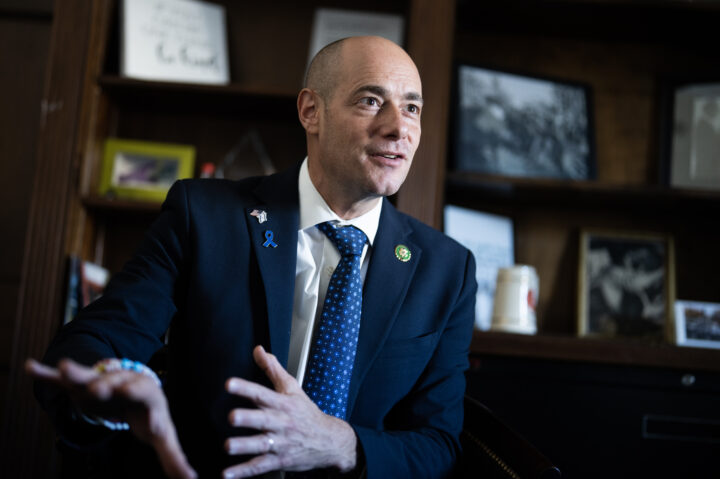
Tom Williams/CQ-Roll Call, Inc via Getty Images
Rep. Greg Landsman (D-OH) is interviewed by CQ-Roll Call, Inc via Getty Images in his Longworth Building office on Friday, November 3, 2023.
Rep. Greg Landsman (D-OH), in a webinar with Democratic Majority for Israel on Tuesday, emphasized that colleagues who push to block aid to Israel or recognize a Palestinian state risk emboldening Hamas, Hezbollah and Iran when they are on their back foot.
Landsman also laid out what he sees as preconditions for rebuilding Democratic support for the Jewish state.
“Saying, ‘We’re going to withhold aid, we’re going to unilaterally call for a Palestinian state’ — which exists where? Is that all of Israel? What are you talking about? — that suggests to Hamas, ‘Maybe we should keep fighting,’” Landsman said. “I don’t think that’s their intent. I think that it’s entirely appropriate to be critical of the government and decisions … without abandoning our ally.”
“Witholding aid does undermine our ally in a way that is really significant,” Landsman continued.
He said he’s trying to push colleagues in that direction. He added later that he believes that the war in Gaza is a “just war,” even if “it needs to come to an end.”
Asked about the longer-term path toward rebuilding Democratic support for Israel, Landsman said that an end to the war and new leadership in Israel would likely be critical steps in that direction.
“Once we get on the other side of this and we have a government that’s really actively pursuing peace, then the path for a lot of these folks who have felt alienated, to come back. I think is pretty clear,” Landsman said.
He added that peace must also come alongside continued efforts to beat back threats. “You do have to take out these terror armies, and you have to marginalize and completely sideline Iran as a threat, which is going to require constant work.”
He said he was encouraged to see the deal put forward by the Trump administration on Monday, arguing that the war “needs to end for a whole host of reasons,” including freeing the hostages and surging aid into Gaza.
“Israel’s standing in the international community has been diminished, which is a key strategy for Hamas. And this is one of the reasons why I think Netanyahu has got to figure out a way to end this war, because Hamas is succeeding at delegitimizing Israel in a way that is really harmful, way more so than anything it could do militarily,” Landsman said. “I think you’ve got to take that off the table, and that means ending the war.”
Landsman also said that “there’s still limited pressure on Hamas to end this war” and called on the Trump administration to employ “maximum leverage, maximum pressure” on the group, including by detaining Hamas leaders in Qatar.
He added that surging aid is “the right thing to do, it’s the Jewish thing to do and it’s also just strategically what has to happen if Israel is going to maintain its standing in the world and continue to get support.”
He said that positive steps are being taken but added that there are “serious issues with UNRWA that the U.N. and the international community have not gotten serious about.”
He also emphasized the need for an Arab-nation compact to bring the war to an end and deradicalize and rebuild Gaza with a new government that seeks peace with Israel.
“Get all 22 of them involved in a very formal and committed, long-term, sustainable way,” Landsman said. “I think that helps achieve the goals that we collectively have for ending this war and getting Gaza to a place where Hamas is gone, the strip is deradicalized and we’re in a position to help them rebuild with a new governing authority that wants peace with the state of Israel.”
Landsman suggested that such an effort could also unlock Arab-Israeli peace.
“An Israel that’s seeking peace is quite popular. I think that’s what [Saudi Crown Prince Mohammed bin Salman] would support. Once this war is over and there is a pathway to peace because these terror armies have been defeated … I think these folks do come back and say, ‘Okay, let’s be part of something,’” Landsman continued.
He said that the Trump administration needs a larger team, working full-time, on pursuing Middle East peace in the longer term. “You’ve got to get ironclad commitments from all of these countries. It’s got to be formal. They’ve got to come together in a formal, sustainable way.”
Without continuous White House pressure and attention, he warned that any peace that is reached is likely to crumble.
The Democratic pro-Israel group is supporting the strike, a split from most congressional Democrats, including other pro-Israel voices

Tasos Katopodis/Getty Images
President Donald Trump
Democratic Majority for Israel suggested in a new searing statement that the Trump administration’s warning to Qatar about the impending Israeli attack in Doha earlier this week may have foiled the effort.
The Democratic pro-Israel group is taking a different approach to the strike than most Democratic lawmakers, who have been highly critical of the operation, with few exceptions.
“After years of criticizing Democrats — despite our party’s 75-year history of supporting Israel — President Donald Trump yesterday broke with our vital ally in an unprecedented manner,” DMFI CEO Brian Romick said in a statement.
“He even went as far as to direct his special envoy to alert Qatar, and in so doing risked alerting Hamas, about the attack,” Romick said. “The White House must answer whether their pre-warning of the attack in any way compromised Israel’s ability to eliminate Hamas’ terrorist leadership.”
Trump said in a statement on Truth Social that he “immediately directed Special Envoy Steve Witkoff to inform the Qataris of the impending attack, which he did, however, unfortunately, too late to stop the attack.” Qatari officials have said that the U.S. warning came while the strike was underway and explosions had already begun; another U.S. official told Axios the same.
Romick also criticized Trump for breaking publicly with Israel over the strike, which the president has condemned.
“Trump used his platform to undermine Israel at a time when we must demonstrate a unified front to get the hostages home and bring a negotiated end to the conflict,” Romick said.
DMFI president Brian Romick cited Zohran Mamdani’s refusal to condemn ‘globalize the intifada’ rhetoric and N.C. Dems’ adoption of anti-Israel resolutions

Courtesy DMFI
Brian Romick
The pro-Israel Democratic party group Democratic Majority for Israel issued a scathing statement on Monday criticizing the party’s progressive wing amid New York City Democratic mayoral nominee Zohran Mamdani’s refusal to condemn the “globalize the intifada” slogan and the North Carolina state party’s recent passage of several anti-Israel resolutions, including one endorsing an arms embargo against the Jewish state.
DMFI President Brian Romick said in a lengthy statement that the incidents, which he described as “a series of deeply troubling developments” — including the National Education Association’s adoption of a measure barring the use of any teaching materials from the Anti-Defamation League — were a reflection of “a growing willingness to excuse or embrace rhetoric and policies hostile to the safety of Jewish Americans, to Israel, and to those who support its right to exist in peace and security.”
“None of these incidents occurred in isolation. Together, they reflect a troubling pattern: the erosion of core pillars of the Democratic Party and the marginalization of pro-Israel voices across the progressive landscape,” Romick, who took over as president and CEO of the group in May, said.
“The path forward demands courage, clarity, and conviction — and DMFI will not waver. In this moment, Democrats must remain united in defending democracy and our shared values. The pro-Israel community has always been and will always be part of that coalition, working together to ensure our party reflects both our ideals and our commitment to a just, inclusive future for all,” he added.
Regarding Mamdani and the debate over how to treat the phrase “globalize the intifada,” Romick said, “Let’s be clear: this phrase is not a call for justice or equality. It is a call for bloodshed. We urge Mr. Mamdani to say so plainly and unequivocally and to engage with Jewish New Yorkers, whether they supported him in the primary or not, in order to understand the community’s legitimate fears and concerns. There should be no place in our party nor our country for slogans that celebrate terror or glorify violence.”
The DMFI president also criticized North Carolina state party leaders for even considering a resolution to call for an arms embargo, calling it “factually inaccurate and morally unserious” and accusing leading Democrats of forcing it “through without following the proper process and procedures, ignoring the valid concerns of many party members who sought a more thoughtful debate.”
“Rather than building consensus to help elect Democrats, the resolution deepened divisions at a moment when the party should be united,” Romick said.
Romick defended the ADL following the NEA’s decision to cut ties with the group, describing the group as “an organization with a long and bipartisan record of fighting hate and educating students about civil rights, antisemitism, and the Holocaust.”
“We urge the NEA’s executive committee to reject this proposal and reaffirm the union’s commitment to combating hate and uphold its responsibility to educate our children with history, facts, and without bias,” he said.
Reached for comment on Romick’s criticisms, a Democratic National Committee spokesperson referred Jewish Insider to a newly released statement from DNC Chairman Ken Martin, made before Romick spoke out.
“The Democratic Party is a big tent. It means we are a political home for people from every background who believe in justice, equality, dignity and opportunity for all. It means we champion those who have been marginalized — including Jewish Americans, who have joined with others in the big tent to help shape the values of this party. But being a big tent doesn’t mean there’s space for hate,” Martin said, days after he made a more ambivalent statement regarding Mamdani’s refusal to condemn “globalize the intifada” rhetoric.
“Let me be clear, at a time of rising antisemitism, there’s no place for rhetoric that can be seen as a call to violence. There is no room in the Democratic Party for hate speech or incitement to violence and calls to ‘globalize the intifada.’ That is not progressive. That is not justice. And let me be clear: there is no room in the Democratic Party for that rhetoric or any rhetoric that can be seen as a green light to terror,” he continued.
Martin pointed to his relationship with former Minnesota House Speaker Melissa Hortman and her husband Mark, who were killed in a politically motivated assassination last month.
“This is personal to me. Two of my close, close friends – Melissa and Mark Hortman – were just murdered in cold blood by a madman. There are real life consequences to hate speech that incites people to violence,” Martin said.
Manning's statement comes ahead of a weekend vote on several anti-Israel party resolutions

Former Rep. Kathy Manning speaks during a rally of Jewish voters for Vice President Kamala Harris (Photo by DOMINIC GWINN/Middle East Images/AFP via Getty Images)
Former Rep. Kathy Manning (D-NC), now the board chair of Democratic Majority for Israel, blasted the North Carolina Democratic Party (NCDP) leadership for what she described as allowing anti-Israel rhetoric and antisemitism within the state party, in a statement first shared with Jewish Insider.
Manning’s statement comes ahead of anticipated North Carolina Democratic Party Executive Committee votes this weekend on a resolution calling for an arms embargo on Israel and accusing it of apartheid and genocide — along with a resolution drawing equivalence between Israel and Hamas, saying both committed “terrorism” and have taken “hostages” and calling for the U.S. to exert influence to remove Israeli officials from power, among several others.
“Time and time again, the Jewish Caucus of North Carolina has attempted to unify and collaborate with the leadership of the North Carolina Democratic Party, which seems unwilling or unable to reciprocate. Instead, Party Chair Anderson Clayton and First Vice Chair Jonah Garson have continued to tolerate extreme anti-Israel rhetoric and antisemitism from within the party on social media, in executive committee meetings, and even in the exclusion of Jewish members from Interfaith Caucus meetings,” Manning said in her statement.
“DMFI condemns the continued tolerance of bad faith actors within the NCDP, and we stand with the Jewish Caucus in urging all members of the NCDP State Executive Committee to vote for unity tomorrow,” she continued.
Clayton responded in a statement, “Running a big tent party means having many different view points. I have long maintained that there is a big difference between valid criticisms of the Israeli Government and antisemitism and have made abundantly clear that there is no place for antisemitism in our party.”
State party resolutions are generated at the local level, and voted up from precincts, to county to congressional district party groups, before being considered by the party’s Resolutions Committee, which votes on sending resolutions to the State Executive Committee for a final vote.
The resolution votes are the latest development in the ongoing tensions between Jewish Democrats in North Carolina and the state party. The state party, in 2023, voted against recognizing the NCDP Jewish Caucus, a vote condemned by senior leaders in the state, including now-Gov. Josh Stein.
The party has also repeatedly been roiled by heated fights over Israel policy in its state party platform. Party leadership members, including the chair of the NCDP’s Interfaith Caucus, expressed support for the Oct. 7, 2023 Hamas attack on Israel in the days following those atrocities.
The NC Jewish Caucus said in a statement that it has been trying for months to work “in good faith with party leaders to promote a balanced, inclusive approach to complex international issues” but “those efforts have been met with resistance throughout the party’s resolutions process.”
The statement called the resolutions, particularly the Israel arms embargo, “troubling” and accused the party’s Resolutions Committee of focusing “on only a select few issues, chief among them matters regarding Israel.”
“I’m deeply disappointed that a vocal minority within our party continues to sow division,” Caucus President Lisa Jewel said. “At a time when antisemitic incidents are on the rise across the state, double the national average according to recent data, the Jewish Caucus has repeatedly called for unity, yet the Resolutions Committee chose to focus on wedge issues that, ultimately, would result in harm to our friends and family.”
She urged the party leadership to “reaffirm party unity, refocus on electability, and reject virtue signaling distractions that divide us at the expense of progress,” and pointed blame toward the Interfaith Caucus as the driving force behind anti-Israel advocacy within the state party.
Though the issues at play in the upcoming votes aren’t new for the NCDP, the votes come at a time when Jewish Democrats nationwide are feeling politically homeless and alarmed by the growing acceptance of antisemitism and anti-Israel extremism — trends underscored by Zohran Mamdani’s nomination as the Democratic standard bearer in the New York City mayoral race.
The North Carolina Democratic Party did not immediately respond to a request for comment.
Plus, DMFI names new president & board chair

JACK GUEZ/AFP via Getty Images
This picture taken from a position in southern Israel on the border with the Gaza Strip shows Israeli tanks and bulldozers deployed as smoke billows over destroyed buildings in Gaza during Israeli bombardment on May 17, 2025.
Good Monday morning.
In today’s Daily Kickoff, we spotlight Andrew Cuomo’s efforts to make amends with the Orthodox Jewish community for his COVID policies as governor in the final weeks of the New York City mayoral primary race and report on Democratic Majority for Israel’s new president and board chair. We interview New Jersey congressional candidate Michael Roth, cover a debate at the Center for Jewish History about the future of Jewish students at elite schools and report on criticism of Chicago Mayor Brandon Johnson over the appointment to a prominent city commission of a local activist who tore down hostage posters. Also in today’s Daily Kickoff: Keith and Aviva Siegel, Pope Leo XIV and Yuval Raphael.
What We’re Watching
- South African President Cyril Ramaphosa is traveling to D.C. today and will meet with President Donald Trump at the White House tomorrow amid tensions between the two countries…
- U.S. Special Envoy to the Middle East Steve Witkoff, hostage envoy Adam Boehler and Yehuda Kaploun, President Donald Trump’s nominee for antisemitism envoy, are among the speakers today at The Jerusalem Post’sconference in New York.
- The National Council of Jewish Women will honor Sen. Cory Booker (D-NJ) and Jennifer Klein, former director of the White House Gender Policy Council and now professor of professional practice at Columbia University, at a Washington Institute event this evening.
- The annual ICSC real estate confab is underway at the Las Vegas Convention Center.
- The second and final day of ELNET’s International Policy Conference in Paris will be held today.
- The three-day Middle East Forum 2025 Policy Conference begins today in Washington. Keynote speakers include Daniel Pipes, Masih Alinejad and Rep. Randy Fine (R-FL).
- The World Jewish Congress is holding its 17th Plenary Assembly in Jerusalem today. Israeli President Isaac Herzog presented WJC President Ronald Lauder, who is up for reelection at the plenary, with a Presidential Medal of Honor. Read eJewishPhilanthropy’s report from the WJC gala here.
What You Should Know
A QUICK WORD WITH JI’S LAHAV HARKOV
What does “total victory” in Gaza mean for Israel? It’s a question that’s been asked since the launch of the war against Hamas in response to the Oct. 7, 2023, mass terror attacks.
The answer has generally been two-pronged: Bringing home the hostages and defeating Hamas, in that order for most of the public, but in the reverse for Israeli Prime Minister Benjamin Netanyahu and much of his government. The first goal is unambiguous, even quantitative, but the second has often seemed amorphous: Destroying its military capabilities? Wiping out its leadership? Killing everyone affiliated with Hamas, including those involved in its civil administration of Gaza?
The Israeli government may be getting closer to what it can call “defeating Hamas.” As Israeli analysts have repeatedly noted in the days since a recent IDF operation targeted Hamas’ leader in Gaza, Muhammad Sinwar, and spokesman Hudayfa Samir Abdallah al-Kahlout, known as Abu Obeida, there aren’t any Hamas leaders left in Gaza that most Israelis can name.
Netanyahu’s office indicated an openness to ending the war in a statement about the ongoing talks in Doha, Qatar, to which the prime minister sent his negotiating team minus its leader, Strategic Affairs Minister Ron Dermer, who is sitting shiva in Jerusalem for his mother, but has been involved remotely.
The negotiators are “acting to exhaust every chance for a deal,” the Prime Minister’s Office said yesterday, “whether it is according to the Witkoff outline” — referring to the release of 10 living hostages in exchange for a temporary ceasefire and hundreds of Palestinian prisoners, including terrorists, as offered by Mideast envoy Steve Witkoff — “or in the framework of ending the war, which would include releasing all the hostages, exiling Hamas terrorists and demilitarizing the Gaza Strip.”
Those have been Israel’s conditions for much of the war, which is why, when asked by Jewish Insider, Netanyahu’s spokesman, Omer Dostri, said that sentence was “nothing new.” Yet the Prime Minister’s Office was more reticent in the past to highlight the option of negotiating an end to the war. Mentioning the conditions at this time may indicate that the Israeli team in Doha sees that as a viable option, now that all that is left of Hamas’ leadership in Gaza is effectively anonymous middle management.
Until there’s a deal, Israel is continuing its policy of “negotiations under fire” to pressure Hamas, with the IDF announcing “extensive ground operations” in Gaza on Sunday, as planned for after President Donald Trump’s Middle East trip, which ended on Friday. The Israeli military’s latest maneuvers involve five divisions, amounting to tens of thousands of soldiers. The IDF killed what it said was a senior terrorist on Monday, apprehending his family; the military denied reports that the special ops mission was meant to rescue hostages.
At the same time, Israel announced it would let “a basic amount of food [into Gaza], to ensure that there will not be a starvation crisis,” 11 weeks after cutting off all humanitarian aid because Hamas was hoarding some of it and using it as a means to pocket money and survive. The policy change came “at the recommendation of the IDF,” the Prime Minister’s Office said, “and out of an operational need to allow for the expansion of intensive fighting to defeat Hamas … Such a crisis would endanger the continuation of [Operation] Gideon’s Chariots to defeat Hamas.”
The shift also comes days after Trump talked about “a lot of people … starving” in Gaza, and, as Netanyahu said in a video posted to social media today, “senators I know as supporters of Israel … say ‘we’ll give you all the help you need to win the war … but there is one thing we cannot stand: We can’t get pictures of famine’” in Gaza.
The U.S. and Israel have been working on a mechanism to allow in aid without Hamas getting access to it. That system has yet to be put into place, though American security contractors who will reportedly be involved in distributing the aid arrived at Ben Gurion Airport yesterday. The Israeli Cabinet did not vote on allowing in food without a new distribution mechanism, and the response from ministers has been somewhat mixed, with Public Security Minister Itamar Ben-Gvir railing against it, while Finance Minister Bezalel Smotrich tried to reassure the public that aid would not end up in Hamas hands.
APOLOGY TOUR

In recent weeks, as Andrew Cuomo has stepped up his outreach to Orthodox Jewish leaders across New York City who represent sizable voting blocs crucial to his mayoral bid, he has found himself involved in an effort that is no doubt unfamiliar to the famously hard-nosed former New York governor: an apology tour, Jewish Insider’s Matthew Kassel reports.
Mending ties: Even as Cuomo has been outspoken in his support for Israel and opposition to rising antisemitism that he has called “the most important issue” in the race, he has continued to face lingering resentment from Orthodox voters who remain bitter over restrictions he implemented during the COVID pandemic. In ongoing listening sessions with Orthodox leaders, Cuomo has sought to mend relationships that deteriorated over his crackdown on religious gatherings.
NEW BOSS

Democratic Majority for Israel, a top pro-Israel advocacy group, is announcing a new president and board chair, after a recent leadership shake-up that resulted in the sudden departure of its founder last month. The organization said in a statement to Jewish Insider’s Matthew Kassel on Friday that Brian Romick, a longtime senior aide to Rep. Steny Hoyer (D-MD), will serve as president and CEO, succeeding Mark Mellman, a veteran Democratic pollster who founded the group in 2019 to counter growing anti-Israel sentiment on the left. Former Rep. Kathy Manning (D-NC), a pro-Israel stalwart and Jewish Democrat who has previously chaired the Jewish Federations of North America, will lead DMFI’s board of directors, the group said.
Romick’s statement: Romick, who has helped guide Hoyer’s efforts to advance pro-Israel legislation and fight antisemitism, said in a statement shared with JI that DMFI is “an essential voice in Washington and in the pro-Israel community across the country,” particularly during what he characterized as a “critical moment in the U.S.-Israel relationship.”
ROTH’S RACE

Michael Roth, the former Small Business Administration head running as a Democrat against Rep. Tom Kean Jr. (R-NJ) in a northern New Jersey swing district, says he wants to be a leader of a new generation of voices in support of Israel, pushing back on what he sees as concerning trends and rhetoric infiltrating his generation and American politics, Jewish Insider’s Marc Rod reports.
About the candidate: Roth is the grandson of Holocaust survivors who moved to Israel before settling in New Jersey. “When I go to Israel, it feels like I’m going home again,” Roth said. “My guiding light around Israel is I want my grandkids to feel the same way about Israel as I do, and we’ve got a lot of work to do in order to make that happen. We have to think in long terms.” He added, “I don’t care if you’re a Democrat or Republican, if you’re representing the best interest of America, you must support the elimination of Hamas, and you must have extreme resistance to the growing threats in Iran.” With Israel policy becoming increasingly partisan, “I think it’s really important that we elect Democrats in the primary who are staunchly pro-Israel.”
CAMPUS CLIMATE

Will the recent surge of antisemitism on college campuses mark the end of an era for Jews at elite universities? Jewish scholars and funders analyzed the current crisis — and debated whether Jewish students still belong at elite bastions of higher education — at a symposium on Sunday hosted by the Center for Jewish History in Manhattan, Jewish Insider’s Haley Cohen reports.
Wolpe’s words: Rabbi David Wolpe, a former visiting scholar at Harvard University’s Divinity School, delivered the event’s opening address. “I certainly don’t think that we should abandon great citadels of learning or be chased out of them, although to be there takes fortitude that I don’t think should be asked of every student,” Wolpe said. “So I’m going to give a selective answer: it depends who … It was a dream of our ancestors that Jews be able to go to places like Harvard, Stanford, Yale and Princeton, and on and on, certainly Columbia,” Wolpe continued. “It was their dream and they invested their souls in enabling their children and grandchildren to realize that dream. With all my caveats, I’m not ready to give up on the entire investment of all of those souls because others have been so cruel, so thoughtless, so blunt and even evil in the treatment of their descendants. How many souls have we invested? The answer is a lot.”
FISCAL IRRESPONSIBILITY

Chicago Mayor Brandon Johnson is facing sharp criticism from the city’s only Jewish alderman over his decision to appoint a local activist who was caught on video tearing down posters of Israeli hostages to a prominent city commission, Jewish Insider’s Gabby Deutch reports. Ishan Daya, the co-director of a think tank called the Institute for Public Good, was named to Johnson’s new Chicago Fiscal Sustainability Working Group, which will make recommendations to the mayor for a long-term financial plan for the city. The group’s other members include prominent Chicagoans working at institutions including Google, United Way, Microsoft and Chicago Urban League.
Rewind: Daya lost his job as CEO of the food and beverage company Crafty in November 2023, just weeks after the Oct. 7 Hamas attacks, when a video filmed in New York showed him ripping down posters of Israelis who had been kidnapped by the Palestinian terror group. “F*** you and burn in hell,” a woman accompanying him said to the people filming the act. “I am appalled by Mayor Brandon Johnson’s decision to appoint Ishan Daya to the city’s newly formed budget working group,” Alderman Debra Silverstein said in a statement on Friday. “Appointing him to a leadership position in Chicago is a deliberate slap in the face to the Jewish community and to all those praying for the release of the [58] hostages still held in Gaza.”
BITTERSWEET BREAKFAST

The sweet scent of maple syrup wafting through the air and the sound of pancakes sizzling on a griddle: For decades, that was the quintessential Shabbat morning in Keith and Aviva Siegel’s home on Kibbutz Kfar Aza in southern Israel. In that home, the couple’s four children — and eventually five grandchildren — would gather for family meals centered around pancakes — a recipe that originally belonged to Keith’s mother, a recipe that “brings back memories of special and happy family times,” he told Jewish Insider’s Haley Cohen. Those meals were put on hold for 484 days. Keith and Aviva were both kidnapped from their home by Hamas during the Oct. 7, 2023, terrorist attacks.
Pop-up pancakes: On Friday, New Yorkers got a chance to taste the pancakes — cooked by Keith and Aviva — at a one-day pop-up pancake house hosted by 12 Chairs Cafe, an Israeli restaurant in downtown Manhattan. The event, which drew lines around the block and raised nearly $15,000, was a fundraiser hosted by the Hostages Forum to advocate for the 58 hostages that remain in Gaza (about a third of them are believed to be alive).
Worthy Reads
The Donald in the Desert: The New York Times’ Luke Broadwater and Jonathan Swan review President Donald Trump’s five-day trip to the Middle East last week: “If a Democratic president did what Mr. Trump has done — praising a former jihadist, welcoming Qatar’s friendship with Iran and accepting a “gift” of a $400 million airplane — Republicans would have been howling in protest and ordering up congressional investigations. What transpired, instead, was mostly an uncomfortable silence. A few Trump allies, like Senator Josh Hawley of Missouri and the far-right activist Laura Loomer, made clear they did not like the plane gift, but contorted themselves to express their discomfort in ways that would be least likely to offend Mr. Trump.” [NYTimes]
Trump’s Gilded Age: The New Yorker’s Susan Glasser reviews Trump’s Middle East trip as a sign of his transactional approach to foreign policy. “Trump, as far as I’m concerned, is never more fully himself than when he’s in the gilded safe spaces of the Middle East — admiring the ‘perfecto’ marble in a royal palace, basking in the judgment-free approval of fellow-billionaires, commingling his family’s and the nation’s business to a remarkable degree. His foreign-policy doctrine is not Kissingerian or Charles Lindberghian; it is not a doctrine at all, in fact, but a way of life, defined by extreme transactionalism and self-interest above all else. The cursed airplane from Qatar is not just a symbol of Trumpism but also its substance.” [NewYorker]
The New Europe: In The National, Paul Salem, vice president for International Engagement at the Middle East Institute, considers how Trump’s Gulf tour could reshape geopolitics. “For Mr Trump to make the Gulf his first official foreign visit again in his second term also indicates that he sees the Gulf countries and economies as main geopolitical and geoeconomic players in many ways surpassing the states and economies of Western Europe. The leaders of Saudi Arabia, Qatar and the UAE now appear to hold more influence with the US President than do some of the leaders of America’s traditional Nato allies.” [The National]
Biden, in Decline: The Atlantic’s Tyler Austin Harper previews Original Sin, the new book by Jake Tapper and Alex Thompson about former President Joe Biden’s mental decline in office. “Some incidents cataloged in Original Sin suggest that Biden may have been struggling to do the job even early in his term. Cabinet meetings were ‘terrible and at times uncomfortable,’ one Cabinet secretary told the authors. ‘And they were from the beginning.’ Biden relied on note cards and canned responses … As some high-ranking Democrats quoted anonymously in the book put it to Tapper and Thompson after Biden’s disastrous debate with Trump last June: ‘Just who the hell is running the country?’ At least one unnamed source close to the Biden administration was willing to provide the authors with an answer. ‘Five people were running the country,’ this insider said, seemingly referring to the president’s closest advisers. ‘And Joe Biden was at best a senior member of the board.’” [TheAtlantic]
Word on the Street
Former President Joe Biden was diagnosed with an aggressive form of prostate cancer that has spread to his bones, his office said in a statement yesterday…
Vice President JD Vance decided against a visit to Israel Tuesday after the IDF expanded its military operations in Gaza, according to Axios. A Trump administration official said that the White House didn’t want to suggest it was endorsing the ground operation at a time when the U.S. is advocating for a ceasefire deal…
The Trump administration is discussing a plan that would permanently relocate Palestinians living in the Gaza Strip to Libya, according to NBC News. The administration has discussed the proposal with Libya’s leadership…
Hamas’ main goal with its Oct. 7 attacks was to derail peace negotiations between Israel and Saudi Arabia, according to documents Israel’s military found in a Gaza Strip tunnel. Hamas’ Gaza chief, Yahya Sinwar, reportedly believed that an “extraordinary act” was required to derail the talks, the Wall Street Journal reports…
The body of Muhammad Sinwar, his brother’s successor in leading Hamas’ military operations, was reportedly found in a Khan Younis tunnel along with 10 aides…
While President Donald Trump touted pledges from the three Gulf state countries he visited as totaling as high as $4 trillion, The New York Times reports “much of that total comes in the form of long-term pledges that may or may not materialize and counts some deals that were already underway.”…
In an interview with NBC News, former Vice President Mike Pence said, “To have the president in Saudi Arabia questioning America’s global war on terror and describing it as nation building and interventionist, I thought was a disservice to generations of Americans who wore the uniform … particularly giving that speech in Saudi Arabia where 15 of the 19 9/11 hijackers hailed from” …
U.S. Special Envoy to the Middle East Steve Witkoff told ABC News that Iranian nuclear enrichment is the Trump administration’s “one very, very clear red line.” He said, “We cannot have that. Because enrichment enables weaponization.” …
At the WJC gala on Sunday night, American Ambassador to Israel Mike Huckabee sought to assuage concerns of a growing disconnect between the United States and Israel, affirming the bond between the two countries and referring to Jerusalem as Washington’s only “true partner.” Meanwhile, newly appointed WJC Israel Region Chair Sylvan Adams spoke out against Qatar, which WJC President Ronald Lauder recently visited during Trump’s Middle East trip….
Catholic-Jewish dialogue is “very precious” and must continue, Pope Leo XIV said at an audience with leaders of other religions on Monday, according to Italian news wire ANSA, Jewish Insider’s Lahav Harkov reports…
The CIA has appointed a popular and experienced Middle East station chief as its new deputy director for operations, overseeing global covert missions, the Financial Times reports…
The Mossad, in cooperation with a foreign intelligence service, recovered some 2,500 documents, photographs and personal items that had been kept in the Syrian archive of materials connected to legendary Israeli spy Eli Cohen, the Israeli Prime Minster’s Office said yesterday…
The New York Times spotlights Project Esther, the Heritage Foundation’s aggressive playbook to deter antisemitism on college campuses, many elements of which have been embraced by the Trump White House…
The Wall Street Journal interviews businessman and private equity investor Brad Jacobs, the chairman and CEO of QXO…
Bloomberg profiles attorney Marty Edelman, known as Abu Dhabi’s ‘Man in Manhattan,’ and his role in helping advance recent deals between the UAE and the U.S…
New York City mayoral candidate Zohran Mamdani declined to support a resolution in the state Legislature recognizing Israel on the 77th anniversary of its founding. Several months earlier, he also declined to sign onto a separate resolution condemning the Holocaust. Both resolutions were overwhelmingly supported by Democrats in the state Assembly…
Israel’s Yuval Raphael, a survivor of the Oct. 7 Hamas attack at the Nova festival, finished in second place at the Eurovision Song Contest in Basel, Switzerland, winning the public vote for the competition for her song “New Day Will Rise”…
The 2025 AI Status Report, released last week by the Israel Innovation Authority, found that while Israel is a global leader in AI innovation, its public institutions are lagging behind but there is a plan in the works to bridge the gap…
The Wall Street Journal reports that Kanye West’s antisemitic song with the hook “Heil Hitler” is “going viral on social media” after being removed from streaming services like Spotify and Apple Music. Popular podcast host Joe Rogan defended the song’s message…
The man convicted of stabbing Salman Rushdie at the Chautauqua Institution in 2022, leaving the acclaimed author blind in one eye, was sentenced Friday to 25 years in prison…
Iran has summoned the British charge d’affaires in Tehran after the arrest of seven Iranian nationals in the U.K. earlier this month as part of a counterterrorism operation; three of the suspects were charged last week with spying offences in connection with a plot to target journalists critical of the Islamic Republic…
Rebecca Rose is starting a new position as director of grants and regional events at the Foundation for Defense of Democracies…
Pic of the Day

Senate Minority Leader Chuck Schumer (D-NY), New York Gov. Kathy Hochul, Israeli Ambassador to the U.N. Danny Danon and Eric Goldstein, CEO of UJA-Federation, attended the Celebrate Israel parade yesterday on Fifth Avenue in New York.
Birthdays

Retired chief judge of the New York Court of Appeals, now of counsel in the NYC office of Latham & Watkins, Jonathan Lippman turns 80…
Retired senior counsel in the DC office of Blank Rome, Harvey Sherzer turns 81… Clinical psychologist, author, teacher, public speaker and ordained rabbi, Dennis G. Shulman turns 75… Former member of the California state Senate, she was also a member of the California Legislative Jewish Caucus, Hannah-Beth Jackson turns 75… Israeli novelist and journalist, Edna Shemesh turns 72… Nurse and former member of the Wisconsin state Assembly, Sandra (Sandy) Pasch turns 71… Retired chief of the general staff of the IDF, now a member of the Knesset for the National Unity party, Gadi Eizenkot turns 65… Chabad-Lubavitch rabbi, born in Milan, now chief rabbi of Russia, Rabbi Berel Lazar turns 61… Journalist, teacher and playwright, now an editor of Streetsblog NYC, Gersh Kuntzman turns 60… Born in Kyiv, he is a professor of mathematics at the University of Chicago, Alex Eskin turns 60… Author of 28 novels that have sold over 40 million copies in 34 languages, four of which have been adapted into Lifetime Original Movies, Jodi Picoult turns 59… Business manager and spokesperson for NBA Hall of Famer Michael Jordan, Estee Portnoy… Former CEO of Bend the Arc, Stosh Cotler turns 57… Israeli-born chef, owner of multiple NYC restaurants, she is a cookbook author and comedian, Einat Admony turns 54… Israeli actress and fashion designer, Dorit Bar Or turns 50… Canadian food writer and cookbook author, she is a judge on Bravo’s “Top Chef,” Gail Simmons turns 49… Member of the Knesset for the Likud party since 2019, Ofir Katz turns 45… Nonprofit manager and consultant, he is the program director of MyZuzah which aspires to place a kosher mezuzah on every Jewish home worldwide, Alex Shapero… Pitcher for Team Israel at the 2017 World Baseball Classic and is now pitching coach for the UC Davis Aggies, Zachary “Zack” James Thornton turns 37… Activist, advocacy educator, engagement strategist and TED speaker, Natalie Warne… Ice hockey forward currently playing for Sibir Novosibirsk (Russia) of the Kontinental Hockey League, Brendan Leipsic turns 31…
Brian Romick, a longtime senior aide to Rep. Steny Hoyer, will succeed Mark Mellman as the group’s president and CEO
Courtesy DMFI
Brian Romick
Democratic Majority for Israel, a top pro-Israel advocacy group, is announcing a new president and board chair, after a recent leadership shake-up that resulted in the sudden departure of its founder last month.
The organization said in a statement to Jewish Insider on Friday that Brian Romick, a longtime senior aide to Rep. Steny Hoyer (D-MD), will serve as president and CEO, succeeding Mark Mellman, a veteran Democratic pollster who founded the group in 2019 to counter growing anti-Israel sentiment on the left.
Former Rep. Kathy Manning (D-NC), a pro-Israel stalwart and Jewish Democrat who has previously chaired the Jewish Federations of North America, will lead DMFI’s board of directors, the group said.
In a statement shared with JI, Romick, who has helped guide Hoyer’s efforts to advance pro-Israel legislation and fight antisemitism, called DMFI “an essential voice in Washington and in the pro-Israel community across the country,” particularly during what he characterized as a “critical moment in the U.S.-Israel relationship.”
“I want to thank DMFI’s leadership and staff for their efforts over the last six years to build a robust presence in the Democratic Party that reflects our shared values with Israel,” Romick continued. “With the House and Senate in play during the upcoming midterm elections, I am committed to working with Kathy, the board and the staff to expand DMFI’s impact and ensure we are supporting pro-Israel Democrats next year.”
Manning, for her part, said that she was “thrilled to chair DMFI’s board at this very important time for the U.S.-Israel relationship and for the Democratic Party,” while also thanking “the past leadership for establishing DMFI and turning it into a vibrant and formidable organization with an outsized impact.
“I look forward to building on the strong foundation they have created,” Manning said in the statement.
DMFI has not shared a reason for Mellman’s abrupt departure in mid-April, which came as something of a surprise to political observers. He has not publicly addressed the matter.
Mellman had also served as the chairman of DMFI’s super PAC, which has become a prominent player in key Democratic primary battles where conflicts over Israel have featured prominently. The group has yet to select a new chair of its political arm, DMFI PAC, which will be a pivotal role as it begins to strategize in advance of next year’s primaries.
DMFI, for its part, has in recent weeks staked out an increasingly adversarial approach to the new Trump administration, expressing concern that it is leaving Israel exposed amid a U.S. ceasefire agreement with the Houthis in Yemen and criticizing the president’s plans to accept a $400 million luxury jet from Qatar as a threat to national security.
In a statement shared with JI on Friday, Rep. Brad Schneider (D-IL), a pro-Israel champion backed by DMFI PAC, voiced confidence Romick and Manning would guide DMFI “through an ever-more complex and challenging era for the set of issues at the core of its focus.”
“Kathy and Brian are the right leaders for this moment when Democratic Majority for Israel’s mission is more important than ever,” added Todd Richman, a current co-chair of DMFI’s board. “Their deep experience and accomplishments on Capitol Hill, in Democratic politics, and as leading pro-Israel advocates will build on DMFI’s record of achievement.”
DMFI also announced two new additions to its board: Lisa Eisen, the co-president of Charles and Lynn Schusterman Family Philanthropies and the founding board chair of Israel on Campus Coalition; and Stuart Kurlander, a retired partner at Latham & Watkins who has served as a president of the Jewish Federation of Greater Washington
In January, the group named Brian Abrahams, a longtime pro-Israel activist who previously worked for the bipartisan lobbying group AIPAC, as its new vice president and chief advancement officer.
The organization said it will ‘announce soon new leadership’
Tom Williams/Roll Call/Getty Images
Mark Mellman
Democratic Majority for Israel’s founder and president, Mark Mellman, a pollster and decades-long fixture of Democratic politics who sought to counter a rising generation of Democratic politicians critical of Israel, is stepping down from his leadership of the pro-Israel organization six years after its founding. The organization did not give a reason for his departure, which will come at the end of this week.
Mellman launched the organization in early 2019, soon after the first members of the Squad — Reps. Alexandria Ocasio-Cortez (D-NY), Rashida Tlaib (D-MI) and Ilhan Omar (D-MN) — took office, with the stated goal of fighting anti-Israel forces in the party and maintaining the Democratic Party’s historic support for Israel.
“Most Democrats are strongly pro-Israel and we want to keep it that way,” Mellman told The New York Times at the time. “There are a few discordant voices, but we want to make sure that what’s a very small problem doesn’t metastasize into a bigger problem.”
DMFI was one of the first pro-Israel organizations to become a major direct spender in political campaigns, before AIPAC created its own political fundraising arm in 2022. One of its early successes came in Cleveland in 2021, when Shontel Brown defeated progressive activist Nina Turner in a hard-fought primary. DMFI spent $2 million backing Brown.
DMFI did not name a successor for Mellman but said in a press release that its board “will announce soon new leadership to build on its past successes and position Democratic Majority for Israel for even greater impact in the future.”
Mellman did not immediately respond to a request for comment.
Challenger to Rep. Cori Bush opens up six-point lead in new poll

St. Louis County Prosecutor, Wesley Bell gives remarks during the Ferguson mayoral inauguration ceremony for Ella James at the Urban League Empowerment Center on June 17, 2020 in Ferguson, Missouri. Ella Jones becomes the city's first African-American Mayor in it's 165-year history. (Photo by Michael B. Thomas/Getty Images)
A new poll commissioned by Democratic Majority for Israel’s political arm suggests that momentum is building for Wesley Bell as he prepares to take on Rep. Cori Bush (D-MO) in a hotly contested primary next week.
The poll shows Bell, the prosecuting attorney for St. Louis, with a six-point lead over Bush, a prominent Squad-affiliated lawmaker who has faced backlash from Jewish voters over her strident criticism of Israel. Among 400 likely Democratic primary voters surveyed between July 21-24, Bell led Bush, 48-42%, according to a polling memo shared on Monday.
His performance was an improvement over a previous poll released by DMFI PAC and conducted in mid-June, which showed Bell — at 43% — with a one-point lead in the race. Both polls were conducted by the Mellman Group.
Other recent polls have shown Bell strongly positioned to prevail as he seeks to become the second challenger this cycle to unseat a Squad incumbent, replicating Westchester County Executive George Latimer’s victory over Rep. Jamaal Bowman (D-NY) in New York last month.
In an echo of that race, the St. Louis primary has quietly become one of the most expensive of the congressional cycle — with a diverse coalition of outside groups spending millions to boost Bell’s campaign. The biggest spender has been AIPAC’s super PAC, which has invested more than $7 million on ads and mailers.
For its part, DMFI PAC, which is also backing Bell, has spent nearly $500,000 in the race. “As voters hear from the candidates,” Mark Mellman, DMFI PAC’s chairman, said in a statement, “Democrats in Missouri’s 1st District are increasingly disillusioned with Bush and attracted to Bell.”
The National Black Empowerment Action Fund surveyed Black voters in the district, and found the anti-Israel congresswoman’s support shaky

WASHINGTON, DC - JUNE 11: Rep. Cori Bush (D-MO) questions witnesses during a roundtable discussion on Supreme Court Ethics conducted by Democrats of the House Oversight and Accountability Committee at the Rayburn House Office Building on June 11, 2024 in Washington, DC. (Photo by Jemal Countess/Getty Images for Court Accountability)
The National Black Empowerment Action Fund, founded by AIPAC alumnus Darius Jones, recently began spending in Missouri’s 1st Congressional District to raise awareness around what Jones called Rep. Cori Bush’s (D-MO) underwhelming “job performance” on such issues as school choice, public safety and infrastructure investment.
The group’s move comes as outside spending in what’s expected to be a tight race has been quietly adding up. The Aug. 6 primary has become one of the most expensive of the congressional cycle, with more than $11 million in independent expenditures — fueled largely by AIPAC’s active engagement in the contest.
In an interview with JI on Thursday, Jones, who previously served as AIPAC’s national African American constituency director, said that Black Democrats are fed up with “extremism” among members of Congress who he claimed are not representing the interests of Black constituents.
“We also recognize that those same members within the Congress, and particularly within the Squad, tend to be the ones who are most overtly anti-Israel — and the ones who are engaging in rhetoric which further alienates and endangers Jewish people here in the United States of America,” he added. “That kind of a convergence of interests really is paramount in our efforts to try to get those folks out and to bring better leadership to Black communities.”
The group, which kicked off its new campaign early last week and will continue through the end of the race, is initially investing in the “high six figures” but could spend more “as resources permit,” according to a spokesperson. The effort, Jones said, includes digital ads, direct mail and door-to-door canvassing highlighting instances in which Bush has opposed key policies of the Biden-Harris administration while breaking with fellow members of the Congressional Black Caucus.
In late June, the group commissioned a poll of 300 Black Democrats — conducted by Mercury Public Affairs and reviewed by JI — that showed Bush leading her opponent, St. Louis County Prosecutor Wesley Bell, by 13 percentage points (46-33%).
When respondents were informed of Bell’s “record on public safety and criminal justice reform,” a polling memo shared with JI notes, “the Black community splits evenly at 40%” for both candidates.
Other polling on the primary, including a recent survey commissioned by DMFI PAC and conducted in mid-June, has shown a close race between Bush and Bell.
Fundraising reports filed by both campaigns on Thursday showed Bell with a commanding financial lead — he’s raised a total of $4.7 million, including $611,000 between July 1 and July 17, as compared to Bush’s $2.8 million total haul and $235,000 in the period. Bell has nearly $2 million on hand, while Bush has $354,000.
Jones clarified that his group, which also worked to unseat Rep. Jamaal Bowman (D-NY) last month, is not directly backing Bell’s campaign but is instead encouraging voters to consider Bush’s positions and to contact her office so she can have the “opportunity to respond to the information that we’re sharing.”
The largest portion of outside spending in the district has come from the AIPAC-linked United Democracy project, which has spent more than $7 million supporting Bell and opposing Bush as of this week.
Other major independent spenders include Justice Democrats, which has spent $1.5 million supporting Bush; pro-cryptocurrency PAC FairShake, which has dropped $1 million against Bush; the Reid Hoffman-funded Mainstream Democrats PAC, which has spent $875,000 supporting Bell; Democratic Majority for Israel, which has spent $475,000 supporting Bell; and the Working Families Party, which has spent $400,000 for Bush.
UDP’s ads largely blast Bush as an ineffective lawmaker, highlighting that she’s passed no legislation, missed a significant number of votes and voted against the infrastructure and debt ceiling bills. The ad campaign, which does not mention Israel, accuses Bush of having “her own agenda” that’s damaging to the district — a similar message to the one UDP deployed against Bowman.
“I think Cori Bush has her own agenda, and Cori Bush is her agenda,” one constituent said in an ad that recently finished running in the district. Another featured a construction worker who accuses Bush of failing to “deliver for St. Louis.”
Pro-Bell ads laud him as a reformist prosecutor, highlight his efforts to fight abortion bans and say that he will “deliver for us.” Bush’s campaign has questioned Bell’s record on abortion rights.
House Minority Leader Hakeem Jeffries (D-NY) and other House leaders have endorsed Bush — in line with their unofficial policy of endorsing Democratic incumbents — but he told reporters on Thursday he’s “not currently scheduled” to campaign with Bush in her district.
In another boost to Bell, he picked up the “enthusiastic endorsement” of the St. Louis Post-Dispatch on Thursday, which described Bush as “less interested in working [the federal government] system for the good of her constituents than attacking it on behalf of a small, hard-left klatch of lawmakers — ‘the Squad’ — who are good at getting headlines but bad at actually accomplishing anything.”
It described Bush’s stance on the war in Gaza as “outrageous”: “Bush’s tendency to equate both sides — and even to side with the terrorists, as when she cast one of just two House votes against a resolution to bar Hamas members from the U.S. — should in itself be disqualifying for re-election.”
The editorial called Bell’s stance “appropriately measured.” Bush, the editorial board said, declined its interview request. Her campaign did not respond to a request for comment from JI.
Banning endorsees from accepting pro-Israel Democratic donations would be ‘repudiating a core element of the Democratic platform and the Biden-Harris agenda’

Kevin Dietsch/Getty Images
Rep. Pramila Jayapal (D-WA) questions a witness in the House Judiciary Committee on April 28, 2022, in Washington, D.C.
Mark Mellman, the president of Democratic Majority for Israel’s political arm, warned leaders of the Congressional Progressive Caucus that it would be engaging in potentially discriminatory behavior if it changes its endorsement rules to exclude members who accept campaign contributions from the pro-Israel group.
The idea was recently floated as a possibility by Rep. Pramila Jayapal (D-WA), the CPC chairwoman.
“Reforming our campaign finance system as a whole is a laudable goal,” Mellman explained to Jewish Insider on Tuesday morning. “But I don’t think the progressive caucus is going to want to allow endorsees to ‘accept’ anti-Israel money, but then turn around and discriminate against pro-Israel Democratic money, especially since they’d be repudiating a core element of the Democratic platform and the Biden-Harris agenda, which is support for a strong U.S.-Israel relationship.”
Mellman was responding directly to comments from Jayapal, who suggested to Punchbowl News on Monday that caucus leaders had been weighing the imposition of such a provision. Her remarks came amid rising tensions between far-left and moderate Democrats over the CPC’s recent endorsement of DMFI-backed Rep. Shontel Brown (D-OH), who is seeking reelection today in the Cleveland-area primary.
Jayapal said the CPC’s executive board had been mulling the possibility of revising its political action committee’s endorsement process “based on,” among other things, “whether somebody accepts this kind of giant PAC money, whether it’s from the crypto billionaires or whether it’s from DMFI.”
DMFI has spent more than $1 million on Brown’s behalf as she faces a primary rematch with Nina Turner, a former Ohio state senator and presidential campaign surrogate for Sen. Bernie Sanders (I-VT). Turner had earned an endorsement from the CPC’s PAC when she unsuccessfully campaigned for the seat in a heated special House election last year.
Brown, who prevailed with support from establishment Democrats and pro-Israel groups, among others, joined the progressive caucus after she assumed office in November. She was endorsed by the CPC PAC last month, though not without some apparent resistance from left-leaning members who had previously supported Turner. Rep. Alexandria Ocasio-Cortez (D-NY), for instance, announced on Monday night that she was again endorsing Turner.
While Jayapal had also personally supported Turner in 2021, she has defended the CPC’s decision to back a fellow incumbent “in good standing for four months.” Still, speaking with Punchbowl, the chairwoman acknowledged “the frustration” among critics of the endorsement and said she is now reviewing the process behind it.
“Should we have a certain period of time,” Jayapal said, “whether it’s six months or a year or something, that you have to be a member of the CPC and [in] good standing?”
How DMFI fits into the equation is somewhat more opaque and may hint at deeper fissures within the party — particularly as Israel has increasingly become a litmus test for progressives who are critical of American support for the Jewish state.
If adopted, the DMFI rule change would likely alienate a large and diverse swath of CPC members who have earned support from the pro-Israel group, including Reps. Jerry Nadler (D-NY), Ritchie Torres (D-NY), Lois Frankel (D-FL), Brendan Boyle (D-PA), Teresa Leger Fernandez (D-NM) and Katie Porter (D-CA), among others.
At least 20 members of the CPC — which includes nearly 100 House Democrats — have earned endorsements from DMFI in recent years.
Asked for comment, a spokesperson for Jayapal deferred to a CPC communications director who suggested reaching out to CPC PAC Executive Director Evan Brown. He did not respond to email inquiries from JI.
DMFI is by no means new to intra-party conflict. The pro-Israel group has often squared off against progressive primary challengers, including Rep. Jamaal Bowman (D-NY), who unseated former Rep. Eliot Engel (D-NY), a longtime pro-Israel stalwart.
Last year in Ohio’s 11th District, DMFI spent more than $2 million in an effort to boost Brown over Turner, who argues that she was misrepresented as anti-Israel by outside groups. In her concession speech last year, she criticized the “evil money” that “manipulated and maligned” the election.
“Obviously this race sent a very powerful message over the summer when Shontel Brown won and Nina Turner lost,” Mellman said in an interview with JI on Monday. “It was very important to us to make sure that message was confirmed in this election.”
DMFI has invested fewer resources this election, but still boasted in a memo that it is the top outside spending group in the race, ahead of Protect Our Future PAC, Mainstream Democrats PAC and United Democracy Project, the super PAC recently created by AIPAC.
“It’s a similar message that we had during the special election, but the difference before was it was all prospective, and now we’ve got some actual facts,” Mellman told JI, praising Brown as a “pro-Israel champion” in the House.
In her second attempt, Turner has engaged in more direct outreach to Jewish voters in Cleveland while appearing to fine-tune her messaging on Israel.
But many community members continue to side with Brown. Pinchas Landis, an Orthodox Jewish rabbi from University Heights, says the congresswoman has remained outspoken in her support for the Jewish state, even amid resistance from what he characterized as “anti-Israel tendencies” within the party.
“We really feel that in the four months she’s been there that she’s really keeping that promise of standing strong,” he told JI. “There’s a lot of pressures right now in the different caucuses.”
Democratic Majority for Israel has unveiled a new online platform

Noticias Telemundo
Candidates at the first night of the 2020 Democratic primary debate in Miami.
Democratic Majority for Israel (DMFI), an organization that supports pro-Israel Democrats, has unveiled a new online platform to allow presidential candidates to share their views on Israel and the Middle East with voters.
Mark Mellman, the group’s leader and a top Democratic pollster, told Jewish Insider that the website is “the one place where pro-Israel Democrats can go to find all of the candidates telling us what they want to tell us.” He added, “it’s a unique opportunity to understand candidates’ position on Israel.” The website also includes a searchable archive of articles where presidential hopefuls are quoted on Middle East policy.
The group — which in July announced a hybrid political action committee to support congressional incumbents facing primary challenges for their pro-Israel stance — gave Democratic presidential candidates an open-ended prompt to share their views on Israel policy. “We asked all of the candidates to tell us what they wanted to tell pro-Israel Democrats about their positions on Israel,” Mellman said, noting that candidates’ views would be published without commentary.
Thirteen candidates have already responded to DMFI’s prompt, including frontrunners Joe Biden, Bernie Sanders and Elizabeth Warren.
Mellman said the impetus for the website came after hearing from “pro-Israel Democrats who were very interested in what these candidates have to say about Israel-related issues because it hasn’t been a major topic in televised debates.” He called the website “a major opportunity for candidates to tell the pro-Israel community about their views.”
Please log in if you already have a subscription, or subscribe to access the latest updates.
 Continue with Google
 Continue with Apple