




































Experts warn Trump’s attempts to restrain Israel undermine leverage in Iran talks
‘Without the credible threat of a military option, Iran is unlikely to make any concessions that would lead to any semblance of a good deal,’ JINSA’s Ari Cicurel told JI
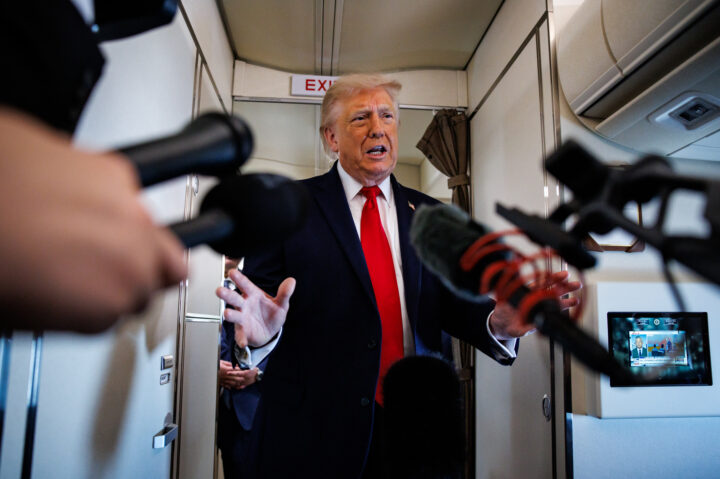
Samuel Corum/Getty Images
President Donald Trump speaks with reporters while aboard Air Force One on June 5, 2026 en route to Chippewa Falls, Wisconsin.


 Add JewishInsider on Google
Middle East experts warned on Monday that the Trump administration’s attempts to prevent Israel’s military retaliation against Iran and its pursuit of a swift diplomatic breakthrough with Tehran are exposing a fundamental breakdown in strategic alignment between Washington and Jerusalem. This dynamic is actively undermining American leverage and hardening Tehran’s resolve both at the negotiating table and on the battlefield, the analysts argued.
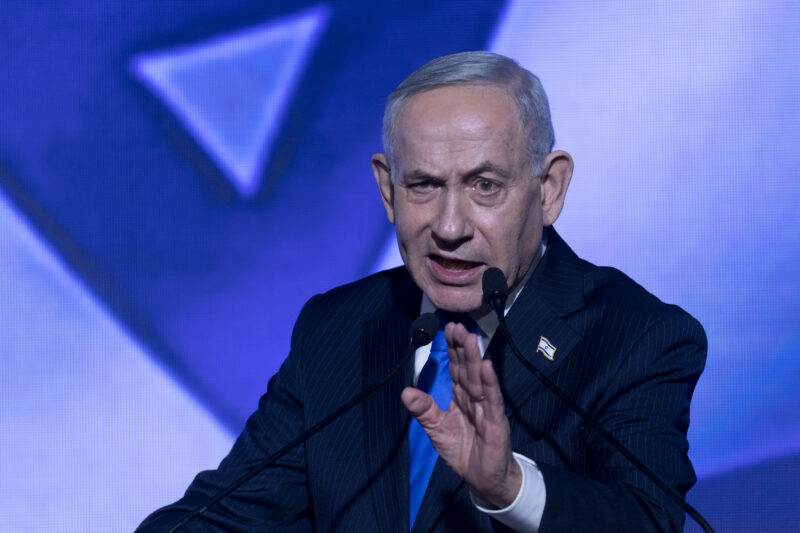
Following an exchange of airstrikes on Sunday and Monday between Israel and Iran, Israeli Prime Minister Benjamin Netanyahu abided by a request from President Donald Trump to pause further strikes on Iranian territory. Jerusalem made clear, however, that it will proceed with operations against Hezbollah targets in southern Lebanon.
Analysts argued that Trump’s recent moves to restrain Israel are backfiring by degrading U.S. deterrence, emboldening Iran and showcasing the fundamentally diverging interests between Washington and Jerusalem regarding the ultimate outcome of the war.
Speaking at a webinar hosted by the hawkish Jewish Institute for National Security of America, Amb. Eric Edelman, a distinguished fellow at JINSA and former White House official, said that the president’s behavior makes the U.S. appear “desperate for a deal.”
“The president has, over the course of several weeks, basically signaled to the Iranians in multiple ways that he is very reluctant to return to kinetic military activity,” Edelman said. “I think that just continues this pattern of suggesting to the Iranians that he really is very anxious for a deal, and I think that’s actually undercutting his leverage with them because it only leads them [Iran] to harden their positions and makes it harder, not easier, to get a deal.”
Edelman added that Iran has actively sought to “take advantage” of this perceived diplomatic anxiety, taking a “much more forward position defending their proxies in Lebanon than they did earlier when Israel was reducing Hezbollah very significantly.”
Ari Cicurel, an assistant director of foreign policy at JINSA, agreed that the administration’s apparent urgency to reach a deal removes vital military deterrence to back up U.S. diplomacy.
“The president has signaled that he is highly prioritizing reaching some deal, and is willing to restrain Israel in order to do that,” Cicurel told Jewish Insider. “That’s a dangerous scenario, in terms of Iran’s potential for aggression, as well as undermines his own ability to reach that deal, because without the credible threat of a military option, Iran is unlikely to make any concessions that would lead to any semblance of a good deal.”
Cicurel noted that restraining Israel at this juncture is particularly “dangerous” given what is at stake regarding the “potential for resumption of major combat operations.” He cautioned that the moves by the Trump administration represent “another example of tensions between U.S. and Israeli leaders undermining deterrence,” giving Tehran a distinct operational gap to exploit.
Robert Satloff, executive director of The Washington Institute for Near East Policy, said the recent escalation was similar to April 2024, during which former President Joe Biden “urged Israel to ‘take the win’ of defending against Iranian missiles and not to retaliate.”
“In this instance, as then, Israel politely declined U.S. preferences and responded to the Iranian attack with a carefully calibrated retaliatory strike that quickly led to de-escalation,” he said.
The friction underscores a broadening rift in the wartime goals of the two close partners, experts said. While the White House remains intensely focused on domestic economic issues and regional stability, Jerusalem views the conflict as a historic window to permanently dismantle Iran’s ballistic missile capabilities and regional proxy architecture.
“At this point in the war, Trump and Netanyahu have different interests at play,” Rachel Brandenburg, a senior policy analyst at Israel Policy Forum, told JI. “Trump’s priority is to re-open the Strait of Hormuz to stabilize global energy markets and bring down the price of fuel, and Netanyahu wants to continue degrading Iran’s ballistic missile arsenal and nuclear program.”
Trump, she said, “promised Israel a level of victory over Iran that is far from what has transpired. Trump seems to want the war to end so he can move on, and Netanyahu would prefer the opportunity to finish the job Israel and the U.S. started on Feb. 28.” She added, “Both have election politics in mind, with Israeli elections on the horizon for [the fall] and U.S. midterm elections in November. At the moment the war isn’t helping either of them.”
Brandenburg noted that Trump has aimed to restrain Netanyahu “for some time” across both the Iran and Lebanon fronts, but emphasized that an independent Israeli strike after Iran’s ballistic missile attacks on Israel on Sunday remained necessary, despite Washington’s public calls for a pause. “It would have been too much for Israel to sit tight without responding after Iran targeted Israel directly. Whether Iran continues to strike Israel in retaliation for Israeli strikes against Hezbollah in Lebanon may have more bearing on what the next phase of the war looks like than Trump,” she said.
A central point of contention has emerged over the linkage of fighting with Hezbollah in Lebanon to the broader ceasefire with Iran. Experts warn that Washington has mistakenly tolerated an Iranian strategy designed to shield its primary proxy by tying the fighting in Lebanon directly to the broader U.S.-Iran diplomatic track, even as Trump told NBC’s “Meet the Press” on Sunday that he is “not demanding” Lebanon be part of a deal with Iran despite saying Tehran “would like to see it.”
“Clearly before the attacks, Iran had been seeking to tie the Israel-Hezbollah exchange of fire against one another, as well as the diplomacy between them, with the diplomacy and ceasefire in Iran,” Cicurel noted. “In President Trump seeking to restrain Israel after Iran has attacked it, it unfortunately encourages Iran to continue that linkage and further encourages Iranian aggression.”
Satloff said that the latest round of fighting “was won by those who oppose Iran’s protection-racket scheme to bring Lebanon into its security orbit and under the umbrella of broader U.S.-Iran negotiations.”
“What is different between this round and April 2024 is that Iran has no conceivable legitimate justification to take any action against Israel,” Satloff said. “Iran is trying to claim that Israel’s action against other nationals in another country — Hezbollah in Lebanon — legitimizes its action. This is totally unacceptable and cannot be tolerated.”
Edelman similarly noted that despite Israel’s extensive work to combat the network of Iranian-backed proxies surrounding the country, the administration’s pursuit of a swift ceasefire risks breathing new life into a severely weakened Iranian strategy.
“The Iranian strategy of creating a ring of fire around Israel is in shards,” Edelman said. “And I think as the ceasefire went on, as the Iranians perceived the president’s desire for an agreement, they came to believe that they might be able to rescue something.”
However, Edelman noted that the recent spike in violence does not signal that diplomacy is collapsing, explaining that all sides maintain incentives to pursue a deal.
“I don’t think it’s a signal that negotiations are over,” Edelman observed. He pointed out that “the Iranians actually kind of called a halt to this” round of exchanges to limit the blowback.
Edelman said that with the interior minister of Pakistan currently in Tehran, backchannel diplomatic contacts are actively continuing. He also said that “the Iranians are particularly anxious to get access to frozen funds,” but added that it is “a particular sore point” for Trump.
“I believe he [Trump] wants to try to persuade the American public that whatever deal this ends up being is going to be measurably better than the Joint Comprehensive Plan of Action that President Obama agreed to in 2015,” Edelman said. “In my view that’s going to be a pretty tall order, but not giving the Iranians access to money before they perform whatever obligations they undertake as part of this deal will be a key part of that.”
More Stories

IN THEIR MEMORY
Administration officials join bereaved families for Oct. 7 commemoration event
Mayor Unmoved
Mamdani brushes off pro-Hamas heckling at Oct. 7 vigil
DRAWING A LINE
British PM rules out partnership with Greens over ‘Zionism is racism’ motion
TISCH TENSIONS
Mamdani stands by NYPD’s Tisch as his allies demand her removal
DIPLOMATIC PUSH
Miliband agrees to host international antisemitism meeting at urging of J7 Task Force
VEEP'S VIEW
Harris says Biden should have done more to stop Israel’s ‘horrific conduct’ in Gaza
Please log in if you already have a subscription, or subscribe to access the latest updates.
 Continue with Google
 Continue with Apple