









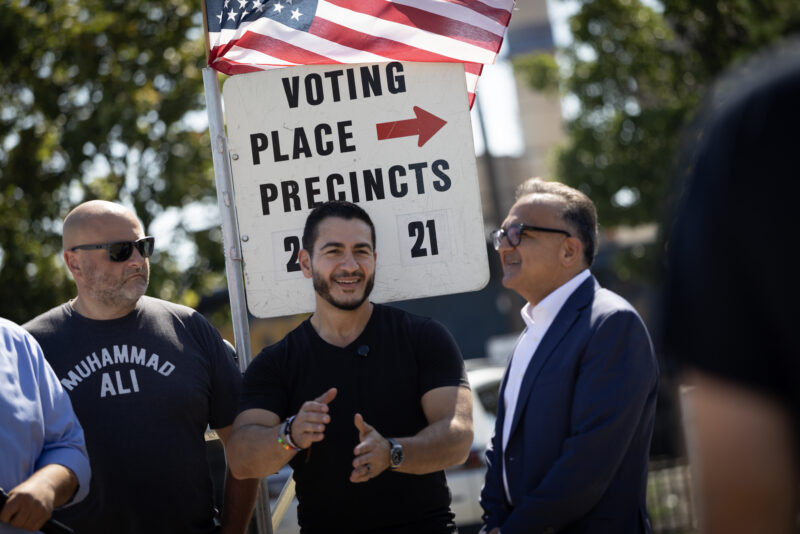
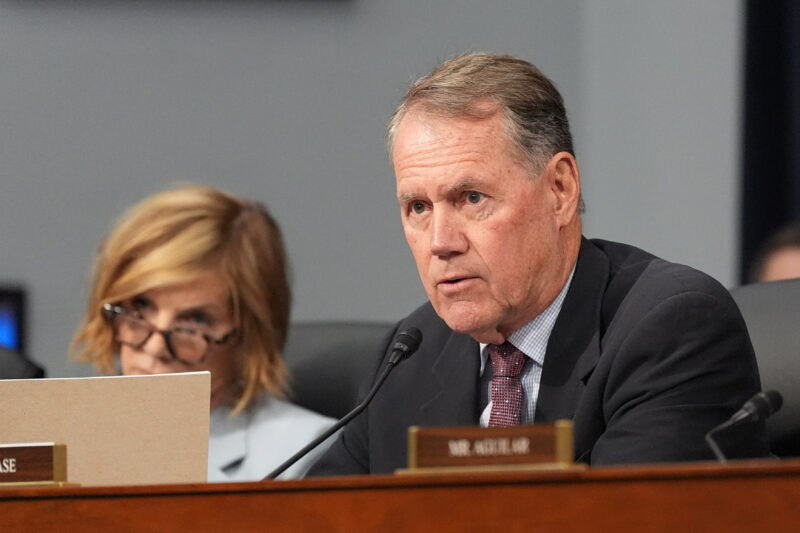



















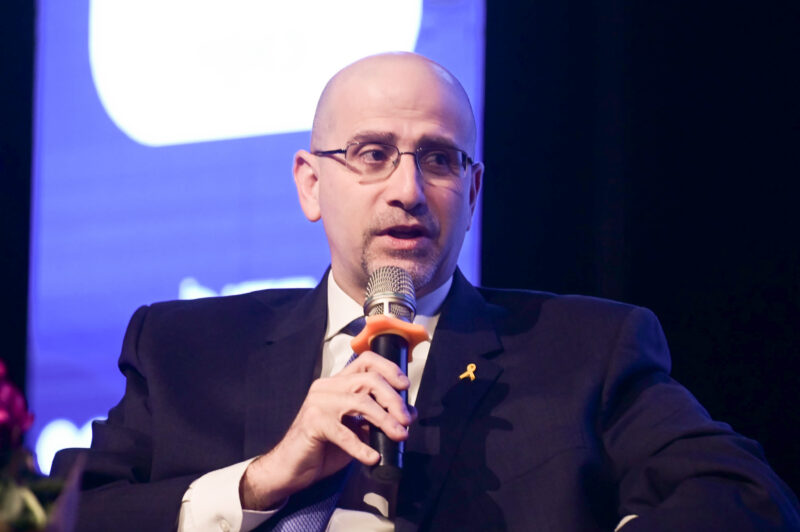













Many of the attendees at Temple Emanuel who listened to the congressman defend his position appeared critical of the stance he’d taken and unconvinced by his explanation, Jewish constituents said
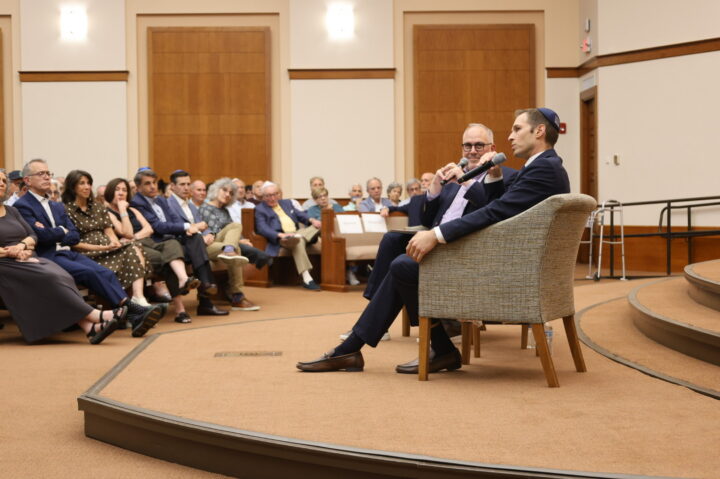
Rep. Jake Auchincloss
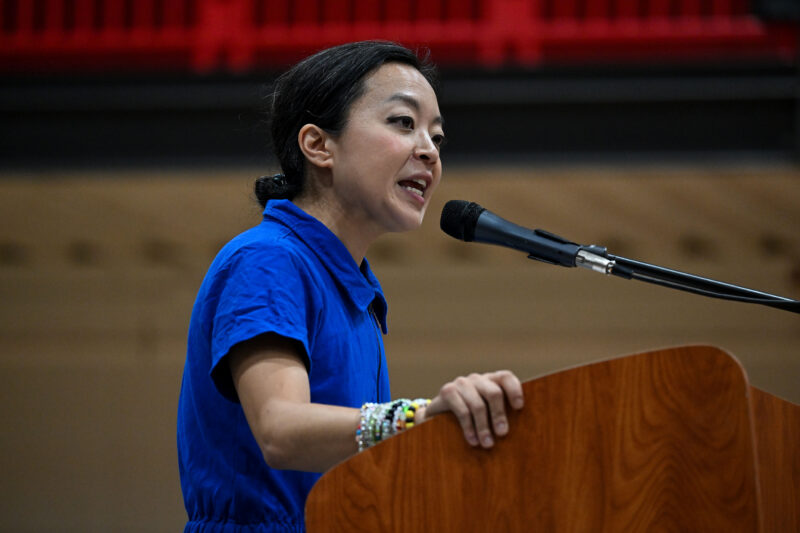
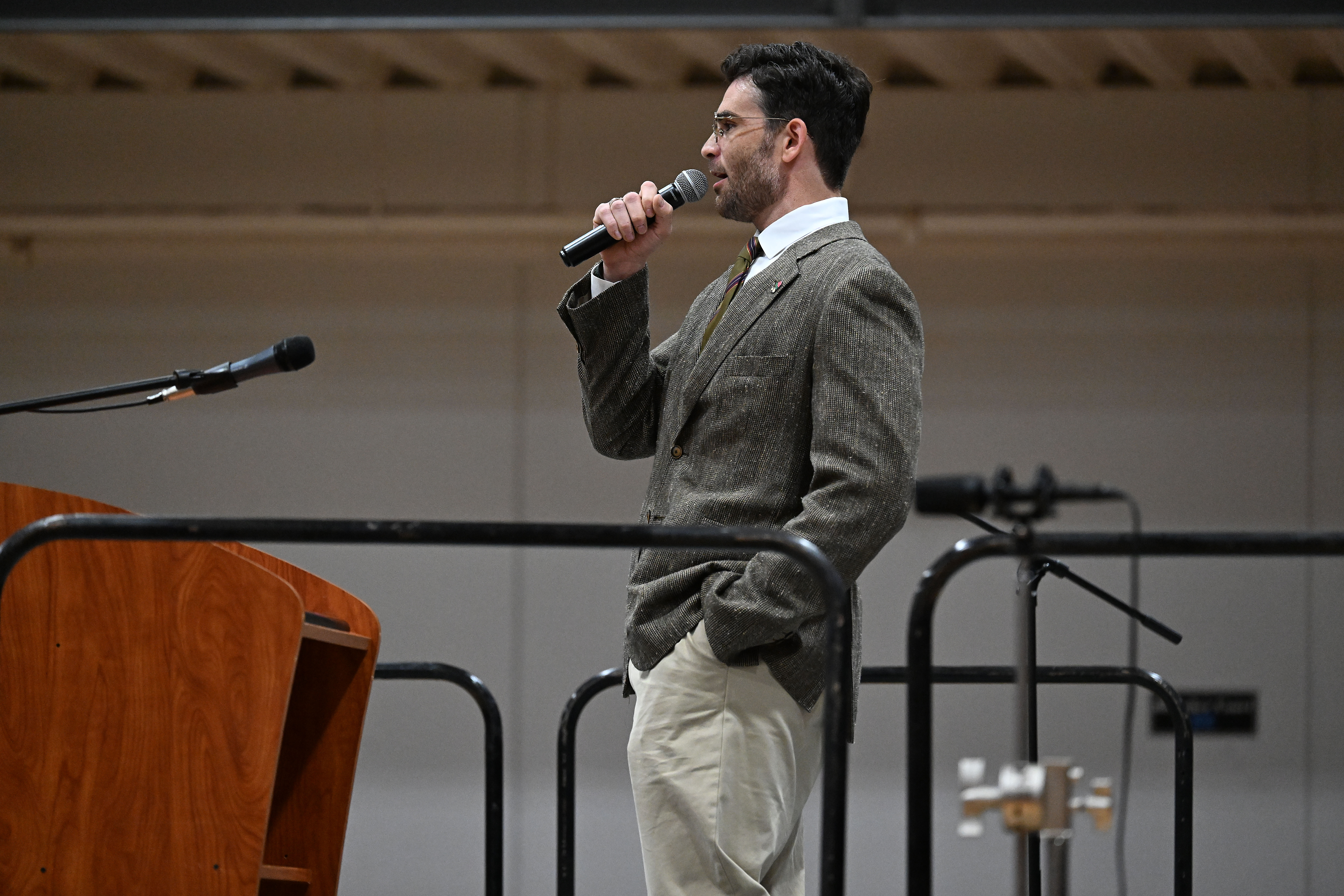
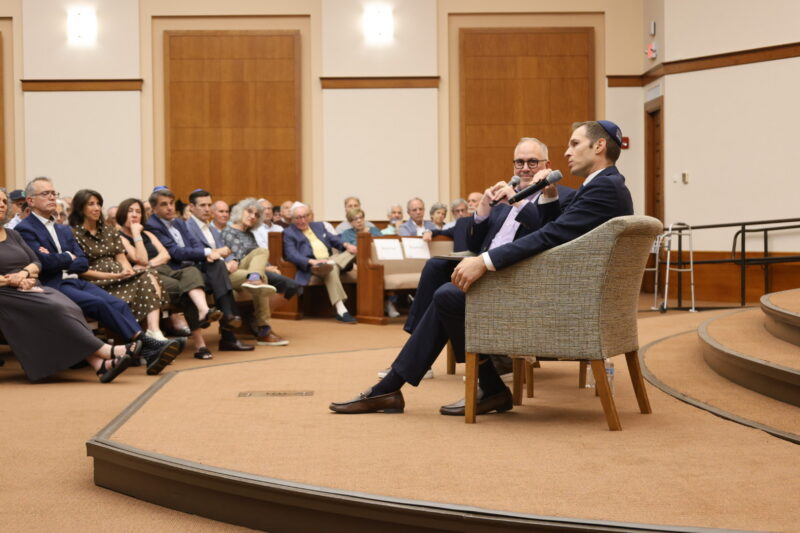
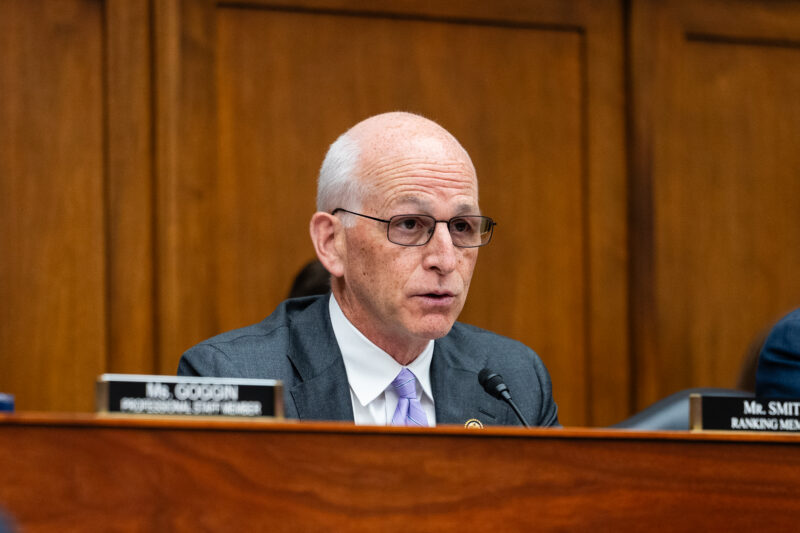
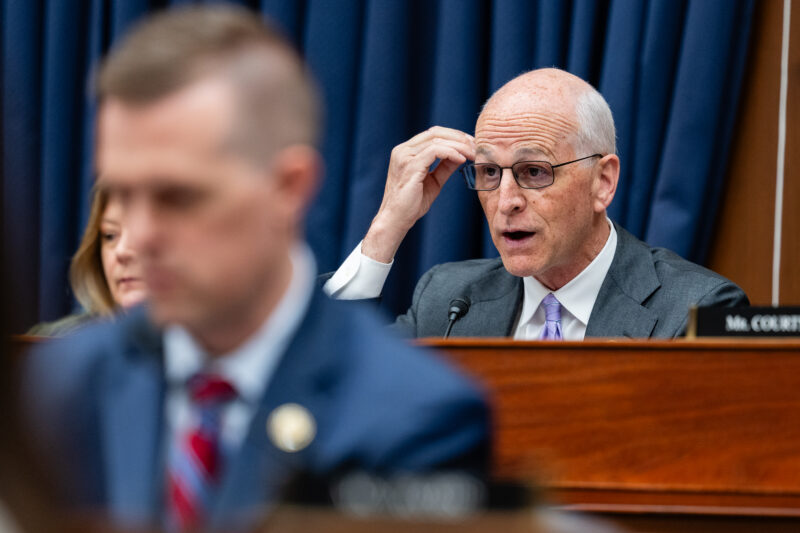
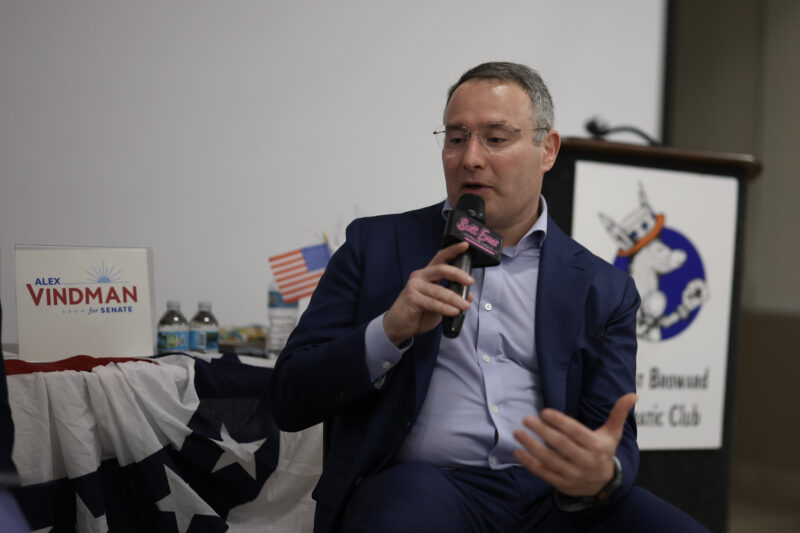
Rep. Jake Auchincloss (D-MA) appeared in conversation with Jeremy Burton, the CEO of the Jewish Community Relations Council of Greater Boston, at Temple Emanuel in Newton, Mass., July 27, 2026.


 Add JewishInsider on Google
Rep. Jake Auchincloss (D-MA) appeared before a packed house of more than 700 Jewish constituents at a major Conservative synagogue in the heart of his district on Monday evening, facing a barrage of questions from attendees skeptical over his vote to cut U.S. military aid to Israel.
Auchincloss appeared in conversation with Jeremy Burton, the CEO of the Jewish Community Relations Council of Greater Boston, at Temple Emanuel in Newton, Mass., before taking around two-dozen questions from the audience, attendees said.
Those in the audience said that most of the crowd was not supportive of Auchincloss’ vote and was not persuaded by his explanation, but most of those who spoke to Jewish Insider came away expecting that he’ll maintain significant Jewish community support and were appreciative of his engagement.
Auchincloss’s explanation for his vote, attendees said, was largely consistent with those he offered in statements and in an interview with Jewish Insider last week, that he viewed the vote as a way to block further taxpayer support for the Iran war he opposes. The congressman is expected to make similar appearances at other synagogues around the district in the coming weeks.
“I really think that there was worry and skepticism about the vote, about what it says about the future of support for Israel,” Barry Shrage, the longtime former president of the Combined Jewish Philanthropies of Greater Boston, the local Jewish federation, told JI.
He said that he and others in the crowd were concerned about the impact of the amendment on Israeli security. “A majority of people in that audience were very skeptical about what he did and worried about what he did.”
One attendee who requested anonymity to speak candidly estimated that between 70 and 80% of attendees opposed the stance Auchincloss had taken on the issue.
Auchincloss declined to comment.
Lisa Coll, a former board chair of Prizmah who said she’s known and supported Auchincloss for years, said she was “shocked and surprised and slightly hurt and a little angry,” having expected Auchincloss would vote against the amendment based on his pro-Israel record and the fact that the amendment was led by Rep. Thomas Massie (R-KY), an anti-Israel Republican who has a history of making antisemitic comments.
She said that Auchincloss offered a clear and reasoned explanation for his vote, but felt that he didn’t grasp the concerns in the Jewish community or why the community was so concerned. There’s “very much a lot of surprise and hurt going around,” Coll said.
Coll said that she emerged from the event still feeling the same shock and frustration with Auchincloss’s vote. “It was not an easy evening, it was a very uncomfortable evening for everyone,” Coll said. “Everyone was squirming at some point,” and attendees were “angry and sad.”
Lisa Danetz, who works as an expert and adviser in elections and voting rights, said that she felt, and remains, “conflicted” about Auchincloss’ vote and was surprised that Auchincloss supported the amendment, given his record. But she said she understood his reasoning.
“I ended up thinking, I’m not sure how I feel about this particular vote — but since the amendment didn’t pass and wasn’t going to pass, I didn’t feel like I was going to get too worked up about it and appreciated hearing the reasoning,” Danetz said.
“I think you have to respect him, he did what he thought was right,” she continued. “I don’t know if I agree with it or not. But overall I feel aligned with his underlying values.”
Coll said that she’s concerned that, as a Jewish member viewed as a serious, policy-oriented and pro-Israel lawmaker representing a large Jewish constituency, Auchincloss’s vote has the potential to influence and provide license for other members less engaged on the issue to take anti-Israel positions.
She said that Auchincloss did not share those concerns when she asked him a question on the subject. “I don’t think he is anti-Israel,” Coll said. “I don’t know if he is aware of what I perceive as the consequences of this vote.”
She said she also didn’t think Auchincloss fully understood the community’s concerns about how his vote and comments might perpetuate narratives framing the Iran war as “America fighting Netanyahu’s war” that have fueled antisemitism and antisemitic violence.
Shrage said that Auchincloss repeatedly emphasized that his vote was intended as a repudiation of the Iran war and of President Donald Trump and Israeli Prime Minister Benjamin Netanyahu — both unpopular figures in the district’s Jewish community.
“A bunch of people got up and said, ‘This actually threatens the people of Israel,’” Shrage said. He recounted that one woman said, “‘I have Israeli and American citizenship. I have family in Israel. Your vote endangered them.’ And of course she added … ‘I’ve demonstrated against both Netanyahu and Trump, I have no sympathy for them whatsoever.’”
According to Coll, another attendee, an Israeli-American woman, said that Auchincloss’s vote was punishing the people of Israel for the actions of Netanyahu, and questioned whether he would support other countries punishing Americans the same way over frustration with Trump. Coll said Auchincloss did not offer a clear answer to the question.
A small number of attendees offered thanks and support for Auchincloss’ position in their comments, according to attendees.
Michael Gardener, a prominent area attorney, said he came into the event without having made up his mind on the vote and wanting to know more, while noting that it was out of step with Auchincloss’s prior votes on Israel issues.
Coming out of the event, “I understood his position and I must say I agree with it,” Gardener said. He said that Auchincloss had made clear that he did not seek an arms embargo in Israel and wanted to allow it to continue buying American weapons, but felt that providing U.S. taxpayer money that would facilitate the Iran war was not appropriate at this juncture, “which I agree with.”
Gardener said that views in the room weren’t uniform, but acknowledged that a majority of attendees likely did not agree with Auchincloss “and at the end of the evening probably still didn’t,” but felt that everyone understood Auchincloss’ reasoning and respected him for coming to explain it.
Another attendee, who also requested anonymity to speak candidly, cast a mixed picture of the audience, emphasizing that views in the room were diverse and said that the “audience appreciated him coming out and sitting in the hot seat to answer all of their questions” and “that he gave a lot of thought to all the implications” of the vote.
But, the attendee added, every mainstream Jewish organization in the Boston area had had serious conversations with Auchincloss about the vote expressing a “unanimity of disappointment” with him about it and exploring what his approach to Israel will entail going forward.
Shrage said he’s skeptical of Auchincloss’ claims, repeated throughout the event, that the vote wasn’t motivated by politics, or concerns about shifting Democratic party trends on Israel. Auchincloss similarly denied to JI that the vote was motivated by political considerations.
But, in spite of the concerns he saw in the audience, Shrage said he doesn’t expect any major defections in Auchincloss’ Jewish support base or efforts to oust him from office, predicting that most will “hold their nose and vote for him.” Most of the Democratic party opposition to Auchincloss in the district has come from his left.
“I don’t think anybody’s going to be joining a move to to defeat him in any way, shape or form,” Shrage said. “As a congressman, he still has broad support, but there was a lot of fear, worry and anxiety in this audience about what that vote meant.”
Coll said she wants to maintain her relationship with Auchincloss, and said she believes he’s a “principled and good person” who “in his heart … is very pro-Israel [and] does understand the importance” of the U.S.-Israel relationship and preserving Israel’s security and qualitative military edge.
She predicted that some members of the community will rethink their past support for Auchincloss, but others will likely wait to assess future votes on Israel.
“I’m hoping that we can count on [Auchincloss] to continue his support for Israel in his other votes like he has in the past and I would encourage the congressman to reach out to his constituents more before votes like this to read the room,” Coll said.
Danetz also said that Auchincloss was clear in his remarks that he didn’t take this or any vote based on politics. Asked whether she believes that, she said, “I think he thinks that, I don’t know if that’s humanly possible. He came across as very authentic and honest and wanting to have dialogue and conversation and explain his thinking.”
“I trust in his honest conviction of Israel’s right to exist and in the need for defense and also in concern related to the current government of Israel, a concern I share,” she continued.
Attendees generally said they appreciated Auchincloss coming to address the community and explain his position, and praised Burton’s questioning and the leadership of and comments by the congregation’s rabbi.
“I really respected [Auchincloss] for coming to speak to people. … I thought it showed how important it is to him to engage with his constituents in the district and in understanding that people were upset about his vote and a desire to explain his thinking,” Danetz said. “It seemed to me that whether people agreed with him or not, it would be hard to walk out of there not at least understanding where he was coming from, or where he thought he was coming from.”
She said Auchincloss was clearly knowledgeable about the issue and explained his stance clearly, and that he’d been “emphatic” in his continued support for Israel’s existence and security.
Gardener said that the synagogue was as full as it traditionally is for high holiday services, highlighting the passion that the community has for the subject, which he said can only be a good thing for Israel and the Jewish population.
He said he thinks everyone in the room shares the same passion for Israel and support for its security as a Jewish and Democratic state and “I think the congressman feels the exact same way.”
But, he continued, “I think there are different viewpoints about how you get to that spot.”
The AJC CEO told JI on the sidelines of the Aspen Security Forum that he was ‘glad to see’ that many of his colleagues acknowledged that the amendment to cut military aid to Israel was ‘bad policy’
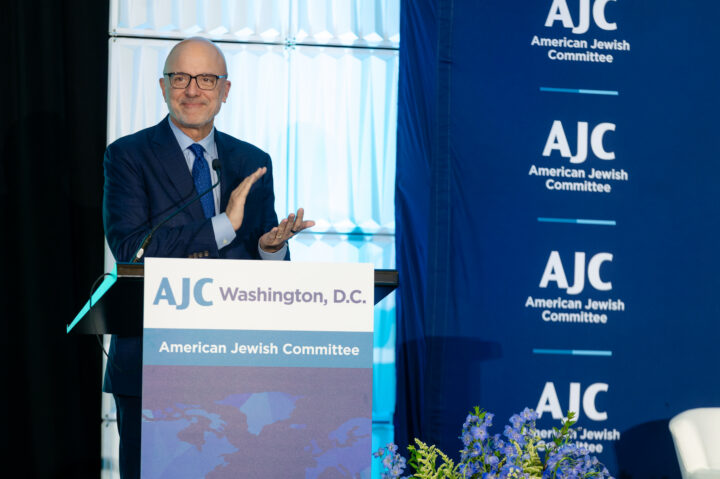
Aryeh Schwartz/AJC
Ted Deutch
ASPEN, Colo. — American Jewish Committee CEO Ted Deutch, who served as a Democratic member of Congress from 2010-2022, expressed frustration and disappointment with the decision of half of his former caucus to vote this week for an amendment to cut off U.S. military aid to Israel.
The issue, Deutch argued, is too important and too sensitive for what some supporters characterized as a show vote on an amendment, led by Rep. Thomas Massie (R-KY), that even many of its supporters saw as deeply flawed.
Deutch told Jewish Insider in an interview Thursday on the sidelines of the Aspen Security Forum that he was “glad to see” that many of his colleagues acknowledged that the amendment was “bad policy” and “indirectly acknowledg[ed] that it would damage American interests.”
“And yet [they] turned around to vote for it anyway. That was just a really disappointing reflection of the moment,” Deutch said.
He said that members of Congress have a “responsibility” to “lead” and to “stake out positions that help advance good policy,” not only to follow trends and pressure.
“If the reason that people voted for the Massie amendment was because they see the way some of these primaries have gone — the worst part is the refusal to stand up against what we’ve seen happening,” he said, asserting that the Massie amendment and the arguments over Israel policy that have pervaded this year’s Democratic primaries don’t advance American interests or true conversations about peace for Palestinians and Israelis.
He said that members appeared to feel obligated to vote for the amendment to signal support for an “absolutist” wing of the party that, Deutch said, wants to exclude anyone who supports Israel’s existence.
“I understand that … members of Congress make decisions, they want to make a statement with a vote. But the future of the Middle East, our support for Israel, our interest in advancing the prospects for peace between Israel and Palestinians, is far too important to fall prey to a meaningless and, I would argue, ridiculous show vote,” Deutch told JI.
He took aim at candidates who have made opposition to Israel a centerpiece of their campaigns, arguing that they’re not interested in real solutions but instead in “demonizing Israel” and “undermining the very existence of Israel.” Walking away from the U.S.-Israel relationship or advocating against Israel’s existence will not advance peace, he reiterated.
Those opposing Israel’s existence are not only hurting the Jewish community but also risk “undermining pluralism in America and the ability to actually have a functioning democratic society.”
But he also drew distinctions among those who supported the Massie amendment. Some, he said, are anti-Israel and want to push supporters of Israel out of the political mainstream. Others, he said, decided to “vote for terrible policy because they thought that maybe that would help them politically.”
He said that supporters of Israel need to find opportunities for “the majority of those people” who supported the amendment to understand that, even if they are frustrated with the Israeli government, taking an “absolutist approach” is not necessary or productive.
Deutch said that AJC and other supporters of Israel can’t write off the Democratic Party or the lawmakers who voted for the Massie amendment.
“We’re doubling down on the work that we do on the Hill and the conversations that we have on helping people understand … the future of the region, especially when the Iran war ends,” Deutch said. “When the war ends, the opportunities to help our elected officials take another look at the region and how to achieve regional peace and the critical role that Israel plays in that — that’s one of the things that we’re doing now.”
Deutch said during a panel discussion on Israel and U.S.-Israel relations that it’s also important to emphasize that Israel does not bear sole responsibility for the situation in the Middle East and that other actors bear agency and responsibility for the current state of affairs.
“This is not Israel’s burden to fix all of the problems in the Middle East on their own,” Deutch said. “There are responsibilities for the Palestinians, certainly disarming Hamas, the responsibility for the Arab countries, responsibility for the U.S.”
He told JI that discussions over Israel policy can’t be divorced from talking about antisemitism and the rising demonization of Israel and the Jewish community. Members who voted for the Massie amendment “have a really important role to play in fighting antisemitism, and we’re working doubly hard to make sure they understand what the connection is here, and how the anti-Zionism and hatred of Israel leads to real-world violence.”
On the panel, he likewise warned that characterizations of people who support Israel or AIPAC as “monster[s]” — invoking comments by New York City Mayor Zohran Mamdani — could lead to real-world violence.
Regardless of his frustration over Democratic support for the Massie amendment, Deutch told JI he still wants to work with members who are serious about issues of Middle East peace and representing the Jewish community.
Deutch also said that there are many politicians outside of Washington with whom he has engaged who don’t want to be “defined by a group” of what he described as “DSA extremists” that “sets these absolutist positions that are contrary to the way that they view the world, and it’s important to know that that those leaders exist, and we’re doing as much as we can to help lift up their voices.”
In statements about the vote, even Democratic leaders who opposed the Massie amendment said that they believed that major changes to the U.S.-Israel relationship would be necessary going forward.
Asked what a responsible and reasonable approach to the future of the relationship should look like, Deutch said that it should start with “mutual respect” for each other and recognition of “the importance of the other” — things he said were lacking in the debate around the amendment.
“With that respect comes the ability to have frank discussions about what the future looks like and how to achieve it” on a range of subjects, Deutch said.
On the panel and in his conversation with JI, Deutch also criticized Vice President JD Vance’s comments earlier this week about Israel on Joe Rogan’s podcast.
While he praised Vance for pushing back against the “most extreme” conspiracy theories Rogan presented, he said he wished the vice president would have made a case for why the U.S.-Israel relationship is in the U.S.’ interests, instead of only saying that he acts in the U.S.’ best interests.
“When you put it the way that he did, it suggests that somehow it’s not the case [that the U.S.-Israel relationship serves the U.S.]. It plays into the memes of and the conspiracy theories of Israel and the Jews pulling strings,” Deutch said.
“I respect very much the vice president is working to do what he believes is in the best interest of America, and I want him to understand that for me, that that means engaging in these conversations about the future of Israel and the Middle East, without suggesting that somehow doing that work and standing up for Israel’s right to defend itself and pushing back against Iranian aggression is somehow contrary to the responsibilities that he has,” Deutch continued.
He didn’t impute ill-intent to the vice president, but said Vance’s comments could be weaponized by others who will interpret them to mean that supporting Israel is bad for the United States.
Throughout the panel, Deutch emphasized that discussion about the U.S.-Israel relationship must recognize that Israel and the U.S.-Israel relationship, and the state of affairs in the Middle East transcend and are much larger than Israeli Prime Minister Benjamin Netanyahu and his individual decisions.
“There’s much more at stake in the relationship between the United States and Israel than any one prime minister,” Deutch said.
Asked by JI about comments by a fellow panelist, former U.S. Ambassador to Israel Dan Shapiro, that the U.S.-Israel relationship would be difficult to repair on both sides of the aisle if Netanyahu remains in power after the upcoming Israeli elections, Deutch rejected that line of thinking.
“We have to reject this idea that somehow, whatever any individual may want to happen in the Israeli election, that there is only one outcome that can ensure the continued viability of the U.S.-Israel relationship,” Deutch said. “I reject that completely out of hand, and I think those of us who are committed to the relationship have to make sure that in the policy debates that are happening, that it doesn’t become a dominant narrative. There’s too much at risk.”
In an interview with Jewish Insider, Emanuel outlines his views amid changing winds in a Democratic Party increasingly antagonistic to the pro-Israel perspective that had long been central to his identity
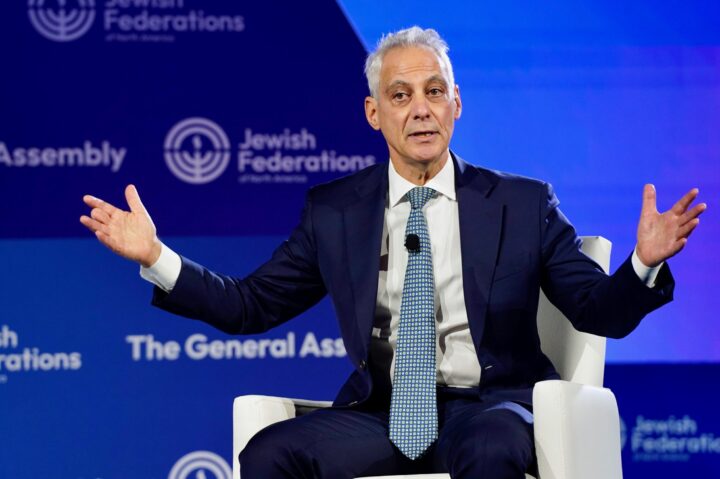
Jewish Federations of North America
Rahm Emanuel speaks at the Jewish Federations of North America's 2025 General Assembly opening plenary on Nov. 16, 2025.
Last November, Rahm Emanuel, the tough-talking Democratic operative and prospective presidential candidate, took the stage of the Jewish Federations of North America’s annual conference in Washington to deliver a blunt word of warning about Israel’s declining reputation in the United States and around the globe.
“I don’t mean to be the party pooper, but look, this is not going to be helpful if we’re not going to be honest with each other,” he said on an opening panel, urging the crowd to reckon with a marked downturn in support for the Jewish state over its war in Gaza, particularly among younger voters. “Israel is extremely unpopular.”
Emanuel, a veteran Jewish politician and party official who had recently concluded a tour as U.S. ambassador to Japan in the Biden administration, acknowledged his message might not ingratiate him to the thousands of Jewish communal leaders in the audience who were no doubt deeply familiar with the issue he was highlighting.
“This may be the last time I’m asked to speak to you. I get it,” he said with a hint of indifference. “But we have to be honest about the task we have” for those “who believe that there is something special” to the U.S.-Israel relationship. “We have our work cut out, and it’s not here to get applause,” he told the crowd.
In hindsight, Emanuel’s frankly worded comments marked something of a turning point in his approach to Israel and the Jewish community, foreshadowing more recent remarks in which he has voiced harsh criticism of the country’s military tactics in the wake of Hamas’ Oct. 7 terror attacks and championed new policy proposals against American military aid to Israel.
Yet even as he builds a profile as a potential candidate willing to tell the Democratic Party hard truths and challenge orthodoxy on a range of issues from trans rights to child social media bans to age limits for politicians, Emanuel, 66, was reticent in exploring his views on Israel in more depth during an interview with Jewish Insider, which he had resisted for nearly a month.
“What I said couldn’t have been clearer,” he told JI last Thursday, referring to his recent comments on “Real Time With Bill Maher” calling for an end to U.S. military aid to Israel that raised eyebrows in the Jewish community. “There will no longer be U.S. taxpayer subsidies for the purchase of U.S. military equipment. Israel will be like every other ally. They can buy what they want, and they have to live within the restrictions.”
“You can decide to slice it, dice it, but that’s what it is,” he said.
While U.S. military funding to Israel has increasingly faced pushback in the Democratic Party, particularly on the far left, Emanuel’s argument that Israel no longer needs the sort of special treatment that he helped promote in the Obama White House has been striking to watch precisely because he has long been a staunch defender of the Jewish state and its founding ideals.
Emanuel, whose middle name is Israel and who speaks fluent Hebrew, holds a uniquely personal connection to the Jewish state. His late father, an Israeli immigrant born in Jerusalem, served in the Irgun, the Zionist paramilitary force that fought for Israeli independence. As a child, he spent summers in Israel and later volunteered as a civilian assistant to the Israel Defense Forces during the Gulf War. His son celebrated his bar mitzvah in Israel.

Emanuel, a moderate former congressman and mayor of Chicago, pointed out in the interview that Israeli Prime Minister Benjamin Netanyahu had himself proposed winding down U.S. military aid over the next 10 years, saying in January that the country had “come of age” and “developed incredible capacity” to continue on its own.
Emanuel, however, said that he would instead suspend the assistance “immediately,” characterizing his position as “part of an overall policy” tied to Israel’s strategically secure position in the region as well as its political isolation on the world stage — both of which he argued have never been greater than now.
“If you or anybody thinks you’re going to continue the American taxpayers paying for this, good luck passing that in the U.S. Congress. You’re asking a president of the United States to spend X amount of political capital to do something that even Israel’s own prime minister acknowledged isn’t going to happen,” he said, referring to continued U.S. military aid.
The Jewish state “has made a decision to only lean on its defense and not lean on its diplomatic front,” he told JI, adding that Netanyahu had chosen to “walk away” from pursuing a two-state solution, support for which has declined in Israel since the Oct. 7 attacks and ensuing war in Gaza.
In his view, the U.S. should continue to stand with Israel only if its efforts in the region help contribute to peace. “Every risk you will take, the State of Israel takes, for peace, then America will stand by you,” he said. “We understand there’s risks. We have stood by Israel through thick and thin.”
“But,” he said, “when one friend in that relationship abandoned something that’s contrary to our interests and contrary, in my view, also to Israel’s interests,” it is reasonable, he suggested, to rethink that alliance.
“There will no longer be U.S. taxpayer subsidies for the purchase of U.S. military equipment. Israel will be like every other ally. They can buy what they want, and they have to live within the restrictions,” Emanuel said of his vision of the future of military aid to Israel.
His comments indicate that he is now embracing a fundamental reassessment of the U.S.-Israel alliance, abandoning even the pretense of tough love that once characterized his approach, among other moderate voices in the Democratic Party.
For example, Pennsylvania Gov. Josh Shapiro, a centrist Jewish Democrat who is also weighing a presidential campaign in 2028, recently reiterated his support for continued U.S. aid to Israel but said that it should be seen as “leverage” to exert pressure over the country’s use of American-made weapons.
“Rahm’s move tells you a lot about the politics of the Democratic Party on Israel now. And that is a sign of how Israel’s image has changed in the country,” said Dennis Ross, a former U.S. diplomat and Middle East negotiator who overlapped with Emanuel in the Obama administration.
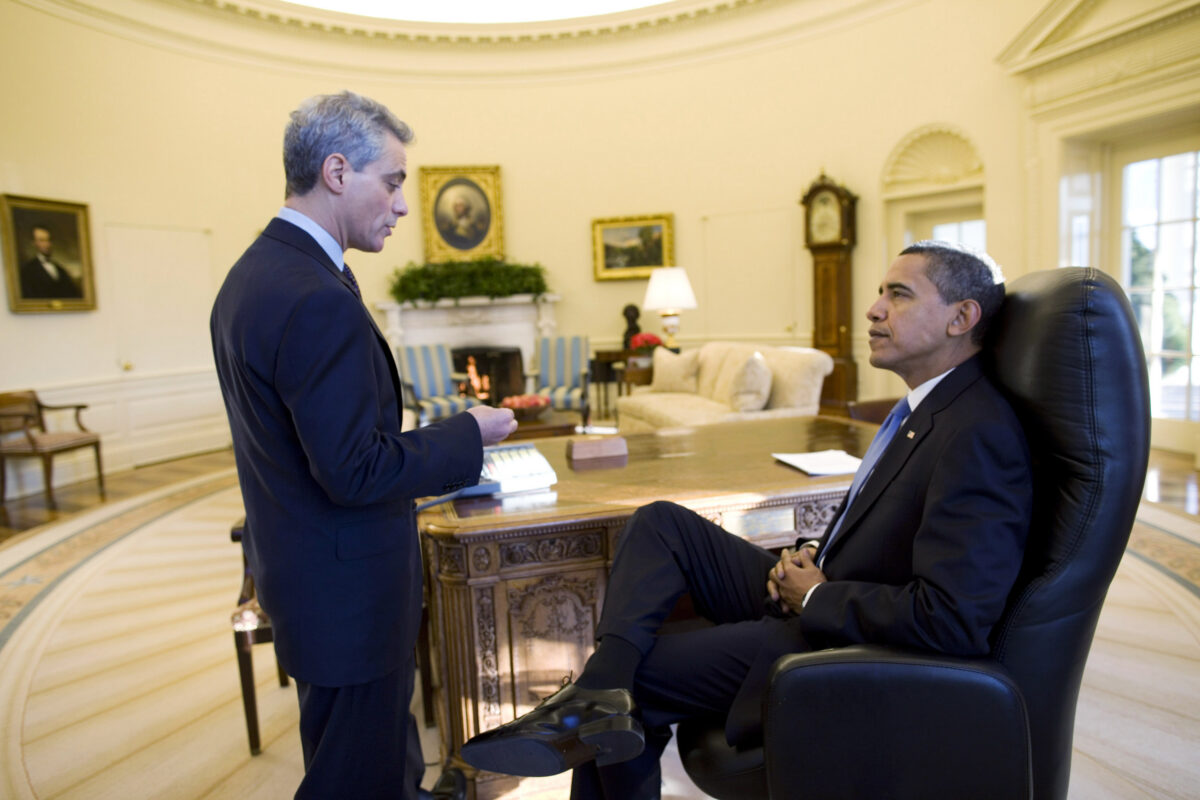
Despite his strong attachment to Israel, Emanuel is reckoning with a changing party no longer broadly sympathetic to the pro-Israel perspective that had long been central to his political identity, even as he has tussled with Israeli leadership during his time as a public figure.
Last Friday, for example, Emanuel signaled he would back Graham Platner, the far-left Senate candidate in Maine now poised to become the Democratic nominee, even as the Marine veteran has called to block U.S. military aid to Israel while facing controversy over a Nazi tattoo he recently covered up.
“Whether it’s people chanting ‘Jews will not replace us’” in Charlottesville, “or somebody bombing Gov. Shapiro’s home, or somebody painting Nazi insignia on my fence, or the candidate saying ‘I did not know that was a Nazi’” insignia on his chest, “we’re going to have to confront this,” Emanuel told JI the day before announcing his support for Platner, while touting his record of fighting antisemitism.
“I’ve dealt with it when I ran for Congress,” he said on the phone from Chicago, noting that he was outside an Anne Frank exhibition opening in his home city. “And I’ve also been upfront when I think a decision is going to lead to the strategic and diplomatic isolation of, not only the State of Israel, but, more importantly, the Jewish people.”
Still, Emanuel seemed reluctant and even somewhat frustrated to answer further questions seeking clarity on the implications of his new approach to Israel and how he arrived at his position. He refused to confirm explicitly, for example, if he would back defensive aid for Israel’s Iron Dome missile defense system, which has recently emerged as a subject of intense debate in some corners of the Democratic Party.
It is a significant contrast with where Emanuel stood during his time as Obama’s chief of staff. In the White House from 2009-2010, Emanuel was one of Obama’s top consiglieres on policies relating to Israel. He was involved in initial funding to boost Israel’s Iron Dome system, an effort that culminated in a 10-year memorandum of understanding between the two countries that provides $3.8 billion in annual aid through 2028, which the White House touted, at the time, as “the largest single pledge of military assistance in U.S. history.”
In 2009, Emanuel shared more reassuring words in his address to the JFNA’s annual gathering, praising Netanyahu while citing his own familial ties to Israel as well as what he had called the “privileged point of view” from understanding the Jewish state’s “value as a homeland.”
“Those who have questioned” whether the Obama administration’s opposition to Israeli settlement building in the West Bank and outreach to the Arab world “implies diminished support for Israel, that is not the intent,” he said, filling in for his boss. “It is not the case and it never will be. The truth is the opposite. Only through dialogue will Israel achieve the peace it seeks.”

Emanuel now takes a more jaundiced view of Israeli diplomacy, fueling his calls for an end to U.S. aid. “Under Prime Minister Netanyahu, in the last three years, you’ve lost Europe, you’ve lost the American public, and you picked up Somaliland,” he scoffed to JI, referring to Israel’s decision to formally recognize the secessionist region in the Horn of Africa last year. “As my grandmother would say, ‘Such a deal.’ That is your only diplomatic achievement.”
Julie Fishman Rayman, senior vice president of policy and political affairs at the American Jewish Committee, called Emanuel’s views “disappointing and worrying,” arguing that U.S. security assistance to Israel “is not just vital to deterring further attacks and ensuring the survival of the state of Israel, but is integrally tied to safeguarding American interests in the region.”
Emanuel argued that his position on U.S. aid is a logical extension of sentiments he had conveyed in 2009 while in the Obama administration, when he repeatedly clashed with Netanyahu over settlement expansion in the West Bank, which the White House cautioned would jeopardize prospects for achieving a two-state solution.
“I went straight to the prime minister to his face and said, ‘What you’re doing is going to lead to the great isolation of Israel,’” Emanuel recalled, noting, as he often does, that Netanyahu called him a “self-hating Jew,” underscoring the highly personal tenor of their long-testy relationship. “Look, I have a longstanding relationship,” he explained. “I’m honest about it.”
But even as he argues that Israel is today “a different country from a sense of wealth and capacity,” he has strained to harmonize the motives now animating his current approach. He has dismissed speculation over the sincerity of his stance and whether it is rooted in a good-faith view of Israel’s economic standing or if it is instead a more cynical political calculation tailored to a rising anti-Israel faction in the Democratic Party.
Though in contrast with high-profile voices on the far left, Emanuel has shied away from charged rhetoric about genocide in Gaza, saying it is a legal question, as well accusations that Israel had tricked President Donald Trump into war with Iran, which he says ignores U.S. agency in the conflict. He has said it is a “mistake” to restrict arms sales to Israel, suggesting that he is not aligned with related resolutions that were introduced by Sen. Bernie Sanders (I-VT) last month and notably drew backing from most Senate Democrats.
Emanuel’s allies said in recent interviews that they were not surprised with his approach, saying that he has been building to this moment for some time. “Do I agree with him? Not necessarily,” former Rep. Steve Israel (D-NY), who served with Emanuel in Congress, told JI. “But this is not a breakthrough position. He’s expressed those concerns for years.”
David Axelrod, a former chief strategist to Obama, likewise agreed in a text message to JI that “Rahm’s basic concerns about where Bibi is leading are not new,” using Netanyahu’s nickname. “Rahm, like a lot of us, has always believed a two-state solution was the only road to peace and Bibi has been deeply, irretrievably opposed and actively hostile to the notion.”
“You ask these questions like somehow I’ve changed. The prime minister used to articulate a two-state solution. He was for it. He’s the one that’s changed,” Emanuel said of Israeli Prime Minister Benjamin Netanyahu.
One prominent Jewish Democrat, who asked to remain anonymous to discuss a charged issue, called Emanuel’s stance a practical response that “takes the wind out of the sails of the far left and the far right,” which have politicized funding for Israel. “As long as we’re giving aid to Israel, Americans will feel like they have a say in Israeli policy and how that investment is managed.”
But if that is Emanuel’s aim, he has not made it clear. In conversation with JI, he was hesitant to clarify his own positions when pressed. Asked if he would back Iron Dome funding, he said he had been “part of the financing” for a “joint project” that he called “key for Israel’s security” when it was first developed with the United States.
He declined to elaborate further about such aid. “U.S. taxpayers should not be in the position of subsidizing a country,” he reiterated. “You know my history with the Iron Dome,” he said. “I’m done. I’ve answered it.”
Though some allies of Emanuel are willing to indulge his views more favorably than other 2028 prospects with thinner resumes related to Middle East policy, a range of Jewish and pro-Israel organizations are now pushing back on his recent turn against U.S. military aid.
“It’s in America’s interests to keep our word and help a democratic partner shield innocent civilians from missiles,” Deryn Sousa, a spokesperson for AIPAC, told JI, referring to the Iron Dome. “Reneging on the Obama administration’s signed agreement with our closest ally in the Middle East would send a devastating message to our allies, empower our enemies and do nothing to advance peace.”
Brian Romick, president of Democratic Majority for Israel, said that “Israel’s situation is not comparable to our other close allies.”
“Unlike Japan, South Korea and Germany, Israel does not have permanent U.S. troops on the ground,” he told JI recently. “It’s also surrounded by enemies who actively want to wipe it off the face of the earth. U.S. security assistance reflects that reality and the significant strategic benefits the aid provides.”
Michael Makovsky, president and CEO of the Jewish Institute for National Security of America, told JI in a recent interview that he disagreed with Emanuel, even as he acknowledged the sentiment as a “legitimate view.” Still, he added that it is “in the U.S. interest” to continue providing military aid to Israel, “which anyway all goes to buying U.S. weaponry.”
Even some pro-Israel Democrats sympathetic to Emanuel and his perspective said his comments on military aid raise more questions than they answer. One influential Jewish Democrat who has long been acquainted with Emanuel, speaking on the condition of anonymity to address a sensitive topic, expressed concerns that ending aid to Israel could stoke further calls from the far left to condition military funding or block future weapons sales outright.
For his part, Emanuel avoided commenting on the question of Israel’s qualitative military edge, which the U.S. is legally obligated to ensure but allies say could suffer without military aid. “I feel like we’re taking the same question from 50 angles,” Emanuel told JI. “I want Israel to fight for peace the way it’s proven that it’s fought in the last three years. That’s what’s missing,” he said last week.
“You ask these questions like somehow I’ve changed,” Emanuel said earlier in the call. “The prime minister used to articulate a two-state solution. He was for it. He’s the one that’s changed.”
In a hearing on the 2027 State Department funding bill, Democrats pushed unsuccessfully to condition the use of U.S. funded-weapons by Israel
(Heather Diehl/Getty Images)
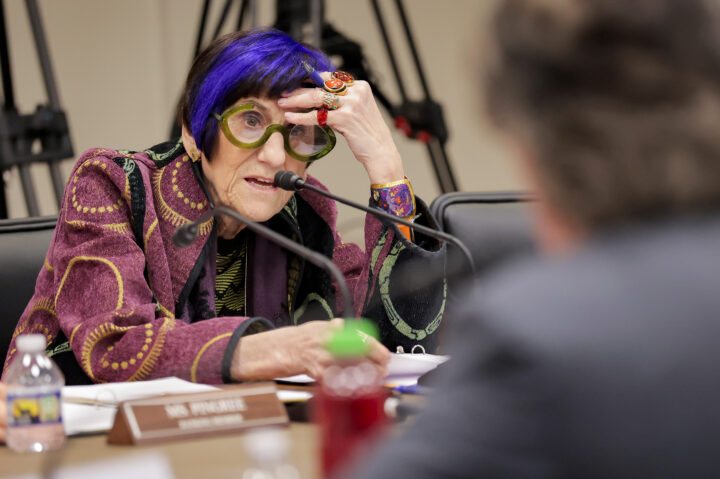
Rep. Rosa DeLauro (D-CT) questions Interior Secretary Doug Burgum during a House Appropriations Committee hearing at the Rayburn House Office Building on April 20, 2026 in Washington, DC.
During a meeting on the 2027 funding bill for the Department of State, several Democrats on the House Appropriations Committee pushed, ultimately unsuccessfully, for the committee to adopt new conditions on the $3.3 billion in U.S. military aid allocated for Israel annually in the bill.
Rep. Mike Quigley (D-IL) introduced an amendment which would have prevented the use of U.S. funded-weapons to expand settlements or damage or destroy “homes, schools, farms, orchards or other civilian property” in the West Bank or Gaza, but ultimately withdrew it. Israel has routinely targeted Hamas operatives hiding in a range of civilian locations throughout Gaza.
Though he withdrew the amendment before requesting a vote, several progressive Democrats spoke in favor of it, most notably Rep. Rosa DeLauro (D-CT), who is set to be the chair of the Appropriations Committee should Democrats retake the House in November.
The amendment “would require the United States to live up to our obligations under international law,” DeLauro argued, condemning settlement expansion as “annexation of the West Bank … happening before our very eyes.”
Destructions of Palestinian homes in the West Bank “are part of a strategy to destroy the possibility of a two-state solution,” she continued.
“This amendment would recognize the United States’ obligation under international law, which is at a minimum to cease support for Israel’s illegal settlement policies,” she said. “But there are impacts at home as well. The more the U.S. ignores lawless actions, turns a blind eye to the violations of Palestinian territory and sovereignty, the more that our credibility and influence erodes on the global stage.”
Rep. Lois Frankel (D-FL), the ranking member of the subcommittee responsible for State Department funding, did not offer a definitive stance on the bill, but indicated her opposition, praising Quigley repeatedly for withdrawing it.
“This has obviously become a contentious situation. I myself am a strong supporter of the security of Israel, of the people who live there, and also decency to innocent people who live nearby,” Frankel said. “I respect your offering [the amendment] and willingness to withdraw.”
Rep. Mario Diaz-Balart (R-FL), the subcommittee chair, emphasized Hamas’ use of human shields in Gaza and placement of terror infrastructure under schools, hospitals and United Nations facilities, and noted that U.S. aid to Israel is already subject to global human rights conditions.
“These other conditions, additional conditions, are totally unnecessary. I think they’re totally inappropriate to one of our closest allies that is under serious threat right now,” he continued.
Quigley introduced a second amendment allocating at least $400 million for rebuilding civilian infrastructure in Gaza, which failed by a vote of 32-25.
The explanatory report accompanying the committee’s draft 2027 funding bill for the State Department, also released this week, includes multiple passages that offer veiled and overt criticism of U.S. allies for failing to assist in the U.S. operations against Iran, a gripe shared by President Donald Trump.
One section “strongly encourages longstanding allies and partners to work with the United States to help secure freedom of navigation within critical sea lanes, including the Strait of Hormuz,” and another “condemns the decision by the Government of Spain” to deny the U.S. use of its bases and airspace for operations against Iran.
The full bill includes various new provisions aimed at securing accountability for United Nations Relief and Works Agency staff’s involvement in the Oct. 7, 2023, attacks on Israel, and ties to Hamas. The explanatory report accompanying the bill expands upon such efforts.
It condemns the United Nations for providing “ongoing protection” to former U.N. staff involved in the Oct. 7 attacks, and highlights that the State Department inspector general has sought information from organizations operating in Gaza about their staffing and relationships with Hamas, but such requests have at times been ignored.
It requires that funding to any entity be suspended if the entity fails to comply within 90 days with a request for information from a U.S. inspector general. It emphasizes that the “committee expects” that anyone employed by a U.S.-funded group who is a member of a terrorist organization, or any group that knowingly employed such individuals, “shall be referred expeditiously for the appropriate criminal and administrative remedies.”
And it urges the administration to use U.S. influence and power at the U.N. to push other countries to defund UNRWA, and to identify other aid mechanisms.
It instructs the administration to assess whether international organizations’ anti-Israel bias arises from specific actions by member states or “systemic behavior” within the organizations, and to assess “institutional practices” that might undermine neutrality toward Israel, such as hiring individuals known to be prejudiced against Israel or accepting information provided by Hamas while rejecting information provided by Israel.
It also calls for an assessment of the U.N.’s progress in implementing efforts to combat antisemitism and recommendations on how such efforts can improve.
The report raises concerns about Turkey’s relationship with Hamas, demanding a briefing to Congress on such ties. And it blocks U.S. funding to South Africa until the South African government stops cooperating with U.S. adversaries, additionally condemning the country for its anti-Israel advocacy on the international stage.
The bill proposes a marginal increase in funding for the office of the State Department’s special envoy to monitor and combat antisemitism, from $2.6 million in 2026 up to $2.75 million. It again urges the State Department to increase full-time staffing within the office.
The explanatory report offers support for the State Department’s Global Guidelines for Countering Antisemitism, and urges the department to expand efforts to promote those guidelines globally.
It further expresses concern about rising antisemitism in Latin America, particularly by elected officials, and calls on the State Department to engage with regional leaders to combat it.
The bill allocates $37.5 million for the Nita Lowey Middle East Partnership for Peace Act designed to promote Israeli-Palestinian people-to-people ties, level with 2026; allocates $55 million for the Near East Regional Democracy program, which promotes civil society and democracy in Iran, as well as directing the administration to consult with Congress on expanding internet access in Iran; keeps consistent funding at $3 million for U.S.-Israel development partnerships in third countries; holds funding for Israeli-Arab scientific partnerships level at $7 million; and offers a substantial increase in funding for the Middle East Partnership Initiative from $20 million to $50 million.
It also allocates $4 million in U.S. military aid for Bahrain.
The report condemns the U.N. General Assembly for passing, in a previous year, a resolution upgrading the Palestinians’ status at the U.N.
The report urges the further expansion of the Abraham Accords, calling the “urgent need” for further normalization “more apparent than ever” following Oct. 7. It calls for additional “dedicated resources” to implement U.S.-driven normalization efforts. It instructs the Department of State to “ensure resources are available” to implement and expand on normalization agreements, and to consult with Congress on these efforts.
The report instructs the administration to report to Congress every 90 days on progress in implementing the 20-point peace plan for Gaza — an effort that has been hampered by Hamas’ refusal to disarm — as well as to brief Congress on the Board of Peace.
It asks the administration to provide information to lawmakers on the Boycott, Divestment and Sanctions campaign targeting Israel, including companies, international organizations, countries, sovereign investment funds and other entities promoting or engaging in BDS, and steps that the administration is taking to “discourage or end” such policies.
It further directs the administration to “expand vetting policies and practices” to ensure no U.S. aid is provided to entities that engage in the Boycott, Divestment and Sanctions movement, glorify violence or support efforts to target Israel or the U.S. at the International Criminal Court or the International Court of Justice.
The report further instructs the State Department to report to Congress on the effectiveness of Iran sanctions and current Iranian revenue streams — as well as to allocate an additional $2 million to enforce and implement Iran sanctions; report on efforts to end the Palestinian Authority’s prisoner payments program; report on the status of religious and ethnic minorities in Syria; report on the Iranian and Iranian proxy presence in Latin America; and report on the production and distribution of the narcotic Captagon by Hezbollah and other adversaries.
It also urges the administration to “prioritize partnerships” with educational institutions that support U.S.-Israel engagement, and instructs it to make funds available to support humanitarian needs in Israel stemming from Iranian and Iran-backed attacks and to provide funding to historical preservation projects in Israel such as the City of David.
Plus, our sit-down with Josh Shapiro in Pittsburgh
Jim Watson - Pool/Getty Images
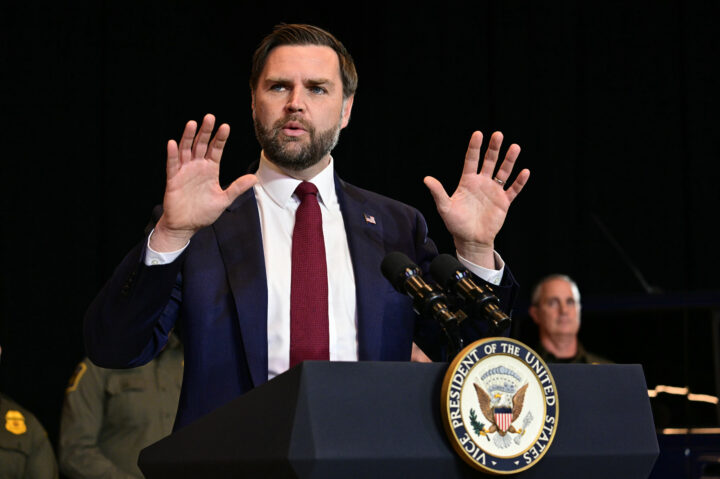
U.S. Vice President JD Vance gives remarks following a roundtable discussion with local leaders and community members amid a surge of federal immigration authorities in the area, at Royalston Square on January 22, 2026 in Minneapolis, Minnesota.
Good Thursday morning.
In today’s Daily Kickoff, we interview Gov. Josh Shapiro about recent Senate moves attempting to block U.S. military aid to Israel, and talk to Sen. Richard Blumenthal — one of seven Senate Democrats to vote last week against the weapons bans — about his efforts to restore bipartisan support for the Jewish state. We talk to Jewish leaders from communities targeted by antisemitic violence about their efforts to lobby Congress on legislation to protect religious institutions, and report on New York City Mayor Zohran Mamdani’s decision not to adopt any definition of antisemitism after scrapping City Hall’s previous adoption of the International Holocaust Remembrance Alliance’s working definition of antisemitism days into his tenure. Also in today’s Daily Kickoff: Chaim Galbut, Patrick Drahi and Hilary Krieger.
Today’s Daily Kickoff was curated by JI Executive Editor Melissa Weiss and Israel Editor Tamara Zieve, with assists from Danielle Cohen-Kanik and Marc Rod. Have a tip? Email us here.
What We’re Watching
- Israeli Ambassador to the U.S. Yechiel Leiter and Simon Karam, Lebanon’s former top envoy to Washington, are set to convene today for a second State Department-brokered meeting in as many weeks between officials from the countries. U.S. Ambassador to Israel Mike Huckabee returned to Washington earlier this week and is expected to participate in the talks.
- The talks will take place days before the expiration of a 10-day ceasefire between Jerusalem and Beirut, and a day after a Lebanese journalist for the pro-Hezbollah daily Al-Akhbar was killed in an Israeli strike on Hezbollah targets in southern Lebanon. Read more here.
- Paramount Skydance CEO David Ellison is hosting a dinner this evening at the U.S. Institute of Peace honoring President Donald Trump and CBS News’ White House correspondents amid a flurry of events around the White House Correspondents Dinner on Saturday night.
- The Jewish Democratic Council of America is hosting a candidate forum with NY-17 Democratic candidates Cait Conley and Beth Davidson. Read our interviews with Conley, a former senior counterterrorism official, and Davidson, a Rockland County legislator.
- Former Deputy Secretary of State Kurt Campbell and Walter Russell Mead are among those slated to speak today at the Hudson Institute‘s daylong New India Conference in Washington.
- Missouri Gov. Mike Kehoe, a Republican, will sign into law legislation adopting the International Holocaust Remembrance Alliance’s working definition of antisemitism.
What You Should Know
A QUICK WORD WITH JI’S mATTHEW KASSEL
As Vice President JD Vance has recently found himself navigating tenuous negotiations between the United States and Iran, his central role in the talks to end the war is highlighting his own vulnerabilities on the domestic front — where he is facing pushback from the isolationist right that is seen as part of his coalition.
In many ways, Vance’s political troubles recall his predecessor, former Vice President Kamala Harris, who in her 2024 presidential campaign drew fierce protests from far-left activists who objected to former President Joe Biden’s support for Israel amid the war in Gaza.
Harris, who has grown more openly critical of Israel since losing the race and leaving office, strained both to articulate a consistent message on Gaza that would satisfy the far and center left and to distance her campaign from an aging, unpopular president whose approach to Israel, according to her recent memoir, was not fully aligned with her own.
Anti-Israel activists continue to insist, even years after the election, that Harris’ association with Biden while he supported Israel’s war against Hamas cost her votes that contributed to her defeat, while pro-Israel Democrats claim she failed to draw red lines around growing extremism within the party that alienated moderates, and is now inflecting the midterm elections. More recently, the former vice president faced anti-Israel hecklers during a book tour last year.
In recent weeks, Vance, who is widely seen as a top 2028 presidential prospect, has likewise struggled to appease a restive coalition of anti-war critics on the populist right who feel his alignment with President Donald Trump’s robust foreign policy agenda represents not only a betrayal of their values but also the noninterventionist views he himself had long espoused.
Last week, in a disruption reminiscent of Harris’ campaign experience, Vance was notably heckled during a speaking appearance at a Turning Point USA event held at the University of Georgia, where an attendee interrupted his comments to accuse the Trump administration of supporting “genocide” in Gaza and “killing children.”
SHAPIRO SPOTLIGHT
Josh Shapiro supports U.S. aid to Israel, but calls to use it as leverage
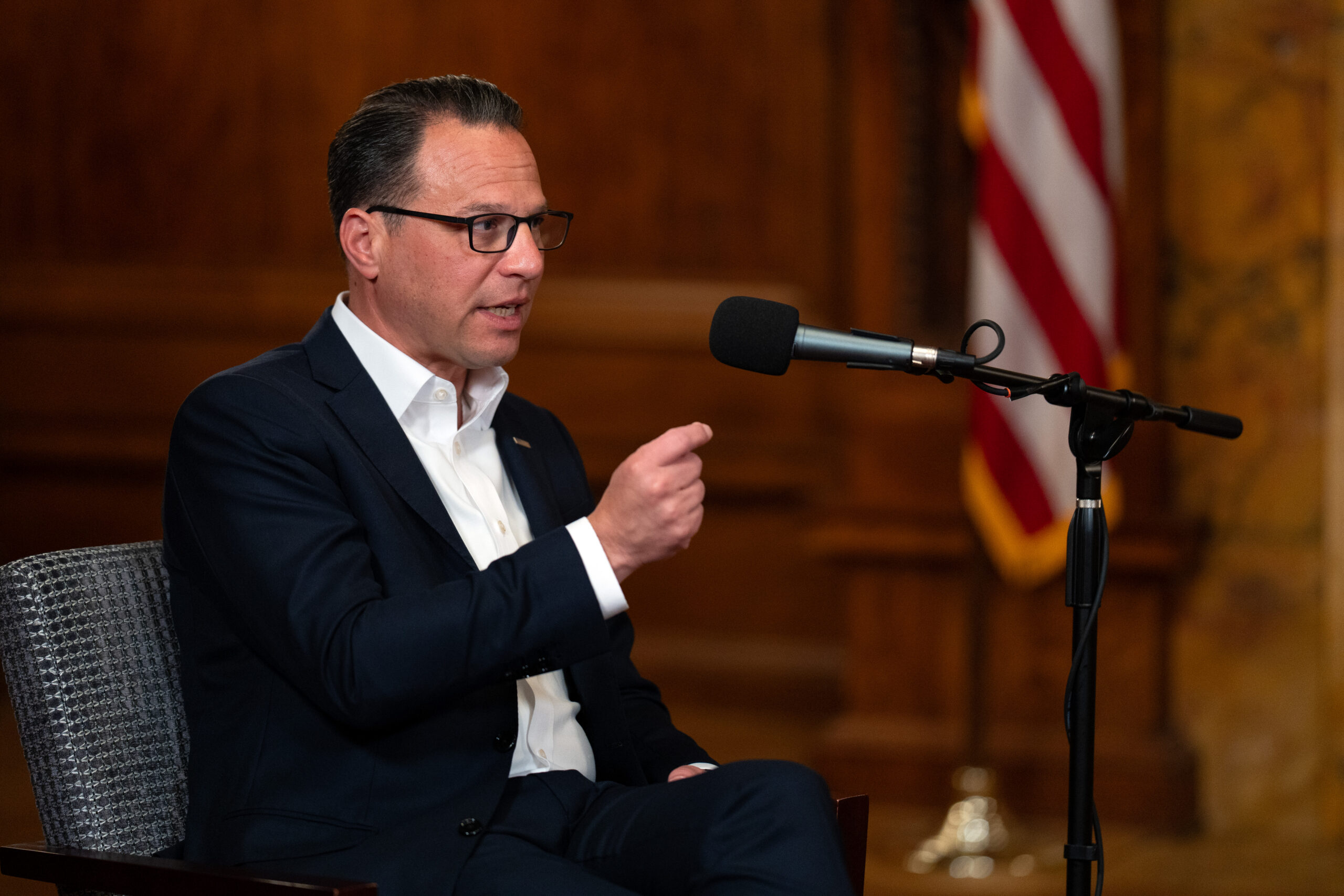
On the eve of the NFL draft on Wednesday, Pittsburgh, the host city, was in full spectacle mode. Israel, 6,000 miles away, was abuzz for a very different reason: the country was celebrating Yom HaAtzmaut, marking 78 years of independence. As he jumped between draft events, Pennsylvania Gov. Josh Shapiro shared his thoughts with Jewish Insider’s Gabby Deutch about both.
On Israel and the Iron Dome: “In the case of Israel, you have a country that is constantly being attacked with missiles and other weapons that put civilians at risk, and America is invested in providing assistance like Iron Dome to protect innocent civilians from those terrorist attacks,” said Shapiro. “I think that is in America’s national security interest.” But the swing-state governor, who appears to be mulling a presidential run in 2028, did argue that the U.S. should use its position as a major financial backer of Israel to exert leverage over the country’s use of American-made weapons. Shapiro said Washington has not done a good enough job of that.
Bonus: Last night, Shapiro co-hosted a Unity Dinner for Jewish and Black college students, part of an effort by the United Negro College Fund, Hillel International and Robert Kraft’s Blue Square Alliance Against Hate to bridge divides between the communities.
PARTNERSHIP PRIORITIES
Sen. Richard Blumenthal says he wants to work to restore eroding bipartisan support for Israel
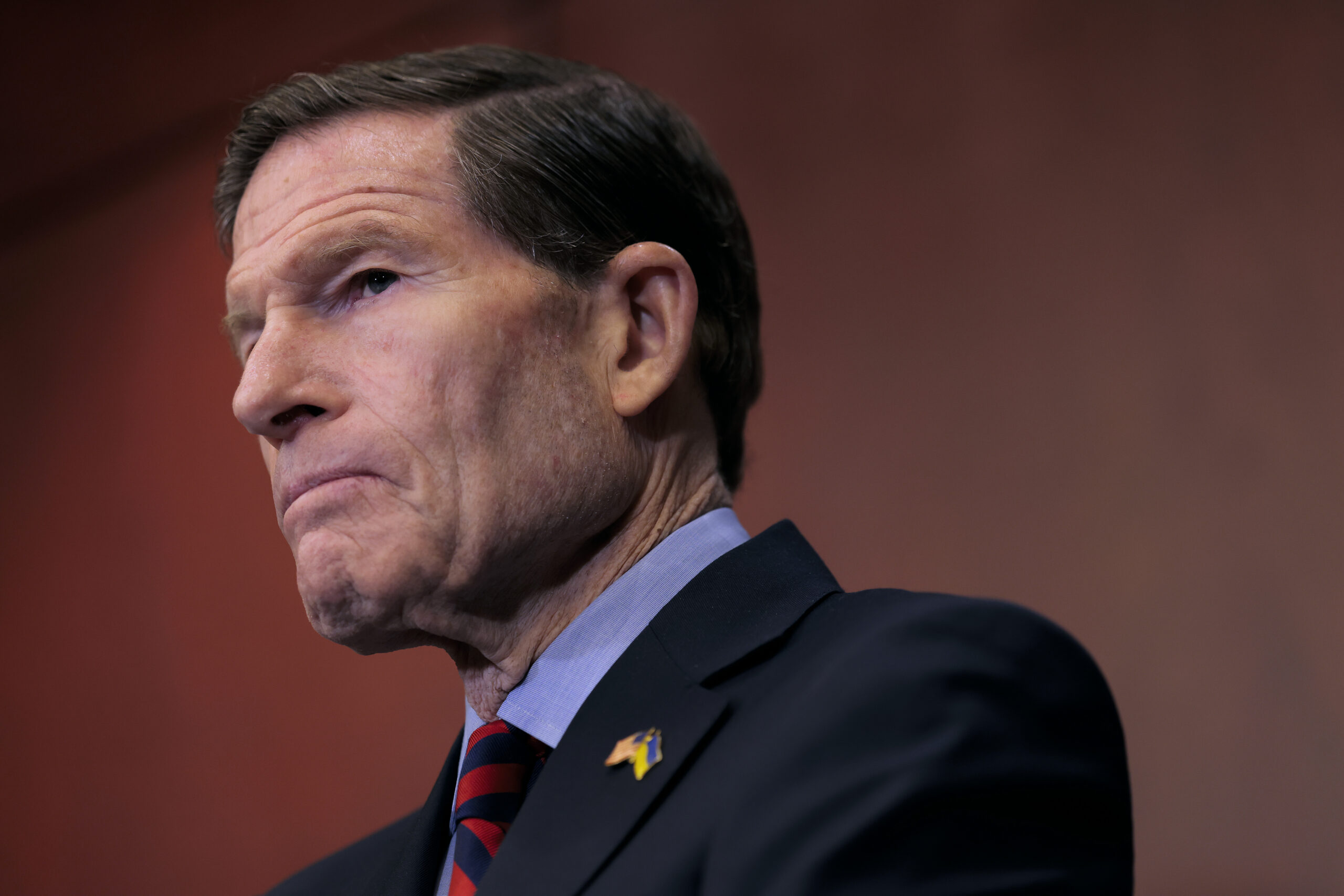
Sen. Richard Blumenthal (D-CT), one of just seven Senate Democrats to vote last week against resolutions to block U.S. arms sales to Israel, said that he still wants to maintain and restore bipartisan support for Israel, Jewish Insider’s Marc Rod reports.
Standing his ground: “An overriding goal that has been one of my most profound concerns since coming to the United States Senate is to preserve bipartisan support for Israel,” Blumenthal told JI in a brief interview on Wednesday. “I partnered with [former Sen.] John McCain (R-AZ) on traveling to the Middle East and to Israel a number of times. He believed powerfully, as I do, that the cause of Israel’s security has to be bipartisan, and I will adhere to that goal as long as I’m in this body.”
On the Hill: For the fifth time, the Senate rejected an effort by Democrats to force the administration to end the war in Iran, with the partisan battle lines on the issue remaining firmly unchanged from previous iterations of the vote. In the House, Reps. Greg Meeks (D-NY) and Ro Khanna (D-CA) also introduced new war powers resolutions on Iran, after previous efforts narrowly failed.
MAINE SQUEEZE
Elizabeth Warren shrugs off Graham Platner praise of Hamas tactics

Sen. Elizabeth Warren (D-MA) dismissed criticism of Maine Senate candidate Graham Platner’s scandals on Wednesday, after calling him “my kind of man” at his rally in Maine on Saturday, Jewish Insider’s Danielle Cohen-Kanik reports.
Standing by him: “You care about character,” CNBC host Sara Eisen said to Warren. Eisen referred to a JI report unearthing Platner’s 2014 Reddit comments in which he said “‘I dig it,’ next to a video of a bunch of terrorists killing five soldiers? I don’t know, I mean, you guys want to be the party of inclusivity, right?” Warren answered, “I want to be the party that stands up for hardworking people. I want to be the party that is transformative of an economy that right now is hip deep in corruption … and that’s what Graham Platner wants to do and I’m there to stand with him and to help in that fight.”
COMMUNAL PUSH
Leaders from communities targeted by antisemitic violence push lawmakers for security support
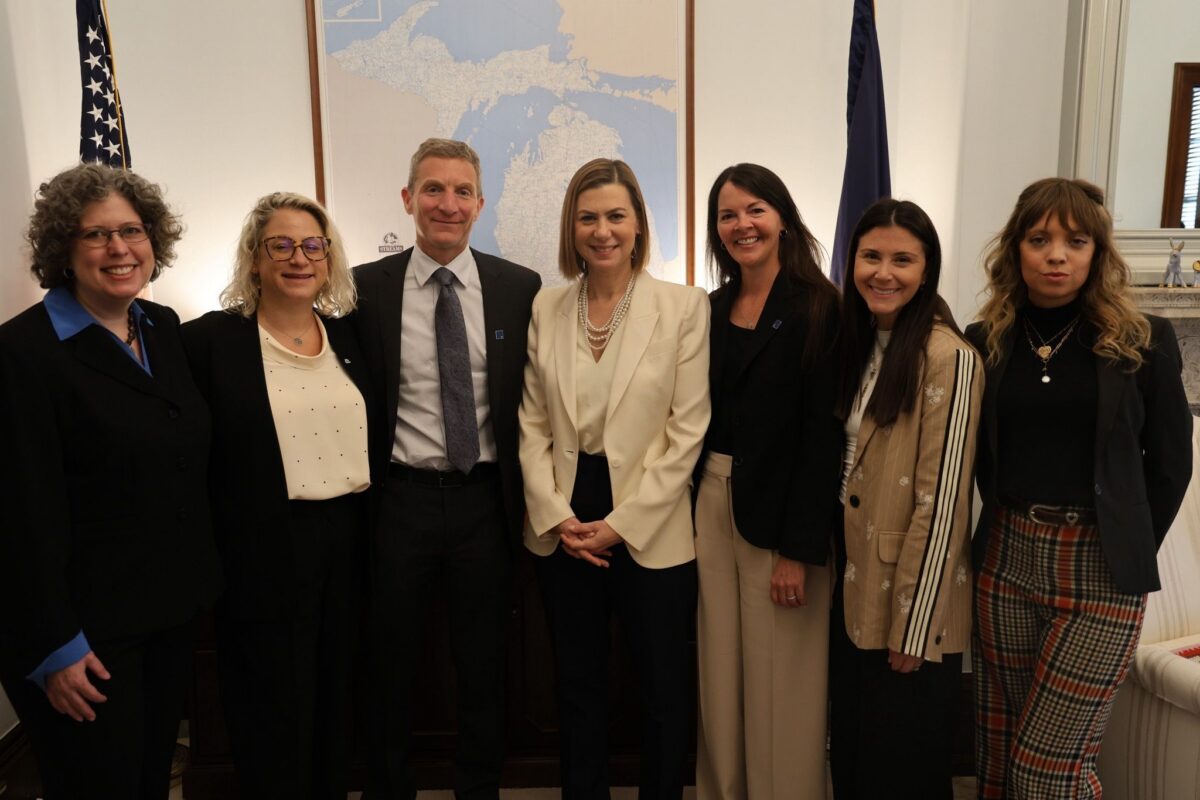
Jewish leaders from communities impacted by antisemitic violence in the past year met with House and Senate leaders on Capitol Hill on Wednesday to advocate for additional federal security assistance, Jewish Insider’s Marc Rod reports. The advocates represented Temple Israel in West Bloomfield, Mich., Beth Israel Congregation in Jackson, Miss., a hostage awareness march in Boulder, Colo., and the Capital Jewish Museum in Washington.
Notable quotable: “I will never forget the phone call. Or the images on the news of smoke rising from the place where I had just left my child,” Taylor Weintraub, a parent of a child who attended Temple Israel, told reporters on Wednesday morning. “Thank God, none of the children were physically hurt. But that wasn’t luck, that was preparation — reinforced doors, trained security, investments made because we knew this could happen. But here’s what keeps me up at night: we are the lucky ones.”
DEFINITION DEBATE
Mamdani won’t set definition of antisemitism after repealing IHRA, his antisemitism czar says
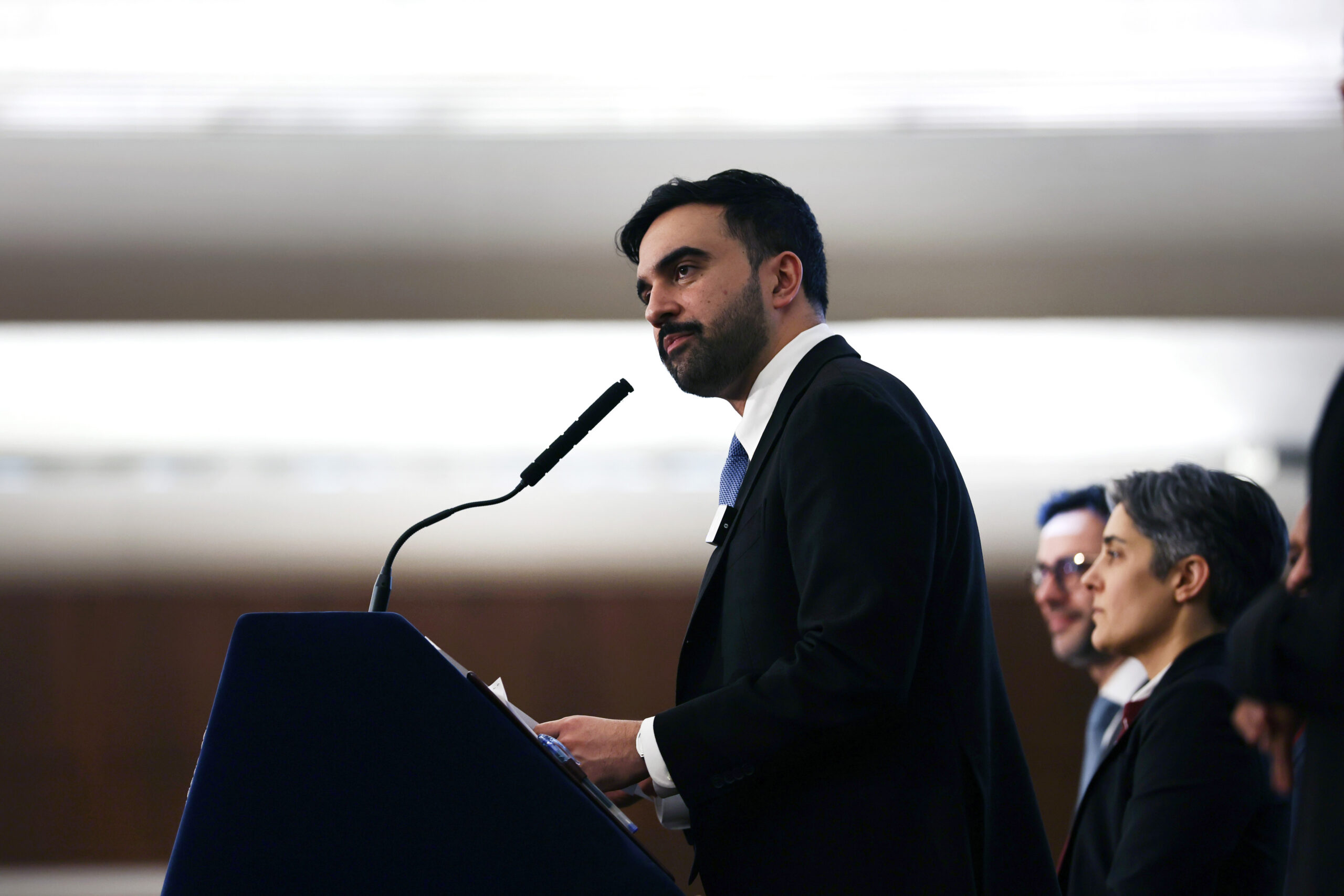
New York City Mayor Zohran Mamdani’s antisemitism czar said on Wednesday that his administration won’t replace the International Holocaust Remembrance Alliance’s working definition of antisemitism he wiped off the books his first day on the job, Jewish Insider’s Will Bredderman reports.
What she said: Speaking before the City Council’s Task Force Antisemitism alongside officials from the NYPD, the executive director of the Mayor’s Office to Combat Antisemitism, Phylisa Wisdom, said that city agencies do not and will not work off any official definition of antisemitism. “Across city government there is not a definition codified for any form of hate at all,” Wisdom told Republican Councilmember Inna Vernikov, one of the task force’s two co-chairs. “We don’t believe that there needs to be a codified definition at all.”
Manhattan moves: New York City Council Speaker Julie Menin warned Wednesday morning that if Mamdani vetoes the council’s legislation intended to regulate protests at religious and educational sites, the city will face “more divisiveness,” calling the decision a critical test for the mayor, Jewish Insider’s Haley Cohen reports.
Q&A
Former Secretary of State Mike Pompeo won’t rule out 2028 run

Former Secretary of State Mike Pompeo is keeping the door open to a possible 2028 presidential run, telling Jewish Insider’s Emily Jacobs in a wide-ranging interview “only the good Lord knows” what comes next as he continues to reestablish himself in the private sector and policy world after serving in the first Trump administration.
Looking ahead: Pompeo emphasized that there will be a “donnybrook” of competing visions for both parties in the next election cycle, and urged candidates to focus on “important issues” rather than online theatrics. He also praised Columbia University, where he now teaches at the School of International and Public Affairs, for “beg[inning] to get back the correct leadership … in a way where more voices can be heard.”
Out of the running: Sen. Jon Ossoff (D-GA) ruled out a 2028 presidential run, telling MSNOW he had “zero interest” in mounting a bid.
Worthy Reads
Dems’ El-Sayed Trap: The Atlantic’s Jonathan Chait posits that far-left Michigan Senate candidate Abdul El-Sayed, who is rising in polls against Democratic opponents, could win the primary but fall short in the general election due to his more radical positions and embrace of terrorist supporters. “The Democratic Party’s interest is to tamp down the importance of Israel. But El-Sayed’s best strategy to win the nomination is to play up the issue, which drives apart the party’s base and allows him to claim the biggest slice. … A candidate could potentially win statewide election in Michigan after soliciting endorsements from supporters of terrorism, but it won’t be easy. The Democrat’s likely opponent in November, former Representative Mike Rogers, presents as a mainstream Republican.” [TheAtlantic]
The Improbable Intermediary: The Financial Times’ Humza Jilani and Andrew England spotlights Pakistani army chief Asim Munir’s efforts to mediate talks to reach an end to the war between the U.S. and Iran. “During his stints heading Pakistan’s Inter-Services Intelligence agency and the military intelligence wing, Munir became familiar with Iran’s various power bases. This month, he visited Iran’s joint military command headquarters in Tehran and met its head, Major General Ali Abdollahi. The field marshal’s ascent into Trump’s orbit has been more improbable…” [FT]
Pakistan’s Preoccupation: In The Wall Street Journal, the American Enterprise Institute’s Sadanand Dhume suggests that Pakistan will “struggle to prosper in the modern world” if it continues its “visceral hostility” to Israel. “Pakistanis often frame talk of normalization as doing Israel — and by extension, the U.S. — a favor. In reality, Islamabad would be doing itself a favor. An obsession with Israel is often the hallmark of a country that can’t get its own act together. … To turn this ship around, Pakistan needs to see the world as it is, not as it would like it to be. It could learn from India, which jettisoned antipathy toward Israel in the early 1990s, at around the same time that it embraced a more market-based economic outlook.” [WSJ]
Word on the Street
The Defense Department announced that Navy Secretary John Phelan was departing, without giving a reason for his exit after 13 months in the role…
U.S. Ambassador to Turkey Tom Barrack doubled down on recent comments appearing to equate Israel and Hezbollah, saying he was “simply stating the obvious reality on the ground” when he said at a conference in Turkey last week that “everybody has been equally untrustworthy”…
Politico spotlights Keith Sonderling, a deputy to former Labor Secretary Lori Chavez-DeRemer who was tapped by the Trump administration to serve as acting secretary following her departure earlier this week; one GOP insider told Politico that Sonderling, who also served in the first Trump administration, has been “the pivot point of all labor and workforce policy for this administration”…
Rep. David Scott (D-GA) died at age 80; Scott, who was elected to the House in 2002 after decades in state politics, was the fourth House Democrat to die in office this Congress…
Rep. Tom Kean Jr. (R-NJ) has been absent from the House for nearly two months as the New Jersey Republican faces unspecified health issues; a consultant for Kean said the lawmaker, who represents the state’s most competitive purple seat, “will be back on a regular full schedule very soon”…
A senior Pentagon official told House Armed Services Committee members in a closed briefing this week that efforts to clear mines placed by Iran in the Strait of Hormuz could take six months…
Iran seized Liberian- and Panamanian-flagged ships transiting through the Strait of Hormuz; White House Press Secretary Karoline Leavitt said that the seizures did not violate the ceasefire as neither boat was U.S.- or Israeli-flagged…
Paolo Zampolli, the U.S. special representative for global partnerships, asked FIFA to replace Iran with Italy in this summer’s World Cup, after the Italian team failed to qualify for the tournament; the effort comes as the Trump administration looks to repair its relationship with Italian Prime Minister Giorgia Meloni, with whom President Donald Trump has clashed in recent months over the president’s comments about Pope Leo XIV over the Iran war…
Washington, D.C., mayoral candidate Janeese Lewis George missed a scheduled meeting with Jewish community members, with her staff citing a City Council hearing schedule change, Jewish Insider‘s Gabby Deutch reports; Ron Halber, the CEO of the Jewish Community Relations Council of Greater Washington said “We know that there are many demands on their time and we understand completely when unanticipated scheduling changes come up”…
High school basketball forward Chaim Galbut committed to Duquesne, which discovered the 6-foot-7 Orthodox Jewish teen on social media, as he aims to become the first observant Jew to play four years of D1 basketball…
Mitchell Rales is donating $116 million to support efforts to send works from the National Gallery of Art, where he serves as a longtime trustee, to smaller museums around the country that are facing fiscal challenges and declining attendance…
The New York Times spotlights Rabbi Shalom Landau, who is using TikTok and Instagram to share Jewish teachings beyond the Jewish community; read JI’s December 2025 profile of Landau here…
Mark Cuban’s Harbinger Sports Partners has reportedly garnered $450 million in investor commitments as it closes its first funding round…
Former Ben & Jerry’s CEO David Stever, who was fired by the ice cream company’s parent Unilever as the conglomerate clashed with its subsidiary over social issues, including product sales in Israel, was named the new CEO of Jeni’s Splendid Ice Creams…
The Financial Times calls Patrick Drahi’s potential sale of his SFR to French telecoms companies for $24 billion “a masterclass in hardball negotiation”…
A Canadian court found a 17-year-old guilty of plotting to murder Jews in an Islamic State-inspired attack in the country’s capital; a trial for the teen’s alleged co-conspirator is set to begin today…
Australia’s University of Queensland Press scrapped the publication of an indigenous author’s upcoming book after the book’s illustrator penned an essay in response to last year’s terror attack targeting a Bondi Beach Hanukkah celebration calling the victims of the attack “affluent beneficiaries of imperialism” and suggesting that “White, Jewish settler victimhood demands exceptional, heightened grief”…
Two Palestinians — a student and a parent of a student — were killed at a West Bank school by Israeli settlers; the IDF said it was investigating the incident, which took place after rocks were thrown at a car carrying Israeli passengers…
The New York Times spotlights India’s B’nei Menashe community, one of the “lost tribes” of Israel, as the remaining 5,800 members of the Jewish community prepare to move to Israel, with 250 flying to the Jewish state today…
The Hudson Institute’s Nate Sibley is joining the Helsinki Commission as a senior policy advisor focusing on illicit finance and economic statecraft…
70 Faces Media tapped Hilary Krieger as executive editor of the Jewish Telegraph Agency and New York Jewish Week…
Rabbi Margo Hughes-Robinson was named the executive director of New York Jewish Agenda, months after Phylisa Wisdom, who previously held the job, joined the Mamdani administration in New York City…
Pic of the Day

Israelis celebrated Yom HaAtzmaut, the country’s Independence Day, on Wednesday afternoon at Tel Aviv’s Charles Clore Park.
Birthdays

Founding member of the rock band the National, he was a collaborator on several of Taylor Swift’s studio albums, Aaron Brooking Dessner… and his twin brother, also a member of the National, Bryce David Dessner, both turn 50…
Retired stage, television and film actor, Alan Oppenheimer turns 96… Owner of Council Bluffs, Iowa-based Ganeeden Metals, a multigenerational scrap metal recycling firm, Harold Edelman… Retired real estate brokerage executive, he held leadership positions at Merrill Lynch Realty, Prudential California Realty and Fox & Carskadon, Terry Pullan… Retail industry analyst and portfolio manager at Berman Capital, he is the former president of JCPenney Credit Services and VP of credit at Macy’s, Steve Kernkraut… Chair emeritus of Israel Policy Forum, he serves as chairman of Trenton Biogas, an organics recycling-to-energy business in Trenton, Peter A. Joseph… Health services researcher focused on smoking cessation programs for women, maternal health and child health, Judith Katzburg, PhD, MPH, RN… Deputy director of NCSEJ, the National Coalition Supporting Eurasian Jewry, Lesley L. Weiss… Principal of Philadelphia-based Ceisler Media & Issue Advocacy, Larry Ceisler turns 70… Gary R. Pickholz… Retail sales manager at Chrissy’s Collection, Janni Jaffe… Co-founder of Gryphon Software, he is the author of a book on the history of antisemitism, Gabriel Wilensky turns 62… CEO of Hermitage Capital Management, he is the primary proponent worldwide of the Magnitsky Act, Bill Browder turns 62… DC-based executive director of the Orthodox Union’s Advocacy Center, Nathan J. Diament… Heiress and businesswoman, daughter of Ronald Lauder, style and image director for the Estée Lauder Companies, Aerin Lauder Zinterhofer turns 56… CEO of Aish HaTorah, Rabbi Steven Burg turns 54… Former president and CEO at Americans For Peace Now, now president and CEO at New Jewish Narrative, Hadar Susskind… Jewelry designer, Jennifer “Jen” Meyer turns 49… Director of policy initiatives at Maimonides Fund, Ariella Saperstein… Founder and CEO at 90 West, a Boston-based strategic communications firm, Alexander Goldstein… Co-founder of Edgeline Films, he co-directed and co-produced “Weiner,” a documentary about Anthony Weiner’s campaign for mayor of NYC in 2013, Joshua Kriegman… Vertical lead at Red Banyan, he was the communications director at the Republican Jewish Coalition, Neil Boylan Strauss… Israeli singer-songwriter, now based in Seville, Spain, known for Ladino music of the exiled Jews of Portugal and Spain, Mor Karbasi turns 40… Deputy director of the Mid-Atlantic and Florida for J Street, Adi Adamit-Gorstein… Senior editor at Axios, Alexis Kleinman… Former University of Michigan quarterback, now a fund manager in NYC, Alex Swieca… American Jewish Committee ACCESS New York board member, Sam Sorkin… Director of the Jewish Renewal Administration, Elisheva Mazya… Executive editor and strategist at ILTV News, Maayan Jaffe-Hoffman…
J Street’s Ilan Goldenberg said the surge in far-left calls to cut off missile-defense aid ‘stirred up the conversation a little more’ but says the group was moving that way regardless

Saeed Qaq/Anadolu via Getty Images
Rockets fired from Gaza are neutralized in the air by Israel's 'Iron Dome' air defense system on the fourth day of the clashes in the city of Ashkelon, Israel on October 10, 2023.
In recent years, as the progressive Israel advocacy group J Street joined left-wing calls to place restrictions on U.S. military aid to Israel, support for funding Israel’s Iron Dome missile-defense system remained a sacred cow for the group — the final aspect of the old-school U.S.-Israel defense relationship that, even for most progressives, was unaffected by the broader Democratic shift away from unconditional support for Israel.
That consensus has shattered in recent weeks. Instead of steering the conversation among Democrats, where J Street maintains a solid base of support, the organization found itself playing catch-up to the progressive lawmakers it supports after several of them announced in early April that they think the U.S. should no longer fund Iron Dome batteries.
J Street released a statement on April 13 calling for the U.S. to cease funding Iron Dome batteries, arguing that Israel — a wealthy nation with a substantial defense budget — should pay for its own missile-defense systems. The announcement marked a significant policy shift for J Street, which has long stated that a congressional candidate’s support for U.S. financial backing of the Iron Dome system is one of its most important endorsement criteria.
J Street’s leaders have insisted that they reached this conclusion independently, and not as a result of shifting political winds. But in a conversation on Monday, J Street’s chief policy officer, Ilan Goldenberg, acknowledged that progressives’ rapid shift on the issue factored into J Street’s announcement, even as the group insists it was moving in that direction anyway.
“It stirred up the conversation a little more, but that memo was already written,” Goldenberg told Jewish Insider. “It’s not like this came out of nowhere. It was part of a track record of things we were doing. AOC kind of spurred up the conversation further.”
Goldenberg was referring to Rep. Alexandria Ocasio-Cortez (D-NY) telling the Democratic Socialists of America’s New York chapter that she opposes “any spending on arms for Israel, including so-called defensive capabilities,” as she also called for an arms embargo on the country. Several progressive lawmakers followed, including Reps. Ro Khanna (D-CA), Jim McGovern (D-MA), Jared Huffman (D-CA) and Mark Pocan (D-WI), all of whom were endorsed by J Street and voted for Iron Dome funding in 2021. Ocasio-Cortez, who is not a J Street endorsee, voted “present” on that 2021 legislation but signed onto a 2024 statement with several other progressive lawmakers saying they “support strengthening the Iron Dome and other defense systems,” even as they opposed offensive weapons sales to Israel.
“It’s been a combination of knowing this is coming, thinking through the substance of it ourselves and seeing the politics shift on it altogether that brought us to this point of making a decision about a week and a half ago to move in this direction,” Goldenberg said.
Alan Solomont, a former U.S. ambassador to Spain and the past board chair of J Street, said the decision was something J Street was heading towards on its own. Since the beginning of this year, the group has begun calling for an end to U.S. military aid to Israel, saying that Israel can afford to buy its own weapons systems, though it had not specifically made that argument for the Iron Dome until last week.
“We’re not following anyone else’s political lead. I think that, yes, we have been thinking about how we treat our military assistance in light of the policies of the current [Israeli] government, and we’ve been thinking about that for some time,” Solomont told JI last week. “Why people continue to support a government that is undermining Israel’s future is still sort of a puzzle to me.”
J Street’s leaders insist they are merely following the lead of Israeli Prime Minister Benjamin Netanyahu, who said in an interview with The Economist in January that Israel is seeking to end U.S. financial assistance in the next decade. Sen. Lindsey Graham (R-SC), a staunch Israel ally and a foreign policy hawk, then said he would accelerate that process, but he softened that position after a meeting with Netanyahu.
“Israel’s in a position now where it can pay for its weapons itself as a country that is as wealthy and powerful and successful as it is,” said Goldenberg, who served as Jewish outreach director on former Vice President Kamala Harris’ 2024 presidential campaign. “I think it got accelerated when Bibi and Lindsey Graham came out early this year.”
Still, Netanyahu’s call to phase out U.S. military aid has not yet resulted in any major policy shifts just yet, as the Memorandum of Understanding that provides Israel with its current $3.8 billion in annual military aid runs through 2028. Goldenberg said J Street wants to see the financial assistance “phased out in a responsible, rapid manner,” which he noted is “different than saying ‘cut it all off tomorrow.’” When asked whether J Street would support another Iron Dome missile-defense package if it were introduced at present, he suggested the organization would not.
“I would say that probably we support that not being in the supplemental,” Goldenberg said.
At the same time that J Street and many progressive lawmakers are calling for an end to U.S. financial assistance for the Iron Dome, other far-left candidates don’t think Israel should have access to Iron Dome batteries at all, even if paid for with its own funds.
Abdul El-Sayed, a candidate for Senate in Michigan, has said the U.S. should not sell any weapons to Israel. DSA and other far-left groups argue that Israel’s access to strong missile-defense systems like the Iron Dome allow it to perpetuate bombing campaigns in Gaza and Lebanon because Israeli civilians are protected, and therefore the Iron Dome is responsible for bloodshed in the region. J Street argues that its position is holding the line against that more extreme view.
“I think that is a position that we need to guard against. We need to recognize Israel’s legitimate security needs,” Solomont said. “We should certainly be concerned about Israel’s security, and work with Israel as an ally around its security. Our commitment to Iron Dome is simply that we think that Israel, with an economy and per capita GDP that is higher than other allies — we’re just following Netanyahu’s lead to say that Israel can pay for these things itself.”
Two sources told JI the president pushed back on Netanyahu’s claims about the prudence of Israel’s proposal to end U.S. military assistance over the next decade
Joe Raedle/Getty Images
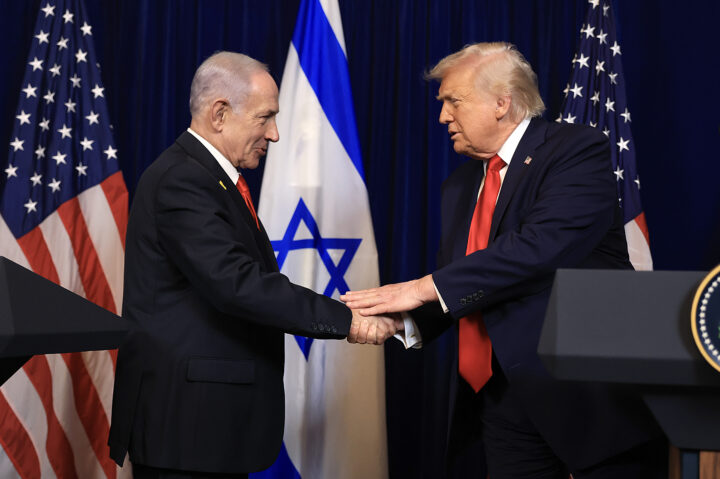
President Donald Trump shakes hands with Israeli Prime Minister Benjamin Netanyahu during a press conference at his Mar-a-Lago club on December 29, 2025 in Palm Beach, Florida.
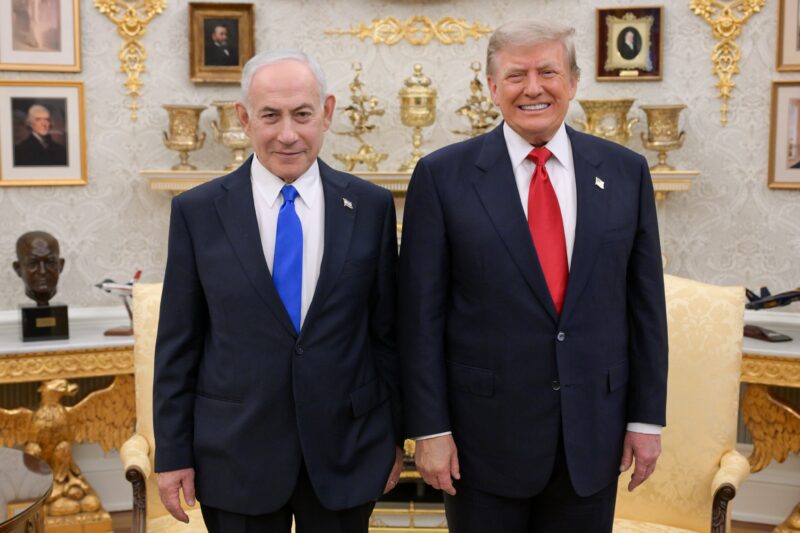
When Israeli Prime Minister Benjamin Netanyahu proposed winding down U.S. military aid late last year, President Donald Trump was bewildered and did not immediately support the move, two sources familiar with the matter told Jewish Insider.
Since then, Netanyahu has announced his intentions to move ahead with the plan anyway.
Netanyahu pitched the president on his proposal while visiting Trump at his Mar-a-Lago estate in Palm Beach, Fla., in late December, the Israeli prime minister told The Economist in an interview released on Friday. The idea was spearheaded by Ron Dermer, Israel’s former minister of strategic affairs and a top Netanyahu advisor, according to two sources familiar with the matter.
Dermer has defended the idea to U.S. lawmakers and other officials, arguing that such a move would improve the Jewish state’s embattled reputation in the United States, a claim that Netanyahu repeated to Trump. Since Dermer left government late last year, Israeli Ambassador to the U.S. Yechiel Leiter has become the point person on the matter, a source close to the prime minister told JI.
Netanyahu even suggested that Israel may not take or could return some of the military aid it is set to receive from the U.S. in 2027 and 2028 under the terms of the current memorandum of understanding, one source said.
Trump could not understand why Netanyahu would propose ending American military aid to Israel and disagrees that the move would improve U.S. public opinion on the Jewish state, one source familiar with the president’s perspective told JI. He is skeptical that the plan would benefit either country, but is also not dismissing it out of hand, they said.
Netanyahu departed Trump’s Palm Beach resort on New Year’s Day without having committed to going through with or abandoning the plan. He continued engaging with U.S. lawmakers about the idea in the week and a half that followed, two congressional sources familiar with the matter said, with Netanyahu ultimately announcing last week that the plan was “in the works.”
“We’ve come of age and we’ve developed incredible capacity,” Netanyahu told The Economist. “And our economy, which will reach, certainly within a decade, will reach about a trillion dollars — it’s not a huge economy, but it’s not a small economy. So I want to taper off military aid within the next 10 years.”
“And that’s not saying that I don’t want to fight for the allegiance and support of the American people — I do, you would have to be crazy not to,” he continued.
White House Deputy Press Secretary Anna Kelly told JI in a statement regarding the meeting that “Israel has had no better friend in its history than President Trump. The administration continues to work closely with our ally Israel to successfully implement the President’s 20 Point Plan for Peace and strengthen regional security in the Middle East. We do not detail the President’s private conversations — any announcements would come from the administration directly.”
The apparent disconnect between the Israeli and U.S. positions on aid comes as the next MOU is being negotiated between the two countries, with the current 10-year agreement coming to an end in 2028.
One source said they understand Trump to be supportive of continued aid, something the Israelis have miscalculated, because “the president sees the aid relationship as a bridge to potentially restoring American manufacturing; essentially, giving Israel money to invest in the American industrial base.”
Israel receives $3.3 billion annually from the U.S. under the current MOU in foreign military financing, which usually must be used to purchase American defense products and services. Israel is unique in that it is allowed to use a portion of its FMF for domestic procurement, a benefit that is set to be phased out by the MOU’s end in 2028.
The other $500 million that Israel receives annually under the MOU is earmarked for joint missile-defense programs, such as Iron Dome, David’s Sling and the Arrow systems, which is appropriated directly to the Department of Defense, similarly to other U.S.-Israel cooperative programs including anti-tunneling and drone initiatives. This method of funding, appropriated to the U.S. government rather than directly to Israel, could be expanded to replace FMF if it is wound down.
Likud lawmaker Amit Halevi, who has been the primary engine within the party pushing to phase out U.S. military aid, told JI that the model Israel has been presenting to the Trump administration and on Capitol Hill is this one of “joint projects and investments.”
While Netanyahu has not detailed what he thinks phasing out U.S. aid would entail, Halevi’s proposal involves shifting to jointly funded research and development projects in defense, cybersecurity and intelligence.
Halevi said that Netanyahu “has a list of things he wants to get done before the next election,” which is officially set for late October but could take place sooner, and that an “MOU that he sees as an achievement” is likely on that list.
The Likud MK has led multiple Knesset subcommittee meetings on the matter, in which representatives from Dermer’s office said they were seriously discussing changing the military aid model.
Halevi argued that Netanyahu’s remarks in The Economist interview are unique in that it is the first time the prime minister is saying he wants Israel to eventually receive no aid at all.
Two of Netanyahu’s spokespeople, however, said that Netanyahu’s position is not new, citing his comments to conservative commentator Ben Shapiro in October and Australian journalist Erin Molan in November. In both interviews, Netanyahu recounted that he phased out American financial aid to Israel in his first term in office in 1996, and that he intends to do the same for military aid.
“I am committed to making Israel as fully self-sufficient as possible,” Netanyahu told Shapiro. “We can transform our military defense industry, make a quantum jump to be able to be self-sufficient and to share with America the extraordinary developments that we have.”
Netanyahu also said in a Cabinet meeting in May that “we receive close to $4 billion for arms. I think we will have to wean ourselves off of American security aid.”
His spokespeople had no further comment when asked if anything had changed in light of Netanyahu’s meeting with Trump in December.
Last March, Leiter canceled a meeting with Halevi over his advocacy on the Hill against continuing aid. Weeks earlier, Leiter pulled out of a Heritage Foundation event due to the publication of a paper that called for the gradual elimination of U.S. aid to Israel.
Yet, in September, reflecting the shift in Israel’s position, Leiter told JI that “the nature of any MOU or collaborative effort is going to change,” and it may consist of “greater [joint] research and development between our two countries, rather than relying on American weapons.”
One American source familiar with the negotiations said, “The Israelis just have to come in and ask for what they need and stop trying to figure out what the U.S. wants to hear.”
Please log in if you already have a subscription, or subscribe to access the latest updates.
 Continue with Google
 Continue with Apple