







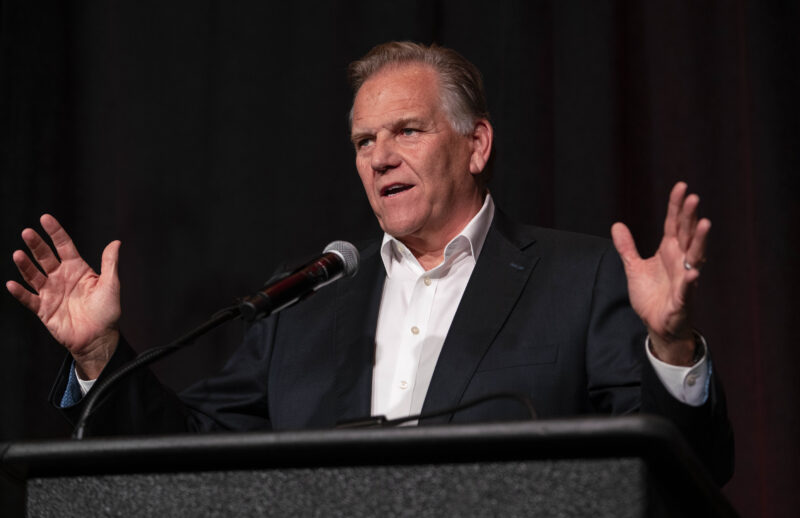
























The report ‘makes clear that antisemitism and all other forms of discrimination and bigotry have no place at UCLA,’ said Chancellor Julio Frenk, who launched the task force

Myung J. Chun / Los Angeles Times via Getty Images
Campus of UCLA in Westwood, CA on Tuesday, May 5, 2026.


 Add JewishInsider on Google
An antisemitism task force championed by UCLA Chancellor Julio Frenk released a report on Thursday urging the university to intensify its crackdown on anti-Jewish harassment, as the school continues to be enmeshed in legal battles with the Trump administration.
The 42-page set of recommendations, issued by the Initiative to Combat Antisemitism action group, suggested that UCLA set a deadline of 120 days to resolve disciplinary cases. It also said the university should more clearly define consequences for violations to Title VI of the Civil Rights Act of 1964.
The committee further urged UCLA to prevent faculty groups from using university resources or authority to express institutional support for anti-Zionism or the Boycott, Divestment and Sanctions movement and to implement the International Holocaust Remembrance Alliance’s working definition of antisemitism into rule enforcement and policy formation.
“The roadmap announced today turns our values into action. It makes clear that antisemitism and all other forms discrimination and bigotry have no place at UCLA,” said Frenk, who took over the school’s leadership last year.
UCLA’s Initiative to Combat Antisemitism was formed last year following recommendations of the 2024 Task Force to Combat Antisemitism and Anti-Israeli Bias. It is led by Stuart Gabriel, a professor in UCLA’s Anderson School of Management.
“Our work at UCLA is building a strong foundation for a campus free of discrimination, and we hope our initiative can serve as a blueprint for colleges and universities nationwide as they seek to build more inclusive campuses,” Gabriel said.
Daniel Gold, a member of the committee and executive director of UCLA Hillel, told Jewish Insider, “While initial work of our Initiative has concluded with the release of this important report, the work of everyone else at UCLA now begins to implement these changes and uphold the commitment towards a campus free of antisemitism.”
The report comes shortly after the school’s student government condemned a campus event featuring former Israeli hostage Omer Shem Tov, labeling the speaker selection as “selective platforming of narratives that obscure the broader reality of ongoing state violence” and “a troubling disregard for Palestinian life.”
UC Regent Jay Sures told JI at the time that UCLA’s student government was “shortsighted, antisemitic or both,” and called its members “lunatics” for condemning Shem Tov’s appearance. Sures, who is Jewish, had his home vandalized last year by UCLA Students for Justice in Palestine, which was since banned from campus.
The federal government has been in a monthslong legal battle with UCLA, including a February lawsuit alleging that the campus failed to protect Jewish and Israeli faculty and staff in accordance with Title VII of the Civil Rights Act of 1964, which prohibits employment discrimination.
The DOJ complaint alleges that since the Oct. 7, 2023, terrorist attacks in Israel, UCLA “has ignored, and continues to ignore, gross and repeated violations of viewpoint-neutral time, place, and manner restrictions. Jewish and Israeli faculty have been physically threatened, had their classrooms disrupted, and had their workplaces papered with disturbing images.”
Last year, UCLA settled a lawsuit with Jewish students who alleged that the university permitted antisemitic conduct during the spring 2024 anti-Israel encampments on the campus.
The new report does not specifically mention the Trump administration crackdown.
The report calls for more ideological diversity among faculty, while recommending a balance between free expression and preventing discrimination
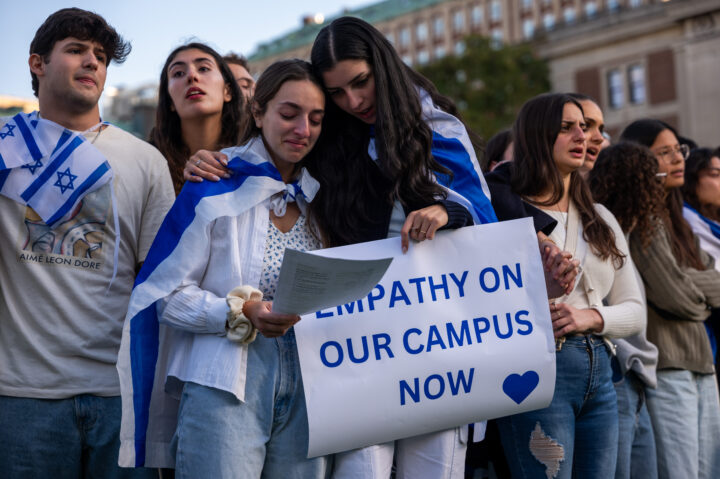
Spencer Platt/Getty Images
Columbia students participate in a rally and vigil in support of Israel in response to a neighboring student rally in support of the Palestinians at the university on October 12, 2023 in New York City.
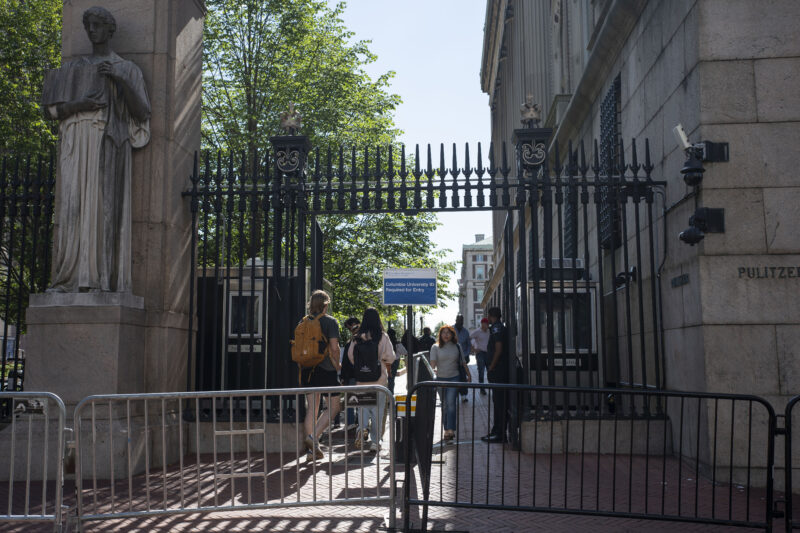
The Columbia University task force overseeing efforts to combat antisemitism on campus released its fourth and final report on Tuesday, spotlighting Columbia’s lack of full-time Middle East faculty who are not explicitly anti-Zionist.
According to the report, “Columbia lacks full-time tenure line faculty expertise in Middle East history, politics, political economy and policy that is not explicitly anti-Zionist.” The absence of ideological diversity is having an impact on course offerings — in listening sessions, the task force said it heard from students that classes at the university more often than not treat Zionism as entirely illegitimate.
The report calls on the university to “work quickly to add more intellectual diversity to these offerings” and to “establish new chairs at a senior level in Middle East history, politics, political economy and policy.”
Furthermore, it claims that “academic resources available for teaching and research on Jewish and Israeli topics at Columbia are insufficient, especially in comparison to the resources available for teaching and research on other parts of the Middle East. The University should work quickly and energetically to build up its capabilities here, through academically first-rate full time tenure line additions to the faculty and the curriculum.”
The report also cites numerous instances in which the academic freedom of Jewish and Israeli students was not protected in classrooms and suggests remedies — while trying to find a delicate balance between allowing for free expression and cracking down on discrimination.
“We urge the University to protect freedom of expression to the maximum extent possible while also complying with antidiscrimination laws,” states the report, titled The Classroom Experience at Columbia: Protecting the Academic Freedom of Faculty and Students. “Censorship has no place at Columbia. Neither does discrimination.”
Columbia University Acting President Claire Shipman said in a statement on Tuesday that the university will “continue to work on implementing the recommendations of the task force and addressing antisemitism on our campus.”
“We have also been working this semester to focus on discrimination and hate more broadly on our campuses — which has long been a strong recommendation of the task force. All of this work must become part of our DNA,” said Shipman.
Columbia’s Task Force to Combat Antisemitism was formed in November 2023 as a response to a surge of antisemitism on campus that began as an immediate response to the Oct. 7, 2023, terrorist attacks in Israel. Throughout the following two years of war in Gaza, scenes of masked anti-Israel protesters barging into classrooms and hourslong demonstrations in the center of campus calling for an “intifada revolution” became commonplace at Columbia, which has faced some of the worst antisemitic incidents of any college campus since Oct. 7.
The new report is the first one released since Columbia reached a deal with the Trump administration in July to restore some $400 million in federal funding.
The funding was frozen by the government in March due to the university’s record dealing with antisemitism. The campus has seen less turbulence since the deal was struck and reforms aimed at combating antisemitism — some based on the task force’s earlier recommendations — were announced over the summer.
The 13-member task force, which is led by by Ester Fuchs, professor of international and public affairs and political science; Nicholas Lemann, professor of journalism and dean emeritus of Columbia Journalism School; and David Schizer, professor of law and economics and dean emeritus of Columbia Law School, suggested a range of free expression and anti-discrimination policies that Columbia could adopt.
Among the recommendations are that the university disclose, before students enroll in a course, if the material has the potential to cause students to feel excluded or silenced. If students are not aware in advance, or if it is a required course, and a controversial topic — such as the Middle East — is not the stated topic, “it’s not appropriate to make it a central part of the course,” the report states.
The authors write that academic freedom “entails openness to scholars and students from other countries.” As such, the report states that boycotts of faculty, students, researchers or scholars from other countries “are not consistent with academic freedom.” The academic boycott movement consistently targets Israel, “proposing to restrict the research, teaching, and studying opportunities available to a cohort whose members are overwhelmingly Jewish,” the report continues. Student protesters at Columbia have frequently demanded that the university end its partnership with Tel Aviv University.
In addition, the task force calls for consistency across all university anti-discrimination policies to include Jewish and Israeli students and for applying anti-discrimination policies in regards to classroom disruptions targeting students or instructors for their identity in a protected class.
The latest report builds upon a series of earlier ones released by the antisemitism task force in March 2024, August 2024 and June 2025, each offering solutions to a different key issue impacting Jewish students at the Ivy League university. Each report was based in part on two dozen listening sessions the task force conducted with hundreds of Jewish and Israeli students at Columbia.
The 70-page fourth and final report includes recommendations from the three prior reports and recaps several of the most egregious incidents of antisemitism in the classroom at Columbia since Oct. 7. Those include reports of several instructors encouraging their students, during class, to participate in the 2023-24 academic year’s anti-Israel protests. Some professors held their classes or office hours within anti-Israel encampments (where in several cases it was indicated Zionists were not welcome).
Editor’s note: After publication, Columbia’s Task Force to Combat Antisemitism updated language in the report to read: “Columbia would benefit from full-time tenure line faculty expertise in Middle East history, politics, political economy and policy that is not explicitly anti-Zionist.”
The National Task Force to Combat Antisemitism will expand its focus to include antisemitism on the right, now that it is independent from the Heritage Foundation
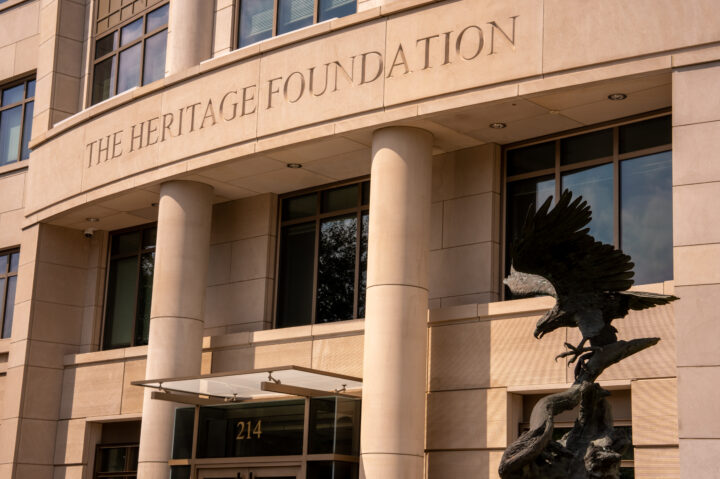
Andrew Harnik/Getty Images
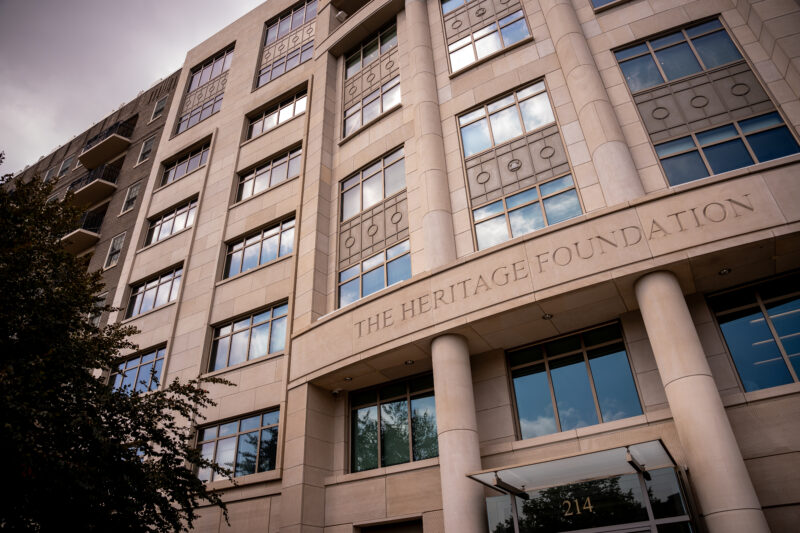
An exterior view of The Heritage Foundation building on July 30, 2024 in Washington, DC.
An antisemitism task force affiliated with the Heritage Foundation announced on Thursday that it would cut ties with the conservative institution, as the prominent think tank has come under fire for its defense of Tucker Carlson after the firebrand podcaster hosted neo-Nazi Nick Fuentes for a friendly interview.
The co-chairs of the National Task Force to Combat Antisemitism announced in a Thursday email, viewed by Jewish Insider, that they will continue their work “outside the Heritage Foundation for a season.”
A member of the task force told JI that its members had not ruled out working with Heritage again if the organization improves. “We hope that one day we’ll be able to collaborate with Heritage again,” said the member, who requested anonymity to talk about confidential discussions.
The task force was formed following the Oct. 7, 2023, Hamas attacks and was instrumental in the drafting of Project Esther, Heritage’s signature counter-antisemitism framework released last year in response to the Biden administration’s national strategy to combat antisemitism.
The Project Esther report made no mention of antisemitism on the political right. In their Thursday email, the co-chairs of the task force said they can no longer ignore it.
“The NTFCA will also now expand our work to fight the rising scourge of antisemitism on the Right, beyond our previous work combating the pro-Hamas movement on the Left,” wrote the co-chairs, announcing that they will co-host a conference on “Exposing & Countering Extremism and Antisemitism on the Right” on Nov. 18 in Washington, in partnership with the Conference of Christian Presidents for Israel.
The task force’s leaders are Mario Bramnick, a Florida pastor and president of the Latino Coalition for Israel; Victoria Coates, vice president of the Kathryn and Shelby Cullom Davis Institute for National Security and Foreign Policy at the Heritage Foundation; Ellie Cohanim, who served as deputy antisemitism special envoy in the first Trump administration; and Luke Moon, a pastor and executive director of the Philos Project.
The Heritage Foundation has been awash in controversy since its president, Kevin Roberts, released a video last week defending Carlson as the conservative commentator faced criticism for his interview with Fuentes.
In a staff meeting on Wednesday, Roberts apologized for the video, which remains on X. He acknowledged the video did not go far enough in making clear that although he is opposed to “canceling” anyone, including Carlson, he is not thereby “endorsing everything they’ve said.”
Still, he has resisted requests to remove the video, according to a source familiar with the deliberations. Deleting the video was one of the recommendations made earlier in the week by the task force members.
The four task force co-chairs pledged to continue the work they had started with the support of the Heritage Foundation, which played a major role in the task force’s launch and operations, according to the task force member. The organization gave the task force access to meeting rooms, publishing resources and research assistance, as well as paid administrative and policy staff members. The task force co-chairs did not say where the group would go next.
“The future of the Conservative movement will include a broad coalition of people that love America and all she stands for,” the co-chairs wrote. “We cannot allow the Conservative movement to be corrupted and destroyed by those consumed with attacking America’s Judeo-Christian heritage and values, thereby distracting us all from the real challenges facing our nation.”
This story was updated at 6:31 p.m.
The task force co-chairs sent a letter to Heritage President Kevin Roberts with their demands; ‘If the terms aren’t met, we will take the NTFCA elsewhere,’ co-chair Luke Moon told JI
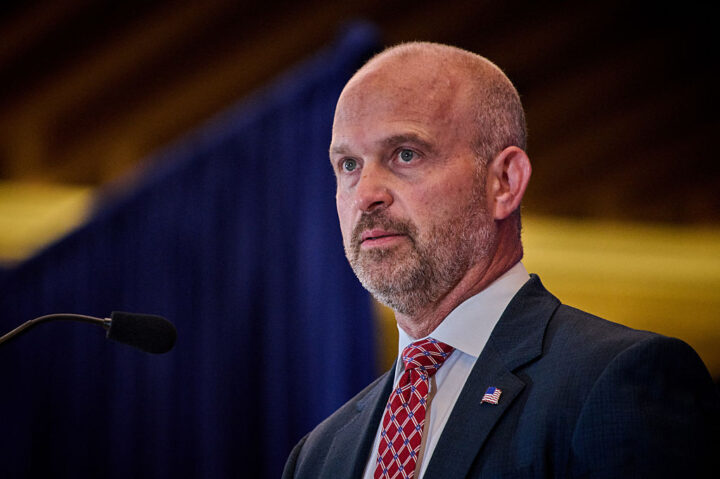
DOMINIC GWINN/Middle East Images/AFP via Getty Images
President of the Heritage Foundation Kevin Roberts speaks at the National Conservative Convention in Washington D.C., Sept. 2, 2025.
Less than a day after an antisemitism task force aligned with the Heritage Foundation pledged to stand by the embattled conservative organization, the group’s co-chairs are now demanding concrete reforms from Heritage Foundation President Kevin Roberts — and warning that they may cut off ties with Heritage if their requests are not met.
In a Tuesday afternoon email to members of the conservative National Task Force to Combat Antisemitism, which was viewed by Jewish Insider, the task force co-chairs shared the text of an email they sent to Roberts earlier in the day. They asked Roberts to remove the controversial video he posted to X last week defending firebrand commentator Tucker Carlson, in which Roberts alleged that Carlson’s critics are part of a “venomous coalition” and that “their attempt to cancel him will fail.”
“Many of us on the NTFCA are among those who believed you called us part of a ‘venomous coalition’ and implicitly questioned our loyalty to the United States. It makes collaboration with Heritage difficult for our members,” wrote the co-chairs. Roberts’ video came after Carlson faced criticism for hosting neo-Nazi Nick Fuentes on his podcast.
The email to Roberts, which the co-chairs said was drafted in collaboration with other task force members, contained five other “recommendations.”
They asked for an apology “to those Christians and Jews who are steadfast members of the conservative movement and believe that Israel has a special role to play both biblically and politically,” and for a condemnation of Carlson’s antisemitic content. In Roberts’ video last week, he said “conservatives should feel no obligation to reflexively support any foreign government,” even under pressure “from the globalist class.”
The task force co-chairs also requested that Heritage host a conference about understanding the boundaries of the conservative movement and discussing “how best to keep unity without needing to include the worst among us.” They asked Heritage to hire a visiting fellow “who shares mainstream conservative views on Israel, Jews and Christian Zionists” to win over young people. Lastly, they said they would like to host Shabbat dinners with Heritage’s interns and junior staff members to educate them about Judaism.
The task force’s leaders are Mario Bramnick, a Florida pastor and president of the Latino Coalition for Israel; Victoria Coates, vice president of the Kathryn and Shelby Cullom Davis Institute for National Security and Foreign Policy at the Heritage Foundation; Ellie Cohanim, who served as deputy antisemitism special envoy in the first Trump administration; and Luke Moon, a pastor and executive director of the Philos Project.
The task force co-chairs said in the email that if an agreement is not reached soon, their relationship with Heritage “will be irrevocably harmed.”
“If the terms aren’t met, we will take the NTFCA elsewhere,” Moon told JI on Tuesday. The task force’s members played a major role in the drafting of Project Esther, an antisemitism plan published by the Heritage Foundation last year.
A spokesperson for the Heritage Foundation did not immediately respond to a request for comment.
Several organizations have already pulled out of the task force to protest Heritage following the release of Roberts’ video last week, including the Zionist Organization of America, Young Jewish Conservatives, the Coalition for Jewish Values and Combat Antisemitism Movement.
In a Monday night speech, Roberts said Heritage “will never, ever, ever stop fighting against antisemitism in all its forms.” He offered an apology to his “Jewish friends” without addressing the controversy over Carlson directly.
Heritage Foundation President Kevin Roberts, in speech at Hillsdale College: ‘We will never, ever, ever stop fighting against antisemitism in all its forms’
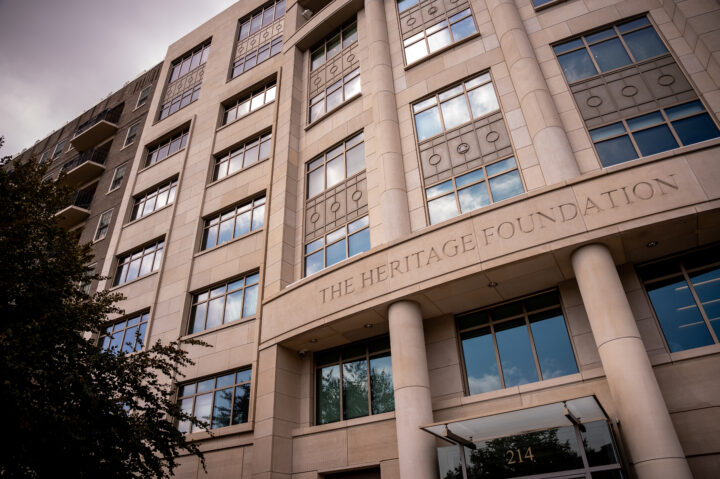
Andrew Harnik/Getty Images
An exterior view of The Heritage Foundation building on July 30, 2024 in Washington, DC.
The leaders of an antisemitism task force closely affiliated with the Heritage Foundation said on Monday that they would stand by the conservative institution for now as its president faces backlash for defending Tucker Carlson, following the conservative podcaster’s controversial interview with neo-Nazi influencer Nick Fuentes.
The co-chairs of the National Task Force to Combat Antisemitism, a right-wing group that played a key role in drafting Heritage’s Project Esther antisemitism plan last year, said in a Monday night email to task force members that they had spoken with Heritage Foundation President Kevin Roberts earlier in the day.
“He shared his apology about how he has handled this issue, and was very open to our counsel,” the task force co-chairs wrote in the email, which was obtained by Jewish Insider. “Because of this we are asking the members of the taskforce to give us additional time to work out the practical steps moving forward.”
The four co-chairs are Mario Bramnick, a Florida pastor and president of the Latino Coalition for Israel; Victoria Coates, vice president of the Kathryn and Shelby Cullom Davis Institute for National Security and Foreign Policy at the Heritage Foundation; Ellie Cohanim, who served as deputy antisemitism special envoy in the first Trump administration; and Luke Moon, a pastor and executive director of the Philos Project.
In the email, Bramnick, Coates, Cohanim and Moon, all staunch supporters of President Donald Trump, said the “conservative movement” is at an “inflection point.”
“We can allow the movement to elevate the most base identitarian elements within the movement or we can choose to build on the wins of the last year under President Donald Trump’s leadership,” they wrote. “When we started the National Task Force to Combat Antisemitism the challenges before us were from the pro-Hamas radical Left. More recently, forces have begun to come together to aggressively push antisemitism on the Right. Tucker Carlson, Candace Owens and Nick Fuentes are the most notable, but not the only voices we need to contend.”
The four co-chairs urged their task force members to “stick with us.” They said they will “work closely” with Roberts and the Heritage leadership “over the next several days.”
Roberts has faced significant backlash for defending Carlson and his choice to host Fuentes, including from some Republican senators. Amid the criticism, he has made clear his disavowal of Fuentes’ racist and antisemitic beliefs while standing by Carlson.
In a Monday night speech at Hillsdale College in Michigan, Roberts took a sharp line against antisemitism and offered an apology to his “Jewish friends.”
“Let me say loud and clear: The Heritage Foundation, which has always not only stood against antisemitism — and I, if you know anything about my career, have done the same — we will never, ever, ever stop fighting against antisemitism in all its forms,” he said.
At least two organizations resigned from the antisemitism task force earlier Monday: Young Jewish Conservatives and the Zionist Organization of America.
“While we understand that many pro-Israel, pro-America conservatives remain at the Heritage Foundation, the buck stops with Dr. Roberts. As long as he remains at the helm and Heritage continues its alliance with a vocal purveyor of antisemitism in the United States, Young Jewish Conservative[s] has no choice but to withdraw its membership in the National Task Force to Combat Antisemitism,” Young Jewish Conservatives announced in a statement.
ZOA National President Morton Klein said the organization would quit its involvement with Project Esther “unless Heritage President Kevin Roberts publicly and immediately condemns Carlson’s actions and statements, apologizes for Roberts’ video statements and ends Roberts’ and Heritage’s relationship with Tucker Carlson.”
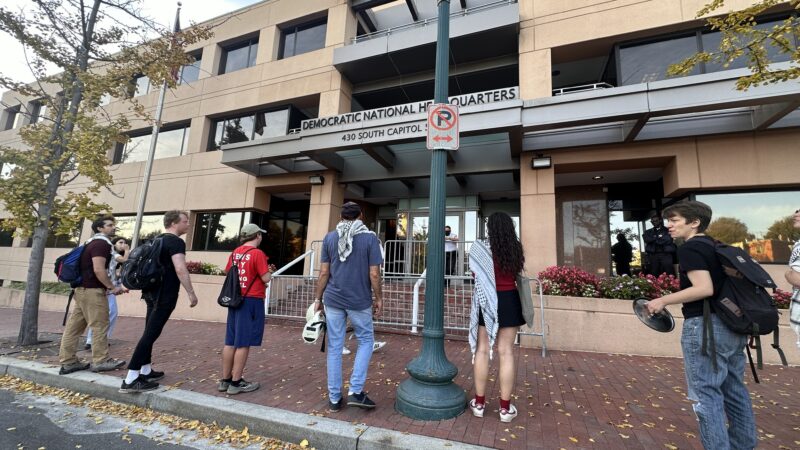
Democratic insiders told JI that DNC chair Ken Martin withdrew his Israel resolution largely to avoid a disruptive floor debate over Israel on Wednesday

Audrey Richardson/Bloomberg via Getty Images
Ken Martin, chairman of the Democratic National Committee , speaks during a news conference in Aurora, Ill., on Tuesday, Aug. 5, 2025.
Pro-Israel Democrats expressed cautious optimism about the unexpected decision by Democratic National Committee Chairman Ken Martin to withdraw his resolution pressing for humanitarian aid to Gaza and for the release of hostages held by Hamas, which was unanimously approved by party members on Tuesday at the DNC’s annual summer meeting held in Minneapolis.
Martin, in a sudden reversal, announced he would pull the resolution after DNC members rejected a dueling measure, opposed by pro-Israel groups, that had endorsed an arms embargo and a suspension of U.S. military aid to Israel. Instead, he said he would create a task force “comprised of stakeholders on all sides” of the Israel debate to pursue what he called a “shared dialogue” on an increasingly divisive issue.
“This was a surprise ending to this meeting,” Halie Soifer, the CEO of the Jewish Democratic Council of America, which helped draft the pro-Israel measure and privately advocated for its passage, told Jewish Insider on Tuesday.
Despite Martin’s 11th-hour reversal, Soifer said she was satisfied with the outcome, noting the DNC also passed a resolution condemning antisemitism that, coupled with its rejection of the arms embargo proposal, “reflects where the party stands” on major issues concerning Israel and the Jewish community.
“It’s my sense,” she added of Martin, “that he introduced and ensured passage of this resolution to defeat the other resolution,” which she said “was completely out of step with the views of the party.”
Soifer said she hopes to join the proposed task force “to discuss the path forward” on approaching Israel, acknowledging internal tensions that have roiled the party in recent years. Martin “clearly recognized that there are a range of strongly held views on this matter, and he wants to make sure that those voices are heard,” she told JI.
Martin has not yet shared additional details on the task force, and the DNC did not return a request for comment from JI. Latonya Reeves, a DNC member in Minneapolis, told JI on Tuesday that she had not been further informed of the task force — which she called “the best way to move forward” on the issue.
Sara Forman, who leads the New York Solidarity Network, a local pro-Israel group that aligns with Democrats, said she was broadly “encouraged” that the DNC had chosen “not to recommend” what she dismissed as a “one-sided resolution against Israel,” arguing that the party “represents far more than its progressive base.”
“I’m always one for conversation, and think that talking about things is an important step, so I’m going to offer grace to Martin in this regard,” she said of his announcement. Still, she added of the failed resolution, “I think it’s a bigger concern overall that the Democratic Party seems to be uniquely singling out Israel for rebuke or scrutiny in a way that no other U.S. ally is rebuked or scrutinized.”
A spokesperson for Democratic Majority for Israel, which released a statement praising the DNC’s votes before Martin revealed he would pull the resolution, said it was “pleased that the anti-Israel measure was decisively defeated by the committee,” but declined to comment more broadly on what transpired at the end of the meeting.
Brian Romick, DMFI’s president and CEO, said in an interview with JI that he viewed the outcome on Tuesday as “a win” for the pro-Israel community, in light of the potential for a more hostile debate. “The bad resolution was rejected and Ken’s compromise resolution also passed the committee,” Romick said. “That all happened publicly” and “reaffirmed where the party stands on Israel,” he said. “Anything else beyond that is just inside baseball.”
Some Democratic insiders familiar with internal party dynamics indicated that Martin had chosen to change course because he anticipated a disruptive floor debate over his resolution, which was poised to face broader scrutiny during the DNC’s general session on Wednesday.
“He’s worried about what would happen at the meeting,” one party source informed of the matter said on Tuesday. “On one hand, viewed from there, it makes sense and seems like a rational move,” the source reasoned, while also noting that it has “some real downsides.”
On the other hand, “when you punt something to a task force you actually continue the debate, because now it’s going to be a big fight” over who is included in the committee, the source said. “Then it becomes hard to move past.”
Manny Houle, a Democratic pro-Israel strategist in Minneapolis, said Martin’s maneuver was tactically smart — as DNC leadership seeks to avoid “internal proxy fights and focus messaging on pushing back against” the Trump administration in advance of the upcoming elections. “It is often a tactic to give your most ardent detractors busy work so you can focus on the work that matters,” he explained.
The party’s pro-Israel wing knows it has “the power to push back,” Houle told JI. “It’s not worth giving more air to the extremist factions.” The debate over Israel “is not going away anytime soon,” he added. “But we’ve shown where we stand and hopefully there are more pressing things that we need to give oxygen to.”
Whatever Martin’s intentions, Susan Turnbull, a former DNC vice chair, said she was excited by the prospect of a task force, suggesting that it would be well-timed to take place between the conventions.
“What I think is the case is that this, of all issues, needs to have consensus and that what he wanted in his first meeting is not to have winners and losers,” she told JI. “He wanted to come to a good result for collaboration.”
“I’m giving him a lot of credit because we have a hard enough time within the Jewish community dealing with this issue,” she said, adding that it will be “important that every perspective be considered” as the DNC hones its approach to the Middle East.
It remains to be seen if Martin, who on Tuesday acknowledged a “divide” in the party over Israel, will find partnership on the opposing end of the issue. Allison Minnerly, the 26-year-old DNC member who had introduced the failed measure on Gaza, which faced criticism for not mentioning Hamas, voiced disappointment with his decision and said he was “prolonging” the conversation rather than taking a position to align the party with a base she views as amenable to her views on Israel.
Still, as the DNC moves to reach a tenuous detente on Israel, some pro-Israel Democrats said that any future resolution on the issue should reflect values that have long been espoused by the party, even as they have faced ongoing pushback from the activist left.
“The vast majority of American Jews, and Americans more broadly, understand the complexity of the conflict — wanting to see Israel’s security protected and the remaining hostages released, the humanitarian crisis in Gaza truly addressed, and all parties work toward a future in which both Israelis and Palestinians are safe and free,” Amy Spitalnick, CEO of the nonpartisan Jewish Council for Public Affairs, told JI. “Any resolution on Gaza should reflect those widely-held values.”
Amanda Berman, CEO of the Zioness Action Fund, a progressive pro-Israel advocacy group, said on Tuesday that “there is legitimate critique and concern about this devastating war dragging on — and Democrats should stand staunchly with the Israeli public as it models dissent, protest and a pro-democracy movement the American left should emulate.”
“To the extent that any fringe element of the Democratic Party is willing to abandon Israel and the American Jewish community,” Berman said, “they will be abandoning true progressive values, liberation for persecuted minority communities, our historic alliances and America’s national security.”
Martin will be creating a party task force comprised of ‘stakeholders on all sides’ of the Israel debate
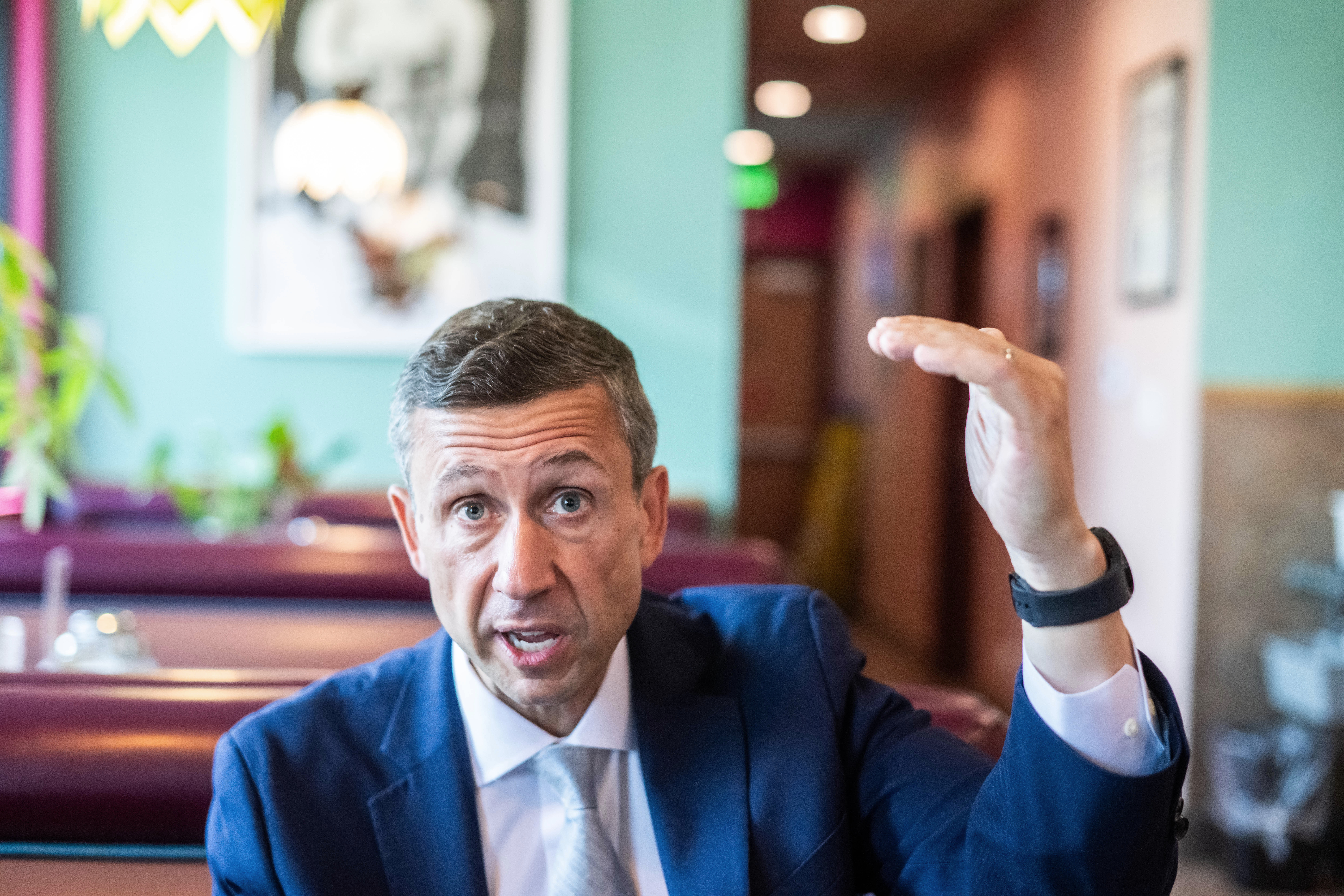
Democratic National Committee Chair Ken Martin (Photo by Sarah Reingewirtz/MediaNews Group/Los Angeles Daily News via Getty Images)
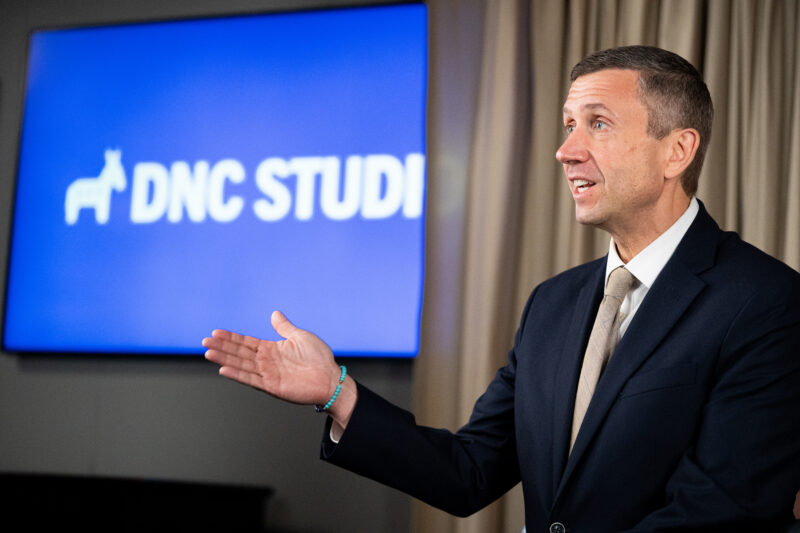
Shortly after members of the Democratic National Committee passed a resolution on Tuesday voicing support for humanitarian aid to Gaza and calling for the release of hostages held by Hamas, Ken Martin, the party chair, announced that he would withdraw the measure, which he had introduced, and instead form a task force to continue discussing the matter.
The surprise reversal came even as the DNC, now holding its annual summer meeting in Minneapolis, had voted to reject a dueling and more controversial resolution that had backed an arms embargo as well as a suspension of U.S. military aid to Israel, raising alarms among Jewish and pro-Israel Democrats who rallied behind Martin’s effort, co-sponsored by DNC leadership.
“There is a divide in our party on this issue. This is a moment that calls for shared dialogue and calls for shared advocacy,” Martin said after the competing measure had been voted down. “And that’s why I’ve decided today, at this moment, listening to the testimony and listening to people in our party, to withdraw my amendment resolution to allow us to move forward in a conversation on this as a party.”
He said that he would “appoint a committee or a task force comprised of stakeholders on all sides of this to continue to have the conversation, to work through this, and bring solutions back to our party.”
Martin announced his decision after huddling with co-sponsors of the failed resolution, which also called for recognition of a Palestinian state and was expected to be voted down. The measure additionally drew criticism for not mentioning Hamas — in contrast with Martin’s proposal, which also supported a two-state solution. The measures, each backing an immediate ceasefire in Gaza, were nonbinding and meant to telegraph the party’s stances on an issue that has increasingly fueled internal tensions.
His about-face underscores the pressures that Martin, who became DNC chair in February, is facing from an outspoken contingent of anti-Israel activists who are now aggressively seeking to push the party away from its traditional commitment to defending the U.S.-Israel relationship — which has come under growing strain amid party backlash to the ongoing war in Gaza.
Martin has offered no additional details on what motivated his abrupt decision or his new plan to create a task force. The DNC did not respond to a request for comment on Tuesday.
His sentiments echoed the “big-tent” rhetoric that he had endorsed when he ran for DNC chair — with some pro-Israel party members voicing reservations that his approach could be overly accommodating to extreme views and fail to enforce red lines on Middle East policy.
Martin’s Gaza resolution was unanimously approved by the DNC’s Resolutions Committee, while the dueling measure, introduced by a 26-year-old member from Florida, was rejected in a voice vote.
The committee did not take a recorded vote and no members asked for a breakdown, a person familiar with the process said. An attempt to add language into the alternate resolution calling for the release of all hostages and to oppose offensive weapons to Israel also fell flat, reflecting a failed effort to unify the resolutions that preceded the votes this week.
The meeting on Tuesday was expected to be heated but largely avoided the sort of drama that animated its convention last year, drawing more attention for Martin’s decision to yank his own proposal near the end of the proceedings.
Even as Martin called for a continued dialogue on the matter, Allison Minnerly, the DNC member who had introduced the failed resolution, expressed disappointment with his choice and said she believed he was “prolonging” the conversation rather than taking a position to align the party with a base that she views as amenable to her views on Israel.
At the ICC summit, the DOJ’s Terrell said extra security costs borne by Jewish communities are ‘offensive’
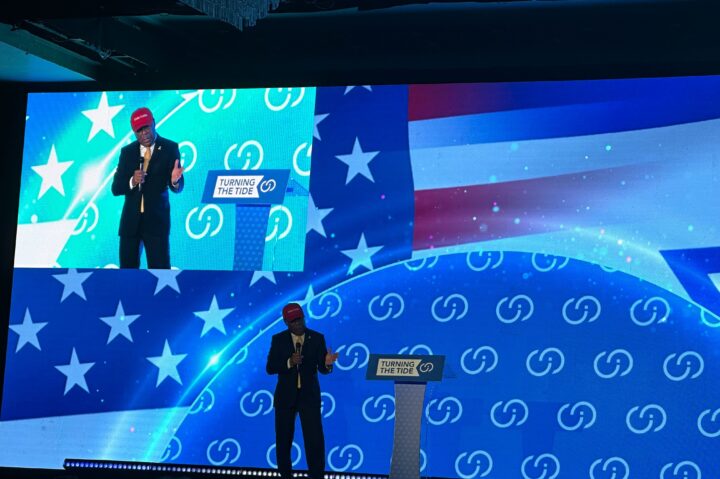
Haley Cohen
Leo Terrell, senior counsel to the assistant attorney general for civil rights, addresses the Israel on Campus Coalition three-day annual leadership summit held in Washington on Sunday, July 27th, 2025.
Leo Terrell, senior counsel to the assistant attorney general for civil rights, said he is intent on eliminating what he called “the Jewish tax” in an address on Sunday to hundreds of Jewish college students gathered for the Israel on Campus Coalition’s three-day annual leadership summit held in Washington.
“For those who don’t know what the Jewish tax is — for you to have this convention, for you to walk your child to a synagogue down the street — you have to pay for extra security,” said Terrell, who heads the Department of Justice’s antisemitism task force. “It makes no sense. It’s unfair. It’s wrong. I find it offensive that it’s being allowed throughout this country. I’m doing everything I can to eliminate it.”
Terrell’s comments came as the Federal Emergency Management Agency announced last month that it had awarded $94.4 million in security grant funding to a total of 512 Jewish organizations nationwide.
Terrell, who wore a baseball cap embroidered with the name “Hadar Goldin,” an IDF soldier abducted and killed by Hamas in 2014 whose body remains held by the terrorist group, shared that he has faced “fights and arguments” with some colleagues over how to strategically address antisemitism. He said that some colleagues have called to “cut a deal, to move on,” an apparent reference to the Trump administration’s recent settlement with Columbia University following a monthslong battle over the Ivy League university’s record dealing with antisemitism.
“I will not compromise,” Terrell said. “No, how can you ask a group [to] compromise freedom? There is no compromise on your equality, your freedom, you have the right to go to schools, to walk down the streets and not be worried and not be afraid.”
Terrell, a former civil rights attorney and a conservative media personality, told the crowd that eradicating antisemitism is a “full-time commitment,” one that he’s decided to take on in part due to Jewish involvement in the Civil Rights Movement.
“I’m not a Jewish American. I’m a Black American. I also understand the history of this great country. Before becoming a lawyer, I was a school teacher. I grew up in the ‘60s,” Terrell said. “I remember Jewish Americans walking hand in hand with Black Americans making sure they got their civil rights.”
Task force punts on whether some slogans chanted at anti-Israel rallies are antisemitic

InSapphoWeTrust / Flickr
Columbia University
The recommendations handed down earlier this week from Columbia University’s task force on antisemitism painted a picture of Jewish students feeling “isolation and pain” in the wake of pro-Palestinian protests that have gripped the campus since Oct. 7.
They also cited a lack of disciplinary response from the university regarding unauthorized protests of the Israel-Hamas war as contributing to Jewish students’ struggles on campus, and called for the university to more effectively investigate policy violations by creating an easier process for filing complaints.
But on the pivotal question of whether some of the slogans chanted at those rallies veer from legitimate political speech into antisemitism the task force’s recommendations are ambiguous.
The report states, “Obviously, the chants ‘gas the Jews’ and ‘Hitler was right’ are calls to genocide, but fortunately no one at Columbia has been shouting these phrases… Rather, many of the chants at recent Columbia protests are viewed differently by different members of the Columbia community: some feel strongly that these are calls to genocide, while others feel strongly that they are not.”
The report does not, however, specifically address the slogan “from the river to the sea Palestine will be free,” which has frequently been chanted at protests on Columbia’s campus and is widely viewed by Jewish groups as a call for genocide of Israelis.
According to David Schizer, a professor of law and economics and dean emeritus of Columbia’s law school, who is one of the three co-chairs of the task force, the key issue that the 24-page report addresses is the thorny matter of campus free speech — emphasizing that “everyone needs to have a right to speak and to protest,” he said.
“How can we make sure the people have the right to speak and protest, while at the same time ensuring that protests don’t interfere with the ability of other members of the community to teach classes, study for a test, to hear their professors,” Schizer, who is also the former CEO of the American Jewish Joint Distribution Committee, continued. While the report emphasizes the right to peaceful demonstrations, it also condemns faculty for participating in unauthorized demonstrations.
But some prominent leaders of the movement to fight antisemitism in higher education expressed skepticism that a set of recommendations could fix the raging antisemitism on Columbia’s campus — which has included repeated violations of the rules on protests and physical assault and other serious attacks on Jewish students.
“The new recommendations have some technically good work which could provide incremental advances, but it’s certainly not the kind of thing that will solve Columbia’s problems,” Kenneth Marcus, founder of the Louis D. Brandeis Center for Human Rights Under Law, told JI. The Brandeis Center recently filed federal complaints against the University of California for antisemitism at UC Berkeley and American University, while the Department of Education is currently investigating Brandeis Center complaints filed against Wellesley, SUNY New Paltz, the University of Southern California, Brooklyn College and the University of Illinois for violating Title VI of the Civil Rights Act and for discrimination against Jewish students.
The recommendations come as Columbia faces pressure from donors and investigations by Congress and the Biden administration over antisemitism. It also comes in the wake of scrutiny regarding a number of antisemitism task forces set up at elite universities as a response to the surge in antisemitism that erupted following the Oct. 7 Hamas terror attacks in Israel. Five months later, questions remain over the effectiveness and direction of such groups — with some experts claiming task forces have been all talk with minimal action so far.
But Schizer said that in Columbia’s case, there have been months of ongoing research of university policies, including interviewing students. It aims to release a series of reports in the coming months with the goal of gaining a deeper understanding of the campus climate and providing further recommendations.
The report states that while it agrees with the university’s principle that calls for genocide, like other incitement to violence, violate the rules, “the application of it should be clarified.”
It goes on to encourage the university’s legal team to “provide more guidance on this issue,” and emphasizes that clearer guidance is needed, like the university has done with its rules on gender-based misconduct to include “scenarios,” “to provide greater clarity help to provide fair notice, so Columbia affiliates have more of a sense of what is permissible (even if offensive) and what is not.”
Columbia administration plans to review the task force’s interim policy at the end of this semester. Minouche Shafik, the university’s president, said in a statement that the new recommendations — the first set in a series — are welcomed by the university and “will continue across a number of fronts as the University works to address this ancient, but sadly persistent, form of hate.”
Marcus said it’s “good that Columbia finally has good people asking serious questions about harassment and disruptive protests,” but he added, “What’s needed is not just a few recommendations regarding the rules on protest. The fact is that there’s been antisemitic bigotry [at] Columbia University for decades now.”
“It’s not as if a few changes to the protest policies are going to substantially change the institution as long as they continue business as usual,” he continued. “Much of what’s in this new set of recommendations could have been written on Oct. 6 given everything that’s happened since. What’s needed is not a series of incremental measures, but a rethinking of what Columbia is doing to cause harm, not just to Jewish students but also to the surrounding community. These recommendations may lead to technical and marginal changes in the ways that the university responds to specific incidents, and generally speaking that’s a good thing.
But it’s certainly not a solution to the problem.”
Marcus noted that the recommendations are “framed fairly narrow, with response to only one narrow piece of the problem.”
“I know this is only one of the series of reports that we can anticipate, but if this is an indication of what’s to come, it may provide some useful professional iteration but not a truly substantial change,” he said. “It does not indicate a new mindset that is ready to deal with the problems Oct. 7 has revealed.”
Mark Yudof, chair of the Academic Engagement Network, expressed a similar sentiment as Marcus, but added that he’s “hopeful” the report will bring change. Schizer, as well as the two other co-chairs of the task force, Ester Fuchs and Nicolas Lemann, are all longtime members of AEN.
“We need adequate rules about speech and we need to put teeth into it and have reasonable procedures in which people are actually disciplined for violating the rules,” Yudof said, calling the report “complex.”
While skeptical, Yudof also expressed praise for the recommendations — “I think Columbia’s report gets at the core problem of education and I applaud them,” he said.
“I like the report and am hopeful… I would urge the Columbia administration to adopt the recommendations of the task force, but the proof will be in the pudding.”
Please log in if you already have a subscription, or subscribe to access the latest updates.
 Continue with Google
 Continue with Apple