








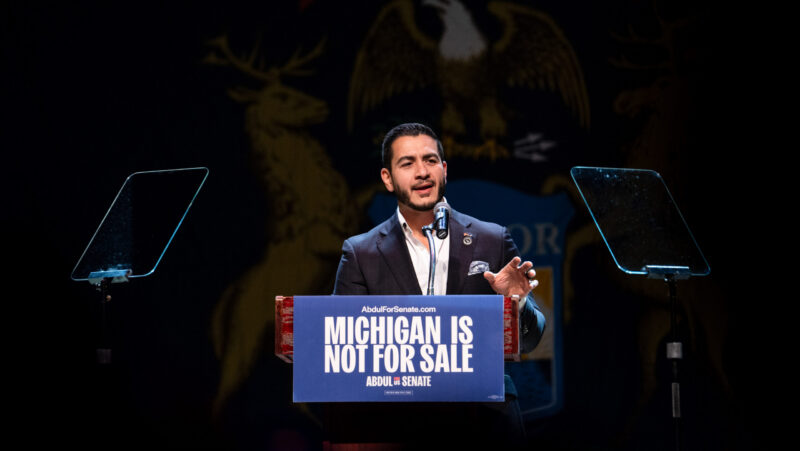
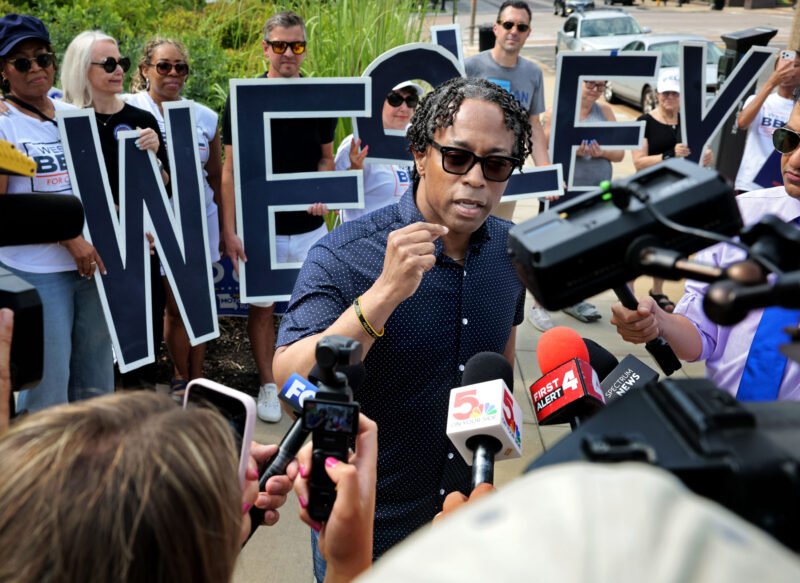


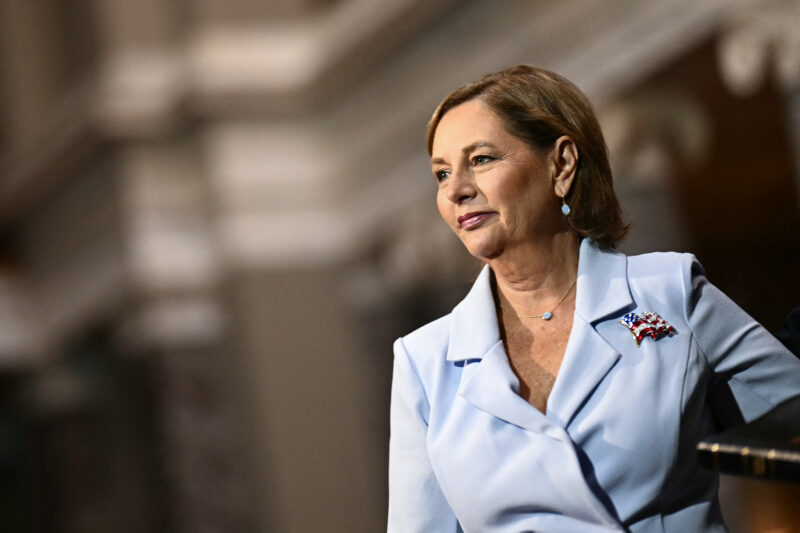

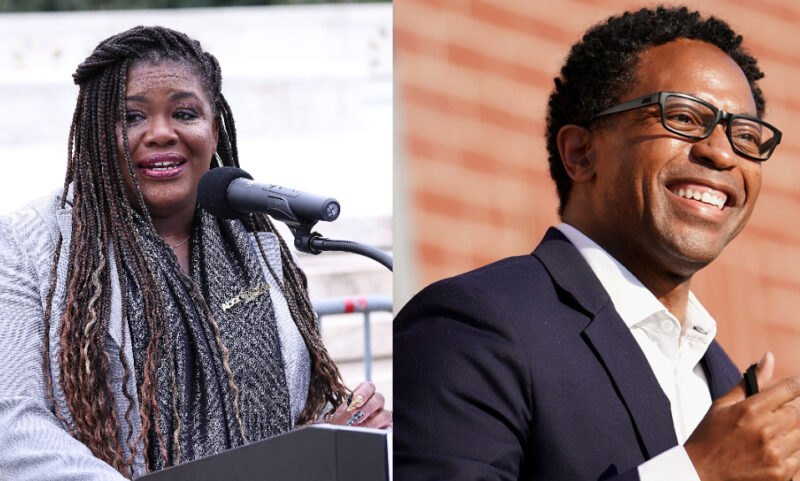

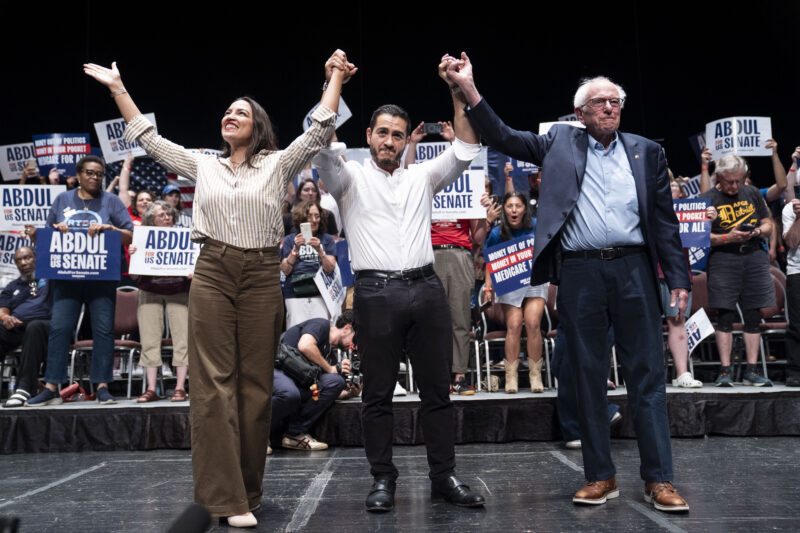
















Black leaders in the district have failed to unite behind a single challenger, leaving the Jewish congresswoman favored in a plurality race but potentially vulnerable down the road
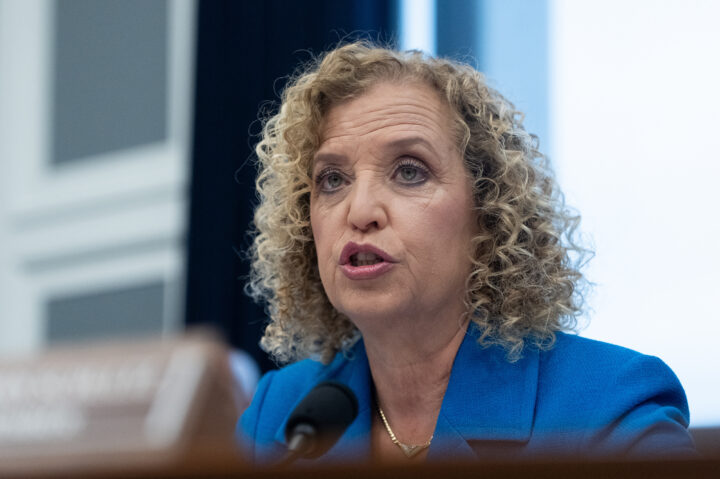
Aaron Schwartz/Bloomberg via Getty Images
Rep. Debbie Wasserman Schultz (D-FL)


 Add JewishInsider on Google
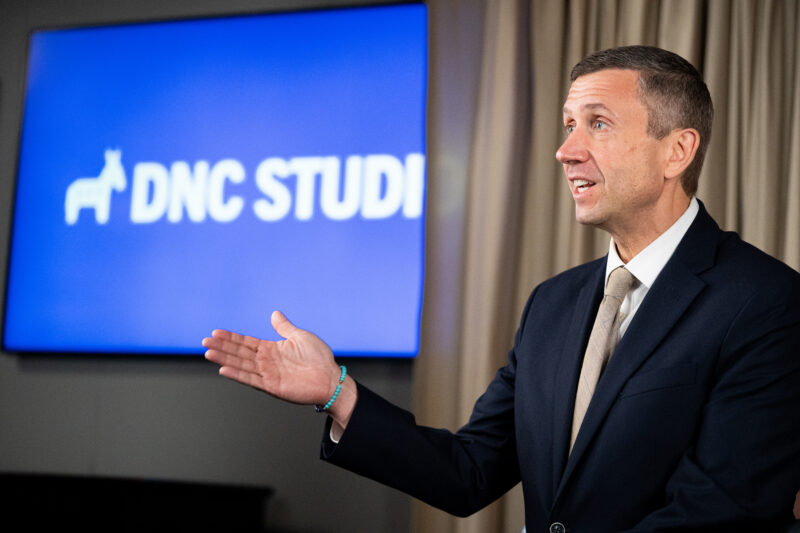
Rep. Debbie Wasserman Schultz’s (D-FL) reelection race has turned into a local and national flashpoint following the Republican-led redistricting process in Florida, and risks driving a wedge in traditional Black-Jewish alliances in the state and the party.
Wasserman Schultz is running in South Florida’s newly redrawn 20th Congressional District, a decision pitting the longtime Democratic leader and former Democratic National Committee chair against leaders who have criticized her for running in a seat historically represented by a Black lawmaker.
Yet, Wasserman Schultz also maintains dedicated supporters in the district and her home state at large, especially within the Jewish community.
“I have spent my whole adult life fighting for Broward County, and I want to continue the fight to make life more affordable for the families in CD20 who are stretched to the breaking point by the Trump MAGA agenda,” Wasserman Schultz said in a statement to Jewish Insider.
“And as I meet with voters throughout District 20, the overwhelming response is that voters know my record of standing up for them and delivering billions in local funding for Broward parks, clean water and transit and other projects and all the jobs that come with them,” she continued. “Voters also know that I’ve always spoken out for them and they want me to keep up the critical fight against Trump’s high-cost, corrupt agenda.”
Despite repeatedly expressing support for all Democratic incumbents, House Minority Leader Hakeem Jeffries (D-NY) has so far declined to endorse Wasserman Schultz for reelection.
“As I’ve indicated relative to the congresswoman, she’s had an extraordinary career,” Jeffries told reporters last week. “She’s a valuable member of the House Democratic caucus, and I’m looking forward to having more to say about that when we are closer to the Florida Democratic primary.”
Black leaders in the area brought together various candidates running against Wasserman Schultz in an effort to consolidate around a single candidate, but ultimately failed to do so, leaving a divided field opposing the longtime legislator.
Democratic leaders in and around the district lamented the situation that the redistricting process, that effectively erased Wasserman Schultz’s previous district, has created, accusing the GOP both of trying to gerrymander seats for its own gain as well as create racial divisions in the Democratic Party.
“The situation we’re in is the result of a deliberate decision by the Republican leadership in our state to target all three Jewish members of Congress from South Florida, to target the two African American members of Congress from South Florida and deliberately set something up that was going to result in, let’s say, tension between those two historically allied communities,” said Joe Geller, a former Florida House Democrat, who lives outside the district and is supporting Wasserman Schultz.
Geller argued that the redistricting explicitly violates the Florida state constitution, which bans the drawing of districts based purely on partisanship, arguing that the recent Supreme Court decision allowing for racial gerrymandering doesn’t override that provision.
“This was done deliberately by enemies of both communities to create dissension between traditional allies,” Geller continued. “It’s cynical, it’s illegal and it’s disgusting.”
He said that state courts should immediately halt the redistricting and require that the election be run under the previous lines until the issue can be litigated further, claiming that Republicans had timed the redrawing specifically in order to try to avoid judicial review.
Wasserman Schultz, throughout her time in Congress, has been a fierce and vocal advocate for Israel and for the Jewish community, breaking at times with her party on the issue. She’s currently a co-chair of the Abraham Accords caucus, was a co-founder of the Congressional Jewish Caucus and is one of the most prominent Jewish leaders inside the Democratic caucus.
Mitch Ceasar, a former chair of the Broward County Democratic Party, predicted that, given challengers’ failure to unite behind a single candidate, Wasserman Schultz should still be favored to win the seat with a plurality of the vote.
Wasserman Schultz faced pressure to run in another neighboring district, but, observers on the ground acknowledged, that seat would have been tougher for Democrats to win.
Polling released in early June showed Wasserman Schultz leading with around 39% support, followed most closely by self-described democratic socialist Elijah Manley at 21% and former Broward County Mayor Dale Holness at 15%.
The polling found Wasserman Schultz would trail either of them, or rapper and free speech activist Luther Campbell, in a head-to-head race, though it’s now too late for any candidate to withdraw from the ballot.
A poll by Wasserman Schultz’s campaign released around the same time found her leading all of the other candidates combined, at 52%, with near-universal name recognition and 80% favorability across the district.
Manley’s candidacy is causing consternation among members of the Jewish community, due to the anti-Israel stance he has staked out over the course of the campaign, which includes an endorsement from the antisemitic group TrackAIPAC. Prior to his congressional bid, he described supporters of Israel as cultish and accused pro-Israel Americans of “meddling in our country’s affairs.” He said in 2020 he was in the process of converting to Judaism.
Manley has picked up support from the Florida Democratic Progressive Caucus and the president of the Democratic Black Caucus — though the caucus as a whole did not offer an endorsement.
He has also offered other fringe views, including describing police unions as “terrorist organizations.”
Ceasar noted that, while Manley has gained attention and support, he’s also a perennial candidate for office whose past runs have been unsuccessful. He also mounted a failed bid for the Socialist Party’s presidential nomination in 2020.
Ceasar also said that the other candidates in the race, including Holness, Campbell and former Rep. Sheila Cherfilus-McCormick (D-FL) — the latter of whom resigned from Congress earlier this year and is facing federal criminal corruption charges — have taken more pro-Israel stances.
Wasserman Schultz has long enjoyed strong support from — and spoken proudly of — the Jewish community in the district, joking at times at Jewish community events about representing the large Jewish retiree population.
Ceasar said that there is still a Jewish bloc in the district, but the demographics even in traditionally Jewish parts of the area have been changing, with a growing minority retiree population — though he said that political stances of the two communities are fairly similar.
Cherfilus-McCormick, whose corruption trial isn’t slated to begin until after the election, remains something of a wild card, Ceasar noted. Holness, he said, has posted strong performances in the district in the past. Ceasar said he was somewhat surprised by Campbell’s candidacy, given that he has stronger roots in a neighboring district, which is also an open seat.
Richard Stark, who chairs the Florida Democratic Party Jewish Caucus, which is remaining formally neutral in the race, said that Wasserman Schultz has been a strong and aggressive campaigner going back to her first campaigns for political office — “she worked hard, she campaigned, walked door to door and she got that support, and chances are she’ll do the same thing now.”
Speaking in a personal capacity, Stark said Wasserman Schultz is also popular and well-known for delivering results for various communities she represents. He speculated that, given her stature in the state, Republicans particularly hoped to see her pushed out of Congress.
“She’s a star within the Democratic Party, for the most part. It’s really a shame that we have to have a race like that,” Stark said. “She’s looking for the best that she can do for the United States of America and for the Jewish people.”
Rabbi Mark Winer, Stark’s predecessor as the Jewish Caucus chair, said that Wasserman Schultz is “the most important Democratic politician in Florida, over many, many, many years” who has had “phenomenal influence beyond her district and beyond the Congress” and is a “real force within the district.”
Winer said it’s a “real question for the future whether she’ll get reelected — it’s tough — but she is a formidable politician, she really knows how to do retail politics.”
Winer and Stark traced some of the hostility toward Wasserman Schultz, particularly among progressives, to her role as DNC chair in 2016. Progressives continue to accuse the congresswoman of putting her thumb on the scale for former Secretary of State Hillary Clinton as she campaigned against Sen. Bernie Sanders (I-VT) in the presidential campaign.
Looking further ahead, even if Wasserman Schultz ends up winning with a plurality of the vote against a divided opposition, that could signal vulnerability in a future primary election against a more unified opposition effort. But, Ceasar emphasized, “human nature always makes that difficult.”
If elected mayor of Washington, D.C, Janeese Lewis George’s victory would hand a major win to Washington’s Democratic Socialists of America chapter
Craig Hudson for The Washington Post via Getty Images
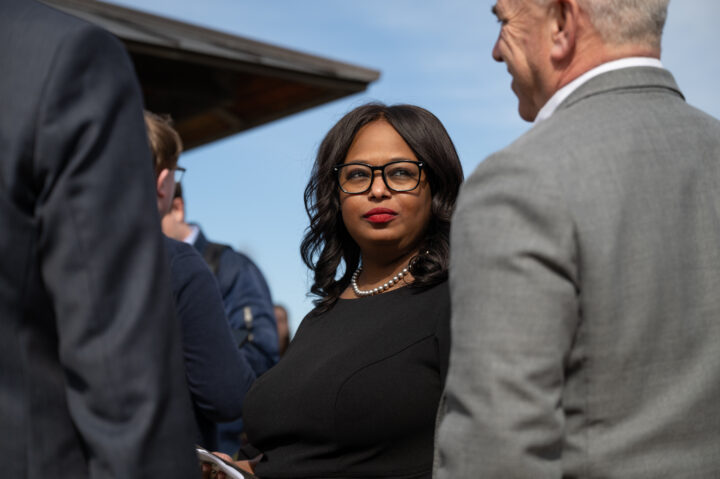
D.C. councilmember and mayoral candidate Janeese Lewis George is seen on Capitol Hill for a press conference in Washington, DC on March 10, 2025.
The open race for mayor of Washington, D.C., has been largely uneventful ahead of next month’s primary — so much so that the first TV ads run by the leading candidates, Kenyan McDuffie and Janeese Lewis George, sound nearly identical. Both candidates tout affordability and safety on the campaign trail, with promises to build more housing and stand up against President Donald Trump.
But if elected, Lewis George’s victory would mark a significant shift away from the centrist brand of politics espoused by outgoing Mayor Muriel Bowser over the last 12 years, and would instead hand a major win to Washington’s Democratic Socialists of America chapter, of which Lewis George has been a member for years.
Lewis George has faced criticism throughout the campaign from some in the Jewish community for comments she made on a DSA endorsement questionnaire pledging to boycott events that “promote Zionism” and criticizing Jewish activists’ approach to combating antisemitism. Ron Halber, CEO of the Jewish Community Relations Council of Greater Washington, on Tuesday called DSA an “evil” organization that seeks “to make being Jewish unacceptable in polite society.”
DSA has activated its small but growing membership to knock on doors for Lewis George, a member of the D.C. Council, tapping into a grassroots energy that they hope translates into success at the ballot box. Rep. Rashida Tlaib (D-MI), one of two DSA members currently serving in Congress, attended a recent DC DSA rally alongside Lewis George.
DSA’s Metro DC chapter is relatively small. Yet its current roster of roughly 3,400 members represents a massive increase from its pre-2016 nadir of just 200 members — and mirrors DSA’s growing clout nationally.
“For most of the ‘80s and ‘90s and 2000s, DSA was a small organization with maybe 5,000 or 8,000 people at the most. I would say the average age was probably over 60, maybe higher than that,” said Peter Dreier, an emeritus professor of politics at Occidental College in Los Angeles. “Then Bernie [Sanders] ran for president in 2016 and started talking about democratic socialism in a way that made sense to, particularly, a lot of young people, and he kind of opened the door to people to be in DSA.”
Overall, DSA is still a small organization on the fringes of Democratic politics. Even the highest membership counts — adding up DSA’s local chapters — don’t top 100,000. But the unexpected popularity of Sanders’ 2016 presidential run sparked a resurgence of interest in democratic socialism not seen in generations, and that has continued well past his two campaigns. A 2025 Gallup poll found that 42% of Democrats have a positive image of capitalism, down from 54% a decade ago, while 66% have a positive view of socialism.
“If [young people] don’t remember the Cold War, then what do they think when they hear the word socialism? There’s still a battle over that, but they’re more likely to think, ‘Oh, countries that have more equality, or students that get free or almost free higher education, everybody has access to healthcare,’” said Dreier.
“We are going to raise money and develop a plan over the course of the next few months to try to make them toxic, to make it unacceptable for major figures in the party or anybody actually running for office to be affiliated with the DSA, the way it should be unacceptable to be affiliated with [neo-Nazi influencer] Nick Fuentes if you’re running as Republican,” Third Way’s senior vice president for public affairs, Matt Bennett, said.
The key question now facing capital-D Democrats — one they sound unsure of how to answer, or perhaps unwilling — is how to handle an insurgent faction that has galvanized people over its straightforward messaging on corporations (bad), taxing the rich (good) and Medicare for All (necessary), while at the same time promoting far-left positions like prison and police abolition that are nowhere near the Democratic mainstream. The group has long promoted the Boycott, Divestment and Sanctions movement, as well as calling for an arms embargo on Israel, and its members passed a resolution last year affirming their commitment to anti-Zionism. On Oct. 7, 2023, DSA released a statement holding Israel accountable for the Hamas attacks and calling on members to take to the streets to protest U.S. support for Israel.
The centrist Democratic group Third Way plans to launch a major PR campaign against DSA in the coming months, one of the group’s executives told JI, arguing that its far-left positions and incendiary brand of politics will be harmful for the party’s electoral prospects.
“We are going to raise money and develop a plan over the course of the next few months to try to make them toxic, to make it unacceptable for major figures in the party or anybody actually running for office to be affiliated with the DSA, the way it should be unacceptable to be affiliated with [neo-Nazi influencer] Nick Fuentes if you’re running as Republican,” Third Way’s senior vice president for public affairs, Matt Bennett, said.
In the decade since Sanders’ 2016 campaign, DSA has had an outsized impact on national politics. The 2018 congressional victory of Rep. Alexandria Ocasio-Cortez (D-NY), a DSA member, raised the group’s profile. A steady stream of more than 200 DSA-aligned candidates have been elected to state and local offices since, culminating with the election of DSA member Zohran Mamdani as mayor of New York City last year.
“To the degree that people need to pay attention to DSA, it’s because they built this kind of political machine,” said Micah Sifry, a journalist focused on left-wing political organizing. “In a time when people are, for the most part, not very organized, the ability of any small group, relatively speaking, to punch above its weight grows.”
Perhaps unsurprisingly, New York has the largest bench of DSA-affiliated state lawmakers. The group has slowly but steadily been gaining electoral power in state and local offices in some unexpected places, too, like Minnesota, Colorado, Delaware and Wisconsin. The group’s largest foothold is in city council races, where a small but committed cadre of volunteers can swing elections in low-turnout races.
National Democratic leaders are divided about how to treat the small but vocal socialist minority in the party.
House Minority Leader Hakeem Jeffries (D-NY) declined to support Mamdani in the primary election but ultimately endorsed him ahead of the general election last year. Weeks later, Jeffries voted in favor of a Republican-led resolution condemning socialism. He has been skeptical of the left-wing ideology throughout his political career: “There will never be a moment where I bend the knee to hard-left democratic socialism,” he said in 2021. A spokesperson for Jeffries declined to comment this week when asked if he believes Democrats should be welcoming socialists into the party.
Democratic National Committee Chair Ken Martin has been more open-minded about socialists. Asked by Fox News last year whether progressives like Mamdani and Ocasio-Cortez make his job harder, he said no.
“The party is a big tent. But just like we have to believe it’s a big tent, the DSA also has to believe it’s a big tent, and I’m not sure they do,” Brian Romick, CEO of Democratic Majority for Israel, said. “Democratic leaders want to win elections, and that means a big tent, and that means that Democratic base voters and pro-Israel voters and moderate people who maybe voted for [Donald] Trump sometimes because they’re concerned about prices have to be in the tent.”
“I don’t think they make it difficult at all,” Martin said in August 2025. “The difference between the Democratic Party and the Republican Party is that we’re a big tent. We have lots of people in that tent from all of the different ideological wings, from conservative Democrats, to centrists, to progressives, to these new leftists.” A DNC spokesperson did not respond to multiple requests for comment this week.
Brian Romick, CEO of Democratic Majority for Israel, told Jewish Insider this week that he is concerned about the inroads DSA is making in the party. He agreed with Martin that the Democratic Party should be a big tent, but noted that DSA members — who are at times intent on putting litmus tests even on would-be allies — don’t extend the same understanding to more moderate members of the party.
“The party is a big tent. But just like we have to believe it’s a big tent, the DSA also has to believe it’s a big tent, and I’m not sure they do,” Romick said. “Democratic leaders want to win elections, and that means a big tent, and that means that Democratic base voters and pro-Israel voters and moderate people who maybe voted for [Donald] Trump sometimes because they’re concerned about prices have to be in the tent.”
The questionnaire Lewis George filled out in Washington to earn DSA’s endorsement reveals how important hard-line opposition to Israel is to the organization, which requires even candidates for local offices with no connection to foreign policy to all but disavow the Jewish state. Most voters who support DSA-aligned candidates likely are not drawn to them because of their views on the Middle East; Mamdani’s message was first and foremost about affordability. But DSA’s growing reach among Democrats gave a foothold to anti-Israel views that may have once been rare, though global attention on the war in Gaza also contributed to shifting Democratic orthodoxy on the conflict. (Other far-left groups like Justice Democrats have played a role, too.)
Zach Shartiag, a Jewish Democratic campaign operative from Chicago, told JI that Democrats he has talked to who support DSA candidates generally do not do so because of DSA’s stance on Israel, even if the activists are themselves critical of Israel.
“People might be very anti-Israel now, but at the same time, it’s like, what does that have to do with local politics?” said Shartiag, who is currently working on a congressional campaign in Hawaii. “I’ve talked to a lot of people, just in general, normal humans, and it’s like, ‘Yeah, I might be against what Israel’s doing, but what does that have to do with the local and the city and the state?’”
The full picture of DSA’s influence in the party will not be known until all the votes are tallied at the end of this year’s midterm elections. A number of DSA-affiliated candidates are gaining ground in congressional primaries, such as Pennsylvania state Rep. Chris Rabb, who has garnered progressive endorsements in a Philadelphia-area open seat, and New York state Assemblymember Claire Valdez, who has Mamdani’s backing for her congressional campaign.
Still, the election outcomes in states across the country this year will present only a partial picture of where the Democratic Party is moving. In the same year that Mamdani won in New York City, for instance, Democratic moderates Abigail Spanberger and Mikie Sherrill won gubernatorial races in Virginia and New Jersey, respectively.
The only certainty, then, is that the battle between centrists and socialists will continue into 2028.
“I think you’re going to have a real mixed verdict, with us yelling about our side and the left yelling about their side,” Third Way’s Bennett acknowledged. “So what that means is, unsurprisingly, we’re going to go into the presidential primary season with the two camps demanding that they are right.”
Plus, the race to replace Pelosi

Tasos Katopodis/Getty Images
U.S. President Donald Trump waves to the media after walking off of Air Force One at Miami International Airport on April 11, 2026 in Miami, Florida.
Good Tuesday morning.
In today’s Daily Kickoff, we do a deep dive into the race to succeed Rep. Nancy Pelosi, in what has become something of a proxy battle in the war for the identity of the Democratic Party, and report on an effort by Democratic Majority for Israel to boost a Texas congressional candidate whose far-left opponent has trafficked in antisemitic tropes. We talk to Senate Republicans about the possibility of resuming military operations against Iran, and have the scoop on Gerald Steinberg’s decision to step down from the helm of NGO Monitor early next year, and the first interview with his successor, Olga Deutsch. Also in today’s Daily Kickoff: Daniel Septimus, Rom Braslavski and Ben Shapiro.
Today’s Daily Kickoff was curated by JI Executive Editor Melissa Weiss and Israel Editor Tamara Zieve, with assists from Danielle Cohen-Kanik and Marc Rod. Have a tip? Email us here.
What We’re Watching
- Defense Secretary Pete Hegseth and Chairman of the Joint Chiefs of Staff Gen. Dan Caine are both slated to testify this morning at back-to-back House and Senate Appropriations Committee budget hearings. In the afternoon, FBI Director Kash Patel will testify before Senate Appropriations.
- The Anti-Defamation League is holding a Jewish American Heritage Month reception this evening on Capitol Hill.
- Elsewhere in Washington, the Jewish Democratic Council of America is kicking off its annual summit tonight with a reception at the Watergate Hotel. The group will honor Sen. Elissa Slotkin (D-MI) and Rep. Steny Hoyer (D-MD), and will hear from Sens. Jacky Rosen (D-NV) and Mark Kelly (D-AZ) and Reps. Debbie Wasserman Schultz (D-FL), Jason Crow (D-CO), Chris Deluzio (D-PA), Maggie Goodlander (D-NH) and Chrissy Houlahan (D-PA).
- The funeral for former Anti-Defamation League head Abe Foxman, who died on Sunday, will take place this morning at Park Avenue Synagogue.
- In New York City tonight, three of the top candidates in the open congressional race in NY-12 — George Conway and Assemblymembers Alex Bores and Micah Lasher — will participate in a forum at the West Side Institutional Synagogue moderated by Jewish Insider Editor-in-Chief Josh Kraushaar.
- Elsewhere in New York, the American Jewish Committee will present Cardinal Timothy Dolan with the group’s Nostra Aetate at Sixty Award, honoring Dolan’s interfaith efforts on the 60th anniversary of the groundbreaking Vatican declaration.
- Across the Hudson, the New Jersey Globe is hosting a primary debate for the Democrats running in New Jersey’s 7th Congressional District. ER physician and former government official Tina Shah, former Navy pilot Rebecca Bennett and businessmen Brian Varela and Michael Roth will participate in tonight’s debate, which starts at 7 p.m. ET.
- Israeli Eurovision entrant Noam Battan will perform tonight when the contest’s semifinals kick off in Vienna.
What You Should Know
A QUICK WORD WITH JI’S GABBY DEUTCH
Over the last two years, the second semester of the academic year at American universities coincided with crisis and chaos. In 2024, it was anti-Israel encampments overtaking campus quads across the country; last year, it was threats from the Trump administration to slash hundreds of millions of dollars in funding and ban foreign students.
By comparison, the spring of 2026 has been relatively smooth sailing for research universities, even with a bit of hubbub over graduation speakers scrutinized for their stance on Israel and Gaza at a few schools, including the University of Michigan and Georgetown Law.
But it’s not that things have gone back to the pre-Oct. 7, pre-Donald Trump normal. University administrators have just gotten better at managing an ambient sense of friction: Conflict between university leaders and activist faculty and students is still bubbling under the surface, and the threat of funding cuts at the federal level lingers.
According to several university presidents who gathered last week at the Milken Institute Global Conference in Los Angeles, the task before universities is to win back the trust of skeptical Americans.
“The world of higher education, I think, is still in turmoil,” Vanderbilt University Chancellor Daniel Diermeier told Jewish Insider in an interview at the Milken confab. “I think the time when a university does say that’s all overblown and everything is great, that’s over. At least the vast majority of university presidents know that there are challenges, and they want to take them on.”
democratic fault lines
Race to replace Pelosi offers early test of whether progressive Jews welcomed on the left
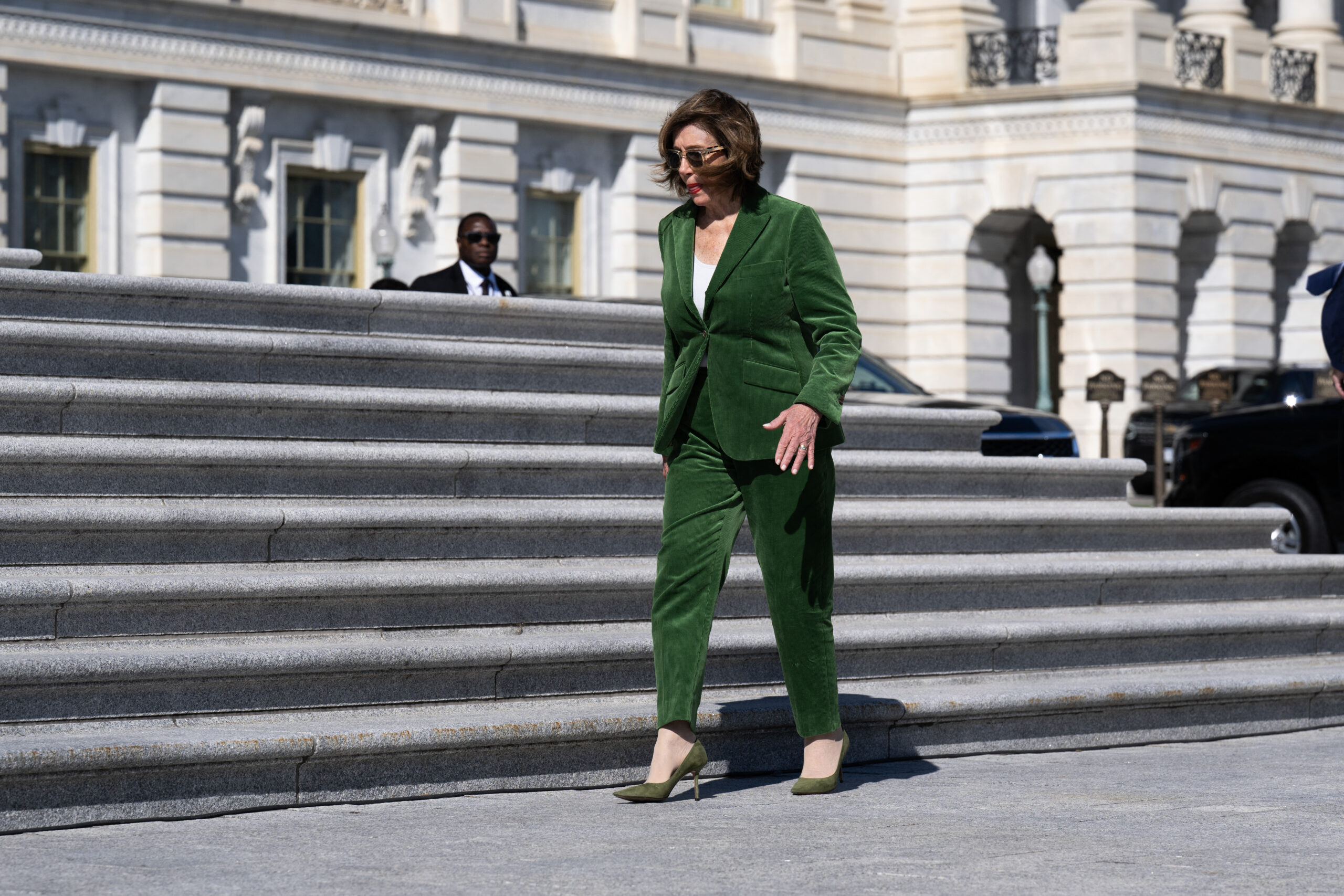
The race to fill the seat of Rep. Nancy Pelosi (D-CA) in California’s 11th Congressional District has become somewhat of a proxy battle in the war for the identity of the Democratic Party, where describing Israel’s war in Gaza as a genocide, supporting arms embargoes to Israel and attacking Zionism as a racist ideology have become much more common since the Oct. 7, 2023, Hamas terrorist attacks and the subsequent war in Gaza, Gabe Stutman reports for Jewish Insider. The outcome of the race will help answer an important question: Can a progressive candidate still win in a deep-blue district like San Francisco without fully embracing the politics of the anti-Zionist left?
State of play: The race is by most accounts a three-way contest between state Sen. Scott Wiener, Connie Chan, a progressive member of the San Francisco Board of Supervisors who has the backing of major labor organizations but has struggled to compete in fundraising, and Saikat Chakrabarti, a wealthy tech entrepreneur who entered progressive politics working for Sen. Bernie Sanders (I-VT) during his 2016 presidential bid and later served as Rep. Alexandria Ocasio-Cortez’s (D-NY) chief of staff.
EXCLUSIVE
DMFI works to block antisemitic activist from winning Dem nomination in Texas swing district

Democratic Majority for Israel’s political arm is kicking off an ad campaign on Tuesday to boost Johnny Garcia, a sheriff’s deputy in Bexar County, Texas, in his Democratic runoff election later this month against Maureen Galindo, a San Antonio activist who has faced scrutiny for trafficking in antisemitic tropes, Jewish Insider’s Matthew Kassel reports.
Getting behind Garcia: “Democrats need candidates who can build broad coalitions and win in November,” Brian Romick, the chair of DMFI PAC, told JI. “Johnny Garcia is a coalition builder who supports a strong U.S.-Israel relationship and has been clear in standing against antisemitism. His opponent, on the other hand, proudly embraces vile, antisemitic conspiracies and if she advances could put a Democratic House majority at risk.”
TEHRAN TALKS
Senate Republicans split over the prospect of resuming military operations against Iran

With President Donald Trump publicly mulling the resumption of military action against Iran, fault lines are opening up among Senate Republicans over the prospect of a renewed military effort, Jewish Insider’s Marc Rod reports.
State of play: Some Senate Republicans are publicly calling for the U.S. to resume military operations. Others are leaving the prospect of military action on the table without fully ruling out a diplomatic path, while offering varying degrees of skepticism about how realistic a deal actually would be. Sen. Josh Hawley (R-MO) urged Trump to ignore calls from some of his more hawkish colleagues to restart military operations.
Pakistan problems: Senators on both sides of the aisle, including Sens. Lindsey Graham (R-SC), Mark Kelly (D-AZ) and Ted Budd (R-NC), on Monday expressed concerns about a report by CBS News that Pakistan had sheltered multiple Iranian military aircraft at an air force base in the country since shortly after the U.S.-Iran ceasefire in April, raising questions about the country’s neutrality as a mediator, JI’s Marc Rod reports.
PARTY SWITCH
Israel’s business leaders see opportunity amid war, political shifts

The Israeli financiers, investors and entrepreneurs who attended last week’s Milken Institute Global Conference in Beverly Hills brought an upbeat attitude about Israel’s economy, even two-and-a-half years into near-constant war that began with Hamas’ Oct. 7, 2023, attacks, Jewish Insider’s Gabby Deutch reports.
Exceeded expectations: “When the war began, I think none of us — none of the regulators in Israel, and almost none of the players or the investors in Israel — thought or believed that after two-and-a-half years of war, Israel would show such growth, such resilience,” Seffy Zinger, chair of the Israel Securities Authority, told JI in an interview. “I’m not an investment advisor, but you can see that if you were not in Israel in the past two years, you probably missed out, if Israel was not part of your portfolio.”
SPEAKING OUT
Pennsylvania Supreme Court justice leaves Democratic Party, citing rise in antisemitism
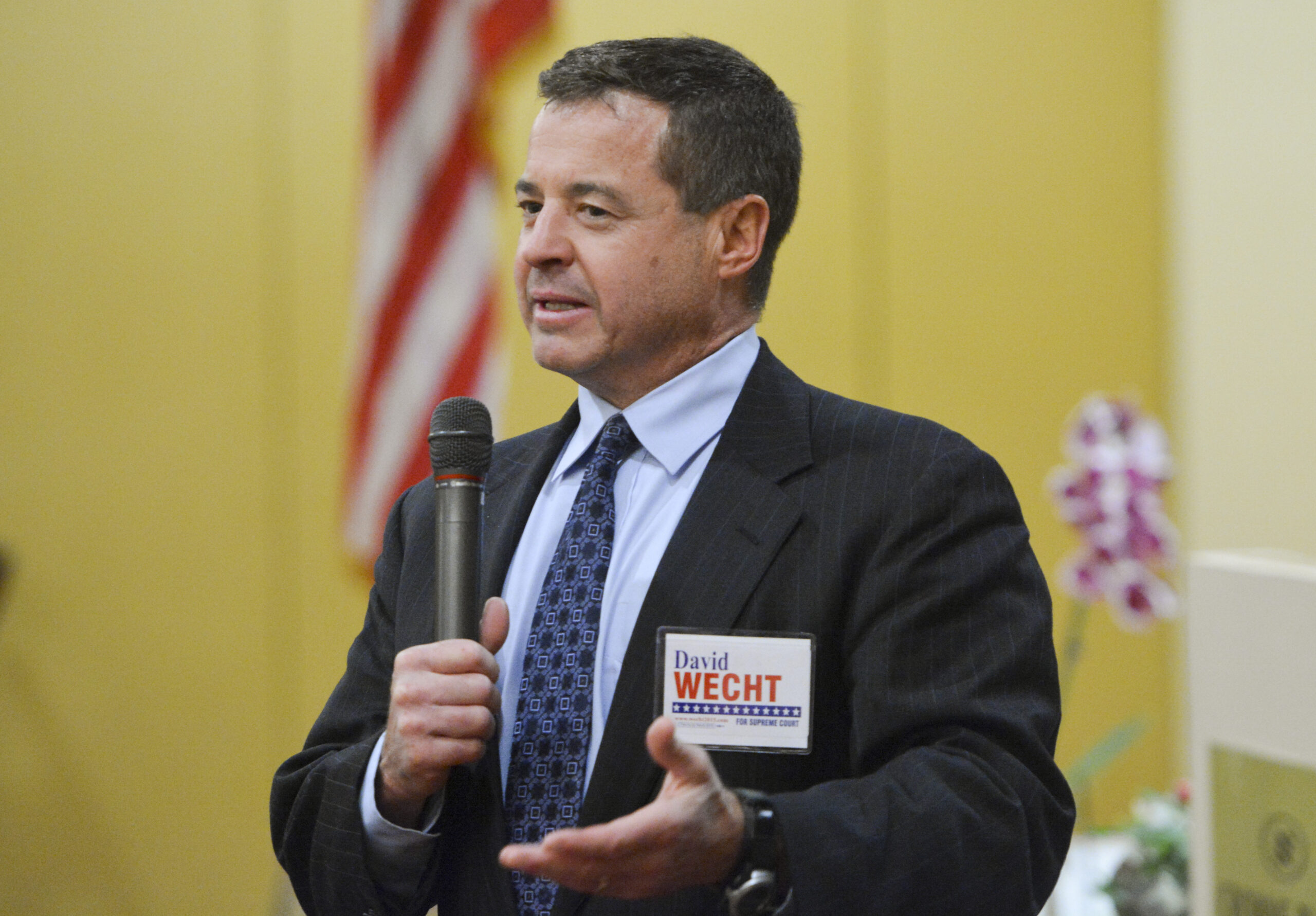
Pennsylvania Supreme Court Justice David Wecht, a former vice-chair of the Pennsylvania Democratic Party, announced Monday he has left the party, citing “anti-Jewish” actions and “acquiescence to Jew-hatred” within the party, including from elected officials, Jewish Insider’s Haley Cohen reports.
What he said: “Acquiescence to Jew-hatred is now disturbingly common among activists, leaders and even many elected officials in the Democratic Party. I can no longer abide this,” wrote Wecht, who was elected as a Democrat in 2015. He added that he is no longer affiliated with any political party. “That terror came from the right,” he wrote. “Jew-hatred has always festered on the fringe of that sector.” But, Wecht continued, “in the quarter century that has passed” since his leadership position, “the Democratic Party has changed.”
scoop
Olga Deutsch to succeed Gerald Steinberg as president of NGO Monitor
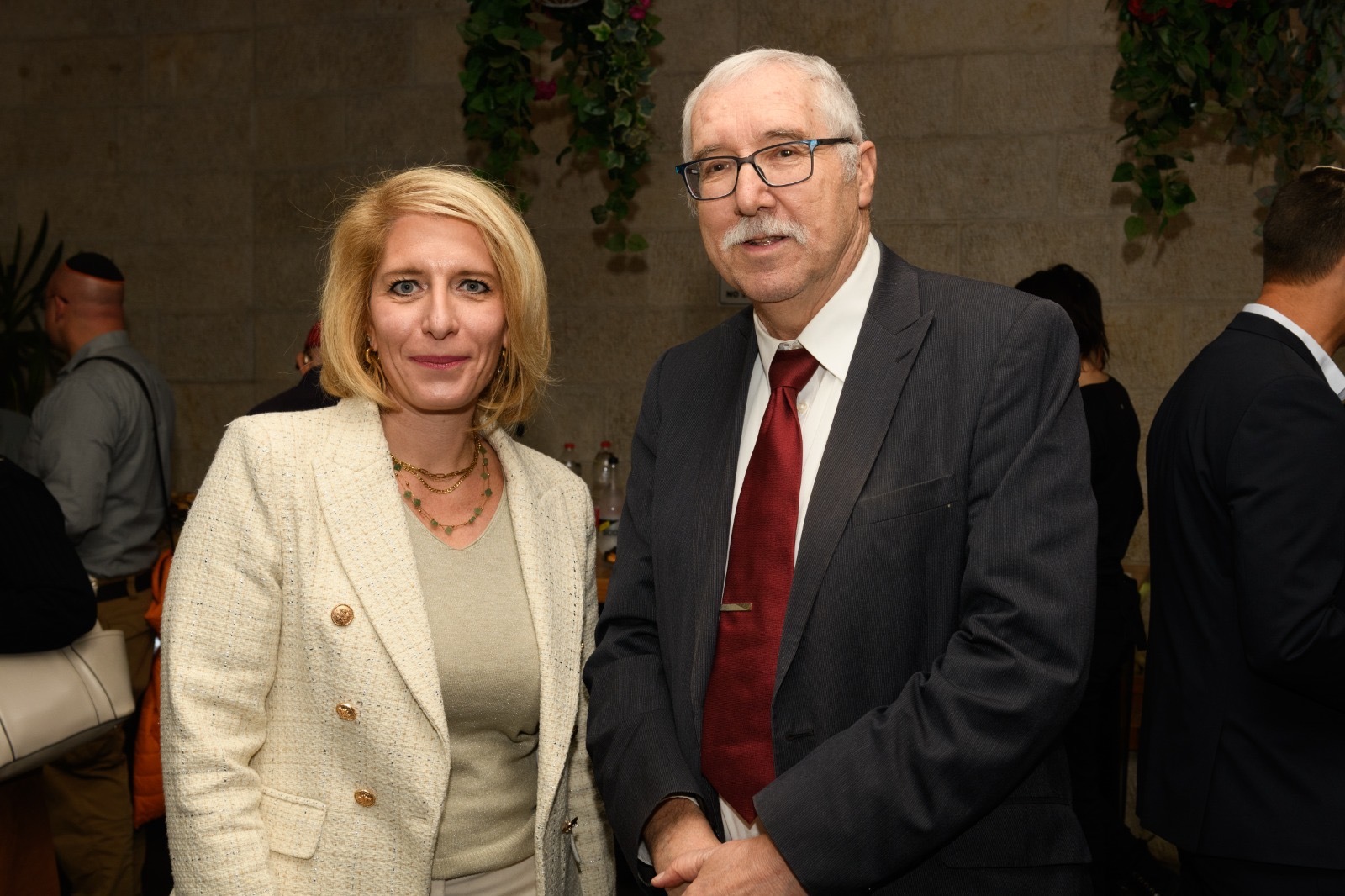
NGO Monitor President Gerald Steinberg is set to step down in January, 25 years after founding the Jerusalem-based watchdog group focused on scrutinizing nonprofit organizations critical of Israel and their funding sources, Jewish Insider’s Tamara Zieve reports. Olga Deutsch, 47, currently NGO Monitor’s vice president, will succeed Steinberg following a months-long transition process at the organization, which since its inception has been closely associated with its founder.
Passing the baton: Steinberg, 74, who resigned from his position as a professor of political science at Bar-Ilan University seven years ago, told JI, “There is a point in one’s life where one has to decide the different priorities. And I’ve done this long enough, and other people can have more energy and can take over.” Deutsch told JI that she hopes to “open the next exciting chapter,” while preserving the “character of the organization that Gerald created, which is serving as pioneers and continuing to flag the new fronts through which the Jewish state and the Jewish people are being attacked or put in danger.”
Worthy Reads
Abe as Mentor: In eJewishPhilanthropy, William Daroff, the CEO of the Conference of Presidents of Major American Jewish Organizations, eulogizes former Anti-Defamation League head Abe Foxman, who died on Sunday. “He combined toughness and warmth in a way few leaders can. He expected seriousness. He spoke with moral clarity. He pushed younger Jewish leaders to think bigger about our responsibility to the Jewish people and the broader democratic society in which we live. He also challenged me, usually in private, though occasionally in the public pages of newspapers. Abe Foxman knew exactly when to make a point, and exactly how to make it land.” [eJP]
Miller Lite: The Atlantic’s Michael Scherer and Nick Miroff spotlight the waning influence of Stephen Miller in the second Trump administration. “White House insiders said that Miller remains a top adviser to the president, that he has a singular relationship to Trump built over the past decade, and that his job is not in jeopardy. Immigration enforcement remains a central theme of the administration and is expected to feature prominently in Trump’s midterm-election messaging. … But Trump, who has previously joked that Miller’s ‘truest feelings’ are so extreme that they should not be aired publicly, has also told others in recent weeks that he understands Miller sometimes goes too far, advisers told us.” [TheAtlantic]
Word on the Street
President Donald Trump said that the ceasefire with Iran was on “life support” following Washington’s rejection of Tehran’s latest response to the U.S. proposal to end the war, Jewish Insider‘s Emily Jacobs reports…
CNN looks at efforts by Iran to recruit operatives in Europe to carry out attacks on Jewish targets…
The United Arab Emirates reportedly carried out strikes on Iran during the active military campaign launched by the U.S. and Israel, targeting among other things an oil refinery on the Lavan Island in the Persian Gulf…
U.S. Ambassador to Israel Mike Huckabee, speaking at the Tel Aviv Conference today,confirmed that Israel sent missile-defense batteries and operating personnel to the UAE during the war with Iran…
The Financial Times spotlights Iran’s “mosquito fleet” of Islamic Revolutionary Guard Corps fast-attack boats that are engaging commercial and military vessels in the Strait of Hormuz…
Rep. Pat Ryan (D-NY) and 17 other Democrats introduced a bill to ban further funding for military operations against Iran…
Trump nominated Cameron Hamilton to head FEMA, a year after Hamilton, who mounted a failed 2024 bid for Congress, was fired as the interim head of the agency…
Kevin Warsh is expected to be confirmed as the next head of the Federal Reserve as early as tomorrow…
Trump invited several business leaders to join him on his trip later this week to China, including Elon Musk, outgoing Apple CEO Tim Cook, BlackRock’s Larry Fink, Meta’s Dina Powell McCormick, Goldman Sachs’ David Solomon, Citi’s Jane Fraser and Blackstone’s Stephen Schwarzman, among others…
Trump announced the nominations of Kari Lake, the former head of the U.S. Agency for Global Media, and Pennsylvania state Sen. Doug Mastriano to be, respectively, the ambassadors to Jamaica and Slovakia…
Former Rep. Billy Long (R-MO), who has been nominated to be U.S. ambassador to Iceland, shared a three-minute clip of a speech by neo-Nazi influencer Nick Fuentes on X on Sunday, Jewish Insider’s Marc Rod reports…
The New York Times spotlights the work of Fuentes’ acolytes to build on the antisemitic conspiracy theorist’s political movement, an effort that coalesced around a conference of influencers and fringe candidates from both parties in a sparsely attended summit; the low turnout was attributed in part to the absence of Fuentes, who distanced himself from the gathering…
Puck News does a deep dive into the recent layoffs at Ben Shapiro’s Daily Wire, finding that the recent decision to cut approximately 20% of the company’s staff was fueled by a combination of internal business disagreements and the “‘vibe shift’ among the MAGA base” that has divided conservatives in recent years…
A judge in Santa Clara County, Calif., ordered a Jewish prosecutor to recuse himself from a case against anti-Israel student protesters at Stanford University after the prosecutor described the incident as antisemitic in campaign literature, Jewish Insider’s Haley Cohen reports…
The Wall Street Journal’s Shira Kaplan reflects on the sanctity of Shabbat following President Donald Trump’s call for the American Jewish community to observe a “national Sabbath” this weekend…
Daniel Septimus is departing Sefaria after 13 years atop the organization, eJewishPhilanthropy’s Jay Deitcher reports…
Australian Jewish musicians testifying on Tuesday before the country’s royal commission into antisemitism in the country detailed the yearslong ostracization they experienced from the arts community for their support for Israel…
Israeli journalist Haviv Rettig Gur breaks down the “obvious propaganda” in a recent New York Times opinion piece by Nicholas Kristof about alleged Israeli abuses of Palestinian prisoners…
Former Israeli hostage Rom Braslavski, who was one of the last hostages to be freed after spending more than 700 days in Hamas captivity, called for the resignation of all members of the current Israeli government, whom he called “miserable cowards”…
Israel’s Civil Commission on October 7 Crimes Against Women and Children released its comprehensive report on sexual violence during the Oct. 7, 2023, Hamas terror attacks and during hostages’ time in captivity…
The Knesset passed, with the support of 93 of the body’s 120 lawmakers, a law establishing a military tribunal to try terrorists who took part in the Oct. 7 attacks…
E.U. member states unanimously voted to sanction Hamas leaders as well as Israeli settlers in a bid to target extremism; the vote came after Hungary, no longer under the leadership of Viktor Orbán, removed its longstanding opposition to the measure…
Israel denied entry to YouTuber Tyler Oliveira, who in recent months has posted videos suggesting that Jews were “invading” communities in New York and New Jersey…
The Israeli soldier photographed desecrating a statue of the Virgin Mary in a southern Lebanese village was sentenced to three weeks in a military prison, while the soldier who took the photo received a sentence of two weeks…
Iran executed a graduate student convicted of spying on behalf of the CIA and Mossad; Erfan Shakourzadeh, who attended the prestigious Iran University of Science and Technology, denied the charges in a letter written before his execution…
Pic of the Day

Ukrainian President Volodymyr Zelensky (left) met in Kyiv earlier today with Palantir CEO Alex Karp.
Birthdays

Acclaimed architect and master planner for the World Trade Center site in Lower Manhattan, he also designed the Jewish Museum in Berlin, Daniel Libeskind turns 80…
Israeli agribusiness entrepreneur and real estate investor, he was chairman and owner of Carmel Agrexco, Gideon Bickel turns 82… Former member of the California state Senate for eight years, following six years as a member of the state Assembly, Lois Wolk turns 80… Chairman of the Israel Paralympic Committee, he served for four years as a member of the Knesset for the Yisrael Beiteinu party, Moshe “Mutz” Matalon turns 73… Former Washington correspondent for McClatchy and then the Miami Herald covering the Pentagon, James Martin Rosen turns 71… SVP and deputy general counsel at Delta Air Lines until 2024, now chief legal officer at private aviation firm Wheels Up, Matthew Knopf turns 70… Professor at Emory University School of Law, he has published over 200 articles on law, religion and Jewish law, Michael Jay Broyde turns 62… Actress known for her role as Lexi Sterling on “Melrose Place,” she also had the lead role in many Lifetime movies, Jamie Michelle Luner turns 55… Founder of strategic communications and consulting firm Hiltzik Strategies, Matthew Hiltzik turns 54… Communications officer in the D.C. office of George Soros’ Open Society Foundations until last year, Jonathan E. Kaplan… First-ever Jewish governor of Colorado, he was a successful serial entrepreneur before entering politics, Jared Polis turns 51… Professor of mathematics at Bar-Ilan University and a scientific advisor at the Y-Data school of data science in Israel, Elena Bunina turns 50… Italian politician, she is the first-ever Jewish mayor of Florence, Sara Funaro turns 50… Israeli pastry chef and parenting counselor, she is married to former Israeli Prime Minister Naftali Bennett, Gilat Ethel Bennett turns 49… Author, blogger and public speaker, Michael Ellsberg turns 49… Senior advisor at Accelerator for America Action, Joshua Cohen… Technology and social media reporter at Bloomberg, Alexandra Sophie Levine… Executive director of government affairs at BridgeBio, Amanda Schechter Malakoff… A government affairs and public policy manager for YouTube, Erica Arbetter… Haifa-born actress and model, she is known for her lead roles in seven films since 2014, Odeya Rush turns 29…
As Alex Bores and Jack Schlossberg woo the left, Micah Lasher emerges as favorite among Jewish voters
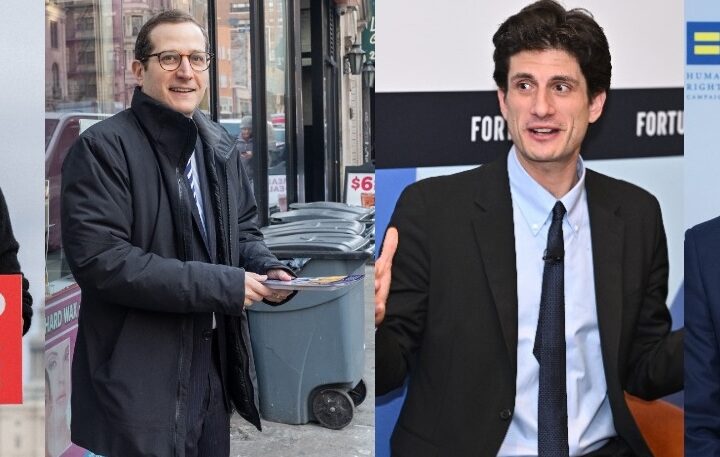
Brian Stukes/Lev Radin/Roy Rochlin/John Nacion
George Conway/Micah Lasher/Jack Schlossberg/Alex Bores
With seven weeks remaining until the Democratic primary for an open House seat in Manhattan, the crowded race is beginning to show emerging signs of division over Israel and rising antisemitism, key issues in the heavily Jewish district where many voters closely identify with liberal Zionist sentiments.
The last week — which included two candidate forums focused on Jewish community issues and was punctuated by an anti-Israel protest near a synagogue in the district hosting an Israeli real estate event — highlighted some of the subtle ideological fault lines inflecting the June 23 race to succeed retiring Rep. Jerry Nadler (D-NY).
From recent efforts to block U.S. weapons sales to Israel to the intersection between anti-Zionism and antisemitism, the four top candidates in the closely contested race — state Assemblymembers Alex Bores and Micah Lasher, Kennedy scion Jack Schlossberg and former Republican attorney George Conway — are by varying degrees staking out differing views on Middle East policy as well as domestic concerns affecting the Jewish community, while continuing to reaffirm their support for the Jewish state.
Meanwhile, some recent endorsements that Bores received from left-wing advocacy groups hostile toward Israel have fueled skepticism of that support among Jewish leaders, along with speculation he is seeking to carve out a progressive lane for himself that has been largely unoccupied for most of the campaign.
The starkest disagreements were on display last Wednesday during a candidate forum at the Stephen Wise Free Synagogue on the Upper West Side, where Schlossberg, a social media influencer with a narrow lead in most private polls, notably said he would have joined most Senate Democrats who voted last month to restrict arms sales to Israel — even as he continues to back defensive aid to help boost Israel’s Iron Dome system.
For their parts, Conway and Lasher both confirmed they would have opposed the legislation introduced by Sen. Bernie Sanders (I-VT). “I don’t support the withholding of aid from Israel,” Conway explained, drawing applause from the audience, while Lasher said he did not believe the bill “would have actually improved the lives of people on the ground,” echoing comments he had made in a candidate questionnaire opposing House legislation to block weapons sales to Israel.
Bores, who had previously committed to the event, pulled out the day before, citing a scheduling conflict in Washington.
The forum, which took place a day after anti-Israel demonstrators had chanted antisemitic slogans near Park East Synagogue to oppose an Israeli real estate event featuring some advertising for settlements in the West Bank, drew other distinct contrasts among the candidates.
Schlossberg, for instance, condemned what he called the “antisemitic rhetoric” used by demonstrators who had shouted slogans such as, “We don’t want no Zionists here,” “Death to the IDF” and “We don’t want no two-state, we want ‘48.”
Still, he added, “I don’t think that a land sale for real estate that is in violation of international law should be happening in a house of worship.”
In comparison, Lasher, a Jewish protégé of Nadler’s, questioned the protesters’ aims. The demonstration was more broadly about “framing Israel, and the idea of making aliyah to Israel, as illegitimate,” he argued. Earlier, he said the protest was “intended to create fear in the hearts of Jewish New Yorkers and stigmatize our community.”
“I think it’s important to speak with clarity,” added Lasher, who has touted his state legislation to ban protests directly outside houses of worship, which has been opposed by anti-Israel activists in the city. “When people are outside a synagogue shouting, ‘We don’t want two states, we want ‘48’ — that’s not about the question of West Bank settlements. That is about the legitimacy of Israel.”
Bores, whose state Assembly district includes Park East Synagogue, said in a joint statement with City Councilmember Virginia Maloney before the protest on Tuesday that the demonstration evoked “painful memories of times when people have been harassed while entering houses of worship.” He did not appear to have commented on the protest after it occurred.
While Bores has recently accepted support from some groups opposed to U.S. funding for Israel, he has indicated that he does not share such positions. He has rejected legislative efforts to condition aid — stating in one candidate questionnaire, for example, that “determining foreign policy through legislation that targets individual countries has overall not been beneficial for achieving universal rights.”
He reiterated that view last Monday during a separate forum at The Jewish Center, a Modern Orthodox synagogue on the Upper West Side, where he appeared with Lasher. “I support the consistent application of Leahy Laws across all countries,” he said, referring to U.S. laws banning security funding to foreign military units that engage in human rights violations.
Lasher also agreed with that position. “It should be a universal standard,” he said.
“We should be able to stand up to people in our party,” Bores added at the forum last week, “and say how important our relationship is with the State of Israel and how important it is to ensure the rights of everyone in the region, including the Palestinians.”
Still, his recent endorsement from Our Revolution, a Sanders-aligned group that has advocated for cutting military funding to Israel, has fueled questions about the sincerity of his positions. His decision to pull out of the Stephen Wise candidate forum on short notice last week also raised eyebrows, particularly as he had done so after winning support from a City University of New York union that has called for divesting from Israel.
Bores has otherwise claimed backing from New York Progressive Action Network, which likewise supports efforts to withhold U.S. military aid to Israel.
“There’s a lot of skepticism now,” said one Jewish community leader who is closely following the race, speaking on the condition of anonymity to address a sensitive issue. “You don’t get the endorsements of Our Revolution and PSC CUNY,” which represents faculty and staff in the university system, “without saying something differently privately than you do publicly.”
“There’s concern now that there wasn’t a few weeks ago,” the Jewish leader said, noting Bores had been calling community members to do “damage control” after receiving the Our Revolution endorsement. He has explained that the nod extends from their shared goal of regulating the AI industry, which is targeting the former Palantir employee aggressively in the race, according to the Jewish leader.
A spokesperson for Bores’ campaign did not respond to a request for comment about the endorsement last week.
While some Jewish voters in the district feel that Lasher’s views on Israel are to the left of their own, his outspoken opposition to rising antisemitism and commitment to Israel’s security are now appealing to a segment of the community that is questioning the apparent dissonance between Bores’ publicly stated positions and his endorsements from organizations with which he is not aligned on Middle East policy.
A graphic circulating in local Jewish WhatsApp groups on Friday, which was shared with Jewish Insider, warned that “a Bernie Sanders PAC just endorsed Alex Bores” and that “Jack Schlossberg wants to cut arms sales to Israel,” highlighting the names in red.
“Micah Lasher is the clear choice. The community and rabbis are rallying behind him,” the message continued. “It’s time to unite to win this seat.”
Garth Symonds, who chairs The Jewish Center’s committee to get out the vote, said in a statement to JI on Friday that Bores “has proven his toughness in the face of well-funded attacks by those resistant to AI regulation” and that he “appears to have a strong legislative record, but so does Lasher.”
“On Israel, Lasher has a supportive track record, whereas Bores appears close to some people in the Working Families Party, which is anti-Israel, and has been endorsed by One Revolution,” he said, claiming Lasher, a veteran Democratic operative, “has deeper political experience.”
The Working Families Party, which supports conditioning aid to Israel, chose not to issue an endorsement after soliciting questionnaires from Bores, Lasher and Schlossberg. But the group has recently indicated it could rethink that decision as Schlossberg has gained traction, saying “we can do better than that.” It is most likely to support Bores if it does weigh on the primary, City & State New York has reported.
What makes the otherwise sleepy contest significant is the potential for the results to indicate if there are any fissures within the MAGA coalition that may represent discontent with Trump’s hawkish turn amid the Iran war
Megan Varner/Getty Images
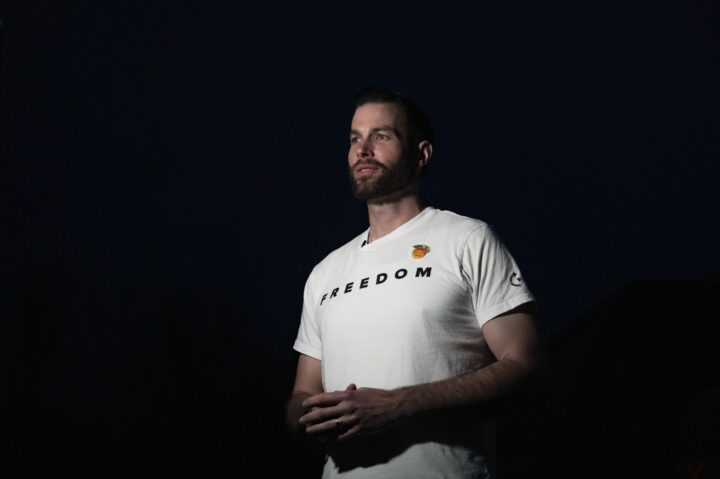
Clay Fuller, Trump endorsed Republican candidate for Congressional district 14, speaks to members of the media after arriving early to his voting precinct to cast his vote on March 10, 2026 in Lookout Mountain, Georgia.
Today’s special election runoff in Georgia between Republican Clay Fuller and Democrat Shawn Harris to determine the successor to former Rep. Marjorie Taylor Greene (R-GA) isn’t much in doubt. The northwestern Georgia district that Greene represented backed President Donald Trump by 37 points in 2024, one of the largest GOP margins in the country.
What makes the otherwise sleepy contest significant is the potential for the results to indicate if there are any fissures within the MAGA coalition, ones that may represent Republican discontent with Trump’s hawkish turn amid the Iran war. In this race, the margins will be as notable as the winner.
Greene, since leaving Congress, has emerged a loud Republican voice against the Iran war and against Trump’s strong alliance with Israel. Fuller, a military veteran with a background in counterterrorism operations and district attorney for the Lookout Mountain Judicial Circuit, has been a stalwart supporter of Trump’s military operations in the Middle East, and Trump has endorsed him in the race.
Harris, the Democrat, holds foreign policy views closer to the isolationist Greene, attacking the pro-Israel advocacy group AIPAC and describing Israel’s war against Hamas as a “genocide” — views which place him on the left flank of the Democratic Party. This despite Harris’ time serving as defense attache in Israel during his years in the National Guard, work history that he has not publicized during the campaign.
It’s worth noting that Greene, since she was first elected to the seat in 2020, has underperformed Trump’s standing in the district, only winning 64% of the vote against Harris in 2024 — four points below Trump’s 68% showing at the top of the ticket. And since breaking with Trump in his second term, her political standing has taken an even bigger hit.
Greene has not endorsed either candidate in the race.
If Harris wins over 40% of the vote in this ruby-red district, it’s a sign that Democrats are making inroads into rock-ribbed conservative turf, potentially over frustrations with rising gas prices and the Iran war. But if he doesn’t perform much better than he did in 2024 — and he only won 37% of the vote in the first round of balloting, compared to the 36% he tallied two years ago — it’s a sign that the media hype over a MAGA fissure is greatly overstated.
The election also carries some relevance for another big political showdown in Georgia later this year: Sen. Jon Ossoff’s (D-GA) reelection campaign. Given a divided GOP primary field and an unfavorable national environment for Republicans, Ossoff starts with some advantages in what otherwise looks like a tough reelection.
If the GOP base turns out strongly for Fuller, it’s a sign that Republicans will still be able to rely on conservative voter enthusiasm and engagement in the run-up to the closely watched Senate battleground.
But if there are signs of GOP weakness in one of the reddest parts of the state, it would be evidence that Trump’s political problems aren’t just limited to swing voters, but could extend to even redder states and districts on the battleground map.
Three Jewish leaders see Gill as the likely front-runner for the 11th Congressional District seat, with Malinowski as a formidable candidate as well
Bill Clark/CQ Roll Call via AP/Facebook
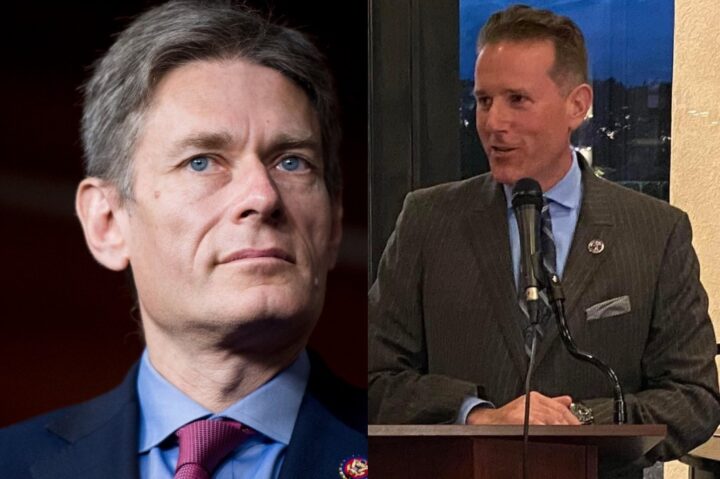
Former Rep. Tom Malinowski (D-NJ) and Essex County Commissioner Brendan Gill
The race to replace New Jersey Gov.-elect Mikie Sherrill in her northern New Jersey district, an affluent, suburban area with a sizable Jewish population, has attracted around a dozen Democratic candidates from a wide array of backgrounds. But three Jewish leaders in the state plugged into the local political scene say they see Essex County Commissioner Brendan Gill as the likely front-runner in the 11th Congressional District, with former Rep. Tom Malinowski (D-NJ) as a formidable candidate as well.
The primary election is set for Feb. 5, with a general election on April 16.
Gill, a former aide to Gov. Phil Murphy, has been endorsed by the outgoing governor, and is considered the leading Democrat, the Jewish leaders said, because he’s a well-known and well-liked figure in the district, has the backing of the Democratic Party establishment, entered the race relatively early and has long been seen as an up-and-coming leader in the area.
He’s also been working aggressively to secure supporters and donors, two leaders said.
But he could also face attacks over his role as Murphy’s campaign manager in 2017, when he faced allegations by a top campaign aide who accused Gill of running a “toxic” workplace, attempting to push her out of the campaign, of misogynistic behavior toward her and other female campaign staff and of using a misogynistic slur in an argument with her. Gill denies those allegations.
Malinowski is a known quantity from his three terms in Congress and has been endorsed by Sen. Andy Kim (D-NJ) as a counterweight to the New Jersey political machine — but there’s only partial overlap between Malinowski’s former House district and the neighboring seat he’s running in now, setting up potential attacks on him as an outsider.
“Malinowski is a legitimate, serious candidate. He’s in the mix. I would not rule him out. He’s a well-known name. He’s got the history here. He’s deeply connected,” one leader said. “If I had to gauge it right now, I would say Gill one, and [Malinowski] two.”
They also noted that the limits of Murphy’s influence were clear in Kim’s election in the Senate race, in which he garnered more statewide party support than Tammy Murphy, the wife of the current governor, who dropped her bid before the primary.
One Jewish leader said that, given his ties to Murphy and their ideological alignment, Gill would likely be a reliable supporter of the Jewish community, as Murphy generally has been. The leader noted that Gill had also worked in the past with Sen. Cory Booker (D-NJ) and the late Sen. Frank Lautenberg (D-NJ), both of whom were strong supporters of Israel.
“I think you’ll see someone who is a practical, thoughtful person in their engagement with the Jewish community,” they said.
But two other Jewish community leaders noted that Gill’s wife, a state representative, has raised concerns among some in the community.
Assemblywoman Alixon Collazos-Gill attended a Palestinian flag raising event in Clifton, N.J., which featured denunciations of Israel, accusations that Israel was committing genocide and deliberately inflicting famine in Gaza and calls for “no money for wars.”
Collazos-Gill, who has attended flag raising events for various other communities in Clifton as well, posted on Facebook after the event, “I was moved by the sense of community, love and resilience. Thank you Clifton for the kind invitation and the Palestinian community that organized the event.”
She was also critical of the Trump administration’s efforts to deport Mahmoud Khalil, an anti-Israel activist at Columbia University. “So many things are at stake: due process, freedom of speech, the right to peacefully protest, democracy. This is a warning that this can happen to any non-citizen. We should all be concerned,” she posted on Facebook.
She was also endorsed by the New Jersey branch of the Working Families Party, which at the national level has accused Israel of mass starvation in Israel and called for the U.S. to condition aid to the Jewish state. It supported an immediate ceasefire in Gaza two weeks after the Oct. 7, 2023, Hamas attack on Israel.
And she attended a meet-and-greet event in May at the invitation of prominent members of the Palestinian American Community Center, a local Palestinian group. Rep. Josh Gottheimer (D-NJ) urged the Department of Justice to investigate the group in April for hosting an alleged affiliate of the Popular Front for the Liberation of Palestine at its annual conference. In social media comments, an organizer of the meet and greet emphasized that it had occurred off-site and was not formally affiliated with the PACC, a nonprofit group.
Collazos-Gill was vague about what was discussed in a Facebook post, but thanked the two PACC members for “inviting me to join you in these meaningful conversations about the issues that matter most to you.”
Gill’s campaign did not respond to a request for comment.
The Jewish leader who praised Gill said they had spoken to Collazos-Gill recently and didn’t hear her express any anti-Israel sentiments, and said she had indicated an interest in cultivating relationships with the Jewish community. They also noted that Collazos-Gill is sponsoring legislation to codify the International Holocaust Remembrance Alliance’s working definition of antisemitism.
“Regardless, I do think Brendan is a supporter of Israel and the Jewish community as his own person,” the leader continued.
While in Congress, Malinowski was generally a reliable supporter of Israel and a voice against antisemitism, but some of his views towards Israel since Oct. 7, 2023, have raised skepticism in the Jewish community, one leader noted.
In public interviews, he expressed support last year for President Joe Biden’s moves to pressure Israel against entering the Gaza city of Rafah by withholding some arms shipments.
Also in the race is Jeff Grayzel, the deputy mayor of Morris Township, N.J., and a leader in his local Jewish community relations council and federation. While Jewish leaders praised Grayzel and said he’d be a strong voice for Jewish community priorities — one described him as clearly the strongest advocate on those issues — they were skeptical that he would have a path to victory against better-known figures such as Gill and Malinowski.
Grayzel, speaking to JI last week, pushed back, arguing that neither Malinowski nor Gill are particularly well-known in the district.
He predicted that Malinowski and Gill, training their fire at each other will provide an opportunity for other candidates to emerge, and that the wide field will mean that a fairly low vote percentage is needed to win.
Grayzel outlined a path to victory that includes winning Morris County, where he lives and which makes up 40% of the district, as well as picking up the substantial Jewish vote in Essex County.
“People are sick and tired of politics as usual,” Grayzel said. “I think I have the message that’s going to resound the most with the voters, coming at it as a [former] mayor who has literally solved problems, who’s delivered results for his community.”
The Jewish community, Grayzel added, will “have to come out and vote. … If Jews are sick and tired of antisemitism, if Jews are tired of how Israel has been treated, the answer to that is to vote.”
Lt. Gov. Tahesha Way also entered the race, but the Jewish leaders largely said they do not see her as a strong contender, given that she entered the race late and is not particularly well-known, despite her statewide position.
It’s the highest number of anti-Jewish hate crimes ever recorded by the bureau since it began collecting data in 1991

Tom Brenner For The Washington Post via Getty Images
Metropolitan Police Department and Federal Bureau of Investigation officers stand guard at a perimeter near the Capital Jewish Museum on May 22, 2025 in Washington.
The FBI reported on Tuesday that the American Jewish community remains the most targeted religious group, accounting for nearly 70% of all religiously motivated hate crimes in 2024, even as overall hate crimes in the country have decreased.
Hate crimes targeting Jews had plateaued following a sharp increase immediately after the Oct. 7 Hamas terror attack.
In 2024, 1,938 anti-Jewish hate crimes were reported to the FBI’s data collection program out of 3,096 reported religiously motivated hate crimes. The year 2024 saw the highest number of anti-Jewish hate crimes ever recorded by the bureau since it began collecting data in 1991 — and an increase compared to 1,832 incidents the year prior, which accounted for 67% of all religiously motivated hate crimes that year.
Some of that increase could be attributed to improvement in data collection, according to the FBI. That increase comes as hate crime incidents across the country slightly decreased from 11,862 in 2023 to 11,679 in 2024.
Fifty percent of hate crime incidents across the country in 2024 were motivated by bias based on race, ethnicity or national origin, with reported anti-Black hate crimes comprising the single largest portion of those incidents (51% of 7,043 reported offenses).
The FBI also reported that the number of anti-Muslim hate crimes (228) and anti-LGBTQ+ hate crimes (2,390) were slightly down compared to 2023.
Jewish organizations responsible for tracking threats to the Jewish community expressed concern over the findings, which come months after two deadly antisemitic attacks in Washington and Boulder, Colo.
Michael Masters, national director and CEO of the Secure Community Network, said that the current threat environment for American Jews is “unlike anything in modern memory.”
“We have documented individuals echoing the rhetoric of designated foreign terrorist organizations and plotting heinous attacks on our houses of worship, schools, and centers of Jewish life,” Masters said in a statement. “This reality demands accurate, timely reporting so law enforcement and Jewish security partners can respond swiftly.”
Jonathan Greenblatt, CEO of the Anti-Defamation League, said in a statement, “Since the Hamas-led Oct. 7 massacre in Israel, Jewish Americans have not had a moment of respite and have experienced antisemitism at K-12 school, on college campuses, in the public square, at work and Jewish institutions. Our government and leaders must take these numbers seriously and enact adequate measures to protect all Americans from the scourge of hate crimes.”
Ted Deutch, CEO of the American Jewish Committee, called for “leaders of every kind — teachers, law enforcement officers, government officials, business owners [and] university presidents [to] confront antisemitism head-on” in response to the FBI data.
“Jews are being targeted not just out of hate, but because some wrongly believe that violence or intimidation is justified by global events,” Deutch said. “With the added climate of rising polarization and fading trust in democracy, American Jews are facing a perfect storm of hate. Whether walking to synagogue, dropping their kids off at school, sitting in restaurants, or on college campuses, Jews are facing a climate where fear of antisemitism is part of daily life.”
“This is unacceptable — the targeting of Jews is not a Jewish problem, it is a society-wide issue that demands a society-wide response.”
One Jewish Democratic strategist said that none of the three major candidates have deep ties to the Jewish community, leaving Jewish voters up for grabs

Pete Marovich/Getty Images
Ranking Member Lauren Underwood (D-IL) questions acting FEMA Administrator Cam Hamilton as he appears before a Homeland Security Subcommittee Hearing on Oversight on Capitol Hill on May 7, 2025 in Washington, DC. Hamilton is testifying about the administration's disaster relief efforts, including why it has frozen nearly all FEMA's grant funding.
Rep. Lauren Underwood (D-IL) said on Monday that she would pass on an anticipated run for the Illinois Senate seat being vacated by Sen. Dick Durbin (D-IL) in 2026, leaving what’s likely to be a three-way race among Lt. Gov. Juliana Stratton and Reps. Raja Krishnamoorthi (D-IL) and Robin Kelly (D-IL).
“Our work is not done, and I’ve decided the most powerful way for me to defend our values and hold Donald Trump accountable is to help Democrats win back the House,” Underwood said in a statement, highlighting her leadership roles in the House Democratic Caucus and the Democratic Congressional Campaign Committee.
Stratton is backed by billionaire Illinois Gov. JB Pritzker, as well as Sen. Tammy Duckworth (D-IL), while Krishnamoorthi has $19 million in the bank for the race and members of the Congressional Black Caucus are backing Kelly.
Pritzker could put significant funding behind Stratton’s run and reportedly worked behind the scenes to block Underwood and other candidates from entering the race. Underwood, on CNN, denied that Pritzker had forced her to stay out of the race.
A Jewish Democratic strategist, speaking on condition of anonymity to discuss the race candidly, told Jewish Insider they see the Chicagoland Jewish vote — a sizable community — as largely still up for grabs given that none of the candidates have particularly deep ties to the Jewish community coming into the race. They said Jewish voters will likely take time to evaluate each of the candidates.
“I think there’s a lot of inroads for them to make,” the strategist said. “None of these have that long history with the Jewish community … [and] don’t come from natural Jewish areas.”
Kelly and Krishnamoorthi have mixed voting records on priority legislation for the Jewish community, having both opposed several bills and resolutions to combat antisemitism, counter Iran and sanction the Houthis and the International Criminal Court, among other issues.
On the handful of occasions the two have diverged on votes, Krishnamoorthi has generally come down on the side of Jewish and pro-Israel groups — for instance, he supported the Antisemitism Awareness Act, while Kelly opposed it.
The strategist said Kelly may have a shot at gathering Jewish voters’ support given that she has some existing connections with community leaders, from her time as state party chair in 2021 and 2022.
Krishnamoorthi does not currently represent a sizable Jewish community and has not been prominently involved in Jewish issues, the strategist added.
While Pritzker, who is Jewish, has strong ties to the Jewish community, he has led most of the Jewish outreach from the governor’s office, leaving less of a role for Stratton. The strategist said that Stratton “has a lot of room to grow, especially with Pritzker backing her,” and predicted she’ll make a play for the Jewish vote. “She has a very compelling story that I think will resonate with the Jewish community also.”
Chicago also has one of the nation’s largest Palestinian communities, potentially creating competing political incentives for candidates if Israel policy becomes a prominent issue in the race.
Frank Calabrese, a Chicago-based political strategist, said he sees Stratton and Krishnamoorthi as the likely frontrunners in the race overall at this early stage, with Stratton having an advantage given her relationship with Pritzker.
He said that Underwood’s decision not to run caught many, even well-connected political figures in the state, off guard. Calabrese said Underwood likely felt she would not be able to match Stratton and Krishnamoorthi in fundraising, even though she could have been an “ideal type of candidate.”
“I believe Robin Kelly is the weakest of the three just because it’s going to come down to fundraising,” Calabrese said, adding that Pritzker and his political operation have made strong inroads with the Black community, leaving Kelly at a disadvantage with a potential base. He noted that Kelly and Pritzker have preexisting tension — Pritzker forced her out as state party chair in 2022.
But Calabrese said that Stratton’s close ties to the state’s Democratic establishment — Pritzker and Duckworth — could end up being a liability with some Democrats and progressives, particularly the wing of the party that supported Sen. Bernie Sanders’ (I-VT) presidential campaigns. That said, Krishnamoorthi is not strongly aligned with the Sanders wing of the party either, he noted.
Tom Bowen, a Democratic strategist in the Chicago area, argued that the outcome of the race will ultimately be shaped by events over the course of the coming year and that early metrics are often unreliable, especially in multi-candidate races. He predicted that Democratic voters would “take their time” in deciding.
“It’s very obvious the governor’s hand is at work in this, and that he has a preference for the woman he believes should lead the state,” Bowen said. But he argued that might not help Stratton as much in a cycle when some Democrats are looking for big changes. “I’m not sure anybody else’s opinion but their own is going to be the deciding factor here.”
He said that candidates’ backgrounds, endorsements and fundraising are “not insignificant, but voters pay pretty close attention when there’s a moment of crisis, so the one who meets the moment is going to be the one who is successful.”
The Jewish Democratic strategist said they believe the field may not yet be entirely set, noting that businessman Chris Kennedy — brother of Health and Human Services Secretary Robert F. Kennedy Jr. — may also enter the race.
The strategist said that Underwood’s decision not to run makes sense given that she would have been competing against Stratton and Kelly, two other Black women, she is gaining seniority in the House Democratic Caucus and she is young, giving her time to continue to build her national profile.
They said that it’s likely a wide-open race at this point, adding that, while Kelly may currently be the underdog, there’s plenty of runway for her to gain ground if her allies in the CBC put significant backing behind her.
“Most people have no clue who these people are,” the strategist said, “Money helps, but at the end, they have to connect with the voters. And it’s such a diverse state.”
Jewish community not yet coalescing behind any of the progressives in a race that could be ‘personality-driven’

Jonathan Wiggs/The Boston Globe via Getty Images
Former Boston City Council President Michelle Wu speaks with the media after announcing that she is running for Mayor of Boston in Roslindale, MA on Sept. 15, 2020. (Photo: Jonathan Wiggs/The Boston Globe via Getty Images)
Nearly 200 years after Boston elected its first mayor, the city recently swore in its first female mayor and its first mayor of color, almost by accident. Two-term mayor and former union boss Marty Walsh left his post in March to serve as secretary of labor in President Joe Biden’s administration, leading then-City Council President Kim Janey to become acting mayor. Just 12 years ago, the city elected its first woman of color, Ayanna Pressley, to the City Council. In 2018, Pressley also became the first woman of color to represent Massachusetts in Congress.
Now, Janey and five other candidates, all of whom are people of color and self-described progressives, are running to serve a full four-year term as mayor in a race widely seen as the christening of the “New Boston”: The city is close to becoming a majority-minority city, and all six candidates are quick to point out that Boston is no longer the mostly white, mostly Catholic city it once was. (The race is nonpartisan, so candidates are not technically affiliated with the Democratic Party, but the city is overwhelmingly Democratic: 82% of Boston voters cast their ballots for Joe Biden last November.) The deadline for candidates to enter the race was last week, kicking off a critical period of campaigning before a September primary that will send the top two vote-getters to the November general election.
“The community of Boston is in a period of transformation, and asking questions about what kind of city it wants to be going forward, both as an urban center and as the hub of a region,” said Jeremy Burton, executive director of the Jewish Community Relations Council of Greater Boston.
While the candidates come from diverse personal and family backgrounds, most have relatively similar electoral histories and political views, leading to questions of how voters will ultimately differentiate between them. Five of the six major candidates serve in city government, and three of the candidates — Michelle Wu, Andrea Campbell and Annissa Essaibi George — currently serve on the Boston City Council, as did Janey until earlier this year. A fifth candidate, John Barros, served as chief of economic development under Walsh. The final candidate, Jon Santiago, is a state representative and emergency room doctor.
“If you’re a progressive Democrat or a liberal Democrat, you by and large like all these candidates,” said Erin O’Brien, associate professor of political science at the University of Massachusetts Boston. “There seems to be pretty substantive policy agreement on the major issues. I think [the race will be] more personality driven.”
For the most part, all six candidates are highlighting a robust, equitable economic and public health response to the COVID-19 pandemic as a key focus of their campaigns. Other major issues include education and teacher pay, access to housing, adapting to and mitigating climate change and expanding transit options.

State Rep. MD Jon Santiago shows support for presidential candidate Elizabeth Warren at a morning press-conference in Boston to support Warren’s plan to handle infectious disease outbreaks on Feb. 27, 2020. (Jonathan Wiggs/The Boston Globe via Getty Images)
In a city where unions remain dominant, one major change is that none of the candidates are actively seeking the endorsement of the city’s police union. Essaibi George is the only candidate who has spoken out against the movement to defund the police, as she believes the city’s police force should be reformed, not defunded.
“[Essaibi George] has done it in terms that are much more palatable to progressives and less so to the police union,” O’Brien explained. “But I really feel like the police union is used to having political clout, and their clout isn’t anything these candidates want.”
Other unions in the city have not coalesced behind a single candidate, as they did when Walsh first ran in 2013. The construction union endorsed Santiago, and the nurses’ union endorsed Barros. The firefighters’ union endorsed Essaibi George, as did William Gross, former commissioner of the Boston Police Department.
Polling has been limited in the race, with more than three months until the primary, but a late April poll found that 36% of voters remain undecided. Wu narrowly leads Janey and Essaibi George, but each had only about 15% support.
The Greater Boston Metropolitan Area is home to about 250,000 Jews, but only about 10-20% of the area’s Jewish population lives in the city of Boston, with the rest scattered in the surrounding suburbs. Still, members of the Jewish community in suburbs like Newton and Brookline closely follow city politics. “Broader Boston serves as a real center of the region, and what happens in Boston — the success of its educational systems, the health of its economy, the vibrancy of transportation, the leadership the city provides — sets the tone for the region,” explained Burton.
In conversations with community leaders, Burton has not seen Jewish community members coalesce around a particular candidate. “To the extent that they settle on candidates, they are sort of all over the place, so nobody has emerged yet as a clear favorite candidate,” he said. In part, this has to do with the diversity of the city’s Jewish community, which Burton described as three-pronged: an Orthodox immigrant community in Brighton; a more secular, older community downtown comprised of empty-nesters; and a younger, progressive, LGBTQ-friendly community largely residing in the southern part of the city. “They are not necessarily seen as one distinct, highly visible community,” Burton noted.
“If you’re a progressive Democrat or a liberal Democrat, you by and large like all these candidates,” said Erin O’Brien, associate professor of political science at the University of Massachusetts Boston.
Many of the candidates have engaged with the organized Jewish community in some form, either by speaking at panel discussions hosted by Jewish groups or appearing at events including Holocaust remembrance ceremonies. Two candidates — Janey, the current mayor; and Campbell, a city councilor — have traveled to Israel with the Boston JCRC, and Barros participated in a trade mission to Israel as a member of Walsh’s administration in 2014.
Unlike the ongoing mayoral race in New York City, where all eight Democratic candidates have weighed in on the recent violence in the Middle East, the Israeli-Palestinian conflict has not crossed into the Boston race. But across the Charles River, the Cambridge City Council held a seven-hour meeting Monday night on a resolution that Burton described as aligned with the Boycott, Divestment, and Sanctions (BDS) movement against Israel. The council is slated to vote on the resolution Tuesday evening.
“One of the issues that’s being raised in the community is in fact that they largely haven’t done orders like this targeting other companies or countries (or at least not in many, many years),” Burton told JI. JCRC’s website notes that “there are hundreds of American companies that are working overseas and engaged in transactions that could be tied to questionable human rights practices,” and the “focus on Israel betrays a deeper and concerning animus to the world’s only Jewish state.”

City Councilor Annissa Essaibi-George stands for a portrait in Savin Hill, the Dorchester neighborhood where she grew up, in Boston on Jan. 27, 2021. (Erin Clark/The Boston Globe via Getty Images)
The only candidate who responded to questions from Jewish Insider about the resolution — and how they would vote if it came before them as mayor — was Barros, who did not answer the question. “The City of Boston is a diverse and inclusive community, and as mayor I would work to make sure our purchasing power reflects our values,” Barros said.
Who are the candidates hoping to become Boston’s next chief executive? Four of the six major candidates — all but Janey and Campbell — spoke with Jewish Insider about their campaigns.
Michelle Wu
Councilor Michelle Wu got her start in politics while working on the Senate campaign of her Harvard Law School professor and mentor Sen. Elizabeth Warren (D-MA). Like Warren, Wu’s campaign is full of plans — “many, many plans,” she told JI — and also like Warren, she argues that she has the experience necessary to get the job done. Wu is the longest-serving city councilor in the race, but she says the city needs change from the top to truly serve all its residents. “I believe that the way to deliver transformational change is to rethink our approach and recognize how intersectional our issues are,” Wu said.
Her election to the city council in 2013 made her the second woman of color to ever sit on the body, alongside Pressley, and she noted that people urged her not to run. “There were many, many well-meaning mentors, advisors and politicos around town who all told me not to do it,” Wu said. “It was with the best of intentions that people were saying, ‘You won’t get elected: You’re a first-generation American woman, young, not born in Boston. It’s not possible.’ And at that time, when you looked at the makeup of the city council, that made complete sense.”
Wu’s grandparents fled mainland China for Taiwan to escape civil war, and her Taiwanese-born parents then immigrated to the U.S., where she was born. “I can’t remember one instance where we discussed politics or current events at the dinner table,” Wu recalled, adding that “in my family’s multi-generational immigration story, politics was fear and famine, and war and corruption, and all of the many things that we were supposed to stay far away from growing up.”
After attending Harvard as an undergraduate, she returned home to Chicago to care for her younger sisters as their mother dealt with a mental health crisis. “All of a sudden, the bubble around us that had kept us completely walled off from politics and government bursts, and I had to deal with government all the time in extremely frustrating ways,” Wu said. She had witnessed people call the police on her mother, and she also had to learn to manage local government bureaucracy in Chicago when she opened a small business to support her family.
Wu has advocated for limiting funding for police, and instead rerouting it to mental health or social services. “I am one of the candidates in this election cycle that has committed to not accepting donations from the police union. We are in a moment of national reckoning on systemic racism that Boston must show leadership on,” she said.
She noted the strong partnerships between Jewish and Asian populations in the city, and credited Boston’s Jewish community for its activism dating back decades. “I feel very grateful for the efforts and the work that has been done with civil rights and antisemitism that has really laid the groundwork and continues to be the foundation for so much anti-racism work here in our city,” Wu said. “There are so many incredible community leaders and organizations building community, not just to connect members of the Jewish community, but really to create community across the board.”
Annissa Essaibi George
Councilor Annissa Essaibi George spent 13 years as a teacher at Boston public schools, a unique perspective she wants to bring to Boston’s top job. “Teaching in the classroom, teenagers gave me, I call it, a front-row seat to the people of Boston,” Essaibi George said. “When I taught high school, 11th and 12th grade, you sort of see the end result when systems fail our kids and fail our families.”
She ticked off some of the challenges she witnessed from that vantage point: “The impacts of substance use disorders on our kids and on our families; the impact of trauma; the impact of poverty; the impact of food insecurity; the impact of not being able to access healthcare, whether it’s physical healthcare or mental health care; [and] the impact of not having access to a high-quality education.”
“The community of Boston is in a period of transformation, and asking questions about what kind of city it wants to be going forward, both as an urban center and as the hub of a region,” said Jeremy Burton, executive director of the Jewish Community Relations Council of Greater Boston.
Born and raised in Boston, Essaibi George is a first-generation immigrant, the child of a Tunisian father and a Polish mother. Her mother had been born in a displaced persons camp in Germany after World War II. “My grandmother, as a teenager, was taken to work in a labor camp in Germany, and my grandfather was in the Polish army and was a prisoner of war,” she explained. Essaibi George grew up largely within Boston’s Polish community, and she was raised Catholic, but she also grew up learning about Islam and Tunisian culture from her father. Her campaign office is located in her grandparents’ old house, where her grandfather once owned and operated a TV and radio repair business.
“I share a common thread, I think, with most Bostonians, certainly those that are first-generation Americans, as a daughter of immigrants,” Essaibi George said. “Boston is rich in its ethnic and cultural diversity.” Should she be elected, she hopes to “first and foremost [build] a cabinet and an administration that is diverse and reflective of Boston to best tackle … systemic inequities.”
Essaibi George views police reform as part of addressing inequality in the city, but “I don’t support defunding the police,” she said, adding that many voters have told her they also hope to see more police officers. “I’ve heard how important public safety is, and we’ve seen some significant violence recently in our city. I have residents calling for more public safety, for more police, for a heightened presence of police officers across our city.” Shootings and homicides were up in 2020 — the city had 57 murders, compared to 37 in 2019 — but overall crime was down in the city.
Essaibi George expressed a commitment to combating antisemitism in Boston. “At the city level, we have a certain responsibility to be very intentional when thinking about and working against racism, antisemitism or hate,” she said. “A number of years ago, the Holocaust memorial in Boston was damaged, and as a city we came together to support our Jewish community and to support and honor what that memorial recognizes, remembers and reflects upon.”
Jon Santiago
As an emergency room doctor and a state representative, Santiago has had a busy year serving people at Boston Medical Center and in the state house. He knows that if he becomes mayor, he’ll have to put his medical career on pause — but that’s what he’s always wanted, he said: “That was always the game plan. I wanted to practice medicine for six to 10 years, but my eyes are always on the bigger picture, on those root causes [of the city’s critical problems],” he explained. “The way I look at problems is through a very comprehensive lens.”
When a gunshot victim enters his emergency room, Santiago said he considers the factors that could have led to that moment. It’s “a number of factors of a comprehensive, larger nature,” he said, including “housing, transportation, economic opportunity, education” that could ultimately contribute to who gets shot. “It’s not a coincidence why almost all the gunshot victims are young, Black or brown males.”
Born in Puerto Rico, Santiago moved to Boston as a toddler, and first began to see how public policy could impact health outcomes when his uncle contracted HIV. “Boston has been a place of opportunity where if you work hard, if you dream big, good things can happen. For me, it’s always been this inspirational place, but at the same time, it’s been a place of tragedy,” he said. “It’s a place where my uncle likely became infected with HIV and passed away from AIDS later on, leaving his son, my cousin, to become an AIDS orphan.” Seeing his uncle get sick and die led to his decision to go to medical school. Santiago later served in the Peace Corps in the Dominican Republic and studied as a Fulbright scholar in Paris.
Santiago presents himself as an outsider, having beaten a 36-year incumbent in his election to the state house in 2018, and he thinks Boston needs a mayor who does not come from within city politics. “The question I asked myself is, was I happy with the situation the city of Boston is currently faced with right now?” Santiago said. The answer was no. “There’s probably about 30-plus combined years of City Hall experience in those five candidates, not just years of experience, but also in leadership positions, multiple city council presidents, the chair of a department there,” he added. “The question for me is, Why are we going to the same people who have been in charge of the system — who enabled the system?”
Although Santiago has expressed support for reallocating money from the Boston police budget, he shied away from referring to his position as defunding the police. “I think that the term ‘defund the police’ is a term that has not served anything, anyone or any community,” he said. “I’m a person of color. I grew up in urban America for a number of years. I know what it feels like to be intimidated by cops,” Santiago noted, adding that he also sees the other side of the issue: “I understand the role that the cops do daily because I work with them in the emergency room. I see them each and every shift, and I respect the work they do.”
Like the other candidates, Santiago is running as a progressive. But he is also pushing a message of unity and understanding across political differences. “I think we have a lot more in common with each other, and I just believe in this American pragmatism,” Santiago argued. “I want to bring a sense of belief that Boston is a place where things can happen, where people can come together and work to achieve and address these complex issues.”
Santiago said that he met with members of the Jewish community at the urging of some Jewish members of his staff. “Their issues are very much intertwined with everyone’s issues — housing affordability, transportation, equity, education, how can we fight for a city that is responsive, and that reflects all of our interests,” he noted. “I’ve developed relationships with them. I’ve knocked on their doors and spoken with their community leaders, and will continue to do so.” He said he spoke with Jewish day schools in the area about the challenges of operating during the COVID-19 pandemic. “We’ve been back in the community several times since then, to really engage them and to learn from them,” Santiago noted.

John Barros announces his campaign for mayor of Boston, in a crowded Haley House Bakery Cafe, on Thursday, April 25, 2013. (Pat Greenhouse/The Boston Globe via Getty Images)
John Barros
Although John Barros has never held elected office, he is the only candidate to have previously run for mayor — and the Boston Globe endorsed him in 2013. That race also had a historically diverse field, though it culminated with Walsh’s victory. Barrow joined Walsh’s administration early on to oversee economic development issues. “I’m not running to make history. I’m not running because I feel like I need to be elected as a Black man. I’m running because I feel like I am ready to help the city meet the moment,” he told JI.
The economy is his expertise, and his main focus. He wants to “help our small businesses get back on their feet and get ready to help get our economy back in order, and then help to make the economy more inclusive, make those who are participating in the growth of our city more diverse,” he said. He also wants to prioritize creating Black-owned and women-owned businesses, and to “create opportunities for us to bridge the wealth divide gap in Boston.” He added that Boston faces many of the same challenges now as when he ran for mayor in 2013 — pandemic aside — but one major change is “the urgency is now different when you talk about transit and climate justice. It wasn’t part of the conversation back then.”
Barros’s political resume highlights his time as a community organizer, but he is also a small business owner himself. The son of immigrants from Cape Verde, in Western Africa, he owns a Cape Verdean restaurant called Restaurante Cesaria in Dorchester. “During the pandemic, we knew firsthand what it meant to try to survive as a small business and keep families employed. It was really difficult,” he said. “We had to make some tough cuts. The management left some paychecks on the table to make the right decision and try to keep the team in place.”
In that role, Barros had to navigate thorny ethical issues. “One of the toughest things for the restaurant is, I was able to manage the direct relief program from city government to small businesses, but because obviously I was a part owner of that business, [the restaurant wasn’t] able to receive any assistance,” he said. He praised that program and the resilience of Boston’s restaurants: “Restaurants and other places provide meeting space, networking space, places for people to connect, and they are really an important backbone to our community building,” he noted.
His parents came to the U.S. to build a life with better educational opportunities for their children, and he took their lessons to heart, becoming a community organizer at age 14. “I became a community organizer in my neighborhood, and started to do work in improving my neighborhood and improving the city,” he explained, later doing the work full-time and helping create urban parks and agricultural spaces. “I can’t say I’ve always wanted to be mayor. It is not true. I never thought I could be. I felt that government wasn’t for me, it was for someone else,” he said.
Barros has also expressed support for reallocating funding from the police, but he told JI he believes police must be partners in reform. “I think I can work with police to get those reforms. I started working with police on police reform matters as part of the Walsh administration,” he said. “It’s work that you do by bringing police to the table and having the hard conversations about what needs to change, and that’s the only way it can happen. Because the police, like everyone else, have bargaining units, have contracts.”
Barros highlighted his opposition to antisemitism and a commitment to fighting hate crimes in the city. “The Jewish community has seen an increase in crime, and we have to stand up against that and be firm in a zero-tolerance policy,” he explained. “It is a threat to all communities if we don’t stand up for the hate crimes being perpetrated to other communities.”
Please log in if you already have a subscription, or subscribe to access the latest updates.
 Continue with Google
 Continue with Apple