










































In a statement, J Street said that its spending effort to boost progressive California state Sen. Aisha Wahab is intended to counter the pro-Hernandez spending by AIPAC and others
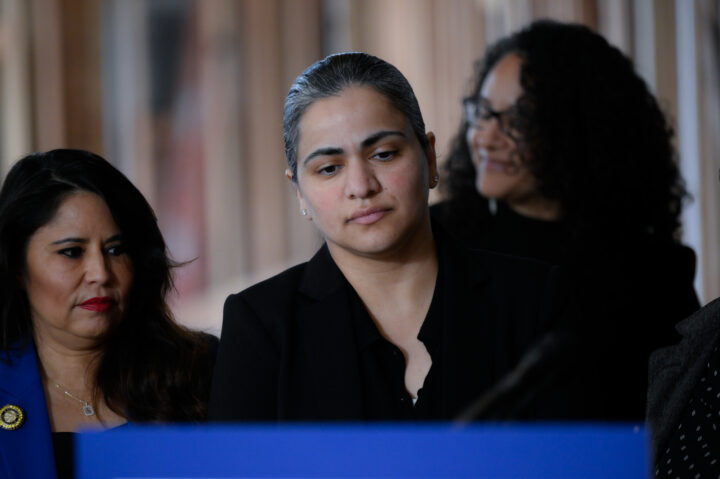
Tayfun Coskun/Anadolu via Getty Images
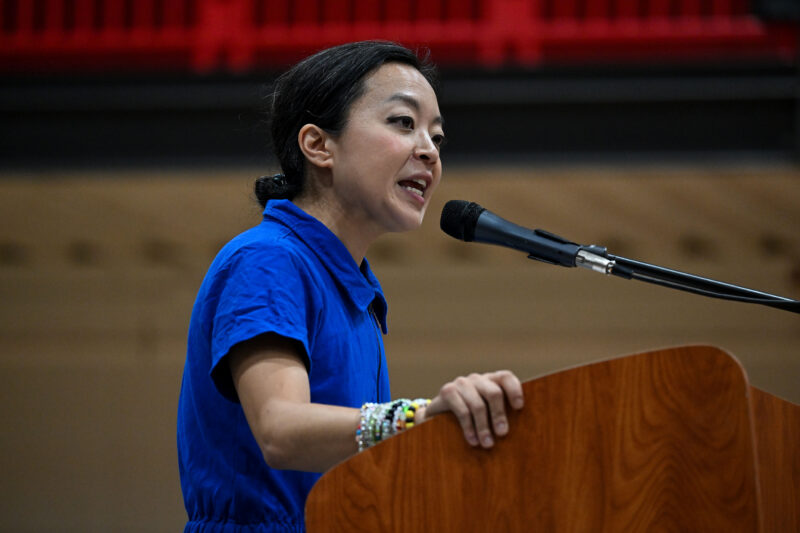
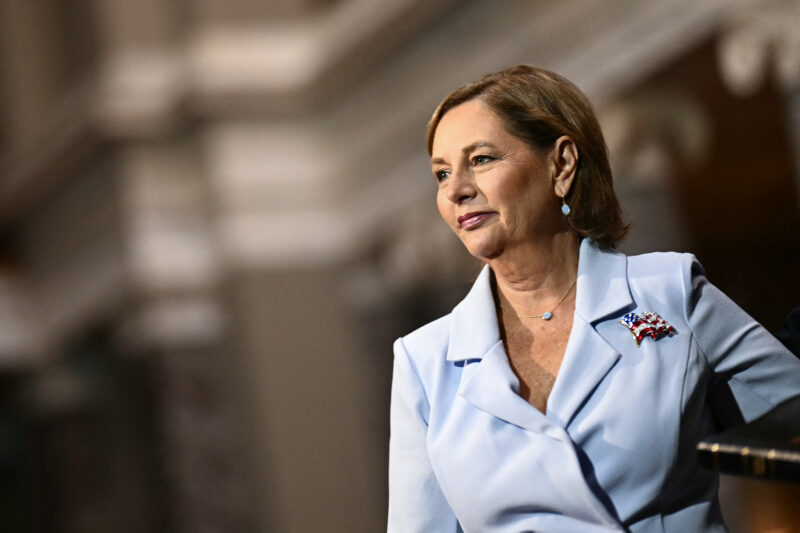
California state Sen. Aisha Wahab attends a press conference in Hayward, Calif., on March 2, 2026.


 Add JewishInsider on Google
J Street Action Fund, the super PAC affiliated with the progressive Israel advocacy group, spent $108,000 on Thursday on digital advertisements to boost progressive California state Sen. Aisha Wahab in the special election in California’s 14th Congressional District.
The AIPAC-affiliated super PAC United Democracy Project has spent nearly $2.5 million — along with significant independent expenditures by other groups — attacking Wahab and boosting moderate former local mayor Melissa Hernandez in the special election runoff to replace former Rep. Eric Swalwell (D-CA).
J Street said in a statement that its spending effort is intended to counter the pro-Hernandez spending by AIPAC and others. The J Street ad praises Wahab for work on housing affordability issues.
Wahab’s campaign has raised concerns from members of the Jewish community, given that she voted against or abstained on votes on top-priority legislation to combat campus antisemitism and is closely aligned with teachers’ unions that have opposed antisemitism bills. She has also accused Israel of committing genocide and shared a page on her campaign site individually calling out specific “AIPAC-linked donors” supporting Hernandez’s campaign.
“Aisha Wahab is an Afghan-American and the first Muslim elected to the California State Senate,” J Street said in a statement. “In September 2025, she introduced a resolution calling for an end to the humanitarian catastrophe in Gaza and the immediate release of all hostages. She is exactly the kind of compassionate leader constituents of the 14th District should have in Congress.”
Wahab introduced the 2025 resolution alongside Jewish state Sen. Scott Wiener, who is running for Congress in another Bay Area district.
“This is once again a cynical attempt by AIPAC to defeat a candidate who won’t rubber-stamp their agenda,” Tali deGroot, J Street’s vice president of political and digital strategy, said in a statement. “AIPAC’s super PAC has failed time and again this cycle, and we expect this latest attempt to take Republican billionaire dollars and buy a Democratic primary to fail as well. Voters in the 14th deserve better, and they deserve a Member of Congress who will bring the kind of clear-eyed, nuanced and compassionate leadership that Dr. Wahab has shown throughout her career.”
A Jewish leader in the district said that, while they harbored concerns about Wahab, they did not believe that even significant UDP spending would be enough to swing the race against her and worried that UDP spending could push her toward stronger anti-Israel stances.
Left-wing Lt. Gov. Peggy Flanagan’s anti-Israel message is being complicated by her outreach to AIPAC earlier in the campaign

(AP Photo/Ellen Schmidt)
U.S. Rep. Angie Craig, D-Minn., left, and Minnesota Lt. Gov. Peggy Flanagan participate in a forum for U.S. Senate candidates at Farmfest Wednesday, Aug. 5, 2026, in Morgan, Minn.
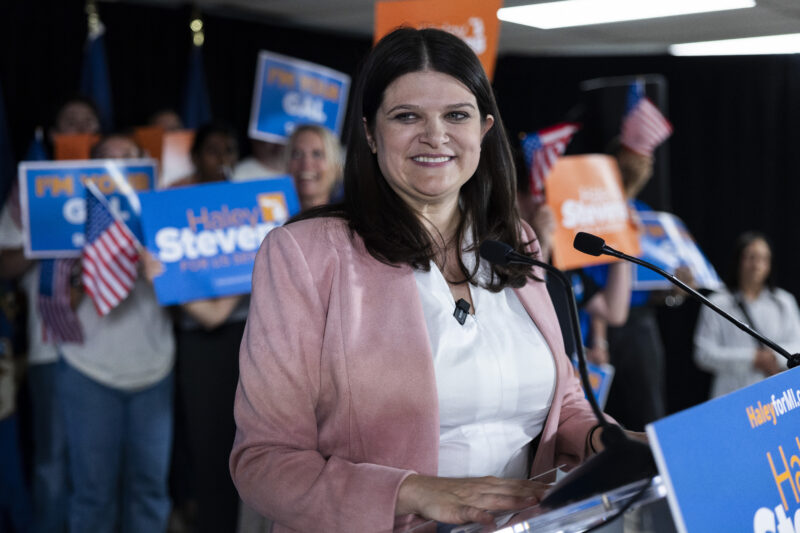
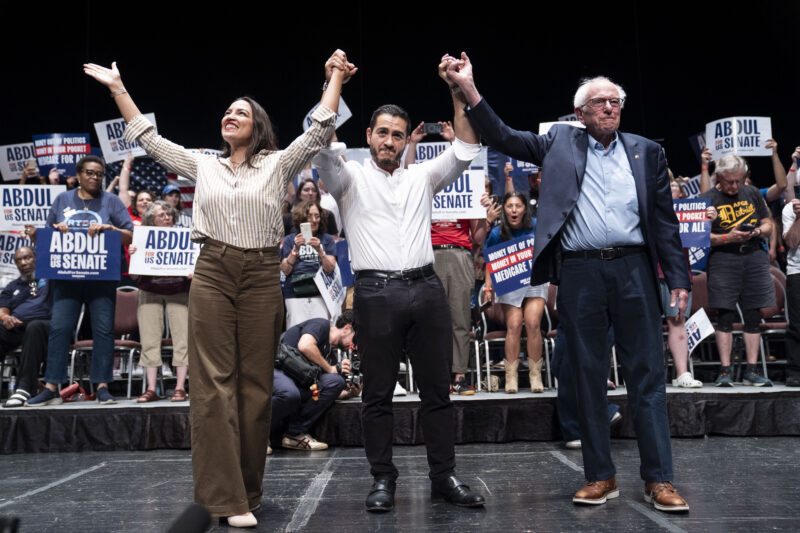
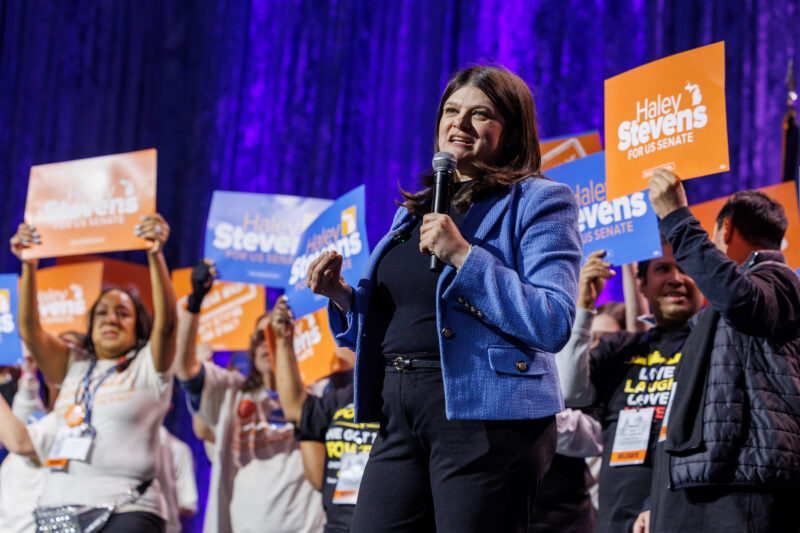
The outcome of Michigan’s bruising Democratic Senate primary last week, where Abdul El-Sayed claimed a narrow victory over Rep. Haley Stevens (D-MI) in an upset championed by the anti-Israel left, is looming over the next intraparty showdown being held in Minnesota on Tuesday — the latest in a series of proxy battles between the party’s mainstream and left-wing flanks.
In an echo of Michigan, the bitter Democratic primary for an open Senate seat in battleground Minnesota this week is pitting a moderate House member with a long-standing pro-Israel record, Rep. Angie Craig (D-MN), against an outspoken progressive, Lt. Gov. Peggy Flanagan, whose attack lines have frequently centered on AIPAC, which spent over $30 million in its unsuccessful effort to help Stevens.
The Minnesota primary is, in the closing stretch, likewise revolving around questions of electability for Democrats in the must-win November contest. Craig has pointed to controversies amid Flanagan’s tenure in government as vulnerabilities Republicans are eager to exploit — most notably including the welfare fraud scandal that prompted Democratic Gov. Tim Walz to abandon his reelection campaign for a third term earlier this year.
Flanagan, in addition to her anti-AIPAC messaging, has hammered Craig over what she has described as a “disqualifying” vote approving the Laken Riley Act — legislation requiring the detention of unauthorized migrants charged with certain crimes — the optics of which have been damaging in the wake of President Donald Trump’s protracted immigration crackdown in Minnesota. Craig has expressed regret for her vote.
But unlike Michigan, where El-Sayed claimed the nomination by less than one point after polls had suggested a double-digit blowout, the Minnesota matchup has been seen as neck-and-neck, the outcome of which is hard to predict, experts say. Recent independent surveys have shown a statistical dead heat in the final weeks of the primary, with each candidate garnering around 40% of the vote.
The candidates’ equivocations over AIPAC and individual ties to the group have also emerged as fault lines in recent weeks, complicating the ideological divisions that have shaped other primaries in which Israel and Middle East policy have featured prominently.
In a reflection of the extent to which AIPAC is now viewed as a liability in Democratic primaries, Craig has distanced herself from the group, which has not officially made an endorsement in the race even as its donor network has contributed to her campaign. The congresswoman, who is backed by several pro-Israel lawmakers including Sen. Elissa Slotkin (D-MI) and House Minority Leader Hakeem Jeffries (D-NY), has said she is not accepting contributions from AIPAC’s political arm in her current campaign.
During a recent debate, Flanagan said AIPAC had been Craig’s “biggest funder throughout her entire political career,” while claiming her own “values do not align with” the group. Flanagan has cast AIPAC as part of “a band of super villains” in the race now trying to “buy this election,” language some Jewish leaders say they have found unsettling amid rising antisemitism.
Flanagan, however, acknowledged last month she had met privately with AIPAC after The Minnesota Star Tribune obtained a video recording of remarks to Jewish community members — also reviewed by Jewish Insider — in which she said the outreach was “important” for her “to make sure that we’re building that relationship.”
Flanagan claims that AIPAC turned against her and came to regard her as a “threat” when she confirmed her support last year for Senate resolutions to block arms sales to Israel. She has since endorsed a House amendment to end aid to Israel, which Craig rejected, further illustrating her policy disagreements with the group.
Craig, for her part, has sharply dismissed the lieutenant governor as “completely disingenuous about her soliciting support from AIPAC,” claiming that she “has been very hypocritical” because of her efforts to demonize the group.
While Flanagan has insisted she was not seeking an endorsement in her outreach to AIPAC officials, she did write an Israel position paper that she submitted to the group as part of their discussions, according to two people familiar with the matter.
Manny Houle, a pro-Israel Democratic consultant in Minnesota, confirmed to JI that Flanagan presented a Middle East policy paper to AIPAC and said that he had personally reviewed the document. He said he no longer had a copy, which JI was unable to obtain, but he recalled that she “was open to conditioning aid” to Israel and said she “put a lot of pressure and fault on Israel and occupation,” among other “key factors” he characterized as distinguishing Flanagan from Craig.
Houle, a former director of progressive outreach for AIPAC in the Midwest, said his impression had been that Flanagan wrote the paper and sought the group’s feedback early in her campaign last year because she viewed it as part of a broader process. The lieutenant governor “would have been open to engaging within the network of donors” affiliated with AIPAC, Houle claimed, “but when she realized that wasn’t going to be the case,” she pivoted to a more hostile position.
“Many key advisors to Peggy are anti-AIPAC, so it’s hard for me to think she’d ever honestly in good faith engage with the organization,” Houle explained to JI. “I’ve had conversations with her throughout the race trying to get her to tone down her rhetoric” on Israel issues, he added, “but to no avail.”
A spokesperson for AIPAC did not return a request for comment.
Alexandra Fetisoff, a spokesperson for Flanagan’s campaign, did not directly address the AIPAC paper in a statement responding to a request for comment. “Flanagan disagrees with AIPAC’s deeply unpopular political agenda and the catastrophic actions of” the government led by Israeli Prime Minister Benjamin Netanyahu, Fetisoff told JI on Friday.
“Flanagan believes what has happened in Gaza is genocide, a position in line with the United Nations,” Fetisoff said. “Flanagan has consistently condemned antisemitism, and will continue standing with Jewish Minnesotans against hate.”
Last week, American Priorities, a new super PAC created to counter AIPAC’s influence in Democratic primaries, began spending in the race to help boost Flanagan, spending over $50,000 on an ad calling her a “fighter” who would “stand up to Trump” while touting her support from Sen. Bernie Sanders (I-VT).
Flanagan also claims backing from the state Democratic Party and retiring Sen. Tina Smith (D-MN), whom she is vying to succeed, along with leading progressive critics of Israel such as Sens. Elizabeth Warren (D-MA) and Chris Van Hollen (D-MD).
Doug Rossinow, a professor of history at Metro State University in St. Paul, who has tracked divisions over Israel in the state Democratic Party, said the “AIPAC issue flew under the radar until pretty recently” in the election. “The Flanagan-Craig contest is, compared to Michigan’s Democratic Senate primary race, a classic case of Minnesota understatement and even passive aggression,” he told JI.
“Flanagan lately has made an issue of Craig’s history of support from AIPAC,” he noted, “but Craig, unlike Haley Stevens, doesn’t want to own that or talk about Israel.” Meanwhile, Flanagan has stated “little about her own position on Israel” and the region, he added, “unlike El-Sayed in Michigan,” a fierce critic of Israel who has refused to acknowledge its right to exist as a Jewish state.
One state party activist described the race as “a little bit less black and white than Michigan,” while noting the contrasts between Craig and Flanagan are not as drastic. “I see it as a toss-up,” he said of the primary.
Joe Radinovich, a Democratic consultant based in Minneapolis, added that while the national political mood has favored populist progressives, he believes there is reason to interpret the closer-than-expected finish in Michigan as a relatively promising omen for Craig, who flipped a GOP-held swing district in 2018.
“The dominant narrative has belonged to the further left wing of the party, populist candidates and people decrying AIPAC and Israel,” Radinovich, who said he is supporting Craig but is not involved in the primary, told JI in an interview on Friday. “But if I’m on the Craig campaign and looking at the results of the election in Michigan, I’m feeling some wind in my sails.”
Mara Kunin, Craig’s campaign manager, projected confidence in a statement on Friday. “National and state Republicans are making a serious play for this Senate seat and primary voters understand that we can’t risk putting up a weak candidate in the general election,” she said, adding Craig “is positioned to win this race on Tuesday and seal the deal in November.”
The Democratic nominee is expected to face Michele Tafoya, a former NFL sideline reporter who is heavily favored to win the Republican primary, in November. The GOP’s Senate campaign arm has indicated that it views Minnesota among four pickup opportunities as the party seeks to retain its majority in the chamber.
“It is very saturated, very ugly and very negative,” another state party activist said about the primary, which has otherwise seen a flood of outside spending from opposing groups. “I think that AIPAC will have an impact in the race, but social services fraud could be more important,” he told JI. “Whoever wins, it will sort of say which issue” carries the most weight.
While Jewish community leaders expressed concerns about Aisha Wahab, one said they were skeptical that she was beatable and that the AIPAC spending risked further alienating the potential nominee
Tayfun Coskun/Anadolu via Getty Images
California state Sen. Aisha Wahab attends a press conference in Hayward, Calif., on March 2, 2026.
After a night of mixed results in Tuesday’s primary elections, AIPAC’s United Democracy Project super PAC is turning its eyes toward the special election runoff in California’s 14th Congressional District, where progressive state Sen. Aisha Wahab and moderate local mayor, Melissa Hernandez, are competing to replace disgraced former Rep. Eric Swalwell (D-CA).
Wahab entered the race as the heavy favorite and dominated the primaries for both the regular and special elections. In the special election primary, Wahab finished with 43% to Hernandez’s 17%, and led Hernandez 38%-17% in the regular primary. The special election runoff is set for Aug. 18.
Her record raises concerns for some members of the Jewish community — she has not been supportive of numerous priority bills and resolutions aimed at tackling antisemitism and has been a vocal critic of Israel, including describing the war in Gaza as a genocide and championing legislation in the state Senate on the issue.
UDP’s initial ad buy in the race totaled $1.2 million.
One of UDP’s ads accuses Wahab of being soft on crime — pointing to an amendment she led to a sex trafficking bill — and describes Hernandez as tough on crime and supported by police. Other pro-Hernandez groups are running with a similar message. Another highlights her background and work on affordability issues.
In a page on her website responding to attacks, Wahab’s campaign accused Hernandez of “relying on misleading attacks and AIPAC-linked dark-money PACs to tear Aisha Wahab down.” The page takes aim at Hernandez for having “denied the genocide in Gaza” — she declined to provide a yes-or-no answer on the subject at a candidate forum — and shared a spreadsheet naming all of the individual “AIPAC-linked donors” supporting Hernandez’s campaign.
“Wahab has accused Israel of committing genocide and has separately published the names of Jewish donors to her opponent on her website. She’s pretty extreme in her points of view on Israel,” UDP spokesperson Patrick Dorton told Jewish Insider. “It’s a race where Wahab is talking about ideological issues and Hernandez is talking about economic and affordability issues that are important to voters in the district.”
Bold America PAC, linked to the Congressional Hispanic Caucus, has spent more than $2 million so far attacking Wahab and supporting Hernandez. The group has taken some donations from an AIPAC-affiliated group. A new pro-Hernandez group, Safer Alameda County, has spent $51,000 so far.
Daniel Klein, the CEO of Jewish Silicon Valley — which is nonpartisan and does not take stances in elections — said that Jewish community leaders are paying close attention to the race, and he has heard significant concern about Wahab’s votes on major antisemitism legislation and her close relationship with state teachers’ unions, which have opposed antisemitism bills.
“That is, I think, creating some angst — or at least more attention to this race — amongst many members of the Jewish community and Jewish communal organizations,” he continued, relating conversations he’s had with members of the community. “These are pieces of legislation that are intended to protect our children, right? They should be fairly non-controversial.”
Wahab was one of three senators who voted against SB 1287, which required overhauls of campus codes of conduct to address antisemitic and anti-Israel demonstrations, and abstained from a floor vote on AB 715, which aimed to address antisemitism in K-12 schools.
Klein said he has not had the opportunity to meet with Wahab personally and is happy to meet with any elected leader. He said he had spoken with Hernandez, who seemed to him primarily focused on local issues and national partisan politics, rather than foreign policy, though he said that she seems to understand the Jewish community’s concerns about antisemitism and is receptive to hearing from the community.
“My record speaks for itself: I have consistently stood against antisemitism, supported the safety and security of Jewish communities, worked in partnership with Jewish colleagues, and defended Israel’s right to exist — while also maintaining that as an American elected official, I have both the right and the responsibility to question the policies of any foreign government and to speak out when innocent civilians are suffering,” Wahab said in a statement to JI.
Though she did not support the two bills mentioned by Klein, she has supported other priority legislation for the Jewish community in the state Senate. She also introduced a resolution in 2025 with Jewish state Sen. Scott Weiner calling for the release of hostages and an end to the humanitarian crisis in Gaza.
Another Jewish leader said Hernandez had attended various Jewish community events and generally has good relationships with the community but isn’t particularly involved with its issues. The district itself is not home to a sizable Jewish community.
Oleg Ivanov, executive director of StandWithUs Northern California, said, “We’re of course concerned that as a state senator, Aisha Wahhab has called Israel’s defense against the Hamas attack [on Oct. 7, 2023,] genocide. So we’re concerned that she is spreading this debunked blood libel about Israel, which we feel all that does is it makes Jews and Israelis here in her district unsafe. As we’ve seen in many cases, this kind of irresponsible language has led to direct violence against Jews and Israelis.”
Ivanov said he hasn’t had any interaction with Hernandez, but praised her for declining to describe the war in Gaza as a genocide. He also criticized Wahab’s opposition to antisemitism-related legislation.
But another Jewish leader in the district, who requested anonymity to speak candidly, said that the strong consensus among political observers in the area is that Wahab “pretty much [has] this in the bag, and that Hernandez is a lazy campaigner.” Other moderate groups that had looked at the district “just have not been impressed with Hernandez,” the leader continued.
The Jewish community, the leader said, doesn’t want Wahab to win, but that might already be a foregone conclusion.
“I’m not in principle against AIPAC getting involved in these kinds of primaries like some other people [are], but based on all the local knowledge that we’re hearing from politicos, it’s not a good use of time or money,” the leader said. “People are kind of scratching their heads — not because there aren’t concerns about Wahab … but let’s play where we can win.”
The leader said they’re also concerned that AIPAC’s involvement risks pushing Wahab further to left, describing Wahab currently as a less-than-ideal choice but necessarily aligned with the Squad — i.e., not opposed to Israel’s existence or outright at odds with the Jewish community.
The leader noted Wahab abstained on, rather than outright opposed, AB 715, one of the antisemitism bills. They also noted that Wahab’s family are refugees who escaped radical Islam in Afghanistan during the Soviet-Afghan war. Wahab has relationships with some Jewish community groups in the Bay Area, particularly social services organizations that have been involved in Afghan refugee resettlement work.
“I don’t like the idea that the pro-Israel community is jumping into a race they can’t win against the presumptive winner and potentially pushing her into the arms of the worst members of Congress,” the leader said. “I think that people need to play their cards carefully here. There’s shades of gray at play.”
In Whitmer’s endorsement video, she touted Stevens’ work ethic while avoiding mention of Abdul El-Sayed
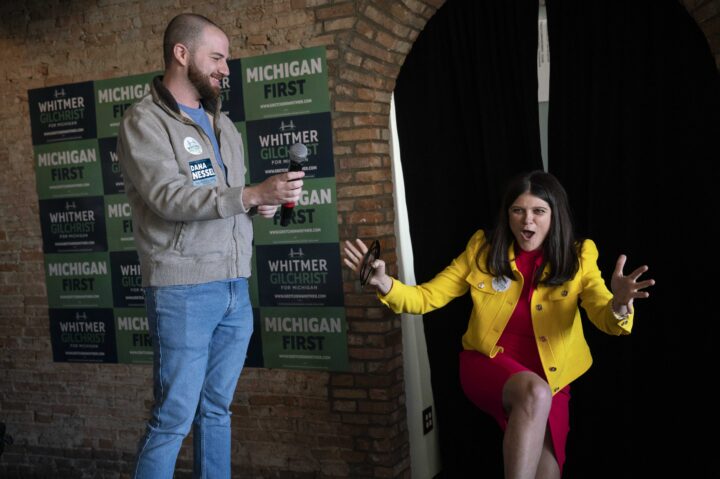
Rep. Haley Stevens is introduced to speak before Michigan Governor Gretchen Whitmer at a rally at the Crofoot Ballroom on November 6, 2022 in Pontiac, Michigan (Photo by Sarah Rice/Getty Images)
With less than two weeks until Michigan’s contentious Democratic Senate primary, Michigan Gov. Gretchen Whitmer endorsed Rep. Haley Stevens (D-MI) on Friday, offering a burst of momentum to the moderate Democrat’s campaign against progressive, anti-Israel firebrand Abdul El-Sayed.
“Haley will do whatever it takes to get things done for people in Michigan, and we need her now more than ever,” Whitmer said in a video announcing the endorsement.
Whitmer had conspicuously avoided making an endorsement in the race, which until weeks ago was a three-way contest between Stevens, El-Sayed and state Sen. Mallory McMorrow. After McMorrow dropped out, the race between Stevens and El-Sayed tightened.
El-Sayed has made opposition to Israel a core tenet of his campaign, targeting Stevens for receiving backing from AIPAC and for supporting the U.S.-Israel relationship.
In the endorsement video, Whitmer did not mention El-Sayed; she talked about Stevens as a candidate who will “get things done.”
“She knows what Michigan families are going through, and that’s how I know she will always put Michigan first,” Whitmer said.
The Maine Democrat, who won his primary in June, had been dogged by controversy for months before a rape allegation finally cost him his political allies
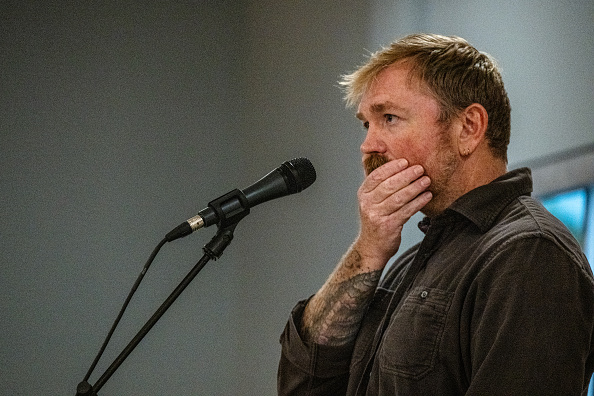
Photo by Laura Brett/Getty Images
Democratic U.S. Senate candidate Graham Platner speaks to voters at a town hall on June 7, 2026 in Portland, Maine.
Maine Senate candidate Graham Platner, the scandal-plagued progressive insurgent, announced on Wednesday evening that he plans to drop out of the race amid intense pressure, two days after a former romantic partner accused him of rape.
Even as he announced his withdrawal, Platner remained defiant, claiming that the allegations against him were a conspiracy aimed at forcing him out of the race.
The sexual assault allegation by Jenny Racicot, who shared the details of the incident with Politico, followed months of controversies — including allegations of domestic abuse — that Platner withstood with the backing of top Democrats, including Sens. Elizabeth Warren (D-MA) and Bernie Sanders (I-VT) and, after the primary, Senate Minority Leader Chuck Schumer (D-NY). He lost the support of his political allies after the report was published on Monday.
Even before that, Platner had been dogged by controversy for months. Last October, Platner acknowledged that he had a tattoo of a Nazi symbol known as a Totenkopf for nearly two decades.
He denied knowing what the symbol meant, but a past acquaintance told Jewish Insider that Platner was aware of its Nazi association. Another former romantic partner, Lyndsey Fifield, who accused Platner of domestic violence, shared text messages with the New York Times showing she had informed friends of the Nazi symbol months before it became public knowledge and said he and his Marine colleagues had chosen the symbol deliberately.
In Reddit posts, Platner regularly used slurs, criticized sexual assault victims and praised Hamas’ tactics during the terror group’s 2014 war against Israel.
In his announcement, Platner continued to deny the sexual assault allegation, claiming that “large forces,” the “corporate media” and the “political establishment” are conspiring against him — specifically timed in order to force him off the ballot before the drop-out deadline next week.
“We live in a political system that is not built for normal people,” Platner asserted. “It is a system that is built structurally to make sure that movements like ours cannot flourish, that if they begin to succeed, they can be crushed. … We did it the way that we were told we are supposed to make change, and we won, and now they are not going to let us have it, not if it’s me.”
He said he’s leaving the race because “those in power … are using these allegations as an excuse” to block his ability to fundraise, access voter data and otherwise campaign.
Platner insisted he was not attempting to influence the process to replace him on the ballot — a claim disputed by the Maine Democratic Party and numerous news reports. He said that the process “needs to be open, transparent and democratic” and not shaped by “party apparatchiks” or party leadership in Washington.
He also said he “intend[s] to file my paperwork to withdraw,” indicating he had not yet actually done so.
In his statement, Platner also referenced his repeated claim that Israel committed genocide in Gaza, a charge that had become central to his campaign.
“All we were asking for was healthcare, was to end the genocide, to use our taxpayer dollars at home to uplift our communities, instead of waging war overseas,” Platner said.
Shortly before Platner’s announcement, the Maine Democratic Party’s state committee members met and voted to hold a nominating convention to choose a new nominee should Platner withdraw from the ballot. Party leaders said they’d disclose further details about the process “soon.”
Media reports indicate that county committees would be charged with selecting 500 to 600 total delegates for the convention.
In a text message to supporters on Wednesday, Platner’s campaign manager claimed that the Maine Democratic Party has been coordinating behind closed doors with the Democratic Senatorial Campaign Committee to cut Platner’s camp and supporters out of the nominating process.
Platner entered the Senate race to challenge Sen. Susan Collins (R-ME), a five-term incumbent, last August. From the beginning of the race, he touted his bona fides as a veteran who served in Iraq and Afghanistan and positioned himself as an anti-war candidate. He has blamed his past conduct on PTSD and his resulting alcohol dependence.
From the beginning, Platner positioned himself as a working-class outsider taking on the establishment — including both Collins and the Democratic establishment, which was backing Janet Mills, Maine’s governor, in the Democratic primary. His viral first campaign video was produced by Morris Katz, a political consultant who had also made political ads for New York City Mayor Zohran Mamdani.
Criticism of Israel was central to Platner’s campaign. He regularly attacked AIPAC and described Collins as “bought and paid for by [Israeli Prime Minister] Benjamin Netanyahu.” Liberal Jewish groups, including the Jewish Democratic Council of America and J Street, had opted not to endorse Platner, even after Mills dropped out of the race in April. Platner handily won the Democratic primary in June. Mills did not endorse him.
Democrats saw the race as a possible pickup opportunity in a midterm election year when many voters in the purple state are disillusioned by President Donald Trump.
Numerous Maine Democrats have already announced plans or filed paperwork to take Platner’s place on the ballot, including former Maine Centers for Disease Control Director Nirav Shah, former state Senate President Troy Jackson, former House candidate Jordan Wood, former Senate candidate David Costello, Secretary of State Shenna Bellows, former House candidate Paige Loud, state Rep. Valli Geiger and brewery owner Dan Kleban.
Geiger claimed on Wednesday that she was Platner’s preferred replacement, but a campaign spokesperson denied that, though the spokesperson said he had encouraged her to run if he dropped out.
The California lawmaker was forced to leave a transgender community march amid harassment from anti-Israel activists shouting antisemitic slurs at him
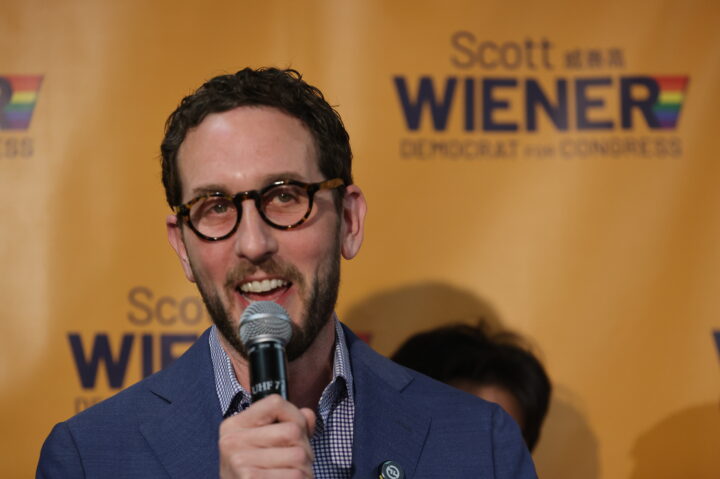
Gabrielle Lurie/San Francisco Chronicle via Getty Images
California state Sen. Scott Wiener's election party at his congressional campaign headquarters on election night in San Francisco, Calif. on June 2, 2026.
California state Sen. Scott Wiener, the front-runner to succeed retiring Rep. Nancy Pelosi (D-CA) in Congress, has become the target of antisemitic harassment twice in the last week in his San Francisco district, marking the latest example of a high-profile progressive Jewish politician being singled out and facing threats for his background.
The latest episode occurred Friday when Wiener, who was on his way to participate in a Pride Shabbat service at a transgender community march in San Francisco, was chased out of the event by anti-Israel activists following the state lawmaker and shouting antisemitic slurs at him.
In a video posted by one local anti-Israel activist, the activist follows Wiener around, attacking him for “being terrible on Gaza,” adding, “You do not belong here anymore, Scott. And it breaks my f—ing heart.” Soon after the initial engagement, other even-more hostile activists start cursing at Wiener, with one calling him a “genocidal piece of sh—” and another saying, “F— you and your Zionist handlers.”
Wiener is a longtime supporter of the transgender community, noting in a statement on Saturday about the incidents that he’s attended the march he was harassed out of every year since it began in 2004.
Two days earlier, Wiener, while watching a World Cup game with staffers at a local bar, was berated over his support for Israel by another anti-Israel activist who demanded he say the words “Free Palestine” on camera. The same individual, Wiener said, had stalked him on a plane several years earlier, shouting obscenities about his “tainted bloodline.”
”I have no objection whatsoever to anyone disagreeing with me, opposing me, or protesting me. All of that is core to democracy,” Weiner said, as videos of the confrontations went viral on Saturday.
“But when opposition and disagreement transition to harassment, including cornering me, touching me, or trying to physically bully me out of a public event, that crosses a line. We’re living in a time when violence is all too often threatened or used against people in public life. In San Francisco, we’re better than that.”
Wiener, a progressive stalwart in the California state legislature who has worked closely with the Jewish community the Bay Area, called Israel’s war against Hamas a “genocide” earlier this year after facing intense pressure from left-wing activists to do so. At the time, Wiener was facing primary opposition from a candidate who was attacking him over his support for Israel.
He stepped down as co-chair of the California Legislative Jewish Caucus, after his decision to placate progressives drew opposition from the state’s sizable Jewish community.
Activists have continued to harass the lawmaker even as he finished in first place in the state’s June Democratic primary. (He is facing San Francisco supervisor Connie Chan, who has Pelosi’s endorsement.)
The antisemitic threats against Wiener come after Rep. Dan Goldman (D-NY), who lost a primary last week amid relentless attacks over his support for Israel, faced online harassment from a Brooklyn coffee shop owner after he bought a drink in the store.
“We see that you stopped by our shop today for a coffee. Do you see how it doesn’t taste like genocide juice?” Poetica Coffee wrote in an Instagram post with an image of Goldman standing at the register. “We don’t need your money (it’s probably coming from AIPAC anyways). Don’t ever come to Poetica.”
The Department of Justice’s Civil Rights Division is investigating Poetica Coffee for possible discrimination.
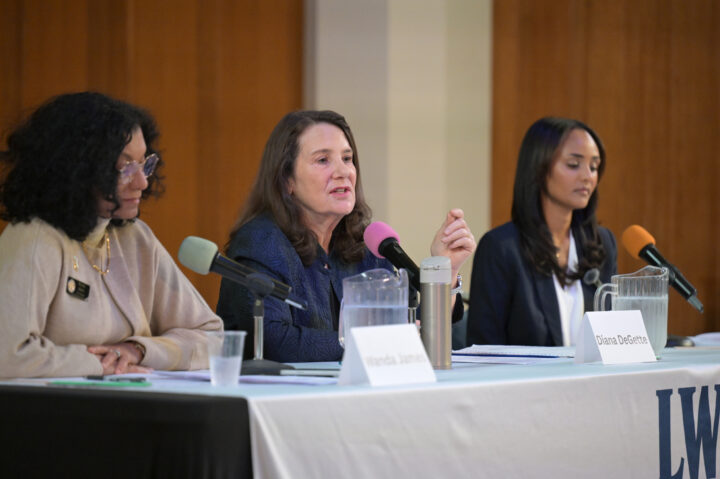
Rep. Diana DeGette is facing a formidable challenge from DSA-backed Melat Kiros, who recently declined to call the Boulder firebombing attack antisemitic
RJ Sangosti/MediaNews Group/The Denver Post via Getty Images
From left, Wanda James, Diana DeGette and Melat Kiros participate in a League of Women Voters Congressional District 1 candidate forum on May 28, 2026, in Denver, Colorado.
The wave of victories for Democratic Socialists of America-aligned candidates in New York City on Tuesday is buoying the hopes of progressives that the far left can pull off upsets against two Democratic incumbents in Colorado’s Tuesday primary elections.
Rep. Diana DeGette (D-CO) is facing a challenge from Melat Kiros, whose campaign has attracted substantial national attention and backing from several anti-Israel organizations and individuals including the Justice Democrats, DSA, Sunrise Movement, Jewish Voice for Peace, TrackAIPAC, the Council on American-Islamic Relations, Chris Rabb, Hasan Piker and, most recently, Sen. Bernie Sanders (I-VT).
Sen. John Hickenlooper (D-CO) is also facing a DSA-aligned challenger, state Sen. Julie Gonzales, though her campaign hasn’t garnered as much attention as Kiros’.
Just this week, in an interview with the local channel 9News, Kiros declined to call the firebombing of a hostage awareness march in Boulder, Colo. last year antisemitic.
“I don’t know what was in the heart of the perpetrator. All I know is that he went and attacked innocent people because of what they might have believed, and I don’t even know what the people that were at that protest believed too,” she said. “I don’t know what his intentions were.”
The House voted unanimously last year to condemn the attack as an antisemitic incident. Only Reps. Rashida Tlaib (D-MI) and Thomas Massie (R-KY), two of the leading anti-Israel lawmakers in Congress, voted present.
Kiros lost her job at the law firm Sidley Austin in 2023 for publishing a column denouncing hundreds of top law firms that called on law schools to do more to address antisemitism on their campuses. The column argued that calling for the elimination of Israel is not antisemitic and defended Hamas and those who have expressed support for it.
Kiros has made a complete arms embargo on Israel a central part of her campaign and has described the war in Gaza as a genocide and Israel as an apartheid state.
“I believe that our selling of arms to Israel, defensive or offensive, gives them the cover to continue the genocide that’s taking place in Palestine, and now the ethnic cleansing that’s taking place in Lebanon,” Kiros said in the local interview.
Kiros said in the interview that she did not agree with Piker that Hamas is a “lesser evil” than Israel, and denied that she thought the Oct. 7, 2023, Hamas attacks were justified.
Jim Carpenter, a Democratic political strategist in the state, predicted that DeGette “will ultimately win” but “this is certainly the toughest primary challenge she’s had in a really long time, if ever, since she was elected — lots of visibility, lots of interest.”
A poll commissioned by the Justice Democrats found Kiros leading DeGette 41-36%.
Multiple local venues recently declined to host a rally led by Kiros and Piker, which Kiros blamed on pressure from DeGette’s donors — something DeGette’s campaign has called “ridiculous.” Piker and Gonzales, citing security threats, declined to appear at a rescheduled rally in front of the state Capitol.
DeGette has been blasting Kiros over her affiliation with Piker, highlighting the streamer’s comments — supporting Hamas, dismissing sexual violence on Oct. 7, claiming that the U.S. deserved 9/11 and that he “hate[s] this country so much.”
“If Melat Kiros wants to campaign with someone who said America deserved 9/11 we’d do nothing to stop her,” a DeGette spokesperson told Colorado Newsline.
Carpenter highlighted the Sanders endorsement of Kiros as particularly valuable, noting that the senator has been popular in the state. But he also highlighted the significant influx of outside spending that has flowed into the race in favor of DeGette and targeting Kiros.
One group, Pro-Choice Majority Action, has spent more than $1.5 million boosting DeGette and attacking Kiros. Some observers have tied that spending to AIPAC, noting that the group took in close to $900,000 from EDW Action Fund, which in turn received $1 million from the AIPAC-linked United Democracy Project in May.
A UDP spokesperson did not respond to a request for comment. DeGette has not been consistently supportive of Israel, including signing a letter calling for unilateral U.S. recognition of Palestinian statehood and opposing additional offensive aid to Israel, but UDP has at times supported candidates not fully aligned with AIPAC’s policies in the interest of defeating others with more extreme records.
Rep. Pramila Jayapal (D-WA), a former Progressive Caucus chair, also recorded a last-minute video offering support for DeGette, describing her as critical to advancing Medicare for All.
Meanwhile, Justice Democrats has spent more than $500,000 supporting Kiros and opposing DeGette, and the anti-Israel American Priorities super PAC has spent $150,000 in support of Kiros.
Carpenter told Jewish Insider that, particularly in the wake of a party delegate vote earlier this year when DeGette was badly beaten by Kiros and came close to falling short of the threshold to appear on the ballot, the congresswoman has been campaigning aggressively.
Carpenter said that the anti-DeGette vote might ultimately come out split: University of Colorado Regent Wanda James is also challenging DeGette, and is likely to win support from some Black voters.
Though some in the progressive sphere have interpreted the New York City victories as a sign of momentum for an ascendant far left nationwide, Carpenter said that the results in New York don’t necessarily reflect Colorado’s own voting base.
“Colorado’s politics are very different,” he said. “All politics are local. I get the enthusiasm, and I get everybody trying to point to a trend and all of that. I just don’t think that’s going to hold in Colorado. Denver is very liberal but it’s a different kind of Democrat than the DSA.”
Gonzales is less likely to pose a serious challenge to Hickenlooper, the state’s former governor, having trailed significantly behind him in fundraising. “Gonzales just hasn’t had the resources really to compete statewide,” Carpenter said.
She’s been visible on social media and active in the Denver media market but “she just hasn’t had the ability to do paid advertising in a way that I think is any kind of real threat to Hickenlooper,” Carpenter said. Hickenlooper’s biggest vulnerabilities may be his age, 74, and a perception of him as an establishment Washington Democrat.
But Hickenlooper has also “taken this very seriously” and has been campaigning actively, reminding voters of his record during his two terms as senator and one term as governor, Carpenter said. The state also allows unaffiliated voters to choose the party’s primary in which to vote, and such voters have typically been a boon for Hickenlooper in the past, Carpenter added.
From the start of her campaign, Gonzales has made criticism of Israel a centerpiece of her bid, accusing Israel of genocide, supporting an arms embargo and fundraising based on her opposition to Israel and AIPAC. TrackAIPAC also endorsed Gonzales.
Also on Tuesday, state Rep. Manny Rutinel faces former state Rep. Shannon Bird in a primary for a key swing seat held by Rep. Gabe Evans (R-CO). Carpenter said that the race is difficult to predict and both have been strong candidates with built-in advantages and key endorsements.
Democratic Majority for Israel is supporting Bird and called the race one of its top priorities for the cycle. Bird has long been a strong supporter of Israel and vocal in opposition to antisemitism. Rutinel’s views on Israel have been less clear, and his past as a campus activist has worried some pro-Israel Democrats.
As an undergraduate at the University of Florida, according to a local news report, Rutinel attended a demonstration co-organized by Students for Justice in Palestine, but a Rutinel spokesperson, in a statement to JI, denied that Rutinel had any affiliation with SJP and said the demonstration was focused on police brutality in the U.S.
“Manny supports Israel’s right to exist and supports a two-state solution with secure borders to bring peace,” a campaign spokesperson said. Rutinel also “supports U.S. security assistance to Israel in line with the Obama administration’s 2016 memorandum of understanding,” the spokesperson added.
Carpenter said that Bird has a longer political record and deeper roots in the district, which she has leaned on in her campaign, but also may face headwinds from a perception of her as a moderate Democrat. Rutinel might benefit from the substantial Latino vote in the district.
“Bird is making the argument that because it’s a swing district that is more moderate … that’s what’s going to appeal” in the general election, Carpenter said. “That’s a harder message in a Democratic primary.”
Rutinel leaned into more of a progressive posture but “it seems to me like he’s trying to moderate that a little bit, and has gotten tripped up in a couple of debates on some of the more left progressive positions that he had taken in the past. It’s not a simple progressive-versus-establishment divide there, but it is kind of shaking out that way,” Carpenter continued.
Bird is also backed by moderate groups including the NewDems, Blue Dog PAC and Welcome PAC, as well as EMILY’s List and Elect Democratic Women.
Rutinel is backed by an array of both moderate and progressive lawmakers including Sen. Cory Booker (D-NJ) and Reps. Adriano Espaillat (D-NY), Lou Correa (D-CA), Robert Garcia (D-CA), Teresa Leger Fernandez (D-NM), Rob Menendez (D-NJ), Emily Randall (D-WA), Luz Rivas (D-CA), Linda Sanchez (D-CA) and Pat Ryan (D-NY).
The state’s gubernatorial primary is also set for Tuesday, where recent polling shows Attorney General Phil Weiser taking the lead for the first time against Sen. Michael Bennet (D-CO). The poll was conducted by a group supporting Weiser and showed that a significant portion of the voting base is still undecided.
Carpenter said that Weiser’s last-minute surge might signal that Bennet’s longtime service in Washington is being seen as a negative on the campaign trail, and he’s been tagged as not being anti-Trump enough in his time in the Senate.
But he said he didn’t think that the anti-establishment mood would necessarily be sufficient to oust DeGette or Hickenlooper, noting that Weiser himself is a well-known quantity and popular among Colorado Democrats going into the race.
“I think he benefits a little bit more from that than Gonzales or Kiros would,” Carpenter said.
American Priorities’ spending has aided two Democratic Socialists of America-backed House hopefuls while drawing scrutiny over contributions from GOP donors and AI investors

Erik McGregor/LightRocket via Getty Images
NY Assemblymember Claire Valdez
American Priorities, a new super PAC created as a progressive counterweight to pro-Israel spending in Democratic primaries, has drawn scrutiny in recent weeks for accepting contributions from donors who have given to Republicans — even as its allies on the far left have accused AIPAC, a chief rival, of serving as a Trojan horse to advance GOP-linked interests in safe blue districts.
Meanwhile, filings show that the anti-Israel group has received $250,000 from a tech executive whose firm is developing AI data centers in New York State. That money has boosted two democratic socialist House candidates in New York City who oppose efforts to expand data centers.
Claire Valdez, a state assemblymember running to succeed retiring Rep. Nydia Velazquez (D-NY), and Darializa Avila Chevalier, an anti-Israel activist who is challenging Rep. Adriano Espaillat (D-NY), have benefited from over $2 million in estimated support from American Priorities in the final stretch of their closely contested primaries set for next Tuesday.
But the source of the group’s spending has not neatly aligned with the values its preferred candidates have promoted during their campaigns, underscoring the degree to which American Priorities has become a liability as well as a financial lifeline while emerging as a dominant player in the midterms.
Both Valdez and Avila Chevalier, for instance, have advocated for a federal moratorium on AI data center construction — despite the significant contribution to American Priorities from Nazar Khan, the co-founder of TeraWulf, a bitcoin mining company pivoting to AI infrastructure development. The firm is now pressing to move forward with proposed construction of an AI data center in New York’s Finger Lakes region, which has faced local opposition from residents questioning its environmental impact.
TeraWulf is also in the process of expanding another data center in western New York that “is expected to rank among the largest” facilities of its kind in North America, according to a February press release.
Khan did not respond to a request for comment from Jewish Insider, nor did campaign representatives for Valdez or Avila Chevalier.
Brad Lander, the former New York City comptroller mounting a challenge to Rep. Dan Goldman (D-NY), has also said he favors an AI data center moratorium. American Priorities has indicated that it would spend on his behalf as part of a multimillion-dollar pledge to elevate Mayor Zohran Mamdani’s endorsed slate of far-left House candidates, but it has yet to do so as it has focused on Valdez and Avila Chevalier, who are also backed by the Democratic Socialists of America.
The anti-Israel group has helped elevate a range of House candidates on the left this election cycle. But its aggressive spending in New York City has stoked backlash, particularly in light of its small handful of donors who have also given to far-right Republicans such as former Rep. Marjorie Taylor Greene (R-GA) and recently ousted Rep. Thomas Massie (R-KY).
For his part, Espaillat, a veteran incumbent backed by AIPAC, has accused Avila Chevalier of accepting support from “a millionaire in Texas” who “funded [Texas Gov.] Greg Abbott,” a reference to Hussein Mahrouq, who has contributed $525,000 to American Priorities in recent months.
Avila Chevalier, who vows to ban super PAC money from elections on her campaign website, has denied knowledge of American Priorities’ spending, though she has not discouraged the group from engaging in her primary.
“I control my campaign and the money that my campaign receives,” Avila Chevalier, whose past inflammatory social media posts have featured in attack ads from pro-Espaillat groups, said recently.
Meanwhile, Brooklyn Borough President Antonio Reynoso and City Councilmember Julie Won, who are both facing Valdez in the primary in the 7th District, teamed up in a joint statement last week to accuse their opponent of reneging on her pledge to reject super PAC spending.
“Claire has turned what should have been a race about our records and vision for the people of Brooklyn and Queens into a Super PAC-driven negative election,” Reynoso and Won wrote.
Valdez, who has sought to highlight small-dollar donations, has cautiously justified the super PAC investments as a response to heavy spending from the AI and crypto industries as well as AIPAC. “The way that some people are countering that is by also spending money,” she said last week.
Earlier this week, Valdez drew criticism for falsely speculating that AIPAC was behind a newly formed super PAC, Real Fight NYC, that is spending to boost Reynoso’s campaign. But AIPAC’s super PAC, United Democracy Project, said it had no involvement, while the American Federation of Teachers took credit for a large donation.
While AIPAC has been a regular source of attacks from Valdez and Avila Chevalier, the group’s super PAC has not been directly involved in their primaries.
The trailing Democratic incumbent said the pro-Israel group is ‘harmful in many ways’ despite receiving its backing, while Lander defended appearing in an ad with Mamdani allies

Screenshot
New York City Comptroller Brad Lander debates Rep. Dan Goldman (D-NY), June 15, 2026
Israel again took center stage on Monday night in a debate between former New York City Comptroller Brad Lander and Rep. Dan Goldman (D-NY) — with the incumbent congressman trying to prove his progressive bona fides by criticizing AIPAC, despite the group’s support for his campaigns.
Both candidates, each a self-identified “progressive Zionist,” inveighed in the televised face-off on PIX11 against Israel’s conduct of the war in Gaza, although Goldman declined to join Lander in calling the military actions a “genocide.” But the embattled Goldman, trailing in all available polls, also criticized AIPAC, despite acknowledging he has received the group’s endorsement.
“Brad and I agree on a lot of this: I do not think that AIPAC should unconditionally support the Israeli government, and I’ve made that very clear to them,” he said in answer to questions about the group. “I do think that AIPAC has some real problems and is harmful in many ways.”
Goldman said repeatedly that he has also received the backing of J Street, a left-leaning Zionist group often critical of Israel, and asserted that this proved he approached the issue “independently.”
Meanwhile, Lander — who has shifted left on Israel since receiving the endorsement of New York City Mayor Zohran Mamdani — continued to face questions about his decision to appear in an ad with another of the democratic socialist mayor’s favored candidates: former Columbia encampment organizer Darializa Avila Chevalier, a socialist challenger to Rep. Adriano Espaillat (D-NY). Avila Chevalier has come under fire for attending an anti-Israel rally one day after Hamas’ Oct. 7, 2023, attacks, an event denounced by both Lander and Mamdani, and for spreading Kremlin talking points and COVID-19 disinformation online.
Lander continued to insist that the ad, which characterized Mamdani and his slate of candidates as a “team,” did not constitute an endorsement. Goldman, for his part, called Espaillat a “mentor” and voiced support for his reelection.
AIPAC did not immediately respond to a request for comment. Early voting in New York’s primaries began last week; the primary date is June 23.
The progressive Israel advocacy group said it did not ‘have anything to share at this time’ about Maine’s scandal-plagued Democratic Senate nominee
Sophie Park/Bloomberg via Getty Images
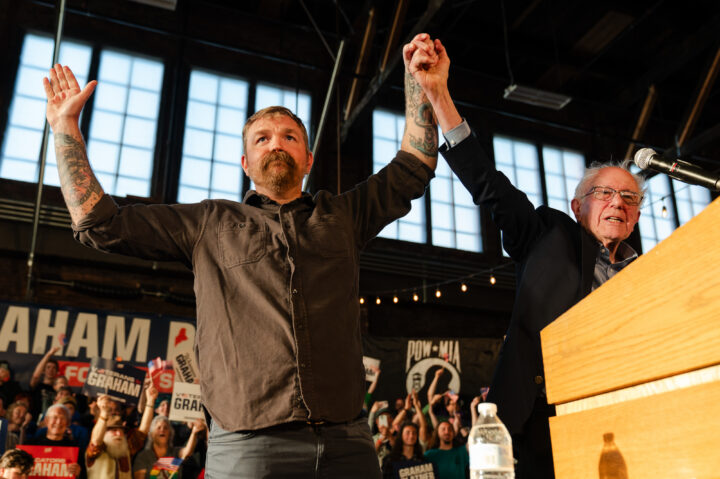
Graham Platner, Democratic Senate candidate for Maine, left, and Sen. Bernie Sanders (I-VT) during a Fighting Oligarchy event in Portland, Maine, on May 25, 2026.
J Street, the progressive Israel advocacy group, is for now withholding an endorsement of Graham Platner, the scandal-plagued Democratic Senate nominee in Maine, underscoring the extent to which even some left-wing Jewish activists appear skeptical of his insurgent campaign.
A spokesperson for J Street told Jewish Insider on Wednesday that the group did not “have anything to share at this time” about a Platner endorsement but would provide more information “if that changes.”
The spokesperson declined to confirm if J Street, which this cycle has backed a handful of Democratic Senate candidates vying for open seats or challenging Republican incumbents, had considered whether it will make an endorsement. The group had told JI in early May that it did “not currently have a position in the race.”
In a statement to JI on Thursday, the spokesperson said that it “is incorrect to frame J Street as actively withholding an endorsement from Graham Platner.”
The group “evaluates candidates and makes endorsement decisions on a rolling basis,” and its “endorsement process is ongoing,” the spokesperson said. “The timing of endorsement decisions does not reflect judgment about any individual candidate.”
J Street’s response came after Platner had clinched the nomination on Tuesday to challenge Sen. Susan Collins (R-ME), in a high-profile race Democrats see as crucial to reclaiming control of the upper chamber.
Platner won the Democratic primary decisively even as he has faced a mounting series of controversies over alleged “toxic” relationships with past girlfriends, sexual messages he sent to women while married and deleted Reddit comments expressing a range of incendiary views.
He also weathered a scandal relating to a Nazi tattoo on his chest for nearly two decades that he covered up last October. Platner has insisted that he did not recognize its imagery, despite claims to the contrary from a former girlfriend who first spoke with JI last year, shortly after he had announced his campaign.
The tattoo, along with Platner’s hostile criticism of Israel and insistent demonization of AIPAC, have stoked ongoing concerns among Jewish Democrats. Halie Soifer, CEO of the Jewish Democratic Council of America, has said the group is not ready to endorse Platner.
“We won’t support a Democrat who doesn’t represent the views and values of the vast majority of American Jews,” Soifer said in a statement in late April echoing a sense of discomfort with Platner’s candidacy felt by mainstream Jewish leaders.
JDCA had endorsed Maine Gov. Janet Mills, who suspended her campaign amid lackluster fundraising but remained on the ballot Tuesday, pulling in 19% of the vote. Platner won 72%.
Following Tuesday’s win, some prominent Senate Democrats have also declined to endorse Platner as he prepares for a bruising and expensive campaign.
J Street, which has moved to the left in recent years as it has sought to capitalize on growing Democratic frustration with Israel, is in many ways aligned with Platner on Middle East policy, including accusations that Israel committed genocide in its war in Gaza and calls to block U.S. military aid to the Jewish state that are now gaining momentum in Congress.
Still, the group has shown its intolerance for some extreme views that could be seen as antisemitic. In 2024, for instance, J Street revoked its endorsement of former Rep. Jamaal Bowman (D-NY), who was at the time fighting for reelection in a bitterly contested primary he would later lose, saying his inflammatory rhetoric on Israel had crossed a line.
Even as the group officially stays on the sidelines in Maine’s marquee Senate race, J Street’s state leader, Steven Koltai, who helped organize a Passover Seder with Platner, told the Jewish Telegraphic Agency he is “still very much” supporting the oyster farmer and former Marine in spite of recent revelations about his past.
In the statement to JI on Thursday, J Street’s spokesperson said the group “remains steadfast in our commitment to ensuring a pro-Israel, pro-peace majority in the Senate and House come January.”
A top donor to American Priorities PAC, which has backed far-left Democratic candidates, has donated to Marjorie Taylor Greene, Thomas Massie and Greg Abbott

Drew Angerer/Getty Images
Rep. Marjorie Taylor Greene (R-GA) departs a closed-door GOP caucus meeting at the U.S. Capitol January 10, 2023 in Washington, DC.
A recently launched super PAC positioning itself as a progressive counterweight to AIPAC’s involvement in Democratic primary elections has accepted financial contributions from a number of individuals who have also donated to Republicans, campaign filings show.
The financial support for American Priorities PAC, created in February, has come even as AIPAC and its super PAC have faced backlash from critics on the left who accuse it of meddling in Democratic primaries as a sort of front group for GOP-funded attacks against anti-Israel candidates in safely blue districts.
AIPAC’s super PAC, United Democracy Project, has taken far more from GOP-linked donors than its new rival, American Priorities — now funded largely by a handful of deep-pocketed contributors. UDP supports both Democrats and Republicans.
But American Priorities, which has thus far only supported Democrats and pledged to spend at least $10 million during the midterms, has not acknowledged that the source of some of its funding is from donors who have at the same time given to GOP candidates and groups — and more extensively than previously reported.
A spokesperson for American Priorities did not respond to a request for comment about whether the group is comfortable with such financial support and how it views the donations in relation to AIPAC’s own pro-Israel fundraising.
American Priorities, which has raised $5.4 million thus far, has sought to mimic AIPAC’s playbook of spending aggressively in progressive congressional districts to elect its preferred primary candidates. The new group is investing significantly in New Jersey’s 12th District race on Tuesday on behalf of Adam Hamawy — a plastic surgeon who opposes all U.S. aid to Israel and whose past ties to a convicted terrorist mastermind as well as a now-shuttered al-Qaida-linked group in Bosnia have drawn scrutiny in the final weeks of the election.
The super PAC has vowed to spend around $2 million by the end of the crowded primary — where Hamawy has been surging — and it recently reached $500,000 in another race in California boosting Randy Villegas, a progressive critic of Israel running for a red-leaning seat held by Rep. David Valadao (R-CA), who is endorsed by AIPAC.
Those investments have been fueled, most notably, by at least $525,000 from Hussein Mahrouq, a Texas businessman who has backed far-right Republicans including the recently ousted Rep. Thomas Massie (R-KY) and former Rep. Marjorie Taylor Greene (R-GA), both of whom have been accused of using antisemitic tropes about Jews and Israel.
In 2024, Mahrouq, one of the top contributors to American Priorities, also gave $100,000 to boost Texas Republican Gov. Greg Abbott and donated $25,000 to Republican Lt. Gov. Dan Patrick, state filings show.
Meanwhile, American Priorities accepted a $5,000 contribution from Omar Khawaja, a personal injury lawyer in Houston, who in March donated to a super PAC supporting hard-right Texas Attorney General Ken Paxton, who won last week’s GOP primary run-off in the state’s closely watched Senate race. Khawaja has also contributed to a Republican House candidate in Texas as well as Massie, who is among the most vocal critics of Israel in the GOP congressional caucus, according to filings.
Moiz Ali, an entrepreneur and investor in Texas who gave $150,000 to American Priorities in March, also donated to Massie last fall — shortly before he drew a challenger, Ed Gallrein, who defeated the libertarian congressman earlier this month with the backing of President Donald Trump. AIPAC also spent heavily against Massie, a top target of the group this cycle.
Another American Priorities donor, Nadeem Baig, a gastroenterologist in New Jersey who gave $50,000, has previously contributed to former Sen. Ben Sasse (R-NE), former Rep. Leonard Lance (R-NJ) and Rep. Darin LaHood (R-IL), all of whom have been known as staunch supporters of Israel. LaHood is backed by AIPAC, while Lance served as a co-chair of the House Republican Israel Caucus before he was unseated in 2018.
In a statement shared with Jewish Insider by a spokesperson for Mahrouq, he called himself “an independent businessman, not affiliated with any political party,” and said that his “support has always been guided by what I believe is in the best interest of the United States, its economic strength, security and long-term prosperity.”
“I have supported individuals and organizations across the political spectrum when their positions align with those priorities,” he continued. “My focus is not partisan politics, but rather promoting policies that strengthen America, encourage opportunity, and serve the interests of American citizens. I believe decisions affecting our country should be made based on what is best for the United States, independent of pressure from any foreign government, foreign interest group or partisan agenda.”
Mahrouq was the only American Priorities donor reached for comment by JI who shared a response.
The contributions to Massie and Greene in particular suggest anti-Israel sentiment can transcend partisan boundaries, in the way pro-Israel advocacy has been seen as a bipartisan effort connecting Democrats and Republicans.
Still, American Priorities has only backed Democrats, while AIPAC has championed bipartisan advocacy — even as it has stirred controversy over its engagement in Democratic races that show the group is navigating mounting hostility toward Israel from candidates and elected officials.
American Priorities is led by Hannah Fertig, a strategist with ties to Sen. Bernie Sanders (I-VT) and the far-left group Justice Democrats, which also gave to the super PAC and is likewise backing Hamawy in his primary on Tuesday. “We want our foreign policy views to reflect where the Democratic base has moved, particularly on Gaza, and on unconditional U.S. military to Israel,” Fertig told Semafor in March following the group’s launch. “We’re seeing this as a generational inflection point, and we launched because there’s a huge gap in the progressive spending ecosystem.”
J Street’s Ilan Goldenberg said the surge in far-left calls to cut off missile-defense aid ‘stirred up the conversation a little more’ but says the group was moving that way regardless

Saeed Qaq/Anadolu via Getty Images
Rockets fired from Gaza are neutralized in the air by Israel's 'Iron Dome' air defense system on the fourth day of the clashes in the city of Ashkelon, Israel on October 10, 2023.
In recent years, as the progressive Israel advocacy group J Street joined left-wing calls to place restrictions on U.S. military aid to Israel, support for funding Israel’s Iron Dome missile-defense system remained a sacred cow for the group — the final aspect of the old-school U.S.-Israel defense relationship that, even for most progressives, was unaffected by the broader Democratic shift away from unconditional support for Israel.
That consensus has shattered in recent weeks. Instead of steering the conversation among Democrats, where J Street maintains a solid base of support, the organization found itself playing catch-up to the progressive lawmakers it supports after several of them announced in early April that they think the U.S. should no longer fund Iron Dome batteries.
J Street released a statement on April 13 calling for the U.S. to cease funding Iron Dome batteries, arguing that Israel — a wealthy nation with a substantial defense budget — should pay for its own missile-defense systems. The announcement marked a significant policy shift for J Street, which has long stated that a congressional candidate’s support for U.S. financial backing of the Iron Dome system is one of its most important endorsement criteria.
J Street’s leaders have insisted that they reached this conclusion independently, and not as a result of shifting political winds. But in a conversation on Monday, J Street’s chief policy officer, Ilan Goldenberg, acknowledged that progressives’ rapid shift on the issue factored into J Street’s announcement, even as the group insists it was moving in that direction anyway.
“It stirred up the conversation a little more, but that memo was already written,” Goldenberg told Jewish Insider. “It’s not like this came out of nowhere. It was part of a track record of things we were doing. AOC kind of spurred up the conversation further.”
Goldenberg was referring to Rep. Alexandria Ocasio-Cortez (D-NY) telling the Democratic Socialists of America’s New York chapter that she opposes “any spending on arms for Israel, including so-called defensive capabilities,” as she also called for an arms embargo on the country. Several progressive lawmakers followed, including Reps. Ro Khanna (D-CA), Jim McGovern (D-MA), Jared Huffman (D-CA) and Mark Pocan (D-WI), all of whom were endorsed by J Street and voted for Iron Dome funding in 2021. Ocasio-Cortez, who is not a J Street endorsee, voted “present” on that 2021 legislation but signed onto a 2024 statement with several other progressive lawmakers saying they “support strengthening the Iron Dome and other defense systems,” even as they opposed offensive weapons sales to Israel.
“It’s been a combination of knowing this is coming, thinking through the substance of it ourselves and seeing the politics shift on it altogether that brought us to this point of making a decision about a week and a half ago to move in this direction,” Goldenberg said.
Alan Solomont, a former U.S. ambassador to Spain and the past board chair of J Street, said the decision was something J Street was heading towards on its own. Since the beginning of this year, the group has begun calling for an end to U.S. military aid to Israel, saying that Israel can afford to buy its own weapons systems, though it had not specifically made that argument for the Iron Dome until last week.
“We’re not following anyone else’s political lead. I think that, yes, we have been thinking about how we treat our military assistance in light of the policies of the current [Israeli] government, and we’ve been thinking about that for some time,” Solomont told JI last week. “Why people continue to support a government that is undermining Israel’s future is still sort of a puzzle to me.”
J Street’s leaders insist they are merely following the lead of Israeli Prime Minister Benjamin Netanyahu, who said in an interview with The Economist in January that Israel is seeking to end U.S. financial assistance in the next decade. Sen. Lindsey Graham (R-SC), a staunch Israel ally and a foreign policy hawk, then said he would accelerate that process, but he softened that position after a meeting with Netanyahu.
“Israel’s in a position now where it can pay for its weapons itself as a country that is as wealthy and powerful and successful as it is,” said Goldenberg, who served as Jewish outreach director on former Vice President Kamala Harris’ 2024 presidential campaign. “I think it got accelerated when Bibi and Lindsey Graham came out early this year.”
Still, Netanyahu’s call to phase out U.S. military aid has not yet resulted in any major policy shifts just yet, as the Memorandum of Understanding that provides Israel with its current $3.8 billion in annual military aid runs through 2028. Goldenberg said J Street wants to see the financial assistance “phased out in a responsible, rapid manner,” which he noted is “different than saying ‘cut it all off tomorrow.’” When asked whether J Street would support another Iron Dome missile-defense package if it were introduced at present, he suggested the organization would not.
“I would say that probably we support that not being in the supplemental,” Goldenberg said.
At the same time that J Street and many progressive lawmakers are calling for an end to U.S. financial assistance for the Iron Dome, other far-left candidates don’t think Israel should have access to Iron Dome batteries at all, even if paid for with its own funds.
Abdul El-Sayed, a candidate for Senate in Michigan, has said the U.S. should not sell any weapons to Israel. DSA and other far-left groups argue that Israel’s access to strong missile-defense systems like the Iron Dome allow it to perpetuate bombing campaigns in Gaza and Lebanon because Israeli civilians are protected, and therefore the Iron Dome is responsible for bloodshed in the region. J Street argues that its position is holding the line against that more extreme view.
“I think that is a position that we need to guard against. We need to recognize Israel’s legitimate security needs,” Solomont said. “We should certainly be concerned about Israel’s security, and work with Israel as an ally around its security. Our commitment to Iron Dome is simply that we think that Israel, with an economy and per capita GDP that is higher than other allies — we’re just following Netanyahu’s lead to say that Israel can pay for these things itself.”
‘Israel is capable of paying for its own military equipment, including supplies for its missile defense systems,’ a spokesperson said, a position which is at odds with J Street PAC’s own stated endorsement criteria

Michael Brochstein/Sipa via AP Images
J Street President Jeremy Ben-Ami speak at the 2022 J Street National Conference held at the Omni Shoreham Hotel in Washington, D.C.
J Street, the progressive Israel advocacy organization which describes itself as a “pro-Israel, pro-peace” group, offered backing for the growing calls among far-left lawmakers to end U.S. support for Israel’s missile-defense systems, such as Iron Dome, which until recently had been largely spared even by strident critics of the Jewish state.
“What progressives are saying is not radical, and in fact, [Israeli Prime Minister] Benjamin Netanyahu and [Sen.] Lindsey Graham (R-SC) are arguing the same thing. Israel is capable of paying for its own military equipment, including supplies for its missile defense systems,” a J Street spokesperson told Jewish Insider.
Notably, that stance is at odds with J Street PAC’s own top endorsement criteria on its website as of Friday afternoon. The site states that J Street PAC requires endorsees to support “US security assistance to Israel that adheres to US law,” specifically citing support for Iron Dome.
“The United States plays an indispensable role in ensuring Israel’s future as a secure, democratic homeland for the Jewish people. J Street PAC only supports candidates who affirm this responsibility and who commit to supporting US security assistance to Israel as outlined in the 10-year Memorandum of Understanding (MOU) negotiated by President Obama — including sustained support for vital systems like Iron Dome,” the J Street website says.
The group, however, is currently supporting candidates who back policies like the Block the Bombs Act that run counter to the MOU.
In its statement, the group was referring to comments by the Israeli prime minister in which he did not call for an immediate end for U.S. aid to Israel, but said that he believed Israel would no longer need to rely on U.S. aid in a decade.
Though Graham initially responded to Netanyahu’s calls by suggesting he would immediately work to wind down U.S. aid, the South Carolina senator softened that position after a meeting with Netanyahu.
Calls to cut off missile defense aid to Israel have been growing in recent weeks from prominent far-left lawmakers like Reps. Alexandria Ocasio-Cortez (D-NY) and Ro Khanna (D-CA), joined recently by Brad Lander, a Jewish challenger to Rep. Dan Goldman (D-NY).
J Street’s backing of that stance could give cover to a host of rank-and-file Democrats to take a similar position.
Systems like Iron Dome are also co-produced by the U.S. and Israel, and similar arrangements would likely continue even if direct U.S. financial aid to Israel were ended in the short term.
In a Substack post on Sunday, J Street President Jeremy Ben Ami said that the U.S. should continue to cooperatively develop defensive technologies and to sell such systems to Israel, subject to Israel’s compliance with U.S. arms sales law, but that it should no longer provide any financial aid or subsidies to Israel for military systems.
“The United States should continue to supply what Israel needs for the defense of its people from Iranian, Hezbollah, Hamas and Houthi missiles – but the time is coming for Israel to pay for what it needs, as other prosperous countries do,” Ben Ami wrote.
He also reiterated J Street’s support for new legislation conditioning U.S. arms sales to Israel and for upcoming legislation to block specific arms sales.
“The exact timetable for phasing out taxpayer subsidies should be worked out carefully. The United States should honor existing commitments, including those in the 2016 memorandum of understanding, through their conclusion in the next two years,” Ben Ami said. “But after that, a responsible yet rapid phase-out is needed – a step that would move the U.S. and Israel toward a more mature, balanced, and ultimately more resilient partnership – one grounded not only in shared interests, but in shared standards and accountability.”
Former Lt. Gov. Tahesha Way announced she would not run for the seat, allowing Mejia to run essentially uncontested in the upcoming regular election Democratic primary
Heather Khalifa/Bloomberg via Getty Images
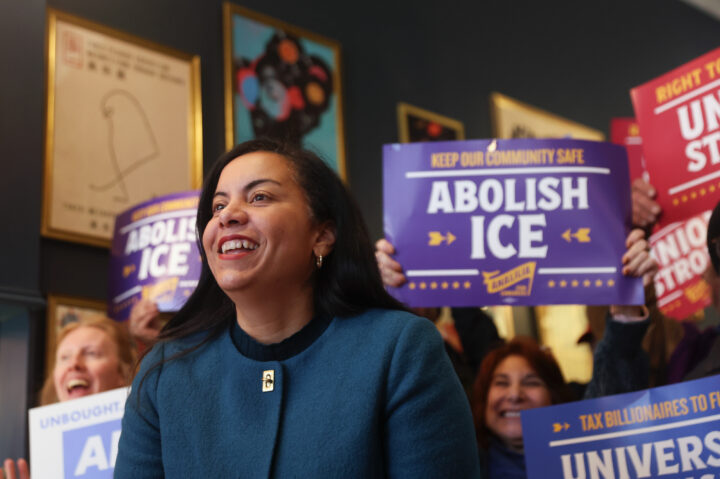
Analilia Mejia, Democratic House candidate for New Jersey, speaks to supporters and members of the media at Paper Plane Coffee Co. in Montclair, N.J., on Jan. 29, 2026.
Analilia Mejia, a progressive activist and organizer who won a surprise victory in the special election primary in New Jersey’s 11th Congressional District, looks to be on track to win the district’s regular election Democratic primary after several of her potential opponents declined to run.
In the days after Mejia’s surprise victory over former Rep. Tom Malinowski (D-NJ) and other more moderate candidates, there was speculation over whether she might be vulnerable to a one-on-one challenge in the regular primary on June 2. United Democracy Project, the AIPAC-linked super PAC that inadvertently helped boost Mejia, teased the possibility of further involvement in the subsequent primary.
But former Lt. Gov. Tahesha Way announced Sunday that she wouldn’t run against Mejia for the seat, leaving Mejia with no major Democratic competition; other moderate candidates in the special election primary also declined to run again, and Assemblywoman Rosaura Bagolie briefly considered a run, but decided not to pursue a bid as elected Democrats in the state quickly coalesced behind Mejia.
Several of the other Democratic special election candidates pledged not to run for the full term if they lost the special election — but Way had not made such a promise.
“Since the special primary, I have been deeply humbled by the outreach of so many who encouraged me to run in the June primary for Congress in NJ-11,” Way said in a statement. “The confidence and belief so many friends and neighbors have placed in me means more than I can say. After many conversations with my family, who are my greatest calling, and a lot of prayer, I have decided that this is not the right moment for another campaign. But make no mistake: I am not going anywhere.”
Even as the Democratic field has cleared for Mejia, her campaign has in recent days found itself at odds with the League of Women Voters.
The nonpartisan organization canceled its scheduled district-wide candidate forum — set to feature Mejia and Republican nominee Joe Hathaway, the former mayor of Randolph, N.J. — because the LWV and Mejia “could not reach an agreement with Mejia’s campaign and still maintain the League’s nonpartisan debate policy,” according to an LWV statement.
Mejia asserted that the LWV had refused to commit to diversity among the debate moderators; the LWV refuted her claim, stating its moderator is indeed a person of color but Mejia wanted to personally approve of them, which it would not allow. Hathaway accused Mejia of trying to “mislead voters and frame it as a diversity issue.”
Mejia’s stance has elicited criticism even from some fellow Democrats, including Bagolie, who criticized her comments about the LWV.
“If someone believes a debate is not worth their time, say that, it’s honest. But throwing the League under the bus is not okay,” Bagolie said. “I understand the instinct to rally behind a Democrat at all costs. I do. But we cannot excuse behavior that mirrors what we say we are fighting against.”
Hathaway, in a long-shot bid for the blue seat, has leaned into efforts to attract Jewish and pro-Israel voters in the district, and is pitching himself as a moderate with cross-party appeal.
In a recent conversation at a fundraising event, the Maine Senate candidate claimed the Israeli government funded Hamas and also revealed he is related to Israeli author and analyst Seth Frantzman
Sophie Park/Getty Images
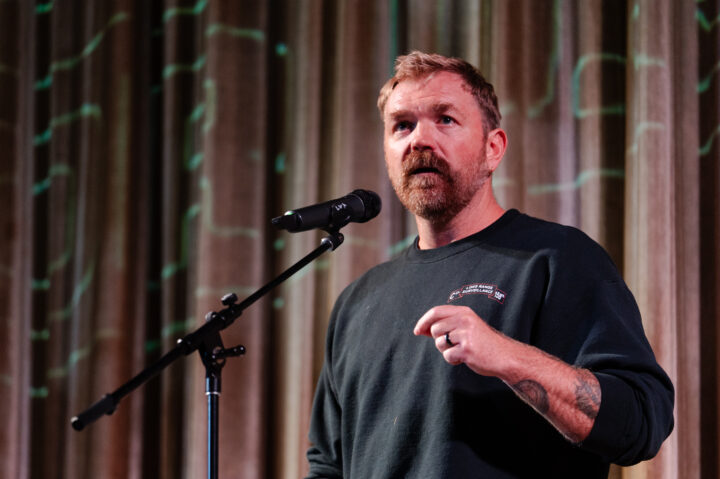
U.S. senatorial candidate from Maine Graham Platner speaks at a town hall at the Leavitt Theater on October 22, 2025 in Ogunquit, Maine.
Like many progressives now running for Congress, Graham Platner, a Democratic Senate candidate in Maine, has made opposition to Israel a central part of his messaging.
He frequently accuses Israel of genocide in Gaza, advocates for blocking U.S. aid to Israel and is an outspoken critic of AIPAC. During a campaign event last month, Platner, a 41-year-old former Marine who runs an oyster farm, also said he believes that Israel is a terrorist state.
But more so than many candidates, the political newcomer seems particularly invested in engaging on Middle East policy, even if his views have drawn scrutiny, according to audio of a recent private discussion in which he debated about Israel with some attendees at a fundraising event in Maine for nearly 20 minutes.
Speaking at the August fundraiser, Platner defended his stances on Israel and shared previously undisclosed details about his personal ties to the region, according to the audio, recently shared with Jewish Insider.
Despite his hostile criticism of Israel, Platner said he believed that the country “has the same right to exist that every nation has to exist,” though he did not confirm whether he recognizes Israel’s right to exist as a Jewish state.
While he said he agreed that Hamas is a terrorist organization, Platner claimed that Netanyahu had “publicly stated that” Israel was “funding Hamas to make sure that there was going to be no non-radical leadership within Gaza in order to keep a Palestinian state from happening.”
While members of Netanyahu’s coalition have made this argument — Finance Minister Bezalel Smotrich referred to the terrorist organization as “an asset” as it serves as an obstacle to Palestinian statehood — the prime minister has never personally made such a claim. New York Times reporting from shortly after the Oct. 7 attacks alleged that the Israeli prime minister had allowed the Qatari government to send money into the Gaza Strip for several years in order to “maintain peace in Gaza.” Netanyahu called allegations that he was empowering Hamas “ridiculous.”
“It is difficult for me to lay the onus of everything only at the feet of the Palestinians,” he explained, “and not include the Netanyahu government.”
Platner also quibbled with an attendee who said that 1,200 Israeli civilians had been killed during the attacks, noting that a percentage of those who had died on Oct. 7 were soldiers in the Israeli military.
“It wasn’t 1,200 civilians. It was 600 military members,” Platner countered, using a number that far exceeded the approximately 300 soldiers who were killed in the attacks.
“Who were taken sleeping, unarmed, out of their beds, I’ve met families,” the attendee responded, likely referring to the tatzpitaniot, unarmed female observer soldiers, and others, who were famously killed and kidnapped in their pajamas.
“When you are wearing a uniform and carrying a gun in the service of a cause, it is difficult for me to feel that you can be called a civilian,” said Platner, who fought in Iraq and Afghanistan. “There is a one-way street on this,” he continued, “that I find to be disingenuous.”
The private comments suggest that Platner is not merely paying lip service to such issues on the trail, as he runs in a competitive primary against Maine Gov. Janet Mills for the Democratic nomination to unseat Sen. Susan Collins (R-ME).
Platner’s campaign did not respond to a request for comment.
Platner’s views on Israel and Gaza have received limited attention in recent weeks as his campaign has weathered controversy over his past incendiary Reddit posts and faced questions over when he first became aware that a skull tattoo on his chest he had for nearly 20 years resembled a Nazi symbol known as a Totenkopf.
Platner, who covered the tattoo this month, has insisted he did not know what the skull signified until recently, though reporting from JI and CNN has contradicted that claim.
He has also argued that members of his family are Jewish and never objected to the skull tattoo when he took his shirt off around them. “Eighteen years,” he told The Atlantic recently. “It’s never come up.”
In the conversation about Israel at the fundraiser, which took place before controversy ensnared his campaign, Platner noted his stepbrother is Seth Frantzman, an Israeli author, journalist and security analyst who has long worked for The Jerusalem Post and lives in Jerusalem, saying they are “very close,” according to the audio.
Frantzman, who has previously written admiringly about Platner without mention of their familial ties, did not respond to an email seeking comment.
Platner also said that he had “multiple friends in B’Tselem,” the left-wing Israeli human rights group that has described Israel as an apartheid regime and accused Israel of committing genocide in Gaza — as he argued that Israel is not fully a democracy.
He cited his friends from B’Tselem “who have showed me videos, who have introduced me to former soldiers, who have introduced me to Palestinians, who have laid out a very clear and, frankly, well-sourced case that Palestinians living within the borders of the occupied territories do not live in a democracy, that they do not have equal rights, that they do not have equal access to areas.”
He said that, “as an American taxpayer,” he was uncomfortable with sending continued U.S. aid to support Israel’s military.
But even as he has been deployed to the Middle East, Platner confirmed that he had never visited Israel.
Please log in if you already have a subscription, or subscribe to access the latest updates.
 Continue with Google
 Continue with Apple